The right preparation can turn an interview into an opportunity to showcase your expertise. This guide to Fertilizer and chemical application interview questions is your ultimate resource, providing key insights and tips to help you ace your responses and stand out as a top candidate.
Questions Asked in Fertilizer and chemical application Interview
Q 1. Describe the different methods of fertilizer application.
Fertilizer application methods vary depending on the type of fertilizer, crop, and field conditions. The goal is always to distribute the fertilizer evenly and efficiently to maximize nutrient uptake by the plants while minimizing environmental impact. Here are some common methods:
- Broadcast Spreading: This involves scattering fertilizer evenly over the entire field surface. It’s suitable for granular fertilizers and large fields, often using spreaders towed behind tractors. Think of it like sprinkling salt evenly on a large patio.
- Banding: Fertilizer is placed in narrow bands, typically close to the seed row or plant roots. This method concentrates nutrients where they’re needed most, reducing nutrient loss through leaching or volatilization. Imagine placing fertilizer directly into the planting furrow, like putting a small amount of sugar next to each cookie.
- Drilling: Fertilizer is placed directly into the soil with the seed during planting. This is very efficient and minimizes nutrient loss. It’s like baking the sugar directly into the cookie.
- Topdressing: Fertilizer is applied to the soil surface after the crop has emerged. This is often used for nitrogen fertilizers that are susceptible to loss during initial incorporation. Think of adding a topping to a cake after it’s been baked.
- Foliar Application: Nutrients are applied directly to the leaves as a liquid spray. This is a rapid method for nutrient correction, but only suitable for water-soluble fertilizers and typically used for micronutrients. Like giving a plant a quick vitamin boost through its leaves.
- In-furrow Application: Fertilizer is applied simultaneously with irrigation water, ensuring even distribution and efficient use of water and nutrients. This is a common method in large-scale agriculture.
Q 2. Explain the importance of calibration in fertilizer application.
Calibration is crucial for accurate fertilizer application. Inaccurate application can lead to nutrient deficiencies (stunting growth, reduced yield), nutrient excesses (environmental pollution, crop damage), and wasted resources (money, time, and fertilizer). Calibration ensures you apply the correct amount of fertilizer at the correct rate across the entire field. Imagine trying to bake a cake with no measurements – it would be a disaster!
Calibration involves verifying the output of the spreader or applicator and adjusting it to deliver the desired amount of fertilizer per unit area (e.g., pounds per acre). This usually involves measuring the fertilizer output at different settings and using these measurements to create a calibration chart specific to your equipment and the fertilizer being used. Proper calibration involves checking the spreader’s settings, measuring the application rate, making adjustments, and repeating this process until the desired rate is accurately and consistently achieved.
Q 3. What are the safety precautions for handling and applying chemical fertilizers?
Safety is paramount when handling and applying chemical fertilizers. These products can be hazardous to human health and the environment if not handled properly. Key precautions include:
- Personal Protective Equipment (PPE): Always wear appropriate PPE, including gloves, eye protection, and a respirator, as recommended on the fertilizer label. This protects you from direct contact with the fertilizer.
- Proper Storage: Store fertilizers in a cool, dry, well-ventilated area, away from children and pets. Keep them away from other chemicals, and never store in a place where fertilizer could be exposed to rain or flood.
- Label Reading: Always carefully read and understand the fertilizer label before handling or applying it. The label indicates the potential hazards, application instructions, and first aid measures.
- Avoid Contamination: Avoid contaminating water sources and soil through proper application techniques and storage. Fertilizers can leach into water sources affecting water quality and aquatic organisms.
- Emergency Preparedness: Have a plan for dealing with accidental spills or exposures. Know where the nearest emergency phone is and have information about the fertilizer readily available.
- Transportation: Transport fertilizer securely to prevent spills and accidents. Ensure containers are properly sealed and secured during transportation.
Q 4. How do you determine the appropriate rate of fertilizer application?
Determining the appropriate fertilizer application rate requires a multi-step process combining soil testing, crop needs, and environmental conditions:
- Soil Testing: Analyze a soil sample to determine the existing nutrient levels. A soil test reveals the amount of nutrients already available in the soil, allowing us to assess what’s missing for optimal plant growth.
- Crop Requirements: Determine the nutrient requirements of the specific crop to be grown. Different crops have different nutrient needs at different stages of growth. A corn plant, for example, needs a different mix of nutrients than a tomato plant.
- Yield Goals: Set realistic yield goals. Higher yields typically require higher fertilizer inputs, but there’s a point of diminishing returns.
- Nutrient Removal: Calculate the estimated amount of nutrients that will be removed from the soil by the crop during its growth cycle. Different crops remove different levels of nutrients from the soil.
- Fertilizer Analysis: Use the fertilizer analysis (N-P-K values) to calculate how much of each fertilizer to apply to meet the crop’s nutrient needs. For example, if you need 50 pounds of nitrogen and the fertilizer is 20-10-10, you need to do the calculations to determine the amount of that fertilizer you need to apply.
- Environmental Considerations: Factor in environmental conditions such as rainfall, soil type, and temperature, as they can affect nutrient availability and potential losses through leaching or volatilization. Heavy rainfall can cause excessive leaching, while high temperatures can increase volatilization.
Q 5. What are the common types of fertilizer and their respective nutrient content?
Fertilizers are broadly classified based on their nutrient content. The N-P-K values on the fertilizer bag indicate the percentage of Nitrogen (N), Phosphorus (P2O5), and Potassium (K2O) present. Examples include:
- Urea (46-0-0): A high-nitrogen fertilizer commonly used as a source of nitrogen for various crops. It’s often preferred because it contains a high percentage of nitrogen.
- Diammonium Phosphate (DAP) (18-46-0): A common source of both nitrogen and phosphorus. It provides a good balance of these two essential nutrients.
- Monoammonium Phosphate (MAP) (11-52-0): Similar to DAP but contains a higher percentage of phosphorus and less nitrogen.
- Potassium Chloride (0-0-60): Provides potassium, essential for plant health and disease resistance. It’s commonly used to provide sufficient potassium levels to the soil.
- Complete Fertilizers: Contain a mixture of N, P, and K along with other micronutrients. A 10-10-10 fertilizer is an example, showing an equal ratio of N-P-K.
The choice of fertilizer depends on the specific needs of the crop and the soil’s nutrient status.
Q 6. Explain the concept of soil testing and its role in fertilizer application.
Soil testing is the cornerstone of efficient and responsible fertilizer application. It involves analyzing a representative soil sample to determine the existing levels of essential nutrients (macro and micronutrients), pH, and other soil properties. Soil testing helps in determining the nutrients that are deficient or in excess in the soil.
Its role in fertilizer application is crucial because it prevents unnecessary fertilizer application which can lead to both environmental and economic problems. Applying excessive fertilizer not only wastes money but can also pollute water sources, causing environmental damage. By utilizing soil test information, we apply fertilizers more efficiently because we only apply the nutrients that are actually needed by the plant. This promotes sustainable agriculture and optimized crop yields while protecting the environment.
Q 7. Describe the different types of application equipment and their suitability for various conditions.
Various application equipment is used depending on the fertilizer type, field size, and application method. Here are some examples:
- Spreaders (Centrifugal or Spinner): These are used for broadcast application of granular fertilizers and are commonly towed behind tractors. They are suitable for large fields but may not be precise for smaller areas.
- Broadcast Spreaders (Ground-driven): Often used for smaller fields, these are more easily maneuvered. They offer good control over application rates and patterns.
- Banding Applicators: Place fertilizer in bands near the seed or plant row. These can be attached to planters or used independently.
- Injectors: Inject liquid fertilizers into the irrigation system. This ensures uniform application and efficient water use.
- Boom Sprayers: Used for foliar application of liquid fertilizers. The boom sprayers can precisely distribute fertilizers across the area.
- Fertilizer Drills: Place fertilizers in the soil simultaneously with seeding. They are often used for direct placement and minimize nutrient losses.
The choice of equipment depends on factors such as terrain, field size, fertilizer type (liquid or granular), and desired application method.
Q 8. How do you address fertilizer burn in crops?
Fertilizer burn, or salt burn, occurs when the concentration of fertilizer salts in the soil becomes too high, damaging plant roots and causing wilting, leaf scorching, and stunted growth. It’s essentially like giving a plant too much salt to drink – it dehydrates and suffers. Addressing it requires a multi-pronged approach.
- Immediate Action: Flush the soil with copious amounts of water to dilute the salt concentration. This helps leach the excess salts away from the root zone. Think of it like rinsing away excessive salt from a salad.
- Future Prevention:
- Proper Application Technique: Use the correct fertilizer type and rate for the specific crop and soil type. Over-application is a major culprit. Follow label instructions meticulously.
- Banding or Broadcasting: Consider banding fertilizers (placing them in a strip) instead of broadcasting (spreading evenly) to reduce the risk of high concentration near the plant roots.
- Split Application: Apply fertilizers in smaller amounts at multiple intervals rather than all at once. This allows the plant to absorb nutrients gradually, reducing the risk of salt buildup.
- Soil Testing: Regular soil testing helps determine the precise nutrient needs of your crop, preventing unnecessary fertilizer application.
- Water Management: Ensure adequate irrigation to prevent salt accumulation and facilitate nutrient uptake. Proper drainage is also crucial to prevent salt build-up.
- Monitoring and Observation: Keep a close eye on your crops after fertilization. Look for signs of burn – yellowing, wilting, or browning of leaves – and take corrective measures immediately.
For instance, I once dealt with a severe case of fertilizer burn in a field of tomatoes due to improper application of a granular fertilizer. By immediately flushing the soil with water and implementing split application in the following weeks, we managed to save a significant portion of the crop. The key was swift action and a reassessment of our fertilization strategy.
Q 9. What are the environmental concerns associated with fertilizer application?
Environmental concerns associated with fertilizer application are significant and multifaceted. The primary issues stem from the potential for nutrient runoff and leaching, leading to water pollution.
- Eutrophication: Excess nitrogen and phosphorus from fertilizers can runoff into water bodies, causing algal blooms. These blooms deplete oxygen, creating ‘dead zones’ where aquatic life cannot survive.
- Groundwater Contamination: Nitrate leaching into groundwater can contaminate drinking water sources, posing a health risk, particularly to infants.
- Greenhouse Gas Emissions: The production and use of nitrogen fertilizers contribute to greenhouse gas emissions, primarily nitrous oxide (N2O), a potent greenhouse gas.
- Soil Acidification: The overuse of certain fertilizers can alter soil pH, making it less suitable for plant growth and potentially leading to soil erosion.
- Air Pollution: Ammonia volatilization from fertilizers contributes to air pollution, affecting air quality and potentially harming human health.
Mitigating these concerns requires responsible fertilizer management, including precise application techniques, proper timing, and choosing fertilizers that minimize environmental impact. For example, slow-release fertilizers can reduce nutrient runoff, while cover cropping can help absorb excess nutrients.
Q 10. Explain the concept of nutrient management planning.
Nutrient management planning is a systematic approach to optimizing fertilizer use while minimizing environmental impacts. It involves assessing soil nutrient levels, crop requirements, and environmental factors to develop a tailored fertilization strategy. Think of it as creating a personalized diet plan for your crops.
- Soil Testing: Analyzing soil samples to determine the existing levels of essential nutrients (nitrogen, phosphorus, potassium, etc.). This forms the baseline for determining fertilization needs.
- Crop Needs Assessment: Determining the nutrient requirements of the specific crop being grown, considering factors like yield goals and growth stage.
- Manure and Compost Integration: Incorporating organic amendments like manure and compost into the nutrient management plan to reduce reliance on synthetic fertilizers.
- Fertilizer Selection: Choosing the appropriate fertilizer type (organic, inorganic, slow-release) and application method based on soil conditions and crop needs.
- Application Timing and Rate: Optimizing the timing and rate of fertilizer application to maximize nutrient uptake and minimize losses.
- Monitoring and Evaluation: Regularly monitoring crop growth, nutrient levels, and environmental impacts to assess the effectiveness of the nutrient management plan and make necessary adjustments.
A well-designed nutrient management plan can significantly improve crop yields, reduce fertilizer costs, and minimize environmental pollution. For example, in a recent project, a precisely implemented nutrient management plan reduced fertilizer use by 20% while maintaining yield, showcasing the economic and environmental benefits.
Q 11. What are the best practices for storing and handling fertilizers and chemicals?
Safe storage and handling of fertilizers and chemicals are paramount for both human health and environmental protection. Improper handling can lead to accidental exposure, contamination, and environmental damage.
- Designated Storage Area: Fertilizers and chemicals should be stored in a secure, well-ventilated area, away from living areas, water sources, and food. The area should be clearly marked and accessible only to authorized personnel.
- Proper Containers: Store fertilizers and chemicals in their original containers, ensuring labels are legible and intact. Never reuse containers for other purposes.
- Segregation: Store incompatible chemicals separately to prevent dangerous reactions. Consult safety data sheets (SDS) for guidance on compatibility.
- Spill Containment: Have a spill containment plan in place, including absorbent materials and appropriate cleanup procedures. This helps minimize environmental contamination in the event of an accident.
- Personal Protective Equipment (PPE): Always wear appropriate PPE, including gloves, eye protection, and respirators, when handling fertilizers and chemicals. The SDS provides guidelines on necessary PPE.
- Regular Inspection: Regularly inspect the storage area for damage, leaks, or other potential hazards. Proper ventilation helps prevent the buildup of hazardous gases.
For example, I always ensure that our storage facility adheres strictly to regulations, with clearly labeled containers, a spill containment kit readily available, and regular inspections to prevent accidents. This proactive approach is essential to ensure worker safety and environmental protection.
Q 12. How do you prevent pesticide drift during application?
Pesticide drift refers to the unintended movement of pesticides away from the target area, potentially affecting non-target organisms or contaminating water sources. Prevention requires careful planning and execution.
- Weather Conditions: Avoid application during windy conditions, especially if there is high wind speed or gusts. Ideal conditions are calm, low wind speeds.
- Nozzle Selection: Use appropriate nozzles that minimize drift. Low-drift nozzles produce larger droplets that are less susceptible to wind.
- Application Rate and Technique: Apply pesticides at the recommended rate and using the correct technique to minimize spray volume and drift. Proper calibration of equipment is crucial.
- Buffer Zones: Establish buffer zones around sensitive areas, such as water bodies or neighboring properties, to reduce the risk of drift.
- Proper Equipment Maintenance: Ensure that application equipment is properly calibrated and maintained to ensure accurate and efficient pesticide application. Leaking equipment contributes significantly to drift.
- Application Timing: Consider application timing carefully. Applying during cooler parts of the day or when there is less air movement can help.
Imagine applying pesticides near a lake – you’d need to adjust your application timing and method carefully to avoid contaminating the water. This is why meticulous planning and the use of low-drift nozzles are essential.
Q 13. What are the regulations governing fertilizer and chemical application in your region?
Regulations governing fertilizer and chemical application vary by region but generally aim to protect human health and the environment. These regulations often encompass aspects of licensing, application methods, buffer zones, and record-keeping.
[This answer requires specific regional context. Replace the following with the specific regulations for your region.]
In my region, we adhere to the [Name of relevant regulatory body] guidelines. These regulations dictate licensing requirements for pesticide applicators, specify permitted application methods for various chemicals, enforce buffer zone requirements around sensitive areas, and demand detailed record-keeping of all applications. Strict penalties apply for non-compliance.
For example, we are mandated to maintain meticulous records of all pesticide applications, including the date, time, location, pesticide used, application rate, and weather conditions. These records are subject to regular audits by regulatory authorities.
Q 14. Describe your experience with GPS-guided application technologies.
GPS-guided application technologies have revolutionized fertilizer and chemical application, enhancing precision and efficiency while minimizing environmental impact. These systems use GPS signals to precisely map fields and control application equipment.
- Variable Rate Technology (VRT): This allows for applying different rates of fertilizer or chemicals across a field based on variable soil conditions, crop needs, or previous yield data. This optimizes nutrient delivery and reduces overuse.
- Auto-steer Systems: These systems automatically guide the application equipment along a predetermined path, minimizing overlaps and gaps in coverage. This ensures uniform application and reduced waste.
- Data Management and Analysis: GPS-guided systems often integrate with data management software that allows for data analysis, including yield maps and nutrient application records. This facilitates better decision-making for future applications.
In my experience, using GPS-guided application systems has resulted in a substantial reduction in fertilizer and chemical usage, improved crop yields, and decreased environmental impact. For instance, in a recent project, VRT reduced fertilizer application by 15% while maintaining the same yield, showcasing the economic and environmental benefits of this technology. The data analysis tools also allow us to fine-tune application strategies for future seasons, constantly improving efficiency and reducing waste.
Q 15. How do you ensure accurate record-keeping of fertilizer and chemical applications?
Accurate record-keeping is paramount for efficient farm management and regulatory compliance. It ensures traceability, allows for data-driven decision-making, and helps optimize future applications. My approach involves a multi-pronged strategy:
- Digital Field Mapping: I utilize GPS-enabled applicators and software to precisely map application locations, rates, and dates. This creates a digital record of every field operation.
- Detailed Application Logs: For each application, a detailed log is created, documenting the date, time, product used (including batch number), application rate, area covered, equipment used, weather conditions, and any observations. This information is usually stored in a database or spreadsheet.
- Calibration and Verification: Regular equipment calibration ensures accurate application rates. I frequently verify these calibrations using measurement techniques such as catch pans or flow meters to confirm the accuracy of the applied material.
- Inventory Management: Meticulous tracking of fertilizer and chemical inventory helps to ensure we always have sufficient stock and minimizes waste. This involves tracking purchases, usage, and remaining quantities.
- Cloud-Based Data Storage: Utilizing cloud-based platforms allows for easy data sharing, backup, and accessibility across multiple devices. This safeguards information against data loss.
For example, during a recent corn application, we used a GPS-guided sprayer to apply nitrogen fertilizer. The precise coordinates, application rate (150 lbs/acre), and date were all recorded in our field management software. This allowed us to easily analyze the application’s effectiveness and make adjustments for the next application.
Career Expert Tips:
- Ace those interviews! Prepare effectively by reviewing the Top 50 Most Common Interview Questions on ResumeGemini.
- Navigate your job search with confidence! Explore a wide range of Career Tips on ResumeGemini. Learn about common challenges and recommendations to overcome them.
- Craft the perfect resume! Master the Art of Resume Writing with ResumeGemini’s guide. Showcase your unique qualifications and achievements effectively.
- Don’t miss out on holiday savings! Build your dream resume with ResumeGemini’s ATS optimized templates.
Q 16. How do you troubleshoot equipment malfunctions during application?
Troubleshooting equipment malfunctions requires a systematic approach. My process typically involves:
- Safety First: Always prioritize safety. Before attempting any repairs, turn off the equipment and follow all safety protocols.
- Visual Inspection: Begin with a thorough visual inspection of the equipment, checking for obvious issues like leaks, blockages, or damaged components.
- Check Calibration: Verify the calibration of the application equipment. Incorrect calibration is a frequent cause of issues.
- Systematic Checks: Follow the equipment’s troubleshooting guide. This usually provides a logical flow for checking various components (e.g., pumps, nozzles, sensors).
- Testing Individual Components: If the problem persists, test individual components to isolate the fault. This might involve checking the pressure of the system, testing the functionality of sensors, or examining the flow rate through the nozzles.
- Professional Assistance: If the problem remains unresolved, seek professional help from an equipment technician or manufacturer.
For instance, if a sprayer isn’t delivering the correct application rate, I might first check the nozzle pressure, then the pump output, and finally inspect the nozzle for any blockages. If all else fails, I would consult the equipment manual or contact a service technician.
Q 17. What is the role of soil pH in fertilizer application?
Soil pH plays a crucial role in nutrient availability. The pH level impacts how well plants can absorb essential nutrients from fertilizers. Most nutrients are most available within a specific pH range. For example, phosphorus availability is typically reduced in highly acidic or alkaline soils.
- Optimum pH Range: Different nutrients have different optimal pH ranges. Understanding these ranges is key to effective fertilization.
- Nutrient Availability: At sub-optimal pH levels, nutrients may become less soluble or bind to soil particles, reducing their uptake by plants. This can lead to nutrient deficiencies despite adequate fertilizer application.
- pH Adjustment: Soil pH can be adjusted through the application of amendments like lime (to raise pH) or elemental sulfur (to lower pH). Soil testing is essential to determine the current pH and the appropriate amendment rate.
Imagine trying to dissolve sugar in water. If the water is too acidic or alkaline, the sugar may not dissolve properly. Similarly, nutrients in fertilizer will not be readily available to plants if the soil pH is too high or too low.
Q 18. How do you account for variations in soil type and topography during application?
Accounting for variations in soil type and topography is crucial for efficient and effective fertilizer application. Ignoring these variations can lead to nutrient imbalances, wasted fertilizer, and environmental concerns.
- Soil Sampling and Testing: Conducting thorough soil sampling across different areas of the field allows for a precise understanding of soil characteristics and nutrient needs. This helps to create variable rate application maps.
- Variable Rate Technology (VRT): Using VRT allows for precise application of fertilizer based on the specific needs of each zone within the field. Sensors and GPS technology guide the application process.
- Contour Farming: In hilly or sloped terrain, contour farming techniques can prevent fertilizer runoff and erosion. This involves applying fertilizer along the contour lines to minimize water flow.
- Precision Application Equipment: Employing equipment with features like GPS guidance, automatic rate controllers, and section control minimizes overlap and ensures even application.
For instance, in a field with varying soil types – sandy soil in one area and clay soil in another – we would adjust fertilizer application rates accordingly. Sandy soils, with their better drainage, might require more frequent applications of nutrients that leach readily, whereas clay soils with their higher water holding capacity might require a lower application rate.
Q 19. Explain the importance of integrated pest management (IPM).
Integrated Pest Management (IPM) is a sustainable approach to pest control that emphasizes minimizing pesticide use while maximizing effectiveness. It combines multiple strategies to manage pests in an environmentally friendly and economically sound manner.
- Monitoring and Scouting: Regularly monitor crops for pest activity. This helps identify pests early and prevents widespread infestations.
- Cultural Practices: Employ practices like crop rotation, intercropping, and proper sanitation to reduce pest populations naturally.
- Biological Control: Use beneficial insects, nematodes, or other biological agents to control pests.
- Targeted Pesticide Use: If necessary, use pesticides strategically, targeting specific pests and minimizing environmental impact. This often involves selecting less harmful pesticides and using them at the lowest effective rate.
IPM avoids the downsides of solely relying on pesticides, such as pesticide resistance, harm to beneficial insects, and environmental contamination. It is a holistic approach that views pest management as a part of a broader ecosystem.
Q 20. What is your experience with variable rate technology (VRT)?
I have extensive experience with Variable Rate Technology (VRT) for fertilizer application. VRT uses GPS, soil sensors, and other technologies to apply fertilizer at varying rates based on the specific needs of different areas within a field. My experience includes:
- Data Acquisition and Management: Collecting and managing data from soil sampling, yield monitoring, and remote sensing systems to generate variable rate prescription maps.
- Prescription Map Creation: Using GIS software and agronomic data to create precise prescription maps that guide the application process.
- Equipment Operation: Operating and maintaining VRT-equipped applicators, ensuring accurate and efficient application according to the prescription maps.
- Data Analysis and Optimization: Analyzing post-application data to assess the effectiveness of VRT and make adjustments for future applications.
Using VRT, we applied nitrogen at varying rates across a field based on soil nutrient levels and previous yield data. This resulted in a more uniform yield, improved nutrient use efficiency, and reduced fertilizer costs compared to uniform application.
Q 21. How do you manage fertilizer application in different soil conditions (e.g., sandy vs. clay)?
Managing fertilizer application in different soil conditions requires understanding the unique properties of each soil type and how they influence nutrient availability and movement.
- Sandy Soils: Sandy soils have low water-holding capacity and good drainage. Nutrients leach readily, requiring more frequent applications of smaller amounts of fertilizer. Consider using slow-release fertilizers to minimize losses.
- Clay Soils: Clay soils have high water-holding capacity and poor drainage. Nutrients can be less readily available due to strong binding to soil particles. Application timing is crucial to avoid nutrient lockout. Consider using starter fertilizers or soil amendments to improve nutrient availability.
- Soil Testing: Before application, conduct soil testing to determine the precise nutrient levels and the soil’s cation exchange capacity (CEC), which influences nutrient retention.
- Application Methods: Adjust application methods based on soil type. For example, banding or injection might be more effective in sandy soils, while broadcasting may be suitable for clay soils.
In a field with both sandy and clay areas, we would create separate prescription maps for each soil type to optimize fertilizer application rates and methods. This ensures that each soil type receives the appropriate amount of nutrients and minimizes losses from leaching or immobilization.
Q 22. Describe your experience with different types of spray nozzles and their applications.
Spray nozzles are crucial for efficient and uniform fertilizer and chemical application. Different nozzle types deliver varying spray patterns, droplet sizes, and application rates, impacting efficacy and minimizing drift. My experience encompasses a wide range, including:
- Flat Fan Nozzles: These produce a broad, flat spray pattern ideal for even coverage over large areas. I’ve used these extensively in row crop applications like corn and soybeans, ensuring consistent fertilizer distribution across the field.
- Cone Nozzles: These create a circular spray pattern, often used for spot treatments or localized applications. I’ve employed these for addressing specific nutrient deficiencies in orchards or vineyards, for example.
- Air Induction Nozzles: These incorporate air into the spray stream, resulting in larger droplets and reduced drift, essential for sensitive crops or windy conditions. I frequently utilize these when applying pesticides near water bodies to minimize environmental impact.
- Precision Nozzles: These advanced nozzles allow for variable rate application, adjusting the spray volume based on real-time data (e.g., from sensors measuring soil nutrient levels). This minimizes overuse and maximizes efficiency, something I’ve implemented successfully on large-scale farms.
Choosing the right nozzle depends on factors like crop type, application rate, wind speed, and the desired droplet size. Proper calibration is critical for accurate application and avoiding waste.
Q 23. How do you interpret soil test results and formulate fertilizer recommendations?
Soil testing provides crucial information about nutrient levels, pH, and other soil properties. Interpreting these results involves a multi-step process:
- Analyze Nutrient Levels: Compare the test results to optimal ranges for the specific crop. Deficiencies in nitrogen (N), phosphorus (P), potassium (K), and other micronutrients are identified.
- Consider Soil pH: Soil pH significantly affects nutrient availability. A pH outside the optimal range might necessitate adjustments to ensure nutrients are readily accessible to plants.
- Assess Soil Texture and Organic Matter: These factors influence nutrient retention and availability. Sandy soils, for example, tend to have lower nutrient retention compared to clay soils.
- Develop Fertilizer Recommendations: Based on the analysis, I determine the type, amount, and application method of fertilizers needed to meet the crop’s requirements. This often involves using fertilizer calculators and considering the crop’s nutrient uptake at different growth stages.
- Implement and Monitor: After application, it’s critical to monitor the plants’ response and make adjustments if necessary. Regular tissue testing can verify the effectiveness of the fertilizer program.
For example, a soil test revealing low phosphorus levels might lead to a recommendation for applying phosphorus-rich fertilizers, such as diammonium phosphate (DAP), in conjunction with other nutrients according to the crop’s specific demands.
Q 24. What are the potential risks of applying too much or too little fertilizer?
Applying too much or too little fertilizer can have detrimental effects on crop growth, environmental health, and profitability.
- Too Much Fertilizer: Over-fertilization can lead to salt buildup in the soil, hindering water uptake by plant roots. Excessive nitrogen can cause luxuriant growth (excess vegetative growth at the expense of fruit/yield) and make plants susceptible to diseases. Nutrient runoff can contaminate water bodies, causing eutrophication (excessive algal growth) and harming aquatic life. This also represents a financial loss as the excess nutrients aren’t utilized by the plant.
- Too Little Fertilizer: Under-fertilization results in nutrient deficiencies, leading to stunted growth, reduced yields, and poor crop quality. This directly impacts profitability due to lower yields and may also compromise the plant’s resistance to stress and pests. Plants may show characteristic visual symptoms indicating specific nutrient deficiencies (e.g., yellowing leaves for nitrogen deficiency).
Precision agriculture techniques, such as variable rate fertilizer application, help mitigate these risks by optimizing fertilizer application based on site-specific soil conditions and crop needs.
Q 25. Explain the difference between organic and inorganic fertilizers.
Organic and inorganic fertilizers differ primarily in their origin and composition:
- Inorganic Fertilizers: These are synthetically produced, containing specific nutrients like N, P, and K in readily available forms. Examples include urea, ammonium nitrate, and potassium chloride. They provide immediate nutrient release, ensuring rapid plant uptake but may have environmental concerns regarding leaching and water pollution.
- Organic Fertilizers: Derived from natural sources like animal manure, compost, and plant residues, these fertilizers release nutrients gradually through decomposition. They improve soil structure, water retention, and microbial activity, contributing to long-term soil health. However, their nutrient release is slower compared to inorganic fertilizers, requiring careful planning for timely nutrient supply.
The choice between organic and inorganic fertilizers depends on various factors, including crop type, soil conditions, environmental concerns, and economic considerations. Integrated nutrient management often involves combining both types for optimal results.
Q 26. How do you calculate the cost-effectiveness of different fertilizer options?
Cost-effectiveness of fertilizer options involves comparing the cost per unit of nutrient with the resulting increase in crop yield and quality. A simple framework involves:
- Determine the cost per unit of nutrient: This involves dividing the price of the fertilizer by the amount of each nutrient (N, P, K) it contains. For example, if a 50kg bag of fertilizer costs $50 and contains 10kg of N, the cost per kg of N is $5.
- Estimate yield response to fertilizer: This requires knowledge of the crop’s response to nutrient application, often obtained from field trials or research data. The response is usually expressed in terms of yield increase per unit of nutrient.
- Calculate the cost of yield increase: Divide the cost per unit of nutrient by the yield increase per unit of nutrient. This indicates the cost per unit of yield increase.
- Compare different fertilizers: The fertilizer with the lowest cost per unit of yield increase is considered the most cost-effective option.
Additional factors like transportation costs, application costs, and potential environmental impacts should also be considered for a holistic cost-effectiveness analysis.
Q 27. What are the key factors influencing the choice of fertilizer application method?
Several key factors influence the choice of fertilizer application method:
- Crop Type and Growth Stage: Different crops have varying nutrient requirements at different growth stages. For instance, seedlings might require localized nutrient placement, while mature plants benefit from broader application.
- Soil Type and Conditions: Soil texture, drainage, and organic matter content affect nutrient availability and application methods. Sandy soils require different application strategies compared to clay soils.
- Fertilizer Type: Some fertilizers are better suited for certain application methods. Granular fertilizers are typically applied broadcast or banded, while liquid fertilizers are often applied through fertigation or foliar sprays.
- Environmental Concerns: Minimizing nutrient runoff and leaching is crucial. Methods like precision application and split applications can help reduce environmental impacts.
- Cost and Equipment Availability: The cost of equipment and labor plays a significant role. Farmers choose methods that are affordable and practical given their resources.
For example, a farmer with a large-scale operation might opt for automated fertigation or aerial application, while a smaller farm might use manual broadcasting or banding.
Q 28. Describe your experience with data analysis in relation to fertilizer and chemical application.
Data analysis is integral to optimizing fertilizer and chemical application. My experience encompasses:
- Yield Mapping: Analyzing yield data from previous seasons to identify areas with low yields, indicating potential nutrient deficiencies. This helps create variable rate fertilizer application maps for future seasons.
- Soil Sensor Data Integration: Utilizing data from soil sensors (e.g., electromagnetic induction sensors) to create maps of soil properties, such as nutrient levels and organic matter content. This allows for precise fertilizer recommendations tailored to specific field zones.
- Remote Sensing: Interpreting data from satellite imagery or drones to assess crop health and nutrient status. This assists in early detection of nutrient deficiencies and enables timely corrective actions.
- Statistical Analysis: Using statistical software to analyze experimental data from fertilizer trials and determine optimal fertilizer rates and application timings.
- Precision Agriculture Software: Working with software platforms to plan and implement variable rate fertilizer applications, monitor application progress, and track the effectiveness of the fertilizer programs.
Through this data-driven approach, I’ve significantly improved fertilizer use efficiency, reduced input costs, and enhanced crop yields while minimizing environmental impact. For example, analyzing historical yield maps allowed us to identify a specific area consistently producing lower yields due to a phosphorus deficiency; targeting this area with additional phosphorus led to a significant yield improvement in the following season.
Key Topics to Learn for Fertilizer and Chemical Application Interviews
- Soil Science Fundamentals: Understanding soil types, nutrient content, and pH levels; their impact on fertilizer selection and application methods.
- Fertilizer Types and Properties: Knowledge of different fertilizer formulations (NPK ratios, slow-release, etc.) and their appropriate application techniques for various crops and soil conditions.
- Chemical Application Equipment: Familiarity with different application methods (e.g., broadcasting, banding, fertigation) and the operation and maintenance of relevant equipment (sprayers, spreaders).
- Calibration and Precision Application: Mastering the techniques for accurate calibration of application equipment to ensure optimal fertilizer and chemical distribution and minimize waste.
- Environmental Considerations: Understanding the environmental impact of fertilizer and chemical application, including runoff, leaching, and potential harm to non-target organisms. Knowledge of best management practices for minimizing negative environmental consequences.
- Safety Procedures and Regulations: Awareness of relevant safety regulations, handling procedures for fertilizers and chemicals, and personal protective equipment (PPE) requirements.
- Integrated Pest Management (IPM): Understanding the principles of IPM and its role in reducing reliance on chemical pesticides, while maintaining crop health.
- Data Analysis and Interpretation: Ability to interpret soil test results, yield data, and other relevant information to optimize fertilizer and chemical application strategies.
- Problem-Solving and Troubleshooting: Experience in diagnosing and resolving issues related to fertilizer and chemical application, such as equipment malfunctions or unexpected plant responses.
- Record Keeping and Documentation: Understanding the importance of maintaining accurate records of fertilizer and chemical applications for compliance and future reference.
Next Steps
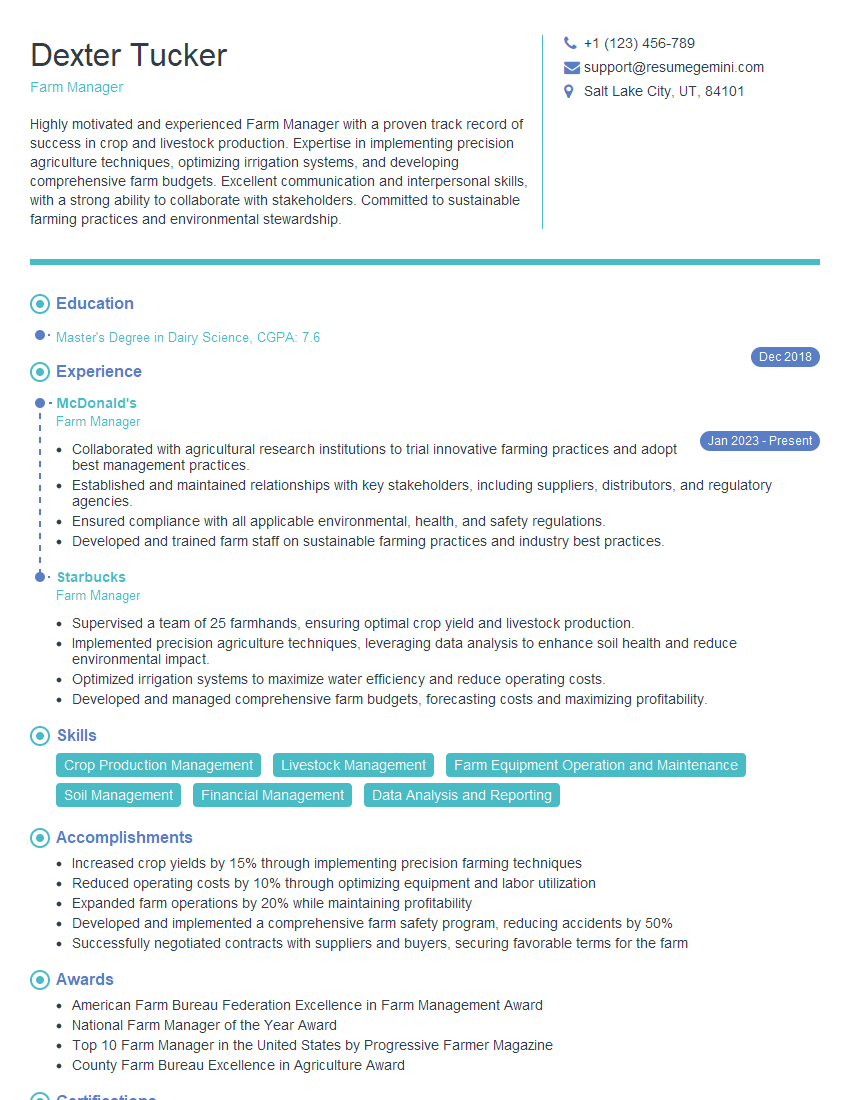
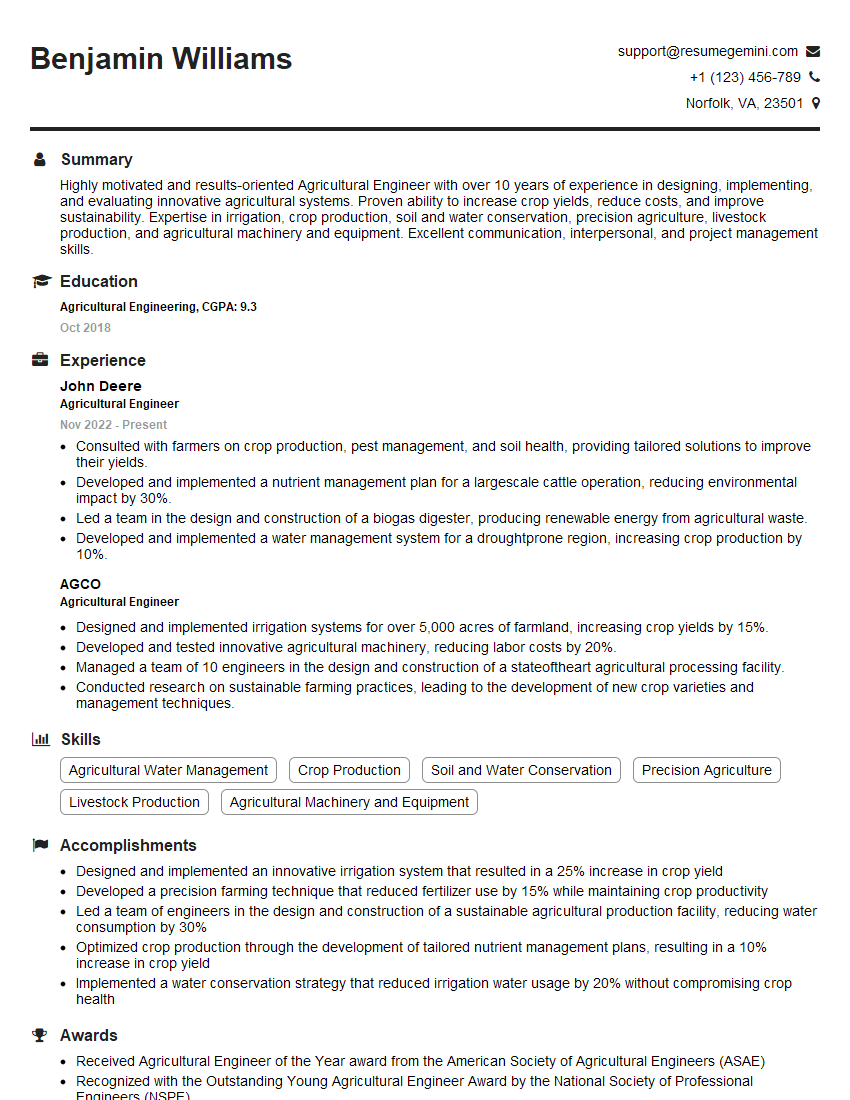
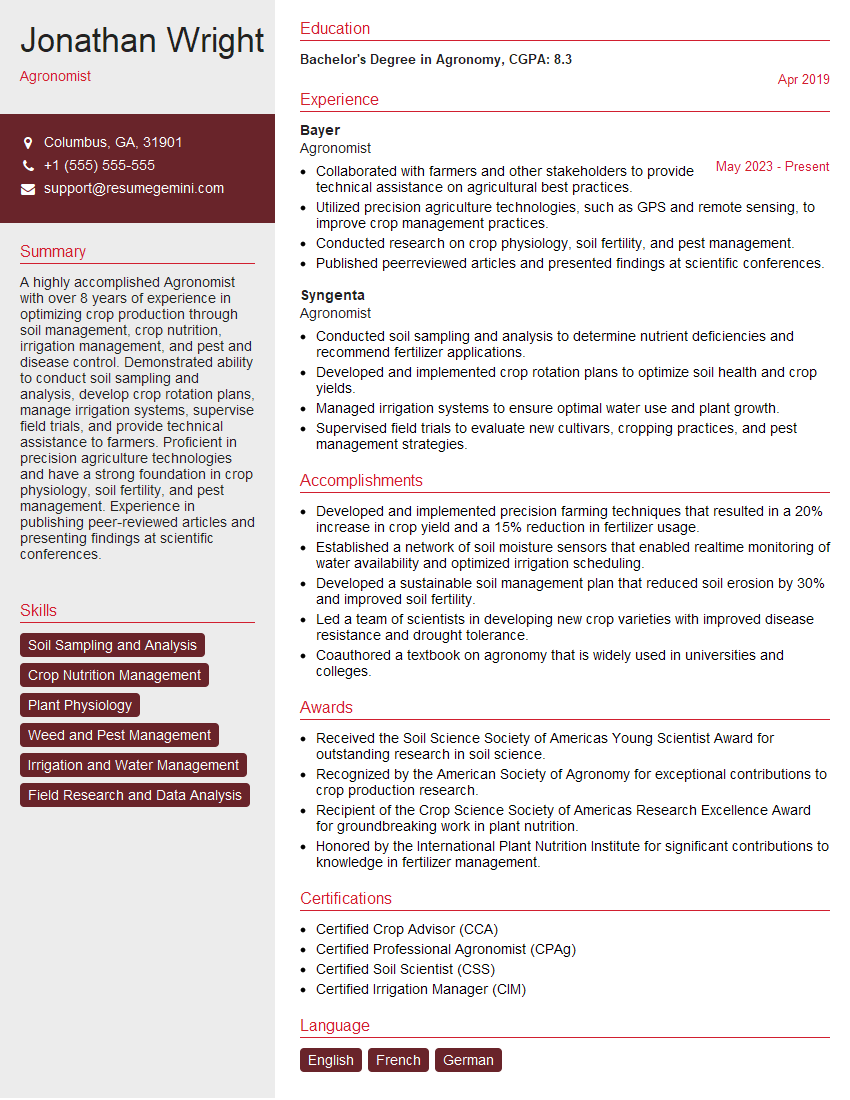
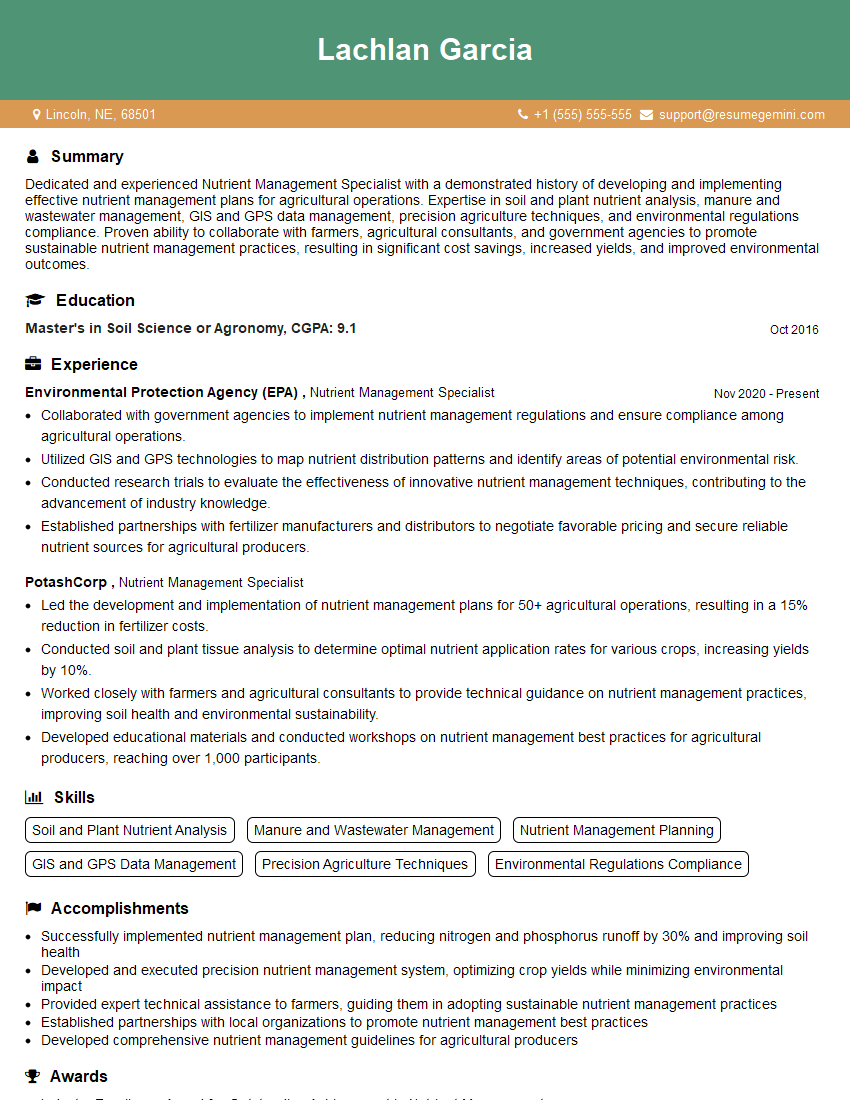
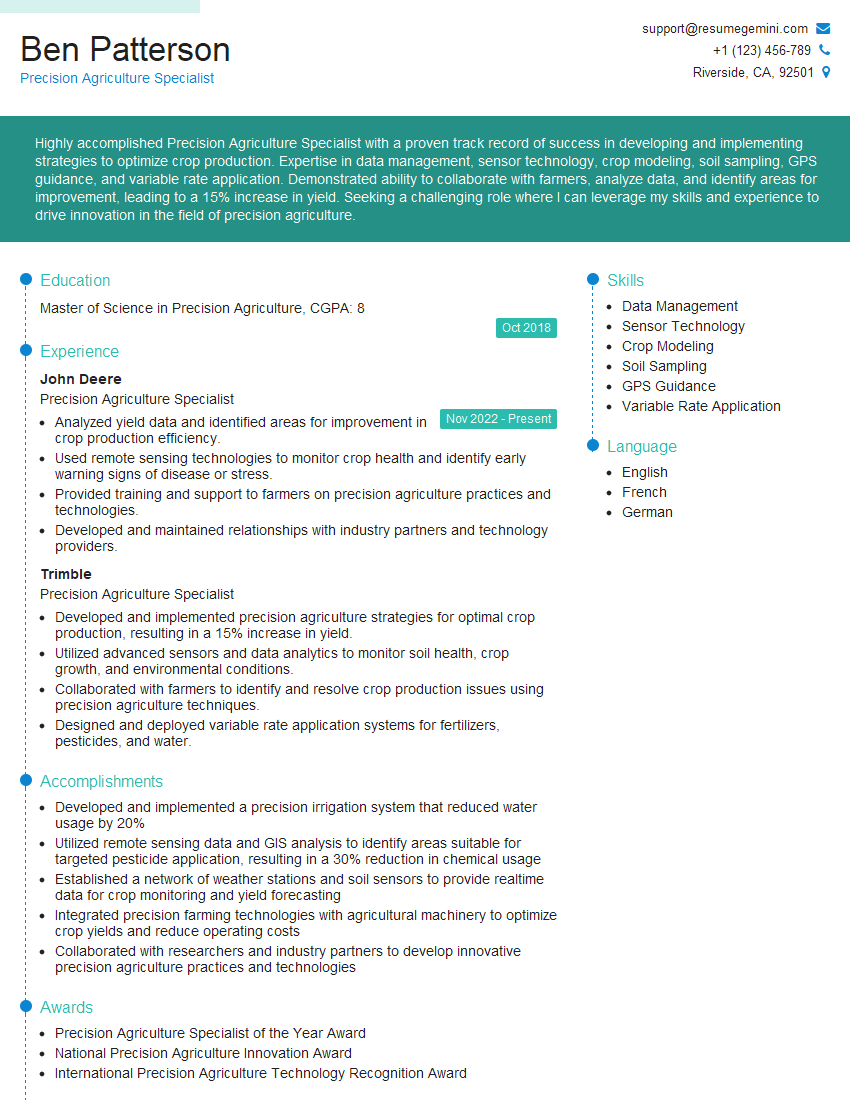
Mastering fertilizer and chemical application is crucial for career advancement in agriculture and related industries. A strong understanding of these concepts demonstrates competence, efficiency, and a commitment to sustainable practices. To significantly boost your job prospects, create an ATS-friendly resume that highlights your skills and experience effectively. ResumeGemini is a trusted resource for building professional resumes that stand out. We provide examples of resumes tailored to the Fertilizer and chemical application field to help you create a compelling application.

Explore more articles
Users Rating of Our Blogs
Share Your Experience
We value your feedback! Please rate our content and share your thoughts (optional).
What Readers Say About Our Blog
Very informative content, great job.
good