Preparation is the key to success in any interview. In this post, we’ll explore crucial Labeling and Documentation Review interview questions and equip you with strategies to craft impactful answers. Whether you’re a beginner or a pro, these tips will elevate your preparation.
Questions Asked in Labeling and Documentation Review Interview
Q 1. Explain the importance of accurate labeling in your field.
Accurate labeling is paramount in my field because it directly impacts product safety, regulatory compliance, and consumer trust. Think of it like this: a mislabeled medication could have disastrous consequences. Inaccurate labels can lead to product recalls, hefty fines, and severe reputational damage for a company. Beyond the legal and financial implications, inaccurate labeling erodes consumer trust, potentially impacting sales and market share. Accurate labeling ensures that products are correctly identified, their usage is understood, and potential hazards are clearly communicated. This involves precise information on ingredients, handling instructions, warnings, and other critical details, ensuring the label aligns perfectly with the product’s specifications and intended use.
Q 2. Describe your experience with different labeling standards (e.g., FDA, ISO).
My experience encompasses various labeling standards, primarily FDA (Food and Drug Administration) regulations for pharmaceuticals and food products, and ISO (International Organization for Standardization) standards, particularly ISO 15378 for medical devices. Working with FDA guidelines, I’ve handled labels requiring precise information on dosage, contraindications, and potential side effects. This includes meticulous review for compliance with specific formatting requirements and legal disclaimers. With ISO standards, the focus shifts to traceability, documentation control, and the overall quality management system. I’ve been involved in projects ensuring that labels meet the stringent requirements for unique device identification (UDI) and traceability throughout the supply chain. I’m proficient in interpreting these different standards and ensuring that labels are compliant across different jurisdictions and regulatory landscapes.
Q 3. How do you ensure the accuracy and completeness of documentation?
Ensuring the accuracy and completeness of documentation involves a multi-step process. First, a robust review process is established. This includes multiple checks and balances, such as peer review and cross-verification. Second, the use of version control systems (explained further in a later answer) ensures traceability and eliminates confusion from outdated information. Third, standardized templates and checklists are employed to promote consistency and minimize omissions. Fourth, continuous training and improvement of our review processes are vital to adapting to changing regulations and improving our efficiency and accuracy. Finally, a clear documentation management system ensures that all relevant documents are readily accessible and maintained in an organized and easily searchable format. For instance, a simple change to a product formula requires updating not just the label but also potentially the manufacturing specifications, batch records, and safety data sheets. My role ensures every document reflects these changes accurately and completely.
Q 4. What methods do you use to identify inconsistencies or errors in labels or documentation?
Identifying inconsistencies or errors often relies on a combination of automated tools and manual review. Automated tools can flag discrepancies in data formats, missing fields, or inconsistencies across different versions of a document. For instance, I use software that compares labels against the corresponding product specifications, flagging any mismatches. Manual review is crucial for catching more nuanced errors, such as ambiguities in wording, potential safety hazards not adequately communicated, or subtle deviations from regulatory requirements. I also utilize checklists and standardized templates to help streamline the identification of omissions or inconsistencies during the review. Think of a detective meticulously searching for clues; I approach documentation with the same diligence, identifying subtle contradictions and inconsistencies that could have significant consequences.
Q 5. Describe your experience with version control systems for documents.
My experience with version control systems is extensive. I’ve used various platforms, including SharePoint, Confluence, and dedicated document management systems. These systems are indispensable for tracking changes over time. Every revision is logged, and different versions can be easily accessed, making audits and traceability seamless. For example, using a version control system allows us to easily trace back to the exact change that introduced an error in a label, simplifying the correction process and preventing future incidents. The ability to revert to previous versions in case of unintended changes is a crucial benefit. These systems facilitate collaboration by allowing multiple reviewers to access and comment on documents simultaneously, streamlining the review process.
Q 6. How do you handle conflicting information found during a review?
Handling conflicting information involves careful investigation and a documented resolution process. First, I identify the source of the conflict, cross-referencing different documents and seeking clarification from relevant stakeholders. This may involve consulting subject-matter experts or referring to original source documents. Next, a decision needs to be made based on the available evidence, referencing relevant regulations and company guidelines. The rationale for resolving the conflict is thoroughly documented, explaining the reasoning behind the chosen resolution. This documented resolution is then communicated to all relevant parties, and the conflicting information is corrected in the final documentation. The process should always prioritize accuracy and compliance.
Q 7. Explain your process for reviewing complex technical documents.
Reviewing complex technical documents requires a structured approach. I begin by understanding the document’s purpose and intended audience. Then, I create a detailed checklist tailored to the specific type of document, encompassing aspects like accuracy of data, consistency of terminology, completeness of information, and compliance with relevant regulations. The review might involve analyzing technical diagrams, specifications, and intricate procedural descriptions. Throughout the process, I maintain meticulous records of findings, utilizing annotation tools to clearly mark areas needing clarification or correction. The review process is iterative, with follow-up communication and clarification with the document’s authors as needed. Finally, a comprehensive summary report is generated highlighting all identified issues and their resolved status. This methodical approach ensures a thorough and efficient review, even for the most complex technical documents. It’s like assembling a complex puzzle, where each piece must fit precisely to create a complete and accurate picture.
Q 8. What software or tools are you proficient in for documentation review?
My proficiency in documentation review software spans a range of tools, tailored to different needs. For large-scale projects with complex document structures, I rely heavily on Relativity, a powerful e-discovery platform offering advanced search capabilities, automated workflows, and robust analytics. For smaller projects or those requiring simpler review processes, I’m comfortable using tools like Concordance, which is excellent for keyword searches and coding documents. I also utilize Microsoft SharePoint for collaboration and version control, especially when working with larger teams. Finally, I’m adept at using PDF editors like Adobe Acrobat Pro for annotation and redaction.
For example, in a recent project involving a large dataset of medical records, Relativity’s advanced search functions allowed me to quickly identify relevant documents based on specific keywords and metadata, significantly speeding up the review process. In contrast, for a smaller legal review, Concordance’s streamlined interface proved more efficient for identifying key phrases and applying relevant codes. This adaptability ensures I select the optimal tool for any task.
Q 9. How do you prioritize tasks when reviewing multiple documents with different deadlines?
Prioritizing tasks when facing multiple deadlines requires a strategic approach. I use a combination of methods to ensure efficiency and timely completion. First, I create a detailed task list, assigning each document a priority level based on its deadline, criticality, and potential impact. This often involves using a matrix that considers urgency and importance, prioritizing high-urgency, high-importance items first. Then, I allocate my time accordingly, working on the most pressing tasks initially. I frequently employ time-blocking techniques to dedicate specific time slots to particular document reviews, preventing multitasking and improving focus. Finally, regularly reviewing the task list and adjusting priorities as needed is crucial, as unforeseen circumstances can impact timelines.
For example, if I have a document due tomorrow and another due next week, both relating to the same legal case, I’ll prioritize the one due tomorrow. This approach ensures that I meet critical deadlines and maintain project momentum.
Q 10. Describe your experience with quality assurance processes in documentation review.
Quality assurance (QA) is fundamental to my documentation review process. My approach involves a multi-layered system of checks and balances. Initially, I meticulously review each document, adhering to established guidelines and using checklists to ensure consistency. This includes verifying accuracy, completeness, and adherence to style guides. Next, I incorporate peer reviews, where another reviewer independently assesses a sample of my work to identify potential errors or inconsistencies. This helps maintain objectivity and catches mistakes I might have missed. Finally, I track key metrics such as review time per document, error rate, and turnaround time to identify trends and areas for improvement. This data-driven approach allows for continuous refinement of my processes and ensures a consistently high level of quality.
For instance, a recent QA review revealed a slight discrepancy in the coding of certain documents. This led to a revision of my coding methodology, resulting in a reduced error rate and improved efficiency in subsequent reviews.
Q 11. How do you ensure compliance with relevant regulations in your review process?
Compliance is paramount in my work. I meticulously stay updated on relevant regulations, such as HIPAA for healthcare data or GDPR for personal data, depending on the nature of the documents being reviewed. I ensure all my review activities comply with these regulations. This includes adhering to strict confidentiality protocols, managing data securely, and following established procedures for handling sensitive information. I also regularly attend training sessions and workshops to stay abreast of changes in regulations and best practices. Maintaining a detailed audit trail of all actions taken during the review process is critical, demonstrating compliance and accountability.
For example, when working with protected health information, I always adhere to HIPAA regulations regarding access, use, and disclosure. This includes using secure storage solutions and following strict authorization protocols.
Q 12. What is your approach to identifying and mitigating risks related to inaccurate labeling?
Inaccurate labeling presents significant risks, potentially leading to misinterpretation, missed deadlines, and even legal complications. My approach to mitigating these risks is proactive and multi-faceted. First, I establish clear and consistent labeling standards before commencing the review. This includes defining specific criteria for categorization and tagging. Next, I thoroughly review existing labeling conventions, identifying any potential ambiguities or inconsistencies. During the review process, I regularly cross-reference labels with document contents to verify accuracy. Finally, I implement a rigorous quality assurance process, including peer review and automated checks, to identify and correct labeling errors early on.
For example, imagine a scenario where documents are incorrectly labeled as ‘non-relevant,’ when actually, they are crucial for litigation. My process is designed to prevent such occurrences by establishing standardized definitions, utilizing cross-referencing, and implementing thorough QA procedures.
Q 13. Describe a time you identified a significant error in labeling or documentation. What action did you take?
In a recent environmental impact assessment project, I discovered a significant labeling error. A series of documents related to a specific environmental concern were incorrectly categorized under a different, less critical topic. This could have led to an incomplete and inaccurate assessment. My immediate action was to flag the error and immediately inform the project manager and the lead scientist. We then collaboratively reviewed all affected documents, corrected the labeling, and thoroughly checked for similar errors. A revised report was generated to ensure the accuracy of the assessment. Following this incident, we implemented additional training on document categorization and refined our internal quality assurance checks to prevent similar errors in the future.
Q 14. How do you communicate findings and recommendations to stakeholders?
Effective communication is crucial. My approach involves presenting findings and recommendations in a clear, concise, and accessible manner, tailored to the audience’s level of technical understanding. I use various methods depending on the context. For example, for complex findings, I prepare detailed reports with supporting evidence, including charts and graphs to visualize key trends. For quick updates or less complex issues, I leverage email or brief verbal presentations. I always prioritize clarity and avoid jargon, ensuring stakeholders understand the implications of my findings. Finally, I always welcome questions and engage in discussions to address any concerns and ensure a shared understanding.
For instance, when presenting findings to a legal team, I emphasize the legal implications and potential risks. In contrast, when presenting to a technical team, I focus on the technical aspects and the methodology used in the analysis.
Q 15. How familiar are you with different document formats (PDF, Word, XML, etc.)?
I’m highly proficient in working with various document formats. My experience encompasses the most common types used in documentation review, including PDFs, Word documents (.doc, .docx), XML, and even less common formats like RTF and plain text. I understand the nuances of each format and how to extract data effectively, even handling potential challenges like embedded images, tables, or complex formatting in PDFs.
For instance, working with XML requires an understanding of its structure and the use of tools like XML parsers to efficiently extract relevant information. Similarly, extracting information from scanned PDFs might require Optical Character Recognition (OCR) software, and I’m familiar with several such programs and their limitations. Understanding these differences allows me to select the optimal approach for each document type to ensure accurate and efficient processing.
Career Expert Tips:
- Ace those interviews! Prepare effectively by reviewing the Top 50 Most Common Interview Questions on ResumeGemini.
- Navigate your job search with confidence! Explore a wide range of Career Tips on ResumeGemini. Learn about common challenges and recommendations to overcome them.
- Craft the perfect resume! Master the Art of Resume Writing with ResumeGemini’s guide. Showcase your unique qualifications and achievements effectively.
- Don’t miss out on holiday savings! Build your dream resume with ResumeGemini’s ATS optimized templates.
Q 16. What is your experience with data validation techniques?
Data validation is crucial to ensure the accuracy and reliability of any review process. My experience includes employing various techniques, both manual and automated. Manual validation often involves visual inspection for inconsistencies or errors, a technique especially helpful for smaller datasets or when dealing with complex data relationships.
Automated techniques are essential for large datasets. I’m familiar with using scripts (e.g., in Python) or dedicated software to perform checks. These checks might include data type validation (e.g., ensuring a field intended for numbers doesn’t contain text), range checks (confirming values fall within acceptable limits), consistency checks (verifying data consistency across multiple fields), and cross-referencing with other data sources. For example, I might use a script to check if all referenced document IDs actually exist in a master document list. This automated approach significantly reduces the risk of human error and increases efficiency.
Q 17. How do you handle large volumes of documents for review efficiently?
Handling large document volumes efficiently relies on a combination of strategies. First, I always begin with a thorough understanding of the review objectives: what needs to be extracted, verified, or analyzed? This focused approach prevents unnecessary processing of irrelevant data.
Secondly, I leverage technology. This includes using document review software that supports features like keyword searching, advanced filtering, and batch processing. For instance, Relativity or similar platforms allow for the efficient organization and review of massive document sets. If the review involves large datasets extracted from documents, using programming languages like Python with libraries like Pandas enables efficient data manipulation and analysis.
Third, a well-defined workflow is critical. This includes clear task assignments, defined quality control checkpoints, and regular progress monitoring. I am adept at breaking down large tasks into smaller, manageable chunks, enabling effective team management and task delegation.
Q 18. Explain your understanding of data integrity principles.
Data integrity is paramount in any documentation review. It refers to the accuracy, completeness, consistency, and trustworthiness of the data. Maintaining data integrity ensures that the information used for decision-making is reliable. This involves several key principles:
- Accuracy: Ensuring the data is free from errors and reflects reality.
- Completeness: All necessary information is included; there are no missing values.
- Consistency: Data is consistent across different sources and within the same dataset. There are no contradictions.
- Timeliness: Data is up-to-date and relevant to the current situation.
- Validity: Data conforms to defined rules and constraints.
For example, if I’m reviewing financial records, maintaining data integrity means verifying that entries balance, that dates are accurate, and that there are no duplicated transactions.
Q 19. What are the key elements of a successful documentation review process?
A successful documentation review process hinges on several key elements. Firstly, a clearly defined scope and objectives are crucial. What information are we seeking? What are the specific questions we aim to answer? This ensures everyone involved is on the same page.
Secondly, a well-structured workflow is essential. This includes assigning clear roles and responsibilities, establishing a timeline, and defining the processes for data handling, quality control, and reporting. This structured approach avoids confusion and ensures efficiency.
Thirdly, the use of appropriate tools and technologies drastically improves efficiency and accuracy. This might involve using document review software, data analysis tools, or specialized applications based on the document type and the review’s complexity.
Finally, thorough quality control and validation steps are necessary to ensure the accuracy and reliability of the findings. This might involve multiple reviewers checking each other’s work or employing automated validation techniques.
Q 20. Describe your experience with using review checklists or templates.
Review checklists and templates are indispensable for consistent and thorough reviews. They provide a structured approach, ensuring no key aspects are overlooked. Checklists can be tailored to specific document types or review objectives. For instance, a checklist for reviewing contracts might include items like verifying the parties involved, checking for specific clauses, and assessing the overall legal validity.
Templates, on the other hand, offer standardized formats for recording review findings. They ensure consistency in reporting and facilitate easier analysis of the aggregated data. For example, a template for summarizing review findings might include fields for document ID, date reviewed, key findings, and any required actions.
I’ve extensively used both in various projects, resulting in improved efficiency and consistency. The use of these tools helps ensure that all relevant aspects are thoroughly reviewed, leading to more accurate and reliable conclusions.
Q 21. How do you manage and track revisions to documents?
Managing and tracking document revisions is critical for maintaining data integrity and accountability. I typically employ version control systems. These systems, either standalone software or integrated into document review platforms, allow for the tracking of changes made to documents over time.
These systems typically use a sequential numbering system (e.g., Version 1.0, Version 1.1, etc.) This method creates a clear audit trail of all changes, making it easy to identify who made the change, when it was made, and what the change entailed. Furthermore, comments can be added to explain the rationale behind each revision, increasing transparency and facilitating collaboration among reviewers.
In situations where formal version control isn’t used, I maintain meticulous records of changes in a dedicated log file or spreadsheet, clearly documenting the date, the nature of the changes, and the person responsible. This ensures that even without dedicated software, a clear record of revisions is always maintained.
Q 22. How do you ensure the confidentiality and security of reviewed documents?
Confidentiality and security are paramount when handling reviewed documents. My approach is multi-layered and begins with adhering to strict Non-Disclosure Agreements (NDAs) and company policies. This includes understanding and respecting data sensitivity levels categorized as Public, Internal, or Confidential.
Physically, I work in secure environments with limited access. Digitally, I utilize encrypted drives, secure cloud storage platforms with access controls, and password-protected files. Every document is handled with care, minimizing the risk of unauthorized access or accidental disclosure. For instance, when reviewing sensitive financial documents, I would always work in a secure virtual machine (VM) with restricted network access. If printing is necessary, I would use a secure printer with print-tracking capabilities and immediately shred any printed materials afterwards.
Regular security audits and training further bolster my commitment. I am always vigilant about phishing attempts and other potential security breaches, ensuring that no sensitive data leaves my control.
Q 23. What is your experience with different types of labeling (e.g., product labels, shipping labels)?
My experience with labeling encompasses a wide range of applications. I’ve worked extensively with product labels, ensuring compliance with regulations like FDA guidelines for food products or the various international standards for cosmetics and pharmaceuticals. This involves verifying the accuracy of ingredient lists, nutritional information, warnings, and batch numbers.
In the shipping and logistics domain, I’ve reviewed countless shipping labels, focusing on the correctness of addresses, tracking numbers, weight information, and hazardous material declarations. This requires understanding various shipping regulations (e.g., IATA for air freight, IMDG for sea freight). I’ve also worked with internal labeling, such as inventory tags and asset labels within manufacturing and warehouse settings, ensuring efficient tracking and organization.
The common thread across these types of labels is meticulous attention to detail and understanding the specific regulations and standards applicable to each type. Any inconsistency can have significant ramifications, and thus, careful review is crucial.
Q 24. Describe your understanding of the legal implications of inaccurate labeling.
Inaccurate labeling carries significant legal implications. Depending on the industry and the nature of the inaccuracy, consequences can range from minor fines to severe legal penalties, including product recalls and reputational damage. For example, mislabeling a food product with incorrect allergen information can lead to serious health consequences and result in substantial lawsuits. Similarly, misrepresenting the origin or composition of a product can trigger legal action under consumer protection laws.
Mislabeling of hazardous materials presents a significant safety risk and can lead to severe penalties. Companies can face substantial fines, operational shutdowns, and criminal charges. I understand the gravity of these potential issues and always prioritize accurate labeling during my reviews, helping organizations avoid these costly and potentially dangerous outcomes.
Q 25. How do you stay updated on changes and advancements in labeling regulations?
Staying updated on labeling regulations is an ongoing process requiring a proactive approach. I subscribe to industry-specific publications and newsletters that track changes in legislation and standards. Government websites, like the FDA website for food and drug regulations or the EPA for environmental labeling requirements, are invaluable resources.
I regularly attend industry conferences and webinars to stay abreast of the latest developments. Networking with professionals in the field also offers insights into emerging trends and best practices. Moreover, I maintain a close working relationship with regulatory bodies and legal counsel to ensure compliance.
Q 26. What are your strengths and weaknesses in conducting documentation reviews?
My strengths lie in my meticulous attention to detail, a systematic approach to reviews, and a strong understanding of various regulatory frameworks. I possess excellent analytical skills and the ability to identify inconsistencies or potential issues even within complex documents. My experience spans diverse industries and document types, enabling me to adapt quickly to different review requirements.
One area for improvement is managing the volume of documents in extremely time-sensitive situations. Although I’m efficient, prioritizing and delegating tasks effectively in a high-pressure environment is an ongoing focus. I am actively working on improving my time management skills using techniques like the Pomodoro method and prioritization matrices to tackle large volumes of documents while maintaining accuracy.
Q 27. How do you adapt your review process to different types of documentation?
Adapting my review process to different documentation types requires flexibility and a structured approach. My process begins with understanding the document’s purpose, target audience, and the applicable regulations. For instance, reviewing a technical manual requires a different approach compared to reviewing a marketing brochure or a financial report.
For technical documents, I focus on the accuracy of technical specifications and the clarity of instructions. For marketing materials, the focus shifts to compliance with advertising standards and truth-in-advertising regulations. Financial documents require a focus on compliance with accounting standards and financial regulations. I use checklists and templates tailored to each document type to ensure thoroughness and consistency. Furthermore, I utilize various software tools, such as comparison tools, to efficiently identify discrepancies between versions or against regulatory standards.
Key Topics to Learn for Labeling and Documentation Review Interview
- Regulatory Compliance: Understanding relevant regulations (e.g., FDA, ISO) and their impact on labeling and documentation requirements. Practical application: Analyzing a label to ensure it meets all necessary regulatory standards.
- Data Integrity: Maintaining the accuracy, completeness, and consistency of labeling and documentation throughout the product lifecycle. Practical application: Identifying and resolving discrepancies between different versions of documentation.
- Standard Operating Procedures (SOPs): Knowledge of and adherence to established SOPs for labeling and documentation review processes. Practical application: Following a specific SOP to review and approve a batch of labels.
- Error Detection and Correction: Developing sharp skills in identifying potential errors in labels and documentation, and proposing solutions for correction. Practical application: Proposing a correction for an inaccurate dosage description on a product label.
- Technical Writing and Communication: Clearly and concisely communicating findings and recommendations to relevant stakeholders. Practical application: Writing a concise report summarizing the results of a documentation review.
- Quality Systems: Understanding the role of labeling and documentation review within a broader quality management system. Practical application: Explaining how your review process contributes to overall product quality and patient safety.
- Software Proficiency: Familiarity with relevant software for document management and review (e.g., document control systems, electronic signature software). Practical application: Describing your experience using specific software for label review and approval.
Next Steps
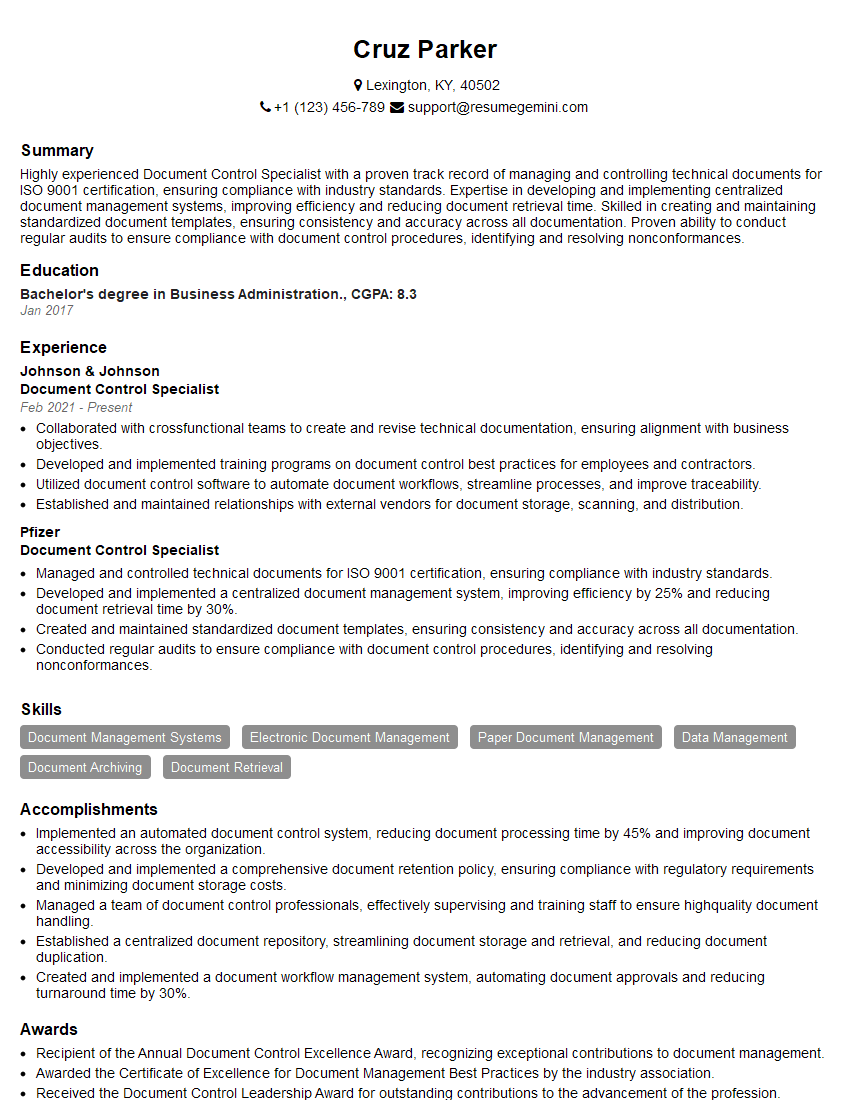
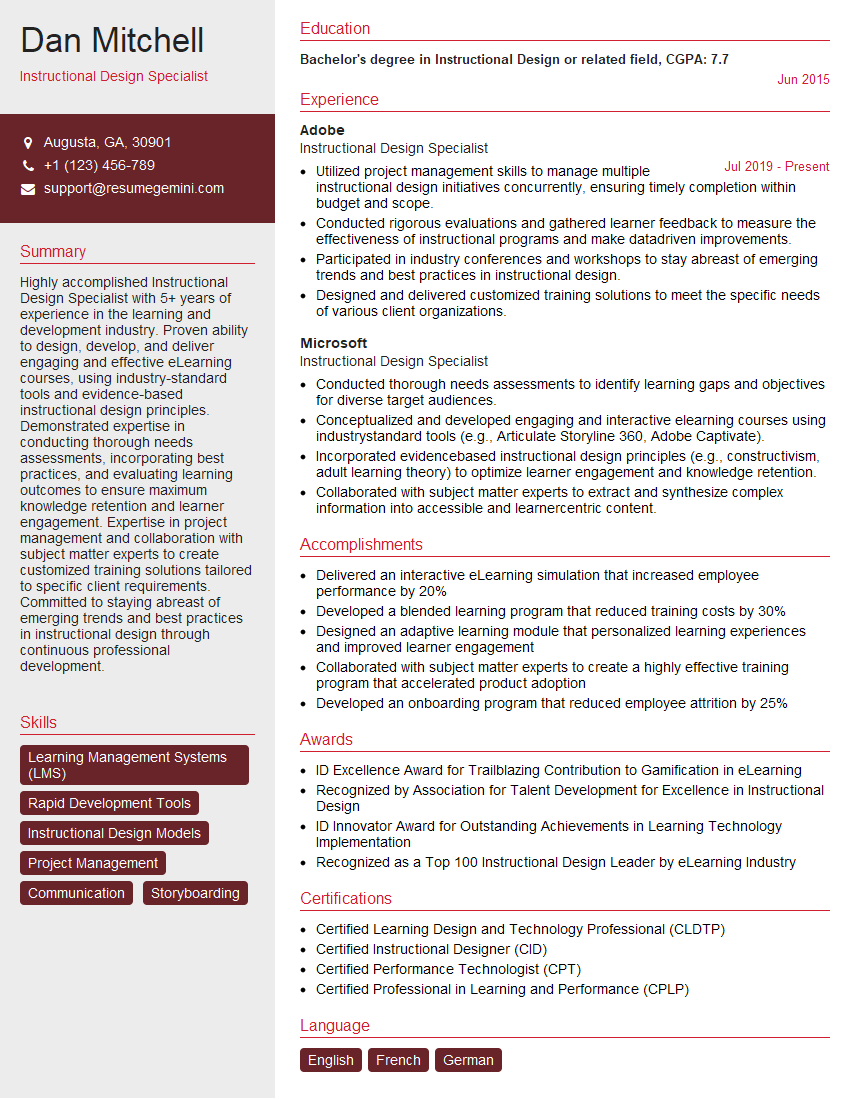
Mastering Labeling and Documentation Review opens doors to rewarding careers in regulated industries, offering opportunities for growth and specialization. A strong resume is crucial for showcasing your skills and experience effectively to potential employers. Building an ATS-friendly resume significantly increases your chances of getting noticed. We recommend using ResumeGemini, a trusted resource for crafting professional and impactful resumes. ResumeGemini provides examples of resumes tailored to Labeling and Documentation Review to help you get started. Invest time in creating a compelling resume—it’s your first impression!
Explore more articles
Users Rating of Our Blogs
Share Your Experience
We value your feedback! Please rate our content and share your thoughts (optional).
What Readers Say About Our Blog
Very informative content, great job.
good