The thought of an interview can be nerve-wracking, but the right preparation can make all the difference. Explore this comprehensive guide to Fiber Optic Network Maintenance and Optimization interview questions and gain the confidence you need to showcase your abilities and secure the role.
Questions Asked in Fiber Optic Network Maintenance and Optimization Interview
Q 1. Explain the difference between single-mode and multi-mode fiber optic cables.
The core difference between single-mode and multi-mode fiber optic cables lies in the diameter of their core and how light propagates through them. Think of it like comparing a single-lane highway to a multi-lane highway.
- Single-mode fiber: Has a very small core diameter (around 8-10 microns), allowing only one mode (path) of light to travel. This results in lower attenuation and higher bandwidth over longer distances. It’s like a single-lane highway – all traffic flows along one path, minimizing congestion. This makes it ideal for long-haul telecommunications and high-speed data transmission.
- Multi-mode fiber: Has a larger core diameter (typically 50 or 62.5 microns), allowing multiple modes (paths) of light to travel simultaneously. This is like a multi-lane highway, where multiple streams of traffic can flow at the same time. However, these multiple paths cause modal dispersion, which limits the distance over which data can be transmitted effectively. Multi-mode is often used for shorter distances, such as within a building or campus.
In essence: Single-mode is for long distances and high bandwidth, while multi-mode is suitable for shorter distances and lower bandwidth applications.
Q 2. Describe the process of fiber optic cable splicing.
Fiber optic cable splicing is the process of permanently joining two fiber optic cables together to create a continuous optical path. It’s a delicate process requiring precision and specialized tools. Here’s a typical procedure:
- Fiber Preparation: The fiber ends are carefully cleaved using a cleaver to ensure a perfectly perpendicular and smooth surface. Even a slight imperfection can significantly degrade signal quality.
- Clamping and Alignment: The prepared fibers are then carefully aligned and held in place using a splicing machine. This ensures that the cores of the two fibers are precisely aligned for optimal light transmission.
- Fusion Splicing: An electric arc is used to melt the ends of the fibers together, creating a strong and seamless fusion splice. This is usually done within a splicing machine that monitors the process for quality.
- Testing and Documentation: After splicing, the connection is tested using an OTDR (Optical Time Domain Reflectometer) to verify the quality of the splice and to measure attenuation. The splice details, including attenuation loss, are recorded.
Improper splicing can lead to significant signal loss and network issues. Therefore, proper training and use of high-quality equipment are essential.
Q 3. What are the common causes of fiber optic cable attenuation?
Attenuation in fiber optic cables refers to the loss of optical power as light travels along the fiber. Several factors contribute to this loss:
- Absorption: The fiber material itself absorbs some light energy, depending on the wavelength. Impurities in the glass can also increase absorption.
- Scattering: Light can scatter off imperfections in the fiber’s structure (like microscopic variations in density) causing it to deviate from its intended path and lose power.
- Bending Losses: Sharp bends in the fiber can cause significant light loss. Macro-bends (large-scale bends) and micro-bends (tiny irregularities) both contribute to attenuation.
- Connector Losses: Imperfectly polished or misaligned connectors introduce losses at the interface between two fibers or between a fiber and equipment.
- Splice Losses: Imperfect fiber splices, caused by poor alignment or imperfections in the fusion process, can result in significant signal loss.
Minimizing these factors through careful cable design, proper installation techniques, and regular maintenance is crucial for maintaining the integrity and performance of the fiber optic network.
Q 4. How do you troubleshoot a fiber optic network outage?
Troubleshooting a fiber optic network outage requires a systematic approach. Here’s a typical procedure:
- Identify the scope of the outage: Determine which parts of the network are affected. Is it a complete outage, or are only certain services or users impacted?
- Check the obvious: Ensure that all equipment (transmitters, receivers, etc.) is powered on and working correctly. Check for loose connectors or any visible damage to the cables.
- Use an OTDR: An OTDR is your best tool for pinpointing the fault. It can quickly locate breaks, splices with high loss, and other problems within the fiber itself.
- Test the connectors: Inspect connectors for damage, dirt, or misalignment. Use a visual fault locator (VFL) to check for continuity.
- Check for light levels: Use a power meter to measure the optical power at different points in the network. This can help identify where significant power loss is occurring.
- Consult network documentation: Drawings, maps, and previous maintenance records can provide valuable information to help pinpoint the problem.
- Isolate the problem: Once the faulty section has been identified, isolate it to prevent further disruption while repairs are made.
Troubleshooting often involves a combination of these methods. A methodical approach and the right tools are key to efficiently resolving fiber optic network outages.
Q 5. What are the different types of fiber optic connectors, and what are their applications?
Several types of fiber optic connectors are used, each with its own advantages and disadvantages. Some common ones are:
- SC (Subscriber Connector): A push-pull connector, widely used due to its reliability and ease of use. It’s commonly found in various applications, including LANs and metropolitan networks.
- FC (Ferrule Connector): A screw-on connector known for its high precision and excellent repeatability. It’s often preferred in high-performance applications where mechanical stability is crucial.
- LC (Lucent Connector): A compact, push-pull connector rapidly gaining popularity because of its small size and high density capabilities. It’s frequently used in high-density data centers.
- ST (Straight Tip): A bayonet connector that is less common now but still found in some older installations. It offers decent performance but is less compact than LC or SC connectors.
- MT-RJ (Mechanical Transfer Registered Jack): A double-fiber connector designed for high-density applications. Two fibers are terminated in a single connector, allowing efficient use of space.
The choice of connector depends on the specific application’s requirements concerning density, performance, and cost. For example, LC connectors are favored in high-density data centers for their space-saving design, while SC connectors remain popular in many general-purpose applications due to their reliability and relatively low cost.
Q 6. Explain the concept of Optical Time Domain Reflectometry (OTDR) and its use in fiber optic maintenance.
Optical Time Domain Reflectometry (OTDR) is a powerful tool used for testing and troubleshooting fiber optic networks. It works by sending short pulses of light into the fiber and measuring the amount of light reflected back at various points along the fiber. The reflected light provides information about the fiber’s characteristics, including its length, attenuation, and the location of any faults or events.
Think of it as sending an echo into the fiber. The timing and intensity of the echo tell you about the fiber’s condition. An OTDR is essential for:
- Measuring fiber length and attenuation:
- Locating faults: Breaks, splices, and other problems are identified by changes in the reflection pattern.
- Verifying connector losses:
- Assessing fiber quality: Provides information about fiber parameters and potential degradation.
OTDRs are indispensable for fiber optic maintenance, providing valuable insights into the health and performance of the entire fiber optic link.
Q 7. Describe different OTDR testing methods and their interpretations.
Various OTDR testing methods exist, each providing different information. The interpretation focuses on analyzing the OTDR trace – a graph showing light reflections along the fiber.
- Standard OTDR Testing: This involves sending light pulses into the fiber and analyzing the returned signal. The trace shows the fiber’s length, attenuation, and the location of any events (e.g., connectors, splices, faults).
- Bi-directional OTDR Testing: Performing tests in both directions improves accuracy and helps identify issues that might be missed in a one-way test. It can reveal asymmetries and problems that might be masked by unidirectional testing.
- Polarization OTDR Testing: This method measures the polarization of the reflected light. It’s especially useful in identifying problems associated with polarization-mode dispersion, which can affect high-speed transmission systems.
Interpreting the OTDR trace requires expertise. For example, sharp drops in the trace indicate breaks or major faults. Small dips might represent connector losses or poor splices. The experienced technician can analyze these features to precisely locate and diagnose issues in the fiber optic cable.
In summary, careful planning and selection of appropriate testing methods, combined with expert interpretation, are paramount to effectively utilize the OTDR in fiber optic network maintenance and optimization.
Q 8. How do you identify and resolve issues with fiber optic connectors?
Identifying and resolving issues with fiber optic connectors involves a systematic approach. First, we visually inspect the connector for any obvious damage like scratches, cracks, or dirt. A simple visual inspection can often pinpoint the problem. Then, we use a fiber optic inspection scope, which magnifies the connector’s end face, allowing us to see imperfections like scratches, dirt, or misalignment.
Common issues include contamination (dust, fingerprints), misalignment (leading to poor coupling), and physical damage. Cleaning is often the first solution for contamination; we use specialized cleaning wipes or pens. If misalignment is the problem, it might require re-terminating the connector or replacing it entirely. Severe physical damage usually necessitates connector replacement. We always document the findings and the corrective actions taken.
Example: During a recent network outage, I found a connector contaminated with dust. After cleaning it with a specialized fiber optic cleaning pen, the connection was restored. This simple cleaning saved hours of troubleshooting and potential downtime.
Q 9. What safety precautions must be followed when working with fiber optic cables?
Safety is paramount when working with fiber optic cables. The main concern is eye safety, as laser light emitted during testing or from broken fibers can cause serious eye damage. We always wear appropriate safety glasses designed specifically for protecting against laser light, and avoid any direct eye exposure to the fiber end faces.
Furthermore, fiber optic cables are delicate. Excessive bending can cause micro-bends, which degrade signal quality. We handle them carefully and use proper cable management techniques. Proper grounding procedures also prevent static electricity discharge, which can damage sensitive optical components. Finally, we ensure proper disposal of the cables to avoid accidental cuts and exposure to the glass fibers. We work with labeled cables to ensure proper identification and reduce confusion.
Example: Before working on any fiber optic cable, I always ensure everyone in the vicinity is wearing safety glasses to prevent accidental laser exposure.
Q 10. What are the different types of fiber optic cable damage and their repair methods?
Fiber optic cable damage varies, with different repair strategies accordingly.
- Macrobends: Sharp bends or kinks in the cable, often visible. Repair usually involves rerouting the cable to avoid the bend or replacing the damaged section.
- Microbends: Tiny bends invisible to the naked eye, causing signal attenuation. These are challenging to detect and often necessitate cable replacement.
- Cuts or breaks: Physical damage resulting in a severed cable. Repair involves splicing the fiber using a fusion splicer or mechanical splice.
- Connector damage: Damage to the connector end face, often resulting in high loss. Repair might involve cleaning or replacing the connector.
- Water ingress: Water entering the cable jacket, causing attenuation and potential corrosion. Often requires replacing the affected cable section.
Example: In one instance, a construction crew accidentally cut a fiber optic cable. We repaired the cable by using a fusion splicer to create a high-quality splice, minimizing signal loss and restoring network connectivity.
Q 11. How do you test fiber optic cable continuity?
Testing fiber optic cable continuity involves verifying the physical path of the fiber and ensuring there are no breaks or significant signal loss. We primarily use an Optical Time-Domain Reflectometer (OTDR). The OTDR sends light pulses down the fiber and measures the amount of light reflected back. The reflected signal indicates the presence of any events such as connectors, splices, or faults along the cable path.
A continuous trace with minimal loss indicates good continuity. However, significant loss or reflections at specific points might indicate a break, bend, or poor connector. Another simple check involves using a visual fault locator (VFL) to trace the light path down the fiber to visually confirm continuity.
Example: Using an OTDR, I identified a break in a fiber optic cable at a specific location by observing a large reflection on the OTDR trace. This allowed for targeted repair efforts instead of a cable search.
Q 12. Explain the concept of chromatic and polarization mode dispersion.
Chromatic and polarization mode dispersion (PMD) are two key impairments that affect the transmission of signals over optical fibers.
Chromatic Dispersion: This arises because different wavelengths of light travel at slightly different speeds in the fiber. This causes pulses of light to broaden, leading to signal degradation and ultimately limiting the data transmission rate. It’s more significant in longer fiber links.
Polarization Mode Dispersion (PMD): This happens due to imperfections and asymmetries in the fiber’s core, causing different polarization states of light to travel at different speeds. This leads to pulse broadening and signal distortion, much like chromatic dispersion, though the mechanism is different. It’s more of a concern in high-speed transmission systems.
Analogy: Imagine a race where runners (light wavelengths or polarization states) start at the same time but have slightly different speeds due to uneven terrain (fiber imperfections). The runners arrive at the finish line at different times, causing a delay and loss of formation.
Q 13. How do you interpret OTDR traces to identify faults?
Interpreting OTDR traces requires understanding the key features of the trace: events, loss, and reflections.
Events: These are points on the trace where a significant change in the signal occurs, for example, a connector, splice, or fault. They appear as distinct dips or peaks in the trace.
Loss: Represents the signal attenuation along the fiber. A linear downward slope indicates a gradual signal loss, while a sharp drop indicates a fault or discontinuity.
Reflections: Occur when light encounters a discontinuity, such as a break or misaligned connector. These are represented by large peaks or spikes on the trace.
By measuring the distance to these events and analyzing their characteristics, faults like breaks, macrobends, and connector issues can be identified and located.
Example: A sharp reflection on an OTDR trace at a specific distance indicates a potential break in the fiber at that point. The magnitude of the reflection gives an indication of the severity of the break.
Q 14. What is the role of a fusion splicer in fiber optic cable installation?
A fusion splicer is a crucial tool in fiber optic cable installation. It creates a permanent splice between two optical fibers by melting and fusing their ends together using an electric arc. This creates a strong and low-loss connection, crucial for maintaining high-quality signal transmission. Fusion splicing is preferred over mechanical splicing because it yields significantly lower optical loss and greater reliability.
The process involves precisely aligning the fiber ends using a microscopic view and applying a controlled electric arc to fuse them. The resulting splice is nearly as strong and transparent as the original fiber.
Example: After cutting a fiber optic cable during a new installation, we use the fusion splicer to join the fibers together, resulting in a very low-loss connection that provides an almost imperceptible performance loss.
Q 15. Describe the process of cleaning fiber optic connectors.
Cleaning fiber optic connectors is crucial for maintaining signal quality and preventing performance degradation. Even microscopic debris can significantly attenuate the optical signal. The process typically involves a two-step approach: cleaning the connector ferrule and then inspecting for cleanliness.
Step 1: Cleaning the Ferrule
- Choose the right cleaning method: For most applications, a pre-saturated isopropyl alcohol wipe followed by a dry wipe is sufficient. For heavily contaminated connectors, a specialized cleaning pen or cassette cleaner might be necessary. Avoid using compressed air, as this can blow debris into the connector.
- Clean in a single direction: Always wipe in a single direction to avoid scratching the ferrule. Rotating the wipe while cleaning can cause this.
- Inspect visually: After cleaning, use a high-magnification inspection scope (at least 200x) to examine the ferrule for remaining debris. Repeat the cleaning process if necessary.
Step 2: Inspection
Using a fiber inspection scope, thoroughly inspect the connector endface. Look for scratches, pits, or any remaining dust particles. This step ensures your cleaning was effective. A clean endface should appear smooth, shiny, and free of any defects.
Example: Imagine a network technician troubleshooting a sudden drop in signal strength on a long-haul fiber connection. After checking all other possible causes, they correctly identify a dirty connector using a fiber optic inspection scope, clean it according to protocol, and the signal immediately improves. This highlights the importance of proper connector cleaning and emphasizes that seemingly small particles can significantly impact network performance.
Career Expert Tips:
- Ace those interviews! Prepare effectively by reviewing the Top 50 Most Common Interview Questions on ResumeGemini.
- Navigate your job search with confidence! Explore a wide range of Career Tips on ResumeGemini. Learn about common challenges and recommendations to overcome them.
- Craft the perfect resume! Master the Art of Resume Writing with ResumeGemini’s guide. Showcase your unique qualifications and achievements effectively.
- Don’t miss out on holiday savings! Build your dream resume with ResumeGemini’s ATS optimized templates.
Q 16. What are the advantages and disadvantages of different fiber optic cable types?
Fiber optic cables come in various types, each with its advantages and disadvantages. The most common distinctions are based on the fiber type (single-mode or multi-mode) and the cable construction (loose-tube, tight-buffered, or ribbon).
Single-mode Fiber:
- Advantages: Higher bandwidth, longer transmission distances, lower signal attenuation (signal loss).
- Disadvantages: More expensive, requires more precise connectors and alignment.
Multi-mode Fiber:
- Advantages: Lower cost, easier to connect and terminate.
- Disadvantages: Lower bandwidth, shorter transmission distances, higher signal attenuation.
Cable Construction Types:
- Loose-tube: Offers good protection against microbending losses (signal loss caused by cable bending). Commonly used in outside plant deployments.
- Tight-buffered: Compact and easy to handle, ideal for indoor environments. More prone to microbending losses.
- Ribbon: Contains multiple fibers in a single unit, improving installation speed. Useful in high-density applications.
Example: A long-haul telecommunications network would utilize single-mode fiber due to its ability to transmit data over very long distances with minimal signal loss. However, a shorter network connecting buildings within a campus might use multi-mode fiber, due to its lower cost and easier installation. The choice of cable type depends heavily on the specific requirements of the application.
Q 17. What are the different methods used for testing fiber optic power levels?
Fiber optic power levels are measured using Optical Power Meters (OPMs). These meters utilize photodiodes to convert optical signals into electrical signals, which are then displayed as a power level. Several testing methods exist depending on the specific needs:
1. Direct Power Measurement: The most common method. The OPM is directly connected to the fiber using an appropriate adapter. The meter displays the optical power in dBm (decibels relative to one milliwatt). This method provides a direct measure of the signal strength.
2. Return Loss Measurement: Measures the amount of light reflected back to the source. High return loss indicates problems such as bad connectors or a break in the fiber. An optical time-domain reflectometer (OTDR) can also perform this test.
3. OTDR Testing: This sophisticated technique uses pulses of light to assess the characteristics of the entire fiber link. OTDRs can identify faults, measure attenuation, and pinpoint splice locations. They offer a more comprehensive view of the fiber’s health compared to simple power level measurements.
Example: A technician uses an OPM to verify the power levels at the transmitter and receiver of a fiber link. This allows the identification of any excessive attenuation, which can be caused by bent or damaged fiber. An OTDR would provide a more complete analysis, identifying the exact location of attenuation if there were any signal loss along the link.
Q 18. How do you maintain the integrity of a fiber optic network?
Maintaining the integrity of a fiber optic network requires a proactive and multi-faceted approach. This involves regular inspections, preventative maintenance, and prompt responses to any detected issues.
- Regular Inspections: Visual inspections of cables and connectors should be conducted regularly. Look for signs of physical damage, such as bending, cuts, or exposed fibers.
- Preventative Maintenance: This includes cleaning connectors, performing regular OTDR testing to identify potential issues before they cause major problems.
- Environmental Monitoring: Fiber optic cables are susceptible to environmental factors, such as excessive heat, moisture, or rodent damage. Implementing appropriate environmental controls is crucial.
- Documentation: Meticulous documentation of the network’s topology, cable routes, and equipment is critical for efficient troubleshooting and maintenance.
- Emergency Response Plan: Having a well-defined emergency response plan for dealing with fiber optic cable cuts or other significant network failures is essential to minimize downtime.
Example: A proactive approach would involve scheduling regular OTDR tests on a long-haul fiber link to monitor attenuation levels and detect any slow degradation in performance before it leads to signal loss. Cleaning connectors as part of preventive maintenance would minimize losses caused by contamination.
Q 19. What is the difference between wavelength division multiplexing (WDM) and dense wavelength division multiplexing (DWDM)?
Both Wavelength Division Multiplexing (WDM) and Dense Wavelength Division Multiplexing (DWDM) are techniques used to increase the capacity of fiber optic networks by transmitting multiple wavelengths of light simultaneously over the same fiber. The key difference lies in the spacing between the wavelengths.
WDM: Uses a relatively wide spacing (typically 2 nm or more) between the wavelengths of light multiplexed onto the fiber. This makes it less complex and less expensive but limits the number of wavelengths that can be transmitted simultaneously.
DWDM: Employs a much narrower spacing (typically 0.8 nm) between wavelengths, allowing many more wavelengths to be carried. This significantly increases network capacity but demands more sophisticated and costly equipment.
Analogy: Think of a highway. WDM is like having several lanes on the highway, each carrying vehicles (data streams) at a certain speed. DWDM is like further subdividing each lane into smaller sections, allowing more vehicles to travel simultaneously, significantly increasing the highway’s capacity.
Q 20. Explain the role of optical amplifiers in long-haul fiber optic networks.
Optical amplifiers are essential components in long-haul fiber optic networks. They amplify the optical signal directly, without needing to convert it to an electrical signal first. This avoids the signal degradation caused by optoelectronic conversion, enhancing transmission over long distances.
Types of Optical Amplifiers:
- Erbium-doped fiber amplifiers (EDFAs): The most common type, amplifying signals around 1550 nm, a common wavelength in telecommunications.
- Raman amplifiers: Offer broader amplification bandwidth and can be used for various wavelengths. They are often used in conjunction with EDFAs.
Role in Long-Haul Networks:
In long-haul networks, optical amplifiers are strategically placed along the fiber path to compensate for signal attenuation due to fiber length. This makes it possible to transmit data over thousands of kilometers with minimal signal degradation. Without optical amplifiers, long-distance transmission would be severely limited.
Example: Imagine a submarine cable transmitting data across an ocean. Without optical amplifiers spaced along the cable’s length, the signal would weaken considerably due to attenuation, rendering long-distance communication impossible. Optical amplifiers effectively boost the signal strength, enabling seamless high-speed data transmission.
Q 21. Describe the principles of SONET/SDH.
Synchronous Optical Network (SONET) and Synchronous Digital Hierarchy (SDH) are standardized protocols for multiplexing and transmitting digital data over fiber optic networks. They define frames and structures for transmitting data, as well as the ways signals are combined and synchronized. SDH is the international standard, while SONET is primarily used in North America. Despite subtle differences, they are functionally equivalent.
Key Principles:
- Synchronization: SONET/SDH employs a precise clocking mechanism to synchronize the transmission of data, ensuring accurate and reliable data delivery.
- Multiplexing: It provides a structured way to combine multiple signals (e.g., voice, data, video) into a single high-speed stream for efficient transmission.
- Hierarchical Structure: Data is organized in a hierarchical structure, allowing different levels of multiplexing and accommodating various bandwidth requirements.
- Error Detection and Correction: Includes mechanisms for error detection and correction, ensuring data integrity throughout transmission.
Practical Application: SONET/SDH is the backbone of many large-scale telecommunication networks. It provides the foundation for high-bandwidth, reliable transport of voice, data, and video signals across long distances. The hierarchical structure allows for scalability and easy integration of various network services.
Example: A major telecommunications provider uses SONET/SDH to transport high-volume data traffic between its various data centers and switching stations. The standardized framing structure and error-correction mechanisms enable efficient and reliable transmission of critical data across vast distances.
Q 22. What is the significance of Optical Add/Drop Multiplexers (OADMs)?
Optical Add/Drop Multiplexers (OADMs) are crucial components in modern fiber optic networks, acting as intelligent switches that allow for the selective addition and removal of wavelengths (or channels) of light without impacting the remaining wavelengths on the fiber. Think of it like a highway with multiple lanes (wavelengths); an OADM allows you to add or remove cars (data signals) from specific lanes without disrupting traffic on other lanes.
Their significance lies in their ability to significantly increase the efficiency and flexibility of Dense Wavelength Division Multiplexing (DWDM) systems. Instead of needing to terminate and re-amplify every signal at every location, OADMs enable flexible network architectures, allowing you to add or drop specific channels at various points along a fiber path. This significantly reduces the overall cost and complexity of the network, while also increasing its scalability and potential for future expansion.
For example, imagine a long-haul network connecting multiple cities. An OADM in a particular city could be used to drop off traffic destined for that city while allowing the remaining traffic to continue its journey towards other destinations. This selective dropping and adding prevents unnecessary traffic congestion and reduces the amount of expensive hardware needed.
Q 23. How do you handle different types of fiber optic cable terminations?
Handling different fiber optic cable terminations requires precision and adherence to strict standards to maintain signal integrity. The most common types include SC, LC, FC, and ST connectors, each with its own unique mechanism and requirements.
- Visual Inspection: Before anything else, always visually inspect the connector for any damage, dirt, or debris. A seemingly small imperfection can severely impact the connection.
- Cleaning: Cleaning is crucial. Using appropriate cleaning tools, such as a fiber optic cleaning pen or wipes, remove any dust or contaminants from the connector’s ferrule. Contamination is a frequent cause of poor connection or signal loss.
- Connector Type Specifics: Each connector type has a specific mating procedure. For instance, SC connectors generally use a push-pull mechanism, while LC connectors might require a slight twist.
- Testing: After making the connection, always test the fiber link using an optical power meter and an OTDR (Optical Time-Domain Reflectometer) to verify signal quality and identify any issues.
Failure to properly handle terminations can result in signal loss, increased bit error rate, and eventual network outages. During my career, I’ve encountered numerous instances where improper cleaning led to significant downtime, emphasizing the importance of meticulous handling procedures.
Q 24. Describe the process of identifying and repairing a fiber optic cut.
Identifying and repairing a fiber optic cut involves a systematic approach combining troubleshooting and field repair techniques. The process begins with pinpointing the location of the cut, then preparing the site, splicing the fiber, and testing the repair.
- Fault Location: Utilize an OTDR (Optical Time-Domain Reflectometer) to precisely locate the fiber cut. The OTDR sends pulses of light down the fiber, and by analyzing the reflections, you can determine the exact distance to the break.
- Site Preparation: Once located, carefully access the fiber. This might involve digging, using aerial lifts, or accessing underground conduits. Safety precautions are paramount here – always use appropriate personal protective equipment (PPE).
- Fiber Splicing: Prepare the damaged fibers for splicing. This includes cleaving the fibers to create a perfectly flat end using a fiber cleaver, ensuring minimal attenuation. Fusion splicing is usually preferred, as it creates a strong, durable, and low-loss connection. Mechanical splicing is also an option, but it often results in slightly higher loss.
- Testing: After splicing, use an optical power meter and an OTDR to verify the signal quality and attenuation of the repaired section. Ensure the signal meets the required specifications.
- Documentation: Meticulous record-keeping is crucial. Document the location of the cut, the repair procedure, and the results of the testing. This is important for future maintenance and troubleshooting.
I once had to repair a fiber cut in a remote mountainous region. The challenge was not only locating the cut but also ensuring the safety of the team amidst challenging terrain. Careful planning, adherence to safety protocols, and precise repair techniques were crucial to successfully restoring service.
Q 25. What is your experience with fiber optic testing equipment?
My experience encompasses a wide range of fiber optic testing equipment, including OTDRs, optical power meters, optical spectrum analyzers (OSAs), and light sources. I’m proficient in using these instruments to conduct various tests, including attenuation measurements, optical return loss measurements, and identifying faults within the fiber optic network.
OTDRs are invaluable for locating faults and measuring fiber length and loss. I’m familiar with using various OTDR software packages for analyzing trace results. Optical Power Meters are essential for measuring the optical power levels at various points within the network, allowing for the identification of power budget issues. OSAs are used for analyzing the optical spectrum of a signal, ensuring proper wavelength operation in DWDM networks. Light Sources are used to launch light into the fiber for various testing purposes.
Beyond individual instruments, I’m also comfortable using integrated test sets that combine multiple functionalities for more efficient troubleshooting. My experience includes working with equipment from various manufacturers, requiring adaptability and a thorough understanding of testing methodologies.
Q 26. How familiar are you with different types of fiber optic network architectures?
I am familiar with several fiber optic network architectures, including point-to-point, ring, star, and mesh topologies. Each has its strengths and weaknesses, making the selection dependent on the specific requirements of the network.
- Point-to-Point: The simplest topology, connecting two points directly. Suitable for short distances with relatively low bandwidth demands.
- Ring Topology: Provides redundancy; if one link fails, the traffic can be rerouted around the ring. Ideal for applications requiring high availability.
- Star Topology: All nodes connect to a central hub. Simple to manage and easy to troubleshoot, but a failure at the central hub affects the entire network.
- Mesh Topology: Multiple interconnected paths provide redundancy and fault tolerance. Complex to manage but highly resilient and scalable.
In addition to basic topologies, I have experience with more complex architectures like Wavelength Division Multiplexing (WDM) networks and those using Optical Add/Drop Multiplexers (OADMs), enhancing efficiency and capacity.
Understanding these architectures is vital for effective network planning, implementation, and troubleshooting. My experience in designing and maintaining networks of varying scales has given me a practical understanding of the trade-offs associated with each.
Q 27. Explain your understanding of network management systems for fiber optics.
Network management systems (NMS) for fiber optics are critical for monitoring, managing, and optimizing the performance of a fiber optic network. These systems provide real-time visibility into network health, allowing for proactive identification and resolution of issues. They typically use SNMP (Simple Network Management Protocol) and other protocols to collect data from various network elements, including OADMs, amplifiers, and other equipment.
A robust NMS allows for:
- Performance Monitoring: Real-time monitoring of key performance indicators (KPIs) such as signal power, bit error rate (BER), and optical signal-to-noise ratio (OSNR).
- Fault Management: Automated alerts and notifications upon detection of faults, allowing for rapid response and minimizing downtime.
- Configuration Management: Centralized management of network devices, allowing for efficient configuration changes and updates.
- Security Management: Secure access control and user authentication to protect the network from unauthorized access.
My experience includes working with various NMS platforms, using them to effectively manage large-scale fiber optic networks. The ability to interpret the data provided by the NMS and correlate it with field measurements is essential for effective troubleshooting and proactive maintenance. This has been crucial in preventing costly network outages and ensuring high service availability in multiple projects.
Key Topics to Learn for Fiber Optic Network Maintenance and Optimization Interview
- Fiber Optic Cable Testing and Troubleshooting: Understanding OTDR principles, fault location techniques, and interpreting test results. Practical application includes identifying and resolving issues like fiber cuts, macrobends, and connector problems.
- Optical Transceiver and Component Maintenance: Knowledge of different transceiver types (SFP, XFP, etc.), their specifications, and troubleshooting common issues like power loss and signal degradation. Practical application involves replacing faulty components and ensuring optimal performance.
- Optical Network Monitoring and Management Systems: Familiarity with network management tools and protocols (SNMP, etc.) used to monitor network performance, identify potential issues proactively, and manage alarms. Practical application involves analyzing network data to pinpoint bottlenecks and predict failures.
- Fiber Splicing and Connectorization Techniques: Understanding different splicing methods (fusion splicing, mechanical splicing), connector types (FC, SC, LC), and proper termination procedures. Practical application involves performing these tasks efficiently and accurately to minimize signal loss.
- Network Security and Protection: Understanding threats to fiber optic networks (physical damage, theft, malicious attacks) and implementing appropriate security measures. Practical application includes securing fiber cable infrastructure and managing access control.
- Optical Network Design Principles: Basic understanding of network topologies, wavelength division multiplexing (WDM), and optical amplification. This allows for effective problem solving during maintenance and optimization tasks.
- Documentation and Reporting: Understanding the importance of maintaining accurate records of network configurations, maintenance activities, and troubleshooting steps. Practical application includes creating comprehensive reports to communicate findings and track progress.
Next Steps
Mastering Fiber Optic Network Maintenance and Optimization is crucial for career advancement in the rapidly growing telecommunications industry. It opens doors to higher-paying roles with increased responsibility and expertise. To maximize your job prospects, crafting a strong, ATS-friendly resume is essential. ResumeGemini is a trusted resource that can help you build a professional and impactful resume, ensuring your skills and experience are highlighted effectively. Examples of resumes tailored to Fiber Optic Network Maintenance and Optimization are available to guide you through this process, providing a template for success. Take the next step towards your dream career today!

Network Administrator Resume Sample
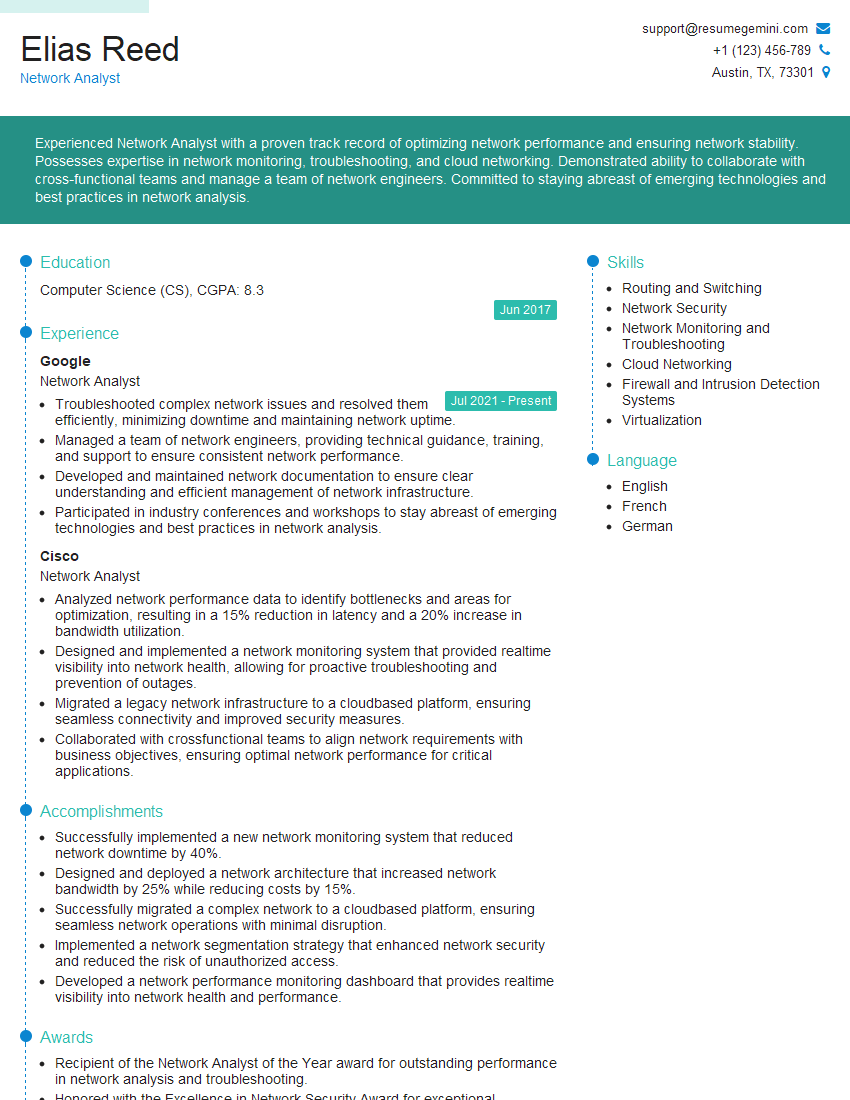
Network Analyst Resume Sample
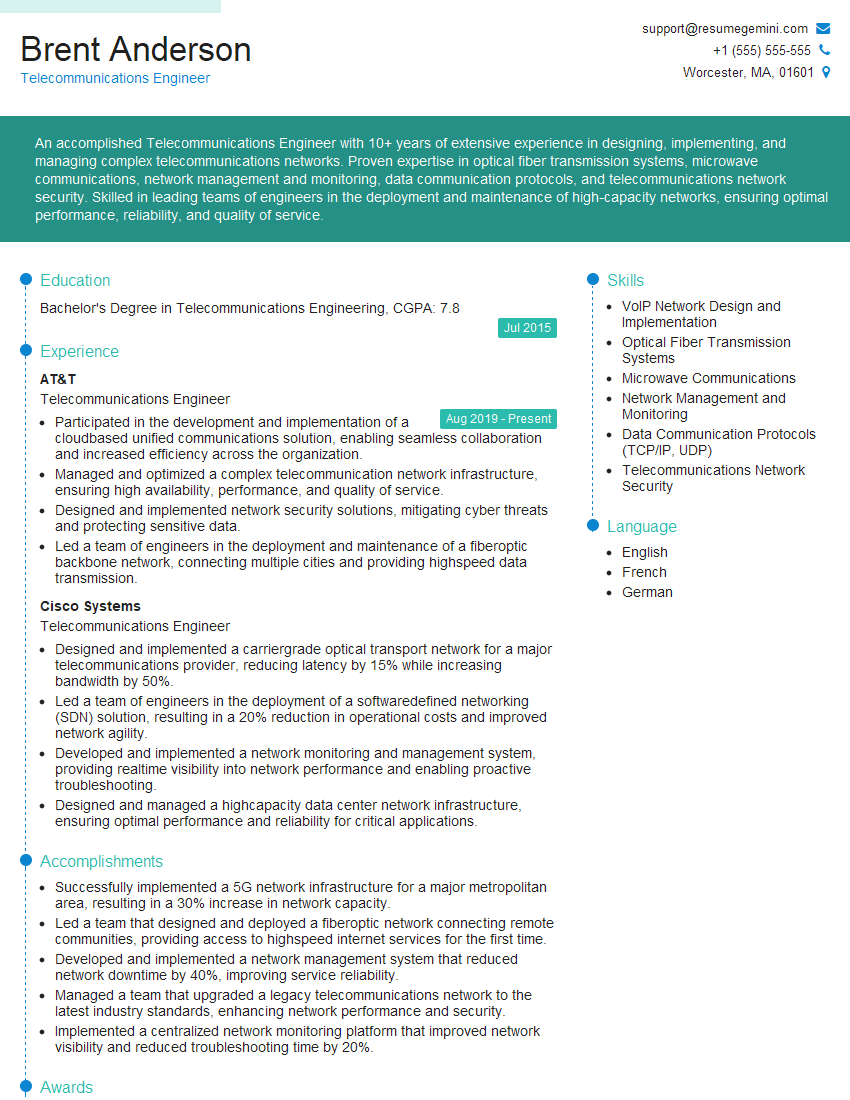
Telecommunications Engineer Resume Sample

Field Service Engineer Resume Sample

Fiber Optic Technician Resume Sample
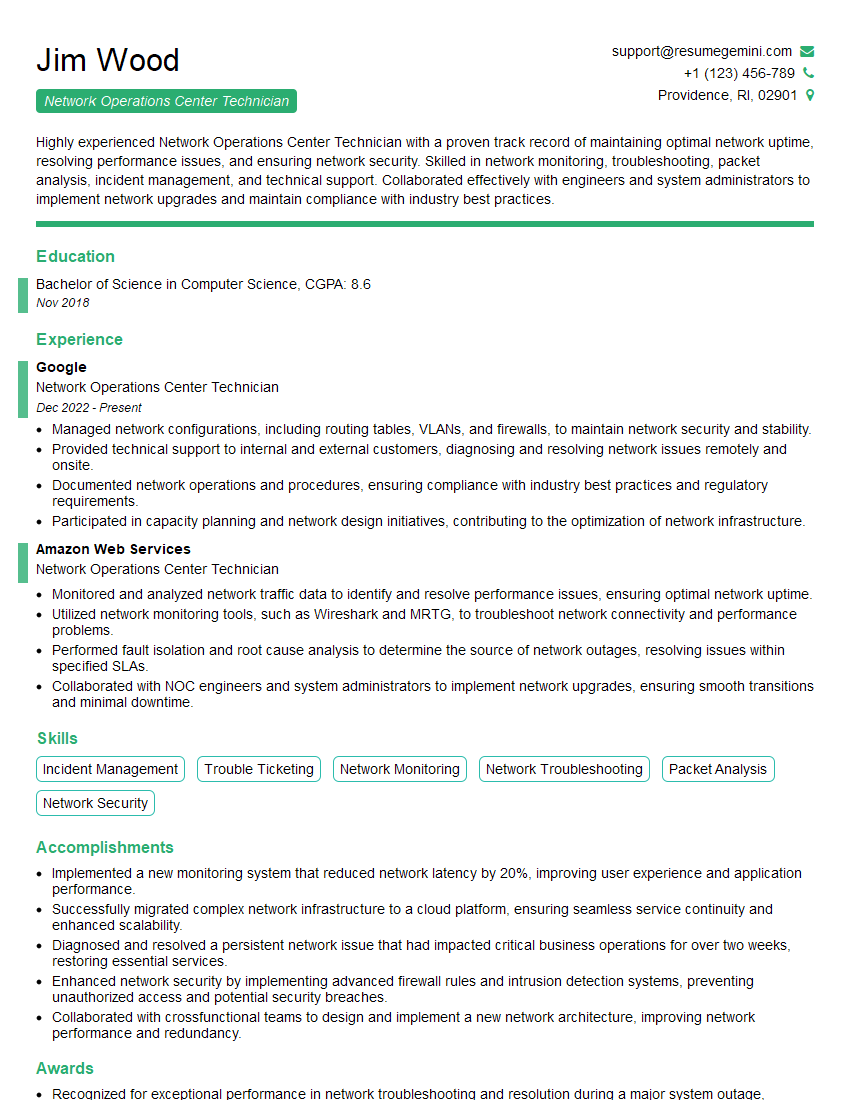
Network Operations Center Technician Resume Sample

Outside Plant Technician Resume Sample

Telecommunications Technician Resume Sample
Explore more articles
Users Rating of Our Blogs
Share Your Experience
We value your feedback! Please rate our content and share your thoughts (optional).
What Readers Say About Our Blog
Very informative content, great job.
good