Feeling uncertain about what to expect in your upcoming interview? We’ve got you covered! This blog highlights the most important Fiber Optic Test Equipment Operation interview questions and provides actionable advice to help you stand out as the ideal candidate. Let’s pave the way for your success.
Questions Asked in Fiber Optic Test Equipment Operation Interview
Q 1. What are the key components of an OTDR?
An Optical Time-Domain Reflectometer (OTDR) is a crucial piece of fiber optic test equipment used to characterize and troubleshoot fiber optic cables. It works by sending pulses of light into the fiber and analyzing the light that’s reflected back. Think of it like a sophisticated radar for fiber optics. The key components are:
- Light Source (Laser): Generates short pulses of light at a specific wavelength (e.g., 1310 nm or 1550 nm), which are launched into the fiber.
- Detector: Measures the intensity of the backscattered light and the light reflected from events along the fiber.
- Signal Processor: Processes the signal from the detector, converting it into a visual representation called an OTDR trace.
- Display: Shows the OTDR trace, which allows technicians to identify various features like fiber length, attenuation, and fault locations.
- Control Unit: Allows users to configure the OTDR’s parameters such as pulse width, pulse repetition rate, and averaging settings. The control unit also manages data acquisition and analysis features.
Each of these components works together to precisely map the optical characteristics of the fiber, providing valuable insights for installation, maintenance, and troubleshooting.
Q 2. Explain the concept of Fresnel reflection in OTDR testing.
Fresnel reflection is a phenomenon where a portion of the light pulse is reflected back at the point where there’s an abrupt change in refractive index, such as a connector or the end of a fiber. Imagine shining a flashlight on a glass surface; some light passes through, but some reflects back. This reflected light is captured by the OTDR and appears as a sharp spike on the trace. The magnitude of the Fresnel reflection depends on the difference in the refractive indices of the two media. For instance, a connector with good quality will show a smaller Fresnel reflection compared to a poorly polished or damaged connector which could manifest as a significantly larger spike.
Understanding Fresnel reflections is crucial because it helps technicians identify and assess connector quality and also locate the exact positions of various components along the fiber optic link.
Q 3. How do you interpret an OTDR trace?
Interpreting an OTDR trace requires understanding its key features. The horizontal axis represents distance along the fiber, and the vertical axis represents the power level of the reflected light (usually in dB). The trace shows different features:
- Dead Zone: A region close to the OTDR where reflections can’t be accurately measured.
- Events: Sudden changes in signal power level, indicating connectors, splices, or faults.
- Attenuation: The gradual decrease in signal power level as the light travels along the fiber, measured in dB/km.
- Backscatter: The light scattered back towards the OTDR from the fiber itself.
Analyzing these features allows technicians to determine fiber length, locate faults, measure attenuation, and assess the overall quality of the fiber optic link. For example, a significant increase in attenuation might suggest a fiber break, while multiple small events indicate multiple connectors. Proper training and experience are vital to accurately interpret the trace and make informed decisions.
Q 4. What are the different types of optical power meters?
Optical power meters are essential tools for measuring the optical power levels in a fiber optic system. There are several types, broadly categorized by functionality and the types of fibers they support:
- Basic Power Meters: These meters measure absolute optical power levels at specific wavelengths. They’re relatively simple and inexpensive.
- Power Meters with Wavelength Selection: Allow measurements at multiple wavelengths, supporting various types of fiber and laser sources.
- In-line Power Meters: Designed to be permanently installed in a fiber optic network to monitor power levels continuously. These are commonly used for long-haul monitoring applications.
- Visual Fault Locators (VFLs): Though not strictly a power meter, VFLs use a visible laser light to locate breaks or bends in the fiber. This helps in faster and targeted diagnostics of fiber related problems.
The choice of power meter depends on the specific application and required accuracy. For instance, installing a new fiber link would necessitate using a high accuracy power meter to ensure signal integrity while a VFL might suffice for basic continuity checks.
Q 5. How do you perform a loss budget calculation?
A loss budget calculation determines the maximum allowable signal loss in a fiber optic link. It involves adding up all expected signal losses across the network and comparing it to the system’s available power margin. The goal is to ensure that the received signal is strong enough for proper operation. This process is critical to prevent errors and ensures adequate signal strength throughout the entire system.
Steps for loss budget calculation:
- Identify components and their losses: Calculate individual loss values for connectors, splices, fiber attenuation (based on cable length and type), and any other components such as couplers or attenuators.
- Sum up losses: Add up all individual loss values to get the total expected loss.
- Determine available power margin: This is the difference between the transmitter power and the minimum receiver sensitivity. These values are specified by the equipment manufacturers. It’s crucial to correctly find these values for all equipment used.
- Compare total loss and power margin: The total loss should be significantly less than the power margin. Ideally, there should be a substantial safety margin to account for unforeseen losses.
If the total loss exceeds the power margin, it indicates that the link might not be able to function reliably. In such a case, modifications need to be made like reducing the cable length, using lower-loss fibers or optimizing splicing processes. This calculation is an essential part of fiber optic system design and prevents issues during deployment and operational phases.
Q 6. What are common causes of fiber optic attenuation?
Fiber optic attenuation, the loss of optical signal strength as it travels through the fiber, can stem from several sources:
- Absorption: Light energy is absorbed by the fiber material itself. Impurities in the glass can significantly increase absorption. The absorption coefficient is wavelength dependent.
- Scattering: Light is scattered in different directions due to imperfections in the fiber’s structure, such as variations in density or microscopic defects. Rayleigh scattering is dominant in optical fiber communication.
- Bending Losses: Excessive bending of the fiber causes light to leak out of the core. Macro bends are large scale bends while micro bends are small, frequent bends.
- Connector and Splice Losses: Imperfectly connected connectors or poorly made splices introduce additional loss due to reflection and misalignment.
- Environmental Factors: External factors like temperature changes, pressure, and humidity can also influence fiber attenuation.
Understanding these causes is critical for diagnosing and resolving attenuation issues in a fiber optic network. For example, unusually high attenuation might point towards a microbend problem in the cable, while a sudden increase at a specific point is often indicative of a poorly connected splice.
Q 7. Explain the difference between single-mode and multi-mode fiber.
The key difference between single-mode and multi-mode fiber lies in the core size and the way light propagates through it:
- Single-Mode Fiber: Has a very small core diameter (typically around 9 μm), allowing only a single mode of light to propagate. This results in minimal modal dispersion, meaning light pulses travel with minimal spreading, leading to higher bandwidth and longer transmission distances. Imagine a single lane highway: all the cars (light signals) travel in a single path at the same speed.
- Multi-Mode Fiber: Has a larger core diameter (typically 50 μm or 62.5 μm), allowing multiple modes of light to propagate simultaneously. This results in significant modal dispersion, where light pulses spread out as they travel, limiting the bandwidth and transmission distance. Think of a multi-lane highway: cars (light signals) can travel in various paths and at different speeds.
Single-mode fiber is suitable for long-haul, high-bandwidth applications such as telecommunications networks, while multi-mode fiber is often used for shorter distances and lower-bandwidth applications, such as local area networks (LANs). The selection depends on the specific requirements of the network, considering factors such as cost, bandwidth requirements, and distance.
Q 8. Describe the process of fiber optic splicing.
Fiber optic splicing is the process of joining two optical fibers together to create a continuous optical path. It’s crucial for maintaining signal integrity in long-haul fiber optic networks. Think of it like welding two electrical wires together, but on a much smaller and more delicate scale.
The process generally involves these steps:
- Fiber Preparation: This involves carefully stripping the outer jacket and coatings from the fiber ends to expose the core. Precision is paramount to avoid damaging the fiber.
- Cleaving: Using a fiber cleaver, the fiber ends are precisely cleaved (broken) to create a perfectly perpendicular surface. This is vital for optimal light transmission. An imperfect cleave will lead to significant signal loss.
- Splicing: There are two main methods: fusion splicing and mechanical splicing. Fusion splicing uses heat to melt and fuse the fiber ends together. Mechanical splicing uses a precision connector to align and hold the fiber ends. Fusion splicing generally offers superior performance and lower loss.
- Testing: After splicing, the connection is tested using an Optical Time Domain Reflectometer (OTDR) to measure any insertion loss (signal loss introduced by the splice). This ensures the splice meets the required standards.
For example, imagine a long-distance telecommunications network. Splicing is necessary to seamlessly connect the many kilometers of fiber cables that make up the network. A poorly executed splice can lead to signal degradation, impacting call quality and internet speed.
Q 9. How do you troubleshoot a fiber optic connection?
Troubleshooting a fiber optic connection involves systematically isolating the problem. It often starts with visual inspection, followed by more advanced testing.
- Visual Inspection: Check for any physical damage to the cable, connectors, or splices. Look for bends, kinks, cracks, or dirt.
- Optical Power Meter (OPM): Use an OPM to measure the optical power at different points in the system. This helps identify the location of signal loss. A significant drop in power between two points indicates a problem in that section.
- Optical Time Domain Reflectometer (OTDR): An OTDR sends light pulses down the fiber and analyzes the reflections to identify faults like breaks, bad splices, or connector issues. It provides a visual representation of the fiber’s condition.
- Light Source: Sometimes, a simple visual check with a light source can reveal if the fiber has a break or major bend. A visible break is easier to locate than a microscopic imperfection.
For instance, if an OPM shows low power at the receiver, an OTDR can pinpoint the exact location of the problem. It might reveal a poor splice, a damaged connector, or a break in the fiber cable itself.
Q 10. What safety precautions should be taken when working with fiber optics?
Working with fiber optics requires strict adherence to safety protocols, mainly because of the potential eye hazards. Laser light emitted by certain equipment is very powerful.
- Eye Protection: Always wear appropriate laser safety eyewear rated for the wavelengths of light used. This is crucial to prevent serious eye damage. Never look directly into the end of an optical fiber unless you know for sure there’s no light being transmitted.
- Proper Handling: Avoid kinks and sharp bends in the fiber cable, which can cause micro-bending losses and damage the fiber. Handle connectors with care to avoid scratching the end faces.
- Cleanliness: Fiber optic connectors must be clean to ensure optimal performance. Use only approved cleaning methods and materials. Contamination can significantly impact signal quality.
- Grounding: In some situations, grounding equipment may be necessary to prevent static discharge, which can damage sensitive fiber optic components.
- Laser Safety Training: It’s critical to undergo proper laser safety training before working with fiber optic equipment that emits laser light. This ensures you understand the potential hazards and how to mitigate them.
For example, a poorly cleaned connector can easily lead to significant signal attenuation. Never underestimate the need for proper eye protection.
Q 11. What is the significance of return loss in fiber optic systems?
Return loss is a critical parameter in fiber optic systems that measures the amount of optical power reflected back to the source. A high return loss indicates a good connection with minimal reflections. Low return loss means a significant portion of the signal is being reflected, causing signal degradation.
High return loss is vital for maintaining signal quality and preventing interference. Reflections can cause noise, distortion, and even damage to sensitive optical components. Think of it like an echo in a sound system – excessive reflection degrades the quality of the signal.
In practical terms, a low return loss can lead to signal instability, reduced transmission distance, and potential malfunction of optical components. It’s essential to maintain a high return loss to ensure the system performs optimally. This is often checked using an OTDR or a return loss tester.
Q 12. Explain the concept of optical return loss.
Optical return loss (ORL) quantifies the amount of light reflected back towards the light source at a specific point in the fiber optic system. It’s expressed in decibels (dB) and is a measure of the back reflection or signal loss due to impedance mismatch at a connector, splice, or other discontinuity.
A high ORL value (e.g., -50 dB) indicates a very low level of reflected light, signifying a good connection. A low ORL value (e.g., -20 dB) indicates a significant amount of reflected light, suggesting a problem like a poorly made connection or a damaged fiber. This reflected light can interfere with the forward signal, leading to performance issues.
ORL testing helps to identify and diagnose problems in fiber optic networks, ensuring high-quality transmission.
Q 13. How do you test for optical signal strength?
Optical signal strength is measured using an Optical Power Meter (OPM). This device measures the amount of optical power received at a specific point in the fiber optic system, usually expressed in dBm (decibels relative to one milliwatt).
The OPM typically has a detector that converts the optical signal into an electrical signal, which is then displayed on the meter. Before taking measurements, it’s essential to select the correct wavelength on the OPM to match the wavelength of the transmitted light.
OPMs are crucial for verifying the signal strength at different points within a fiber optic network to troubleshoot and monitor performance. Low signal strength indicates potential problems like fiber attenuation, poor connector quality, or damaged fiber. For example, if the OPM shows a significant reduction in power compared to the expected levels, it points to a possible fault within the fiber optic link.
Q 14. What is the purpose of a fiber optic cleaner?
A fiber optic cleaner is a specialized tool used to remove dust, dirt, and other contaminants from the end faces of fiber optic connectors. Clean connectors are essential for maintaining optimal performance and minimizing signal loss. Even microscopic particles can significantly degrade signal quality, leading to high insertion loss and error rates.
Fiber optic cleaners come in various forms, including cassette cleaners and pen-style cleaners. They often use a specialized cleaning material, like a dry wipe or a fluid, to remove debris. The cleaning process is very important to avoid scratching or damaging the delicate fiber end faces. Improper cleaning can introduce more problems than it solves.
Regular cleaning is a preventative maintenance practice. Always clean connectors before plugging them into equipment, especially in dirty environments. A clean connection is a reliable connection, preventing disruptions and costly troubleshooting.
Q 15. What is the difference between Connector Polishing and Cleaning?
Connector polishing and cleaning are both crucial for maintaining the integrity of fiber optic connections, but they address different aspects of fiber end-face quality. Cleaning removes contaminants like dust, oil, and fingerprints from the connector ferrule. This is a preventative measure and is done regularly. Polishing, on the other hand, is a more involved process used to repair a damaged or scratched end-face. It involves carefully reshaping the ferrule surface to restore its optical performance. Think of it like this: cleaning is like wiping down a window, while polishing is like replacing a scratched pane.
Improper cleaning can introduce scratches, while improper polishing can lead to uneven surfaces, both causing significant signal loss. I always follow strict cleaning protocols, using lens tissue and isopropyl alcohol, before and after each connection. For polishing, specialized tools and a meticulous approach are necessary, and should only be performed by trained technicians with proper equipment.
Career Expert Tips:
- Ace those interviews! Prepare effectively by reviewing the Top 50 Most Common Interview Questions on ResumeGemini.
- Navigate your job search with confidence! Explore a wide range of Career Tips on ResumeGemini. Learn about common challenges and recommendations to overcome them.
- Craft the perfect resume! Master the Art of Resume Writing with ResumeGemini’s guide. Showcase your unique qualifications and achievements effectively.
- Don’t miss out on holiday savings! Build your dream resume with ResumeGemini’s ATS optimized templates.
Q 16. Describe your experience with different types of fiber optic connectors (SC, FC, LC, ST).
I have extensive experience working with various fiber optic connectors – SC, FC, LC, and ST. Each has its own unique physical characteristics and application preferences. SC connectors, with their push-pull design, are relatively inexpensive and commonly found in older installations. FC connectors, known for their bayonet-style locking mechanism, provide greater stability and are favored in applications where high reliability is critical, such as in telecommunication networks. LC connectors are becoming increasingly popular due to their small size, making them ideal for high-density applications. Finally, ST connectors, with their twist-lock mechanism, are less common now but still found in some older systems. Knowing the differences is essential for efficient troubleshooting and installation – a mismatched connector is a frequent source of connectivity issues.
During my career, I’ve worked with thousands of these connectors, troubleshooting connection problems ranging from simple misalignment to more complex issues like cracked ferrules. My experience spans both single-mode and multi-mode fibers in various networking and communication systems.
Q 17. How do you identify different types of fiber optic cables?
Identifying fiber optic cables involves several key characteristics. First, look at the outer jacket. It will often have markings indicating the fiber type (single-mode or multi-mode), cable type (e.g., tight-buffered, loose-tube), and manufacturer information. Second, check the connector type at each end. As discussed earlier, connector types (SC, FC, LC, ST) will influence compatibility. Third, examine the fiber count. This is usually clearly indicated on the cable jacket. Sometimes you might see color-coding on the individual fibers within the cable, offering further identification information (although this isn’t always standardized).
For example, a cable marked “OS2 9/125 SMF LC-LC” indicates a single-mode (SMF) fiber, with a 9-micron core diameter and 125-micron cladding diameter, featuring LC connectors on both ends. This information is crucial for choosing the correct equipment and connectors during installations.
Q 18. How do you interpret the results from a visual fault locator (VFL)?
A Visual Fault Locator (VFL) is used for quickly identifying breaks or significant bends in optical fiber. When you activate the VFL, a red light is injected into the fiber. You observe the light emanating from the other end of the fiber and look for any breaks in the signal. A continuous, strong signal indicates a healthy cable. If the light is weak or absent, it points to a fault. It’s important to note that VFLs cannot pinpoint minor faults such as micro-bends; they are best for detecting large-scale issues.
During a recent project, a client reported intermittent network failures. Using a VFL, I quickly located a broken fiber segment near a construction zone. The VFL pinpointed the location within a few meters, which was invaluable in expediting the repair process.
Q 19. What is the importance of proper grounding in fiber optic systems?
Proper grounding in fiber optic systems is essential for protecting against electrical surges and static discharge. While fiber itself isn’t directly affected by electrical currents, the equipment used to transmit and receive the signals – such as optical transceivers, patch panels, and test equipment – can be damaged by electrical surges. Grounding ensures a safe path for these surges, preventing harm to equipment and preventing potential safety risks.
Failure to ground the equipment correctly could result in damaged components or even a fire. A properly grounded system ensures that any unwanted electrical charges dissipate safely, protecting the investment in fiber optic infrastructure and preventing downtime.
Q 20. Describe your experience with different fiber optic test equipment manufacturers (e.g., Fluke, Viavi).
My experience encompasses a wide range of fiber optic test equipment manufacturers, including Fluke Networks and Viavi Solutions. I’m proficient in operating and interpreting results from their OTDRs, power meters, and light sources. Both Fluke and Viavi offer high-quality, reliable equipment, although their interfaces and specific features differ somewhat. I’ve worked on projects using both brands, so I am comfortable adapting to different equipment in the field.
For example, Fluke’s CertiFiber Pro is excellent for Tier 1 testing, while Viavi’s OneTouch OTDR is particularly user-friendly and powerful for more complex scenarios. Each manufacturer has its own strengths and weaknesses, with Fluke’s products sometimes being more robust, and Viavi offering more sophisticated features and analyses. This allows me to select the best tools based on the specific requirements of a job.
Q 21. Explain your troubleshooting experience with OTDR results, such as high loss or unexpected reflections.
Troubleshooting OTDR results requires a systematic approach. High loss in an OTDR trace can indicate several issues, such as fiber breaks, excessive bending, poor connector terminations, or even contamination within the fiber. Unexpected reflections, on the other hand, suggest possible connector issues, splices, or unexpected bends in the fiber. To solve these, I systematically investigate:
- Visual Inspection: I start with a visual inspection of all connectors and splices along the fiber path.
- Connector Testing: I will test connector quality with a physical inspection and optical power meter.
- OTDR Trace Analysis: I analyze the OTDR trace for precise location of any losses or reflections. The distance and magnitude of the reflection or loss can pinpoint the problem area.
- Splice and Connector Reconnection/Replacement: Based on the OTDR analysis and visual inspection, I’ll re-terminate connectors or replace faulty splices.
For instance, I once encountered high loss on an OTDR trace. Through systematic investigation, I discovered a tiny crack in a connector ferrule—almost invisible to the naked eye— which was causing significant attenuation. Replacing the connector immediately resolved the issue.
Q 22. What is the significance of wavelengths in fiber optic communication?
Wavelengths are fundamental in fiber optic communication because they determine the color of light used to transmit data. Different wavelengths correspond to different frequencies, and higher frequencies mean more data can be transmitted in a given time period – think of it like a wider highway for data. Common wavelengths used in fiber optics are 1310 nm and 1550 nm, chosen for their low attenuation (signal loss) over long distances. The choice of wavelength impacts the type of fiber used (single-mode fibers generally operate at 1550nm for long-haul transmission, while multi-mode might use 850nm or 1310nm for shorter distances) and the equipment needed to support it. For instance, optical transceivers must be compatible with the specific wavelength being used.
Q 23. How does chromatic dispersion affect fiber optic signal transmission?
Chromatic dispersion is a phenomenon where different wavelengths of light travel at slightly different speeds through the fiber optic cable. Imagine a race where some runners (light wavelengths) are faster than others. This difference in speed causes pulses of light to spread out and overlap, leading to signal distortion and ultimately, data loss or errors. There are two main types: material dispersion and waveguide dispersion. Material dispersion is caused by the varying refractive index of the fiber material at different wavelengths, while waveguide dispersion is due to the differences in propagation speeds of different modes within the fiber. This effect is particularly significant in longer links and higher data rates, requiring techniques like dispersion compensation to mitigate its effects.
Q 24. How do you test for polarization mode dispersion (PMD)?
Polarization Mode Dispersion (PMD) testing involves measuring the difference in arrival time of different polarization states of light propagating through the fiber. PMD occurs because of imperfections and asymmetries in the fiber’s structure, causing light to experience different path lengths based on its polarization. This difference in travel time leads to signal distortion and data errors. Testing is typically performed using a PMD analyzer, which injects a series of polarized pulses into the fiber and measures the differential group delay (DGD) at the output. The DGD, usually expressed in picoseconds (ps), directly quantifies the PMD impact. Advanced PMD analyzers can provide a statistical analysis of the DGD across different wavelengths and polarization states, leading to a more comprehensive understanding of the fiber’s PMD characteristics. This information is vital for ensuring reliable high-speed data transmission over long distances.
Q 25. Describe your experience working with different types of fiber optic media (e.g., single-mode, multi-mode, etc.)
I’ve worked extensively with both single-mode and multi-mode fiber optics. Single-mode fibers, with their smaller core diameter, are ideal for long-haul, high-bandwidth applications because they minimize modal dispersion. I’ve used OTDRs and optical power meters to characterize their attenuation and identify faults. Multi-mode fibers, having larger cores, are more tolerant of connection misalignments but suffer from higher modal dispersion, limiting their use to shorter distances. My experience includes testing and troubleshooting both types within various network infrastructures – from data centers and enterprise networks to telecom backbone deployments. I’ve also worked with specialty fibers like dispersion-shifted fiber and polarization-maintaining fibers, each with unique characteristics that need specific testing procedures.
Q 26. How familiar are you with different fiber optic standards (e.g., IEC, TIA)?
I’m very familiar with several fiber optic standards including those from the International Electrotechnical Commission (IEC) and the Telecommunications Industry Association (TIA). My experience includes working with standards such as IEC 60793-1 (for optical fibers) and various TIA standards related to fiber optic cabling and testing. Understanding these standards is crucial for ensuring interoperability, safety, and performance consistency across different equipment and network deployments. This understanding helps me interpret test results correctly and ensure compliance with industry best practices. For example, IEC standards define crucial parameters like fiber attenuation and bending loss, while TIA standards focus more on cable installation and testing methodologies.
Q 27. Explain the difference between insertion loss and return loss.
Insertion loss and return loss are both important metrics in fiber optic testing but describe different aspects of signal transmission. Insertion loss refers to the reduction in optical power as the light signal passes through a component or a section of fiber. It represents the attenuation of the signal and is usually measured in decibels (dB). A higher insertion loss indicates more signal degradation. Return loss, on the other hand, quantifies the amount of light reflected back to the source. It indicates the quality of the connection or the presence of reflections caused by discontinuities, such as connectors or splices. Return loss is also measured in dB; a higher return loss value indicates less reflection and a better connection. Both measurements are critical for determining the overall quality and performance of a fiber optic link. A good link will have low insertion loss and high return loss.
Q 28. What is your experience with automated fiber optic testing systems?
I possess considerable experience with automated fiber optic testing systems, including OTDRs (Optical Time-Domain Reflectometers) with automated reporting capabilities, and automated optical power meters. These systems significantly improve efficiency and accuracy by reducing manual intervention and providing comprehensive reports. I’m proficient in using software to configure these systems, analyze test results, and generate reports compliant with industry standards. My experience extends to using various automated test platforms from different vendors, allowing me to effectively troubleshoot and manage large-scale fiber optic networks. For example, I’ve used automated systems to map entire fiber optic networks, identifying faults quickly and precisely and significantly reducing downtime compared to manual testing.
Key Topics to Learn for Fiber Optic Test Equipment Operation Interview
- Optical Power Meters: Understanding operation, calibration, and interpreting measurements for various wavelengths. Practical application: Troubleshooting low signal power issues on a fiber optic network.
- Optical Time-Domain Reflectometers (OTDRs): Mastering OTDR principles, event identification (breaks, splices, connectors), and interpreting OTDR traces. Practical application: Locating and identifying faults in a long-haul fiber optic cable.
- Optical Spectrum Analyzers (OSAs): Familiarize yourself with OSA functionality, analyzing spectral characteristics, and identifying signal impairments. Practical application: Verifying the performance of a wavelength-division multiplexing (WDM) system.
- Fiber Optic Connectors and Splices: Understanding different connector types (SC, FC, LC, etc.), splicing techniques, and the impact on signal quality. Practical application: Diagnosing connection problems caused by poor termination or splicing.
- Fiber Optic Test Set Procedures: Developing proficiency in standardized test procedures, documentation, and reporting. Practical application: Creating detailed test reports that meet industry standards.
- Troubleshooting and Problem Solving: Develop a systematic approach to diagnosing and resolving common fiber optic network issues. Practical application: Effectively using testing equipment to isolate the source of a network outage.
- Safety Procedures: Understanding and adhering to safety regulations and best practices when working with fiber optic equipment and cables. Practical application: Safe handling and disposal of fiber optic components.
Next Steps
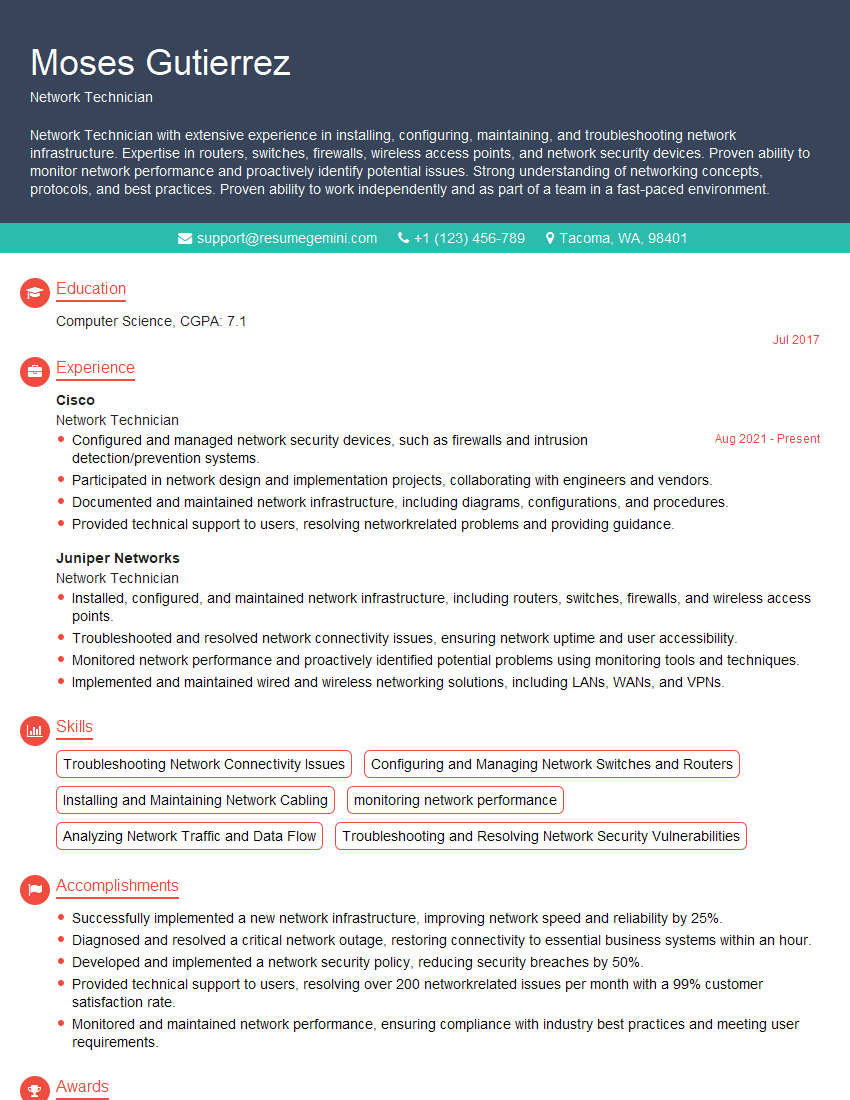
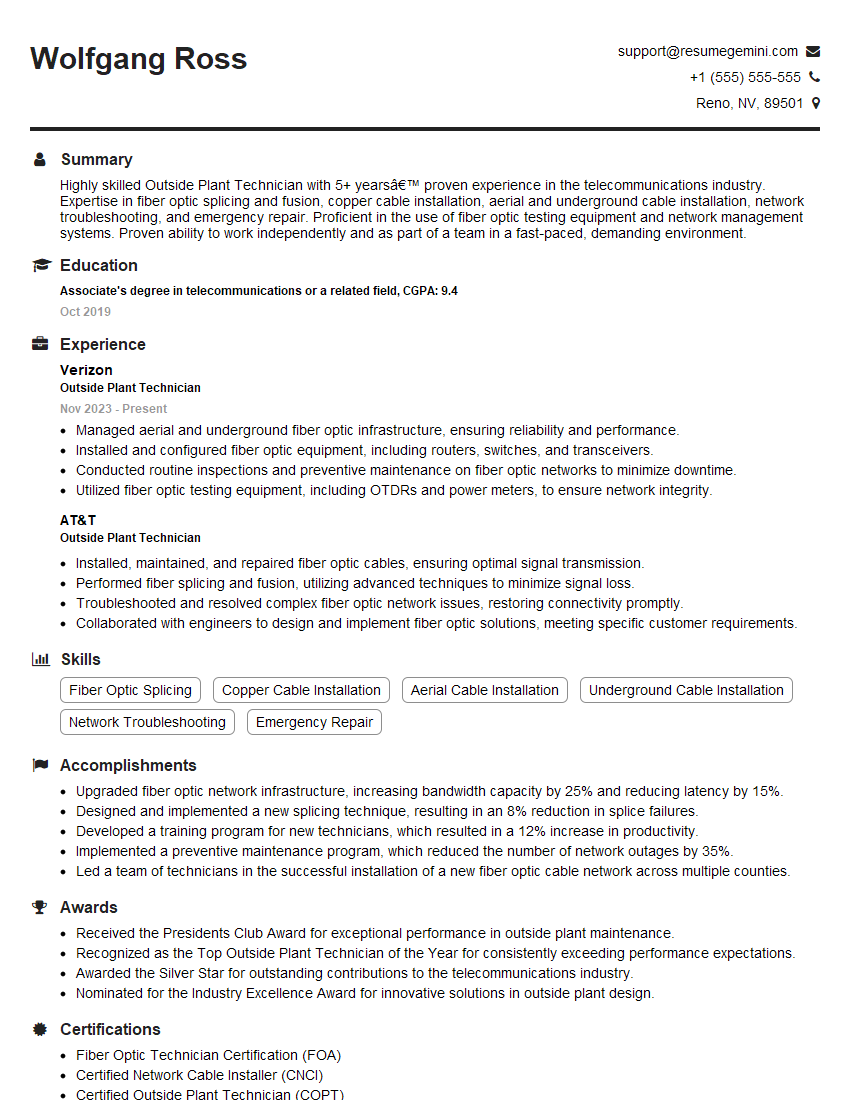
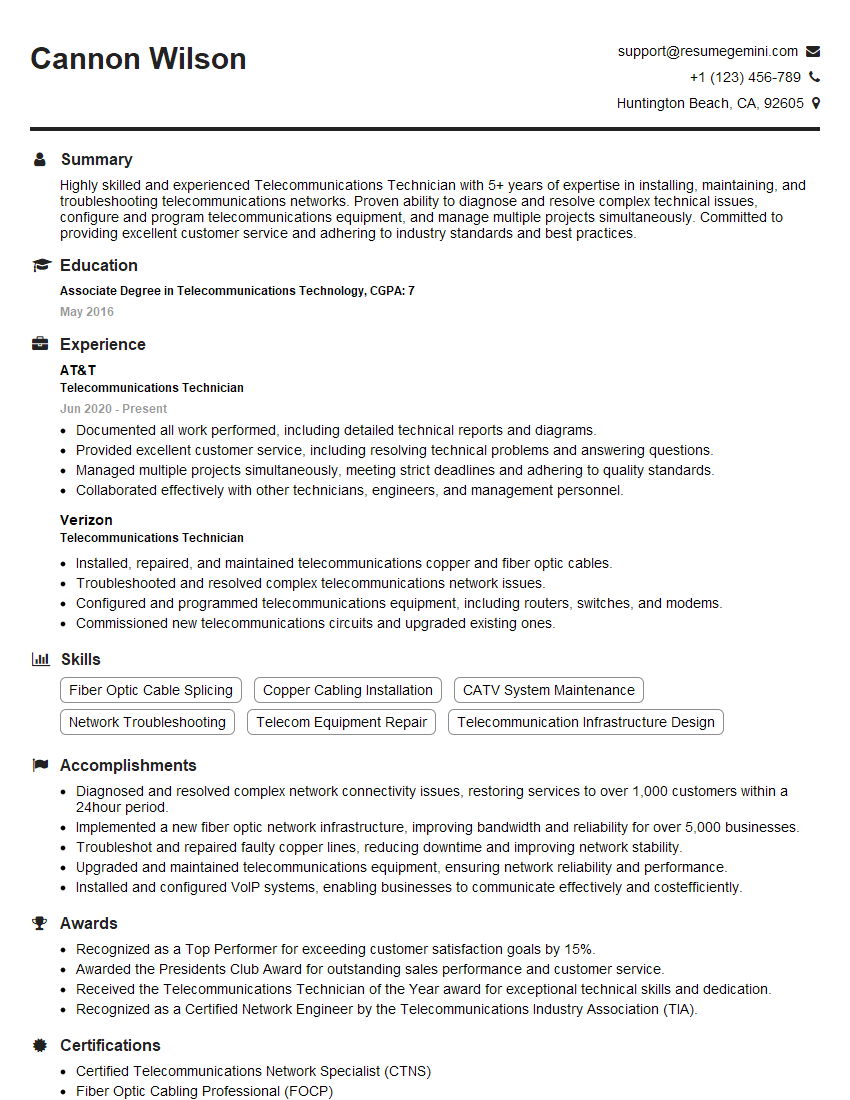
Mastering Fiber Optic Test Equipment Operation is crucial for career advancement in the telecommunications and networking industries. It opens doors to specialized roles with higher earning potential and greater responsibility. To maximize your job prospects, create a compelling and ATS-friendly resume that highlights your skills and experience. ResumeGemini is a trusted resource for building professional resumes that make an impact. They offer examples of resumes tailored specifically to Fiber Optic Test Equipment Operation roles, helping you showcase your qualifications effectively and land your dream job.


Explore more articles
Users Rating of Our Blogs
Share Your Experience
We value your feedback! Please rate our content and share your thoughts (optional).
What Readers Say About Our Blog
Very informative content, great job.
good