Interviews are opportunities to demonstrate your expertise, and this guide is here to help you shine. Explore the essential Field Technician Supervision interview questions that employers frequently ask, paired with strategies for crafting responses that set you apart from the competition.
Questions Asked in Field Technician Supervision Interview
Q 1. Describe your experience managing a team of field technicians.
My experience managing field technicians spans over eight years, encompassing teams ranging from five to fifteen members across various projects. I’ve overseen technicians working on diverse tasks, from residential installations to large-scale industrial maintenance. My approach focuses on building strong working relationships based on trust and open communication. This includes regular one-on-one meetings to discuss progress, challenges, and career goals. For example, during a recent project involving a large-scale network upgrade, I fostered a collaborative environment where technicians shared their expertise and troubleshooting strategies. This resulted in increased efficiency and a significant reduction in project completion time. I also actively delegate tasks based on individual skill sets and encourage continuous learning through mentorship and targeted training programs.
Q 2. How do you ensure technicians adhere to safety regulations?
Ensuring technician adherence to safety regulations is paramount. My approach is multi-faceted and begins with comprehensive initial training covering all relevant safety protocols, including OSHA guidelines and company-specific procedures. This training isn’t a one-time event; it’s reinforced through regular refresher courses, toolbox talks, and safety audits conducted both on-site and remotely. We use a system of documented safety checks before, during and after each job, ensuring technicians receive regular feedback on their safety practices. Furthermore, I actively encourage a safety-first culture where reporting near misses and incidents is not only accepted but actively encouraged. Open communication ensures that any safety concerns are addressed proactively and solutions implemented immediately. For instance, after a near-miss incident involving improper ladder usage, we implemented a mandatory refresher training on safe ladder operation and incorporated additional safety checks into our job procedures.
Q 3. Explain your approach to scheduling and dispatching technicians.
My approach to scheduling and dispatching technicians involves using a combination of techniques to ensure optimal resource allocation and timely service delivery. I utilize a field service management software that integrates GPS tracking, job assignment, and real-time updates. This software allows for efficient route optimization, minimizing travel time and maximizing the number of jobs completed per day. Before assigning jobs, I consider technician skill sets, experience, location, and availability. For instance, a complex installation would be assigned to a senior technician with proven experience, whereas routine maintenance tasks might be handled by a more junior technician under supervision. The software also allows for dynamic scheduling adjustments, enabling rapid response to urgent service requests. This proactive approach ensures that customer expectations are met and minimizes potential delays.
Q 4. How do you handle technician performance issues?
Handling technician performance issues requires a structured and fair approach. I begin by documenting the specific issue, gathering evidence, and scheduling a private meeting with the technician. During this meeting, I discuss the performance concerns constructively, focusing on specific instances and providing concrete examples. It’s crucial to understand the root cause of the problem; sometimes, it’s a skill gap, other times it could be related to personal issues or lack of resources. Based on the identified cause, I develop a performance improvement plan (PIP), outlining clear expectations, goals, and timelines. This plan includes regular check-ins, providing support and guidance to help the technician improve. If the issues persist despite the PIP, further disciplinary action may be necessary, always adhering to company policies and legal requirements. In one instance, a technician consistently missed deadlines. We discovered he was struggling with time management. Implementing a system of prioritized task lists and regular progress check-ins significantly improved his performance.
Q 5. What methods do you use to track technician productivity?
Tracking technician productivity relies on a robust system of key performance indicators (KPIs). We use the field service management software to monitor metrics such as jobs completed per day, average service time, customer satisfaction ratings, and first-time fix rates. The software also tracks travel time, providing insights into route optimization opportunities. Regular reporting and analysis of these KPIs allow us to identify areas for improvement, both at the individual and team levels. For example, consistently low first-time fix rates might indicate a need for additional training or updated equipment. This data-driven approach ensures that we are constantly striving for efficiency and delivering high-quality service. Beyond the software, I also conduct regular on-site observations and review completed work orders for quality and accuracy.
Q 6. How do you handle emergency situations or urgent service requests?
Handling emergency situations requires a rapid and organized response. We have a dedicated emergency response protocol that prioritizes critical service requests based on severity and potential impact. The field service management software includes an alert system that immediately notifies the relevant supervisor and technicians of any urgent requests. We have a pre-designated pool of on-call technicians equipped to handle emergency situations, ensuring swift action. During the response, clear communication is crucial. Regular updates are provided to the customer and relevant stakeholders, keeping them informed of the progress. For example, during a power outage affecting a critical facility, our emergency response team was deployed immediately. Through coordinated effort, we restored power within the required time frame, minimizing disruptions.
Q 7. Describe your experience with technician training and development.
Technician training and development is a continuous process. We offer various training opportunities, including classroom sessions, online courses, and on-the-job mentoring. Training covers both technical skills and soft skills, such as communication, customer service, and problem-solving. We encourage technicians to pursue certifications and professional development opportunities, providing support and reimbursement for relevant courses and training programs. Regular performance reviews identify skill gaps and areas for improvement, forming the basis of individualized training plans. We also incorporate feedback from customer satisfaction surveys to identify areas where additional training might be beneficial. For example, we recently implemented a comprehensive training program focusing on new software, improving efficiency and minimizing errors. This commitment to ongoing development ensures that our technicians remain highly skilled and equipped to handle the demands of their roles.
Q 8. How do you manage technician travel and expenses?
Managing technician travel and expenses requires a multi-pronged approach focusing on efficiency, cost-effectiveness, and compliance. I utilize a combination of route optimization software, expense tracking apps, and clear company policies.
Firstly, route optimization software analyzes job locations, traffic patterns, and technician availability to create the most efficient routes, minimizing travel time and fuel costs. This saves the company money and reduces technician fatigue. For example, I might use a software like Route4Me or similar to plan daily routes for my team, inputting all their appointments for the day.
Secondly, I implement a robust expense tracking system. Technicians use a dedicated app to submit expense reports, including mileage, tolls, parking, and other job-related costs. This system integrates with our accounting software for streamlined processing and reduces the risk of errors or fraudulent claims. We use a clear expense policy outlining acceptable expenses and reimbursement rates to maintain transparency and prevent issues.
Finally, regular reviews of travel and expense data are crucial for identifying areas for improvement. For instance, if we consistently see high fuel costs on a particular route, we can investigate alternative routes or consider more fuel-efficient vehicles. This data-driven approach ensures responsible spending and operational efficiency.
Q 9. What software or tools do you use to manage field technicians?
Effective field technician management relies heavily on the right software and tools. We use a comprehensive Field Service Management (FSM) system that integrates several key functionalities.
Our FSM platform provides features such as job scheduling and dispatching, allowing me to assign jobs based on technician skills, location, and availability. It also provides real-time tracking of technicians in the field, so I can monitor progress and respond to unexpected issues promptly. For example, if a technician is running behind schedule, I can proactively communicate with the customer and adjust the schedule accordingly.
The system also facilitates communication. Technicians use the app to update job status, upload photos of completed work, and communicate directly with customers and supervisors. This transparency improves customer satisfaction and allows me to monitor the quality of work in real-time. Further, the software manages inventory, allowing technicians to request parts and supplies directly through the app, streamlining procurement and reducing downtime.
In addition to the FSM, we utilize project management tools for larger projects involving multiple technicians and specialized equipment. This enhances collaboration and ensures all tasks are completed efficiently and on time.
Q 10. How do you ensure the quality of work performed by your team?
Ensuring quality work hinges on a combination of proactive measures and reactive feedback loops. I employ a multi-faceted approach to guarantee the team’s output consistently meets high standards.
First, we establish clear service level agreements (SLAs) and detailed work instructions for each type of job. This ensures technicians understand their responsibilities and the expected outcome. Regular training sessions keep them updated on best practices and new technologies. For instance, we recently implemented training on a new diagnostic tool, which significantly improved repair times and accuracy.
Secondly, a robust quality control system is in place. This includes regular on-site inspections of completed work, customer feedback surveys, and peer reviews. This allows us to identify issues early and take corrective actions before they escalate. We also use the FSM software to collect data on job completion times, parts usage, and customer satisfaction ratings, providing quantifiable measures of quality.
Finally, a culture of continuous improvement is fostered. We encourage open communication and feedback, and regularly analyze quality control data to identify trends and areas needing improvement. This may involve refining work instructions, providing additional training, or addressing equipment issues.
Q 11. Explain your approach to conflict resolution within the field team.
Conflict resolution within the field team requires a fair, timely, and professional approach. My strategy focuses on proactive prevention and effective mediation.
Firstly, I emphasize clear communication and teamwork from day one. This includes regular team meetings where technicians can openly discuss issues and concerns. I actively listen to individual perspectives and facilitate healthy discussion. A collaborative work environment minimizes the likelihood of conflicts arising.
However, when conflicts do emerge, I intervene promptly and fairly. My approach is to understand the root cause of the conflict, actively listen to all parties involved, and find a solution that is mutually acceptable. This might involve mediation, where I guide the parties involved to reach a consensus, or arbitration, where I make a decision based on the facts presented.
Documentation is key. I maintain detailed records of any conflicts, including the steps taken to resolve them. This provides a clear history of the situation and protects both the company and the involved individuals. Ultimately, the goal is to resolve the conflict, preserve team morale, and maintain productivity.
Q 12. How do you manage inventory and equipment for your field technicians?
Managing inventory and equipment for field technicians is crucial for operational efficiency and customer satisfaction. Our system relies on a combination of software, physical organization, and procedural controls.
The FSM system plays a vital role in inventory management. It tracks all equipment and parts, enabling me to monitor stock levels, anticipate shortages, and order replacements in a timely manner. Technicians use the app to request parts and equipment, ensuring they have what they need for the job. The system also integrates with our suppliers, streamlining the ordering process.
Physically, we have a well-organized warehouse and vehicle stocking system. Tools and frequently used parts are readily accessible, minimizing search times. We conduct regular equipment checks to ensure everything is in good working order and properly maintained. This preventative maintenance reduces downtime and extends the lifespan of our equipment.
Clear procedures are crucial. We have defined protocols for equipment checkout, return, and maintenance. This ensures accountability and helps prevent loss or damage. Regular audits are conducted to verify inventory accuracy and identify areas for improvement in our management processes.
Q 13. What metrics do you use to evaluate the performance of your team?
Evaluating team performance requires a balanced approach using both quantitative and qualitative metrics. My system focuses on several key indicators.
Quantitative metrics include: job completion rates, average repair times, customer satisfaction scores (CSAT), and cost per job. These provide objective measures of efficiency and effectiveness. For instance, a consistently high CSAT score reflects excellent customer service and quality of work. Tracking average repair times helps identify areas where training or process improvements may be needed.
Qualitative metrics include peer evaluations, supervisor observations, and self-assessments. These provide insights into teamwork, problem-solving skills, communication effectiveness, and professional development. For example, a peer evaluation might reveal a technician’s willingness to help colleagues, showcasing teamwork skills.
The data collected from both quantitative and qualitative sources are used to conduct regular performance reviews. These reviews offer constructive feedback, identify areas for improvement, and recognize outstanding contributions. This data-driven approach helps to motivate the team, enhance skill development, and ultimately improve overall performance.
Q 14. How do you handle customer complaints related to field technician work?
Handling customer complaints related to field technician work requires a prompt, empathetic, and efficient approach focused on resolving the issue and regaining customer trust.
My first step is to acknowledge the complaint promptly and empathetically. I assure the customer that I take their concerns seriously and will investigate the matter thoroughly. This shows respect for the customer’s time and feelings.
Next, I gather all relevant information about the complaint, including the technician involved, the nature of the work performed, and any supporting documentation. I may review the technician’s work log, customer communication records, and photos taken during the service call. This detailed investigation helps to determine the root cause of the issue.
Depending on the nature of the complaint, I may take several actions: contacting the technician to obtain their perspective, arranging for a follow-up service call to rectify the problem, or offering a partial or full refund. Once the issue is resolved, I follow up with the customer to ensure they are satisfied with the outcome. This diligent approach aims to turn a negative experience into a positive one, demonstrating our commitment to customer satisfaction.
Q 15. Describe your experience with remote supervision of field technicians.
Remote supervision of field technicians requires a blend of technology and strong communication skills. It’s about ensuring tasks are completed efficiently, safely, and to the required standard, even when geographically distanced. My experience involves leveraging various tools to monitor progress, provide real-time guidance, and troubleshoot problems.
- Real-time tracking and location services: Using GPS tracking integrated with our work order management system, I can see technician locations, monitor their travel time between jobs, and ensure they’re on schedule.
- Remote diagnostics and support: We utilize software enabling remote access to technician devices, allowing me to diagnose equipment issues or guide them through complex repairs remotely, saving considerable travel time and expenses.
- Regular check-ins and video conferencing: Daily briefings and scheduled video calls keep me informed about progress, address any challenges, and foster a strong working relationship, ensuring technicians don’t feel isolated.
- Digital reporting and documentation: Technicians use mobile apps to submit completed work orders with photos and videos, providing clear evidence of the work performed and streamlining reporting.
For example, during a recent project involving multiple technicians across a large geographical area, using real-time location tracking helped identify a technician who experienced an unexpected delay due to a road closure. I was able to quickly re-route them to an alternate job site, minimizing project downtime.
Career Expert Tips:
- Ace those interviews! Prepare effectively by reviewing the Top 50 Most Common Interview Questions on ResumeGemini.
- Navigate your job search with confidence! Explore a wide range of Career Tips on ResumeGemini. Learn about common challenges and recommendations to overcome them.
- Craft the perfect resume! Master the Art of Resume Writing with ResumeGemini’s guide. Showcase your unique qualifications and achievements effectively.
- Don’t miss out on holiday savings! Build your dream resume with ResumeGemini’s ATS optimized templates.
Q 16. How do you motivate and retain your field technician team?
Motivating and retaining a field technician team requires a multi-faceted approach focusing on appreciation, growth opportunities, and a positive work environment. It’s about building a team where individuals feel valued and empowered.
- Recognition and rewards: Public acknowledgment of achievements, both big and small, along with performance-based bonuses and incentives, significantly boosts morale and productivity. We also have a ‘Technician of the Month’ award based on peer nominations and performance metrics.
- Career development: Offering training opportunities, specialized certifications, and mentorship programs demonstrates investment in their long-term growth and encourages skill development. This is crucial for retention, as technicians can see a clear path for career progression within the company.
- Open communication and feedback: Regular team meetings, both in person and virtual, provide opportunities for open communication, feedback sharing, and addressing concerns. I also make it a point to conduct individual check-ins to discuss progress, challenges, and career goals.
- Competitive compensation and benefits: Offering a competitive salary and comprehensive benefits package, including health insurance, retirement plans, and paid time off, is essential for attracting and retaining top talent in a competitive job market.
I remember one instance where a technician expressed interest in specializing in a specific type of equipment. We invested in training, and after successful completion, they quickly became a go-to resource for others, boosting their confidence and our overall team capabilities.
Q 17. How do you utilize technology to improve efficiency in field operations?
Technology plays a vital role in improving efficiency across all aspects of field operations. The right tools can streamline processes, reduce errors, and enhance communication, leading to significant time and cost savings.
- Mobile work order management system: This system allows for digital task assignment, real-time tracking, and automated reporting. This eliminates paper-based processes and reduces administrative overhead.
- GPS tracking and route optimization: Tracking technicians’ locations and using route optimization software minimizes travel time and fuel costs, increasing productivity.
- Remote diagnostic tools: Software and hardware enabling remote access to equipment for troubleshooting and diagnostics cuts down on site visits and reduces repair time.
- Inventory management software: Tracking equipment and parts inventory in real-time prevents delays due to missing supplies and ensures technicians have what they need when they need it.
For instance, our implementation of a mobile work order system reduced paperwork by 80% and shortened average job completion times by 15%, leading to significant cost savings and improved customer satisfaction.
Q 18. What is your experience with performance reviews for field technicians?
Performance reviews for field technicians are a crucial process for evaluating individual contributions, identifying areas for improvement, and recognizing outstanding performance. My approach combines quantitative and qualitative data to provide a comprehensive assessment.
- Data-driven metrics: I use key performance indicators (KPIs) such as job completion rates, customer satisfaction scores, and adherence to safety protocols to assess performance objectively.
- Qualitative feedback: I gather feedback from peers, supervisors, and clients to gain a holistic understanding of the technician’s strengths and weaknesses. This also includes reviewing technician self-evaluations.
- Structured review process: I follow a standardized review process involving a pre-meeting preparation, a formal review meeting, and a post-meeting follow-up. This ensures consistency and fairness.
- Goal setting and development plans: Reviews aren’t just for assessment but also for establishing clear goals and developing personalized improvement plans for the coming period. This fosters continuous growth and development.
For example, one technician consistently exceeded expectations in job completion rates but had room for improvement in customer interaction. Their review highlighted their strengths and included a plan for enhancing communication skills through targeted training.
Q 19. Describe your process for assigning tasks to field technicians.
Assigning tasks to field technicians requires a systematic and efficient approach. My process is designed to ensure the right technician is assigned to the right job, based on skills, location, and availability.
- Skill-based matching: I use our work order management system to match job requirements with technician skills and certifications to ensure optimal task allocation.
- Geographic optimization: The system considers technician locations and optimizes routes to minimize travel time and maximize efficiency.
- Workload balancing: I monitor technician workloads to prevent over-allocation and ensure a fair distribution of tasks.
- Clear communication and instructions: Each assigned task includes detailed instructions, necessary documentation, and expected completion timelines. This minimizes ambiguity and ensures a smooth workflow.
I use a combination of automated task assignment based on pre-defined rules and manual adjustments based on real-time conditions. For instance, if a critical job requires immediate attention, I can override the automated system and manually assign the task to a suitable technician.
Q 20. How do you ensure technicians have the necessary tools and equipment?
Ensuring technicians have the necessary tools and equipment is critical for successful job completion and worker safety. My approach involves a combination of proactive inventory management and responsive supply chain support.
- Regular equipment inspections: We conduct regular inspections of all equipment to identify any maintenance needs or potential issues before they impact job performance.
- Preventive maintenance: A scheduled preventive maintenance program keeps equipment in optimal working condition, minimizing downtime and repairs.
- Inventory management system: A robust inventory tracking system ensures adequate stock of parts and supplies, minimizing delays caused by missing items.
- Efficient procurement process: A streamlined procurement process ensures timely ordering and delivery of necessary supplies and replacement equipment.
We also provide technicians with a dedicated contact person for equipment-related issues, ensuring immediate support in case of any equipment malfunction or shortage of supplies. This proactive approach minimizes downtime and keeps our operations running smoothly.
Q 21. How do you address technical issues that arise in the field?
Addressing technical issues that arise in the field requires a structured approach that combines immediate problem-solving with thorough root cause analysis. My strategy prioritizes rapid response, effective communication, and preventative measures.
- Immediate support: We provide immediate support to technicians via phone, video conferencing, or remote access to their devices to help them resolve minor issues quickly.
- Escalation protocol: A clear escalation protocol is in place for complex or unresolved problems, ensuring timely intervention by senior technicians or specialists.
- Root cause analysis: After resolving the issue, a thorough root cause analysis is performed to prevent similar problems from occurring in the future. This might involve reviewing procedures, updating training materials, or improving equipment maintenance protocols.
- Documentation and knowledge sharing: All technical issues and their resolutions are meticulously documented and shared with the team to avoid repetition and foster continuous improvement.
For example, if a recurring issue arises with a specific piece of equipment, we’ll perform a root cause analysis, potentially leading to changes in maintenance procedures or even the replacement of faulty components, thus preventing future disruptions.
Q 22. What is your approach to managing technician overtime?
Managing technician overtime requires a proactive and balanced approach. It’s not simply about minimizing costs; it’s about ensuring fair compensation, maintaining technician morale, and preventing burnout. My approach involves a three-pronged strategy:
Predictive Scheduling: I analyze historical data on job durations, travel times, and service call volumes to anticipate potential overtime needs. This allows me to optimize schedules, proactively assign resources, and minimize the likelihood of unexpected overtime.
Effective Time Management Training: Equipping technicians with efficient work methodologies and tools is crucial. This includes training on proper job documentation, utilizing mobile work order systems, and effective time management techniques. A well-trained technician can often complete jobs faster, reducing overtime needs.
Open Communication and Transparency: Regular check-ins with technicians about their workloads and any challenges they face allow for early identification of potential overtime situations. This allows for proactive adjustments to schedules or the allocation of additional resources.
For example, during a particularly busy period last year, I noticed a consistent overtime trend among three technicians. By analyzing their work orders, I identified a recurring issue in their route planning. After implementing a new routing software and providing additional training, we significantly reduced their overtime while improving overall efficiency.
Q 23. How do you ensure compliance with company policies and procedures?
Ensuring compliance is paramount. My strategy focuses on clear communication, training, and consistent monitoring. This involves:
Regular Training and Updates: All new technicians undergo comprehensive training on company policies and procedures. Regular refresher training and updates on any changes are crucial to keep everyone informed. This includes training on safety regulations, handling confidential information, and adhering to client service protocols.
Clear Communication Channels: Establishing clear lines of communication – whether through regular meetings, email updates, or an internal communication platform – ensures that all policies are communicated effectively. Any questions or clarifications are promptly addressed.
Monitoring and Auditing: I regularly review technician work orders, timesheets, and client feedback to identify any potential compliance issues. This includes random audits to ensure adherence to safety protocols and company procedures. Any discrepancies are immediately investigated and addressed.
Documentation and Record Keeping: Maintaining thorough documentation is crucial for demonstrating compliance. This includes keeping records of training sessions, audit results, and any corrective actions taken.
For instance, following a safety incident, I implemented a mandatory refresher course on safe work practices and updated our incident reporting procedures. This helped prevent similar incidents and demonstrated our commitment to compliance.
Q 24. Explain your experience with budgeting and resource allocation for field operations.
Budgeting and resource allocation are critical for efficient field operations. My approach is data-driven and involves:
Forecasting Demand: I analyze historical data, seasonal trends, and projected growth to forecast future demand for service calls. This allows me to create realistic budgets and plan for resource allocation accordingly.
Cost Analysis: I regularly review expenses related to labor, parts, equipment, and travel to identify areas for cost optimization. This often involves negotiating better rates with suppliers or streamlining logistical processes.
Resource Optimization: I utilize software and tools to optimize resource allocation, assigning technicians based on their skills, location, and availability. This minimizes travel time and maximizes productivity.
Regular Budget Monitoring and Reporting: I consistently track actual expenditures against the budget, identifying any variances and taking corrective actions as needed. Regular reports provide transparency and allow for course correction.
In one instance, I identified a significant increase in travel costs. By analyzing technician routes and implementing a more efficient routing system, I managed to reduce travel time and expenses by 15%, resulting in considerable budget savings.
Q 25. How do you maintain effective communication with field technicians?
Maintaining effective communication is essential for a productive field team. My strategy incorporates various methods:
Regular Team Meetings: Weekly meetings provide a platform for updates, announcements, and addressing concerns. These meetings promote open dialogue and foster a sense of team unity.
Mobile Communication Tools: Utilizing mobile work order systems, instant messaging apps, and project management software keeps technicians updated on job assignments, changes in schedules, and any relevant information in real-time.
One-on-One Check-ins: Regular individual check-ins allow me to address individual concerns, provide support, and monitor progress. This shows genuine interest and allows for personalized feedback.
Feedback Mechanisms: Encouraging feedback through surveys or informal conversations ensures that issues are identified and addressed promptly. This creates a culture of continuous improvement.
For example, during a particularly challenging project, I used a project management platform to track progress, share updates, and facilitate communication between technicians working across different locations. This ensured transparency and prevented delays.
Q 26. Describe a time you had to make a difficult decision regarding a field technician.
One of the most difficult decisions I had to make involved a senior technician who consistently missed deadlines and exhibited unprofessional behavior on several occasions. Despite having a strong track record previously, his performance had significantly declined. After several warnings and attempts at coaching, his performance remained inconsistent.
The decision to ultimately issue a final warning and outline the consequences of further non-compliance was challenging, but necessary. It was important to uphold standards while recognizing the employee’s past contributions. The process involved careful documentation of all previous warnings, discussions with HR, and a thorough review of company policies. After the final warning, he improved his performance significantly, demonstrating his commitment to meeting expectations.
Q 27. How do you prioritize tasks for your field technician team?
Prioritizing tasks involves a combination of factors: urgency, importance, and technician skills. I use a system that combines:
Urgency and Impact: Jobs that are time-sensitive or have a significant impact on client operations are prioritized first. This may involve jobs with service level agreements or critical infrastructure dependencies.
Technician Skillset: Jobs are assigned based on technician expertise. Complex tasks requiring specialized skills are given to the appropriate technician to ensure quality and efficiency.
Geographic Proximity: Routing is optimized to minimize travel time and reduce overall response times. This improves efficiency and reduces fuel costs.
Work Order Management Software: Using specialized software allows me to dynamically prioritize tasks based on real-time changes in urgency or availability of technicians.
For example, during a major storm, we prioritized restoring power to critical facilities, assigning our most experienced technicians to those tasks immediately.
Q 28. What are your strategies for improving team communication and collaboration?
Improving team communication and collaboration requires a multifaceted approach:
Team Building Activities: Organizing regular team-building exercises enhances camaraderie and improves interpersonal relationships. This can include both formal and informal activities.
Open Communication Channels: Encouraging open and honest communication is crucial. This may involve implementing anonymous feedback mechanisms or creating a safe space for constructive criticism.
Cross-Training and Knowledge Sharing: Implementing cross-training programs allows technicians to learn from each other, share best practices, and build a sense of shared responsibility.
Regular Feedback and Recognition: Providing regular positive feedback and acknowledging achievements boosts morale and motivates the team to collaborate effectively.
Conflict Resolution Training: Training technicians on effective conflict resolution strategies helps them navigate disagreements constructively and maintain positive working relationships.
For example, we implemented a peer-to-peer mentoring program where experienced technicians guided newer members, fostering a culture of learning and collaboration.
Key Topics to Learn for Field Technician Supervision Interview
- Team Management & Leadership: Understanding motivational techniques, conflict resolution strategies, and effective delegation methods for field technicians.
- Project Management & Scheduling: Developing and implementing efficient project plans, managing resources effectively, and tracking progress to meet deadlines. This includes understanding critical path analysis and risk mitigation.
- Technical Proficiency & Troubleshooting: Demonstrating a strong grasp of the technical aspects of the field, and the ability to guide technicians in diagnosing and resolving complex issues. This includes understanding preventative maintenance strategies.
- Safety & Compliance: Knowledge of relevant safety regulations, procedures, and best practices to ensure a safe working environment and adherence to company policies.
- Performance Evaluation & Feedback: Developing effective performance metrics, conducting regular performance reviews, and providing constructive feedback to technicians to improve their skills and efficiency.
- Budgeting & Resource Allocation: Understanding the financial aspects of projects, managing budgets effectively, and allocating resources appropriately to optimize project outcomes.
- Communication & Reporting: Maintaining clear and concise communication with technicians, clients, and management, providing regular progress reports, and documenting project activities.
- Problem-Solving & Decision-Making: Demonstrating the ability to identify and analyze problems in the field, make sound decisions under pressure, and implement effective solutions.
Next Steps
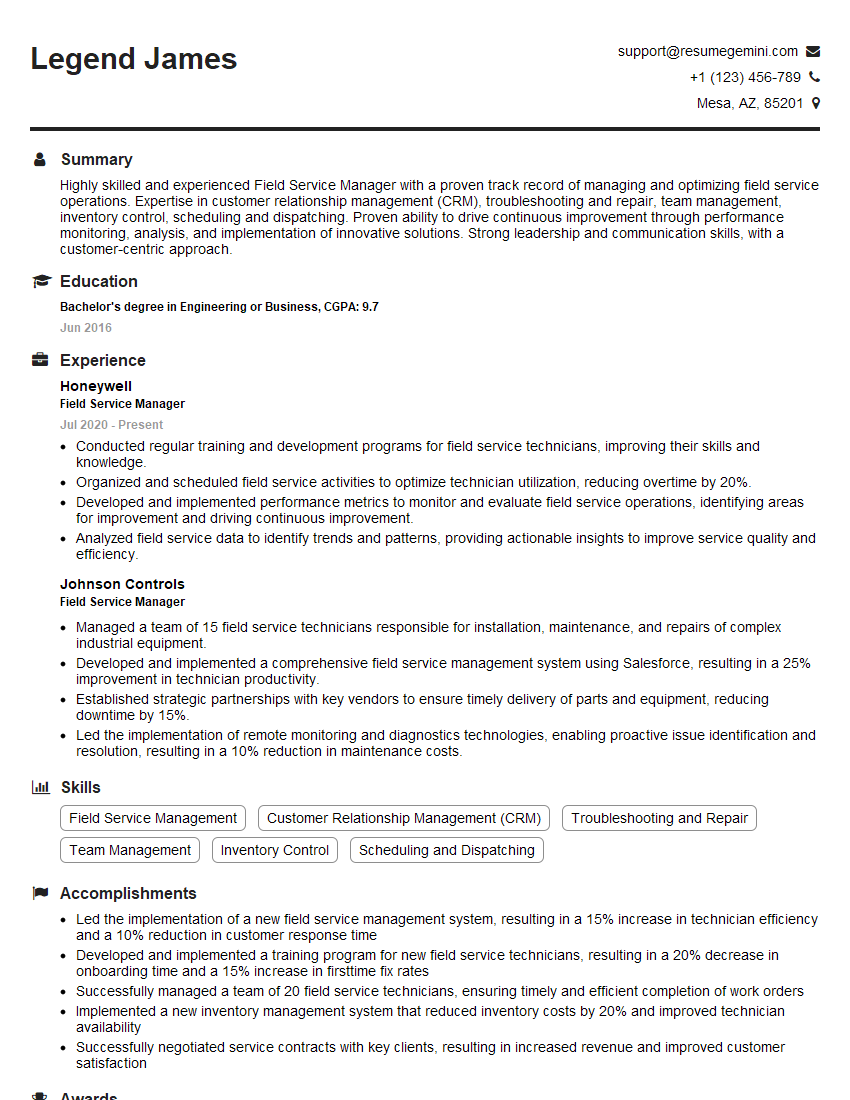
Mastering Field Technician Supervision opens doors to leadership roles, increased responsibility, and enhanced earning potential. To accelerate your career advancement, a strong, ATS-friendly resume is crucial. ResumeGemini is a trusted resource to help you craft a professional and impactful resume that showcases your skills and experience effectively. We provide examples of resumes tailored to Field Technician Supervision to guide you through the process. Invest time in building a compelling resume – it’s your first impression and a key to unlocking your career aspirations.
Explore more articles
Users Rating of Our Blogs
Share Your Experience
We value your feedback! Please rate our content and share your thoughts (optional).
What Readers Say About Our Blog
Very informative content, great job.
good