Are you ready to stand out in your next interview? Understanding and preparing for Fine Detailing interview questions is a game-changer. In this blog, we’ve compiled key questions and expert advice to help you showcase your skills with confidence and precision. Let’s get started on your journey to acing the interview.
Questions Asked in Fine Detailing Interview
Q 1. Describe your experience with various detailing techniques (e.g., polishing, waxing, compounding).
My experience encompasses a wide range of detailing techniques, honed over years of practice. Polishing, for instance, is a crucial step in paint correction, using varying grits of compounds to remove imperfections. I’m proficient in single-stage polishing for minor defects and multi-stage polishing for more severe damage, meticulously choosing the right pad and compound combination to achieve optimal results without harming the clear coat. Waxing provides a protective layer, enhancing gloss and shine, and I’m skilled in applying various types of wax, from traditional carnauba to synthetic blends, each offering unique properties. Compounding is a more aggressive technique used to remove deeper scratches and imperfections, requiring careful control to avoid burning through the paint. I carefully assess the paint’s condition before choosing the right compound and technique, always prioritizing the preservation of the clear coat. I’ve worked with numerous vehicle types, from classic cars requiring meticulous attention to modern vehicles with intricate paintwork, adapting my approach based on the specific needs of each vehicle.
Q 2. Explain the differences between different types of car washes and their effects on paint.
Different car washes impact paint differently. A touchless automatic wash, while convenient, can scratch the paint with high-pressure water jets and harsh brushes if not maintained properly. Self-service washes often use abrasive brushes that can create swirl marks. In contrast, a hand wash, especially with the two-bucket method (one for washing, one for rinsing the mitt), minimizes the risk of scratches as it allows for more control and reduces the transfer of dirt and grime. The use of high-quality wash mitts or wash sponges, as well as a proper drying technique, further minimizes the chances of surface damage. Ultimately, a hand wash with the right products is the gentlest approach, preserving the paint’s integrity.
Q 3. What are the key steps in preparing a vehicle for paint correction?
Preparing a vehicle for paint correction is a meticulous process. It starts with a thorough washing and drying using the two-bucket method to remove loose debris. Next, I use a clay bar treatment to remove embedded contaminants that a wash might miss. This leaves the surface perfectly smooth. Then, I carefully inspect the paint for imperfections under various lighting conditions, noting the location and severity of scratches, swirl marks, and other defects. This detailed assessment informs the subsequent paint correction steps, allowing me to tailor my approach to each vehicle’s unique needs. Finally, I’ll thoroughly clean the car once more to ensure no contaminants interfere with the correction process itself.
Q 4. How do you identify and correct swirl marks and other paint imperfections?
Identifying swirl marks and other paint imperfections requires keen observation under different lighting conditions. I often use a bright light source at various angles to highlight these imperfections. Swirl marks appear as fine, circular scratches, while deeper scratches may be more visible. To correct them, I use a multi-stage polishing process, starting with a more aggressive compound and pad combination to remove deeper scratches and gradually moving to finer compounds and pads to refine the surface and remove finer swirl marks. The process involves careful application and removal of the compound, frequent inspection, and adjustments based on the results. The key is patience and precision; rushing the process can lead to more damage.
Q 5. What are your preferred polishing compounds and pads, and why?
My preferred polishing compounds and pads depend largely on the severity of the imperfections and the paint’s hardness. For heavier correction, I might use a compound like Menzerna FG400 on a heavy-cut foam pad. This combination is effective on deeper scratches but still relatively safe. For finer polishing, I might switch to Menzerna SF4000 or another fine polishing compound and a polishing pad. For the final stage, I will often use a finishing polish and a finishing pad for a flawless finish. Pad choice is equally crucial; I select pads based on their density and cutting ability, always ensuring compatibility with the chosen compound to optimize results and avoid damaging the paint.
Q 6. How do you choose the right wax or sealant for a specific vehicle and its condition?
Choosing the right wax or sealant depends on several factors. The vehicle’s paint condition, the desired level of protection, and the climate all play a role. For a vehicle with minor imperfections and needing basic protection, a good quality carnauba wax offers a warm, natural shine and moderate protection. For more durable protection and deeper gloss, a synthetic sealant is a better choice. Sealants generally offer longer-lasting protection compared to waxes. For vehicles exposed to harsh elements or requiring extreme durability, a ceramic coating is the ideal choice, offering superior protection and water beading, although its application requires more specialized skills and knowledge. Ultimately, it’s a balancing act between desired protection, longevity, and the budget. I always discuss these options with the client before making a recommendation.
Q 7. Explain the process of applying ceramic coatings or paint protection film.
Applying ceramic coatings involves meticulous surface preparation, much like paint correction. The surface must be perfectly clean and free of any imperfections. After thorough cleaning and decontamination, the ceramic coating is applied in thin, even layers, following the manufacturer’s instructions precisely. The application process typically involves using specialized applicators and allowing ample cure time before buffing off any excess coating. Paint protection film (PPF) is a different process; it involves applying a transparent polyurethane film to the vehicle’s paintwork. This film acts as a sacrificial layer, protecting the paint from scratches, chips, and other damage. The application requires precise cutting and heat-gun activation to ensure a seamless and invisible installation, minimizing any chances of bubbles or imperfections.
Q 8. Describe your experience with interior detailing, including leather cleaning and conditioning.
Interior detailing, especially leather care, requires a meticulous approach. My experience encompasses a wide range of techniques, from basic cleaning to advanced restoration. I begin by assessing the leather’s condition – identifying any damage, discoloration, or ingrained dirt. For cleaning, I use specialized pH-neutral leather cleaners, avoiding harsh chemicals that can strip the leather of its natural oils. I apply the cleaner with a soft microfiber cloth, working in small sections and gently scrubbing to avoid scratching. After cleaning, I always condition the leather. Conditioners replenish lost moisture and oils, preventing cracking and preserving the leather’s suppleness. I typically use a high-quality leather conditioner, applying it sparingly and evenly using a clean microfiber cloth, allowing it to absorb before buffing to a soft sheen. I’ve worked on everything from classic car interiors with delicate, aged leather to modern luxury vehicles with sophisticated leather upholstery. One memorable project involved restoring the severely cracked leather seats of a vintage Porsche; after a deep clean and multiple conditioning treatments, the seats were remarkably revived.
Q 9. How do you clean and protect different types of upholstery materials?
Cleaning and protecting upholstery depends entirely on the material. For fabrics like microfiber, I use a specialized upholstery cleaner and a soft brush to agitate and lift dirt. For delicate fabrics like suede or alcantara, I use a more gentle approach, employing a soft brush and a specialized cleaner designed for these materials. Leather, as mentioned previously, requires pH-neutral cleaners and conditioners. Vinyl upholstery is generally more durable and can be cleaned with a vinyl cleaner and protected with a vinyl protectant. After cleaning any upholstery material, I always vacuum thoroughly to remove loose debris. Protection usually involves applying a fabric or leather protector depending on the material. This creates a barrier against spills and stains, making future cleaning much easier. For example, I once successfully removed a stubborn red wine stain from a client’s cream-colored fabric seats using a specialized stain remover and a meticulous blotting technique—a testament to the importance of using the right product for the right material.
Q 10. What techniques do you use to remove stubborn stains and odors from interiors?
Removing stubborn stains and odors requires a multi-pronged approach. For stains, I identify the type of stain (e.g., oil, grease, dye) to choose the appropriate cleaning agent. I often use a combination of specialized stain removers, steam cleaning, and extraction techniques. For example, a grease stain might require a degreaser followed by a thorough cleaning. Odor removal frequently involves ozone generators or enzymatic cleaners that break down odor-causing bacteria. Sometimes, professional-grade odor neutralizers are needed to mask or eliminate lingering smells. For particularly stubborn odors, deep cleaning of carpets and upholstery, often with steam extraction, is necessary. I recall a project involving a vehicle with a strong pet odor; a combination of ozone treatment and thorough enzymatic cleaning completely eradicated the smell.
Q 11. What are the best practices for cleaning and maintaining various types of wheels and tires?
Wheel and tire cleaning requires careful attention to detail. I start by rinsing the wheels and tires thoroughly to remove loose dirt and grime. Then, I use a dedicated wheel cleaner, paying close attention to the wheel’s crevices and the tire sidewalls. I use a variety of brushes—soft-bristled brushes for delicate wheels and stiffer brushes for tougher dirt removal. After cleaning, I thoroughly rinse the wheels and tires again. Tire dressing can then be applied to protect and enhance the tires’ appearance. Different wheel types require different cleaning techniques. For example, delicate chrome wheels require gentler cleaning than more robust alloy wheels. For instance, I’ve had to adapt my approach for clients with ceramic-coated wheels, using specialized cleaners and techniques to avoid damaging the coating.
Q 12. How do you address different types of exterior contaminants (e.g., bird droppings, tree sap, bugs)?
Exterior contaminants require specific solutions. Bird droppings are acidic and need prompt removal to prevent etching. I use a dedicated bird dropping remover, carefully applying and rinsing it to avoid scratching the paint. Tree sap is sticky and requires a solvent-based cleaner, often followed by a clay bar treatment to remove any remaining residue. Bugs can be removed with a dedicated bug and tar remover. Always start by pre-washing the vehicle to loosen the contaminants before applying any chemical treatments. Following these steps ensures the contaminants are safely removed without harming the vehicle’s paintwork. A clay bar treatment is often followed by a thorough wash and wax to protect the vehicle from future contaminants.
Q 13. How do you safely handle and dispose of detailing chemicals?
Safety is paramount when handling detailing chemicals. I always wear appropriate personal protective equipment (PPE), including gloves, eye protection, and a respirator when necessary. I store chemicals in their original containers, properly labeled and in a designated area away from heat and ignition sources. I carefully follow the manufacturer’s instructions for use and disposal, never mixing chemicals. Spent chemicals are disposed of according to local regulations. Empty containers are rinsed thoroughly before being discarded. Never pour chemicals down the drain. A key example is the careful handling of acid-based wheel cleaners which requires diligent attention to safety protocols.
Q 14. What safety precautions do you take when working with detailing equipment?
Safety precautions when using detailing equipment are critical. Always ensure that power tools are properly grounded and in good working order. Never use damaged or frayed cords. When using power buffers or polishers, always use appropriate speed and pressure to avoid burning or damaging the paint. Always unplug tools before making adjustments or cleaning them. Proper eye and hearing protection is essential when operating noisy or potentially hazardous equipment such as pressure washers and rotary polishers. Regular maintenance of equipment like vacuum cleaners is crucial, ensuring the filters are clean and the bags are emptied. A safe work environment is created by a combination of carefully handled chemicals and correctly utilized equipment.
Q 15. Describe your experience with using various detailing tools (e.g., buffers, polishers, extractors).
My experience with detailing tools is extensive, encompassing a wide range of equipment crucial for achieving exceptional results. I’m proficient with various buffer types, from rotary polishers ideal for aggressive correction to dual-action polishers for safer, less aggressive refinement. I’m skilled in using both random orbital and forced rotation polishers, understanding their distinct capabilities and limitations. My expertise extends to extractors, which I utilize for thorough interior cleaning, including upholstery and carpet shampooing. I’m experienced with various extraction methods, ensuring optimal moisture removal to prevent mold and mildew growth. I also have experience using specialized tools like detailing brushes, microfiber towels, and various applicators to maximize efficiency and precision during the detailing process. For example, I’ve used a Griot’s Garage 6-inch Rotary Polisher for heavy paint correction on a severely neglected classic car, achieving amazing results. Conversely, I use a Rupes iBrid Nano for less aggressive polishing on modern paint, preserving its clear coat.
Career Expert Tips:
- Ace those interviews! Prepare effectively by reviewing the Top 50 Most Common Interview Questions on ResumeGemini.
- Navigate your job search with confidence! Explore a wide range of Career Tips on ResumeGemini. Learn about common challenges and recommendations to overcome them.
- Craft the perfect resume! Master the Art of Resume Writing with ResumeGemini’s guide. Showcase your unique qualifications and achievements effectively.
- Don’t miss out on holiday savings! Build your dream resume with ResumeGemini’s ATS optimized templates.
Q 16. How do you maintain your detailing equipment to ensure optimal performance?
Maintaining detailing equipment is paramount for consistent, high-quality results. After each use, I meticulously clean all tools, removing any residue of polish, wax, or cleaning solutions. Buffers and polishers are thoroughly cleaned with appropriate detailing brushes, and pads are replaced regularly. Extraction equipment requires more extensive maintenance. I regularly flush the tanks with clean water and specialized cleaning solutions to prevent clogging and bacterial growth. All equipment is stored in a clean, dry environment to prevent damage and rust. Regular inspections for wear and tear are also critical, ensuring tools are functioning optimally and replacing or repairing any malfunctioning parts promptly. For example, I always inspect the backing plates of my polishing pads for any damage that could transfer to the paint. Neglecting maintenance not only compromises the quality of work but also increases the risk of damaging the vehicle.
Q 17. How do you handle customer complaints or concerns about detailing services?
Handling customer complaints is crucial for maintaining client satisfaction and business reputation. I approach complaints with empathy and professionalism, actively listening to the customer’s concerns without interruption. I then thoroughly investigate the issue, examining the vehicle to understand the problem objectively. Based on my findings, I offer a resolution, which may involve re-performing a specific service, offering a partial refund, or providing a detailed explanation if the issue is beyond my control. Transparent communication and a proactive approach to resolving concerns are key. For example, if a customer feels the paint isn’t as shiny as expected, I would re-examine the paint, consider the condition it was in before the detailing and explain the limits of what is achievable. I would then offer solutions, such as adding an extra coat of sealant to enhance shine.
Q 18. How do you estimate the time and materials needed for a detailing job?
Estimating time and materials requires a systematic approach. I begin by conducting a thorough vehicle inspection, noting the vehicle’s condition, including paint imperfections, interior cleanliness, and any specific requests. This assessment allows me to determine the necessary steps and appropriate products. Based on my experience, I’ve developed a standardized time estimate for various detailing packages. For example, a basic wash and wax might take 2-3 hours, while a full detail could take 8-10 hours or more, depending on the vehicle’s condition and size. I maintain an inventory of supplies and calculate material costs based on the specifics of the detailing job, ensuring transparency and accuracy in providing quotes.
Q 19. What is your process for inspecting a vehicle before and after detailing?
Pre- and post-detailing inspections are crucial for quality control. The pre-inspection involves a meticulous assessment of the vehicle’s exterior and interior, documenting any existing damage or imperfections through photos or notes. This forms a baseline to measure improvement. Post-detailing inspection involves a thorough check of every area, ensuring all tasks were completed to a high standard. This includes checking for swirl marks, water spots, and other blemishes. I use bright lighting and a magnifying glass to detect minor imperfections. Comparing pre- and post-inspection documentation demonstrates the quality of the work performed. For example, this ensures that a customer’s scratch, noted before the detailing, is not mistaken for new damage caused during my work.
Q 20. How do you ensure the quality of your work consistently meets high standards?
Consistency is maintained through a combination of rigorous training, adherence to standardized procedures, and ongoing professional development. I continuously refine my techniques, keeping up with industry best practices and adopting new technologies and products. I regularly review my work, identifying areas for improvement. I maintain a detailed checklist for every detailing package, ensuring each step is completed thoroughly and consistently. This systematic approach minimizes errors and ensures a consistent high standard of quality across all projects. For example, my checklists include specific steps for paint correction, ensuring I don’t skip any crucial steps like proper panel preparation or careful removal of compounding residue. Regular self-evaluation and client feedback further assist in maintaining quality.
Q 21. Explain your experience with different detailing packages (e.g., basic, premium, full detail).
My experience encompasses a variety of detailing packages tailored to different client needs and budgets. A basic package typically includes a thorough wash, hand dry, tire dressing, and vacuuming of the interior. Premium packages add elements such as paint correction, polishing, waxing, and more thorough interior cleaning, including shampooing of upholstery and carpets. A full detail is the most comprehensive, incorporating all premium services, along with additional services like engine detailing, head light restoration and leather conditioning. Each package is meticulously defined, ensuring transparency for the client. Pricing is adjusted to reflect the complexity and time required for each package, ensuring fair compensation for my expertise and effort.
Q 22. Describe your knowledge of different paint types and their specific detailing requirements.
Understanding different paint types is crucial for effective detailing. The type of paint significantly impacts the detailing process, particularly paint correction. For example, single-stage paints (which have the color and clear coat combined) are more delicate and require gentler techniques than multi-stage paints (separate color coat and clear coat) which offer more resilience to correction processes.
Single-stage paints: These require a very light touch during polishing and correction. Aggressive techniques can easily burn through the paint, leading to irreversible damage. I would use very fine polishing compounds and pads, focusing more on enhancing the existing shine than heavy correction.
Multi-stage paints: These offer more room for correction, as the clear coat provides a layer of protection. Here, I can employ more aggressive techniques, like using coarser compounds and pads, to remove deeper scratches and swirl marks. However, careful assessment of the clear coat thickness is vital to avoid burn-through.
Acrylic Lacquers: These are more susceptible to damage and require specialized products and techniques. The detailing process needs to be extremely gentle and focus on maintaining the existing finish.
Urethane Clear Coats: This is a common type that’s relatively durable but still needs careful handling to avoid damage. Choosing the right compound and pad is key to achieving the desired level of correction without inflicting new damage.
Choosing the right products and techniques based on the paint type ensures the best possible results while minimizing the risk of damage.
Q 23. How do you deal with unexpected problems or challenges during a detailing job?
Unexpected problems are inevitable in detailing. My approach is based on careful assessment, creative problem-solving, and clear communication. For example, I once encountered significant water spotting on a freshly waxed car due to unexpected rain. Instead of panicking, I systematically assessed the situation. I knew aggressive buffing could damage the wax, so I opted for a meticulous hand wash using a pH-neutral soap followed by a thorough drying with microfiber towels. Then, I reapplied a high-quality quick detailer, restoring the shine without compromising the wax. This approach highlights the importance of adaptability and resourcefulness. In cases of more significant issues (e.g., accidental damage to the paint), I would immediately contact the client, explain the situation clearly, and work collaboratively to find a fair resolution.
Q 24. What is your understanding of paint correction techniques like sanding and buffing?
Paint correction techniques like sanding and buffing are crucial for restoring a vehicle’s paint to its optimal condition. It’s a delicate balance between removing imperfections and preserving the original paint.
Sanding: This is generally used for more severe defects like deep scratches and swirl marks. It involves using progressively finer grades of sandpaper to remove the damaged layer of clear coat. It requires precision and skill to avoid sanding through the paint, and it’s usually done with wet sanding to minimize heat and dust.
Buffing (polishing): This follows sanding and uses rotary or dual-action polishers with various compounds (from aggressive to fine) to refine the paint surface, removing minor imperfections and creating a glossy finish. This step can also improve the clarity and depth of the paint. It’s vital to choose the appropriate compound and polishing pad based on the severity of the defects and the type of paint.
Think of it like sculpting—sanding removes the excess material (scratches), and buffing refines and smooths the surface to perfection. Both processes require expertise and a thorough understanding of paint characteristics. Incorrect techniques can lead to burn through or holograms (fine scratches that show up under certain lighting conditions).
Q 25. What are your strategies for time management and efficiency in detailing?
Efficiency in detailing is key to meeting deadlines and maximizing profitability. My strategies focus on meticulous planning and optimized workflow. Before starting any job, I meticulously inspect the vehicle, assessing the extent of the work needed and prioritizing tasks accordingly. This helps me create a detailed plan, avoiding unnecessary back-and-forth. I also use time-saving techniques, like sectioning the car for cleaning and detailing, employing the right tools (e.g., pressure washer for pre-washing, detail brushes for intricate areas), and pre-preparing my supplies. A well-organized workflow ensures a smooth, efficient process, minimizing wasted time and effort. For instance, I might use a two-bucket wash method to prevent cross-contamination, ensuring a faster and more thorough cleaning process.
Q 26. Describe your experience working independently and as part of a team.
I’m comfortable working both independently and as part of a team. When working independently, my self-discipline and meticulous attention to detail ensure high-quality results. I’m adept at managing my time effectively, prioritizing tasks, and maintaining a professional work environment. I’ve worked on several projects where I was solely responsible for the entire detailing process, from initial assessment to final delivery. Teamwork is equally important. In team settings, I value clear communication, collaboration, and mutual respect. I’m a good listener and readily share my expertise to contribute to the team’s overall success. A collaborative environment allows us to share knowledge, learn from each other, and tackle complex detailing projects efficiently. I’ve been part of teams that successfully executed large-scale detailing jobs for events and dealerships, where efficient workflow and clear communication were critical factors in our success.
Q 27. How do you stay updated on the latest trends and techniques in the detailing industry?
Staying updated in this dynamic industry is essential. I regularly subscribe to industry publications, attend workshops and seminars, and actively participate in online forums and communities dedicated to detailing. This allows me to stay abreast of new products, techniques, and best practices. I also closely follow prominent detailers and industry experts on social media platforms, which offers a wealth of information and insights. Experimenting with new products and techniques on practice panels helps me understand their effectiveness firsthand, ensuring that I’m always using the best and safest methods in my work. Further, attending trade shows enables direct engagement with product manufacturers and other professionals, offering opportunities for networking and skill enhancement.
Q 28. What are your salary expectations?
My salary expectations are commensurate with my experience and expertise in fine detailing, and are based on the market rate for skilled professionals in this field. I’m open to discussing compensation based on a range of factors, including the scope of the project, the expected workload, and the overall benefits package offered.
Key Topics to Learn for Fine Detailing Interview
- Surface Preparation: Understanding different cleaning methods, material compatibility, and pre-treatment techniques crucial for optimal results. Practical application: Explain your experience with various cleaning agents and their suitability for different surfaces.
- Paint Correction Techniques: Mastering techniques like machine polishing, compounding, and wet sanding to remove imperfections. Practical application: Describe your experience with different polishing machines and pads, and explain how you adjust techniques based on paint condition.
- Detailing Products & Chemistry: Knowledge of various detailing products (e.g., polishes, waxes, sealants, coatings) and their chemical properties. Practical application: Discuss the selection process for products based on client needs and surface type.
- Interior Detailing: Techniques for cleaning and protecting interior surfaces (leather, vinyl, fabrics, etc.). Practical application: Explain your approach to cleaning and conditioning different interior materials.
- Wheel & Tire Cleaning: Specialized cleaning methods for wheels and tires, including proper cleaning agents and techniques to avoid damage. Practical application: Describe your experience with different wheel and tire cleaning products and methods.
- Quality Control & Inspection: Developing a keen eye for detail and identifying imperfections. Practical application: Explain your quality control process and how you ensure client satisfaction.
- Customer Communication & Service: Effectively communicating with clients to understand their needs and expectations. Practical application: Discuss your experience handling client inquiries and addressing concerns.
Next Steps
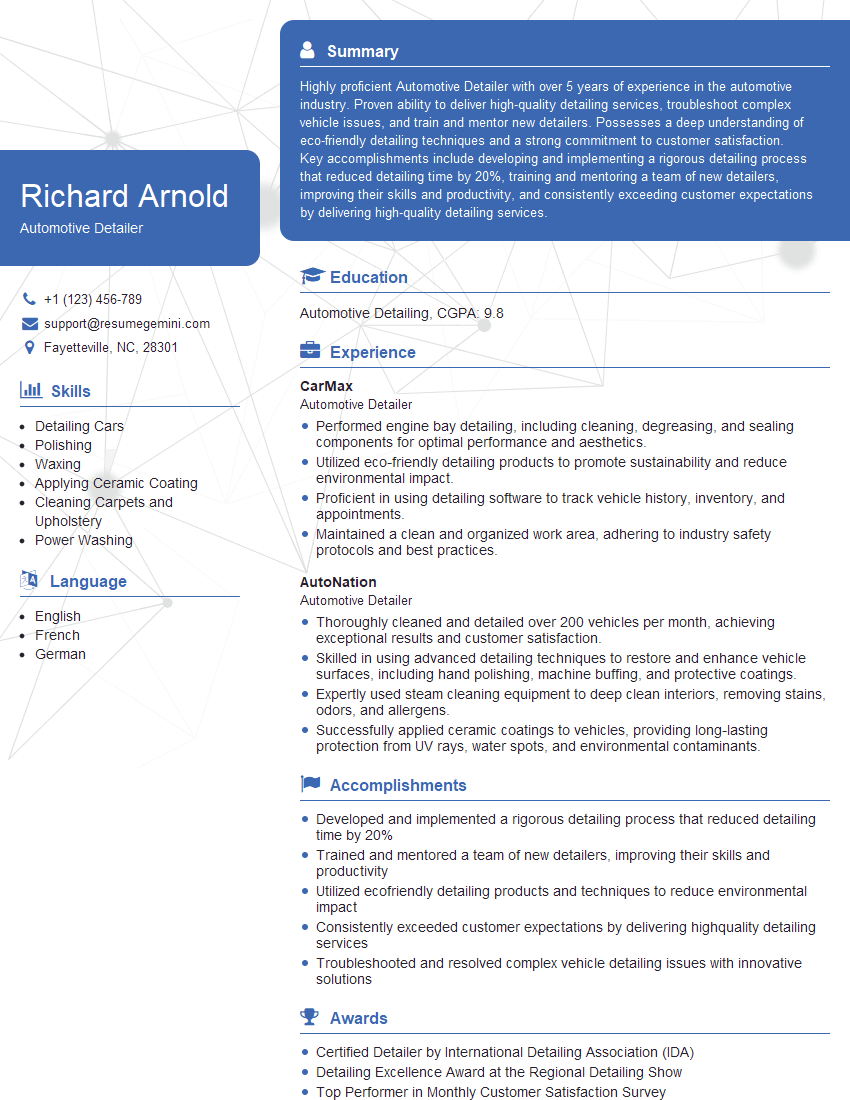
Mastering fine detailing opens doors to exciting career opportunities, offering competitive salaries and professional growth within the automotive and luxury goods industries. A strong resume is your key to unlocking these opportunities. Create an ATS-friendly resume to ensure your application gets noticed by recruiters. ResumeGemini is a trusted resource to help you build a professional, impactful resume that showcases your skills and experience effectively. ResumeGemini provides examples of resumes tailored to Fine Detailing, giving you a head start in crafting a compelling application.
Explore more articles
Users Rating of Our Blogs
Share Your Experience
We value your feedback! Please rate our content and share your thoughts (optional).
What Readers Say About Our Blog
Very informative content, great job.
good