The right preparation can turn an interview into an opportunity to showcase your expertise. This guide to International Coaching Federation interview questions is your ultimate resource, providing key insights and tips to help you ace your responses and stand out as a top candidate.
Questions Asked in International Coaching Federation Interview
Q 1. Explain the ICF Core Competencies and how you demonstrate them.
The ICF Core Competencies are the fundamental skills and attributes required for effective coaching. They are grouped into four categories: Foundation, Core Coaching Skills, Processes & Agreements, and Ethical Conduct & Responsibilities. Each category contains several specific competencies. For example, under ‘Foundation,’ we find ‘Embodies a Coaching Mindset’. I demonstrate this by consistently approaching every coaching interaction with curiosity, empathy, and a belief in my client’s inherent capacity for growth. In ‘Core Coaching Skills,’ ‘Active Listening’ is crucial. I demonstrate this by using techniques like reflecting, summarizing, and clarifying to ensure I understand my client’s perspective completely, showing them I’m fully present and engaged. Within ‘Processes & Agreements,’ ‘Establishing the Coaching Agreement’ is essential. I actively co-create clear agreements with clients that cover goals, methods, timelines, and boundaries. Finally, ‘Ethical Conduct & Responsibilities’ governs everything I do. I maintain confidentiality, avoid conflicts of interest, and always act with integrity, which includes continuous professional development and staying up-to-date on ICF guidelines. Essentially, I approach each competency as a continuously evolving skill, constantly reflecting on my performance and seeking opportunities for improvement.
Q 2. Describe your experience with the ICF Code of Ethics.
My experience with the ICF Code of Ethics is extensive. It’s the bedrock of my practice. I regularly review the Code to ensure I’m adhering to the highest ethical standards. It’s not just a document I read; it’s a living framework I use to guide my decisions. It informs every aspect of my work with clients, from initial contact to the conclusion of our coaching relationship. Understanding concepts like confidentiality, informed consent, and maintaining professional boundaries are paramount. I’ve taken several courses specifically focusing on ethical considerations in coaching and regularly participate in professional development to keep my knowledge current on best practices and any updates to the Code.
Q 3. How do you utilize the ICF’s ethical decision-making model?
The ICF’s ethical decision-making model provides a structured approach to navigating challenging situations. It often involves identifying the ethical dilemma, gathering relevant information, considering different perspectives, consulting resources like the Code of Ethics or mentors, and evaluating the potential consequences of various actions before selecting the most ethically sound course of action. I’ve used this model in situations involving client confidentiality, conflicts of interest, or when a client’s goals seem to conflict with their values. For example, if a client disclosed a situation that was potentially illegal, I’d follow the steps in the model to determine my next actions responsibly and ethically, prioritizing client safety and legal obligations.
Q 4. What is your understanding of the ICF’s definition of coaching?
The ICF defines coaching as partnering with clients in a thought-provoking and creative process that inspires them to maximize their personal and professional potential. It’s about unlocking their own solutions and helping them achieve their desired outcomes, not telling them what to do. Coaching focuses on the client’s future, empowering them to take ownership of their journey and develop self-awareness, build resilience, and achieve sustainable results. It’s a collaborative process where the coach’s role is to facilitate the client’s discovery, rather than dictating direction.
Q 5. How do you create a coaching agreement that aligns with ICF standards?
Creating a coaching agreement aligned with ICF standards requires a collaborative process. It starts with a thorough intake session where I understand the client’s goals, expectations, and desired outcomes. This agreement isn’t just a document; it’s a living agreement outlining our shared understanding and commitment to the coaching process. It clarifies roles and responsibilities, meeting frequency, duration, fees, cancellation policies, methods of communication, confidentiality, and procedures for resolving any disputes. The agreement is reviewed and mutually agreed upon by both the client and coach. I ensure the agreement is clear, concise, and accessible, fostering transparency and establishing a strong foundation for a successful coaching relationship. I frequently revisit the agreement to ensure its ongoing relevance as the coaching journey evolves.
Q 6. Describe a time you had to address a client’s ethical dilemma.
I once had a client who was considering leaving their current job despite having a significant financial commitment related to their home. While their desire for a new career path was clear, the potential financial risks caused them internal conflict. This presented an ethical dilemma concerning boundaries. My role wasn’t to solve their financial problems, but to help them explore their values and weigh the risks and rewards of their options, empowering them to make an informed decision. I carefully facilitated discussions around their values, exploring alternatives and the potential short-term and long-term consequences of each choice. I didn’t give them financial advice, but I helped them clarify their personal priorities and develop a strategy to address the financial considerations.
Q 7. Explain your process for setting coaching goals aligned with ICF best practices.
Setting coaching goals aligned with ICF best practices is an iterative process. It begins with active listening to understand the client’s aspirations and current reality. We collaboratively define SMART goals – Specific, Measurable, Achievable, Relevant, and Time-bound. This means ensuring the goals are clearly defined, can be tracked, are realistic within the timeframe and resources available, are aligned with the client’s values and purpose, and have a clear deadline. Regular check-ins throughout the coaching process allow us to review progress, adjust goals as needed, and ensure they remain relevant and motivating. The process is client-led, with my guidance ensuring the goals are well-defined and conducive to meaningful progress.
Q 8. How do you ensure client confidentiality in accordance with ICF guidelines?
Client confidentiality is paramount in coaching, and I adhere strictly to the ICF Code of Ethics. This means I never disclose any information shared by a client during our sessions, including their goals, challenges, or personal details, to anyone without their explicit written consent. This commitment extends beyond the coaching relationship itself; I ensure secure storage of all client records, both physical and digital, using password-protected systems and encrypted files. I’m also careful about conversations in public spaces. For example, I would never discuss a client’s situation in a coffee shop or even on a phone call where confidentiality can’t be assured. My commitment to confidentiality builds trust, which is fundamental for a successful coaching relationship.
Think of it like a doctor-patient relationship; what you share in confidence is protected.
Q 9. How do you assess client progress using ICF-aligned methods?
Assessing client progress is an ongoing process, guided by the ICF’s emphasis on measurable outcomes. I typically begin by collaboratively setting SMART goals (Specific, Measurable, Achievable, Relevant, and Time-bound) with the client. Then, at regular intervals, we review their progress against these goals. This might involve tracking key performance indicators (KPIs) – specific quantifiable metrics related to their objectives. For instance, if a client’s goal is to increase sales, we might track their monthly sales figures. Qualitative data is just as important, so I also regularly use feedback sessions, client self-assessments, and my own observations to assess their progress in areas like confidence and self-efficacy. These insights help us adapt the coaching plan as needed to ensure the client stays on track and achieves their goals.
For example, if a client’s progress stalls, we would use this assessment data to explore potential barriers and adjust the strategy. We might delve into their self-limiting beliefs or explore new approaches to overcome obstacles.
Q 10. Describe your approach to handling client resistance.
Client resistance is a natural part of the coaching process, often stemming from fear, uncertainty, or ingrained habits. My approach is to acknowledge and validate the client’s feelings without judgment. I might say something like, ‘It sounds like you’re feeling hesitant about this step, and that’s perfectly understandable.’ I then work to understand the root cause of the resistance through active listening and open-ended questioning. This understanding helps me tailor my approach and address the concerns. It’s crucial to avoid pushing the client or trying to force a solution. Instead, I collaborate with them to find a path forward that aligns with their values and goals. Sometimes, a simple reframe of the situation, presenting a different perspective or offering a different approach, can overcome resistance. Other times, it might require revisiting the client’s goals or taking a step back to reinforce foundation elements.
Imagine navigating a new city; if you encounter resistance (like a roadblock), you don’t just keep pushing forward blindly, you find a way around or explore alternative routes.
Q 11. How do you maintain your own professional development as an ICF coach?
Maintaining my own professional development is a continuous and vital commitment. I regularly attend ICF-approved continuing education courses and workshops to stay abreast of the latest coaching methodologies, research, and ethical considerations. I also actively engage in peer supervision sessions, which provide invaluable feedback and support. This peer-to-peer learning is essential for continued growth and refinement of my coaching skills. Additionally, I dedicate time to personal reflection and self-care, recognizing that my own well-being directly impacts my ability to effectively support my clients. I continuously seek opportunities to expand my knowledge, skills, and perspectives to enhance my effectiveness as a coach.
It’s similar to a doctor who keeps up-to-date on medical advancements. Staying current ensures I’m providing the highest quality of care to my clients.
Q 12. What are the benefits and limitations of different coaching models?
Various coaching models, such as Solution-Focused Brief Therapy (SFBT), Cognitive Behavioral Coaching (CBC), and Positive Psychology Coaching, each offer unique strengths and limitations. SFBT excels at quickly identifying solutions and focusing on future possibilities, but it may not be as effective for clients needing deep emotional processing. CBC helps clients identify and change unhelpful thought patterns and behaviors, but it can sometimes feel too structured for some clients. Positive Psychology Coaching emphasizes strengths and well-being but may not be suitable for clients facing significant trauma or adversity. The choice of model depends heavily on the client’s needs, goals, and preferences. A skilled coach understands the strengths and limitations of each model and chooses the approach that is most appropriate for the specific client and situation.
The best model is the one that best fits the individual client’s journey, much like choosing the right tool for a job.
Q 13. How do you adapt your coaching style to different client needs?
Adaptability is crucial in coaching. I tailor my approach to each client’s unique personality, learning style, and communication preferences. Some clients prefer a highly structured approach, while others respond better to a more intuitive and flexible style. Some clients need more direct guidance, while others thrive with greater autonomy. I assess each client’s needs during the initial sessions and adjust my communication style, pacing, and methods accordingly. I pay close attention to their verbal and non-verbal cues. This might involve adjusting my language, using different types of questioning, or offering various exercises that resonate with their individual preferences. This flexible approach ensures the coaching process remains engaging and effective for each individual.
Think of it like a tailor creating a custom suit; you wouldn’t use the same pattern for everyone.
Q 14. What ICF continuing education courses have you completed?
I have completed several ICF-approved continuing education courses, including [Insert specific examples of ICF courses completed, e.g., ‘Advanced Skills in Coaching,’ ‘Working with Difficult Clients,’ ‘Ethical Considerations in Coaching,’ ‘Specific Coaching Model Training’ etc.]. These courses have equipped me with advanced techniques and best practices in various coaching areas, enabling me to deliver highly effective and ethical coaching services. My commitment to ongoing professional development is reflected in my active pursuit of opportunities to enhance my skills and deepen my understanding of the coaching profession.
Q 15. Describe your experience working with diverse clients.
Working with diverse clients is a cornerstone of my coaching practice. I believe that a coach’s effectiveness hinges on their ability to connect with individuals from all walks of life, understanding their unique backgrounds, perspectives, and cultural nuances. This means actively listening, demonstrating empathy, and adapting my approach to resonate with each client’s specific needs.
For example, I’ve coached executives from multinational corporations, entrepreneurs launching startups, and individuals navigating career transitions. Each presented unique challenges and perspectives. With the executive, our focus was on strategic leadership and organizational change. With the entrepreneur, it was about navigating the uncertainties of a new venture. And with the individual seeking a career change, we worked on identifying skills, passions, and crafting a compelling narrative for their job search. In each case, I adapted my communication style, methodology, and coaching approach to best suit their individual needs and cultural backgrounds.
My approach emphasizes cultural competency, ensuring that I am aware of and sensitive to the potential impact of cultural differences on communication styles, goal setting, and the coaching process itself. I regularly engage in continuing education to enhance my understanding of diversity, equity, and inclusion in coaching.
Career Expert Tips:
- Ace those interviews! Prepare effectively by reviewing the Top 50 Most Common Interview Questions on ResumeGemini.
- Navigate your job search with confidence! Explore a wide range of Career Tips on ResumeGemini. Learn about common challenges and recommendations to overcome them.
- Craft the perfect resume! Master the Art of Resume Writing with ResumeGemini’s guide. Showcase your unique qualifications and achievements effectively.
- Don’t miss out on holiday savings! Build your dream resume with ResumeGemini’s ATS optimized templates.
Q 16. How do you manage the boundaries in a coaching relationship?
Managing boundaries in a coaching relationship is crucial for maintaining its integrity and effectiveness. This involves establishing clear parameters from the outset, focusing on the client’s goals, and respecting both the coach’s and the client’s time and energy. These boundaries are established through a clear coaching agreement.
This agreement typically covers aspects such as the scope of the coaching engagement, the frequency and duration of sessions, fees and payment arrangements, methods of communication, and confidentiality. It also explicitly outlines what is and isn’t within the scope of the coaching relationship, emphasizing that I am not a therapist or counselor. If a client needs those services, I will refer them to a qualified professional.
Maintaining appropriate boundaries also means being mindful of the coach-client dynamic. I ensure that all interactions remain professional. I avoid dual relationships (e.g., becoming friends or business partners with the client) and set clear limits on the time I dedicate to each client. For instance, if a client needs support outside scheduled sessions, I might suggest alternative resources or schedule a brief follow-up, but I maintain a structured approach to maintain professionalism and prevent boundary blurring.
Q 17. How do you handle difficult conversations with clients?
Difficult conversations are inevitable in coaching, often arising from challenging situations or emotional responses. My approach is rooted in empathy, active listening, and a commitment to fostering a safe space for open and honest dialogue.
I start by creating a calm and supportive environment, ensuring the client feels heard and understood. I use active listening techniques to fully grasp the client’s perspective before responding. I utilize reflective listening (e.g., ‘So, it sounds like you’re feeling frustrated because…’) to ensure mutual understanding. I might ask clarifying questions to delve deeper, avoiding interruptions or judgmental statements. If the conversation becomes particularly intense, I may suggest a brief pause or reschedule the conversation.
For example, if a client is resistant to a suggested strategy, I might explore their underlying concerns, reframing the challenge as an opportunity for growth. I would avoid becoming defensive and instead focus on collaboration. The goal is always to work through the difficulty constructively, aligning the client’s perspective with the objectives of the coaching engagement.
Q 18. Explain your understanding of power dynamics in coaching.
Power dynamics in coaching are inherent in the relationship between the coach and the client. The coach possesses expertise and experience, while the client seeks guidance and support. Understanding and managing these dynamics is essential for ethical and effective coaching. The key is to create a collaborative partnership, ensuring that the client remains in control of their own journey.
I actively work to minimize any power imbalance by empowering clients to make their own decisions. I focus on partnership, encouraging client autonomy. I regularly check in to ensure the client feels comfortable and in control. I use open-ended questions and actively listen to their perspectives and concerns. I avoid giving advice unless specifically requested, instead facilitating self-discovery and insight generation.
Transparency is crucial. I am open about my coaching style, experience, and limitations. I make sure the client understands the coaching process and their role within it. This transparency fosters trust and empowers the client to challenge me, if needed, ensuring a collaborative and equitable relationship.
Q 19. How do you navigate ethical dilemmas related to client confidentiality?
Client confidentiality is paramount in coaching, forming the cornerstone of trust and a safe coaching environment. Ethical dilemmas can arise in various situations, such as requests for information from third parties or concerns about the client’s safety. The ICF Code of Ethics provides guidance in navigating these scenarios.
My commitment to confidentiality extends to all client information, including personal details, goals, and discussions. I only disclose information when legally required (e.g., court order) or when there is a clear and imminent risk of harm to the client or others. Even in these situations, I aim to disclose only the minimum necessary information.
For example, if a client reveals intentions of harming themselves or others, I have a legal and ethical obligation to take appropriate action, possibly involving contacting emergency services or relevant authorities. However, I would ensure that the disclosure is done in a manner that respects the client’s privacy as much as possible, while prioritizing their safety and the safety of others. Prior to the start of any engagement, I ensure that clients clearly understand the boundaries of confidentiality and the limited exceptions where information might be disclosed.
Q 20. How do you build trust and rapport with clients?
Building trust and rapport is foundational to successful coaching. It’s a process built on mutual respect, empathy, and a genuine interest in the client’s well-being. This involves creating a safe and supportive environment where clients feel comfortable being vulnerable and open.
I start by actively listening to the client, demonstrating genuine curiosity about their experiences and aspirations. I use reflective listening to ensure understanding and validate their feelings. I create a strong connection through empathy, seeking to understand their perspectives and challenges. Body language, eye contact, and attentive listening all play a significant role in conveying care and interest.
Establishing a strong working alliance is also key. This involves collaborative goal-setting, ensuring that the coaching plan is aligned with the client’s objectives and preferences. Regular check-ins, seeking client feedback on the coaching process itself, demonstrate a commitment to collaboration and mutual respect. Transparency, professionalism, and maintaining the boundaries discussed earlier further solidify the trust and rapport developed in the coach-client relationship.
Q 21. Describe your experience with different coaching methodologies (e.g., GROW, Solution-Focused).
My coaching practice integrates various methodologies, drawing upon the strengths of each approach to best serve my clients’ needs. I am proficient in several models, including the GROW model and Solution-Focused Brief Therapy (SFBT).
The GROW model (Goal, Reality, Options, Will) is a structured approach that helps clients define clear goals, assess their current situation, explore potential solutions, and commit to action. It’s effective for clients who benefit from a clear, step-by-step process.
Solution-Focused Brief Therapy (SFBT) emphasizes identifying and building on existing strengths and resources. Rather than dwelling on past problems, it focuses on creating desired futures and facilitating action towards achieving those goals. This approach is particularly helpful for clients who are motivated for change and want to achieve quick results.
In addition to GROW and SFBT, I also incorporate elements of other models as needed, such as Appreciative Inquiry, Cognitive Behavioral Coaching, and Positive Psychology, tailoring my approach to best suit the individual client and their specific circumstances. The selection of the most effective model depends on the client’s personality, goals, and the challenges they are facing.
Q 22. How do you measure the effectiveness of your coaching interventions?
Measuring the effectiveness of coaching interventions is crucial for accountability and continuous improvement. It goes beyond simply asking a client if they feel better; it requires a multifaceted approach aligned with the International Coaching Federation (ICF) ethical guidelines and best practices. I employ a combination of methods, focusing on both subjective and objective measures.
Client Self-Assessment: Using standardized questionnaires (like goal attainment scaling) at the beginning and end of the coaching engagement provides a quantitative measure of progress towards pre-defined goals. For example, I might ask a client to rate their confidence level on a scale of 1-10 before starting, and then again at the conclusion of our sessions.
Qualitative Feedback: Regular check-in conversations explore the client’s subjective experience, understanding their perceptions of progress, challenges faced, and overall satisfaction with the coaching process. This allows for adjustments and ensures the coaching remains relevant and effective.
Behavioral Observation: In cases where coaching aims for observable behavioral changes, I actively monitor and document improvements, such as increased assertiveness in meetings or improved time management skills. This could involve having the client keep a journal or provide examples of their changed behaviors.
Outcome-Based Measures: When appropriate, we track quantifiable results linked to the client’s goals. For example, if a client aims for a promotion, their progress in achieving performance targets or receiving positive feedback can be measured.
Combining these approaches provides a comprehensive picture of coaching effectiveness and guides adjustments to my approach as needed. The key is to establish clear, measurable goals upfront and to regularly track progress collaboratively with the client.
Q 23. What are the key differences between mentoring, counseling, and coaching?
While mentoring, counseling, and coaching all involve guiding individuals, they differ significantly in their focus and approach. Think of it as a spectrum of support:
Mentoring: Focuses on the transfer of knowledge and experience from a more experienced mentor to a mentee. It’s often based on a relationship built on wisdom and guidance within a specific field or profession. The mentor draws from their own lived experience to help the mentee navigate their career or personal development.
Counseling: Addresses emotional and psychological well-being. Counselors help clients identify and resolve emotional issues, trauma, or mental health concerns, often using therapeutic techniques. The focus is primarily on healing and addressing past experiences.
Coaching: Centers on future-oriented goal setting and achievement. Coaches partner with clients to identify their strengths, overcome obstacles, and design strategies to achieve desired outcomes. The emphasis is on unlocking the client’s potential and empowering them to take action.
For example, a mentor might advise a junior executive on navigating office politics, a counselor might help someone work through grief, and a coach might guide an athlete to improve their performance and reach peak physical condition. The distinctions can be blurry at times, but the primary focus distinguishes each approach.
Q 24. How do you ensure your coaching is culturally sensitive?
Cultural sensitivity in coaching is paramount. Ignoring cultural differences can severely hinder progress and damage the coaching relationship. My approach centers on understanding and respecting the client’s unique cultural background and worldview. This involves:
Active Listening and Inquiry: I begin by creating a safe space for the client to share their perspectives and experiences without judgment. I ask open-ended questions to understand their cultural values, beliefs, and communication styles.
Self-Awareness: I am cognizant of my own cultural biases and assumptions and strive to remain neutral and objective in my approach. Recognizing my own limitations is key to avoiding imposing my values on the client.
Adapting My Approach: I tailor my coaching style to meet the client’s preferences. This includes understanding their communication styles (direct vs. indirect), preferred levels of interaction, and comfort zones regarding self-disclosure.
Cultural Research: When working with clients from unfamiliar cultural backgrounds, I engage in thoughtful research to broaden my understanding of their customs, traditions, and potential sensitivities. This isn’t about stereotyping but rather about showing respect and genuine interest.
For instance, understanding a client’s preference for a more indirect communication style might mean I adjust my questioning techniques to be more open-ended and less confrontational.
Q 25. How do you handle a client who is not making progress?
When a client is not making progress, it necessitates a thorough and collaborative investigation. It’s crucial to avoid blaming the client; instead, focus on identifying the root cause and co-creating solutions.
Reassess Goals and Strategies: The first step is to jointly review the client’s goals and the strategies we’ve implemented. Are the goals still relevant, realistic, and achievable? Do we need to adjust the strategies or explore new approaches?
Explore Obstacles: We delve deeper into any obstacles preventing progress. These might include external factors (like lack of support at work) or internal factors (like limiting beliefs or fear of failure). This often requires active listening and empathetic questioning.
Assess Coaching Relationship: Sometimes, the lack of progress is related to the coaching relationship itself. Is there a lack of trust, misaligned expectations, or a mismatch in coaching styles? Open and honest communication is vital here.
Consider External Resources: In some cases, additional support might be needed. I might suggest seeking professional guidance from a therapist, mentor, or other specialist who can offer complementary support.
Adjust Coaching Approach: Depending on the situation, it might be necessary to modify my coaching approach, using different techniques or tools to engage the client more effectively.
Ultimately, my goal is to support the client in finding a path to progress, even if it means adjusting our work together or recognizing that external help might be beneficial.
Q 26. Explain your process for obtaining client feedback and using it for improvement.
Client feedback is the lifeblood of continuous improvement. I use a multi-pronged approach to gather and utilize client feedback effectively.
Formal Feedback Surveys: At the midpoint and conclusion of the coaching engagement, I use structured questionnaires to gather quantitative and qualitative data on client satisfaction, progress, and the overall coaching experience. These surveys often include rating scales, open-ended questions, and opportunities for specific feedback on my coaching style.
Regular Check-ins: Throughout the coaching process, I incorporate regular opportunities for feedback in our sessions. This might be a brief informal check-in, or a more structured review of our progress and the client’s experience.
360-Degree Feedback (where appropriate): In some cases, I might involve other individuals who interact with the client (e.g., colleagues, supervisors) to gain a broader perspective on their progress and development. This needs to be done with the client’s informed consent and respects confidentiality.
Actionable Steps: Once feedback is collected, I review it thoroughly, identifying recurring themes or patterns. I then use this information to adapt my coaching style, develop new strategies, or refine my approach in subsequent engagements. This may include updating my coaching tools, exploring new training opportunities, or seeking supervision to further enhance my capabilities.
Using feedback actively demonstrates to clients that their voices matter and contributes to building a strong, trusting coaching relationship.
Q 27. Describe your experience with supervision or peer coaching.
Supervision and peer coaching are integral to my professional development and ethical practice as a coach. Regular supervision provides a crucial opportunity for reflection, feedback, and accountability. I regularly meet with a qualified supervisor to discuss my coaching cases, challenges encountered, and ethical considerations.
Supervision Benefits: Supervision helps me maintain high ethical standards, improve my coaching skills, and enhance my ability to handle complex client situations. My supervisor offers a safe and confidential space for me to explore my own biases, blind spots, and areas for professional growth.
Peer Coaching: In addition to supervision, I actively participate in peer coaching groups. This allows me to share experiences, learn from other coaches, and receive constructive feedback on my coaching practice from colleagues. It provides a valuable opportunity for mutual learning and growth.
These forms of professional development are not merely optional; they are essential for maintaining high standards and ensuring I am providing the best possible support to my clients. They help me continually refine my skills and remain attuned to best practices.
Q 28. How do you manage your own stress and maintain your well-being as a coach?
Self-care and well-being are not luxuries for coaches; they’re fundamental to providing effective and ethical support. Burnout is a significant risk in this profession, so proactively managing my stress and maintaining my well-being is a top priority. My strategies include:
Regular Exercise and Healthy Diet: Physical health directly impacts mental and emotional well-being. Regular exercise and a nutritious diet are essential components of my self-care routine.
Mindfulness and Meditation: Practicing mindfulness and meditation techniques helps me manage stress, enhance self-awareness, and cultivate a sense of calm amidst demanding work situations.
Boundary Setting: I am mindful of establishing and maintaining clear boundaries between my personal and professional life. This prevents overwork and helps maintain a healthy work-life balance.
Professional Development: Continuing education helps me stay current with best practices and prevents feelings of stagnation or inadequacy. This also contributes to my confidence and professional fulfillment.
Social Support Network: Connecting with family, friends, and other coaches helps foster a sense of community and provides valuable emotional support.
Seeking Support When Needed: I acknowledge that there will be times when I need additional support. I have a network of trusted colleagues, supervisors, and mentors I can turn to when facing challenging situations.
Prioritizing my well-being isn’t just about self-preservation; it’s about ensuring that I can show up fully and authentically for each client, offering the best possible support in a sustainable manner.
Key Topics to Learn for International Coaching Federation Interview
- ICF Code of Ethics: Understand the core principles and how they guide ethical decision-making in coaching practice. Consider scenarios where ethical dilemmas might arise and how you would navigate them.
- Coaching Models and Approaches: Demonstrate familiarity with various coaching methodologies (e.g., solution-focused, cognitive behavioral, positive psychology) and their practical applications. Be prepared to discuss your preferred approach and its suitability for different client needs.
- Client Assessment and Goal Setting: Explain your process for assessing client needs, collaboratively defining goals, and creating actionable plans. Highlight your ability to tailor your approach based on individual client contexts.
- Active Listening and Powerful Questioning: Showcase your skills in active listening, reflective listening, and the art of asking powerful, insightful questions to facilitate client self-discovery and progress.
- Building Rapport and Trust: Describe how you establish a safe and supportive coaching relationship, fostering trust and open communication with clients from diverse backgrounds.
- Measuring Coaching Outcomes: Discuss methods for tracking progress, evaluating outcomes, and demonstrating the value of your coaching services. Be prepared to discuss metrics and data-driven approaches.
- Continuing Education and Professional Development: Demonstrate a commitment to ongoing learning and professional growth within the coaching field. Discuss your engagement with relevant resources and professional development activities.
- Cultural Competency and Inclusivity: Highlight your awareness and understanding of cultural differences and their impact on the coaching process. Show your commitment to creating an inclusive and equitable coaching environment.
Next Steps
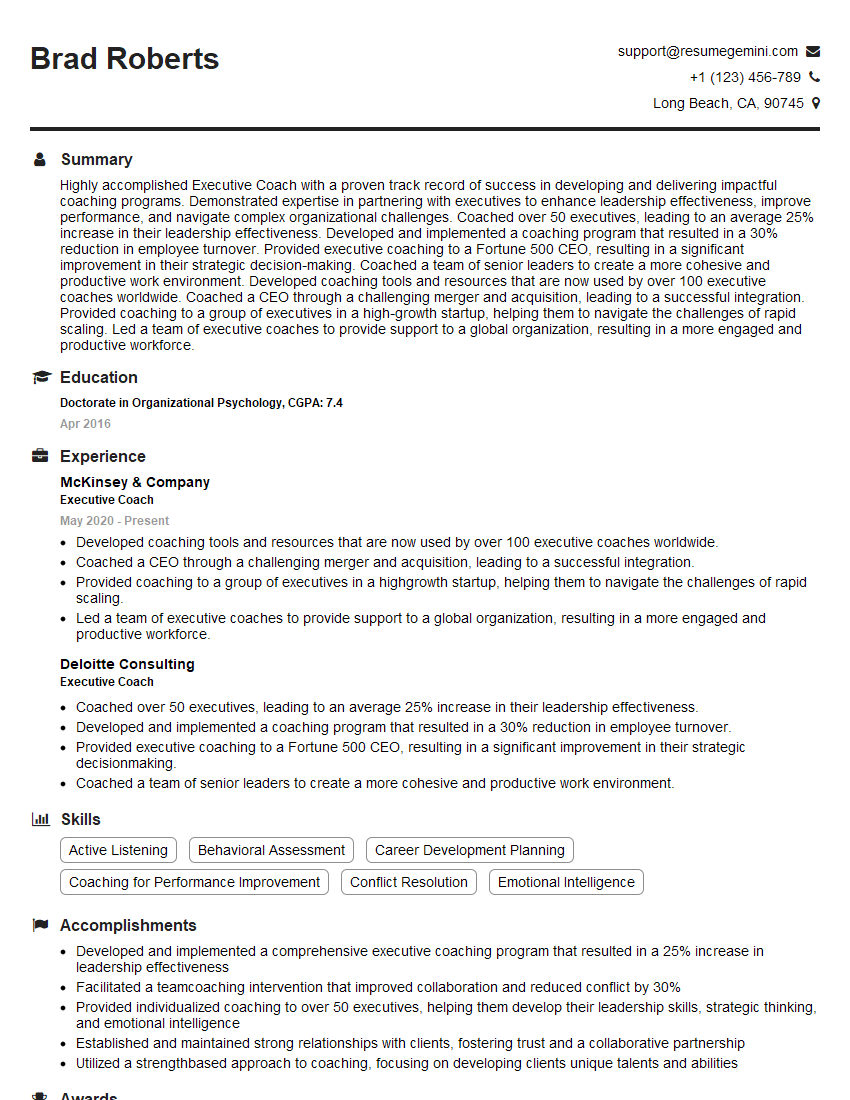
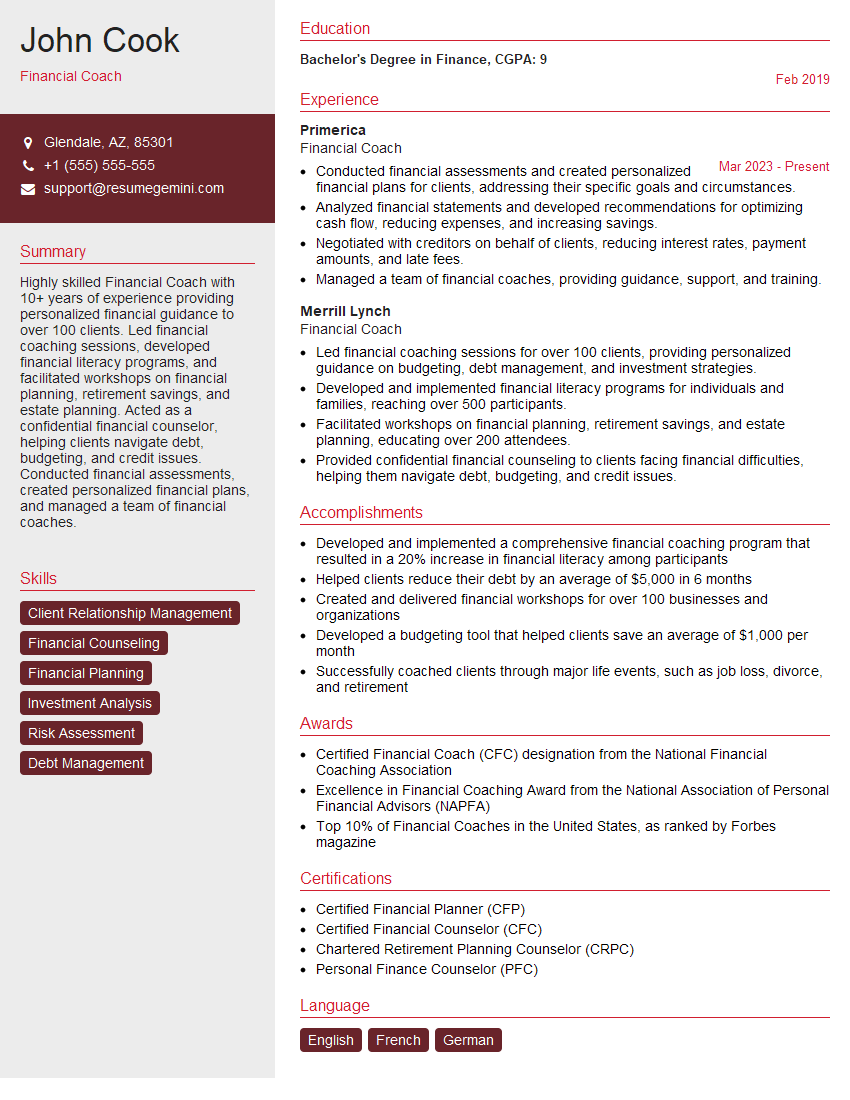
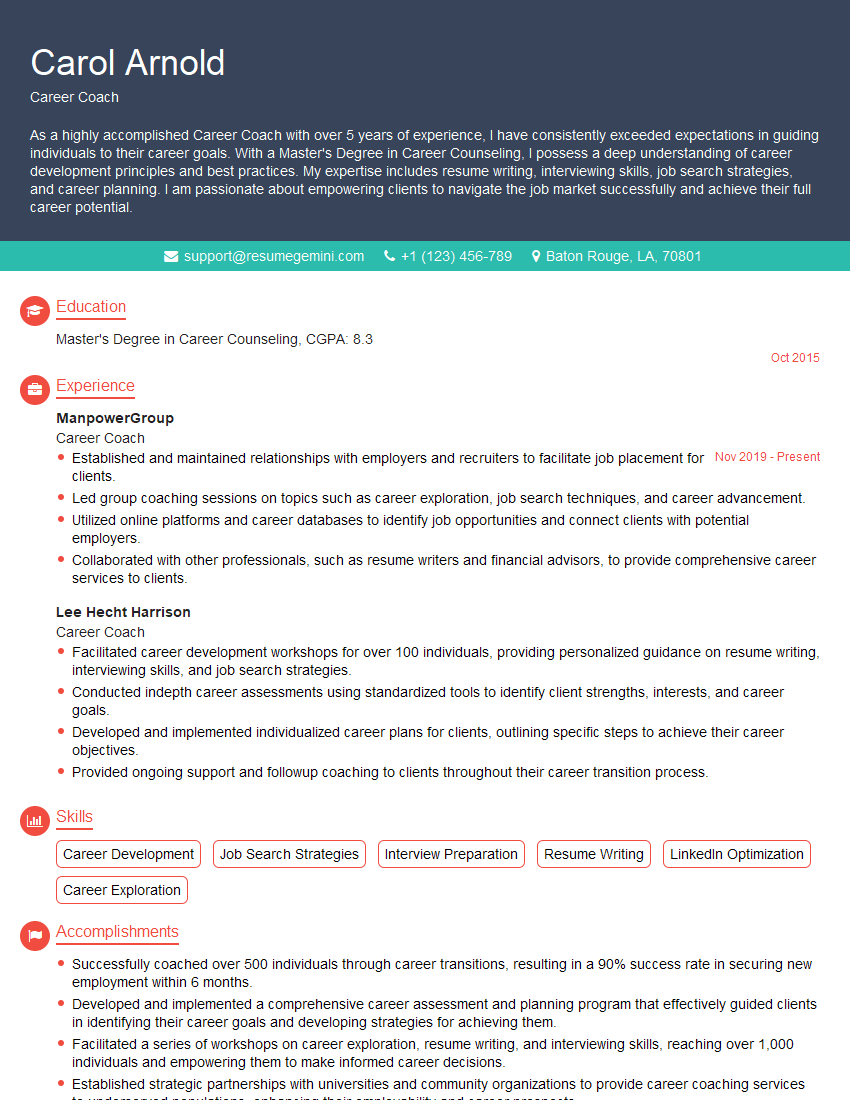
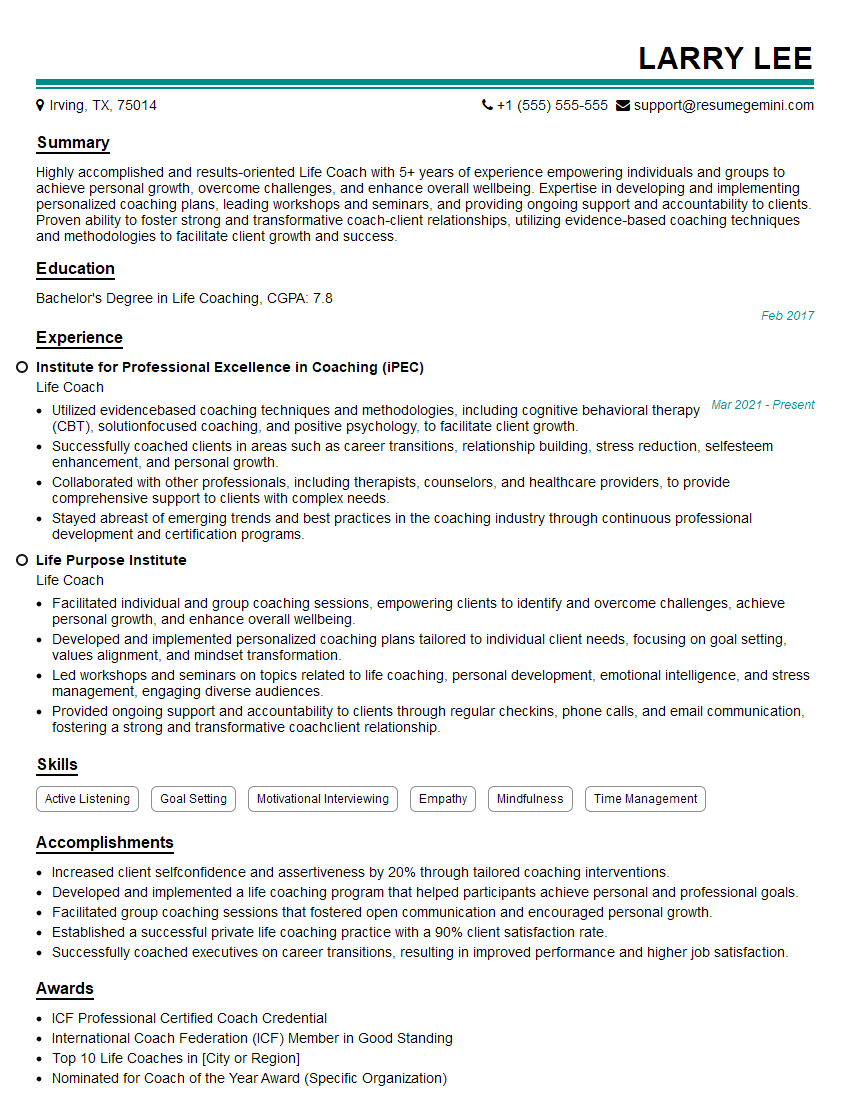
Mastering the International Coaching Federation’s principles and practices is crucial for advancing your career in the coaching profession. It opens doors to greater recognition, credibility, and opportunities for professional growth. To significantly increase your job prospects, crafting an ATS-friendly resume is paramount. ResumeGemini is a trusted resource to help you build a professional resume that showcases your skills and experience effectively. We provide examples of resumes tailored to the International Coaching Federation to help you create a compelling application.

Explore more articles
Users Rating of Our Blogs
Share Your Experience
We value your feedback! Please rate our content and share your thoughts (optional).
What Readers Say About Our Blog
Very informative content, great job.
good