The thought of an interview can be nerve-wracking, but the right preparation can make all the difference. Explore this comprehensive guide to Finishing Operation interview questions and gain the confidence you need to showcase your abilities and secure the role.
Questions Asked in Finishing Operation Interview
Q 1. Explain the different types of surface finishing processes.
Surface finishing processes aim to enhance a product’s aesthetics, durability, and functionality. They can be broadly categorized into several types:
- Mechanical Finishing: This involves processes like polishing, buffing, honing, and tumbling, which improve surface smoothness and appearance through abrasive action. Think of the smooth finish on a polished stainless steel sink – that’s mechanical finishing.
- Chemical Finishing: This category includes chemical etching, pickling (removing oxides), and chemical milling, altering the surface’s chemical composition or texture. For instance, etching creates a textured surface on stainless steel for better grip.
- Electrochemical Finishing: This encompasses electroplating, anodizing, and electropolishing. These processes use electrochemical reactions to deposit coatings or alter the surface structure. Chrome plating on car bumpers is a classic example.
- Thermal Finishing: Processes such as powder coating and painting utilize heat to cure and adhere the coating to the substrate. Powder coating provides a durable and visually appealing finish on many products, from bicycles to appliances.
- Organic Coatings: This includes painting, lacquering, and varnishing. These methods apply organic films to protect and enhance the surface. Think of the paint on your car, providing protection from rust and UV damage.
The choice of finishing process depends on factors such as material properties, desired finish, cost, and environmental considerations.
Q 2. Describe your experience with powder coating. What are the key parameters to control?
I have extensive experience in powder coating, having managed a powder coating line for over five years. My responsibilities included setting up the process parameters, ensuring quality control, and troubleshooting issues. Powder coating involves applying a dry powder coating to a substrate and then curing it in an oven. The key parameters to control include:
- Pre-treatment: Proper cleaning and surface preparation are crucial for adhesion. This often involves chemical cleaning and/or blasting. The quality of the pre-treatment directly impacts the final finish.
- Powder Application: This involves controlling the powder flow rate, gun voltage, and distance from the workpiece to ensure even coating thickness and avoid defects like sagging or orange peel. The type of powder (e.g., polyester, epoxy) also plays a role in the final appearance and performance.
- Curing Temperature and Time: The oven temperature and dwell time must be precisely controlled to ensure proper curing. Incorrect settings can lead to poor adhesion, blistering, or incomplete curing.
- Post-treatment: This might include additional processes like polishing or clear coating. This step can improve the aesthetics and durability of the coated parts.
I’ve personally overseen the implementation of a new automated powder coating system, leading to a 20% increase in efficiency and a 10% reduction in defects. Successfully managing this process involves understanding the interplay between all these parameters and consistently maintaining optimal conditions.
Q 3. What are the common defects found in electroplating and how are they addressed?
Electroplating, while a robust process, can suffer from various defects. Some common ones include:
- Pitting: Small holes or cavities in the plating, often caused by contamination or inadequate surface preparation.
- Burning: A rough, uneven plating caused by excessive current density.
- Nodules/Treeing: Irregular growths on the surface, typically caused by impurities or excessive current density.
- Blistering: Bubbles appearing in the plating, indicating trapped gases or poor adhesion.
- Cracking: Stress in the coating resulting in cracks, which reduce the coating’s protective properties.
Addressing these defects often involves a systematic approach:
- Identify the root cause: This may involve analyzing the plating bath chemistry, current density, surface preparation, and the workpiece material.
- Adjust process parameters: This might involve changing the current density, adjusting the bath composition, or improving the pre-treatment steps.
- Improve cleaning procedures: Thorough cleaning of the workpieces is crucial to remove contaminants that can cause defects.
- Use appropriate plating solutions: Choosing the right plating solution for the specific application and substrate is vital.
- Implement quality control checks: Regularly monitoring the plating process using appropriate tools such as thickness gauges and visual inspections.
For example, if pitting is a problem, I would investigate the cleanliness of the workpiece, the plating bath, and the pre-treatment processes to eliminate any contaminants.
Q 4. How do you ensure quality control in a finishing operation?
Quality control in a finishing operation is paramount to ensuring consistent and high-quality products. My approach involves a multi-pronged strategy:
- Incoming Inspection: Inspecting the raw materials to ensure they meet the required specifications before they enter the finishing process. This is about preventing defects early on.
- In-Process Monitoring: Continuously monitoring the various stages of the finishing process. This includes regularly checking the bath chemistry in electroplating, the temperature in powder coating, and the paint viscosity during painting.
- Statistical Process Control (SPC): Implementing SPC charts to track key process parameters and identify any deviations from the target values. This allows for early detection of potential problems.
- Final Inspection: Performing a thorough inspection of the finished products to identify any defects, whether visual or dimensional. This often uses checklists and standardized procedures.
- Data Analysis and Reporting: Maintaining detailed records of the process parameters and defect rates. This allows identification of trends and areas for improvement.
- Corrective Actions: Implementing corrective actions to address any identified defects or process issues. Root cause analysis is crucial to preventing recurrence.
For instance, if we observe an increasing trend of pitting in the electroplating process, we would immediately investigate the cleanliness of the parts and the plating bath, adjusting parameters as needed and documenting the corrective actions.
Q 5. What are the safety precautions you take while working with hazardous chemicals in finishing?
Safety is my top priority when working with hazardous chemicals in finishing operations. My approach involves:
- Personal Protective Equipment (PPE): Always using appropriate PPE, including gloves, respirators, eye protection, and protective clothing. The selection of PPE depends on the specific chemicals being handled.
- Proper Ventilation: Ensuring adequate ventilation in the work area to minimize exposure to hazardous fumes and vapors. This often involves using exhaust hoods or local ventilation systems.
- Emergency Procedures: Having well-defined emergency procedures in place, including spill response plans and access to eyewash stations and safety showers.
- Chemical Handling Training: Providing comprehensive training to all personnel on the safe handling, storage, and disposal of hazardous chemicals. This includes regular refresher training.
- Material Safety Data Sheets (MSDS): Ensuring all MSDS are readily available and regularly reviewed. This is critical to understanding the potential risks and proper handling procedures for each chemical.
- Waste Management: Following proper procedures for the collection, storage, and disposal of hazardous waste, in accordance with all relevant regulations.
We conduct regular safety audits and training exercises to reinforce safe working practices and ensure compliance with all safety regulations. A proactive safety culture is vital to minimize risk.
Q 6. Explain the difference between anodizing and plating.
Anodizing and plating are both surface finishing processes that enhance the properties of metals, but they differ significantly in their mechanisms:
- Anodizing: This is an electrochemical process that thickens the natural oxide layer on the surface of a metal, typically aluminum. It’s an oxidation process that creates a protective and decorative layer on the base metal.
- Plating: This is an electrochemical process where a thin layer of metal is deposited onto the surface of another metal. This added layer provides different properties like corrosion resistance, improved appearance, or increased hardness.
Key differences:
- Mechanism: Anodizing thickens the existing oxide layer; plating adds a new layer of a different metal.
- Material: Anodizing is primarily used for aluminum and some other metals; plating can be applied to a wide range of metals.
- Thickness: Anodized layers are typically thicker than plated layers.
- Color: Anodized layers can be colored by dyeing, whereas plated layers achieve color from the plated metal itself.
In essence, anodizing is like strengthening a natural shield, while plating is like adding an entirely new, different protective layer.
Q 7. Describe your experience with different types of paint application methods.
I have experience with various paint application methods, each with its own advantages and disadvantages:
- Spray Painting: This is a common method offering good coating uniformity and efficiency for mass production. It can be automated or manual, using airless spray guns or electrostatic spray guns.
- Dip Coating: The workpiece is immersed in a paint bath, providing complete and even coating. This is suitable for small, intricate parts, but can be less efficient for large-scale production.
- Brush Painting: This is a more manual method that is suited for smaller-scale operations or difficult-to-reach areas. It offers good control, but the finish may be less uniform.
- Roller Coating: Similar to brush painting, but using a roller for greater efficiency. This method is suitable for larger, flat surfaces.
- Electrostatic Spray Painting: The paint is electrically charged, attracted to the grounded workpiece, resulting in more efficient coating and less overspray. This is environmentally friendly and less wasteful than conventional spray painting.
The selection of the method depends on factors like production volume, part geometry, desired finish quality, and cost considerations. I’ve successfully implemented electrostatic spray painting in one project, reducing paint waste by 30% and improving finish quality.
Q 8. How do you manage production schedules and deadlines in a finishing operation?
Managing production schedules and deadlines in finishing operations requires a structured approach. It’s like orchestrating a symphony – each instrument (process) needs to play its part at the right time to create a harmonious outcome (finished product).
- Prioritization: I begin by prioritizing orders based on urgency, due dates, and material availability. This often involves using project management software to visualize the workflow and identify potential bottlenecks.
- Capacity Planning: I assess the available capacity of our equipment and personnel. This includes considering factors like machine downtime for maintenance and employee availability. Overbooking leads to delays, so accurate capacity planning is crucial.
- Process Optimization: Identifying and eliminating unnecessary steps in the finishing process is key. For instance, streamlining the movement of parts between different finishing stages can significantly reduce lead times. Lean manufacturing principles are incredibly helpful here.
- Real-time Monitoring: Regularly monitoring progress against the schedule is essential. Any deviations are immediately addressed through proactive communication with the team and adjustments to the schedule if necessary. This might involve reallocating resources or adjusting priorities.
- Communication: Clear and consistent communication with all stakeholders – including production teams, clients, and suppliers – is paramount. Open communication helps prevent misunderstandings and ensures everyone is on the same page.
For example, in a recent project involving a large order of custom-finished metal parts, we used a Kanban system to visualize the workflow and manage the flow of parts through the different finishing stages. This allowed us to identify a bottleneck in the polishing stage and quickly adjust the schedule by adding extra personnel.
Q 9. What are your troubleshooting skills when dealing with finishing defects?
Troubleshooting finishing defects requires a systematic approach, much like solving a detective mystery. I follow a structured process to identify the root cause of the defect.
- Visual Inspection: I begin with a thorough visual inspection of the defective parts, noting the type, location, and extent of the defect. This often helps identify the likely source of the problem.
- Material Analysis: If the cause isn’t immediately apparent, I might examine the material itself for flaws, inconsistencies, or contamination. This could involve microscopic analysis or testing the material’s properties.
- Process Review: I carefully review all the steps in the finishing process, looking for deviations from the standard operating procedure. This includes checking machine settings, material usage, and environmental conditions.
- Equipment Diagnostics: If the problem seems to be related to the equipment, I run diagnostics to check for malfunctions or irregularities. This could involve checking for wear and tear on polishing pads, checking the consistency of abrasive blasting media, or verifying the calibration of paint spraying equipment.
- Corrective Actions: Once the root cause is identified, I implement appropriate corrective actions, ranging from simple adjustments to more extensive repairs or process changes. Thorough documentation of the problem and solution is critical for preventing recurrence.
For instance, I once encountered a consistent surface imperfection on a batch of painted parts. After careful inspection and process review, I discovered a minor misalignment in the paint spraying equipment. A simple adjustment resolved the issue.
Q 10. What experience do you have with different types of polishing techniques?
My experience encompasses a wide range of polishing techniques, each chosen based on the material and desired finish. It’s like having a toolbox full of specialized tools – each designed for a specific job.
- Mechanical Polishing: I’m proficient in various mechanical polishing techniques, including using abrasive compounds, polishing wheels, and buffing machines. This is common for metals and plastics to achieve a high gloss.
- Electrolytic Polishing: This electrochemical method removes surface imperfections and provides a smoother, more uniform finish on metals, enhancing their corrosion resistance. I’ve used it extensively on stainless steel components.
- Vibratory Finishing: This process uses a vibrating container with abrasive media to polish and deburr parts efficiently, ideal for mass production and intricate shapes. I’ve utilized this for high-volume production runs.
- Chemical Polishing: This involves the use of chemical solutions to remove surface layers, achieving a smooth and bright finish. I have experience selecting the appropriate chemicals based on the material’s properties.
- Laser Polishing: This advanced technique uses lasers to precisely remove surface material, offering highly controlled polishing, particularly useful for delicate or complex parts. My recent projects included a small number of exceptionally intricate parts that required this precision.
Q 11. How do you maintain finishing equipment and ensure its optimal performance?
Maintaining finishing equipment is crucial for optimal performance and consistent results. It’s like regularly servicing your car – preventative maintenance prevents major breakdowns and ensures longevity.
- Preventative Maintenance Schedules: I develop and adhere to strict preventative maintenance schedules for all finishing equipment. This includes regular cleaning, lubrication, and inspections to detect and address minor issues before they escalate.
- Calibration and Testing: Regular calibration and testing of equipment is vital to ensure accuracy and consistency. This is particularly important for paint spraying equipment and measuring instruments.
- Operator Training: Proper operator training is crucial for minimizing equipment wear and tear. Operators are trained on correct operating procedures, safety protocols, and basic troubleshooting.
- Spare Parts Inventory: Maintaining an adequate inventory of spare parts is essential for minimizing downtime during repairs. This minimizes interruptions to production.
- Record Keeping: Detailed records of all maintenance activities, including repairs and calibrations, are meticulously maintained. This helps track equipment performance and identify trends that might indicate potential problems.
For example, our paint spraying booths undergo a thorough cleaning and inspection every week, and major components are replaced according to a pre-determined schedule. This ensures that the equipment consistently delivers a high-quality finish.
Q 12. Describe your experience with sandblasting and its applications.
Sandblasting is an abrasive blasting technique that uses compressed air to propel abrasive media onto a surface, removing material and creating a desired finish. It’s like using a powerful, controlled sandstorm to reshape a surface.
- Applications: I have extensive experience using sandblasting for various applications, including surface cleaning, preparation for painting or coating, creating textured finishes, and removing old coatings. It’s particularly effective on metal, but can also be used on other materials like glass and stone.
- Abrasive Media Selection: Choosing the right abrasive media is critical. Different materials, such as glass beads, aluminum oxide, or silica sand, are used depending on the material being blasted and the desired finish. The particle size also affects the finish.
- Safety Precautions: Safety is paramount when using sandblasting equipment. I ensure that all safety procedures are followed, including the use of appropriate personal protective equipment (PPE), such as respirators, safety goggles, and protective clothing.
- Pressure Control: Controlling the pressure of the compressed air is vital to achieve the desired level of surface removal. Too much pressure can damage the substrate, while too little pressure will be ineffective.
- Environmental Considerations: Proper handling and disposal of the abrasive media is essential for environmental protection. This often involves using dust collection systems and adhering to environmental regulations.
Recently, I used sandblasting to prepare a large steel structure for a protective coating. Careful selection of the abrasive media and pressure control were crucial to achieve the required surface profile without damaging the base material.
Q 13. What is your experience with surface preparation techniques before finishing?
Surface preparation before finishing is crucial for achieving a high-quality, durable finish. It’s like preparing a canvas before painting – a smooth, clean surface ensures the paint adheres properly and lasts longer.
- Cleaning: Thorough cleaning is the first step, removing dirt, grease, oil, and other contaminants. This can involve various methods such as solvent cleaning, degreasing, and ultrasonic cleaning, depending on the material and type of contamination.
- Deburring: Removing sharp edges and burrs is often necessary to prevent damage to the finishing equipment and ensure a smooth finish. This can be accomplished through mechanical methods, such as filing or grinding, or by using vibratory finishing.
- Surface Grinding/Machining: For some applications, more precise surface preparation might be required, such as grinding or machining to achieve a specific surface profile or roughness. This provides a highly uniform surface for the best adhesion.
- Priming: Applying a primer is often necessary to improve the adhesion of the subsequent finishing layers, enhance corrosion protection, and provide a uniform base for the final finish.
- Masking: Protecting certain areas from the finishing process using masking tape or other materials is important when only specific parts of the workpiece need to be treated.
In one project, we used a combination of solvent cleaning, mechanical deburring, and a specialized primer to prepare aluminum components for a high-gloss anodizing process. This meticulous preparation resulted in a flawless final finish.
Q 14. How do you ensure consistent color matching in painting operations?
Ensuring consistent color matching in painting operations demands precision and attention to detail. It’s like a painter carefully matching shades to create a harmonious artwork.
- Color Measurement Tools: Using precise color measurement tools, such as spectrophotometers, is crucial for accurate color matching. These instruments provide numerical color values, allowing for objective comparisons.
- Color Standards: Maintaining a set of color standards, often in the form of color chips or physical samples, helps maintain consistency across different batches and production runs.
- Consistent Material Usage: Using the same paint brand, type, and batch number minimizes variations in color. I implement strict inventory management to ensure consistency.
- Environmental Control: Controlling environmental factors such as temperature and humidity during the painting process can affect color appearance, so maintaining a stable environment is important for consistency.
- Regular Calibration: Regular calibration and maintenance of paint spraying equipment, color measurement tools, and mixing equipment is essential to ensure consistent results.
In a recent project, we used a spectrophotometer to measure the color of a customer’s sample and precisely matched it using a computerized paint mixing system. This ensures consistent color across the entire production run, avoiding costly rework.
Q 15. What are the environmental considerations in finishing operations?
Environmental considerations in finishing operations are paramount, impacting both the immediate workspace and the broader environment. They encompass the responsible management of air emissions, water effluents, and waste materials.
- Air Emissions: Many finishing processes, such as painting, powder coating, and electroplating, release volatile organic compounds (VOCs) and other harmful gases. Controlling these emissions often requires specialized ventilation systems, scrubbers, or thermal oxidizers. For example, a water-based paint system will significantly reduce VOC emissions compared to a solvent-based system.
- Water Effluents: Processes like electroplating and cleaning generate wastewater containing heavy metals, acids, and other pollutants. Proper treatment, including filtration and chemical neutralization, is essential before discharge into municipal wastewater systems. Implementing a closed-loop system to recycle water can significantly reduce water consumption and pollution.
- Waste Management: Finishing operations generate various solid wastes, including paint sludge, spent solvents, and packaging materials. Proper disposal methods, including recycling and hazardous waste management, are crucial to comply with environmental regulations. Implementing a robust waste segregation plan is vital for efficient recycling and safe disposal.
Ignoring these considerations can lead to hefty fines, reputational damage, and, most importantly, harm to the environment and human health. Sustainable practices, like using less hazardous materials and implementing closed-loop systems, are key to minimizing environmental impact.
Career Expert Tips:
- Ace those interviews! Prepare effectively by reviewing the Top 50 Most Common Interview Questions on ResumeGemini.
- Navigate your job search with confidence! Explore a wide range of Career Tips on ResumeGemini. Learn about common challenges and recommendations to overcome them.
- Craft the perfect resume! Master the Art of Resume Writing with ResumeGemini’s guide. Showcase your unique qualifications and achievements effectively.
- Don’t miss out on holiday savings! Build your dream resume with ResumeGemini’s ATS optimized templates.
Q 16. Explain your understanding of different types of coatings and their applications.
Coatings play a vital role in enhancing the functionality and aesthetics of finished products. They can be broadly classified into several types:
- Paints: These are ubiquitous, offering a wide range of colors, finishes (gloss, matte, etc.), and properties (corrosion resistance, UV protection). They can be solvent-based, water-based, or powder-based, each with its own environmental implications and application methods. For example, automotive painting utilizes specialized paints for durability and aesthetic appeal.
- Powder Coatings: These are applied as dry powder, then cured in an oven to form a hard, durable coating. They are environmentally friendly due to minimal solvent emissions. This is a popular choice in the appliance industry for its excellent corrosion resistance and chip resistance.
- Electroplating: This process involves depositing a thin layer of metal onto a substrate using an electric current. It’s widely used to enhance corrosion resistance, improve conductivity, and add decorative finishes. Common applications include chrome plating on automotive parts or gold plating on jewelry.
- Anodizing: This electrochemical process creates a protective oxide layer on aluminum and other metals. It improves corrosion resistance, wear resistance, and can provide attractive colors. Aerospace components frequently utilize anodizing for its durability and corrosion resistance.
- Plastics Coatings: These provide protective and decorative layers on various substrates. Applications range from automotive parts to consumer electronics, offering features like scratch resistance and impact protection. Different plastics offer diverse properties like flexibility or hardness.
The choice of coating depends on the application’s specific requirements, such as durability, aesthetics, cost, and environmental impact. A thorough understanding of these factors is crucial for selecting the optimal coating for a given product.
Q 17. Describe your experience with automated finishing systems.
My experience with automated finishing systems spans several years, encompassing various technologies and applications. I’ve worked with robotic painting systems, automated powder coating lines, and automated parts handling systems.
In one project, I was involved in the implementation of a robotic painting system for automotive parts. This involved programming the robots, integrating them with the paint delivery system, and optimizing the painting process to ensure consistent quality and high throughput. We used a vision system to improve precision, reducing paint waste and improving the consistency of the finish. The transition to automation increased production by 30% while also improving the quality of the painted parts, reducing inconsistencies from human error.
Another significant experience involved troubleshooting issues on an automated powder coating line. We identified and resolved bottlenecks in the powder application and curing stages, leading to a significant improvement in throughput and a reduction in reject rates. This involved collaborating with the equipment vendors, analyzing process data, and implementing process improvements like tweaking conveyor speed and oven temperature profiles.
My experience highlights the importance of data analysis, process optimization, and collaborative problem-solving in maximizing the efficiency and effectiveness of automated finishing systems. It also emphasizes the need for continuous improvement to maintain optimal performance.
Q 18. How do you handle material waste in the finishing process?
Material waste handling in finishing operations is crucial for both economic and environmental reasons. A well-structured waste management system is essential.
- Segregation: Different waste streams (hazardous vs. non-hazardous, recyclable vs. non-recyclable) need to be separated at the source to facilitate proper handling and disposal. For example, spent solvents are handled differently from cardboard packaging.
- Recycling: Whenever possible, materials should be recycled. This includes recovering solvents, reclaiming paint, and recycling packaging materials. Investing in solvent recovery units or partnering with recycling facilities can be a significant cost-saver and eco-friendly initiative.
- Hazardous Waste Management: Hazardous wastes, like spent solvents and paint sludge, need to be managed according to strict regulations. This involves proper labeling, storage, and disposal through licensed hazardous waste handlers. Incorrect handling can lead to environmental contamination and significant legal penalties.
- Waste Reduction Strategies: Proactive measures should be taken to minimize waste generation. This could include optimizing coating application methods, improving process efficiency, and adopting lean manufacturing principles to reduce material waste during the finishing operations.
A comprehensive waste management plan, coupled with regular audits and training for personnel, is crucial to ensure compliance with regulations and minimize environmental impact while optimizing resource utilization.
Q 19. What are the key performance indicators (KPIs) you track in a finishing operation?
Key Performance Indicators (KPIs) in a finishing operation provide valuable insights into efficiency, quality, and cost-effectiveness. The specific KPIs will vary depending on the operation, but some crucial metrics include:
- Throughput: The number of parts finished per unit of time (e.g., parts per hour). This reflects the overall productivity of the finishing process.
- Reject Rate: The percentage of finished parts that do not meet quality standards. A low reject rate indicates high process quality and efficiency.
- First Pass Yield: The percentage of parts successfully completed without rework or defects on the first attempt. This KPI is a strong indicator of overall process efficiency and quality.
- Paint/Coating Usage Efficiency: The amount of paint or coating used per part. Optimizing this reduces material costs and environmental impact.
- Cycle Time: The time taken to complete the finishing process for a single part. Reducing cycle time improves overall productivity.
- Downtime: The time the finishing line is not operational due to equipment failures or other issues. Minimizing downtime is crucial for maintaining productivity and meeting production schedules.
- Cost per Part: This considers the cost of materials, labor, energy, and waste disposal to determine the overall cost-effectiveness of the finishing operation.
Regularly monitoring and analyzing these KPIs allows for proactive identification of issues and implementation of corrective actions to improve overall performance and profitability.
Q 20. How do you manage a team in a high-pressure finishing environment?
Managing a team in a high-pressure finishing environment requires a combination of strong leadership, effective communication, and a focus on safety and quality.
- Clear Communication: Regular, clear, and concise communication is essential to keep the team informed about goals, expectations, and any changes in the production schedule or process. This includes providing updates, actively soliciting feedback, and addressing concerns promptly.
- Teamwork and Collaboration: Fostering a collaborative environment where team members support each other and work together to solve problems is vital. Cross-training can help build flexibility and resilience within the team.
- Safety First: Ensuring a safe working environment is paramount. This involves adhering to safety regulations, providing adequate training, and promoting a safety-conscious culture. Regular safety meetings and inspections are essential.
- Motivation and Recognition: Recognizing and appreciating team members’ contributions, both big and small, boosts morale and motivation. Celebrating successes and acknowledging hard work is crucial in maintaining a positive team spirit.
- Problem-Solving Skills: Effective problem-solving is crucial in a high-pressure environment. Empowering team members to participate in problem-solving builds ownership and enhances their skillset.
By creating a supportive, well-communicated, and safety-focused environment, I can effectively manage a team to meet demanding production targets while maintaining high-quality standards.
Q 21. Describe a time you had to solve a complex problem in a finishing operation.
In one instance, we experienced a significant increase in reject rates on a powder coating line. The initial diagnosis pointed to inconsistencies in the powder application, but after thorough investigation, we discovered the root cause was related to fluctuations in the oven temperature.
Problem-Solving Steps:
- Data Analysis: We analyzed historical data on oven temperature, reject rates, and other relevant process parameters to identify correlations.
- Root Cause Investigation: We inspected the oven’s heating elements, controls, and sensors, identifying a malfunctioning temperature sensor which was providing inaccurate readings to the control system.
- Solution Implementation: We replaced the faulty sensor and recalibrated the oven control system. We also implemented a more robust temperature monitoring system to prevent future issues.
- Verification and Prevention: After the repair, we closely monitored the oven temperature and reject rates to verify the effectiveness of the solution. We also established a preventative maintenance schedule for the oven and its sensors to minimize the risk of future occurrences.
This experience highlighted the importance of thorough root cause analysis, the use of data-driven decision-making, and the need for a proactive approach to maintenance and preventative measures in solving complex problems in a high-pressure finishing environment. The improved monitoring system reduced future issues by 85%.
Q 22. What is your experience with different types of finishing materials (e.g., metals, plastics)?
My experience encompasses a wide range of finishing materials, primarily focusing on metals and plastics. With metals, I’ve worked extensively with various alloys like steel, aluminum, and stainless steel, utilizing processes like powder coating, electroplating (including chrome, nickel, and zinc), and anodizing. Each material requires a unique approach, considering factors like surface preparation, chemical compatibility, and desired finish. For example, preparing steel for powder coating requires a different surface treatment than aluminum anodizing. With plastics, my experience includes painting, printing (pad printing, screen printing), and applying protective coatings. Understanding the material’s properties – its flexibility, temperature resistance, and chemical reactivity – is crucial for choosing the right finishing method to ensure both quality and durability. I’ve also had experience with wood finishing, including staining, lacquering, and sealing.
- Metals: Steel (powder coating, electroplating), Aluminum (anodizing, powder coating), Stainless Steel (electropolishing, passivation)
- Plastics: ABS (painting, printing), Polycarbonate (UV coating), Polypropylene (painting, silk screening)
- Wood: Staining, lacquering, polyurethane coatings
Q 23. How familiar are you with relevant industry standards and regulations (e.g., OSHA)?
Adherence to industry standards and regulations is paramount in finishing operations. I’m thoroughly familiar with OSHA guidelines, specifically those related to hazardous materials handling, personal protective equipment (PPE), and waste disposal. My understanding extends to relevant safety data sheets (SDS) and the proper labeling and storage of chemicals. I’m also proficient in complying with EPA regulations concerning the release of pollutants into the environment. For example, I’ve been involved in implementing and maintaining procedures for the safe handling and disposal of chromic acid used in some electroplating processes. Beyond OSHA and EPA, I’m aware of industry-specific standards that relate to the quality and performance of different finishes, ensuring our work consistently meets client expectations and the required specifications.
Q 24. How do you prioritize tasks in a fast-paced finishing environment?
In a fast-paced environment, effective prioritization is key. I utilize a combination of techniques including a Kanban system for visual task management and a prioritization matrix based on urgency and importance. Urgent and important tasks take precedence, while less urgent but important tasks are scheduled strategically. I also regularly communicate with my team and supervisors to ensure alignment and to identify any potential bottlenecks that might disrupt workflow. For example, if a rush order requires a specific finishing technique that needs special preparation, I’d prioritize that to prevent delays, even if other tasks are technically ahead in the queue. Clear communication is crucial in this process, keeping everyone informed and allowing for collaborative problem-solving.
Q 25. Explain your understanding of Lean Manufacturing principles in the context of finishing.
Lean manufacturing principles are highly applicable to finishing operations, aiming to eliminate waste and optimize efficiency. In my experience, this includes focusing on reducing lead times by streamlining processes, minimizing inventory (chemicals, parts), and improving workflow. Value stream mapping is a crucial tool I use to identify and eliminate non-value-added activities. For instance, we implemented a system to optimize the cleaning process before painting, reducing cleaning time and material waste. We also employed 5S methodologies (Sort, Set in Order, Shine, Standardize, Sustain) to organize our workspace, making it safer and more efficient. Continuous improvement is a core element – regularly reviewing processes and identifying areas for further optimization is a key part of my approach.
Q 26. What software or systems are you familiar with using in a finishing operation?
My experience includes proficiency in various software and systems used in finishing operations. I’m comfortable using Computerized Maintenance Management Systems (CMMS) for tracking equipment maintenance and repairs. I’m also adept at utilizing ERP (Enterprise Resource Planning) systems for managing inventory and tracking production progress. Furthermore, I’m familiar with various quality control software for recording and analyzing data related to finish quality, ensuring consistency and identifying areas for improvement. Specific examples include using a CMMS to schedule preventative maintenance on our powder coating system, reducing downtime and extending its lifespan. In terms of ERP systems, I’ve used them to track the consumption of finishing materials, which helps with inventory management and cost control.
Q 27. Describe your experience with different types of finishing equipment maintenance.
Equipment maintenance is critical for efficient and safe operations. My experience encompasses preventative and corrective maintenance of various finishing equipment, including powder coating systems, spray booths, electroplating tanks, and automated finishing lines. Preventative maintenance involves regularly inspecting and cleaning equipment, replacing worn parts, and performing routine checks to prevent breakdowns. This includes cleaning spray guns regularly, checking the air pressure in powder coating systems, and monitoring the chemical levels in electroplating tanks. Corrective maintenance involves troubleshooting and repairing equipment malfunctions, which requires a good understanding of the equipment’s mechanics and electronics. For instance, I’ve successfully diagnosed and repaired a malfunctioning pump in our powder coating system by replacing a faulty component, minimizing production downtime.
Q 28. How do you ensure proper disposal of hazardous waste generated during finishing operations?
Ensuring proper disposal of hazardous waste is a top priority. This involves meticulously following all relevant regulations and working closely with licensed hazardous waste disposal companies. We segregate waste according to its hazardous properties, utilizing appropriate containers and labeling as per SDS guidelines. For example, spent plating solutions containing heavy metals are collected in designated containers and properly manifested for transport to a licensed treatment facility. Regular training on hazardous materials handling and waste disposal procedures is conducted to maintain compliance and employee safety. Accurate record-keeping is essential, documenting all waste generation, handling, and disposal activities. This documentation serves as proof of compliance and assists in minimizing environmental impact.
Key Topics to Learn for Finishing Operation Interview
- Surface Preparation: Understanding various methods like cleaning, degreasing, and surface treatments. Practical application: Knowing the appropriate preparation method for different materials and their impact on final finish quality.
- Coating Application Techniques: Mastering spray painting, dipping, powder coating, and other relevant techniques. Practical application: Troubleshooting common application issues like orange peel, runs, and sags.
- Finishing Processes: In-depth knowledge of electroplating, anodizing, polishing, and buffing. Practical application: Selecting the optimal finishing process based on material, desired aesthetics, and performance requirements.
- Quality Control and Inspection: Implementing effective quality control measures throughout the finishing process. Practical application: Identifying and addressing defects, ensuring adherence to industry standards and client specifications.
- Health and Safety Regulations: Understanding and adhering to relevant safety protocols and regulations for handling chemicals and equipment. Practical application: Implementing safe work practices to minimize risks and ensure workplace safety.
- Process Optimization: Identifying opportunities to improve efficiency, reduce waste, and enhance the overall finishing process. Practical application: Implementing lean manufacturing principles or suggesting improvements in workflow and resource allocation.
- Troubleshooting and Problem-Solving: Diagnosing and resolving common issues in the finishing process. Practical application: Using analytical skills to identify root causes of defects and implementing corrective actions.
Next Steps
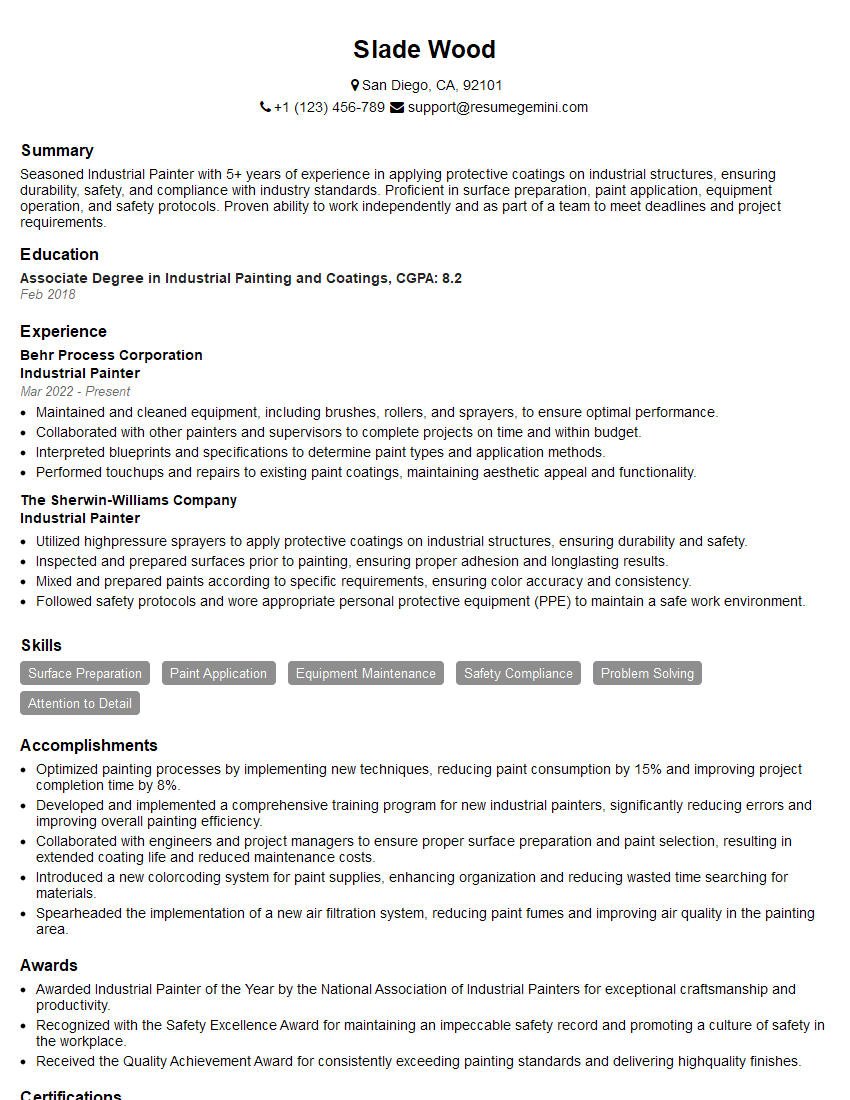
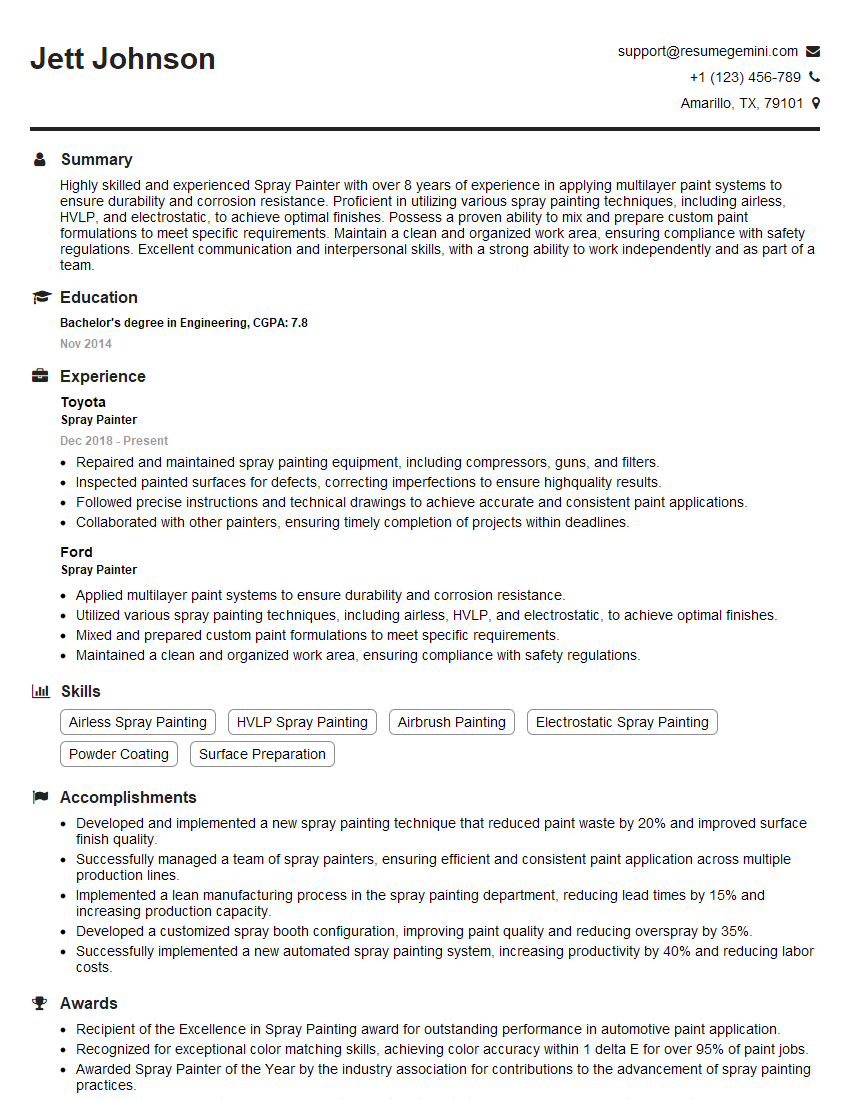
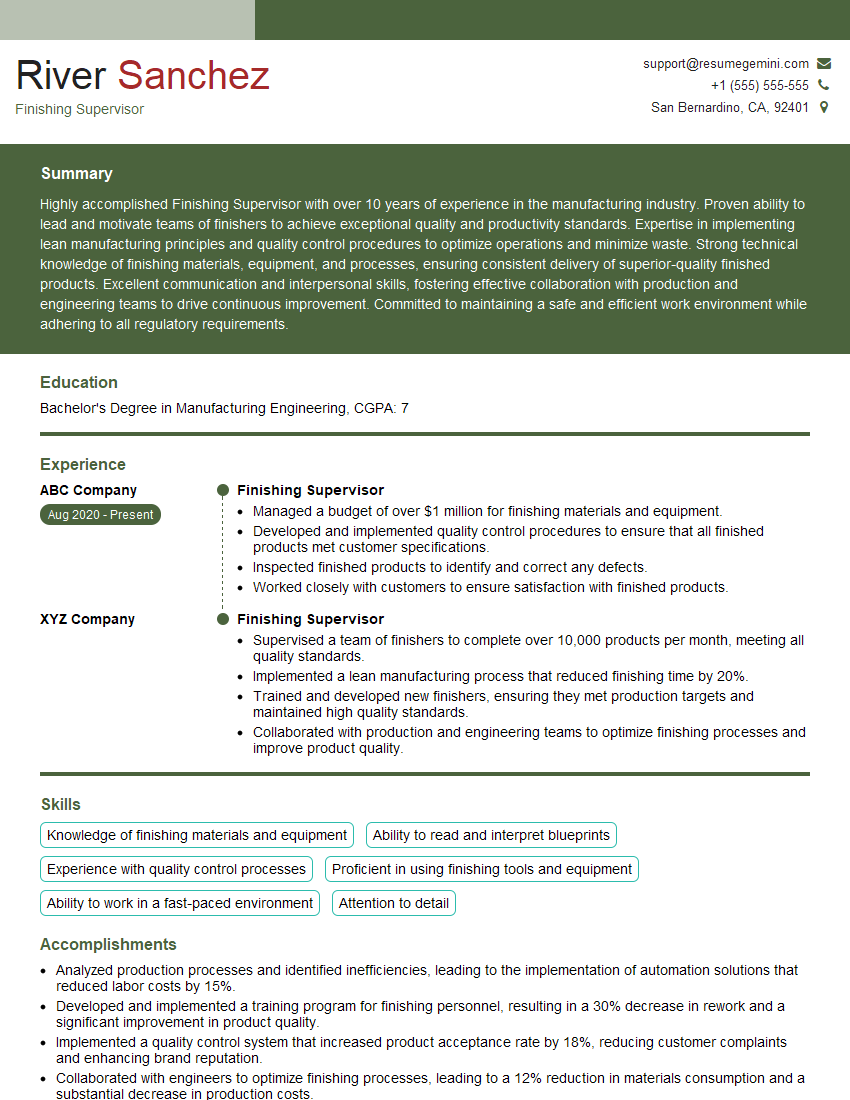
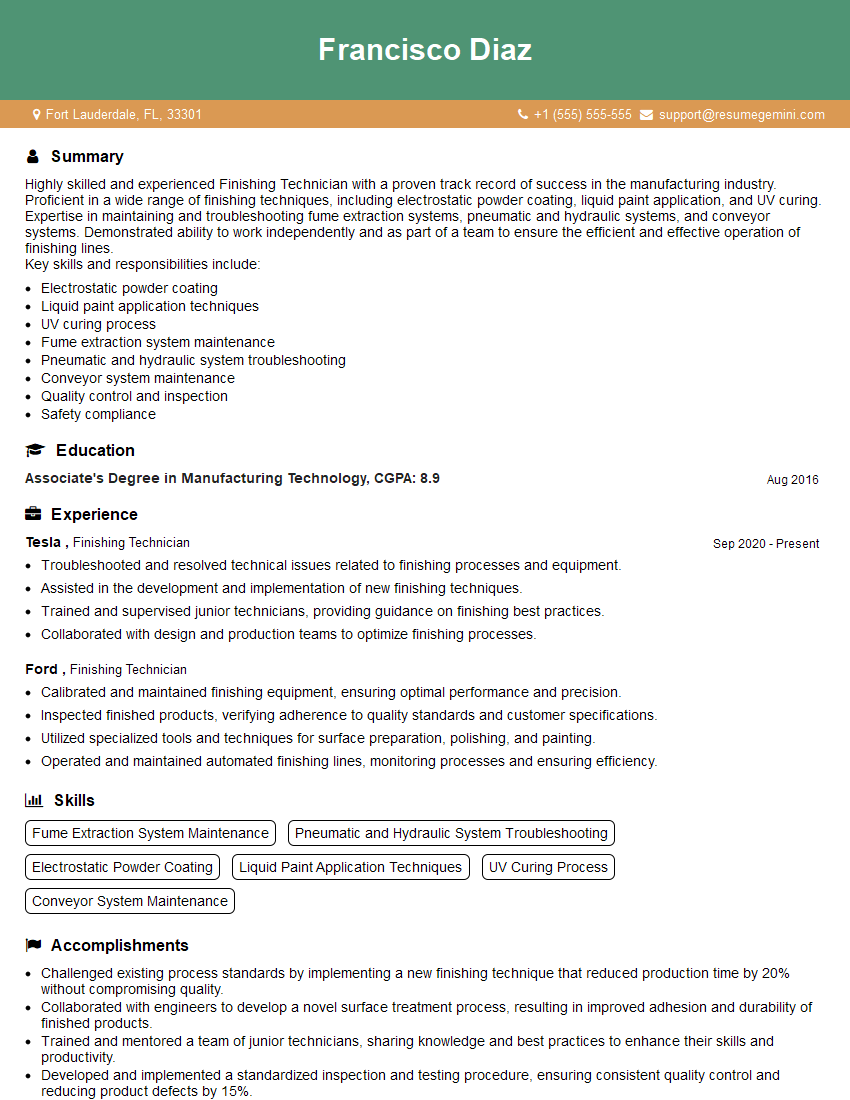
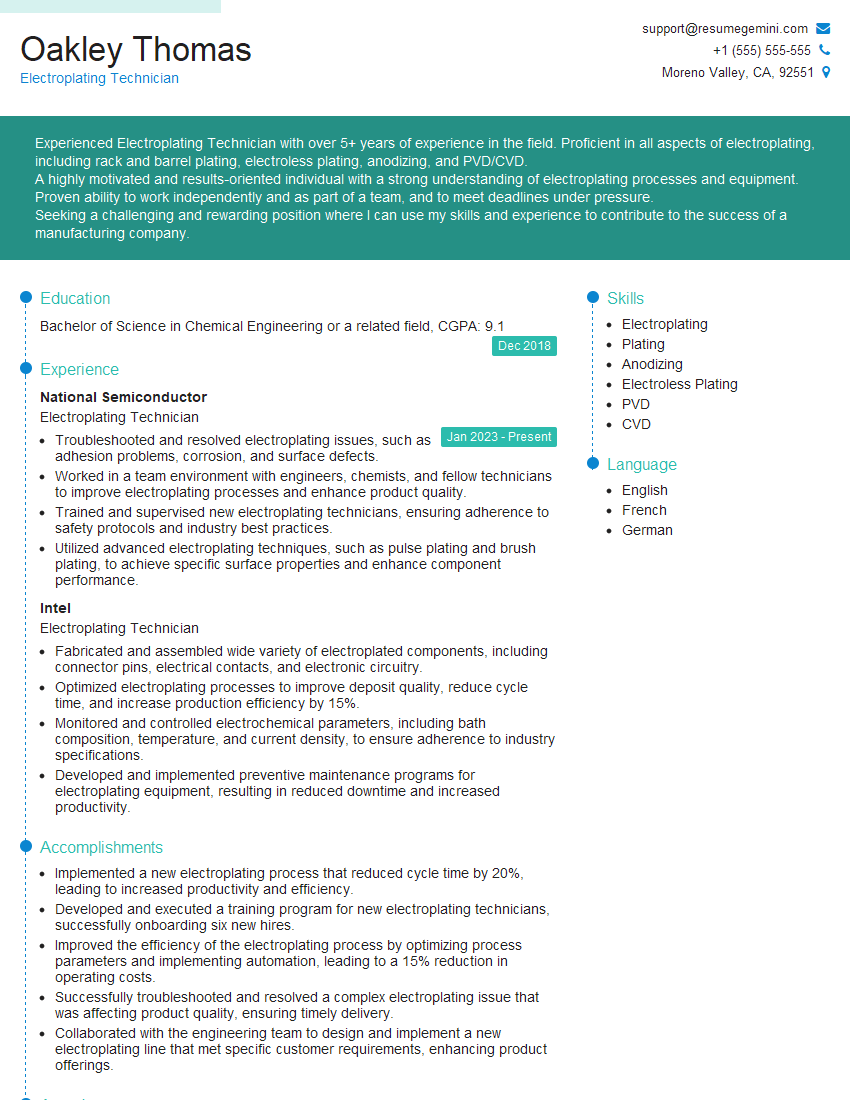
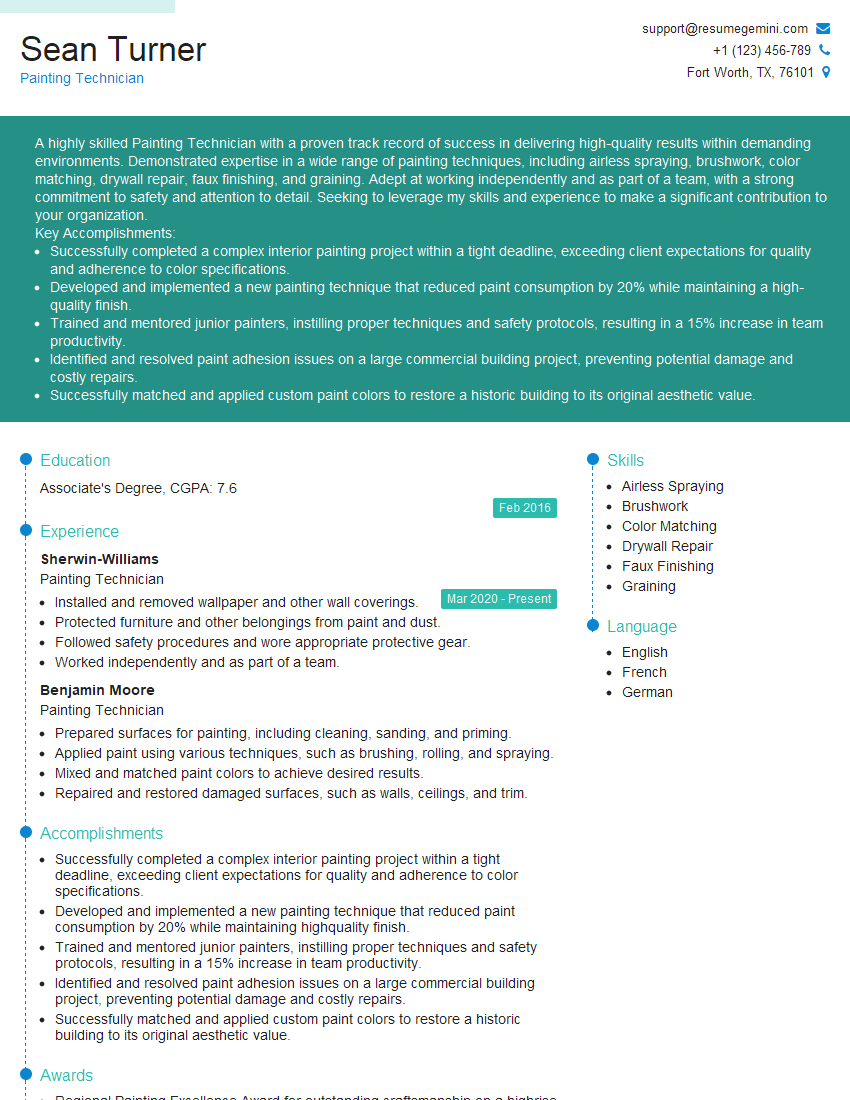
Mastering Finishing Operation skills significantly enhances your career prospects, opening doors to specialized roles and higher earning potential within manufacturing and related industries. A strong resume is crucial for showcasing your expertise to potential employers. Creating an ATS-friendly resume ensures your application gets noticed by Applicant Tracking Systems, significantly increasing your chances of landing an interview. To build a compelling and effective resume that highlights your Finishing Operation skills, we recommend using ResumeGemini. ResumeGemini provides a user-friendly platform and offers examples of resumes tailored to Finishing Operation, guiding you in crafting a document that truly reflects your capabilities and experience.
Explore more articles
Users Rating of Our Blogs
Share Your Experience
We value your feedback! Please rate our content and share your thoughts (optional).
What Readers Say About Our Blog
Very informative content, great job.
good