Are you ready to stand out in your next interview? Understanding and preparing for Fire Hazard Assessment interview questions is a game-changer. In this blog, we’ve compiled key questions and expert advice to help you showcase your skills with confidence and precision. Let’s get started on your journey to acing the interview.
Questions Asked in Fire Hazard Assessment Interview
Q 1. Explain the process of conducting a fire hazard assessment.
A fire hazard assessment is a systematic process to identify, analyze, and control fire risks within a specific location. It’s like a health check for your building, ensuring it’s safe from fire hazards. The process typically involves five key steps:
- Identification of fire hazards: This involves a thorough walkthrough of the premises, identifying potential ignition sources (e.g., electrical equipment, flammable materials), fuel sources (e.g., wood, paper, fabrics), and pathways for fire spread (e.g., open spaces, interconnected rooms).
- Assessment of risks: Once hazards are identified, their likelihood and potential severity are evaluated. For example, a small amount of flammable liquid in a well-ventilated area poses a lower risk than a large quantity stored improperly near an ignition source. This often involves a risk matrix.
- Evaluation of existing controls: Examine existing fire safety measures, like fire extinguishers, sprinklers, and fire alarms, to see how effective they are in mitigating identified risks.
- Recommendation of control measures: Based on the risk assessment, suitable fire safety measures are recommended. This might include installing fire detectors, improving storage practices, conducting fire drills, or providing fire safety training.
- Review and update: Fire hazard assessments aren’t one-time events. Regular reviews are crucial, especially after significant changes to the building’s layout, occupancy, or operations.
For example, in a hospital, we might identify the oxygen tanks in patient rooms as a significant hazard. We’d then assess the risk (high likelihood of ignition from electrical fault, high potential for serious injury), review existing precautions (emergency shut-off valves), and recommend additional measures (regular equipment inspections, fire safety training for staff).
Q 2. Describe the different types of fire hazards.
Fire hazards are anything that can initiate or contribute to a fire. They can be categorized in several ways:
- Fuel Sources: These are materials that can burn, such as wood, paper, plastics, fabrics, and flammable liquids. The type of fuel influences the intensity and speed of the fire.
- Ignition Sources: These are sources of heat or energy that can ignite fuel sources. Examples include sparks from electrical equipment, open flames, static electricity, and hot surfaces.
- Oxidizers: Usually oxygen in the air, but other oxidizers can accelerate fire spread. A pure oxygen environment dramatically increases fire risk.
- Human Factors: Negligence, lack of training, or deliberate acts can significantly increase the risk of fire. For instance, improper disposal of cigarettes or malfunctioning equipment due to inadequate maintenance.
- Environmental Factors: Things like ambient temperature, humidity, and wind can influence the development and spread of fire. High temperatures or strong winds can accelerate the process.
Think of a kitchen fire: The fuel is cooking oil, the ignition source is a faulty stove burner, and the oxidizer is the air. Human error, like leaving the stove unattended, could be a contributing factor.
Q 3. What are the key elements of a fire risk assessment report?
A comprehensive fire risk assessment report should include:
- Introduction and Scope: Clearly defining the location assessed and the purpose of the assessment.
- Methodology: Describing the assessment process followed, including any specific standards or regulations used.
- Hazard Identification: A detailed list of all identified fire hazards, with their locations and descriptions.
- Risk Evaluation: A thorough evaluation of the risks associated with each hazard, considering both likelihood and severity. Often presented in a risk matrix.
- Existing Controls: A description of the existing fire safety measures and their effectiveness in mitigating identified risks.
- Recommended Control Measures: Specific recommendations to reduce or eliminate identified risks. These might include engineering controls, administrative controls, or personal protective equipment.
- Implementation Plan: A timeline for implementing the recommended control measures and assigning responsibilities.
- Conclusion and Recommendations: A summary of the assessment findings and overall recommendations for improving fire safety.
- Appendices: Supporting documentation, such as photographs, diagrams, and test results.
A well-written report should be clear, concise, and easy to understand for all stakeholders.
Q 4. How do you identify and evaluate fire risks in a building?
Identifying and evaluating fire risks in a building is a multi-step process involving:
- Walkthrough Inspection: A physical inspection of the building to identify potential hazards, like flammable materials, obstructed exits, or faulty electrical wiring. This is like a detective investigating a crime scene, looking for clues indicating potential fire dangers.
- Review of Building Plans and Documentation: Checking building plans, electrical schematics, and fire safety system documentation to ensure compliance with regulations and identify potential vulnerabilities.
- Occupancy Analysis: Understanding the building’s occupancy (number of people, type of activities) helps determine potential risks and evacuation needs. A school will have different risk profiles than a warehouse.
- Risk Matrix Development: This involves using a matrix to assign a risk level (low, medium, high) to each identified hazard based on the likelihood and severity of a fire occurring. Likelihood is the chance of the hazard causing a fire; severity is the potential damage or harm.
- Risk Prioritization: Focusing on high-risk hazards first. These are addressed using appropriate fire safety measures.
For instance, a cluttered storage room near an electrical panel would be deemed high-risk due to the high likelihood of ignition and potential for rapid fire spread. The solution might be improved storage practices, fire-resistant materials, and regular inspections.
Q 5. Explain the fire triangle and how it relates to fire prevention.
The fire triangle illustrates the three essential elements needed for a fire to start and sustain itself: Fuel, Heat, and Oxygen. Remove any one of these, and the fire will extinguish. It’s a simple yet powerful model for understanding fire prevention.

Think of it like this: Fuel is the wood in a campfire, heat is the match that ignites it, and oxygen is the air that sustains the flames. Fire prevention strategies focus on breaking the fire triangle by:
- Removing Fuel: Properly storing flammable materials, removing clutter, and using fire-resistant materials.
- Removing Heat: Regular equipment maintenance to prevent overheating, controlling ignition sources, and ensuring proper ventilation.
- Removing Oxygen: Using fire suppression systems that displace oxygen or reduce its concentration.
For example, a sprinkler system removes heat by cooling down the fire, while a fire extinguisher removes fuel or disrupts the chemical reaction.
Q 6. What are the common fire suppression systems and their limitations?
Common fire suppression systems include:
- Sprinkler Systems: These automatically release water to extinguish or control fires. They are highly effective but can cause water damage.
- Fire Extinguishers: Portable devices containing extinguishing agents like water, foam, CO2, or dry chemical. Their effectiveness depends on the type of fire and user proficiency.
- Smoke Detectors: These alert occupants to a fire, allowing for early evacuation. They don’t extinguish fires but save lives.
- Fire Alarms: These systems use sound signals to warn occupants of a fire, triggering evacuation procedures.
- Gas Suppression Systems: These systems release inert gases, such as CO2 or Argon, to displace oxygen and extinguish fires. They are effective for protecting sensitive equipment but require careful planning and ventilation post-deployment.
Limitations: Every system has limitations. Sprinklers can cause water damage; extinguishers might be ineffective against certain fire classes; smoke detectors can fail; and gas suppression systems require proper ventilation after use to prevent oxygen deficiency.
Q 7. How do you determine the appropriate fire safety measures for a specific location?
Determining appropriate fire safety measures requires a thorough risk assessment tailored to the specific location. Factors to consider include:
- Occupancy Type: Hospitals, schools, and factories have vastly different fire risks and require different measures.
- Building Construction: The materials used in construction influence fire spread and the required protection levels.
- Building Layout: The building’s layout impacts evacuation routes and the effectiveness of fire suppression systems.
- Fire Hazards Present: Identifying specific hazards, like flammable liquids or electrical equipment, dictates the type of fire protection needed.
- Applicable Regulations and Standards: Local fire codes and national standards guide the selection of suitable fire safety measures. Compliance is paramount.
For example, a high-rise apartment building requires a comprehensive sprinkler system, well-defined escape routes, and fire-resistant materials. A small office building might need a simpler system with smoke detectors, fire extinguishers, and regular fire drills. Always consult with qualified fire safety professionals to ensure your measures are adequate and compliant.
Q 8. What are the legal requirements for fire hazard assessments in your region?
Legal requirements for fire hazard assessments vary by region but generally stem from overarching legislation designed to protect life and property. In many jurisdictions, this is mandated by workplace health and safety regulations. For instance, businesses above a certain size are legally obligated to conduct regular fire risk assessments. These assessments must identify potential hazards, evaluate risks, and detail preventative and emergency procedures. Failure to comply can result in significant penalties, including fines and even prosecution. Specific legislation, like the Regulatory Reform (Fire Safety) Order 2005 in the UK, provides a detailed framework, outlining responsibilities for employers and building owners. It’s crucial to consult the specific regulations pertinent to your location. For example, the requirements for a large manufacturing plant differ significantly from those of a small office. The key is proactive compliance to minimize risk and ensure legal adherence.
Q 9. How do you communicate fire risks and safety procedures to building occupants?
Effective communication of fire risks and safety procedures is paramount. This involves a multi-pronged approach. Firstly, clearly displayed fire safety signage—including evacuation plans, assembly points, and extinguisher locations—is essential. Signage should use universally understood symbols and clear language, accounting for any language barriers within the building’s occupants. Secondly, regular fire safety training sessions are crucial, tailored to the specific risks and procedures of that building. Hands-on demonstrations with fire extinguishers and practice evacuations are highly valuable. Training should be documented to demonstrate compliance. Thirdly, regular email updates and briefings reinforce key information and address any new risks or procedural changes. Finally, using multiple communication channels increases effectiveness. Consider using posters, internal newsletters, and even short videos to convey safety information in a memorable and engaging manner. Think about employing storytelling to make the information more relatable.
Q 10. Describe your experience with fire risk assessment software and tools.
I have extensive experience using various fire risk assessment software and tools. These range from simple spreadsheet-based systems for smaller buildings to sophisticated software packages that incorporate 3D modelling and complex risk calculations for larger, more complex structures. I’m proficient in software that allows for the mapping of buildings, the identification of fire hazards (e.g., flammable materials, electrical systems), and the calculation of risk levels based on factors such as occupancy, escape routes, and fire suppression systems. This software also helps document findings, generate reports, and track corrective actions. For example, I’ve used software that performs probabilistic risk assessments, allowing for a more nuanced understanding of potential scenarios and the likelihood of various outcomes. Furthermore, the ability to export data into different formats (e.g., PDF, CSV) is important for sharing and reporting purposes. The choice of software depends on the size and complexity of the project, budget constraints, and the specific requirements of the client.
Q 11. Explain the importance of fire drills and evacuation plans.
Fire drills and evacuation plans are critical for ensuring the safety of building occupants in the event of a fire. Evacuation plans provide a clear, step-by-step guide for safe egress from a building, detailing escape routes, assembly points, and emergency exits. They should consider all potential scenarios, including those affecting people with disabilities. Fire drills, conducted regularly, allow building occupants to practice these plans, familiarizing themselves with the routes and procedures. This reduces panic and confusion during a real fire, improving the effectiveness of evacuation. Regular drills also allow for the identification and correction of weaknesses in the plan—for example, a blocked exit or insufficient signage. The effectiveness of drills is measured by the time taken to evacuate and any issues encountered. Post-drill feedback sessions are important to reinforce key learnings and address concerns. Without regular drills, the evacuation plan is merely a document; drills make it a practiced and effective safety protocol.
Q 12. How do you conduct a post-incident fire investigation?
A post-incident fire investigation is a systematic process aimed at determining the origin, cause, and development of a fire. It’s a crucial step in preventing future incidents. My approach involves a methodical examination of the scene, preserving evidence, and interviewing witnesses. This often begins with securing the site and carefully documenting the damage. I use specialized tools and techniques to analyze burn patterns, locate the point of origin, and identify any potential ignition sources. Evidence collection is crucial; this might include samples of materials, electrical components, or any other items that could provide clues. Analyzing witness statements and reviewing fire department reports are equally important. The investigation culminates in a detailed report outlining the findings, including the cause of the fire and recommendations to prevent similar incidents in the future. This report can be used for insurance claims, legal proceedings, and to inform changes in fire safety procedures.
Q 13. What are the different classes of fire and the appropriate extinguishing agents?
Fires are classified into different classes based on the type of combustible material involved. This classification is essential in determining the appropriate extinguishing agent.
- Class A: Ordinary combustibles like wood, paper, cloth. Extinguished with water.
- Class B: Flammable liquids like gasoline, oil, grease. Extinguished with carbon dioxide (CO2), dry chemical, or foam.
- Class C: Energized electrical equipment. Extinguished with CO2 or dry chemical (never water!).
- Class D: Combustible metals like magnesium, titanium. Requires specialized agents.
- Class K: Cooking oils and fats. Requires specialized wet chemical extinguishers.
Q 14. Describe your experience with fire safety inspections and audits.
My experience with fire safety inspections and audits is extensive. I conduct thorough inspections, assessing compliance with fire safety regulations, identifying hazards, and evaluating the effectiveness of fire prevention and protection measures. These inspections encompass a range of aspects, including emergency exits, fire detection and suppression systems, storage of flammable materials, and emergency lighting. I use checklists and standardized procedures to ensure a consistent and comprehensive evaluation. During audits, I analyze fire safety management systems, reviewing policies, procedures, training records, and maintenance logs. I identify areas for improvement, providing recommendations to enhance overall fire safety. For example, a recent audit uncovered a deficiency in the regular testing of fire alarm systems. My recommendations included implementing a robust testing schedule and improved record-keeping. The ultimate goal is to ensure that the building or facility meets all legal requirements and maintains a high level of fire safety.
Q 15. How do you handle disagreements with clients or management regarding fire safety measures?
Disagreements regarding fire safety are inevitable. My approach prioritizes collaborative problem-solving. First, I ensure everyone understands the underlying fire code requirements and the rationale behind my recommendations. I present my findings clearly, using data and industry best practices to support my conclusions. If a disagreement persists, I facilitate a discussion, actively listening to all perspectives and exploring potential compromises. Documentation is crucial; I maintain a clear record of all discussions, decisions, and any outstanding concerns. If a resolution can’t be reached internally, I suggest involving a third-party expert or mediator to provide an objective assessment.
For example, a client might resist installing a sprinkler system due to cost. I’d present a cost-benefit analysis, highlighting the potential savings from reduced insurance premiums and the far greater cost of a fire event. I might also propose phased implementation or explore alternative, less expensive systems that still meet essential safety requirements.
Career Expert Tips:
- Ace those interviews! Prepare effectively by reviewing the Top 50 Most Common Interview Questions on ResumeGemini.
- Navigate your job search with confidence! Explore a wide range of Career Tips on ResumeGemini. Learn about common challenges and recommendations to overcome them.
- Craft the perfect resume! Master the Art of Resume Writing with ResumeGemini’s guide. Showcase your unique qualifications and achievements effectively.
- Don’t miss out on holiday savings! Build your dream resume with ResumeGemini’s ATS optimized templates.
Q 16. Explain your understanding of the principles of fire dynamics.
Fire dynamics describe how a fire starts, grows, and spreads. It involves a complex interplay of four key elements: fuel, heat, oxygen, and a chain reaction. The fire tetrahedron visualizes this: remove any one element, and the fire is extinguished. Understanding fire dynamics allows us to predict fire behavior and implement appropriate preventative and protective measures.
Fuel: This encompasses anything that can burn, from wood and paper to flammable liquids and gases. The type and quantity of fuel significantly impact fire intensity and spread.
Heat: The ignition source provides the initial heat, causing the fuel to reach its ignition temperature. The fire then generates its own heat, fueling further combustion.
Oxygen: Fire needs oxygen to sustain combustion. Reducing oxygen availability, such as through fire suppression systems, is a crucial firefighting strategy.
Chain reaction: This is the chemical process where combustion continuously produces heat and flammable gases, perpetuating the fire.
Imagine a kitchen fire: a pan of oil (fuel) on a hot stove (heat) is exposed to air (oxygen), leading to rapid combustion (chain reaction). Understanding these dynamics allows us to design kitchens with proper ventilation, fire suppression systems, and easily accessible fire extinguishers.
Q 17. How do you prioritize fire risks based on likelihood and consequence?
Risk prioritization in fire safety involves assessing the likelihood of a fire event and its potential consequences. I employ a risk matrix, typically a table plotting likelihood against consequence. Each factor is assigned a numerical score, leading to a combined risk score for each hazard. Hazards are then prioritized based on their risk score. High-risk hazards (high likelihood and high consequence) require immediate attention, while low-risk hazards can be addressed later.
For instance, a high likelihood event could be a malfunctioning electrical system in an area with highly flammable materials (high consequence). This would receive a high risk score and demand immediate remediation. In contrast, a low likelihood event might be a fire in a remote storage area containing non-flammable materials; this would receive a low risk score.
I often use qualitative descriptions alongside numerical scores to provide context. For example: Likelihood – Very High, High, Medium, Low, Very Low; Consequence – Catastrophic, Critical, Major, Minor, Negligible. This combined approach ensures a holistic understanding of the risks.
Q 18. What are the different methods for calculating fire load?
Fire load refers to the total amount of combustible materials in a given area. Calculating fire load is crucial for designing fire safety systems and predicting fire behavior. Several methods exist:
- Direct Measurement: This involves physically weighing all combustible materials in a space. This is laborious but provides the most accurate result.
- Estimation based on occupancy type: Building codes and standards often provide default fire loads for different occupancy types (e.g., offices, warehouses, residential buildings). This approach is quicker but less precise.
- Calculation using material density and volume: Knowing the volume and density of combustible materials allows for a calculation of the total mass and hence fire load. This offers a balance between accuracy and speed.
For example, in a warehouse, we might directly weigh the pallets of stored goods to determine the fire load, or use occupancy-based estimates for the type of goods stored. In an office, we might estimate the fire load by considering the quantity and type of furniture, paper, and other combustible materials present.
Q 19. How do you assess the effectiveness of existing fire safety measures?
Assessing the effectiveness of existing fire safety measures involves a multi-faceted approach. This includes:
- Inspections: Regular visual inspections of fire protection systems (sprinklers, fire alarms, extinguishers) and emergency exits are crucial to identify any deficiencies or malfunctions.
- Testing: Functional testing of fire alarms, sprinklers, and other systems is vital to ensure they operate as intended. This often involves scheduled tests and simulated fire scenarios.
- Review of documentation: Examining maintenance records, inspection reports, and training records provides insights into the system’s performance and compliance history.
- Simulation and modeling: Sophisticated computer models can simulate fire spread under different scenarios, allowing for assessment of the effectiveness of fire protection measures.
For example, testing a sprinkler system involves activating a portion of the system to ensure it distributes water correctly. Analyzing maintenance records might reveal recurring issues with a specific fire alarm that requires attention.
Q 20. What is your experience with different fire detection systems?
My experience encompasses various fire detection systems, including:
- Heat detectors: These activate when the ambient temperature reaches a predetermined threshold. They are suitable for areas where smoke detectors might be unreliable, such as kitchens.
- Smoke detectors: These detect smoke particles produced by a fire. They are commonly used in residential and commercial buildings and come in various types (ionization, photoelectric).
- Flame detectors: These detect the infrared or ultraviolet radiation emitted by flames, offering rapid detection of fast-developing fires.
- Gas detectors: These detect the presence of specific flammable gases, such as natural gas or propane, in industrial settings.
The choice of system depends on the specific environment and hazards. For instance, a kitchen might utilize heat detectors, while an office building would primarily rely on smoke detectors. A chemical plant might require specialized gas detectors for early warning of leaks.
Q 21. How do you ensure compliance with fire safety regulations?
Ensuring compliance with fire safety regulations involves a proactive and ongoing process. This includes:
- Staying updated on relevant codes and standards: Fire codes and regulations are constantly evolving. I consistently stay informed about the latest revisions to ensure my assessments and recommendations remain current.
- Conducting thorough assessments: Assessments must align with the specific requirements of the relevant fire codes and standards for the building type and occupancy.
- Developing and implementing comprehensive fire safety plans: These plans must detail emergency procedures, evacuation routes, and responsibilities for fire safety.
- Providing training and education: Occupants must be trained on fire safety procedures and the use of fire protection equipment.
- Maintaining detailed documentation: Comprehensive records of inspections, tests, and training must be kept to demonstrate compliance.
For example, failing to conduct regular inspections of fire extinguishers and keep proper maintenance records could result in non-compliance and potential penalties.
Q 22. Describe your experience with risk management strategies for fire hazards.
Risk management for fire hazards involves a proactive approach to identifying, analyzing, evaluating, treating, and monitoring potential fire risks. This isn’t just about reacting to a fire; it’s about preventing one from ever happening. My experience encompasses a wide range of strategies, from simple risk reduction measures like regular housekeeping and maintenance to more complex strategies involving advanced fire detection and suppression systems.
For example, in assessing a large manufacturing facility, I identified a significant risk associated with the accumulation of flammable dust. My risk management strategy included implementing regular cleaning protocols, installing explosion-venting panels, and incorporating specialized dust collection systems. This multi-layered approach significantly reduced the probability and severity of a potential fire.
Another example involved a high-rise apartment building. The risk assessment highlighted a critical lack of adequate fire escapes and a deficiency in fire alarm systems. My strategies involved recommending specific upgrades, including implementing a modern fire alarm system with voice evacuation capabilities, and installing additional fire escapes to comply with building codes. This was followed by regular inspections and employee training on emergency procedures.
- Risk Identification: Thorough inspections, reviewing historical data, and using checklists.
- Risk Analysis: Evaluating the likelihood and potential consequences of each identified risk.
- Risk Evaluation: Prioritizing risks based on their severity and likelihood.
- Risk Treatment: Implementing control measures such as engineering controls, administrative controls, and personal protective equipment (PPE).
- Risk Monitoring: Regularly reviewing and updating the risk assessment to ensure effectiveness.
Q 23. Explain the concept of compartmentalization in fire safety.
Compartmentalization in fire safety is a crucial design strategy that aims to limit the spread of fire and smoke within a building. It involves dividing a structure into smaller, self-contained areas using fire-resistant barriers, like fire-rated walls, floors, doors, and ceilings. Think of it like building firebreaks within a building.
Each compartment acts as a separate fire zone. If a fire starts in one compartment, the fire-resistant barriers contain the fire and smoke, preventing its rapid spread to adjacent areas. This gives occupants more time to evacuate and allows firefighters to control the fire more effectively. It also minimizes property damage by limiting the affected area.
For example, in a multi-story building, each floor might be designed as a separate fire compartment. Fire-rated doors between apartments or offices would restrict the spread of fire and smoke, providing a crucial safety margin. The integrity of these barriers is paramount; a single compromised compartmentalization element can significantly compromise the effectiveness of the entire system.
Q 24. How do you develop and implement a fire safety management plan?
Developing and implementing a fire safety management plan is a systematic process that begins with a thorough fire risk assessment. The plan must detail procedures and responsibilities to prevent, detect, and control fires and ensure a safe evacuation. It should be tailored to the specific risks of the facility.
The steps generally include:
- Conduct a Fire Risk Assessment: Identifying all potential hazards and evaluating their risks.
- Develop a Fire Prevention Program: This includes housekeeping, maintenance of equipment, storage of flammable materials, and employee training.
- Establish Fire Detection and Suppression Systems: Installing and maintaining appropriate fire alarms, sprinklers, extinguishers, and other fire suppression systems.
- Create Emergency Response Plans: Defining evacuation procedures, assembly points, communication systems, and roles and responsibilities of personnel during emergencies.
- Conduct Regular Drills and Training: Employees need to understand and practice emergency procedures.
- Maintain Records and Documentation: Keeping records of inspections, maintenance, and training exercises is crucial.
- Regular Reviews and Updates: The plan should be reviewed and updated regularly based on changes to the facility, legislation, or risk assessments.
For example, a hospital’s fire safety management plan would differ vastly from a small retail shop’s, reflecting specific considerations like patient evacuation procedures, specialized medical equipment, and the handling of potentially hazardous materials.
Q 25. What are the key performance indicators (KPIs) you use to measure fire safety performance?
Key Performance Indicators (KPIs) for fire safety are crucial for monitoring the effectiveness of the fire safety management plan. These metrics help identify areas needing improvement and demonstrate compliance. They should be measurable and trackable.
- Number of Fire Incidents: A reduction in fire incidents indicates improvement in preventative measures.
- Time to Evacuation: Measures the effectiveness of evacuation procedures and training.
- Number of Fire Drills Conducted and Participation Rate: Tracks the frequency of training and the level of employee engagement.
- Compliance with Inspections and Audits: Demonstrates adherence to regulatory requirements and best practices.
- Maintenance and Testing of Fire Safety Equipment: Ensures that systems are functioning correctly.
- Employee Training Completion Rates: Indicates the level of preparedness amongst personnel.
- Cost of Fire-Related Damages: A decrease signifies the success of preventive and mitigative measures.
Tracking these KPIs allows for continuous improvement and ensures that the fire safety management plan is effective and efficient.
Q 26. How do you stay updated on changes in fire safety legislation and best practices?
Staying updated on changes in fire safety legislation and best practices is crucial for maintaining a high standard of fire safety. I utilize several methods to ensure I’m current:
- Subscription to Industry Publications and Journals: This provides access to the latest research, case studies, and updates on regulations.
- Membership in Professional Organizations: Organizations like the National Fire Protection Association (NFPA) offer valuable resources, training, and networking opportunities.
- Attendance at Conferences and Seminars: These events provide valuable insights from industry experts and the chance to learn about emerging trends.
- Monitoring Regulatory Bodies: Closely following updates from relevant government agencies and regulatory bodies responsible for fire safety codes and standards.
- Continuing Professional Development (CPD): Regularly engaging in CPD activities to maintain and enhance my professional knowledge and skills.
Staying informed is an ongoing commitment, vital for ensuring that assessments and recommendations are aligned with the most current and effective fire safety strategies.
Q 27. Describe a challenging fire risk assessment you’ve conducted and how you overcame the challenges.
One challenging assessment involved an old textile factory undergoing conversion into a modern apartment complex. The complex building design, presence of legacy systems, and the variety of materials presented unique complexities. The initial risk assessment revealed a high level of fire risk due to the age of the building, its complex layout, and the presence of many combustible materials from the previous use.
The challenge was balancing the need for preserving historical features with the requirement for modern fire safety standards. We overcame this by using a combination of approaches. We employed advanced fire modeling software to simulate fire spread scenarios under different conditions. This helped us to strategically target fire protection measures, optimizing placement of sprinklers and fire-resistant barriers without compromising the aesthetic integrity of the building. Collaboration with historical preservation experts and building engineers was key to finding creative solutions that satisfied both safety and heritage considerations. Ultimately, a detailed and layered approach involving advanced simulations, meticulous inspections, and collaborative problem-solving allowed us to develop a comprehensive fire safety plan.
Q 28. How do you ensure the accuracy and reliability of your fire hazard assessments?
Ensuring the accuracy and reliability of fire hazard assessments is paramount. I employ several strategies:
- Thorough Site Inspections: Detailed, on-site inspections are the cornerstone of accurate assessment. I meticulously examine all aspects of the building, paying close attention to materials, construction methods, occupancy, and potential ignition sources.
- Use of Standardized Methodologies: I adhere to established standards and methodologies, such as NFPA guidelines, ensuring consistency and comparability.
- Calibration and Verification of Equipment: Any equipment used in the assessment, such as gas detectors or thermal imaging cameras, is meticulously calibrated and verified for accuracy.
- Peer Review and Quality Control: Internal peer reviews and quality control checks ensure that assessments are thorough and free of errors.
- Documentation and Record Keeping: Comprehensive documentation and record-keeping are vital. Detailed reports, photographs, and diagrams are used to support findings and conclusions.
- Continual Professional Development: Staying current with the latest research, technologies, and best practices ensures that assessments are informed by the most up-to-date knowledge.
By implementing these rigorous methods, I ensure the reliability and accuracy of my fire hazard assessments, providing clients with the confidence to make informed decisions regarding fire safety.
Key Topics to Learn for Fire Hazard Assessment Interview
- Fire Dynamics: Understanding the stages of fire development, heat transfer mechanisms (conduction, convection, radiation), and the factors influencing fire spread.
- Hazard Identification: Methods for identifying potential fire hazards in various building types and occupancies, including combustible materials, ignition sources, and escape routes. Practical application: Conducting site surveys and analyzing building plans to pinpoint risks.
- Risk Assessment: Applying qualitative and quantitative risk assessment techniques to prioritize hazards and determine the likelihood and severity of fire incidents. Practical application: Using risk matrices and developing mitigation strategies.
- Fire Prevention and Protection Systems: Knowledge of active and passive fire protection systems, including fire sprinklers, alarms, smoke detectors, fire suppression systems, and compartmentation. Practical application: Evaluating the effectiveness of existing systems and recommending improvements.
- Legislation and Codes: Familiarity with relevant fire safety codes, regulations, and standards (e.g., NFPA, IBC). Practical application: Ensuring compliance with regulations during hazard assessments.
- Fire Investigation Techniques: Basic understanding of fire investigation methodologies, including fire scene examination and cause determination. This will be more relevant for senior roles.
- Emergency Planning and Response: Knowledge of evacuation procedures, emergency response protocols, and the role of fire wardens. Practical application: Contributing to the development and implementation of emergency plans.
- Communication and Reporting: Effectively communicating assessment findings, recommendations, and risk mitigation strategies to clients and stakeholders through clear and concise reports.
Next Steps
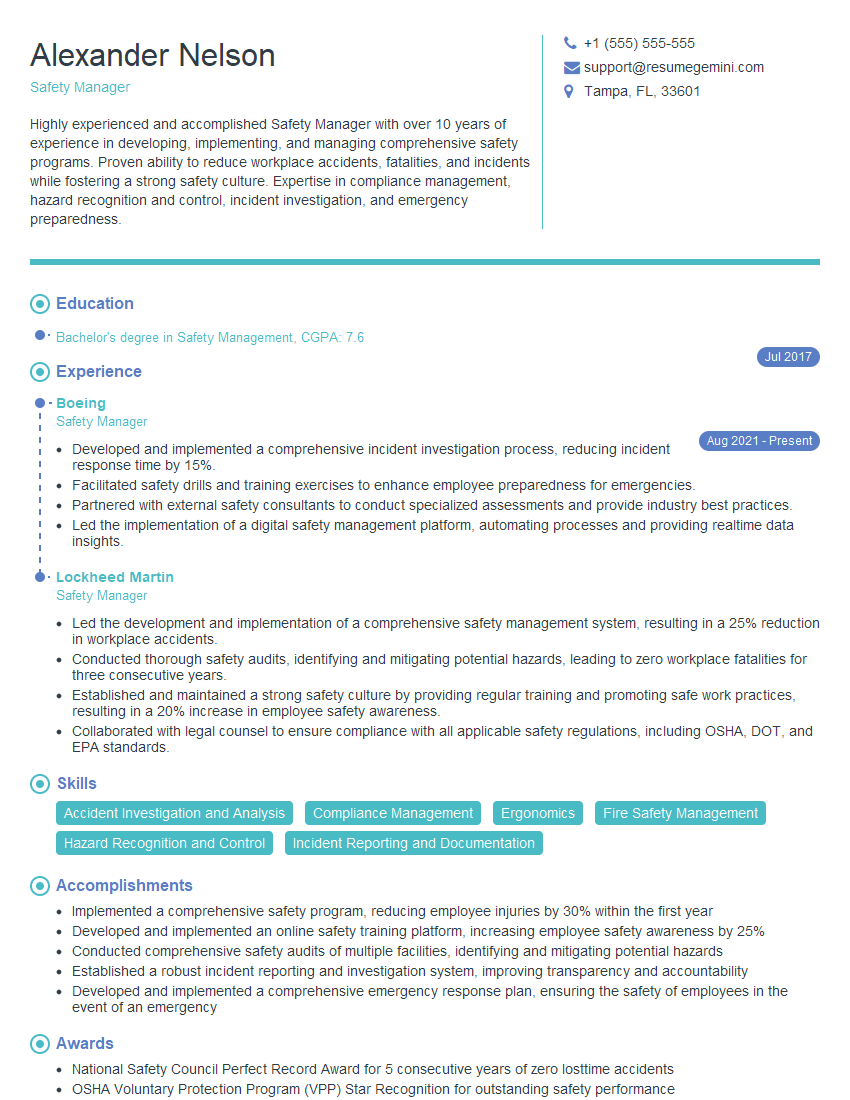
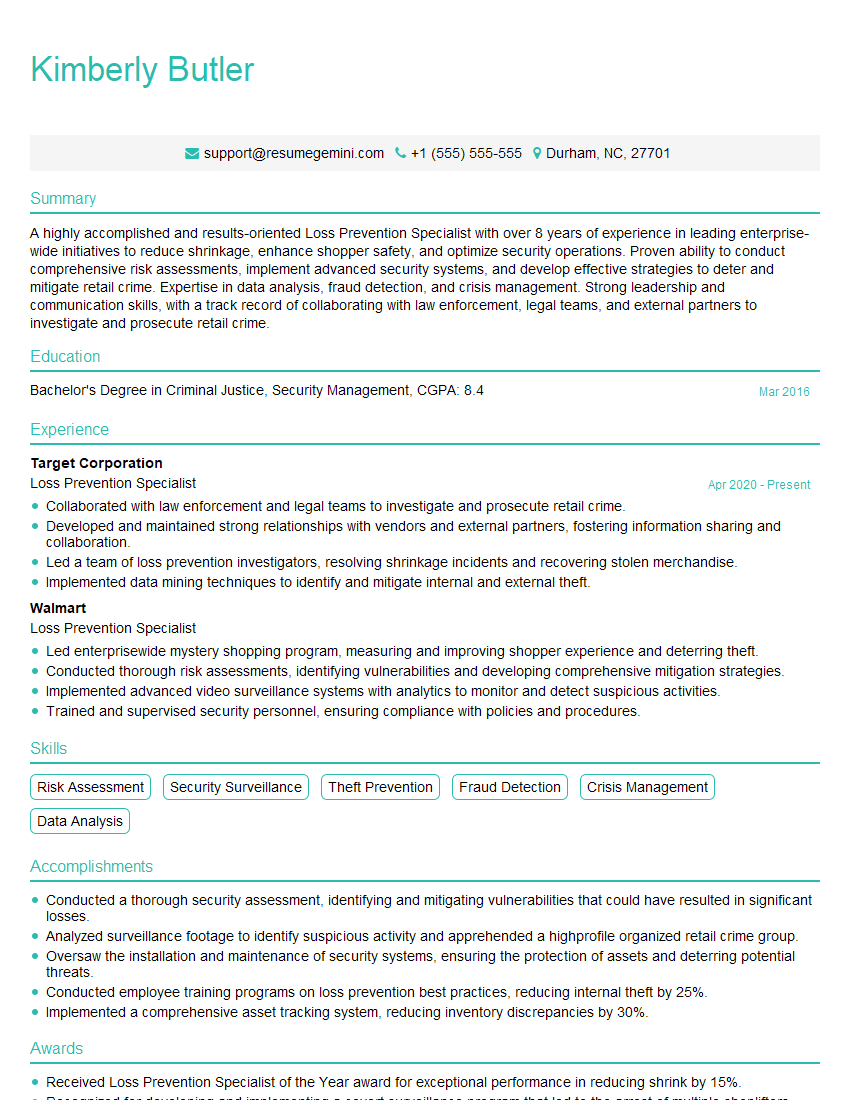
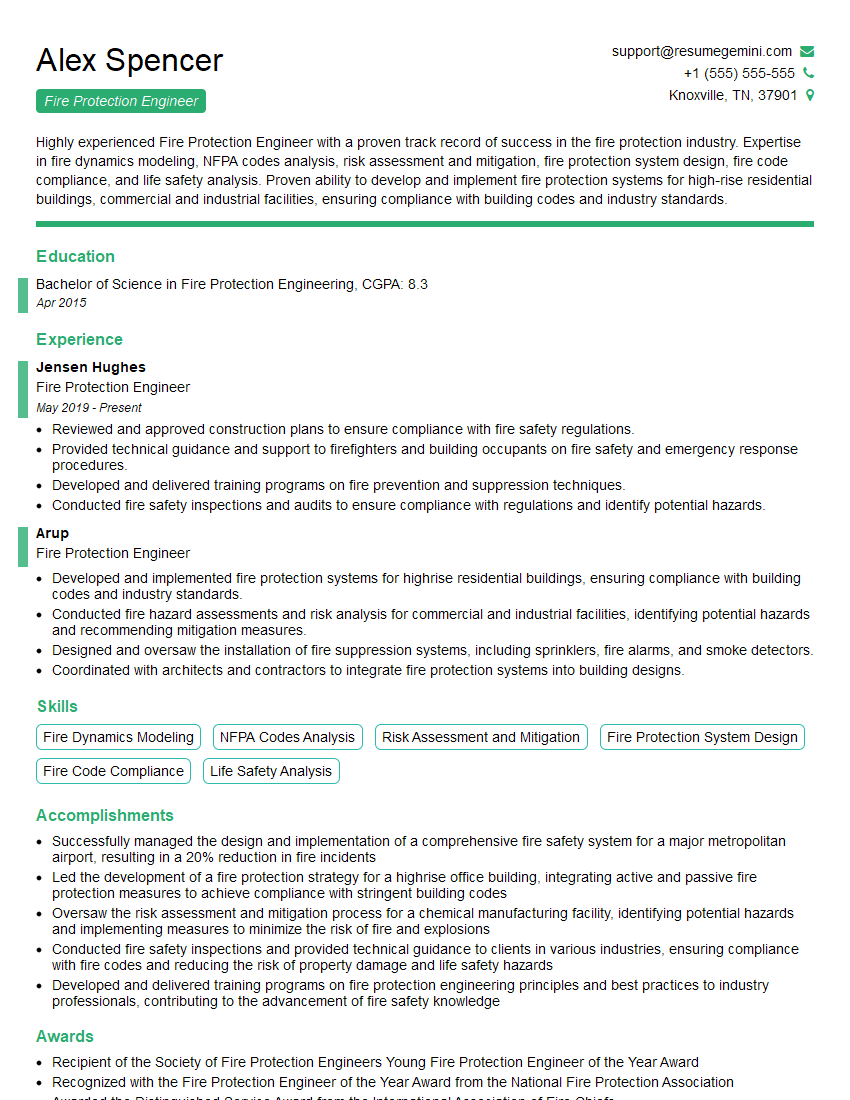
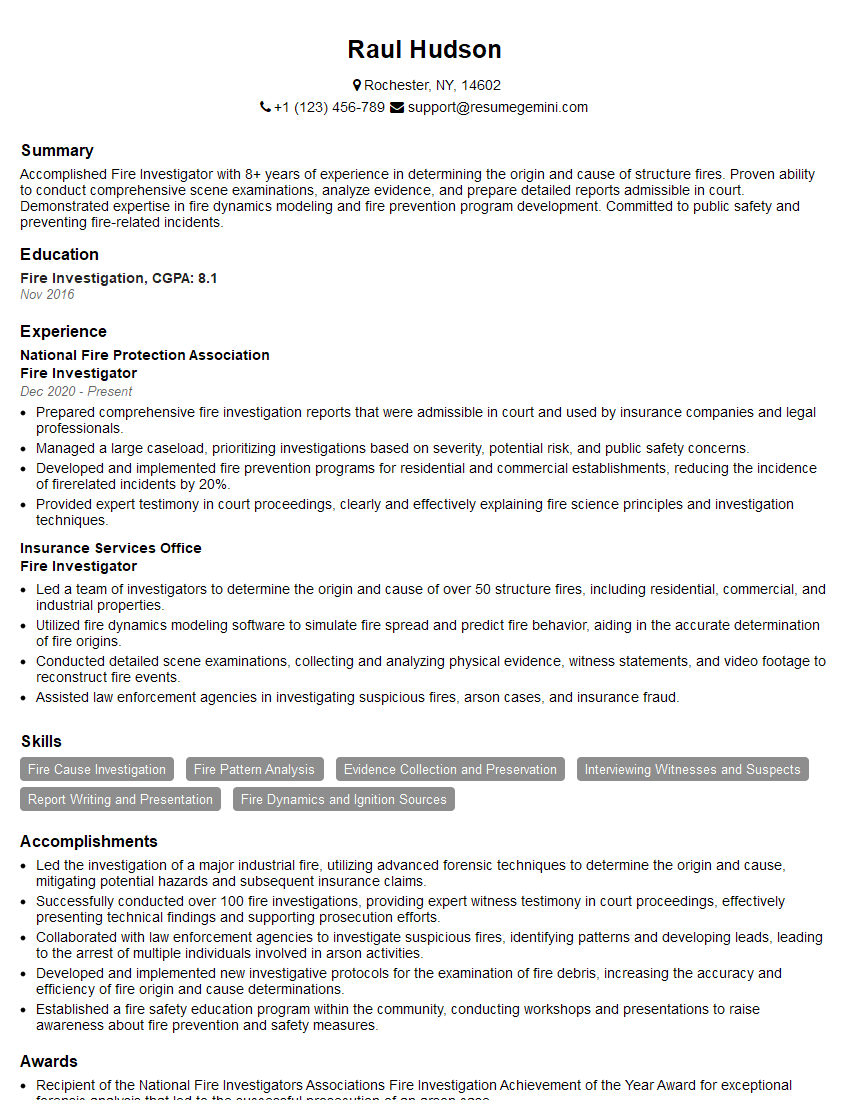
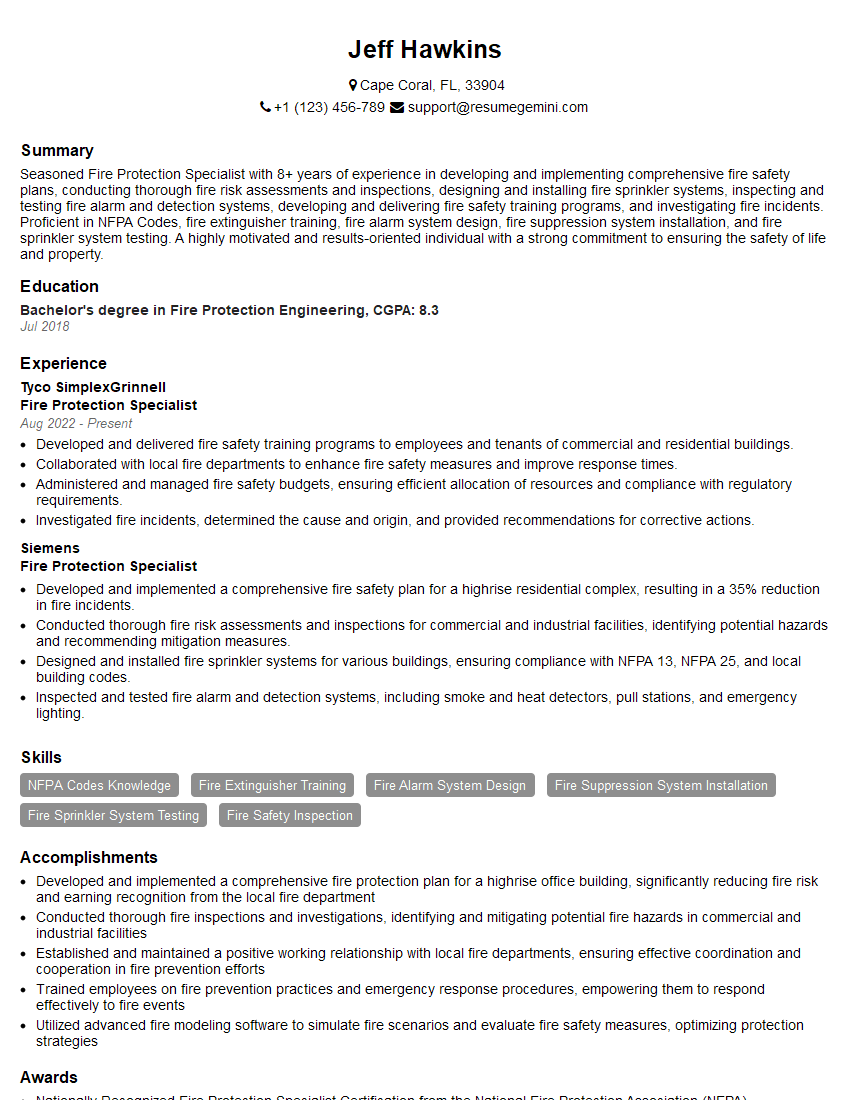
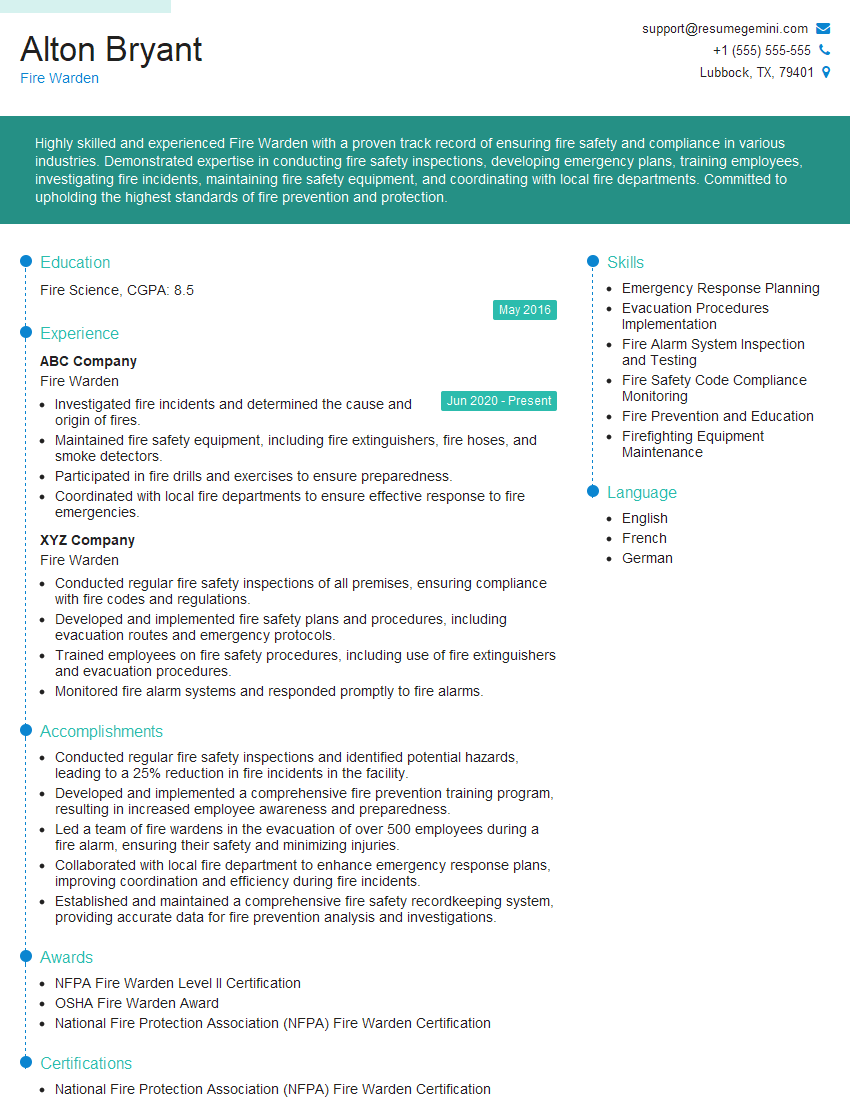
Mastering Fire Hazard Assessment is crucial for career advancement in the fire safety industry, opening doors to leadership roles and specialized expertise. A strong resume is your key to unlocking these opportunities. Make sure your resume is ATS-friendly to maximize its impact on applicant tracking systems. ResumeGemini is a trusted resource for building professional, effective resumes that highlight your skills and experience. We provide examples of resumes tailored to Fire Hazard Assessment to help you get started. Invest in your future – build a resume that reflects your expertise and helps secure your dream job.
Explore more articles
Users Rating of Our Blogs
Share Your Experience
We value your feedback! Please rate our content and share your thoughts (optional).
What Readers Say About Our Blog
Very informative content, great job.
good