Feeling uncertain about what to expect in your upcoming interview? We’ve got you covered! This blog highlights the most important Fire Protection and Suppression Systems interview questions and provides actionable advice to help you stand out as the ideal candidate. Let’s pave the way for your success.
Questions Asked in Fire Protection and Suppression Systems Interview
Q 1. Explain the different types of fire suppression systems and their applications.
Fire suppression systems are crucial for protecting life and property. They come in various types, each designed for specific hazards and environments. The choice depends on factors like the type of fire risk, the occupancy type, and the value of the protected assets.
- Water-based systems: These are the most common, utilizing water in different forms.
- Sprinkler systems (wet pipe, dry pipe, deluge): These automatically discharge water when activated by heat. We’ll discuss the differences between these in more detail later.
- Water spray systems: These use finely atomized water droplets to cool the fire and reduce oxygen.
- Water mist systems: These employ very fine water droplets, requiring less water than traditional sprinklers and causing less damage.
- Foam systems: These use foam to suppress fires by blanketing the burning material and excluding oxygen. Different types of foam exist, each suited to specific flammable liquids or gases.
- Gas-based systems: These use inert gases (like CO2, Argon, or Nitrogen) or halon replacements (like FM-200 or Novec 1230) to displace oxygen and extinguish the fire. They’re often used in sensitive environments like server rooms or museums where water damage is unacceptable.
- Dry chemical systems: These use dry chemical powders that interrupt the chemical chain reaction of combustion. They’re effective on Class A, B, and C fires but can leave a messy residue.
Examples: A hospital might use a combination of sprinkler and gas suppression systems – sprinklers in general areas and gas suppression in operating rooms and server rooms. A warehouse storing flammable liquids might employ a foam system.
Q 2. Describe the components of a typical fire alarm system.
A fire alarm system’s primary function is to detect a fire and alert occupants and emergency services. It’s typically composed of several key components, working together seamlessly:
- Smoke detectors: These sense smoke particles in the air, triggering the alarm. They come in various types, including ionization, photoelectric, and dual-sensor.
- Heat detectors: These respond to changes in temperature, providing an alert when a significant heat increase is detected. There are fixed-temperature and rate-of-rise detectors.
- Flame detectors: These are used in locations where smoke detectors might be less effective, such as industrial settings, detecting infrared or ultraviolet radiation produced by flames.
- Control panel: This is the central brain of the system, receiving signals from detectors and initiating the alarm. It also monitors system integrity.
- Notification appliances: These alert occupants of a fire, including horns, bells, strobes (visual alarms for the hearing-impaired), and voice evacuation systems.
- Power supply: Typically includes a primary power source and a backup battery for continued operation during power outages.
In addition to these primary components, many systems incorporate remote monitoring capabilities, allowing for real-time system status and alarm reporting.
Q 3. What are the key differences between wet pipe, dry pipe, and deluge sprinkler systems?
The main differences between wet pipe, dry pipe, and deluge sprinkler systems lie in how and when they release water:
- Wet pipe systems: These are the most common type. The pipes are always filled with water, ready for immediate discharge when a sprinkler head is activated by heat. They offer the fastest response time.
- Dry pipe systems: These are used in areas susceptible to freezing, where water in the pipes could freeze and damage the system. The pipes are filled with compressed air, and when a sprinkler head activates, the air pressure drops, allowing water to enter the pipes and discharge.
- Deluge systems: These are designed for specific hazards, such as flammable liquids. All sprinkler heads are open, and when activated (usually by a smoke or flame detector), water is released simultaneously across the entire protected area. They provide a rapid, widespread water discharge.
In short: Wet pipe – always pressurized water; dry pipe – air pressurized, water on demand; deluge – open heads, water released all at once.
Q 4. How do you perform a fire alarm system inspection and what are you looking for?
Inspecting a fire alarm system requires a systematic approach, following established procedures and checklists. The goal is to ensure that the system is functioning correctly and is ready to protect lives and property in case of fire.
- Visual Inspection: Check for any physical damage to the system components (wiring, detectors, control panel).
- Functional Testing: Test each detector individually to ensure it’s responding correctly and sending a signal to the control panel. Test horns and strobes.
- Control Panel Check: Verify the control panel is functioning correctly, check fault indicators, and examine the system’s log for any recent events or errors.
- Battery Backup Test: Test the battery backup power supply to ensure it provides sufficient power during a power outage.
- Documentation Review: Review the system’s documentation for maintenance records, inspection reports, and any previous issues.
What to look for: Damaged or obstructed detectors, loose wiring, corroded connections, low battery levels, malfunctioning control panel components, and missing or illegible labels.
A thorough inspection will identify potential issues before they lead to system failure. Remember to always follow the manufacturer’s instructions and relevant safety guidelines.
Q 5. What are the common causes of sprinkler system malfunctions?
Sprinkler system malfunctions can have various causes, ranging from simple issues to more complex problems requiring expert attention.
- Frozen pipes (dry systems): Insufficient draining or inadequate heat tracing in cold climates.
- Obstructed heads: Accumulation of dust, debris, or paint on the sprinkler heads, preventing proper activation.
- Low water pressure: Problems in the water supply, pump failures, or leaks in the system.
- Corrosion: Rust and corrosion in pipes and fittings can weaken the system and lead to leaks or failures.
- Malfunctioning valves: Issues with the check valves, control valves, or other valves can prevent water from reaching the sprinkler heads.
- Incorrect installation: Poor workmanship during the initial installation can create vulnerabilities in the system.
Regular inspections and maintenance are essential for preventing malfunctions. Properly designed and maintained systems are less prone to these issues.
Q 6. Explain the process of designing a fire suppression system for a high-rise building.
Designing a fire suppression system for a high-rise building is a complex undertaking, demanding detailed knowledge of building codes, fire dynamics, and system capabilities. It requires collaboration between architects, engineers, and fire protection specialists.
The process typically involves:
- Risk Assessment: Identify potential fire hazards and assess the risks based on occupancy type, building materials, and contents.
- System Selection: Choose appropriate fire suppression systems for different areas of the building based on the identified risks. High-rise buildings often utilize a combination of sprinkler systems, standpipes, and potentially gas suppression in critical areas.
- Hydraulic Calculations: Determine the required water flow and pressure to ensure adequate coverage throughout the building. This involves complex calculations considering pipe sizing, elevation changes, and sprinkler head densities.
- System Layout and Design: Develop detailed plans showing the layout of the pipes, sprinkler heads, pumps, and other components of the system. The design needs to consider building access points for maintenance and installation.
- Code Compliance: Ensure the design fully adheres to relevant building codes and standards (e.g., NFPA 13, NFPA 72).
- Installation and Testing: Oversee the installation process and conduct rigorous testing to ensure the system’s functionality and compliance with the design specifications.
The design needs to account for factors like building height, evacuation strategies, and the location of fire stairs and emergency exits. Detailed simulations and modeling are often used to predict fire spread and evaluate system performance.
Q 7. What are the relevant fire codes and standards you need to be familiar with?
Familiarity with relevant fire codes and standards is paramount in the fire protection field. These codes provide guidelines and requirements for the design, installation, inspection, and maintenance of fire protection systems. Ignoring these standards can lead to legal liabilities and compromise safety.
Some key codes and standards include:
- NFPA 13: Standard for the Installation of Sprinkler Systems: This covers the design, installation, and testing of various sprinkler systems.
- NFPA 72: National Fire Alarm and Signaling Code: This addresses fire alarm system design, installation, testing, and inspection.
- NFPA 10: Standard for Portable Fire Extinguishers: This deals with the selection, maintenance, and use of portable fire extinguishers.
- IFC (International Fire Code): A model code widely adopted by jurisdictions, incorporating many aspects of fire safety, including fire suppression systems.
- Local building codes: Each jurisdiction may have its own specific requirements, which need to be checked for compliance.
Staying updated on the latest revisions and interpretations of these codes is crucial for professionals in the field, ensuring compliance and maintaining the highest safety standards.
Q 8. How do you calculate water flow requirements for a sprinkler system?
Calculating water flow for a sprinkler system isn’t a simple formula; it’s a complex process dictated by several factors, primarily the building’s occupancy, size, and the type of hazard present. We use hydraulic calculations, often employing specialized software. These calculations consider:
- Area to be protected: The square footage needing sprinkler coverage.
- Occupancy classification: Different occupancy types (e.g., office, warehouse, high-rise) have varying risk levels, necessitating different flow rates.
- Sprinkler type and density: The type of sprinkler head and the number of heads per unit area significantly impact water demand.
- Pressure: The water pressure available at the system’s inlet plays a crucial role. Insufficient pressure reduces the effective reach and flow rate.
- Pipe friction loss: Water flowing through pipes loses pressure due to friction. This loss is calculated and factored into the overall demand.
The process involves using design criteria from standards like NFPA 13 (Standard for the Installation of Sprinkler Systems) and local fire codes. A simplified, yet crucial, step is to determine the required flow rate per sprinkler head and then multiply by the total number of heads in operation simultaneously. We then add safety factors and adjust for pressure losses. For example, a calculation might look like this: Let’s say you require 15 gpm (gallons per minute) per sprinkler head and you need 10 heads in operation at the same time. The initial flow calculation will be 15 gpm/head * 10 heads = 150 gpm. However, this is a very simplified example. Friction losses, pressure variation, and safety factors would significantly increase this number in a real-world scenario.
I’ve personally been involved in projects where we used sophisticated hydraulic modeling software to fine-tune the system, ensuring optimal coverage and pressure across all areas of a building, especially critical in high-rise structures.
Q 9. What are the different types of fire extinguishers and their appropriate uses?
Fire extinguishers are categorized by the type of fire they’re designed to extinguish, using a classification system (e.g., A, B, C, D, K). Here’s a breakdown:
- Class A: Ordinary combustibles like wood, paper, cloth. These extinguishers typically use water or water-based agents.
- Class B: Flammable liquids like grease, gasoline, oil. These often use carbon dioxide (CO2), dry chemical, or foam agents.
- Class C: Electrical fires involving energized electrical equipment. CO2 or dry chemical extinguishers are preferred as they’re non-conductive.
- Class D: Combustible metals like magnesium, titanium. These require specialized extinguishers with agents designed to react chemically with the burning metal.
- Class K: Kitchen fires involving cooking oils and fats. These use wet chemical agents designed to cool and saponify the burning grease.
Appropriate Use: The key is to select the correct extinguisher based on the fire’s class. Using the wrong type could be ineffective or even dangerous. For instance, using a water extinguisher on a grease fire would likely spread the flames due to the spattering effect. Always remember the PASS acronym: Pull the pin, Aim at the base of the fire, Squeeze the lever, Sweep from side to side.
In my experience, training building occupants on proper extinguisher use is vital for effective emergency response. I’ve conducted numerous training sessions, demonstrating extinguisher operation and emphasizing the importance of knowing the fire classes and using the appropriate extinguisher.
Q 10. Describe your experience with fire system maintenance and troubleshooting.
Fire system maintenance and troubleshooting are critical for ensuring system reliability. My experience encompasses a wide range of activities, including:
- Regular inspections: Checking for leaks, corrosion, obstructions, and ensuring proper operation of all components—from sprinkler heads and valves to fire pumps and alarm panels. I follow established checklists and documentation protocols.
- Preventative maintenance: Performing scheduled tasks like cleaning sprinkler heads, testing fire pumps, and inspecting alarm systems. This is vital for preventing failures.
- Troubleshooting malfunctions: Diagnosing problems using various tools and techniques. This might involve tracing wiring, checking pressure gauges, or using specialized testing equipment. I’ve encountered issues ranging from faulty sensors to malfunctioning pumps, and effectively resolved them.
- Repair and replacement: I have firsthand experience repairing and replacing damaged components, always ensuring adherence to relevant codes and standards. This often includes documentation and reporting for compliance.
I recall one instance where a high-rise building experienced a partial loss of sprinkler system pressure. Through systematic troubleshooting, I pinpointed a corroded section of piping causing a significant pressure drop. The timely repair prevented a potentially catastrophic scenario.
Q 11. How do you handle a false fire alarm?
Handling a false fire alarm requires a calm and systematic approach. The process starts with determining the source of the alarm. It’s often done through the fire alarm control panel, which usually shows the location of the activated device. Following steps are crucial:
- Identify the source: Check the alarm panel for the exact location of the alarm activation and verify the alarm.
- Investigate the cause: Thoroughly inspect the area where the alarm originated. Look for reasons behind the false alarm, such as dust, insects, or faulty sensors.
- Reset the alarm: If the cause is identified and resolved, reset the alarm system following the proper procedures. Sometimes this might require contacting the fire alarm monitoring company.
- Document the event: Keep a detailed record of the false alarm, including the time, location, cause, and corrective actions. This data is crucial for identifying trends and improving the system’s reliability.
- Preventive maintenance: Implement necessary preventive measures to reduce future occurrences, this might include regular cleaning of sensors and detectors.
In my previous role, I was part of a team that systematically analyzed repeated false alarms in a large office building. By carefully tracking the occurrences and implementing preventative measures, we significantly reduced the frequency of false alarms.
Q 12. What are the key safety precautions when working with fire suppression systems?
Safety is paramount when working with fire suppression systems. Key precautions include:
- Lockout/Tagout procedures: Always follow proper lockout/tagout procedures before working on any part of the system to prevent accidental activation or energy release. This is critical to prevent injury.
- Personal Protective Equipment (PPE): Use appropriate PPE such as safety glasses, gloves, and respiratory protection depending on the task. Working with certain chemicals or during maintenance activities might require specific equipment.
- Confined space entry: If working in confined spaces (e.g., inside a fire pump room), follow proper confined space entry procedures. This includes proper ventilation, monitoring of atmospheric conditions, and having a standby person.
- Awareness of hazards: Be aware of potential hazards such as high pressures, energized equipment, and hazardous chemicals. Understand the risks and have a plan to mitigate them.
- Training and competency: Ensure that personnel involved in maintenance and repairs are properly trained and competent. Working with fire suppression systems necessitates understanding safety standards and the equipment itself.
I emphasize thorough safety training for all team members, reinforcing the importance of following procedures meticulously. A safety-first culture is essential for preventing accidents and protecting lives.
Q 13. Explain the concept of fire compartmentalization.
Fire compartmentalization involves dividing a building into smaller, self-contained sections using fire-resistant barriers. This strategy limits the spread of fire and smoke, protecting occupants and property. Think of it as creating smaller ‘fire boxes’ within the building.
These barriers include:
- Fire-rated walls: Constructed with materials that resist fire for a specified period, preventing flames and heat from passing through.
- Fire doors: Self-closing doors with fire-resistant properties, limiting the spread of fire and smoke through openings.
- Fire-resistant glazing: Special windows that resist fire penetration.
- Fire dampers: Automatic devices that close air ducts when a fire alarm is activated, preventing the spread of fire and smoke through the ventilation system.
Effective compartmentalization buys valuable time for evacuation and fire suppression efforts. It prevents a small fire from rapidly engulfing the entire building, as seen in the devastating effects of uncontrolled fires. By designing a building with appropriate fire compartmentalization, you significantly improve the chances of survival and minimize property damage.
I’ve worked on many projects where fire compartmentalization was a key design element. Careful attention to detail in construction and the selection of appropriate fire-rated materials was essential for ensuring the system’s effectiveness.
Q 14. What are some common fire hazards and how can they be mitigated?
Common fire hazards are numerous and vary depending on the setting. Here are some key examples and mitigation strategies:
- Electrical hazards: Overloaded circuits, faulty wiring, and damaged equipment can cause electrical fires. Mitigation involves regular inspections, proper wiring, and the use of surge protectors.
- Flammable liquids: Improper storage and handling of flammable liquids like gasoline or solvents increase fire risk. Mitigation involves proper storage containers, ventilation, and preventing ignition sources.
- Combustible materials: Clutter, improper waste disposal, and the presence of easily ignitable materials can accelerate fire spread. Mitigation involves regular cleanup, proper waste disposal, and the use of fire-resistant materials.
- Heating equipment: Malfunctioning heaters, furnaces, and chimneys can ignite nearby materials. Mitigation involves regular inspection and maintenance of heating equipment.
- Smoking materials: Carelessly discarded cigarettes or other smoking materials are a significant cause of fires. Mitigation involves designated smoking areas, proper ashtray use, and fire-safe receptacles.
In my experience, a proactive approach to fire hazard mitigation is essential. This involves regular inspections, employee training, and implementing procedures to address potential hazards before they can cause a fire.
For instance, I’ve advised businesses on proper storage and handling of flammable chemicals, resulting in a considerable reduction in fire risks. Preventing fires is always more cost-effective and safer than dealing with the aftermath.
Q 15. How do you ensure compliance with fire safety regulations?
Ensuring compliance with fire safety regulations is paramount. It’s a multi-faceted process that begins with a thorough understanding of the applicable codes and standards, which vary by jurisdiction. For example, in the US, the National Fire Protection Association (NFPA) standards are widely adopted. I meticulously review these standards, ensuring all designs and installations adhere to the letter and spirit of the law. This includes:
- Regular Inspections: Conducting routine inspections of fire protection systems to identify potential issues before they become major problems. This is akin to a doctor’s checkup for your building’s fire safety.
- Documentation: Maintaining comprehensive records of all inspections, testing, and maintenance activities. This ensures traceability and accountability, providing a clear audit trail.
- Training: Ensuring building occupants and facility managers are trained in proper fire safety procedures, including evacuation plans and the use of fire suppression equipment. This is critical for effective response in an emergency.
- Permitting and Approvals: Working closely with local authorities to obtain necessary permits and approvals for all fire protection system installations and modifications. This involves submitting detailed plans and reports, ensuring compliance before construction commences.
- Staying Updated: Continuously monitoring changes in regulations and best practices. The field of fire protection is constantly evolving, so staying current is essential.
A recent project involved a large warehouse complex. We not only ensured all sprinkler systems met NFPA 13 requirements, but also implemented a comprehensive fire alarm system adhering to NFPA 72, and created evacuation plans approved by the local fire marshal. This proactive approach ensured complete compliance and minimized risk.
Career Expert Tips:
- Ace those interviews! Prepare effectively by reviewing the Top 50 Most Common Interview Questions on ResumeGemini.
- Navigate your job search with confidence! Explore a wide range of Career Tips on ResumeGemini. Learn about common challenges and recommendations to overcome them.
- Craft the perfect resume! Master the Art of Resume Writing with ResumeGemini’s guide. Showcase your unique qualifications and achievements effectively.
- Don’t miss out on holiday savings! Build your dream resume with ResumeGemini’s ATS optimized templates.
Q 16. What is your experience with fire risk assessments?
My experience with fire risk assessments is extensive, spanning various building types from high-rise residential to industrial facilities. A fire risk assessment isn’t just a checklist; it’s a systematic process to identify potential hazards, evaluate their likelihood and consequence, and develop strategies to mitigate those risks. This involves:
- Site Surveys: Conducting thorough on-site inspections to identify potential fire hazards, including fuel sources, ignition sources, and escape routes.
- Hazard Identification: Cataloging potential fire hazards based on occupancy, building materials, and processes.
- Risk Evaluation: Assessing the likelihood and severity of fire incidents, considering factors such as building design, fire suppression systems, and occupant behavior.
- Risk Mitigation Strategies: Developing a plan to reduce or eliminate identified risks through various methods such as improved fire detection and suppression systems, enhanced fire safety training, and modifications to building design.
- Documentation and Reporting: Preparing a detailed report outlining findings, risk assessments, and recommended mitigation strategies.
For instance, I recently assessed a historical building slated for renovation. By understanding the building’s unique construction and occupancy features, we tailored the risk assessment to address specific vulnerabilities, recommending solutions that respected the building’s historical integrity while ensuring fire safety.
Q 17. Describe your knowledge of NFPA standards.
My knowledge of NFPA standards is comprehensive. I’m intimately familiar with key standards like NFPA 13 (Standard for the Installation of Sprinkler Systems), NFPA 72 (National Fire Alarm Code), NFPA 10 (Standard for Portable Fire Extinguishers), and NFPA 20 (Standard for the Installation of Stationary Pumps for Fire Protection), among others. I understand not only the technical requirements but also the underlying rationale behind them. This allows me to design systems that are not only compliant but also efficient and effective.
For example, understanding NFPA 13’s requirements for sprinkler spacing and water flow rates allows me to optimize system design, minimizing the number of sprinklers and reducing overall project costs without compromising safety. My expertise extends to interpreting and applying these standards to various scenarios, considering specific building characteristics and occupancy types. Furthermore, I actively track updates and revisions to the NFPA standards to ensure my practice remains current and best-in-class.
Q 18. What software are you proficient in for fire protection design and analysis?
I am proficient in several software packages used for fire protection design and analysis, including:
- AutoCAD: For creating detailed drawings and schematics of fire protection systems.
- HydraCAD: A specialized software for hydraulic calculations in sprinkler system design. It’s vital for ensuring adequate water flow and pressure.
- Fire Alarm System Design Software (various): Such as those offered by manufacturers like Siemens or Honeywell for the design of complex fire alarm systems.
- Pipe-Flo: For more complex hydraulic modeling and analysis. It enables advanced simulation capabilities and optimization of the piping network.
Proficiency in these software packages significantly improves the speed, accuracy and efficiency of design and analysis, allowing for optimal system design while adhering to all regulations.
Q 19. Explain your understanding of hydraulic calculations in fire sprinkler design.
Hydraulic calculations in fire sprinkler design are crucial for ensuring that sufficient water is delivered to all sprinklers in the event of a fire. These calculations determine the size of the piping, the pump capacity, and the pressure required to provide the necessary water flow. The process involves:
- Determining Demand: Calculating the total water flow rate required based on the area and type of occupancy.
- Pipe Sizing: Determining the appropriate diameter of pipes to accommodate the required flow rate without excessive pressure drop.
- Pressure Calculations: Calculating the pressure required at the sprinkler heads to ensure proper operation. This considers friction losses in the piping and fittings.
- Pump Selection: Selecting a fire pump with sufficient capacity to meet the calculated demand, considering both initial flow and residual pressure requirements.
Software like HydraCAD helps automate these calculations, ensuring accuracy and efficiency. Ignoring these calculations can result in inadequate water flow, leading to insufficient fire suppression and potentially catastrophic consequences.
Q 20. Describe your experience with fire pump testing and maintenance.
My experience with fire pump testing and maintenance is extensive. Regular testing and maintenance are crucial to ensuring the reliability of fire pumps in an emergency. This involves:
- Weekly Tests: Performing weekly flow tests to verify pump operation and pressure.
- Annual Tests: Conducting more comprehensive annual tests, often involving the fire department, to validate the pump’s capacity to meet the design flow and pressure requirements. This often includes documenting the results meticulously.
- Maintenance: Performing routine maintenance, including checking the pump’s components, oil levels, and belts. This proactive maintenance prevents breakdowns and ensures longevity.
- Record Keeping: Maintaining detailed records of all testing and maintenance activities. This documentation is crucial for regulatory compliance and demonstrates diligence.
During a recent inspection, we discovered a malfunctioning pressure switch on a fire pump that could have resulted in failure during a fire. Our quick action, identifying and rectifying this issue prevented a potentially disastrous situation.
Q 21. How do you handle a fire suppression system failure?
Handling a fire suppression system failure requires a rapid and methodical approach. The first step is to initiate an emergency response, notifying the fire department and evacuating the building. Simultaneously, we must:
- Identify the Cause: Conduct a rapid assessment to determine the cause of the failure. This could range from a power outage to a faulty component.
- Implement Backup Systems: Engage backup systems if available, such as a secondary fire pump or alternative suppression methods.
- Initiate Repairs: Immediately begin repairs or initiate the process of ordering necessary replacement parts. The goal is to restore the system to full functionality as quickly and safely as possible.
- Thorough Investigation: Once the immediate emergency is over, conduct a thorough investigation into the root cause of the failure. This includes detailed documentation and analysis to prevent future incidents.
- Reporting: Provide a detailed report to relevant stakeholders on the cause of the failure and the steps taken to address the issue.
The key is preparedness and a well-defined emergency response plan. This includes regular testing, maintenance and training, ensuring that everyone involved knows their roles and responsibilities in the event of a system failure.
Q 22. What are the different types of fire detectors and their applications?
Fire detectors are the first line of defense in any fire protection system, providing early warning of a fire. Different types cater to various fire scenarios and environments. Here are some key examples:
- Smoke Detectors: These are the most common type. They detect the presence of smoke particles in the air. There are two main subtypes: ionization detectors, which are better at detecting fast-flaming fires, and photoelectric detectors, which are more sensitive to smoldering fires. Think of ionization detectors as being more reactive to the “fast” flames and photoelectric detectors as more sensitive to the “slow burn” types of smoke.
- Heat Detectors: These trigger an alarm when a certain temperature threshold is reached. They come in two varieties: fixed-temperature detectors, which activate at a specific pre-set temperature, and rate-of-rise detectors, which activate when the temperature increases rapidly. Rate-of-rise detectors are useful in areas where there might be gradual temperature increases due to normal operations, like a kitchen.
- Flame Detectors: These detect the infrared or ultraviolet radiation emitted by flames. They are particularly useful in industrial settings or areas with high ceilings where smoke detectors might not be effective. Think of large industrial spaces or even outdoor areas like refineries.
- Carbon Monoxide (CO) Detectors: While not strictly fire detectors, they are crucial for safety as CO is a byproduct of incomplete combustion. They detect the presence of this colorless, odorless, and deadly gas. These are essential in homes and other areas with combustion appliances.
The application of each detector type depends on the specific risk profile of the location. For instance, a kitchen might benefit from a combination of heat and smoke detectors, while a warehouse might require flame detectors in addition to smoke detectors.
Q 23. Explain the importance of regular inspections and maintenance of fire systems.
Regular inspections and maintenance are paramount to ensure the reliability and effectiveness of fire systems. A malfunctioning system can have devastating consequences. These activities identify potential problems before they become critical, minimizing risk and ensuring compliance with relevant codes and standards.
Inspections should involve checking all components of the system, including detectors, alarms, sprinklers (if applicable), fire extinguishers, and emergency lighting. This includes testing functionality, checking for damage or deterioration, and verifying that all systems are properly interconnected. Maintenance often includes cleaning detectors, replacing batteries, and conducting more thorough testing of the entire system. Detailed records should be kept for all inspections and maintenance activities.
Imagine a scenario where a smoke detector’s battery dies, and it fails to alert occupants during a fire. Regular maintenance prevents such potentially disastrous situations. A proactive approach not only saves lives and property but also reduces liability and operational disruption in case of an incident.
Q 24. What are your strategies for effective fire prevention and education?
Effective fire prevention and education are two sides of the same coin. My strategy involves a multi-pronged approach focusing on both proactive measures and educating occupants about fire safety.
Prevention: This includes risk assessments, identifying potential fire hazards, implementing appropriate fire protection measures (e.g., choosing the right fire suppression system, installing fire-resistant materials), and establishing clear evacuation procedures. This is like building a strong foundation for safety. A thorough risk assessment can highlight vulnerabilities and prevent fires before they start.
Education: Regular training and awareness programs are crucial. This might involve fire drills, distributing educational materials, and conducting workshops to teach individuals how to use fire extinguishers correctly, understand evacuation procedures, and recognize fire hazards. Remember, knowledge is power. Empowering people with the right knowledge enables them to react appropriately during a fire emergency.
For example, I have developed and implemented fire safety training programs for various client sites, including schools and industrial facilities, tailored to their specific needs and risks.
Q 25. Describe your experience with fire modeling software (e.g., FDS, PyroSim).
I have extensive experience using fire modeling software, primarily FDS (Fire Dynamics Simulator) and PyroSim. These tools are indispensable for designing and evaluating fire protection systems and predicting fire behavior in complex environments. They allow me to simulate various scenarios, analyze smoke spread, and assess the effectiveness of different suppression strategies, all before any real-world implementation.
For instance, I used FDS to model the fire behavior in a large warehouse to determine the optimal placement of sprinklers. The simulation helped me identify areas where sprinkler coverage was inadequate and made recommendations for improvements, leading to a safer design. Using these tools allows for a level of predictive analysis unavailable through other methods and can greatly optimize fire protection system design and improve safety.
Q 26. Explain your understanding of passive fire protection measures.
Passive fire protection refers to non-active fire safety measures designed to prevent or delay the spread of fire and smoke. Unlike active systems like sprinklers, these measures don’t require external power or intervention. They form the backbone of structural fire safety.
Examples include:
- Fire-resistant materials: These materials are designed to withstand high temperatures and prevent the spread of flames. Think of fire-rated walls, doors, and ceilings, and the use of fire-retardant coatings on structural members. These provide a physical barrier to the fire.
- Compartmentalization: Dividing a building into smaller, fire-resistant compartments restricts the spread of fire, giving occupants more time to evacuate and allowing firefighters better access.
- Fire stopping: This involves sealing openings in fire-resistant barriers to prevent the passage of flames and smoke. This could include sealing around pipes or conduits that penetrate fire-rated walls.
- Smoke barriers: These are designed to contain smoke and limit its spread. These can use a variety of techniques to manage the movement of smoke and help maintain pathways for escape.
Passive fire protection is crucial as it contributes to structural integrity, reduces damage, and provides time for evacuation and firefighting efforts. It’s the silent guardian, protecting against fire spread. We commonly see it in the design of skyscrapers, high-rise buildings, and other large structures.
Q 27. How do you communicate effectively with clients and stakeholders regarding fire safety?
Effective communication is crucial in fire safety. My approach involves tailoring my communication style to the audience. With clients, I use clear, concise language, avoiding technical jargon whenever possible, and focusing on the practical implications of my recommendations. I ensure they understand the risks, the solutions, and the cost-benefit analysis.
With stakeholders (e.g., building owners, occupants, emergency responders), I use different methods to convey information—presentations, written reports, diagrams, and hands-on demonstrations. Active listening is equally important. I want to understand their concerns, expectations, and potential limitations, and adjust my approach accordingly. Building trust and collaboration is key. I explain the ‘why’ behind every recommendation to ensure buy-in and better implementation.
For instance, during a project with a large industrial facility, I held a series of workshops for the employees, demonstrating the correct use of fire extinguishers and explaining the importance of reporting potential hazards. This enhanced buy-in and improved safety.
Q 28. What is your approach to staying current with advancements in fire protection technology?
Staying current in this rapidly evolving field is essential. My approach involves a combination of active participation and continuous learning. I regularly attend industry conferences and workshops to learn about the latest technologies and best practices. I also subscribe to industry publications and journals, and actively participate in online forums and professional organizations. Staying abreast of changes in codes and standards is also a priority.
Moreover, I actively seek out opportunities to work on diverse projects that expose me to a range of technologies and challenges. This hands-on experience reinforces theoretical knowledge and builds practical expertise. For example, I recently completed a professional development course on the application of AI in fire detection and suppression.
Key Topics to Learn for Fire Protection and Suppression Systems Interview
- Fire Dynamics and Behavior: Understanding the fire triangle, stages of fire development, and factors influencing fire spread is fundamental. Consider practical applications like fire investigations and preventative measures.
- Fire Detection and Alarm Systems: Learn the different types of detectors (smoke, heat, flame), their operating principles, and system design considerations. Explore real-world examples like designing a system for a high-rise building or industrial facility.
- Suppression Systems: Master the principles behind various suppression systems including water-based systems (sprinklers, hose reels), gaseous suppression systems (CO2, inert gases), and foam systems. Analyze case studies of successful system deployments and failures.
- Fire Codes and Regulations: Familiarity with relevant codes (e.g., NFPA) and regulations is crucial. Understand how these regulations impact system design and installation. Practice applying code requirements to hypothetical scenarios.
- System Maintenance and Inspection: Learn about preventative maintenance procedures, inspection techniques, and troubleshooting common system issues. Consider the practical application of these skills in a real-world maintenance schedule.
- Fire Safety Engineering Principles: Gain a solid understanding of compartmentalization, passive fire protection (firewalls, fire-rated doors), and evacuation planning. Think critically about how these principles influence the design of fire protection systems.
- Risk Assessment and Mitigation: Understand the process of conducting fire risk assessments, identifying hazards, and implementing appropriate control measures. Practice analyzing different scenarios and developing effective mitigation strategies.
Next Steps
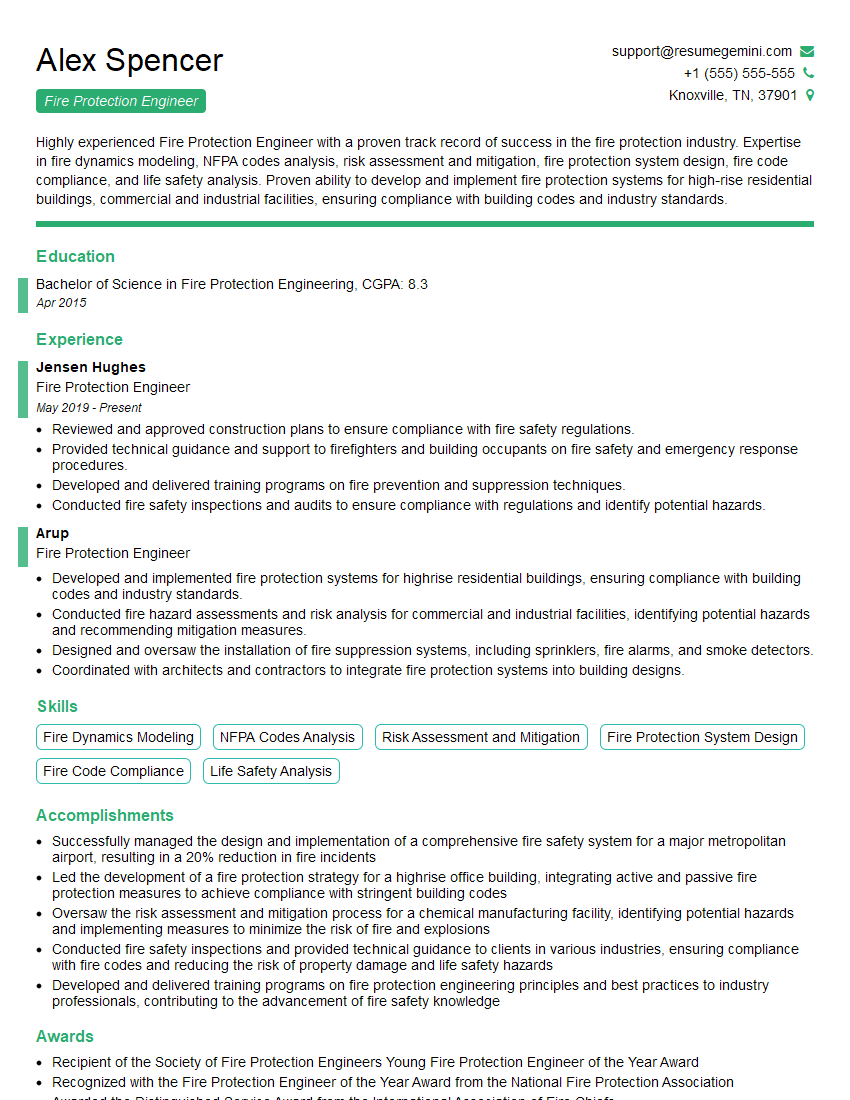
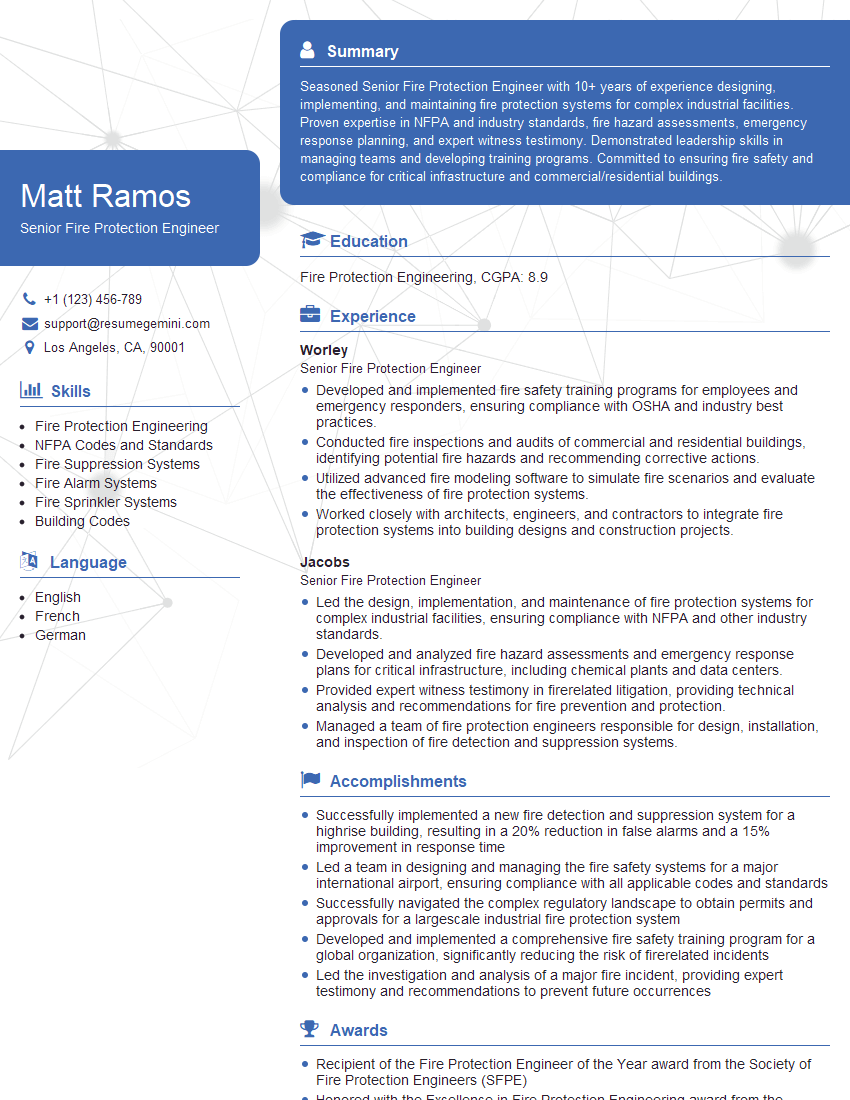
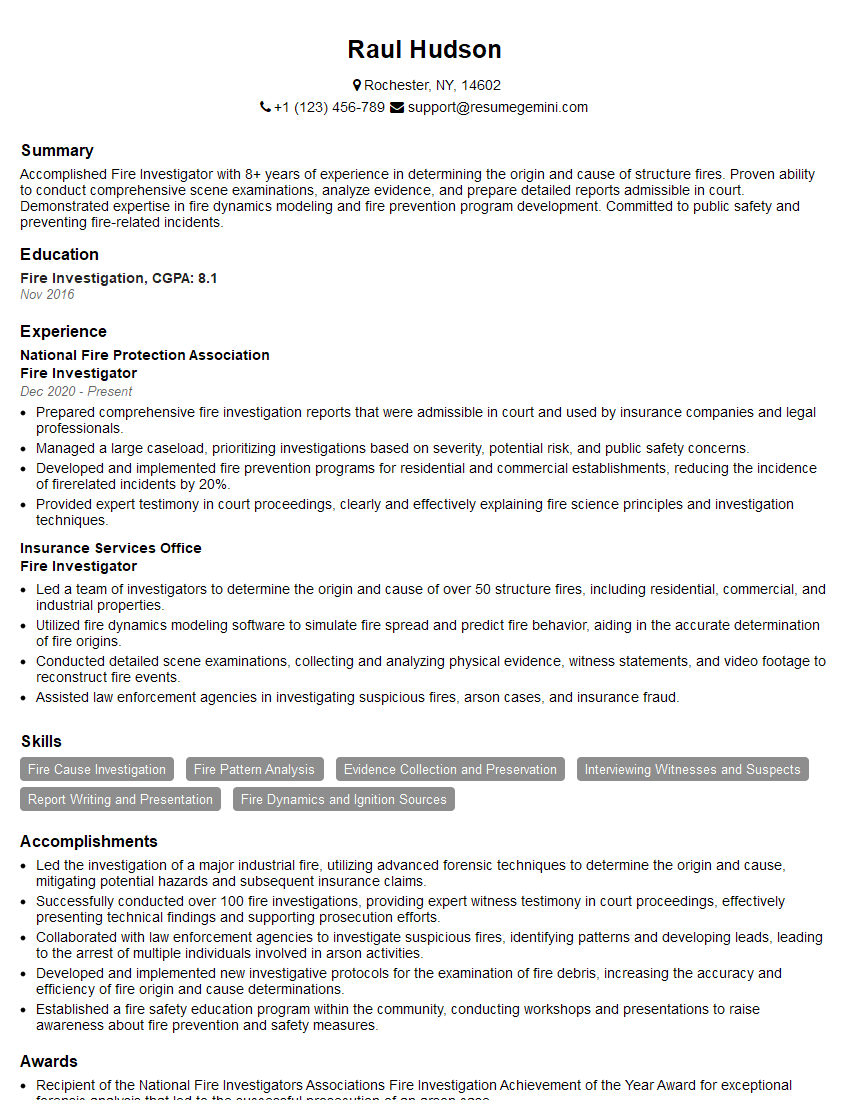
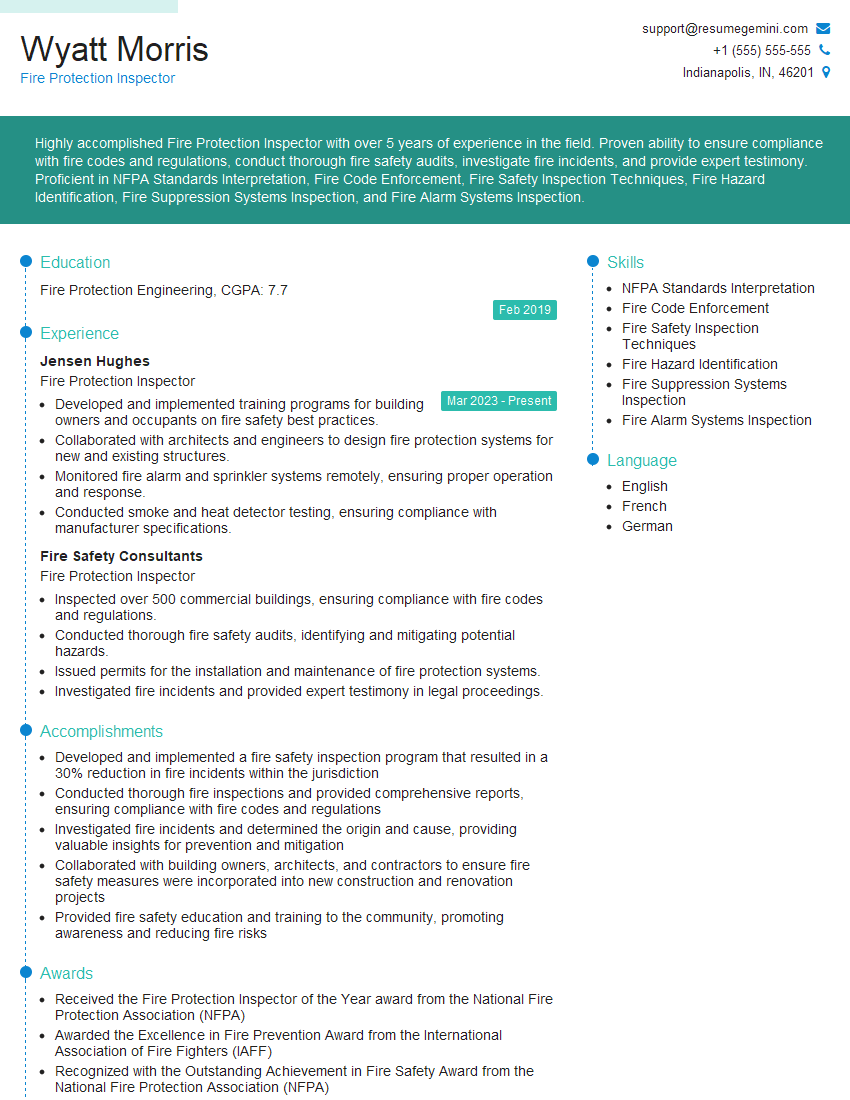
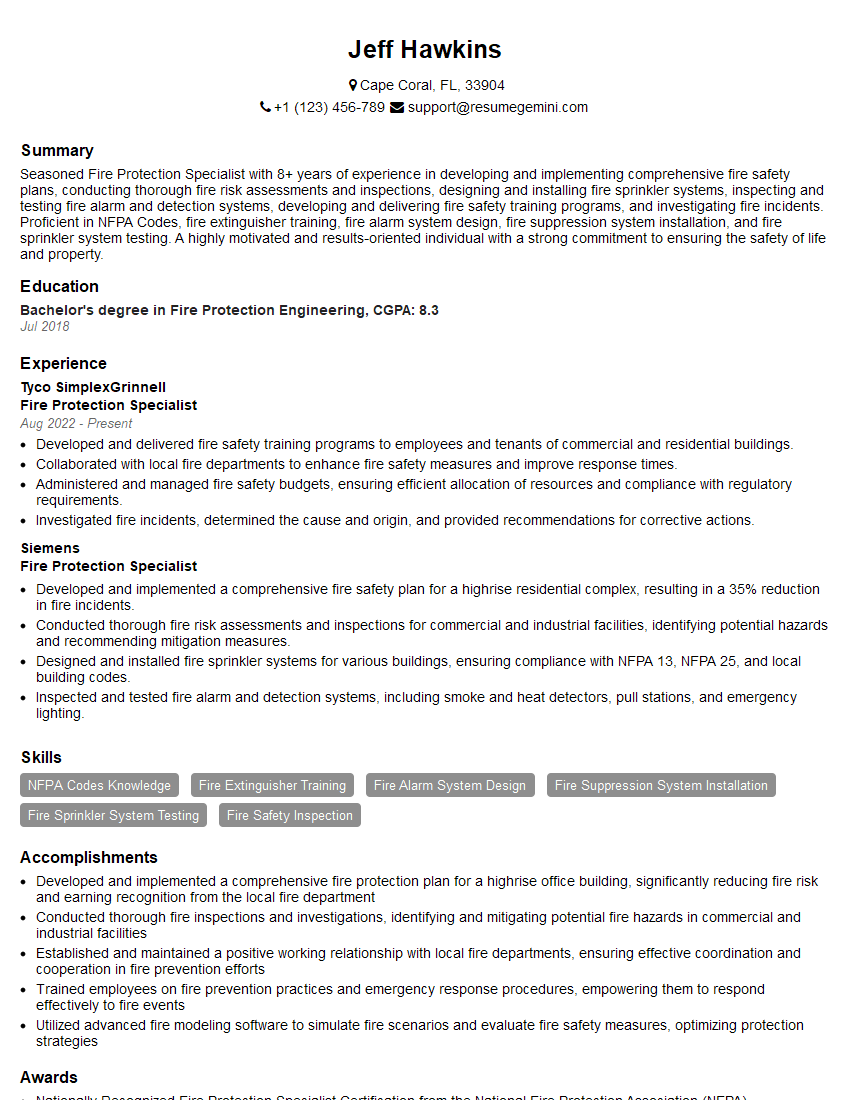
Mastering Fire Protection and Suppression Systems opens doors to exciting career opportunities and advancements within the field. A strong understanding of these systems demonstrates expertise and commitment, making you a highly sought-after candidate. To significantly boost your job prospects, creating an ATS-friendly resume is essential. ResumeGemini can help you craft a compelling resume that highlights your skills and experience effectively. ResumeGemini provides examples of resumes tailored specifically to the Fire Protection and Suppression Systems industry, ensuring your application stands out. Invest time in building a professional and impactful resume; it’s a crucial step in securing your dream role.
Explore more articles
Users Rating of Our Blogs
Share Your Experience
We value your feedback! Please rate our content and share your thoughts (optional).
What Readers Say About Our Blog
Very informative content, great job.
good