Are you ready to stand out in your next interview? Understanding and preparing for Fish Tagging and Tracking interview questions is a game-changer. In this blog, we’ve compiled key questions and expert advice to help you showcase your skills with confidence and precision. Let’s get started on your journey to acing the interview.
Questions Asked in Fish Tagging and Tracking Interview
Q 1. Explain the different types of fish tags and their applications.
Fish tagging employs various tags, each suited for specific research needs and fish species. The choice depends on factors like the fish size, the duration of the study, the environment, and the data required.
- External Tags: These are attached to the outside of the fish.
- Floy tags: Small, numbered tags made of plastic or metal, usually attached with a small wire or dart. They’re inexpensive and suitable for shorter-term studies. We might use these on smaller fish like trout in a river study.
- T-bar tags: Larger, more durable tags used for longer-term studies on larger fish. These are often used for salmonid studies, where we need to track them over their entire lifecycle.
- Anchor tags: These tags are implanted internally and have a small, externally visible portion that carries the tag number. This prevents the fish from easily removing the tag.
- Internal Tags: These are surgically implanted inside the fish’s body cavity.
- Coded wire tags (CWTs): Tiny, metallic tags injected into a fish’s snout. Detection requires specialized equipment, but they are excellent for identifying large numbers of fish.
- PIT (Passive Integrated Transponder) tags: These microchips contain a unique identification number, which can be read by a scanner. They are commonly used in aquaculture settings and offer a non-invasive way to identify individual fish.
- Data Storage Tags: These tags record data like temperature, depth, and light levels. These tags provide more detailed data and are ideal for understanding fish behaviour in various environmental conditions.
- Archival Tags: These record data until they are retrieved. They’re valuable for understanding the long-term movements and behaviour of marine species.
- Pop-up Satellite Archival Tags (PSATs): These sophisticated tags detach from the fish after a set period and transmit the stored data via satellite. They are ideal for migratory species like tuna or sharks, allowing us to track their movements across vast oceanic distances.
Q 2. Describe the process of tagging a fish, from capture to release.
The process of tagging a fish is carefully planned and executed to minimize stress and injury. It typically involves:
- Capture: Fish are captured using appropriate methods, such as nets, traps, or angling, depending on the species and research objectives. The goal is to minimize handling time and stress.
- Anesthesia (if necessary): For certain tag types and larger fish, anesthesia may be used to ensure a safe and painless procedure. This ensures the fish doesn’t struggle during tagging and reduces the potential for injury.
- Tagging: The appropriate tag is attached or implanted. This might involve inserting a PIT tag, attaching an external tag with a small dart, or surgically implanting a data storage tag. The type of tag and the specific tagging technique depend heavily on the fish species and the research goals.
- Recovery and Release: After tagging, the fish is carefully handled and measured before being released back into its environment. We often record data such as length, weight, and location of release. In some cases, the fish might need a brief recovery period before release to minimize the effects of stress.
Throughout the process, stringent protocols are followed to ensure the well-being of the fish, minimizing stress and maximizing the chances of its survival. For example, we would use the proper sized net and anesthetic dose for the specific species.
Q 3. What are the ethical considerations involved in fish tagging?
Ethical considerations are paramount in fish tagging. We must balance the scientific benefits of the research with the welfare of the animals. Key considerations include:
- Minimizing stress and injury: Appropriate handling techniques, anesthesia where necessary, and proper tag selection are crucial.
- Species-specific protocols: Procedures must be tailored to the specific species, considering their physiology, behaviour, and sensitivity to handling.
- Permitting and regulations: All tagging activities must adhere to relevant regulations and permits, often issued by fisheries management agencies. These permissions ensure that researchers follow best practices and comply with the law.
- Impact assessment: Researchers should evaluate the potential impact of tagging on the fish population and the surrounding ecosystem. A well-designed study would include a plan to assess this impact.
- Tag retention and longevity: Using tags that are durable and unlikely to cause problems is critical. Tags should not hinder the fish’s ability to feed, swim, or evade predators.
Ethical review boards often review fish tagging projects before they commence to ensure that the research is conducted responsibly and ethically.
Q 4. How do you ensure the accuracy and reliability of fish tagging data?
Ensuring accuracy and reliability is crucial for generating meaningful results from fish tagging data. This involves:
- Careful tag handling and deployment: Minimizing handling time, using appropriate tagging techniques, and employing quality control checks on tag attachment are essential.
- Calibration of equipment: Regular calibration of electronic tagging equipment (e.g., acoustic receivers, satellite uplinks) ensures data accuracy. If our equipment is faulty, the data is worthless.
- Data validation: A rigorous process is used to check for errors or inconsistencies in the data. This might involve cross-referencing information from multiple sources.
- Statistical analysis: Appropriate statistical methods are employed to account for potential bias and uncertainties inherent in the data. These methods ensure our interpretations are valid and avoid misleading conclusions.
- Peer review: Scientific publications undergo peer review to ensure the quality and validity of the research methods and conclusions.
By implementing these quality control measures, we can significantly improve the accuracy and reliability of our data and thus the value of the overall research findings.
Q 5. Discuss various fish tracking technologies (e.g., acoustic telemetry, satellite tagging).
Fish tracking technologies have advanced significantly, offering diverse ways to monitor fish movements and behaviour:
- Acoustic Telemetry: This involves implanting fish with acoustic transmitters that emit signals detected by underwater receivers. The receivers provide data on the fish’s location and movement patterns in a localized area. This is commonly used in rivers and lakes to study fish movement patterns.
- Satellite Tagging: Satellite tags transmit data via satellite, allowing tracking of fish over vast distances, including marine environments. PSATs (Pop-up Satellite Archival Tags) are a good example. These provide data on the long-term migration patterns of larger marine species.
- GPS Tagging: GPS tags use GPS signals to pinpoint the exact location of the fish. While useful, they require the fish to be near the surface to receive a signal, and the battery life is often limited. Thus, this approach is not always suitable for deep-sea tracking.
- Archival Tags: These tags record environmental data without transmitting it in real-time. The data is retrieved once the fish is recaptured or when a pop-up tag surfaces. This is beneficial for gaining insight into environmental conditions experienced by the fish during its migration.
The choice of technology depends on several factors, including the size of the fish, the study area, the duration of the study, and the research questions. For example, we would use acoustic telemetry in a small lake, but for a study of bluefin tuna migration, satellite tagging would be more appropriate.
Q 6. Explain the challenges associated with tracking fish in different environments.
Tracking fish in different environments presents unique challenges:
- Water Depth and Clarity: Acoustic telemetry is limited by water depth and clarity. Shallow, murky water can significantly reduce the range and reliability of acoustic signals. Clear water, of course, leads to better signal propagation.
- Habitat Complexity: Complex habitats with submerged vegetation or structures can interfere with acoustic signals or make it difficult to accurately locate fish using GPS. This can mask fish movements, particularly in densely vegetated areas.
- Temperature and Salinity: Extreme temperatures or salinity can affect battery life and the performance of electronic tags. We need to ensure the tag is appropriate for the environmental conditions.
- Tag Shedding or Failure: Tags can be lost due to shedding, or they may fail due to biofouling or battery depletion. This can lead to incomplete data sets.
- Tag Interference: The signals from multiple tags in the same area can interfere with each other, making it difficult to track individual fish accurately. This necessitates a cautious approach to tag deployment density.
Overcoming these challenges often requires careful tag selection, appropriate deployment strategies, and robust data analysis techniques. Often, we use different technologies in concert to mitigate these limitations. For instance, we might combine archival and satellite tags to get a more complete picture of migration patterns.
Q 7. How do you analyze data obtained from fish tags and tracking devices?
Data analysis from fish tags and tracking devices involves multiple steps:
- Data Cleaning and Preprocessing: This involves removing any erroneous or incomplete data points and correcting any inconsistencies.
- Data Visualization: Creating maps and graphs to visualize fish movements, habitat use, and environmental interactions. This helps us to spot patterns that might be missed in raw data.
- Statistical Analysis: Employing statistical methods to analyze the data and test specific hypotheses. We might use statistical models to determine the relationship between fish movements and environmental variables.
- Spatial Analysis: Using Geographic Information Systems (GIS) software to analyze the spatial distribution of fish and their movements in relation to habitat features. This helps us to define important habitats and understand the environmental drivers of fish movement.
- Model Development: Developing models to predict fish movements and distributions in the future. We can develop models to predict how fish will respond to environmental changes.
The specific analytical techniques used will depend on the type of data collected and the research questions. We frequently employ a variety of statistical and modelling techniques to extract the most valuable information from our data.
Q 8. What software or tools are you familiar with for analyzing fish tracking data?
Analyzing fish tracking data requires specialized software capable of handling large datasets and complex spatial-temporal information. I’m proficient in several programs, including:
- Argos Data Processing Software: This is crucial for handling data from satellite-linked tags, which transmit location data via the Argos system. I’m experienced in filtering noisy data, correcting for location errors, and extracting meaningful insights like migration patterns.
- R with relevant packages (e.g.,
ggplot2,sf,sp): R is a powerful statistical computing environment. I utilize packages likeggplot2for creating high-quality visualizations of movement tracks and spatial distributions,sfandspfor handling spatial data and geographic projections. I can perform advanced statistical analyses like movement modeling and habitat use analysis. - MATLAB: MATLAB offers a versatile environment for signal processing and advanced statistical modeling. It’s particularly useful when dealing with complex sensor data from accelerometers or other biologging devices integrated into the tags.
- GIS software (e.g., ArcGIS, QGIS): Geographical Information Systems (GIS) are indispensable for visualizing tracking data on maps, overlaying environmental data (e.g., bathymetry, temperature), and analyzing spatial relationships.
The choice of software often depends on the specific research questions and the type of tags deployed. For example, if I’m studying the movement of deep-sea fish using acoustic telemetry, I’ll heavily rely on specialized software for processing acoustic signals and locating tagged individuals.
Q 9. How do you manage and store large datasets from fish tracking studies?
Managing large fish tracking datasets requires a robust and well-organized approach. I typically follow these steps:
- Data Standardization: All data are converted to a consistent format (e.g., CSV, NetCDF) to facilitate analysis and prevent errors.
- Data Cleaning: This crucial step involves identifying and removing or correcting errors or outliers. For instance, GPS glitches or impossible location jumps need to be addressed.
- Database Management: I use relational databases (e.g., PostgreSQL, MySQL) or cloud-based solutions (e.g., AWS S3, Google Cloud Storage) to store and manage the data efficiently. This allows for easy querying, retrieval, and sharing of data.
- Metadata Management: Comprehensive metadata documentation is essential. This includes information on the study design, tagging methods, tag type, data collection protocols, and any processing steps undertaken.
- Data Version Control: Using version control systems (e.g., Git) allows tracking changes to the datasets and facilitates collaboration among researchers.
Imagine a study tracking hundreds of fish over several years – a database solution is crucial for efficient management and retrieval of specific data subsets relevant to particular analyses. Properly organized datasets also streamline the sharing of data with collaborators and ensure data reproducibility.
Q 10. Describe your experience with data visualization techniques for fish tracking data.
Data visualization is critical for communicating the findings of fish tracking studies. I utilize a range of techniques, adapting them to the specific data and research questions:
- Movement Tracks: Mapping individual fish tracks on maps using GIS software provides a visual representation of their movements. Color-coding can highlight different behaviors or environmental conditions.
- Heatmaps: These show the density of fish locations, revealing areas of high use or aggregation. They are useful to identify critical habitats.
- Kernel Density Estimation: This statistical method produces smoother density maps, useful for visualizing spatial distributions and identifying home ranges.
- Space-Time Cubes: These 3D visualizations combine spatial and temporal information, allowing exploration of how fish movements change over time.
- Interactive Dashboards: Web-based dashboards enable interactive exploration of the data, allowing users to filter, zoom, and pan to investigate specific aspects of the tracking data.
For example, a heatmap could clearly show a salmon’s spawning grounds, while a space-time cube can reveal seasonal changes in habitat use. Effective visualization makes complex data accessible and compelling to a wider audience, including stakeholders and policymakers.
Q 11. What are some common sources of error in fish tagging and tracking studies?
Fish tagging and tracking studies are susceptible to various sources of error. Careful planning and rigorous data analysis are crucial to minimize these:
- Tag Loss or Failure: Tags can be lost due to predation, shedding, or mechanical failure. This can lead to bias if certain types of fish are more likely to lose tags.
- Tag Effects: The presence of a tag may alter a fish’s behavior, affecting its movement patterns and affecting the reliability of the data.
- Location Error: GPS or acoustic positioning systems are not perfect and can introduce location errors, especially in complex environments.
- Sampling Bias: The method of capturing and tagging fish may not be representative of the entire population. For instance, certain fish sizes or behaviors may be more easily caught.
- Environmental Factors: Weather conditions, water currents, or changes in habitat can affect tag performance and fish movement.
For example, a large tag on a small fish might significantly impact its swimming ability, leading to inaccurate data on its movement patterns. Addressing these sources of error often requires employing various mitigation strategies during fieldwork and data analysis.
Q 12. How do you address potential biases in fish tagging and tracking data?
Addressing potential biases in fish tagging data is crucial for ensuring the reliability of study results. Strategies include:
- Random Sampling: Employing random sampling techniques during fish capture minimizes selection bias and ensures a representative sample of the population.
- Multiple Tag Types: Using multiple types of tags with different characteristics allows for comparison and identification of potential tag effects.
- Tagging and recapture experiments: Multiple tagging and recapture events helps to account for tag loss and provides more data for the estimation of the total population.
- Statistical Modeling: Using statistical models (e.g., capture-recapture models) that explicitly account for tag loss and other potential biases allows for more accurate population estimations and movement analysis.
- Sensitivity Analysis: Evaluating the impact of different assumptions and potential biases on the results helps assess the robustness of conclusions.
For instance, if we suspect that larger fish are more likely to lose tags, we could use statistical models that explicitly account for this size-dependent tag loss to correct biases in population estimates.
Q 13. Explain the concept of mark-recapture methods in fish population estimation.
Mark-recapture methods are powerful tools for estimating fish population size when it’s impractical to count every individual. The basic principle involves:
- Marking: A sample of fish is captured, tagged (marked), and released back into the population.
- Recapture: After a period, a second sample of fish is captured. The number of marked and unmarked fish in this sample is recorded.
- Estimation: Using the proportion of marked fish in the recapture sample, we can estimate the total population size using various statistical models (e.g., Lincoln-Petersen estimator, Jolly-Seber model). These models account for factors like tag loss and population changes over time.
The Lincoln-Petersen estimator is a simplified version, assuming a closed population (no births, deaths, immigration, or emigration) and equal catchability for all fish. The formula is: N ≈ (M * C) / R, where N is the estimated population size, M is the number of marked fish initially, C is the number of fish captured in the second sample, and R is the number of marked fish in the second sample.
More complex models, like the Jolly-Seber model, account for open populations, allowing for more accurate estimation in real-world scenarios.
Q 14. Describe your experience with different sampling techniques for fish tagging studies.
The choice of sampling technique for fish tagging studies depends on the target species, research objectives, and available resources. I have experience with:
- Random Sampling: This involves selecting fish randomly from the population to minimize bias. This might involve using a stratified random sampling approach to ensure representation from different habitat areas or depth strata.
- Stratified Sampling: This involves dividing the population into sub-groups (strata) based on relevant characteristics (e.g., size, location) and then randomly sampling within each stratum. This ensures that all strata are adequately represented.
- Systematic Sampling: This involves selecting fish at regular intervals (e.g., every fifth fish caught). It’s simpler to implement than random sampling but can introduce bias if there are patterns in the population distribution.
- Targeted Sampling: This involves focusing on specific areas or fish of interest. This could be used, for example, to study the movements of spawning fish in a specific river section.
For example, when studying the migration patterns of a particular salmon species, I might employ stratified random sampling to ensure that fish from different river sections are adequately represented, providing insights into the variability of their migration behavior within this population.
Q 15. How do you determine the appropriate sample size for a fish tagging study?
Determining the appropriate sample size for a fish tagging study is crucial for obtaining statistically robust results. It’s not a simple calculation, but rather a process that considers several factors. We need enough tagged fish to represent the population accurately, yet not so many that the study becomes impractical or excessively costly.
- Population size: A larger population will require a larger sample size to achieve a representative sample. We use statistical power analysis to determine this.
- Detection rate: This is the probability of recapturing or detecting a tagged fish. A lower detection rate necessitates a larger sample size to compensate for the loss of data.
- Desired precision: How accurately do we need to estimate parameters like population size, migration patterns, or growth rates? Higher precision demands a larger sample size.
- Study objectives: The complexity of the research question influences the sample size. A simple study tracking movement between two locations may require a smaller sample size compared to a complex study investigating habitat use and trophic interactions.
For example, if we’re studying a small, isolated population of a rare fish species, we might need to tag a larger proportion of the population (perhaps 20-30%) to achieve adequate statistical power. However, if working with a large, abundant species like tuna, we might tag a much smaller percentage (1-5%) and still obtain meaningful data. Software packages and statistical consultants can assist in these calculations.
Career Expert Tips:
- Ace those interviews! Prepare effectively by reviewing the Top 50 Most Common Interview Questions on ResumeGemini.
- Navigate your job search with confidence! Explore a wide range of Career Tips on ResumeGemini. Learn about common challenges and recommendations to overcome them.
- Craft the perfect resume! Master the Art of Resume Writing with ResumeGemini’s guide. Showcase your unique qualifications and achievements effectively.
- Don’t miss out on holiday savings! Build your dream resume with ResumeGemini’s ATS optimized templates.
Q 16. What are the limitations of using fish tags to study fish behavior and movement?
While fish tagging is a powerful tool, it has limitations. The information we obtain is always subject to some degree of uncertainty.
- Tag loss: Tags can be lost due to shedding, predation, or damage. This leads to underestimation of the actual number of tagged fish and can bias results. We use different tag types (e.g., internal tags, external tags, PIT tags) based on species and study objectives to try to minimize this.
- Tag effects: The presence of a tag might alter a fish’s behavior, affecting its swimming ability, predation risk, or social interactions. This is often referred to as tag mortality or behavioral modification. Careful tag design and placement is crucial to minimize effects.
- Limited spatial and temporal resolution: Traditional tagging methods (e.g., visual recapture) may provide limited information about a fish’s movements between recapture events. Acoustic and satellite tagging provides higher resolution, but these technologies are more costly and may not be suitable for all species.
- Sampling bias: The fish that are initially captured and tagged might not be representative of the entire population. This is a challenge that requires careful consideration of sampling techniques and statistical adjustment.
For instance, in a study tracking salmon migration, we might observe that tagged fish seem to be consistently slower than untagged fish. This might be due to tag effects rather than a true difference in behavior. Careful study design and statistical analysis are necessary to control for these limitations.
Q 17. How do you interpret the results of fish tracking studies in relation to conservation efforts?
Interpreting fish tracking data in the context of conservation requires careful consideration of the ecological context, combining results with other data sources.
- Habitat use and protection: Tracking data can reveal critical habitats used for spawning, feeding, or overwintering. This information can inform the designation of marine protected areas (MPAs) and other conservation measures.
- Migration corridors and connectivity: Understanding migration routes is crucial for protecting these important corridors from threats like habitat destruction or fishing activities. We need to consider the entire migration pathway, not just isolated points.
- Stock assessment and management: Tagging data can provide insights into population size, structure, and dynamics. This information is directly relevant to setting sustainable fishing quotas and managing fish stocks effectively.
- Climate change impacts: Tracking studies can reveal how climate change is affecting fish migration patterns and distribution. This understanding is essential for implementing adaptive management strategies and conserving fish populations in a changing world.
For example, if a tagging study reveals that a declining fish population relies heavily on a specific estuary for spawning, we can prioritize conservation efforts to protect that estuary’s water quality and habitat integrity.
Q 18. Describe your experience with collaborating with other researchers on fish tagging projects.
Collaboration is essential for successful fish tagging projects. My experience involves working with multidisciplinary teams including fisheries biologists, oceanographers, statisticians, and even engineers.
In one project, we collaborated with an engineering team to develop a new type of acoustic tag with improved battery life and data storage capacity. This allowed us to track the movements of deep-sea fish species over much longer periods than previously possible. Another project involved a close collaboration with fisheries management agencies. We used our tagging data to advise them on the development of sustainable fishing quotas for a commercially important species. These collaborations leverage the expertise of each member to achieve a research goal that is larger than the sum of its parts.
Successful collaborations require clear communication, shared goals, and a willingness to share data and resources. Effective project management also helps to avoid conflicts and ensure that the project stays on track and within budget.
Q 19. How do you communicate your findings from fish tagging studies to both scientific and non-scientific audiences?
Communicating findings effectively to diverse audiences requires adapting the message and format. For scientific audiences, we use peer-reviewed publications, conference presentations, and technical reports employing scientific terminology and statistical analyses.
For non-scientific audiences, I utilize more accessible formats, such as infographics, educational videos, and presentations that focus on the key findings and implications in plain language. Examples include public lectures, outreach events at museums, and engaging social media posts. It is crucial to choose the appropriate level of detail and language for the intended audience, always clarifying potential biases and limitations of the study.
A recent example was a project on the impact of climate change on coral reef fish. For the scientific community, we published a paper in a leading marine biology journal. For the public, we created an engaging infographic showing the changing distribution of the fish species and the potential consequences for food security and ecosystem health.
Q 20. Explain the importance of data management and archiving in long-term fish tagging projects.
Data management and archiving are paramount in long-term fish tagging projects. These projects often span years, and the data generated can be substantial and complex.
- Data quality control: Robust quality control procedures are necessary to ensure the accuracy and reliability of the data. This includes rigorous data entry and validation checks.
- Data storage and backup: Data should be stored securely using appropriate technologies. Regular backups are essential to protect against data loss due to hardware failure or other unforeseen events. Cloud storage is frequently used.
- Data sharing and accessibility: A clear strategy for data sharing and accessibility is needed. This might involve making data publicly available through data repositories or sharing it with collaborators under specific agreements.
- Metadata management: Detailed metadata (data about the data) is essential for ensuring the long-term usability and interpretability of the dataset. This includes information on the study design, sampling methods, tag types, and data processing procedures.
Failure to manage data properly can lead to significant problems. Data loss or corruption can render years of work worthless. Lack of proper metadata can make it impossible for others to understand or reuse the data. A well-defined data management plan is critical from the start of a long-term tagging project.
Q 21. Discuss the impact of climate change on fish migration patterns and how this affects tagging studies.
Climate change is significantly impacting fish migration patterns, posing challenges for fish tagging studies. Rising ocean temperatures, changes in ocean currents, and alterations in habitat suitability are driving shifts in species distribution and migratory behavior.
- Range shifts: Many fish species are shifting their geographic ranges in response to warming waters. This means that traditional tagging study sites might become less suitable, and new areas need to be considered.
- Changes in migration timing: Climate change can alter the timing of key life-history events such as spawning and migration, necessitating adjustments to study designs to capture these shifts.
- Increased variability: Increased climate variability can lead to unpredictable changes in migration patterns, requiring longer-term studies and greater flexibility in study design.
- Impacts on tagging technology: Changes in water temperature and salinity can affect the performance of electronic tags, necessitating the use of more robust and adaptive technologies.
For example, a tagging study of a cold-water fish species might show that the species is shifting its range northward as its preferred habitat becomes warmer. This finding has important conservation implications, as it highlights the vulnerability of this species to climate change. It also requires scientists to adjust their monitoring efforts to reflect this northward shift.
Q 22. What are the potential impacts of fish tags on fish behavior and survival?
The potential impacts of fish tags on fish behavior and survival are a crucial consideration in any tagging program. While advancements have minimized these impacts, it’s important to acknowledge the possibilities. The size and type of tag are primary factors. Larger tags, for example, may hinder swimming performance, especially in smaller fish, potentially affecting their ability to forage or escape predators. This could lead to reduced growth rates or increased mortality. The attachment method also matters; improperly attached tags can cause injury, infection, or drag, again impacting survival and behavior. For example, a tag that chafes against a fish’s skin can cause wounds, making it susceptible to disease. We often observe behavioral changes, such as altered swimming patterns or avoidance of specific habitats immediately following tagging, although these effects often diminish over time. We select tag types and attachment methods carefully, considering the species, size, and study objectives to mitigate these risks as much as possible. Our research frequently includes control groups of untagged fish to compare growth rates, movement patterns, and survival rates between tagged and untagged individuals.
Q 23. How do you ensure the sustainability of your fish tagging methods?
Sustainability in fish tagging centers around minimizing the impact on fish populations and the environment. We prioritize the ‘3Rs’: Reduce, Reuse, Recycle. We reduce the number of fish tagged to a statistically significant sample size, avoiding unnecessary tagging. We use tags made from biodegradable or recyclable materials whenever possible, contributing to reuse and recycle initiatives. For example, some tags are made from materials that decompose in the marine environment after a certain period. We also carefully consider the tagging location, avoiding sensitive habitats or breeding grounds. Ethical considerations are paramount. Our methods are always reviewed by ethics committees to ensure they align with best practices and animal welfare standards. Furthermore, rigorous data analysis helps us refine our methods, optimizing tag design and deployment strategies to maximize information gathered while minimizing potential harm to the fish.
Q 24. Describe your experience with working in remote or challenging field conditions.
My experience in remote field conditions has been extensive. I’ve worked in the Arctic, tagging Arctic charr in icy rivers, requiring specialized equipment and safety protocols. This involved deploying ice augers, setting up temporary field camps, and dealing with unpredictable weather conditions. In tropical regions, I’ve studied coral reef fish, navigating challenging underwater environments with strong currents and limited visibility. In both scenarios, careful planning, logistical preparation, and strong teamwork are absolutely essential for success. For instance, during one expedition in the Amazon, our team had to navigate flooded forests using small boats, carrying all our equipment while ensuring the safety of ourselves and our research subjects. These experiences have taught me resourcefulness, problem-solving skills under pressure, and the importance of adaptability in diverse and unpredictable settings.
Q 25. How do you maintain the quality and accuracy of fish tagging data throughout a long-term study?
Maintaining data quality and accuracy is critical in long-term studies. We use a standardized data collection protocol, with rigorous quality checks at each step. This includes unique identification codes for each tag, detailed location information, and precise timestamps. We employ double-data entry systems to minimize transcription errors and regularly audit the database for inconsistencies. Data are stored in secure, well-organized databases, with backups and version control to ensure data integrity. We also conduct regular quality control checks by comparing data from different sources, such as recapture data with other telemetry data, to identify any anomalies and potential biases. Regular training of field personnel on standardized procedures is vital to minimize errors in data collection and handling. Finally, transparent data management practices are essential, allowing for peer review and independent verification of the results.
Q 26. What are some emerging technologies in fish tagging and tracking?
Emerging technologies are revolutionizing fish tagging and tracking. Acoustic telemetry is being complemented by advancements in electronic tagging, such as archival tags that record environmental data, and pop-up satellite archival tags (PSATs) providing locations at the end of a programmed deployment period. Miniaturization of tags allows for tracking of smaller fish species. The integration of GPS and other sensors provides more comprehensive data on fish behavior, including depth, temperature, and even light levels. The use of machine learning and AI is enhancing data analysis and prediction capabilities, allowing for more efficient interpretation of large datasets. For instance, AI can identify patterns in movement data that might indicate changes in fish behavior due to environmental changes or human activities. We are also seeing the rise of ‘smart’ tags which can relay data more efficiently, thus increasing data volumes and lowering costs.
Q 27. How do you stay up-to-date with the latest advancements in fish tagging and tracking techniques?
Staying current in this rapidly evolving field requires a multi-faceted approach. I actively participate in professional organizations such as the American Fisheries Society, attending conferences and workshops to learn about the latest advancements and network with other researchers. I regularly read scientific journals and review articles related to fish tagging and tracking technologies. Collaboration with other researchers, both nationally and internationally, is vital for staying informed and sharing best practices. I also participate in online forums and communities, engaging in discussions and sharing information on current techniques and methodologies. This ongoing professional development ensures I remain at the forefront of fish tagging and tracking technology and application, constantly refining my methodologies and strategies.
Key Topics to Learn for Fish Tagging and Tracking Interview
- Tagging Techniques: Understanding various tagging methods (external, internal, acoustic, etc.), their applications, advantages, and limitations. Consider the impact of tag type on fish behavior and data quality.
- Data Analysis and Interpretation: Mastering statistical analysis of recapture data, movement patterns, growth rates, and survival estimations. Practice visualizing and interpreting data using relevant software (e.g., R, ArcGIS).
- Tag Technology: Familiarity with different tag types (e.g., PIT tags, acoustic tags, satellite tags), their functionalities, limitations, and technological advancements in the field. Be prepared to discuss battery life, data transmission, and potential tag failure.
- Ethical Considerations: Demonstrate understanding of ethical implications, including minimizing stress on fish, appropriate handling techniques, and adherence to relevant regulations and permits.
- Data Management and Archiving: Discuss best practices for organizing, storing, and managing large datasets. Knowledge of database management systems and data sharing protocols is beneficial.
- Spatial Analysis and GIS: Understanding how to use Geographic Information Systems (GIS) to map fish movement, habitat use, and migration patterns. Be prepared to discuss relevant software and techniques.
- Population Dynamics and Modeling: Applying fish tagging data to population models, assessing population size, structure, and dynamics. Familiarity with relevant statistical methods is crucial.
- Problem-Solving and Troubleshooting: Be ready to discuss challenges encountered in the field, such as tag detachment, malfunctioning equipment, and data inconsistencies. Highlight your problem-solving skills and ability to adapt to unexpected situations.
Next Steps
Mastering fish tagging and tracking techniques significantly enhances your career prospects in fisheries science, conservation biology, and related fields. It demonstrates a commitment to scientific rigor and practical application of ecological principles. To stand out from other candidates, create a compelling and ATS-friendly resume that showcases your skills and experience effectively. ResumeGemini is a trusted resource to help you build a professional and impactful resume, maximizing your chances of landing your dream job. Examples of resumes tailored to Fish Tagging and Tracking are available to guide you.

Fisheries Technician Resume Sample
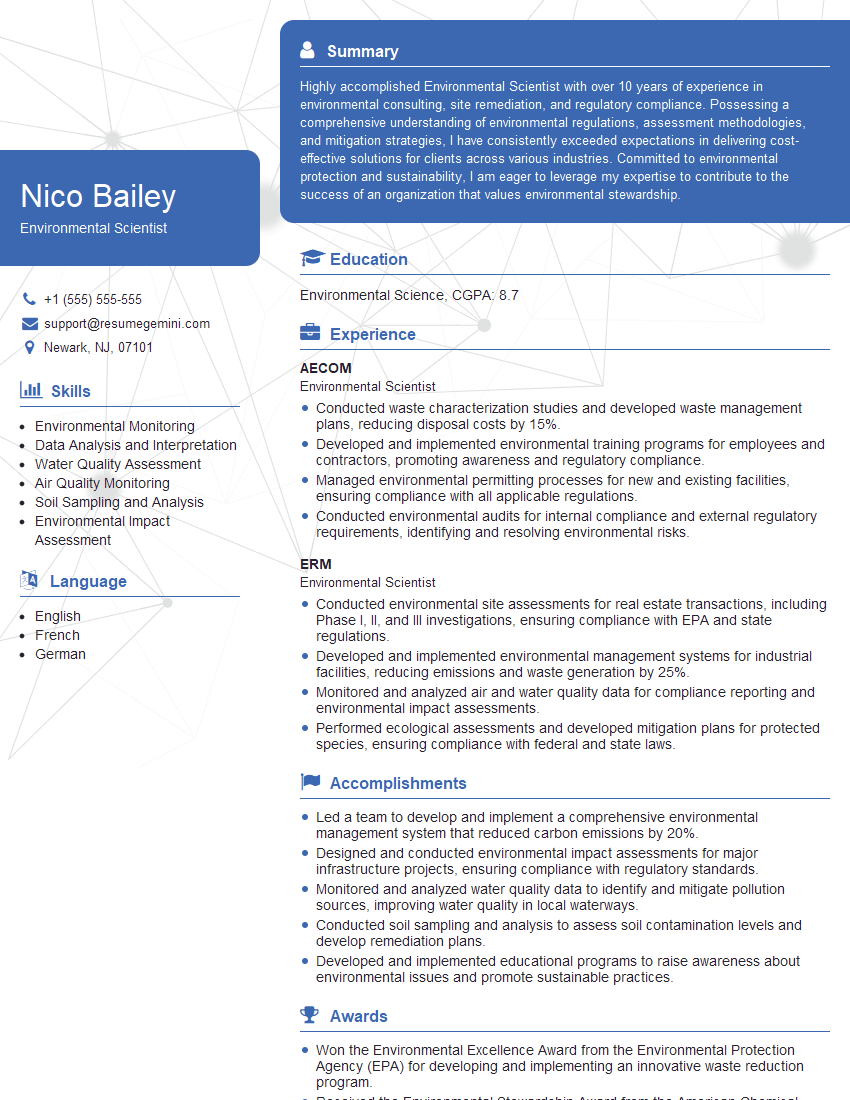
Environmental Scientist Resume Sample

Research Scientist Resume Sample
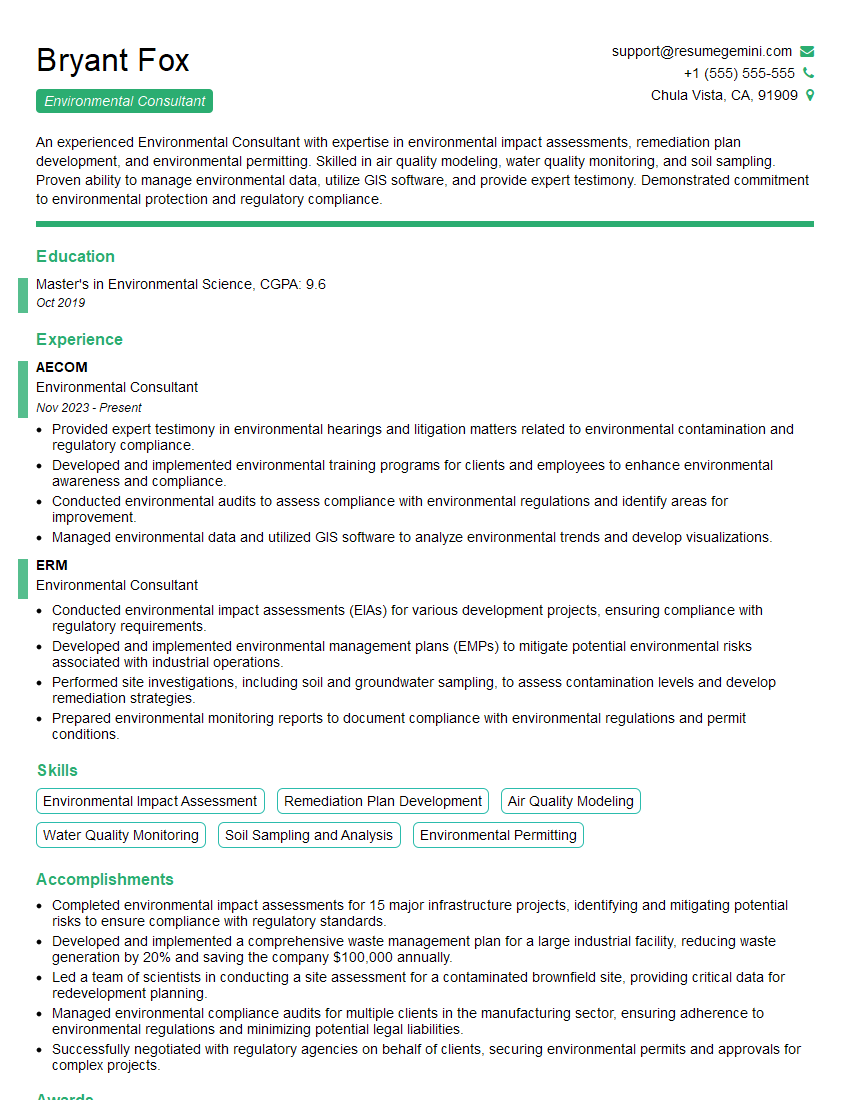
Environmental Consultant Resume Sample
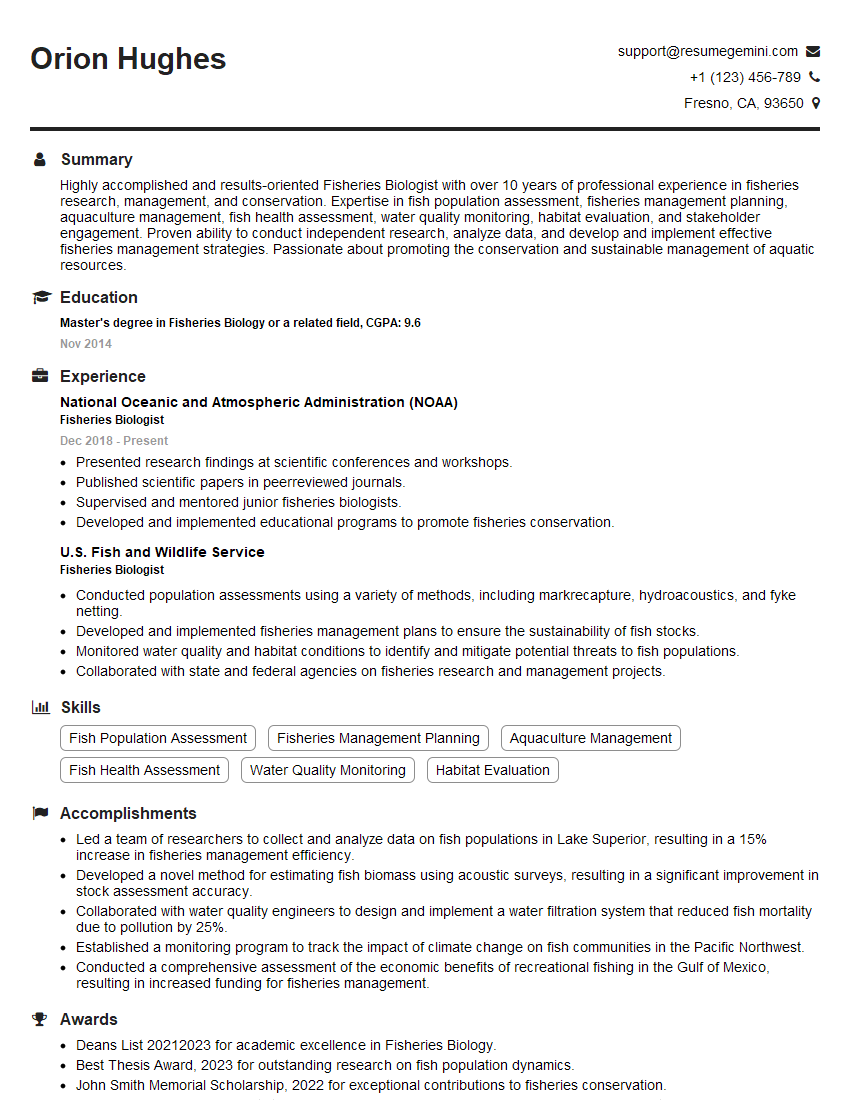
Fisheries Biologist Resume Sample
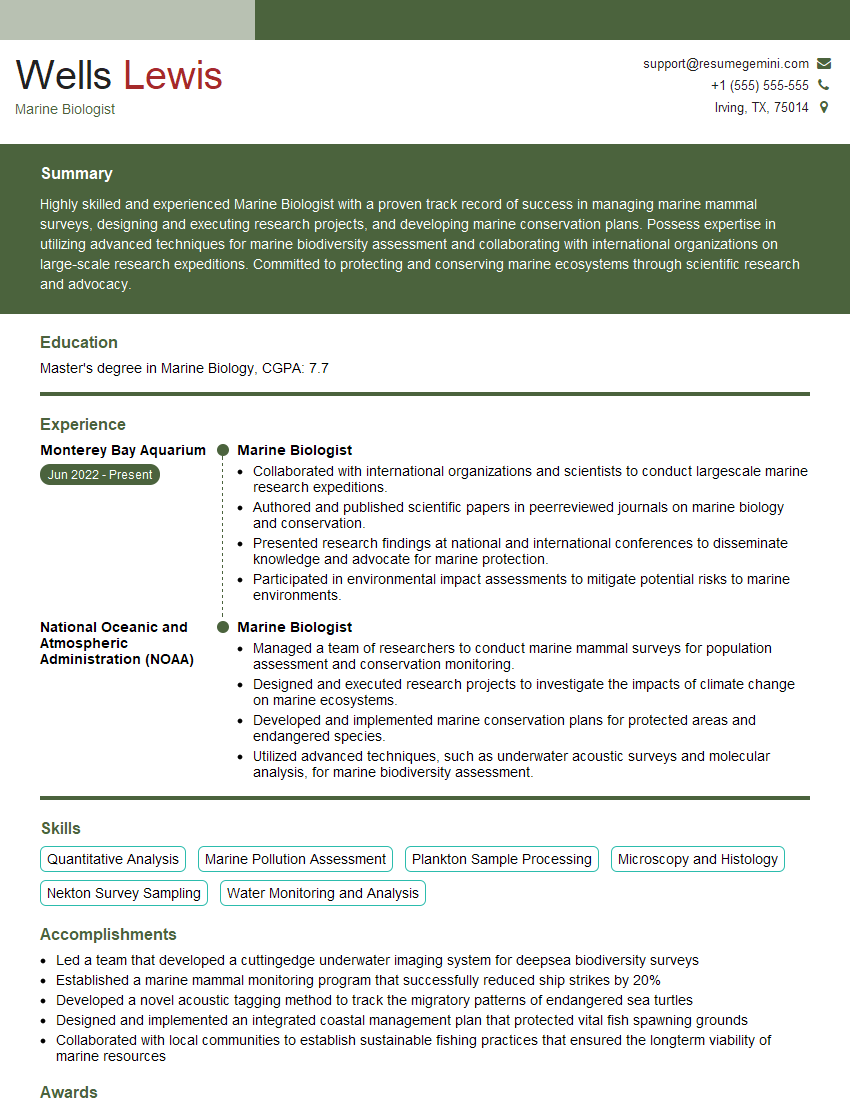
Marine Biologist Resume Sample

Wildlife Biologist Resume Sample

Limnologist Resume Sample

Wildlife Technician Resume Sample

Telemetry Technician Resume Sample
Explore more articles
Users Rating of Our Blogs
Share Your Experience
We value your feedback! Please rate our content and share your thoughts (optional).
What Readers Say About Our Blog
Very informative content, great job.
good