Every successful interview starts with knowing what to expect. In this blog, we’ll take you through the top Fishing Regulations and Laws interview questions, breaking them down with expert tips to help you deliver impactful answers. Step into your next interview fully prepared and ready to succeed.
Questions Asked in Fishing Regulations and Laws Interview
Q 1. Explain the difference between federal and state fishing regulations.
Federal and state fishing regulations work in tandem to manage fisheries, but their scope differs. Federal regulations, primarily overseen by agencies like NOAA Fisheries, focus on managing migratory fish stocks that cross state boundaries, protecting endangered species, and enforcing laws on the high seas. They establish overarching frameworks, such as minimum size limits for certain species. State regulations, managed by individual state agencies (like the Department of Fish and Wildlife), address the specifics of fishing within their borders. This includes setting daily bag limits, licensing requirements, and designating specific fishing areas (open and closed seasons).
Think of it like a layered cake: federal regulations are the foundational layer, while state regulations add the detailed, region-specific layers on top. For example, federal law might prohibit fishing for a certain endangered tuna species, while a state might add its own regulations specifying gear restrictions or closed areas for that same species within its waters.
Q 2. Describe the process for obtaining a commercial fishing license in your state.
The process for obtaining a commercial fishing license varies by state, but generally involves several steps. First, you need to identify the specific type of commercial fishing license you require, as this depends on the species you intend to target, fishing methods, and location. Next, you’ll need to complete an application, which typically requires personal information, vessel registration details (if applicable), and proof of any required training or certifications (such as CPR or First Aid). You’ll then submit the application, along with the required fees, to the relevant state agency. The agency will review your application and may conduct a background check. Upon approval, you’ll receive your license, and there may be additional reporting requirements like logbooks for catch information.
It is crucial to check your state’s Fish and Wildlife agency website for detailed information; requirements vary greatly from state to state. For example, some states might require a separate license for each type of gear or for different fishing zones, whereas others may offer a more comprehensive, generalized commercial fishing license.
Q 3. What are the penalties for violating fishing regulations?
Penalties for violating fishing regulations can be severe and vary depending on the severity of the infraction and the jurisdiction. Minor offenses, such as exceeding the daily bag limit by a few fish, might result in a warning or a relatively small fine. More serious violations, such as fishing in closed areas, using illegal gear, or possessing undersized or prohibited species, can lead to significantly larger fines, license suspension or revocation, seizure of equipment, and even criminal charges with potential jail time. In some cases, civil penalties may also be imposed to compensate for the damage caused to fish stocks.
For instance, illegally catching a protected species could result in substantial fines exceeding thousands of dollars. Remember, the aim is not just to punish, but to act as a deterrent and to help preserve fish stocks.
Q 4. How do you identify and address illegal fishing activities?
Identifying and addressing illegal fishing activities relies on a multi-pronged approach involving surveillance, enforcement, and community engagement. Surveillance efforts utilize various methods, including aerial patrols, vessel inspections, and analyzing catch reports. Law enforcement officers conduct inspections at docks, processing plants and on the water, looking for violations of fishing regulations. They also investigate reported incidents and analyze data for suspicious patterns. Community engagement is vital, involving public education campaigns to increase awareness of regulations and encourage reporting of illegal activities through hotlines or online reporting systems. Successful enforcement hinges on cooperation among agencies, and collaboration with the public helps to gather crucial information.
Imagine a detective investigating a crime: they use various tools and techniques, and often rely on tips from witnesses to solve the case. Similarly, stopping illegal fishing requires a combined effort of multiple methods and the participation of the public.
Q 5. What are the key components of a sustainable fisheries management plan?
A sustainable fisheries management plan aims to ensure long-term health and productivity of fish stocks while supporting the livelihoods of those involved in fishing. Key components include:
- Stock Assessment: Regular scientific monitoring of fish populations to determine their size and health.
- Setting Catch Limits: Establishing Total Allowable Catches (TACs) or other measures to prevent overfishing.
- Gear Restrictions: Regulating fishing gear to reduce bycatch (unintentional catch of non-target species).
- Habitat Protection: Conserving critical fish habitats like spawning grounds and nurseries.
- Ecosystem-Based Management: Considering the entire marine ecosystem, not just individual species.
- Enforcement and Compliance: Implementing effective regulations and monitoring to prevent illegal fishing activities.
- Community Involvement: Engaging stakeholders such as fishermen, scientists, and conservation groups in the management process.
A successful plan is adaptive, regularly reviewed and updated based on new scientific information and feedback.
Q 6. Explain the concept of Total Allowable Catch (TAC).
Total Allowable Catch (TAC) is the maximum amount of a specific fish species that can be harvested in a given period (e.g., a year). It’s a cornerstone of fisheries management, designed to prevent overfishing and maintain sustainable fish stocks. Scientific assessments of fish populations inform the TAC calculations, aiming to strike a balance between maintaining a healthy fish population and allowing fishing to continue. TACs are often divided among different user groups (e.g., commercial and recreational fisheries) through quota allocation. The TAC for a specific species may vary year to year, based on the most current population assessments and environmental conditions.
Think of it like a bank account for fish: the TAC is the maximum amount you can withdraw without depleting the account. Regular monitoring of the ‘account balance’ helps adjust the withdrawal limit to maintain a sustainable balance.
Q 7. Describe the role of bycatch in fisheries management.
Bycatch refers to the unintentional catch of non-target species during fishing operations. It’s a significant issue in fisheries management as it can lead to the depletion of non-target species, some of which may be endangered or commercially valuable. Bycatch can also negatively impact ecosystem health and the economic viability of the fishery. Efforts to reduce bycatch include implementing gear modifications, establishing fishing closures in sensitive areas, and adopting selective fishing practices. Regulations like bycatch limits and gear restrictions aim to minimize the negative impacts of this unintentional catch. Properly assessing and managing bycatch is crucial for developing comprehensive and sustainable fisheries management plans.
For example, a shrimp trawl might inadvertently catch sea turtles or dolphins. Managing bycatch often requires careful consideration of various factors, from the type of fishing gear used to the location and time of fishing operations.
Q 8. How do you enforce size and bag limits for recreational fishing?
Enforcing size and bag limits for recreational fishing is crucial for sustainable fisheries management. It involves a multi-pronged approach combining education, regulation, and enforcement.
Education: Anglers are educated about regulations through licensing requirements, brochures, websites, and outreach programs. Understanding the ‘why’ behind these limits – protecting spawning populations, maintaining biodiversity – is key to voluntary compliance.
Regulation: Clear, concise regulations defining size and bag limits for each species are published and readily accessible. These are often species-specific and may vary by location (e.g., different limits in different lakes or coastal zones) and season (e.g., closed seasons during spawning).
Enforcement: Fisheries officers conduct patrols, check anglers’ catches, and issue citations for violations. Random checks and responses to reported violations help maintain compliance. Penalties for exceeding limits can range from warnings to substantial fines and even license revocation.
Example: Imagine a lake with a size limit of 12 inches for bass and a bag limit of 5. Officers will measure caught bass, and if an angler has 6 bass or one smaller than 12 inches, they face penalties. This protects smaller, immature fish from being harvested before they can reproduce.
Q 9. What are the different types of fishing gear and their associated regulations?
Fishing gear regulations are designed to minimize bycatch (unintentional capture of non-target species), protect habitats, and ensure fair fishing practices. Different gear types have different regulations.
Rods and Reels: Generally, there aren’t specific restrictions on rod and reel type, but regulations often limit the number of lines an angler can use simultaneously.
Nets: Net fishing is heavily regulated, with restrictions on mesh size, net type, location, and time of use. Smaller mesh sizes are prohibited for many species to prevent catching juveniles. Specific net types might be banned in certain areas to protect sensitive habitats.
Traps and Pots: Regulations often specify trap size, escape gaps for undersized fish, and allowed locations for setting traps. This ensures that traps are selective and minimize bycatch.
Hooks: Certain hook types (e.g., circle hooks) are encouraged or mandated for certain species to reduce injury and mortality if a fish is released.
Example: Using gill nets with mesh sizes too small to allow juvenile salmon to escape is illegal in many areas. This protects the future of the salmon population. Similarly, restrictions on the number of traps an individual can deploy prevent overfishing.
Q 10. Explain the importance of habitat protection in fisheries management.
Habitat protection is paramount in fisheries management because fish rely on healthy ecosystems for survival and reproduction. Degraded habitats can lead to population declines and ecosystem collapse.
Spawning Grounds: Protecting crucial spawning areas is vital. These areas provide safe locations for fish to lay eggs and for the young to develop. Regulations may restrict access to these sensitive areas during spawning seasons.
Water Quality: Maintaining good water quality is essential. Pollution from agricultural runoff, industrial discharges, and sewage can harm fish and their habitats. Regulations aim to minimize pollution and restore degraded water bodies.
River Flow: Maintaining adequate river flow is crucial for many fish species. Dams and water diversions can disrupt natural river flow patterns, impacting fish migration and spawning. Regulations aim to balance water resource needs with the requirements of fish populations.
Connectivity: Maintaining connectivity between different parts of a waterway system is crucial for migration, dispersal, and genetic diversity. Habitat fragmentation due to dams or road crossings can negatively impact fish populations.
Example: Protecting coral reefs crucial for certain fish species involves limiting destructive fishing practices and managing pollution runoff. Similarly, maintaining riparian zones (vegetation alongside rivers) protects water quality and provides shade, essential for many aquatic organisms.
Q 11. How do you address conflicts between different user groups (e.g., commercial and recreational fishers)?
Conflicts between user groups, such as commercial and recreational fishers, often arise from competition for the same fish resources. Addressing these conflicts requires careful management strategies.
Quota Systems: Establishing quotas for both commercial and recreational fisheries can allocate resources fairly. This involves setting catch limits for each group, ensuring sustainability without depleting stocks.
Spatial Management: Defining specific areas for commercial and recreational fishing can minimize conflicts. For example, designating certain areas for commercial fishing and others for recreational fishing can reduce competition.
Gear Restrictions: Different gear restrictions for each user group can further minimize conflict and bycatch. This might involve allowing specific gear types in certain areas to minimize impact on other user groups.
Example: In areas with overlapping commercial and recreational fisheries for salmon, establishing catch quotas for both groups and seasonally closing areas to protect spawning grounds can help resolve conflicts. Similarly, gear restrictions, such as banning bottom trawling in specific areas favored by recreational fishers, can help prevent damage to the habitat and reduce conflicts.
Q 12. Describe the role of science in informing fisheries management decisions.
Science plays a vital role in informing fisheries management decisions, providing the data needed for effective conservation and sustainable resource management.
Stock Assessments: Scientists conduct stock assessments to estimate the size and health of fish populations. These assessments use data on fish abundance, age structure, growth rates, and mortality to determine sustainable harvest levels.
Bycatch Studies: Research helps understand the impact of fishing gear on non-target species. This data informs regulations designed to minimize bycatch and protect vulnerable species.
Habitat Studies: Scientists investigate the habitat requirements of fish, identifying critical habitats that need protection. This information is used to create marine protected areas and other conservation measures.
Climate Change Impacts: Research on the effects of climate change on fish populations helps managers adapt to changing conditions and develop resilient management strategies.
Example: Scientific stock assessments of cod populations in the North Atlantic helped inform catch limits that prevented the collapse of the cod fishery. Bycatch studies have led to regulations promoting the use of more selective fishing gear, reducing the number of seabirds and other marine mammals caught unintentionally.
Q 13. What are the key indicators of a healthy fish stock?
Several key indicators point to a healthy fish stock, reflecting both the size of the population and its capacity to reproduce and sustain itself.
High Abundance: A large population size, indicating a thriving stock with sufficient individuals to maintain itself.
Diverse Age Structure: A healthy age structure includes a good representation of young, adult, and old fish, ensuring successful reproduction and population renewal.
High Recruitment: High rates of recruitment (new fish entering the population) signify successful spawning and juvenile survival.
Low Mortality Rates: Low rates of natural mortality and fishing mortality suggest the population is not under excessive pressure.
Good Condition: Fish displaying good health and growth rates (e.g., proper size and weight for their age) indicate a healthy ecosystem.
Example: A population of trout with a wide range of ages, high numbers of young fish, and individuals reaching expected sizes suggests a healthy stock. Conversely, a population dominated by older fish with few juveniles suggests a declining population.
Q 14. Explain the concept of ecosystem-based fisheries management.
Ecosystem-based fisheries management (EBFM) considers the entire marine ecosystem, not just individual fish populations, in making management decisions. It moves beyond traditional single-species management to a holistic approach.
Considering Interactions: EBFM takes into account the complex interactions between different species (predators, prey, competitors), and the impact of fishing on the entire food web.
Habitat Considerations: It emphasizes protecting and restoring habitats crucial for fish and other marine life.
Precautionary Approach: EBFM uses a precautionary approach, prioritizing the long-term health of the ecosystem even in the face of scientific uncertainty.
Adaptive Management: EBFM incorporates adaptive management strategies, adjusting regulations based on ongoing monitoring and evaluation of the ecosystem’s response to management actions.
Example: Instead of focusing solely on cod fishing, EBFM might consider the impact of cod fishing on prey species, predator species (like seals), and the overall health of the seabed habitat. It might involve creating marine protected areas to safeguard sensitive habitats, and implementing gear modifications to reduce bycatch of other species.
Q 15. How do you use data to monitor the effectiveness of fishing regulations?
Monitoring the effectiveness of fishing regulations relies heavily on data analysis. We use a variety of data sources, including catch reports from commercial and recreational fisheries, scientific surveys of fish populations, and observer programs that collect data on fishing activities at sea. This data allows us to track key indicators like:
- Stock abundance: Are fish populations increasing, decreasing, or remaining stable after implementing regulations?
- Fishing mortality: How many fish are being caught, and is this level sustainable?
- Bycatch rates: Are regulations successfully reducing the unintended capture of non-target species?
- Compliance rates: Are fishermen adhering to the regulations, and are enforcement efforts effective?
For example, if we implement a new size limit on a particular fish species, we would compare the average size of fish caught before and after the implementation. A significant increase in average size suggests the regulation is working. Statistical analysis, including time-series analysis and regression modeling, is crucial in identifying trends and evaluating the impact of different management measures.
Career Expert Tips:
- Ace those interviews! Prepare effectively by reviewing the Top 50 Most Common Interview Questions on ResumeGemini.
- Navigate your job search with confidence! Explore a wide range of Career Tips on ResumeGemini. Learn about common challenges and recommendations to overcome them.
- Craft the perfect resume! Master the Art of Resume Writing with ResumeGemini’s guide. Showcase your unique qualifications and achievements effectively.
- Don’t miss out on holiday savings! Build your dream resume with ResumeGemini’s ATS optimized templates.
Q 16. Describe your experience with GPS tracking technology in fisheries enforcement.
GPS tracking technology has revolutionized fisheries enforcement. We use vessel monitoring systems (VMS) that require commercial fishing vessels to transmit their location data in real-time. This allows us to:
- Monitor fishing activity: Track vessels to ensure they are operating within designated fishing areas and adhering to gear restrictions.
- Detect illegal fishing: Identify vessels that are fishing in prohibited areas or using unauthorized gear.
- Improve response times: Quickly locate and investigate potential violations.
- Reduce fuel costs (for enforcement): Efficiently patrol areas known for illegal fishing activities.
For instance, during a recent patrol, VMS data alerted us to a vessel operating outside its designated fishing area. This allowed for immediate investigation, leading to the discovery of illegal fishing activity. The data served as critical evidence in the subsequent enforcement action. While privacy concerns are addressed, the benefits for sustainable fishing practices greatly outweigh those concerns, especially when considered in tandem with ethical fishing practices.
Q 17. How do you handle situations where there is conflicting evidence regarding a potential fishing violation?
Conflicting evidence in fishing violation cases requires a thorough and impartial investigation. We employ a systematic approach:
- Gather all available evidence: This includes witness statements, physical evidence (e.g., seized fish or gear), vessel logs, electronic data (VMS data), and photographs.
- Assess the credibility of the evidence: Evaluate the reliability and potential biases of each piece of evidence. For example, a witness statement may be corroborated by physical evidence or GPS data.
- Consider all possible interpretations: We strive to understand all perspectives and scenarios. Sometimes, seemingly conflicting evidence can be reconciled by considering different circumstances.
- Apply the weight of evidence principle: We carefully weigh the relative strength and persuasiveness of the different evidence items, considering any counter-arguments.
- Consult legal counsel: When necessary, we seek legal advice to ensure that enforcement actions are consistent with the law and uphold due process.
A recent case involved conflicting accounts of a fishing vessel’s location during a suspected illegal activity. By cross-referencing VMS data with vessel logs and witness testimonies, we were able to determine the vessel’s actual location and resolve the discrepancy.
Q 18. What are the ethical considerations in fisheries management?
Ethical considerations are paramount in fisheries management. Key ethical principles include:
- Sustainability: Ensuring that fishing practices do not deplete fish stocks to unsustainable levels, thereby guaranteeing future generations’ access to fisheries resources.
- Fairness and equity: Distributing fishing opportunities equitably among different stakeholders, including commercial and recreational fishers, and considering the needs of coastal communities who depend on fishing for their livelihoods.
- Transparency and accountability: Openly sharing information about fisheries management decisions and the rationale behind them, and being accountable for the impact of these decisions.
- Precaution: Taking a precautionary approach to management in the face of scientific uncertainty, avoiding actions that could have irreversible negative impacts on fish stocks.
- Respect for the environment: Minimizing the impact of fishing activities on marine ecosystems, including reducing bycatch and protecting essential habitats.
For example, a key ethical dilemma might involve choosing between short-term economic gains from increased fishing quotas and the long-term sustainability of a fish stock. Ethical fisheries management prioritizes sustainability over short-term economic interests.
Q 19. Explain the impact of climate change on fish stocks and fisheries management.
Climate change is significantly impacting fish stocks and fisheries management. The effects are multifaceted:
- Changes in fish distribution: Warming waters are causing many fish species to shift their ranges toward the poles or deeper waters, altering the distribution of fish stocks and challenging traditional fishing practices.
- Changes in fish abundance: Some species are benefiting from warmer temperatures, while others are declining due to changes in habitat suitability, prey availability, or increased disease susceptibility.
- Ocean acidification: Increased carbon dioxide in the atmosphere is causing ocean acidification, harming shellfish and other marine organisms that form the base of many food webs.
- Increased frequency and intensity of extreme weather events: Hurricanes, floods, and droughts can severely damage fish habitats and disrupt fish populations.
Fisheries management must adapt to these changes. This includes developing adaptive management strategies, incorporating climate projections into stock assessments, and implementing measures to protect essential fish habitats from climate change impacts. For instance, we might need to adjust fishing quotas based on climate-driven changes in fish abundance or develop marine protected areas to safeguard vulnerable habitats.
Q 20. Describe your experience with working with stakeholders in fisheries management.
Working with stakeholders is essential for effective fisheries management. Stakeholder engagement involves collaboration with:
- Commercial fishermen: Understanding their concerns about fishing regulations and finding ways to balance their economic needs with the sustainability of fish stocks.
- Recreational fishermen: Engaging them in conservation efforts and ensuring that their recreational activities are managed sustainably.
- Indigenous communities: Recognizing their traditional rights and knowledge related to fisheries, and incorporating their perspectives into management decisions.
- Scientists: Relying on scientific data and expertise to inform management decisions.
- Environmental groups: Considering their concerns about the environmental impacts of fishing and working together to protect marine ecosystems.
- Government agencies: Coordinating with other government agencies involved in fisheries management and enforcement.
Successful stakeholder engagement requires open communication, transparency, and a willingness to compromise. We frequently use participatory workshops, public consultations, and collaborative decision-making processes to ensure all voices are heard and considered.
Q 21. How do you ensure fair and equitable access to fisheries resources?
Ensuring fair and equitable access to fisheries resources is a complex issue. Key approaches include:
- Individual transferable quotas (ITQs): Allocating fishing rights in the form of quotas that can be bought, sold, and leased, providing flexibility and promoting efficient resource use. However, concerns about equity and potential concentration of ownership need careful consideration.
- Community-based fisheries management: Empowering local communities to manage their own fisheries resources, taking into account their traditional knowledge and needs. This approach can foster a stronger sense of stewardship and responsibility.
- Limited entry programs: Restricting the number of licenses issued for commercial fishing, preventing overcapacity and ensuring a more equitable distribution of fishing opportunities. Careful planning and consideration of economic impacts are necessary here.
- Allocating fishing opportunities based on historical fishing patterns: This can maintain the status quo and reduce potential for conflict, but might not address issues of historical inequities.
- Addressing existing inequities through targeted support programs: Providing funding or other resources to help underrepresented groups access fisheries resources.
Finding the right balance between different access mechanisms often requires a nuanced approach, tailored to the specific circumstances of each fishery. It requires careful consideration of economic, social, and ecological factors.
Q 22. What is your experience with analyzing fisheries data and developing management recommendations?
My experience in analyzing fisheries data and developing management recommendations spans over 15 years. I’ve worked extensively with diverse datasets, including catch statistics, stock assessments, environmental data (water temperature, salinity, etc.), and socioeconomic information related to fishing communities. My analytical skills encompass a wide range of statistical methods, from basic descriptive statistics to advanced modeling techniques like time series analysis and stock-recruitment models. I utilize this data to assess the health of fish populations, identify trends, and project future scenarios under different management strategies. For example, I recently led a project analyzing the impact of climate change on a specific salmon population, using sophisticated modeling to predict population decline under various warming scenarios. This analysis directly informed the development of conservation measures, including habitat restoration and fishing quota adjustments, which were ultimately adopted by the regional fisheries management council.
My recommendations are always grounded in scientific rigor and consider the broader ecological, economic, and social context. I prioritize stakeholder engagement, working collaboratively with fishermen, scientists, policymakers, and the public to ensure that management plans are both effective and sustainable.
Q 23. Describe your understanding of the Magnuson-Stevens Fishery Conservation and Management Act.
The Magnuson-Stevens Fishery Conservation and Management Act (MSA) is the primary law governing marine fisheries management in the United States. It’s essentially a framework for achieving sustainable fisheries and preventing overfishing. The Act establishes eight regional Fishery Management Councils, composed of stakeholders including scientists, fishermen, and conservationists, responsible for developing and implementing fishery management plans (FMPs) for their respective regions.
Key elements of the MSA include:
- Preventing overfishing: The Act mandates that overfishing be prevented and that stocks be rebuilt to healthy levels.
- Ecosystem-based management: The MSA emphasizes considering the wider ecosystem when making management decisions, acknowledging the interconnectedness of species and habitats.
- Bycatch reduction: The Act pushes for minimizing the unintentional catch of non-target species.
- Enforcement and compliance: Robust mechanisms are in place for monitoring and enforcement of regulations.
The MSA’s impact on US fisheries is profound. It has been instrumental in rebuilding some severely depleted stocks, although challenges remain. The emphasis on scientific data, stakeholder participation, and adaptive management makes it a constantly evolving system, continually adapting to new scientific knowledge and social needs. A key example of its success is the recovery of several groundfish stocks in the Northeast, thanks to implemented FMPs that incorporated stringent fishing limits and gear restrictions.
Q 24. How familiar are you with the Endangered Species Act and its implications for fisheries?
The Endangered Species Act (ESA) significantly impacts fisheries management. It mandates the protection of endangered and threatened species and their critical habitats. When a listed species relies on a specific habitat or prey fish, fisheries management must accommodate the ESA’s requirements. This often necessitates modifications to fishing gear, closures of specific areas, or adjustments to fishing quotas to prevent further endangerment of listed species.
For instance, if a specific type of shrimp trawling is harming a threatened sea turtle population, the relevant FMP will need to include modifications to the gear or spatial restrictions to minimize bycatch and protect the turtles. The interplay between the MSA and the ESA can be complex, requiring careful consideration of both the needs of the fisheries and the conservation requirements of threatened species. Often, finding solutions requires compromise and collaboration between fisheries managers and wildlife agencies.
Q 25. What are some common challenges faced in enforcing fisheries regulations?
Enforcing fisheries regulations presents several significant challenges:
- Vastness of the ocean: Monitoring fishing activity across such a large and dynamic environment is extremely difficult.
- Technological advancements: Sophisticated fishing techniques and technologies can make detection of illegal activity more challenging.
- Limited resources: Enforcement agencies often face budget constraints and staffing shortages.
- Data limitations: Gathering accurate and reliable data on fishing effort and catches can be problematic.
- International waters: Illegal fishing often occurs in international waters, complicating enforcement efforts.
To address these issues, innovative approaches are necessary, such as using satellite monitoring, employing advanced data analytics to identify suspicious patterns in catch data, and strengthening international collaboration. Moreover, promoting compliance through education and outreach programs is crucial.
Q 26. How do you stay updated on changes in fisheries regulations and best practices?
Staying abreast of changes in fisheries regulations and best practices requires a multi-faceted approach:
- Subscription to relevant journals and publications: I regularly subscribe to and read scientific journals, industry publications, and government reports.
- Attendance at conferences and workshops: Actively participating in professional meetings allows for networking and learning about the latest research and management strategies.
- Engagement with regulatory agencies: I maintain close contact with relevant agencies to receive updates on regulatory changes and policy developments.
- Online resources and databases: I regularly utilize online databases and platforms that provide access to fisheries data, research findings, and regulatory information.
- Networking with colleagues: Discussions with fellow fisheries scientists and managers are invaluable for staying informed about emerging issues and best practices.
This continuous learning process is essential for ensuring that my work remains current and relevant.
Q 27. Describe a time you had to resolve a complex fisheries management issue.
One particularly challenging issue I encountered involved the decline of a key shellfish population in a popular recreational fishery. Initial assessments pointed towards overfishing, but further investigation revealed that a combination of factors was at play. These included habitat degradation due to pollution, the impact of a newly introduced invasive species, and changing environmental conditions linked to climate change.
To resolve this, we adopted a multi-pronged approach. We implemented stricter fishing limits, initiated habitat restoration projects, and researched control measures for the invasive species. Crucially, we also collaborated with local communities, educating them about the threats to the shellfish population and involving them in conservation efforts. This participatory approach was essential in gaining acceptance for the new regulations and securing the long-term sustainability of the fishery. Monitoring showed a significant improvement in the shellfish population within a few years, demonstrating the effectiveness of integrating scientific data with community engagement in complex resource management situations.
Q 28. What is your experience in using GIS technology to manage fisheries resources?
My experience with GIS technology in fisheries resource management is extensive. I use GIS tools to visualize and analyze spatial data, including fish distribution patterns, habitat characteristics, fishing effort, and protected areas. This allows for a more informed understanding of the spatial aspects of fisheries management. For example, I’ve used GIS to map the distribution of a threatened fish species, identify areas of high fishing intensity overlapping with critical habitats, and then use this information to propose spatial management measures, such as creating marine protected areas or adjusting fishing closures to better protect the species and its habitat.
Furthermore, GIS is invaluable for designing monitoring programs, optimizing the placement of sampling stations, and communicating management decisions to stakeholders through visually appealing maps and reports. Its applications extend to predictive modeling, where GIS is integrated with other analytical tools to forecast the potential impact of climate change or other stressors on fish populations and their distributions.
Key Topics to Learn for Fishing Regulations and Laws Interview
- Federal and State Regulations: Understanding the differences and overlaps in fishing regulations at various jurisdictional levels. This includes navigating conflicting rules and prioritizing compliance.
- Species-Specific Regulations: Knowledge of size and bag limits, catch-and-release requirements, and seasonal closures for different fish species. This includes understanding the rationale behind these regulations (e.g., conservation efforts).
- Gear and Methods Restrictions: Familiarity with regulations concerning allowed fishing gear (e.g., types of hooks, nets, traps), permitted fishing methods (e.g., trolling, spearfishing), and gear restrictions in specific areas.
- Licensing and Permits: Understanding various license types, permit requirements, and the process for obtaining and maintaining them. This involves the legal implications of fishing without proper documentation.
- Enforcement and Penalties: Knowledge of common violations, associated penalties (fines, license suspension), and the role of enforcement agencies in protecting fish stocks and upholding regulations.
- Conservation and Management Strategies: Understanding the principles behind sustainable fishing practices, habitat protection, and the role of science in informing regulations. This includes the ability to explain the impact of overfishing and the importance of stock assessments.
- Navigational Safety and Regulations: Understanding relevant regulations related to boating safety, operating watercraft, and responsible behavior on the water.
- Ethical Considerations: Demonstrating a commitment to responsible angling practices, including catch-and-release techniques, minimizing environmental impact, and adhering to the spirit as well as the letter of the law.
- Problem-Solving Application: Ability to analyze real-world scenarios involving conflicting regulations, unusual circumstances, or ethical dilemmas related to fishing practices and demonstrate appropriate solutions.
Next Steps
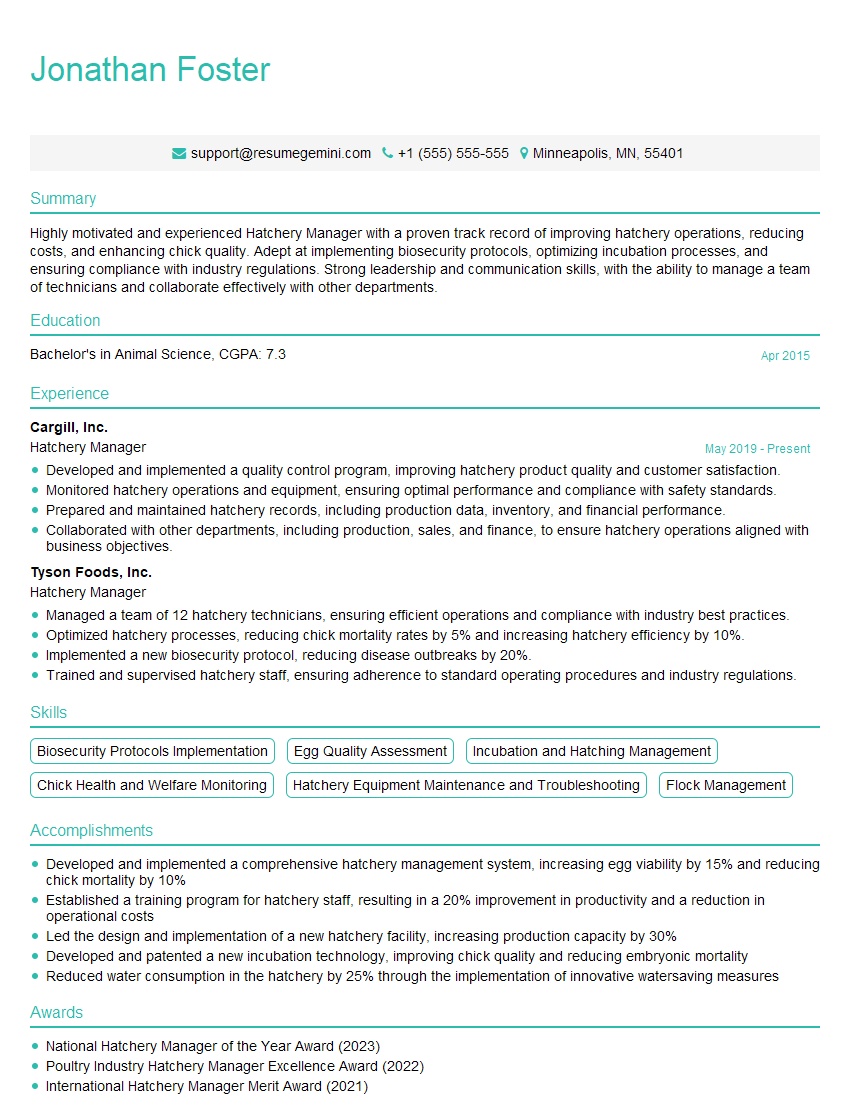
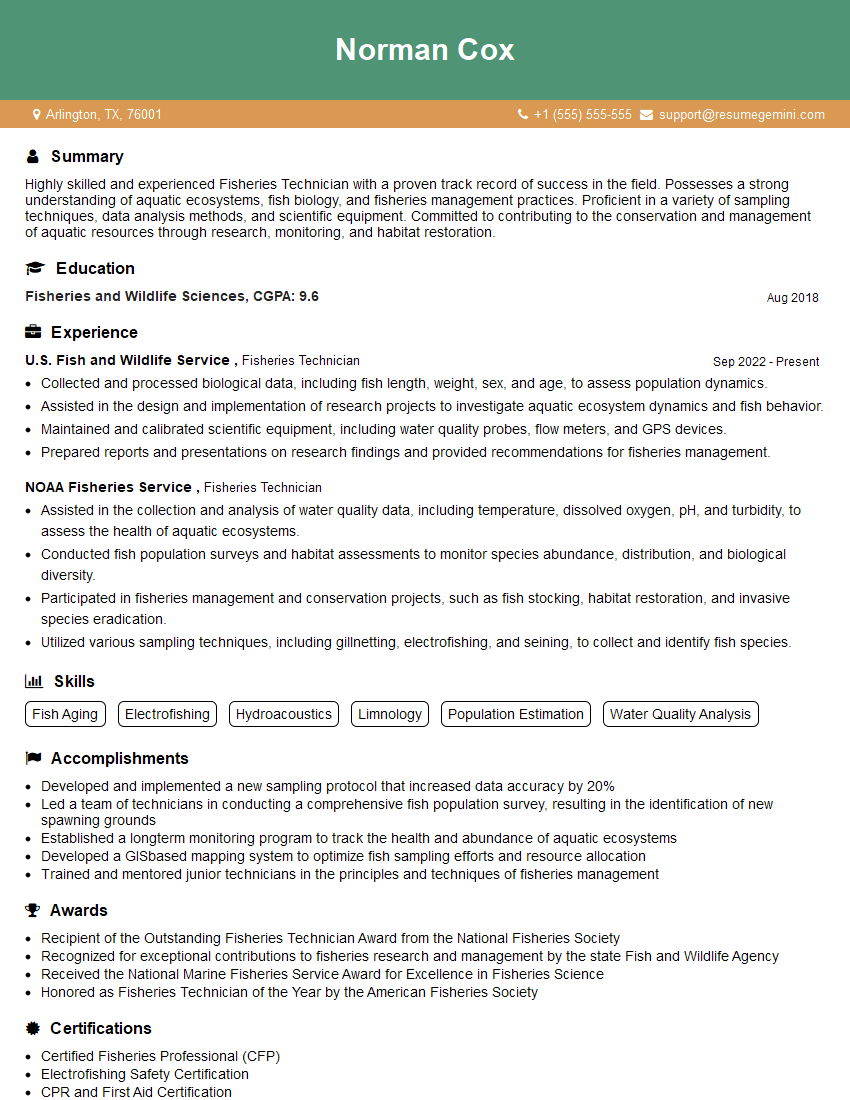
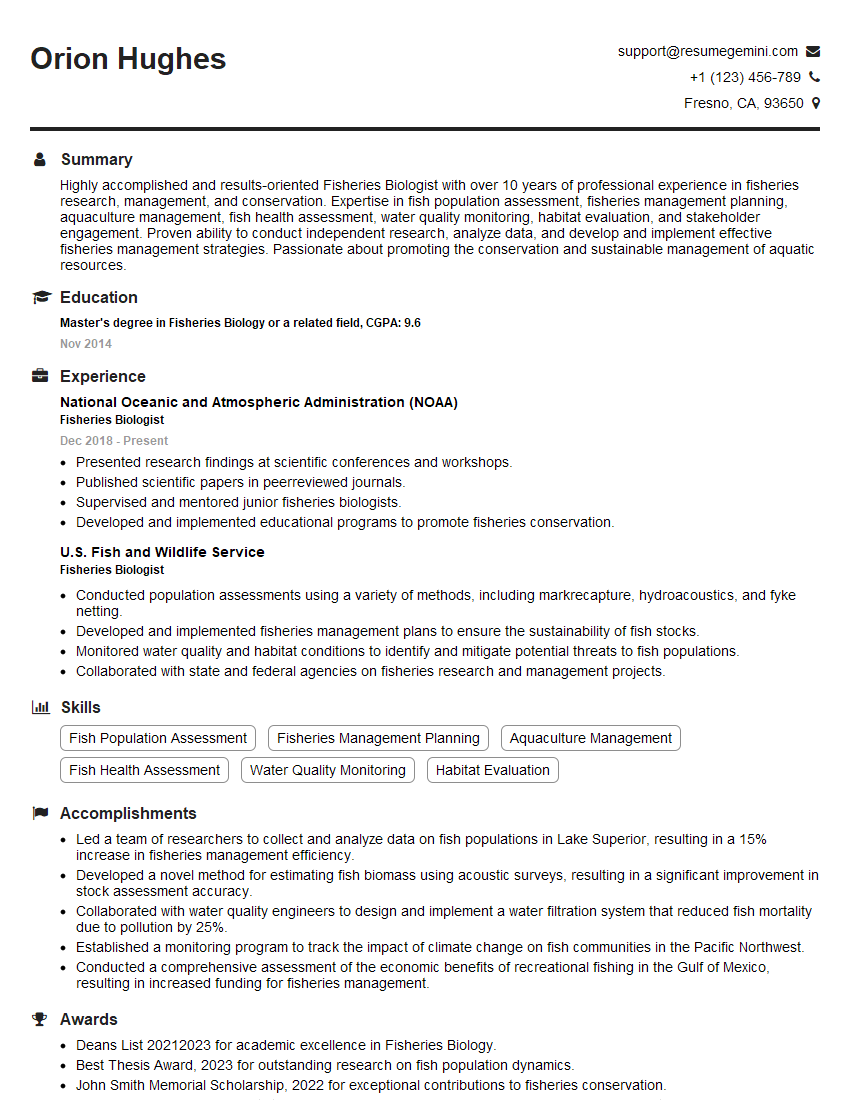
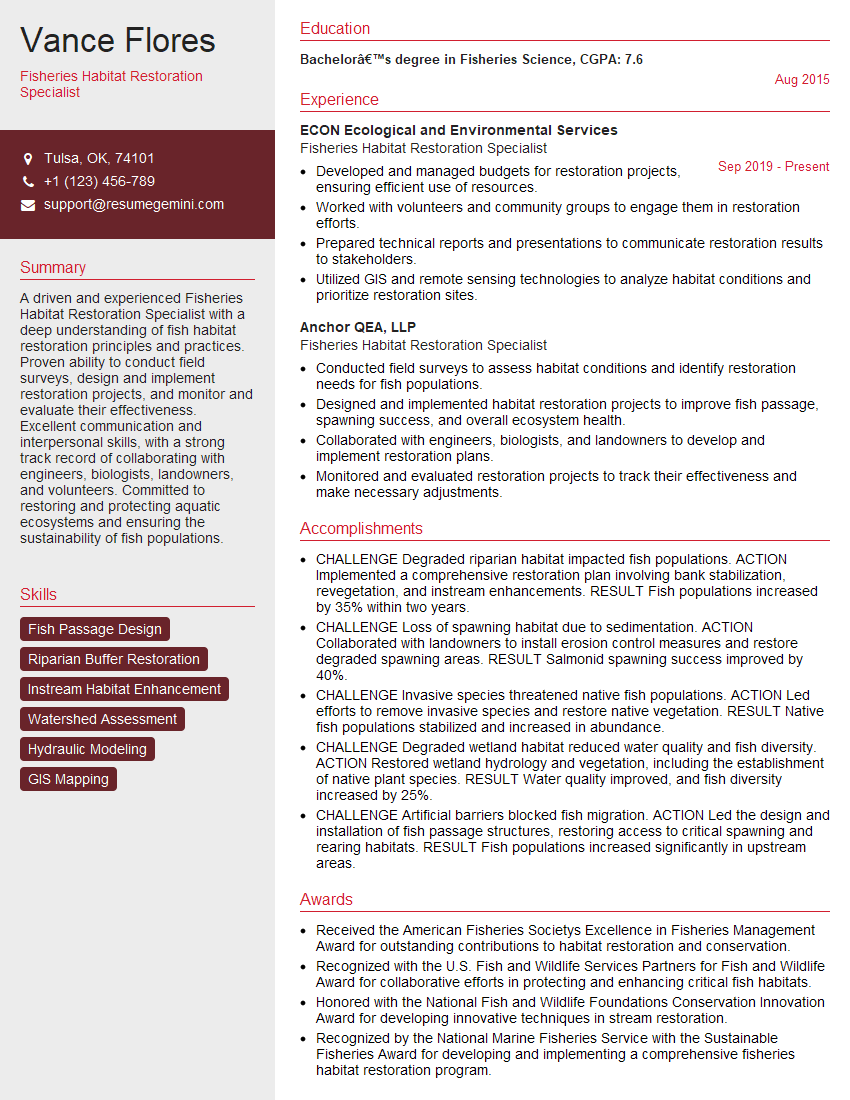
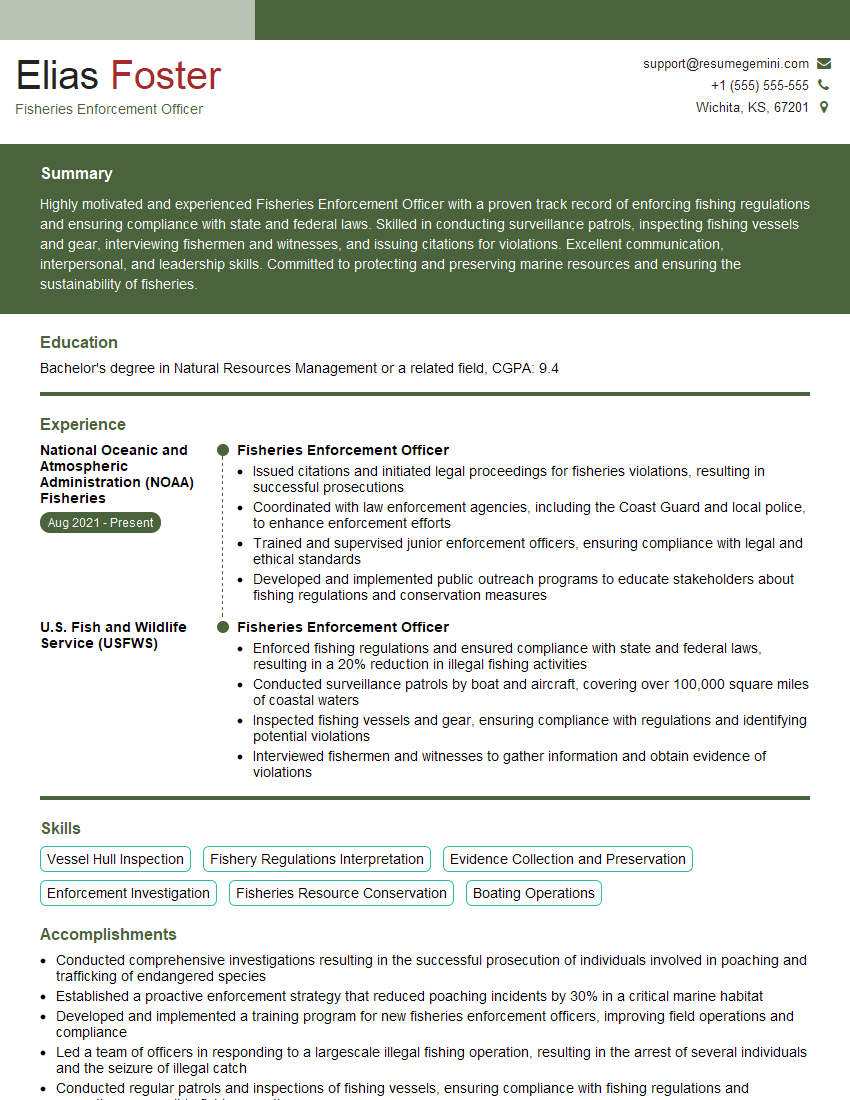
Mastering Fishing Regulations and Laws is crucial for career advancement in fisheries management, conservation, enforcement, and related fields. A strong understanding of these regulations will set you apart from other candidates and demonstrate your commitment to responsible resource management. To maximize your job prospects, it is essential to create an ATS-friendly resume that highlights your relevant skills and experience. ResumeGemini is a trusted resource that can help you build a professional and effective resume. Examples of resumes tailored to the Fishing Regulations and Laws field are available to guide you in creating your own compelling application materials.
Explore more articles
Users Rating of Our Blogs
Share Your Experience
We value your feedback! Please rate our content and share your thoughts (optional).
What Readers Say About Our Blog
Very informative content, great job.
good