Interviews are opportunities to demonstrate your expertise, and this guide is here to help you shine. Explore the essential Quantitative and Qualitative Analysis interview questions that employers frequently ask, paired with strategies for crafting responses that set you apart from the competition.
Questions Asked in Quantitative and Qualitative Analysis Interview
Q 1. Explain the difference between quantitative and qualitative data.
Quantitative and qualitative data represent fundamentally different approaches to understanding information. Quantitative data is numerical and measurable, focusing on quantities and amounts. Think of things you can count or measure objectively: height, weight, temperature, income, or the number of customers. Analysis of this data typically involves statistical methods to identify patterns and relationships. Qualitative data, on the other hand, is descriptive and deals with qualities or characteristics. This includes things like colors, textures, smells, opinions, or interview transcripts. Analysis here focuses on themes, interpretations, and understanding meaning. The key difference lies in the type of information gathered and how it’s analyzed: numbers versus descriptions.
- Quantitative Example: A survey asking participants to rate their satisfaction on a scale of 1 to 5.
- Qualitative Example: A focus group discussion exploring customer experiences with a new product.
Q 2. Describe a situation where you used both quantitative and qualitative data to solve a problem.
During a project assessing the effectiveness of a new employee training program, we utilized both quantitative and qualitative methods. Quantitatively, we tracked metrics such as employee performance scores (measured numerically) before and after the training. We also measured the reduction in errors and increase in productivity following the training. This gave us hard numbers to show the program’s impact. However, simply looking at numbers wasn’t enough to fully understand the *why* behind our findings. To gain deeper insights, we conducted qualitative interviews with employees to gather their feedback and opinions on the training’s effectiveness, its various aspects, and its impact on their work. This qualitative data revealed valuable insights into areas where the training excelled and where it could be improved, like discovering that employees found a particular module confusing despite high overall performance scores. By combining these quantitative and qualitative results, we were able to create a more comprehensive and nuanced understanding of the training program’s effectiveness and identify areas for improvement, leading to a more effective program overall.
Q 3. What are the limitations of quantitative analysis?
While powerful, quantitative analysis has limitations. It often struggles to capture the complexity of human behavior and experiences. For instance, simply measuring customer satisfaction scores might not reveal the underlying reasons for dissatisfaction. Furthermore, quantitative data can be easily manipulated or misrepresented, leading to biased or inaccurate conclusions if the data collection or analysis methods are flawed. Another limitation is that quantitative analysis can’t easily explore unexpected or emergent themes. It needs pre-defined variables and relies heavily on pre-established hypotheses.
- Example: A survey might show a correlation between ice cream sales and crime rates, but this doesn’t imply causation; both are likely linked to higher temperatures.
Q 4. What are the limitations of qualitative analysis?
Qualitative analysis, while offering rich insights, also has its drawbacks. Subjectivity is a major concern; the interpretation of qualitative data can be influenced by researcher bias. Generalizing findings from a small sample size to a larger population is also challenging. Another limitation is the difficulty in replicating qualitative research; the context and setting often make it hard to obtain consistent results across different studies. Finally, analyzing large amounts of qualitative data can be time-consuming and resource-intensive.
- Example: Two researchers analyzing the same interview transcripts might identify different key themes depending on their individual perspectives.
Q 5. Explain the concept of statistical significance.
Statistical significance indicates the likelihood that an observed result is not due to random chance. In simpler terms, it helps us determine if the relationship or difference we observe between two things is real or just a fluke. It’s typically represented by a p-value. A low p-value (typically below 0.05) suggests that the observed effect is statistically significant, meaning it’s unlikely to have occurred by chance. For instance, if we find a statistically significant difference in test scores between two groups, it suggests that the difference is likely due to some intervention, rather than random variation.
Q 6. What are some common statistical tests used in quantitative analysis?
The choice of statistical test depends heavily on the research question and the nature of the data. Some common tests include:
- t-test: Compares the means of two groups (e.g., comparing the average height of men and women).
- ANOVA (Analysis of Variance): Compares the means of three or more groups.
- Chi-square test: Examines the association between two categorical variables (e.g., relationship between smoking and lung cancer).
- Correlation analysis: Measures the strength and direction of the linear relationship between two variables.
- Regression analysis: Models the relationship between a dependent variable and one or more independent variables (predicting house prices based on size, location, etc.).
Choosing the right test is crucial for drawing valid conclusions; an incorrect choice can lead to misleading results.
Q 7. How do you handle missing data in a quantitative dataset?
Missing data is a common challenge in quantitative analysis. Ignoring it can bias the results. Several strategies exist to handle it:
- Deletion: Removing cases or variables with missing data (Listwise or Pairwise deletion). This is simple but can lead to a loss of information and biased results if the missing data isn’t random.
- Imputation: Replacing missing values with estimated values. Methods include mean imputation (replacing with the average value), regression imputation (predicting missing values using other variables), or multiple imputation (creating multiple plausible imputed datasets). Imputation preserves more data but can introduce bias if not done carefully.
- Maximum Likelihood Estimation: Statistical technique that handles missing data by incorporating it directly into the statistical model.
The best approach depends on the nature of the missing data (random or non-random), the amount of missing data, and the chosen analysis method. It’s crucial to document the chosen method and acknowledge potential biases introduced.
Q 8. How do you ensure the reliability and validity of qualitative data?
Ensuring the reliability and validity of qualitative data is crucial for drawing trustworthy conclusions. Reliability refers to the consistency of the data, while validity ensures that the data accurately measures what it intends to. We achieve this through several strategies:
Triangulation: Employing multiple data sources (interviews, observations, documents) to cross-validate findings. For instance, if interview data about employee satisfaction aligns with observation data of workplace morale, it strengthens the overall validity.
Member Checking: Sharing interpretations with participants to ensure accuracy and gain their perspectives. This iterative process helps refine the analysis and address any misinterpretations.
Inter-rater Reliability: When multiple researchers are involved, comparing their coding and interpretations to identify inconsistencies and ensure agreement. A high level of inter-rater reliability indicates greater objectivity.
Audit Trail: Maintaining detailed records of the research process, including data collection methods, analysis techniques, and decisions made. This transparent approach allows others to scrutinize the process and assess the credibility of the findings.
Thick Description: Providing rich, detailed accounts of the context and setting to allow for a deeper understanding and better interpretation of the data. This helps ensure the findings are contextually appropriate and not overgeneralized.
By meticulously applying these methods, we significantly enhance the trustworthiness and rigor of our qualitative research.
Q 9. Describe your experience with data visualization techniques.
Data visualization is an essential aspect of my analytical process. I’m proficient in creating a variety of charts and graphs to effectively communicate complex data. My experience spans several techniques:
Bar charts and histograms: Ideal for comparing frequencies or distributions of categorical and numerical data, respectively. For example, I recently used a bar chart to illustrate the distribution of customer satisfaction ratings across different product lines.
Scatter plots: To visualize the relationship between two continuous variables. For instance, I’ve used scatter plots to demonstrate the correlation between advertising spend and sales revenue.
Line graphs: Excellent for showing trends over time. I used this to track website traffic over a year and identify seasonal patterns.
Box plots: To compare the distribution of data across different groups, highlighting medians, quartiles, and outliers. This has proved useful in identifying variations in employee performance across different departments.
Heatmaps: To represent the magnitude of a phenomenon across two dimensions. Recently, I used a heatmap to show the correlation between different features in a dataset.
Beyond these, I’m comfortable using more advanced techniques like geographic mapping and network graphs as needed. The choice of visualization technique always depends on the nature of the data and the message I aim to convey.
Q 10. What software packages are you proficient in for quantitative analysis?
For quantitative analysis, I’m highly proficient in several software packages, each offering unique strengths:
R: A powerful open-source language and environment for statistical computing. I utilize R for complex statistical modeling, including regression analysis, hypothesis testing, and time series analysis.
#Example R code: lm(y ~ x, data = mydata)Python (with libraries like Pandas, NumPy, and Scikit-learn): Python provides a versatile platform for data manipulation, cleaning, and advanced statistical modeling. I use Pandas for data wrangling, NumPy for numerical computations, and Scikit-learn for machine learning algorithms.
#Example Python code: from sklearn.linear_model import LinearRegressionSPSS: A user-friendly statistical software package commonly used for survey data analysis. I’ve used SPSS extensively for descriptive statistics, t-tests, ANOVA, and factor analysis.
SAS: A comprehensive statistical software suite particularly useful for large-scale data analysis and handling complex datasets. I’ve used SAS for its capabilities in data management and advanced statistical procedures.
My expertise extends to using these tools to create reproducible and documented analysis pipelines.
Q 11. What qualitative data analysis software are you familiar with?
My experience with qualitative data analysis software includes:
NVivo: A powerful software for managing, analyzing, and visualizing qualitative data. I’ve used NVivo extensively for coding, theme identification, and network mapping in projects involving interview transcripts and observational notes.
ATLAS.ti: Another robust qualitative data analysis software that offers similar functionalities to NVivo, including coding, memoing, and visualization tools. I find it particularly helpful for managing large datasets and collaborative analysis.
MAXQDA: This software provides a comprehensive range of tools for qualitative data analysis, supporting both manual and automated coding strategies. I have utilized MAXQDA for its user-friendly interface and its strong capabilities in mixed methods research.
While proficient in these software packages, I also recognize the importance of adapting my approach to the specific needs of the research question and the nature of the data. Often, a combination of manual coding and software-assisted analysis offers the best results.
Q 12. Explain your understanding of different sampling methods.
Sampling methods are crucial for selecting a representative subset of a population to draw inferences about the larger group. Different methods offer varying levels of control and generalizability. Here are some key types:
Probability Sampling: Each member of the population has a known chance of being selected. This includes:
Simple Random Sampling: Every member has an equal chance of being selected. Think of a lottery draw.
Stratified Sampling: The population is divided into subgroups (strata), and random samples are drawn from each stratum, ensuring representation from all groups.
Cluster Sampling: The population is divided into clusters (e.g., geographical areas), and a random sample of clusters is selected. All members within the selected clusters are included.
Non-probability Sampling: The probability of selection is unknown, often due to convenience or researcher judgment. This includes:
Convenience Sampling: Selecting participants who are readily available. This is often less representative but useful for pilot studies.
Purposive Sampling: Selecting participants based on specific characteristics relevant to the research question. For example, selecting only experienced managers in a study of leadership styles.
Snowball Sampling: Participants refer other participants, useful for hard-to-reach populations.
The choice of sampling method depends on the research objectives, resources, and the nature of the population. Probability sampling generally offers greater generalizability, while non-probability sampling may be more practical or necessary in certain situations.
Q 13. How do you interpret correlation coefficients?
Correlation coefficients measure the strength and direction of a linear relationship between two variables. They range from -1 to +1:
+1: Perfect positive correlation; as one variable increases, the other increases proportionally.
0: No linear correlation; there’s no consistent relationship between the variables.
-1: Perfect negative correlation; as one variable increases, the other decreases proportionally.
The closer the coefficient is to +1 or -1, the stronger the relationship. However, correlation does not imply causation. A high correlation could be due to a causal relationship, a third, confounding variable, or pure coincidence. For example, a strong positive correlation between ice cream sales and drowning incidents doesn’t mean ice cream causes drowning; both are influenced by the summer heat.
It’s crucial to consider the context and potential confounding factors when interpreting correlation coefficients. Visualizing the data using scatter plots can help understand the relationship more thoroughly.
Q 14. Explain the concept of regression analysis.
Regression analysis is a statistical method used to model the relationship between a dependent variable and one or more independent variables. It aims to find the best-fitting line (or hyperplane in multiple regression) that describes this relationship. The goal is to predict the dependent variable based on the values of the independent variables.
Simple Linear Regression: Involves one independent variable. The model takes the form:
y = β0 + β1x + ε, whereyis the dependent variable,xis the independent variable,β0is the intercept,β1is the slope, andεis the error term.Multiple Linear Regression: Involves two or more independent variables. The model extends to
y = β0 + β1x1 + β2x2 + ... + βnxn + ε.
Regression analysis helps us understand how changes in the independent variables are associated with changes in the dependent variable. For example, we can use regression to predict house prices (dependent variable) based on factors like size, location, and age (independent variables). The coefficients (βs) indicate the impact of each independent variable on the dependent variable, holding other variables constant. We assess the model’s goodness of fit using metrics like R-squared, which represents the proportion of variance in the dependent variable explained by the model.
Q 15. What are some common methods for qualitative data coding and analysis?
Qualitative data coding and analysis involves transforming raw data like interview transcripts or field notes into manageable themes and categories for interpretation. Several methods exist, each with its strengths and weaknesses.
Thematic Analysis: This is a widely used approach where researchers identify recurring patterns or themes within the data. It’s flexible and can be applied across various research designs. For example, in a study on workplace stress, themes like ‘workload,’ ‘lack of support,’ and ‘work-life balance’ might emerge.
Grounded Theory: This method aims to develop theories grounded in the data itself. Researchers iteratively collect and analyze data, constantly refining their categories and concepts. It’s particularly suitable for exploratory research.
Content Analysis: This involves systematically identifying, classifying, and quantifying the presence of specific words, phrases, or concepts within the text. It’s more structured than thematic analysis and can be used to analyze large datasets.
Narrative Analysis: Focuses on the stories and narratives participants share, examining the structure, plot, and meaning-making within their accounts. It is particularly useful for understanding individual experiences and perspectives.
Choosing the best method depends on the research question, the type of data collected, and the researcher’s theoretical orientation.
Career Expert Tips:
- Ace those interviews! Prepare effectively by reviewing the Top 50 Most Common Interview Questions on ResumeGemini.
- Navigate your job search with confidence! Explore a wide range of Career Tips on ResumeGemini. Learn about common challenges and recommendations to overcome them.
- Craft the perfect resume! Master the Art of Resume Writing with ResumeGemini’s guide. Showcase your unique qualifications and achievements effectively.
- Don’t miss out on holiday savings! Build your dream resume with ResumeGemini’s ATS optimized templates.
Q 16. How do you identify and address biases in qualitative research?
Addressing bias in qualitative research is crucial for ensuring the trustworthiness of findings. Bias can creep in at various stages, from researcher bias to participant bias. Identifying and mitigating this requires a proactive approach.
Reflexivity: Researchers should be aware of their own biases and preconceptions, acknowledging how they might influence data collection and interpretation. Keeping a reflective journal can help.
Triangulation: Using multiple data sources (e.g., interviews, observations, documents) can provide a more comprehensive and nuanced understanding, reducing reliance on any single perspective and highlighting inconsistencies which may reveal biases.
Member Checking: Sharing interpretations with participants to ensure they align with their experiences. This helps validate findings and identify potential biases in the researcher’s interpretation.
Peer Debriefing: Discussing data and interpretations with colleagues can offer external perspectives and identify potential biases that the researcher might have overlooked.
Audit Trail: Maintaining a detailed record of the research process, including data collection, analysis, and interpretation decisions, allowing for greater transparency and scrutiny of potential biases.
By employing these strategies, researchers can increase the credibility and rigour of their qualitative research.
Q 17. How do you ensure the generalizability of your findings from a qualitative study?
Generalizability in qualitative research differs from quantitative research. It’s less about making broad generalizations to a large population and more about the transferability of findings to other contexts. Achieving this requires careful consideration during the research process.
Detailed Description: Providing rich, thick descriptions of the context and participants allows readers to assess the transferability of findings to their own settings. The more context is provided, the better the reader can determine the relevance to their own situation.
Purposive Sampling: Selecting participants strategically, based on their knowledge and experience relevant to the research question, can enhance the depth of insight but limits generalizability to the specific population sampled. Clearly defining the criteria for participant selection is vital.
Theoretical Generalization: Rather than focusing on numerical generalization, qualitative research often aims to develop theories or models that can be applied to other similar situations. The strength of the theory developed determines the potential for broader application.
Negative Case Analysis: Actively searching for cases that contradict the emerging themes can refine the understanding and limit overgeneralization. It strengthens the overall robustness of the interpretation by acknowledging exceptions.
Generalizability in qualitative research is about the potential for application, not necessarily statistical representativeness.
Q 18. Describe a time you had to interpret complex quantitative data for a non-technical audience.
In a project analyzing customer satisfaction data for a telecommunications company, I needed to present complex statistical results (regression analysis showing the relationship between customer service interactions and churn rate) to non-technical executives. Instead of using statistical jargon, I focused on creating a compelling narrative.
I started with a clear statement of the business problem: high customer churn rates were impacting profitability. Then, I visualized the data using charts and graphs (bar charts showing churn percentages, scatter plots illustrating the correlation between service interactions and churn). I explained the key findings in plain language, highlighting that an increase in positive service interactions correlated with a significant reduction in churn. For instance, instead of saying “the coefficient of determination (R²) was 0.7,” I said, “70% of the variation in customer churn could be explained by the quality of customer service interactions.” Finally, I presented clear, actionable recommendations based on the data, such as increasing investment in customer service training and proactive customer engagement.
Q 19. How do you approach ethical considerations in quantitative and qualitative research?
Ethical considerations are paramount in both quantitative and qualitative research. They involve protecting participants’ rights and ensuring the integrity of the research process.
Informed Consent: Participants must be fully informed about the study’s purpose, procedures, risks, and benefits before agreeing to participate. This requires clear and accessible language, regardless of the research methodology.
Confidentiality and Anonymity: Protecting participants’ identities and ensuring the confidentiality of their data is essential. This might involve using pseudonyms, removing identifying information, and securely storing data.
Data Security: Implementing appropriate measures to protect data from unauthorized access or disclosure is crucial, regardless of the type of data being collected.
Transparency and Honesty: Researchers must be transparent about their methods and findings, avoiding misrepresentation or bias in reporting results.
Potential Harm: Assessing and minimizing any potential risks to participants is critical. In qualitative research, this could include the emotional distress of discussing sensitive topics. In quantitative research, ensuring anonymity may reduce harm.
Institutional Review Boards (IRBs): Obtaining approval from an IRB before commencing research is crucial for ensuring that the study meets ethical standards.
Ethical considerations should be integrated throughout the research process, from design to dissemination.
Q 20. Explain the difference between descriptive and inferential statistics.
Descriptive and inferential statistics serve different purposes in data analysis. Descriptive statistics summarize and describe the main features of a dataset, while inferential statistics allow researchers to make inferences about a population based on a sample.
Descriptive Statistics: These provide a summary of the data’s characteristics. Examples include measures of central tendency (mean, median, mode), measures of dispersion (range, variance, standard deviation), and frequencies. They help understand the distribution of data within the sample.
Inferential Statistics: These methods use sample data to make inferences about a larger population. Techniques include hypothesis testing (t-tests, ANOVA), regression analysis, and confidence intervals. They allow researchers to draw conclusions about the population beyond the observed sample.
For example, calculating the average age of participants in a study is descriptive; determining if the average age differs significantly between two groups is inferential.
Q 21. How do you determine the appropriate sample size for a quantitative study?
Determining the appropriate sample size for a quantitative study is crucial for obtaining reliable and valid results. Several factors influence this decision.
Effect Size: The magnitude of the difference or relationship you expect to find. Larger effects require smaller sample sizes to detect them reliably.
Desired Power: The probability of finding a statistically significant effect if one truly exists. Higher power (usually 80% or higher) requires larger sample sizes.
Significance Level (alpha): The probability of rejecting the null hypothesis when it is actually true (Type I error). A lower alpha (e.g., 0.05) usually requires a larger sample size.
Population Variability: Greater variability in the population requires larger sample sizes to accurately estimate parameters.
Study Design: Different study designs (e.g., experimental vs. observational) may have different sample size requirements.
Power analysis software or online calculators can help determine the necessary sample size based on these factors. It’s essential to conduct a power analysis before starting data collection to ensure the study has sufficient power to detect the effects of interest.
Q 22. What are some common challenges in conducting qualitative research?
Qualitative research, while rich in nuanced insights, presents unique challenges. One major hurdle is subjectivity. Interpreting qualitative data relies heavily on the researcher’s perspective, making consistency and objectivity difficult to maintain. Rigorous methods like detailed coding schemes and inter-rater reliability checks help mitigate this, but complete elimination of bias is practically impossible.
Another common challenge is managing large amounts of textual data. Transcribing interviews, analyzing field notes, and identifying recurring themes can be incredibly time-consuming. Software tools like NVivo or Atlas.ti can assist, but careful planning and efficient data management strategies are critical.
Researcher bias can also significantly influence findings. Researchers might unconsciously favor certain interpretations or selectively focus on data that confirms their pre-existing beliefs. Reflexivity – constantly reflecting on one’s own biases and their potential impact on the research – is key to addressing this.
Finally, generalizability can be a concern. Qualitative studies often involve small, specific samples, making it difficult to generalize findings to larger populations. Researchers should acknowledge the limitations of their sample and avoid overgeneralizing their conclusions.
Q 23. How do you deal with conflicting findings from quantitative and qualitative data?
Conflicting findings from quantitative and qualitative data are not necessarily a problem, but rather an opportunity for a richer, more nuanced understanding. Instead of viewing them as contradictory, I treat them as complementary perspectives offering different layers of insight.
My approach involves a systematic comparison and triangulation of the data. I start by carefully examining the discrepancies. Are they due to differences in the methods used, the samples studied, or the research questions asked? Understanding the source of conflict is the first step.
Next, I consider the relative strengths and weaknesses of each dataset. Quantitative data provides statistical summaries and generalizations, while qualitative data offers context, depth, and richness. For example, quantitative data might reveal a significant correlation between two variables, while qualitative data could illuminate the underlying reasons for that relationship.
Ultimately, I aim to develop an integrated interpretation that integrates both perspectives. This integrated view often results in a more comprehensive and insightful understanding of the phenomenon under study than either approach could provide alone. This process often involves iterative refinement of the interpretation as more data is collected and analyzed.
Q 24. Explain your understanding of different types of validity (e.g., content, construct, criterion).
Validity refers to the extent to which a study measures what it intends to measure. Different types of validity assess different aspects of this accuracy.
- Content Validity: This assesses how well the instrument (e.g., a survey, interview protocol) covers the full range of the concept being studied. For instance, a survey measuring job satisfaction should include items covering various aspects like pay, work-life balance, and relationships with colleagues. Content validity is often established through expert judgment.
- Construct Validity: This examines whether the instrument measures the theoretical construct it is intended to measure. It involves demonstrating that the instrument correlates with other measures of the same construct and doesn’t correlate with measures of unrelated constructs. For example, a new test for anxiety should show a strong positive correlation with existing anxiety scales and a weak or no correlation with measures of intelligence.
- Criterion Validity: This evaluates how well the instrument predicts an outcome or correlates with a criterion variable. It includes concurrent validity (measuring the instrument and criterion simultaneously) and predictive validity (using the instrument to predict future outcomes). For instance, a job aptitude test would exhibit high criterion validity if it accurately predicts job performance.
Ensuring validity is crucial for the credibility and trustworthiness of research findings. Researchers employ various methods, including pilot testing, item analysis, and factor analysis, to enhance the validity of their instruments and studies.
Q 25. How do you ensure the trustworthiness of your qualitative findings?
Trustworthiness in qualitative research focuses on ensuring the credibility, transferability, dependability, and confirmability of the findings. It’s analogous to validity and reliability in quantitative research but adapted to the unique nature of qualitative data.
- Credibility is akin to internal validity. It’s established through prolonged engagement in the field, triangulation of data sources (using multiple methods like interviews and observations), peer debriefing, and member checking (sharing findings with participants for feedback).
- Transferability relates to external validity, acknowledging that qualitative findings may not be generalizable to all contexts. However, researchers enhance transferability by providing rich descriptions of the context and participants, allowing others to judge whether the findings could apply to their own settings.
- Dependability focuses on the consistency and auditability of the research process. Detailed documentation of methods, data analysis, and interpretations is essential. This enables others to trace the steps taken and assess the reliability of the findings.
- Confirmability addresses objectivity, ensuring that the findings are rooted in the data and not solely the researcher’s biases. This can be achieved through audit trails, reflexivity, and the use of multiple researchers to analyze the data.
These strategies aim to enhance the rigor and believability of qualitative research, ensuring that the conclusions drawn are well-supported and transparently derived from the data.
Q 26. Describe your experience with different types of qualitative data collection methods (e.g., interviews, focus groups, observations).
My experience encompasses a variety of qualitative data collection methods, each offering unique strengths and weaknesses.
- Semi-structured Interviews: I’ve extensively used these, employing a flexible interview guide allowing for in-depth exploration of participant perspectives. They offer rich detailed data, but require significant time for conducting and transcribing. For example, in a study on employee engagement, I conducted semi-structured interviews to understand the factors influencing employees’ motivation and job satisfaction.
- Focus Groups: These group discussions are effective for exploring shared perspectives and identifying common themes. They are efficient for collecting data from multiple participants simultaneously, but can be influenced by dominant personalities. I used focus groups to investigate consumer perceptions of a new product, allowing for discussion and interaction between participants.
- Observations: Both participant observation (actively participating in the setting) and non-participant observation (observing from a distance) have been valuable tools. They provide firsthand insights into behaviours and interactions, but researcher bias needs careful consideration. For instance, I used participant observation to study team dynamics within a specific organizational context.
The choice of method depends on the research question, the type of data needed, and resource constraints. I often combine methods to gain a more complete understanding – a process known as triangulation.
Q 27. How do you use quantitative data to inform your qualitative research and vice versa?
Quantitative and qualitative data are powerful when used in tandem, enhancing the insights derived from each approach. They inform each other in several ways:
- Quantitative data informing qualitative research: Quantitative findings can guide the selection of participants for qualitative studies. For example, if quantitative data reveals a significant difference in job satisfaction between two departments, qualitative research can explore the reasons behind this difference through interviews with employees in those departments.
- Qualitative data informing quantitative research: Qualitative data can help in developing hypotheses for quantitative studies. For example, exploratory interviews might reveal key factors driving customer loyalty; these factors can then be measured quantitatively across a larger sample.
- Mixed methods approach: Sometimes, a study will utilize both approaches sequentially or concurrently. Quantitative findings can be further explored and interpreted using qualitative methods. For instance, after conducting a survey to assess overall customer satisfaction, the lowest-scoring customers could be interviewed to understand the reasons behind their dissatisfaction.
Using both methods strengthens the research by providing a more comprehensive and holistic understanding of the phenomenon under investigation. It addresses limitations of either approach alone and creates a more robust and convincing argument.
Q 28. What are your strategies for managing large datasets for analysis?
Managing large datasets for analysis requires a strategic approach involving both technological and methodological considerations.
- Data Cleaning and Preprocessing: This crucial initial step involves handling missing values, identifying and correcting errors, and transforming variables as needed. Software like R or Python with packages such as
dplyrandtidyrare essential for efficient data manipulation. - Data Reduction Techniques: For qualitative data, techniques such as thematic analysis or grounded theory can be used to condense and summarize large amounts of textual data. For quantitative data, dimensionality reduction methods like principal component analysis (PCA) or factor analysis can reduce the number of variables while retaining most of the important information.
- Database Management Systems (DBMS): For very large datasets, using a DBMS like SQL is recommended to store and manage the data efficiently. This allows for easy querying, filtering, and retrieval of specific subsets of data.
- High-Performance Computing (HPC): If computational demands are high, as is often the case with complex statistical models or machine learning algorithms, HPC resources might be necessary to complete analysis in a reasonable timeframe.
- Cloud Computing: Cloud-based platforms like AWS or Google Cloud provide scalable computing power and storage solutions, which are especially helpful for managing and analyzing massive datasets.
The choice of tools and techniques depends on the size, nature, and complexity of the dataset, as well as the specific research questions and analytical goals. Careful planning and efficient data management are essential to ensuring the accuracy and reliability of the analysis.
Key Topics to Learn for Quantitative and Qualitative Analysis Interview
- Quantitative Analysis: Descriptive Statistics: Understanding measures of central tendency (mean, median, mode), dispersion (variance, standard deviation), and their application in interpreting data sets. Practical application: Analyzing sales figures to identify trends and predict future performance.
- Quantitative Analysis: Inferential Statistics: Grasping concepts like hypothesis testing, confidence intervals, and regression analysis. Practical application: Evaluating the effectiveness of a marketing campaign using A/B testing and statistical significance.
- Quantitative Analysis: Data Visualization: Mastering the creation and interpretation of charts and graphs (histograms, scatter plots, box plots) to effectively communicate data insights. Practical application: Presenting key findings from a market research study to stakeholders.
- Qualitative Analysis: Thematic Analysis: Identifying recurring themes and patterns in qualitative data (interviews, surveys, focus groups). Practical application: Understanding customer feedback to improve product design.
- Qualitative Analysis: Content Analysis: Systematically analyzing textual data to quantify the frequency of specific words, phrases, or concepts. Practical application: Assessing brand sentiment from social media posts.
- Qualitative Analysis: Grounded Theory: Developing theories inductively from qualitative data. Practical application: Generating new hypotheses about consumer behavior based on in-depth interviews.
- Mixed Methods Approaches: Understanding the strengths and limitations of combining quantitative and qualitative methods in research projects. Practical application: Utilizing surveys to gather broad quantitative data, then following up with in-depth interviews to explore specific responses in greater detail.
- Data Cleaning and Preparation: Essential skills in handling missing data, outliers, and inconsistencies in datasets, crucial for both quantitative and qualitative analysis. Practical application: Ensuring the accuracy and reliability of data used in analysis.
Next Steps
Mastering both quantitative and qualitative analysis significantly enhances your analytical skills, making you a highly valuable asset in today’s data-driven world. This expertise opens doors to diverse career paths and allows you to contribute significantly to strategic decision-making. To increase your chances of landing your dream role, crafting an ATS-friendly resume is paramount. ResumeGemini can be your trusted partner in this process. We offer a user-friendly platform to build a professional resume that showcases your skills effectively. Examples of resumes tailored to highlight experience in Quantitative and Qualitative Analysis are available, ensuring your application stands out.
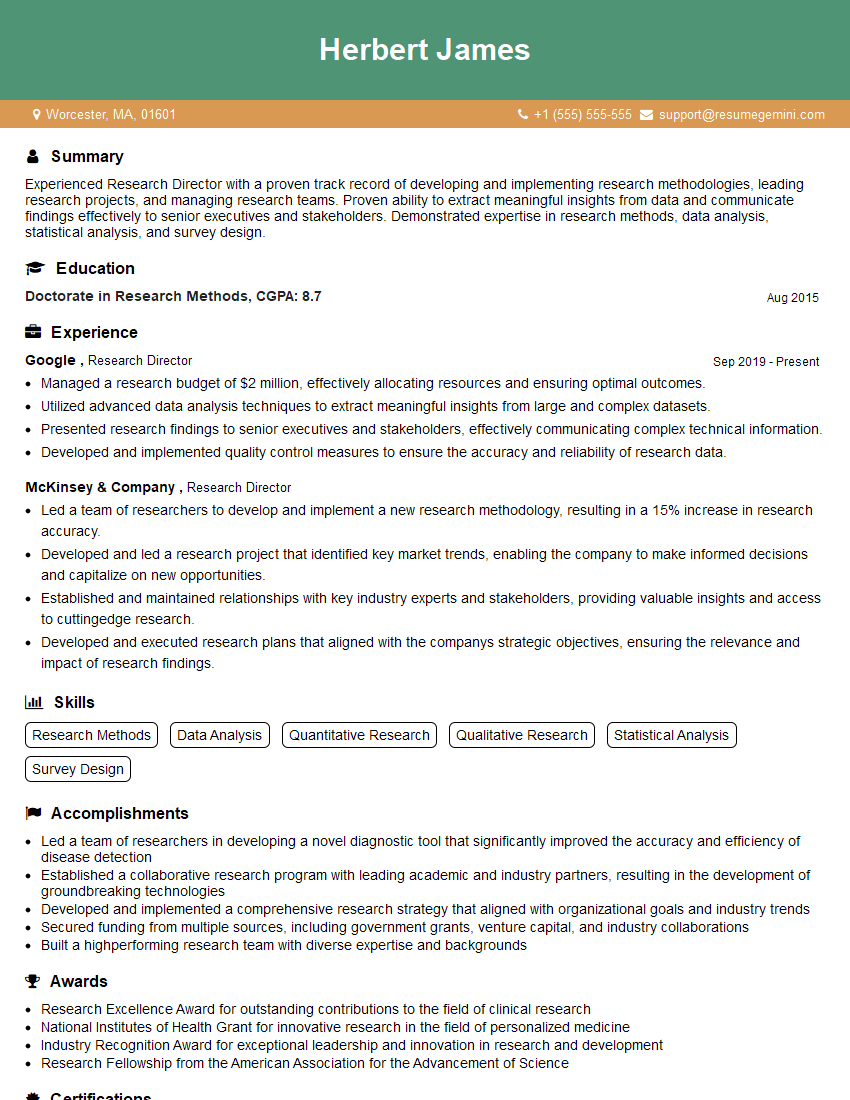
Research Director Resume Sample
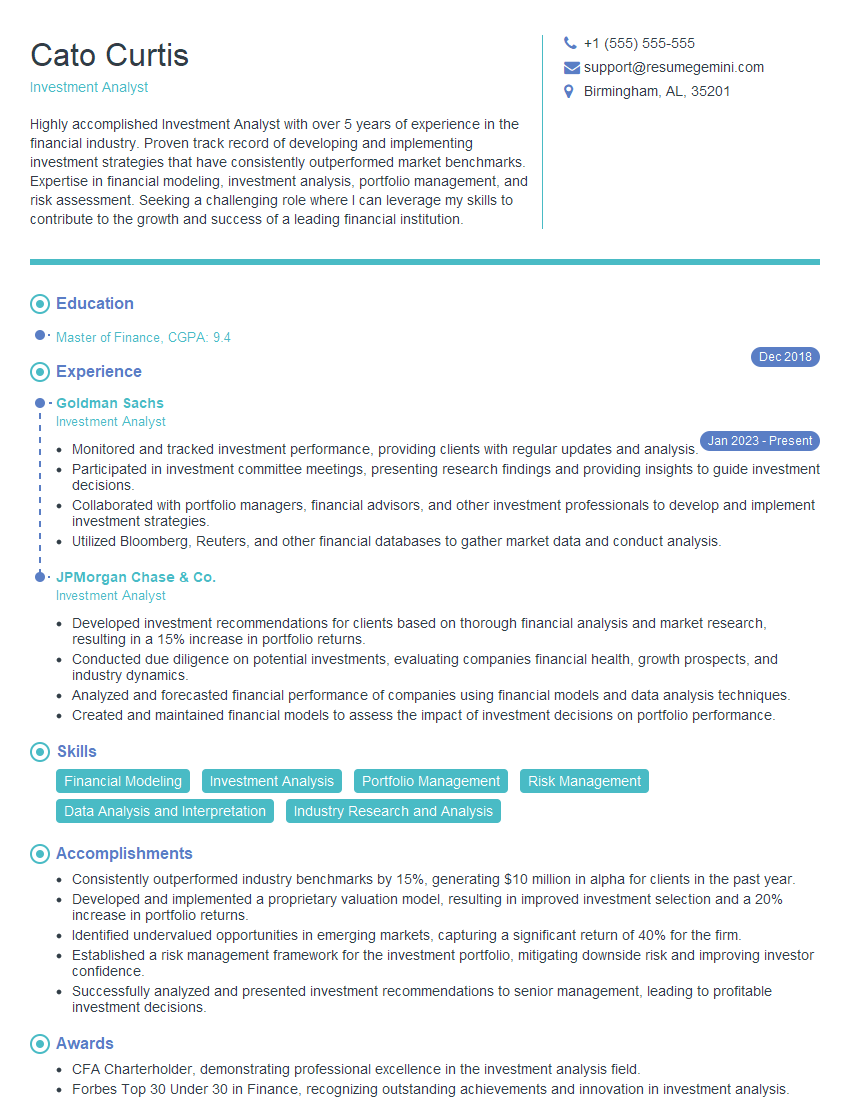
Investment Analyst Resume Sample
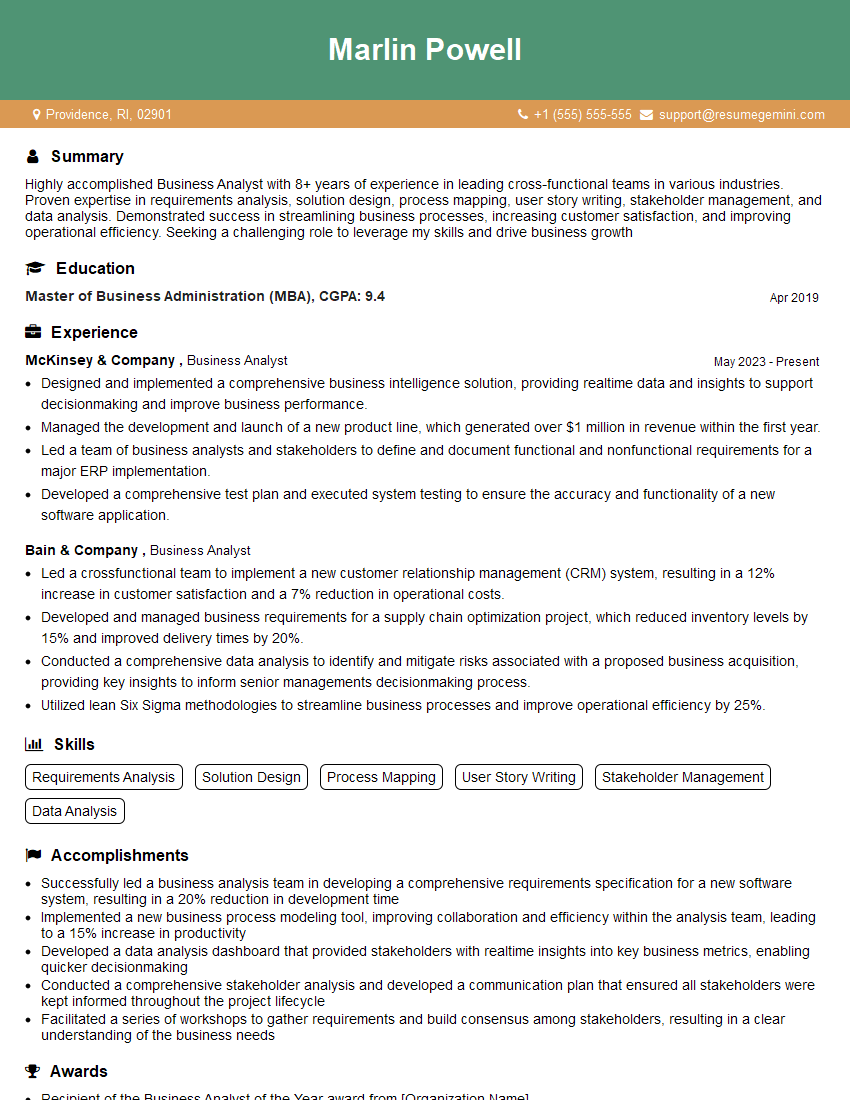
Business Analyst Resume Sample
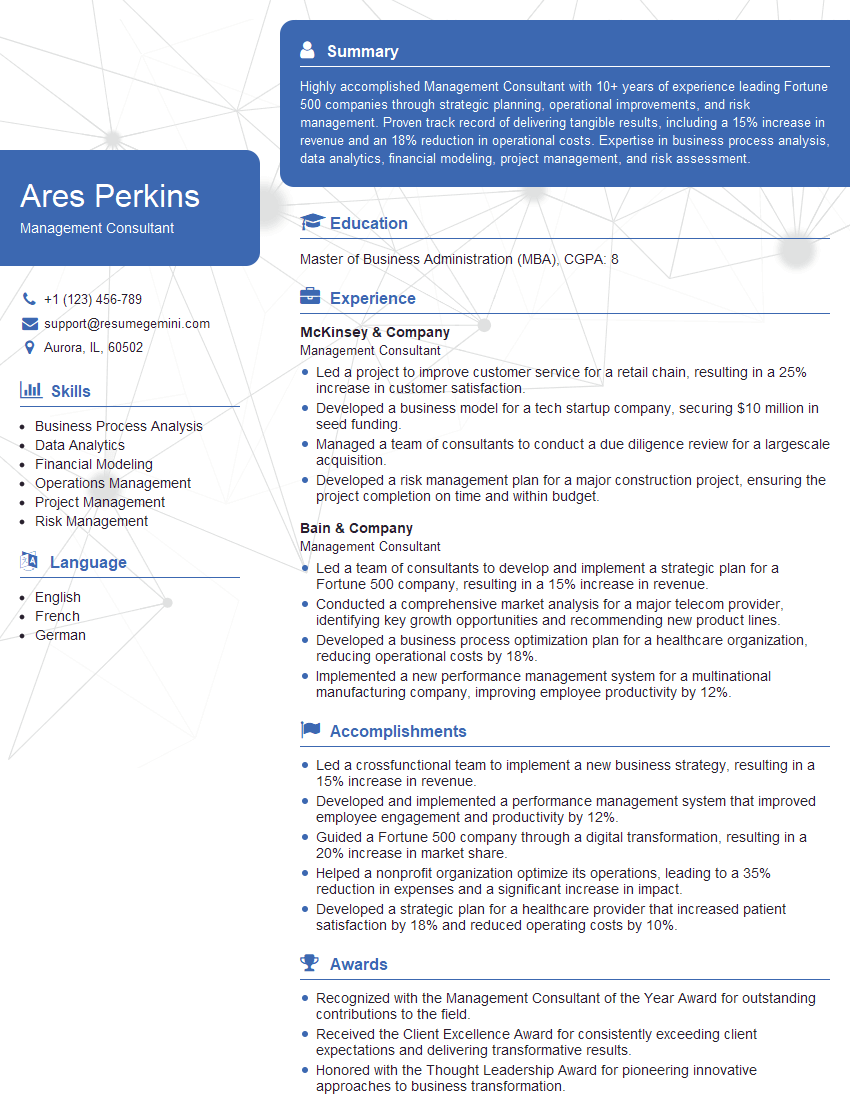
Management Consultant Resume Sample
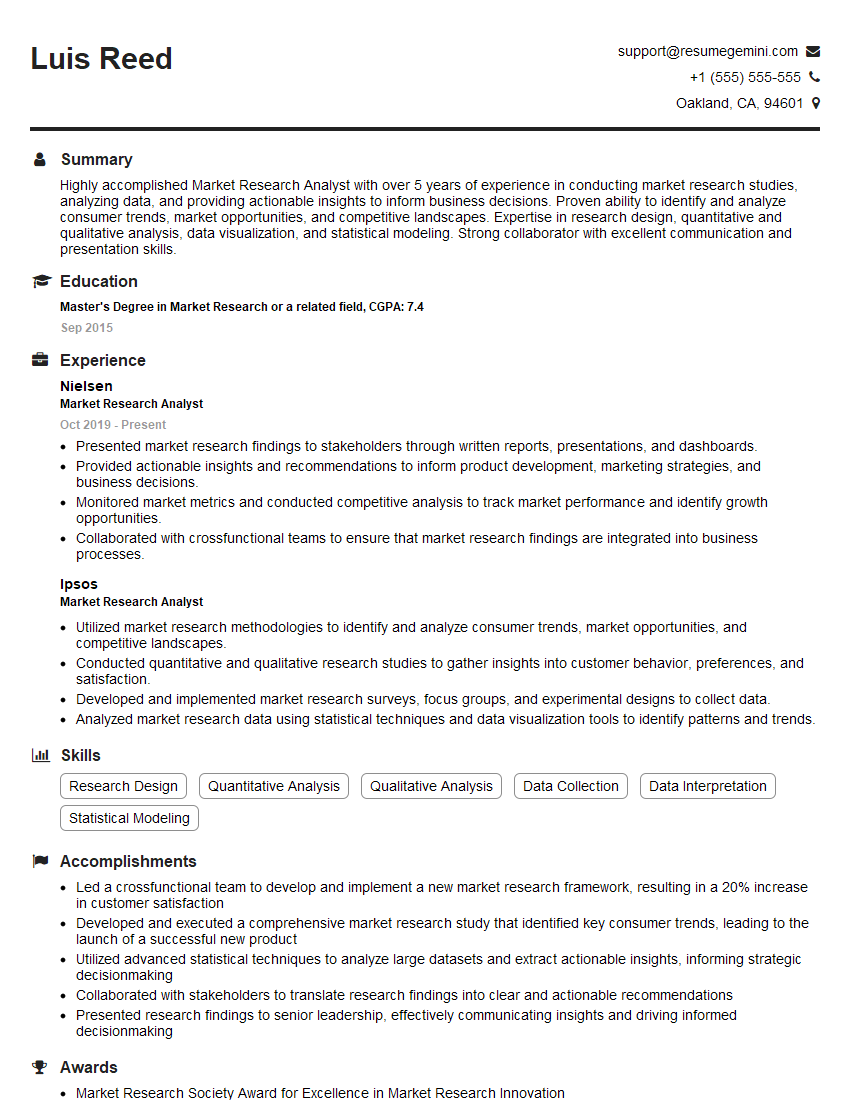
Market Research Analyst Resume Sample

Financial Analyst Resume Sample
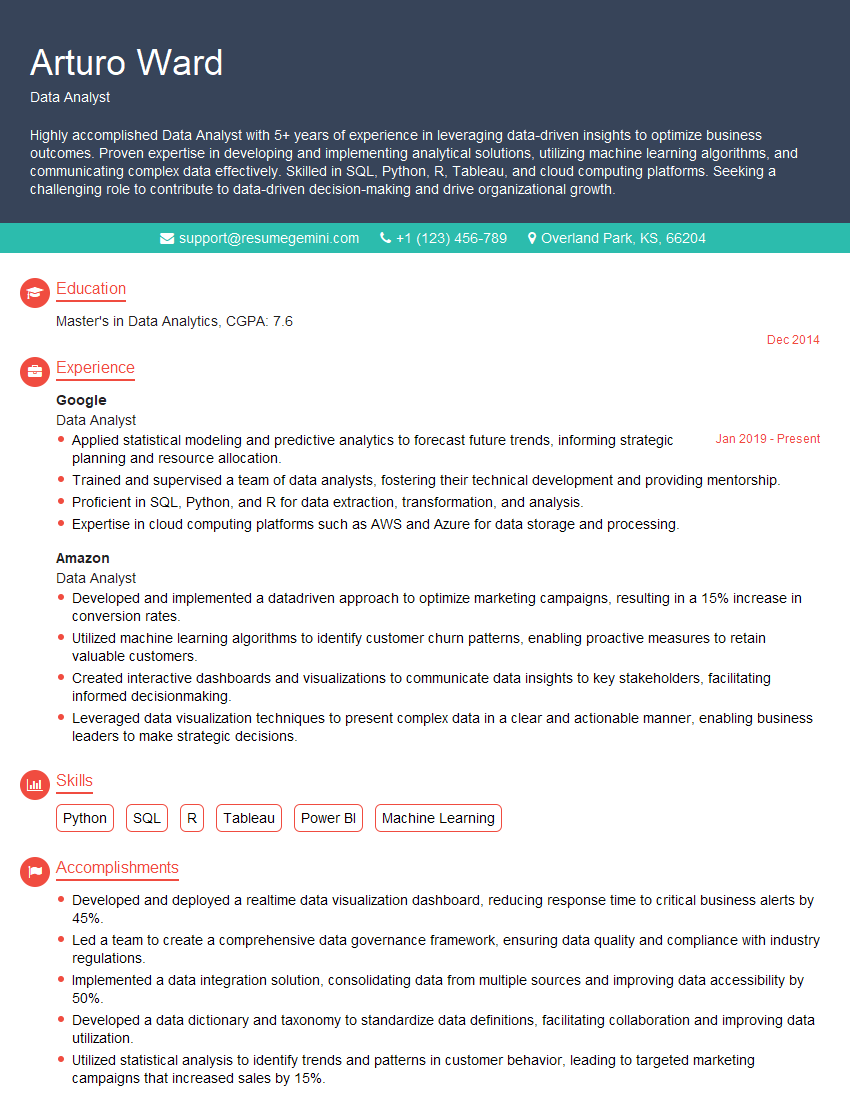
Data Analyst Resume Sample
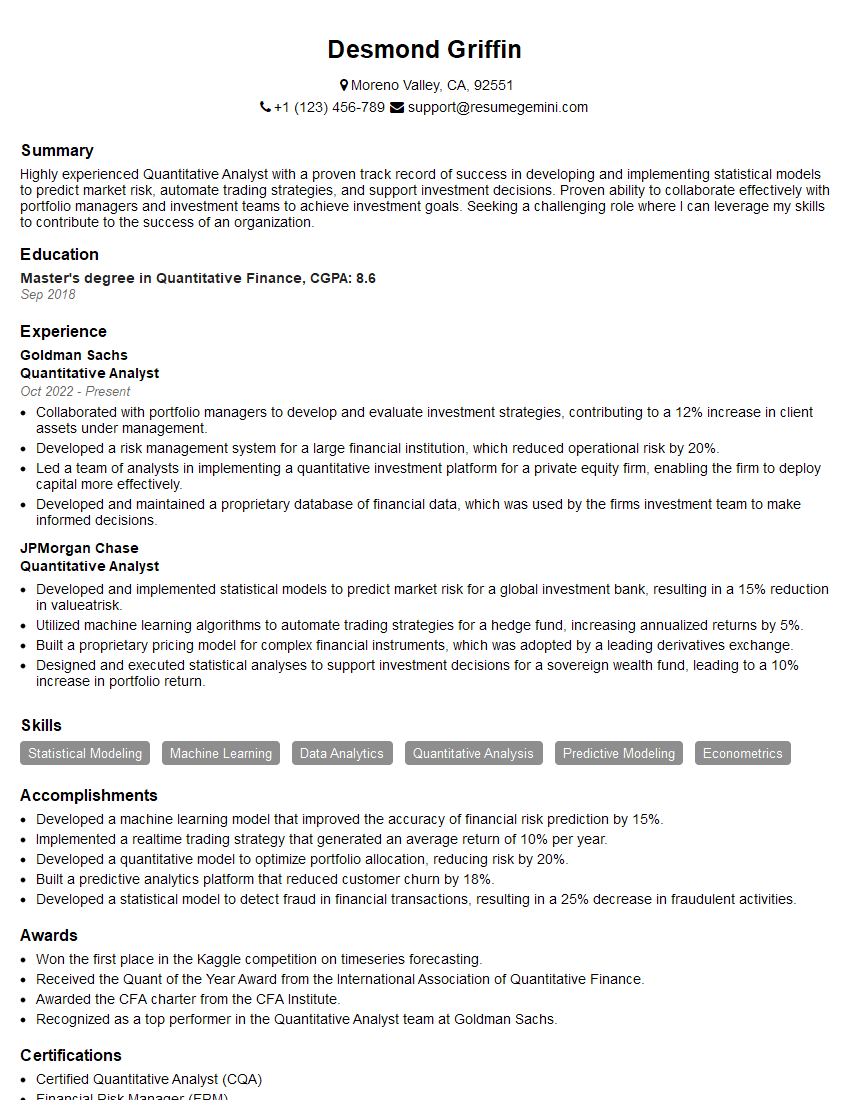
Quantitative Analyst Resume Sample
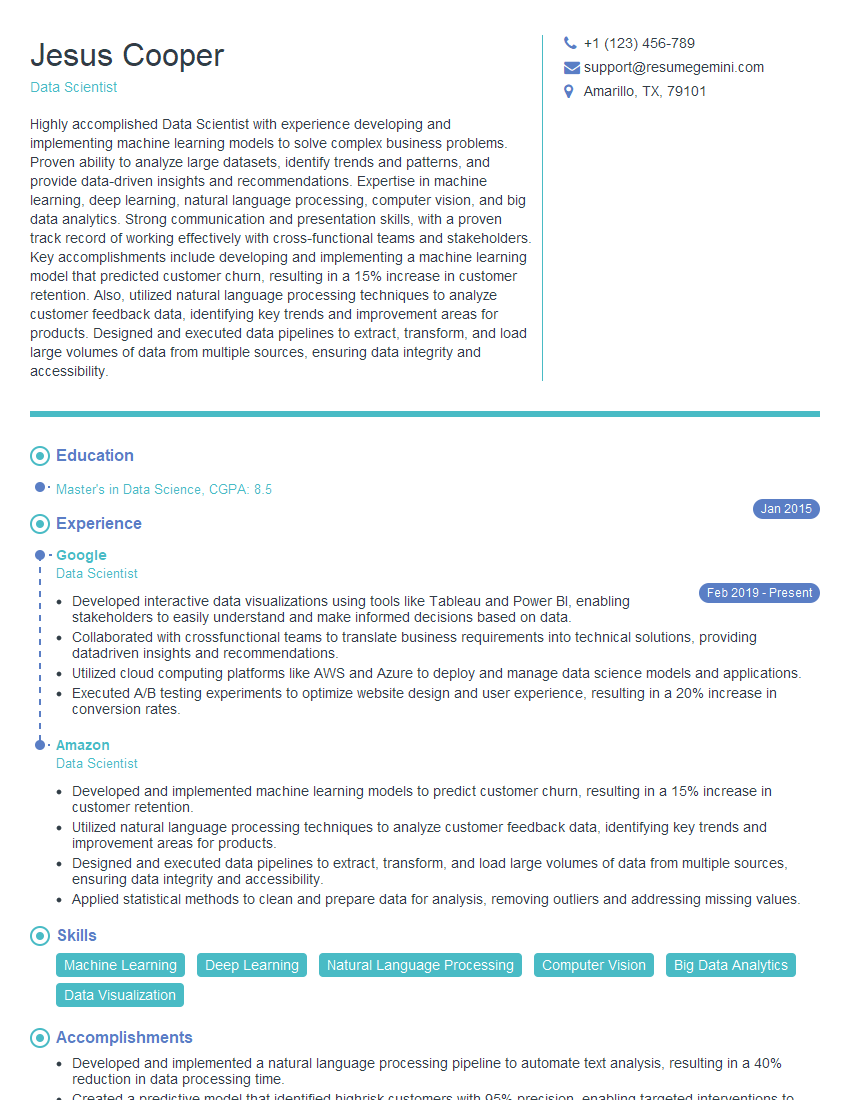
Data Scientist Resume Sample
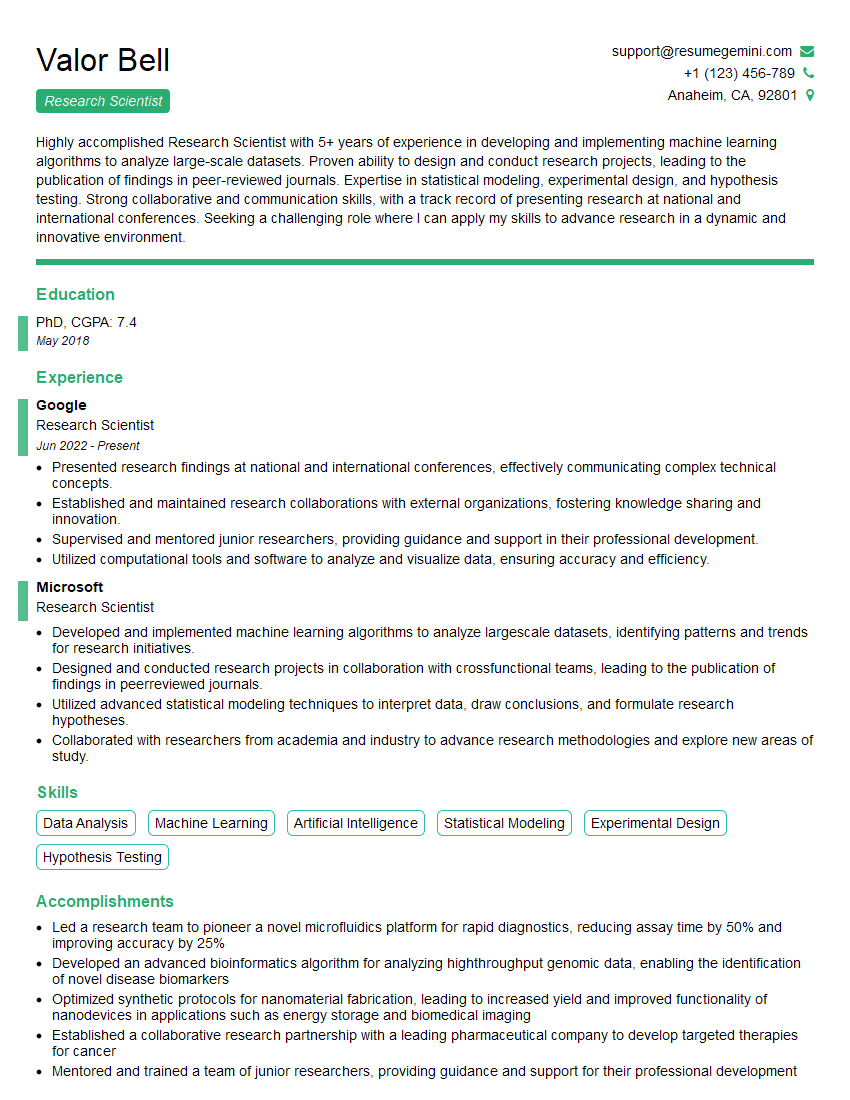
Research Scientist Resume Sample
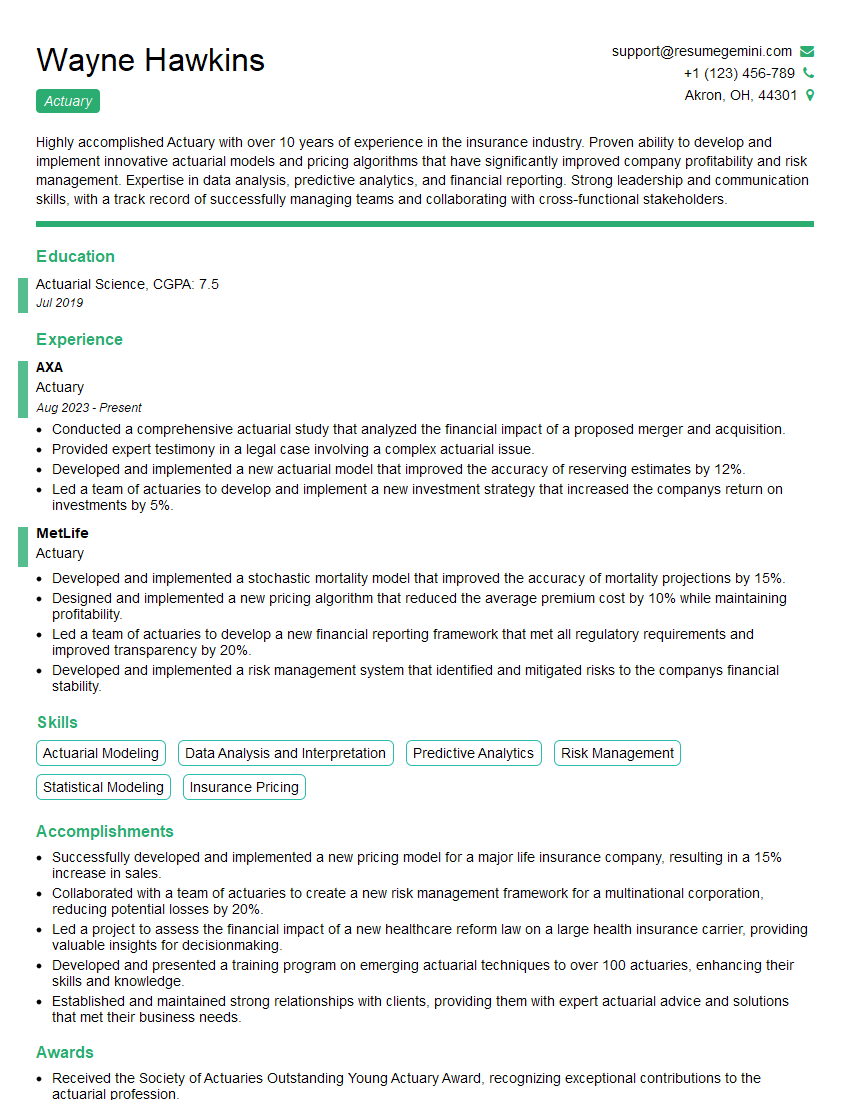
Actuary Resume Sample

Operations Research Analyst Resume Sample
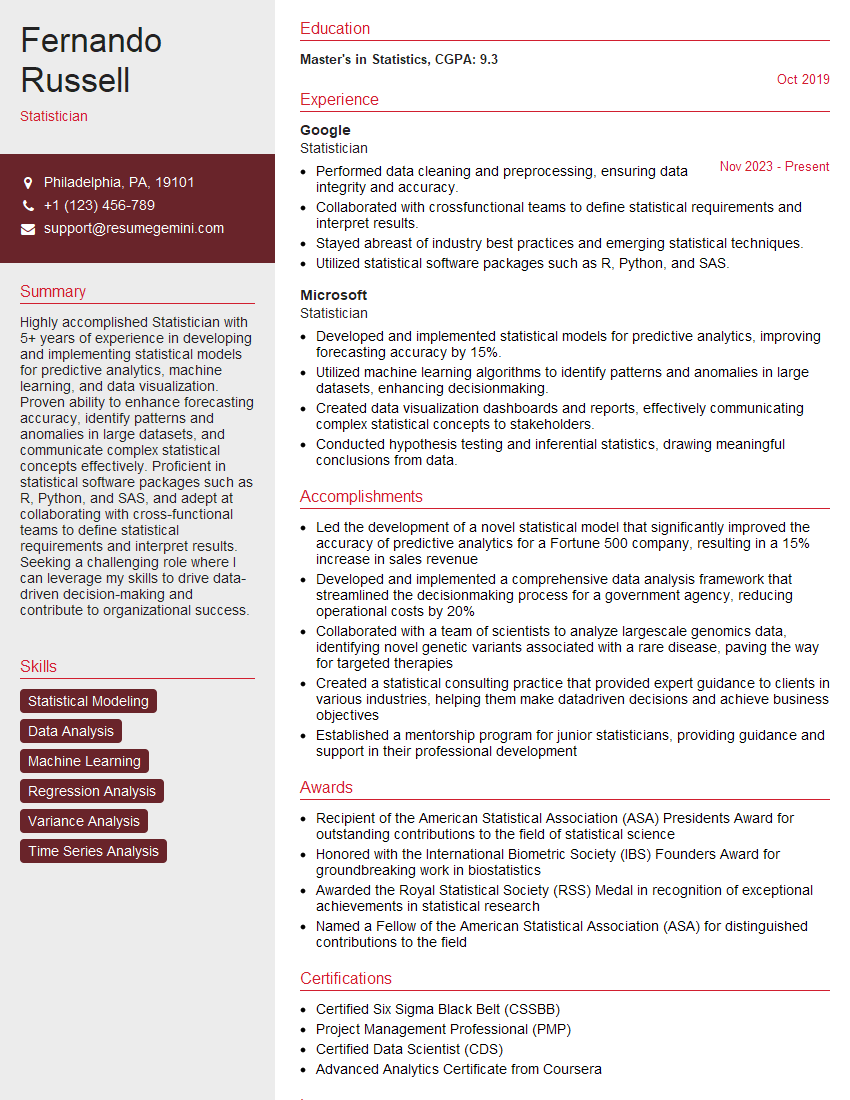
Statistician Resume Sample
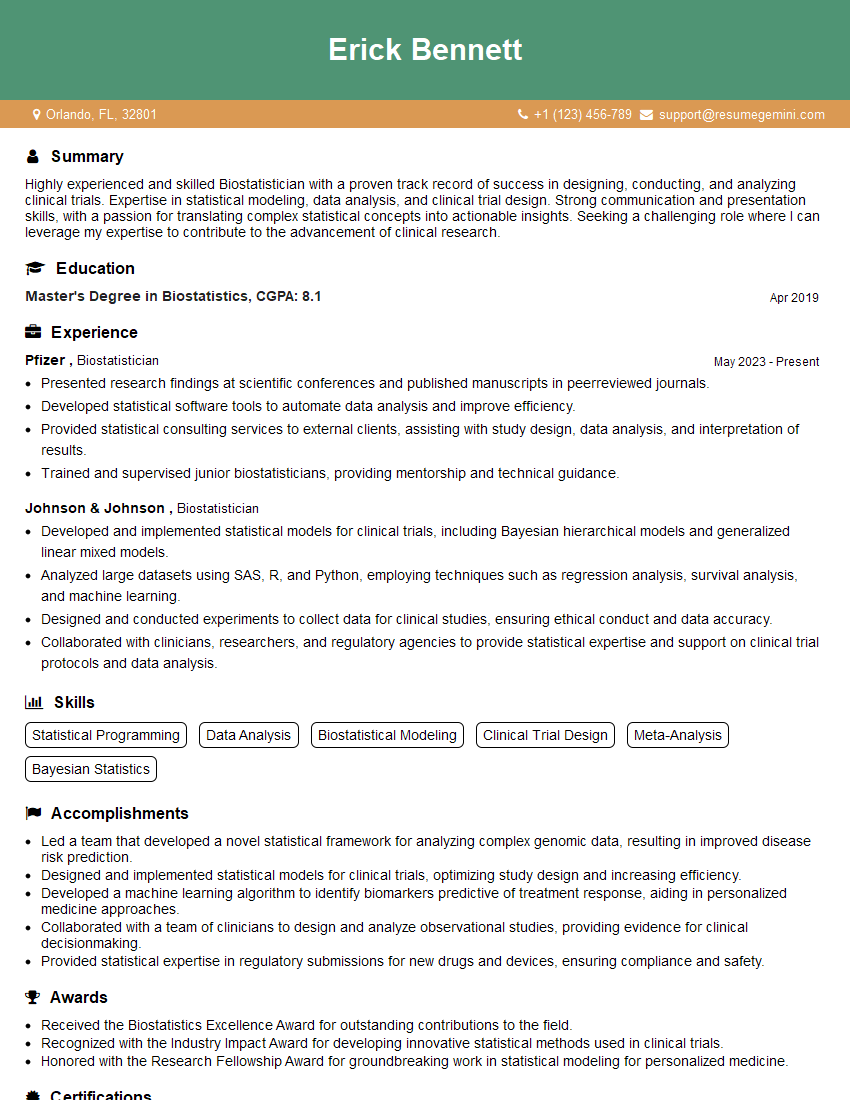
Biostatistician Resume Sample
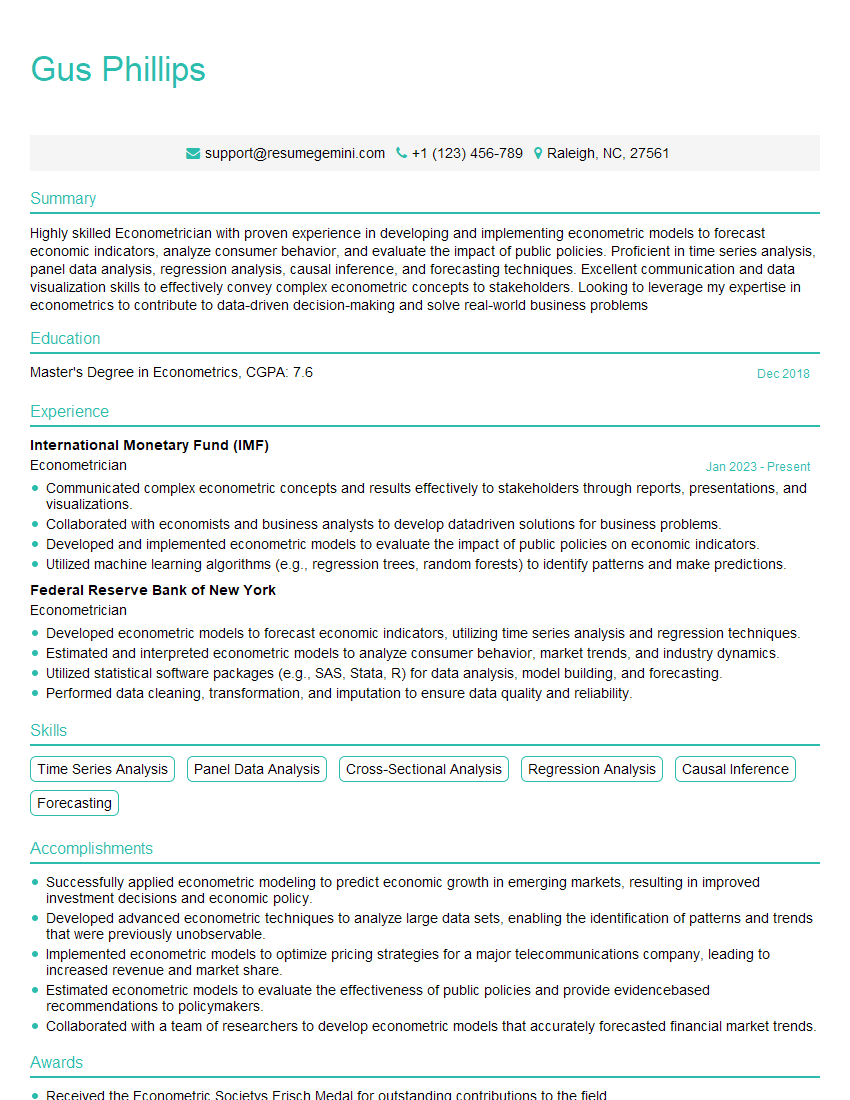
Econometrician Resume Sample

Survey Researcher Resume Sample
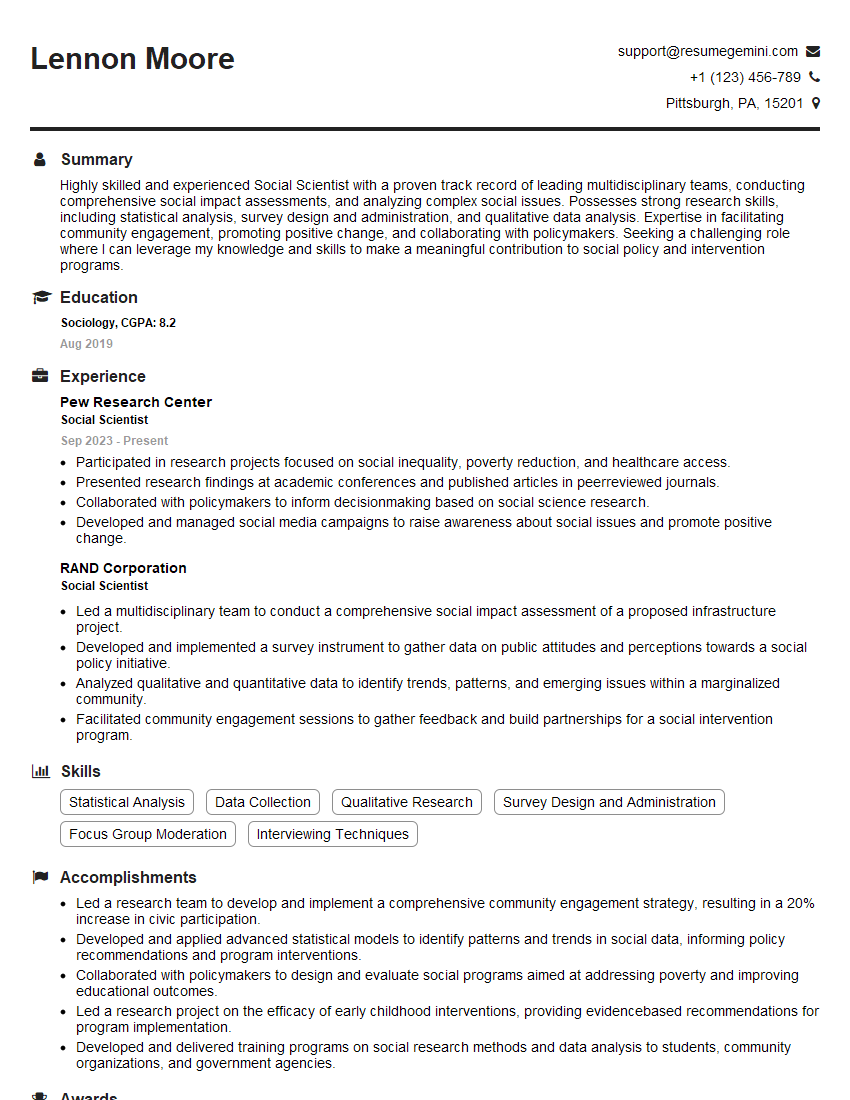
Social Scientist Resume Sample
- Research Director
- Investment Analyst
- Business Analyst
- Management Consultant
- Market Research Analyst
- Financial Analyst
- Data Analyst
- Quantitative Analyst
- Data Scientist
- Research Scientist
- Actuary
- Operations Research Analyst
- Statistician
- Biostatistician
- Econometrician
- Survey Researcher
- Social Scientist
Explore more articles
Users Rating of Our Blogs
Share Your Experience
We value your feedback! Please rate our content and share your thoughts (optional).
What Readers Say About Our Blog
Very informative content, great job.
good