Preparation is the key to success in any interview. In this post, we’ll explore crucial Fishing Tackle Assembly interview questions and equip you with strategies to craft impactful answers. Whether you’re a beginner or a pro, these tips will elevate your preparation.
Questions Asked in Fishing Tackle Assembly Interview
Q 1. What are the different types of fishing lines and their applications?
Fishing lines are the backbone of any fishing setup, and choosing the right one significantly impacts your success. Different lines cater to various fishing styles and target species. Here are some common types:
- Monofilament: This is the most common type, known for its flexibility, low visibility underwater, and relatively low cost. It stretches, which acts as a shock absorber, protecting your line and hook from sudden jerks. Great for beginners and general-purpose fishing.
- Fluorocarbon: A more expensive option, fluorocarbon is nearly invisible underwater, denser than water, and boasts higher abrasion resistance than monofilament. Ideal for clear water fishing and targeting wary fish that spook easily. It sinks faster too, beneficial when fishing deeper.
- Braided Line (Superline): Made from multiple interwoven fibers, braided line is incredibly strong for its diameter, offering minimal stretch. This results in better sensitivity, allowing you to feel even the slightest nibble. However, it lacks the shock absorption of monofilament, so it’s crucial to use a good quality reel with a smooth drag system. Excellent for casting long distances and fighting strong fish.
Applications: The choice of line depends on the fishing situation. Monofilament is versatile, fluorocarbon excels in clear water, and braided line shines in situations requiring maximum strength and sensitivity. For instance, I’d use braided line for bass fishing in open water where I need to make long casts, while fluorocarbon would be ideal for trout fishing in a clear mountain stream.
Q 2. Explain the process of attaching a hook to a fishing line.
Attaching a hook to your fishing line requires a secure knot that won’t slip under pressure. The most popular method is the improved clinch knot, known for its strength and reliability. Here’s how to tie it:
- Pass the line through the eye of the hook.
- Make 5-7 wraps around the line and hook shank.
- Pass the line through the loop near the hook eye.
- Moisten the knot and gently pull both ends to tighten.
- Trim any excess line.
Always double-check the knot before casting; a poorly tied knot can cost you a fish, or worse, damage your rod.
Other knots, like the Palomar knot, are equally effective and can be slightly easier for some people to learn, but mastering a few key knots is crucial for any angler.
Q 3. Describe the various types of fishing lures and their characteristics.
Fishing lures are artificial baits designed to entice fish. They come in a vast array of shapes, sizes, colors, and actions, each with specific characteristics:
- Spoons: Metal lures that flash and vibrate in the water, attracting fish with their movement and shimmer. Excellent for trolling or casting.
- Crankbaits: Plastic or wood lures with a diving lip, allowing them to run at different depths. The retrieve (how you reel it in) dictates their action. Versatile and effective for many species.
- Spinners: Lures with a rotating blade that creates flash and vibration, often paired with a small hook or trailer.
- Topwater lures: Designed to sit on the surface of the water, these create disturbances and commotion that predatory fish find irresistible. Examples include poppers and buzzbaits.
- Soft plastic lures: Highly versatile and customizable, these are made of soft, pliable material, often rigged on a jig head (a weighted hook).
Characteristics: Each lure’s characteristics dictate its effectiveness. For example, a small, brightly colored spoon is ideal for attracting smaller panfish, while a large, dark-colored crankbait might be better for catching larger bass in murky water. Understanding these characteristics is key to successful fishing.
Q 4. How do you ensure the correct knot strength when tying fishing lines?
Knot strength is paramount. A poorly tied knot will fail under pressure, leading to lost fish or broken tackle. To ensure correct knot strength:
- Use the right knot: Different knots are suited for different line types and applications. The improved clinch knot is a good all-around choice for monofilament and fluorocarbon, while the Albright knot is preferred for joining different line types.
- Proper technique: Follow the steps carefully and consistently. Tightening the knot too quickly or unevenly can weaken it.
- Wet the line: Moistening the line reduces friction and allows for a smoother, more secure knot.
- Practice: Practice tying your chosen knot until you can do it quickly and consistently. Regular practice builds muscle memory and helps you avoid mistakes.
- Test your knots: Before heading out fishing, test your knots by gently pulling on them to ensure they are secure. A simple test is usually enough to catch any issues.
Remember, a strong knot is only as good as the line itself. Using high-quality line contributes greatly to overall knot strength.
Q 5. What are the common problems encountered during fishing tackle assembly?
Common problems during fishing tackle assembly include:
- Knots failing: Improperly tied knots are the most frequent culprit. This could be due to poor technique, using the wrong knot for the line type, or not tightening it sufficiently.
- Line breakage: This can result from using damaged or low-quality line, overtightening knots, or snags on submerged objects.
- Hook problems: Bent or dull hooks are less effective at setting and holding fish. Poorly attached hooks can also lead to lost fish.
- Incorrect lure rigging: Improperly attaching lures can impact their action and effectiveness. A poorly attached spinner may not rotate correctly or a lure might not be balanced appropriately.
- Component incompatibility: Using mismatched components (e.g., a line too heavy for the rod) can lead to problems during casting or fighting a fish.
Many of these issues stem from rushing or lacking knowledge. Taking your time and focusing on proper technique is crucial for building durable, reliable tackle.
Q 6. How do you identify and address defects in fishing tackle components?
Identifying and addressing defects requires careful inspection. Here’s a systematic approach:
- Visual inspection: Carefully examine each component for any physical damage, such as cracks, abrasions, or deformities.
- Line inspection: Check for frays, nicks, or weakening in the line. Replace damaged line immediately.
- Knot inspection: Inspect all knots for proper tightness and security. Retype any suspect knots.
- Hook inspection: Examine hooks for bends, dull points, or rust. Sharpen or replace as needed.
- Component functionality: Test swivels, snap-swivels, and other components for proper function to ensure they are rotating freely and not binding.
Addressing defects is crucial for safety and effectiveness. Using damaged tackle can result in injuries, lost fish, and frustrating fishing experiences. It’s always better to err on the side of caution and replace faulty components.
Q 7. Explain the importance of quality control in fishing tackle assembly.
Quality control is non-negotiable in fishing tackle assembly. It ensures the safety and reliability of the equipment, directly impacting the angler’s experience and success. Here’s why it’s important:
- Safety: Faulty tackle can lead to serious injuries, especially with strong fish or sharp hooks. Regular inspection and quality control measures mitigate these risks.
- Reliability: High-quality tackle ensures reliable performance. This translates to fewer lost fish, smoother casting, and greater overall enjoyment.
- Performance: Proper assembly and inspection lead to improved performance. A well-assembled setup enhances sensitivity and effectiveness.
- Durability: Quality control contributes to the longevity of the tackle, reducing the need for frequent replacements and saving money in the long run.
- Reputation: For businesses, quality control is essential for maintaining a positive reputation and customer satisfaction.
In essence, quality control in fishing tackle assembly boils down to responsible craftsmanship. It’s a commitment to providing anglers with reliable, safe, and effective equipment for successful fishing adventures. My personal experience has repeatedly shown that a small amount of extra effort up front saves significantly more time and frustration in the long run.
Q 8. What safety measures should be followed during fishing tackle assembly?
Safety is paramount when assembling fishing tackle. Sharp hooks are the primary concern. Always handle them with extreme care, using hook keepers or blunt-nosed pliers to avoid accidental punctures. Wear cut-resistant gloves when working with braided lines or stiff wires, as these can easily cause cuts. Furthermore, maintain a clean and organized workspace to prevent tools from rolling away or causing trips. Eye protection is also recommended, especially when working with metal components or applying strong adhesives. Finally, always follow the manufacturer’s instructions for any specific tools or components to avoid injury or damage.
- Example: When attaching a hook to a leader, use a hook-tying tool or pliers to securely fasten the knot, protecting your fingers from the sharp point.
- Example: When working with strong line, use line cutters specifically designed for the purpose, rather than scissors, which can easily dull or break.
Q 9. What are the different types of fishing reels and their assembly process?
Fishing reels come in various types, each with its unique assembly process. The most common are spinning reels, baitcasting reels, and spincast reels.
- Spinning Reels: These are generally straightforward to assemble. They typically come pre-assembled, requiring only the spool to be loaded with line and the bail arm to be engaged.
- Baitcasting Reels: These reels involve more intricate assembly. Correct spool tension and brake settings are crucial for proper casting. The spool must be aligned correctly, and the braking system needs to be calibrated to prevent backlashes. Improper assembly can lead to tangled line and frustration.
- Spincast Reels: Simpler in design compared to baitcasting reels, these reels primarily require line loading and ensuring the line flows freely through the small hole in the casing.
Assembly Process (General): Most reel assemblies involve:
- Line Loading: Properly winding line onto the spool, ensuring it’s even and secure to prevent tangles.
- Spool Adjustment: Adjusting spool tension to control line release during casting (mostly for baitcasting and spinning reels).
- Brake Setting (Baitcasting): Carefully calibrating the braking system to manage line output and avoid backlashes.
- Handle Attachment: Securely attaching the reel handle.
Q 10. How do you assemble a fishing rod, including guides and reel seat?
Assembling a fishing rod involves inserting the rod guides (also called eyes) and securing the reel seat. The process usually begins with the guides. Each guide needs to be precisely aligned along the rod blank to ensure smooth line flow during casting. Incorrect alignment can cause line snags and reduce casting distance. This is typically achieved by sliding the guides into place, and securing with epoxy adhesive or specialized guide binding.
The reel seat is then attached towards the butt (handle) end of the rod. This part requires careful attention to ensure the reel sits securely and aligns correctly with the rod’s axis. Most reel seats utilize a screw-down mechanism to hold the reel in place. Incorrect tightening can damage the seat or the rod.
- Guide Insertion: Each guide is positioned carefully along the rod blank, ensuring the guide’s line alignment is correct and the guide feet (the part that grips the rod) are securely adhered.
- Epoxy Use: Epoxy is crucial to bonding guides permanently and protecting them from damage.
- Reel Seat Attachment: Tighten screws carefully and evenly to prevent damage.
Example: When inserting guides, the small line opening must face away from the tip of the rod to prevent the fishing line from catching.
Q 11. Describe your experience with different types of fishing tackle materials.
My experience encompasses a wide range of fishing tackle materials. Rod blanks are commonly made from graphite, fiberglass, or composite materials. Graphite offers lightweight strength and sensitivity, while fiberglass is more durable but slightly heavier. Composites blend the benefits of both. Reel bodies are often made of aluminum, graphite, or plastics, each with varying degrees of durability and weight. Fishing lines include monofilament (nylon), fluorocarbon (a more abrasion-resistant nylon), and braided lines (high-strength polyethylene fibers). Hooks are typically made of steel, often with different finishes for corrosion resistance. I’ve also worked with different types of guide materials—ceramic, aluminum oxide, and zirconium are common, influencing the smoothness of line flow.
Example: I’ve noticed that braided lines require more careful handling during assembly to prevent fraying or damage. Fluorocarbon lines, though more durable, tend to be more difficult to tie knots with.
Q 12. What is your experience with automated or semi-automated assembly processes?
While fully automated assembly of fishing tackle is not always feasible due to the precision and variability required, I have experience with semi-automated processes. These processes often involve machines for tasks like winding line onto spools or applying epoxy to guide wraps, increasing efficiency and consistency. However, critical steps like guide alignment and reel seat installation still require manual precision to ensure quality. I’m familiar with various automated systems used in the manufacturing of fishing tackle such as CNC machines for cutting and shaping components, automated winding machines, and robotic arms for precise placement of components.
Example: A semi-automated system might use a machine to wind line onto reels, while skilled workers would handle knot tying and other delicate manual steps.
Q 13. How do you maintain consistent quality throughout the assembly process?
Maintaining consistent quality involves a multi-faceted approach. Firstly, strict adherence to manufacturing specifications and quality control checks at each stage of assembly is essential. This includes regular inspections of components for defects before integration into the final product. Secondly, well-trained and skilled assembly personnel are crucial. Regular training and standardized procedures ensure uniformity. Thirdly, using quality tools and equipment is vital. Finally, regularly monitoring production output through statistical process control techniques allows for the identification of any trends or inconsistencies, allowing for timely corrective action.
Example: We use a color-coded system to identify different materials and sizes, minimizing errors during assembly.
Q 14. How do you handle discrepancies in materials or components?
Handling discrepancies requires a systematic approach. When discrepancies in materials or components arise, the first step is to isolate and identify the problem. This often involves thorough inspection of the affected components and tracing them back to their source. Depending on the severity of the issue, different actions are taken. Minor discrepancies might be addressed through adjustments to the assembly process or by replacing the faulty components. Major discrepancies require immediate investigation and corrective action, potentially halting production until the root cause is identified and rectified.
Example: If a batch of rods has inconsistently aligned guides, we would investigate the cause, whether it is machine malfunction, inconsistent epoxy application, or operator error. We would then adjust the process accordingly and potentially rework affected units.
Q 15. What is your understanding of fishing tackle industry standards and regulations?
Fishing tackle industry standards and regulations are crucial for ensuring product safety, performance, and consumer protection. These standards cover various aspects, from material composition and strength testing to labeling and packaging requirements. For example, line strength must be accurately labeled and meet specified test criteria. Similarly, hooks need to withstand certain forces without bending or breaking. Regulations often vary by country and region, adhering to bodies like ASTM International (for materials testing) and regional fishing regulatory agencies which might mandate specific safety features or restrict certain materials. Compliance is monitored through quality control checks at various stages of production, from raw material inspection to final product testing. Failure to meet these standards can lead to product recalls, legal issues, and damage to brand reputation. I’ve been deeply involved in ensuring our products meet or exceed all applicable standards and regulations throughout my career.
Career Expert Tips:
- Ace those interviews! Prepare effectively by reviewing the Top 50 Most Common Interview Questions on ResumeGemini.
- Navigate your job search with confidence! Explore a wide range of Career Tips on ResumeGemini. Learn about common challenges and recommendations to overcome them.
- Craft the perfect resume! Master the Art of Resume Writing with ResumeGemini’s guide. Showcase your unique qualifications and achievements effectively.
- Don’t miss out on holiday savings! Build your dream resume with ResumeGemini’s ATS optimized templates.
Q 16. Describe your experience troubleshooting assembly line issues.
Troubleshooting assembly line issues requires a systematic approach. I typically start by identifying the nature and extent of the problem – is it affecting a single unit, a batch, or the entire line? Is it a quality issue, a speed issue, or something else? For example, once, we experienced a significant increase in hook failures during the final product inspection. By meticulously tracking the affected components, we pinpointed a faulty batch of hooks from a specific supplier. Once the problem is identified, I implement corrective actions, which might involve adjusting equipment settings, retraining staff, replacing faulty components, or modifying the assembly process. For the hook issue, we promptly switched suppliers and implemented tighter quality checks on incoming materials. Through detailed root cause analysis and data-driven problem-solving, I can quickly resolve most issues, minimizing production downtime and ensuring high-quality output. Documenting these issues and their resolutions is crucial for preventing similar problems in the future.
Q 17. How do you ensure the efficiency and productivity of the assembly process?
Ensuring efficiency and productivity in tackle assembly involves optimizing every aspect of the process. This includes optimizing the workstation layout for smooth workflow, implementing lean manufacturing principles to eliminate waste, and investing in appropriate tools and technologies. For instance, we introduced automated spooling machines which drastically improved our line-winding speed and consistency compared to manual methods. Regular training for the assembly team is vital, focusing on ergonomics and best practices. This empowers them to work more efficiently while minimizing risk of injury. Furthermore, we actively monitor key performance indicators (KPIs), such as units produced per hour, defect rates, and material usage, to identify bottlenecks and areas for improvement. Continuous improvement initiatives, such as Kaizen events, help us identify and address issues proactively.
Q 18. How do you prioritize tasks and manage your time effectively in a fast-paced assembly environment?
In a fast-paced environment, effective task prioritization and time management are essential. I use a combination of techniques including prioritizing tasks based on urgency and importance using methods like Eisenhower Matrix (urgent/important), utilizing Kanban boards to visualize workflow, and setting realistic deadlines. I also employ time-blocking to allocate specific time slots for particular tasks, and regularly review my progress against planned objectives. Multitasking is avoided to maintain focus and prevent errors. Delegation of tasks where appropriate helps to distribute workload effectively. Furthermore, clear and consistent communication with the team helps maintain momentum and allows for adjustments as needed. Think of it like fishing itself – you need to prioritize the most promising spots and techniques to maximize your catch in a limited time frame.
Q 19. What are your preferred tools and techniques for efficient and quality assembly?
My preferred tools and techniques for efficient and quality assembly are a blend of traditional and modern methods. Precise hand tools like pliers, specialized knot-tying tools, and calibrated scales are indispensable for accurate and consistent work. For repetitive tasks, jigs and fixtures can significantly improve speed and precision. Moreover, using specialized tools, like automated line winders or crimping tools, enhances consistency and reduces human error. Beyond tools, employing standardized operating procedures, using visual aids (checklists, diagrams), and implementing quality control checks at every stage are paramount. Careful attention to detail, understanding material properties, and consistent use of best practices lead to a superior final product.
Q 20. How do you stay updated with the latest advancements in fishing tackle technology?
Staying updated in fishing tackle technology is crucial for competitiveness. I achieve this by attending industry trade shows and conferences, reading specialized publications (magazines, online journals), engaging with online forums and communities, and actively networking with other professionals. Following key industry players and manufacturers on social media and their websites provides insights into new materials, designs, and manufacturing processes. Furthermore, I actively participate in training sessions and workshops offered by suppliers and industry organizations. This commitment to continuous learning allows me to incorporate the latest advancements into our assembly processes and product development.
Q 21. Describe your experience working with different types of fishing knots.
My experience with fishing knots is extensive, encompassing a wide range of knots suited for various lines, lures, and applications. I am proficient in tying knots such as the Palomar knot (known for its strength and ease of tying), the improved clinch knot (a reliable all-purpose knot), the Albright knot (excellent for joining different diameter lines), and the blood knot (strong connection for similar diameter lines). Each knot has its strengths and weaknesses, and the choice depends on factors like line type, lure weight, and fishing conditions. My experience allows me to quickly and efficiently tie any knot, while ensuring a secure and reliable connection that can withstand the stresses of fishing. I’m not only adept at tying these knots myself, but I can also train and supervise others to do so efficiently and consistently.
Q 22. How do you inspect finished products for quality and functionality?
Inspecting finished fishing tackle involves a multi-step process ensuring both quality and functionality. It starts with a visual inspection, checking for any obvious flaws like scratches, dents, or inconsistencies in the finish. I then move to functionality tests. For rods, this involves checking the action (flex), ensuring guides are properly aligned and securely attached, and verifying the overall strength and integrity of the blank. For reels, I check the smoothness of the drag system, the proper functioning of the bail, and the gear ratio. I also test for any binding or stiffness in the mechanism. Finally, I conduct a simulated casting test to ensure the rod and reel work harmoniously. For example, I’ll look for any unexpected vibrations or poor line flow. This comprehensive approach guarantees the final product meets the highest standards and performs as intended.
Q 23. How would you handle a situation where a component is missing or defective?
Discovering a missing or defective component during assembly is a critical issue requiring immediate action. First, I thoroughly document the problem, including the specific component, the nature of the defect (if applicable), and the serial number of the affected unit. Then, I follow established procedures to replace the faulty part with a new one from our inventory. If the part isn’t readily available, I’ll immediately inform my supervisor to initiate the procurement process. In case of a missing component, we have a strict system for tracking and locating parts, and in case it cannot be traced, we can initiate a rework on the affected unit. Every step is documented to ensure traceability and accountability. This prompt response ensures minimal disruption to production and maintains the high-quality standards of our products.
Q 24. What is your experience with different types of fishing rod actions?
My experience encompasses a wide range of fishing rod actions, each tailored to specific fishing techniques and target species. I’m familiar with fast action rods, known for their stiff tips and powerful backbone, ideal for casting lures and fighting larger fish. These rods offer great sensitivity and accuracy. Conversely, I’m experienced with slow action rods, characterized by their softer, more flexible tips, perfect for finesse fishing and presentations requiring a gentler approach. Medium-fast and medium action rods are also well within my expertise, offering a balance between power and sensitivity. Understanding these different actions allows me to assemble rods optimally, ensuring the blank, guides, and reel seat match the intended purpose, creating a perfectly balanced tool for the angler.
Q 25. How do you ensure the proper alignment of guides on a fishing rod?
Proper guide alignment is crucial for optimal casting distance and accuracy, preventing line friction and breakage. I utilize several methods to ensure precision. First, I carefully measure and mark the guide placement according to the rod’s design specifications. Next, I use specialized guide placement tools which helps ensure proper spacing and alignment. Then I meticulously secure each guide with epoxy resin, ensuring a straight line along the rod’s blank and avoiding any binding or interference with the line. After the epoxy cures, I visually inspect the alignment and conduct a final line test to confirm smooth and flawless line passage. The importance of precise guide alignment cannot be overstated as it directly impacts the angler’s casting performance and fishing efficiency.
Q 26. What are your experience working with various fishing reel mechanisms?
I have extensive experience with various fishing reel mechanisms, including spinning reels, baitcasting reels, and conventional (level wind) reels. Each type has unique components and operational characteristics. For spinning reels, I understand the importance of smooth rotation, proper bail operation, and precise drag adjustment. For baitcasting reels, I’m proficient in adjusting magnetic braking and centrifugal braking systems to optimize casting performance, preventing backlash. With conventional reels, I focus on the precise level wind mechanism that ensures even line lay on the spool. Troubleshooting these mechanisms is a key part of my skillset, and I can readily identify and repair common issues like drag issues, gear slippage, or spool problems. My knowledge extends to understanding different gear ratios and their impacts on retrieve speed and power.
Q 27. How do you maintain a clean and organized workspace during assembly?
Maintaining a clean and organized workspace is paramount for efficient and error-free assembly. I utilize a 5S methodology, focusing on Sort, Set in Order, Shine, Standardize, and Sustain. This system ensures that all tools and components are properly sorted and stored in designated locations, readily accessible. My workbench is kept clean and free of clutter, reducing the risk of accidental damage or misplacement. This systematic approach improves my workflow, minimizes errors, and reduces the overall assembly time. A clean workspace is not only crucial for productivity but also contributes to a safer and more professional environment.
Q 28. What are your salary expectations for this role?
My salary expectations are commensurate with my experience and skills in fishing tackle assembly, as well as the specific requirements and compensation structure of this role. I’m confident that my expertise and proven track record make me a valuable asset, and I’m open to discussing a competitive salary range that reflects the market value and the responsibilities of this position. I’m also interested in discussing benefits and opportunities for professional development.
Key Topics to Learn for Fishing Tackle Assembly Interview
- Understanding Fishing Tackle Components: Learn the names, functions, and materials of various fishing tackle components, including hooks, lines, lures, reels, and rods. Be prepared to discuss the differences between various types and their appropriate applications.
- Assembly Processes and Techniques: Master the practical skills involved in assembling different types of fishing tackle. This includes knot tying (e.g., clinch knot, improved clinch knot, palomar knot), line spooling, lure attachment, and reel maintenance.
- Quality Control and Inspection: Understand the importance of quality control in fishing tackle assembly. Be able to describe methods for identifying defects, ensuring proper functionality, and maintaining high standards of craftsmanship.
- Safety Procedures and Regulations: Familiarize yourself with workplace safety regulations and procedures related to using machinery, handling sharp objects, and working with potentially hazardous materials.
- Troubleshooting and Problem-Solving: Develop your ability to identify and solve common problems encountered during the assembly process. This includes understanding the causes of defects and implementing corrective actions.
- Materials and their Properties: Gain knowledge of the different materials used in fishing tackle construction (e.g., various types of line, hook materials, rod blanks) and their respective strengths, weaknesses, and applications.
- Efficiency and Productivity: Understand techniques to maximize efficiency and productivity in an assembly line environment. Consider methods for optimizing workflow and minimizing waste.
Next Steps
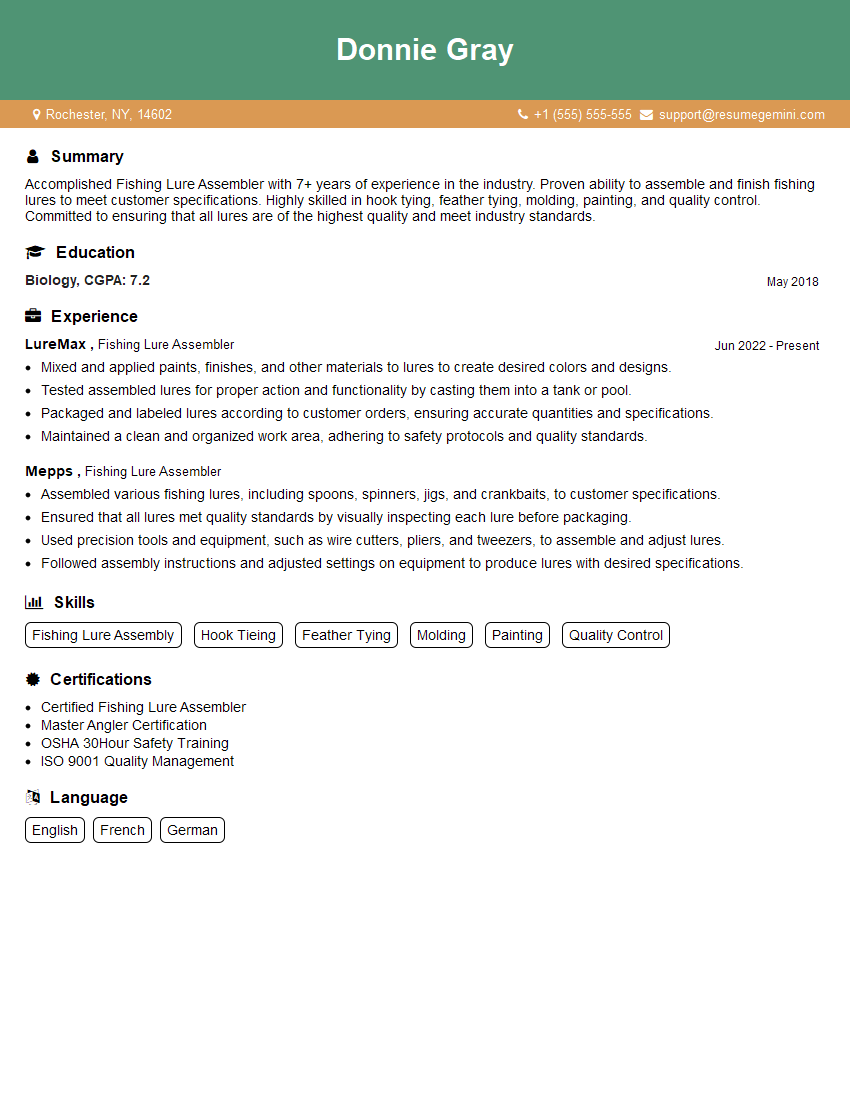
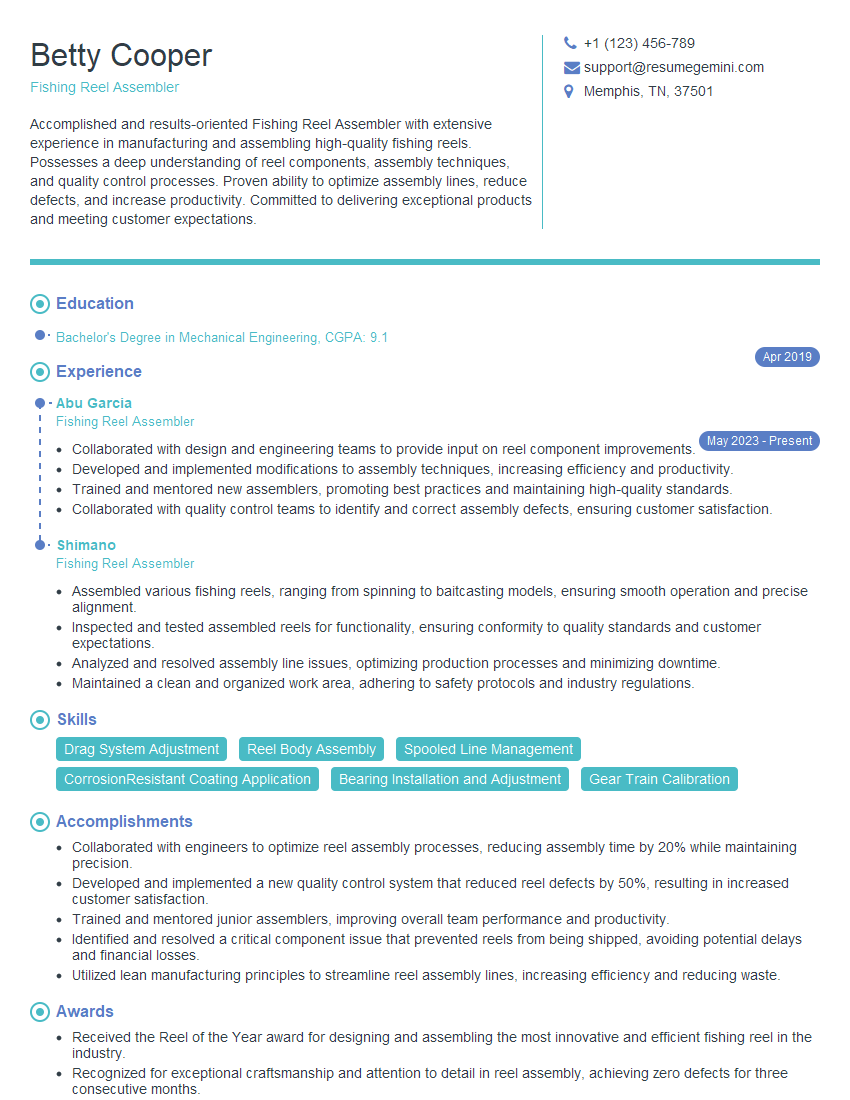
Mastering fishing tackle assembly opens doors to a rewarding career with opportunities for growth and specialization. A strong understanding of these skills is highly valued by employers. To significantly increase your chances of landing your dream job, invest time in creating an ATS-friendly resume that highlights your skills and experience effectively. ResumeGemini is a trusted resource to help you build a professional and impactful resume that stands out. Examples of resumes tailored to the Fishing Tackle Assembly field are available to help you get started.
Explore more articles
Users Rating of Our Blogs
Share Your Experience
We value your feedback! Please rate our content and share your thoughts (optional).
What Readers Say About Our Blog
Very informative content, great job.
good