Interviews are opportunities to demonstrate your expertise, and this guide is here to help you shine. Explore the essential Flame Heating Operations interview questions that employers frequently ask, paired with strategies for crafting responses that set you apart from the competition.
Questions Asked in Flame Heating Operations Interview
Q 1. Explain the different types of flame heating systems.
Flame heating systems are broadly categorized based on their application and design. Think of it like choosing the right tool for a job – a small torch for soldering is vastly different from a massive industrial furnace.
- Direct-fired systems: These systems directly expose the material to the flame. Examples include furnaces used in metalworking, where the heat directly impacts the metal. Think of a blacksmith’s forge – a classic example of direct-fired heating.
- Indirect-fired systems: Here, the heat is transferred indirectly to the material, often via a heat exchanger. This is common in industrial ovens used for baking or curing, where the material is heated through convection or radiation rather than direct flame contact.
- Radiant tube heaters: These systems utilize tubes filled with a glowing element that radiates heat, commonly used in industrial processes requiring uniform heating over a large area. Picture a long, tubular oven used in a food processing plant.
- Burner types: Within these broader categories, you’ll find variations in burner designs – atmospheric burners, premixed burners, and high-intensity burners. The choice depends on the required heat intensity, fuel type, and application.
The selection of a specific system depends heavily on factors like the material being heated, the required temperature, the heat transfer rate needed, and, critically, safety regulations and environmental considerations.
Q 2. Describe the safety procedures for operating flame heating equipment.
Safety is paramount in flame heating operations. A single mistake can lead to serious consequences, including fire, explosions, and burns. Strict adherence to established safety procedures is non-negotiable.
- Proper training: All operators must receive thorough training on the specific equipment they’re using and the inherent hazards associated with flame heating.
- Personal Protective Equipment (PPE): This includes flame-resistant clothing, gloves, eye protection, and respiratory protection, depending on the specific application. It’s crucial to remember that appropriate PPE is not optional but mandatory.
- Regular inspections: Equipment should undergo regular inspections for leaks, damaged components, and proper operation. Think of it like a car’s regular maintenance – catching issues early prevents larger problems.
- Emergency procedures: Everyone involved needs to know the location of fire extinguishers and emergency shut-off valves, and how to use them effectively. Drills are essential for reinforcing these critical procedures.
- Ventilation: Adequate ventilation is critical to remove combustion products and prevent the buildup of hazardous gases. This is particularly crucial in confined spaces.
- Lockout/Tagout procedures: Before performing any maintenance or repair, proper lockout/tagout procedures must be implemented to prevent accidental ignition.
Failing to implement these procedures can have serious consequences, from minor injuries to catastrophic events. Safety is a collective responsibility; each person involved plays a vital role.
Q 3. How do you troubleshoot a malfunctioning burner?
Troubleshooting a malfunctioning burner requires a systematic approach. Think of it like diagnosing a car problem: you need to identify the symptom and then trace the cause.
- Observe the flame: Is the flame stable? Is it the correct color? A yellow flame usually indicates incomplete combustion, while a blue flame usually suggests efficient combustion.
- Check fuel supply: Ensure the fuel supply is adequate and there are no blockages in the fuel lines. A low fuel pressure can lead to a weak flame or flameout.
- Inspect the air supply: Blocked air intakes or insufficient air flow can cause incomplete combustion. Make sure the air is flowing correctly.
- Examine the igniter: If the burner isn’t igniting, check the igniter for damage or malfunction.
- Check the burner components: Examine the burner nozzles, orifices, and other components for blockages or damage. Even a tiny obstruction can dramatically impact performance.
- Consult the manufacturer’s manual: The manual provides detailed troubleshooting guidance specific to your burner model. This is your bible for resolving common issues.
If the problem persists after these checks, seek professional assistance from a qualified technician. Don’t attempt repairs beyond your expertise – safety is always the priority.
Q 4. What are the common causes of incomplete combustion?
Incomplete combustion occurs when there isn’t enough oxygen to fully burn the fuel. It’s like trying to start a campfire with only a few twigs – it will smolder but not blaze.
- Insufficient air supply: The most common cause. This can be due to a blocked air intake, a faulty air control system, or simply not enough air for the amount of fuel being burned.
- Low fuel pressure: This can lead to a weak flame, which is more prone to incomplete combustion.
- Improper burner design or maintenance: A poorly designed or poorly maintained burner may not allow for proper mixing of air and fuel.
- Fuel contaminants: Impurities in the fuel can hinder efficient combustion.
Incomplete combustion produces carbon monoxide (CO), a deadly gas. Regular maintenance and proper operation are critical to prevent this hazard.
Q 5. How do you ensure efficient fuel utilization in flame heating?
Efficient fuel utilization is about getting the most heat output for the least amount of fuel. It’s like getting the best gas mileage for your car.
- Proper air-fuel ratio: Achieving the optimal air-fuel ratio is crucial. Too much air results in wasted energy, while too little air leads to incomplete combustion and reduced efficiency.
- Regular maintenance: Keep the burner clean and free of obstructions to ensure smooth operation and prevent fuel waste. Think of it like regularly cleaning your car’s air filter for better performance.
- Appropriate burner selection: Choosing the correct burner size and type for the application will maximize efficiency. This is where careful planning pays off.
- Insulation: Proper insulation reduces heat loss and improves efficiency. Think of a well-insulated house keeping heat inside.
- Control systems: Modern control systems enable precise regulation of the air-fuel ratio and flame intensity, further optimizing efficiency.
Efficient fuel utilization reduces operational costs, minimizes environmental impact, and improves overall system performance.
Q 6. What are the different types of fuels used in flame heating and their characteristics?
Many fuels are used in flame heating, each with unique properties.
- Natural gas: A clean-burning fuel widely used in industrial and commercial applications, offering high efficiency and relatively low emissions. Think of it as a readily available and versatile energy source.
- Propane: A versatile liquefied petroleum gas (LPG) suitable for portable and stationary applications. It’s often used where natural gas isn’t readily available.
- Fuel oil: Heavier fuels, including various grades of diesel and kerosene, are employed in high-temperature processes, especially in larger industrial settings. They’re often chosen for their high energy density.
- Hydrogen: Increasingly popular as a clean fuel source, hydrogen offers high efficiency but requires specialized equipment and safety precautions.
The choice of fuel depends on factors like cost, availability, environmental considerations, and the specific requirements of the heating application.
Q 7. Explain the importance of maintaining proper air-fuel ratios.
Maintaining the proper air-fuel ratio is critical for efficient and safe flame heating operations. It’s the foundation of successful combustion.
Think of it as a perfect recipe: Too little fuel, and the flame is weak and inefficient; too much fuel, and it produces excessive smoke and potentially dangerous conditions. Too little air, and you have incomplete combustion, generating harmful gases. Too much air wastes energy and doesn’t add to the heat produced.
The optimal ratio depends on the type of fuel being used. Modern burners frequently employ sophisticated control systems to precisely regulate the air-fuel mixture, constantly monitoring and adjusting to ensure optimal performance and safety. These systems help prevent inefficient combustion, minimize harmful emissions, and enhance overall safety.
Q 8. How do you monitor and control flame temperature?
Monitoring and controlling flame temperature in flame heating operations is crucial for safety, efficiency, and product quality. We employ a combination of methods, starting with direct measurement using thermocouples strategically placed within the heating zone. These thermocouples provide real-time feedback to a programmable logic controller (PLC) which is the brain of the system. The PLC continuously compares the measured temperature with the setpoint (desired temperature).
If the temperature deviates, the PLC adjusts the fuel-to-air ratio using control valves. For instance, if the temperature is too low, the PLC increases the fuel flow or adjusts the air intake to achieve a richer flame. Conversely, if the temperature is too high, it reduces the fuel flow or adjusts the air for a leaner flame. Visual inspection is also vital; experienced operators can identify changes in flame characteristics—like color or length—which may signal temperature variations. Sophisticated systems incorporate infrared (IR) thermometers for non-contact temperature measurement, providing additional safety and precision.
Example: In a heat treating furnace, a thermocouple placed near the workpiece ensures consistent heating for optimal material properties. The PLC manages fuel and air to maintain a precise temperature of 850°C, vital for achieving the desired hardness in the metal.
Q 9. Describe the process of preheating materials using flame heating.
Preheating materials using flame heating involves gradually increasing the material’s temperature to a desired level before further processing. This controlled heating process is essential to avoid thermal shock and ensure uniform heating. The process typically begins with setting the desired preheating temperature in the PLC. The operator then positions the material within the heating zone, making sure it’s evenly exposed to the flame. The heating rate is carefully controlled to prevent rapid temperature changes that can lead to cracking or warping.
Different materials require different preheating strategies. For example, thick metal sections might necessitate a slow preheating ramp to prevent internal stresses, while thinner materials can tolerate faster heating rates. The operator constantly monitors the material’s temperature, using thermocouples or pyrometers to ensure the process stays within the defined parameters. Once the desired temperature is reached, the preheating stage is complete, and the material is ready for the next processing step, such as welding, forming, or heat treating.
Example: Before welding two thick steel plates, they are preheated using a large flame heating system to approximately 300°C. This minimizes the temperature gradient during welding, reducing the risk of cracking in the weld zone.
Q 10. What are the different types of burners and their applications?
Various burner types exist, each suited for specific applications.
- High-velocity burners: These produce a concentrated, high-temperature flame, ideal for localized heating or applications requiring rapid heating rates. They are commonly used in metalworking and brazing.
- Low-velocity burners: Generate a softer, more diffused flame, suitable for applications where gentler heating is required, such as preheating large components or delicate materials. They’re safer for use on thinner or easily damaged materials.
- Surface combustion burners: In these burners, the flame is spread across the surface of a porous refractory material; allowing for even heat distribution over a wider area. They are often used in industrial furnaces and ovens.
- Air-atomizing burners: These burners mix fuel and air using a high-pressure air stream. Efficient and produce a precise, stable flame. Common in industrial applications.
- Pressure-atomizing burners: Utilize high-pressure fuel to atomize the fuel, resulting in a well-controlled flame, especially in situations requiring accurate temperature regulation.
The choice of burner depends on factors such as the material being heated, the desired temperature, the heating rate, and safety considerations.
Q 11. How do you perform routine maintenance on flame heating equipment?
Routine maintenance on flame heating equipment is crucial for safety, efficiency, and longevity. A comprehensive maintenance schedule should include:
- Regular inspection: Visual checks for leaks, corrosion, damage to refractory lining (in furnaces), and proper functioning of all components.
- Burner cleaning: Regular cleaning of burner nozzles and air intakes prevents clogging and ensures efficient combustion. This will prevent poor flame quality and potential hazards from incomplete combustion.
- Fuel line inspection: Checking for leaks, corrosion, and proper connections in fuel lines is essential for preventing fires and explosions. This also includes checking regulators and pressure gauges for proper operation and calibration.
- Control system checks: Verifying proper calibration of thermocouples, pressure sensors, and control valves. Ensuring that the PLC is functioning correctly and the safety interlocks are working as designed.
- Exhaust system inspection: Regular checks on the exhaust system to remove soot and ensure proper ventilation and prevent harmful gas buildup.
These checks are documented and performed as per a predefined schedule, typically daily, weekly, or monthly, depending on the frequency of use and criticality of the equipment.
Q 12. What are the potential hazards associated with flame heating operations?
Flame heating operations present various hazards, including:
- Burns: Direct contact with flames or hot surfaces can cause severe burns. Appropriate PPE, including heat-resistant gloves, clothing, and face shields, are crucial.
- Fire hazards: Leaks in fuel lines, ignition sources near flammable materials, and improper ventilation can lead to fires. Regular inspections and fire suppression systems are necessary.
- Explosions: Accumulation of flammable gases in enclosed spaces can cause explosions. Proper ventilation, leak detection systems, and adherence to safety regulations are essential.
- Toxic fumes: Incomplete combustion can produce harmful carbon monoxide and other toxic gases. Proper ventilation, gas detectors, and monitoring systems are needed.
- Thermal shock: Rapid heating or cooling of materials can cause cracking or damage. Controlled heating and preheating strategies help mitigate this risk.
Thorough risk assessment and implementation of appropriate safety measures are paramount for minimizing these hazards.
Q 13. How do you handle emergency situations involving flame heating equipment?
Emergency response to flame heating equipment incidents requires swift and decisive action.
Step 1: Immediate Action: The first priority is to shut off all fuel and air supplies to the burner immediately. This is typically done via emergency shutoff valves strategically located to allow for quick response. Any individuals in immediate danger must be evacuated from the area.
Step 2: Assess the situation: Once the immediate danger is mitigated, determine the extent of the incident. Assess any injuries and the extent of any damage to equipment or surroundings. This involves determining the cause of the incident.
Step 3: Call emergency services: Contact emergency services (fire department, ambulance) depending on the severity of the situation. Provide clear and concise information about the incident, location, and the type of equipment involved.
Step 4: Contain the incident: If appropriate, take measures to contain the incident. This may involve using fire extinguishers (if trained and the fire is small and contained), isolating affected areas, and preventing further damage.
Step 5: Post-incident investigation: After the emergency is over, a thorough investigation should be undertaken to identify the root cause of the incident, learn from mistakes and make changes to prevent similar events from happening.
Q 14. Describe your experience with different types of combustion controls.
My experience encompasses various combustion control systems, ranging from simple on-off controls to advanced PLC-based systems.
On-off controls: These are simple, cost-effective systems suitable for applications where precise temperature control isn’t critical. A thermostat simply turns the burner on or off based on a setpoint. While simpler, they are less efficient and lack the precision required for many applications.
Proportional-integral-derivative (PID) controls: These are more sophisticated systems offering superior temperature regulation. They continuously monitor the temperature and adjust the fuel and air flow to maintain the setpoint. PID controllers reduce temperature overshoot and oscillations while maintaining accuracy and efficiency. They are very commonly used in industrial heating applications.
PLC-based systems: Programmable Logic Controllers (PLCs) offer the highest level of control and flexibility. They allow for complex control algorithms, integration of multiple sensors, and advanced safety features. PLCs can be programmed to automatically manage preheating cycles, optimize fuel consumption, and implement safety interlocks. I’ve extensively used PLCs with PID control algorithms to achieve high-precision temperature control across many projects.
Example: In one project, a PLC controlled system automatically managed the preheating of large steel castings using a sophisticated PID algorithm that accounted for fluctuations in ambient temperature and material thermal mass, ensuring a consistent heating process.
Q 15. Explain the principles of heat transfer in flame heating.
Heat transfer in flame heating relies on three primary mechanisms: conduction, convection, and radiation. Conduction involves the direct transfer of heat through a material, like heat moving from a burner’s metal surface to the workpiece. Convection uses moving fluids (gases or liquids) to transfer heat; the hot combustion gases in a flame rising and transferring heat to a nearby object exemplify this. Finally, radiation involves the emission of electromagnetic waves from the flame, which are absorbed by the workpiece, heating it directly. Think of how you feel the warmth of a fire without directly touching it – that’s radiation. In industrial flame heating, often all three mechanisms work in concert to achieve the desired heating effect, with the relative importance of each depending on the specific application and setup. For example, in a furnace, radiation is dominant, while in direct-fired heating, convection plays a more significant role.
Career Expert Tips:
- Ace those interviews! Prepare effectively by reviewing the Top 50 Most Common Interview Questions on ResumeGemini.
- Navigate your job search with confidence! Explore a wide range of Career Tips on ResumeGemini. Learn about common challenges and recommendations to overcome them.
- Craft the perfect resume! Master the Art of Resume Writing with ResumeGemini’s guide. Showcase your unique qualifications and achievements effectively.
- Don’t miss out on holiday savings! Build your dream resume with ResumeGemini’s ATS optimized templates.
Q 16. How do you calculate the heat output of a burner?
Calculating the heat output of a burner is crucial for process optimization and safety. The most common method involves using the fuel’s calorific value (energy released per unit mass upon combustion) and the fuel consumption rate. For example, if a burner uses natural gas with a calorific value of 50 MJ/kg and consumes 1 kg/hour, its theoretical heat output would be 50 MJ/hour. However, this is only theoretical, as combustion efficiency is rarely 100%. Actual heat output is lower due to heat losses through radiation, convection to the surrounding environment, and incomplete combustion. To account for this, we use a combustion efficiency factor (usually determined experimentally), typically ranging from 80-95%. So, for an 85% efficient burner, the actual heat output would be 0.85 * 50 MJ/hour = 42.5 MJ/hour. More sophisticated calculations involving gas flow rate, pressure, and air-fuel ratio, often supplemented by direct measurements using thermal imaging or calorimetry, provide a more precise assessment in real-world applications.
Heat Output (Actual) = Heat Output (Theoretical) * Combustion EfficiencyQ 17. What are the environmental considerations associated with flame heating?
Environmental considerations associated with flame heating primarily center around greenhouse gas emissions, air pollution, and energy efficiency. The combustion process produces greenhouse gases like carbon dioxide (CO2) and contributes to climate change. Incomplete combustion leads to the release of pollutants such as carbon monoxide (CO), nitrogen oxides (NOx), and particulate matter (PM), harming air quality and human health. The energy efficiency of the flame heating process itself is also important; minimizing heat losses improves the overall environmental impact by reducing the amount of fuel needed to achieve a certain heating level. To mitigate these impacts, industries employ various strategies, including switching to cleaner fuels (e.g., natural gas instead of coal), employing advanced burner technologies that optimize combustion (reducing NOx and CO), installing emission control systems, and improving insulation to minimize heat loss. Regular monitoring and maintenance are also crucial to ensure the environmental impact remains as low as possible.
Q 18. How do you ensure compliance with safety regulations and industry standards?
Ensuring compliance with safety regulations and industry standards is paramount in flame heating operations. This involves adhering to codes and standards like those set by organizations such as OSHA (Occupational Safety and Health Administration) and local fire safety regulations. Specific requirements vary depending on location and the type of heating system used. Key aspects include proper installation and maintenance of flame detection systems (e.g., flame sensors, ionization probes, UV sensors), use of certified equipment, implementation of lockout/tagout procedures during maintenance, regular inspections to identify potential hazards, employee training on safe operating procedures, and emergency response plans. Regular audits and documentation are vital to demonstrate adherence to these standards. For instance, we always ensure that all our equipment is regularly serviced by certified technicians and that our personnel have up-to-date training on hazard identification, risk assessment and safe work practices.
Q 19. Describe your experience with troubleshooting flame stability issues.
Troubleshooting flame stability issues requires a systematic approach. Unstable flames, characterized by flickering, yellow tipping, or blowouts, often indicate problems with air-fuel mixing, gas pressure, or blockage within the burner system. My approach begins with visual inspection to identify obvious issues, followed by checking gas pressure and flow rate. I then examine the air intake for blockages or insufficient supply. If those are normal, I check the burner’s internal components, including the mixer, nozzle, and any filters. If the issue persists, I would investigate the control system, looking for faulty sensors or improper settings. One specific case I remember involved a fluctuating flame in a large industrial furnace. After careful investigation, we discovered a partially clogged air intake filter, causing insufficient air supply. Replacing the filter immediately stabilized the flame.
Q 20. Explain the role of flame sensors and safety interlocks.
Flame sensors and safety interlocks are critical safety components. Flame sensors (UV, infrared, or ionization) detect the presence of a flame and provide a signal to the control system. If the flame is extinguished, the sensor signals the interlock system to immediately shut off the fuel supply, preventing gas leaks and potential explosions. Safety interlocks are physical or electronic devices that prevent the operation of the burner unless specific conditions are met. For instance, an interlock might require the correct air-fuel ratio before allowing fuel ignition or only allow ignition if the ventilation system is operating properly. The combination of flame sensors and safety interlocks provides multiple layers of protection to safeguard against hazardous situations. They’re essential to ensure safe and reliable operation. Think of them as a redundant fail-safe mechanism, protecting against unforeseen problems and preventing dangerous scenarios.
Q 21. How do you interpret and respond to burner performance data?
Interpreting and responding to burner performance data is essential for maintaining optimal efficiency and safety. Data such as fuel consumption, heat output, air-fuel ratio, and exhaust gas composition provide valuable insights into the burner’s performance. Deviations from established baseline values could indicate potential issues. For example, higher-than-expected fuel consumption with reduced heat output points to reduced combustion efficiency, potentially due to fouling or malfunctioning components. High levels of carbon monoxide (CO) in the exhaust gases signal incomplete combustion, requiring immediate attention. This data is often monitored continuously and stored in a database for trend analysis and preventative maintenance. The data analysis helps in identifying underlying causes and implementing corrective actions, such as burner cleaning, adjustment of air-fuel ratio, or component replacement. This proactive approach minimizes downtime, maintains high efficiency, and ensures safe operation.
Q 22. Describe your experience with different types of industrial furnaces.
My experience encompasses a wide range of industrial furnaces, from the relatively simple batch furnaces used for heat treating smaller components to the highly complex continuous furnaces employed in the production of glass or metal sheets. I’ve worked extensively with:
- Reverberatory furnaces: These use indirect heating, reflecting heat from the furnace roof onto the charge. I’ve overseen their operation in a zinc smelting plant, understanding the critical role of maintaining optimal temperature gradients for efficient metal extraction.
- Rotary furnaces: These are ideal for continuous processing, excellent for applications like cement production or calcining minerals. My experience includes troubleshooting issues in a rotary kiln, resolving a problem with inconsistent product quality by adjusting the rotation speed and burner positioning.
- Electric furnaces: These offer precise temperature control and a cleaner heating process, frequently found in specialized heat treatments or in the production of high-quality alloys. I’ve managed a team responsible for the maintenance and operation of a large induction furnace used in steelmaking.
- Tunnel furnaces: These facilitate continuous processing of materials through a long, enclosed tunnel. I’ve overseen the optimization of a tunnel furnace used in the ceramic tile industry, leading to significant energy savings through improved heat recovery and zoning.
In each case, my focus has been on safe and efficient operation, maximizing output while adhering to strict environmental regulations.
Q 23. Explain the process of adjusting flame characteristics (e.g., oxidizing, reducing).
Adjusting flame characteristics hinges on controlling the fuel-to-oxidant ratio. An oxidizing flame has excess oxygen, leading to a shorter, bluer flame with a sharp, defined cone. It’s ideal for applications requiring complete combustion and minimizing the formation of soot or unburnt hydrocarbons. Conversely, a reducing flame has a deficiency of oxygen, creating a longer, softer, yellow flame with a luminous tip. This is useful for processes needing a carbon-rich atmosphere, like carburizing steel.
The adjustment is typically done by controlling the fuel and air flow rates. Think of it like controlling the gas and air mixture in a gas stove: more air produces a sharper, bluer flame, while less air creates a softer, yellower one.
For example, in a metalworking context, a reducing flame might be desired to protect the workpiece from oxidation during heating, whereas an oxidizing flame would be necessary to burn off impurities during a heat treatment process. This control is often achieved through sophisticated control systems that monitor parameters like oxygen levels and temperature to dynamically adjust the fuel and air supply.
Q 24. How do you ensure the longevity of flame heating equipment?
Ensuring the longevity of flame heating equipment demands a proactive approach focusing on regular maintenance, proper operation, and careful material selection. Key strategies include:
- Regular inspections: Visual inspections for wear and tear, along with checks of critical components like burners, refractory lining, and combustion chambers, are vital to catching potential problems early.
- Preventative maintenance: Scheduled maintenance, including burner cleaning, refractory repairs, and component replacements, is critical to avoid breakdowns and extend equipment life. This is comparable to regular servicing of a car engine – preventing small problems from becoming major ones.
- Proper operation: Following operating procedures diligently, avoiding thermal shock, and maintaining proper fuel-air ratios significantly reduces wear and tear.
- High-quality materials: Selecting high-quality refractory materials and components resistant to high temperatures and thermal cycling contributes significantly to equipment lifespan. This is analogous to using high-quality paints for a house – more resistant to damage and fading.
- Correct fuel selection: Using the appropriate fuel for the application and ensuring consistent fuel quality prevents premature equipment degradation.
Implementing a robust Computerized Maintenance Management System (CMMS) aids in scheduling, tracking, and analyzing maintenance data to optimize equipment longevity.
Q 25. Describe your experience with various types of combustion chambers.
My experience with combustion chambers includes various designs tailored to specific applications. I’ve worked with:
- Cyclone chambers: These use swirling combustion for efficient mixing of fuel and air, resulting in high temperatures and better heat transfer. I’ve utilized these in high-temperature applications like glass melting.
- Refractory-lined chambers: These utilize refractory materials to withstand high temperatures and reduce heat loss. My experience includes optimizing their design to minimize thermal shock and maximize lifespan in a cement kiln.
- Pre-mixed chambers: These provide superior combustion control and efficiency, leading to lower emissions. I’ve implemented these in several industrial settings to achieve more precise temperature regulation.
- Radiant tube chambers: These use radiant tubes to transfer heat to the workpiece, offering better temperature uniformity. These are common in heat treating applications and I’ve worked extensively in this area, improving their efficiency and durability.
The choice of combustion chamber design is crucial for optimizing efficiency, minimizing emissions, and ensuring product quality.
Q 26. How do you manage fuel consumption and optimize costs?
Managing fuel consumption and optimizing costs requires a multifaceted approach. Key strategies include:
- Optimizing combustion efficiency: Proper burner adjustment, maintaining optimal fuel-air ratios, and regular maintenance of combustion chambers contribute significantly to reducing fuel consumption. Think of it like getting the best gas mileage from your car – efficient operation is key.
- Implementing energy-saving technologies: Utilizing technologies such as heat recovery systems and waste heat boilers can recapture energy lost during the process, significantly reducing overall fuel consumption.
- Process optimization: Improving the overall process efficiency, including optimizing the heating cycle and minimizing downtime, directly translates into fuel savings.
- Regular monitoring and data analysis: Tracking fuel consumption, temperature profiles, and other operational parameters allows for identifying areas of improvement and implementing corrective actions.
- Fuel switching: Considering alternative, more cost-effective fuels while ensuring compatibility with the equipment may be an option. Careful assessment and planning are necessary.
Using data analytics to visualize energy usage patterns allows informed decision-making and implementation of energy saving measures. For example, I once implemented a system that monitored the temperature fluctuations in a heat treatment process, leading to 15% reduction in fuel usage by adjusting the heating schedule.
Q 27. Explain the importance of regular inspections and preventative maintenance.
Regular inspections and preventative maintenance are paramount for safety, efficiency, and longevity of flame heating operations. Neglecting these can lead to equipment failures, safety hazards, and significant production downtime.
Inspections cover visual checks of all components, including burners, refractory linings, control systems, and safety devices. They help detect wear and tear, corrosion, leaks, and other potential issues before they escalate into major problems.
Preventative maintenance involves scheduled activities such as cleaning burners, replacing worn parts, checking and calibrating safety systems, and performing refractory repairs. This keeps the equipment operating at peak performance, reducing the risk of unexpected breakdowns and improving overall efficiency. Think of it as a preventative health checkup for your equipment – early detection is critical.
A well-structured maintenance schedule, coupled with detailed records and analysis of maintenance data, provides invaluable insights into equipment performance, allowing for proactive interventions and further optimization of operations. This proactive approach minimizes costly repairs and ensures a safe working environment.
Key Topics to Learn for Flame Heating Operations Interview
- Fundamentals of Combustion: Understanding stoichiometry, fuel-air ratios, and the impact of different fuel types on flame characteristics.
- Flame Safety and Control Systems: Practical knowledge of safety protocols, emergency shutdown procedures, and the operation of various control systems (e.g., PLC, sensors).
- Heat Transfer Mechanisms: Comprehending conduction, convection, and radiation in the context of flame heating processes and their efficiency.
- Types of Flame Heating Equipment: Familiarity with different types of burners, furnaces, and heating systems used in industrial applications.
- Process Optimization and Efficiency: Understanding how to optimize flame heating processes for maximum efficiency, minimizing fuel consumption, and reducing emissions.
- Troubleshooting and Maintenance: Practical experience in identifying and resolving common issues related to flame heating equipment, including preventative maintenance procedures.
- Environmental Regulations and Compliance: Knowledge of relevant environmental regulations and best practices for minimizing the environmental impact of flame heating operations.
- Data Analysis and Interpretation: Ability to analyze process data to identify trends, troubleshoot problems, and optimize performance.
Next Steps
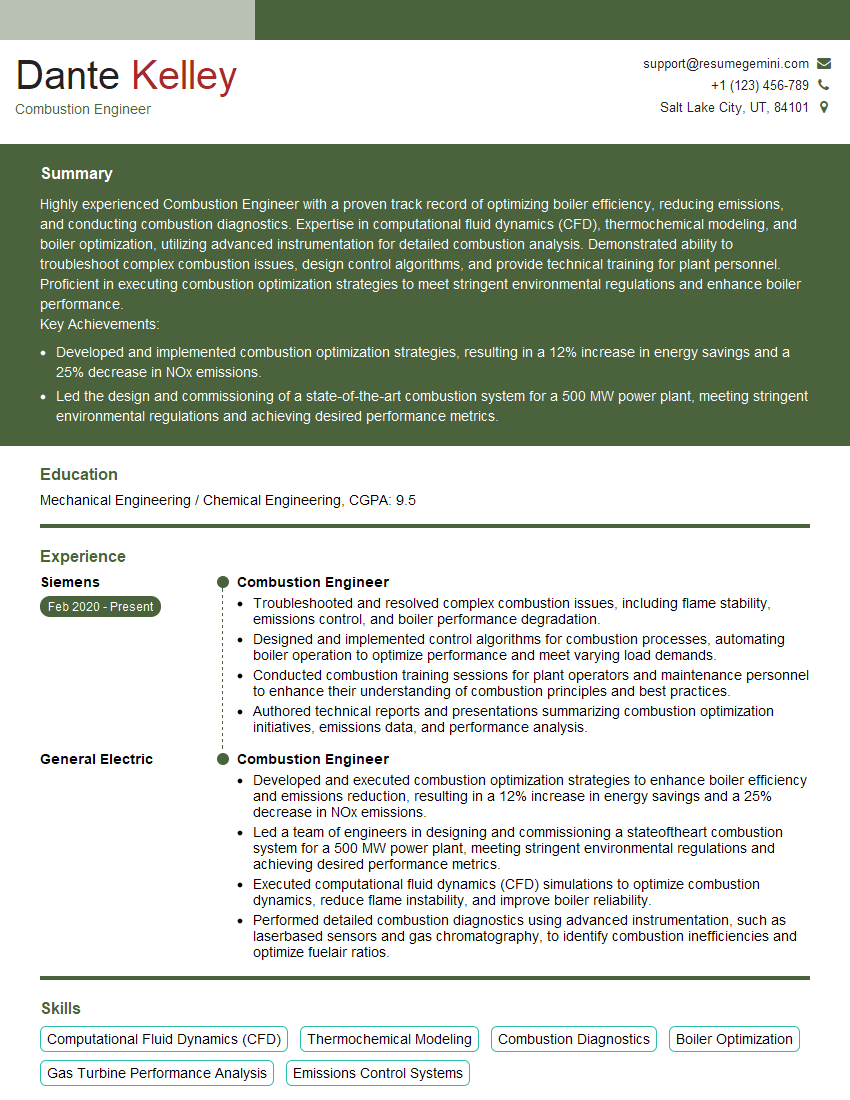
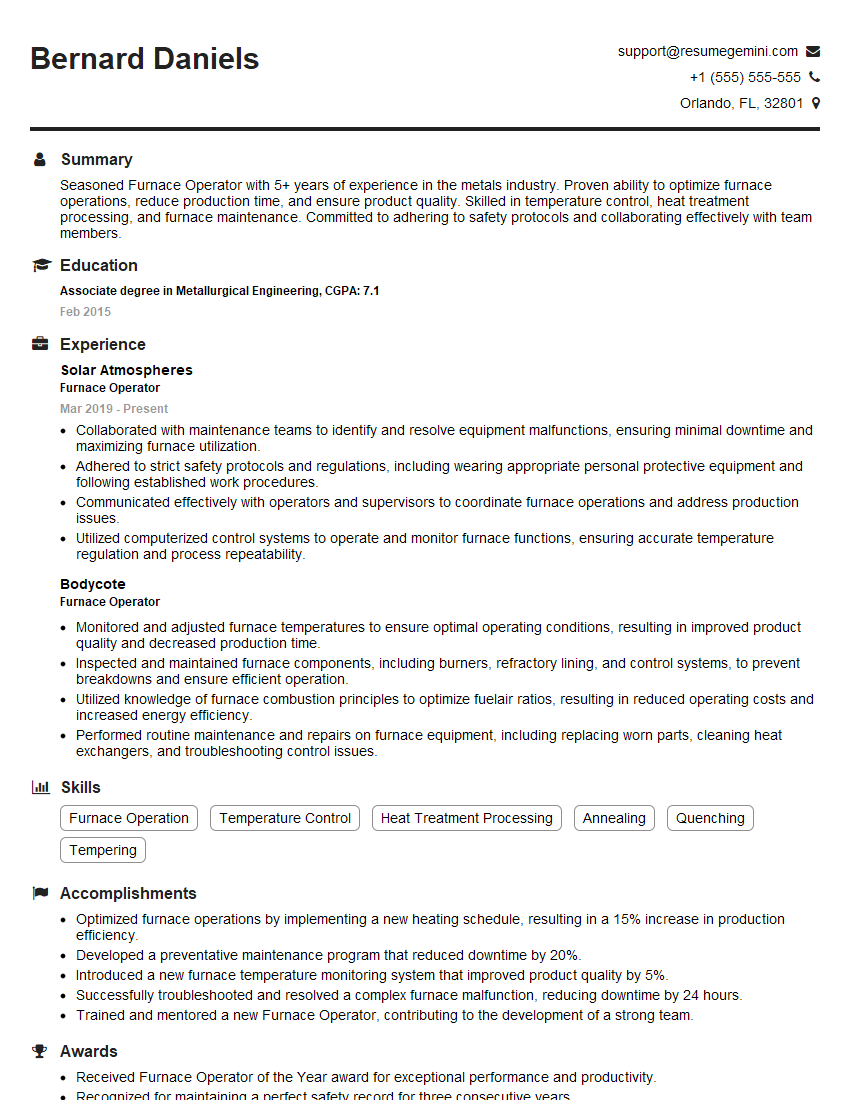
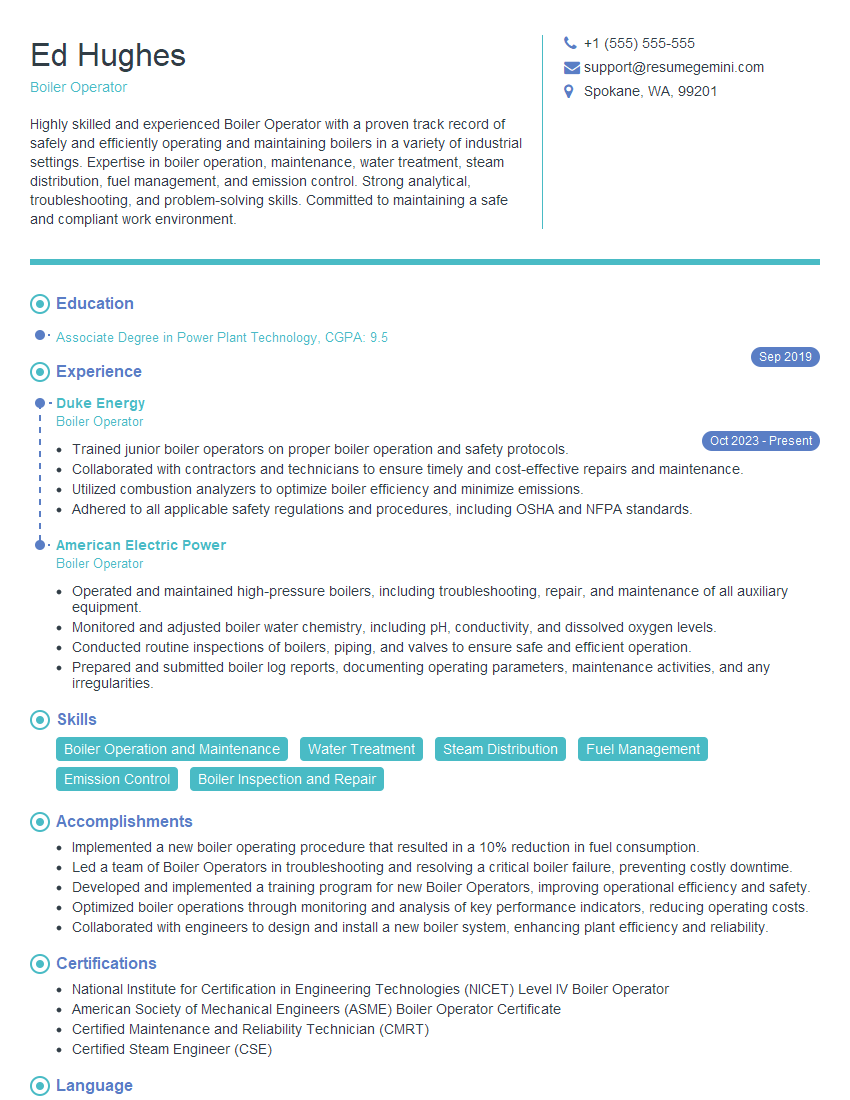
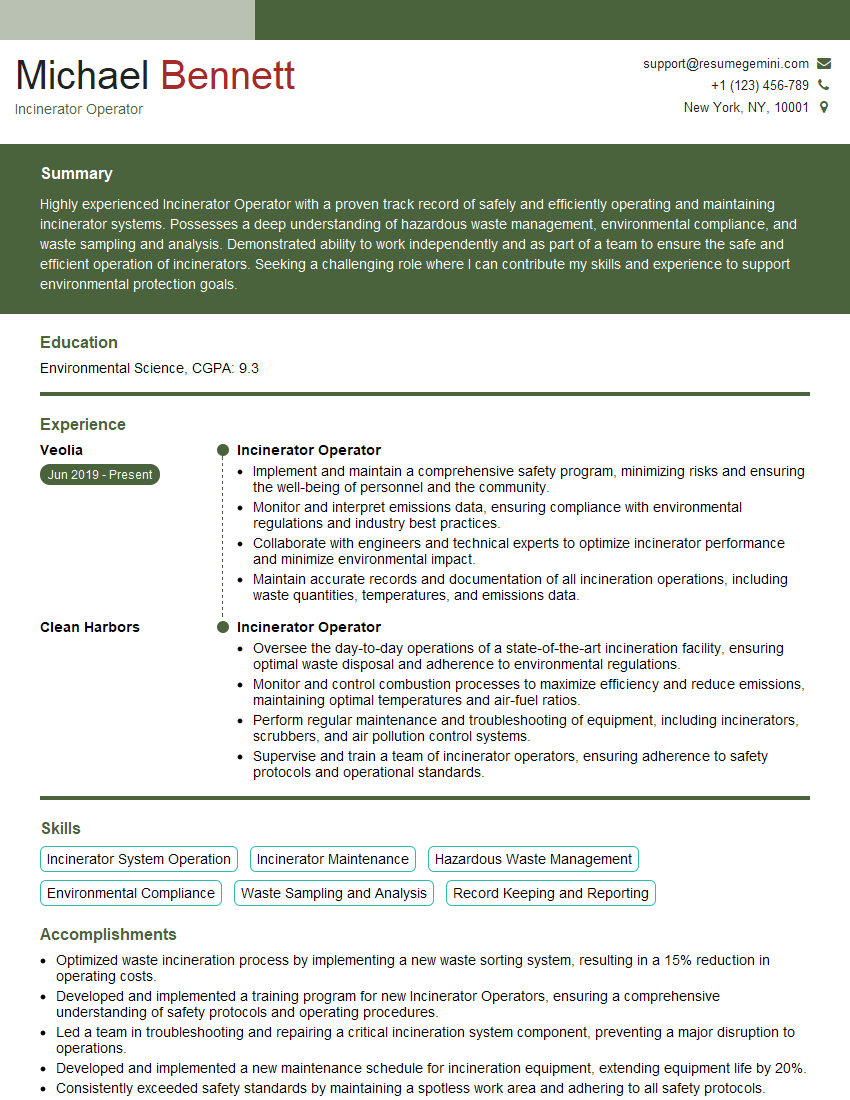
Mastering Flame Heating Operations opens doors to exciting career opportunities in a high-demand field, offering excellent growth potential and competitive salaries. To maximize your chances of landing your dream job, creating a strong, ATS-friendly resume is crucial. ResumeGemini can help you build a professional resume that highlights your skills and experience effectively. We provide examples of resumes tailored specifically to Flame Heating Operations to give you a head start. Take advantage of this valuable resource and present yourself as the ideal candidate.
Explore more articles
Users Rating of Our Blogs
Share Your Experience
We value your feedback! Please rate our content and share your thoughts (optional).
What Readers Say About Our Blog
Very informative content, great job.
good