Feeling uncertain about what to expect in your upcoming interview? We’ve got you covered! This blog highlights the most important Fleet Management and Logistics interview questions and provides actionable advice to help you stand out as the ideal candidate. Let’s pave the way for your success.
Questions Asked in Fleet Management and Logistics Interview
Q 1. Explain your experience with fleet tracking and telematics systems.
Fleet tracking and telematics systems are crucial for modern fleet management. They involve using GPS technology and onboard computing devices to monitor vehicle location, speed, fuel consumption, driver behavior, and other critical data in real-time. My experience encompasses deploying and managing various telematics systems, from basic GPS trackers to sophisticated platforms integrating data analytics and driver performance monitoring.
For example, in my previous role at ABC Logistics, we implemented a system that provided real-time updates on all our delivery vehicles. This allowed us to proactively reroute vehicles around traffic congestion, saving significant time and fuel. We also used the driver behavior data to identify areas for improvement in driver training, leading to a reduction in accidents and improved fuel efficiency. We utilized data visualization tools to track key performance indicators (KPIs) such as miles driven, idle time, and harsh braking events. This data-driven approach allowed for better decision-making and optimized fleet operations.
Beyond basic tracking, I have experience with advanced telematics functionalities such as:
- Geofencing: Setting virtual boundaries to monitor vehicle movement and receive alerts if vehicles enter or exit designated areas.
- Driver scorecards: Assessing driver performance based on parameters like speed, acceleration, and braking, promoting safe driving practices.
- Predictive maintenance: Using data to anticipate potential vehicle breakdowns and schedule maintenance proactively, minimizing downtime.
Q 2. How do you optimize delivery routes for maximum efficiency?
Optimizing delivery routes is paramount for efficiency and cost reduction. This involves using route optimization software, considering factors like traffic patterns, delivery windows, vehicle capacity, and driver availability. Think of it like solving a complex puzzle, where each piece represents a delivery stop and the goal is to find the shortest and most efficient path.
My approach typically includes:
- Using route planning software: Tools like Route4Me, OptimoRoute, or even Google Maps’ route optimization features are invaluable for finding optimal routes based on real-time traffic and other parameters.
- Considering time windows: Deliveries often have specific time windows. Software should be able to account for these constraints and schedule deliveries efficiently within these time frames.
- Consolidating deliveries: Combining multiple deliveries to the same area or region reduces the number of trips and improves efficiency.
- Implementing dynamic routing: Real-time traffic data and unforeseen events necessitate adapting routes dynamically, for example, rerouting vehicles due to accidents or road closures.
In a previous project, we used a custom route optimization algorithm that reduced our delivery times by 15% and fuel consumption by 10%. This was achieved by intelligently grouping deliveries, using real-time traffic data, and adjusting routes based on unforeseen circumstances.
Q 3. Describe your experience managing driver hours of service (HOS) compliance.
Managing driver hours of service (HOS) compliance is crucial for safety and legal reasons. It involves ensuring drivers adhere to regulations limiting their driving hours to prevent fatigue-related accidents. My experience includes implementing and monitoring systems to ensure compliance with the relevant regulations (e.g., FMCSA regulations in the US).
Our methods for managing HOS compliance include:
- Electronic logging devices (ELDs): Implementing ELDs automatically records driving time, ensuring accuracy and simplifying record-keeping.
- Driver training: Educating drivers about HOS regulations and the importance of compliance.
- Regular audits: Conducting regular audits of driver logs to identify and address any potential compliance issues.
- Integration with fleet management software: Utilizing software that integrates with ELDs to provide real-time monitoring of driver hours and alert managers when drivers approach their limits.
In one instance, we implemented a system that automatically alerted dispatchers when a driver was nearing their HOS limit. This allowed for proactive planning and avoided potential violations and associated penalties. We also used the data to identify patterns and address any underlying issues causing drivers to regularly approach their limits – leading to schedule adjustments and improvements in route efficiency.
Q 4. What methods do you use to manage fuel costs and consumption?
Managing fuel costs and consumption is a significant aspect of fleet management, as fuel is often a major expense. My approach involves a multi-faceted strategy incorporating technological solutions, driver training, and operational efficiency improvements.
The strategies I employ include:
- Fuel cards and purchasing programs: Negotiating bulk fuel purchases and leveraging fuel cards to track fuel expenses and optimize pricing.
- Telematics data analysis: Analyzing telematics data to identify drivers with poor fuel efficiency and areas for improvement, such as aggressive driving habits.
- Driver training programs: Implementing training programs that educate drivers on fuel-efficient driving techniques (e.g., maintaining optimal speed, minimizing idling).
- Route optimization: As previously mentioned, efficient routes minimize fuel consumption.
- Regular vehicle maintenance: Ensuring vehicles are properly maintained, including tire inflation and engine tune-ups, significantly impacts fuel economy.
For example, by implementing a fuel-efficient driving program and leveraging telematics data to identify and address aggressive driving, we were able to reduce our fuel consumption by 8% in one year at XYZ Transportation. This translated into significant cost savings and environmental benefits.
Q 5. How do you handle unexpected delays or disruptions in the supply chain?
Handling unexpected delays and disruptions in the supply chain requires a proactive and adaptable approach. This necessitates real-time monitoring, contingency planning, and effective communication.
My strategy involves:
- Real-time monitoring of shipments: Utilizing GPS tracking and other technologies to monitor shipments and receive immediate alerts regarding delays or disruptions.
- Contingency planning: Developing and maintaining contingency plans to address potential disruptions, such as inclement weather, accidents, or port congestion.
- Effective communication: Maintaining open communication with customers, suppliers, and drivers to provide timely updates and coordinate alternative solutions.
- Alternative transportation modes: Exploring alternative transportation modes (e.g., switching from trucking to rail for certain shipments) when needed.
- Collaboration and problem-solving: Working closely with stakeholders to identify solutions and mitigate the impact of disruptions.
One memorable situation involved a major port strike. We proactively rerouted shipments through alternative ports and communicated effectively with our customers, mitigating the impact on delivery times. This required close collaboration with our logistics partners and demonstrated the importance of flexibility and adaptability.
Q 6. Explain your experience with different transportation modes (e.g., trucking, rail, air).
My experience spans various transportation modes, understanding their strengths, weaknesses, and optimal applications within a broader logistics strategy. Each mode offers unique advantages and disadvantages regarding cost, speed, and capacity.
My experience includes:
- Trucking: Extensive experience managing over-the-road trucking operations, including LTL (Less-than-Truckload) and FTL (Full-Truckload) shipments, focusing on route optimization, driver management, and safety.
- Rail: Experience in coordinating rail shipments, particularly for large-volume, long-distance movements of goods, including intermodal transportation (combining rail and trucking).
- Air: Experience in managing air freight for time-sensitive shipments, requiring careful coordination with airlines and customs brokers. Understanding the complexities of air cargo handling, documentation, and regulations is critical.
The choice of transportation mode depends on various factors such as cost, delivery time, product characteristics, and volume. In a recent project, we optimized our transportation strategy by shifting some long-distance shipments from trucking to rail, reducing costs and improving environmental sustainability.
Q 7. Describe your experience with warehouse management systems (WMS).
Warehouse management systems (WMS) are software applications that optimize warehouse operations, improving efficiency and accuracy. My experience involves implementing, managing, and optimizing WMS in various warehouse settings.
My experience encompasses:
- Inventory management: Utilizing WMS to track inventory levels, location, and movement within the warehouse, minimizing storage costs and improving order fulfillment accuracy.
- Order fulfillment: Optimizing order picking, packing, and shipping processes to minimize handling time and improve efficiency.
- Labor management: Using WMS to track employee productivity and optimize workflows, improving labor efficiency.
- Integration with other systems: Integrating WMS with other systems such as transportation management systems (TMS) and enterprise resource planning (ERP) systems to streamline operations.
In a previous role, we implemented a new WMS that reduced order fulfillment time by 20% and improved inventory accuracy by 15%. This involved careful planning, employee training, and ongoing optimization of the system’s parameters to match our specific warehouse layout and operational needs. The system’s real-time inventory tracking also minimized stockouts and reduced the risk of lost or damaged goods.
Q 8. How do you ensure the safety and security of your fleet?
Fleet safety and security are paramount. Our approach is multi-faceted, focusing on proactive measures and reactive responses.
- Driver Training and Monitoring: We invest heavily in comprehensive driver training programs covering defensive driving techniques, safety regulations, and hazard awareness. We also utilize telematics systems to monitor driver behavior, such as speeding, harsh braking, and idling, providing real-time feedback and identifying areas for improvement. For example, we might set speed limits within our system and generate alerts if those limits are exceeded.
- Vehicle Maintenance and Inspection: Regular vehicle inspections, adhering to strict maintenance schedules, are crucial. This includes pre-trip and post-trip inspections by drivers, along with routine servicing by certified mechanics. We also employ predictive maintenance strategies using data from telematics to anticipate potential failures and schedule maintenance before breakdowns occur, minimizing downtime and safety risks.
- Security Systems: All our vehicles are equipped with GPS tracking, anti-theft devices, and emergency response systems. This allows us to locate vehicles in case of theft, monitor their location for route optimization, and swiftly respond to emergencies. Driver authentication systems further enhance security.
- Safety Policies and Procedures: We have clear and well-defined safety policies and procedures, communicated regularly to all drivers and employees. These cover various aspects, from safe loading and unloading procedures to emergency response protocols. Regular safety meetings and training sessions reinforce these policies.
By combining these strategies, we create a robust safety and security net, minimizing risks and protecting our drivers, vehicles, and cargo.
Q 9. What metrics do you use to track fleet performance?
Tracking fleet performance is vital for efficiency and profitability. We use a comprehensive suite of Key Performance Indicators (KPIs) to monitor various aspects of our operations.
- Fuel Efficiency: We track fuel consumption per mile driven, identifying areas for improvement in driving habits and vehicle maintenance. Analyzing this data helps us optimize routes and implement fuel-saving strategies.
- Vehicle Utilization: We monitor the percentage of time vehicles are actively utilized, identifying idle time that can be reduced through better scheduling and route planning.
- On-Time Delivery Rate: This KPI measures our success in meeting delivery deadlines, highlighting potential issues in our routing or scheduling processes. Consistent tracking allows us to improve delivery timeliness.
- Maintenance Costs: We monitor maintenance expenses, including parts, labor, and downtime, to identify areas where we can optimize maintenance schedules and reduce costs.
- Driver Performance: We track driver metrics such as fuel efficiency, safety scores, and on-time delivery rates to identify high-performing drivers and areas where training might be needed.
- Accident Rates: Closely monitoring accident rates is crucial for safety and liability. We analyze accident data to identify contributing factors and implement corrective measures.
Regular reporting and analysis of these KPIs allow us to make data-driven decisions to improve our overall fleet performance and optimize our operations.
Q 10. How do you handle driver recruitment and retention?
Driver recruitment and retention are critical for a successful fleet operation. We focus on attracting and retaining top-tier talent through a combination of strategies.
- Competitive Compensation and Benefits: We offer competitive salaries, comprehensive benefits packages (including health insurance, retirement plans, and paid time off), and opportunities for professional development to attract and retain qualified drivers.
- Thorough Screening Process: We use a rigorous screening process, including background checks, driving record reviews, and drug testing, to ensure we hire safe and reliable drivers.
- Positive Work Environment: We foster a positive and supportive work environment, providing opportunities for communication, feedback, and recognition of good performance. We value driver input and encourage open dialogue.
- Continuous Training and Development: We provide ongoing training opportunities for drivers, keeping them updated on safety regulations, best practices, and new technologies. This demonstrates our investment in their professional growth and enhances their skills.
- Driver Appreciation Programs: We implement various driver appreciation programs, recognizing their contributions and commitment. This can include bonus programs, awards, and social events.
By investing in our drivers, we build loyalty, reduce turnover, and ensure a skilled and motivated workforce.
Q 11. Explain your process for managing vehicle maintenance and repairs.
Vehicle maintenance and repair are managed proactively using a preventative maintenance system.
- Preventive Maintenance Schedules: We adhere to strict preventative maintenance schedules for all our vehicles, based on manufacturer recommendations and our own operational data. This involves regular oil changes, tire rotations, inspections, and other necessary services.
- Predictive Maintenance: We use telematics data to predict potential vehicle problems before they occur. This enables us to schedule maintenance proactively, reducing downtime and preventing more serious repairs.
- Maintenance Tracking System: We utilize a computerized maintenance management system (CMMS) to track all maintenance activities, including repairs, parts usage, and costs. This provides a comprehensive overview of our fleet’s maintenance history.
- Qualified Mechanics: Our vehicles are serviced by qualified and experienced mechanics who are trained to work on our specific fleet types. We also maintain strong relationships with reputable repair shops for specialized services.
- Parts Management: We have a system for efficient parts management, ensuring that we have the necessary parts in stock to minimize downtime. We also have relationships with parts suppliers to obtain parts quickly when needed.
This integrated approach ensures our vehicles remain in top operating condition, minimizing downtime and maximizing their lifespan.
Q 12. How do you utilize data analytics to improve fleet efficiency?
Data analytics plays a crucial role in improving fleet efficiency. We leverage data from various sources to identify areas for improvement and optimize our operations.
- Telematics Data Analysis: We analyze telematics data to identify inefficient driving habits, such as excessive idling or speeding. This data informs driver training programs and helps optimize routes for fuel efficiency.
- Route Optimization: We use route optimization software to determine the most efficient routes for our vehicles, considering factors like traffic, distance, and delivery time windows. This reduces fuel consumption, mileage, and overall transportation costs.
- Predictive Maintenance: Analyzing vehicle sensor data allows for predicting potential maintenance needs before they occur, minimizing downtime and costly repairs.
- Fuel Consumption Analysis: Tracking fuel consumption patterns allows for identifying inefficiencies and optimizing fuel usage through driver training, route optimization, and vehicle maintenance.
- Delivery Performance Analysis: Analyzing delivery data, including on-time delivery rates and delivery times, helps identify bottlenecks and optimize delivery schedules and routes.
By utilizing advanced analytics tools and techniques, we gain valuable insights into our operations, leading to continuous improvement and increased efficiency.
Q 13. Describe your experience with load planning and optimization.
Load planning and optimization are crucial for maximizing efficiency and minimizing costs. Our process involves several key steps.
- Order Consolidation: We consolidate orders to maximize the utilization of each vehicle’s capacity, reducing the number of trips needed and optimizing delivery routes.
- Route Optimization Software: We utilize route optimization software that considers factors like distance, traffic conditions, delivery time windows, and vehicle capacity to determine the most efficient delivery routes.
- Load Balancing: We carefully balance loads across vehicles to ensure that each vehicle is carrying an optimal weight and volume, preventing overloading and improving fuel efficiency.
- Real-time Tracking and Adjustments: We use real-time tracking and monitoring of vehicles to adjust routes and delivery schedules as needed, adapting to unexpected delays or changes in conditions.
- Dimensional Optimization: We carefully plan the placement of goods within vehicles to maximize space utilization and prevent damage during transit. This is particularly important for shipments with varying dimensions and weights.
Through careful planning and optimization, we ensure efficient use of vehicles, reducing transportation costs and improving on-time delivery rates.
Q 14. How do you manage inventory levels to meet customer demand?
Managing inventory levels to meet customer demand requires a delicate balance. We use a combination of strategies to ensure we have the right amount of inventory at the right time.
- Demand Forecasting: We utilize advanced forecasting techniques, considering historical data, seasonal trends, and market conditions, to predict future demand for goods. This helps us anticipate fluctuations in demand and adjust inventory levels accordingly.
- Inventory Management System: We utilize a robust inventory management system to track inventory levels, monitor stock movements, and generate reports on inventory turnover rates. This provides real-time visibility into our inventory levels.
- Just-in-Time (JIT) Inventory: We use a just-in-time approach for many products, ordering and receiving goods only when needed. This minimizes storage costs and reduces the risk of obsolescence.
- Safety Stock: We maintain a safety stock of critical items to protect against unexpected demand surges or supply chain disruptions. This ensures we can continue meeting customer demands even in unforeseen circumstances.
- Vendor Relationships: We maintain strong relationships with our vendors to ensure reliable and timely supply of goods. This is crucial for maintaining optimal inventory levels and avoiding stockouts.
By implementing these inventory management strategies, we maintain optimal inventory levels while ensuring we meet customer demand and minimize storage costs.
Q 15. What software or tools are you proficient in using for fleet management?
My proficiency in fleet management software spans a range of tools, catering to different aspects of the operation. I’m highly experienced with comprehensive fleet management systems like Samsara and Geotab, which provide real-time vehicle tracking, driver behavior monitoring, and maintenance scheduling. These platforms offer crucial data for optimizing routes, reducing fuel consumption, and improving overall efficiency. I’m also adept at using route optimization software such as Route4Me and OptimoRoute, which leverage algorithms to determine the most efficient delivery routes, considering factors like traffic, distance, and delivery windows. Finally, I utilize telematics data analysis tools to extract meaningful insights from the raw data generated by the fleet management systems, enabling data-driven decision-making. For example, identifying a pattern of excessive idling can lead to targeted driver training and fuel savings.
Career Expert Tips:
- Ace those interviews! Prepare effectively by reviewing the Top 50 Most Common Interview Questions on ResumeGemini.
- Navigate your job search with confidence! Explore a wide range of Career Tips on ResumeGemini. Learn about common challenges and recommendations to overcome them.
- Craft the perfect resume! Master the Art of Resume Writing with ResumeGemini’s guide. Showcase your unique qualifications and achievements effectively.
- Don’t miss out on holiday savings! Build your dream resume with ResumeGemini’s ATS optimized templates.
Q 16. How do you ensure on-time delivery performance?
Ensuring on-time delivery hinges on proactive planning and meticulous execution. It starts with accurate order processing and realistic delivery window estimations. I employ route optimization software to minimize travel time and account for potential traffic delays. Real-time tracking allows for immediate responses to unexpected events, such as accidents or traffic jams. Proactive communication with drivers is key, providing them with updated information and addressing any potential challenges before they impact delivery times. We implement Key Performance Indicators (KPIs) to monitor on-time delivery rates, which allows for continuous improvement. For instance, if we notice a consistent delay on a particular route, we can investigate the cause, whether it’s traffic congestion, route inefficiency or driver performance, and implement corrective measures. This might include adjusting delivery schedules, re-routing deliveries, or providing additional training to drivers.
Q 17. Describe your experience with negotiating rates with carriers.
Negotiating carrier rates requires a strategic approach blending market knowledge, data analysis, and strong communication skills. I begin by thoroughly understanding the market landscape, researching prevailing rates for similar services, and analyzing the carrier’s operational efficiency and reputation. I gather data on fuel costs, insurance premiums, and other operational expenses to develop a realistic cost estimate for the carrier. Then, I present a well-structured proposal, highlighting the volume of business, the consistency of shipments, and the value we bring as a reliable client. I build rapport with carriers, demonstrating transparency and mutual respect during negotiations. Successful negotiation often involves a give-and-take approach, seeking mutually beneficial arrangements. For example, offering longer-term contracts in exchange for discounted rates can prove beneficial for both parties. I document all agreements meticulously to ensure clarity and avoid future disputes.
Q 18. How do you handle customer complaints or delivery issues?
Handling customer complaints and delivery issues demands a prompt, empathetic, and efficient response. I prioritize acknowledging the customer’s concern immediately, showing understanding and taking ownership of the situation. A thorough investigation follows, using tracking data and driver communications to understand the root cause of the problem. Depending on the issue, solutions may range from issuing a refund or replacement to offering a discount on future services. Open communication with the customer throughout the process is crucial, keeping them informed of the progress and resolving their concerns to their satisfaction. Learning from these experiences is paramount. By analyzing the causes of complaints, we can identify areas for process improvement and proactively prevent similar issues from recurring. We might implement a better communication protocol, for instance, or adjust our delivery procedures to minimize such occurrences.
Q 19. Explain your experience with implementing new technologies in fleet management.
I have extensive experience in implementing new technologies to enhance fleet management efficiency. For example, I led the successful implementation of a telematics system in a previous role, resulting in a 15% reduction in fuel consumption within six months. The process involved careful planning, selection of appropriate hardware and software, comprehensive employee training, and continuous monitoring of system performance. We also integrated route optimization software, significantly reducing delivery times and improving customer satisfaction. In another instance, I championed the adoption of electric vehicles into the fleet, requiring careful consideration of charging infrastructure, route planning, and driver training. Each implementation required a phased approach, starting with pilot programs, gathering feedback, and adapting the technology based on real-world data. This iterative approach ensures a smooth transition and maximizes the benefits of the new technology.
Q 20. How do you ensure compliance with all relevant regulations?
Maintaining compliance with all relevant regulations is non-negotiable. This involves a thorough understanding of federal, state, and local regulations pertaining to driver hours of service (HOS), vehicle maintenance, safety standards, and environmental regulations. We utilize fleet management software that incorporates HOS tracking and automatically generates reports to ensure compliance. Regular driver training sessions are conducted to reinforce regulations and best practices. We maintain meticulous records of vehicle inspections, maintenance, and repairs, ensuring all documentation is readily available for audits. Staying updated on changes in regulations is critical; we actively monitor updates and adjust our procedures accordingly. Compliance is not simply a checklist; it is an integral part of our operational culture and a commitment to safety and responsibility.
Q 21. What is your experience with budgeting and forecasting for fleet operations?
Budgeting and forecasting for fleet operations requires a detailed understanding of all operational costs, including fuel, maintenance, insurance, driver salaries, and vehicle depreciation. I utilize historical data, market trends, and projected workload to create accurate forecasts. We use various budgeting methods, such as zero-based budgeting, incremental budgeting, and activity-based budgeting, depending on the specific needs and objectives. Regular monitoring of actual expenses against the budget allows for timely identification of variances and corrective actions. For example, if fuel costs exceed the forecast, we can explore options like optimizing routes, driver training on fuel-efficient driving, or negotiating better fuel contracts with suppliers. Forecasting enables proactive planning, allowing us to identify potential challenges and make adjustments to ensure efficient allocation of resources and optimal financial performance.
Q 22. How do you manage risk within your fleet operations?
Managing risk in fleet operations is a multifaceted process that requires a proactive and layered approach. It involves identifying potential hazards, assessing their likelihood and impact, and implementing mitigation strategies. This isn’t just about accidents; it encompasses operational, financial, and reputational risks.
- Safety Risks: We use telematics to monitor driver behavior (speeding, harsh braking, idling), conducting regular vehicle maintenance, and implementing rigorous driver training programs. For example, a driver safety scoring system allows us to identify high-risk drivers and provide targeted coaching.
- Operational Risks: This includes route optimization to avoid high-risk areas, efficient scheduling to minimize delays, and robust contingency planning for unexpected events like weather disruptions. We might use route planning software that considers real-time traffic data.
- Financial Risks: Fuel costs are a major concern, so we implement fuel-efficient driving techniques, utilize fuel cards for tracking and cost control, and explore alternative fuels where feasible. Insurance coverage and vehicle maintenance schedules are meticulously managed to minimize unexpected expenses.
- Reputational Risks: Maintaining a clean safety record and adhering to all regulations is crucial. We conduct thorough background checks on drivers, ensure compliance with environmental regulations, and address any customer complaints swiftly and professionally. A well-defined crisis communication plan is also vital.
Regular risk assessments, coupled with continuous monitoring and improvement, are essential to minimize exposure and protect our assets and reputation.
Q 23. Describe your experience with performance management of drivers and other fleet personnel.
Performance management for drivers and fleet personnel is crucial for efficiency and safety. It goes beyond simple evaluations; it’s about fostering a culture of continuous improvement and recognition.
- Key Performance Indicators (KPIs): We track metrics such as fuel efficiency, on-time delivery rates, safety record (accident frequency, near misses), adherence to regulations, and customer satisfaction. These KPIs are tailored to the specific role.
- Regular Feedback and Coaching: We incorporate regular one-on-one meetings, ride-alongs (for drivers), and performance reviews. This allows for early identification of performance issues and timely intervention through targeted coaching and training.
- Incentive Programs: Reward systems based on performance incentivize positive behavior. For example, bonus programs for fuel efficiency and safety records significantly impact overall performance.
- Technology Integration: Telematics systems provide real-time data on driver performance, enabling immediate feedback and intervention. We can identify trends, like consistently late deliveries on a specific route, and address the root cause.
- Disciplinary Actions: While positive reinforcement is key, a clear disciplinary process is necessary to address serious violations of safety or company policies.
The goal is not just to measure performance, but to nurture a high-performing team committed to safety and efficiency.
Q 24. How do you measure the return on investment (ROI) of fleet management initiatives?
Measuring the ROI of fleet management initiatives requires a clear understanding of both costs and benefits. It’s not simply about cost reduction; it’s about optimizing the entire operation for maximum profitability.
- Cost Savings: We track reductions in fuel consumption, maintenance expenses, insurance premiums, and accident-related costs. Telematics data and maintenance records are essential for this. For example, a 10% reduction in fuel consumption due to improved route planning translates directly to a quantifiable cost saving.
- Increased Efficiency: Improvements in on-time delivery rates, reduced idle time, and optimized routing lead to higher operational efficiency. This can be calculated by comparing delivery times before and after implementing new strategies.
- Improved Driver Retention: A positive work environment and effective driver management programs can lead to lower driver turnover, saving on recruitment and training costs. The cost savings can be calculated by comparing turnover rates.
- Enhanced Customer Satisfaction: Improved on-time delivery and responsiveness result in higher customer satisfaction, potentially leading to increased business and revenue. This is harder to quantify directly but can be measured through customer surveys and feedback.
By carefully tracking these metrics, we can build a comprehensive picture of the financial impact of our fleet management initiatives and demonstrate a strong ROI.
Q 25. What is your experience with different types of contracts (e.g., LTL, FTL)?
Experience with different contract types is crucial for optimizing transportation costs and service levels. LTL (Less-than-Truckload) and FTL (Full-Truckload) represent two distinct approaches.
- LTL: LTL is cost-effective for smaller shipments, sharing truck space with other shippers. It’s suitable when you don’t need a dedicated truck. However, transit times are typically longer, and the risk of damage is potentially higher due to handling.
- FTL: FTL is ideal for larger shipments requiring a dedicated truck. Transit times are typically faster, and cargo security is enhanced. However, the cost per unit is higher than LTL, making it less economical for smaller loads.
The choice between LTL and FTL depends on factors such as shipment size, urgency, cost sensitivity, and the need for security. We strategically select the best contract type based on a thorough analysis of the shipment requirements and available options. In some cases, we utilize a combination of LTL and FTL to optimize the transportation strategy.
Q 26. How do you utilize technology to improve communication and coordination within your team?
Technology plays a pivotal role in enhancing communication and coordination within our team. It allows for real-time information sharing, seamless collaboration, and efficient problem-solving.
- Fleet Management Software: This centralizes all fleet data, including vehicle location, driver performance, maintenance schedules, and fuel consumption. It provides a single source of truth for all team members.
- Mobile Communication Apps: Dispatchers and drivers can communicate instantly using mobile apps, allowing for real-time updates on delivery schedules, route changes, or any unexpected issues. For example, a driver can report a delay or accident instantly.
- GPS Tracking: Real-time tracking provides visibility into vehicle location and allows for efficient dispatching and route optimization. This also helps in responding to emergencies quickly.
- Cloud-Based Data Sharing: Cloud-based platforms allow all stakeholders (drivers, dispatchers, management) access to relevant data, enabling better collaboration and decision-making.
The integration of these technologies creates a highly efficient and responsive communication network, crucial for successful fleet operations.
Q 27. Describe your experience with implementing sustainable practices in fleet management.
Implementing sustainable practices is not just an environmental responsibility; it’s a strategic move that can lower operational costs and enhance the company’s reputation.
- Fuel-Efficient Vehicles: We invest in fuel-efficient vehicles, including hybrids and electric vehicles where appropriate. The long-term cost savings from reduced fuel consumption outweigh the initial higher investment.
- Driver Training Programs: Training programs emphasize fuel-efficient driving techniques, reducing fuel consumption and emissions. This includes techniques like smooth acceleration and braking, and avoiding excessive idling.
- Route Optimization: Sophisticated route planning software considers factors like traffic, distance, and fuel efficiency, optimizing routes to minimize fuel consumption and emissions.
- Alternative Fuels: Exploring alternative fuels like biodiesel or compressed natural gas (CNG) can significantly reduce reliance on fossil fuels and emissions. A cost-benefit analysis is critical here.
- Vehicle Maintenance: Regular vehicle maintenance ensures optimal fuel efficiency and reduces emissions. Proper tire pressure, for instance, has a significant impact on fuel economy.
By incorporating these sustainable practices, we can minimize our environmental footprint while simultaneously improving our bottom line.
Q 28. How do you stay updated on industry trends and best practices in fleet management and logistics?
Staying updated on industry trends and best practices is crucial for maintaining a competitive edge in the dynamic fleet management and logistics sector. I utilize a multi-pronged approach:
- Industry Publications and Journals: I regularly read industry publications and journals that provide insights into emerging technologies, regulatory changes, and best practices.
- Conferences and Workshops: Attending industry conferences and workshops allows me to network with peers and learn from experts in the field. These events often showcase cutting-edge technologies and strategies.
- Online Resources and Webinars: Online resources such as industry websites, webinars, and online courses provide valuable information and updates. This is a great way to stay current on trends and learn new skills.
- Professional Organizations: Membership in relevant professional organizations provides access to exclusive resources, networking opportunities, and continuing education programs.
- Networking: Maintaining a strong professional network allows me to learn from colleagues and share experiences and best practices.
This continuous learning process ensures that I am always equipped with the latest knowledge and skills to optimize our fleet operations.
Key Topics to Learn for Fleet Management and Logistics Interview
- Fleet Optimization: Understanding and applying techniques to maximize efficiency in vehicle utilization, routing, and scheduling. Consider practical applications like route planning software and GPS tracking analysis.
- Logistics & Supply Chain Management: Grasping the interconnectedness of transportation, warehousing, and inventory management. Explore case studies on supply chain disruptions and mitigation strategies.
- Transportation Management Systems (TMS): Familiarity with different TMS software and their functionalities in optimizing fleet operations. Practice discussing the benefits and drawbacks of various systems.
- Cost Management & Budgeting: Analyzing fuel consumption, maintenance costs, driver salaries, and insurance to develop effective budget plans. Prepare to discuss cost-saving strategies and ROI calculations.
- Regulatory Compliance: Understanding and adhering to relevant regulations (e.g., Hours of Service, safety standards). Discuss methods for ensuring compliance within your fleet operations.
- Risk Management & Safety: Implementing protocols to minimize accidents, theft, and other risks. Be ready to explain your approach to driver training and safety protocols.
- Technology & Innovation: Staying updated on emerging technologies like telematics, predictive maintenance, and autonomous vehicles. Explore the potential impact of these advancements on fleet management.
- Data Analysis & Reporting: Utilizing data to identify trends, optimize performance, and make informed decisions. Practice interpreting key performance indicators (KPIs) and generating insightful reports.
Next Steps
Mastering Fleet Management and Logistics opens doors to rewarding careers with significant growth potential. A strong understanding of these principles is crucial for success in today’s competitive job market. To significantly increase your chances of landing your dream role, focus on creating a compelling and ATS-friendly resume that showcases your skills and experience effectively. ResumeGemini is a trusted resource that can help you build a professional and impactful resume. Take advantage of their tools and resources, including examples of resumes tailored specifically to Fleet Management and Logistics, to create a document that will truly stand out.
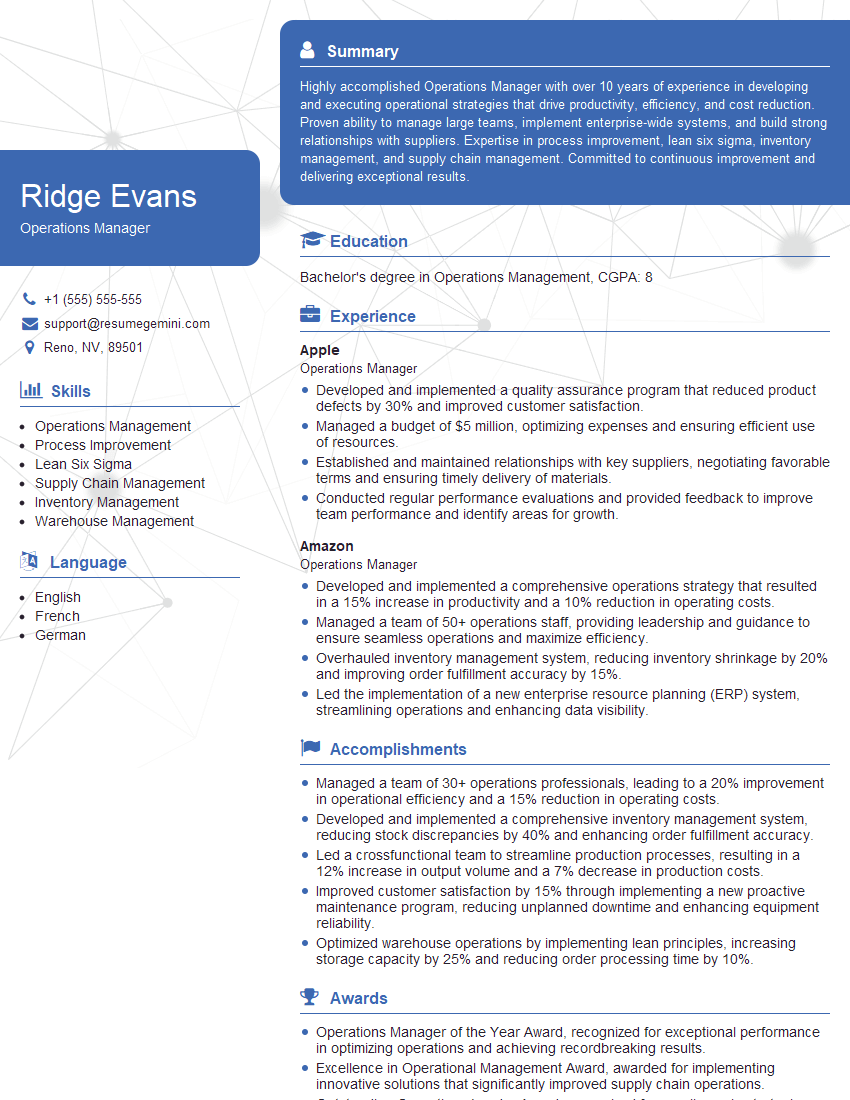
Operations Manager Resume Sample
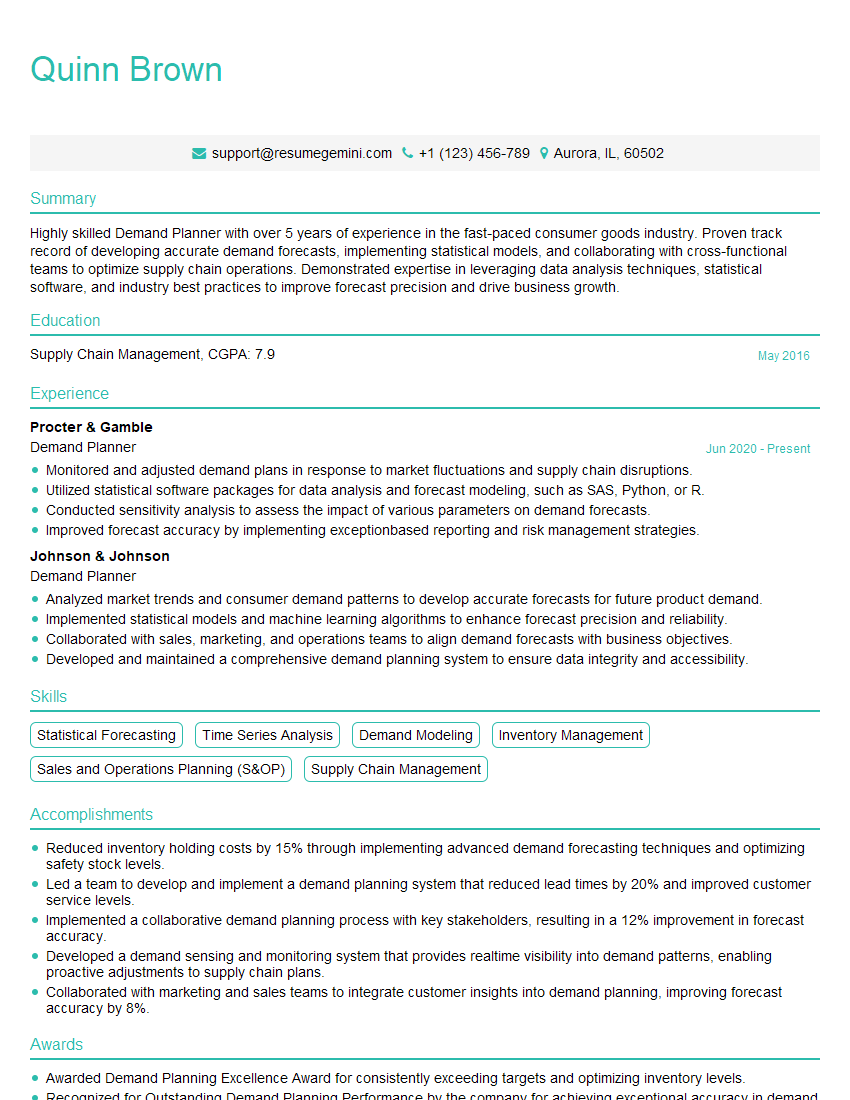
Demand Planner Resume Sample
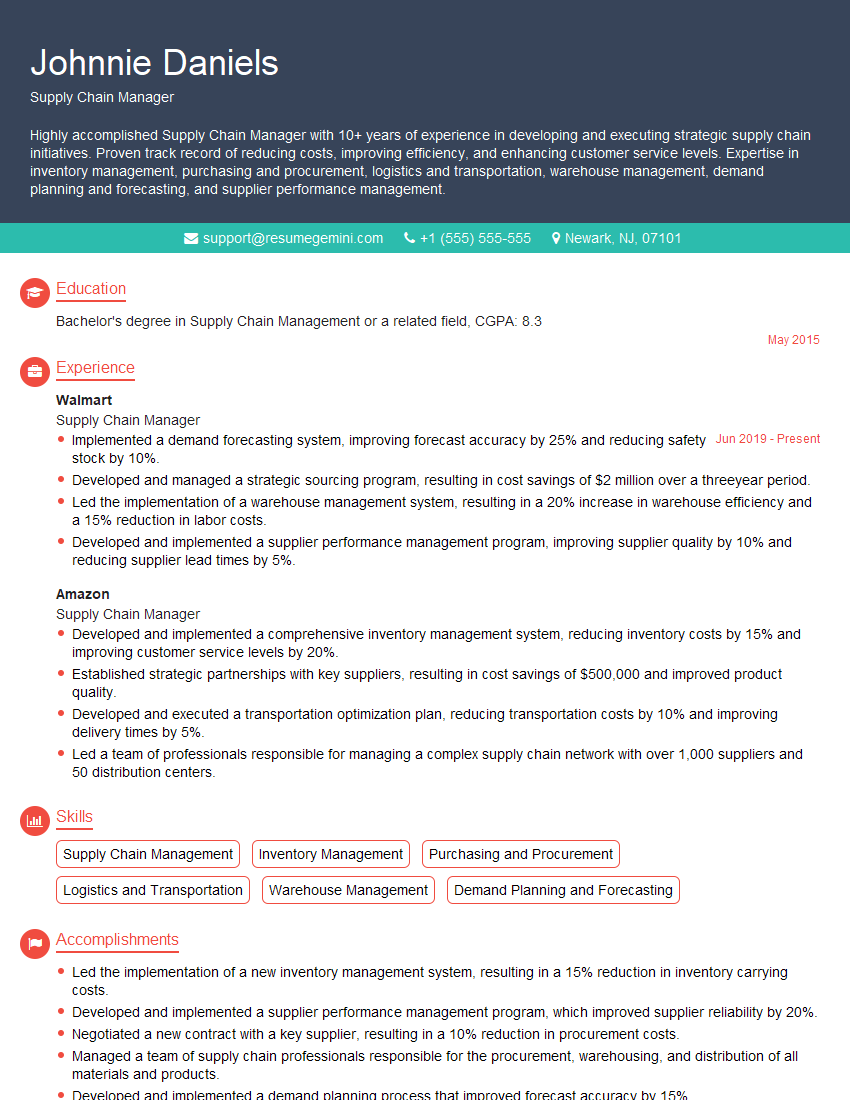
Supply Chain Manager Resume Sample
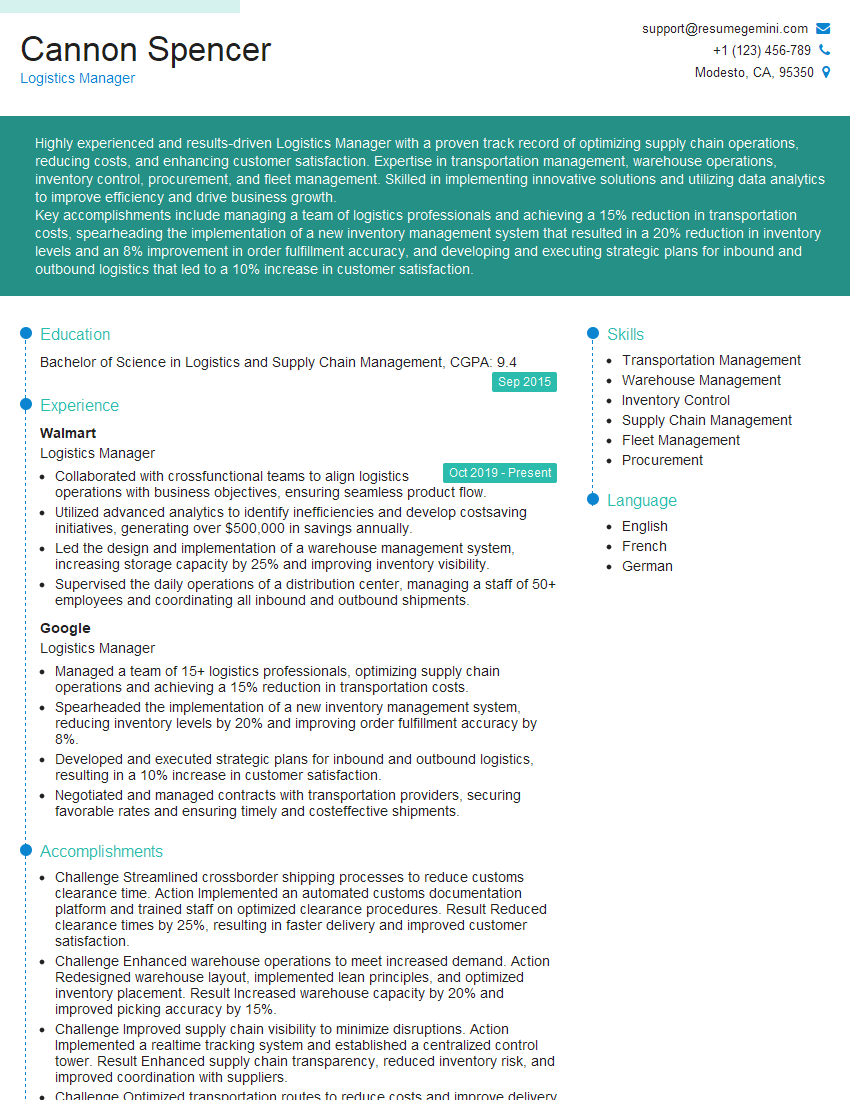
Logistics Manager Resume Sample
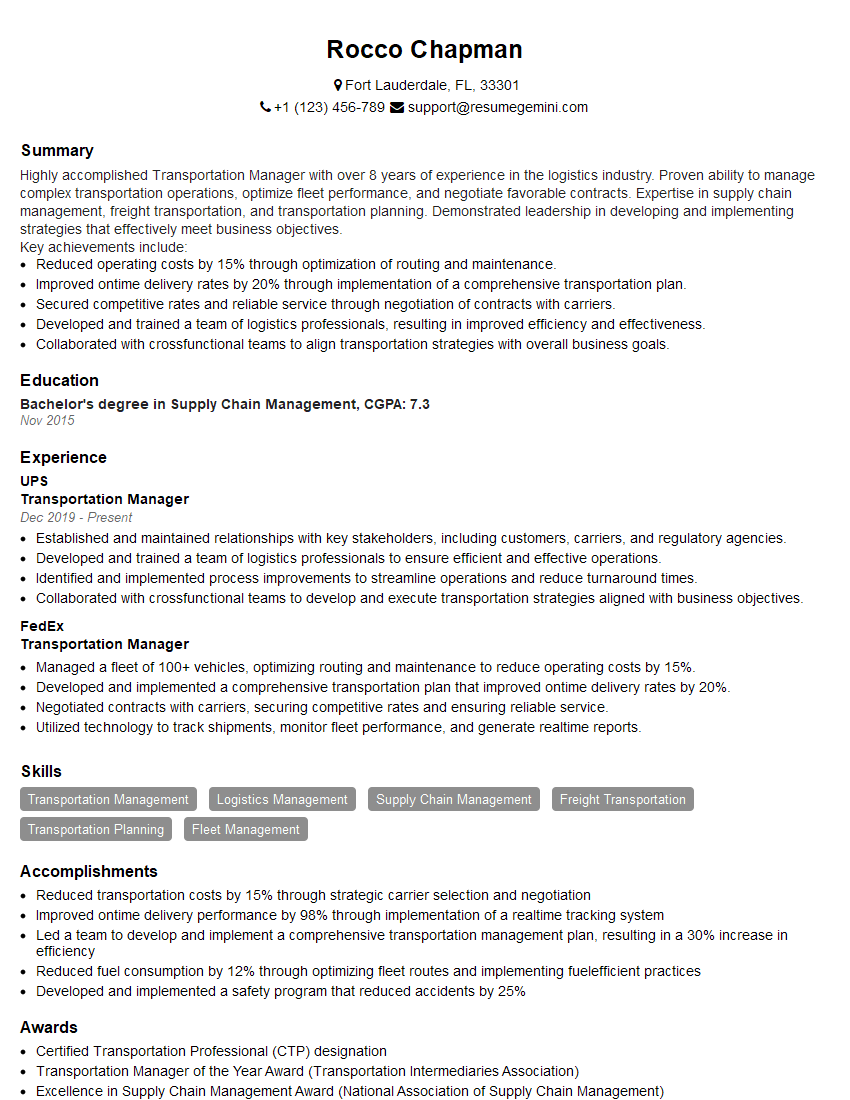
Transportation Manager Resume Sample
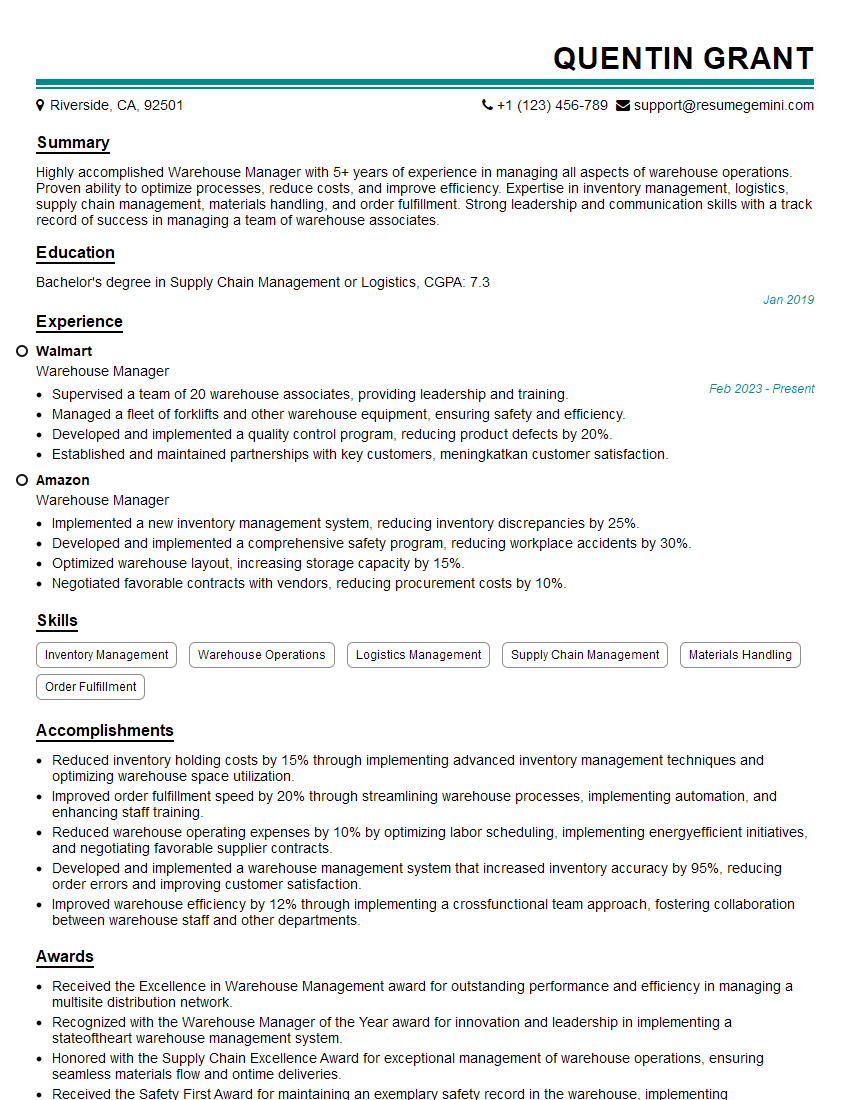
Warehouse Manager Resume Sample
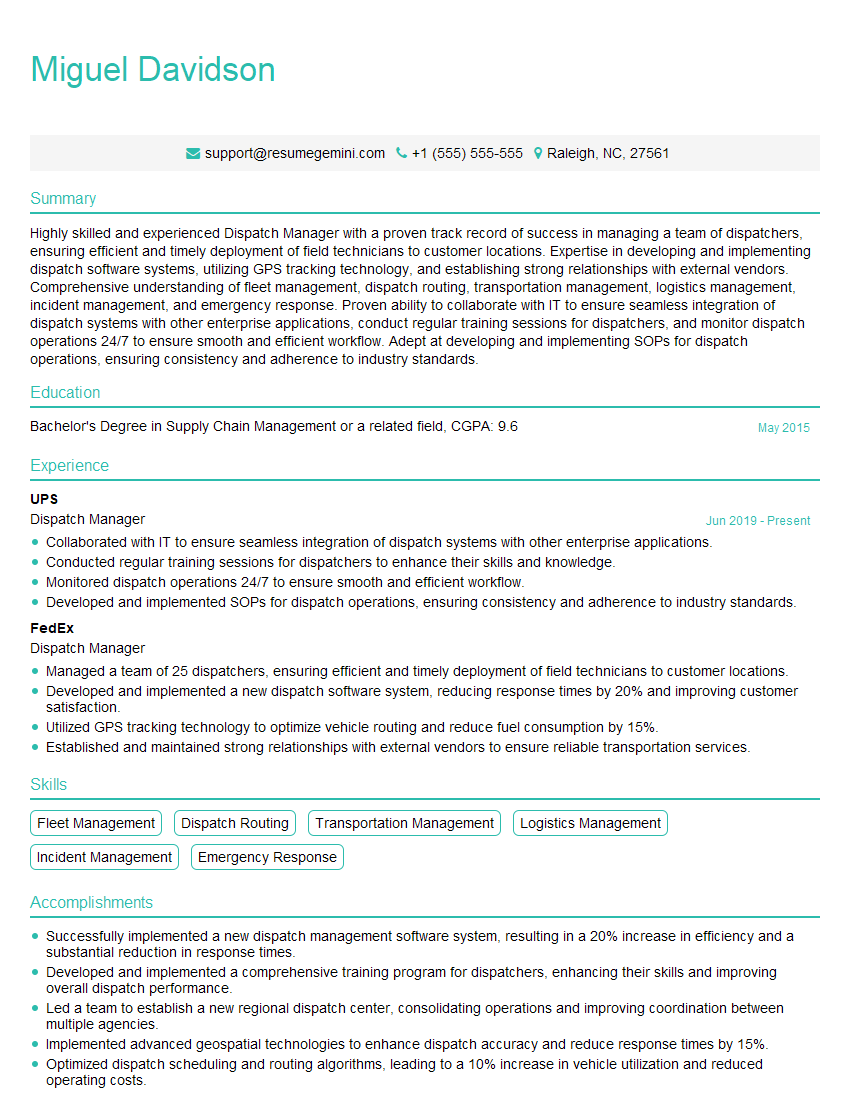
Dispatch Manager Resume Sample
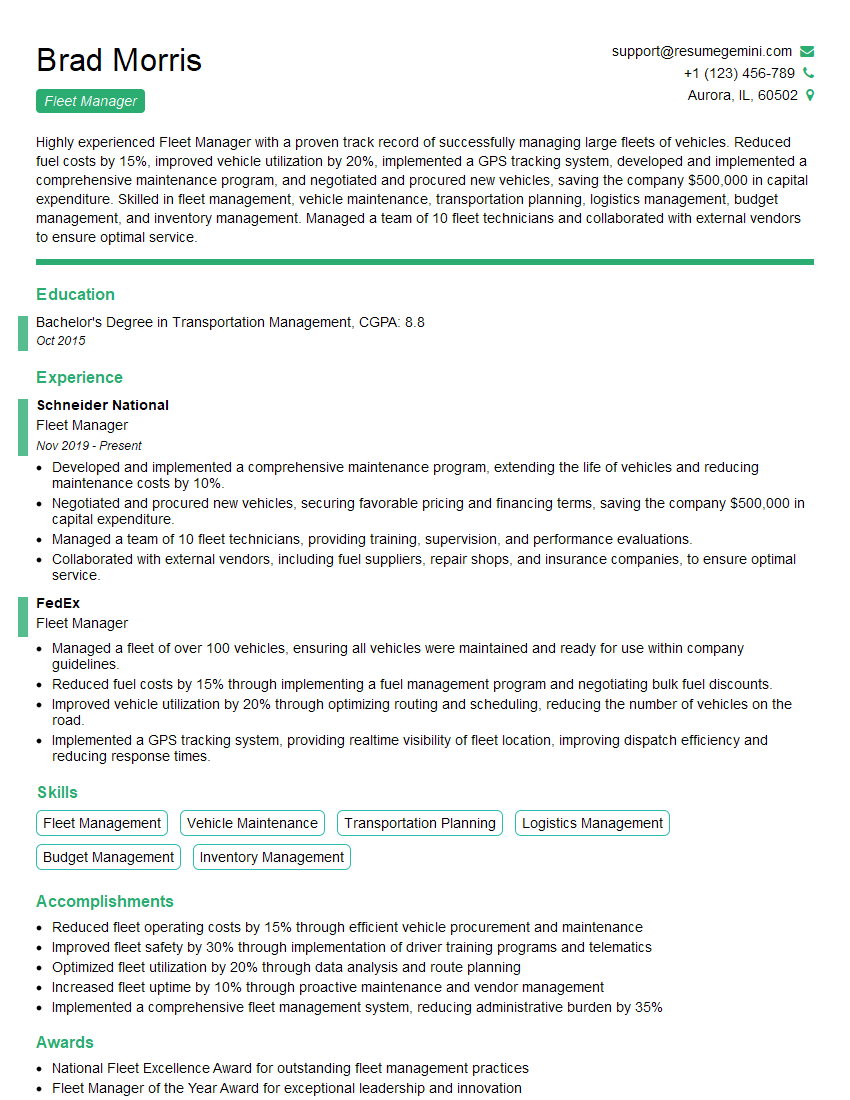
Fleet Manager Resume Sample
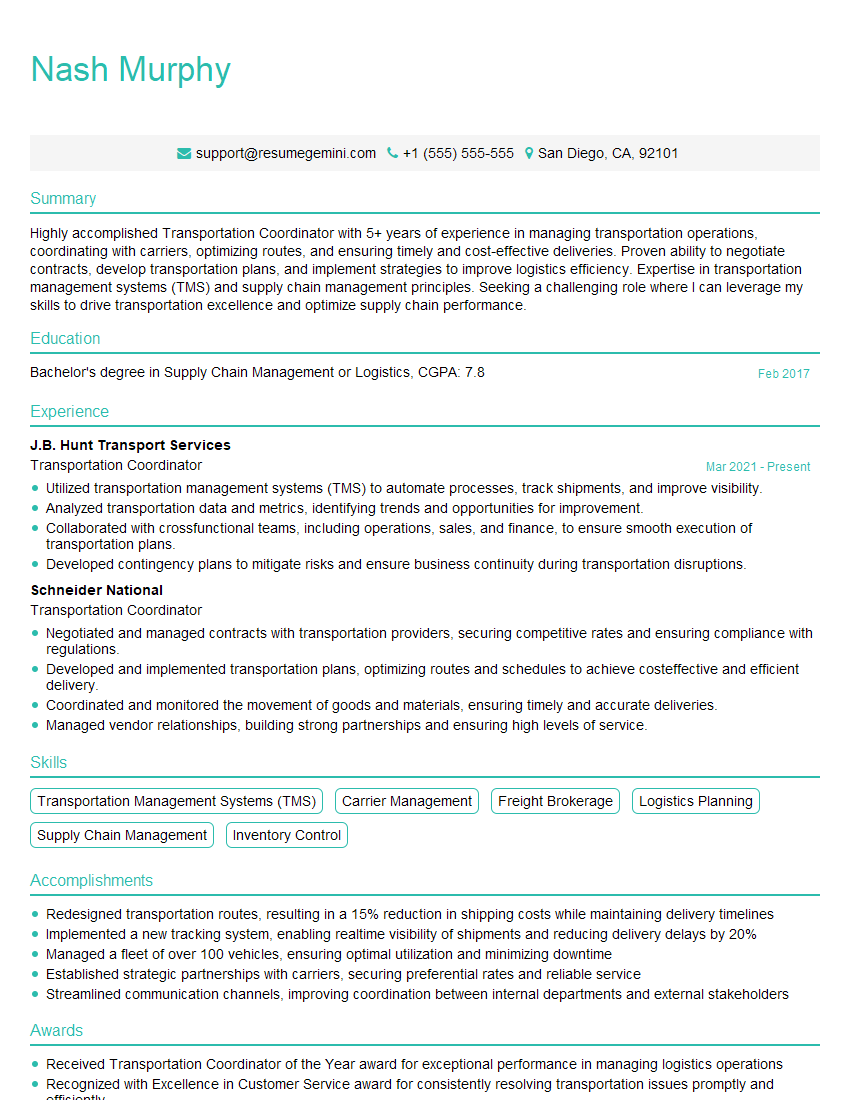
Transportation Coordinator Resume Sample
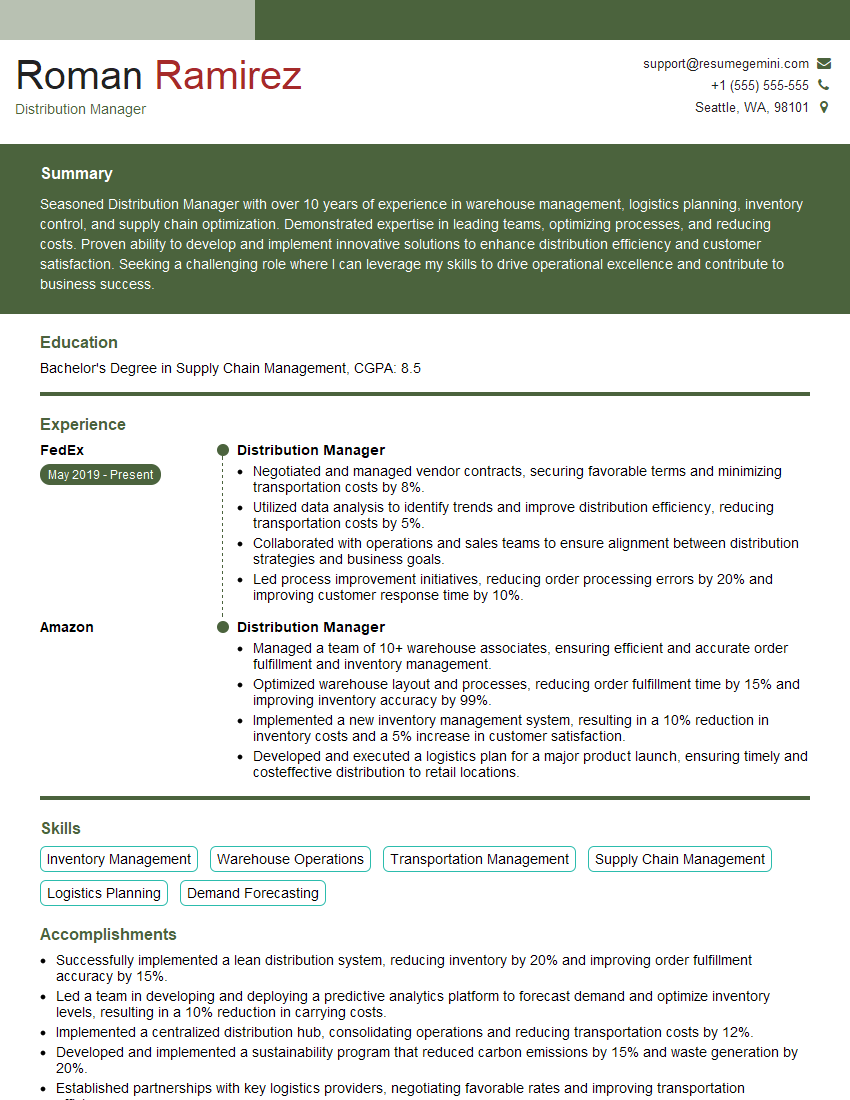
Distribution Manager Resume Sample
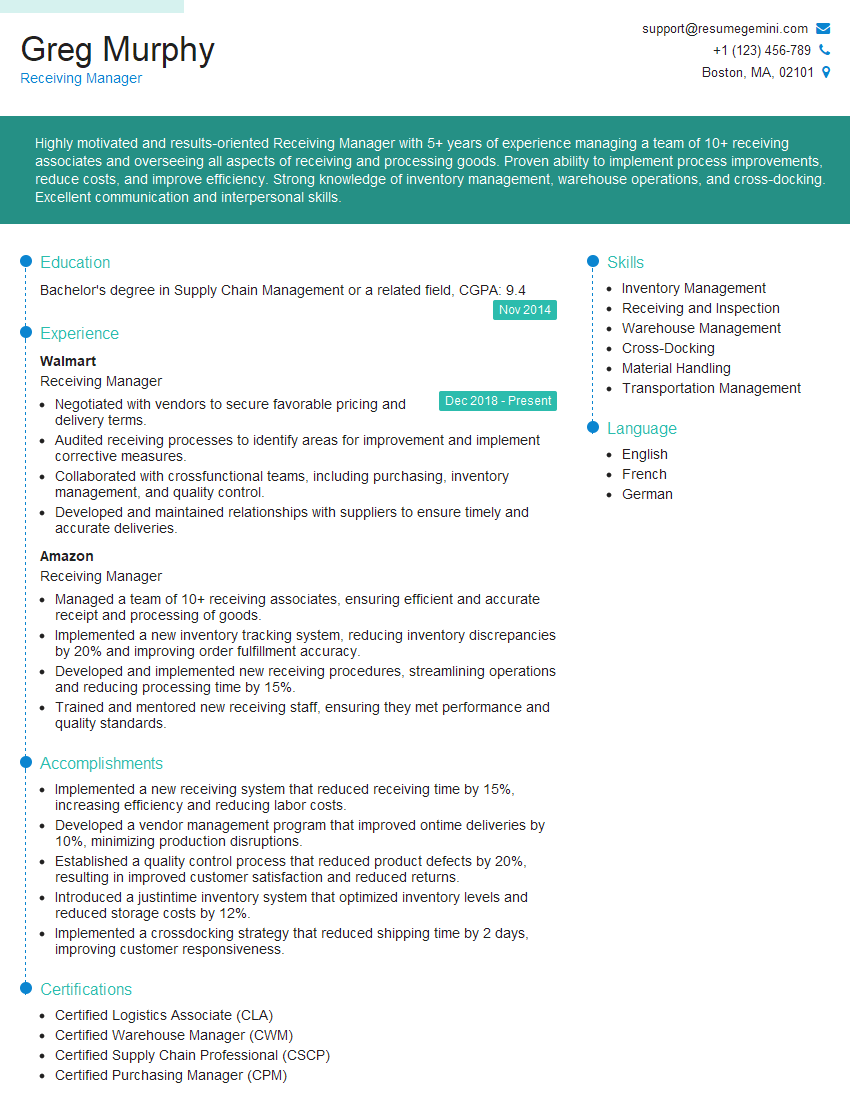
Receiving Manager Resume Sample
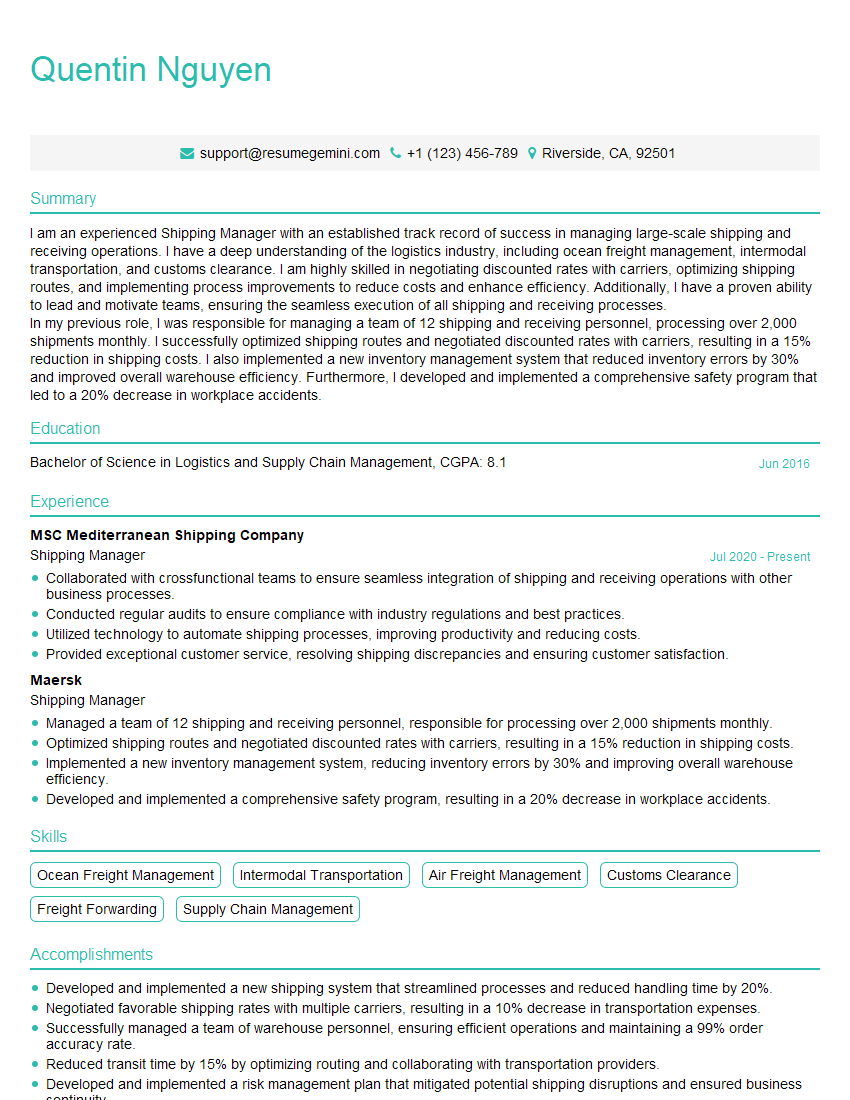
Shipping Manager Resume Sample
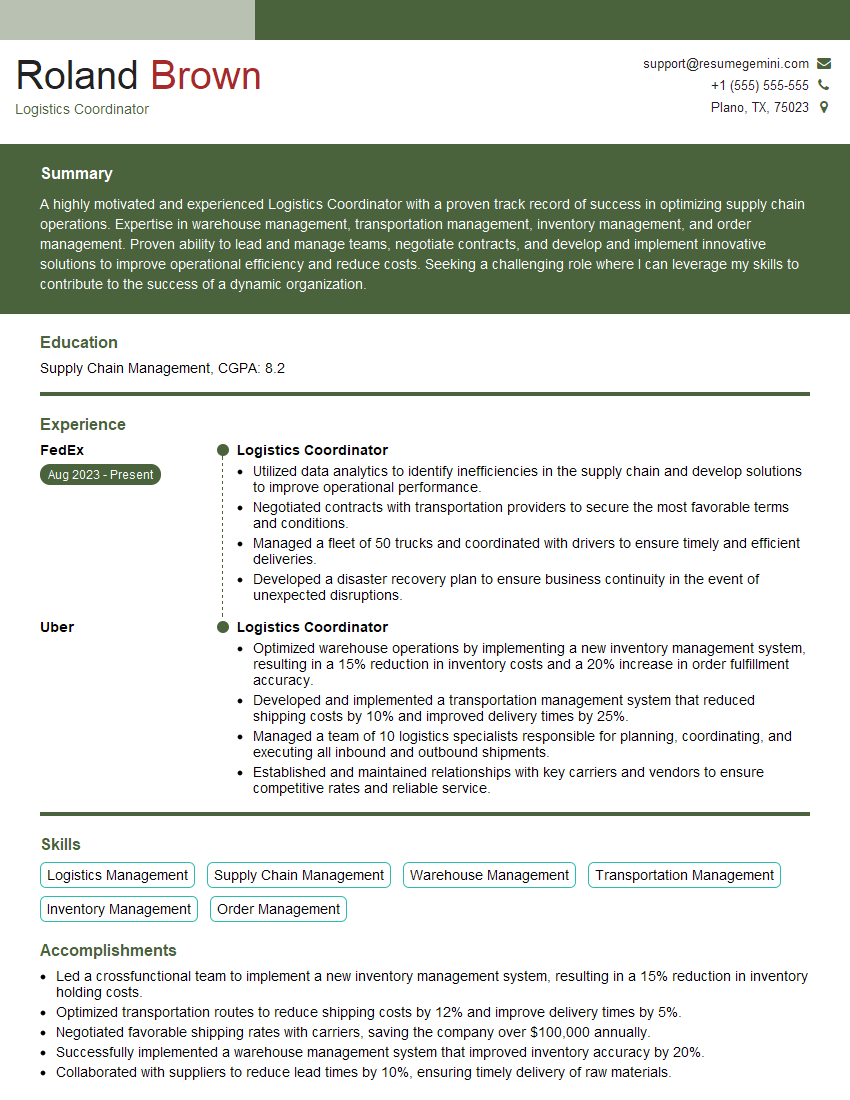
Logistics Coordinator Resume Sample
Compliance Manager Resume Sample
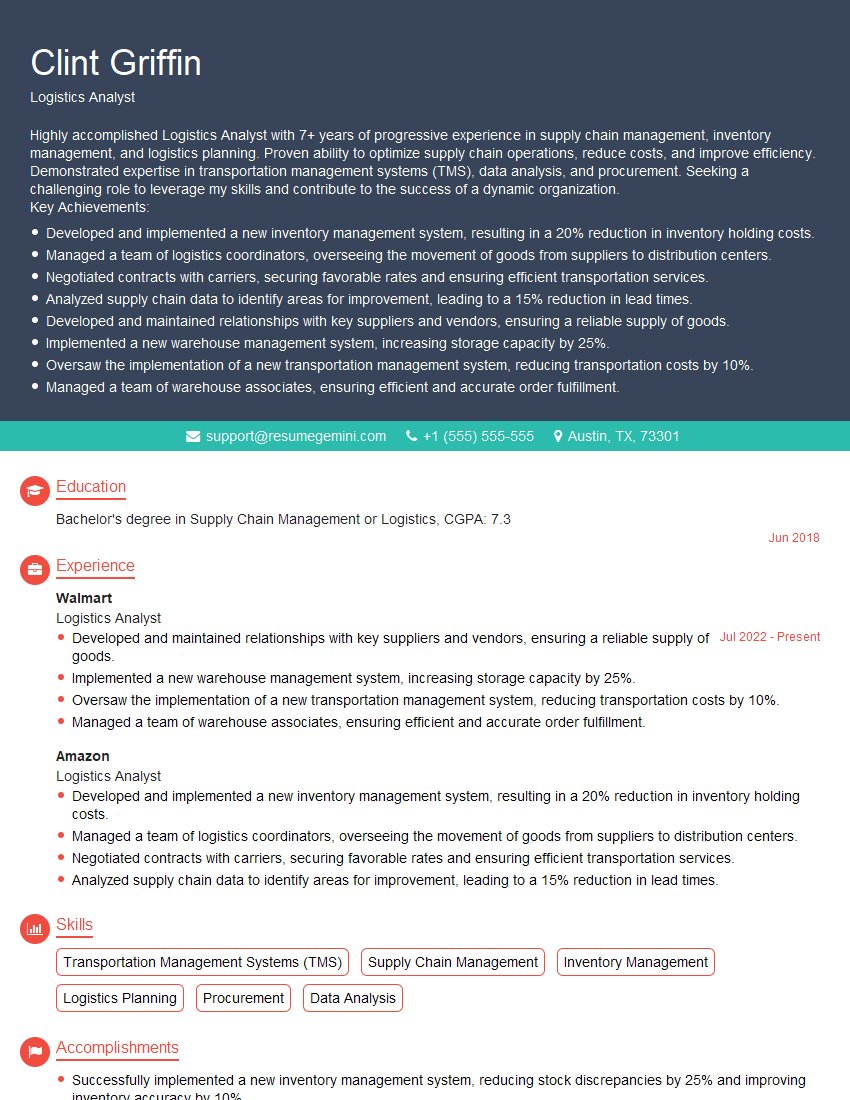
Logistics Analyst Resume Sample
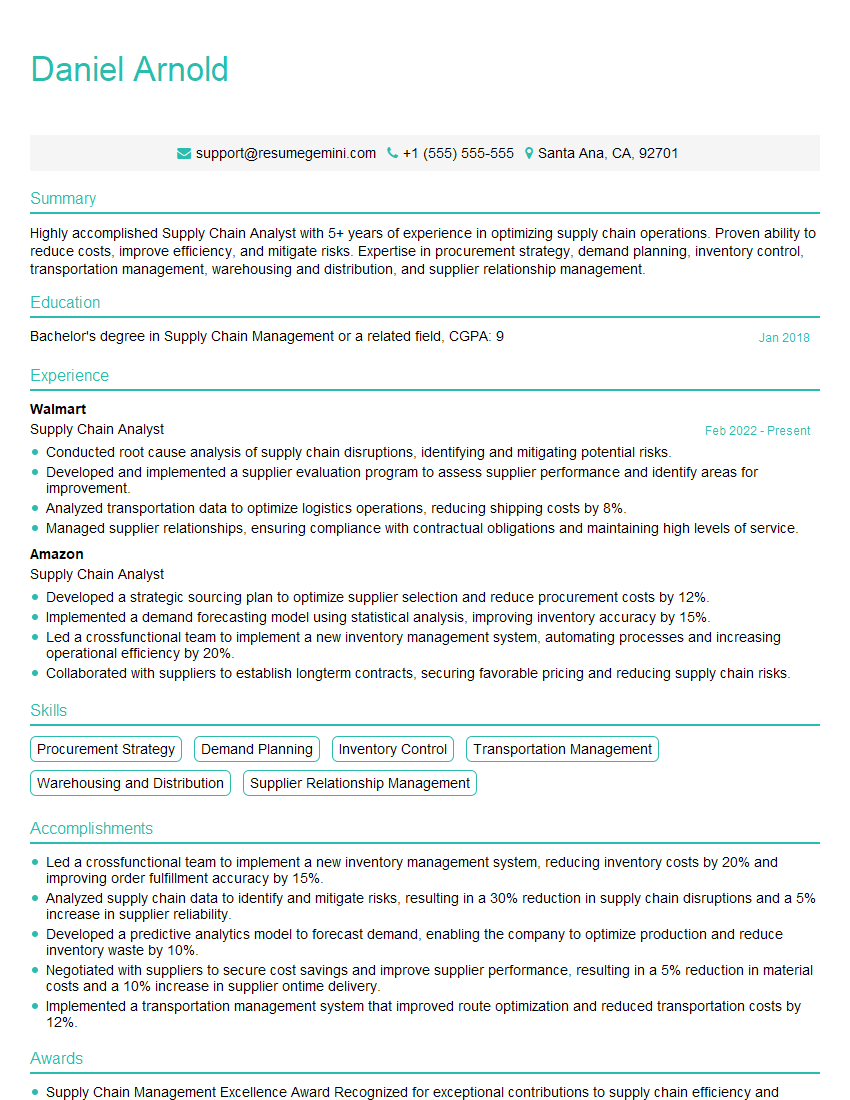
Supply Chain Analyst Resume Sample
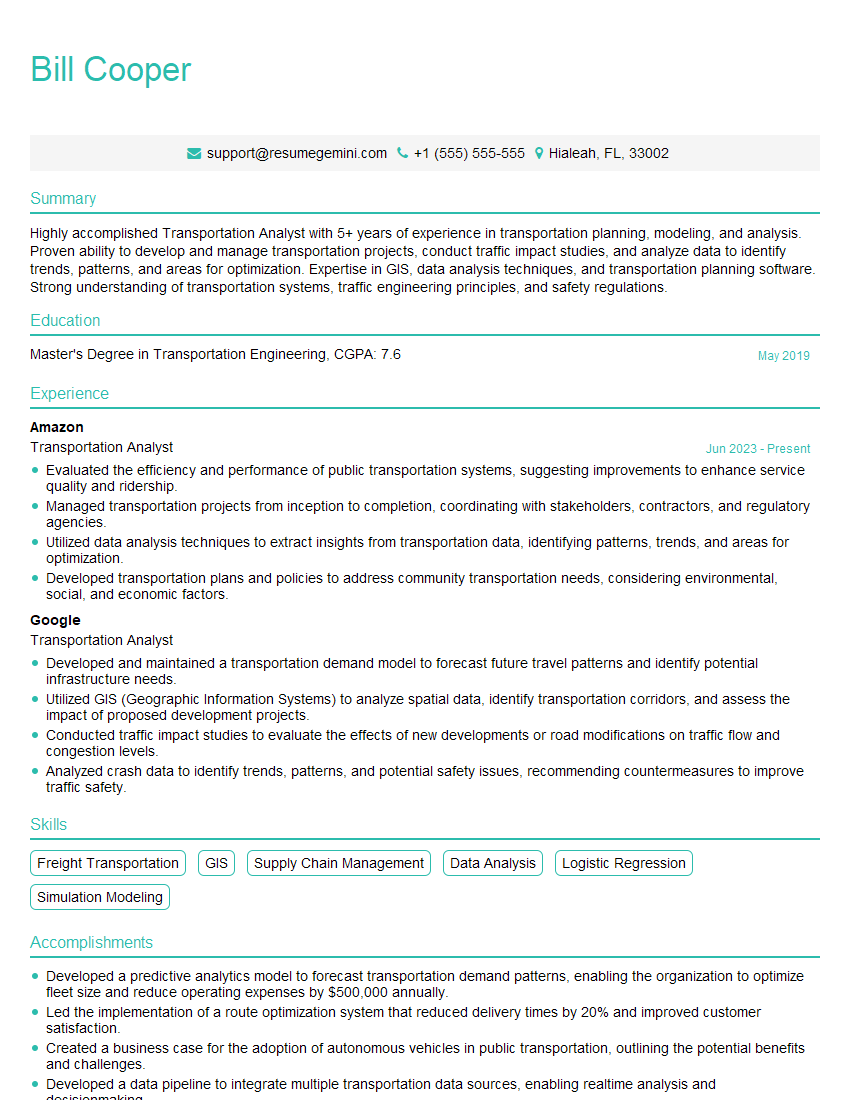
Transportation Analyst Resume Sample
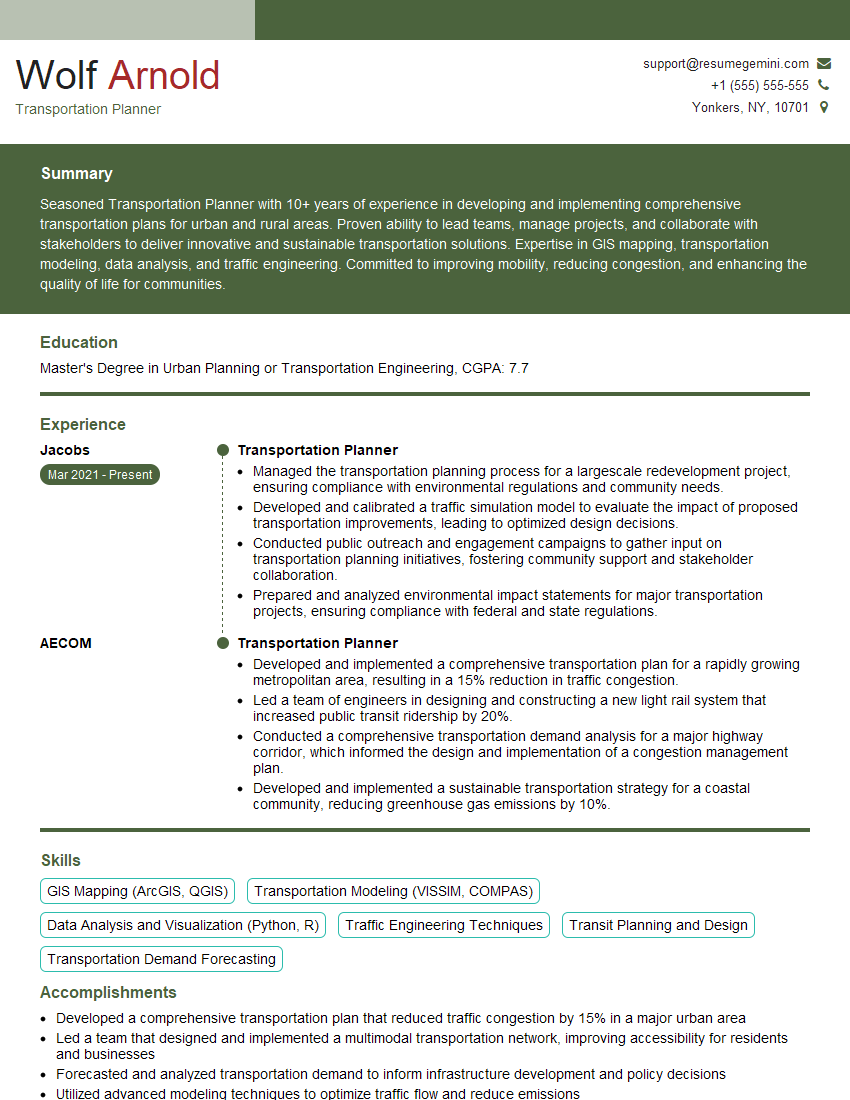
Transportation Planner Resume Sample
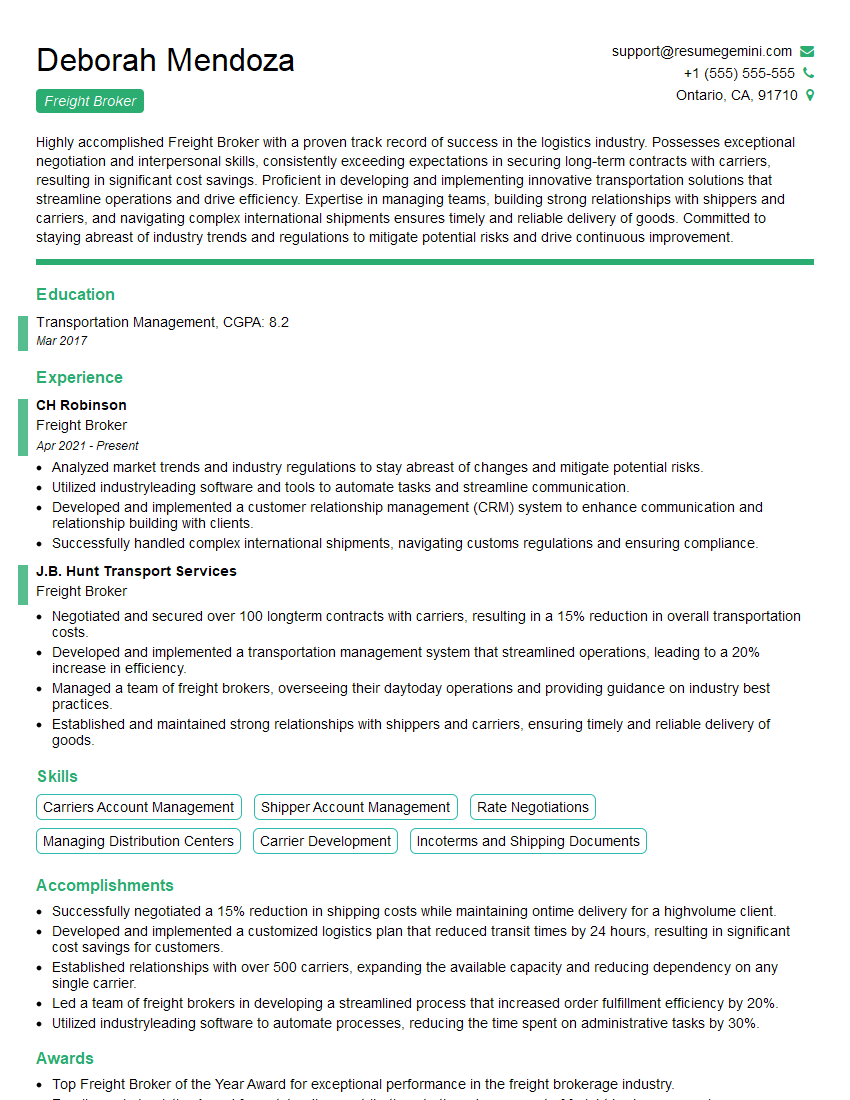
Freight Broker Resume Sample
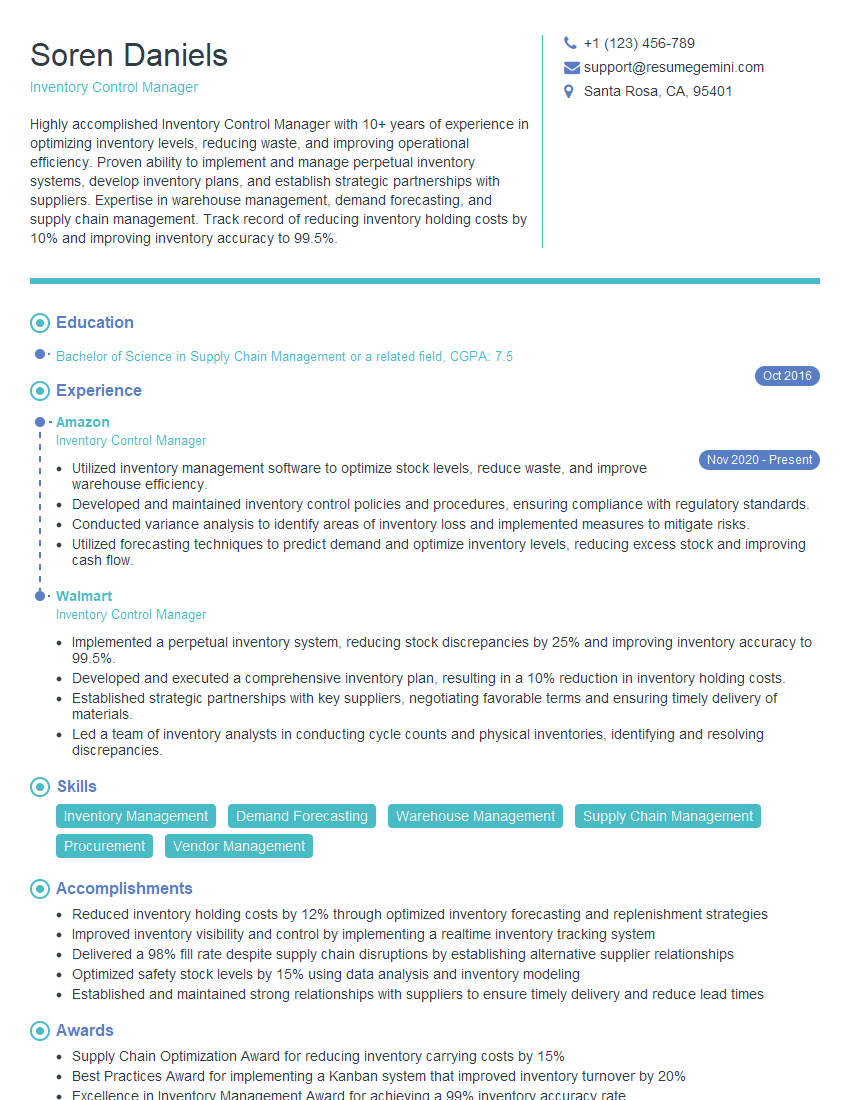
Inventory Control Manager Resume Sample
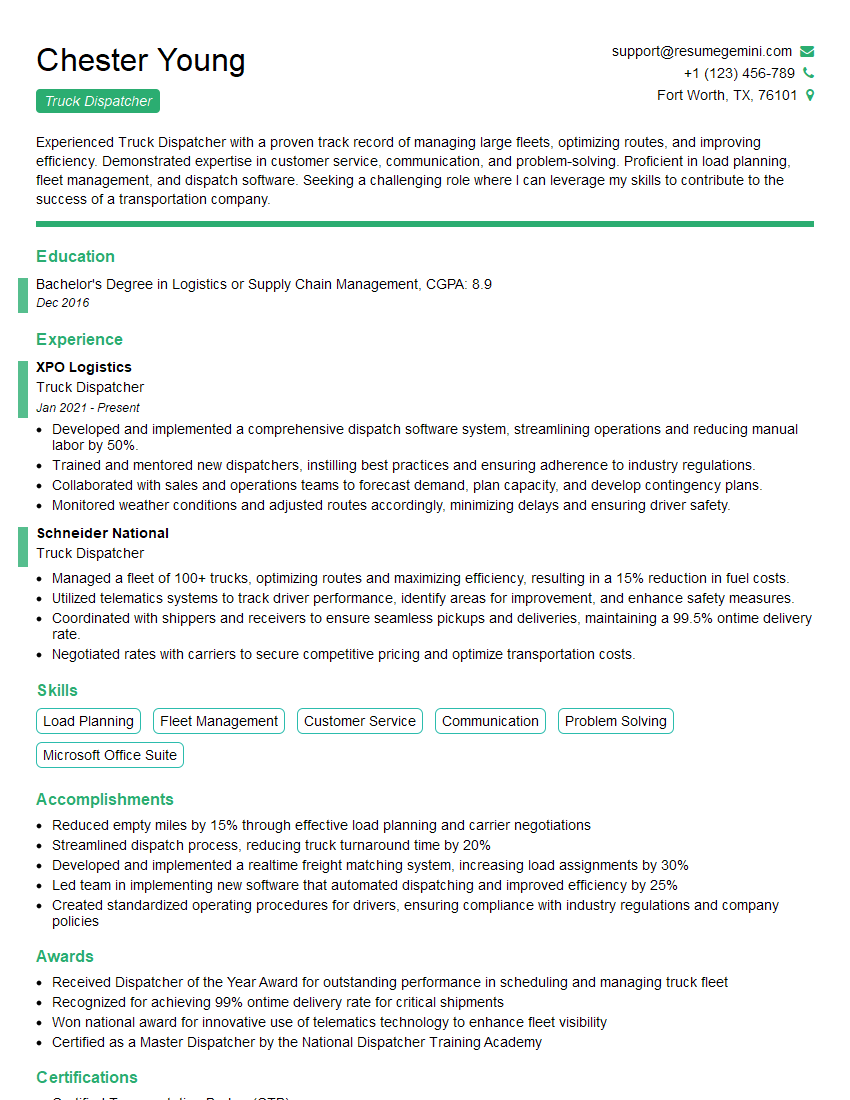
Truck Dispatcher Resume Sample
- Operations Manager
- Demand Planner
- Supply Chain Manager
- Logistics Manager
- Transportation Manager
- Warehouse Manager
- Dispatch Manager
- Fleet Manager
- Transportation Coordinator
- Distribution Manager
- Receiving Manager
- Shipping Manager
- Logistics Coordinator
- Compliance Manager
- Logistics Analyst
- Supply Chain Analyst
- Transportation Analyst
- Transportation Planner
- Freight Broker
- Inventory Control Manager
- Truck Dispatcher
Explore more articles
Users Rating of Our Blogs
Share Your Experience
We value your feedback! Please rate our content and share your thoughts (optional).
What Readers Say About Our Blog
Very informative content, great job.
good