Cracking a skill-specific interview, like one for Flexographic Printing Press Operation, requires understanding the nuances of the role. In this blog, we present the questions you’re most likely to encounter, along with insights into how to answer them effectively. Let’s ensure you’re ready to make a strong impression.
Questions Asked in Flexographic Printing Press Operation Interview
Q 1. Explain the different types of flexographic printing presses.
Flexographic printing presses come in various configurations, primarily categorized by their printing width, number of printing units, and printing cylinder arrangement.
- Central Impression Cylinder (CIC) Presses: These are known for their compact design and are ideal for shorter print runs and smaller-sized jobs. The print cylinders rotate around a central impression cylinder, which applies pressure for image transfer. Think of it like a carousel—each cylinder takes its turn.
- Stack-type Presses: These presses feature printing units stacked vertically. This allows for efficient multi-color printing. Imagine stacking pancakes – each ‘pancake’ is a printing unit, adding a color with each layer.
- Satellite Presses: In satellite presses, the printing units are arranged around a central impression cylinder. They offer high speed and efficient ink distribution. This is like a sun with planets orbiting – the central cylinder is the sun, and the printing units are the planets.
- In-line Presses vs. Multi-pass presses: The terms ‘in-line’ and ‘multi-pass’ refer to how colors are applied. In-line presses print all colors simultaneously, whereas multi-pass presses require multiple passes through the press to add each color sequentially. In-line is faster, but multi-pass offers greater flexibility with special effects.
The choice of press depends on factors like print volume, substrate type, budget, and desired quality.
Q 2. Describe the process of setting up a flexographic printing press for a new job.
Setting up a flexographic press for a new job is a meticulous process requiring precision and attention to detail. It involves several key steps:
- Plate Mounting and Registration: The printing plates, carrying the image, are carefully mounted onto the printing cylinders. Precise registration is crucial to ensure that the colors align perfectly. We use specialized tools and techniques to achieve this, often involving microscopic adjustments. Misalignment even by a fraction of a millimeter can lead to blurry images and misregistration.
- Ink Selection and Setup: The appropriate inks are selected based on the substrate, the desired color, and the printing process. Ink viscosity is adjusted and color proofing is performed to match the design specifications. This is like mixing paints to achieve the perfect shade – the slightest difference can change the overall impact.
- Ancillary Adjustments: Press settings like web tension, drying system, and impression pressure are adjusted to optimize print quality. This stage requires hands-on experience and careful monitoring of the printed samples.
- Proofing and Adjustments: Test prints (proofs) are run and compared against the approved design. Any discrepancies are addressed through adjustments to ink density, pressure, or registration. This is a crucial iterative step that ensures the final product matches expectations.
- Production Run: Once the press is properly set up and the quality is satisfactory, the full production run begins. Continuous monitoring is essential to maintain consistent quality throughout the run.
A thorough understanding of the press mechanics and printing principles is essential for successful press setup. A checklist and a systematic approach is crucial to minimize errors and maximize efficiency.
Q 3. How do you ensure accurate color matching in flexographic printing?
Accurate color matching in flexography requires a multi-faceted approach combining technology and expertise.
- Color Management System (CMS): A CMS is essential. It involves using calibrated spectrophotometers and software to measure and control color throughout the process – from the design stage to the final print. This allows us to translate colors digitally to accurately reproduce them in the print.
- Ink Selection and Formulation: Choosing the correct inks is vital. We often use a combination of spot colors and process colors (CMYK) to achieve the required shades. Sometimes special inks, like metallic or fluorescent inks, are needed.
- Substrate Considerations: The material being printed on (substrate) has a significant impact on color reproduction. Different substrates absorb and reflect light differently, affecting the final color perception. We select ink formulations and adjust press settings to compensate for these substrate differences.
- Print Conditions: Environmental factors like temperature and humidity can influence ink drying and color consistency. Controlling these variables is important for achieving reliable results.
- Experienced Press Operators: Even with advanced technology, the expertise of the operator remains paramount. Experienced operators know how to subtly adjust press settings to achieve the desired color, based on their visual assessment and experience.
Color matching is an iterative process, often requiring several adjustments and test prints before a perfect match is achieved. Regular calibration and maintenance of equipment are essential to maintain color accuracy over time.
Q 4. What are the common causes of print defects in flexography, and how would you troubleshoot them?
Print defects are common in flexography, but understanding their causes allows for effective troubleshooting. Here are some common issues and their solutions:
- Misregistration: Colors not aligning properly. Solution: Check and adjust plate mounting, cylinder alignment, and web tension.
- Poor Ink Transfer: Light or uneven print. Solution: Adjust ink viscosity, anilox roll condition, and impression pressure.
- Hickeys: Small, unwanted spots or specks in the print. Solution: Inspect inks for contaminants, clean the anilox roll and printing plates thoroughly, and check for debris in the press.
- Streaking: Irregular lines or bands in the print. Solution: Check the anilox roll for damage, ensure proper ink distribution, and inspect the doctor blade.
- Mottle: Uneven ink distribution giving a blotchy appearance. Solution: Inspect the anilox roll for damage, adjust ink viscosity and impression pressure.
- Set-off: Ink transferring from one printed layer to the next sheet. Solution: Adjust drying temperature and air flow, use a faster-drying ink, or implement a powder spray system.
Troubleshooting often involves a systematic approach: isolating the problem, checking all related components, and making incremental adjustments to identify the root cause. Keeping detailed records of press settings and troubleshooting steps helps in preventing future occurrences.
Q 5. Explain your experience with different types of inks and their applications in flexographic printing.
My experience encompasses a wide range of inks used in flexographic printing, each with its unique properties and applications:
- Water-based inks: Environmentally friendly and popular for food packaging and other applications requiring low VOCs (Volatile Organic Compounds). They often require longer drying times.
- Solvent-based inks: Provide vibrant colors and faster drying times but have higher VOCs and environmental concerns. Suitable for high-speed printing and certain substrates.
- UV-curable inks: Cure instantly upon exposure to UV light, offering fast drying and high-gloss finishes. Ideal for applications requiring immediate post-printing processes and certain substrates.
- LED-curable inks: Similar to UV inks, but cure using LED light sources, resulting in lower energy consumption and less heat generation.
- Specialty inks: This category includes metallic inks, fluorescent inks, and tactile inks, offering unique visual and textural effects. They often have specific application requirements.
Ink selection is driven by factors such as substrate type, print speed, environmental regulations, and desired print aesthetics. Understanding the properties of each ink type is crucial for optimizing print quality and ensuring the final product meets the required specifications. I’ve worked extensively with various ink manufacturers, always ensuring the selected inks are compatible with the press and substrate to prevent unexpected issues during the production run.
Q 6. Describe your experience with different types of printing plates.
I have experience with several types of flexographic printing plates, each with its strengths and weaknesses:
- Photopolymer plates: The most common type, offering good quality, durability, and relatively low cost. They are produced using a photo-imaging process. I have experience with both conventional and digital photopolymer plates, each offering different levels of precision and speed of production.
- Flexographic sleeves: These are cylindrical plates mounted directly onto the printing cylinders, eliminating the need for plate mounting and significantly speeding up changeovers. This is highly efficient for short run jobs.
- Ceramic plates: Durable and long-lasting, these plates offer superior print quality but are more expensive. They are typically used for high-volume, long-run jobs where longevity and consistent print quality are essential.
The choice of printing plate depends on various factors including print volume, budget, required print quality, and the press itself. For instance, a high-speed press might benefit from flexographic sleeves due to the fast changeover times. For a long, high-quality run, ceramic plates might be more suitable despite the higher initial cost. My experience allows me to select the optimal plate type for each specific project, balancing cost and quality requirements.
Q 7. How do you maintain the quality of printed products throughout a long production run?
Maintaining consistent print quality throughout a long production run is critical for ensuring customer satisfaction. Several strategies are crucial:
- Regular Press Monitoring: Continuous monitoring of print quality parameters like ink density, registration, and drying is essential. Regular checks (every 1000-2000 impressions, for example) are done to detect any deviations from the established standards.
- Ink Viscosity Control: Ink viscosity can change over time due to evaporation or other factors. Regular adjustments are necessary to maintain consistent ink transfer. Dedicated ink management systems can automate this process.
- Anilox Roll Cleaning: The anilox roll, responsible for ink metering, is prone to contamination. Regular cleaning maintains its accuracy and ensures consistent ink distribution.
- Temperature and Humidity Control: Maintaining stable environmental conditions is crucial for uniform ink drying and preventing set-off. Pressrooms are often temperature and humidity controlled for this reason.
- Preventive Maintenance: Regular preventative maintenance of the press is vital for minimizing downtime and ensuring consistent performance. This includes lubrication, cleaning, and inspection of all critical components.
- Operator Training: Well-trained operators understand how to identify and address minor deviations before they affect print quality. Their experience allows for quick problem-solving.
Maintaining quality over a long run is not just about reacting to problems; it’s about establishing robust preventative measures and implementing diligent monitoring. It’s a process of continuous improvement and adaptation, guided by the experience and skills of the press operators.
Q 8. What safety procedures do you follow when operating a flexographic printing press?
Safety is paramount in flexographic printing. Before even touching the press, I always ensure I’ve donned the appropriate personal protective equipment (PPE), including safety glasses, hearing protection, and closed-toe shoes. I thoroughly inspect the machine for any loose parts, damaged components, or leaks before powering it on. I follow lockout/tagout procedures meticulously when performing maintenance or repairs to prevent accidental starts. During operation, I maintain a safe distance from moving parts and regularly monitor the machine’s performance, stopping immediately if I detect any unusual sounds or vibrations. I’m also trained to handle ink spills and other potential hazards safely and know the location of all emergency shut-off switches and eyewash stations. Regular training refreshes my knowledge of safety regulations and best practices.
For example, once I noticed a slight wobble in one of the rollers during setup. Instead of continuing, I immediately shut down the press and called for maintenance. This prevented a potential jam and ensured the safety of myself and my coworkers.
Q 9. How do you calculate the required amount of ink for a specific job?
Calculating ink requirements is crucial for efficient job management and waste reduction. It involves several factors. Firstly, we need the substrate area to be printed – this involves calculating the total area of the material (length x width x number of sheets/rolls). Secondly, the ink coverage, expressed as a percentage, determines how much ink will be applied. This percentage depends on the design and the desired ink density. Finally, we must account for ink loss due to factors like setup waste and cleaning.
A simple calculation could be: Total Ink (liters) = (Substrate Area (m²) * Ink Coverage (%) * Ink Density (g/m²) ) / 1000 where Ink Density is specific to the ink type.
For example, if we are printing 1000 square meters of substrate with 30% ink coverage and an ink density of 1000 g/m², the calculation would be: (1000 * 30 * 1000)/1000 = 30000g or 30kg of ink. This value will then be adjusted for wastage, typically 10-15% depending on factors such as job complexity and press experience.
Q 10. Explain your understanding of anilox rolls and their function.
Anilox rolls are the heart of ink transfer in flexographic printing. They’re engraved cylinders with thousands of tiny cells that meter the amount of ink transferred to the printing plate. The cell size, volume, and cell count directly impact the ink density and print quality. A smaller cell volume results in a finer screen and more detail, while a larger cell volume provides higher ink coverage for solid areas. The function is to ensure consistent ink application across the entire print run, preventing variations in color intensity.
Think of it like a sieve – the size of the holes determines how much liquid passes through. Similarly, the anilox roll’s cell geometry controls ink transfer. Regular cleaning and maintenance of anilox rolls are crucial for optimal performance and to maintain consistent print quality, preventing issues like color variations and poor image sharpness.
Q 11. Describe your experience with different types of drying systems.
My experience encompasses various drying systems, each with its advantages and disadvantages. Hot air drying is the most common, using heated air to evaporate solvents or water from the ink. UV curing uses ultraviolet light to instantly cure UV inks, offering faster turnaround times. Infrared (IR) drying uses heat radiation to dry inks, often used in combination with other methods. Electron beam (EB) curing is a high-speed process that cures inks almost instantaneously.
The choice of drying system depends on factors like the ink type, substrate, and production speed requirements. For example, UV curing is ideal for high-speed printing of quick-drying inks on various substrates, whereas hot air drying is more suitable for slower printing speeds and some solvent-based inks.
Q 12. How do you handle press malfunctions or breakdowns?
Handling press malfunctions requires a systematic approach. First, I’ll prioritize safety by immediately shutting down the press and securing the area. Then, I’ll assess the situation – identifying the problem using diagnostic tools and checklists and determining whether the issue can be resolved on-site or requires specialized assistance. For minor problems, I’ll consult the press’s manual and follow the troubleshooting steps. If it’s a more complex issue, I’ll report the problem to my supervisor and collaborate with maintenance technicians. Thorough documentation of the malfunction, including the cause, resolution, and downtime, is crucial for preventive maintenance and future problem-solving.
I once experienced a paper jam that led to a press stop. Instead of immediately trying to force the paper, I systematically checked the paper path, identified the blockage, and carefully cleared the jam, preventing further damage. This quick and methodical approach minimized downtime.
Q 13. How do you ensure the proper registration of colors during printing?
Precise color registration is fundamental to high-quality printing. This involves aligning the different color units of the press perfectly to ensure that the colors overlap correctly. This is achieved through a combination of careful setup, using registration marks on the print, and fine-tuning adjustments on the press itself. We start by adjusting the initial settings based on job specifications, then continuously monitor the registration throughout the run. Any deviations are immediately corrected by making small adjustments to the register rollers and gears. Regular checks are performed using a magnifying glass or other precision instruments to ensure accurate color alignment.
Imagine trying to build a LEGO castle – if the bricks aren’t aligned perfectly, the structure will be mismatched and sloppy. Color registration is the same, ensuring the colors fit neatly together to create the final image. Advanced presses often incorporate automated register systems that assist in maintaining accurate alignment.
Q 14. What is your experience with quality control procedures and testing methods?
Quality control is an integral part of my workflow. I routinely conduct visual inspections throughout the printing process, checking for color accuracy, dot gain, print sharpness, and substrate defects. We also use densitometers and spectrophotometers to objectively measure color values against the specified standards and ensure color consistency. We frequently perform press tests to determine and optimize print parameters including ink density and drying time. Maintaining detailed records of these tests helps to track print quality and identify any recurring issues. Our team works to continuously improve our processes through data analysis and regular calibration to prevent errors and maintain high-quality outputs.
For example, during a recent print job, we noticed a slight variation in color across the print. By carefully analyzing the data from the densitometer readings and evaluating our process, we pinpointed a slight variation in ink delivery from the anilox roll. This prompt identification and resolution of the problem prevented further defects and saved material cost.
Q 15. What is your experience with maintaining and cleaning the flexographic printing press?
Maintaining a flexographic press is crucial for consistent, high-quality printing. My experience encompasses a comprehensive preventative maintenance schedule, including daily, weekly, and monthly routines. Daily tasks involve cleaning anilox rolls, doctor blades, and print cylinders to remove ink buildup and debris. Weekly checks focus on inspecting bearings, gears, and drive systems for wear and tear. Monthly maintenance includes more thorough cleaning, lubrication, and adjustments as needed. I also meticulously document all maintenance activities and track consumable usage to anticipate potential problems and schedule necessary replacements proactively. For example, I once noticed a slight vibration in one of the print stations during a routine inspection, which, after further investigation, revealed a slightly loose bearing. Addressing it promptly prevented a costly downtime event.
Cleaning involves using appropriate solvents for different inks, always ensuring proper ventilation. Safety is paramount; I strictly adhere to all safety protocols, including using personal protective equipment (PPE) such as gloves and eye protection. Proper cleaning procedures extend the life of the press components and deliver consistent print quality.
Career Expert Tips:
- Ace those interviews! Prepare effectively by reviewing the Top 50 Most Common Interview Questions on ResumeGemini.
- Navigate your job search with confidence! Explore a wide range of Career Tips on ResumeGemini. Learn about common challenges and recommendations to overcome them.
- Craft the perfect resume! Master the Art of Resume Writing with ResumeGemini’s guide. Showcase your unique qualifications and achievements effectively.
- Don’t miss out on holiday savings! Build your dream resume with ResumeGemini’s ATS optimized templates.
Q 16. Explain your understanding of different web guiding systems.
Web guiding systems are essential for maintaining accurate and consistent registration throughout the printing process. I’m familiar with several types, including:
- Optical Web Guiding: This system uses sensors to detect the edge of the web and make adjustments to maintain its position. It’s highly accurate and suitable for various substrates.
- Contact Web Guiding: This method uses mechanical sensors that physically touch the web to detect its position. While simpler, it can be less accurate and potentially damage delicate substrates.
- Closed-loop Control Systems: These sophisticated systems constantly monitor the web’s position and make real-time adjustments, providing superior precision and stability. They incorporate feedback loops to maintain optimal registration.
My experience includes troubleshooting and maintaining these systems. For instance, I once resolved a recurring misregistration issue by carefully calibrating an optical web guiding system and replacing a worn-out sensor. Understanding the strengths and limitations of each system helps select the right solution for a given job and minimizes waste and downtime.
Q 17. How do you manage waste and minimize material loss during production?
Waste management is crucial in flexographic printing. We minimize material loss through various strategies:
- Accurate Job Setup: Precise pre-press preparation, including accurate plate mounting and careful color matching, minimizes waste during the initial setup and throughout the run.
- Efficient Waste Handling Systems: Properly configured waste collection systems efficiently segregate waste for recycling or disposal.
- Optimized Print Runs: Minimizing makeready waste through efficient setup and precise control over the print process is a key aspect of material management.
- Material Inventory Control: Precise inventory management prevents overstocking and reduces the likelihood of unusable material due to expiration or spoilage.
- Regular Maintenance: Preventative maintenance minimizes production downtime and ensures efficient material usage.
For example, we implemented a new waste tracking system that allowed us to identify and address areas where material loss was unusually high, resulting in a significant reduction in waste and cost savings.
Q 18. Describe your experience with different types of substrates.
I have extensive experience with a variety of substrates, including paper (coated and uncoated), film (BOPP, PET, etc.), and foil. Each substrate requires different press settings to achieve optimal print quality and avoid damage. Thicker substrates require greater pressure and potentially different anilox rolls compared to thinner ones. For instance, printing on a thicker cardboard requires a more robust setup to handle the increased material thickness and avoid slippage. Similarly, delicate films necessitate gentler handling to prevent tearing or stretching during the printing process. Understanding the properties of each substrate is crucial for selecting the appropriate inks, pressures, and web guiding settings.
Q 19. What is your experience with pre-press activities, like plate mounting and cylinder preparation?
Pre-press activities significantly impact print quality. My experience includes plate mounting, cylinder preparation, and proofing. Plate mounting involves carefully positioning and securing the flexographic plates onto the print cylinders, ensuring accurate registration. This requires precision and attention to detail to avoid misalignment. Cylinder preparation involves cleaning and inspecting the cylinders to remove any debris or imperfections that could affect print quality. I’m proficient in using different plate mounting techniques and understand the importance of proper adhesive selection to ensure a secure and stable plate mounting that prevents slippage and ensures accurate registration across the entire print run. For example, I once identified a problem with plate adhesion by closely inspecting the plate and cylinder surfaces which revealed a residue interfering with proper bonding, preventing costly reprints.
Proofing is critical to verifying the accuracy of the color and registration before full production begins, allowing for necessary adjustments to be made before committing to a large print run.
Q 20. How do you manage inventory of inks, plates, and other consumables?
Efficient inventory management of inks, plates, and consumables is vital for smooth production and cost control. We utilize a computerized inventory management system that tracks stock levels, monitors usage, and automatically generates re-ordering alerts. This system helps prevent stockouts and reduces waste associated with expired or obsolete materials. We also practice first-in-first-out (FIFO) inventory management for inks to minimize the risk of ink degradation. Regular inventory audits ensure accuracy and identify any discrepancies. For example, the system alerted us to an upcoming shortage of a specific ink color, allowing us to place an order in advance and prevent any delays in production.
Q 21. Explain your understanding of different types of print defects (e.g., slur, mottle, hickey).
Recognizing and troubleshooting print defects is a critical skill for a flexographic printer. Common defects include:
- Slur: A blurred or fuzzy image caused by insufficient ink transfer or incorrect ink viscosity.
- Mottle: An uneven distribution of ink across the printed surface, often caused by anilox roll problems or inconsistent ink supply.
- Hickey: Small, blemish-like defects caused by foreign particles in the ink or on the plate.
- Print Registration Issues: Misalignment of colors or image elements.
Troubleshooting involves systematically investigating potential causes. For instance, mottle might indicate a problem with the anilox roll requiring cleaning or replacement. Hickeys might point to contamination in the ink, necessitating filtration. Print registration issues may require adjustments to the web guiding system or plate mounting. My experience enables quick and accurate diagnosis, minimizing downtime and waste.
Q 22. Describe your experience with using different types of printing software.
My experience with flexographic printing software spans a variety of platforms, from traditional RIP software like Esko CDI and Harlequin to more modern cloud-based solutions. I’m proficient in creating and manipulating plate layouts, ensuring accurate color separations, and optimizing print settings for different substrates. For example, with Esko CDI, I’ve mastered the process of creating high-resolution plates with precise screening angles and dot shapes crucial for achieving optimal print quality. Using Harlequin, I’ve honed my skills in managing color profiles and ensuring consistent color reproduction across various runs. My experience extends to using prepress workflow software which allows for streamlined processes and improved communication between design, prepress, and press operation.
I’m also familiar with software used for job management and tracking, allowing for efficient scheduling and tracking of production metrics. This is crucial for project planning and ensuring timely delivery.
Q 23. How do you ensure the efficiency and productivity of the press operation?
Ensuring efficiency and productivity in a flexographic press operation requires a multifaceted approach. It starts with meticulous planning, including optimizing job scheduling to minimize press downtime. This means prioritizing jobs based on factors such as run length, substrate, and color complexity. I always carefully review the job specifications, including the artwork, substrate requirements, and print quality expectations, before initiating the press run.
Furthermore, effective operator training and skill development are key. A well-trained team can identify and resolve problems faster, reducing downtime and improving quality. We use standardized operating procedures (SOPs) to ensure consistency and minimize errors. Regular maintenance, as discussed later, is crucial to preventing unexpected stoppages. Continuous monitoring of key performance indicators (KPIs), such as press speed, waste percentage, and turnaround time, enables data-driven improvements. For example, tracking waste percentage allows us to identify and address issues in the platemaking process, press setup, or material handling that contribute to waste.
Q 24. How do you work within a team environment in the pressroom?
Teamwork is essential in a pressroom environment. I thrive in collaborative settings, contributing my expertise while actively listening to and valuing the input of my colleagues. Effective communication is paramount; I ensure clear and concise communication with prepress, platemaking, and finishing departments to avoid misunderstandings and delays. I believe in a supportive team dynamic where everyone feels comfortable sharing ideas, reporting potential issues, and working together to find solutions. For example, if a prepress issue arises that affects the print job, we work together to find a quick fix without jeopardizing quality or deadlines. I view every member of the pressroom as an important part of the puzzle; success is a team effort.
Q 25. What are your strategies for continuous improvement in flexographic printing?
My strategies for continuous improvement in flexographic printing focus on data analysis, process optimization, and the adoption of new technologies. Regularly reviewing print samples and using spectrophotometers to measure color accuracy allows me to identify areas for improvement. This data is then used to fine-tune press settings, optimizing ink density, register, and overall print quality. We also participate in lean manufacturing initiatives to identify and eliminate waste in every aspect of our operations, from ink usage to material handling. Keeping up-to-date with industry best practices and attending relevant training sessions keeps our skills sharp and enables us to adopt new, more efficient techniques.
For example, I recently spearheaded an initiative to implement a new automated cleaning system for the anilox rollers, which significantly reduced cleaning time and improved the efficiency of changeovers. This process involved training the press crew, and then monitoring the results to make sure it was effective.
Q 26. Explain your experience with implementing and maintaining preventative maintenance programs.
Implementing and maintaining a preventative maintenance program is crucial for maximizing press uptime and minimizing costly repairs. This involves establishing a schedule of routine maintenance tasks, such as cleaning and lubricating press components, inspecting rollers and anilox cylinders, and checking for wear and tear. I’m proficient in conducting these tasks, ensuring adherence to manufacturer’s guidelines and documenting all maintenance activities. A detailed logbook of maintenance and repairs helps track the press’s performance and ensures that potential problems are addressed proactively. I also ensure that the correct spare parts are available to minimize downtime in case of unexpected failures. Proactive maintenance also extends to the ancillary equipment like dryers and unwind/rewind stands.
For example, we’ve established a detailed checklist for daily, weekly, and monthly maintenance tasks for each press, ensuring that these tasks are completed consistently and that any issues identified are addressed promptly. This has greatly reduced the frequency of unexpected breakdowns.
Q 27. How do you deal with unexpected production delays or changes?
Unexpected production delays or changes require a calm, decisive approach. My first step is to assess the nature and scope of the delay or change, identifying the root cause. Then, I prioritize communication, informing all relevant stakeholders—including clients, prepress, and other pressroom personnel—about the situation and the anticipated impact. This ensures everyone is on the same page and collaborative solutions can be devised. Next, I explore alternative solutions, such as adjusting the press schedule, re-prioritizing tasks, or utilizing resources effectively. It might involve overtime, bringing in extra personnel, or using backup equipment to minimize the impact of the disruption.
For instance, if a critical material is delayed, I’d immediately contact the supplier to get an accurate delivery estimate. Meanwhile, I would explore alternative solutions, perhaps substituting a similar material if feasible, or re-scheduling other jobs to make use of available time. Open communication throughout the process ensures client satisfaction and maintains a smooth workflow.
Q 28. Describe your experience with automation and robotics in flexographic printing.
My experience with automation and robotics in flexographic printing includes working with automated plate changers, automated register systems, and automated ink dispensing systems. Automated plate changers significantly reduce setup times, increasing productivity. Automated register systems ensure precise color registration, improving print quality and reducing waste. Automated ink dispensing systems maintain consistent ink viscosity and color consistency, leading to better quality and less waste. Furthermore, I’m familiar with the integration of various automation systems within a wider production workflow, allowing for data exchange and seamless connectivity between different pressroom operations. This includes data-driven decisions on things like ink mixing and substrate handling.
For example, we recently installed an automated ink dispensing system that improved ink consistency and reduced ink waste by nearly 15%. Understanding the capabilities and limitations of these systems and how they interact is crucial for maximizing efficiency and minimizing issues.
Key Topics to Learn for Your Flexographic Printing Press Operation Interview
- Press Setup and Operation: Understanding the entire process from plate mounting and register adjustments to ink and substrate selection. Think about the practical steps involved in each stage.
- Color Management and Ink Control: Learn about achieving consistent color reproduction, troubleshooting color variations, and the importance of maintaining accurate ink viscosity. Consider how you’d handle a situation with unexpected color shifts.
- Troubleshooting and Maintenance: Familiarize yourself with common press malfunctions, preventative maintenance procedures, and effective problem-solving techniques. Prepare examples of how you’ve addressed mechanical issues in the past.
- Safety Procedures and Regulations: Demonstrate your knowledge of safety protocols, including proper handling of chemicals and machinery. This shows responsibility and commitment to workplace safety.
- Quality Control and Inspection: Understand the importance of print quality checks, identifying defects, and implementing corrective actions. Be ready to explain your quality assurance approach.
- Understanding Different Printing Materials: Discuss the properties of various substrates (paper, film, etc.) and how those properties impact the printing process and choice of inks.
- Anilox Roll and Doctor Blade Management: Explain the function and maintenance of these critical components, and the impact of their condition on print quality.
- Waste Reduction and Environmental Considerations: Demonstrate your awareness of sustainable printing practices and waste minimization strategies within the flexographic process.
Next Steps
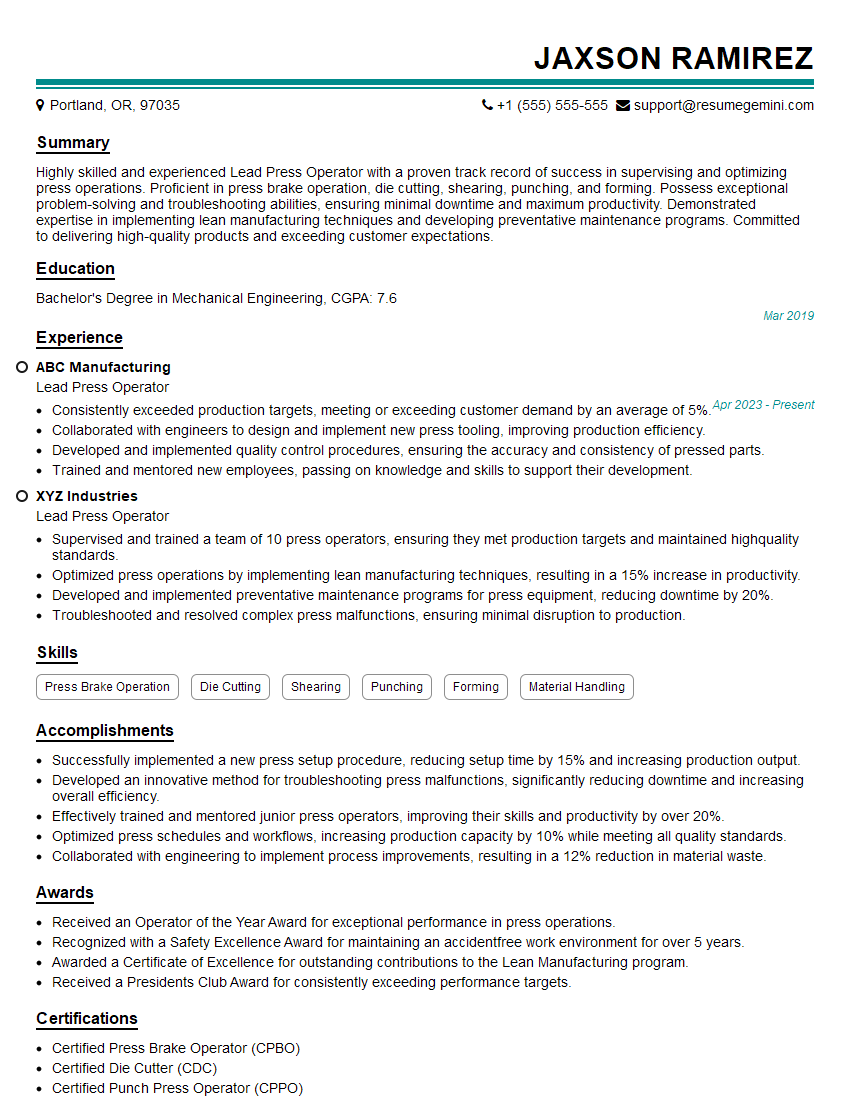
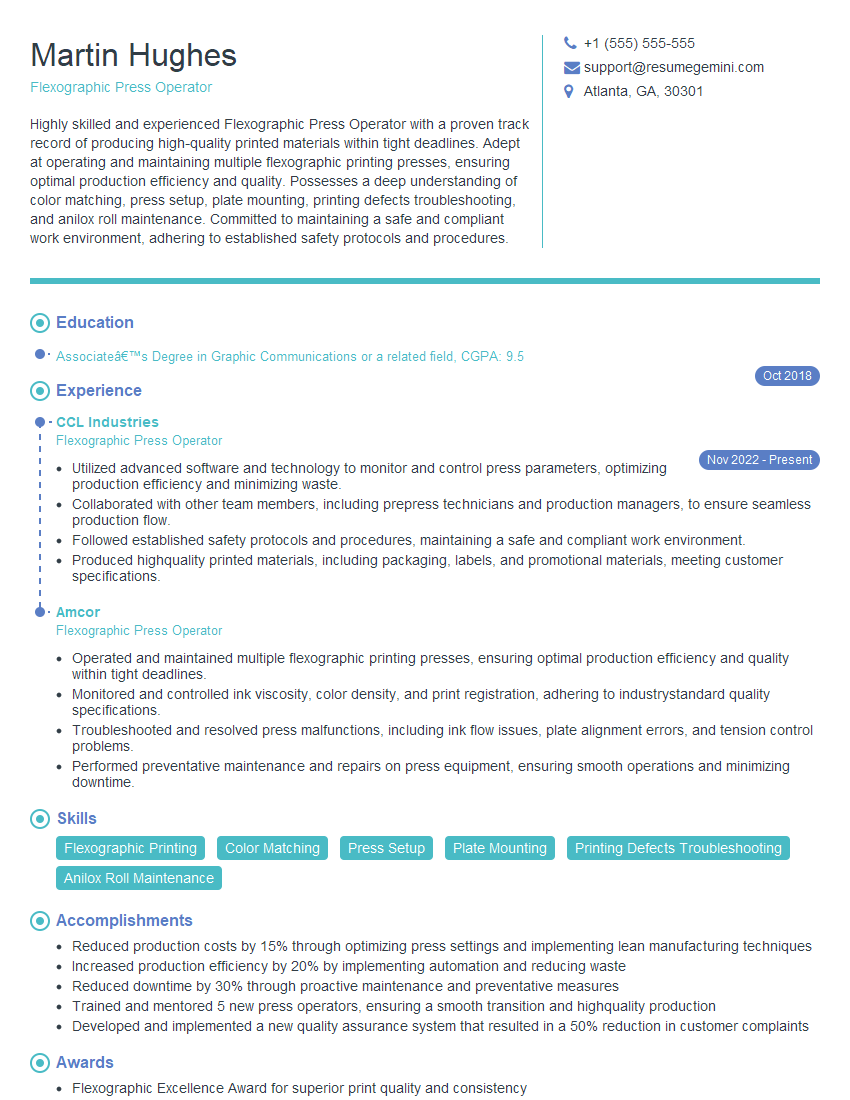
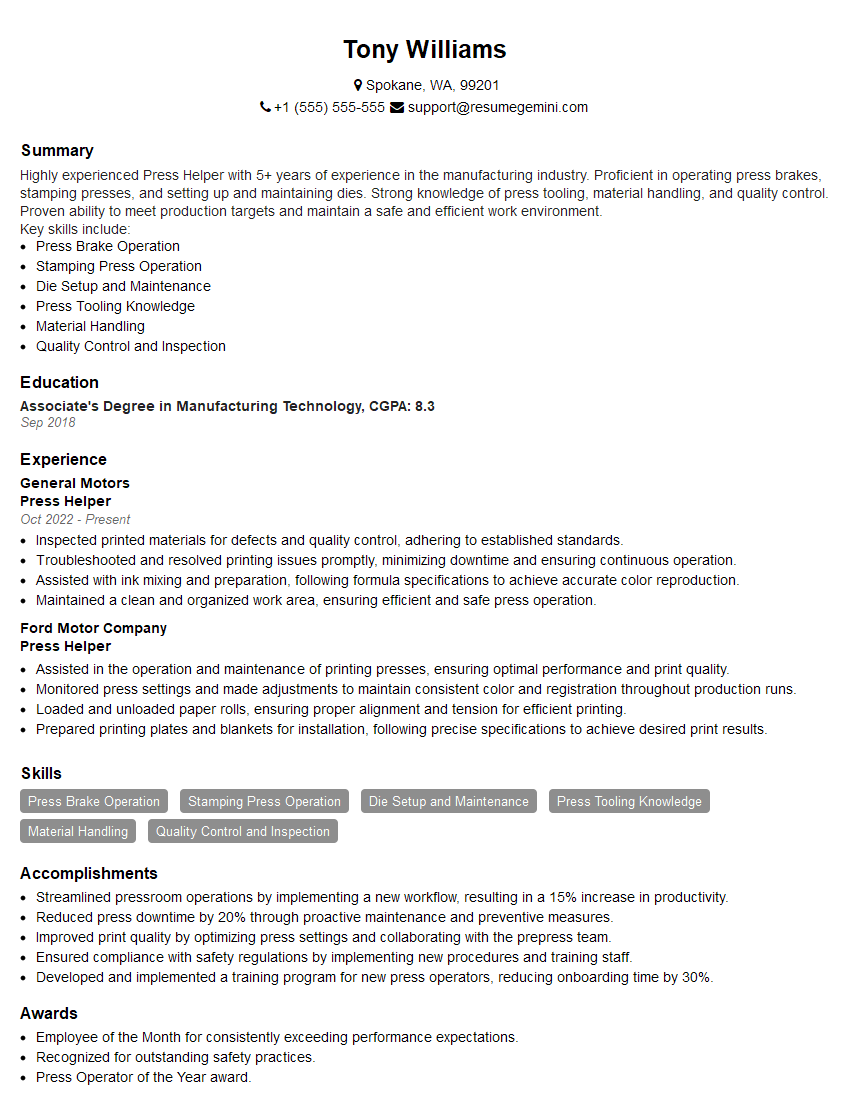
Mastering Flexographic Printing Press Operation opens doors to exciting career opportunities and advancement within the printing industry. To maximize your job prospects, create a compelling and ATS-friendly resume that highlights your skills and experience. ResumeGemini is a trusted resource to help you build a professional and effective resume that showcases your expertise. They offer examples of resumes tailored specifically to Flexographic Printing Press Operation roles, providing a valuable template to guide your own resume creation. Invest the time in crafting a strong resume – it’s your first impression with potential employers.

Explore more articles
Users Rating of Our Blogs
Share Your Experience
We value your feedback! Please rate our content and share your thoughts (optional).
What Readers Say About Our Blog
Very informative content, great job.
good