Interviews are more than just a Q&A session—they’re a chance to prove your worth. This blog dives into essential Training Plan Development interview questions and expert tips to help you align your answers with what hiring managers are looking for. Start preparing to shine!
Questions Asked in Training Plan Development Interview
Q 1. Explain your process for conducting a training needs analysis.
Conducting a thorough training needs analysis is the cornerstone of effective training plan development. It’s essentially a systematic process of identifying the gap between current employee performance and desired performance, then pinpointing the training interventions needed to bridge that gap. My process involves three key phases:
- Phase 1: Organizational Analysis: This involves examining the overall business goals and strategies. We look at factors like the company’s strategic plan, market trends, and competitive landscape. For example, if the company is launching a new product, the training needs will be very different than if they’re aiming for increased efficiency in a specific department. This phase also includes resource analysis, looking at budget, time constraints, and available technology.
- Phase 2: Task Analysis: Here, we focus on the specific jobs and tasks for which training is needed. This includes detailed job descriptions, observation of employees performing their tasks, and interviews to understand any challenges they’re facing. For example, if we’re training customer service reps, we’ll analyze the steps involved in handling a customer complaint, identifying areas where training could improve efficiency and customer satisfaction.
- Phase 3: Individual Analysis: This involves assessing the individual knowledge, skills, and abilities (KSAs) of the target audience. We use methods like surveys, interviews, and performance appraisals to determine existing skill levels and identify learning gaps. This allows for personalized training that addresses the specific needs of each employee, rather than a one-size-fits-all approach. For example, a pre-training assessment could identify employees who are already proficient in certain areas, enabling the tailoring of training to focus on their specific weaknesses.
By combining these three analyses, I create a comprehensive picture of the training requirements, leading to a targeted and effective training plan.
Q 2. Describe your experience developing training programs using different learning methodologies (e.g., ADDIE, Agile).
I have extensive experience in developing training programs using a variety of learning methodologies. My approach often involves a blend of different models depending on the specific needs of the project and the target audience.
- ADDIE Model: This classic instructional design model (Analysis, Design, Development, Implementation, Evaluation) provides a structured framework for systematic program development. I’ve used this for large-scale, complex training projects, especially where a robust and well-documented approach is required. For example, I used ADDIE to design a comprehensive compliance training program, ensuring that all materials met regulatory requirements and were thoroughly tested before deployment.
- Agile Methodology: For smaller, more iterative projects, I’ve successfully used the agile approach. This allows for flexibility and rapid prototyping, which is especially useful when client requirements may evolve during the development process. For instance, when developing short micro-learning modules, using an agile approach allows for quick feedback and adjustments based on learner interaction data.
Regardless of the chosen model, I ensure that the training incorporates elements of adult learning theory – focusing on active participation, relevance to the learner’s work, and application of knowledge in real-world settings.
Q 3. How do you ensure training aligns with organizational goals and learning objectives?
Alignment of training with organizational goals and learning objectives is paramount. To ensure this, I start by clearly defining the organizational strategic goals and translating them into specific, measurable, achievable, relevant, and time-bound (SMART) learning objectives for the training program. For instance, if the organizational goal is to increase sales by 15%, a SMART learning objective for a sales training program might be, “Increase average sales per rep by 10% within three months of completing the training.”
This alignment is maintained throughout the development process. All learning activities, content, and assessments are carefully designed to directly contribute to achieving the defined objectives. The training materials also highlight the connection between the training and the overall organizational goals, creating a sense of purpose and relevance for the learners. Regular reviews and progress monitoring ensure the program remains on track to meet the intended outcomes.
Q 4. What methods do you use to measure the effectiveness of a training program?
Measuring the effectiveness of a training program is critical to demonstrating its impact and justifying the investment. My approach is multi-faceted, employing a combination of methods:
- Kirkpatrick’s Four Levels of Evaluation: This well-established model provides a framework for assessing training effectiveness across four levels: Reaction (how learners felt about the training), Learning (what learners learned), Behavior (how learners applied their learning on the job), and Results (the impact of training on organizational goals). I utilize different tools to assess each level, from simple feedback surveys to performance reviews and business metrics.
- Pre- and Post-Training Assessments: These allow for a quantitative measure of learning gained. I typically use pre-tests to assess existing knowledge and post-tests to measure knowledge gained after the training, showing the impact of training on knowledge acquisition.
- Performance Tracking: This is key to measuring behavior change. I track key performance indicators (KPIs) relevant to the training objectives, both before and after training, to assess the impact of the training on actual job performance.
- Return on Investment (ROI) Analysis: Calculating the ROI helps to demonstrate the financial benefits of the training program by comparing the cost of the program to the return in terms of improved productivity, reduced errors, increased sales, etc.
By employing a diverse set of measurement methods, I gain a comprehensive understanding of training effectiveness and can provide actionable data-driven insights to improve future programs.
Q 5. How do you adapt training materials for diverse learning styles and abilities?
Catering to diverse learning styles and abilities is crucial for maximizing training effectiveness. My approach involves incorporating a variety of instructional strategies and modalities:
- Multiple Learning Modalities: I use a blended learning approach combining different methods like e-learning, instructor-led training, on-the-job training, and simulations. This allows learners to access information and engage with the material in ways that best suit their preferred styles (visual, auditory, kinesthetic).
- Differentiated Instruction: I adapt the pace, content, and delivery methods to accommodate different learning levels. This might include providing additional support for struggling learners or offering advanced challenges for those who are progressing quickly. For instance, offering tiered activities where some learners tackle basic concepts while others tackle more complex problems.
- Accessibility Considerations: I ensure that training materials comply with accessibility standards (WCAG) to make them usable by people with disabilities. This includes using alternative text for images, providing transcripts for videos, and employing clear and simple language.
- Universal Design for Learning (UDL) Principles: UDL is a framework that guides the creation of flexible learning environments that can accommodate a wide range of learner needs. I apply these principles by providing multiple means of representation (e.g., text, audio, video), multiple means of action and expression (e.g., writing, discussions, presentations), and multiple means of engagement (e.g., games, simulations, real-world case studies).
By implementing these strategies, I create inclusive learning experiences that cater to a wide spectrum of learning styles and abilities, ensuring that all participants can successfully benefit from the training.
Q 6. Describe your experience using authoring tools for eLearning development (e.g., Articulate Storyline, Adobe Captivate).
I possess considerable experience using various eLearning authoring tools, including Articulate Storyline and Adobe Captivate. My proficiency extends beyond simply creating visually appealing courses; I understand how to leverage these tools’ functionalities to build effective and engaging learning experiences.
Articulate Storyline: I utilize Storyline’s features, such as branching scenarios, interactive simulations, and knowledge checks, to create dynamic and interactive eLearning modules. For example, I built a Storyline course on customer relationship management (CRM) software that incorporated interactive tutorials and realistic case studies, allowing learners to practice using the software in a safe and controlled environment. I also leverage its robust tracking and reporting capabilities to monitor learner progress and identify areas for improvement.
Adobe Captivate: I’ve used Captivate to develop screen recordings, tutorials, and interactive demos. Its screen recording capabilities are useful for creating step-by-step guidance for software applications or complex processes. For instance, I developed a Captivate tutorial that demonstrated how to use company-specific software, complete with quizzes to reinforce key concepts and track learner understanding.
My experience with these tools allows me to create engaging, interactive, and accessible eLearning content that effectively delivers information and enhances learner engagement.
Q 7. How do you incorporate feedback into the iterative design process for a training program?
Incorporating feedback is integral to the iterative design process for any training program. I actively solicit and analyze feedback at various stages of development, using it to refine and improve the training. My approach includes:
- Pilot Testing: Before full-scale implementation, I conduct pilot tests with a smaller group of learners, representing the target audience. This allows me to identify any usability issues, content gaps, or areas where the training is unclear or ineffective. Feedback from the pilot test is thoroughly reviewed and used to make necessary revisions.
- Learner Feedback Surveys: I regularly use surveys to gather feedback on different aspects of the training, such as the content, delivery methods, engagement levels, and overall effectiveness. These surveys are typically conducted at the end of each module or at the conclusion of the entire program.
- Stakeholder Feedback: I solicit feedback from stakeholders, including subject matter experts (SMEs), managers, and HR professionals. This ensures alignment with organizational goals and identifies potential areas for improvement from different perspectives.
- Performance Data Analysis: Post-training performance data provides valuable insights into the effectiveness of the training. If performance doesn’t meet expectations, I analyze the data to identify areas where improvements are needed and adjust the training accordingly.
I use a structured approach to manage feedback, categorizing it by type (e.g., usability, content, engagement), prioritizing issues based on their impact, and documenting changes made to the training in response to the feedback. This iterative process results in a more effective and well-refined training program that better meets the learners’ needs and organizational goals.
Q 8. How do you manage the budget and timeline of a training project?
Budget and timeline management for training projects is crucial for success. It involves a multi-step process starting with a detailed needs analysis to determine the scope of the project. This analysis informs the creation of a comprehensive budget, meticulously outlining all anticipated costs: instructor fees, materials, technology, venue rental (if applicable), marketing, and administrative expenses. Simultaneously, a realistic project timeline is developed, breaking down the project into manageable phases with clear deadlines for each stage – from needs assessment and design to delivery and evaluation.
For example, in a recent project training sales teams on a new CRM system, I initially estimated a budget of $20,000. Through detailed cost analysis, I identified opportunities for savings by using existing online training platforms instead of external vendors, ultimately reducing the budget to $15,000 without compromising quality. The timeline was similarly refined; by using a blended learning approach (online modules plus a shorter, focused in-person workshop), we reduced the total training time by 30%, enabling faster employee onboarding and a quicker return on investment.
Regular monitoring and reporting are essential. We use project management software to track progress against the budget and timeline, identifying potential discrepancies early and allowing for proactive adjustments. This proactive approach prevents cost overruns and delays.
Q 9. Describe your experience with different training delivery methods (e.g., instructor-led, online, blended).
I have extensive experience with various training delivery methods, each offering unique advantages. Instructor-led training (ILT) provides excellent opportunities for interaction and immediate feedback, particularly effective for complex topics requiring hands-on practice. However, it can be expensive and logistically challenging to scale for large audiences.
Online training offers unparalleled scalability and flexibility. Learners can access materials at their own pace, reducing the constraints of time and location. Examples include using platforms like Moodle or Articulate Storyline to create interactive e-learning modules, videos, and quizzes. However, the lack of immediate interaction can impact engagement for some learners.
Blended learning combines the best of both worlds. It leverages online modules for self-paced learning and supplements this with instructor-led sessions for collaborative activities, discussions, and deeper knowledge consolidation. For instance, I developed a blended learning program for a healthcare organization. Online modules covered regulatory compliance, while in-person workshops focused on practical application and case studies, resulting in higher knowledge retention and improved performance.
Q 10. How do you create engaging and effective training content?
Creating engaging and effective training content is paramount. I utilize a learner-centered approach, focusing on the needs, preferences, and learning styles of the target audience. This starts with a thorough needs analysis, identifying knowledge gaps and desired outcomes. I then leverage various techniques to create interactive and memorable content.
This includes incorporating storytelling, real-world examples, case studies, interactive exercises, simulations, and gamification elements. Visual aids such as images, videos, and infographics enhance engagement and comprehension. I prioritize concise and clear language, avoiding jargon and using plain language. Furthermore, regular feedback loops throughout the development process are essential to ensure the content is relevant, engaging, and achieves its intended learning objectives. For example, in a recent project training employees on customer service skills, I integrated a role-playing simulation, allowing learners to practice handling difficult customer scenarios in a safe environment. This hands-on approach significantly enhanced knowledge retention and skill development.
Q 11. Explain your experience with learning management systems (LMS).
My experience with Learning Management Systems (LMS) is extensive. I’ve worked with several platforms, including Moodle, Blackboard, and TalentLMS, managing course creation, deployment, tracking learner progress, and generating reports. I understand the importance of selecting an LMS that aligns with the organization’s needs and budget, considering factors such as scalability, user-friendliness, integration with other systems, and reporting capabilities.
Beyond basic functionality, I utilize advanced features like automated reminders, personalized learning paths, and integration with assessment tools to optimize the learning experience. I can also customize LMS interfaces to match branding and enhance user experience. For instance, I developed a custom Moodle course for a large corporation, integrating it with their existing HR system to streamline employee training and performance management processes.
Q 12. How do you handle challenges or unexpected issues during training implementation?
Handling unexpected challenges during training implementation requires a proactive and adaptable approach. I employ a robust risk management strategy during the planning phase, identifying potential problems and developing contingency plans. However, unforeseen circumstances can still arise. For example, a sudden technical issue with the LMS could disrupt the training schedule.
My approach involves: (1) Rapid assessment of the situation to understand the impact and severity. (2) Communication – promptly informing stakeholders about the issue and the actions being taken to resolve it. (3) Problem-solving – implementing alternative solutions, such as providing offline materials or rescheduling sessions. (4) Continuous monitoring – tracking the effectiveness of the implemented solutions and making adjustments as needed. (5) Post-incident review – analyzing the root cause of the problem to prevent similar occurrences in the future. Through this systematic approach, I ensure minimal disruption to the training and maintain learner engagement and satisfaction.
Q 13. How do you evaluate and select appropriate training technologies and tools?
Selecting appropriate training technologies and tools requires a careful evaluation process. My approach involves: (1) Defining the learning objectives and target audience. (2) Identifying the features and functionalities required to achieve these objectives. (3) Evaluating the available technologies and tools based on factors such as cost, usability, scalability, and integration with existing systems. (4) Conducting pilot tests or proof-of-concept projects to assess the effectiveness of the chosen technologies. (5) Gathering feedback from learners and instructors to improve the learning experience.
For example, when selecting an authoring tool for e-learning development, I evaluated Articulate Storyline, Adobe Captivate, and Lectora, considering their features, ease of use, and compatibility with our existing LMS. After conducting a pilot test, we chose Articulate Storyline for its intuitive interface and robust features, ultimately producing high-quality interactive modules that were well-received by learners.
Q 14. Describe your experience with performance support tools and resources.
Performance support tools and resources are crucial for ensuring knowledge retention and application on the job. I have extensive experience integrating performance support into training programs, using various methods such as job aids, quick reference guides, online help systems, and knowledge bases. These tools are designed to provide learners with readily available information and support when they need it, ensuring they can effectively apply their learning in their daily work.
In a recent project, I developed a comprehensive online knowledge base for customer service representatives, incorporating frequently asked questions, troubleshooting guides, and best practice examples. This readily available resource improved their performance significantly, and reduced the need for repetitive training.
Q 15. How do you ensure the accessibility of training materials for learners with disabilities?
Ensuring accessibility in training materials is paramount for inclusivity and equal learning opportunities. This involves designing materials that cater to diverse needs, especially those with disabilities. My approach involves a multi-faceted strategy focusing on several key areas:
- Alternative Text for Images: Every image needs descriptive alternative text (alt text) so screen readers can convey the image’s content to visually impaired learners. For example, instead of just
<img src="image.jpg">, I’d use<img src="image.jpg" alt="A graph showing sales figures for Q3 2024">. - Captioning and Transcripts for Videos: All videos must have accurate captions and full transcripts, making them accessible to deaf or hard-of-hearing learners. I ensure captions are synchronized and accurate, using professional captioning services when necessary.
- Screen Reader Compatibility: I utilize structured HTML and ARIA attributes to ensure that screen readers can navigate and interpret the content logically. This includes proper heading structures (
<h1>,<h2>, etc.) and clear labeling of form fields. - Keyboard Navigation: All interactive elements should be navigable using only a keyboard, eliminating the need for a mouse, benefiting users with motor impairments.
- Color Contrast: I use sufficient color contrast between text and background to improve readability for individuals with low vision. Tools like WebAIM’s contrast checker are invaluable for this.
- Multiple Formats: Offering materials in various formats – such as audio recordings, text-based documents, and interactive simulations – ensures accessibility for a wider range of learners. For example, providing a downloadable PDF alongside an online interactive module.
Finally, I always consult accessibility guidelines like WCAG (Web Content Accessibility Guidelines) to ensure compliance and best practices. Regular testing with assistive technologies, including screen readers and keyboard-only navigation, is crucial to validate accessibility.
Career Expert Tips:
- Ace those interviews! Prepare effectively by reviewing the Top 50 Most Common Interview Questions on ResumeGemini.
- Navigate your job search with confidence! Explore a wide range of Career Tips on ResumeGemini. Learn about common challenges and recommendations to overcome them.
- Craft the perfect resume! Master the Art of Resume Writing with ResumeGemini’s guide. Showcase your unique qualifications and achievements effectively.
- Don’t miss out on holiday savings! Build your dream resume with ResumeGemini’s ATS optimized templates.
Q 16. Explain your process for evaluating the ROI of a training program.
Evaluating the ROI (Return on Investment) of a training program is critical for justifying its cost and demonstrating its value to the organization. My process involves a structured approach using both qualitative and quantitative data.
- Pre-Training Assessment: I establish baseline performance levels through assessments, surveys, or observations before the training commences. This allows for a clear comparison with post-training results.
- Post-Training Evaluation: Post-training assessments, including knowledge tests, skills demonstrations, or on-the-job observations, measure knowledge gained and skills acquired.
- Performance Metrics Tracking: Key performance indicators (KPIs) relevant to the training’s objectives are tracked after training completion. This might involve sales figures, customer satisfaction scores, error rates, or efficiency improvements. For example, if the training focuses on improving customer service, I’d track changes in customer satisfaction scores.
- Cost-Benefit Analysis: A detailed cost-benefit analysis is conducted, considering training costs (materials, instructor fees, time away from work) against the financial gains resulting from improved performance, increased productivity, and reduced errors.
- Qualitative Feedback: Gathering feedback from trainees through surveys, focus groups, or interviews provides valuable qualitative insights into the training’s effectiveness and areas for improvement.
Ultimately, the ROI is calculated by comparing the total benefits (monetary and non-monetary) against the total cost of the program. I present this data clearly using charts and graphs to help stakeholders understand the value generated by the training. For example, a positive ROI might be demonstrated by showing an increase in productivity leading to increased profits that outweigh the cost of the training program.
Q 17. How do you incorporate adult learning principles into your training designs?
Incorporating adult learning principles, often summarized by the acronym ANDRAGOGY, is crucial for effective training design. Adults are self-directed, experienced learners with diverse motivations. My approach focuses on several key principles:
- Relevance and Application: Training content should be directly relevant to learners’ jobs and daily tasks. I emphasize real-world applications and case studies, showing learners *how* to use new skills immediately. I avoid abstract concepts that are not directly applicable.
- Experiential Learning: I use active learning methods like simulations, role-playing, group discussions, and hands-on activities. Learning by doing is much more effective for adults than passive listening.
- Self-Directed Learning: Adults prefer to take ownership of their learning. I design training with flexibility and choices, allowing learners to set their own pace and focus on areas of interest. Modules or online resources that allow self-paced learning are often incorporated.
- Collaborative Learning: Adults benefit from peer interaction and sharing of experiences. I include group activities, discussions, and collaborative projects in training designs.
- Respect and Recognition: Adult learners appreciate respect for their experiences and knowledge. I create a safe and supportive learning environment where learners feel comfortable sharing their perspectives and contributing their expertise.
For example, instead of a lecture-style presentation on a software program, I might incorporate hands-on exercises where participants practice using the software to solve real-world problems they face in their roles. This approach fosters active engagement and improves knowledge retention.
Q 18. What are some common challenges faced in training plan development, and how do you address them?
Developing training plans comes with its own set of challenges. Some common ones include:
- Lack of Resources: Budget constraints, time limitations, or insufficient access to subject matter experts can hinder development. Solution: Prioritize training needs, explore cost-effective solutions, and leverage existing resources effectively.
- Identifying Learning Objectives: Clearly defining measurable learning objectives is crucial, but often overlooked. Solution: Use a framework like SMART goals (Specific, Measurable, Achievable, Relevant, Time-bound) to define clear, concise objectives.
- Keeping Content Engaging: Maintaining learner interest and motivation throughout the training can be difficult. Solution: Use a variety of teaching methods, incorporating multimedia, interactive exercises, and real-world examples.
- Measuring Effectiveness: Assessing the impact of the training is essential. Solution: Use a combination of pre- and post-training assessments, performance tracking, and feedback mechanisms.
- Stakeholder Alignment: Getting buy-in from various stakeholders – managers, trainers, and learners – can be a challenge. Solution: Involve stakeholders early in the planning process, clearly communicating objectives, and addressing concerns proactively.
Successfully addressing these challenges requires proactive planning, effective communication, and a flexible approach that adapts to changing needs and circumstances. Regular evaluation and refinement are key to creating a robust and effective training plan.
Q 19. Describe your experience with developing training materials for technical or complex topics.
I have extensive experience developing training materials for technical and complex topics, often involving software applications, engineering principles, and complex regulatory requirements. My approach involves breaking down complex information into manageable chunks and using various techniques to make it easier to understand.
- Visual Aids: I make extensive use of diagrams, flowcharts, illustrations, and videos to simplify complex concepts. Visuals greatly enhance comprehension, particularly for technical topics.
- Analogies and Metaphors: I employ analogies and metaphors to relate complex ideas to familiar concepts, making abstract information more relatable and understandable. For example, explaining a complex network architecture using the analogy of a road system.
- Step-by-Step Instructions: I provide detailed, step-by-step instructions and examples for technical procedures. This ensures learners can follow along easily and practice the skills effectively. Often, screen recordings or interactive simulations are incorporated.
- Interactive Exercises and Simulations: Interactive exercises and simulations provide opportunities for hands-on learning and practice, allowing learners to apply concepts in a safe and controlled environment. This is particularly useful for technical skills training.
- Real-World Case Studies: Using real-world examples and case studies demonstrates how technical concepts are applied in practice. This adds context and relevance for learners.
For instance, when training engineers on a new software, I wouldn’t just provide a manual. Instead, I would create interactive tutorials, simulations of typical engineering tasks, and videos demonstrating the software’s features and functionality within the context of their projects. This multi-modal approach significantly improves comprehension and retention.
Q 20. How do you ensure the consistency and quality of training materials?
Maintaining consistency and quality in training materials is crucial for effective learning and a positive learner experience. My approach involves:
- Style Guide: Implementing a comprehensive style guide for writing, formatting, and visual elements ensures uniformity across all materials. This includes specifications for fonts, colors, layouts, terminology, and writing style.
- Templates: Using standardized templates for presentations, handouts, and online modules simplifies the design process and ensures consistency in layout and presentation.
- Peer Review: Implementing a peer review process allows multiple individuals to review materials, identifying potential errors, inconsistencies, or areas for improvement before finalization.
- Quality Assurance Testing: Thorough quality assurance testing is essential to identify and correct errors, bugs, or inconsistencies in online modules or interactive elements. Usability testing with a small group can be particularly helpful.
- Version Control: Using a version control system (like Git) allows for tracking changes, collaboration, and easy access to previous versions of training materials. This prevents confusion and ensures everyone works with the most current and accurate materials.
- Centralized Repository: Storing all training materials in a centralized repository ensures that everyone accesses the most current version. This prevents the use of outdated or inaccurate materials.
These measures ensure that all training materials are accurate, consistent, and meet high quality standards, thereby creating a cohesive and effective learning experience for all participants.
Q 21. What are your preferred methods for gathering feedback from learners?
Gathering feedback from learners is vital for improving training effectiveness. I use a variety of methods to ensure I get comprehensive and diverse perspectives:
- Post-Training Surveys: Anonymous online surveys allow learners to provide feedback on various aspects of the training, including content, delivery, and overall effectiveness. The surveys often include a mix of quantitative (rating scales) and qualitative (open-ended questions) items.
- Focus Groups: Focus groups offer the opportunity to engage in in-depth discussions with a smaller group of learners, exploring their experiences and perspectives in more detail.
- Individual Interviews: One-on-one interviews provide a more personalized approach, allowing learners to express their feedback in a confidential setting. This is particularly useful for gathering in-depth information from key individuals.
- Observations: Direct observation of learners during the training allows for real-time assessment of engagement and understanding. Note-taking and informal feedback gathering during the sessions can also provide valuable insights.
- Knowledge Checks and Quizzes: Regular knowledge checks and quizzes integrated into the training program can identify areas where learners are struggling and provide early indications of potential problems with the training design.
By using a combination of these methods, I can collect rich and comprehensive feedback, which is then used to refine training materials, improve future training sessions, and ensure that the training is meeting the learning needs of the learners.
Q 22. Describe your experience with creating assessments to evaluate learner understanding.
Creating effective assessments is crucial for evaluating learner understanding and ensuring training effectiveness. My approach involves a multifaceted strategy that incorporates various assessment methods tailored to the specific learning objectives. This ensures a comprehensive evaluation of knowledge, skills, and behavioral changes.
Firstly, I design assessments that align directly with the learning objectives. For instance, if the objective is for participants to apply a new software, the assessment might involve a practical exercise using that software. Secondly, I use a variety of assessment types, including:
- Knowledge checks: Multiple-choice questions, true/false statements, short answer questions to gauge factual understanding.
- Performance-based assessments: Simulations, role-playing, case studies to evaluate practical application of learned skills.
- Self-assessments: Surveys or questionnaires allowing learners to reflect on their own learning and identify areas for improvement.
- Observations: Direct observation of learners during practical exercises or simulations.
Finally, I analyze the assessment results to identify areas where learners excelled and areas requiring further instruction or clarification. This data informs revisions to the training materials and delivery methods, creating a continuous improvement cycle.
For example, in a recent project training customer service representatives, I used a combination of multiple-choice questions to test product knowledge, role-playing scenarios to assess communication skills, and a post-training survey to gauge learner satisfaction and identify areas for improvement. This multi-pronged approach yielded a rich dataset allowing for a comprehensive evaluation of training effectiveness.
Q 23. How do you stay up-to-date with the latest trends in training and development?
Staying current in the dynamic field of training and development is paramount. I employ a multi-faceted approach to ensure I remain at the forefront of the latest trends.
- Professional Development: I actively participate in webinars, conferences (like ATD ICE), and workshops offered by reputable organizations. These events provide valuable insights into emerging technologies and pedagogical approaches.
- Industry Publications and Research: I regularly read industry publications such as Training Magazine, and follow research from leading universities and think tanks focusing on adult learning and instructional design.
- Networking: I actively network with other professionals in the field through online communities, professional organizations, and attending industry events. These interactions provide valuable insights and perspectives.
- Online Learning Platforms: I utilize online learning platforms like Coursera and LinkedIn Learning to enhance my expertise in specific areas, such as instructional design, e-learning development, and performance management.
By consistently engaging in these activities, I ensure my knowledge and skills are aligned with the latest trends and best practices in training and development. This allows me to develop more effective and engaging learning experiences for my clients.
Q 24. How do you manage and motivate a team of trainers?
Managing and motivating a team of trainers requires a combination of strong leadership, effective communication, and a supportive environment. My approach centers on fostering a collaborative and high-performing team.
- Clear Goals and Expectations: I start by establishing clear goals and expectations for each team member, ensuring everyone understands their roles and responsibilities. This involves regular one-on-one meetings to discuss progress and provide feedback.
- Open Communication: I encourage open and honest communication, creating a safe space where team members feel comfortable sharing ideas, concerns, and challenges. Regular team meetings are crucial for sharing updates, brainstorming solutions, and celebrating successes.
- Recognition and Rewards: I actively recognize and reward individual and team achievements, both big and small. This can be through verbal praise, written acknowledgements, or other incentives. It’s vital to build a culture of appreciation.
- Professional Development Opportunities: I support my team’s professional growth by providing opportunities for training, mentoring, and attending industry conferences. This demonstrates my investment in their development and fosters a culture of continuous learning.
- Delegation and Empowerment: I delegate tasks effectively, empowering team members to take ownership and make decisions. This increases engagement and motivation by providing opportunities for growth and development.
For example, when facing a tight deadline for a large training program, I empowered my team by assigning specific tasks based on their strengths and then regularly checked in, offering support and guidance. This not only ensured the project was completed on time but also boosted team morale and fostered a sense of accomplishment.
Q 25. Describe your experience working with stakeholders to define training needs and objectives.
Collaborating with stakeholders to define training needs and objectives is crucial for ensuring the training aligns with organizational goals. My approach is based on a structured process focused on open communication and data-driven decision making.
- Needs Assessment: I begin by conducting a thorough needs assessment. This involves gathering data from various stakeholders through surveys, interviews, focus groups, and performance data analysis to pinpoint the skills gap and the desired outcomes.
- Stakeholder Meetings: I hold regular meetings with stakeholders (managers, subject matter experts, learners) to discuss the findings from the needs assessment, align on priorities, and collaboratively define training objectives. This ensures buy-in and alignment across the organization.
- Objective Setting: We use the SMART framework (Specific, Measurable, Achievable, Relevant, Time-bound) to define clear, measurable objectives for the training. This ensures that the success of the training can be effectively evaluated.
- Documentation: I meticulously document all discussions, decisions, and agreements, creating a clear record of the training’s scope and objectives for future reference.
For example, in a recent project with a manufacturing company, I collaborated with production managers, supervisors, and line workers to understand their training needs. By utilizing a combination of interviews and observation, I identified a significant gap in safety procedures. This collaborative approach led to the development of a comprehensive safety training program that directly addressed the identified needs and ultimately reduced workplace accidents.
Q 26. How do you ensure that training materials are up-to-date and relevant?
Maintaining the currency and relevance of training materials is an ongoing process. My approach includes a robust system for regular review and updates.
- Regular Review Schedule: I establish a formal review schedule for all training materials. This involves a yearly review at minimum, but more frequent updates might be needed depending on the subject matter’s volatility (e.g., technology-based training).
- Content Updates: Updates are made based on several factors: feedback from learners, changes in industry best practices, advancements in technology, and legal or regulatory updates. This ensures materials remain current and accurate.
- Version Control: A version control system (e.g., using Google Docs or similar) is used to track changes and maintain a history of revisions. This allows for easy rollback if needed.
- Expert Consultation: Subject matter experts (SMEs) are consulted to validate the accuracy and relevance of the content during the review process, ensuring expertise is maintained.
- Feedback Mechanisms: Incorporating mechanisms for learners to provide feedback (e.g., post-training surveys) allows for continuous improvement and updates based on real-world experience.
For instance, in a software training program, regular updates are critical due to the frequent software releases and feature additions. By implementing a robust review and update schedule, I ensured that the training materials always reflected the latest software version and features, keeping the training relevant and valuable for learners.
Q 27. Describe a time you had to adapt a training plan due to unforeseen circumstances.
Adaptability is key in training plan development. I recall a situation where we were delivering a large-scale leadership training program. A key speaker became unexpectedly unavailable a week before the program commencement.
My immediate response was to activate a contingency plan. This involved:
- Identifying alternative speakers: We quickly identified two internal SMEs with relevant expertise who were willing and able to fill the gap. We divided the speaker’s content between them.
- Adjusting the schedule: Minor adjustments were made to the schedule to accommodate the change in speaker lineup and the need to coordinate the content between the two presenters.
- Communicating the changes: Participants were promptly informed of the changes, emphasizing that the quality of the training would remain high despite the last-minute adjustments. Transparency was crucial.
- Rehearsing with the alternative speakers: The two replacement speakers were given ample opportunity to rehearse their presentations and ensure a cohesive experience.
Through proactive problem-solving and clear communication, we successfully mitigated the impact of this unforeseen circumstance, ensuring that the program continued without significant disruption and maintaining a positive learning experience for the participants. The outcome highlighted the importance of having a well-defined contingency plan in place to handle unexpected events.
Q 28. How do you use data and analytics to inform training design and improvement?
Data and analytics play a crucial role in informing training design and improvement. I leverage data to assess the effectiveness of training programs and make data-driven decisions to enhance their impact.
- Learner Data: I collect data on learner performance (test scores, assessment results, completion rates), learner engagement (time spent on modules, interaction with materials), and learner satisfaction (survey feedback). This provides valuable insights into how well learners are grasping the content and the overall training experience.
- Business Metrics: I track relevant business metrics like improved efficiency, increased productivity, and reduced errors, linking these directly to the training program’s outcomes. This demonstrates the ROI of training initiatives.
- Data Analysis and Reporting: I use data analysis techniques (statistical analysis, descriptive statistics) to identify trends, patterns, and areas for improvement in the training program. This data is summarized into clear and concise reports, allowing stakeholders to easily understand the impact and effectiveness of training.
- Data-Driven Decisions: Insights from data analysis inform revisions to training materials, delivery methods, and the overall training design. For example, if learner performance on a specific module is low, I’ll revise the module to improve clarity or add additional support resources.
For example, in a sales training program, we tracked sales performance after training and correlated it with learner performance on specific modules focusing on sales techniques. This analysis revealed a direct link between high scores on those modules and increased sales performance, validating the effectiveness of those specific training components and informing future training development decisions.
Key Topics to Learn for Training Plan Development Interview
- Needs Assessment: Understanding the learning gap through various methods (surveys, interviews, performance data) and defining specific training objectives.
- Learning Objectives: Writing SMART (Specific, Measurable, Achievable, Relevant, Time-bound) learning objectives that clearly articulate the expected outcomes of the training.
- Curriculum Design: Structuring the training content logically, selecting appropriate training methods (e.g., lectures, workshops, simulations, e-learning), and incorporating diverse learning styles.
- Training Delivery Methods: Evaluating the effectiveness of different training delivery methods and selecting the best fit for the target audience and learning objectives. Consider practical aspects like budget, time constraints, and location.
- Evaluation Strategies: Designing methods to measure the effectiveness of the training program, such as pre- and post-tests, surveys, and performance evaluations. This includes choosing appropriate metrics and analyzing results.
- Budgeting and Resource Allocation: Developing a realistic budget for the training program, including instructor fees, materials, technology, and other resources. Justifying the investment in training.
- Technology Integration: Incorporating technology effectively into training programs to enhance engagement and accessibility. This includes selecting appropriate learning management systems (LMS) and digital tools.
- Adult Learning Principles: Applying principles of adult learning theory (andragogy) to design effective training programs that cater to the needs and learning styles of adult learners.
- Problem-Solving in Training Development: Addressing challenges such as participant engagement, budget constraints, and logistical hurdles during the training design and implementation process.
Next Steps
Mastering Training Plan Development is crucial for career advancement in many fields, opening doors to leadership roles and demonstrating your ability to improve team performance and organizational effectiveness. To maximize your job prospects, crafting a strong, ATS-friendly resume is paramount. ResumeGemini can help you build a professional and impactful resume that highlights your skills and experience in Training Plan Development. Examples of resumes tailored to this field are available within the ResumeGemini platform to guide your efforts.
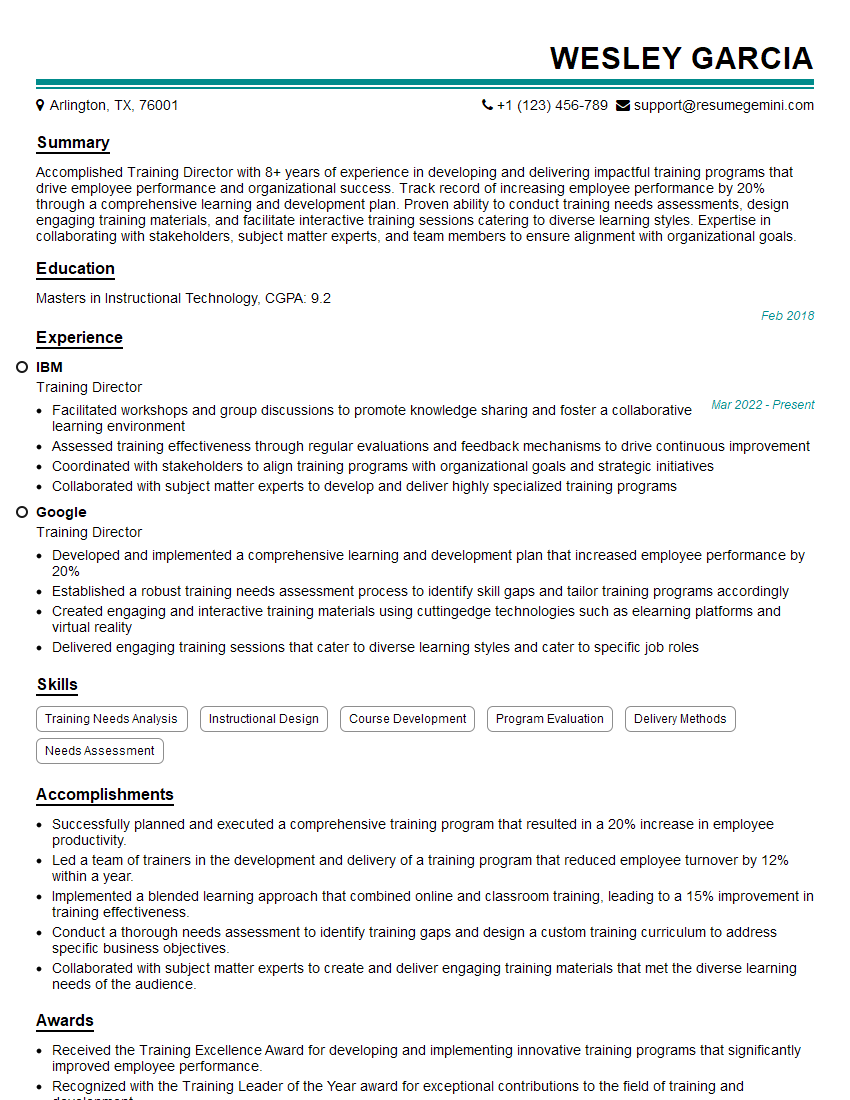
Training Director Resume Sample
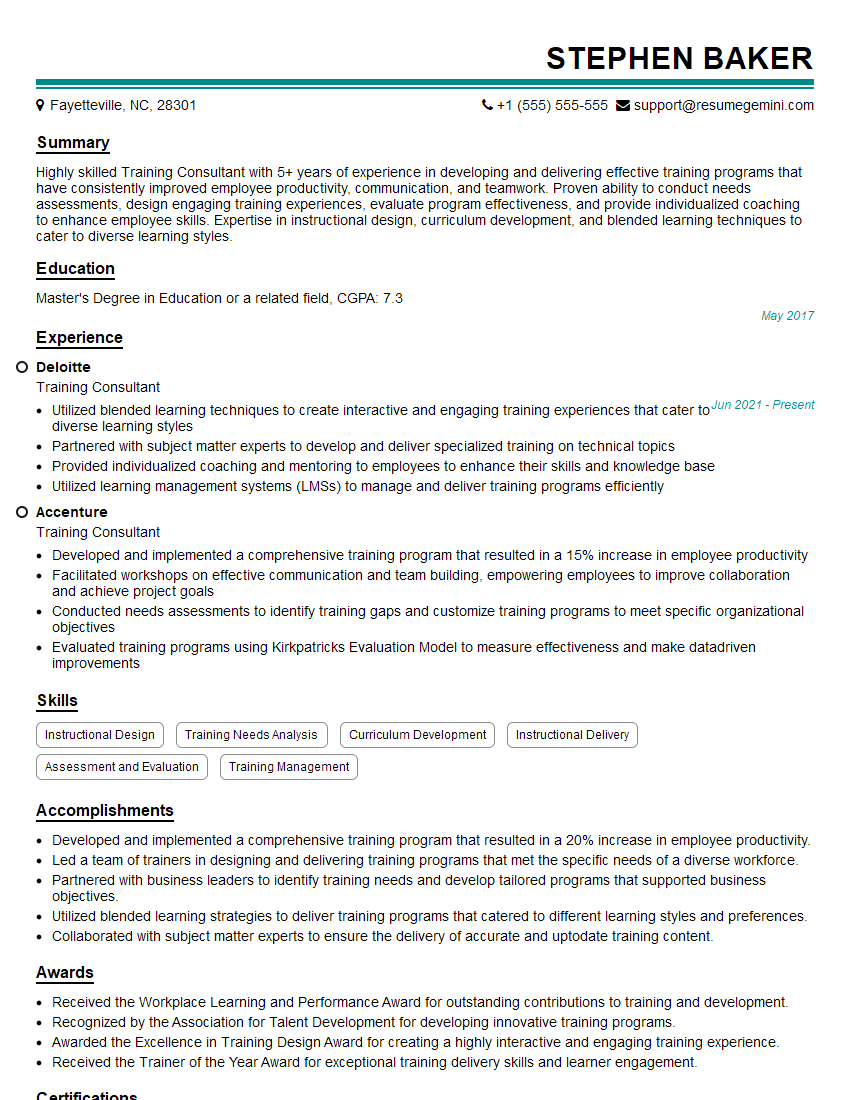
Training Consultant Resume Sample
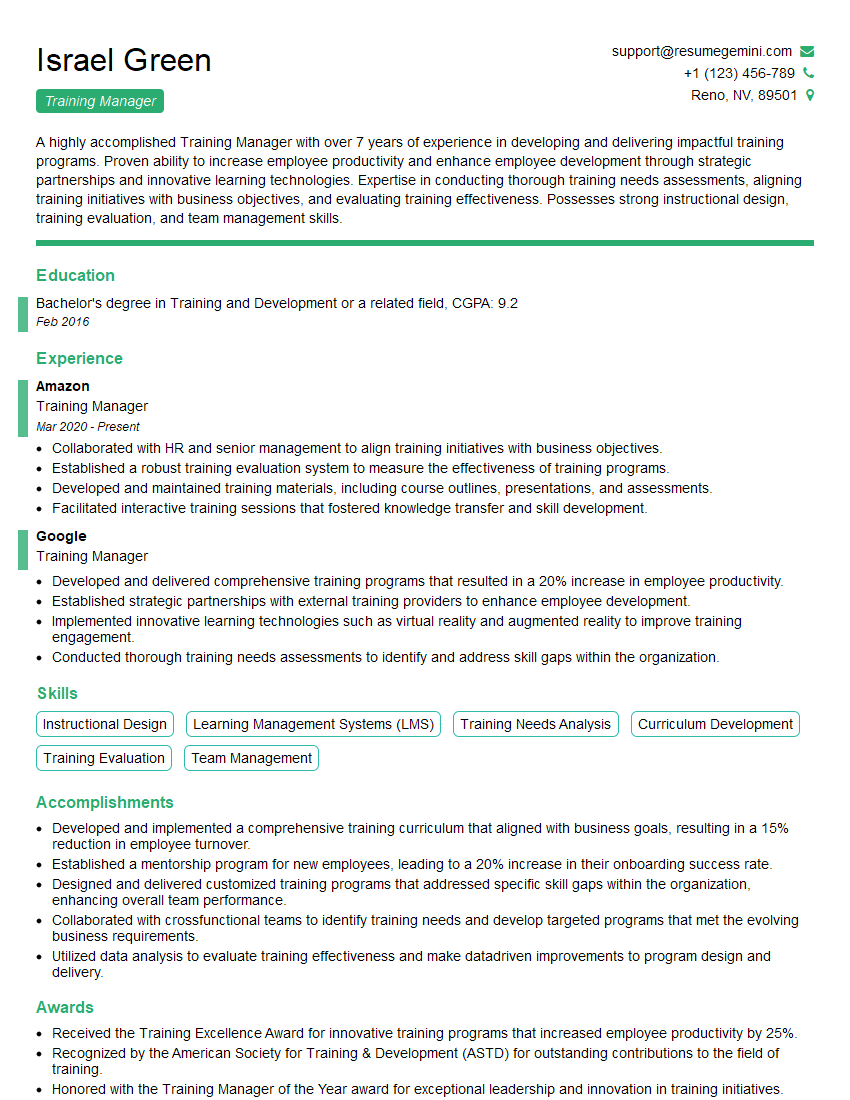
Training Manager Resume Sample
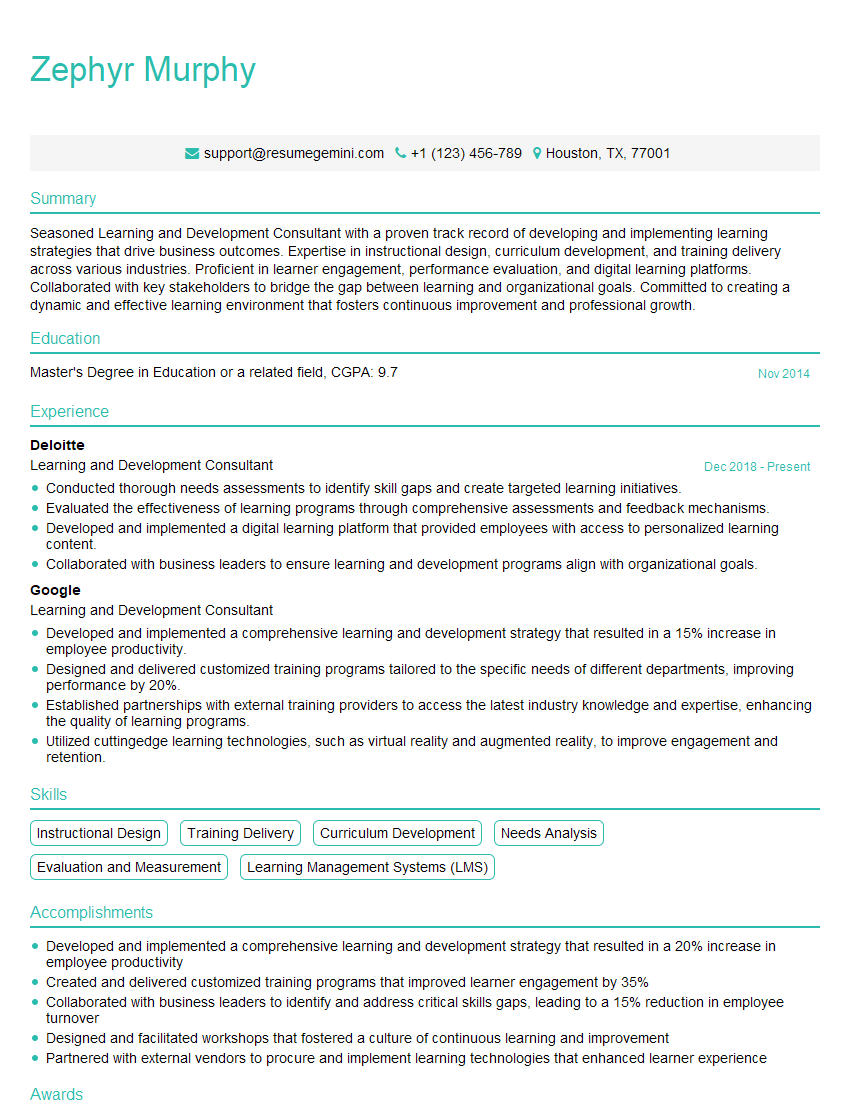
Learning and Development Consultant Resume Sample
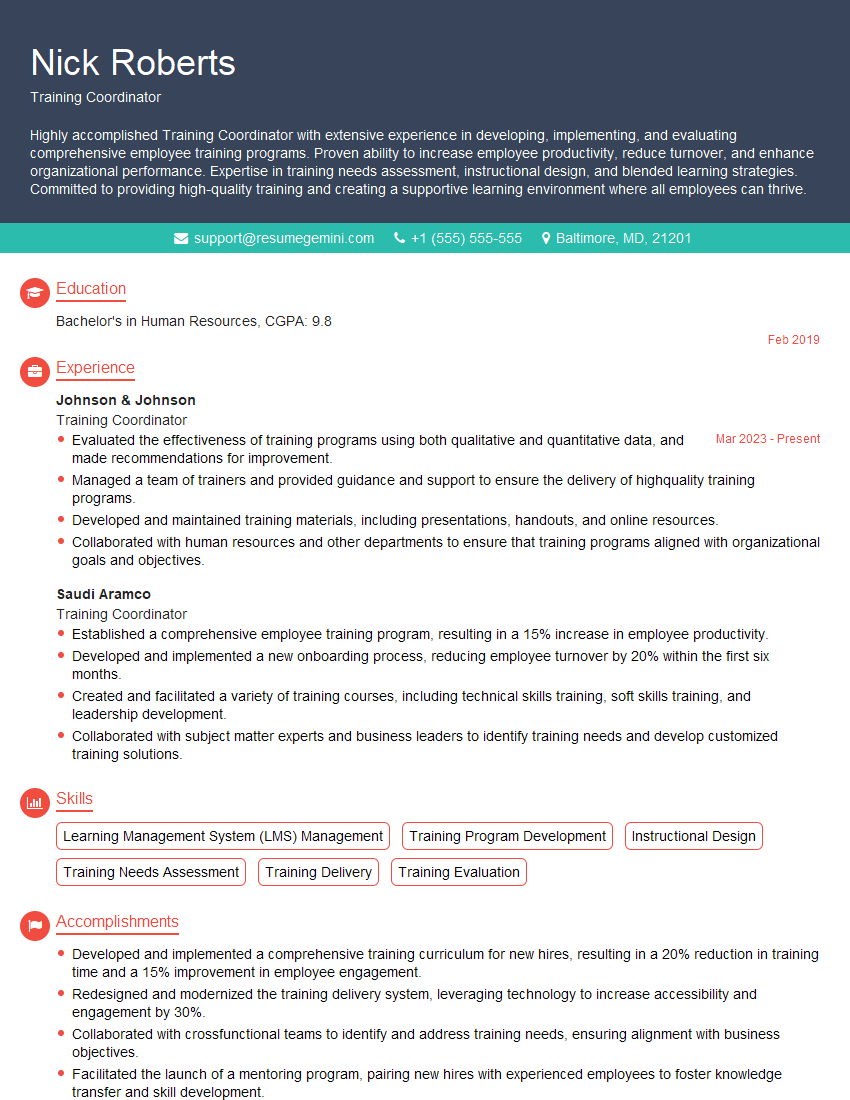
Training Coordinator Resume Sample
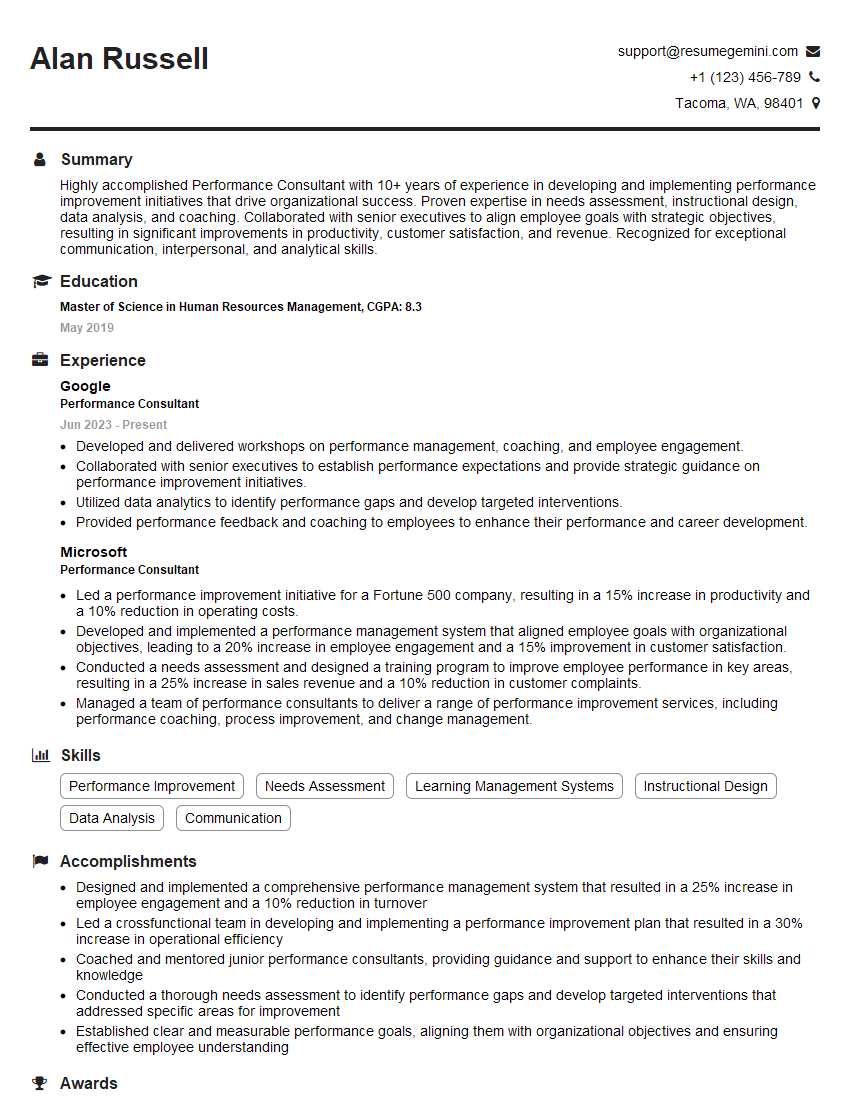
Performance Consultant Resume Sample
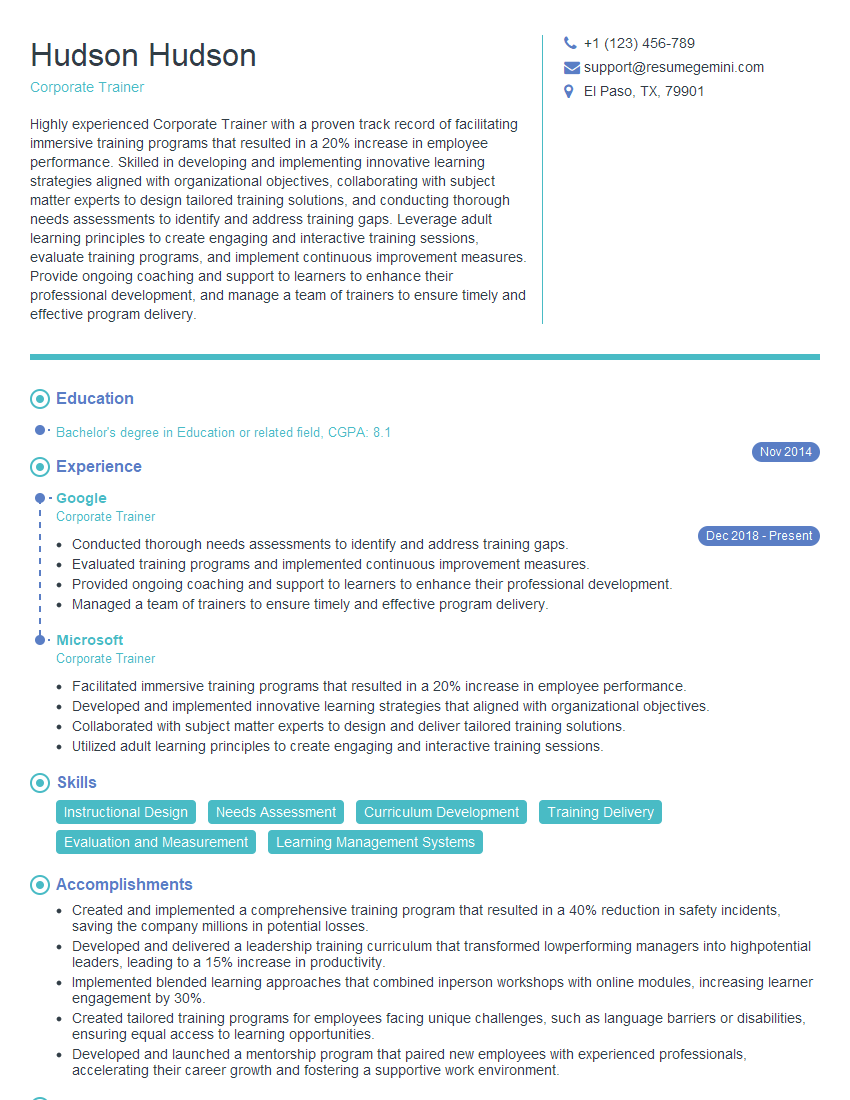
Corporate Trainer Resume Sample

Curriculum Developer Resume Sample

Training Specialist Resume Sample
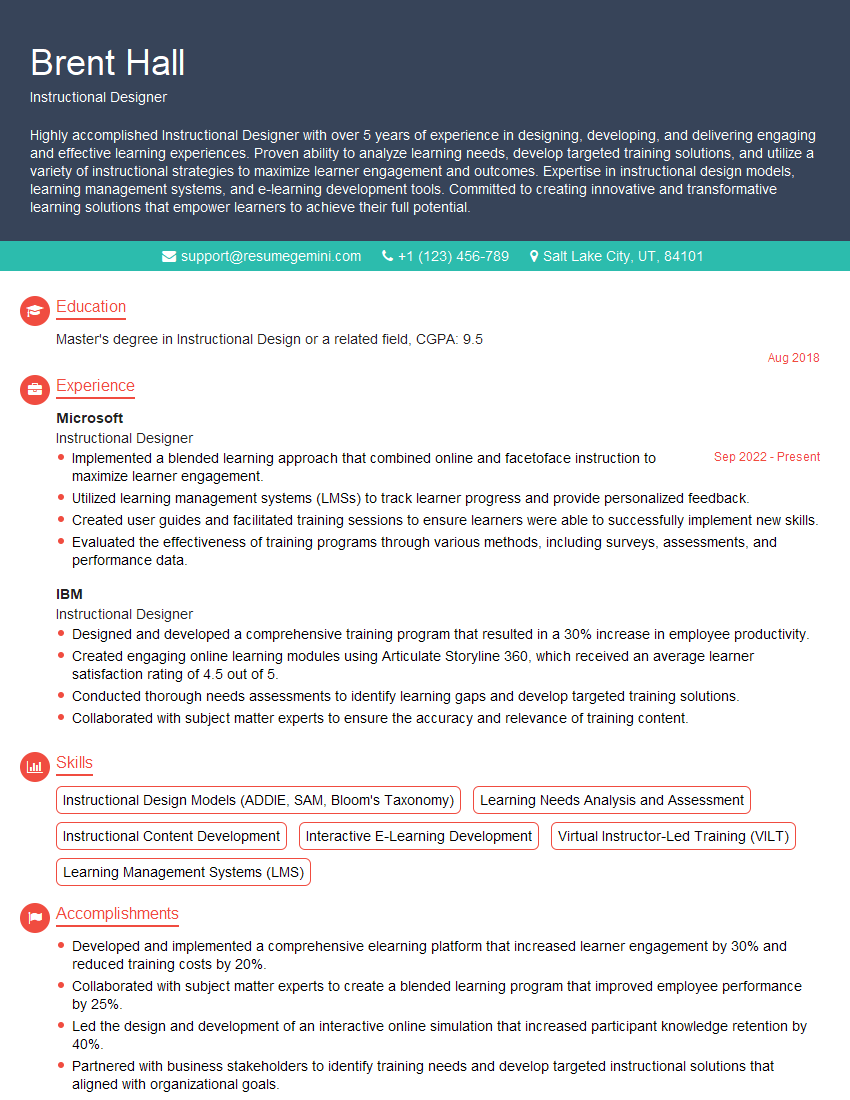
Instructional Designer Resume Sample
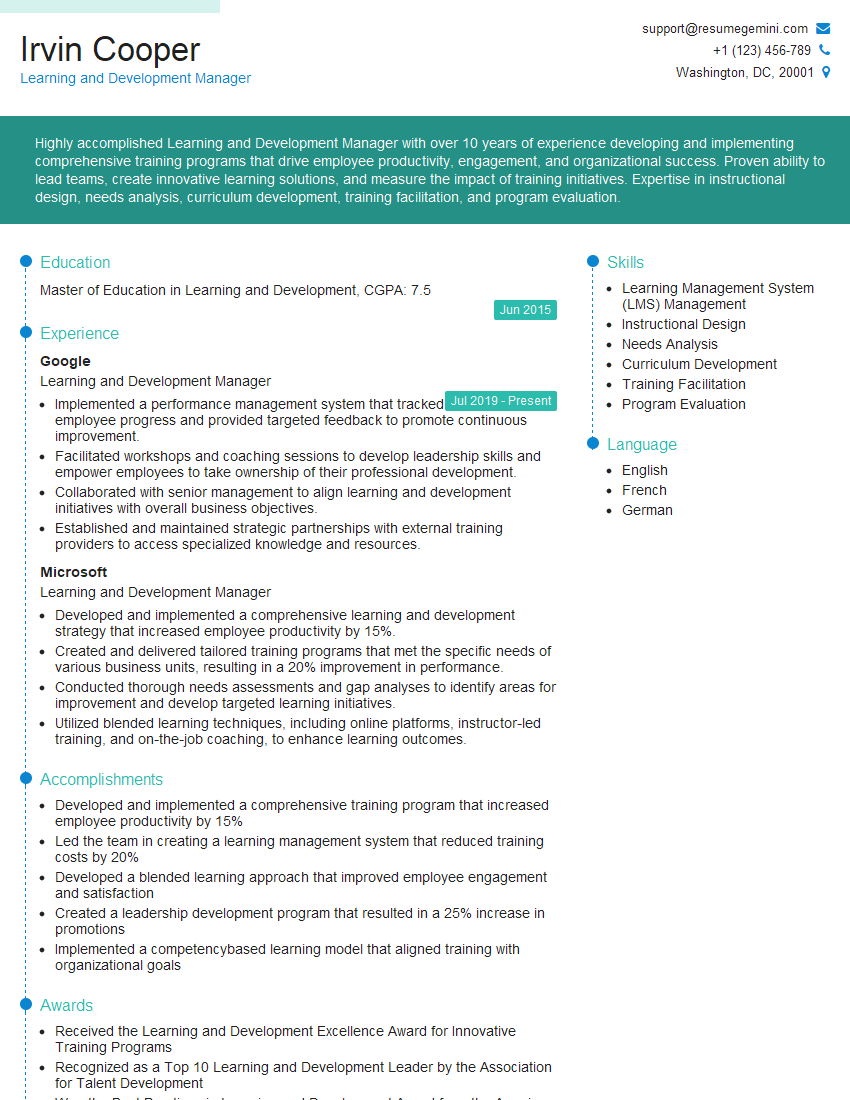
Learning and Development Manager Resume Sample
Explore more articles
Users Rating of Our Blogs
Share Your Experience
We value your feedback! Please rate our content and share your thoughts (optional).
What Readers Say About Our Blog
Very informative content, great job.
good