Interviews are more than just a Q&A session—they’re a chance to prove your worth. This blog dives into essential Flight Crew Resource Management interview questions and expert tips to help you align your answers with what hiring managers are looking for. Start preparing to shine!
Questions Asked in Flight Crew Resource Management Interview
Q 1. Define Flight Crew Resource Management (CRM).
Flight Crew Resource Management (CRM) is a management system that emphasizes the importance of human factors in aviation safety. It’s not just about the technical skills of pilots and crew; it’s about maximizing the effectiveness of the entire team by optimizing communication, coordination, decision-making, and leadership. Think of it as teamwork on steroids, specifically designed for the high-stakes environment of flight operations.
Instead of relying solely on the captain’s authority, CRM fosters a culture where every crew member feels empowered to contribute their expertise and voice concerns, regardless of rank. This collaborative approach helps identify and mitigate risks proactively, ultimately improving safety and operational efficiency.
Q 2. Explain the importance of effective communication in CRM.
Effective communication is the cornerstone of CRM. Without clear, concise, and timely communication, a flight crew cannot function optimally. Misunderstandings, even minor ones, can have catastrophic consequences in the dynamic and stressful environment of flight. Think of a simple example: If the first officer notices an anomaly on the instruments and fails to communicate it effectively to the captain, a serious situation could develop before it’s addressed.
Effective communication involves using standard phraseology (like standardized checklists and callouts), active listening, using clear and unambiguous language, confirming understanding, and providing feedback. It also means being sensitive to the communication styles and cultural backgrounds of crew members. Building rapport and trust amongst the team fosters open and honest communication which directly improves safety.
Q 3. Describe the role of assertiveness in CRM.
Assertiveness in CRM means expressing one’s opinions, concerns, or ideas respectfully but firmly. It’s not about being aggressive or confrontational; it’s about confidently contributing to the decision-making process. A crew member who is assertive will politely but directly point out discrepancies or potential hazards, ensuring all relevant information is considered.
Imagine a scenario where a flight attendant notices a potential safety issue with a piece of equipment. An assertive flight attendant would clearly communicate this concern to the pilots without hesitation or fear of reprisal, preventing potential problems. This contrasts with a passive approach, which could leave the problem unaddressed and result in a serious incident.
Q 4. How does CRM contribute to flight safety?
CRM significantly contributes to flight safety by mitigating human error, which is a leading cause of aviation accidents. By encouraging teamwork, clear communication, and a proactive approach to risk management, CRM minimizes the likelihood of errors occurring and maximizes the chances of successful error recovery if errors do happen.
For instance, CRM training equips crews to handle unexpected events (like engine failure or severe weather) more effectively by fostering a collaborative problem-solving environment. Every member contributes expertise to create the optimal course of action, ensuring a safer outcome.
Q 5. What are the key elements of a successful CRM program?
A successful CRM program relies on several key elements. These include:
- Comprehensive Training: Regular and thorough training programs for all crew members that focus on communication skills, teamwork, decision-making, assertiveness, and situational awareness.
- Leadership Development: Training that develops leadership skills in all crew members, not just the captain, fostering a shared leadership model.
- Standard Operating Procedures (SOPs): Clearly defined procedures for handling various situations, reducing ambiguity and improving consistency.
- A Just Culture: An environment where reporting errors and near-misses is encouraged without fear of blame, allowing for continuous learning and improvement.
- Regular Feedback and Evaluation: Ongoing assessment of CRM implementation and effectiveness through crew feedback, simulations, and post-flight reviews.
Q 6. Explain the concept of situational awareness in CRM.
Situational awareness in CRM refers to the crew’s understanding of the aircraft’s current state, its surrounding environment, and the overall operational context. This includes factors like the aircraft’s position, altitude, speed, weather conditions, air traffic, and any mechanical issues. It’s about having a clear mental picture of everything happening that is relevant to the flight.
Maintaining good situational awareness requires constant monitoring, effective communication, and proactive risk assessment. A pilot who is not aware of an approaching thunderstorm or another aircraft in their vicinity is demonstrating poor situational awareness, potentially leading to a hazardous situation. This awareness is a shared responsibility within the cockpit.
Q 7. How do you handle conflict within a flight crew?
Handling conflict within a flight crew requires a calm and professional approach. The goal is to resolve the conflict constructively, focusing on the task at hand and the safety of the flight. The process should:
- Identify the source of conflict: What are the specific issues causing disagreement?
- Communicate clearly and respectfully: Express concerns without accusations or blame.
- Focus on solutions, not blame: The goal is to find a workable solution, not to assign fault.
- Utilize CRM techniques: Employ active listening, check for understanding, and make sure everyone is on the same page.
- If necessary, seek assistance: In cases of persistent conflict, involve a supervisor or other resources to help mediate.
Remember, prioritizing safety above all else is crucial. If a serious disagreement impacts safety, the appropriate authority (usually the captain) must take control and ensure the situation is resolved effectively before the next critical decision-making point.
Q 8. Describe a time you successfully used CRM to overcome a challenging situation.
Crew Resource Management (CRM) is all about leveraging the collective skills and knowledge of the flight crew to enhance safety and efficiency. One time I successfully used CRM was during a challenging approach in low visibility conditions. We were experiencing a significant crosswind and the auto-pilot disengaged unexpectedly. Instead of panicking, we immediately followed the established CRM principles.
- Situation Awareness: The First Officer (FO) calmly announced the situation, clearly stating the problem (‘Auto-pilot disengaged, strong crosswind’).
- Problem Identification and Analysis: As Captain, I quickly assessed the situation, considering the wind speed, remaining distance to the runway, and aircraft capabilities. We collaboratively ruled out potential causes like system malfunction (through checklist review).
- Decision Making: Together, we decided to manually fly the approach, leveraging the FO’s expertise in handling crosswinds, while I focused on navigation and monitoring crucial parameters.
- Clear Communication: Throughout the approach, we maintained precise and concise communication. I used clear, simple language, avoiding jargon, ensuring the FO understood my instructions and I understood his feedback on the aircraft’s response.
- Workload Management: We divided the workload effectively. The FO handled the flight controls while I managed the navigation, radio communication, and monitored the instruments. This prevented any single crew member from being overloaded.
By adhering to CRM principles, we successfully landed the aircraft safely, demonstrating how teamwork and effective communication can overcome even the most challenging situations.
Q 9. What are the limitations of CRM?
While CRM is incredibly beneficial, it does have limitations. One key limitation is its dependence on the individuals involved. CRM’s effectiveness relies on crew members possessing the necessary skills, confidence, and willingness to actively participate. If crew members are hesitant to speak up, lack essential training, or are unwilling to challenge the Captain’s decisions (even if appropriate), then CRM’s potential is severely hampered.
Another limitation is the influence of external factors. High workload, fatigue, stress, or time pressure can significantly reduce a crew’s ability to effectively apply CRM principles. Similarly, organizational culture can impact CRM. If a culture of authoritarian leadership or blame prevails, open communication and collaborative decision-making, central to CRM, will likely suffer.
Finally, CRM is not a magic bullet; it doesn’t eliminate all potential errors. Despite following CRM principles perfectly, unforeseen circumstances or equipment failures can still result in incidents.
Q 10. How can CRM be improved in the cockpit?
CRM can be improved in the cockpit through several strategies. Firstly, enhanced training is critical. This should include scenarios simulating high-stress and unusual events, encouraging collaborative problem-solving and assertive communication. Simulators can be invaluable tools for this.
Secondly, regular CRM briefings before each flight can reinforce procedures and expectations, fostering a culture of teamwork and open communication. This provides opportunities to discuss potential challenges and create a shared understanding of roles and responsibilities.
Thirdly, incorporating technology to aid CRM is a promising avenue. Cockpit displays can provide better situation awareness and tools can assist in workload management. For example, systems that automatically prioritize tasks based on urgency can alleviate pilot stress and improve decision-making.
Finally, promoting a positive safety culture within the airline is paramount. This requires a strong emphasis on error reporting without blame, allowing lessons learned to be shared and implemented for improved future performance. This fosters a climate where crew members feel comfortable voicing concerns and challenging potentially unsafe practices.
Q 11. Explain the importance of workload management in CRM.
Workload management is a cornerstone of CRM. It’s about distributing tasks efficiently among crew members to prevent overload and maintain optimal performance. An overloaded crew is more prone to errors, missed cues, and poor decision-making. Imagine a scenario where the Captain is simultaneously handling navigation, communication, and aircraft systems, while the FO manages flight controls in turbulent weather. This divided attention is a recipe for disaster.
Effective workload management involves:
- Task Prioritization: Identifying critical tasks and addressing them first.
- Delegation: Assigning tasks based on crew member expertise and capabilities.
- Automation: Using automation effectively to reduce manual workload (where appropriate and safe).
- Regular Check-Ins: Briefly communicating workload status to ensure everyone is aware of the situation and can adjust accordingly.
By proactively managing workload, the crew maintains situation awareness and can react effectively to unexpected events.
Q 12. How do you manage stress and fatigue within a CRM framework?
Managing stress and fatigue within a CRM framework is crucial for safety. Both significantly impair cognitive function and decision-making ability. CRM addresses this through proactive strategies:
- Pre-flight briefings: Establish expectations and communication protocols to minimize ambiguity and workload.
- Workload distribution: Efficient task allocation reduces individual stress levels.
- Open communication: Crew members should feel comfortable expressing fatigue or stress to each other and command. If a crew member feels significantly fatigued, they should be able to state this without fear of repercussion.
- Breaks and rest periods: Utilizing available rest periods during long flights.
- Self-monitoring: Crew members should be aware of their own fatigue levels and adjust their workload accordingly.
- Fatigue management programs: Airlines should implement robust fatigue management programs, including adequate rest periods and flight scheduling.
Adopting these measures ensures that flight crews are well-rested and not operating under undue stress, enhancing overall safety.
Q 13. Describe your understanding of decision-making in CRM.
Decision-making in CRM is a collaborative process, not a solo act. It involves:
- Shared mental model: Crew members strive for a common understanding of the situation.
- Information sharing: Open communication ensures all relevant data is available to all crew members.
- Options analysis: Exploring multiple solutions before selecting the best course of action.
- Risk assessment: Evaluating the potential consequences of each option.
- Decision execution: Implementing the chosen solution effectively and monitoring its impact.
- Decision review: Evaluating the effectiveness of the decision made and adjusting as needed.
The process should be structured, logical, and based on sound judgment and available information. It should embrace the collective expertise of the flight crew rather than relying solely on a single individual’s opinion.
Q 14. What are the common barriers to effective CRM?
Several common barriers can hinder effective CRM. Poor communication, including unclear instructions, jargon, or inadequate feedback, is a significant obstacle. Lack of training or inadequate CRM training also creates a barrier, leaving crew members unprepared for complex situations. Hierarchy and authority gradients can stifle open communication and assertive communication if junior crew members feel unable to challenge the Captain’s decisions, even if they have safety concerns. A culture of blame also inhibits error reporting, preventing the identification and correction of issues.
Further, time pressure and high workload can overwhelm crew members, reducing their ability to adhere to CRM principles. Fatigue and stress can also significantly affect performance and teamwork. Finally, lack of leadership support, where management doesn’t prioritize CRM, weakens its implementation and effectiveness. Addressing these barriers through comprehensive training, supportive organizational culture, and technological advancements can improve CRM success.
Q 15. How do you address errors and near-misses in a CRM context?
Addressing errors and near-misses within a Crew Resource Management (CRM) framework isn’t about assigning blame; it’s about learning and improving safety. We use a structured approach focusing on identifying the contributing factors, not just the immediate cause. This often involves a non-punitive, confidential reporting system, like a Flight Data Recorder analysis coupled with a thorough debrief.
- Error Identification: We meticulously analyze the event, identifying what went wrong, when, and how. This includes reviewing flight data, weather reports, communication logs, and conducting crew interviews.
- Contributing Factor Analysis: This is crucial. We delve into the underlying issues: Was there inadequate communication? Did fatigue play a role? Was there a procedural deficiency? Was there a lack of situational awareness? We examine both human and technical factors.
- Corrective Actions: Based on the analysis, we implement specific, actionable solutions. This might include revised procedures, enhanced training on specific techniques, or improvements to communication protocols. For example, if a near-miss highlighted a deficiency in communication during an emergency, we’d implement training exercises focused on clear, concise, and timely communication under pressure.
- Follow-up and Monitoring: The effectiveness of the implemented corrective actions is monitored to ensure improvements are sustained and further incidents are avoided. Regular feedback and crew briefings are essential.
For instance, if a near-miss involved a misinterpretation of an ATC instruction, the subsequent analysis might lead to improved training on ATC phraseology understanding and the implementation of checklist items to confirm understanding before executing instructions.
Career Expert Tips:
- Ace those interviews! Prepare effectively by reviewing the Top 50 Most Common Interview Questions on ResumeGemini.
- Navigate your job search with confidence! Explore a wide range of Career Tips on ResumeGemini. Learn about common challenges and recommendations to overcome them.
- Craft the perfect resume! Master the Art of Resume Writing with ResumeGemini’s guide. Showcase your unique qualifications and achievements effectively.
- Don’t miss out on holiday savings! Build your dream resume with ResumeGemini’s ATS optimized templates.
Q 16. What is the role of leadership in CRM?
Leadership in CRM is about more than just authority; it’s about fostering a culture of safety and teamwork. Effective CRM leaders demonstrate several key characteristics:
- Shared Leadership: Recognizing that expertise resides within the entire crew, good leaders encourage input from all members, fostering a collaborative environment. It’s about empowering the team, not just directing it.
- Clear Communication: Leaders facilitate clear, concise, and timely communication. They actively listen and ensure everyone is on the same page, employing techniques like assertive communication to avoid misunderstandings.
- Decision-Making: Leaders guide the decision-making process, ensuring the crew follows established procedures and makes well-informed choices based on available information. They create a space where risk assessment and mitigation are open discussions.
- Situational Awareness: Excellent CRM leaders maintain a high level of situational awareness, constantly monitoring both internal crew dynamics and external factors to identify potential problems proactively.
- Error Management: They create an environment where errors are seen as learning opportunities, not personal failings. Openly addressing mistakes and implementing corrective actions is key.
Think of it like conducting an orchestra. The conductor doesn’t play every instrument, but guides the musicians to create a harmonious performance. Similarly, the leader in CRM doesn’t dictate every action, but directs and coordinates the team to ensure a safe and efficient flight.
Q 17. How do you foster teamwork and collaboration in a flight crew?
Fostering teamwork and collaboration is the cornerstone of effective CRM. This is achieved through a multi-faceted approach:
- Pre-flight Briefings: Thorough pre-flight briefings are essential to establishing roles, responsibilities, and expectations. This is where the team discusses the flight plan, potential challenges, and communication strategies.
- Open Communication: Creating a culture of open and honest communication is vital. This means encouraging crew members to speak up if they have concerns, regardless of rank or seniority. Techniques like assertive statements (‘I need clarification on…’) are promoted over passive or aggressive communication styles.
- Shared Situational Awareness: Team members actively work together to build and maintain a shared understanding of the flight situation. This involves regularly sharing information and perspectives.
- Cross-training and Shared Responsibilities: Cross-training helps crew members understand each other’s roles and responsibilities, leading to increased collaboration. Shared responsibilities create a sense of mutual support and accountability.
- Team Building Activities: While not a direct CRM component, team building exercises can help foster trust and camaraderie, which are crucial for effective collaboration.
Consider a scenario where an unexpected weather event occurs. Effective teamwork ensures the flight crew quickly assesses the situation, formulates a plan together, and communicates this effectively to ATC and each other, rather than relying solely on the captain.
Q 18. Describe your experience with CRM training.
My CRM training has been extensive and ongoing throughout my career. It’s encompassed a variety of methods:
- Classroom Training: I’ve participated in formal classroom instruction covering CRM principles, communication techniques, decision-making processes, and human factors.
- Simulator Training: Simulator sessions are invaluable for practicing CRM in realistic scenarios. We are frequently put into complex situations to practice teamwork, communication, and problem-solving under pressure.
- Line Oriented Flight Training (LOFT): LOFT exercises provide realistic, scenario-based training in a flight simulator with a full flight crew. This is where the true value of CRM teamwork is tested and refined.
- Debriefings: Thorough debriefings are crucial after every training session, simulator exercise, and occasionally even real-world flights (following incidents or near misses). These structured discussions analyze performance, highlight areas for improvement, and reinforce CRM principles.
- Ongoing Professional Development: The aviation industry is constantly evolving. I maintain my CRM proficiency through regular professional development courses and workshops.
One particularly valuable training experience involved a simulator exercise where a critical engine failure occurred during approach. The debriefing after highlighted the importance of clear communication and decisive action in a stressful situation; something I’ve directly applied in my career.
Q 19. Explain the difference between authority and assertion in CRM.
In CRM, authority and assertion are distinct concepts. While authority refers to a position of power, assertion is about expressing one’s opinion or concern respectfully and effectively.
- Authority: This is the hierarchical power structure within the flight crew. The captain has ultimate authority for the safety of the flight. This authority is based on position and responsibility.
- Assertion: This is the proactive and respectful communication of an opinion, suggestion, or concern, irrespective of one’s position in the hierarchy. It involves clear communication and respectful disagreement. It’s about bringing important issues to the attention of the flight crew, without being aggressive or undermining the chain of command.
For example, a First Officer might have a concern about an approaching weather system. They should assertively express this concern to the Captain, who has the authority to make decisions on how to handle the situation. However, the First Officer’s assertive communication is essential to ensure the Captain is aware of all relevant information.
Effective CRM promotes assertion from all crew members, allowing concerns to be addressed effectively, even if the final decision rests with the Captain. It avoids the passive acceptance of unsafe practices and actively promotes safety by empowering the team.
Q 20. How do you handle a disagreement with a senior member of the flight crew?
Disagreements are inevitable, even within a professional environment. However, within the context of CRM, resolving disagreements is crucial for maintaining safety. My approach focuses on respectful and assertive communication:
- Private Discussion: I’d first attempt a private discussion with the senior member, expressing my concerns calmly and respectfully. I would focus on the facts and potential consequences of the disagreement, rather than personal attacks.
- Data and Evidence: I’d support my position with data, evidence, and relevant procedures. This ensures my disagreement is based on objective information, not subjective opinion.
- Collaboration: The goal is to find a solution that ensures safety. I would engage in collaborative problem-solving, seeking a mutually agreeable approach. Compromise and collaboration are critical in such scenarios.
- Escalation: If the disagreement cannot be resolved privately, I would escalate the issue according to the established chain of command. This might involve consulting with another senior member or management.
- Documentation: In serious disagreements, clear and detailed documentation is essential. This acts as a record of the issue, the actions taken, and the outcome. This helps avoid future recurrence of similar problems.
Remember, this isn’t about challenging authority, but about ensuring the safety of the flight through collaborative decision making, even when faced with challenging interpersonal dynamics. It’s vital to maintain professional respect and decorum throughout the process.
Q 21. How does CRM relate to human factors in aviation?
CRM is intrinsically linked to human factors in aviation. Human factors encompasses all aspects of human performance and limitations that affect aviation safety. CRM directly addresses many of these factors by:
- Mitigating Human Error: CRM provides tools and techniques to reduce human error through effective communication, decision-making, and teamwork. Recognizing limitations such as fatigue or stress is important to avoid errors.
- Managing Stress and Fatigue: CRM contributes to effective stress and fatigue management by promoting clear communication, workload distribution, and a supportive team environment. Early recognition of these factors is essential.
- Improving Communication: Effective communication is a cornerstone of CRM and is vital for mitigating human factors issues. Miscommunication is one of the most significant contributors to aviation accidents, and CRM training helps to refine communication techniques.
- Enhancing Situational Awareness: CRM encourages the maintenance of a high level of situational awareness, which is directly linked to preventing accidents. This prevents individuals from becoming fixated on single tasks or pieces of information, hindering the ability to see the full picture.
- Promoting a Safety Culture: CRM’s emphasis on teamwork, communication, and error management fosters a safety culture within the flight crew, where everyone feels empowered to speak up and contribute to safety.
In essence, CRM is a proactive approach to managing human factors, aiming to minimize the impact of human limitations on aviation safety.
Q 22. Describe the concept of shared responsibility in CRM.
Shared responsibility in CRM means that every crewmember, regardless of rank or position, shares the responsibility for the safety and efficient operation of the flight. It’s not just the captain’s job; it’s a collaborative effort. Think of it like a sports team: the quarterback (Captain) can’t win the game alone; they need their team (First Officer, Flight Attendants) to perform their roles effectively and communicate openly.
This includes actively participating in decision-making, monitoring the flight environment, and identifying and mitigating potential hazards. It fosters a culture of mutual respect and trust, where everyone feels empowered to speak up and challenge decisions if they feel something isn’t right, even if it’s the Captain’s decision. A crucial aspect is open communication, without fear of reprisal, allowing everyone to contribute to a safe and efficient flight.
Q 23. What are some specific CRM techniques you are familiar with?
Several CRM techniques are vital for effective crew operation. These include:
- Assertiveness Training: Equipping crew members to express concerns and opinions respectfully but firmly. For example, a First Officer might use assertive communication to point out a discrepancy in the flight plan without undermining the Captain’s authority.
- Decision-Making: Employing structured methods like the DECIDE model (Detect, Estimate, Choose, Identify, Do, Evaluate) to tackle complex situations rationally and systematically. This model is particularly useful for troubleshooting unexpected in-flight situations.
- Workload Management: Distributing tasks efficiently among crew members to prevent overload and maintain situational awareness. This might involve delegating checklists or monitoring specific instruments based on individual expertise and experience.
- Communication Skills: Practicing clear, concise, and unambiguous communication to ensure everyone is on the same page. Using standardized phraseology is crucial for clarity and reducing misunderstandings.
- Error Management: Developing strategies for identifying, analyzing, and correcting errors, both human and mechanical. This includes understanding the role of human factors in errors and learning from past incidents.
These techniques are not mutually exclusive; they work together to create a strong safety culture.
Q 24. How would you address a potential conflict between safety and operational efficiency?
The conflict between safety and operational efficiency is a common challenge. The answer isn’t to compromise safety; safety always takes precedence. However, we can explore ways to achieve operational efficiency without jeopardizing safety.
Imagine a situation where a quick turnaround is needed, potentially putting pressure on the crew. My approach would be to:
- Prioritize Safety: Clearly state that safety is non-negotiable. No shortcut should be taken that compromises safety, even if it delays departure.
- Open Communication: Discuss the operational constraints openly and transparently with the entire crew. This allows everyone to understand the pressures and contribute solutions.
- Risk Assessment: Conduct a thorough risk assessment to identify any potential safety risks associated with time constraints. This might involve reviewing checklists, procedures, and communication protocols to identify potential weak points.
- Resource Optimization: Determine if additional resources (e.g., ground crew assistance) can alleviate time pressures without compromising safety standards.
- Problem-Solving: Work collaboratively to find solutions that balance efficiency with safety. This might involve prioritizing tasks, re-allocating responsibilities, or seeking assistance from air traffic control or maintenance personnel.
The key is collaborative decision-making, where everyone’s input is valued and safety is the ultimate priority.
Q 25. What are the key performance indicators (KPIs) for a successful CRM program?
KPIs for a successful CRM program are multifaceted and include:
- Accident/Incident Rate: A decrease in the number of accidents and incidents is a primary indicator of improved safety culture.
- Crew Communication Scores: Regular assessments of crew communication during simulations or in-flight observations. These could be based on standardized checklists and recorded observations.
- CRM Training Effectiveness: Evaluating the impact of CRM training through pre- and post-training assessments, focusing on knowledge retention and behavioral change.
- Crew Feedback & Satisfaction: Collecting feedback from flight crews on CRM program effectiveness. High satisfaction levels indicate a positive and supportive working environment.
- Number of Safety Reports: An increase in voluntary safety reports can indicate a culture of open communication and proactive identification of hazards.
By monitoring these KPIs, organizations can track the effectiveness of their CRM program and make data-driven improvements.
Q 26. How do you adapt CRM principles to different operational contexts?
CRM principles are adaptable to different operational contexts. The core values of teamwork, communication, and situational awareness remain constant, but their application varies depending on the specific environment.
For example, CRM in a large airline operation emphasizes standardized procedures and hierarchical communication, whereas CRM in a small, general aviation operation might focus on more informal communication and shared decision-making among a smaller crew. The key is to tailor the training and implementation of CRM principles to the specific needs and characteristics of each operational setting, ensuring that the core values are always upheld.
Q 27. Describe your approach to risk management within a CRM framework.
Risk management within a CRM framework involves a proactive and systematic approach to identify, assess, and mitigate potential hazards. It’s not just about reacting to emergencies; it’s about anticipating and preventing them.
My approach combines several strategies:
- Hazard Identification: Proactively identifying potential hazards through crew briefings, pre-flight checks, and a thorough understanding of the flight environment (weather, airspace, aircraft condition).
- Risk Assessment: Evaluating the likelihood and severity of identified hazards. This often involves using tools like a risk matrix to prioritize risks.
- Mitigation Strategies: Developing and implementing strategies to reduce the likelihood or severity of identified risks. This could involve changing flight plans, requesting additional resources, or adjusting operating procedures.
- Monitoring & Review: Regularly reviewing risk assessments and mitigation strategies to ensure their effectiveness and adapting them as needed. Post-flight debriefings offer valuable feedback for continuous improvement.
The goal is to create a safety culture where risk is continuously monitored and mitigated, not just managed reactively.
Q 28. How do you ensure consistent application of CRM principles across a flight crew?
Consistent application of CRM principles across a flight crew requires a multi-pronged approach:
- Standardized Training: Provide all crew members with consistent and high-quality CRM training using a standardized curriculum. This should include both classroom instruction and realistic simulations.
- Regular Refresher Training: Implement a system of regular refresher training to reinforce CRM principles and address any emerging issues or challenges.
- Line Operations Evaluation (LOE): Conduct regular LOEs to observe crew performance in real-world situations and provide feedback on CRM application. This provides valuable, context-specific feedback.
- Crew Resource Management Programs: Develop a structured CRM program that outlines expectations, procedures, and reporting mechanisms. Clear expectations and consistent application of these are key.
- Open Communication & Feedback: Foster a culture of open communication and feedback, where crew members feel comfortable discussing CRM-related issues without fear of reprisal. This creates an environment where all crew members are confident in their role and committed to safety.
Consistency requires constant attention to training, evaluation, and fostering a supportive culture where safety is the paramount concern.
Key Topics to Learn for Flight Crew Resource Management Interview
- Situational Awareness: Understanding the importance of maintaining a comprehensive picture of the flight environment, including weather, aircraft systems, and crew performance. Practical application: Describe how you’d handle a situation with unexpected weather changes during approach.
- Communication: Mastering clear, concise, and assertive communication techniques within the cockpit. Practical application: Explain your approach to conflict resolution in a high-pressure environment, focusing on effective communication strategies.
- Decision Making: Analyzing information effectively, identifying potential risks, and making timely, well-informed decisions, even under stress. Practical application: Discuss your process for evaluating options and selecting the best course of action during an emergency.
- Leadership and Followership: Understanding the dynamics of leadership roles in a flight crew and the importance of effective teamwork and collaboration. Practical application: Describe an example where you demonstrated leadership or effective followership within a team setting.
- Error Management: Recognizing, addressing, and mitigating human error within the cockpit. Practical application: Discuss strategies for preventing errors and responding effectively when they do occur.
- Workload Management: Efficiently managing tasks and prioritizing responsibilities to avoid overload and maintain optimal performance. Practical application: Explain how you would prioritize tasks during a busy and complex flight phase.
- CRM in various phases of flight: Understanding how CRM principles adapt and change during different stages of flight (pre-flight, taxi, take-off, cruise, approach, landing).
Next Steps
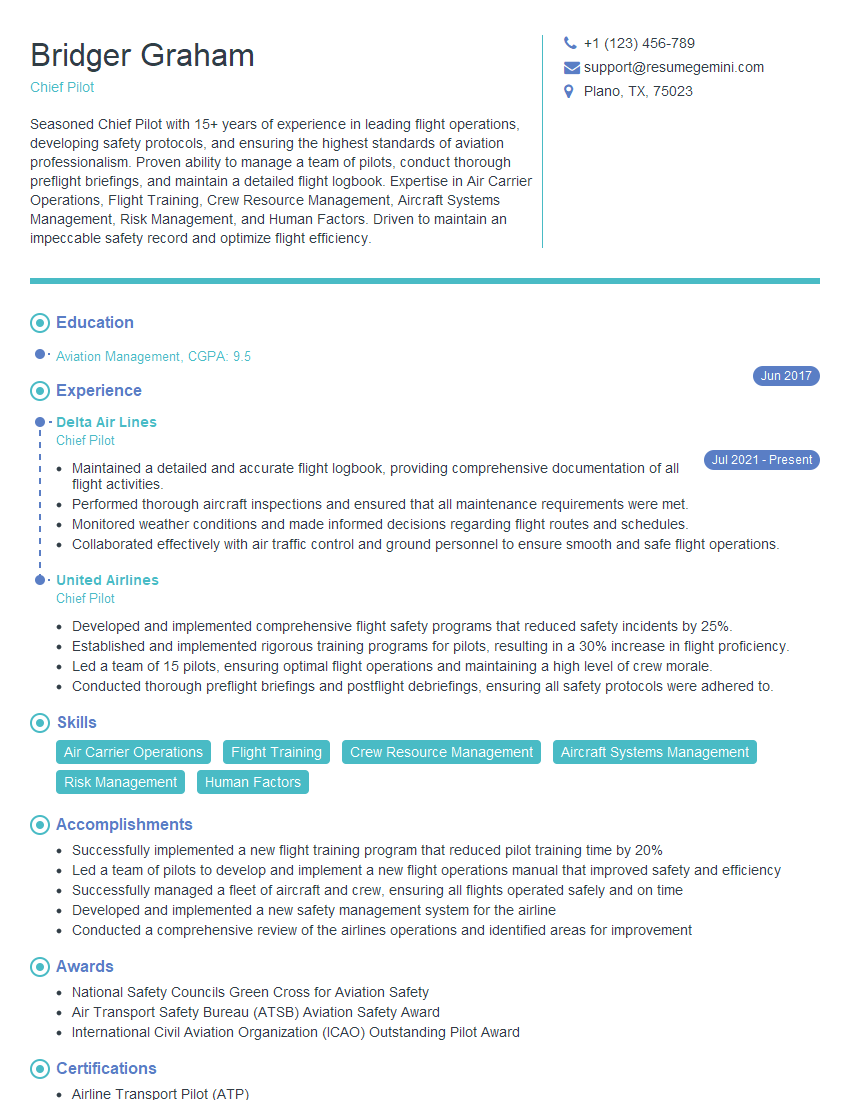
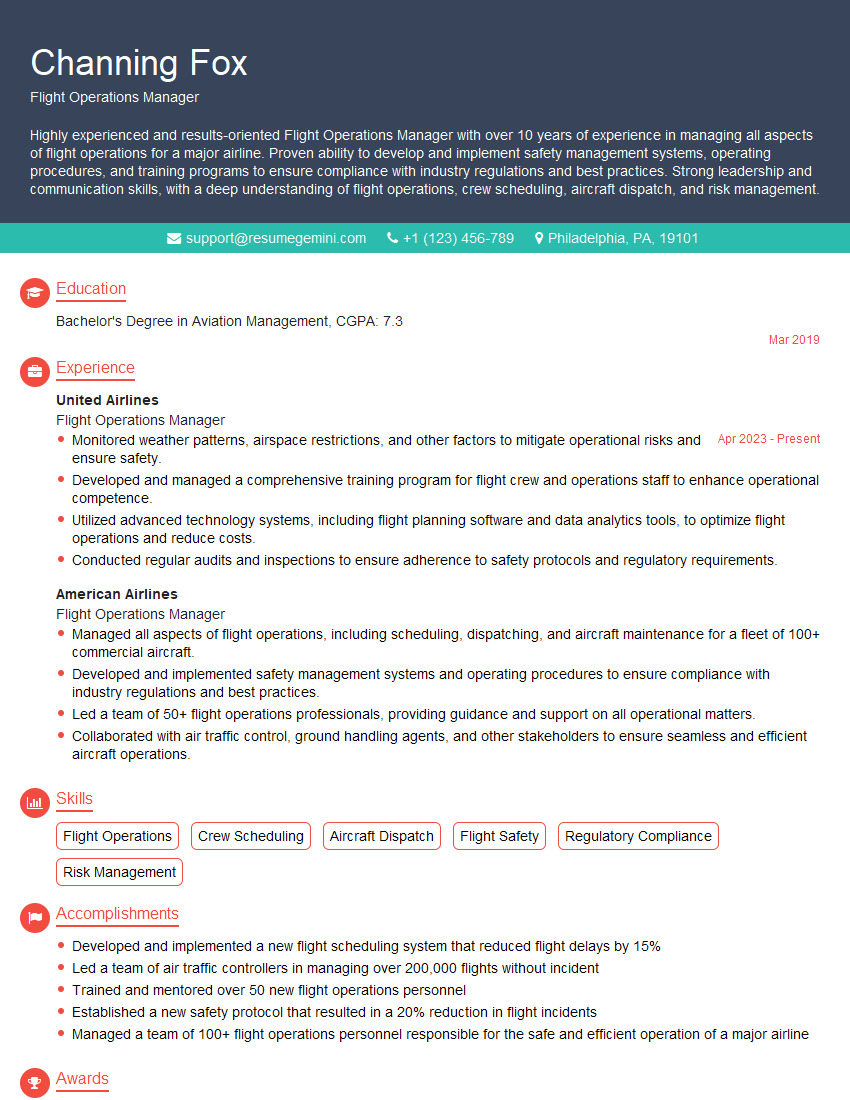
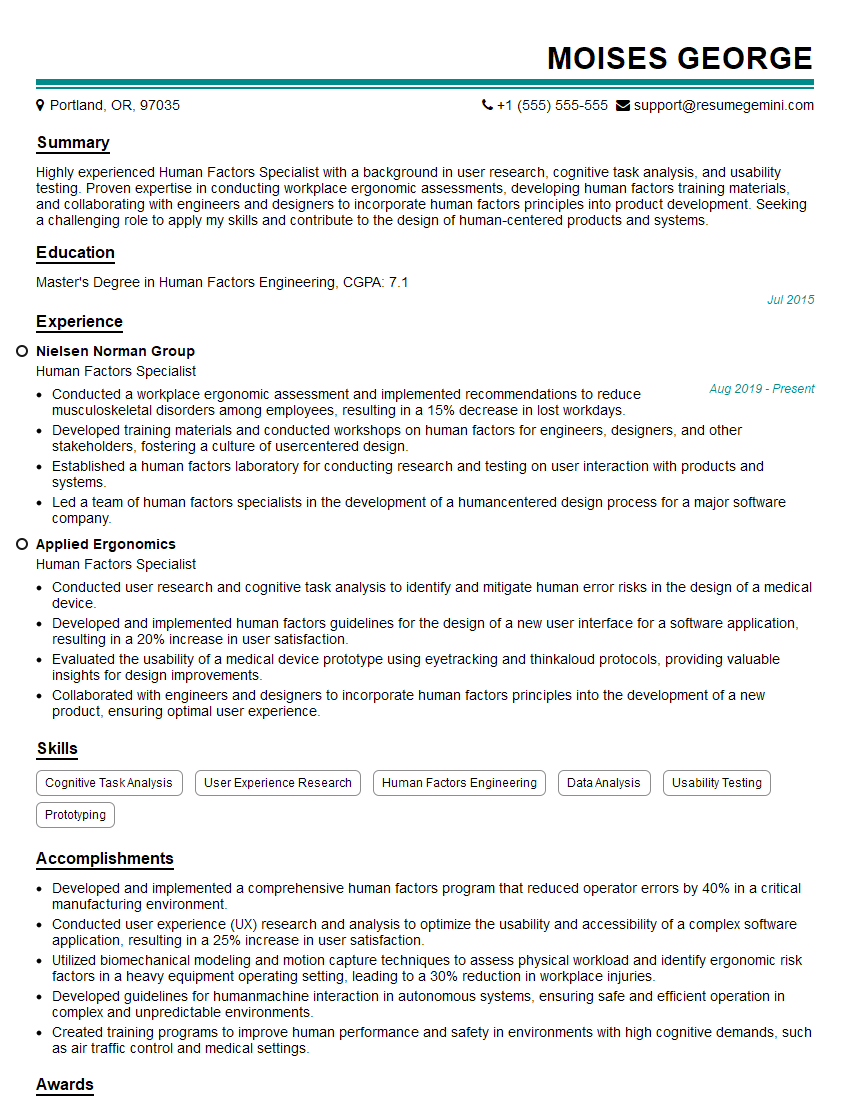
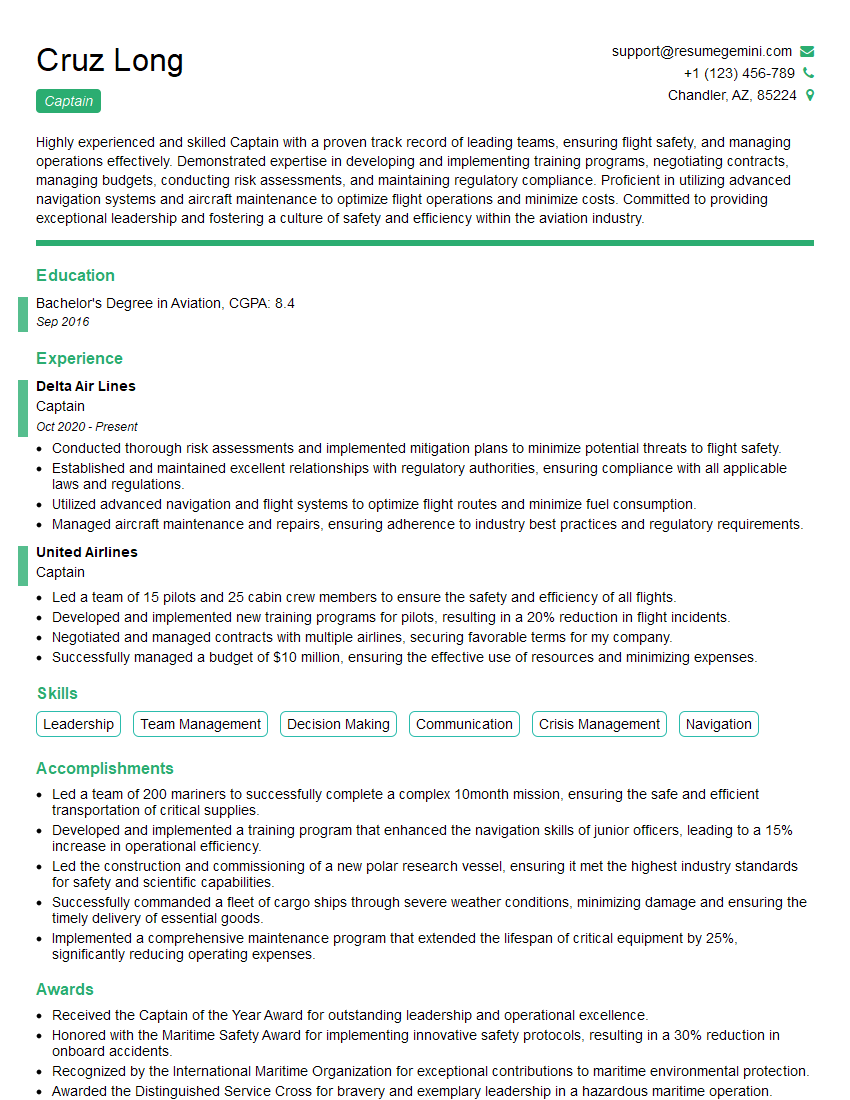
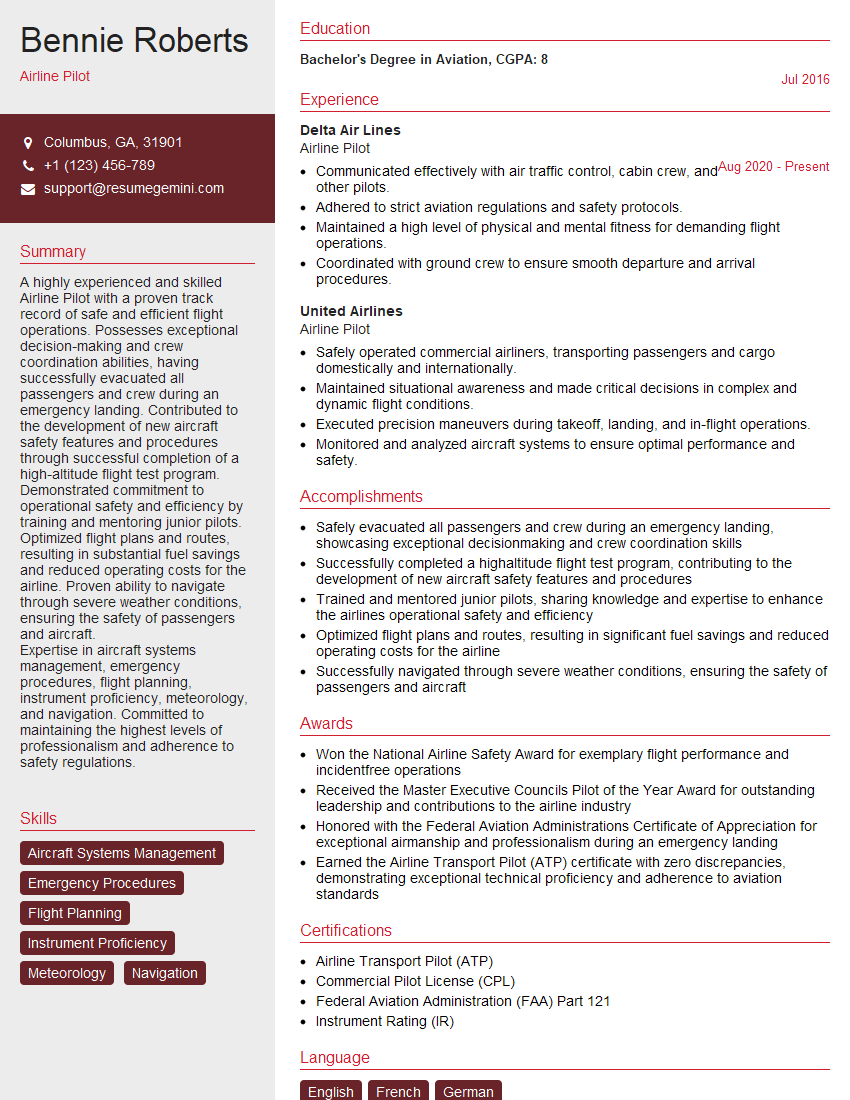
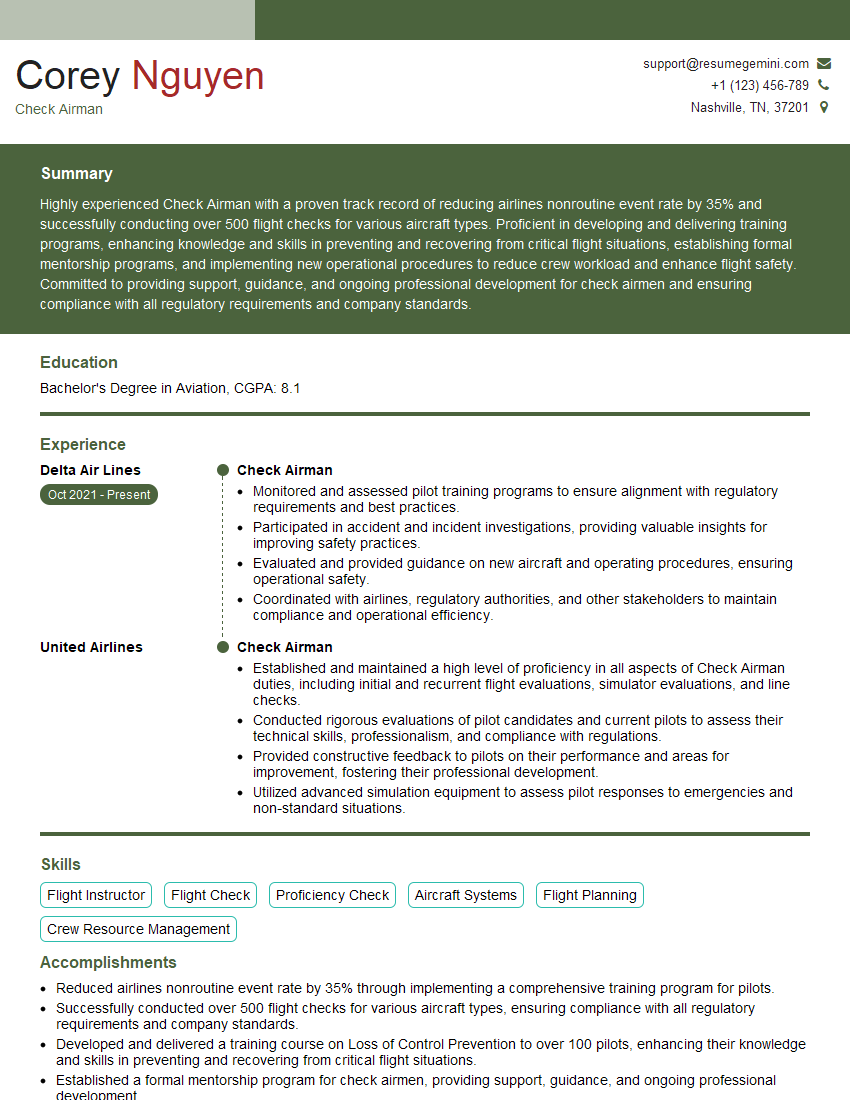
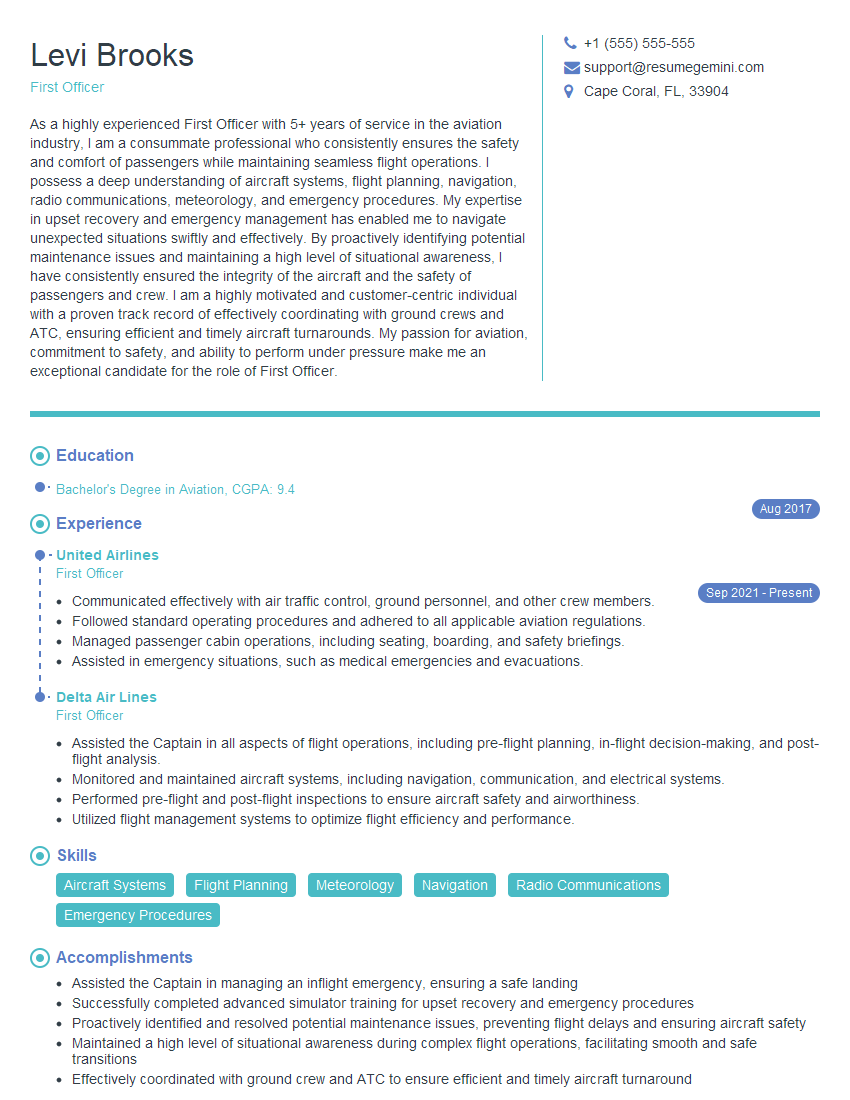
Mastering Flight Crew Resource Management is crucial for career advancement in aviation, demonstrating your commitment to safety and teamwork. A strong resume highlighting your CRM skills is essential for securing your dream role. To significantly boost your job prospects, create an ATS-friendly resume that showcases your expertise effectively. ResumeGemini is a trusted resource that can help you build a professional and impactful resume tailored to the aviation industry. Examples of resumes specifically designed for Flight Crew Resource Management positions are available to help you get started.
Explore more articles
Users Rating of Our Blogs
Share Your Experience
We value your feedback! Please rate our content and share your thoughts (optional).
What Readers Say About Our Blog
Very informative content, great job.
good