Unlock your full potential by mastering the most common Laboratory Quality Control interview questions. This blog offers a deep dive into the critical topics, ensuring you’re not only prepared to answer but to excel. With these insights, you’ll approach your interview with clarity and confidence.
Questions Asked in Laboratory Quality Control Interview
Q 1. Explain the difference between Quality Control and Quality Assurance.
Quality Control (QC) and Quality Assurance (QA) are often confused, but they are distinct yet complementary components of a comprehensive quality system. Think of QA as the prevention strategy and QC as the detection strategy.
Quality Assurance (QA) focuses on preventing errors from occurring in the first place. It encompasses the overall system, including procedures, processes, and training, designed to ensure that the laboratory consistently produces accurate and reliable results. Examples of QA activities include developing and reviewing standard operating procedures (SOPs), conducting internal audits, and managing competency assessments for personnel.
Quality Control (QC), on the other hand, is a set of operational techniques and activities used to fulfill quality requirements. It involves monitoring the analytical process through the use of controls to detect errors that have already happened. Examples of QC activities include running control samples alongside test samples, performing calibration checks on equipment, and reviewing QC data to identify trends or patterns.
In essence, QA aims to prevent problems before they arise, while QC aims to detect and correct them after they occur. They work hand-in-hand to ensure the overall quality of laboratory results.
Q 2. Describe your experience with ISO 17025 or other relevant quality standards.
I have extensive experience working under ISO 17025, the internationally recognized standard for testing and calibration laboratories. In my previous role at [Previous Company Name], I was directly involved in implementing and maintaining the laboratory’s quality management system (QMS) according to ISO 17025. This included:
- Participating in internal audits to identify areas for improvement within our QMS.
- Developing and updating standard operating procedures (SOPs) to ensure compliance with the standard.
- Managing the calibration program for laboratory equipment, ensuring traceability to national standards.
- Contributing to the development and implementation of corrective and preventive actions (CAPAs).
- Maintaining accurate records and documentation, essential for demonstrating compliance during external audits.
I’ve also worked with other relevant quality standards, such as GLP (Good Laboratory Practice) in environmental testing, and am familiar with the principles of GMP (Good Manufacturing Practice) relevant to quality control in pharmaceutical settings. The core principles of these standards – traceability, accuracy, documented procedures, and continuous improvement – are universally applicable to maintaining high-quality laboratory operations.
Q 3. How do you handle out-of-specification (OOS) results?
Handling out-of-specification (OOS) results is a critical aspect of laboratory quality control. An OOS result is any test result that falls outside of the pre-defined acceptance criteria. The response to an OOS result must be thorough, documented, and follow a predefined protocol to ensure the integrity of the data and prevent recurrence.
My approach involves a structured investigation, following these key steps:
- Immediate Action: The first step is to verify the result through retesting, reviewing the entire testing process, and checking for any potential errors (transcription, calculation, equipment malfunction etc.).
- Investigation: A detailed investigation must be conducted to determine the root cause of the OOS result. This might involve reviewing the entire analytical process from sample receipt to reporting, checking instrument calibration and maintenance records, reviewing personnel training, and evaluating the sample itself for homogeneity or potential degradation.
- Corrective Actions: Once the root cause is identified, appropriate corrective actions must be implemented to prevent similar occurrences. This could involve retraining personnel, repairing or replacing equipment, revising SOPs, or improving sample handling procedures.
- Documentation: The entire OOS investigation process, including findings, corrective actions, and verification of effectiveness, must be meticulously documented in a deviation report or similar document.
- Management Review: The OOS result and the investigation report are reviewed by management to identify any systemic issues or deficiencies that may require further action.
The goal is not only to explain the OOS result, but also to learn from the experience and improve the laboratory’s processes to prevent future occurrences.
Q 4. What are the key elements of a good quality control plan?
A good quality control plan is the backbone of a reliable laboratory. It provides a framework for ensuring the accuracy and reliability of results. Key elements include:
- Clearly Defined Objectives: The plan should specify the goals of the QC program, such as reducing errors, improving accuracy, and enhancing the overall reliability of the laboratory’s results.
- Appropriate QC Samples: The plan should define the types and frequency of QC samples (e.g., positive controls, negative controls, blanks, standards). The selection is based on the specific tests being performed and the potential sources of error.
- Acceptance Criteria: Specific and measurable acceptance criteria must be defined for each QC sample. These criteria should be based on validated methods and align with regulatory requirements.
- Corrective Actions: The plan should outline procedures for investigating and correcting OOS results. This includes a documented process for identifying the root cause, implementing corrective actions, and verifying their effectiveness.
- Record Keeping: The plan must stipulate detailed record-keeping procedures to maintain traceability of all QC data, including results, corrective actions, and any associated documentation. This helps in demonstrating compliance and allows for trend analysis.
- Regular Review and Updates: The quality control plan should be reviewed regularly (e.g., annually or whenever changes occur in the testing process) to ensure its continued effectiveness and relevance. Updates should be made as necessary to reflect improvements or changes in methodology.
A well-designed QC plan is iterative and continuously improves based on data analysis and continuous monitoring.
Q 5. Describe your experience with method validation.
Method validation is a crucial step in ensuring the reliability of analytical methods used in a laboratory setting. It’s a process of proving that a particular method is suitable for its intended purpose. My experience involves validating a wide variety of analytical techniques, including:
- Specificity: Determining if the method measures only the analyte of interest and not other substances that might be present in the sample matrix.
- Linearity: Assessing the linear relationship between the concentration of the analyte and the measured response over a specified range.
- Accuracy: Evaluating the closeness of the measured value to the true value.
- Precision: Determining the reproducibility of the results obtained under various conditions (repeatability and intermediate precision).
- Limit of Detection (LOD) and Limit of Quantification (LOQ): Establishing the lowest concentration of the analyte that can be reliably detected and quantified by the method.
- Robustness: Assessing the method’s ability to withstand small variations in experimental conditions without affecting the results significantly.
For example, during my work at [Previous Company Name], I validated a new HPLC method for the analysis of pharmaceuticals in environmental samples. This involved performing experiments to evaluate each validation parameter, generating detailed reports, and documenting all procedures meticulously. The validated method then became an integral part of our lab’s standard operating procedures.
Q 6. Explain the concept of calibration and its importance in QC.
Calibration is the process of comparing a measuring instrument’s readings to a known standard to ensure accuracy. It’s fundamental to laboratory quality control because accurate measurements are the foundation of reliable results. Think of it like checking a kitchen scale against a set of calibrated weights before you bake a cake – you need to trust your tools.
The importance of calibration in QC stems from several factors:
- Ensuring Accuracy: Regular calibration helps to identify and correct any deviations in the instrument’s readings, ensuring that the results obtained are accurate and reliable.
- Traceability: Calibration establishes a chain of traceability to national or international standards, allowing for comparison and validation of results across different laboratories.
- Meeting Regulatory Requirements: Many regulatory bodies mandate the calibration of laboratory equipment to ensure compliance with quality standards (like ISO 17025).
- Preventing Errors: Regular calibration helps to prevent errors arising from inaccurate measurements, minimizing the risk of generating false positive or negative results.
- Maintaining Data Integrity: Accurate calibration contributes to the overall data integrity of the laboratory by ensuring that all measurements are traceable and accurate.
A comprehensive calibration program should include a schedule for calibration, clear procedures, maintenance of calibration records, and a process for handling out-of-calibration equipment.
Q 7. How do you ensure data integrity in a laboratory setting?
Data integrity is paramount in any laboratory setting. It refers to the completeness, consistency, and accuracy of data throughout its lifecycle. Ensuring data integrity requires a multi-faceted approach.
In my experience, key strategies include:
- Standard Operating Procedures (SOPs): Implementing detailed and well-documented SOPs for all laboratory processes, including data acquisition, handling, storage, and analysis, helps to minimize errors and ensure consistency.
- Electronic Data Management Systems (EDMS): Using an EDMS provides a secure and auditable trail of all data, minimizing the risk of data loss, alteration, or unauthorized access. The system should have appropriate access controls and version control features.
- Data Backup and Recovery: Regular backup and recovery procedures are essential to prevent data loss due to equipment failure or other unforeseen circumstances. These procedures should be tested regularly to ensure effectiveness.
- Training and Competency Assessment: Proper training of personnel is critical to ensure they understand data handling procedures and the importance of data integrity. Regular competency assessments confirm that personnel are performing their duties correctly.
- Audit Trails: Maintaining detailed audit trails of all data modifications and accesses ensures transparency and allows for easy identification of any inconsistencies or unauthorized alterations.
- Data Validation: Implementing data validation checks throughout the data acquisition and processing stages helps to ensure the quality and accuracy of the data. This could involve range checks, plausibility checks, and cross-checks against other data sources.
By implementing these strategies, a laboratory can significantly reduce the risk of data integrity breaches and enhance the reliability and trustworthiness of its results.
Q 8. What are your experience with different types of quality control charts (e.g., Shewhart, CUSUM)?
Quality control charts are essential tools for monitoring the performance of laboratory processes and identifying potential issues. I have extensive experience with several types, most notably Shewhart and CUSUM charts. Shewhart charts, also known as control charts, utilize a simple mean and standard deviation to establish control limits. Points plotted outside these limits signal potential problems. Think of it like a thermometer – if the temperature consistently stays within a safe range, everything is fine. But if it shoots up or down outside that range, we need to investigate. In contrast, CUSUM (Cumulative Sum) charts are more sensitive to small, gradual shifts in the process mean. They accumulate deviations from a target value, making them better at detecting subtle trends that Shewhart charts might miss. Imagine a slow leak in a tire – a Shewhart chart might not notice the slow deflation until it’s significantly low, whereas a CUSUM chart would pick up the gradual pressure loss much earlier. I’ve used both extensively in various analytical methods, including ELISA, HPLC, and PCR, to monitor assay performance and identify systematic errors before they impact patient results.
For example, in a clinical chemistry lab, I utilized a Shewhart chart to monitor the glucose assay. When a control sample repeatedly fell outside the acceptable range, this triggered an investigation leading to the discovery of a faulty reagent lot. In another instance, using a CUSUM chart for a microbiology growth study, we detected a slow but consistent increase in contamination rates, prompting a review of the aseptic techniques used in the lab.
Q 9. How do you investigate and resolve discrepancies in test results?
Investigating discrepancies in test results requires a systematic approach. The first step involves verifying the initial results through repetition, using a different instrument or reagent batch if possible. This helps rule out random error. If the discrepancy persists, I move to a thorough review of the entire testing process, including pre-analytical factors (sample collection, handling, and storage), analytical factors (instrument calibration, reagent quality, and method validation), and post-analytical factors (data entry, reporting). This process often involves checking SOPs and equipment logs for any deviations. Documenting every step is crucial.
For instance, if a patient’s blood glucose reading is significantly different from the previous readings, I would first repeat the test. If the discrepancy remains, I’d investigate sample integrity – was it hemolyzed? Was it stored correctly? Then, I’d check the calibration of the glucose analyzer, the expiration date of the reagents, and review the technician’s log for any unusual occurrences. A root cause analysis (discussed later) might then be employed to pinpoint the root cause of the issue. The final step involves corrective actions, which may include recalibration of the equipment, retraining of personnel, or revision of the SOPs to prevent future discrepancies.
Q 10. Describe your experience with internal audits.
I have extensive experience conducting internal audits based on ISO 15189 and other relevant guidelines. My role typically involves reviewing laboratory records, SOPs, and equipment maintenance logs to assess compliance with established quality standards and regulations. This includes evaluating personnel competency, quality control data, and proficiency testing results. I’m adept at identifying areas for improvement and creating a comprehensive report with recommendations for corrective and preventive actions. I often work closely with the laboratory director and staff to implement improvements and ensure compliance. Audits aren’t just about finding problems; they’re about strengthening our quality management system and enhancing the overall quality of our services.
For example, during an internal audit, I identified a gap in the documentation of personnel training records. The report highlighted this deficiency, and the laboratory subsequently implemented a new training record-keeping system, addressing the identified weakness. This improved not only compliance but also made tracking employee training far more efficient and transparent.
Q 11. Explain your understanding of Standard Operating Procedures (SOPs).
Standard Operating Procedures (SOPs) are detailed, step-by-step instructions for performing specific tasks within a laboratory setting. They ensure consistency and reproducibility in all operations, from sample handling to instrument calibration. Well-written SOPs minimize variability, improve accuracy and precision, and enhance the overall quality of laboratory results. Think of them as the laboratory’s recipe book, ensuring everyone follows the same instructions to produce consistent results. They should be regularly reviewed and updated to reflect changes in technology, regulations, or best practices. The clarity and detail are paramount; any ambiguity can lead to inconsistencies.
For instance, an SOP for a blood glucose assay would detail every step: sample collection, preparation, instrument calibration, analysis procedure, quality control measures, and result reporting. This ensures that every technician performs the test in the same way, reducing errors and ensuring reliable results.
Q 12. How do you handle deviations from SOPs?
Deviations from SOPs must be thoroughly investigated and documented. Any deviation represents a potential risk to the quality and validity of the test results. The process starts with immediate corrective action to prevent further deviations. Then, a deviation report needs to be filed, which includes a description of the deviation, the reason for the deviation, the corrective actions taken, and a preventative action plan to mitigate the risk of recurrence. This documentation is vital for continuous improvement and demonstrating compliance with regulatory requirements. The level of investigation is determined by the potential impact of the deviation on patient safety or the validity of test results.
For example, if a technician forgets a crucial step in an assay procedure, this is a deviation. The corrective action would be to repeat the test correctly. The deviation report would document the oversight, any impact on the result (if any), retraining of the technician, and updates to the SOP to highlight the importance of that step, perhaps with a visual checklist.
Q 13. What is your experience with root cause analysis techniques?
Root cause analysis (RCA) is a structured problem-solving method used to identify the underlying causes of errors and deviations. It moves beyond merely addressing symptoms and delves into the root cause to prevent recurrence. Common RCA tools include the 5 Whys, fishbone diagrams (Ishikawa diagrams), and fault tree analysis. I’m proficient in all these methods. The 5 Whys technique involves repeatedly asking “why” to progressively drill down to the root cause of a problem. Fishbone diagrams visually map out potential contributing factors, and fault tree analysis uses a tree structure to show how multiple contributing factors can combine to cause a failure. The choice of method depends on the complexity of the issue.
For example, if a blood culture repeatedly shows contamination, a 5 Whys analysis might uncover the root cause: Why was it contaminated? Because the technician’s aseptic technique was poor. Why was their technique poor? Because they lacked sufficient training. Why was the training inadequate? Because there weren’t sufficient hands-on practice sessions. This pinpoints the need for improved training with focused practical sessions as the ultimate solution.
Q 14. How do you ensure the accuracy and precision of laboratory equipment?
Ensuring the accuracy and precision of laboratory equipment is crucial for reliable results. This involves a multi-faceted approach including regular calibration, preventive maintenance, and quality control checks. Calibration ensures that the equipment produces results within acceptable tolerances compared to a traceable standard. Preventive maintenance, based on manufacturer’s recommendations, minimizes the risk of equipment failure. Quality control involves incorporating control samples into every run to monitor the performance of the equipment and the entire testing process. Regular checks of equipment logs are essential. Documentation of all calibrations, maintenance, and quality control results is critical for compliance and traceability. Proper training of personnel on the operation and maintenance of the equipment is also crucial.
For example, a spectrophotometer needs regular calibration to ensure that absorbance readings are accurate. We use certified reference materials for this. Preventative maintenance involves cleaning the instrument and checking the light source. Daily quality control involves measuring known absorbance standards to check for instrument drift. All this is carefully logged to ensure traceability.
Q 15. Describe your experience with environmental monitoring in a laboratory.
Environmental monitoring in a laboratory is crucial for ensuring the integrity of test results and preventing contamination. It involves systematically monitoring the laboratory’s environment for microbial contamination (bacteria, fungi), particulate matter, and other environmental factors that could affect sample quality or test accuracy. My experience includes developing and implementing comprehensive environmental monitoring programs, encompassing:
- Sampling Strategy: Defining sampling locations (air, surfaces, water) and frequency based on risk assessment, focusing on critical areas like cleanrooms and testing zones.
- Method Validation: Ensuring the reliability and accuracy of the chosen monitoring methods, be it using settle plates, contact plates, air samplers, or other techniques.
- Data Analysis and Reporting: Tracking microbial counts, identifying trends, and generating reports to highlight potential contamination risks. This includes the use of statistical process control (SPC) charts to monitor trends and deviations from acceptable levels.
- Corrective and Preventive Actions (CAPA): Implementing appropriate corrective actions whenever deviations from established limits are observed, conducting root cause analysis, and developing preventive measures to mitigate future occurrences.
For example, in a previous role, we detected an unusual spike in fungal counts in a specific area. Through thorough investigation, we identified a leaky roof as the source. We implemented immediate remediation (roof repair) and enhanced cleaning procedures, resulting in a significant reduction in contamination levels and improvement in the overall quality of testing.
Career Expert Tips:
- Ace those interviews! Prepare effectively by reviewing the Top 50 Most Common Interview Questions on ResumeGemini.
- Navigate your job search with confidence! Explore a wide range of Career Tips on ResumeGemini. Learn about common challenges and recommendations to overcome them.
- Craft the perfect resume! Master the Art of Resume Writing with ResumeGemini’s guide. Showcase your unique qualifications and achievements effectively.
- Don’t miss out on holiday savings! Build your dream resume with ResumeGemini’s ATS optimized templates.
Q 16. Explain your understanding of Good Laboratory Practices (GLP).
Good Laboratory Practices (GLP) are a set of principles that provide a framework for conducting high-quality laboratory testing and research. They ensure the reliability, reproducibility, and validity of the data generated. GLP covers various aspects, including:
- Personnel Qualification and Training: Ensuring all personnel involved are adequately trained and qualified for their assigned tasks.
- Equipment Calibration and Maintenance: Regular calibration and maintenance of all instruments to ensure accurate and reliable measurements.
- Standard Operating Procedures (SOPs): Having clear and concise written procedures for all laboratory operations and tasks.
- Sample Management: Proper sample handling, storage, and tracking procedures, ensuring chain-of-custody is maintained.
- Data Integrity: Maintaining the accuracy, completeness, and reliability of all data generated, with appropriate documentation and record-keeping.
- Quality Assurance (QA) Oversight: Independent QA oversight to ensure adherence to GLP principles throughout the entire testing process.
Think of GLP as a recipe for reliable scientific results. Following these guidelines helps eliminate biases, human errors, and other factors that could affect the integrity of your experiments or analyses. A critical element is detailed documentation—if it’s not written down and verifiable, it didn’t happen.
Q 17. What are the key performance indicators (KPIs) you monitor in a QC laboratory?
Key Performance Indicators (KPIs) in a QC laboratory are metrics used to track the effectiveness and efficiency of the laboratory’s operations. The specific KPIs will vary depending on the laboratory’s function and testing scope, but some common examples include:
- Turnaround Time (TAT): The time taken to complete testing from sample receipt to report generation. A shorter TAT is generally preferred.
- Accuracy and Precision: How closely the test results match the true value (accuracy) and how consistent the results are across multiple measurements (precision). These are typically assessed through proficiency testing and internal quality control.
- Error Rate: The frequency of errors, such as incorrect results or procedural mistakes. A low error rate is essential.
- On-Time Delivery: The percentage of reports delivered on or before the deadline.
- Equipment Uptime: The percentage of time that laboratory equipment is operational and available for use.
- Compliance Rate: The percentage of tests performed that comply with relevant regulations and standards.
Monitoring these KPIs allows for identifying areas for improvement and optimizing laboratory processes to enhance overall quality and efficiency. For instance, a high error rate might indicate a need for additional staff training or a review of the laboratory procedures.
Q 18. How do you manage laboratory supplies and reagents?
Managing laboratory supplies and reagents requires a systematic approach to ensure availability, prevent waste, and maintain the quality and integrity of the materials. This involves:
- Inventory Management: Implementing a robust inventory management system, either manual or computerized, to track stock levels, expiry dates, and usage. This could be as simple as a spreadsheet or as sophisticated as an integrated LIMS module.
- Ordering and Procurement: Establishing clear purchasing procedures to ensure timely procurement of supplies and reagents, considering factors like lead times and minimum order quantities.
- Storage and Handling: Proper storage of reagents and supplies according to their specific requirements (temperature, humidity, light exposure), using FIFO (First-In, First-Out) principles to minimize waste.
- Quality Control: Implementing quality control checks on incoming reagents and supplies to ensure they meet specified quality standards.
- Waste Management: Establishing procedures for proper disposal of expired or unused materials, in compliance with relevant environmental regulations.
For example, we implemented a barcoding system for reagents, which linked to our LIMS. This improved inventory tracking, reduced manual errors, and allowed us to predict and prevent stockouts.
Q 19. Describe your experience with LIMS (Laboratory Information Management Systems).
Laboratory Information Management Systems (LIMS) are software solutions designed to manage and track laboratory data and workflows. My experience includes using LIMS for various functions, including:
- Sample Tracking and Management: Managing sample information, from accessioning to final reporting, including chain of custody, test requests, and results.
- Instrument Integration: Integrating analytical instruments with the LIMS to automate data transfer and reduce manual data entry, improving data integrity.
- Data Analysis and Reporting: Generating reports, charts, and graphs from the LIMS data to monitor laboratory performance and track trends.
- Quality Control: Managing QC data, including quality control samples, results, and associated reports, simplifying compliance efforts.
- Workflow Management: Using LIMS to define and manage laboratory workflows, assigning tasks and tracking progress.
A specific example is using a LIMS to automate the generation of quality control charts, flagging out-of-control results automatically and alerting personnel, thereby ensuring proactive identification and resolution of quality issues.
Q 20. How do you ensure proper sample handling and storage?
Proper sample handling and storage are paramount to maintaining sample integrity and obtaining accurate and reliable test results. This includes:
- Chain of Custody: Maintaining a complete and unbroken chain of custody, documenting every individual who handles the sample and ensuring its integrity from collection to disposal.
- Sample Labeling: Clearly and accurately labeling samples with unique identifiers, including date, time, and any relevant information.
- Temperature Control: Storing samples at the appropriate temperature, maintaining the cold chain if necessary, to prevent degradation or alteration.
- Storage Conditions: Storing samples in suitable containers and environments to prevent contamination or degradation (e.g., protected from light, moisture, etc.).
- Sample Tracking: Implementing a system to track sample location and status, ensuring easy retrieval and efficient sample management.
- Disposal Procedures: Having clear procedures for safe and proper disposal of samples once testing is complete.
In one instance, a failure to maintain the cold chain for temperature-sensitive samples resulted in inaccurate results. This highlighted the critical need for rigorous adherence to established procedures and regular audits to identify and rectify potential breaches in the sample handling process.
Q 21. Explain your understanding of statistical process control (SPC).
Statistical Process Control (SPC) is a method used to monitor and control the variability of processes over time. In a QC laboratory, SPC helps to identify and address potential problems before they significantly affect the quality of test results. It typically involves:
- Data Collection: Collecting data on key quality parameters, such as the concentration of a reagent, instrument readings, or test results.
- Control Charts: Plotting the data on control charts (e.g., Shewhart charts, CUSUM charts) to visualize trends and identify deviations from established limits.
- Limit Setting: Establishing upper and lower control limits based on historical data and statistical analysis.
- Interpretation: Interpreting the control charts to identify patterns, trends, and any points that fall outside the control limits, suggesting potential issues with the process.
- Corrective Actions: Taking appropriate corrective actions whenever deviations from established limits are observed.
For instance, if a control chart for a particular instrument shows a trend of increasing bias, it might indicate a need for recalibration or maintenance. SPC helps prevent small variations from accumulating into significant quality issues, reducing the risk of inaccurate test results and ensuring consistent performance of analytical processes.
Q 22. How do you train and mentor junior laboratory personnel on QC procedures?
Training junior laboratory personnel on QC procedures is a crucial aspect of maintaining data integrity and ensuring reliable results. My approach involves a multi-faceted strategy combining theoretical knowledge, hands-on practice, and continuous mentorship.
Structured Training Program: I begin with a comprehensive overview of Good Laboratory Practices (GLP) and relevant regulatory guidelines (e.g., ISO 17025, FDA 21 CFR Part 11). This includes lectures, presentations, and interactive workshops covering topics like documentation, calibration, quality control charts, and root cause analysis.
Hands-on Training: Theory alone isn’t enough. I incorporate extensive hands-on training where junior staff perform QC procedures under my direct supervision. This allows me to observe their technique, address any immediate questions, and provide immediate feedback. For example, I’ll guide them through the preparation and analysis of quality control samples using specific laboratory instruments, meticulously documenting each step.
Mentorship and Shadowing: I encourage a mentorship program where experienced personnel shadow junior staff, providing real-time guidance and answering questions. This fosters a collaborative learning environment and builds confidence. Regular feedback sessions help identify areas for improvement and ensure consistent application of QC procedures.
Regular Assessments and Competency Testing: I implement regular quizzes, practical exams, and performance reviews to ensure understanding and competency. This helps identify any knowledge gaps early on and ensures continuous improvement.
For example, when training on spectrophotometer quality control, I’ll walk them through preparing standards, running blanks, performing calibrations, and interpreting the results, making sure they understand the significance of each step in assuring accurate measurements.
Q 23. Describe your experience with instrument qualification and validation.
Instrument qualification and validation are critical for ensuring reliable and accurate results in a laboratory setting. My experience encompasses all phases, from initial qualification to ongoing performance verification.
Installation Qualification (IQ): I ensure that instruments are properly installed, per manufacturer specifications, and that the environment is suitable for optimal operation. This includes checking power supply, ventilation, and environmental conditions.
Operational Qualification (OQ): This involves verifying that the instrument functions as intended across its operational range. For example, for a spectrophotometer, this would involve checking wavelength accuracy, linearity, and photometric precision using certified reference materials.
Performance Qualification (PQ): This stage demonstrates that the instrument consistently produces accurate and precise results under routine operating conditions. This involves running samples with known concentrations and analyzing the obtained data against the expected values. Statistical analysis and control charts are utilized to determine the instrument’s performance.
Ongoing Maintenance and Verification: I establish a robust preventive maintenance program and regular performance checks to ensure the instrument’s continued accuracy and reliability. These activities are meticulously documented.
In one instance, I was involved in the qualification of a new HPLC system. I meticulously documented all stages of the qualification process, ensuring compliance with regulatory guidelines. This involved extensive testing and validation, ultimately ensuring the system consistently provided reliable results.
Q 24. How do you stay current with changes in regulations and best practices?
Staying current with evolving regulations and best practices is paramount in laboratory quality control. I employ a multi-pronged approach to maintain my knowledge and expertise.
Professional Organizations: Active membership in professional organizations like the American Association for Laboratory Accreditation (A2LA) provides access to updated guidelines, publications, and networking opportunities with other experts in the field.
Conferences and Workshops: I regularly attend industry conferences, workshops, and webinars to stay abreast of the latest advancements in QC methodologies and regulatory changes.
Regulatory Updates: I actively monitor regulatory websites like the FDA and relevant international bodies for updates and changes in guidelines. I subscribe to newsletters and alerts to receive timely notifications of significant changes.
Journal Articles and Publications: I regularly review peer-reviewed journal articles and industry publications to stay informed on emerging trends and best practices.
Internal Training Programs: I participate in and contribute to internal training programs to share knowledge and ensure that all laboratory personnel remain updated on the latest guidelines and techniques.
For example, when new ISO 17025 standards were released, I immediately updated our internal procedures to ensure compliance, organizing training sessions for the entire QC team to ensure everyone understood and implemented the changes.
Q 25. Describe your experience with non-conformance reporting and corrective actions.
Non-conformance reporting and corrective actions are essential elements of a robust quality management system. My approach focuses on thorough investigation, effective documentation, and preventative measures.
Immediate Investigation: Upon identification of a non-conformance (deviation from established procedures or specifications), I initiate a thorough investigation to determine the root cause. This often involves interviewing personnel, reviewing data, and analyzing equipment logs.
Detailed Documentation: All aspects of the non-conformance are meticulously documented, including the date, time, nature of the deviation, affected personnel, and preliminary findings. This documentation serves as a record for future reference and facilitates corrective action planning.
Corrective Actions (CAPA): Based on the root cause analysis, I develop and implement corrective actions to prevent recurrence. This may include procedural changes, equipment modifications, or staff retraining. Corrective actions are documented and monitored to ensure effectiveness.
Preventive Actions: Beyond addressing the immediate non-conformance, I focus on implementing preventative actions to minimize the risk of similar incidents happening in the future. This proactive approach enhances overall quality control.
For instance, if a significant deviation was discovered in a batch of test results, a thorough investigation might reveal a faulty instrument calibration. This would lead to corrective action (recalibration) and preventative action (implementation of a more robust calibration schedule and stricter adherence to SOPs).
Q 26. Explain your experience with preventative maintenance of laboratory equipment.
Preventative maintenance of laboratory equipment is crucial for ensuring accuracy, reliability, and longevity. My experience involves the development and implementation of comprehensive maintenance programs tailored to each piece of equipment.
Scheduled Maintenance: I create and maintain a detailed schedule for preventative maintenance, ensuring that all equipment undergoes routine checks and servicing according to the manufacturer’s recommendations. This includes cleaning, lubrication, and part replacements.
Calibration and Verification: Preventative maintenance involves regular calibration and verification of equipment to ensure its accuracy. Calibration records are meticulously maintained and archived.
Training and Documentation: I provide training to laboratory personnel on proper equipment operation and maintenance, emphasizing the importance of following established procedures. All maintenance activities are thoroughly documented, including dates, personnel involved, and any issues encountered.
Inventory Management: I oversee the inventory of spare parts and consumables needed for routine maintenance to minimize downtime. The inventory is regularly reviewed and updated to prevent shortages.
For example, our high-performance liquid chromatography (HPLC) system requires regular maintenance, including column replacements and solvent filter changes, which I ensure are scheduled and performed to minimize the risk of equipment failure and ensure consistently accurate results. This includes establishing a system of logging when maintenance is performed, which components were replaced, and a verification of functionality after maintenance.
Q 27. How do you handle conflicts or disagreements within the QC team?
Handling conflicts or disagreements within the QC team requires a diplomatic yet firm approach. My strategy focuses on open communication, collaborative problem-solving, and a focus on shared goals.
Open Communication: I encourage an open and respectful communication environment where team members feel comfortable expressing their opinions and concerns without fear of reprisal. I actively facilitate discussions and ensure everyone feels heard.
Collaborative Problem-Solving: When disagreements arise, I guide the team towards a collaborative problem-solving approach. This involves identifying the root of the conflict, considering different perspectives, and collaboratively reaching a solution that addresses everyone’s concerns.
Objective Evaluation: I strive to maintain an objective viewpoint, focusing on facts and data rather than personal opinions. When necessary, I may use data or evidence to help resolve disagreements.
Mediation if Necessary: If conflicts cannot be resolved internally, I may mediate the discussion to facilitate compromise and find mutually acceptable solutions. In serious cases, I may involve management for further assistance.
Focus on Shared Goals: I continually remind the team of our shared goals—maintaining data integrity, ensuring quality results, and meeting regulatory standards. This shared purpose serves as a unifying force and helps resolve conflicts more effectively.
For example, a disagreement might arise about the interpretation of a specific data point. My approach would be to facilitate a discussion, review the raw data together, and involve relevant experts if needed to reach a consensus based on facts and scientific principles.
Key Topics to Learn for Laboratory Quality Control Interview
- Good Laboratory Practices (GLP): Understanding and applying GLP principles in all aspects of laboratory operations, including documentation, sample handling, and equipment calibration.
- Quality Assurance (QA) and Quality Control (QC): Differentiating between QA and QC roles, outlining the importance of preventive measures in QA, and describing practical QC techniques like control charts and proficiency testing.
- Method Validation and Verification: Explaining the purpose and procedures for method validation (accuracy, precision, linearity, etc.) and verification, and highlighting the importance of regulatory compliance.
- Standard Operating Procedures (SOPs): Describing the development, implementation, and adherence to SOPs, emphasizing their role in maintaining consistency and reproducibility of results.
- Data Integrity: Discussing the critical importance of data integrity, including ALCOA+ principles (Attributable, Legible, Contemporaneous, Original, Accurate + complete, consistent, enduring), and strategies for maintaining data integrity throughout the testing process.
- Instrument Calibration and Maintenance: Explaining the significance of regular calibration and preventive maintenance for analytical instruments to ensure accuracy and reliability of results. This includes understanding calibration certificates and preventative maintenance schedules.
- Internal Audits and Corrective Actions: Describing the process of conducting internal audits, identifying non-conformances, and implementing effective corrective and preventive actions (CAPA).
- Regulatory Compliance (e.g., FDA, ISO 17025): Demonstrating familiarity with relevant regulations and standards for laboratory operations and reporting.
- Problem-Solving and Troubleshooting: Presenting examples of effective problem-solving techniques used to address deviations from established procedures or unexpected results.
- Laboratory Information Management Systems (LIMS): Understanding the role of LIMS in managing samples, data, and workflows within a laboratory setting.
Next Steps
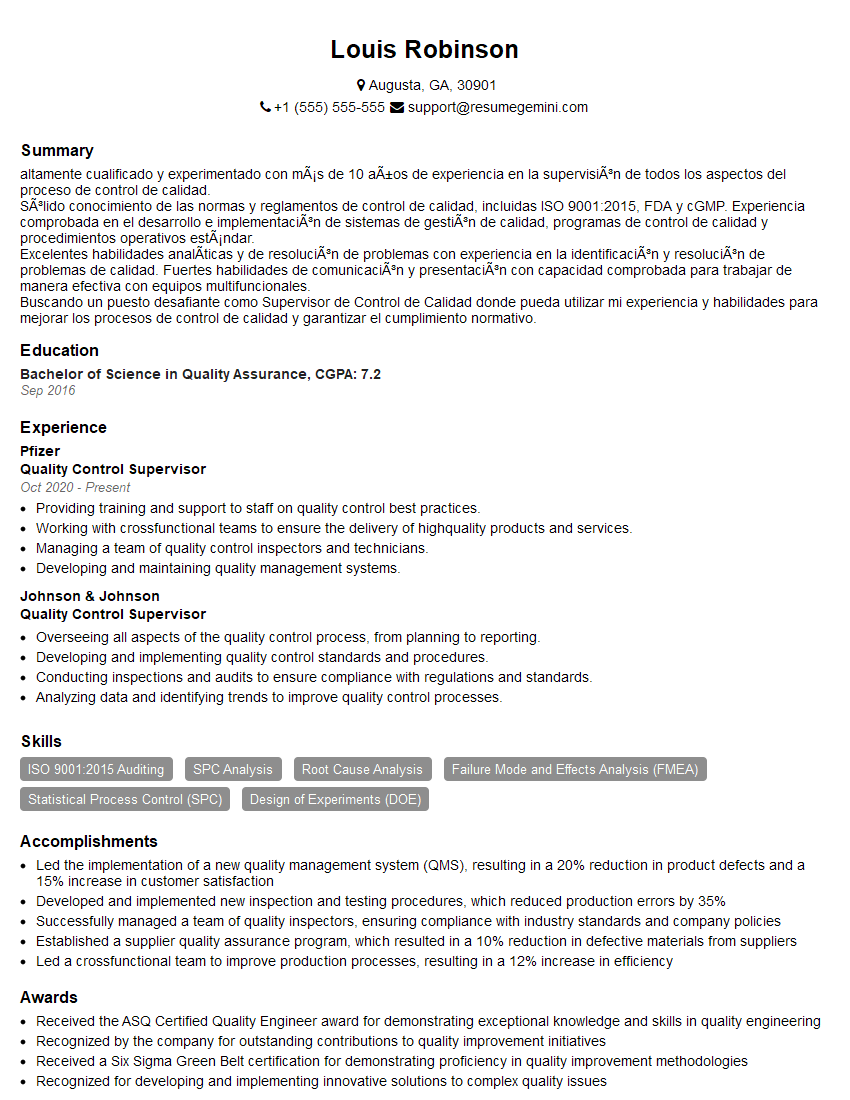
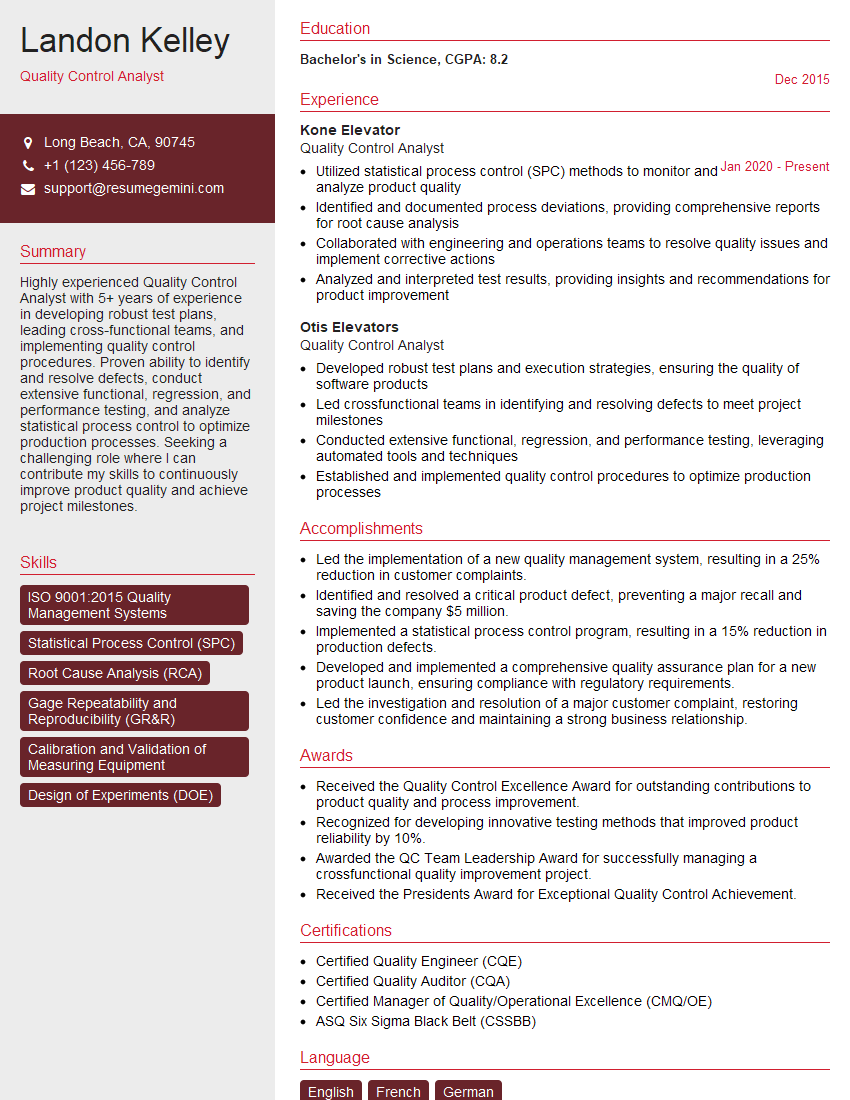
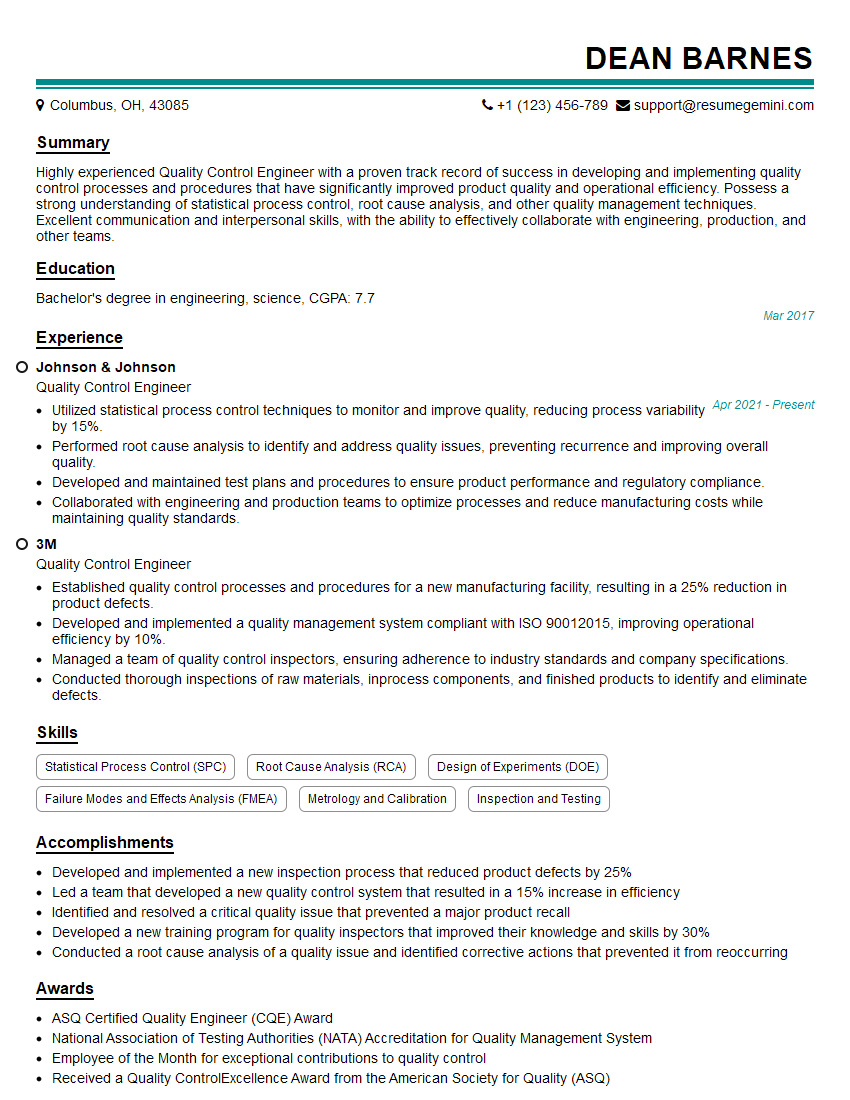
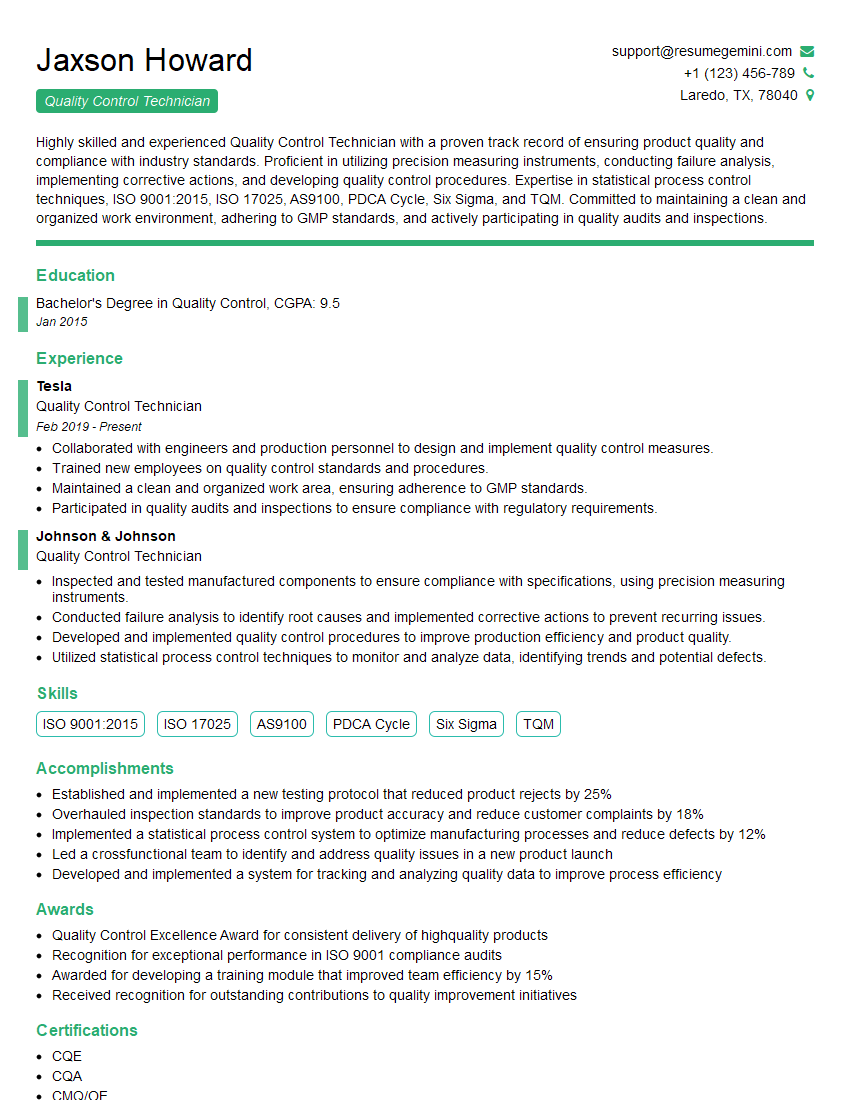
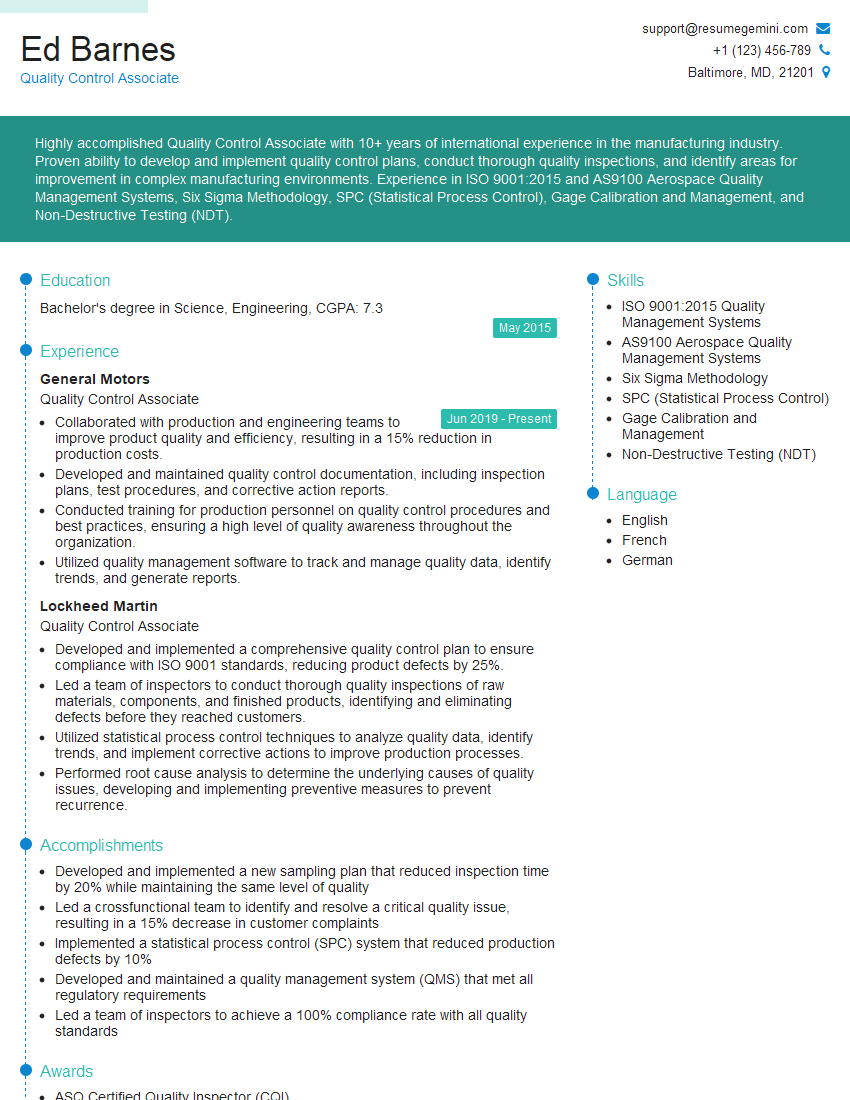
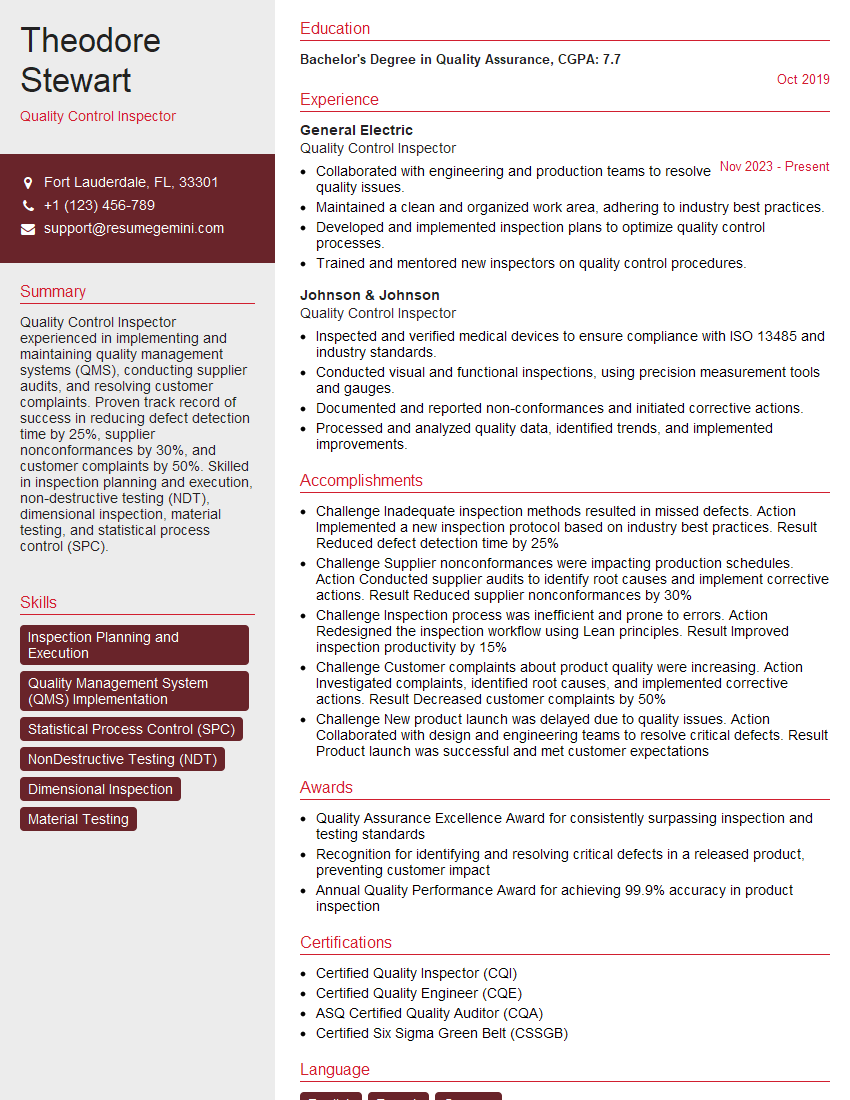
Mastering Laboratory Quality Control is vital for career advancement in this field, opening doors to leadership roles and specialized expertise. A strong resume is essential to showcase your skills and experience to potential employers. Crafting an ATS-friendly resume that highlights your accomplishments is crucial for maximizing your job prospects. ResumeGemini is a trusted resource that can help you create a professional and impactful resume tailored to the specific requirements of Laboratory Quality Control positions. Examples of resumes optimized for this field are available to help guide you.
Explore more articles
Users Rating of Our Blogs
Share Your Experience
We value your feedback! Please rate our content and share your thoughts (optional).
What Readers Say About Our Blog
Very informative content, great job.
good