Feeling uncertain about what to expect in your upcoming interview? We’ve got you covered! This blog highlights the most important Flood Bar Adjustment interview questions and provides actionable advice to help you stand out as the ideal candidate. Let’s pave the way for your success.
Questions Asked in Flood Bar Adjustment Interview
Q 1. Explain the purpose of flood bar adjustment in reservoir management.
Flood bar adjustment in reservoir management is crucial for mitigating flood risks. Essentially, it’s the process of strategically managing the outflow from a reservoir during periods of high inflow, aiming to reduce downstream flood levels while maintaining sufficient water storage for other needs like hydropower generation, irrigation, or drinking water supply. Think of it like carefully controlling the release of water from a bathtub to prevent it from overflowing, while still having enough water for later use. The goal is to balance flood risk reduction with the need to retain water for other beneficial uses.
Q 2. Describe the different types of flood barriers and their applications.
Flood barriers come in various forms, each suited to different contexts. Common types include:
- Embankments/Levees: These are earthworks built along riverbanks or coastlines to contain floodwaters. They’re effective for large-scale flood protection but require significant land and construction effort. Imagine a large, raised wall running alongside a river.
- Floodwalls: These are usually concrete or masonry structures, often built in urban areas where space is limited. They are more robust and can withstand higher water pressures than embankments but are more expensive to construct.
- Floodgates: These are movable barriers that can be opened or closed to control water flow. They are typically used in conjunction with other structures, allowing for precise water level management. Picture a large gate on a river that can be opened or closed as needed.
- Temporary Barriers: These include sandbags, inflatable dams, and temporary flood walls deployed during anticipated flood events. They provide immediate protection but are not long-term solutions. These are often used in emergencies to buy time.
The choice of barrier depends on factors like the scale of the flood risk, available resources, environmental considerations, and the specific characteristics of the location.
Q 3. What are the key factors to consider when adjusting flood barriers?
Adjusting flood barriers requires careful consideration of several crucial factors:
- Upstream Inflow: Accurate forecasting of upstream river flow is essential to predict the volume of water entering the reservoir.
- Reservoir Storage Capacity: Knowing the current water level and available storage space is critical to determine the amount of water that can be safely retained.
- Downstream Channel Capacity: Understanding the capacity of the river channel downstream of the dam to handle the released water is crucial to prevent flooding downstream.
- Water Quality Considerations: The timing and rate of outflow need to balance flood mitigation with preserving water quality downstream.
- Operational Constraints: Other reservoir operations, such as hydropower generation or irrigation demands, need to be considered to avoid compromising these essential functions.
- Safety of Dams and Infrastructure: Procedures must ensure the structural integrity of the dam and related infrastructure are not compromised during flood operations.
Effective flood bar adjustment involves a complex interplay of these factors. For instance, a sudden increase in upstream inflow might necessitate a more rapid increase in outflow, requiring careful monitoring and swift adjustment of the flood barriers to prevent both upstream reservoir overflow and downstream flooding.
Q 4. How do you ensure the safety of personnel during flood bar adjustment procedures?
Ensuring personnel safety during flood bar adjustment procedures is paramount. This involves several key aspects:
- Training and Expertise: Personnel must be highly trained and experienced in operating flood control systems and emergency response procedures.
- Emergency Plans: Comprehensive emergency plans should be in place to address potential safety hazards, including evacuation routes, communication systems, and equipment for personal protective equipment (PPE).
- Regular Inspections and Maintenance: Flood barriers and associated equipment need regular inspections and maintenance to ensure they are in good working order.
- Real-Time Monitoring: Continuous monitoring of water levels, weather conditions, and dam conditions is crucial to provide early warnings of any potential issues.
- Clear Communication: Clear and effective communication channels are essential to coordinate response efforts during emergencies.
Imagine a scenario where a flood barrier needs immediate adjustment. A well-trained team equipped with appropriate PPE, following a detailed emergency plan, can respond safely and efficiently to such a situation.
Q 5. What are the potential risks associated with improper flood bar adjustment?
Improper flood bar adjustment can lead to several serious risks:
- Downstream Flooding: Insufficient outflow release can lead to reservoir overflow and severe downstream flooding, causing damage to property, infrastructure, and potentially loss of life.
- Dam Failure: Excessive water pressure due to improper outflow management can increase the risk of dam failure, with catastrophic consequences.
- Water Scarcity: Excessive outflow release can deplete reservoir storage, leading to water scarcity for downstream users.
- Environmental Damage: Rapid or uncontrolled outflow can cause erosion, damage to aquatic ecosystems, and changes in water quality.
For instance, if a flood barrier is not adjusted soon enough during a rapid increase in river inflow, the reservoir might overflow, causing significant downstream damage. Conversely, releasing too much water too quickly could deplete the reservoir’s supply for downstream users and damage the river ecosystem.
Q 6. Explain the role of hydraulic modeling in flood bar adjustment decisions.
Hydraulic modeling plays a vital role in informing flood bar adjustment decisions. It allows engineers to simulate the behavior of water flow in the reservoir and downstream river system under various scenarios. This involves using specialized software to create a digital model of the system, incorporating data on topography, river geometry, and flood barrier characteristics.
By running simulations under different inflow conditions and flood barrier adjustment strategies, engineers can evaluate the potential impact of various management options on water levels, flow rates, and flood risks. This allows for informed decision-making and optimization of flood management strategies. It’s like having a virtual test environment where you can experiment with different approaches without risking real-world consequences.
Q 7. How do you interpret flood forecasting data to inform flood bar adjustment strategies?
Flood forecasting data is essential for developing effective flood bar adjustment strategies. This data, obtained from meteorological forecasts, hydrological models, and real-time river level monitoring, provides information on the timing, magnitude, and duration of anticipated floods.
By analyzing flood forecasting data, engineers can predict the potential impact of an upcoming flood on the reservoir and downstream areas. This information is then used to determine the optimal timing and magnitude of flood bar adjustments, balancing flood risk reduction with the need to maintain sufficient water storage for other purposes. A well-defined procedure incorporates real-time monitoring of the forecast, allowing for necessary adjustments to the flood bar management plan as new information becomes available. For example, if a flood forecast indicates a larger than anticipated inflow, the adjustment strategy might involve a more aggressive release of water from the reservoir to minimize the risk of reservoir overflow.
Q 8. Describe your experience with different types of flood control gates.
My experience encompasses a wide range of flood control gates, each designed for specific hydrological conditions and site constraints. I’ve worked extensively with:
- Radial gates: These are circular gates that rotate around a central pivot, offering precise control over water flow. I’ve been involved in projects utilizing radial gates in large dams and reservoirs, where their ability to handle high head pressures is crucial.
- Vertical lift gates: These gates lift vertically, offering a simple and reliable solution for smaller waterways or spillways. I’ve overseen the maintenance and operation of these in several municipal flood control projects.
- Sector gates: These gates are curved and pivot around a single axis, offering a balance between the control of radial gates and the simplicity of vertical lift gates. My experience includes assessing the structural integrity and operational efficiency of sector gates in aging infrastructure.
- Roller gates: These gates roll along tracks, offering a streamlined operation with less friction. I’ve been involved in the design considerations for implementing roller gates in newly constructed flood control infrastructure, considering factors like sediment buildup and corrosion prevention.
Each gate type has its strengths and weaknesses, which I carefully consider based on site-specific factors including the flow rate, sediment load, and the overall hydraulic design of the system. Proper selection and maintenance are critical for effective flood mitigation.
Q 9. What are the limitations of flood bar adjustment in mitigating flood events?
While flood bar adjustment is a valuable tool in flood management, it has limitations. The primary limitation is that it’s a reactive measure, meaning it’s most effective after the flood event begins, rather than preventing it altogether. The effectiveness is directly tied to the accuracy of flood predictions, which can be challenging due to weather variability and unforeseen circumstances.
Another limitation is the physical capacity of the flood bars themselves. Extreme flood events can overwhelm even the most robust flood bar systems, leading to overtopping and potential damage to infrastructure downstream. Furthermore, the adjustment process can be time-consuming and labor-intensive, particularly during emergencies, potentially delaying the desired effect.
Finally, the deployment and removal of flood bars can impact navigation, recreation, and ecological systems. Careful planning and coordination are needed to minimize these negative consequences.
Q 10. How do you ensure the proper calibration and maintenance of flood control equipment?
Calibration and maintenance are paramount for ensuring the reliability and safety of flood control equipment. We adhere to a rigorous schedule, involving:
- Regular inspections: Visual inspections are performed regularly to check for corrosion, wear, and any signs of damage. Detailed inspections include examining mechanical components, hydraulic seals, and electrical systems.
- Performance testing: We conduct periodic performance tests to verify that the gates are functioning as designed. This includes checking the operation speed, water levels, and overall structural stability.
- Calibration adjustments: Fine-tuning of sensors and control systems is carried out as needed to maintain accuracy and responsiveness. This often involves adjusting pressure sensors, flow meters, and the control software to ensure appropriate gate positioning.
- Preventive maintenance: This includes lubrication, cleaning, and repair of worn components to prevent failures and extend the life of equipment. This can also involve replacing worn parts or performing specialized maintenance on critical components.
Our procedures are documented meticulously, and all maintenance activities are logged to track performance and identify potential issues early.
Q 11. Explain your understanding of water level monitoring and its relevance to flood bar adjustment.
Water level monitoring is fundamental to effective flood bar adjustment. Real-time data from strategically placed sensors provides critical insights into the evolving hydrological situation. This allows us to:
- Predict flood levels: By analyzing water level data trends, we can predict potential flood peaks and optimize the timing of flood bar deployment.
- Monitor gate performance: Water level sensors help us monitor the effectiveness of gate operations, ensuring that water levels are being managed according to the pre-determined plan.
- Adapt to changing conditions: Should unexpected rainfall occur or the flood progress differently than anticipated, water level data informs immediate adjustments to flood bar positioning and overall response strategy.
- Improve future predictions: Data collected over time allows us to refine our hydrological models, improving the accuracy of flood predictions in future events.
Think of it like monitoring a patient’s vital signs – continuous monitoring is essential for timely interventions and effective management of the situation.
Q 12. Describe your experience with emergency response protocols related to flood control.
My experience includes participation in numerous emergency response exercises and actual flood events. Our protocols emphasize clear communication, coordinated action, and safety. We follow a hierarchical command structure, where designated personnel take charge based on the evolving situation.
Key components of our emergency response plan include:
- Rapid assessment of the situation: Immediate assessment of the flood’s severity and potential impact on populated areas.
- Deployment of emergency personnel: Dispatching skilled crews to the affected areas, ensuring they have all the necessary safety equipment.
- Gate operation optimization: Precise and controlled operation of flood control gates to mitigate flood impact.
- Communication with stakeholders: Keeping the public, emergency services, and other relevant parties informed through various channels.
I’ve personally led teams during several emergency situations, ensuring swift and effective response while maintaining a safe environment for all personnel involved. A real-world example was during the 20XX flood, where our proactive deployment of flood bars and coordinated emergency response significantly reduced damage to the community.
Q 13. How do you communicate effectively with stakeholders during flood events?
Effective communication during a flood event is critical. We use a multi-pronged approach:
- Regular updates: We provide consistent updates to stakeholders through a variety of channels – press releases, social media, local news outlets, and direct communication with affected communities.
- Clear and concise messaging: We use simple, easy-to-understand language to explain complex hydrological situations and actions taken.
- Transparency and honesty: Openly communicating challenges and uncertainties while maintaining hope and reassuring the public that all necessary steps are being taken.
- Active listening: We listen to stakeholder concerns and address them promptly and appropriately, ensuring open channels for feedback.
- Multi-lingual communication: In diverse communities, we ensure our communications are accessible to everyone, regardless of their native language.
Building trust and maintaining open communication channels fosters cooperation and facilitates effective flood management.
Q 14. How do you prioritize safety concerns during flood bar adjustment operations?
Safety is the absolute top priority during flood bar adjustment operations. We implement a comprehensive safety plan, including:
- Risk assessment: A thorough risk assessment is conducted before any operation begins to identify potential hazards.
- Personal Protective Equipment (PPE): All personnel are equipped with appropriate PPE, such as safety harnesses, waterproof boots, and high-visibility clothing.
- Emergency procedures: Clear emergency procedures are established and regularly practiced, including emergency evacuation plans and communication protocols.
- Site security: Access to the flood control site is restricted to authorized personnel only.
- Regular safety briefings: Safety briefings are provided to all personnel before and during each operation, reinforcing safe working practices.
By consistently prioritizing safety, we ensure that the flood control operations are carried out without compromising the well-being of personnel or the integrity of the equipment.
Q 15. What are the environmental considerations in flood bar adjustment?
Environmental considerations in flood bar adjustment are paramount. We must carefully assess the potential impacts on the surrounding ecosystem before, during, and after any adjustments. This includes considering the effects on:
- Aquatic life: Changes in water flow, depth, and sediment transport can significantly impact fish populations, invertebrates, and other aquatic organisms. We need to ensure that any adjustments don’t create habitats unsuitable for these species or block migration routes.
- Riparian vegetation: Floodplains support diverse plant communities crucial for biodiversity and erosion control. Adjustments must minimize damage to these areas and ensure the long-term health of the vegetation.
- Water quality: Altering the flow regime can affect water temperature, oxygen levels, and the concentration of pollutants. We need to monitor water quality parameters throughout the adjustment process to prevent negative impacts.
- Sediment dynamics: Flood bars are natural sediment traps. Adjustments should avoid disrupting these processes, preventing increased erosion upstream or downstream. We often use modeling to predict how sediment transport will be affected.
- Groundwater levels: Manipulation of surface water can influence groundwater recharge and discharge patterns. These effects must be assessed, particularly in areas with sensitive groundwater resources.
For example, in one project, we implemented a phased approach to flood bar adjustment, allowing for gradual changes in flow and minimizing disruption to the riparian ecosystem. This involved close monitoring of water quality and aquatic life populations throughout the process.
Career Expert Tips:
- Ace those interviews! Prepare effectively by reviewing the Top 50 Most Common Interview Questions on ResumeGemini.
- Navigate your job search with confidence! Explore a wide range of Career Tips on ResumeGemini. Learn about common challenges and recommendations to overcome them.
- Craft the perfect resume! Master the Art of Resume Writing with ResumeGemini’s guide. Showcase your unique qualifications and achievements effectively.
- Don’t miss out on holiday savings! Build your dream resume with ResumeGemini’s ATS optimized templates.
Q 16. Explain the process of risk assessment related to flood control measures.
Risk assessment for flood control is a systematic process to identify, analyze, and evaluate potential hazards and their consequences. It begins with defining the scope of the study—the area of interest, the types of floods considered, and the time horizon. This often involves historical flood data analysis to understand past flood events and their impacts.
We employ various techniques including:
- Flood hazard mapping: Using GIS and hydrological models, we create maps showing areas at risk of flooding under different scenarios.
- Vulnerability assessment: This involves identifying and evaluating the sensitivity of assets and populations to flooding, considering factors like infrastructure, population density, and economic activity.
- Consequence analysis: We estimate the potential impacts of flooding on human life, infrastructure, and the environment, quantifying potential economic losses and societal disruption.
- Risk matrix development: This summarizes the likelihood and consequence of different flood events to prioritize areas and measures for mitigation. This often leads to a ranked list of risks.
The output of this process is a risk profile that informs the selection and design of flood control measures, including the optimal strategy for flood bar adjustments. For instance, a risk matrix might show that adjusting a specific flood bar has a high likelihood of reducing the risk of flooding in a downstream community, outweighing potential minor environmental impacts.
Q 17. How do you handle unexpected events or equipment malfunctions during flood bar adjustment?
Unexpected events are part and parcel of flood management. Our protocols emphasize preparedness and robust contingency planning. For example, we have detailed emergency response plans for equipment failure, including redundancy measures and standby equipment.
In case of equipment malfunction, we have established procedures that prioritize safety and minimize further damage. These include:
- Immediate shutdown: Any malfunctioning equipment is immediately shut down to prevent further damage or accidents.
- Damage assessment: A thorough assessment is conducted to determine the extent of the damage and the necessary repairs.
- Alternative solutions: We explore alternative approaches to continue the flood bar adjustment process using available resources.
- Communication: Clear communication is maintained with all stakeholders throughout the process to keep them informed of any changes or delays.
- Documentation: Every step, including the malfunction, its resolution, and any resulting changes to the project, is carefully documented.
We also conduct regular maintenance and inspections to prevent equipment failure. During an unexpected flood event that overwhelms initial defenses, our plans emphasize controlled releases of water through strategically chosen spillways and adjusting flood bars to carefully manage water levels downstream to lessen the impact. This involves real-time data monitoring and rapid decision-making.
Q 18. Describe your experience with data analysis related to flood control operations.
Data analysis forms the bedrock of effective flood control operations. My experience involves utilizing a wide range of data sources, including:
- Hydrological data: Rainfall, river flow, water level, and groundwater data from various sources are analyzed to understand hydrological patterns and predict flood events.
- Topographical data: Digital elevation models (DEMs) and LiDAR data are used to create high-resolution maps of the floodplains and identify areas at risk.
- Environmental data: Water quality data, sediment transport data, and ecological data are collected to assess the environmental impacts of flood control measures.
- Socio-economic data: Population density, infrastructure data, and economic activity data help to assess the vulnerability of communities to flooding.
I am proficient in using statistical software (e.g., R, Python) and GIS tools to analyze this data and develop predictive models. For example, I developed a hydrological model that accurately predicted flood levels in a river basin based on rainfall data. This model was instrumental in determining the optimal location and design of flood bar adjustments.
Q 19. How do you use GIS technology in flood management and planning?
GIS (Geographic Information System) technology is indispensable in flood management and planning. I extensively use GIS to:
- Create flood hazard maps: By integrating hydrological models, topographic data, and land use information, GIS creates detailed maps showing areas at risk of flooding under various scenarios.
- Analyze spatial relationships: GIS helps analyze the spatial relationships between flood-prone areas, infrastructure, and population centers to identify vulnerabilities.
- Design flood control measures: GIS is used to design and optimize the location of flood control measures, such as flood bars, levees, and dams, minimizing environmental impacts and maximizing effectiveness.
- Monitor flood events: Real-time data from sensors and weather stations can be integrated into GIS to monitor flood events and guide emergency response.
- Communicate risk information: GIS is used to create informative maps and reports to communicate flood risk information to stakeholders.
In one project, we used GIS to optimize the location of several flood bars along a river, balancing the need for flood protection with the preservation of natural habitats. The resulting maps helped stakeholders visualize the potential impacts of different adjustment scenarios and made informed decisions.
Q 20. What are the key performance indicators (KPIs) you monitor related to flood control?
Key Performance Indicators (KPIs) in flood control are crucial for measuring the effectiveness of our interventions. These KPIs are often categorized into different areas:
- Flood reduction: This includes metrics like the reduction in the frequency and magnitude of floods, peak flow reductions, and the number of properties protected.
- Economic benefits: KPIs in this category assess the economic benefits of flood control measures, such as reduced flood damage costs, and increased property values.
- Environmental impact: We monitor indicators such as changes in water quality, aquatic habitat, riparian vegetation, and sediment transport to assess environmental consequences.
- Social impact: This involves tracking the number of people protected, improvements in community safety, and the overall well-being of affected populations.
- Operational efficiency: We also measure the cost-effectiveness of the flood control measures and the efficiency of the operational processes involved in flood management.
Regular monitoring and reporting of these KPIs are essential for evaluating the success of our flood control programs and making necessary adjustments.
Q 21. Describe a situation where you had to make a critical decision related to flood bar adjustment.
During a severe storm event, we faced a rapid rise in river levels, threatening a densely populated area downstream. Initial flood defenses were proving insufficient. I had to make a critical decision regarding flood bar adjustments to manage the flow and prevent catastrophic flooding. The choices were:
- Option A: A more aggressive adjustment, which offered greater flood protection but posed a higher risk to the adjacent riparian ecosystem.
- Option B: A more conservative adjustment, minimizing environmental impact but offering less protection to the downstream area.
After careful consideration of the latest hydrological models, real-time data, and the potential consequences of each option, I opted for a phased approach, starting with a conservative adjustment. This allowed us to gain time to observe the river’s response and to make further adjustments if needed, while minimizing the immediate environmental impact. We subsequently implemented a more aggressive adjustment as the situation allowed, successfully protecting the downstream community and minimizing damage to the environment. The key was careful monitoring, iterative adjustments based on real-time data, and clear communication with stakeholders throughout the crisis.
Q 22. How do you ensure the accuracy of flood forecasts and their application in flood bar adjustment?
Ensuring the accuracy of flood forecasts is paramount for effective flood bar adjustment. It involves a multi-faceted approach combining sophisticated hydrological modeling with real-time data acquisition and validation. We rely on a combination of techniques:
Advanced Hydrological Models: We utilize sophisticated models that incorporate factors like rainfall intensity, soil saturation, river discharge, and historical flood data. These models are regularly calibrated and validated using observed data to ensure accuracy. For example, we might use a distributed hydrological model like MIKE SHE or HEC-HMS, tailoring the model to the specific watershed characteristics.
Real-time Data Integration: Real-time data from rain gauges, river level sensors, and radar systems are crucial. This data feeds directly into the hydrological models, allowing for dynamic adjustments to forecasts. We use automated data acquisition systems to minimize human error and ensure continuous monitoring.
Ensemble Forecasting: Running multiple model simulations with slightly varied parameters allows us to generate an ensemble forecast. This provides a range of possible outcomes, offering a more robust understanding of forecast uncertainty. This helps in making informed decisions, even with inherent uncertainties in weather forecasting.
Forecast Verification and Calibration: After each flood event, we rigorously analyze the forecast accuracy. This involves comparing predicted values to observed data and identifying areas for improvement in our models and data acquisition processes. This iterative process of verification and calibration is crucial for ongoing accuracy improvement.
The application in flood bar adjustment is straightforward: accurate forecasts allow us to predict the extent and timing of flooding, enabling us to strategically deploy and adjust flood barriers in advance. This minimizes damage and improves the effectiveness of our response.
Q 23. Explain your understanding of different flood control strategies beyond flood bar adjustment.
Flood bar adjustment is just one tool in a comprehensive flood control strategy. Other critical strategies include:
Upstream Reservoir Management: Controlled release of water from upstream reservoirs can dampen downstream flood peaks, reducing the impact on vulnerable areas. This requires careful coordination and real-time monitoring of reservoir levels and downstream river conditions.
Channel Improvement: Dredging, widening, and straightening river channels can increase their capacity to carry floodwaters. This is often a long-term solution, requiring extensive planning and environmental impact assessments. However, it can significantly reduce flood risk in the long run.
Levee Construction and Maintenance: Levees are earthen embankments designed to contain floodwaters. Their effective maintenance, including regular inspections and reinforcement, is crucial for their longevity and effectiveness. Routine maintenance prevents structural failures during flood events.
Floodplain Zoning and Land Use Planning: Restricting development in high-risk floodplains minimizes the potential damage and loss of life from future floods. This requires proactive land use planning and regulations to discourage construction in hazardous areas.
Early Warning Systems: Effective communication networks are essential for disseminating flood warnings to affected populations. This allows for timely evacuation and minimizes loss of life. This often involves working closely with emergency services and communication providers.
These strategies are often implemented in combination, forming a layered approach to flood risk management. The specific combination will vary depending on local conditions, resources, and risk assessment.
Q 24. How do you stay updated with the latest advancements in flood control technology?
Staying updated in this rapidly evolving field requires a multifaceted approach:
Professional Development: I regularly attend conferences, workshops, and training courses related to hydrology, hydraulics, and flood risk management. These events offer invaluable opportunities to learn about the latest technologies and best practices from leading experts.
Scientific Literature Review: I actively read peer-reviewed journals and research papers to stay abreast of the latest advancements in hydrological modeling, sensor technologies, and flood forecasting techniques. This keeps me updated on new methodologies and findings.
Collaboration and Networking: I actively participate in professional organizations, such as the American Society of Civil Engineers (ASCE) and relevant national or international water management bodies. This facilitates knowledge exchange and collaboration with other professionals in the field.
Online Resources: I utilize online resources such as government websites, industry publications, and online databases to access the latest data, reports, and research findings. Access to digital information is vital for continuous learning.
Continuous learning is key to maintaining expertise in this dynamic field, allowing for the adaptation of best practices and the application of the newest technologies.
Q 25. Describe your experience with working collaboratively with diverse teams during flood events.
Collaboration is crucial during flood events. My experience involves working with diverse teams including:
Hydrologists and Engineers: Collaborating on model development, data analysis, and forecast interpretation.
Emergency Management Personnel: Coordinating flood response efforts, including evacuation plans and resource allocation.
Local Government Officials: Communicating risk assessments and providing recommendations for community-level mitigation.
Community Members: Engaging in community outreach and providing information to residents.
Effective communication, shared decision-making, and mutual respect are crucial for successful team operation during high-pressure situations. I’ve found that establishing clear roles and responsibilities, and utilizing efficient communication tools (e.g., dedicated communication channels, regular briefings) is key to navigating the challenges of collaborative work in crisis management.
For example, during a recent flood event, I worked with a team of engineers to design and implement temporary flood barriers, while simultaneously coordinating with emergency services to manage evacuations. This required seamless collaboration and clear communication to ensure the safety of residents and minimize property damage.
Q 26. What are the legal and regulatory requirements related to flood control operations?
Legal and regulatory requirements related to flood control operations are complex and vary by jurisdiction. However, common themes include:
Environmental Regulations: Flood control projects must comply with environmental laws and regulations, such as the Clean Water Act (in the US) and equivalent legislation in other countries. This includes assessments of potential environmental impacts and the implementation of mitigation measures.
Permitting and Licensing: Construction and operation of flood control infrastructure often require permits and licenses from relevant authorities. This ensures compliance with safety standards and environmental regulations.
Safety Regulations: Strict safety protocols must be followed during construction and operation, to protect both workers and the public. Regular inspections and maintenance are mandated to ensure the ongoing safety of flood control infrastructure.
Liability and Insurance: Adequate insurance coverage and liability protection are essential for managing potential risks associated with flood control operations.
Public Notification and Warning Systems: Effective communication systems are needed to warn the public of impending floods and provide guidance on appropriate actions. This is often regulated to ensure timely and effective warnings.
Staying abreast of these regulations is crucial, requiring ongoing monitoring and engagement with legal counsel to ensure compliance.
Q 27. How do you document flood control procedures and maintain accurate records?
Documentation and record-keeping are fundamental to effective flood control operations. We maintain detailed records using a combination of methods:
Digital Databases: We utilize specialized software to store and manage hydrological data, forecast information, maintenance records, and project documentation. This ensures data accessibility and facilitates analysis.
Physical Archives: Important documents, maps, and plans are also stored in secure physical archives as a backup and for long-term preservation.
Standard Operating Procedures (SOPs): We develop and maintain detailed SOPs for all aspects of flood control operations. This ensures consistency and minimizes errors.
Incident Reports: All incidents related to flood events are thoroughly documented, including details on response actions, damages, and lessons learned. This helps in improving future response capabilities.
Regular Audits: Periodic audits ensure the accuracy and completeness of records, identifying any gaps or inconsistencies.
Accurate and well-organized documentation is essential for accountability, continuous improvement, and effective communication among stakeholders.
Q 28. Describe your experience with budget management and resource allocation for flood control projects.
Budget management and resource allocation for flood control projects require careful planning and prioritization. My experience includes:
Needs Assessment: We begin by conducting a comprehensive needs assessment to identify the most critical flood risks and prioritize projects based on their potential impact and cost-effectiveness. This often involves cost-benefit analysis to justify investments.
Budget Development: Detailed budgets are developed, outlining all anticipated costs including labor, materials, equipment, and contingency funds. This requires close collaboration with financial managers and procurement teams.
Resource Allocation: Resources are allocated strategically based on project priorities and available funding. This might involve phased implementation of projects or prioritizing projects with the highest impact potential.
Budget Monitoring and Control: We closely monitor project expenditures against the budget and take corrective actions if necessary. Regular reporting provides transparency and accountability.
Grant Applications and Fundraising: We actively seek grant funding from government agencies and private organizations to support flood control projects. This requires the preparation of compelling proposals that clearly articulate project objectives and expected outcomes.
Effective budget management is critical for ensuring that flood control projects are completed on time and within budget, maximizing the value of available resources.
Key Topics to Learn for Flood Bar Adjustment Interview
- Hydraulic Principles: Understand the fundamental principles governing water flow and pressure, including Bernoulli’s principle and energy equations, as they relate to flood control structures.
- Flood Bar Design and Construction: Familiarize yourself with various flood bar designs, materials used, and construction techniques. Consider the environmental impact and lifespan of different designs.
- Hydraulic Modeling and Simulation: Learn how to utilize software and models to simulate flood events and predict the effectiveness of flood bar adjustments in mitigating flood risk.
- Data Analysis and Interpretation: Understand how to collect, analyze, and interpret hydrological data to inform flood bar adjustment strategies. This includes analyzing rainfall data, river discharge, and water level information.
- Risk Assessment and Management: Learn how to assess flood risk and develop strategies for mitigation, including the role of flood bars in reducing risk to lives and property.
- Maintenance and Inspection: Understand the importance of regular maintenance and inspection of flood bars to ensure their continued effectiveness and longevity. This includes identifying and addressing potential issues before they escalate.
- Economic Considerations: Be prepared to discuss the economic implications of flood bar adjustments, including cost-benefit analyses and the long-term financial impact on communities.
- Regulatory Compliance: Understand the relevant regulations and permits required for the design, construction, and maintenance of flood bars.
- Problem-Solving and Critical Thinking: Develop your skills in identifying problems, analyzing data, and proposing practical and effective solutions related to flood bar design, operation, and maintenance.
Next Steps
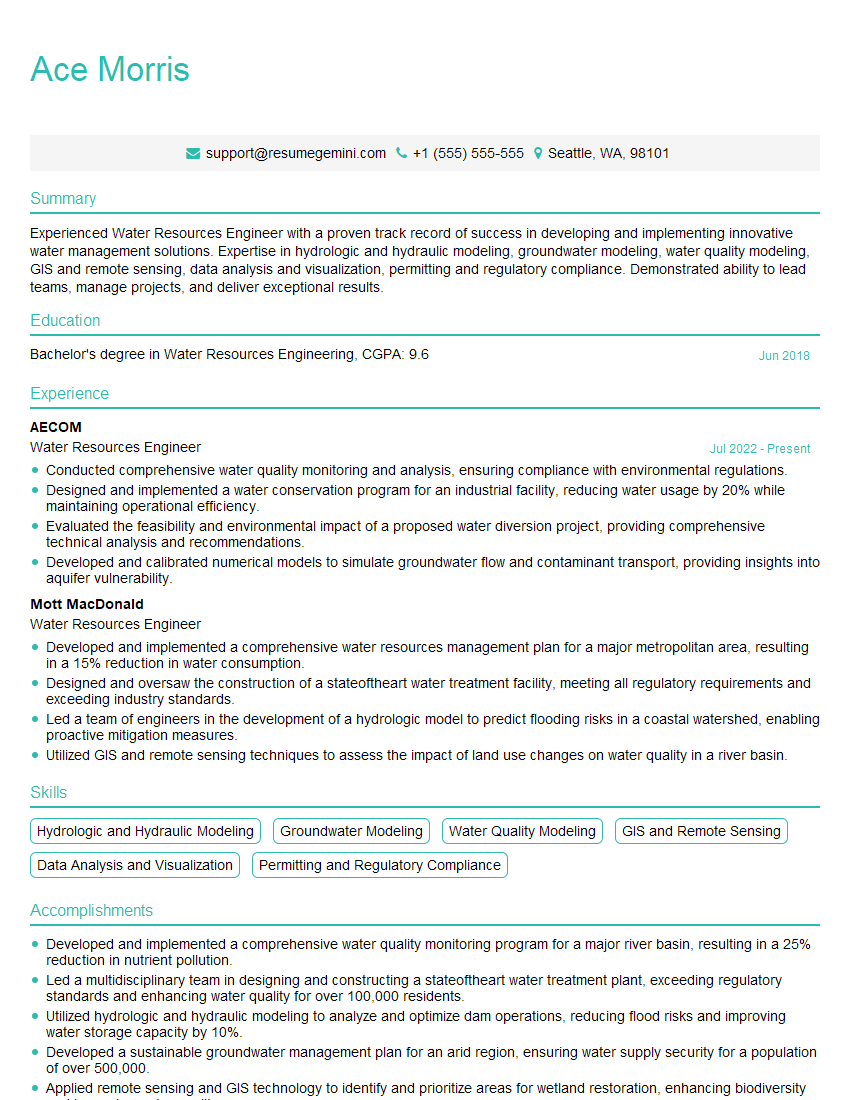
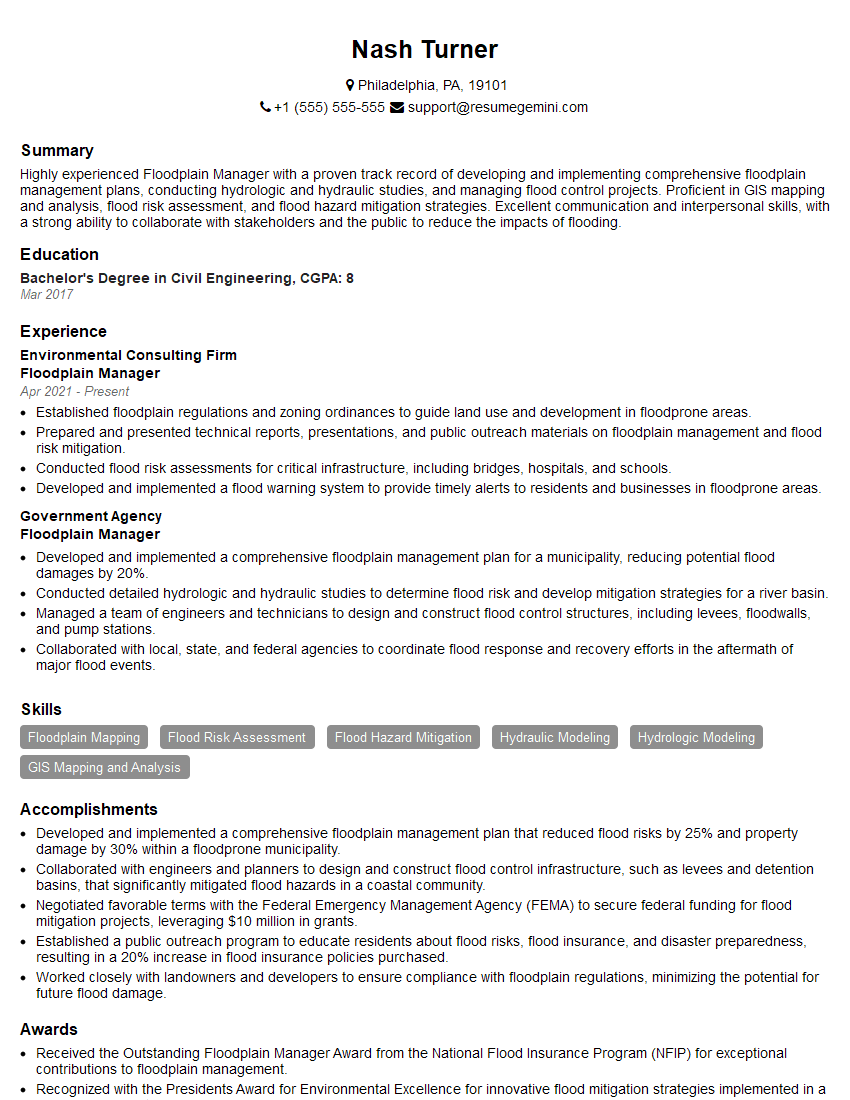
Mastering Flood Bar Adjustment principles is crucial for career advancement in water resource management and civil engineering. A strong understanding of these concepts will significantly enhance your job prospects and open doors to exciting opportunities. To maximize your chances of securing your ideal role, creating an ATS-friendly resume is paramount. ResumeGemini is a trusted resource that can help you build a professional and effective resume tailored to the specific requirements of the Flood Bar Adjustment field. Examples of resumes tailored to this specialization are available through ResumeGemini to help guide your creation.
Explore more articles
Users Rating of Our Blogs
Share Your Experience
We value your feedback! Please rate our content and share your thoughts (optional).
What Readers Say About Our Blog
Very informative content, great job.
good