Interviews are opportunities to demonstrate your expertise, and this guide is here to help you shine. Explore the essential Laminate Baseboard and Trim Installation interview questions that employers frequently ask, paired with strategies for crafting responses that set you apart from the competition.
Questions Asked in Laminate Baseboard and Trim Installation Interview
Q 1. What types of tools are essential for installing laminate baseboards and trim?
The right tools are crucial for a clean, professional laminate baseboard and trim installation. Think of it like baking a cake – you need the right ingredients and tools for a perfect result. Here’s what I always have on hand:
- Measuring Tape: Accurate measurements are paramount. I prefer a 25-foot tape measure for larger rooms.
- Miter Saw: Essential for precise cuts, especially miter cuts (angled cuts used for joining pieces at corners). A compound miter saw offers even more versatility.
- Hand Saw (Backup): Always good to have a backup for those tight spots where the miter saw can’t reach.
- Pencil: For marking cuts and layout.
- Safety Glasses: Protecting your eyes is non-negotiable.
- Speed Square: For creating accurate 45° and 90° angles, especially helpful when checking cuts.
- Clamps: To hold pieces together while the adhesive dries.
- Caulk Gun and Caulk: For filling gaps and creating a seamless finish. Paintable caulk is essential for matching the baseboard color.
- Putty Knife: For smoothing caulk and removing excess adhesive.
- Nail Gun (optional but highly recommended): For faster and more secure installation. Finish nails are best to minimize visible nail heads.
- Hammer (if not using a nail gun): For carefully tapping in nails.
- Level: To ensure straight and level installation.
Q 2. Explain the process of measuring and cutting laminate baseboards.
Measuring and cutting laminate baseboards requires precision. Imagine creating a perfect puzzle – each piece needs to fit exactly. I begin by measuring the length of each wall section. I always add a small amount (usually 1/8 inch) to account for minor discrepancies. For inside corners, I measure each wall separately and make my cuts. For outside corners, I measure the length of the outside edge.
Cutting the baseboards involves carefully marking the cut line with a pencil and using the miter saw to make a precise cut at the required angle. This is where a compound miter saw really shines, allowing for accurate bevel cuts along with the miter angle. For intricate cuts or curved sections, a hand saw with a fine-tooth blade is useful. Before cutting, I always double-check my measurements to avoid errors. Remember, a good sharp blade will always create cleaner, more precise cuts.
Q 3. How do you account for variations in wall surfaces during installation?
Walls are rarely perfectly straight or level. Imagine trying to fit a straight piece of wood into a slightly curved wall – you’d need to adapt! To account for uneven walls, I use shims – small, wedge-shaped pieces of wood – to fill in gaps and ensure a tight fit between the baseboard and the wall. I also check my baseboard for levelness along the wall regularly using a level, adjusting shims as necessary. In severe cases of wall irregularity, I may need to slightly adjust the baseboard cut to follow the wall’s contour.
Q 4. Describe your experience with different types of miter cuts.
Miter cuts are fundamental in baseboard installation. They allow for precise joining at corners. I frequently use 45-degree miter cuts for inside and outside corners. For inside corners, two 45-degree cuts are made, one on each piece of baseboard, to create a tight miter joint. Outside corners require similar 45-degree cuts, but angled in the opposite direction. I’ve also worked with more complex miter cuts, such as coping cuts (where one piece of baseboard is shaped to fit perfectly against another), particularly helpful for irregular walls or intricate designs. Mastering these different miter cuts is essential for creating a professional, seamless finish.
Q 5. What are common issues encountered during baseboard installation, and how do you resolve them?
Common issues include uneven walls, gaps between baseboards, and inaccurate cuts. Uneven walls are addressed with shims. Gaps can be filled with paintable caulk, ensuring a seamless transition. Inaccurate cuts can require re-cutting or creative problem-solving; sometimes, a small adjustment with a hand plane or sandpaper can be enough to rectify the issue. Always inspect the baseboards before final installation for any damage or imperfections.
Another common problem is poorly prepared surfaces. Old baseboards need to be fully removed. Any loose paint or debris on the wall must be cleaned before applying new baseboard. This prep work is critical; cutting corners here will surely lead to problems later.
Q 6. How do you ensure a tight and seamless fit between baseboard sections?
Achieving a tight and seamless fit involves precise measuring, cutting, and attention to detail. Accurate miter cuts are crucial. I often use clamps to hold the baseboard sections firmly in place while the adhesive dries. For added security, I use construction adhesive along with nails or a nail gun, ensuring strong bonding. Once the adhesive is dry, I carefully fill any small gaps with paintable caulk, smoothing it out with a putty knife. This final touch ensures a professional and polished finish.
Q 7. Describe your experience with installing crown molding.
Crown molding installation is similar to baseboard installation but requires more precision and often involves more complex cuts. I begin by measuring and cutting the molding to fit the desired length, using a miter saw for accurate angles. The process requires understanding various miter and coping techniques to create seamless corners. Often, a coping saw is needed to shape pieces to fit precisely against other crown molding pieces or against the wall. I always use a level to ensure the crown molding is installed perfectly straight. Proper nailing or gluing is crucial to secure the molding and prevent sagging. It’s a more challenging task that requires more experience, and patience is crucial.
Q 8. What are the different methods for securing baseboards to walls?
Securing baseboards involves choosing the right fastening method for your specific situation. The most common methods are adhesive, nails, and a combination of both. Adhesive alone is suitable for lighter baseboards and provides a strong hold, especially in areas where nail holes are undesirable. However, for added security and stability, especially with heavier baseboards or in areas subject to impact, I prefer using nails in addition to adhesive.
- Adhesive: Construction adhesive is applied to the back of the baseboard before pressing it firmly against the wall. Ensure proper surface preparation for optimal adhesion.
- Nails: Finishing nails are carefully driven into the baseboard, slightly below the surface, and then concealed using wood filler. Pre-drilling pilot holes prevents splitting, especially with harder woods. I typically use a nail set to countersink the nails. The size of the nail depends on the baseboard’s thickness and the wall type.
- Combination: This method combines the benefits of both. The adhesive provides initial support while the nails offer long-term security and prevent the baseboard from shifting over time.
Choosing the right method depends on factors such as the baseboard material, wall type (drywall, plaster, etc.), and the overall weight of the baseboard.
Q 9. How do you handle interior and exterior corners during installation?
Interior and exterior corners require precision and special techniques. For interior corners, I use a miter saw to cut both baseboards at a 45-degree angle. This ensures a clean, tight fit. After ensuring a perfect 90-degree angle between walls, I dry-fit the pieces to check the fit before applying adhesive and nails. Any gaps are filled with caulk for a seamless finish.
Exterior corners are handled differently. I typically create a miter cut at 45 degrees on each piece again, ensuring it perfectly aligns. However, this method can lead to gaps. So, sometimes, I will use a cope and stick method. This method requires cutting one baseboard to create a concave shape for the other to fit neatly, without any gaps. The result is a seamless, professional-looking exterior corner. I always use caulk to seal the joint. This approach keeps out moisture and improves the overall look.
Q 10. What safety precautions do you take when working with cutting tools?
Safety is paramount when using cutting tools. I always prioritize safety by:
- Using appropriate safety gear: This includes safety glasses, hearing protection (especially when using power tools), and work gloves to protect my hands from splinters and cuts.
- Proper tool maintenance: Ensuring that my tools are sharp and well-maintained prevents kickbacks and accidents. A dull blade is more dangerous than a sharp one.
- Secure work area: I make sure the work area is well-lit, clear of obstructions, and provides enough space to work safely. Never rush.
- Using the correct tool for the job: Using a tool for a purpose it wasn’t intended for is incredibly dangerous and should be avoided.
- Following manufacturer instructions: Each power tool comes with a manual – reading and understanding it is essential for safe operation.
I always treat every tool as potentially hazardous and use it with utmost care and respect. It’s better to be cautious than sorry.
Q 11. Explain your experience with using caulking and wood filler.
Caulking and wood filler are crucial for achieving a professional finish. Caulk seals gaps and creates a watertight barrier, preventing moisture damage. I use paintable caulk for maximum flexibility and ease of matching to the baseboard color. I apply it using a caulking gun, ensuring a smooth, even bead.
Wood filler is used to fill nail holes and imperfections in the baseboard. I choose a filler that matches the baseboard’s wood type for best results. I apply it using a putty knife and allow it to dry completely before sanding smooth for a seamless transition.
In a recent job, I used paintable caulk to seal the gap between the baseboard and the floor. Then, I used wood filler to hide nail holes created by securing the trim. This combination provided a clean and finished look.
Q 12. How do you determine the correct amount of materials needed for a job?
Accurate material estimation is essential for avoiding waste and delays. I start by carefully measuring the perimeter of each room requiring baseboard installation. I add extra length to account for cuts, waste, and potential mistakes.
For example, if a room measures 12 feet by 15 feet, and I need baseboard along the 12-foot walls, I calculate (12 x 2) + (15 x 2) = 54 linear feet. I’d then add at least 10% extra, resulting in an order of 59.4 feet to account for waste and cuts. This also accounts for any mistakes or unexpected issues that may arise during installation. This process is repeated for each room, and trim is calculated similarly, ensuring I have enough materials to complete the job efficiently. I check with the customer to verify if they wish to have extra in case of unforeseen issues or future repairs.
Q 13. Describe your process for preparing a workspace before installation.
Preparing the workspace is crucial for a smooth and efficient installation. This involves:
- Clearing the area: Removing all furniture and obstructions from the area to be worked on.
- Protecting the floor: Covering the floor with drop cloths or other protective material to prevent damage or scratches.
- Gathering tools and materials: Having all necessary tools and materials readily available to minimize interruptions.
- Checking the walls: Inspecting the walls for any unevenness or imperfections that need to be addressed before installation (repairing large holes or cracks).
- Cleaning the walls: Removing any dust, dirt, or loose paint that could interfere with adhesion.
A well-prepared workspace significantly impacts the overall quality and efficiency of the installation process. A rushed or disorganized start almost always leads to inefficiencies and errors.
Q 14. How do you clean up after completing a baseboard and trim installation?
Cleaning up after installation is as important as the installation itself. I thoroughly clean the area, removing any leftover materials, debris, and dust. I use a shop-vac to collect sawdust and larger debris and a broom to sweep up any remaining particles. I always dispose of the debris responsibly, recycling where possible.
The final step involves inspecting the work and ensuring everything is to the customer’s satisfaction. Then, I remove the protective covering on the floor and ensure the area is left clean, organized, and ready for the next stage of the project.
This attention to detail ensures a professional outcome and keeps the client happy and satisfied with the quality of work provided.
Q 15. What types of laminate baseboards are you familiar with?
I’m familiar with a wide range of laminate baseboards, categorized primarily by their profile and material composition. Profiles vary from simple flat boards to ornate designs with multiple layers and curves. Material-wise, most common are those made from MDF (Medium-Density Fiberboard) with a laminate veneer. This veneer can mimic the look of various wood species, like oak, cherry, or walnut, often with realistic grain patterns. There are also high-pressure laminate (HPL) baseboards offering superior durability and scratch resistance. Finally, some manufacturers offer baseboards with polyurethane foam cores for lightweight and moisture-resistant applications, though these may not be as structurally rigid as MDF.
- Standard Profiles: These are the most common and are typically simple, straight profiles.
- Cove Base: Has a slightly rounded or curved edge at the top.
- Ogee Base: Features a more pronounced S-shaped curve.
Career Expert Tips:
- Ace those interviews! Prepare effectively by reviewing the Top 50 Most Common Interview Questions on ResumeGemini.
- Navigate your job search with confidence! Explore a wide range of Career Tips on ResumeGemini. Learn about common challenges and recommendations to overcome them.
- Craft the perfect resume! Master the Art of Resume Writing with ResumeGemini’s guide. Showcase your unique qualifications and achievements effectively.
- Don’t miss out on holiday savings! Build your dream resume with ResumeGemini’s ATS optimized templates.
Q 16. What are the differences between solid wood and laminate trim?
Solid wood and laminate baseboards differ significantly in material, cost, and durability. Solid wood, typically hardwood like oak or maple, offers a natural look and can be refinished multiple times. However, it’s significantly more expensive and susceptible to moisture damage and warping. Laminate baseboards, on the other hand, are composed of an MDF or similar core with a decorative laminate surface. This makes them much more affordable and resistant to scratches and moisture, though they cannot be refinished. The laminate’s pattern is only surface deep.
- Cost: Laminate is considerably less expensive than solid wood.
- Durability: Laminate offers better scratch and moisture resistance.
- Appearance: Solid wood offers a more natural, high-end aesthetic that can be further customized.
- Maintenance: Laminate requires minimal maintenance; solid wood may require refinishing over time.
Q 17. How do you address uneven walls or floors when installing baseboards?
Uneven walls and floors are common challenges in baseboard installation. The key is to create a consistent, clean finished look despite these imperfections. I utilize a combination of techniques. For minor imperfections, shims (thin pieces of wood) are placed behind the baseboard to fill gaps and ensure even contact with the wall. For more significant discrepancies, I might use flexible caulk to compensate for irregularities. In extreme cases, I’ll pre-cut the baseboard to follow the contours of the wall, creating a custom fit. This requires precise measurement and careful cutting.
Think of it like fitting a puzzle piece—you need to adjust the individual piece to fit the irregular shape of the hole.
Q 18. Describe your experience with installing baseboards around doorways and windows.
Installing baseboards around doorways and windows necessitates precise cuts and attention to detail. I typically use compound miter cuts (angles on both planes of the board) to create a tight, seamless fit at the corners. This involves using a miter saw set at the appropriate angles, carefully measuring and marking the boards, and test-fitting before committing to the final cut. For inside corners, I’ll cut both boards at 45-degree angles, and for outside corners I employ a similar technique, often adding a decorative corner block for extra strength and aesthetic appeal.
Accuracy is paramount; a slightly off cut will be very noticeable in these areas.
Q 19. How do you handle difficult cuts, such as compound miters?
Compound miter cuts require a high degree of precision and the right tools. I always use a miter saw equipped with a fine-tooth blade for clean, accurate cuts. Before cutting, I double-check my measurements and angles multiple times to prevent errors. For extremely complex angles, a speed square and protractor can be incredibly helpful in marking the precise cuts. Test fitting before securing the baseboard is a crucial step to ensure it fits perfectly. If I’m working with intricate designs or curved baseboards, a coping saw is invaluable for making precise cuts, following the contours of the existing molding.
Q 20. What is your experience with different types of fasteners?
My experience encompasses various fasteners. For most installations, I prefer finish nails (small nails designed to be easily countersunk and hidden), driven with a nail gun for speed and accuracy. These are ideal for securing laminate baseboards to the wall studs. In cases where I’m working with particularly hard or brittle materials, or where I need greater holding power, I might opt for construction adhesive (for example, liquid nails) in conjunction with nails for a more secure bond. Screws are less commonly used for laminate, except in specific situations such as when dealing with heavier boards or in areas requiring extra support. I always ensure the fasteners are appropriate for the wall material (drywall, plaster, etc.)
Q 21. Describe a time you encountered a challenging installation problem and how you solved it.
I once faced a challenging installation in an older house with severely uneven walls and significant variations in floor height. Simple shimming wasn’t sufficient; the gaps were too large and inconsistent. My solution involved a combination of techniques. First, I used flexible caulk to fill major gaps and create a smooth, even surface. Then, I carefully measured and cut the baseboards to conform to the wall’s irregularities. Lastly, I utilized a combination of finish nails and construction adhesive for extra secure fastening in the areas with larger gaps. This multi-faceted approach ensured a professional finish even with the significant challenges presented by the old structure. The result was a clean, consistent installation that seamlessly integrated with the existing house character.
Q 22. How do you ensure the finished product is visually appealing and professional?
Creating a visually appealing and professional finish for laminate baseboard and trim installation hinges on meticulous attention to detail and precise execution. It’s like painting a masterpiece – every small stroke contributes to the overall effect.
- Consistent Gaps: Maintaining uniform spacing between the baseboard and the wall, and between individual trim pieces, is crucial. Inconsistent gaps scream amateur work. I use spacers to ensure consistent 1/8” gaps for expansion and contraction.
- Clean Cuts: A sharp miter saw is your best friend! Precise cuts at 45-degree angles create seamless corners. I always double-check my measurements and make test cuts on scrap pieces before cutting the final pieces.
- Proper Alignment: Vertical and horizontal alignment is key. Using a level throughout the entire installation process is non-negotiable. I regularly check my work against a level to catch any deviations early.
- Caulking: Neatly applying caulk to cover any gaps or nail holes is essential. I use a high-quality paintable caulk and carefully smooth it with my finger (after wearing a disposable glove, of course!), creating an invisible seam.
- Finishing Touches: After the caulk dries, a quick touch-up with paint matched to the trim creates a flawless, professional look.
Q 23. What is your experience with working from blueprints or plans?
I have extensive experience interpreting and working from blueprints and plans. This is a fundamental skill in construction and renovation. I’m adept at understanding scale, dimensions, and specifications, which allows me to accurately measure, cut, and install materials according to the design.
For instance, I recently worked on a project where the blueprints specified a unique curved baseboard in the living room. Accurately transferring those curves onto the laminate required careful measurements, precise cutting with a coping saw, and a keen eye for detail. The final result was a perfectly fitted, aesthetically pleasing element that precisely matched the architect’s vision.
Q 24. Describe your experience with working as part of a team.
Teamwork is essential in construction. I thrive in collaborative environments. My experience involves coordinating with other tradespeople such as electricians and plumbers, ensuring my work complements theirs seamlessly. I’m comfortable communicating effectively and efficiently to ensure that projects stay on schedule and within budget.
For example, on a recent large-scale renovation, I worked closely with the drywall crew to ensure the walls were properly prepared before baseboard installation. Good communication prevented delays and ensured a smooth workflow.
Q 25. How do you maintain a clean and organized work area?
Maintaining a clean and organized workspace is paramount for efficiency and safety. I believe in the philosophy of ‘A place for everything, and everything in its place’.
- Regular Cleanup: I regularly clean up sawdust, scraps, and debris throughout the workday. This prevents accidents and ensures that my work area remains functional.
- Organized Tools: My tools are always organized and readily accessible. I use tool belts and designated storage containers for different items.
- Waste Disposal: I dispose of waste materials responsibly and in accordance with local regulations.
This systematic approach improves productivity and ensures a safe work environment for myself and others on the job site.
Q 26. What are your preferred methods for finishing laminate trim?
My preferred method for finishing laminate trim involves a combination of techniques to achieve a clean, professional finish.
- Careful Cutting: Achieving precise cuts minimizes the need for extensive filling and sanding.
- High-Quality Caulk: I use a paintable caulk to fill any gaps and imperfections created during the installation process. This is key to a seamless look.
- Matching Paint: After the caulk has dried, I carefully paint the caulked areas to match the trim, concealing the seams completely.
This approach delivers a finish that’s both durable and aesthetically pleasing. It’s a detail-oriented process, but that’s what separates a good installation from a great one.
Q 27. What is your experience with using power tools like miter saws and nail guns?
I’m highly proficient in using power tools such as miter saws and nail guns. Safety is my top priority, and I always adhere to proper safety procedures when operating these tools.
My experience with miter saws extends to various cuts including miter cuts, bevel cuts, and compound miter cuts, necessary for creating intricate trim details and achieving perfect angles on corners and joints. My proficiency with nail guns allows for quick and efficient fastening, ensuring a secure and stable installation. I’m particularly skilled in using different nail gun settings to prevent damage to the material.
Q 28. How do you troubleshoot problems related to gaps or inconsistencies in the finished installation?
Troubleshooting gaps or inconsistencies requires a systematic approach. It’s like detective work; you need to find the source of the problem.
- Identify the Source: Determine if the gap is due to uneven walls, improper cuts, or expansion/contraction of materials. I often use a level and measuring tape to diagnose the issue.
- Correct the Issue: Depending on the cause, solutions range from shimming uneven walls, recutting poorly fitted pieces, or adjusting the spacing to account for material expansion.
- Caulk and Paint: For minor gaps, high-quality caulk and paint can create a seamless finish.
Sometimes, a small gap is unavoidable due to the nature of wood movement. In such cases, using caulk appropriately is the best solution. The key is to identify the root cause and apply the appropriate fix, ensuring the finished product looks professional.
Key Topics to Learn for Laminate Baseboard and Trim Installation Interview
- Measuring and Cutting: Accurate measurement techniques for baseboards and trim, understanding different cutting methods (mitered, butt, cope), and using tools like miter saws and hand saws precisely.
- Installation Techniques: Understanding various installation methods for different wall types (drywall, plaster), using appropriate adhesives and fasteners, and creating clean, professional-looking seams.
- Material Selection and Handling: Knowledge of different laminate types and their properties, understanding moisture resistance and expansion/contraction considerations, and proper handling to avoid damage.
- Troubleshooting and Problem-Solving: Identifying and resolving common installation issues like gaps, uneven surfaces, and damaged materials; understanding how to adapt techniques to challenging situations (e.g., uneven walls, corners, doorways).
- Safety Procedures: Adhering to safety regulations when using power tools, proper personal protective equipment (PPE) usage, and safe handling of materials.
- Finishing Touches: Applying caulking or other sealants to create a smooth, watertight finish, understanding proper cleaning and maintenance techniques for long-lasting results.
- Understanding Building Codes and Standards: Familiarity with relevant building codes and industry standards related to baseboard and trim installation.
Next Steps
Mastering Laminate Baseboard and Trim Installation opens doors to a variety of rewarding career opportunities in construction, home renovation, and property maintenance. A strong skillset in this area demonstrates attention to detail, craftsmanship, and problem-solving abilities – highly valued attributes in any trade. To maximize your job prospects, creating an ATS-friendly resume is crucial. ResumeGemini is a trusted resource that can help you build a professional resume that highlights your skills effectively. Examples of resumes tailored specifically to Laminate Baseboard and Trim Installation are available through ResumeGemini to guide you in crafting your perfect application.
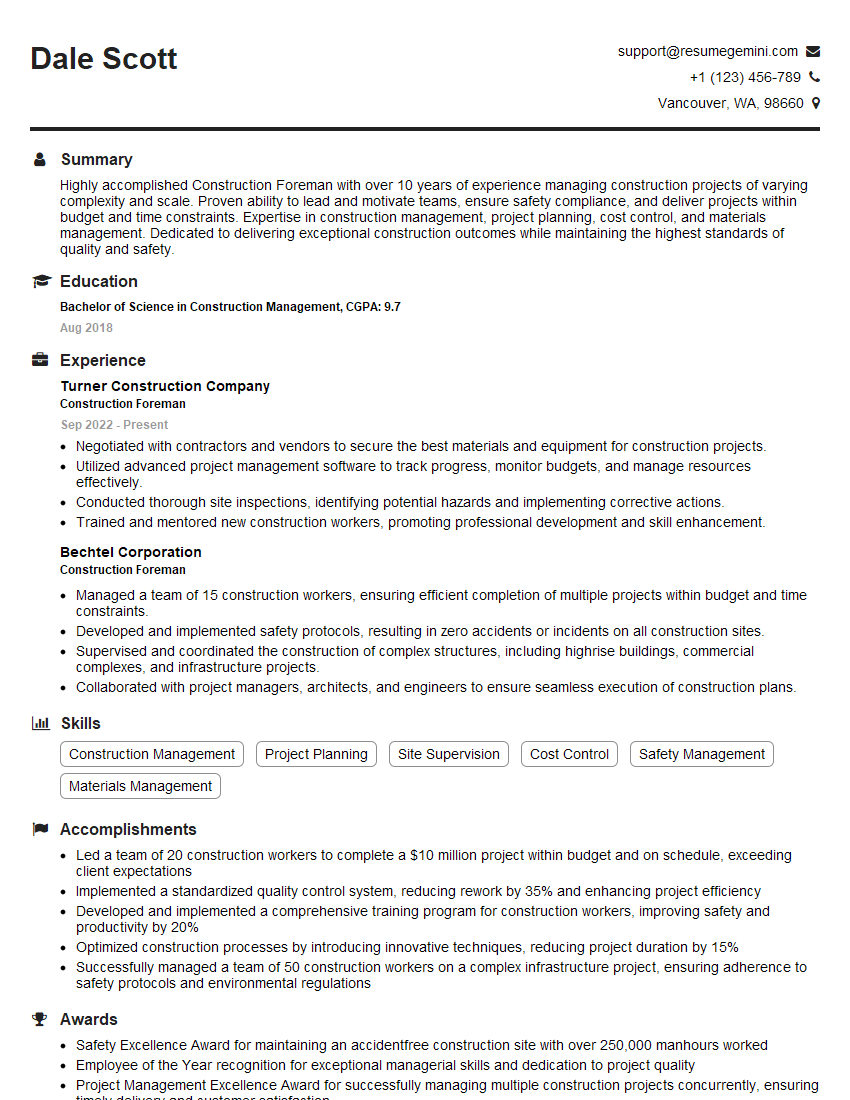
Construction Foreman Resume Sample

General Contractor Resume Sample

Field Technician Resume Sample

Building Maintenance Technician Resume Sample

Handyman Resume Sample

Site Supervisor Resume Sample

Installation Technician Resume Sample

Finish Carpenter Resume Sample

Cabinet Installer Resume Sample
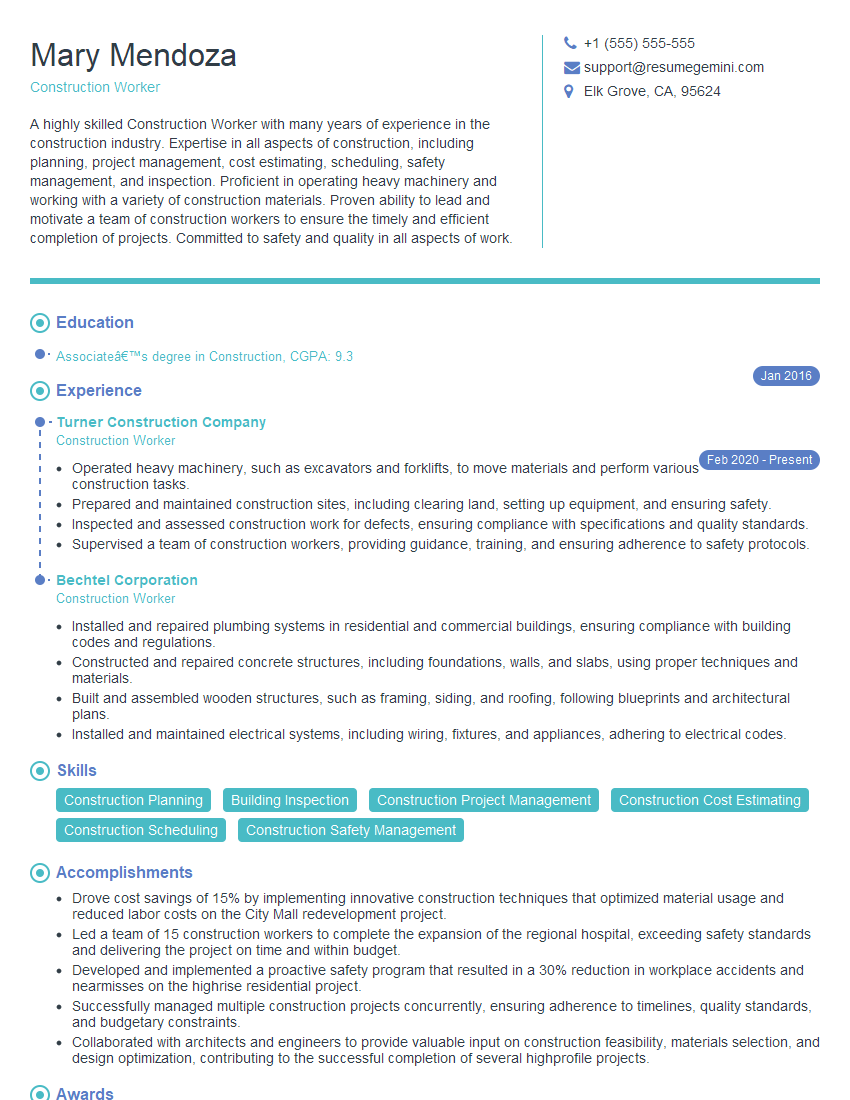
Construction Worker Resume Sample

Woodworker Resume Sample

Apprentice Carpenter Resume Sample

Construction Laborer Resume Sample

Lead Installer Resume Sample
Explore more articles
Users Rating of Our Blogs
Share Your Experience
We value your feedback! Please rate our content and share your thoughts (optional).
What Readers Say About Our Blog
Very informative content, great job.
good