Interviews are opportunities to demonstrate your expertise, and this guide is here to help you shine. Explore the essential Floral Accessories and Bouquets interview questions that employers frequently ask, paired with strategies for crafting responses that set you apart from the competition.
Questions Asked in Floral Accessories and Bouquets Interview
Q 1. Describe your experience with various floral design styles (e.g., modern, romantic, rustic).
My experience encompasses a wide range of floral design styles, each demanding a unique approach. Modern designs prioritize clean lines, minimalist arrangements, and often incorporate unconventional materials alongside flowers. Think asymmetrical bouquets with a focus on texture and color contrast, perhaps using succulents and orchids alongside more traditional blooms. Romantic styles evoke feelings of elegance and softness, featuring lush blooms in pastel shades, flowing lines, and cascading arrangements. Roses, peonies, and hydrangeas are staples, often incorporated with trailing greenery like ivy or eucalyptus. Rustic designs embrace natural textures and a more relaxed aesthetic. Think wildflowers, burlap, wood accents, and a color palette inspired by the earth. I’ve created arrangements in each style, adapting my techniques to suit the specific event and client preferences. For example, for a modern wedding, I might use bold geometric vases and succulents, while a romantic wedding might feature a classic cascading bouquet with ivory roses and delicate lace.
Q 2. Explain your process for selecting appropriate floral accessories for a specific event.
Selecting appropriate floral accessories is a crucial step in creating a cohesive and impactful design. My process begins with a thorough understanding of the event’s theme, style, and venue. I consider the overall color palette, and then choose accessories that complement and enhance the flowers. This could involve ribbons (satin for elegance, burlap for rustic), vases (modern glass, antique pottery), candles, crystals, or even unique elements like feathers or dried flowers. For example, for a beach wedding, I might use seashells and driftwood as accessories, whereas a formal gala might call for elegant crystal vases and pearl accents. It’s about creating a visual harmony; accessories shouldn’t compete with the flowers but should instead enhance their beauty and tell a story.
Q 3. How do you handle challenging floral arrangements with limited resources?
Resource limitations require creativity and adaptability. When faced with a limited budget or flower availability, I focus on maximizing the impact of the available resources. This involves carefully selecting flowers that are in season and readily available, focusing on a smaller, more concentrated arrangement rather than a large, sprawling one. I might incorporate more foliage to create volume and texture without relying on expensive blooms. Substituting less expensive flowers of similar color and shape can also maintain the aesthetic integrity of the arrangement. For instance, using carnations instead of roses, or using more filler flowers to create the desired abundance. Clever arrangement techniques and strategic placement of focal flowers can also enhance the overall visual impact, compensating for any shortfalls in quantity.
Q 4. What software or tools do you utilize for floral design or inventory management?
I use a combination of software and tools to streamline my workflow. For inventory management, I rely on a spreadsheet program like Microsoft Excel or Google Sheets to track flower stock, orders, and supplier information. This allows for efficient ordering and helps prevent waste. For design visualization, I sometimes use Adobe Photoshop or similar programs to create digital mock-ups, allowing clients to visualize the arrangements before the event. While not strictly necessary for all projects, it’s incredibly helpful for complex or large-scale events. Finally, I utilize scheduling software to manage my time and ensure timely delivery and setup.
Q 5. Describe your experience with different flower types and their care requirements.
My experience extends to a vast array of flower types, each with unique characteristics and care requirements. Roses, for example, require specific water levels and careful handling to avoid damage to their delicate petals. Hydrangeas are thirsty flowers and need consistently moist soil. Tulips, on the other hand, are known for their ability to drink up water quickly and need frequent water changes. Orchids require specialized growing conditions and specific humidity levels. Understanding these individual needs ensures the flowers remain fresh and vibrant. I maintain detailed notes and reference materials to ensure proper handling and care for every type of flower I work with. This knowledge extends to post-harvest handling, including proper hydration techniques and storage conditions.
Q 6. How do you maintain freshness and quality of flowers throughout an event?
Maintaining freshness is paramount. My approach begins long before the event. Flowers are chosen for their quality and stage of bloom, ensuring they’ll last through the event. Proper hydration and storage are critical; flowers are kept in cool, dark environments with adequate water and flower food. During the event, I regularly check the water levels, mist the flowers to maintain hydration, and remove any wilting blooms. Proper placement – avoiding direct sunlight or harsh temperatures – also plays a vital role. Using floral preservatives is standard practice to extend their lifespan. For large events, I might have a designated person to assist in maintaining the arrangements throughout the day.
Q 7. Explain your approach to creating a cohesive color palette for a floral arrangement.
Creating a cohesive color palette is essential for a visually appealing arrangement. I begin by understanding the event’s theme and the client’s preferences. I typically use a color wheel to guide my selection, considering analogous colors (colors next to each other on the wheel) for a harmonious look or complementary colors (colors opposite each other) for a more vibrant contrast. I might choose a dominant color and then add accent colors to create depth and visual interest. For a wedding, I might use shades of blush pink, ivory, and greenery for a soft, romantic feel. For a corporate event, I might opt for bolder colors, like deep reds and purples, to create a more impactful statement. The key is balance and harmony; every color should have a purpose within the overall design.
Q 8. How do you manage time effectively when creating multiple arrangements simultaneously?
Managing multiple arrangements simultaneously requires meticulous planning and efficient workflow. Think of it like conducting an orchestra – each instrument (arrangement) needs attention, but the conductor (me) needs to ensure harmony and timely completion. I utilize a system of prioritized task lists. For example, I’ll first assess arrangements with the most demanding timelines or complex designs. I then break down each arrangement into smaller, manageable tasks: prepping flowers, creating the foam base, assembling the arrangement itself, and final touches. I allocate specific time slots for each task and utilize timers to stay on track. Multitasking is key, but focused multitasking – switching between similar tasks rather than jumping between wildly different ones. For instance, I might prep all the roses for several arrangements at once before moving onto another flower type. This minimizes wasted time and maximizes efficiency.
Q 9. Describe your experience with working under pressure and meeting deadlines.
Working under pressure and meeting deadlines is an integral part of this profession. I thrive in such environments. I remember once having to create 20 wedding bouquets in just two days – a significant challenge! My response was to immediately assemble a dedicated team, delegate responsibilities efficiently, and establish clear communication channels. We used a visual schedule to track progress and address potential bottlenecks promptly. The key was proactive problem-solving and remaining calm under duress. Prioritization is paramount – focusing on critical tasks first and utilizing time-saving techniques where possible. Clear communication with clients throughout the process ensures everyone is on the same page and potential issues are identified early. This experience honed my ability to handle unexpected delays and remain adaptable.
Q 10. How do you handle customer requests that deviate from your design recommendations?
Customer satisfaction is my top priority, so handling requests that deviate from my recommendations requires tact and skilled negotiation. My approach is to begin by understanding the client’s vision and rationale behind their specific request. I then try to gently guide them towards designs that are both aesthetically pleasing and feasible. Sometimes, I’ll offer alternative options that align with their preferences while ensuring structural integrity and longevity of the arrangement. For example, if a client insists on a flower type that won’t hold its shape well, I may suggest a similar-looking flower with better durability or incorporate supportive techniques like wiring. Open communication, demonstrating that I understand and value their preferences, often leads to a compromise that works for everyone. Ultimately, finding common ground and creating a beautiful arrangement they love is the goal.
Q 11. What are some common issues encountered in floral design and how do you resolve them?
Several common issues arise in floral design. One is flower wilting. This is often addressed by proper hydration techniques: pre-treating flowers, using floral food, and regularly misting arrangements. Another common problem is color fading. This can be mitigated by selecting flowers with robust pigments, using flower preservatives, and avoiding direct sunlight. Pest infestations can be prevented with proper sanitation and the use of insecticides when necessary. Finally, structural issues like drooping stems are resolved by using appropriate wiring techniques and sturdy floral foam. Addressing these issues requires a combination of knowledge, proper preparation, and swift action. I am always proactive in my approach, anticipating and resolving potential issues before they impact the final product.
Q 12. How familiar are you with different types of floral foam and their uses?
I’m very familiar with various floral foams. They are essential for creating structured arrangements.
- Oasis Floral Foam (wet foam): The most common type, ideal for large arrangements and those requiring long-lasting hydration. It’s crucial to soak it completely before use to prevent uneven water absorption.
- Dry Floral Foam: Used for dry arrangements, preserving the flowers for an extended period. It comes in various colors and densities.
- Preserved Floral Foam: This type is treated for long-lasting use without needing water, ideal for long-term displays.
Q 13. What are your preferred techniques for wiring and taping flowers?
Wiring and taping are critical techniques. My preferred wiring method involves inserting floral wire into the stem of the flower, then carefully wrapping it with floral tape to blend seamlessly with the stem color. I use different gauges of wire depending on the flower’s stem strength. Delicate flowers might require thinner wire. Taping securely ensures the wire doesn’t show and provides additional support. For taping, I use floral tape, applying it in a spiral motion to create a seamless and waterproof bond. It’s a delicate process; practice leads to refined execution. This precision is vital, especially in complex designs where multiple stems and flower types need secure integration.
Q 14. How do you determine the appropriate size and scale of a floral arrangement for a given space?
Determining the appropriate scale for a floral arrangement is crucial for visual harmony. I start by considering the space’s dimensions and overall style. I’ll take measurements and even sketch the proposed arrangement into the space. The arrangement shouldn’t overwhelm the space, nor should it appear lost. For instance, a small vase of flowers would be inappropriate in a large entryway; likewise, an enormous arrangement would look clumsy in a small room. I consider the surrounding décor: Is it minimalist or ornate? The arrangement should complement, not compete. Proportion and balance are key. The arrangement’s height, width, and depth should maintain an appropriate relationship to the surrounding space and architecture. Visualizing the arrangement in the context of its final location is a crucial step before execution.
Q 15. Explain your experience with various floral preservation techniques.
Floral preservation is crucial for extending the lifespan of beautiful blooms and creating lasting memories. I’m experienced with several methods, each with its own advantages and disadvantages.
- Drying: This classic method involves air drying, silica gel drying, or pressing flowers. Air drying is the simplest, but it can lead to color fading and distortion. Silica gel offers faster drying with better color retention. Pressing is ideal for flat flowers and creating keepsakes.
- Freezing: While less common for long-term preservation, freezing can temporarily maintain flower freshness, particularly useful for transport or short-term storage before another preservation method.
- Preservation Solutions: Commercial solutions are available that chemically treat flowers to maintain their shape and color, offering a longer-lasting result than air drying. I carefully select the appropriate solution based on the flower type and desired outcome.
- Resin Encapsulation: This artistic method seals flowers in resin, creating beautiful and durable ornaments or jewelry. It’s a great choice for creating unique keepsakes.
For example, I recently preserved a bride’s bouquet using silica gel, resulting in vibrant color retention and minimal shape distortion. For a client’s delicate pressed flowers, I used archival-quality acid-free paper to prevent discoloration.
Career Expert Tips:
- Ace those interviews! Prepare effectively by reviewing the Top 50 Most Common Interview Questions on ResumeGemini.
- Navigate your job search with confidence! Explore a wide range of Career Tips on ResumeGemini. Learn about common challenges and recommendations to overcome them.
- Craft the perfect resume! Master the Art of Resume Writing with ResumeGemini’s guide. Showcase your unique qualifications and achievements effectively.
- Don’t miss out on holiday savings! Build your dream resume with ResumeGemini’s ATS optimized templates.
Q 16. Describe your understanding of different flower symbolism and their cultural significance.
Flower symbolism is rich and varied across cultures and traditions. Understanding this symbolism is vital in creating meaningful arrangements for various events.
- Roses: Universally associated with love and romance, red roses signify passion, while white roses represent purity and innocence. Yellow roses can signify friendship or joy.
- Lilies: These elegant flowers often symbolize purity, innocence, and rebirth. White lilies are frequently used in funerals, while other colors may have different meanings depending on the culture.
- Tulips: These vibrant blooms symbolize perfect love, affection, and passionate declarations. Color variations can influence the specific message conveyed.
- Sunflowers: Representing joy, longevity, and adoration, sunflowers are often associated with warmth and positivity.
For instance, a wedding bouquet might incorporate white lilies for purity and roses for love, while a funeral arrangement might feature white lilies and orchids, reflecting peace and sympathy. Cultural understanding is key; for example, while white is associated with mourning in many Western cultures, it symbolizes joy and celebration in some Eastern traditions. My expertise lies in navigating these nuances to create arrangements that are culturally sensitive and meaningful.
Q 17. How do you calculate the cost of materials for a specific floral arrangement?
Accurately calculating material costs is essential for profitability. My process involves a detailed breakdown of each component:
- Flower Costs: I consider the type, quantity, and source of flowers. Wholesale prices vary based on seasonality and availability, and I have established relationships with reliable suppliers to obtain competitive pricing.
- Foliage Costs: The cost of greenery, fillers, and other supporting materials needs to be factored in. I carefully select these elements based on their impact on the overall design and cost-effectiveness.
- Container Costs: Vases, baskets, or other containers add to the total cost. I offer a range of container options to suit different budgets and styles.
- Supply Costs: This includes ribbons, wire, floral foam, tape, and other accessories necessary to create the arrangement. I maintain a detailed inventory to track these costs precisely.
- Labor Costs: While not a direct material cost, labor should be factored into the overall price to ensure profitability. I track time spent on design, procurement, and assembly to estimate labor costs accurately.
For example, to create a simple bridal bouquet, I would total the cost of roses, hydrangeas, greenery, ribbon, and vase, add the cost of the floral foam and wire, and then add a markup for my labor and overhead to determine the final price for the client.
Q 18. What are your strategies for maintaining a clean and organized workspace?
A clean and organized workspace is paramount for efficiency and safety. My strategies include:
- Daily Cleanup: I clear away debris, dispose of spent flowers, and wipe down surfaces after each arrangement.
- Designated Storage: Flowers are stored appropriately—refrigerated if necessary—to maintain freshness. Tools and supplies have designated storage locations to avoid clutter and streamline workflow.
- Inventory Management: Regular inventory checks prevent overstocking or shortages. I use a combination of physical inventory and a digital spreadsheet to manage my supplies.
- Ergonomic Setup: My workspace is designed for comfort and efficiency, with easy access to tools and materials. This reduces the risk of injury and improves productivity.
- Regular Deep Cleaning: I perform a thorough cleaning of the workspace weekly, including vacuuming, dusting, and disinfecting surfaces to maintain hygiene and prevent pest infestations.
Maintaining a clean and organized space allows for faster arrangement creation, prevents accidents, and fosters a professional environment.
Q 19. How do you ensure the safety and sanitation of your floral arrangements?
Ensuring the safety and sanitation of floral arrangements is critical, especially considering potential allergies or sensitivities. I prioritize:
- Source Quality: I procure flowers and supplies from reputable sources that adhere to safety and sanitation standards.
- Proper Handling: I practice good hygiene while handling flowers, washing hands frequently and using clean tools to prevent contamination.
- Pest Control: I inspect flowers for pests before use and take appropriate measures to prevent infestations in the workspace.
- Allergen Awareness: I am aware of common floral allergens and offer alternatives if needed. I clearly communicate potential allergens to clients.
- Safe Packaging and Transport: Arrangements are packaged securely to prevent damage and contamination during transport.
For example, I always wash my hands before handling flowers and use clean, sanitized tools and containers. I also inform clients of any potential allergens in their arrangements.
Q 20. What is your experience with creating floral arrangements for various occasions (weddings, funerals, etc.)?
I have extensive experience creating floral arrangements for a wide range of occasions.
- Weddings: I’ve designed bridal bouquets, bridesmaid bouquets, centerpieces, ceremony decorations, and reception arrangements, tailoring the style and flowers to complement the wedding’s theme and the couple’s preferences. I work closely with wedding planners to ensure seamless integration with the overall event design.
- Funerals: I understand the sensitivity required for funeral arrangements. I create meaningful and respectful designs using appropriate flowers and colors that convey sympathy and remembrance, working with the bereaved family to create a tribute that honors the departed.
- Corporate Events: I design arrangements for corporate events, conferences, and meetings, creating professional and sophisticated designs that enhance the ambiance and reflect the company’s brand identity.
- Other Occasions: I also design for birthdays, anniversaries, graduations, and other celebrations, customizing arrangements to reflect the specific occasion and the recipient’s preferences.
Each occasion demands a unique approach. A wedding calls for romantic elegance, while a funeral requires somber beauty. Understanding the nuances of each event is essential in creating the perfect arrangement.
Q 21. How do you manage inventory and order supplies efficiently?
Efficient inventory and supply management are vital for success. I utilize a multi-pronged approach:
- Digital Inventory System: I maintain a detailed spreadsheet or database that tracks flower types, quantities, suppliers, costs, and order dates. This allows for accurate forecasting and minimizes waste.
- Regular Ordering: I place orders strategically, considering seasonality and demand, to prevent shortages and maintain freshness.
- Supplier Relationships: I have established relationships with reliable suppliers who provide high-quality flowers and supplies at competitive prices. This ensures timely delivery and consistent quality.
- Storage Optimization: Flowers are stored according to their requirements—refrigerated if needed—to prolong their lifespan. Supplies are organized to maximize space and accessibility.
- Waste Reduction: I minimize waste by accurately estimating flower needs and utilizing leftover materials creatively in smaller arrangements or decorative pieces.
By meticulously tracking inventory, anticipating demand, and fostering strong supplier relationships, I ensure a smooth workflow and maintain the highest quality standards.
Q 22. Describe your experience with floral design consultations with clients.
Floral design consultations are the cornerstone of my work. I begin by actively listening to the client’s vision, understanding their event style (formal, rustic, modern, etc.), color preferences, budget, and the overall atmosphere they want to create. I ask detailed questions about the venue, the number of guests, and any existing decor elements to ensure a cohesive and stunning outcome. I then present mood boards and sketches, incorporating their feedback at every stage. For instance, I recently worked with a couple who wanted a romantic, whimsical wedding. After learning about their love for vintage gardens, I presented a design featuring pastel-toned roses, lavender, and wildflowers, arranged in loose, cascading bouquets. The process includes discussing flower availability, seasonal variations, and alternative options if their first choices are not feasible. Ultimately, the goal is to translate the client’s dreams into a breathtaking reality.
Q 23. What are your skills in creating boutonnieres and corsages?
Creating boutonnieres and corsages is a specialty of mine. I excel at crafting miniature masterpieces that complement the overall floral design and the attire of the wearer. My skill lies in choosing the right flowers and foliage – considering texture, color, and size – to create balanced and elegant pieces. For instance, a simple yet elegant boutonniere could be crafted using a single deep red rose bud, accented with a sprig of eucalyptus and a touch of delicate ribbon. For corsages, I frequently use a mix of smaller flowers like spray roses, lisianthus, or orchids, arranged artfully to sit comfortably on a wrist or shoulder. I pay close attention to detail, ensuring the pieces are securely fastened and will remain fresh and vibrant throughout the event. I always aim for a design that looks beautiful and feels comfortable.
Q 24. How do you handle damaged or wilted flowers during an event?
Handling damaged or wilted flowers during an event requires quick thinking and decisive action. I always bring extra flowers and foliage to the event – a ‘floral emergency kit’ if you will. If a flower wilts, I immediately assess the damage. If it’s a minor wilt, a quick misting with water and repositioning may suffice. For more significant damage, I carefully replace the affected bloom with a similar one from my backup supply. Speed and precision are key; I work discreetly so as not to disrupt the event’s flow. Proper flower preparation and hydration before the event are crucial in preventing damage, but having a contingency plan is essential for handling unforeseen circumstances. I also provide instructions to the venue staff on basic flower care, ensuring they can assist in maintaining the arrangements’ freshness.
Q 25. What is your knowledge of different flower varieties suitable for different seasons?
My knowledge of seasonal flowers is extensive. Understanding the seasonal availability of different varieties is paramount for creating stunning and cost-effective arrangements. For example, Spring offers tulips, daffodils, and hyacinths; Summer is abundant with sunflowers, hydrangeas, and lilies; Autumn provides dahlias, chrysanthemums, and asters; and Winter features amaryllis, poinsettias, and winter berries. This seasonal awareness allows me to curate arrangements that are not only visually appealing but also reflect the natural beauty of each season. I also advise clients on less common seasonal blooms to offer unique and unexpected touches to their designs, always considering their preferences and the overall event aesthetic. Knowing which flowers are in season ensures better quality, better pricing, and a more sustainable approach to floral design.
Q 26. Describe your experience with creating centerpieces for different table sizes and styles.
Centerpiece design is highly dependent on the table size and style. For smaller tables, a low, elegant arrangement might suffice, perhaps a single, stunning flower in a delicate vase. Larger tables, on the other hand, benefit from more substantial arrangements, possibly incorporating multiple floral elements and varying heights to create visual interest. For a long, rectangular table, I would create a series of smaller arrangements that flow together, creating a cohesive design. Formal events might call for symmetrical, structured centerpieces, while a rustic event could utilize more natural, less structured designs. I always consider the height of the centerpieces, ensuring they don’t obstruct guests’ views or conversations. Each design is tailored to the specific table and the event’s overall theme, aiming for balance and visual appeal without overpowering the space.
Q 27. How do you incorporate non-floral elements into your arrangements (e.g., ribbons, candles)?
Incorporating non-floral elements is crucial for enhancing the overall design and adding texture and visual interest. Ribbons can add a touch of elegance or whimsy, depending on their color and texture. Candles create a warm and romantic atmosphere, particularly in evening events. Other elements like crystals, beads, feathers, or even natural materials like branches and driftwood can significantly impact the overall look and feel. For instance, I recently used cascading ribbons in a wedding arch, which flowed gracefully alongside the flowers, adding a romantic and elegant touch. I always choose non-floral elements that complement the colors and style of the floral arrangement, ensuring a cohesive and harmonious design.
Q 28. How familiar are you with sustainable and eco-friendly floral practices?
Sustainable and eco-friendly floral practices are very important to me. I prioritize using locally sourced flowers whenever possible, reducing the carbon footprint associated with transportation. I also work with growers who employ sustainable farming techniques, minimizing the use of pesticides and harmful chemicals. I encourage the use of reusable vases and containers and avoid excessive packaging. Whenever feasible, I incorporate repurposed or recycled materials into my designs. I educate clients on sustainable choices and encourage them to consider alternatives like potted plants that can be replanted after the event. By incorporating these practices, I strive to minimize the environmental impact of my floral creations, ensuring beauty doesn’t come at the cost of the planet.
Key Topics to Learn for Your Floral Accessories and Bouquets Interview
- Floral Design Principles: Understanding color theory, texture, and form in floral arrangements. This includes knowing how to create visual balance and harmony.
- Floral Anatomy and Physiology: Knowing the different types of flowers, their care requirements, and how to properly handle and prepare them for arrangements. This is crucial for longevity and presentation.
- Accessorizing Techniques: Mastering the art of incorporating ribbons, beads, foliage, and other elements to enhance the overall design and appeal of bouquets and arrangements.
- Bouquet Styles and Trends: Familiarity with various bouquet styles (e.g., cascade, round, hand-tied) and current trends in floral design. This demonstrates an understanding of the industry’s evolution.
- Practical Application: Understanding the process of creating different types of bouquets and arrangements, from initial design concept to final presentation. Think about different occasions and their associated floral styles.
- Material Selection and Sourcing: Knowledge of where to source high-quality flowers and accessories, considering factors like seasonality, budget, and client preferences. This includes understanding sustainability and ethical sourcing practices.
- Problem-Solving: Demonstrate your ability to troubleshoot issues, such as wilting flowers, damaged materials, or unexpected design challenges. How would you adapt to unforeseen circumstances?
- Client Communication & Consultation: Understanding how to effectively communicate with clients to understand their vision and create a floral arrangement that meets their needs and exceeds their expectations.
Next Steps
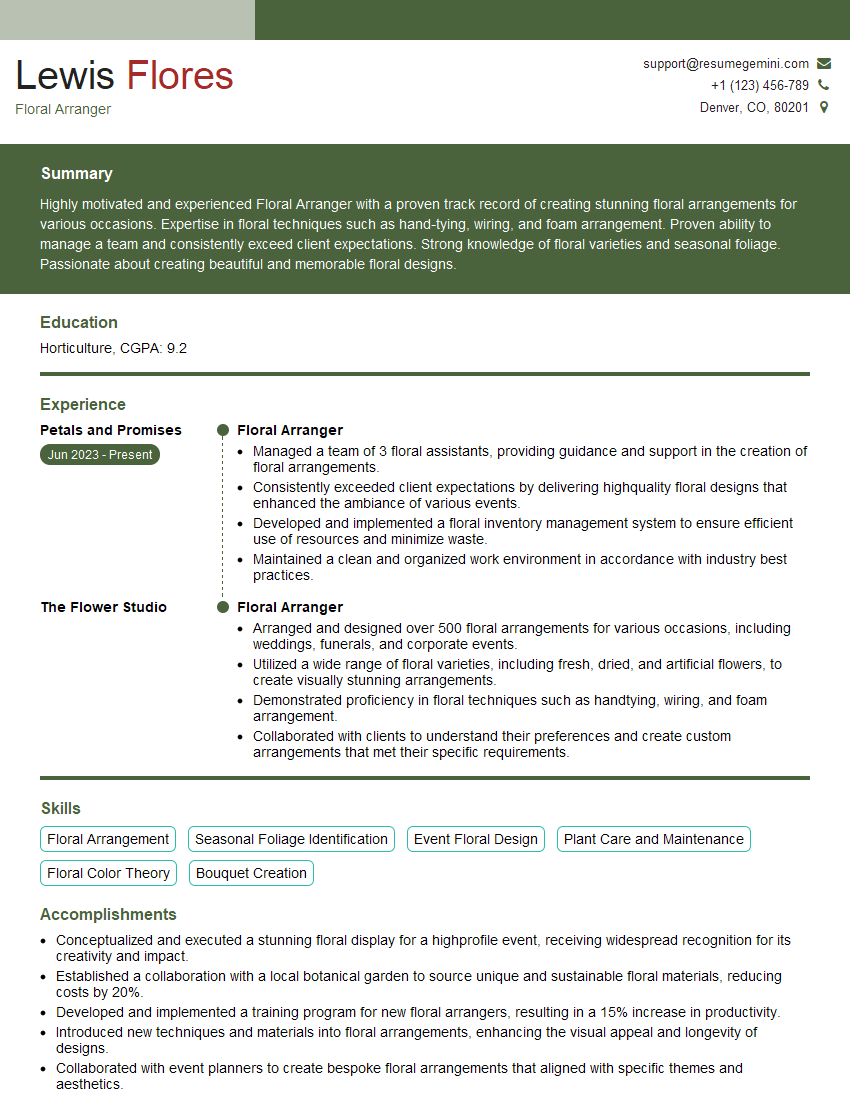
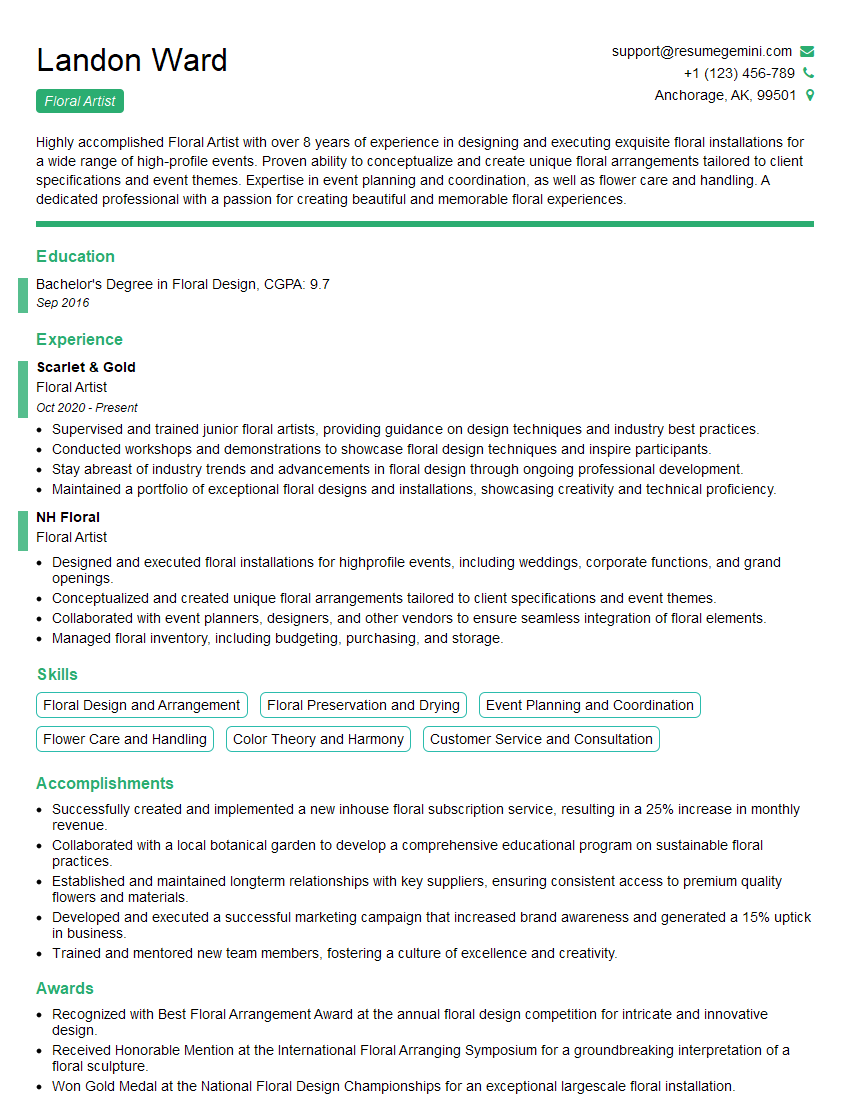
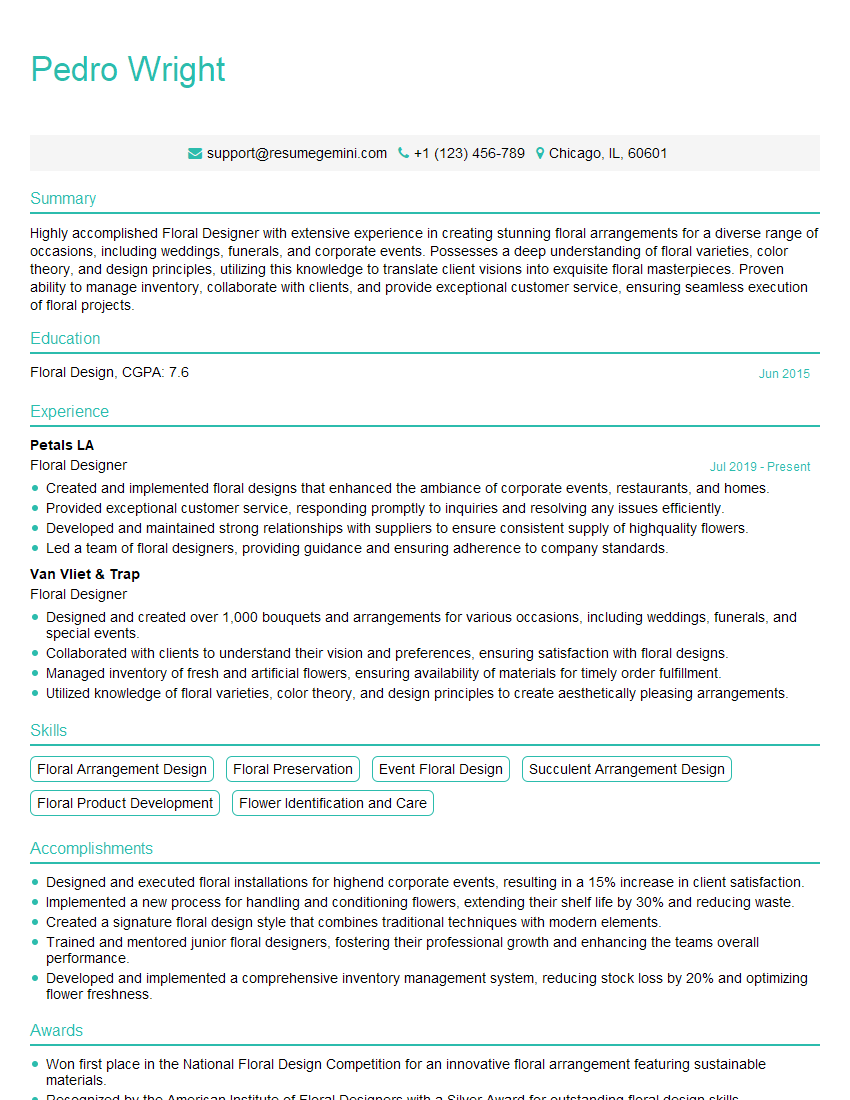
Mastering the art of floral accessories and bouquets is key to unlocking exciting career opportunities in a vibrant and creative industry. To stand out from the competition, a strong and ATS-friendly resume is crucial. This is where ResumeGemini can help. ResumeGemini provides a trusted platform to build a professional resume that showcases your skills and experience effectively. We offer examples of resumes tailored to the Floral Accessories and Bouquets field to help you get started. Take the next step towards your dream career – build a resume that makes a lasting impression.
Explore more articles
Users Rating of Our Blogs
Share Your Experience
We value your feedback! Please rate our content and share your thoughts (optional).
What Readers Say About Our Blog
Very informative content, great job.
good