Unlock your full potential by mastering the most common Regulatory Compliance Tracking interview questions. This blog offers a deep dive into the critical topics, ensuring you’re not only prepared to answer but to excel. With these insights, you’ll approach your interview with clarity and confidence.
Questions Asked in Regulatory Compliance Tracking Interview
Q 1. Explain the importance of a robust regulatory compliance tracking system.
A robust regulatory compliance tracking system is crucial for organizations to avoid hefty fines, legal battles, and reputational damage. Think of it as a comprehensive safety net. It ensures that your organization consistently adheres to relevant laws and regulations, protecting your business and maintaining public trust. Without a strong system, you’re essentially navigating a minefield blindfolded.
Its importance stems from several key areas:
- Risk Mitigation: Proactive identification and management of compliance risks, preventing costly violations.
- Efficiency: Streamlines compliance processes, reducing time and resources spent on manual checks and audits.
- Improved Auditing: Provides clear, readily-available documentation for internal and external audits, demonstrating due diligence.
- Data Security: Helps secure sensitive data by ensuring adherence to data protection regulations like GDPR and HIPAA.
- Competitive Advantage: Demonstrated compliance can attract clients and investors, fostering trust and enhancing brand reputation.
Q 2. Describe your experience with different regulatory compliance frameworks (e.g., HIPAA, GDPR, SOX).
I’ve had extensive experience working with a variety of regulatory compliance frameworks, including HIPAA, GDPR, and SOX. Each requires a unique approach.
- HIPAA (Health Insurance Portability and Accountability Act): My work involved implementing robust security measures to protect patient health information (PHI), including access controls, encryption, and employee training. For example, we developed a system for tracking PHI access requests and automatically generating audit trails.
- GDPR (General Data Protection Regulation): Here, I focused on data subject rights, ensuring compliance with data minimization principles, and implementing procedures for data breach notifications. A significant project involved developing a consent management platform to document and manage user consents effectively.
- SOX (Sarbanes-Oxley Act): My experience with SOX involved establishing robust internal controls over financial reporting, including implementing detailed documentation of financial processes, designing and implementing regular testing procedures, and ensuring compliance with audit requirements. We used specialized software to automate the tracking of financial transactions and associated controls.
This diverse experience has given me a strong understanding of the nuances of different regulatory frameworks and the ability to adapt my approach to meet specific needs.
Q 3. How do you ensure the accuracy and completeness of compliance data?
Ensuring data accuracy and completeness is paramount. It’s like building a house – a weak foundation will bring the whole structure down. I employ a multi-faceted approach:
- Data Validation: Implementing automated checks and cross-referencing data from multiple sources to identify and correct inconsistencies.
- Regular Reconciliation: Comparing compliance data against source systems and documenting any discrepancies.
- Data Governance Policies: Establishing clear roles, responsibilities, and procedures for data entry, update, and review, promoting accountability.
- Data Quality Monitoring: Using dashboards and reporting tools to track key metrics and identify areas for improvement. For instance, tracking the percentage of completed compliance tasks or the number of outstanding issues.
- Auditing and Verification: Conducting regular audits of the compliance data and processes to ensure accuracy and completeness. This often involves sampling and verification of records.
By combining these methods, I can maintain the integrity of our compliance data, enabling informed decision-making and minimizing the risk of errors.
Q 4. What methods do you use to identify and mitigate compliance risks?
Identifying and mitigating compliance risks requires a proactive and systematic approach. It’s like anticipating potential hazards before they impact the building you’re constructing.
- Risk Assessments: Regularly conducting thorough risk assessments to identify potential compliance gaps and vulnerabilities. This often involves considering both internal and external factors.
- Gap Analysis: Comparing current practices to regulatory requirements to pinpoint areas needing improvement.
- Monitoring and Surveillance: Continuously monitoring regulatory changes and industry best practices to stay ahead of emerging risks.
- Corrective Actions: Developing and implementing corrective actions to address identified risks and close identified gaps.
- Training and Awareness: Providing regular training to employees to increase awareness of compliance requirements and their responsibilities. This often includes interactive simulations and case studies.
By integrating these methods, we can proactively address compliance risks and enhance overall organizational resilience.
Q 5. How do you track and report on compliance metrics?
Tracking and reporting on compliance metrics provides a clear picture of an organization’s compliance posture – its overall health. It’s about creating a dashboard to monitor key performance indicators (KPIs).
My approach involves:
- Defining Key Metrics: Identifying relevant metrics such as the number of completed training modules, the percentage of audits completed on time, or the number of outstanding compliance issues.
- Data Collection: Automating the collection of data from various sources to ensure efficiency and accuracy.
- Reporting and Visualization: Utilizing dashboards and reports to visualize compliance data, identifying trends, and highlighting areas requiring attention.
- Regular Reporting: Generating regular reports for management and stakeholders, keeping them informed of the organization’s compliance status.
For example, a dashboard could display the percentage of employees who have completed required training, the status of ongoing audits, and a list of outstanding issues, categorized by severity and urgency.
Q 6. Describe your experience using compliance tracking software or tools.
I have extensive experience using various compliance tracking software and tools, including both cloud-based and on-premise solutions. My experience includes working with tools that offer features such as:
- Centralized Database: A secure, central repository for storing all compliance-related documents and data.
- Automated Workflows: Automating tasks such as scheduling training, reminders, and audits.
- Reporting and Analytics: Generating customized reports and dashboards to monitor compliance progress.
- Integration Capabilities: Integrating with other systems, such as HR and finance systems, to streamline data collection and analysis.
For instance, I’ve used [Software Name - Example] to manage HIPAA compliance and [Software Name - Example] for GDPR compliance. My proficiency in utilizing such tools allows me to effectively manage complex compliance requirements and generate insightful reports.
Q 7. Explain your process for conducting compliance audits.
Conducting compliance audits is a systematic process that involves a meticulous evaluation of an organization’s adherence to relevant regulations. Think of it as a comprehensive health check for your compliance system.
My audit process typically involves:
- Planning and Scoping: Defining the scope of the audit, identifying key areas to be reviewed, and establishing audit objectives.
- Data Collection: Gathering relevant documentation, interviewing stakeholders, and reviewing system logs and other relevant data.
- Testing and Evaluation: Performing tests and evaluations to assess the effectiveness of controls and the accuracy of data.
- Reporting: Documenting audit findings, identifying any gaps or deficiencies, and recommending corrective actions.
- Follow-up: Monitoring the implementation of corrective actions and conducting follow-up audits to ensure that issues are resolved.
I use a risk-based approach, prioritizing areas of higher risk. For example, I might focus on areas involving sensitive data or critical business processes. This ensures that the audit is efficient and effective, focusing on the areas that need the most attention.
Q 8. How do you handle compliance violations or non-conformances?
Handling compliance violations starts with immediate investigation. We use a structured approach, similar to a detective investigating a crime scene. First, we identify the root cause of the non-compliance. This might involve reviewing processes, interviewing personnel, and analyzing data. Next, we assess the severity of the violation, considering its impact on stakeholders, potential legal ramifications, and reputational risks. This helps determine the appropriate corrective action. We then implement corrective actions, which can range from retraining staff to modifying internal procedures or even reporting the violation to the relevant regulatory bodies. Finally, and critically, we establish preventive measures to prevent similar violations in the future. This might include strengthening internal controls, improving communication, or updating training materials. For instance, if a data breach occurred, we would investigate to understand the vulnerabilities, fix them, implement stronger security protocols, and conduct employee retraining on data security best practices. Documentation at every step is paramount, ensuring a clear audit trail for future review.
Q 9. How do you stay up-to-date on changes in regulations and compliance requirements?
Staying current on regulatory changes is an ongoing process. I leverage multiple resources. This includes subscribing to relevant newsletters and journals, attending industry conferences and webinars, and actively monitoring government websites for updates. I also use specialized compliance software that tracks changes in regulations automatically, providing alerts when updates occur. Engaging with professional networks and attending industry events allows for peer-to-peer knowledge sharing and early warnings about potential changes. Think of it like being a meteorologist; constantly monitoring various data sources to predict upcoming storms (regulatory changes) and prepare for their impact. Proactive monitoring lets us adjust our compliance programs before issues arise. A practical example would be diligently following updates from the GDPR or CCPA websites to ensure our data handling practices remain compliant.
Q 10. Describe your experience with internal controls related to regulatory compliance.
My experience with internal controls revolves around designing and implementing systems that prevent, detect, and mitigate compliance risks. This includes establishing segregation of duties, implementing robust approval workflows, and utilizing automated checks and balances. For example, in a financial institution, I’d help implement controls to prevent money laundering, ensuring transactions are properly vetted and reported. In a healthcare setting, I’d help enforce HIPAA compliance by establishing secure data handling protocols and access controls. The key is to design controls that are proportionate to the risk. A critical component is regular auditing of internal controls to ensure their effectiveness and identify any weaknesses. We use a combination of automated tools and manual reviews to ensure comprehensive coverage. Documentation, clear processes, and ongoing monitoring are essential for demonstrating the effectiveness of these controls.
Q 11. How do you communicate compliance information to different stakeholders?
Communicating compliance information effectively requires tailoring the message to the audience. For executive management, I provide concise summaries of compliance risks and performance, focusing on key metrics and potential financial impacts. For employees, I use clear, accessible language in training materials and regular updates to ensure understanding and engagement. For external stakeholders like regulators or clients, I provide formal reports and documentation that adhere to regulatory requirements and demonstrate our commitment to compliance. I use various communication channels, including email, intranet portals, presentations, and workshops, choosing the most appropriate method for each audience. Think of it as speaking different languages—each group requires a specific vocabulary and level of detail.
Q 12. How do you prioritize compliance tasks and manage workload?
Prioritizing compliance tasks involves a risk-based approach. I assess the potential impact and likelihood of non-compliance for each task, prioritizing those with higher risk scores. This might involve using a risk matrix that considers factors like regulatory severity, potential financial penalties, and reputational damage. Project management methodologies like agile or Kanban are employed for effective workload management, breaking down large tasks into smaller, manageable units, allowing for flexibility and adjustments. Using tools like project management software assists in tracking progress, managing deadlines, and ensuring accountability. Regular review and re-prioritization based on changing risk profiles are also crucial.
Q 13. What is your experience with data security and privacy related to compliance?
Data security and privacy are fundamental aspects of regulatory compliance. My experience includes implementing and maintaining data security policies and procedures aligned with regulations like GDPR, CCPA, and HIPAA. This involves implementing access controls, data encryption, regular security assessments, and incident response plans. We also conduct regular employee training on data privacy and security best practices, emphasizing the importance of protecting sensitive information. Data loss prevention (DLP) tools are utilized to monitor and prevent unauthorized data transfer. A robust data governance framework is crucial, encompassing data classification, retention policies, and procedures for handling data breaches. Essentially, we treat data security as a continuous improvement process, adapting to evolving threats and regulatory requirements.
Q 14. How do you ensure that compliance training is effective and engaging?
Effective compliance training goes beyond simply presenting information; it needs to engage learners. We use a variety of methods, including interactive modules, gamification, real-life case studies, and scenario-based simulations. This ensures active participation and knowledge retention. We regularly assess training effectiveness through quizzes, post-training surveys, and observation of employee behavior. The training is tailored to different roles and responsibilities, ensuring that employees receive relevant information. We also incorporate refresher training to ensure knowledge remains current. The key is to create a learning environment that is not just informative but also memorable and engaging, transforming compliance from a dry subject into a practical skill that employees actively use.
Q 15. Describe a situation where you had to resolve a complex compliance issue.
One complex compliance issue I encountered involved a significant change in data privacy regulations affecting our international operations. We were operating under a patchwork of national laws, and a new, stricter regulation was implemented in a key market. This threatened our ability to process customer data in compliance with all applicable regulations.
To resolve this, I spearheaded a cross-functional team including legal, IT, and operations. We first conducted a thorough gap analysis, comparing our existing data processing practices against the new regulation. This identified key discrepancies, like inadequate consent mechanisms and insufficient data security measures. Next, we developed a prioritized remediation plan, focusing on immediate critical fixes and long-term sustainable solutions. This included updating our consent forms, implementing enhanced data encryption, and enhancing employee training programs on data privacy best practices. We established regular monitoring and reporting mechanisms to track our progress and ensure ongoing compliance. This multi-faceted approach, combined with effective communication and collaboration, allowed us to successfully adapt to the new regulations and avoid potential penalties.
Career Expert Tips:
- Ace those interviews! Prepare effectively by reviewing the Top 50 Most Common Interview Questions on ResumeGemini.
- Navigate your job search with confidence! Explore a wide range of Career Tips on ResumeGemini. Learn about common challenges and recommendations to overcome them.
- Craft the perfect resume! Master the Art of Resume Writing with ResumeGemini’s guide. Showcase your unique qualifications and achievements effectively.
- Don’t miss out on holiday savings! Build your dream resume with ResumeGemini’s ATS optimized templates.
Q 16. How do you measure the effectiveness of your compliance program?
Measuring compliance program effectiveness is crucial for continuous improvement. It’s not just about checking boxes; it’s about demonstrating that our efforts are genuinely reducing risk and protecting the organization. We use a multi-pronged approach.
- Key Performance Indicators (KPIs): We track metrics like the number of compliance incidents, the time taken to remediate issues, and the cost associated with non-compliance. A decrease in these indicates effectiveness.
- Audits and Self-Assessments: Regular internal audits and self-assessments help identify weaknesses and areas for improvement. We use a risk-based approach, focusing on higher-risk areas.
- Employee Training Effectiveness: We measure how well employees understand and adhere to compliance policies through assessments and observations. Higher scores on these assessments reflect successful training.
- Regulatory Inspections and Findings: Successful navigation of regulatory inspections with minimal or no findings demonstrates effective compliance. We meticulously document all findings and use them for improvement.
- Management Reviews: Regular reviews of our compliance program by senior management provide oversight and ensure alignment with business objectives.
By combining quantitative data (KPIs) with qualitative assessments (audits, employee feedback), we get a comprehensive picture of our program’s effectiveness and areas needing attention. Think of it like a doctor’s checkup – regular check-ups and tests prevent serious problems later.
Q 17. What are the key challenges in regulatory compliance tracking, and how do you address them?
Regulatory compliance tracking faces several challenges:
- Evolving Regulations: Laws and regulations are constantly changing, requiring continuous monitoring and adaptation. It’s like a moving target!
- Data Management: Managing the vast amount of data related to compliance can be overwhelming. We need efficient systems and processes to organize and analyze this data.
- Resource Constraints: Compliance efforts require significant resources, including personnel, time, and technology. Balancing compliance with other business priorities is always a challenge.
- Integration across departments: Compliance is not just the responsibility of one department; it requires collaboration across the organization. Getting everyone on board can be tough.
- Technology limitations: Older systems may not be able to adapt to new regulatory requirements, leading to inefficiencies.
To address these, we use a combination of strategies: We utilize automated tracking systems, implement robust data management processes, invest in employee training, foster strong cross-functional collaboration, regularly review and update our compliance policies and technology stack, and always prioritize the use of a risk-based approach.
Q 18. How do you use technology to improve regulatory compliance tracking efficiency?
Technology is essential for improving regulatory compliance tracking efficiency. We leverage several tools:
- Compliance Management Software: This software helps automate tasks like policy distribution, training management, and audit scheduling. It also provides centralized repositories for all compliance-related documentation. Imagine it as a virtual filing cabinet, always organized and accessible.
- Data Analytics Tools: These tools help us analyze large datasets to identify trends and potential compliance risks. Think of them as magnifying glasses for potential issues.
- Workflow Automation: Automating repetitive tasks like reporting and approvals frees up staff to focus on higher-value activities. It’s like adding an extra pair of hands to the team.
- Cloud-based solutions: Cloud platforms offer scalability and flexibility, ensuring easy access to information regardless of location. It’s like having a mobile office for compliance.
The selection of appropriate technology depends on our specific needs and budget, but the goal is always increased efficiency, accuracy, and better risk management.
Q 19. What are your preferred methods for documenting compliance activities?
Documenting compliance activities is critical for demonstrating due diligence and supporting audits. We utilize several methods, emphasizing clarity and completeness:
- Centralized Document Repository: All compliance-related documents, including policies, procedures, training materials, and audit reports, are stored in a secure, centralized system. This makes them easily accessible and searchable.
- Version Control: We track changes to policies and procedures, ensuring that everyone is using the most up-to-date versions. This helps prevent inconsistencies and errors.
- Audit Trails: We maintain detailed audit trails of all compliance-related activities, including access logs, changes made to systems, and remediation actions taken. This creates a clear record of events.
- Automated Reporting: Our systems generate automated reports on compliance status, highlighting areas of concern and progress made. This provides a snapshot of our compliance posture at any given time.
The key is to maintain accurate, complete, and easily retrievable documentation. This is our evidence of compliance and demonstrates our commitment to the process.
Q 20. Explain your understanding of risk assessment in the context of regulatory compliance.
Risk assessment is fundamental to effective regulatory compliance. It involves identifying, analyzing, and prioritizing potential compliance risks. Think of it as a preemptive strike to prevent potential problems.
We use a structured approach that includes:
- Identifying potential risks: This involves reviewing regulations, internal processes, and industry best practices to identify areas where non-compliance is possible. We use brainstorming, checklists, and gap analyses to uncover potential weak points.
- Analyzing the likelihood and impact of each risk: For each identified risk, we assess the likelihood of it occurring and the potential impact on the organization if it does. This allows us to prioritize our efforts.
- Developing mitigation strategies: Once risks are identified and analyzed, we develop strategies to mitigate them. These could include implementing new controls, improving processes, or providing additional training.
- Monitoring and reviewing: The risk assessment process is not a one-time event; it’s an ongoing process. We regularly monitor and review our risk assessments to ensure they remain relevant and accurate.
By proactively identifying and mitigating risks, we can significantly reduce the chances of non-compliance and protect the organization.
Q 21. How do you handle conflicts between different regulatory requirements?
Conflicts between different regulatory requirements are common, particularly in international operations. When this occurs, we follow a structured approach:
- Identify and document the conflict: Clearly define the conflicting requirements, specifying the relevant regulations and jurisdictions.
- Consult with legal counsel: Seek expert legal advice to understand the implications of each requirement and determine the most appropriate course of action. Legal expertise is essential here.
- Develop a prioritized compliance plan: Based on legal advice and a risk assessment, create a plan to address the conflict. This may involve prioritizing one requirement over another based on risk and feasibility.
- Document the decision-making process: Maintain clear documentation of the conflict, the analysis conducted, and the decisions made. This will be crucial for demonstrating due diligence in case of any future inquiry.
- Monitor and review: Continue to monitor the situation and review the effectiveness of the chosen approach. Regulations change, so ongoing vigilance is key.
Resolving regulatory conflicts requires careful consideration, collaboration, and a strong understanding of the relevant legal frameworks. The goal is always to find a solution that minimizes risk while ensuring adherence to the spirit and intent of the regulations.
Q 22. Describe your experience with remediation plans for compliance deficiencies.
Remediation plans are crucial for addressing compliance deficiencies. They outline the steps needed to correct identified issues and prevent recurrence. My experience involves a structured approach: first, a thorough root cause analysis is performed to understand why the deficiency occurred. This might involve reviewing processes, training materials, or system configurations. Then, a detailed action plan is created, assigning responsibilities, setting deadlines, and specifying the corrective actions. This action plan is often accompanied by a detailed tracking mechanism ensuring timely completion and verification of the implemented measures.
For example, in a previous role, we discovered a gap in our data security protocols. Our remediation plan included updating our security software, implementing stricter access controls, and providing mandatory training for all staff on updated security policies. We tracked the progress of each action item through a dedicated project management tool, ensuring accountability and timely completion. Regular progress reports were shared with upper management, and upon successful completion, an audit was conducted to confirm the effectiveness of the implemented solutions and to ensure the issue was fully resolved.
Q 23. What is your experience with regulatory reporting requirements?
Regulatory reporting is a cornerstone of compliance. My experience spans various reporting requirements across diverse industries, including financial services and healthcare. This involves understanding the specific regulations (e.g., GDPR, HIPAA, SOX), gathering the necessary data, ensuring data accuracy, and submitting reports within stipulated deadlines. I’m proficient in using reporting tools and techniques to efficiently generate reports that are clear, concise, and compliant with all applicable legal standards.
For instance, in my previous role, we used a dedicated compliance reporting software to automatically generate reports required by a financial regulator. This software ensured the accuracy and timeliness of our reports, minimizing the risk of penalties or legal repercussions. The software included automated checks and alerts to identify inconsistencies or missing information before submission, improving accuracy and efficiency.
Q 24. How do you ensure data integrity in your compliance tracking system?
Data integrity is paramount in compliance tracking. My approach involves implementing a multi-layered strategy. First, we establish clear data governance procedures, defining data ownership, access rights, and validation rules. We also utilize robust data validation techniques at every stage of the data lifecycle to prevent errors. Second, we employ version control and audit trails to track any changes or modifications to the data. This enables tracing back any discrepancies or errors to their source and facilitates a proper investigation. Finally, regular data quality audits are conducted to identify and rectify any data inconsistencies or anomalies. The use of checksums and other data integrity checks helps to detect any corruption or unauthorized alterations.
Think of it like building a house: You need a strong foundation (data governance), robust construction methods (validation), a detailed blueprint (audit trails), and regular inspections (data audits) to ensure a sound and reliable structure. Ignoring any of these steps weakens the whole system and risks structural damage (compromised data).
Q 25. How do you collaborate with other departments to ensure regulatory compliance?
Collaboration is key to ensuring regulatory compliance. Effective communication and information sharing are essential. I leverage cross-functional teams, involving relevant stakeholders from different departments, such as legal, IT, operations, and human resources. Regular meetings and collaborative platforms are used to discuss compliance matters, share updates, and address potential challenges. This collaborative approach creates a shared sense of responsibility and accountability, ensuring everyone understands their role in maintaining compliance.
In practice, this could involve working with the IT department to ensure system security measures are in place, collaborating with HR on employee training programs, or working with legal to understand and interpret new regulations. Open and transparent communication is essential to identify potential conflicts or issues early and facilitate timely resolution.
Q 26. Describe your experience with different compliance methodologies.
My experience encompasses various compliance methodologies, including risk-based approaches, compliance frameworks (e.g., ISO 27001, NIST Cybersecurity Framework), and process-oriented approaches. A risk-based approach prioritizes addressing the most significant risks first, while a framework provides a structured approach to managing compliance activities. Process-oriented methods focus on streamlining and improving processes to reduce the likelihood of compliance failures. The best methodology often depends on the specific regulatory requirements and the organization’s context.
For example, in one project, we used a risk-based approach to prioritize compliance efforts. We identified and assessed all potential compliance risks, then focused our resources on the highest-priority areas. This allowed us to optimize our resources and address the most critical areas first.
Q 27. How do you manage and mitigate the risks associated with third-party vendors regarding compliance?
Managing third-party vendor compliance risk is critical. My approach involves a robust vendor risk management program. This program includes due diligence before onboarding a vendor, which may involve reviewing their security policies, certifications, and compliance history. Ongoing monitoring involves regular reviews of their performance and compliance posture. Contracts incorporate specific compliance requirements, and key performance indicators (KPIs) are established to measure their compliance performance. Regular audits and assessments of vendors are also carried out to verify ongoing compliance. In case of non-compliance, a defined escalation process is implemented to address the issues effectively.
Think of it like choosing a contractor for a home renovation. You wouldn’t hire someone without checking their credentials and references. Similarly, thorough due diligence is necessary before entrusting critical tasks or data to third-party vendors. Ongoing monitoring ensures they maintain the required standards and address any emerging risks promptly.
Q 28. Explain your approach to continuous improvement in regulatory compliance tracking.
Continuous improvement in regulatory compliance tracking is an ongoing process. My approach involves regular review and analysis of compliance data, identifying areas for improvement, and implementing changes to improve effectiveness. This includes staying up-to-date with changes in regulations and adapting our processes accordingly. We also actively seek feedback from stakeholders and utilize industry best practices to identify new tools and techniques to enhance our compliance program. Regular training and awareness programs for staff are also crucial to maintain a high level of compliance. Finally, periodic audits are a critical component of this ongoing improvement cycle, allowing for the identification and correction of any gaps or deficiencies.
It’s like maintaining a garden – it requires ongoing attention, weeding out problems (inefficiencies or gaps), planting new seeds (implementing new technologies or processes), and nurturing it (training and awareness). Consistent effort ensures a thriving, well-maintained and compliant garden (compliance program).
Key Topics to Learn for Regulatory Compliance Tracking Interview
- Regulatory Frameworks: Understanding key regulations (e.g., HIPAA, GDPR, SOX) and their implications for different industries. Focus on the core principles and how they translate into practical compliance measures.
- Compliance Monitoring & Auditing: Learn the methodologies for establishing effective compliance programs, including risk assessments, internal audits, and ongoing monitoring procedures. Consider practical examples of how to identify and address compliance gaps.
- Data Management & Reporting: Explore best practices for data management within a regulatory compliance framework, including data security, retention policies, and the generation of accurate and timely compliance reports. Think about how to streamline these processes for efficiency.
- Technology & Tools: Familiarize yourself with common software and technologies used for regulatory compliance tracking (e.g., GRC platforms). Be prepared to discuss your experience with relevant systems or your ability to quickly learn new ones.
- Issue Management & Remediation: Understand the process of identifying, analyzing, and resolving compliance issues. Practice describing scenarios where you’ve addressed non-compliance and the steps you took to prevent recurrence.
- Policy & Procedure Development: Gain a strong understanding of how to create, implement, and maintain effective compliance policies and procedures. Consider the importance of clear communication and employee training in this context.
- Risk Assessment & Mitigation: Develop your skills in identifying and assessing regulatory risks, and designing strategies to mitigate those risks effectively. Consider practical examples from various industries.
Next Steps
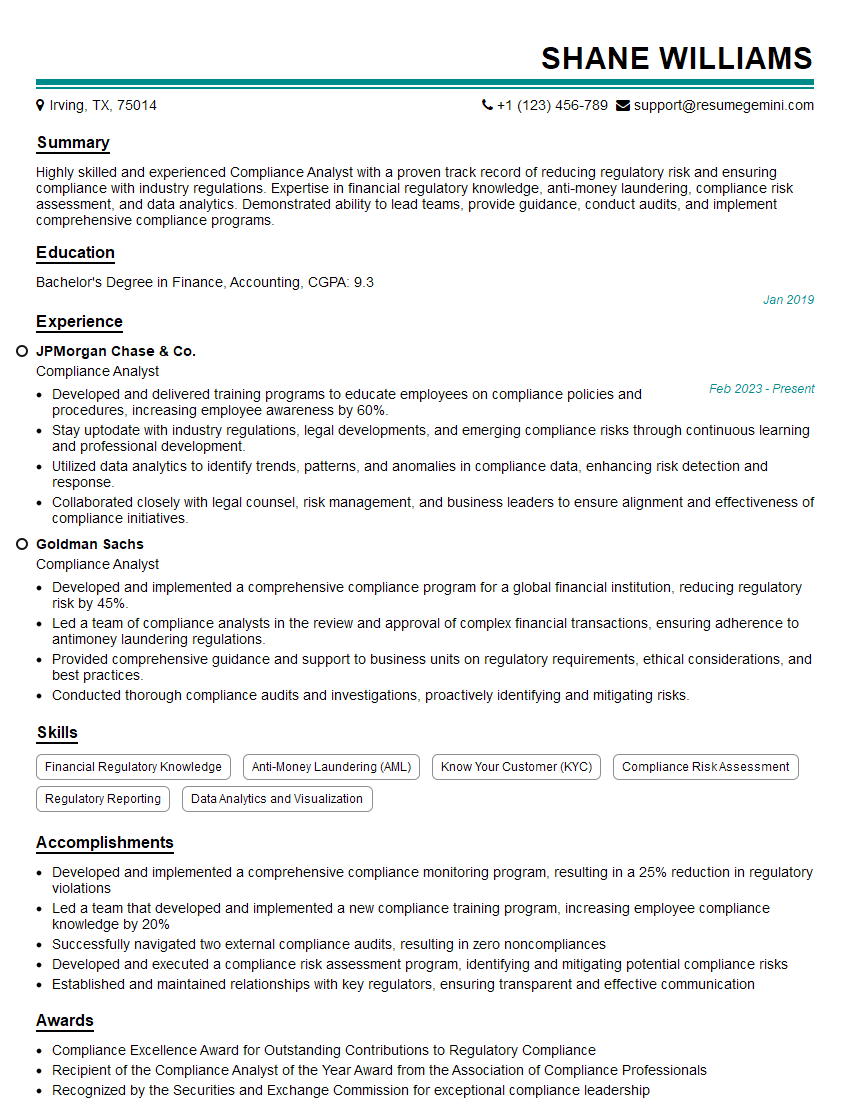
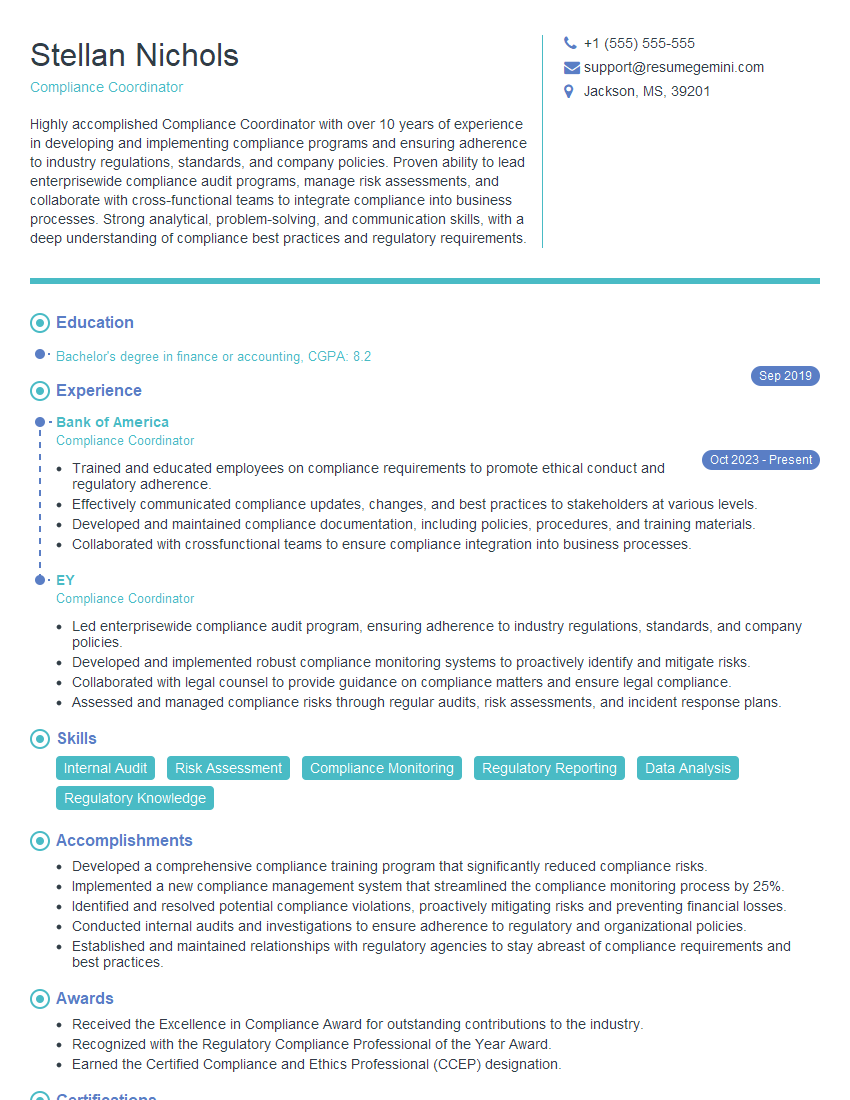
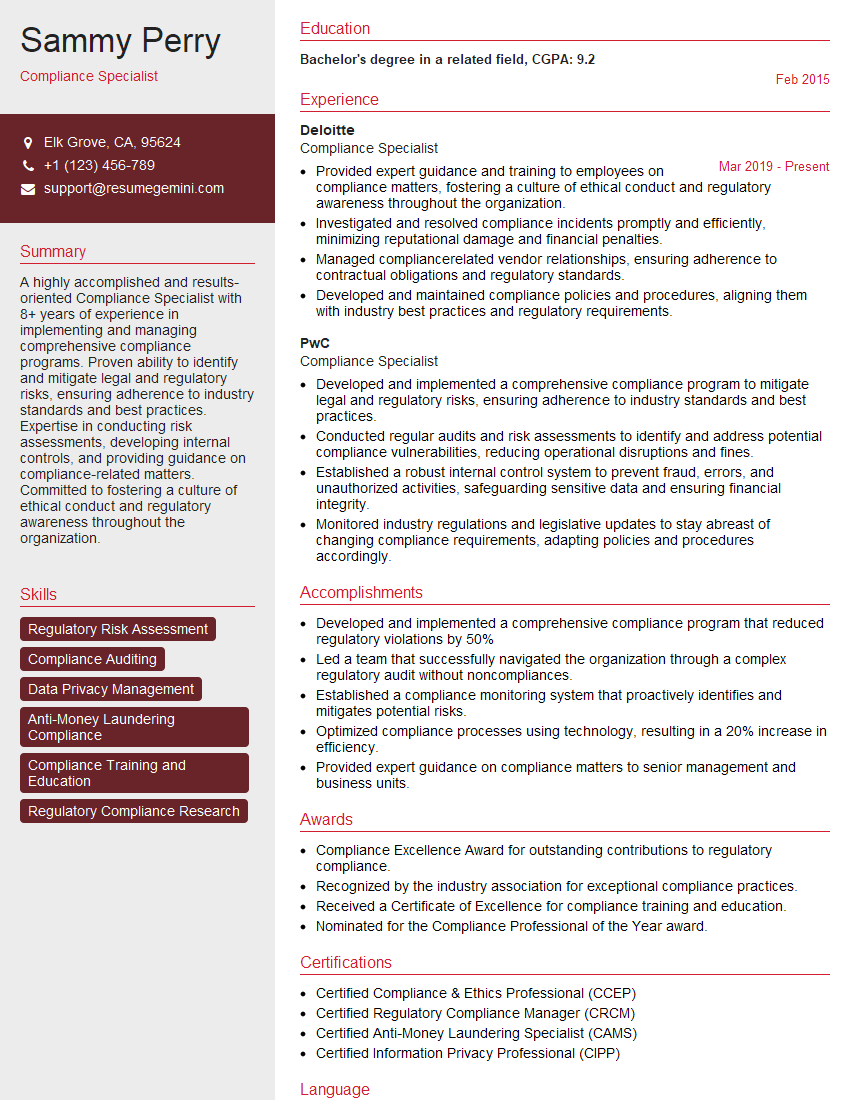
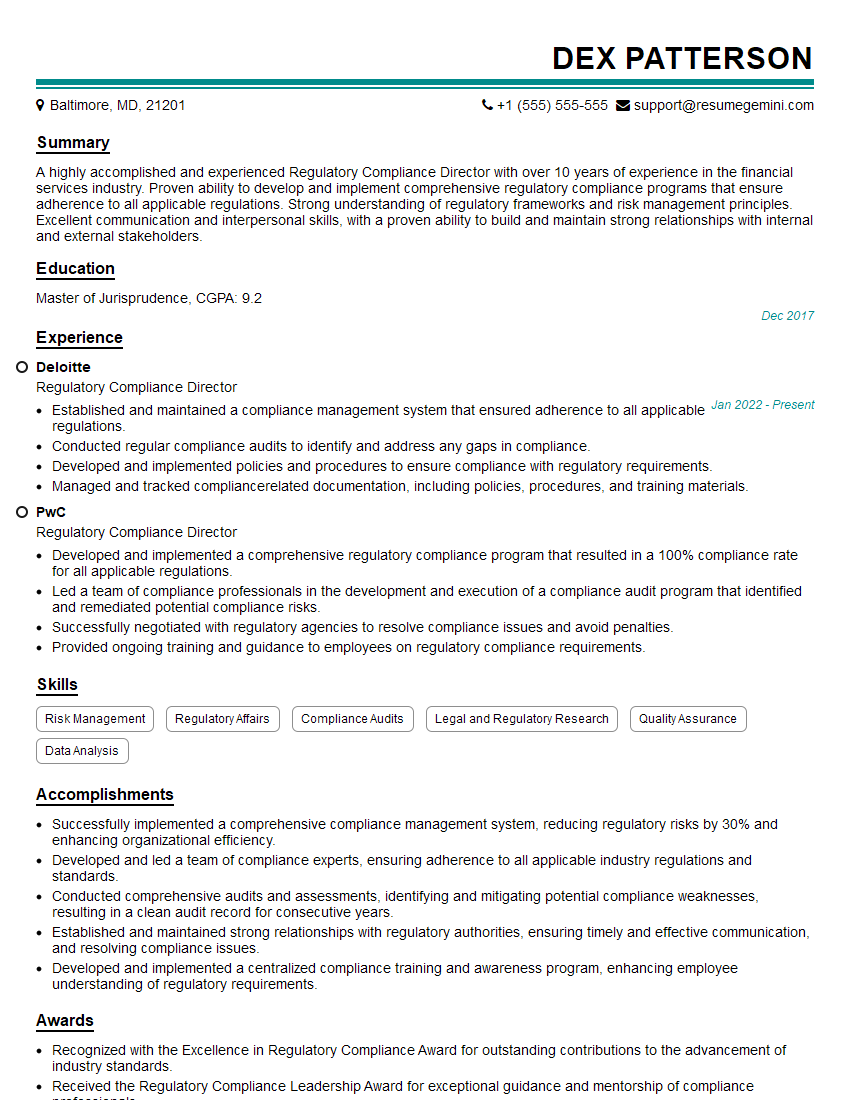
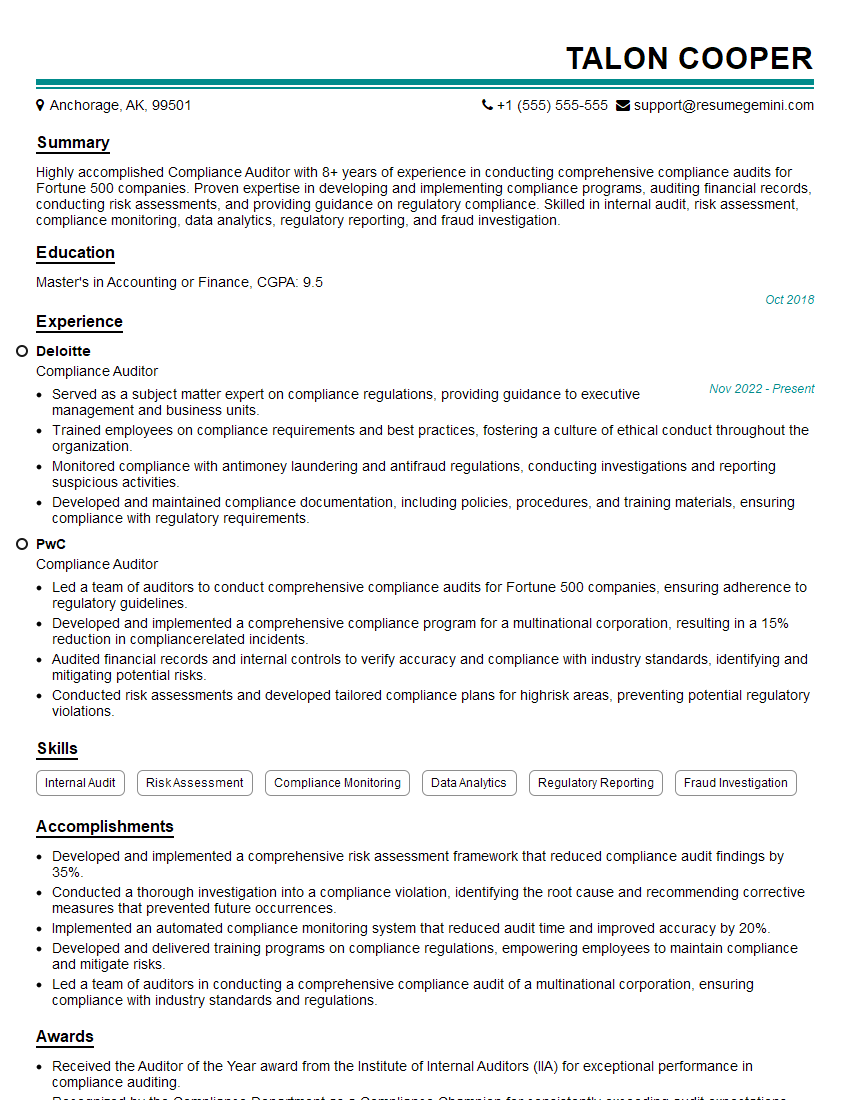
Mastering Regulatory Compliance Tracking opens doors to exciting and impactful career opportunities in various sectors. Demonstrating your expertise through a well-crafted resume is crucial. An ATS-friendly resume increases your chances of getting noticed by recruiters and landing an interview. To build a professional and effective resume, we recommend using ResumeGemini, a trusted resource for creating impactful resumes. ResumeGemini provides examples of resumes tailored specifically to Regulatory Compliance Tracking roles, ensuring your application stands out from the competition. Take the next step in your career journey – build a winning resume today!

Explore more articles
Users Rating of Our Blogs
Share Your Experience
We value your feedback! Please rate our content and share your thoughts (optional).
What Readers Say About Our Blog
Very informative content, great job.
good