Cracking a skill-specific interview, like one for Fluke Avionics Test Equipment, requires understanding the nuances of the role. In this blog, we present the questions you’re most likely to encounter, along with insights into how to answer them effectively. Let’s ensure you’re ready to make a strong impression.
Questions Asked in Fluke Avionics Test Equipment Interview
Q 1. Describe your experience with Fluke multimeters in an avionics context.
Fluke multimeters are indispensable tools in avionics troubleshooting. My experience spans several years, encompassing both routine maintenance checks and complex fault isolation. I’ve used them extensively to measure voltage, current, resistance, and continuity in various aircraft systems, from basic electrical components to sophisticated flight control systems. For instance, I used a Fluke 87V to verify the correct voltage levels in a power distribution unit, ensuring safe and efficient operation. Another example involves utilizing a Fluke 117 to check for continuity in a wiring harness to detect any breaks or shorts before a flight. The precision and reliability of Fluke multimeters are critical in ensuring the safety and airworthiness of aircraft.
Specifically, I’m familiar with various Fluke multimeter models, each suited to different applications. The higher-end models often boast features like logging capabilities, which are invaluable for recording data over time and identifying intermittent faults. This data logging function allows for trend analysis and predictive maintenance. The rugged construction of Fluke multimeters is also crucial in the often harsh environments of aircraft maintenance hangars and flight lines.
Q 2. How would you troubleshoot a faulty signal using a Fluke oscilloscope?
Troubleshooting a faulty signal with a Fluke oscilloscope involves a systematic approach. First, I’d connect the oscilloscope probes correctly to the circuit under test, ensuring proper grounding to avoid ground loops and inaccurate readings. The probes themselves need to be appropriate for the voltage and frequency range. Then, I would configure the oscilloscope to display the signal – adjusting the vertical and horizontal scales to optimally view the waveform.
Analyzing the waveform is key. I’d look for anomalies like excessive noise, distortion, unexpected frequencies, or missing signal components. For example, a square wave with rounded edges might indicate a high-frequency response issue. A sine wave with excessive noise could point to a grounding problem or interference.
Depending on the nature of the anomaly, I would use the oscilloscope’s various functions. These may include triggering to capture specific events, measurements of amplitude, frequency, and period, and math functions for signal analysis. If the signal is a complex one, I may utilize the FFT (Fast Fourier Transform) to get a frequency spectrum of the signal, revealing frequency components which might be contributing to the fault.
Troubleshooting is iterative. After making any adjustments or repairs based on the oscilloscope readings, I’d repeat the process to verify the correction. Good documentation is essential throughout this process; it should include circuit diagrams, waveform captures, and detailed descriptions of the troubleshooting steps.
Q 3. Explain the importance of calibration in Fluke avionics test equipment.
Calibration in Fluke avionics test equipment is paramount for accuracy and reliability. It ensures that the equipment is providing readings within acceptable tolerances, conforming to stringent industry standards. Inaccurate readings could lead to incorrect diagnoses, potentially compromising aircraft safety and leading to costly repairs or even accidents. Calibration involves comparing the equipment’s readings to traceable standards and adjusting it accordingly. This usually involves sending equipment to a certified calibration laboratory, ensuring traceability to national or international standards.
The frequency of calibration depends on factors like the type of equipment, usage intensity, and applicable regulations. It’s crucial to maintain accurate calibration records, demonstrating compliance with regulatory requirements. Failure to maintain proper calibration can invalidate test results, rendering them useless. In the avionics industry, proper calibration ensures adherence to strict maintenance schedules and safety regulations. A properly calibrated Fluke multimeter can be used with confidence that readings are reliable, as opposed to a miscalibrated one whose readings might be dangerously inaccurate.
Q 4. What are the safety precautions when using Fluke test equipment on aircraft systems?
Safety precautions when using Fluke test equipment on aircraft systems are critical. Prior to any testing, I would always ensure I have a thorough understanding of the aircraft’s electrical systems and relevant safety procedures. This includes consulting the aircraft’s maintenance manual and any relevant service bulletins. Working with aircraft systems necessitates adherence to all applicable safety regulations and best practices. This may include having specific training courses and certifications.
Specific safety measures include:
- Power Isolation: Before connecting any test equipment, I ensure the relevant circuits are properly isolated from the aircraft’s power supply to prevent electrical shock.
- Grounding: Proper grounding of the test equipment is essential to prevent static electricity damage and to protect both the equipment and the technician. I’ll use appropriate grounding straps and ensure connections are secure.
- Personal Protective Equipment (PPE): Eye protection, gloves, and anti-static clothing are worn to prevent injury and protect sensitive electronics.
- Lockout/Tagout Procedures: Appropriate lockout/tagout procedures must be followed to prevent accidental energization of the system during testing.
- Awareness of High Voltage: Aircraft systems often operate at high voltages that pose a serious risk of electric shock. I am always cognizant of where high voltage exists.
I always follow the manufacturer’s instructions for using the test equipment, and double-check the connections to prevent errors that could damage equipment or the aircraft.
Q 5. How do you interpret waveforms displayed on a Fluke oscilloscope?
Interpreting waveforms on a Fluke oscilloscope involves understanding the relationship between voltage (vertical axis) and time (horizontal axis). The shape of the waveform provides significant information about the signal. For example, a clean sine wave indicates a pure AC signal, while a square wave represents a digital signal. A distorted waveform indicates problems, such as noise, clipping, or harmonic distortion.
Specific parameters I examine include:
- Amplitude: The peak-to-peak voltage or the RMS (root mean square) value gives the signal’s strength.
- Frequency: The number of cycles per second (Hz) determines the signal’s rate of oscillation.
- Period: The time it takes for one complete cycle.
- Rise/Fall Time: How quickly the signal transitions between high and low states (relevant for digital signals).
- Phase Shift: The time difference between two related signals.
By systematically analyzing these parameters and comparing them to expected values or specifications, I can determine if a signal is functioning correctly or if there’s a fault. Deviations from expected waveforms serve as clues in the troubleshooting process.
Q 6. What are the common causes of errors in Fluke multimeter readings?
Errors in Fluke multimeter readings can stem from several sources:
- Incorrect Probe Connections: Loose or incorrect connections can lead to inaccurate readings or even damage to the meter. This could result in false readings or open/short circuit errors.
- Low Battery: A low battery can cause inaccurate readings or erratic behavior. Always check the battery level before measurements.
- Incorrect Function Selection: Selecting the wrong measurement function (e.g., AC instead of DC voltage) will result in inaccurate readings or damage to the meter.
- Range Selection: Choosing an inappropriate measurement range can lead to an overload or an inaccurate reading. Start with a higher range and then decrease it as needed.
- Probe Compensation: If using high-impedance probes, especially at higher frequencies, neglecting probe compensation will result in inaccurate measurements.
- Lead Resistance: Long or thin test leads increase the resistance which can impact measurements, especially when measuring small resistances.
- Environmental Factors: Extreme temperatures or humidity can affect the accuracy of the meter. Temperature compensation could be helpful here.
- Meter Calibration: As mentioned before, a meter that is out of calibration will provide inaccurate readings.
Always double-check the meter’s settings and connections to eliminate these common sources of error.
Q 7. Describe your experience with Fluke digital multimeters (DMMs).
My experience with Fluke Digital Multimeters (DMMs) is extensive. I’ve used them extensively across a wide range of avionics applications. From simple voltage and resistance checks to more complex measurements like capacitance and frequency, DMMs are essential tools in my kit. I’ve worked with various models, including the Fluke 87V, which is known for its high accuracy, and the Fluke 115, favoured for its robustness and ease-of-use in field conditions. I’ve used them for preventative maintenance, troubleshooting malfunctions, and verifying repairs in aircraft electrical systems. The ability to measure various parameters with one device makes them efficient and cost-effective.
One specific instance involved using a Fluke DMM to identify an intermittent fault in a aircraft’s power supply. By utilizing the DMM’s logging capability, I was able to capture voltage fluctuations over time, which helped pin-point the precise moment of the power supply malfunction and facilitated a targeted repair.
Beyond the basic measurements, I appreciate the added features of some Fluke DMM models, such as data logging and PC connectivity. These features allow me to record and analyse data, which is invaluable in identifying the root cause of system issues and improving maintenance strategies.
Q 8. How would you use a Fluke clamp meter to measure current in an avionics circuit?
Measuring current in an avionics circuit with a Fluke clamp meter is crucial for ensuring the system’s health. The process requires careful attention to safety and proper technique. First, always ensure the circuit is de-energized before connecting the clamp meter. Once de-energized, you’ll carefully open the circuit at a convenient point and clamp the meter around one of the conductors. Make sure the jaws of the clamp meter fully enclose the conductor.
Select the appropriate current range on the meter, typically starting with a higher range to avoid overloading the meter. Then, re-energize the circuit and observe the current reading on the display. The reading will indicate the current flowing through that specific conductor. Remember to always follow the manufacturer’s safety instructions and adhere to all relevant aircraft maintenance manuals. For example, when measuring current in a flight control system, precise procedures must be followed to avoid inducing malfunctions. The type of clamp meter chosen should also be appropriate for the current and voltage levels expected; you wouldn’t want to use a low-current clamp meter for a high-current application.
After completing the measurement, de-energize the circuit, remove the clamp meter, and carefully record the reading. Compare the reading against the specified values in the aircraft’s maintenance documentation to determine if the circuit is operating within acceptable parameters. Always double-check your work and make sure the meter’s leads are properly connected and functioning.
Q 9. Explain the difference between AC and DC voltage measurements.
The fundamental difference between AC and DC voltage lies in the direction of electron flow. DC voltage, or direct current, flows in one consistent direction, like water flowing continuously downhill. Think of a battery: it provides a constant voltage with a fixed polarity. AC voltage, or alternating current, constantly reverses its direction of flow. It oscillates back and forth, like a pendulum swinging. This is what your household power outlets provide.
In avionics, both are critical. DC is often used for powering onboard systems, while AC might be used in certain power generation or conversion systems. A Fluke multimeter allows you to measure both. When measuring AC voltage, the meter measures the root mean square (RMS) value, which represents the equivalent DC voltage that would produce the same heating effect. Incorrectly measuring AC as DC, or vice-versa, could lead to inaccurate readings and misinterpretations of the avionics system’s state.
Q 10. What is the purpose of a Fluke signal generator in avionics testing?
A Fluke signal generator is an invaluable tool for simulating various signals within an avionics system during testing. Instead of relying solely on the aircraft’s onboard systems, a signal generator allows technicians to input specific signals of known characteristics (frequency, amplitude, waveform) into components or subsystems to observe their response. This is crucial for testing the functionality of receivers, sensors, and other signal-processing units.
For instance, a technician might use a signal generator to simulate a specific GPS signal to test the navigation system’s ability to receive and interpret it. Or, they might simulate a sensor signal (like an airspeed indicator) to check the response of a related computer or display unit. By injecting known signals and observing the output, technicians can verify the correct operation of avionics systems and identify potential problems early on, preventing issues that could otherwise jeopardize safety.
Q 11. How do you perform a basic functional test on an avionics component using Fluke equipment?
Performing a basic functional test on an avionics component with Fluke equipment usually involves a series of steps. First, consult the component’s service manual to understand its operational specifications, such as voltage levels, current draw, and expected output signals. Next, use a Fluke multimeter to measure voltages at various points in the component’s circuit. This verifies whether the supply voltages are correct and stable.
Then, apply the appropriate inputs (using a Fluke signal generator, if necessary) to the component. Using the multimeter, monitor the component’s output signals. If the component includes indicators (lights or displays), verify that they respond correctly to the applied inputs. Finally, compare the observed readings against the expected values from the service manual. Any deviation from the expected values points towards a possible malfunction requiring further investigation. Let’s say we’re testing an altimeter. We would input a simulated altitude signal from a signal generator and measure the altimeter’s voltage outputs and ensure the display accurately reflects the input. Any discrepancies signify a need for deeper troubleshooting.
Q 12. Describe your troubleshooting process when encountering unexpected readings on a Fluke instrument.
My troubleshooting process when faced with unexpected readings on a Fluke instrument is systematic and methodical. First, I verify the instrument itself is functioning correctly. This might involve checking the calibration status, performing a self-test (if available), and comparing readings against a known good source (like a calibrated voltage reference). If there’s a problem with the meter, it must be addressed before continuing.
Second, I carefully review the test setup, ensuring proper connections and lead integrity. Loose connections or damaged leads can easily introduce errors. I then re-check the circuit I’m testing, ensuring it’s correctly configured and that there are no obvious shorts or open circuits. Third, I check the aircraft’s maintenance manual for the relevant circuit and confirm that my test setup and the expected readings align with the specifications. Unexpected readings might not always indicate a failure; sometimes the aircraft documentation may include a condition or limit that explains the deviation.
If these initial checks don’t reveal the cause, I start to isolate the problem using a more focused approach. This may involve checking individual components within the circuit, using the Fluke multimeter to measure voltages and currents at various points. By methodically checking each step, I can often pinpoint the problem. If necessary, I might involve senior colleagues or consult specialized manuals.
Q 13. How familiar are you with Fluke’s software and data logging capabilities?
I’m very familiar with Fluke’s software and data logging capabilities. FlukeView Forms software, for example, allows for easy data logging, trend analysis, and report generation. This is extremely useful for recording readings over time, identifying trends, and documenting maintenance actions. Many Fluke multimeters have built-in data logging features, simplifying the data acquisition process. The software can be used to create customized test setups, simplifying repetitive tasks and reducing human error.
The software also offers advanced features like creating professional reports containing both numerical and graphical data, allowing technicians to clearly communicate their findings. This can be very important for regulatory compliance, as well as for more efficient reporting. The ability to capture and analyze data over extended periods allows for predictive maintenance, identifying potential issues before they become critical problems.
Q 14. Explain the process of calibrating a Fluke multimeter.
Calibrating a Fluke multimeter is essential for ensuring its accuracy. The process ensures the meter provides accurate readings and adheres to required standards. The frequency of calibration depends on usage and regulatory requirements. Generally, Fluke multimeters should be calibrated at least annually or more frequently, if used heavily or in critical applications. The calibration process should always be performed by a qualified technician using calibrated standards traceable to national or international standards.
The calibration procedure itself varies depending on the specific Fluke model, but generally involves using a precision voltage source, current source, and resistance standard to compare the multimeter’s readings against known values. The technician adjusts the meter’s internal settings or performs adjustments as needed to bring the readings into alignment with the standards. A calibration certificate documenting the results is then issued, attesting to the accuracy of the instrument. This certificate is a crucial part of aviation safety compliance and must be maintained for regulatory compliance.
Q 15. How would you select the appropriate Fluke test equipment for a specific avionics task?
Selecting the right Fluke avionics test equipment hinges on understanding the specific task. It’s like choosing the right tool for a job – you wouldn’t use a hammer to screw in a screw! First, identify the parameters you need to measure. Are you testing voltage, current, resistance, frequency, or something more specialized like data bus communication? Then, consider the environment. High altitudes, extreme temperatures, and vibration can affect equipment performance. Finally, check the aircraft’s specifications and any regulatory requirements.
For instance, if you’re testing a simple circuit, a Fluke multimeter like the 87V might suffice. However, for complex avionics systems needing precise measurements and troubleshooting of data buses, you’d require a more sophisticated instrument, potentially a Fluke digital oscilloscope with appropriate probes and software. A Fluke ScopeMeter might be suitable for capturing transient signals in a dynamic environment. Always consult Fluke’s product catalog to match capabilities with your needs.
- Parameter Type: Voltage, Current, Resistance, Frequency, Data Bus communication.
- Environmental Factors: Temperature, Altitude, Vibration, Humidity.
- Aircraft Specifications: Compliance with relevant standards.
Career Expert Tips:
- Ace those interviews! Prepare effectively by reviewing the Top 50 Most Common Interview Questions on ResumeGemini.
- Navigate your job search with confidence! Explore a wide range of Career Tips on ResumeGemini. Learn about common challenges and recommendations to overcome them.
- Craft the perfect resume! Master the Art of Resume Writing with ResumeGemini’s guide. Showcase your unique qualifications and achievements effectively.
- Don’t miss out on holiday savings! Build your dream resume with ResumeGemini’s ATS optimized templates.
Q 16. What are the limitations of Fluke test equipment in avionics applications?
While Fluke avionics test equipment is robust and reliable, it has limitations. One key limitation is the inherent accuracy of the instrument itself. All instruments have a specified accuracy range, and exceeding this can lead to inaccurate readings. For example, a multimeter might have an accuracy of ±0.5%, which could be significant in high-precision avionics applications. Another limitation is the range of measurable parameters; a basic multimeter can’t test data buses or complex signal integrity issues. Specialized equipment, often more expensive, is needed for these tasks.
Furthermore, the physical size and weight of some Fluke instruments can limit their usability in cramped spaces within an aircraft. Finally, environmental factors such as extreme temperatures or electromagnetic interference (EMI) can affect the accuracy and reliability of readings, demanding careful calibration and environmental considerations.
Q 17. Describe your experience with Fluke’s documentation and troubleshooting guides.
Fluke’s documentation and troubleshooting guides are generally very comprehensive and well-structured. I’ve found their manuals to be extremely helpful, combining clear explanations, diagrams, and troubleshooting flowcharts. They often include detailed specifications, safety precautions, and application notes. I’ve used them extensively to understand instrument functionality, perform calibrations, and resolve issues encountered in the field. The online resources are equally useful, offering software updates, application examples, and access to technical support.
For example, when I was troubleshooting an issue with a Fluke 17B+ digital multimeter displaying erratic readings, the online troubleshooting guide led me to check the lead connections and then to recalibrate the device. The clear step-by-step instructions and diagnostic flowcharts were critical in efficiently resolving the problem.
Q 18. How would you handle a situation where a Fluke instrument malfunctions during a critical test?
A malfunctioning Fluke instrument during a critical test is a serious situation. The first step is to ensure safety – disconnect the instrument from the aircraft system to prevent damage and ensure personnel safety. Then, try to identify the cause of the malfunction using the instrument’s self-diagnostic features, if available, or referring to the troubleshooting guides.
If the problem persists, I would immediately report the incident and switch to a backup instrument if one is available and validated. It is crucial to meticulously document all steps taken, the instrument’s readings before and during the malfunction, and any error messages. This detailed documentation is critical for investigation and preventing recurrence. The failed instrument would then be sent for repair or replacement, depending on the nature of the fault and its severity. The aircraft’s maintenance logs would also require updating.
Q 19. What are some common problems encountered when using Fluke test equipment in harsh environments?
Harsh environments pose several challenges when using Fluke equipment. Extreme temperatures can affect the accuracy of readings and even cause damage to components. Vibration and shock can loosen connections or damage sensitive internal parts. High humidity can lead to corrosion and electrical shorts. Dust and dirt can compromise the instrument’s operation, and electromagnetic interference (EMI) can lead to inaccurate or noisy readings.
To mitigate these problems, I’d use instruments with appropriate environmental ratings (e.g., those rated for operation in extreme temperatures or high humidity). Properly securing the equipment to prevent movement during vibration is vital. Regular cleaning and calibration are essential to ensure accuracy and reliability. Shielding cables and using appropriate filters can help to minimize EMI’s effects.
Q 20. Explain your understanding of various Fluke test equipment accessories and probes.
Fluke offers a wide array of accessories and probes tailored for different applications. These extend the capabilities of the instruments significantly. For example, current probes allow for safe and accurate measurement of high currents without directly connecting to the circuit. Voltage probes with high voltage ratings are essential when working with high-voltage systems. Specialized probes are available for specific applications like measuring temperature, capacitance, or inductance. Test leads with different connector types and lengths are needed for various applications.
Furthermore, other accessories such as cases for protection during transport, software for data logging and analysis, and various adapters help expand versatility. Selecting the correct accessories is as crucial as selecting the correct instrument itself. Ignoring proper accessories can lead to inaccurate measurements, damage to equipment, and even safety hazards.
Q 21. Describe your experience working with different Fluke models for specific avionics tests.
My experience encompasses working with several Fluke models for various avionics tests. For instance, I’ve used the Fluke 87V multimeter for routine voltage, current, and resistance checks on various aircraft systems. The Fluke 190 Series II ScopeMeter has been invaluable for capturing transient signals and troubleshooting intermittent faults in power supplies. For data bus analysis, I’ve utilized specialized Fluke tools and software to decode signals and identify communication errors. I have also used Fluke clamp meters to measure current in high-power circuits safely, avoiding direct contact.
The selection of the specific Fluke model always depended on the task at hand, demanding a careful evaluation of the required parameters, accuracy, and environmental conditions. Each instrument’s capabilities and limitations must be fully understood to guarantee accurate and reliable results. Improper instrument choice can lead to misdiagnosis and safety risks.
Q 22. How do you ensure the accuracy and reliability of measurements using Fluke equipment?
Ensuring accurate and reliable measurements with Fluke avionics test equipment relies on a multi-pronged approach. It starts with proper calibration. Fluke equipment, like multimeters and oscilloscopes, needs regular calibration checks against traceable standards to verify its readings are within acceptable tolerances. This is typically done by a certified calibration laboratory. Think of it like calibrating a kitchen scale – you need to ensure it’s giving you accurate weight readings. Beyond calibration, proper technique is crucial. This includes correctly connecting test leads, selecting the appropriate measurement function and range, and minimizing environmental interference (like electromagnetic fields). For example, ensuring good contact between the probe tip and the test point avoids inaccurate readings due to high impedance. Finally, understanding the instrument’s specifications, particularly its accuracy and resolution, allows for a realistic assessment of measurement uncertainty. Knowing the limitations of your equipment prevents misinterpretations of data. For instance, a multimeter with a 0.5% accuracy rating won’t be suitable for extremely precise measurements.
Q 23. Explain the importance of maintaining Fluke test equipment according to manufacturer’s specifications.
Maintaining Fluke equipment according to manufacturer specifications is paramount for several reasons. First, it ensures the equipment’s accuracy and reliability, preventing costly errors in testing and potentially dangerous situations in an aviation context. Think about the consequences of a faulty measurement leading to an incorrect diagnosis on a critical aircraft system. Second, regular maintenance extends the lifespan of the equipment. This includes things like cleaning contacts, checking for damage to probes and leads, and performing preventative actions listed in the user manual. Neglecting maintenance can lead to premature failure, resulting in expensive repairs or replacements. Third, proper maintenance often keeps your warranty valid. Finally, following manufacturer guidelines ensures compliance with aviation regulations and safety standards. This is essential for demonstrating that your testing procedures meet industry best practices.
Q 24. Describe your experience interpreting test results from Fluke equipment.
Interpreting results from Fluke equipment involves a systematic approach. I start by understanding the context of the test – what system is being checked, and what parameters are being measured. Then, I carefully examine the readings displayed by the equipment, comparing them to the expected values specified in the aircraft’s documentation or maintenance manuals. For instance, when testing a circuit’s resistance, I would compare the measured value to the expected resistance specified in the circuit diagram. Any significant deviations from the expected values trigger further investigation. I carefully document anomalies, noting any unusual waveforms or readings and searching for potential sources of error. I also consider environmental factors that could affect the measurements. Experience allows me to quickly identify trends and patterns in the data, pinpointing potential malfunctions or issues. In essence, it’s a combination of technical understanding and attention to detail. I’ve had numerous instances where seemingly minor deviations in voltage readings revealed underlying problems that could have had serious consequences if overlooked.
Q 25. How do you document and report findings obtained through Fluke avionics testing?
Documenting and reporting findings from Fluke avionics testing follows a rigorous and standardized procedure. I begin by creating a comprehensive test plan outlining the equipment used, the procedures followed, and the expected results. Throughout the testing process, I meticulously record all measurements, observations, and any deviations from the expected values. This documentation often involves using standardized forms and spreadsheets, ensuring consistency and traceability. Once testing is complete, I compile a formal report which includes the test plan, all recorded data, an analysis of the results, and my conclusions. The report uses clear and unambiguous language, avoiding technical jargon where possible. Any discrepancies or failures are highlighted with detailed explanations and recommendations for corrective action. Photographs and screenshots of instrument readings often accompany the report to visually support the findings. Adherence to industry standards like those from the FAA (Federal Aviation Administration) and EASA (European Union Aviation Safety Agency) is crucial to ensure regulatory compliance.
Q 26. Explain your experience with troubleshooting and repairing Fluke test equipment.
My experience with troubleshooting and repairing Fluke test equipment involves a methodical approach. I begin by carefully examining the equipment for any obvious signs of damage, such as broken connectors or loose components. If a problem is suspected, I start with the simplest checks, like verifying power supply and connections, before moving to more complex procedures. I use a combination of diagnostic tools, schematics, and service manuals to isolate the fault. For example, I might use a multimeter to check voltages and continuity, or a signal generator to test specific circuits. If the fault is within my capability to repair, I replace faulty components, ensuring that the replacements are genuine and of the correct specification. For more complex repairs or issues requiring specialized tools, I involve a certified service center. I’ve successfully repaired numerous Fluke multimeters and digital oscilloscopes, preventing downtime and saving considerable cost compared to replacements. This often involved troubleshooting intermittent faults – a skill that requires patience and a systematic approach.
Q 27. What are the best practices for maintaining the integrity of Fluke test leads and probes?
Maintaining the integrity of Fluke test leads and probes is essential for accurate measurements. This involves a few key practices. First, always store leads and probes properly when not in use, preventing damage from bending or crushing. Second, regularly inspect leads for signs of wear and tear, such as broken insulation or damaged connectors. Damaged leads can lead to inaccurate readings or even short circuits, especially when working with high voltages. Third, ensure clean connections. Contaminants on the probe tips can create high impedance and introduce errors. Regularly cleaning the tips with isopropyl alcohol is recommended. Finally, avoid applying excessive force when using the probes. Rough handling can easily damage the delicate tips and connectors. Think of them as precision instruments – treating them carefully extends their lifespan and ensures accurate results. Neglecting these practices can lead to faulty measurements, potentially with serious consequences in the aviation industry.
Q 28. How do you stay current with updates and advancements in Fluke avionics test equipment?
Staying current with updates and advancements in Fluke avionics test equipment is a continuous process. I regularly review Fluke’s website and publications for new product releases, software updates, and technical bulletins. I also attend industry conferences and training courses to learn about the latest technologies and best practices. Furthermore, I actively participate in online forums and communities dedicated to avionics testing and maintenance, engaging with other professionals to share knowledge and stay informed. Subscriptions to relevant journals and technical publications further enhance my understanding of industry trends and new developments. Keeping my skills and knowledge updated is crucial in the ever-evolving field of avionics, ensuring I can effectively utilize the latest tools and technologies for accurate and efficient testing.
Key Topics to Learn for Fluke Avionics Test Equipment Interview
- Understanding Fluke Avionics Test Equipment Product Lines: Familiarize yourself with the various types of Fluke equipment used in avionics, including multimeters, oscilloscopes, and specialized test sets. Consider their specific applications within the aerospace industry.
- Calibration and Maintenance Procedures: Understand the importance of proper calibration and routine maintenance for ensuring accurate measurements and reliable equipment performance. Be prepared to discuss calibration standards and best practices.
- Troubleshooting and Diagnostics: Develop your skills in identifying and resolving common issues encountered when using Fluke avionics test equipment. Practice problem-solving approaches and consider the safety implications of troubleshooting electrical systems.
- Data Acquisition and Analysis: Learn how to effectively acquire and analyze data from Fluke test equipment. This includes understanding different measurement types, data interpretation, and the use of software for data analysis.
- Safety Regulations and Procedures: Demonstrate a strong understanding of safety regulations and procedures related to working with electrical systems and avionics equipment. This includes understanding appropriate personal protective equipment (PPE) and safe work practices.
- Specific Avionics Systems: Research common avionics systems and how Fluke equipment is used to test and maintain them (e.g., communication systems, navigation systems, flight control systems).
- Industry Standards and Compliance: Familiarize yourself with relevant industry standards and compliance requirements related to avionics testing and maintenance. This demonstrates your commitment to quality and safety.
Next Steps
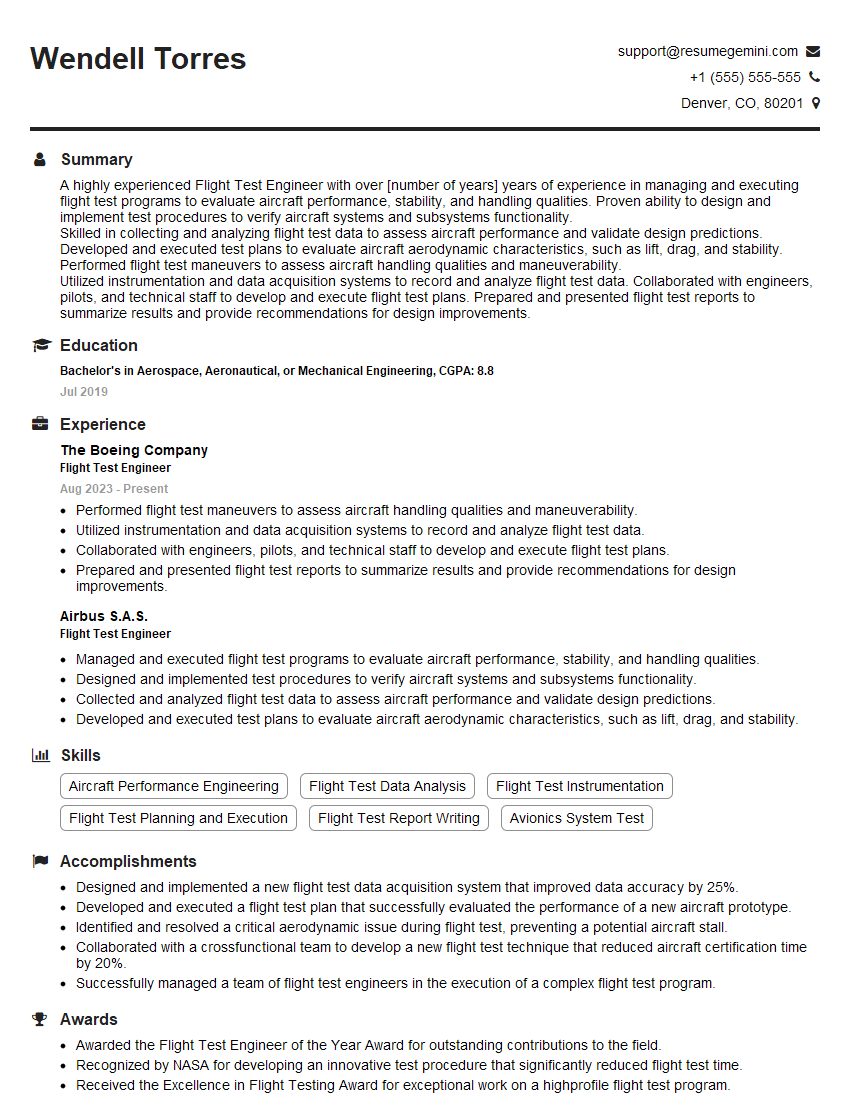
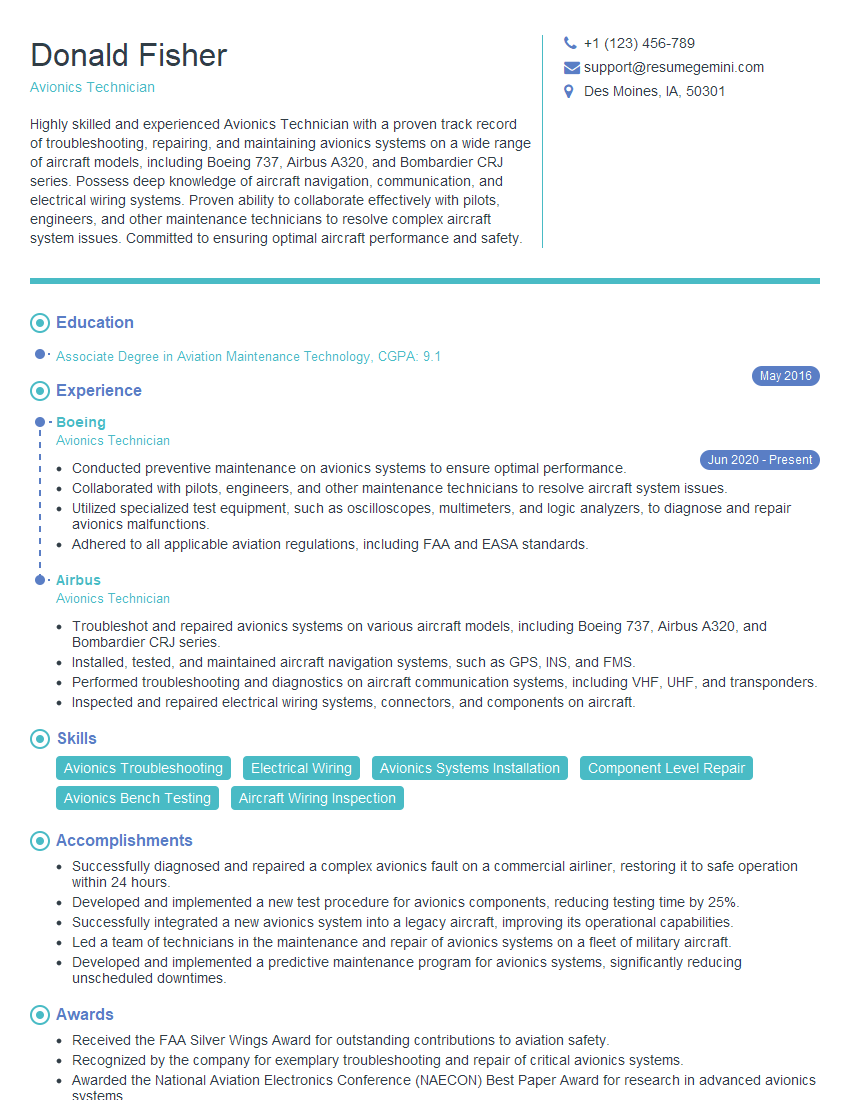
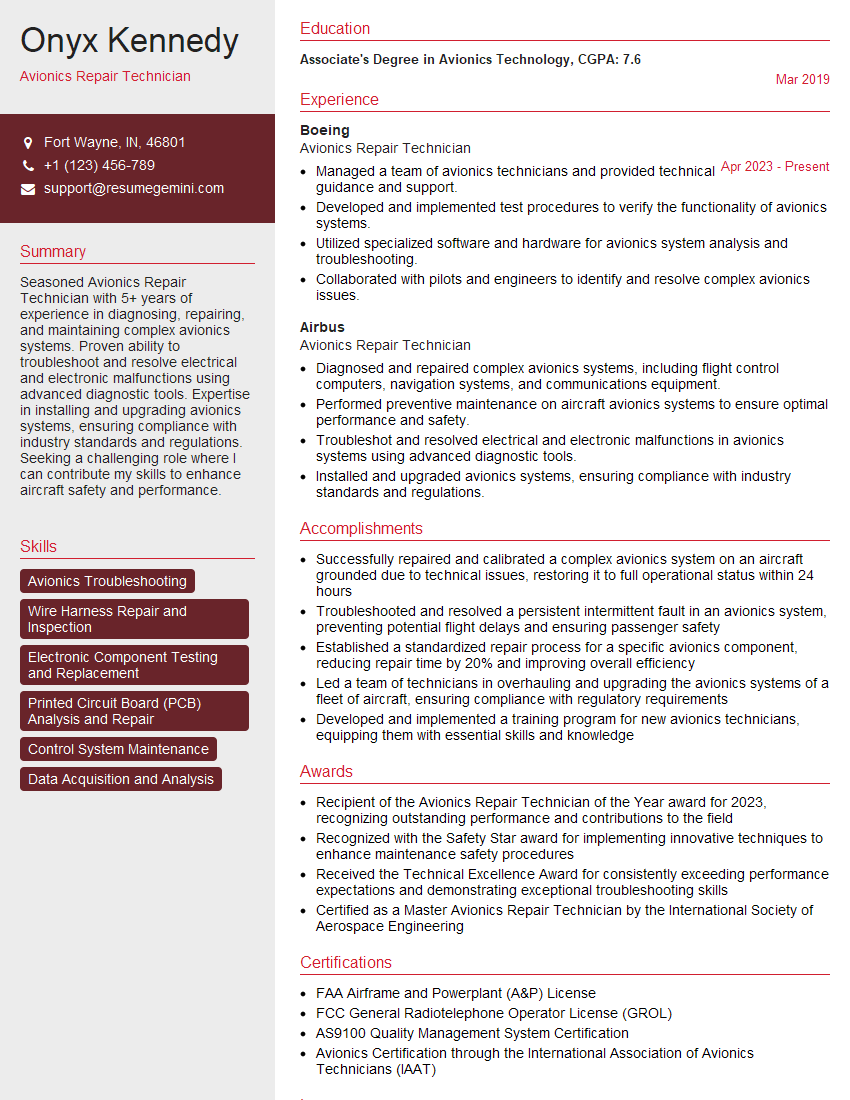
Mastering Fluke Avionics Test Equipment knowledge significantly enhances your career prospects in the aerospace industry, opening doors to exciting roles and opportunities for professional growth. A strong resume is crucial for showcasing your skills effectively to potential employers. To maximize your chances, create an ATS-friendly resume that highlights your relevant experience and qualifications. We highly recommend using ResumeGemini, a trusted resource for building professional resumes. ResumeGemini provides helpful tools and examples of resumes tailored to Fluke Avionics Test Equipment roles, assisting you in crafting a compelling document that catches the attention of recruiters.
Explore more articles
Users Rating of Our Blogs
Share Your Experience
We value your feedback! Please rate our content and share your thoughts (optional).
What Readers Say About Our Blog
Very informative content, great job.
good