The thought of an interview can be nerve-wracking, but the right preparation can make all the difference. Explore this comprehensive guide to Rocket Artillery Fire Direction interview questions and gain the confidence you need to showcase your abilities and secure the role.
Questions Asked in Rocket Artillery Fire Direction Interview
Q 1. Explain the process of conducting a meteorological survey for rocket artillery fire missions.
A meteorological survey for rocket artillery is crucial for accurate fire missions because weather significantly impacts projectile trajectory. It involves gathering data on wind speed and direction at various altitudes, air temperature, air pressure, and humidity. This data is then used in ballistic calculations to compensate for these environmental factors. Think of it like throwing a baseball – a strong headwind will significantly alter its path. Similarly, wind affects rockets.
The process typically involves:
- Data Collection: Using weather stations, weather balloons (radiosondes), or even sophisticated weather models to obtain real-time atmospheric data at and around the target area. The higher the altitude the rocket reaches, the more altitude layers of meteorological data are needed for accurate calculations.
- Data Analysis: This involves processing the raw meteorological data to create a detailed profile of the atmospheric conditions along the expected rocket trajectory. Specialized software packages are often used to handle this complex data analysis.
- Integration into Fire Control System: The analyzed meteorological data is then fed into the fire control system (FCS), which uses sophisticated algorithms to adjust the firing solution, compensating for the effects of wind, temperature, and other atmospheric factors on the rocket’s flight path.
Without a proper meteorological survey, rockets might land significantly off-target, potentially jeopardizing the mission and causing collateral damage.
Q 2. Describe the different types of rocket artillery systems and their capabilities.
Rocket artillery systems vary greatly in range, payload capacity, and accuracy. They can be broadly categorized into several types:
- Multiple Launch Rocket Systems (MLRS): These are the workhorses, launching many rockets simultaneously from a single platform. Examples include the US HIMARS and the Russian BM-21 Grad. They offer high firepower and area saturation capabilities, ideal for suppressing enemy positions or interdicting troop movements. They tend to have a medium range.
- Short-Range Rocket Systems: These systems typically have a range of a few kilometers. They are often lighter and more mobile, suitable for smaller units or specific tactical roles. They might not carry as large a payload and have lower accuracy.
- Long-Range Rocket Systems: These systems, like the Chinese WS-2D and the Iranian Fateh-110, are designed for longer ranges, extending hundreds of kilometers. They often feature improved guidance systems for greater accuracy, though this comes at the cost of payload and rate of fire compared to MLRS.
Capabilities vary significantly depending on the specific system. Factors to consider include range, accuracy (Circular Error Probable or CEP), payload (type and weight of warhead), rate of fire, mobility, and survivability.
Q 3. What are the key factors to consider when selecting the appropriate type of rocket for a specific mission?
Selecting the appropriate rocket for a mission requires careful consideration of several interconnected factors:
- Target Type: Area targets (large, dispersed enemy formations) might require rockets with a large warhead and fragmentation effects, while point targets (specific buildings or vehicles) necessitate higher accuracy and potentially smaller, guided warheads.
- Range to Target: The rocket’s maximum effective range must exceed the distance to the target, accounting for safety margins and terrain considerations.
- Collateral Damage Concerns: The type of warhead and the rocket’s accuracy directly influence the risk of collateral damage to civilian populations or infrastructure. This is a critical ethical and legal consideration.
- Environmental Conditions: The expected weather conditions, especially wind, will affect the rocket’s trajectory and accuracy. Selection should account for these factors.
- Logistics and Availability: The availability of specific rocket types within the unit’s inventory and their logistical support requirements are crucial practical considerations.
For example, a mission requiring precise strikes against a high-value target in a densely populated area would necessitate a rocket with high accuracy and a smaller, more precise warhead, while an attack on a large enemy encampment in a sparsely populated area might justify using a rocket with a larger warhead and less precise guidance.
Q 4. How do you calculate the trajectory of a rocket given its initial velocity, angle of elevation, and environmental conditions?
Calculating the trajectory of a rocket involves applying principles of ballistics, considering both the initial conditions (velocity and angle) and the environmental factors (wind, air density, Coriolis effect). This is a complex calculation, typically done using sophisticated computer software. A simplified representation (ignoring air resistance and Coriolis effect) involves using basic kinematic equations.
The following equations describe the horizontal (x) and vertical (y) components of the rocket’s position as a function of time (t):
x = V₀ * cos(θ) * ty = V₀ * sin(θ) * t - (1/2) * g * t²
Where:
V₀is the initial velocityθis the angle of elevationgis the acceleration due to gravity
However, real-world trajectories are significantly more complex. Software packages incorporate atmospheric data, the earth’s curvature, and more sophisticated models of air resistance to generate accurate predictions. The Coriolis effect (due to the Earth’s rotation) also needs to be taken into account for longer-range shots.
Q 5. What are the common sources of error in rocket artillery fire, and how are they mitigated?
Rocket artillery fire is subject to various sources of error, impacting accuracy and effectiveness. These can be broadly classified as:
- Meteorological Errors: Inaccurate or incomplete meteorological data are significant contributors to errors. Variations in wind speed and direction at different altitudes are especially challenging.
- Launch Platform Errors: Errors in the positioning and alignment of the launch platform can directly affect the rocket’s initial trajectory.
- Rocket Manufacturing and Performance Variability: slight variations in the manufacturing process or the rocket’s performance during flight can affect the projectile’s trajectory and impact point.
- Terrain Effects: The presence of hills, valleys, or other terrain features can alter the rocket’s flight path. Terrain-based modeling software helps compensate.
Mitigation strategies involve using advanced technologies like GPS, inertial navigation systems, and sophisticated fire control systems. Rigorous training for personnel, precise surveying of launch positions, and detailed pre-mission planning all play critical roles in reducing errors. Regular maintenance of equipment and quality control in rocket manufacturing are essential for minimizing deviations.
Q 6. Explain the concept of fire support coordination and its importance in combined arms operations.
Fire support coordination (FSC) is the process of integrating fire support assets (like rocket artillery) with maneuver elements (infantry, tanks, etc.) to achieve a common tactical objective. It’s critical for combined arms operations because it ensures that fire support is delivered effectively and safely, avoiding fratricide (friendly fire) and maximizing its impact.
Effective FSC involves:
- Clear Communication: Establishing secure and reliable communication channels between forward observers, fire direction centers, and maneuver commanders is essential.
- Target Acquisition and Identification: Accurately identifying and locating targets before initiating fire is crucial to avoid unintended consequences. This often relies on joint reconnaissance and intelligence efforts.
- Fire Support Planning: Coordinating fire missions with maneuver plans to ensure the fires support the overall operation’s objectives and timing.
- Risk Assessment and Mitigation: Evaluating the potential for collateral damage or fratricide and implementing measures to mitigate these risks.
- Post-Mission Analysis: Assessing the effectiveness of the fire support and identifying areas for improvement in future operations.
Without proper FSC, fire support can become ineffective, endanger friendly forces, or even harm civilians. A coordinated approach ensures fire support enhances maneuver elements’ ability to accomplish the mission.
Q 7. Describe the role of a Forward Observer in directing rocket artillery fire.
A Forward Observer (FO) is the eyes and ears of the artillery battery, positioned with the maneuver units. They play a critical role in directing rocket artillery fire by:
- Target Acquisition: Identifying and locating enemy targets through observation, reconnaissance, or intelligence reports.
- Target Designation: Providing precise coordinates and descriptions of the target to the fire direction center (FDC). This includes size, type of target, and any special instructions.
- Adjusting Fire: Observing the effects of the rocket strikes and adjusting the firing solution to improve accuracy and effectiveness. This requires a strong understanding of ballistics and terrain effects.
- Communication: Maintaining constant and clear communication with the FDC to relay target information and observe the effects of fire.
- Liaison: Working closely with maneuver commanders to coordinate fire support with their operational plans and priorities.
The FO’s accuracy and communication skills are critical for ensuring that rocket artillery fire supports maneuver units effectively and safely. Their training emphasizes map reading, communication, and a strong understanding of artillery tactics and procedures.
Q 8. How do you interpret and utilize data from various intelligence sources to inform fire missions?
Interpreting and utilizing intelligence data for fire missions is crucial for mission success. We integrate information from various sources – human intelligence (HUMINT), signals intelligence (SIGINT), imagery intelligence (IMINT), and even open-source intelligence (OSINT) – to build a comprehensive picture of the target area. This includes identifying enemy positions, assessing their capabilities, and understanding the surrounding terrain.
For example, HUMINT might provide details about enemy troop movements, while IMINT (satellite or drone imagery) can confirm those movements and reveal the presence of artillery pieces or other critical assets. SIGINT could intercept enemy communications providing real-time information on their plans. We use this combined intelligence to refine target coordinates, select appropriate munitions, and optimize firing parameters to maximize effectiveness and minimize collateral damage. This process requires critical thinking, data analysis, and a deep understanding of the operational environment.
Imagine needing to strike a heavily defended enemy command post. Raw intelligence might show the general area, but by combining all sources, we might identify the specific building, the likely number of personnel present, and even the timing of their communications, enabling a precise and timely strike with minimal risk to civilians.
Q 9. Explain the different types of rocket warheads and their effects.
Rocket warheads vary greatly depending on their intended purpose. Here are some common types:
- High-explosive (HE): These are the most common type, designed to create a large blast and fragmentation effect upon detonation. They’re effective against personnel, light vehicles, and structures.
- High-explosive anti-tank (HEAT): HEAT warheads use a shaped charge to penetrate armor. They’re designed to destroy tanks and other armored vehicles.
- Incendiary: These warheads contain substances designed to start fires. They’re useful for destroying fuel depots, ammunition dumps, and other flammable materials.
- Cluster munitions (submunitions): These release many smaller bomblets or submunitions over a wide area, ideal for saturating a large target zone but are controversial due to their potential for unexploded ordnance.
- Guided rockets: These incorporate guidance systems, such as GPS or laser guidance, to increase accuracy and effectiveness against precision targets.
The choice of warhead depends heavily on the mission. Attacking a troop concentration would likely call for HE rounds, whereas destroying a tank column would require HEAT rounds. The effectiveness is also influenced by factors such as the type of target, the desired effect, and the potential for collateral damage. Understanding these effects is paramount for selecting the right munition.
Q 10. What are the safety procedures for handling and launching rockets?
Safety is paramount in handling and launching rockets. Procedures vary depending on the specific system, but some common practices include:
- Strict adherence to safety regulations: These regulations cover everything from storage and transportation to handling and launch procedures.
- Thorough pre-launch checks: This includes checking for malfunctions, ensuring proper alignment, and verifying target data.
- Designated safety zones: Establishing clear safety zones around the launch site minimizes the risk to personnel and equipment.
- Emergency procedures: Clearly defined emergency procedures must be in place to handle malfunctions or unexpected events.
- Proper training and certification: Personnel must receive rigorous training and be certified before they’re allowed to handle or launch rockets.
For instance, before a launch, a meticulous check of the rocket’s fuze, propellant, and guidance system is mandatory. This process includes visual inspection and, often, specialized electronic testing. Failure to adhere to these protocols can lead to serious accidents, endangering personnel and compromising mission success.
Q 11. Describe the process of conducting a post-fire mission analysis.
Post-fire mission analysis is crucial for continuous improvement and identifying areas for enhancement. It involves a systematic review of all aspects of the mission, from planning and execution to the achieved effects. This is a collaborative effort, involving individuals from various roles within the fire direction center.
The process typically includes:
- Comparing planned versus achieved results: Analyzing discrepancies between the planned target and the actual impact point.
- Assessing the effectiveness of the munitions used: Determining if the chosen warheads were appropriate for the target.
- Evaluating the accuracy of the fire control system: Identifying and addressing any errors or limitations in the system.
- Reviewing intelligence inputs: Assessing the accuracy and relevance of the intelligence used in planning the mission.
- Identifying areas for improvement: Drawing lessons learned from successes and failures to improve future missions.
For example, if the achieved results showed significant deviations from the planned impact points, we would review the meteorological data used in the calculation, the accuracy of the targeting system, and the condition of the launch system. Any identified deficiencies would then lead to improved procedures or equipment upgrades.
Q 12. How do you address malfunctions or failures during a rocket artillery fire mission?
Malfunctions or failures during a fire mission demand swift and decisive action. Our response depends heavily on the nature of the failure and its stage in the process.
If a malfunction occurs before launch, the rocket is immediately secured following established safety protocols. A thorough inspection and investigation follow to determine the cause of the failure. Depending on the severity, the rocket may be repaired or replaced. If the issue stems from a systemic problem, the entire launch system might be reviewed to prevent future occurrences.
During launch, malfunctions can be more critical. Depending on the severity, actions might include initiating emergency procedures, such as aborting the launch (if possible), or implementing safety mechanisms to minimize the risk. Post-incident analysis is critical to understand the root cause and prevent recurrence.
Let’s say a misfire happens. Immediate action is to secure the area, ensuring the safety of personnel. Once secure, an investigation will determine if the problem was with the rocket itself, the launch system, or human error. Each scenario will require a different corrective action.
Q 13. What is the impact of wind speed and direction on rocket trajectory?
Wind significantly impacts rocket trajectory. Wind speed and direction influence the rocket’s flight path, causing deviations from the intended trajectory. Stronger winds result in greater deviations, and crosswinds (perpendicular to the flight path) have the most significant effect.
The Fire Direction Center (FDC) incorporates wind data into its calculations using meteorological sensors and weather forecasts. These data are crucial in adjusting the firing solution to compensate for wind drift. The stronger the wind, the greater the adjustment needed to achieve the desired impact point. This is achieved through advanced ballistic calculations factoring in wind speed, direction, and altitude. Neglecting wind effects can result in significant misses.
Imagine firing a rocket on a windy day. A strong headwind would slow the rocket down, while a strong tailwind would increase its speed and range. A crosswind would push the rocket off-course. The FDC needs to account for these effects precisely to hit the target.
Q 14. Explain the concept of Time on Target (TOT) and how it’s achieved.
Time on Target (TOT) refers to the coordinated arrival of multiple munitions at a designated target at the same time. This is a critical tactic for overwhelming a target or saturating a defended area. Achieving TOT involves precise timing and coordination.
The process starts with accurate target coordinates and meticulous calculation of the flight time for each rocket. This calculation accounts for several factors, including the rocket’s ballistic characteristics, the distance to the target, the launch angle, and the prevailing meteorological conditions. The FDC adjusts the firing time for each rocket to ensure simultaneous impact. Each rocket will have a different flight time based on launch angle and distance from the launch point to compensate for the desired simultaneity.
For example, let’s say we have three rockets targeting the same area, each launched from a different location. The FDC calculates the unique flight time for each rocket to achieve a near-simultaneous impact. This ensures a concentrated attack maximizing the destructive effect and potentially overwhelming any defenses.
Q 15. How do you ensure the accuracy of target coordinates for rocket artillery fire missions?
Ensuring accurate target coordinates is paramount in rocket artillery. It’s a multi-layered process that starts long before the rockets are launched. We rely on a combination of methods, prioritizing redundancy and verification at every step.
- Target Acquisition: This involves utilizing various intelligence sources – aerial reconnaissance, ground observers, and even satellite imagery – to pinpoint the target’s location. These initial coordinates are often in a less precise format, and this needs further refinement.
- Geospatial Data: We integrate highly accurate geospatial data – digital terrain models (DTMs) and geographic information systems (GIS) data – into our fire control systems. This helps us account for terrain effects that can influence projectile trajectory.
- Coordinate Transformation: Coordinates from different sources might be in various formats (e.g., UTM, MGRS, geographic coordinates). Our systems handle these transformations seamlessly, ensuring consistency. For example, we might receive coordinates from a forward observer in MGRS and need to convert them to the artillery system’s internal coordinate system for accurate calculation.
- Verification and Adjustment: We never rely on a single data point. Multiple observations and methods of target acquisition are cross-referenced and compared to ensure accuracy. We also incorporate corrections for atmospheric conditions (temperature, wind, humidity) and Earth’s curvature, which significantly affect projectile flight.
- Laser Rangefinders and GPS: Modern systems often use laser rangefinders and GPS-assisted surveying equipment for precise measurements, even in challenging terrain. These offer real-time updates to adjust the target coordinates as needed.
Ultimately, it’s a process that blends technology with human expertise, continually refined through quality checks and cross-validation to minimize error.
Career Expert Tips:
- Ace those interviews! Prepare effectively by reviewing the Top 50 Most Common Interview Questions on ResumeGemini.
- Navigate your job search with confidence! Explore a wide range of Career Tips on ResumeGemini. Learn about common challenges and recommendations to overcome them.
- Craft the perfect resume! Master the Art of Resume Writing with ResumeGemini’s guide. Showcase your unique qualifications and achievements effectively.
- Don’t miss out on holiday savings! Build your dream resume with ResumeGemini’s ATS optimized templates.
Q 16. What are the limitations of rocket artillery systems?
Rocket artillery, while highly effective in certain roles, has inherent limitations:
- Accuracy: Compared to artillery employing guided munitions, unguided rockets are inherently less accurate. Dispersion (the spread of impact points) is a significant factor influencing the effectiveness of strikes, demanding more stringent targeting procedures and potentially more rounds to achieve the desired effect.
- Range and Trajectory: Rocket ranges are finite and influenced by atmospheric conditions. Predicting their trajectory precisely is challenging, and any significant environmental change can negatively affect the accuracy of the strike.
- Collateral Damage Potential: The larger warhead size and the inherent inaccuracy contribute to a higher risk of collateral damage. This mandates a strict adherence to target selection criteria and careful planning to minimize civilian casualties.
- Limited Responsiveness: Once a rocket is launched, its course is largely fixed. Mid-course corrections are typically not possible, unlike some guided artillery systems. This makes it essential to have extremely accurate intelligence and targeting data before initiating a strike.
- Rate of Fire: Although the rate of fire is comparatively high, the preparation time for each launch, including target acquisition and calculation, needs to be accounted for. It’s not a system easily adapted for rapid, continuous fire support.
Understanding these limitations is crucial for effective deployment and mission planning. We must always weigh the advantages and disadvantages carefully before integrating rocket artillery into any operational strategy.
Q 17. Describe your experience with different fire control systems.
My experience spans a range of fire control systems, from older analog systems to modern digital platforms. I’ve worked extensively with:
- Analog Systems: These relied on manual calculations, often using plotting boards and tables. While simpler in design, they were significantly more time-consuming and prone to human error. I learned the intricate details of these systems and appreciate the fundamental principles they represent. This knowledge gives me a more holistic understanding of the evolution of fire control.
- Digital Fire Control Systems (DFCS): Modern DFCS utilize computers and sophisticated algorithms to automate many calculations, drastically improving speed and accuracy. I’ve worked with several DFCS, each with unique interfaces and capabilities. These systems integrate diverse data sources—GPS, meteorological sensors, and intelligence feeds—to provide real-time targeting solutions. My experience includes hands-on operation, system maintenance, and troubleshooting. One memorable experience involved troubleshooting a DFCS malfunction during a field exercise, quickly resolving the issue and preventing a training mission delay.
- Advanced Targeting Systems: I have experience with systems incorporating GPS-aided inertial navigation, allowing for more precise and longer-range targeting. I’ve also worked with systems that leverage advanced ballistics modeling to account for environmental factors with improved precision.
This broad experience allows me to adapt quickly to new systems and effectively train personnel on existing ones.
Q 18. How do you maintain the readiness of rocket artillery systems?
Maintaining readiness is a continuous process involving several key elements:
- Regular Maintenance: This includes scheduled preventative maintenance on all systems – launchers, vehicles, communications equipment, and fire control systems. This often involves checks for wear and tear, component testing, and necessary repairs. A robust preventative maintenance schedule can prevent equipment failure during crucial moments. For example, regular inspections for corrosion on the launch rail are paramount for operational safety.
- Weapon System Checks: Routine inspections of the rockets themselves are crucial. This involves checking for damage, verifying propellant levels, and ensuring proper fusing. A meticulous inspection protocol is strictly adhered to for safety and performance consistency.
- Personnel Training: Regular training exercises ensure that personnel are proficient in all aspects of rocket artillery operation, from launch procedures to emergency responses. Simulators are heavily used to train personnel on various scenarios without incurring the costs or risks of live-fire exercises.
- Supply Chain Management: Maintaining a steady supply of rockets, spare parts, and fuel is vital. A well-managed supply chain minimizes downtime and ensures operational continuity.
- Data Management: Keeping the fire control system’s software and databases updated with the latest geospatial data, ballistic models, and operational parameters is critical. This ensures optimal accuracy and system performance.
Readiness is not a state, but a continuous pursuit, achieved through persistent diligence and a systematic approach to maintenance and training.
Q 19. What are the different communication systems used in rocket artillery operations?
Rocket artillery operations rely on a robust and secure communication network. The systems used vary depending on the operational environment and the mission’s complexity:
- HF (High Frequency) Radio: Suitable for long-range communication, particularly when line-of-sight is not available. It’s frequently used for communication between forward observers (FO) and fire direction centers (FDC).
- VHF (Very High Frequency) Radio: Offers shorter-range communication but generally provides clearer and more reliable signals than HF. Often employed for communication within the artillery battery itself and between the FDC and adjacent units.
- UHF (Ultra High Frequency) Radio: Used for secure and reliable communication, especially within the battery. It is better suited for short to medium range communication.
- Satellite Communication: Provides long-range, high-bandwidth communication, important for transferring large datasets and supporting complex operations. It is, however, more expensive and susceptible to jamming or disruption.
- Data Links: These are often integrated into modern fire control systems. They enable the rapid and secure transmission of targeting data and other crucial information between various elements of the artillery system.
Selecting the appropriate communication system depends on factors such as distance, terrain, security requirements, and the volume of data being transmitted. Redundancy is often built into the system to ensure communication remains available even in degraded conditions.
Q 20. How do you ensure effective communication between fire direction centers and forward observers?
Effective communication between FDCs and FOs is crucial. We implement several strategies to ensure a seamless flow of information:
- Standardized Procedures: Clear and concise communication protocols are essential. This includes using standardized terminology and reporting formats to prevent confusion and ensure that information is conveyed accurately and quickly. The use of pre-defined formats for target descriptions and coordinate reporting minimizes errors and accelerates the process.
- Redundant Communication Channels: We utilize multiple communication methods (e.g., HF and VHF radio) to ensure that communication remains available even if one channel is compromised. This ensures continued communication, even under conditions such as electronic countermeasures or poor weather.
- Regular Communication Checks: Frequent communication checks are used to verify that the FO and FDC are in contact and to ensure there are no communication issues. We’ll routinely send test signals to validate connectivity and assess the quality of the signal.
- Real-time Data Integration: Modern systems use data links to transfer target information directly into the FDC’s fire control system, reducing errors and improving the speed of the firing process. This cuts down the time to target engagement significantly.
- Training and Drills: Regular training drills focus on communication procedures, improving the efficiency and effectiveness of information exchange between the FDC and FO. Simulations allow testing different communication scenarios to address potential issues and refine the process.
The effectiveness of communication directly impacts mission success. Therefore, constant vigilance and attention to detail are crucial in maintaining clear and reliable communication channels.
Q 21. Describe your experience working with different types of maps and coordinate systems.
My experience encompasses working with various map types and coordinate systems, reflecting the diverse operational contexts of rocket artillery deployments:
- Topographic Maps: These maps provide detailed information on terrain features, elevations, and vegetation, vital for planning rocket artillery missions and adjusting for terrain effects on projectile trajectory. I am familiar with several map projections and understand the nuances of their scale and accuracy.
- Digital Terrain Models (DTMs): DTMs are crucial for modern fire control systems. They provide a digital representation of terrain in three dimensions, enabling more accurate trajectory calculations and impact prediction. I’m proficient in integrating DTM data into various fire control systems.
- Geographic Coordinate Systems: I’m fluent in various coordinate systems, including latitude/longitude, UTM (Universal Transverse Mercator), and MGRS (Military Grid Reference System). Understanding the nuances of coordinate transformations is crucial for ensuring the precise targeting of rockets.
- Image Intelligence: I am experienced in interpreting aerial and satellite imagery to identify targets and assess the surrounding environment. This information, combined with geospatial data, significantly enhances our situational awareness and targeting accuracy.
- Map Software and GIS: I’m proficient in using various map software and GIS (Geographic Information Systems) packages for map analysis, target identification, and mission planning. This includes understanding and employing GIS data for analyzing environmental factors and optimal deployment positions.
The ability to work effectively with these different map types and coordinate systems is essential for accurate targeting and mission success. I’m always updating my knowledge on the latest map and data processing technologies.
Q 22. Explain your understanding of the laws of war as they relate to rocket artillery use.
The laws of war, also known as International Humanitarian Law (IHL), govern the use of force in armed conflict. Regarding rocket artillery, IHL dictates that attacks must only target military objectives, distinguishing them from civilian objects. This requires careful target selection and intelligence gathering to minimize civilian casualties and collateral damage. The principle of proportionality is crucial; the anticipated military advantage must outweigh the expected harm to civilians. Attacks that are indiscriminate or that violate the principle of distinction are prohibited. For example, launching rockets into densely populated areas without clear military targets would be a grave violation. Furthermore, precautions must be taken to avoid civilian casualties, such as employing precise targeting systems and utilizing appropriate munitions. Failing to uphold these principles can lead to serious legal consequences under both international and domestic law.
Q 23. How do you assess the risk to friendly forces during rocket artillery fire missions?
Assessing risk to friendly forces during rocket artillery missions is paramount. We utilize a multi-layered approach. First, detailed terrain analysis is conducted to identify potential hazards such as friendly troop locations, civilian populations, and sensitive infrastructure within the projected impact area or the area of potential danger. This involves using Geographic Information Systems (GIS) and digital maps integrating real-time data on friendly movements. Second, we meticulously plan firing solutions, accounting for wind, trajectory, and other ballistic factors, to maximize accuracy and minimize the risk of overshoot or shortfalls. Third, we employ robust communication systems and coordination with friendly forces to ensure real-time situational awareness and to allow for immediate adjustments or mission termination if necessary. This might include using forward observers who verify targets and provide real-time updates, or incorporating drone reconnaissance to confirm the absence of friendly forces before firing. Lastly, thorough post-mission analysis is crucial. This allows us to identify areas for improvement in risk mitigation strategies and refine procedures for future operations.
Q 24. What are the ethical considerations involved in the use of rocket artillery?
Ethical considerations in rocket artillery use are complex and demand careful consideration. The core ethical challenge lies in balancing military necessity with the inherent risk to civilian lives and property. While rocket artillery is a powerful tool, its indiscriminate nature, if not carefully managed, can lead to significant civilian casualties and widespread damage. It is imperative that we adhere to the highest ethical standards, ensuring that all targets are legitimately military, the principle of proportionality is respected, and every precaution is taken to minimize civilian harm. We must constantly grapple with the potential for unintended consequences and the moral responsibility to avoid harming non-combatants. Open communication and rigorous internal review processes are crucial to maintain ethical standards and promote accountability within the artillery team.
Q 25. How do you ensure that rocket artillery strikes only intended targets?
Ensuring rocket artillery strikes only intended targets requires a comprehensive approach involving multiple stages. Firstly, precise target acquisition is crucial. This relies on high-quality intelligence, reconnaissance, and surveillance data from various sources, including human intelligence, satellite imagery, drone footage, and signals intelligence. Secondly, sophisticated targeting software is used to calculate firing solutions, incorporating real-time data and environmental factors. Thirdly, a strict chain of command and authorization processes ensure that all targeting decisions are vetted and approved at appropriate levels to prevent unintended strikes. Fourthly, rigorous quality control checks are conducted at every stage, from data input to final firing authorization. Lastly, post-strike assessments are vital. These involve comparing the planned impact area with actual impact data and analyzing any unintended consequences. This iterative feedback loop helps to continually improve accuracy and minimize the risk of stray strikes.
Q 26. Describe your experience with different types of targeting software.
My experience encompasses a range of targeting software, from older systems reliant on manual calculations and analog maps to advanced, fully digital systems with real-time data integration. I’ve worked extensively with systems like [mention specific systems, e.g., ‘the Advanced Field Artillery Tactical Data System (AFATDS)’ or other relevant systems, avoiding proprietary details]. These systems provide capabilities like digital terrain modeling, automated firing solutions, and simulations for mission rehearsal. They allow for the incorporation of various data sources, enhancing accuracy and reducing the margin of error. The transition to more sophisticated systems has significantly improved our ability to engage targets precisely, while also minimizing risks to friendly forces. The learning curve with each new system varies but is greatly lessened by comprehensive training and simulated exercises.
Q 27. Explain your understanding of the different types of artillery ammunition.
Artillery ammunition comes in many types, each designed for specific purposes. High-explosive (HE) rounds are the most common, used for area suppression and destroying enemy personnel and equipment. These can range in size and destructive power. Then there are smoke rounds, used for obscuration and screening friendly movements. Illumination rounds provide light at night for observation. Other specialized munitions include precision-guided munitions (PGMs) like GPS-guided or laser-guided rockets that improve target accuracy dramatically. Furthermore, we have cluster munitions (although their use is becoming increasingly restricted due to humanitarian concerns), which contain numerous smaller bomblets, and incendiary rounds designed to start fires. Understanding the capabilities and limitations of each type of ammunition is crucial for effective mission planning. Choosing the correct ammunition for a given situation directly impacts effectiveness and collateral damage.
Q 28. How do you plan for and respond to counter-battery fire?
Planning for and responding to counter-battery fire (CBF) is critical. Our planning includes establishing early warning systems, such as radar and acoustic sensors, to detect incoming fire. We also employ defensive measures such as camouflage, dispersion of batteries, and the use of counter-fire systems to engage enemy artillery positions quickly. Upon detection of incoming CBF, immediate actions include initiating protective measures, such as moving personnel to cover and taking defensive positions. Simultaneously, we launch counter-battery fire missions, employing rapid target acquisition and engagement procedures, using location data from our sensor networks and adjusting fire based on real-time observation. Post-engagement analysis is crucial to assess the effectiveness of our response and to refine our defensive strategies. Effective CBF response involves a combination of proactive measures and reactive actions, coupled with consistent training and robust communications networks.
Key Topics to Learn for Rocket Artillery Fire Direction Interview
- Ballistics and Trajectory Calculations: Understanding the principles of projectile motion, factors affecting accuracy (wind, temperature, etc.), and computational methods for trajectory prediction.
- Survey and Mapping: Knowledge of map reading, coordinate systems (e.g., UTM, MGRS), and the practical application of surveying techniques to determine target locations and adjust fire missions.
- Fire Control Systems: Familiarity with various fire control systems, their functionalities, and limitations. This includes understanding data input, processing, and output for accurate fire missions.
- Meteorological Data and its Impact: The ability to interpret and apply meteorological data (wind speed, direction, temperature, pressure) to compensate for environmental factors affecting rocket trajectory.
- Communication Systems and Procedures: Understanding secure communication protocols and procedures for transmitting and receiving fire mission data, ensuring accuracy and efficiency in coordination.
- Ammunition Types and Characteristics: Knowledge of different rocket types, their ranges, capabilities, and limitations. This includes understanding the effects of different warheads and fuses.
- Safety Procedures and Regulations: A thorough understanding of all safety regulations, risk assessment, and emergency procedures associated with rocket artillery operations.
- Problem-Solving and Decision-Making Under Pressure: Demonstrating the ability to analyze complex situations, make rapid decisions, and troubleshoot problems efficiently in high-pressure environments.
- Mission Planning and Execution: Understanding the entire process of mission planning, from target acquisition to post-mission analysis, including the role of different team members and their responsibilities.
Next Steps
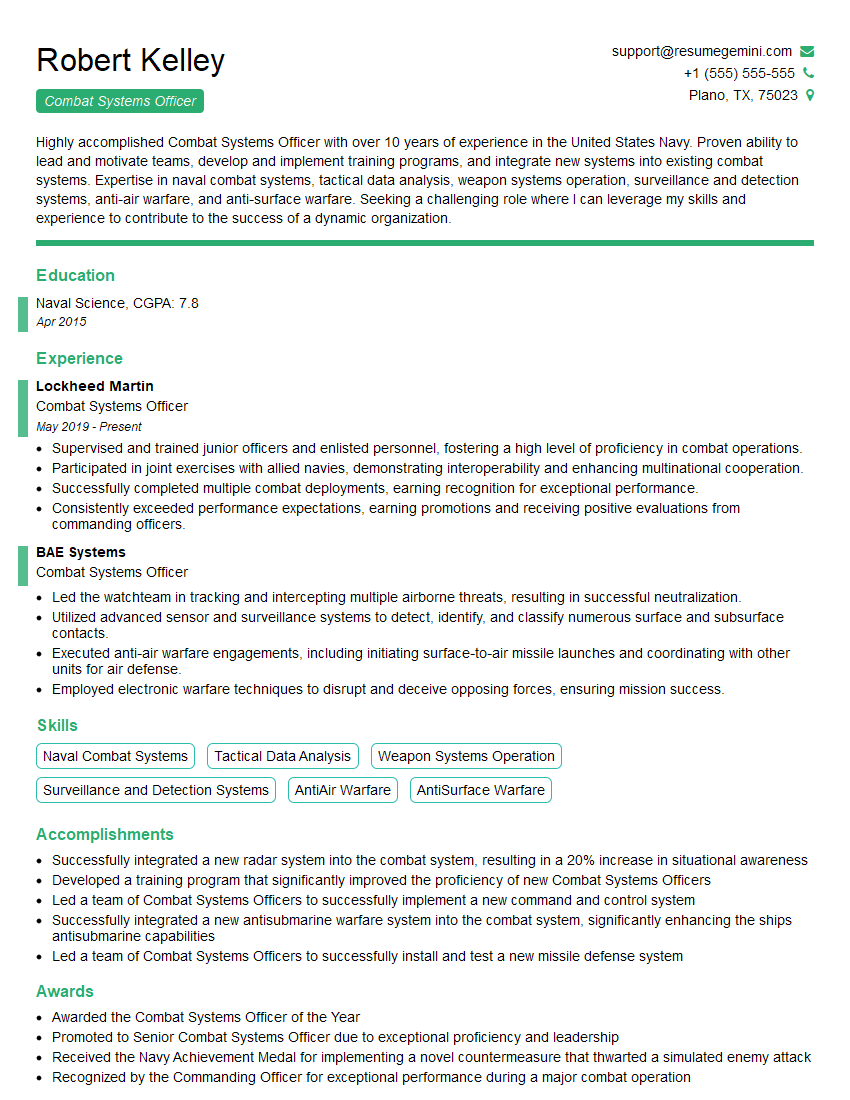
Mastering Rocket Artillery Fire Direction opens doors to exciting and challenging career opportunities within the defense sector. To stand out from the competition, a well-crafted resume is essential. An ATS-friendly resume will significantly increase your chances of getting your application noticed by recruiters. We highly recommend using ResumeGemini to build a professional and impactful resume tailored to your skills and experience. ResumeGemini provides examples of resumes specifically designed for Rocket Artillery Fire Direction roles, giving you a clear advantage in your job search. Invest time in creating a compelling resume – it’s your first impression!
Explore more articles
Users Rating of Our Blogs
Share Your Experience
We value your feedback! Please rate our content and share your thoughts (optional).
What Readers Say About Our Blog
Very informative content, great job.
good