Preparation is the key to success in any interview. In this post, we’ll explore crucial FM Transmitter Operations interview questions and equip you with strategies to craft impactful answers. Whether you’re a beginner or a pro, these tips will elevate your preparation.
Questions Asked in FM Transmitter Operations Interview
Q 1. Explain the difference between AM and FM modulation.
AM (Amplitude Modulation) and FM (Frequency Modulation) are two different methods of encoding audio information onto a radio wave. In AM, the amplitude (strength) of the carrier wave is varied to represent the audio signal. Think of it like a sound wave making a lightbulb brighter and dimmer – the brightness corresponds to the sound’s loudness. In FM, the frequency (number of cycles per second) of the carrier wave is varied instead. Imagine a tuning fork vibrating faster and slower; the speed of vibration represents the audio signal.
The key difference lies in their noise immunity. FM is far more resistant to noise and interference because the information is encoded in the frequency variations, not the amplitude. AM, being susceptible to noise affecting the amplitude, often results in a scratchier audio experience.
For example, if you hear static on an AM radio station, the static interferes with the amplitude of the signal, distorting the audio. On an FM station, the static would have a minimal effect since it would minimally impact the frequency.
Q 2. Describe the function of a stereo generator in an FM broadcast system.
A stereo generator is a crucial component in an FM broadcast system responsible for encoding a stereo audio signal into a single FM carrier wave for transmission. It takes two audio channels (left and right) and combines them using a technique called multiplexing. This multiplexing creates a composite signal compatible with the FM transmitter, allowing listeners with stereo receivers to hear both channels independently.
It works by creating a sum and difference signal: the sum is the combined left and right channels, and the difference is the left channel minus the right. This is then transmitted alongside the mono signal as a subcarrier (typically around 38 kHz) within the FM bandwidth. The receiver then decodes this composite signal to separate the left and right channels to restore the original stereo audio.
Without a stereo generator, only a mono signal would be transmitted, leading to a less rich and immersive listening experience for stereo-capable receivers.
Q 3. How do you measure the output power of an FM transmitter?
Measuring the output power of an FM transmitter requires a specialized instrument called a power meter or a spectrum analyzer. The process typically involves connecting the power meter to the transmitter’s output using a directional coupler to avoid interfering with transmission. The power meter measures the radio frequency (RF) power in watts or kilowatts, depending on the transmitter’s power level.
There are different types of power meters; some are specifically designed for RF measurements. The meter’s reading provides the actual radiated power from the transmitter’s antenna. Proper calibration of the power meter and consideration of antenna impedance matching are crucial to ensure accurate measurement.
It’s important to note safety precautions must be observed, as you are working with high-voltage and high-power RF energy. Always follow manufacturer’s instructions and use proper safety equipment.
Q 4. What are the common causes of distortion in an FM signal?
Distortion in an FM signal can stem from several sources within the broadcast chain.
- Overmodulation: Exceeding the allowed deviation of the carrier frequency leads to distortion and interference into adjacent channels.
- Audio equipment limitations: Inadequate audio amplifiers or processing equipment can introduce harmonic distortion or intermodulation products.
- Nonlinear components in the transmitter: Nonlinearities in the transmitter’s RF amplification stages can create harmonic distortion.
- Multipath propagation: Reflections of the radio wave from various obstacles cause delayed signals which interfere with the main signal, leading to distortion and fading.
- Intermodulation: Interference from other nearby transmitters or strong signals can mix with the FM signal and generate spurious signals resulting in distortion.
Identifying the source of distortion requires a systematic approach, starting with examining audio processing units, then the transmitter stages, and finally considering propagation issues.
Q 5. Explain the importance of antenna tuning and matching in FM transmission.
Antenna tuning and matching are crucial for efficient and effective FM transmission. Proper tuning ensures that the antenna operates at its resonant frequency, maximizing its radiation efficiency. Matching means achieving impedance matching between the transmitter’s output impedance and the antenna’s input impedance.
Without proper tuning and matching, a significant amount of transmitter power is reflected back into the transmitter, reducing the power radiated into the free space. This reflection can potentially damage the transmitter and lead to inefficient use of power. It also contributes to signal distortion and affects the signal-to-noise ratio at the receiver.
Think of it like trying to pour water into a narrow-necked bottle. If the bottle (antenna) is mismatched, much of the water will spill (power reflected), hindering efficient filling (transmission).
An impedance matching network, such as a tuning unit or an antenna coupler, is used to correct impedance mismatches.
Q 6. How do you troubleshoot a problem with an FM transmitter’s audio processing?
Troubleshooting audio processing problems in an FM transmitter involves a systematic approach. Begin by identifying the symptoms: is the audio distorted, weak, missing entirely, or unbalanced?
Step 1: Isolation: Isolate the problem by carefully checking each component in the signal chain – microphones, mixers, compressors, limiters, and the transmitter’s audio input stage. Use test tones to verify signals at each point.
Step 2: Measurement: Use oscilloscopes and spectrum analyzers to examine waveforms and frequencies to pinpoint the source of problems. Look for clipping, excessive noise, or frequency response abnormalities.
Step 3: Component level checks: If the problem is localized to a component, check its power supply, connections, and internal circuitry according to the equipment’s manual.
Step 4: Calibration: Recalibrate audio processing equipment like equalizers and compressors to ensure they are functioning correctly.
Step 5: Replacement: Consider replacing faulty components, remembering to follow safety precautions when working with power supplies and circuits.
A methodical approach will greatly aid in quickly resolving audio problems within the system.
Q 7. What safety precautions are necessary when working on high-power FM transmitters?
Working on high-power FM transmitters requires strict adherence to safety procedures. High voltages and high-power RF energy pose significant risks to personnel.
- Lockout/Tagout (LOTO): Always follow LOTO procedures to prevent accidental energization while working on the transmitter.
- Personal Protective Equipment (PPE): Wear appropriate PPE, including safety glasses, insulating gloves, and safety shoes.
- RF Safety: Avoid prolonged exposure to RF radiation. Understand the transmitter’s RF field strength and the safe working distances. Use RF meters to measure RF levels to ensure the safety of workers.
- High Voltage Safety: Exercise extreme caution around high-voltage components. Never work alone on high-voltage systems.
- Grounding: Ensure proper grounding of the transmitter and associated equipment to prevent electric shock.
- Emergency Procedures: Be aware of emergency procedures, including the location of emergency shut-off switches and the proper response to electrical shock or RF burns.
Always consult the transmitter’s operation and safety manuals. Training in high-power RF safety is essential before working on these systems. Safety should always be the utmost priority.
Q 8. Describe the process of aligning an FM transmitter.
Aligning an FM transmitter involves precisely adjusting its various components to ensure optimal signal quality and regulatory compliance. It’s like tuning a musical instrument – you need to get all the parts working in harmony. The process typically involves several steps:
- Frequency Adjustment: Using a precise frequency counter and possibly a signal generator, you carefully adjust the transmitter’s oscillator to the exact assigned frequency. Even a slight deviation can lead to interference with other stations.
- Power Output Adjustment: This ensures the transmitter operates within its licensed power limits, preventing signal overspill and interference. This usually involves adjusting the output stage’s gain.
- Harmonic and Spurious Suppression: Unwanted signals (harmonics and spurious emissions) at multiples or unrelated frequencies to the main carrier must be minimized using filters. These can cause interference and are strictly regulated.
- Modulation Adjustment: This ensures the audio signal modulates the carrier wave correctly, without overmodulation (distortion) or undermodulation (weak signal). This often involves adjusting pre-emphasis and modulation depth.
- Stereo Generation (if applicable): If the transmitter is broadcasting in stereo, careful alignment of the subcarrier (19 kHz) and its related components is essential for proper stereo separation and sound quality.
- SWR (Standing Wave Ratio) Optimization: A high SWR indicates impedance mismatch between the transmitter and the antenna, leading to power loss and potential damage. Adjusting the transmitter’s output impedance or the antenna matching network optimizes SWR for maximum power transfer.
Throughout the alignment process, precise measuring instruments like spectrum analyzers and signal generators are vital for monitoring signal characteristics and ensuring compliance with standards. Failure to properly align a transmitter can result in poor sound quality, interference with other broadcasts, and even legal repercussions.
Q 9. Explain the function of a combiner in a multi-transmitter system.
In a multi-transmitter system, a combiner is a crucial component that merges the outputs of multiple transmitters into a single signal for transmission through a shared antenna system. Think of it as merging multiple lanes of highway traffic into one, but without causing a traffic jam or accidents. A poorly designed combiner can lead to signal interference and power loss. Key functions include:
- Combining Signals: The primary function is to combine multiple RF signals, typically from different transmitters, into a single output signal. Each transmitter will be broadcasting at slightly different frequencies within a given bandwidth.
- Power Handling: The combiner must be able to handle the combined power output of all transmitters without overheating or damage. The overall power handling is greater than the output of any individual transmitter.
- Isolation: A good combiner provides sufficient isolation between individual transmitters to prevent intermodulation distortion (IMD) or other forms of interference. Isolation prevents the signal from one transmitter from influencing another.
- Impedance Matching: The combiner should properly match the impedance of the transmitters to the antenna, minimizing SWR and maximizing power transfer. This helps maximize efficiency and signal strength.
Types of combiners include Wilkinson combiners, hybrid combiners, and others, each with its strengths and weaknesses depending on the specific application and frequency range. Properly designed and installed combiners are critical for efficient and interference-free multi-transmitter operation.
Q 10. What are the regulatory requirements for FM transmitter operation in your region?
Regulatory requirements for FM transmitter operation vary significantly by region (country/state), but generally include:
- Licensing: Operating an FM transmitter requires a license issued by the relevant regulatory body (e.g., the FCC in the US, Ofcom in the UK). This license specifies the allowable frequency, power output, and other operational parameters.
- Technical Standards: Strict adherence to technical standards regarding signal quality, bandwidth, emissions limits, and harmonic distortion is mandatory. These standards aim to prevent interference with other services and ensure broadcast quality.
- Frequency Coordination: Transmitters must operate on assigned frequencies, preventing interference with other stations. Coordination with neighboring broadcasters is often necessary.
- Antenna Height Restrictions: Antenna height may be restricted to limit signal coverage and prevent interference. Antenna placement must adhere to safety regulations.
- Routine Monitoring: Regular monitoring of the transmitter’s performance is usually required to ensure compliance with technical standards and to detect any potential issues.
- Record Keeping: Detailed records of transmitter operation, maintenance, and any anomalies must be kept. This aids in troubleshooting and compliance demonstration.
Non-compliance can result in significant penalties, including fines and license revocation. Regular consultation with the regulatory body and adherence to their guidelines are crucial for legal and safe operation.
Q 11. How do you interpret a transmitter’s ALC (Automatic Level Control) meter?
The Automatic Level Control (ALC) meter on an FM transmitter displays the relative level of the RF output signal. It’s a vital indicator of the transmitter’s performance and potential issues. Think of it as a speedometer for your transmitter’s power output.
A typical ALC meter shows a range, often from 0 to 100% or a similar scale. Here’s how to interpret the readings:
- Optimal Level: The ideal ALC reading is usually around 80-90%, indicating the transmitter is operating at its efficient level without clipping or overmodulation.
- Low ALC: A reading significantly below the optimal range (e.g., below 50%) suggests a problem. This might be due to low audio input level, problems in the audio processing chain, or a fault in the transmitter’s power amplifier.
- High ALC (Near 100% or Clipping): A reading too close to or exceeding the maximum indicates overmodulation. The audio signal is too strong, causing distortion and potentially damaging the transmitter. Reducing the audio input level is necessary.
Regular observation of the ALC meter allows for early detection of potential problems. For example, a gradual decline in ALC might indicate a problem with the power amplifier, while sudden peaks suggest overmodulation problems. In both cases, corrective action is needed before they cause significant issues.
Q 12. Describe different types of FM transmitter exciters.
FM transmitter exciters are the heart of the broadcast chain, generating the precise radio frequency (RF) carrier wave that’s later amplified to broadcast power. Different types exist, each with advantages and disadvantages:
- Solid-State Exciters: These are the most common type, using transistors to generate the RF signal. They’re known for their reliability, relatively low cost, and smaller size compared to tube-based systems. They are widely used in modern FM broadcast systems because of their low maintenance requirements and long lifespan.
- Tube-Based Exciters (Vacuum Tube): Historically prevalent, these use vacuum tubes to generate the RF signal. Although they can produce high power levels, they have higher maintenance needs, require warm-up time, and are less efficient than solid-state exciters. They’re less common now but still find use in high-power applications where their robustness is valued.
- Direct Digital Synthesis (DDS) Exciters: These exciters use a digital approach to generate the RF signal. They offer superior frequency stability and agile frequency tuning capabilities, but they can be more expensive and complex. This type is gaining popularity due to its flexibility and superior precision.
The choice of exciter depends on factors such as power requirements, budget, maintenance capabilities, and desired performance characteristics. For modern FM broadcast applications, solid-state and DDS exciters are the preferred choices due to their reliability, cost-effectiveness, and efficiency.
Q 13. What are the common causes of intermodulation distortion in FM transmission?
Intermodulation distortion (IMD) in FM transmission is a form of distortion that occurs when multiple signals combine within a non-linear component of the transmitter or antenna system, creating new frequencies that weren’t originally present. Imagine mixing different colors of paint—you get new colors that weren’t in the original palette. These new frequencies can fall within the broadcast band and cause interference.
Common causes include:
- Non-linearity in Amplifiers: Overdriving power amplifiers (pushing them beyond their linear operating range) creates IMD products. This is a common problem and often occurs when the input signal level to the amplifier is too high.
- Poorly Designed Combiners: As mentioned earlier, inadequate isolation between multiple transmitters in a combined system can cause IMD. The signals from individual transmitters interact in a non-linear way.
- Antenna System Problems: High SWR in the antenna system or inadequate filtering can lead to IMD products. The antenna system is usually the most difficult to troubleshoot because of many different components and the effects of weather.
- Faulty Components: Defective components within the transmitter’s RF chain (such as mixers, filters, or amplifiers) can introduce non-linearities, producing IMD products.
IMD manifests as unwanted signals that interfere with the main broadcast signal. Reducing IMD typically involves optimizing signal levels, ensuring proper impedance matching, using high-quality linear amplifiers, and employing effective filtering throughout the transmitter and antenna system. A spectrum analyzer is crucial in identifying IMD products to locate and solve the problem.
Q 14. Explain the concept of frequency response in the context of FM broadcasting.
In FM broadcasting, frequency response refers to how the transmitter and associated audio processing equipment respond to different audio frequencies. It’s a measure of how accurately different audio frequencies are transmitted. A flat frequency response means all frequencies are amplified equally, resulting in faithful reproduction of the original audio source. Think of it like a perfectly balanced sound system.
Ideal frequency response aims for a flat response across the audio spectrum (typically 50Hz to 15kHz for FM broadcast), with minimal deviations in gain or phase. Deviations can be caused by issues within the audio processing chain (such as pre-emphasis networks, equalizers), or by faults within the transmitter itself. Deviations in frequency response lead to either too much or too little amplification at a specific frequency range. This causes the audio to sound uneven or unbalanced; some frequencies can be emphasized over others resulting in a poor listening experience.
Pre-emphasis, a common technique in FM broadcasting, intentionally boosts higher audio frequencies to improve the signal-to-noise ratio. The corresponding de-emphasis at the receiver restores the original audio balance. Careful design and alignment of the pre-emphasis and de-emphasis networks are crucial for maintaining a desirable frequency response.
Measuring the frequency response involves using a test signal with a known flat frequency response (often a sweep signal) to measure the output of the system. Using a spectrum analyzer or a specialized audio test equipment enables precise adjustments to correct any imperfections.
Q 15. How do you maintain the proper modulation levels of an FM transmitter?
Maintaining proper modulation levels in an FM transmitter is crucial for optimal audio quality and broadcast compliance. Think of it like controlling the volume of your voice – too quiet and nobody hears you, too loud and it’s distorted. We aim for a signal that’s strong but clear.
This is primarily achieved through careful adjustment of the audio input signal level. Modern transmitters have sophisticated metering systems, typically displaying percentage modulation. The ideal range is usually between 98% and 100% peak modulation. Going over 100% results in overmodulation, causing distortion and harshness. Undermodulation results in a weak, quiet signal.
We use tools like modulation monitors and audio level meters. These meters visually indicate the signal strength, allowing for precise adjustments. Experienced engineers also rely on their ears, listening for any signs of distortion. A trained ear can detect subtle variations before they become noticeable to listeners. Regular calibration of the equipment is key to accurate modulation level control.
For instance, if our modulation meter shows consistent levels around 80%, we would increase the input gain. Conversely, if the meter frequently peaks over 100%, indicating overmodulation, we would decrease the input gain or adjust the audio processing to reduce peak levels.
Career Expert Tips:
- Ace those interviews! Prepare effectively by reviewing the Top 50 Most Common Interview Questions on ResumeGemini.
- Navigate your job search with confidence! Explore a wide range of Career Tips on ResumeGemini. Learn about common challenges and recommendations to overcome them.
- Craft the perfect resume! Master the Art of Resume Writing with ResumeGemini’s guide. Showcase your unique qualifications and achievements effectively.
- Don’t miss out on holiday savings! Build your dream resume with ResumeGemini’s ATS optimized templates.
Q 16. What are the common troubleshooting steps for a transmitter exhibiting low output power?
Low output power in an FM transmitter can stem from various sources. Systematic troubleshooting is essential, starting with the most likely culprits and moving towards less common issues. Think of it as a detective solving a case, examining clues one by one.
- Check the power supply: Is the transmitter receiving the correct voltage and amperage? A failing power supply is a frequent culprit. Use a multimeter to verify.
- Examine the output stage: Are the final amplifier tubes (or transistors, depending on the transmitter design) functioning correctly? This might require specialized testing equipment to measure gain and output impedance.
- Inspect the tuning networks: Are the transmitter’s resonant circuits properly tuned to the assigned frequency? A slight misalignment can dramatically affect output power. This often requires the use of specialized signal generators and RF analyzers.
- Check for faults in the exciter: The exciter stage generates the initial RF signal. Faults here can significantly impact overall power. Again, specialized test equipment is usually needed.
- Verify antenna impedance matching: A mismatch between the transmitter’s output impedance and the antenna’s input impedance will reflect power back, reducing output. This is checked with an SWR (Standing Wave Ratio) meter. An SWR significantly above 1:1 indicates a problem.
We often use a systematic approach, such as a flow chart, to guide our troubleshooting. Each step is carefully documented, including observations and measurements. Detailed logs help us not only solve the immediate problem but also prevent future issues.
Q 17. Describe the role of the STL (Studio Transmitter Link) in an FM broadcast system.
The Studio Transmitter Link (STL) is the vital communication pathway between the radio studio and the transmitter site, often located some distance apart. Think of it as the dedicated, high-quality phone line that carries the broadcast signal.
It delivers the audio program material, along with control and monitoring data, from the studio to the transmitter. This is crucial because the studio, where the programming happens, is typically separate from the transmitter site (for reasons like better signal radiation, and access to land). STLs can be implemented using various technologies, including:
- Microwave links: These use radio waves to transmit the signal over long distances. Relatively simple to setup for line-of-sight locations.
- Fiber optic cables: These offer higher bandwidth and immunity to interference compared to microwave. A superior choice in cases where long runs are required.
- IP-based solutions: These use internet protocols to transport the audio, allowing for flexibility and remote control. Common in more advanced scenarios.
A properly functioning STL is critical to broadcast operations; any issues in the STL will directly affect the quality of the signal reaching listeners. Reliable signal quality monitoring is essential on both ends of the STL.
Q 18. Explain how to conduct a preventative maintenance check on an FM transmitter.
Preventative maintenance on an FM transmitter is akin to regularly servicing a car – it prevents major breakdowns and keeps it running smoothly. A preventative maintenance checklist should be followed meticulously.
A typical check includes:
- Visual inspection: Look for signs of overheating, loose connections, or corrosion.
- Cleaning: Remove dust and debris from cooling fans and internal components to ensure proper ventilation.
- Testing of power supply: Verify voltages and currents are within the specified ranges using a multimeter.
- Checking the output power: Verify that the transmitter is delivering its rated power using a suitable power meter.
- Monitoring of modulation levels: Ensure proper modulation percentages as discussed earlier.
- Testing of the alarm system: Ensure that any monitoring circuits are functional.
- Verification of antenna system: Check the SWR (Standing Wave Ratio) to ensure proper impedance matching.
- Recording of observations: Maintaining detailed logs of all inspections and tests is crucial for tracking the transmitter’s performance and identifying trends.
The frequency of preventative maintenance depends on the transmitter’s operating hours and environmental conditions. Some facilities conduct daily checks while others perform more extensive checks on a monthly or quarterly basis.
Q 19. How do you address signal reflections and ghosting issues in FM transmission?
Signal reflections and ghosting in FM transmission are caused by signals bouncing off surfaces like buildings or hills and arriving at the receiver delayed. It’s like seeing a blurry double image of a distant object because of the light reflecting off surfaces. This results in a faded, echo-like effect or multiple overlapping signals.
Addressing these issues requires careful analysis of the propagation path:
- Antenna placement: Strategic antenna placement, often higher elevations and carefully chosen locations, can minimize reflection paths.
- Directional antennas: Using highly directional antennas helps to focus the signal and reduce spillover in directions prone to reflections.
- Signal processing techniques: Advanced techniques like adaptive equalization or filtering can mitigate the impact of reflections, though these require specific equipment and expertise.
- Site survey: A thorough site survey can locate reflective surfaces and help plan optimal antenna locations and transmission strategies.
A common technique involves using field strength meters to measure the signal strength at various locations around the transmitter. Identifying areas of unexpectedly high or low signal strength can help pinpoint locations of reflections and optimize the system to minimize interference.
Q 20. What are the different types of antenna used for FM broadcasting?
Several antenna types are used for FM broadcasting, each with its characteristics and suitability for different situations. The choice depends largely on factors such as coverage area, terrain, and frequency.
- Half-wave dipole: A simple and common antenna, relatively inexpensive but has a less directional pattern.
- Yagi-Uda antenna: A directional antenna that provides better signal gain in a specific direction. Suitable for maximizing signal strength in a particular area but offering limited coverage in other areas.
- Panel antenna: A relatively broadband antenna with high gain. Excellent for maximizing signal strength with directional focus.
- Log-periodic antenna: A broadband antenna that can cover a wide range of frequencies. Often used in situations where a wide frequency band needs coverage.
The choice of antenna is a critical design consideration. Poor antenna selection can greatly reduce the effectiveness of the transmission, affecting coverage and signal quality. Expert guidance is essential for proper antenna selection and installation.
Q 21. Describe the characteristics of a good FM broadcast signal.
A good FM broadcast signal is characterized by several key properties, working in harmony to provide a high-quality listening experience.
- High fidelity audio: The signal should accurately reproduce the audio source with minimal distortion and noise. Think of it like a perfectly clear recording of a live concert.
- Stable carrier frequency: The carrier frequency should remain constant and stable to ensure consistent signal reception. Any drift can cause problems with reception.
- Appropriate modulation levels: As discussed before, optimal modulation levels ensure a strong but undistorted signal.
- Minimal interference: The signal should be free from noise or interference from other sources. This means minimizing static or other unwanted signals.
- Consistent coverage: The signal should reach the intended listening area without significant dropouts or weak spots.
These qualities collectively create a listening experience that is both enjoyable and reliable. Measuring these characteristics in the field using specialized equipment, like spectrum analyzers, is crucial for ensuring compliance with standards and broadcast regulations.
Q 22. Explain the importance of transmitter monitoring and logging.
Transmitter monitoring and logging are crucial for ensuring consistent, high-quality FM broadcasts and for regulatory compliance. Think of it like a doctor constantly monitoring a patient’s vital signs – continuous monitoring allows for proactive identification and resolution of problems before they significantly impact the listener experience.
Monitoring: Real-time observation of key parameters like audio levels, RF power output, frequency stability, and modulation index ensures the transmitter operates within its specifications. This involves using dedicated monitoring equipment that displays these parameters visually and audibly, alerting engineers to any deviations.
Logging: This involves automatically recording the monitored data over time. This record provides a history of the transmitter’s performance, helping identify trends, pinpoint the root cause of past issues, and aid in future troubleshooting. Imagine you’re investigating a sudden drop in signal strength; logs can tell you exactly when it happened, allowing you to correlate it with other events or environmental factors.
Importance: Comprehensive monitoring and logging are essential for maintaining a consistent signal, preventing service disruptions, meeting regulatory requirements (like FCC rules in the US), and streamlining maintenance schedules. They are also crucial for proving compliance and justifying operational decisions to management or regulatory bodies.
Q 23. How do you handle emergencies and malfunctions with an FM transmitter?
Handling emergencies and malfunctions requires a calm, systematic approach. My experience shows that a quick, well-defined process minimizes downtime and avoids cascading failures.
Immediate Response: The first step is to identify the nature and severity of the malfunction using the monitoring system. This immediately tells you if it’s a minor issue (like a slight drift in frequency) or a major problem requiring immediate attention (e.g., complete loss of transmission).
Troubleshooting: I would systematically check all aspects of the transmitter chain, starting from the audio input to the antenna output. This could involve checking audio processing equipment, checking for any alarms or error messages on the transmitter itself, and testing all connections for integrity.
Backup Systems: Many FM stations employ backup transmitters. In case of a major failure, switching to the backup quickly minimizes broadcast interruption. We regularly test the backup systems through drills to ensure seamless switchover.
Notification: If the problem isn’t immediately solvable, relevant personnel such as management, technicians, and possibly even the regulatory authority are immediately informed.
Documentation: All actions taken, including time stamps, and outcomes are meticulously documented. This helps in post-incident analysis, preventative maintenance, and for reporting to regulators.
Q 24. What are the common causes of noise in an FM signal?
Noise in an FM signal can stem from various sources, broadly categorized as internal and external. Think of it like unwanted static or interference disrupting a clear radio broadcast.
Internal Noise: This originates within the transmitter itself or the associated equipment. Examples include:
- Thermal noise: Generated by the random movement of electrons in components. Minimized using low-noise amplifiers and careful component selection.
- Intermodulation distortion: When multiple signals mix within nonlinear components creating unwanted frequencies. Addressed by appropriate signal filtering and amplifier design.
- Power supply noise: Fluctuations in the power supply can introduce noise. Using well-regulated power supplies is crucial.
External Noise: This comes from sources outside the transmitter, such as:
- Atmospheric noise: Caused by lightning strikes and other natural electrical events. This is less predictable but can be partially mitigated by antenna design and signal processing.
- Industrial interference: Motors, switching power supplies, and other electrical equipment can generate electromagnetic interference (EMI). Proper shielding and filtering on these devices is required.
- Co-channel interference: Other transmitters operating on the same or adjacent frequencies. This is often regulated to minimize overlaps.
Q 25. What are the different types of audio processing equipment used in FM broadcasting?
Audio processing is vital in FM broadcasting to improve the sound quality and program loudness. It’s like an audio ‘makeup’ artist for your broadcast signal.
Compressors/Limiters: These reduce the dynamic range (difference between loudest and quietest parts) of the audio signal, ensuring a consistent loudness level, preventing clipping (distortion), and making the broadcast sound fuller.
Equalizers: These adjust the balance of different frequency components, shaping the overall tonal characteristics of the program. It could be used to boost bass or reduce harsh treble frequencies.
Expanders/Gates: Expanders increase the dynamic range, bringing out quieter sounds, while gates reduce noise by removing silent periods or very low-level audio.
Multiband Processors: These combine multiple processing functions into a single unit, providing fine-grained control over the audio’s frequency response and dynamics.
Stereo Generators: These create the stereo signal from left and right audio channels, ensuring compatibility with stereo receivers.
Q 26. How do you calculate the effective radiated power (ERP) of an FM transmitter?
Effective Radiated Power (ERP) represents the power of the radio waves actually radiated from the antenna. It’s not simply the transmitter’s output power, as the antenna’s gain plays a significant role. Think of it as the ‘effective’ broadcast power reaching listeners.
The calculation is:
ERP = Transmitter Power (in watts) * Antenna Gain (in dBd or dBi)Remember to convert the antenna gain from decibels to a numerical factor. For example, an antenna gain of 6 dBd is approximately a factor of 4. So, a 1 kW transmitter with a 6 dBd antenna would have an ERP of 4 kW.
The units for ERP are watts. It’s important to note that the specific calculation might involve more factors depending on the antenna system, like feed line losses.
Q 27. What are the environmental factors that can affect FM transmission?
Environmental factors can significantly impact FM transmission, affecting signal strength, clarity, and range. They are the ‘weather’ influencing the ‘radio waves’.
Terrain: Hills, buildings, and other obstacles can obstruct the signal, creating areas of reduced reception (‘shadow zones’).
Atmospheric conditions: Temperature inversions, humidity, and precipitation can affect signal propagation and introduce fading or multipath interference.
Electromagnetic interference: Sources like power lines, industrial equipment, and even other radio transmitters can cause signal distortion or noise.
Antenna height: A higher antenna generally provides a wider coverage area and improved signal strength due to the line-of-sight propagation characteristic of radio waves.
Q 28. Describe your experience with various transmitter manufacturers and models.
Throughout my career, I’ve worked extensively with various transmitter manufacturers and models, including Harris, Nautel, and Continental. Each manufacturer has its own strengths and specializations. For instance, Harris is known for its robust and reliable designs, often used in high-power broadcasting applications, while Nautel is recognized for its energy-efficient solid-state transmitters.
I’ve worked with models ranging from smaller, low-power transmitters suitable for community radio stations to high-power units used in major metropolitan areas. This experience has given me a deep understanding of different transmitter architectures, operating principles, and maintenance procedures. I’m familiar with both analog and digital signal processing techniques used in modern FM broadcasting. My hands-on experience with various models, including troubleshooting and repair, has been invaluable in optimizing system performance and ensuring reliable service.
Key Topics to Learn for FM Transmitter Operations Interview
- RF Transmission Fundamentals: Understanding carrier frequency, modulation techniques (frequency modulation – FM), and signal propagation characteristics. Practical application: Troubleshooting signal strength issues and optimizing transmitter power output.
- Transmitter Hardware and Components: Familiarity with exciters, power amplifiers, antennas, and associated equipment. Practical application: Diagnosing and repairing malfunctions in transmitter components, performing preventative maintenance.
- Audio Processing and Encoding: Knowledge of audio compression, processing, and the role of encoders in preparing audio for transmission. Practical application: Ensuring optimal audio quality and signal-to-noise ratio.
- Monitoring and Measurement Techniques: Proficiency in using spectrum analyzers, signal generators, and other test equipment. Practical application: Identifying and resolving signal interference, ensuring compliance with regulations.
- Regulatory Compliance and Licensing: Understanding FCC regulations (or relevant international standards) related to FM broadcasting. Practical application: Ensuring the transmitter operates within legal limits and maintaining accurate documentation.
- Troubleshooting and Problem-Solving: Developing systematic approaches to diagnosing and resolving technical problems in transmitter systems. Practical application: Quickly identifying and fixing faults to minimize broadcast interruptions.
- Safety Procedures: Understanding and adhering to safety protocols related to high-power RF equipment. Practical application: Ensuring a safe working environment and preventing accidents.
Next Steps
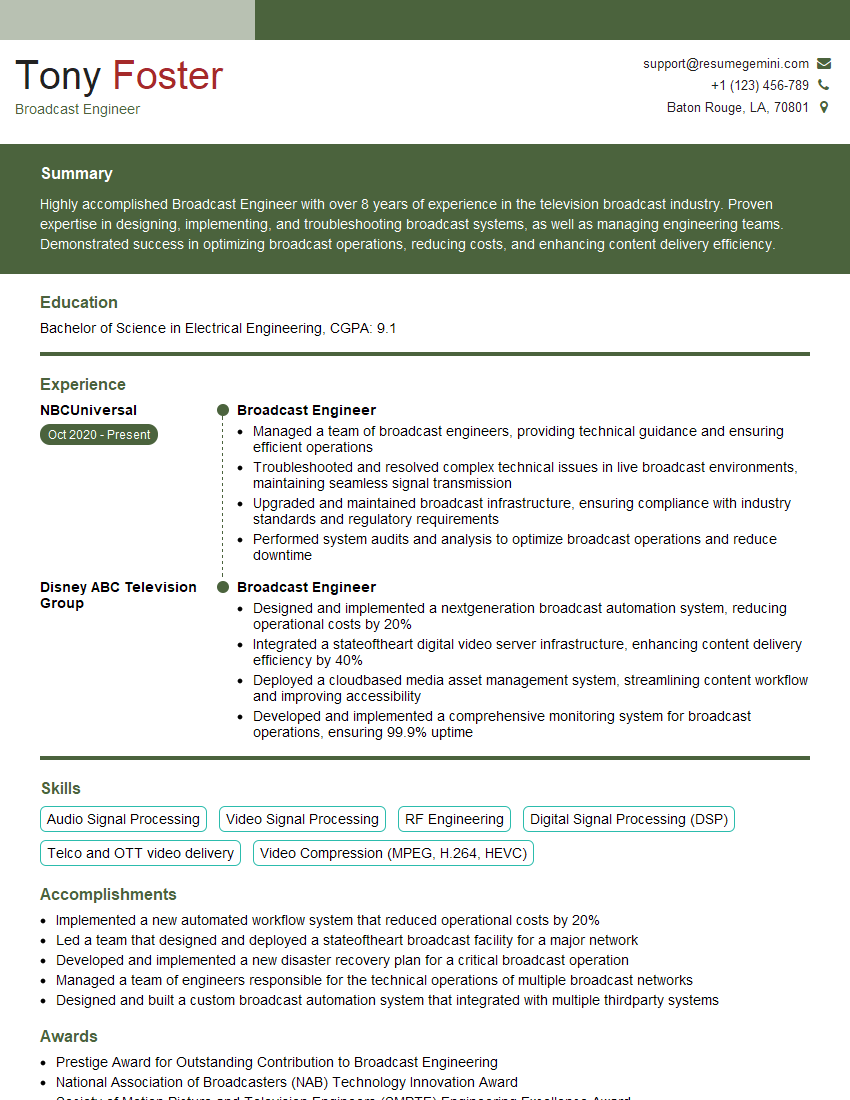
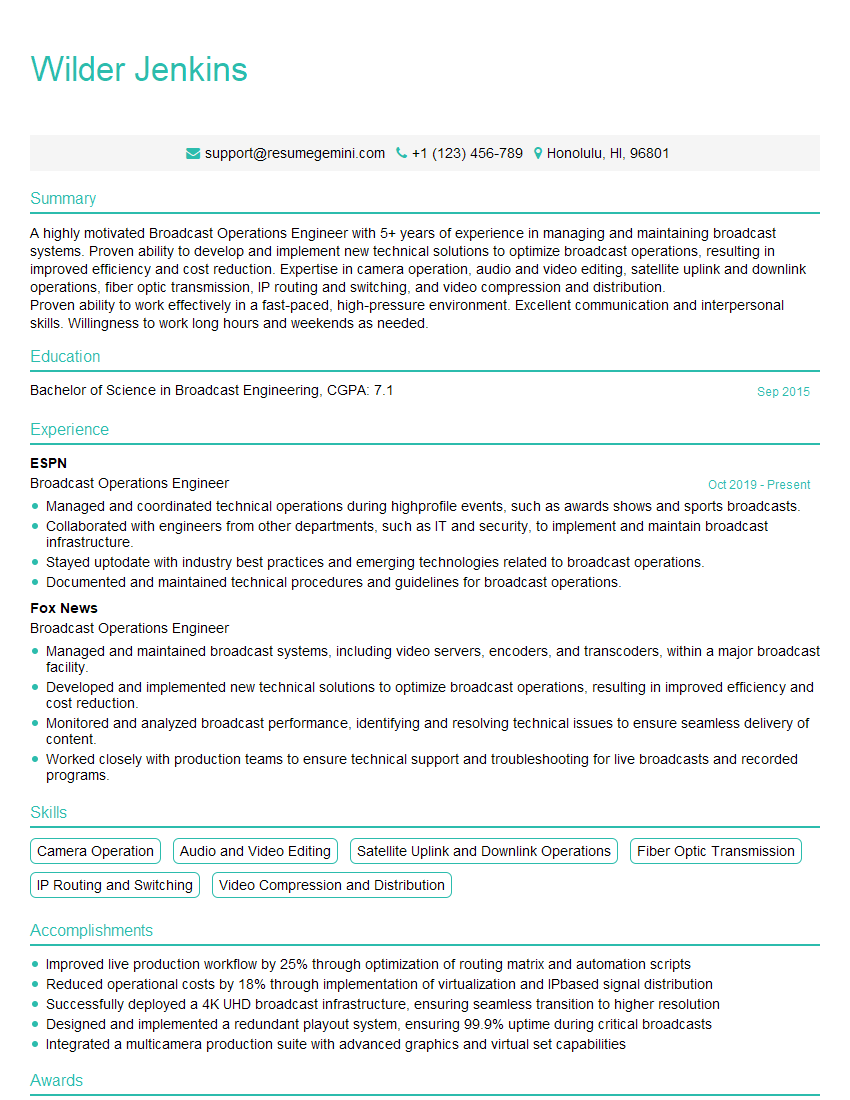
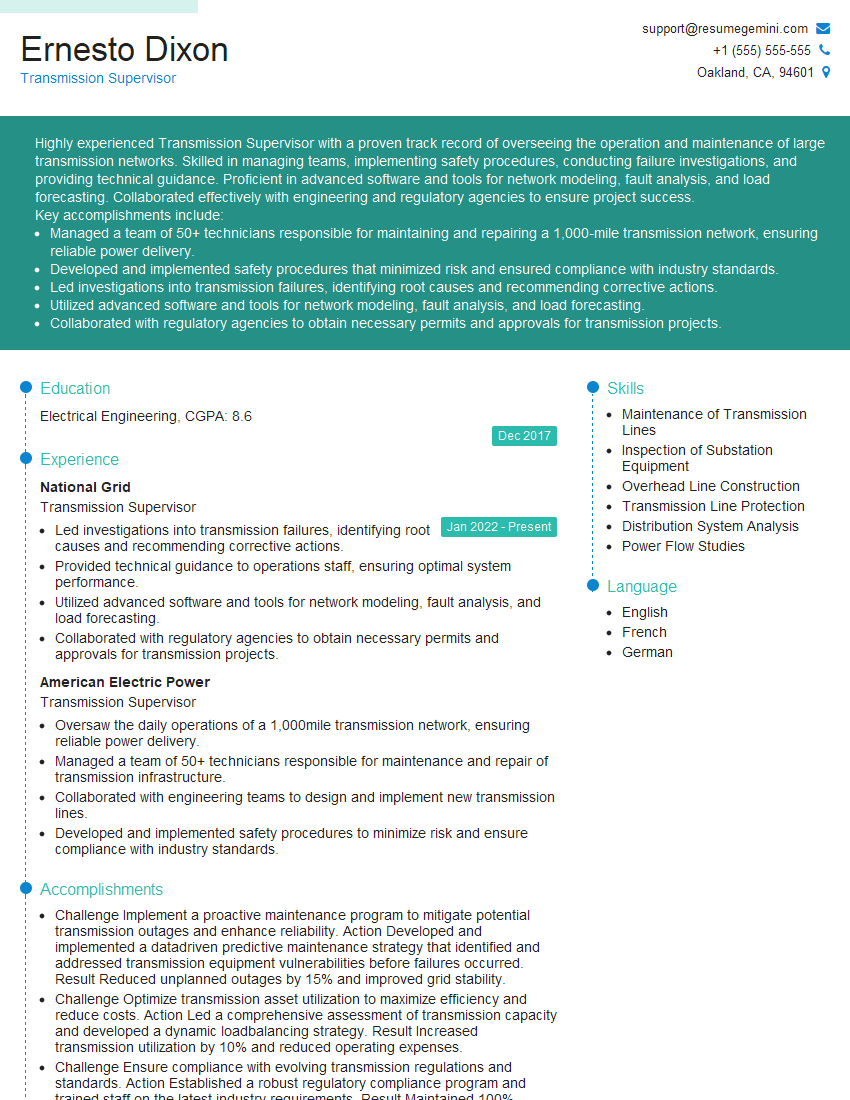
Mastering FM Transmitter Operations opens doors to exciting career opportunities in broadcasting, telecommunications, and related fields, offering opportunities for advancement and specialization. A strong resume is crucial for showcasing your skills and experience to potential employers. Building an ATS-friendly resume significantly increases your chances of getting your application noticed. We recommend using ResumeGemini, a trusted resource for creating professional and effective resumes. ResumeGemini provides examples of resumes tailored to FM Transmitter Operations to help you craft a compelling application.



Explore more articles
Users Rating of Our Blogs
Share Your Experience
We value your feedback! Please rate our content and share your thoughts (optional).
What Readers Say About Our Blog
Very informative content, great job.
good