Unlock your full potential by mastering the most common Experience with waste management planning and implementation interview questions. This blog offers a deep dive into the critical topics, ensuring you’re not only prepared to answer but to excel. With these insights, you’ll approach your interview with clarity and confidence.
Questions Asked in Experience with waste management planning and implementation Interview
Q 1. Describe your experience in developing a comprehensive waste management plan.
Developing a comprehensive waste management plan requires a systematic approach, starting with a thorough assessment of the current waste generation and its characteristics. This involves understanding the type, quantity, and source of waste produced by the organization. I typically begin by engaging stakeholders across the organization to gather data, conduct waste audits, and identify opportunities for improvement. The plan then outlines strategies for waste reduction, reuse, recycling, and disposal, aligning with relevant regulations and best practices. A crucial element is setting clear goals and targets, along with a detailed implementation plan including timelines, responsibilities, and budget allocation. For example, in my work with a large manufacturing facility, we implemented a plan that reduced landfill waste by 40% within two years through a combination of source reduction initiatives, improved recycling programs, and the introduction of composting for organic waste. The plan also included detailed reporting mechanisms to track progress and identify areas for further optimization.
Q 2. Explain your approach to waste stream analysis and characterization.
Waste stream analysis and characterization is the cornerstone of effective waste management. It involves systematically identifying and quantifying the different types of waste generated by an organization. This process includes conducting waste audits, often involving physical inspections and weighing of waste streams to accurately determine the composition and volume of waste. Methods may include visual inspections, sorting through representative samples, and utilizing laboratory testing to identify hazardous materials. For example, when working with a hospital, we identified that a significant portion of their waste was improperly classified as general waste, instead of containing hazardous medical waste. By implementing a more rigorous waste segregation system and thorough training for staff, we reduced the risk of improper handling and environmental contamination. This detailed characterization allows us to design tailored waste management solutions optimized for cost-effectiveness and environmental impact.
Q 3. How do you determine the optimal waste management strategy for a given organization?
Determining the optimal waste management strategy is a multi-faceted process requiring careful consideration of various factors. It’s not a ‘one-size-fits-all’ solution. My approach involves a thorough assessment of several key elements: the type and quantity of waste generated, the organization’s budget, its environmental objectives, and the availability of local waste treatment infrastructure and regulations. A cost-benefit analysis often plays a critical role in comparing different strategies. For instance, while incineration can reduce waste volume significantly, it carries environmental concerns and higher capital costs than recycling. A life-cycle assessment (LCA) is often used to compare the overall environmental impact of alternative methods. Ultimately, the optimal strategy strives for a hierarchy prioritizing waste reduction, reuse, recycling, and responsible disposal as a last resort. In a recent project with a food processing company, we combined source reduction techniques, improved recycling practices, and anaerobic digestion to efficiently manage their organic waste, resulting in significant cost savings and environmental benefits.
Q 4. What are the key performance indicators (KPIs) you use to measure the success of a waste management program?
Key Performance Indicators (KPIs) are crucial for monitoring the effectiveness of a waste management program. These metrics allow us to track progress, identify areas for improvement, and demonstrate the program’s value. Some critical KPIs include:
- Waste Diversion Rate: The percentage of waste diverted from landfills through recycling, composting, or other methods.
- Recycling Rate: The percentage of recyclable materials actually recycled.
- Landfill Waste Reduction: The percentage reduction in the volume of waste sent to landfills.
- Cost per Ton of Waste Managed: Tracks the efficiency of the program’s cost structure.
- Compliance Rate: Monitors adherence to all relevant regulations and permits.
Q 5. Explain your understanding of different waste treatment technologies (e.g., incineration, composting, anaerobic digestion).
Various waste treatment technologies offer different approaches to managing waste.
- Incineration: Burns waste at high temperatures, significantly reducing volume but potentially emitting air pollutants. Proper emission controls are essential.
- Composting: Decomposes organic waste aerobically (with oxygen) producing valuable compost for soil amendment. It’s environmentally friendly but requires specific conditions and quality control.
- Anaerobic Digestion: Breaks down organic waste anaerobically (without oxygen), producing biogas (renewable energy) and digestate (fertilizer). This is effective for food waste and other organic materials.
Q 6. How do you manage hazardous waste in compliance with regulations?
Managing hazardous waste requires strict adherence to regulations and safety protocols. It involves a multi-step process:
- Identification and Segregation: Properly identify and segregate hazardous waste according to its characteristics (e.g., toxicity, flammability, reactivity).
- Storage and Transportation: Securely store hazardous waste in designated containers, ensuring proper labeling and compliance with transportation regulations.
- Treatment and Disposal: Employ approved treatment methods (e.g., neutralization, incineration) and dispose of the waste in licensed facilities compliant with all applicable environmental regulations.
- Record Keeping and Reporting: Maintain detailed records of all hazardous waste generation, storage, transportation, treatment, and disposal activities. This information is essential for regulatory compliance and emergency response.
Q 7. Describe your experience with waste reduction and recycling programs.
Implementing effective waste reduction and recycling programs requires a multifaceted approach. It starts with education and awareness campaigns among employees and stakeholders to encourage responsible waste disposal practices. This often involves providing clear guidelines, labeling systems, and training sessions on proper waste segregation. The provision of adequate recycling infrastructure, including clearly marked bins and convenient collection points, is also critical. Source reduction strategies, such as minimizing packaging, using reusable materials, and optimizing production processes to reduce waste generation, are equally important. For a large office building, we implemented a comprehensive recycling program with designated bins for paper, plastic, glass, and other materials, combined with a robust composting system for organic waste. We saw a significant increase in recycling rates after conducting regular awareness campaigns and providing feedback on program performance.
Q 8. How do you ensure compliance with environmental regulations related to waste management?
Ensuring compliance with environmental regulations in waste management is paramount. It involves a multi-faceted approach that begins with a thorough understanding of all applicable laws and guidelines at the local, regional, and national levels. This includes permits, licenses, and specific regulations concerning waste types, handling, transportation, treatment, and disposal.
My strategy involves:
- Regular Audits: Conducting internal audits to check our processes against regulatory requirements. We use checklists and documented procedures to ensure consistent compliance.
- Training: Providing comprehensive training to all staff on relevant regulations and best practices. This includes updates on any changes in legislation.
- Record Keeping: Maintaining meticulous records of all waste-related activities, including waste generation, transportation manifests, treatment methods, and disposal documentation. This ensures traceability and facilitates easy audits.
- Relationship with Regulatory Bodies: Building and maintaining a strong working relationship with environmental agencies. Proactive communication and timely reporting of any potential non-compliance issues are crucial.
- Investing in Technology: Utilizing software solutions to manage waste data, track compliance, and generate reports automatically, minimizing human error and ensuring accuracy.
For instance, in a previous role, we implemented a new waste tracking system that automated manifest generation, significantly reducing administrative burden and improving accuracy, minimizing the risk of non-compliance related to hazardous waste transportation.
Q 9. What are some common challenges in waste management planning and implementation, and how have you overcome them?
Waste management planning and implementation present numerous challenges. Common issues include:
- Funding Constraints: Securing sufficient funding for large-scale projects can be difficult, especially for smaller municipalities or organizations.
- Public Resistance: Gaining community acceptance for new waste management facilities (e.g., landfills, recycling plants) can be challenging due to concerns about environmental impact or aesthetic issues.
- Technological Limitations: Dealing with new or emerging waste streams, like e-waste, requires innovative technologies which may not be readily available or affordable.
- Data Management: Gathering and analyzing reliable waste data can be complex, particularly in areas with informal waste management practices.
- Enforcement: Ensuring consistent adherence to waste management regulations can be difficult, requiring robust enforcement mechanisms.
To overcome these, I employ a strategic approach:
- Securing Funding: Exploring diverse funding sources like grants, public-private partnerships, and innovative financing mechanisms.
- Public Engagement: Adopting transparent communication strategies, involving the public in decision-making, and addressing concerns through open dialogue and education.
- Technological Innovation: Staying updated on emerging technologies and seeking opportunities to incorporate them into our operations. This includes pilot programs to test the effectiveness of new methods.
- Data-driven Decision Making: Investing in robust data collection and analysis systems to identify trends and inform planning and resource allocation.
- Enforcement & Monitoring: Implementing effective monitoring and enforcement mechanisms to ensure compliance with regulations.
For example, during a project involving the implementation of a new composting facility, we successfully addressed public concerns through community meetings, educational campaigns, and a detailed environmental impact assessment, securing the necessary permits and community support.
Q 10. Explain your experience with budgeting and resource allocation for waste management projects.
Budgeting and resource allocation in waste management projects require a detailed understanding of project scope, timelines, and potential costs. I typically use a phased approach:
- Needs Assessment: Identifying the waste management needs and establishing clear objectives and goals.
- Cost Estimation: Developing a detailed cost estimate considering all aspects, including equipment, personnel, transportation, disposal fees, and contingency planning.
- Resource Allocation: Allocating resources strategically, prioritizing critical activities and ensuring efficient use of funds.
- Budget Tracking: Monitoring expenditures closely and making adjustments as necessary, ensuring transparency and accountability.
- Performance Reporting: Regularly reporting on budget performance, identifying variances, and providing explanations for any deviations from the plan.
In a previous project, I developed a detailed budget for a municipal recycling program, securing funding through a combination of grants and municipal allocations. We utilized a project management software to track expenditures and ensure we remained on budget while optimizing resource utilization. The program was successfully implemented within the allocated budget, exceeding projected recycling rates.
Q 11. How do you involve stakeholders in the development and implementation of waste management plans?
Stakeholder engagement is crucial for successful waste management planning and implementation. This involves identifying all relevant stakeholders, including:
- Residents: The community impacted by waste management practices.
- Businesses: Commercial and industrial waste generators.
- Government Agencies: Regulatory bodies and local authorities.
- Waste Management Companies: Service providers and contractors.
- NGOs and Community Groups: Organizations involved in environmental advocacy and education.
My approach focuses on:
- Communication: Using clear, accessible language to communicate project goals, timelines, and potential impacts.
- Participation: Providing opportunities for stakeholders to provide input and feedback throughout the planning process.
- Collaboration: Working collaboratively with stakeholders to build consensus and address concerns.
- Transparency: Sharing information openly and honestly, addressing questions and concerns promptly.
- Feedback Mechanisms: Establishing mechanisms for ongoing feedback and communication, including surveys, public forums, and online platforms.
For example, when developing a community composting program, we held several public meetings to gather input from residents, addressed their concerns regarding odor and pest control, and developed a communication plan to keep the community informed of the program’s progress.
Q 12. Describe your experience with waste auditing and reporting.
Waste auditing and reporting is a critical component of effective waste management. It involves systematically reviewing waste generation, composition, and management practices to identify areas for improvement. My experience includes:
- Waste Characterization Studies: Conducting detailed analyses of waste streams to determine their composition and identify opportunities for recycling, composting, and other waste reduction strategies.
- Waste Audits: Performing on-site waste audits to verify waste generation data and assess the effectiveness of waste management practices.
- Data Analysis: Analyzing waste audit data to identify trends, patterns, and areas for improvement.
- Reporting: Preparing comprehensive reports summarizing the findings of waste audits and providing recommendations for improved waste management practices.
- Compliance Monitoring: Using audit data to monitor compliance with waste management regulations and internal policies.
In one instance, a comprehensive waste audit revealed that a significant portion of what was classified as ‘general waste’ at a large manufacturing plant actually consisted of recyclable materials. Based on this data, we implemented a new recycling program, resulting in a substantial reduction in landfill waste and cost savings for the company.
Q 13. How do you monitor and evaluate the effectiveness of a waste management program?
Monitoring and evaluating the effectiveness of a waste management program is an ongoing process that requires a combination of quantitative and qualitative data. Key performance indicators (KPIs) are crucial. These might include:
- Waste Diversion Rates: The percentage of waste diverted from landfills through recycling, composting, or other methods.
- Recycling Rates: The percentage of recyclable materials actually recycled.
- Landfill Waste Generation: The amount of waste sent to landfills.
- Cost per Ton of Waste: The cost of managing waste per ton.
- Public Satisfaction: Measuring public perception of the waste management program.
My approach involves:
- Data Collection: Gathering data regularly on relevant KPIs through monitoring systems and periodic audits.
- Data Analysis: Analyzing data to identify trends and assess program performance against established goals.
- Performance Reporting: Preparing regular reports to communicate performance to stakeholders.
- Continuous Improvement: Using performance data to identify areas for improvement and make necessary adjustments to the program.
- Benchmarking: Comparing performance against other similar programs or best practices.
For example, by tracking waste diversion rates and comparing them against targets, we were able to identify a drop in recycling participation in a specific neighbourhood. Through targeted community outreach and education, we effectively addressed the issue and brought recycling rates back up to target levels.
Q 14. What is your experience with life cycle assessment (LCA) for waste management?
Life Cycle Assessment (LCA) is a valuable tool for evaluating the environmental impacts of waste management options throughout their entire life cycle, from raw material extraction to final disposal. My experience with LCA involves:
- Defining Scope: Establishing the boundaries of the LCA study, identifying the system being assessed, and defining the functional unit.
- Data Collection: Gathering data on all aspects of the waste management system, including energy consumption, resource use, greenhouse gas emissions, and other environmental impacts.
- Impact Assessment: Evaluating the environmental impacts of different waste management options using standardized methods and software tools.
- Interpretation and Reporting: Interpreting the results of the LCA study and preparing a comprehensive report summarizing the findings and recommendations.
- Scenario Modelling: Using LCA to compare different scenarios and explore the potential environmental impacts of various waste management strategies.
In a recent project, we conducted an LCA to compare the environmental impacts of different landfill liner materials, considering factors like manufacturing, transportation, installation, and long-term performance. The results informed the selection of a more environmentally sustainable liner, reducing the overall carbon footprint of the landfill.
Q 15. How do you handle unexpected waste management issues or emergencies?
Unexpected waste management issues, like overflowing bins, equipment malfunctions, or hazardous material spills, demand immediate and decisive action. My approach involves a tiered response system.
- Immediate Action: First, I prioritize safety. Securing the area, preventing further contamination or injury, and contacting emergency services if necessary is paramount. For example, if a hazardous material spill occurs, I’d immediately establish a perimeter, initiate the proper protocols for containment and cleanup based on the material’s safety data sheet (SDS), and notify the relevant authorities.
- Assessment and Investigation: Following the immediate response, a thorough investigation is launched to understand the root cause. This might involve reviewing operational procedures, inspecting equipment, or analyzing waste composition data. For example, consistently overflowing bins in a particular area might indicate insufficient bin size or an unexpectedly high waste generation rate from a specific source.
- Corrective Actions and Prevention: Based on the investigation, corrective actions are implemented to prevent recurrence. This could involve adjusting collection schedules, replacing faulty equipment, implementing staff training, or modifying waste reduction strategies. For instance, after identifying a consistently overflowing bin as a result of high volume in a specific area, we could increase the frequency of collection for that route, and/or introduce additional bins.
- Documentation and Reporting: Thorough documentation of the incident, including the corrective actions taken, is crucial for future reference and continuous improvement. This information feeds into regular performance reviews and contributes to ongoing process refinement.
Career Expert Tips:
- Ace those interviews! Prepare effectively by reviewing the Top 50 Most Common Interview Questions on ResumeGemini.
- Navigate your job search with confidence! Explore a wide range of Career Tips on ResumeGemini. Learn about common challenges and recommendations to overcome them.
- Craft the perfect resume! Master the Art of Resume Writing with ResumeGemini’s guide. Showcase your unique qualifications and achievements effectively.
- Don’t miss out on holiday savings! Build your dream resume with ResumeGemini’s ATS optimized templates.
Q 16. Describe your experience with waste management software or data analysis tools.
I’ve extensive experience using various waste management software and data analysis tools. My expertise spans from simple waste tracking spreadsheets to sophisticated Geographic Information System (GIS) platforms and enterprise resource planning (ERP) systems integrated with waste management modules.
For example, I’ve used GIS software to map waste generation hotspots within a city, optimize collection routes, and identify areas needing additional bins or improved infrastructure. This visual representation of waste data allowed us to target resource allocation more effectively and reduce operational costs.
Furthermore, I’ve worked with ERP systems that integrate waste data with other operational information, providing comprehensive insights into the lifecycle of waste management processes, from generation to disposal. This enables data-driven decision-making, allowing me to identify trends, predict future needs, and refine our strategies for improved efficiency and sustainability.
Q 17. What are your strategies for minimizing landfill waste?
Minimizing landfill waste is a core tenet of sustainable waste management. My strategies focus on a multi-pronged approach encompassing waste reduction, reuse, recycling, and recovery.
- Source Reduction: This involves reducing waste generation at its source through initiatives such as promoting reusable items, minimizing packaging, and educating the public on responsible waste disposal practices. For example, implementing a composting program can divert significant amounts of organic waste from landfills.
- Recycling and Composting: Expanding and optimizing recycling and composting programs is vital. This involves ensuring proper sorting infrastructure, educating residents on what and how to recycle, and partnering with recycling processors to ensure efficient material recovery.
- Waste-to-Energy: In suitable scenarios, exploring waste-to-energy technologies can offer a sustainable alternative to landfilling. This could involve anaerobic digestion to generate biogas, or incineration with energy recovery systems.
- Material Recovery and Reuse: Promoting and implementing strategies for material recovery and reuse can effectively divert waste from landfills. This could include developing programs to recover valuable materials from construction and demolition waste or fostering partnerships with businesses that can reuse waste materials.
The effectiveness of these strategies is constantly monitored and optimized through data analysis, allowing for adaptive management and continuous improvement.
Q 18. How do you communicate technical information about waste management to non-technical audiences?
Communicating complex technical information to non-technical audiences requires clear, concise, and engaging communication. I employ several techniques:
- Simple Language and Analogies: I avoid jargon and use plain language, employing relatable analogies to explain complex concepts. For instance, instead of saying “optimize waste diversion rates,” I might say “find ways to recycle and compost more waste.”
- Visual Aids: I utilize graphs, charts, and infographics to visualize data and present information in a digestible format. A simple pie chart showing the composition of waste can be much more impactful than a table of raw data.
- Storytelling: I use narratives and case studies to make the information relatable and memorable. Sharing success stories about successful waste reduction initiatives can engage the audience and inspire action.
- Interactive Sessions: I encourage questions and discussions to ensure understanding and foster a two-way exchange of information. This helps me adapt my communication style and address specific concerns.
Q 19. What are your views on extended producer responsibility (EPR)?
Extended Producer Responsibility (EPR) is a crucial policy instrument for promoting sustainable waste management. It holds producers responsible for the entire lifecycle of their products, including end-of-life management. I strongly support EPR as it incentivizes producers to design more sustainable products, increase the use of recycled materials, and improve product recyclability.
For instance, EPR programs for electronics often require producers to finance the collection and recycling of their products, pushing them to make products that are easier and cheaper to recycle. This approach can significantly reduce the environmental burden of waste and promotes a circular economy, which would have a massive positive impact on sustainability.
However, successful implementation of EPR requires careful consideration of various factors, including appropriate fee structures, clear producer responsibilities, and robust monitoring and enforcement mechanisms.
Q 20. Describe your understanding of waste hierarchy principles.
The waste hierarchy prioritizes waste management options based on their environmental impact, starting with the most environmentally preferable. It guides us to prioritize waste prevention and reduction above all else.
- Prevention: Reducing waste generation at the source is the top priority. This includes designing products for durability and repairability, reducing packaging, and promoting sustainable consumption patterns.
- Reduction: Minimizing waste generation through efficient resource use and waste minimization strategies.
- Reuse: Extending the life of products through reuse and repurposing.
- Recycling and Composting: Recovering materials and resources from waste streams through recycling and composting.
- Recovery: Utilizing energy recovery or other methods to extract value from non-recyclable waste.
- Disposal: Landfilling should be the last resort, employed only when other options are not feasible.
Understanding and applying these principles is fundamental to designing and implementing effective and sustainable waste management strategies.
Q 21. How do you ensure the safety of workers involved in waste management operations?
Worker safety is paramount in waste management. My approach involves a multifaceted strategy:
- Risk Assessment and Mitigation: Regular risk assessments identify potential hazards, such as exposure to hazardous materials, heavy lifting, and machinery operation. Control measures are then implemented to minimize these risks, for example, providing Personal Protective Equipment (PPE), implementing safe lifting techniques, and establishing clear operational procedures.
- Training and Education: Comprehensive training programs equip workers with the knowledge and skills to perform their tasks safely. This includes training on handling hazardous materials, using machinery safely, and following emergency procedures.
- PPE and Equipment Maintenance: Providing appropriate PPE, such as gloves, masks, and safety footwear, and ensuring regular equipment maintenance are crucial for minimizing risks. Regular inspections and prompt repairs prevent accidents.
- Emergency Response Plan: A detailed emergency response plan outlines procedures for handling incidents, including spills, injuries, and equipment malfunctions. Regular drills ensure workers are prepared to respond effectively in emergencies.
- Monitoring and Evaluation: Regular monitoring of safety performance, including incident reporting and analysis, allows for continuous improvement and proactive identification of potential hazards.
By prioritizing safety, I foster a culture of responsibility, and reduce workplace accidents while ensuring that waste management operations are conducted responsibly and sustainably.
Q 22. Explain your experience with permitting and licensing for waste management facilities.
Securing permits and licenses for waste management facilities is a complex process requiring meticulous attention to detail and a thorough understanding of environmental regulations. It involves navigating a labyrinth of local, state, and sometimes federal laws. My experience spans several projects, from small-scale recycling centers to large-scale landfills.
This typically begins with a comprehensive site assessment to ensure compliance with zoning regulations and environmental protection standards. We then prepare and submit a detailed application to the relevant authorities, including environmental impact assessments, engineering plans, and financial projections. This often requires engaging with multiple agencies, attending public hearings, and responding to requests for additional information.
For example, in one project involving a new composting facility, we had to navigate complex permitting related to air quality, stormwater management, and odor control. This involved working closely with air quality specialists, engineers, and legal counsel to ensure full compliance with all regulations and obtain the necessary permits before construction could commence. A key aspect of the process was proactive community engagement to address concerns and build trust. We were ultimately successful, leading to a fully licensed and operational facility.
Q 23. Describe your experience with public-private partnerships in waste management.
Public-private partnerships (PPPs) are becoming increasingly common in waste management, offering a blend of public sector oversight and private sector efficiency. My experience includes working on several successful PPPs. The key to a successful PPP lies in clearly defining roles and responsibilities, setting realistic performance targets, and establishing robust risk-sharing mechanisms.
For instance, in one project, we partnered with a private company to develop a comprehensive waste collection and recycling program for a municipality. The municipality provided the regulatory framework and oversight, while the private partner managed the daily operations, including fleet maintenance, route optimization, and customer service. This PPP resulted in improved waste collection efficiency, increased recycling rates, and cost savings for the municipality.
Effective communication and collaboration are crucial. Regular meetings, transparent reporting, and conflict resolution mechanisms are vital to the success of the partnership. This collaborative approach ensures that both partners work together towards shared goals, leading to a win-win situation for both the public and private sectors.
Q 24. What is your experience with waste management in different industries (e.g., healthcare, construction)?
Waste management practices differ significantly across industries, each presenting unique challenges and requirements. My experience encompasses various sectors, including healthcare, construction, and manufacturing.
- Healthcare: This sector generates hazardous medical waste requiring specialized handling and disposal, adhering to strict regulations to prevent the spread of infectious diseases. I’ve worked on projects involving the implementation of color-coded waste streams, proper segregation of hazardous waste, and the secure transportation and disposal of regulated medical materials.
- Construction: Construction sites generate a large volume of construction and demolition debris. My projects have included developing efficient waste diversion strategies, implementing recycling programs for materials like concrete and wood, and optimizing waste transportation logistics to minimize environmental impact and costs.
- Manufacturing: Manufacturing facilities generate industrial waste that can include hazardous materials. I’ve been involved in designing waste reduction programs, implementing proper waste handling and storage protocols, and selecting appropriate disposal methods based on the type and quantity of waste generated.
Understanding the specific waste streams, regulatory requirements, and operational considerations for each industry is paramount for effective waste management planning and implementation.
Q 25. How do you stay current with best practices and technological advancements in waste management?
Staying abreast of the latest advancements in waste management is crucial. I employ a multifaceted approach to maintain my expertise:
- Professional Organizations: Active membership in organizations like the Waste Management & Research Centre and the Solid Waste Association of North America (SWANA) provides access to industry publications, conferences, and networking opportunities.
- Industry Publications & Journals: I regularly read publications focused on waste management innovations, emerging technologies, and best practices.
- Conferences & Workshops: Attending conferences and workshops helps me to directly engage with other professionals, learn about new technologies, and see practical examples of innovative approaches.
- Online Resources: I utilize online platforms and databases to access research papers, case studies, and technical reports on the latest developments in waste management technologies.
This continuous learning ensures that I am well-equipped to apply the most effective and sustainable methods in my work.
Q 26. Explain your experience with developing and implementing a waste management education program.
Developing and implementing effective waste management education programs is crucial for behavioral change and long-term sustainability. My experience includes designing and delivering programs for various audiences, from school children to community residents and business owners.
One successful program involved creating an interactive educational campaign for a municipality. We used a combination of methods including workshops, online resources, and community events to increase awareness about proper waste sorting and recycling practices. The program incorporated gamification techniques, making learning fun and engaging. We tracked participation and waste diversion rates to measure the program’s success, showing a significant increase in recycling rates within a year.
Tailoring the program to the specific needs and characteristics of the target audience is essential. Clear, concise messaging, and relatable examples are crucial for effective communication. Utilizing different communication channels (print materials, social media, videos) to reach a wider audience is important. Ongoing evaluation and adaptation are vital for continuous improvement.
Q 27. How would you address community concerns related to a proposed waste management facility?
Addressing community concerns regarding a proposed waste management facility requires proactive and transparent communication. Open dialogue and engagement are essential to build trust and alleviate anxieties.
My approach involves several key steps:
- Early and Frequent Communication: Begin community engagement early in the planning process, providing regular updates through town halls, public forums, and online platforms.
- Addressing Specific Concerns: Actively listen to residents’ concerns, addressing them directly and transparently with factual information and evidence-based data. This often involves addressing issues related to odor, traffic, noise, and potential environmental impacts.
- Transparency and Data-Driven Decision Making: Share detailed information about the facility’s design, operation, environmental impact assessment, and mitigation plans. Use data to demonstrate the facility’s safety and environmental benefits.
- Collaboration and Partnership: Partner with local organizations and community leaders to build trust and address concerns collectively. This fosters a sense of ownership and collaboration.
- Conflict Resolution Mechanisms: Establish channels for feedback and address concerns promptly and fairly.
By establishing a proactive and collaborative dialogue, it’s possible to transform concerns into opportunities for community engagement and support.
Q 28. Describe your experience with cost-benefit analysis for waste management projects.
Cost-benefit analysis (CBA) is a crucial tool for evaluating the economic feasibility and overall value of waste management projects. It involves systematically comparing the costs and benefits of a project over its lifecycle. My experience includes conducting CBAs for various waste management initiatives.
The process starts with identifying all relevant costs, including capital costs (construction, equipment), operational costs (labor, maintenance, transportation), and disposal costs. On the benefit side, we consider factors like reduced landfill usage, reduced greenhouse gas emissions, increased recycling rates, job creation, improved public health, and increased property values (in some cases).
Often, we use discounted cash flow (DCF) analysis to account for the time value of money. Sensitivity analysis is also employed to assess the project’s viability under different scenarios and assumptions. For example, we might examine the impact of fluctuating fuel prices or changes in recycling market values on the project’s overall profitability. The CBA results are summarized and presented in a report which assists decision-makers in evaluating the project’s financial soundness and environmental sustainability.
Key Topics to Learn for Waste Management Planning and Implementation Interviews
- Waste Stream Characterization: Understanding the composition and volume of different waste streams (municipal solid waste, hazardous waste, industrial waste, etc.) and their sources. Practical application: Analyzing waste data to identify opportunities for waste reduction and diversion.
- Waste Reduction and Recycling Strategies: Exploring various methods for minimizing waste generation, promoting recycling and composting programs, and implementing source separation techniques. Practical application: Designing and implementing a community-wide recycling program, optimizing waste collection routes.
- Waste Treatment and Disposal Technologies: Familiarizing yourself with different waste treatment methods (landfilling, incineration, anaerobic digestion) and their environmental impacts. Practical application: Evaluating the feasibility and cost-effectiveness of different treatment options for a specific waste stream.
- Regulatory Compliance: Understanding relevant environmental regulations and permits related to waste management. Practical application: Ensuring compliance with local, state, and federal regulations in waste management operations.
- Lifecycle Assessment (LCA): Applying LCA principles to evaluate the environmental impacts of different waste management options throughout their entire lifecycle. Practical application: Conducting an LCA to compare the environmental performance of landfill disposal versus composting.
- Project Management in Waste Management: Planning, budgeting, and executing waste management projects effectively, managing timelines and resources. Practical application: Developing a detailed project plan for implementing a new waste-to-energy facility.
- Stakeholder Engagement: Effectively communicating with and engaging stakeholders (communities, businesses, government agencies) throughout the waste management planning and implementation process. Practical application: Organizing public forums to discuss proposed changes to waste management services.
- Cost-Benefit Analysis: Evaluating the economic viability of different waste management strategies. Practical application: Comparing the costs and benefits of different waste collection systems.
Next Steps
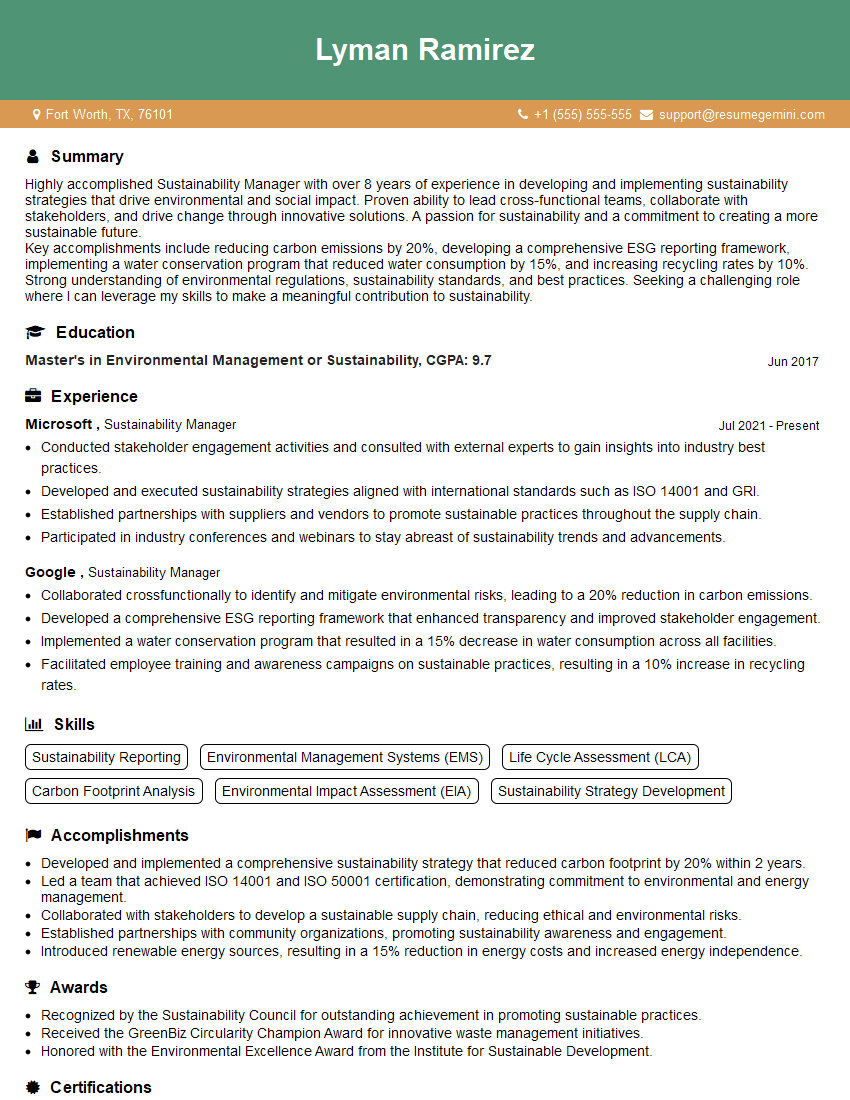
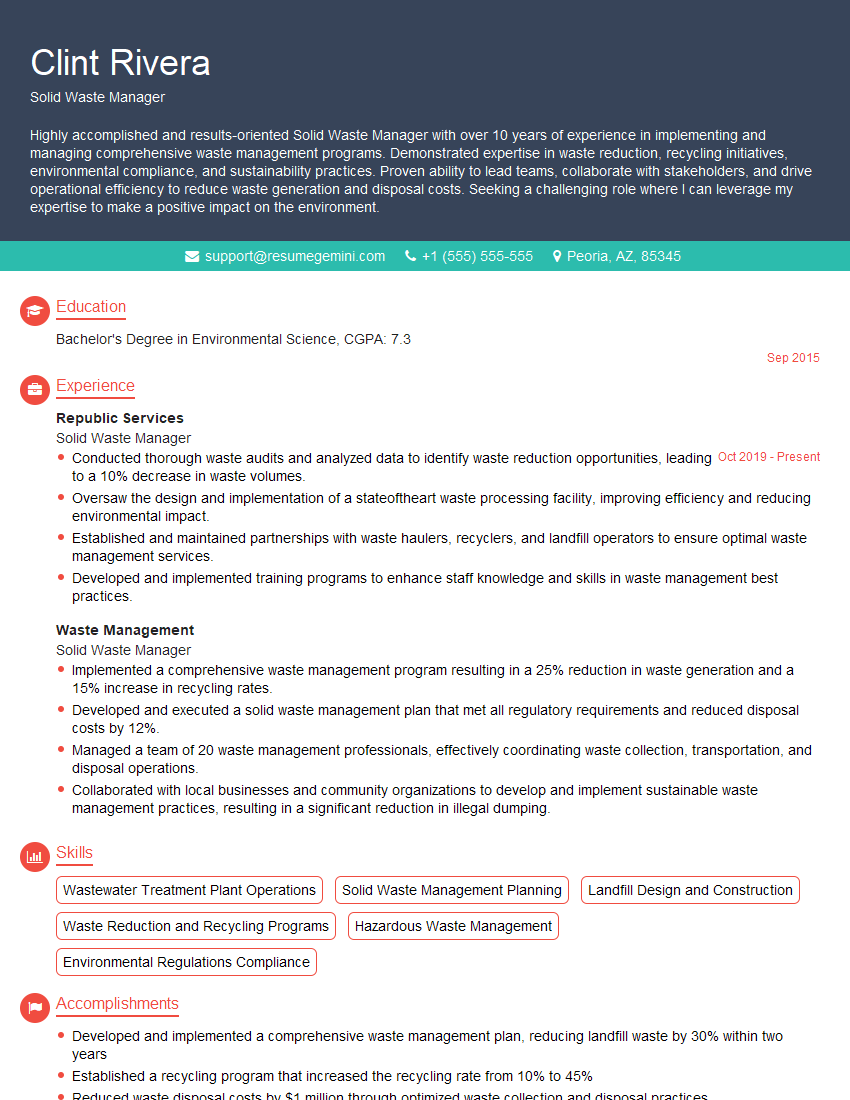
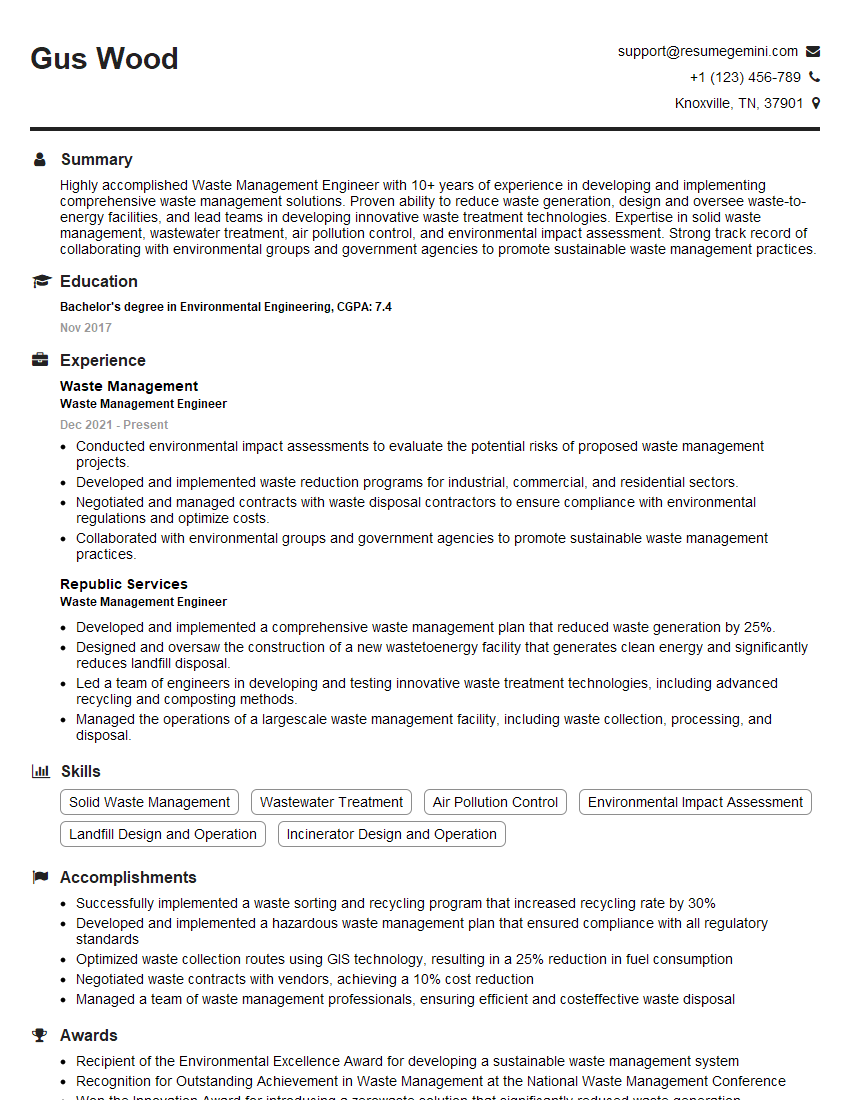
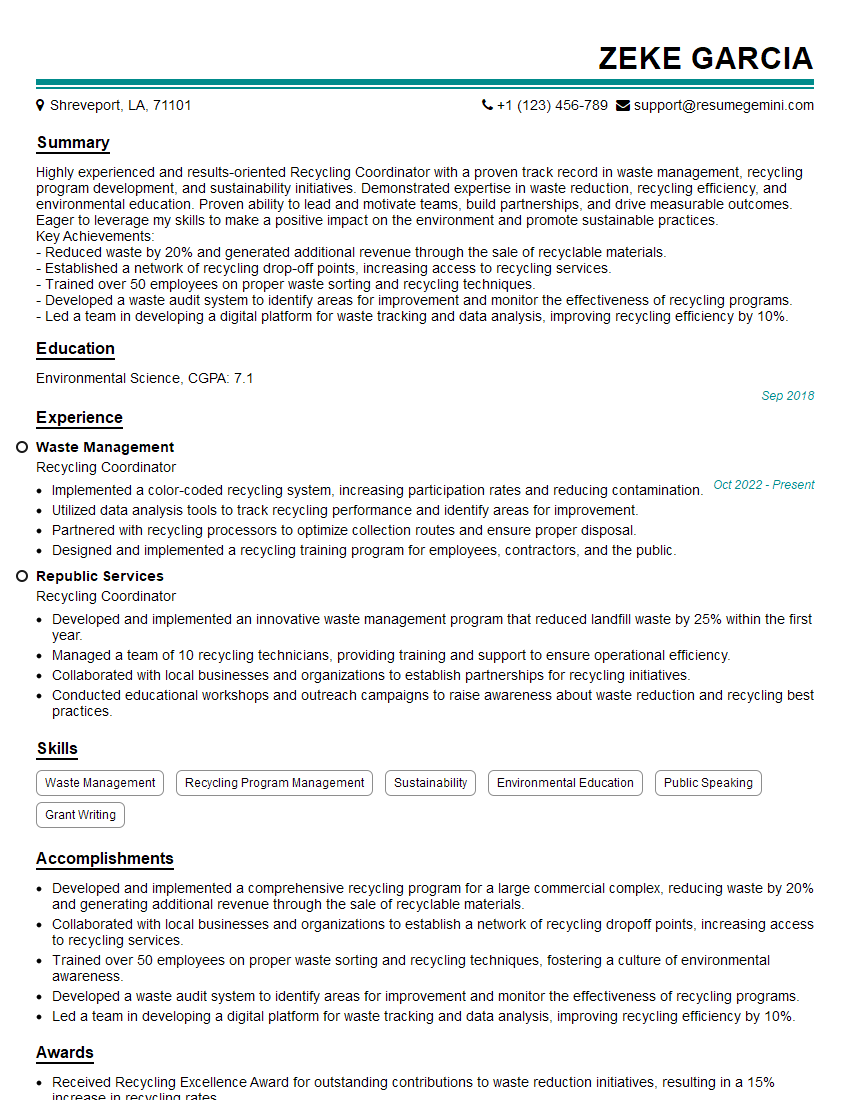
Mastering waste management planning and implementation is crucial for career advancement in the environmental and sustainability sectors. A strong understanding of these principles demonstrates valuable skills to potential employers, opening doors to exciting and impactful roles. To significantly boost your job prospects, it’s vital to create an ATS-friendly resume that highlights your key qualifications and experience. ResumeGemini is a trusted resource that can help you build a professional, compelling resume tailored to the specific requirements of waste management positions. Examples of resumes tailored to experience with waste management planning and implementation are available to guide you.
Explore more articles
Users Rating of Our Blogs
Share Your Experience
We value your feedback! Please rate our content and share your thoughts (optional).
What Readers Say About Our Blog
Very informative content, great job.
good