Unlock your full potential by mastering the most common Footwear Manufacturing Equipment Operation interview questions. This blog offers a deep dive into the critical topics, ensuring you’re not only prepared to answer but to excel. With these insights, you’ll approach your interview with clarity and confidence.
Questions Asked in Footwear Manufacturing Equipment Operation Interview
Q 1. Describe your experience operating injection molding machines in footwear manufacturing.
My experience with injection molding machines in footwear manufacturing spans over eight years, encompassing various machine models and thermoplastic materials. I’m proficient in setting up the machines, including adjusting parameters like injection pressure, melt temperature, and holding time to achieve optimal results for different footwear components such as midsoles and outsoles. I understand the importance of precise control to minimize material waste and ensure consistent product quality. For instance, I once resolved a recurring issue of sink marks on the midsoles by carefully adjusting the injection pressure and cooling time, leading to a significant reduction in rejects. My expertise also extends to preventative maintenance, ensuring the machines run smoothly and efficiently, maximizing uptime. I’m familiar with troubleshooting common issues, from nozzle clogging to hydraulic system leaks, and adept at implementing quick fixes and performing necessary repairs.
I’m also experienced with different types of injection molding machines, including vertical and horizontal ones, and am comfortable working with various materials including EVA, TPU, and rubber compounds.
Q 2. Explain the process of troubleshooting a malfunctioning lasting machine.
Troubleshooting a malfunctioning lasting machine requires a systematic approach. The lasting machine, crucial for attaching the upper to the sole, can malfunction due to various reasons, including mechanical issues, incorrect settings, or material problems. My troubleshooting process typically begins with a thorough visual inspection, checking for obvious problems like broken parts, loose screws, or misaligned components. I then move onto checking the machine’s settings, verifying the correct pressure, speed, and other parameters are set according to the specifications for the specific shoe model and material. If the issue persists, I systematically check each component – from the clamping mechanism to the stitching system – using diagnostic tools and testing each stage of the process to pinpoint the problem. I meticulously document each step and finding, following a troubleshooting checklist and flowchart to ensure efficiency and avoid overlooking potential causes. A particularly challenging case involved a persistent jamming issue in the last machine. After carefully eliminating common issues, I discovered that a minute piece of debris was causing the problem. This experience highlighted the importance of meticulous cleaning and preventative maintenance.
Q 3. What safety precautions are crucial when operating high-speed stitching machines?
Safety is paramount when operating high-speed stitching machines. These machines pose risks of needle injuries, entanglement, and lacerations. To mitigate these risks, I always ensure that all safety guards are in place and functioning correctly. Before starting the machine, I check for any loose clothing or jewelry that could get caught in the moving parts and I always use appropriate personal protective equipment (PPE), including safety glasses and cut-resistant gloves. Regular maintenance, such as cleaning and lubrication of moving parts, helps to prevent machine malfunctions that could lead to accidents. I regularly inspect the needles for damage and replace them immediately if necessary. Moreover, I adhere strictly to the manufacturer’s instructions and operate the machine only after receiving proper training. I also emphasize to colleagues the importance of maintaining a clean and organized workspace to avoid tripping or bumping into the equipment.
Q 4. How do you ensure quality control throughout the footwear production process?
Quality control is an ongoing process throughout footwear production, not just at the end. It starts with inspecting the raw materials – ensuring the quality of leather, fabrics, and soles meets the required standards. At each stage of the production, I conduct regular checks for defects. For instance, during the cutting stage, I inspect for accurate cuts and consistent dimensions, and during stitching, I check for even stitching and proper alignment. After each operation, quality control checks are performed, identifying and addressing imperfections. We use a combination of visual inspection, specialized measuring tools, and even automated quality control systems where applicable. We also regularly conduct statistical process control (SPC) to monitor variations in the process parameters and pinpoint areas for improvement. A detailed record of defects is maintained, helping us to identify recurring issues and implement corrective measures. The final inspection involves a meticulous check of the finished product for any imperfections, ensuring it meets the highest standards before it goes to the market.
Q 5. What are the common causes of defects in footwear manufacturing, and how can they be prevented?
Common defects in footwear manufacturing arise from various sources. Material defects, such as inconsistencies in leather texture or imperfections in soles, are often the root of problems, and careful inspection of raw materials is essential for prevention. Process defects can result from improperly calibrated machinery, inaccurate cutting, stitching errors, or improper adhesive application. Regular maintenance and calibration of equipment are crucial, as is proper operator training. Design defects can lead to discomfort or structural weaknesses in the finished product; proper design validation and prototyping can significantly improve the end result. Finally, human error, such as improper handling of materials or mistakes during assembly, plays a significant role. Implementation of standardized procedures, clear instructions, and effective training programs helps significantly reduce this aspect. For example, inconsistent adhesive application can lead to sole separation. Addressing this requires ensuring proper adhesive dispensing, sufficient curing time, and appropriate pressure during bonding.
Q 6. Explain your experience with different types of footwear assembly lines.
I’ve worked with various footwear assembly lines, from traditional, manual lines to highly automated ones employing robotic systems. Traditional lines rely heavily on manual labor, each workstation focusing on a specific task. These lines are adaptable but can be less efficient and more prone to variations in quality. Automated lines utilize robotic arms for tasks like stitching, lasting, and cementing, improving speed, consistency, and precision. I’ve also worked with hybrid lines, combining manual and automated components. These offer a balance between flexibility and efficiency. My experience includes working with lines producing various types of footwear – from sneakers and boots to sandals and dress shoes – each requiring a unique assembly process and specific machinery. I am also familiar with line balancing techniques to optimize throughput and reduce bottlenecks.
Q 7. Describe your understanding of CNC machining in the context of footwear manufacturing.
CNC machining plays a significant role in creating molds, lasts, and other components in footwear manufacturing. CNC (Computer Numerical Control) machines allow for the precise and automated creation of complex shapes and designs with high accuracy and repeatability. This is particularly useful for creating lasts – the forms used to shape footwear – as it allows for intricate designs and custom fits. CNC machines can also be used to create molds for injection molding, providing a high degree of precision in the creation of soles and other components. My understanding encompasses the programming, operation, and maintenance of CNC machines, including selecting appropriate tooling, setting parameters, and monitoring the machining process. I’m also familiar with various CNC machining techniques, such as milling, turning, and drilling. The use of CAD/CAM software to design and program CNC machines is crucial for maximizing efficiency and minimizing errors.
Q 8. How do you maintain and perform preventative maintenance on footwear manufacturing equipment?
Preventative maintenance is crucial for maximizing the lifespan and efficiency of footwear manufacturing equipment. It involves regularly scheduled inspections and servicing to identify and address potential problems *before* they cause major downtime. Think of it like regular check-ups for your car – better to catch a small issue than a major breakdown.
- Lubrication: Regularly lubricating moving parts like bearings, gears, and chains prevents wear and tear and ensures smooth operation. Failure to lubricate can lead to excessive friction, overheating, and ultimately, component failure. For example, a poorly lubricated stitching machine will produce inconsistent stitches and may even jam.
- Cleaning: Regular cleaning removes dust, debris, and material buildup that can clog mechanisms or cause damage. This is particularly important for machines that handle leather, fabric, or adhesives. For instance, neglecting to clean a cutting die can lead to imprecise cuts and damage to the die itself.
- Inspection: Visual inspection for worn parts, loose connections, or signs of damage is essential. Checking belt tension, checking for leaks, and examining electrical connections are all part of a thorough inspection. This helps catch issues like a frayed power cord before it causes a short circuit and production stoppage.
- Tightening: Regularly tightening bolts, screws, and other fasteners ensures the structural integrity of the equipment. Loose components can lead to vibrations, misalignment, and ultimately, breakage.
- Calibration: Precision equipment like cutting dies and stitching machines requires regular calibration to ensure accuracy. Out-of-calibration equipment will produce inconsistent results and lead to wasted materials.
A well-defined preventative maintenance schedule, tailored to the specific equipment in use, is essential. This schedule should include the frequency of each task, the responsible personnel, and a record-keeping system to track completed maintenance.
Q 9. What are your troubleshooting skills related to automated footwear equipment?
Troubleshooting automated footwear equipment requires a systematic approach, combining a strong understanding of the machine’s operation with a methodical problem-solving strategy. My approach typically follows these steps:
- Safety First: Always ensure the machine is powered off and locked out before attempting any repairs.
- Identify the Problem: Accurately determine the nature of the malfunction. Is it a mechanical issue, an electrical problem, a software glitch, or a material-related issue? For instance, a sewing machine might produce skipped stitches due to a broken needle, a faulty motor, or incorrect thread tension.
- Consult Documentation: Refer to the equipment’s technical manuals, schematics, and troubleshooting guides. Manufacturers often provide detailed descriptions of common problems and their solutions.
- Visual Inspection: Carefully examine all components for signs of damage, wear, or loose connections. This might reveal a broken belt, a clogged sensor, or a malfunctioning motor.
- Testing: Use multimeters, diagnostic tools, or other instruments to test individual components and identify the faulty part. This systematic check can help isolate the problem to a specific circuit, sensor or motor.
- Repair or Replacement: Once the faulty component is identified, it can be repaired or replaced. In many cases, minor repairs can be performed on-site, while more complex issues might require specialist assistance or part replacement.
- Testing and Validation: After the repair, thoroughly test the machine to ensure it is functioning correctly and produces consistent results before resuming production.
I have extensive experience troubleshooting various automated systems including automatic lasting machines, automated sole attaching units, and computer-controlled cutting systems. For example, I once resolved a recurring jam in an automated lasting machine by identifying a small piece of debris that was consistently interfering with the mechanism. This required carefully disassembling part of the machine, cleaning the affected area, and re-assembling.
Q 10. Explain your experience with different types of footwear materials and their processing.
My experience encompasses a wide range of footwear materials, including leathers (full-grain, corrected-grain, suede, nubuck), synthetics (PU, PVC, TPU), textiles (canvas, nylon, mesh), and various combinations thereof. Understanding the properties of these materials is crucial for efficient processing.
- Leather: Requires careful handling to avoid damage or stretching. Different types of leather have varying thicknesses and strengths, requiring adjustments to cutting pressures, stitching tensions, and adhesive application.
- Synthetics: Generally more durable and easier to process than leather but may require specific adhesives and cutting techniques to prevent tearing or distortion.
- Textiles: Vary widely in terms of strength, stretch, and abrasion resistance. Proper cutting and stitching techniques are essential to avoid fraying or puckering.
For instance, processing full-grain leather requires gentler cutting pressures compared to synthetics. Stitching parameters also need to be adjusted based on material thickness and texture. The adhesive selection is critical – inappropriate adhesive can lead to material damage or poor bond strength.
I am also familiar with pre-treatment processes such as softening, stretching, and conditioning that are often necessary to optimize material performance during manufacturing.
Q 11. Describe your knowledge of different footwear manufacturing processes (e.g., Goodyear welt, cement construction).
I am proficient in various footwear manufacturing processes. Understanding the nuances of each method is critical for ensuring quality and efficiency.
- Goodyear Welt: This construction involves stitching a welt (a strip of leather) to both the upper and the insole, followed by stitching the outsole to the welt. This method creates a durable, repairable shoe, but it is more labor-intensive than other methods. It demands precise stitching and careful alignment of components.
- Cement Construction: This involves attaching the upper to the outsole using adhesives. This is a faster and less expensive method than Goodyear welt, but the resulting shoe is typically less durable and not as easily repairable. Successful cement construction relies heavily on appropriate adhesive selection and application technique and precise alignment during bonding.
- Stitch-Down Construction: The upper is stitched directly to the outsole. This method is often used for boots and is known for its flexibility and durability. Stitch-down construction needs correct stitching tension and alignment to prevent damage to the material.
- Injection Molded Construction: The sole unit is injected directly onto the upper, often using polyurethane. This is a highly automated and efficient process producing lightweight and cost-effective shoes. However it requires precise control over injection parameters and careful design of the molds.
My experience spans across all these methods, allowing me to effectively troubleshoot and optimize the production process, adapt to various material types, and implement quality control measures.
Q 12. How do you handle production downtime due to equipment malfunction?
Production downtime is a significant concern in footwear manufacturing. My approach to handling downtime due to equipment malfunction prioritizes swift resolution with minimal disruption to production.
- Immediate Assessment: Quickly assess the situation, identifying the affected equipment and the nature of the malfunction. Is it a simple fix, or does it require specialist assistance?
- Safety Procedures: Ensure the machine is safely shut down and isolated before any troubleshooting or repairs begin.
- Troubleshooting: Using my troubleshooting skills, I systematically investigate the cause of the malfunction, employing the steps detailed previously. I utilize technical manuals, diagrams, and diagnostic tools to pinpoint the problem effectively.
- Prioritization: I prioritize repairs based on the impact of the downtime on overall production. Critical machines receive immediate attention.
- Communication: I maintain clear and open communication with production management and relevant teams, providing regular updates on the progress of repairs. Transparency is key during downtime.
- Contingency Plans: If the repair requires significant time, I work with management to implement contingency plans, such as shifting production to alternative machines or adjusting the production schedule.
- Preventative Measures: Following the repair, I review the cause of the downtime to identify and implement preventative measures to avoid similar issues in the future. This may involve enhanced maintenance routines, operator training, or equipment upgrades.
For instance, during a recent incident involving a critical stitching machine malfunction, I quickly diagnosed the problem as a faulty motor. By having a spare motor readily available, we minimized downtime and resumed production within a short period.
Q 13. What are your skills in reading and interpreting technical manuals for footwear machinery?
Reading and interpreting technical manuals is a fundamental skill for footwear machinery operators. These manuals contain crucial information regarding machine operation, maintenance procedures, troubleshooting, and safety regulations. My skill set allows for efficient understanding and practical implementation of the instructions provided.
I’m proficient in deciphering schematics, wiring diagrams, and component specifications. I can understand and interpret information presented in various formats, including tables, graphs, and flowcharts. This involves understanding the technical language and symbols used in these documents.
For example, while troubleshooting a laser cutting machine, I was able to successfully diagnose the issue (a misaligned laser head) by carefully referencing the machine’s technical manual and diagrams, ensuring safe and efficient resolution of the problem without damage to the equipment or personnel.
Q 14. Explain your experience with different types of footwear cutting machines.
My experience includes working with various types of footwear cutting machines, each with its unique characteristics and applications.
- Die Cutting Machines: These machines use hardened steel dies to cut multiple pieces of material simultaneously. They are highly efficient for large-scale production but require careful die maintenance and material handling.
- Rotary Cutting Machines: These machines use a rotating blade to cut material, often used for cutting softer materials or irregular shapes. The blade speed and cutting depth need to be carefully adjusted based on material type and thickness.
- Laser Cutting Machines: These machines use a high-powered laser to cut material with high precision. They are ideal for intricate designs and delicate materials but require specialized training and safety precautions.
- Waterjet Cutting Machines: These use high-pressure water jets to cut through a variety of materials, and are known for their ability to cut intricate shapes with minimal material damage. However, they generally are slower than laser cutting machines.
Each machine type requires specific operator skills and knowledge regarding maintenance, safety procedures, and material handling. For example, laser cutting machines require strict safety protocols to prevent eye injuries. The type of machine employed depends on factors like the material being cut, the desired precision, production volume, and budget. My expertise allows me to select the optimal cutting machine for a specific application, optimize its operation, and maintain its efficiency.
Q 15. How familiar are you with different types of footwear adhesives and their application?
Understanding footwear adhesives is crucial for ensuring the durability and quality of the final product. Different adhesives are chosen based on the materials being bonded (e.g., leather, rubber, synthetics), the required bond strength, and the manufacturing process.
- EVA (Ethylene Vinyl Acetate): A common hot-melt adhesive, often used for bonding midsoles and outsoles due to its flexibility and good adhesion to various substrates. I’ve used this extensively in the past for athletic shoe production, adjusting its application temperature to optimize bonding based on the EVA’s density.
- Polyurethane (PU): Offers excellent adhesion and flexibility, making it suitable for various bonding applications, including attaching the upper to the midsole. The specific type of PU, such as water-based or solvent-based, significantly impacts the application process and environmental considerations. In one project, we switched from a solvent-based PU to a water-based option, reducing VOC emissions and improving workplace safety.
- Rubber Cements: Used for bonding rubber components, these adhesives provide strong bonds with good flexibility. Proper application, including control of adhesive viscosity and open time, is essential for a strong, clean bond. I’ve experienced how incorrect application can lead to bubbling or weak bonds, emphasizing the importance of operator training.
Application methods vary, including spray systems, roller coaters, and automated dispensing systems. The choice depends on production volume, adhesive type, and desired precision. I have experience with all three, adapting the method to optimize both efficiency and bond quality. For example, automated dispensing systems are crucial for high-volume production to maintain consistency and minimize adhesive waste.
Career Expert Tips:
- Ace those interviews! Prepare effectively by reviewing the Top 50 Most Common Interview Questions on ResumeGemini.
- Navigate your job search with confidence! Explore a wide range of Career Tips on ResumeGemini. Learn about common challenges and recommendations to overcome them.
- Craft the perfect resume! Master the Art of Resume Writing with ResumeGemini’s guide. Showcase your unique qualifications and achievements effectively.
- Don’t miss out on holiday savings! Build your dream resume with ResumeGemini’s ATS optimized templates.
Q 16. What experience do you have with robotic systems used in footwear production?
Robotic systems have revolutionized footwear manufacturing, improving efficiency, precision, and consistency. My experience includes working with ABB and KUKA robots in various applications, such as:
- Automated Material Handling: Robots efficiently transport materials within the factory, reducing manual labor and improving workflow. I’ve worked on projects integrating robots to feed materials to assembly lines, minimizing downtime and increasing throughput.
- Automated Assembly: Robots are capable of performing intricate assembly tasks, such as attaching uppers to midsoles, with greater precision than manual labor. One notable example was implementing a robotic system for attaching eyelets; the robot achieved higher speed and significantly reduced the defect rate compared to the previous manual process.
- Quality Control Inspection: Robotic vision systems can inspect finished footwear for defects, ensuring consistent quality. This automated inspection greatly speeds up the quality control process and reduces the reliance on human inspectors.
Programming and maintaining these systems requires specialized knowledge. I’m proficient in robot programming languages (e.g., RAPID for ABB robots) and troubleshooting robotic malfunctions. I believe in a proactive maintenance approach, regularly inspecting and servicing robots to minimize downtime and maximize operational efficiency.
Q 17. Explain your understanding of quality control metrics in footwear manufacturing.
Quality control metrics in footwear manufacturing are essential for maintaining product standards and customer satisfaction. Key metrics include:
- Defect Rate: The percentage of defective products produced, tracked by category (e.g., stitching defects, adhesive failures, material flaws). A lower defect rate indicates better quality control.
- Yield Rate: The percentage of acceptable products produced relative to total production. This metric highlights efficiency and waste reduction.
- Adhesion Strength: Measured using tensile testing, this indicates the strength of the bond between different components of the shoe. This is critical for durability and longevity.
- Dimensional Accuracy: Measured using various tools like calipers and measuring machines, this ensures consistency in shoe size and shape.
- Material Compliance: Ensuring all materials meet pre-defined standards in terms of strength, durability, and composition (e.g., meeting specific chemical or flammability standards).
Continuous monitoring of these metrics helps identify areas for improvement, ensuring product quality and customer satisfaction. Using statistical process control (SPC) charts allows for real-time monitoring and proactive identification of potential issues.
Q 18. Describe your experience with data logging and analysis in a footwear manufacturing environment.
Data logging and analysis are crucial for optimizing footwear manufacturing processes. We utilize various data acquisition systems to collect real-time data on production parameters, such as machine uptime, defect rates, material usage, and energy consumption. This data is stored in databases and analyzed using statistical software.
In my experience, we’ve used SCADA systems to monitor and control machine parameters and collect production data. We then analyze this data using tools like Microsoft Excel and Mintab to identify trends, outliers, and areas for improvement. For instance, analyzing machine downtime data allowed us to identify and fix recurring issues, significantly improving overall production efficiency.
Data analysis helps us understand the root causes of defects, optimize machine parameters, and predict potential problems, allowing for proactive maintenance and improvements in the manufacturing process. Data visualization techniques (e.g., dashboards) are used to effectively communicate key findings to management and make data-driven decisions.
Q 19. How do you ensure the efficient use of materials in footwear manufacturing?
Efficient material use is essential for reducing costs and minimizing environmental impact. Strategies include:
- Precise Material Cutting: Utilizing computer-aided design (CAD) software and automated cutting systems minimizes material waste. We implemented a new CAD system that optimized cutting patterns, resulting in a 5% reduction in material waste.
- Inventory Management: Implementing a robust inventory management system prevents overstocking and ensures timely material procurement. This minimizes storage costs and prevents material spoilage.
- Material Substitution: Exploring alternative materials that offer similar performance with lower cost or better sustainability profiles. For instance, we switched to recycled rubber for outsoles, reducing material cost and environmental impact.
- Waste Recycling: Implementing a comprehensive waste management program to recycle or repurpose material scraps. We established a system for collecting and recycling leather scraps, reducing landfill waste and generating additional revenue.
Continuous monitoring of material usage, waste generation, and inventory levels is crucial for optimizing material efficiency and minimizing costs. Regular reviews and improvements in processes contribute to better resource management.
Q 20. What are your experience with different types of footwear finishing equipment?
Footwear finishing equipment is critical for achieving the desired aesthetics and quality of the finished product. My experience encompasses various types of equipment:
- Finishing Machines: These machines perform various finishing operations like buffing, polishing, and sanding to enhance the appearance and texture of leather and other materials. I’ve worked with both automated and manual finishing machines, adjusting parameters to optimize the finish for different materials.
- Spray Coating Systems: These systems apply protective coatings to the footwear, enhancing water resistance, durability, and aesthetic appeal. I’ve used various spray systems, adjusting nozzle pressure and paint viscosity to ensure uniform and defect-free coatings.
- Embossing Machines: These machines create textured patterns on leather and other materials, adding aesthetic value and enhancing the product’s appeal. I’ve worked with machines capable of various embossing techniques.
- Heat-Setting Equipment: Used to set the shape and size of components, ensuring dimensional stability and preventing shrinkage or warping. Understanding the optimal heat and pressure settings is crucial for various materials.
Regular maintenance and calibration of these machines are essential to ensure consistent performance and quality. Proper operator training is critical to prevent damage to equipment and ensure the highest quality finish.
Q 21. How do you maintain a safe and organized work environment in a footwear manufacturing facility?
Maintaining a safe and organized work environment is paramount in a footwear manufacturing facility. This involves a multi-pronged approach:
- Safety Training: Providing comprehensive safety training to all employees, covering topics such as machine operation, personal protective equipment (PPE) usage, and hazard identification. Regular refresher courses are crucial.
- 5S Methodology: Implementing the 5S methodology (Sort, Set in Order, Shine, Standardize, Sustain) to maintain a clean, organized, and efficient work environment. This reduces accidents and improves workflow.
- Machine Guarding: Ensuring all machinery is properly guarded to prevent accidents. Regular inspections are conducted to ensure the guards remain in place and functioning correctly.
- Emergency Procedures: Establishing clear emergency procedures and providing regular training to all employees. This ensures preparedness for unexpected events.
- Ergonomic Design: Designing workstations and processes to minimize physical strain on workers, reducing the risk of musculoskeletal injuries. This includes implementing ergonomic chairs and adjustable workbenches.
Regular safety inspections, employee feedback, and continuous improvement efforts are crucial for maintaining a safe and productive work environment. Active participation from management and employees alike is essential for creating a culture of safety.
Q 22. Describe your experience working with different types of lasts and their impact on footwear production.
Lasts are the fundamental forms around which shoes are constructed. They dictate the shoe’s shape, size, and fit. My experience encompasses working with a wide variety of lasts, from simple, standardized lasts for mass-produced footwear to highly customized lasts for bespoke or athletic shoes. The type of last significantly impacts production in several ways:
- Material: Wood lasts are traditional, offering durability and consistent shaping but are more expensive and require more storage space. Plastic lasts are lighter, cheaper, and easier to store, but may not offer the same level of precise shaping. Aluminum lasts are the most durable and expensive, often used for high-volume production of specific shoe types.
- Shape and Design: The last’s shape directly influences the final shoe’s appearance and fit. A narrow last will create a slimmer shoe, while a wider last creates more room. Specialized lasts are designed for specific styles – e.g., a last for a high-heeled pump is vastly different from one for a running shoe.
- Production Efficiency: Using standardized lasts streamlines production because fewer adjustments are needed during the manufacturing process. However, the use of custom lasts, while more time-consuming initially, allows for a better fit and possibly higher quality end product, potentially improving brand image and profit margin.
For instance, in one project, we switched from wooden lasts to plastic lasts for a specific sneaker style. This reduced production costs by 15% due to lower material costs and easier storage, without compromising the quality of the final product significantly. However, for a luxury shoe line, we continued using highly crafted wooden lasts to maintain the brand’s reputation for quality and bespoke designs. The choice of last is a critical decision that balances cost, quality, and efficiency.
Q 23. How do you prioritize tasks and manage your time effectively during peak production periods?
Prioritizing tasks and managing time during peak production periods is crucial for maintaining efficiency and meeting deadlines. My approach involves a combination of planning, organization, and communication:
- Prioritization Matrix: I use a prioritization matrix, categorizing tasks based on urgency and importance. Urgent and important tasks take immediate precedence, while less urgent tasks are scheduled accordingly.
- Detailed Scheduling: I create detailed schedules, breaking down large tasks into smaller, manageable sub-tasks. This allows for better tracking of progress and easier identification of potential bottlenecks.
- Effective Communication: Clear communication with the team is essential. I ensure everyone understands their roles and responsibilities, and regularly update them on the progress and any changes to the schedule. This includes proactively addressing potential issues.
- Continuous Monitoring: I continuously monitor production progress, identifying and resolving any issues that arise promptly. This often involves flexible scheduling and reallocation of resources based on immediate needs.
For example, during a particularly busy period, we faced a delay in receiving a key component. By immediately communicating the issue to the team and adjusting our schedule, shifting some less critical tasks, we managed to minimize the overall impact on the production timeline and meet the deadline with only a minor setback.
Q 24. What is your experience with different types of footwear pressing equipment?
My experience encompasses various types of footwear pressing equipment, each with its unique applications and functionalities:
- Hydraulic Presses: These are widely used for various operations, including shaping the upper, lasting, and heel pressing. They offer precise control over pressure and are suitable for a range of materials.
- Pneumatic Presses: These presses utilize compressed air for power and are typically used for lighter pressing operations. They are often more affordable and easier to maintain than hydraulic presses.
- Combination Presses: These combine both hydraulic and pneumatic systems, offering versatility for various pressing operations and the flexibility to adapt the pressure according to the need.
- Automated Pressing Systems: These systems integrate automated components to enhance efficiency and consistency in the pressing process. They usually offer programmable settings for different shoe styles and materials, leading to significantly higher output.
I’m proficient in operating and maintaining all of these press types. Understanding their capabilities and limitations is crucial for selecting the right equipment for a specific production task and ensuring optimal results. For instance, for high-volume production of a simple sneaker, an automated pressing system offers higher efficiency and consistency. However, for a handcrafted luxury shoe, a hydraulic press allows for more precise manual adjustments to achieve a superior finish.
Q 25. How do you identify and address potential safety hazards related to footwear manufacturing equipment?
Safety is paramount in footwear manufacturing. Identifying and addressing potential hazards related to footwear manufacturing equipment requires a proactive and multi-faceted approach:
- Regular Inspections: Conducting regular inspections of all equipment to identify and address any potential mechanical failures (e.g., loose parts, worn-out components), leaks or malfunctions.
- Safety Training: Providing comprehensive safety training to all operators, covering safe operating procedures, emergency shut-off procedures, and personal protective equipment (PPE) usage (e.g., safety glasses, gloves, hearing protection).
- Lockout/Tagout Procedures: Implementing and enforcing strict lockout/tagout procedures to prevent accidental start-up during maintenance or repairs.
- Machine Guarding: Ensuring all machinery is equipped with appropriate guarding to prevent accidental contact with moving parts.
- Emergency Response Plan: Developing and practicing a comprehensive emergency response plan to handle any accidents or injuries effectively.
A real-world example: During a routine inspection, we discovered a small crack in the hydraulic press. Immediate action was taken to shut down the machine, preventing potential injury. The cracked part was replaced, and all operators were reminded of the importance of regular inspections. Proactive safety measures like this prevent accidents and ensure a safe working environment.
Q 26. Explain your understanding of lean manufacturing principles in a footwear manufacturing context.
Lean manufacturing principles focus on eliminating waste and maximizing efficiency. In footwear manufacturing, this translates to streamlining processes, reducing inventory, and improving quality. Key lean principles I apply include:
- Value Stream Mapping: Identifying and analyzing all steps in the production process to pinpoint areas of waste (e.g., excess inventory, unnecessary movement, defects).
- 5S Methodology: Implementing the 5S methodology (Sort, Set in Order, Shine, Standardize, Sustain) to create a more organized and efficient workspace.
- Kaizen (Continuous Improvement): Continuously seeking ways to improve processes, even in small increments, to achieve incremental gains in efficiency and quality.
- Just-in-Time (JIT) Inventory: Minimizing inventory levels by receiving materials only when needed to reduce storage costs and minimize waste.
- Total Quality Management (TQM): Implementing quality control measures at every stage of the production process to reduce defects and improve overall product quality.
For example, by implementing a Kanban system (a visual signaling system for inventory management), we were able to reduce our work-in-progress (WIP) inventory by 30%, freeing up valuable floor space and reducing storage costs. This is a direct application of JIT principles within a lean manufacturing framework.
Q 27. How familiar are you with different types of computer-aided design (CAD) software used in footwear manufacturing?
I am familiar with several CAD software packages commonly used in footwear manufacturing, including:
- Adobe Illustrator: Used for creating 2D design patterns and illustrations.
- Autodesk Fusion 360: Used for 3D modeling and design of lasts and shoe components.
- Rhino 3D: Used for 3D modeling and surface design of complex footwear shapes.
- Specialized Footwear CAD Software: Various software packages specifically designed for footwear manufacturing, which often integrate with CAM systems for automated production.
My proficiency extends to using these tools for various tasks, including creating and modifying shoe designs, generating 2D patterns, and developing 3D models of lasts. Experience in CAD software is critical for effective collaboration with designers and engineers throughout the footwear development process. It also enhances the ability to create accurate and detailed specifications for manufacturing, minimizing errors and improving efficiency. In a past project, using 3D CAD modeling allowed us to simulate and refine a shoe’s design virtually, before committing to physical prototypes, significantly reducing development time and costs.
Q 28. Describe your experience with the implementation of new footwear manufacturing technologies.
I have extensive experience with the implementation of new footwear manufacturing technologies, including:
- Automated Cutting Systems: These systems use computer-controlled knives or lasers for increased precision and efficiency in cutting materials.
- 3D Printing: Utilizing 3D printing for prototyping and creating custom lasts and shoe components.
- Robotics: Integrating robots for various tasks, such as material handling, assembly, and quality control.
- Digital Pattern Making: Utilizing digital pattern making software to design, modify, and grade patterns efficiently.
Implementing new technologies often requires careful planning and execution. It involves assessing the technology’s suitability for the specific production needs, training personnel on its operation, and integrating it seamlessly into the existing workflow. For instance, when we integrated an automated cutting system, we had to invest in training and develop a new workflow to maximize the system’s efficiency. The result was a significant increase in cutting speed and a reduction in material waste. Successful implementation requires a well-defined plan, strong team collaboration, and a commitment to continuous improvement.
Key Topics to Learn for Footwear Manufacturing Equipment Operation Interview
- Understanding Footwear Manufacturing Processes: Gain a thorough understanding of the entire footwear manufacturing process, from raw materials to finished product. This includes knowledge of different manufacturing methods (e.g., injection molding, cement construction, Goodyear welt).
- Equipment Operation and Maintenance: Master the operation and basic maintenance procedures for various types of footwear manufacturing equipment, including cutting machines, stitching machines, molding machines, and lasting machines. Be prepared to discuss troubleshooting common malfunctions.
- Safety Procedures and Regulations: Demonstrate a strong understanding of all relevant safety protocols and regulations within a footwear manufacturing environment. This includes personal protective equipment (PPE) usage and emergency procedures.
- Quality Control and Inspection: Familiarize yourself with quality control procedures, including inspection methods and defect identification. Be prepared to discuss how to maintain consistent product quality.
- Material Handling and Logistics: Understand the efficient handling and storage of raw materials and finished goods within the manufacturing process, including inventory management techniques.
- Production Optimization and Efficiency: Explore strategies for improving production efficiency, reducing waste, and maximizing output while adhering to quality standards. This might include understanding concepts like lean manufacturing and Six Sigma.
- Troubleshooting and Problem-Solving: Practice your problem-solving skills by considering scenarios requiring quick diagnosis and resolution of equipment malfunctions or production bottlenecks. Highlight your analytical and critical thinking abilities.
Next Steps
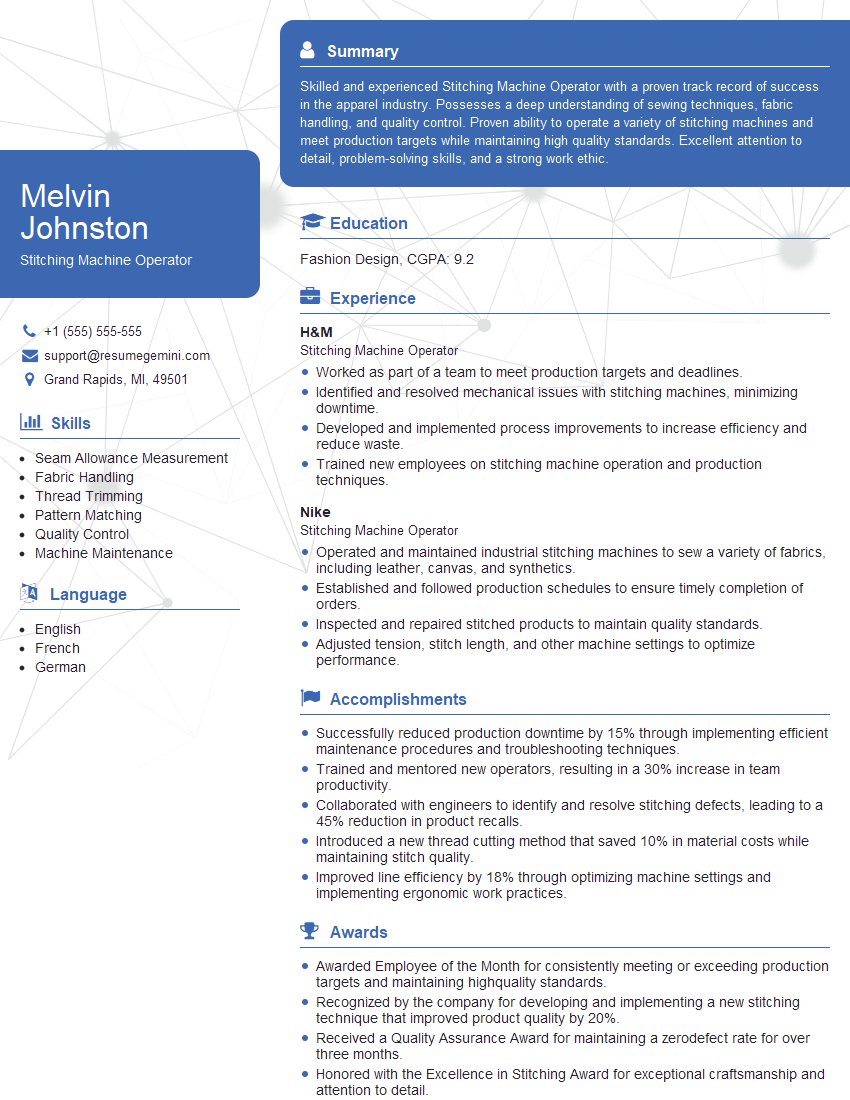
Mastering Footwear Manufacturing Equipment Operation opens doors to a rewarding career with excellent growth potential. Advancement opportunities often include supervisory roles, specialized technical positions, or even management within the manufacturing sector. To significantly boost your job prospects, crafting an ATS-friendly resume is crucial. ResumeGemini can help you create a compelling resume that highlights your skills and experience effectively. ResumeGemini provides examples of resumes tailored to Footwear Manufacturing Equipment Operation to guide you in building your perfect application. Invest time in creating a professional and impactful resume – it’s your first impression on potential employers.

Explore more articles
Users Rating of Our Blogs
Share Your Experience
We value your feedback! Please rate our content and share your thoughts (optional).
What Readers Say About Our Blog
Very informative content, great job.
good