Cracking a skill-specific interview, like one for Footwork, requires understanding the nuances of the role. In this blog, we present the questions you’re most likely to encounter, along with insights into how to answer them effectively. Let’s ensure you’re ready to make a strong impression.
Questions Asked in Footwork Interview
Q 1. Describe the different types of footwork used in [specific sport/dance style].
In basketball, footwork is crucial for agility, balance, and efficient movement. Different types of footwork are employed depending on the game situation. They can be broadly categorized as:
- Defensive Footwork: This focuses on maintaining a low center of gravity, using a wide base, and quick lateral shuffles to stay in front of an opponent. Examples include the slide step, the crossover step, and the closeout.
- Offensive Footwork: This is all about creating space, attacking the basket, and finishing effectively. Key movements include the jump stop, the jab step, the pivot foot, and various dribble moves that incorporate footwork.
- Post-Up Footwork: Players utilize pivoting techniques, drop steps, and footwork designed to maintain position and score near the basket. This often includes footwork designed to protect the ball from defenders.
- Jump Shot Footwork: Generating power and balance for accurate shooting relies on a specific sequence of steps before the jump shot is released. A balanced base and coordinated lower-body movement are vital here.
Each of these categories involves numerous variations and combinations, tailored to the player’s style and the specific defensive or offensive strategy employed.
Q 2. Explain the biomechanics of proper footwork technique.
Proper footwork technique in basketball relies on biomechanical principles to maximize efficiency and minimize injury risk. It centers around:
- Center of Gravity: Maintaining a low center of gravity through bending at the knees and hips provides stability and balance, essential for quick changes in direction and powerful movements. Think of it like a sturdy tripod versus a wobbly stool.
- Foot Placement: Proper foot placement, usually shoulder-width apart or slightly wider, creates a stable base of support. Feet should be parallel or slightly angled, depending on the movement.
- Push-Off & Landing: Strong push-offs from the ground using the plantar fascia and leg muscles are crucial for generating power and momentum. Controlled landings, absorbing force through the knees and hips, prevent injuries. Think about absorbing the impact of a jump like a spring.
- Knee Flexion and Extension: Bending and straightening the knees efficiently powers movements. Quick, controlled flexion and extension allows for rapid acceleration and deceleration.
- Core Stability: A strong core provides the stability needed for complex movements. A weak core can lead to instability and inefficient movement.
These biomechanical principles, when combined correctly, allow for fluid, explosive, and injury-free movements on the court.
Q 3. How does footwork contribute to overall athletic performance?
Footwork is fundamental to overall athletic performance in basketball. It directly impacts:
- Speed and Agility: Efficient footwork allows for faster changes in direction, quicker acceleration, and improved agility. This is essential for getting past defenders and creating scoring opportunities.
- Balance and Stability: Good footwork maintains balance, allowing for strong post moves, jump shots, and defensive positioning. A loss of balance can easily result in turnovers or defensive breakdowns.
- Power and Explosiveness: Proper footwork techniques maximize power output during jumps, dribbling, and cuts, leading to higher quality shots and better finishing.
- Injury Prevention: Using correct biomechanics reduces strain on joints and muscles, decreasing the risk of injuries like ankle sprains, knee injuries, and hamstring pulls.
- Efficiency: Good footwork reduces wasted energy, allowing players to stay effective for longer periods.
In essence, superior footwork translates directly to more scoring opportunities, better defense, and a more consistent performance on the court.
Q 4. What are the common footwork errors you’ve observed, and how can they be corrected?
Common footwork errors I’ve observed include:
- High Center of Gravity: Players standing too upright, making them less stable and slower.
- Poor Foot Placement: Feet too close together, reducing base of support and balance.
- Inefficient Push-offs: Lack of power in the push-off, reducing speed and explosiveness.
- Poor Landing Technique: Stiff landings, leading to potential injuries.
- Lack of Core Engagement: Weak core leading to instability.
- Over-Striding: Taking steps that are too long, creating imbalances.
Corrections involve:
- Drills Focusing on Low Center of Gravity: Cone drills, shuffling drills, and lateral movement exercises.
- Footwork Fundamentals Drills: Practice proper foot placement and push-off technique.
- Plyometrics and Strength Training: Improving leg strength and power.
- Core Strengthening Exercises: Planks, Russian twists, and other core exercises.
- Video Analysis: Identifying and correcting individual errors using video feedback.
A personalized approach focusing on individual needs is key to correcting these errors effectively.
Q 5. How do you assess an individual’s footwork abilities?
Assessing footwork abilities involves a multifaceted approach:
- Observation: Watching players perform basic movements like lateral shuffles, jump stops, and pivots, noting their technique, balance, speed, and efficiency.
- Drills and Tests: Using specific drills that evaluate agility, quickness, and power, such as cone drills, shuttle runs, and jump tests.
- Game Film Analysis: Evaluating footwork in game situations, identifying strengths and weaknesses within the context of actual play.
- Biomechanical Assessment (Advanced): Using advanced methods to analyze movement patterns, forces, and joint angles (often requires specialized equipment).
Combining these methods provides a comprehensive understanding of an individual’s footwork proficiency. For example, I might use a cone drill to assess speed and agility and then observe their defensive stance during a game scenario to see how that translates in real play. This gives a complete picture.
Q 6. Describe your approach to teaching or coaching footwork.
My approach to teaching footwork is based on a progressive, hands-on methodology:
- Fundamentals First: Start with basic movements, emphasizing proper technique before introducing complexity.
- Progressive Drills: Gradually increase the difficulty and intensity of drills, building upon previously mastered skills. I often start with simple drills and progress to drills that are more game-specific.
- Individualized Instruction: Recognize that every player is different. I tailor the instruction to individual strengths and weaknesses, focusing on areas needing improvement.
- Visual Learning and Feedback: Utilize videos, demonstrations, and real-time feedback to enhance understanding and correct errors.
- Positive Reinforcement: Encourage players and focus on building confidence, celebrating successes.
- Game-Specific Application: Integrate footwork drills into game-like scenarios to bridge the gap between practice and competition.
I believe in creating a supportive and encouraging learning environment where players feel comfortable asking questions and receiving constructive feedback. It’s a continuous process of learning and refinement.
Q 7. What are the key elements of effective footwork drills?
Effective footwork drills should:
- Be Specific: Target particular aspects of footwork, such as lateral movement, pivoting, or jump stops.
- Be Progressive: Start with simpler variations and gradually increase the difficulty.
- Be Game-Specific: Mimic real-game situations to improve the transferability of skills.
- Incorporate Repetition: Sufficient repetition is crucial for skill development and muscle memory.
- Include Feedback Mechanisms: Allow for assessment of performance and adjustments in technique.
- Be Fun and Engaging: Keep players motivated through variety and positive reinforcement.
For example, a drill might start with simple lateral shuffles, progress to shuffles with changes of direction, and finally integrate defensive positioning against a simulated offensive player. This helps to gradually build the necessary skills in a practical way. It’s all about building a strong foundation and then applying it to more complex scenarios.
Q 8. How do you adapt footwork training to different skill levels?
Adapting footwork training to different skill levels involves a tiered approach, focusing on fundamental progressions. Beginners might start with basic drills emphasizing proper posture, weight transfer, and balance. These could include simple side shuffles, forward and backward runs, and cariocas. Intermediate athletes can progress to more complex drills that incorporate changes of direction and speed, such as cone drills, ladder drills, and agility courses. Advanced athletes might focus on refining technique, enhancing speed and power, and integrating footwork with other athletic movements like punches, throws, or shots. The key is to progressively overload the athlete, ensuring each drill builds upon previously mastered skills.
- Beginner: Focus on foundational movements – proper stance, weight transfer, basic shuffles.
- Intermediate: Introduce cone drills, ladder drills, and agility courses. Increase speed and complexity.
- Advanced: Refine technique, integrate footwork with sport-specific movements, focus on power and speed.
Q 9. How do you incorporate footwork into a comprehensive training program?
Footwork is integral to a comprehensive training program. It shouldn’t be an isolated element but rather integrated throughout. For example, it’s crucial during warm-up to prepare the body for activity and increase joint mobility, using dynamic stretches that incorporate footwork patterns. During conditioning, plyometrics that challenge balance and rapid changes of direction can enhance explosive power while developing functional footwork. In skill development, specialized drills help refine sport-specific movements. Finally, during cool-down, light footwork exercises improve circulation and prevent stiffness. Think of it like the foundation of a house – solid footwork underpins all aspects of athletic performance.
- Warm-up: Dynamic stretches and light footwork patterns.
- Conditioning: Plyometrics and agility drills.
- Skill Development: Sport-specific footwork drills.
- Cool-down: Light cardio and stretching, incorporating footwork.
Q 10. Explain the relationship between footwork and balance.
Balance and footwork are intrinsically linked. Effective footwork relies heavily on a strong base of support and exceptional balance. A wide, stable stance, proper weight distribution, and efficient weight transfers all contribute to balance, enabling quick changes of direction and powerful movements without compromising stability. Conversely, poor balance limits agility, increases the risk of injury, and inhibits the execution of precise footwork patterns. Imagine trying to jump rope with poor balance – it’s nearly impossible!
Improving balance directly translates to better footwork. Exercises like single-leg stances, balance board work, and wobble board training are excellent for enhancing balance and indirectly improve overall footwork.
Q 11. How does footwork contribute to agility and speed?
Footwork is the engine of agility and speed. Efficient footwork minimizes wasted movement, allowing for quicker changes in direction, rapid acceleration, and increased speed. Think of a race car – precise steering and acceleration are useless if the tires don’t provide grip and efficient power transfer. Similarly, quick feet allow athletes to exploit openings and evade opponents, making them more agile. Consider a basketball player performing a crossover dribble: the rapid, precise foot movements facilitate quick changes of direction and deceptive speed.
Drills that focus on rapid footwork transitions and changes of direction directly contribute to agility and speed improvements. Agility ladders, cone drills, and shuffle exercises can all dramatically improve these crucial athletic components.
Q 12. Describe the importance of proper footwear in footwork.
Proper footwear is paramount for effective footwork. Shoes should provide adequate support, cushioning, and stability. The wrong shoes can lead to ankle sprains, plantar fasciitis, and other foot injuries. The sole should be flexible enough to allow for natural foot movement but firm enough to provide support. The upper part should allow for proper airflow and comfort. Additionally, the shoes should be appropriate for the type of activity; basketball shoes differ significantly from running shoes. The selection of proper footwear can minimize injury risk and maximize performance. It is best to choose shoes that conform to the individual’s foot type (high arch, flat foot) and chosen activity.
Q 13. How do you address footwork limitations due to injury or physical limitations?
Addressing footwork limitations requires a careful, individualized approach. If an injury is involved, consult a physical therapist or medical professional for guidance on safe and effective exercises. Rehabilitation might begin with low-impact exercises to regain range of motion and build strength before progressing to more intense footwork drills. For chronic conditions or physical limitations, modified drills and exercises might be necessary. For example, an athlete with limited ankle mobility might focus on exercises that strengthen the supporting muscles but avoid movements that exacerbate the issue. It’s crucial to prioritize safety and listen to the body.
Adaptations include: using assistive devices, reducing intensity and duration of drills, focusing on specific muscle groups and ranges of motion, and incorporating rest periods as needed.
Q 14. Explain the concept of ‘footwork economy’.
Footwork economy refers to the efficiency of movement. It’s about achieving maximal results with minimal effort. An athlete with good footwork economy can move quickly and efficiently, conserving energy and reducing the risk of injury. This involves using the least amount of energy to cover a given distance or execute a specific movement. Think of a marathon runner: their pace might not be as fast as a sprinter, but they maintain a sustainable and efficient stride that ensures energy conservation over a long distance. In contrast, an athlete with poor footwork economy might expend more energy for the same movement or distance, leading to fatigue and reduced performance.
Improving footwork economy requires attention to technique, balance, and strength training to enhance overall movement efficiency. Drills that focus on minimizing wasted steps and optimizing weight transfer can significantly enhance footwork economy.
Q 15. How do you measure the effectiveness of footwork training?
Measuring the effectiveness of footwork training isn’t about a single metric, but rather a holistic assessment of several key areas. We look at both quantitative and qualitative data.
Quantitative Data: This involves measurable improvements. For example, we might track the time taken to complete a specific footwork drill, the number of repetitions achieved within a given time frame, or the accuracy of movement in a timed agility test. Improvements here suggest increased speed, efficiency, and precision.
Qualitative Data: This focuses on observable changes in technique and performance. We assess improvements in balance, agility, responsiveness, and coordination. Video analysis plays a crucial role here. We look for smoother transitions between movements, reduced wasted steps, better weight transfer, and improved overall economy of movement. We also observe performance in game-like scenarios to see how improved footwork translates to real-world application.
For instance, if a basketball player consistently improves their time in a cone drill and simultaneously demonstrates more efficient cuts to the basket in scrimmage, it confirms the effectiveness of the training.
Career Expert Tips:
- Ace those interviews! Prepare effectively by reviewing the Top 50 Most Common Interview Questions on ResumeGemini.
- Navigate your job search with confidence! Explore a wide range of Career Tips on ResumeGemini. Learn about common challenges and recommendations to overcome them.
- Craft the perfect resume! Master the Art of Resume Writing with ResumeGemini’s guide. Showcase your unique qualifications and achievements effectively.
- Don’t miss out on holiday savings! Build your dream resume with ResumeGemini’s ATS optimized templates.
Q 16. What are some common misconceptions about footwork?
Several misconceptions cloud the understanding of footwork. One common mistake is believing that footwork is only about speed. While speed is important, it’s just one component. True effectiveness relies on a combination of speed, agility, balance, and coordination. Another misconception is the notion that footwork is solely about the legs. It’s a whole-body skill that integrates core strength, upper-body stability, and even mental focus for anticipation and reaction.
Many also believe that footwork is something only athletes need to worry about. In reality, improving footwork can benefit anyone seeking better balance, agility, and injury prevention in daily life, no matter their athletic background. Finally, some think that innate talent determines footwork ability. While natural predisposition plays a role, dedicated training can significantly enhance and refine even basic footwork.
Q 17. How does footwork differ across various athletic disciplines?
Footwork varies considerably across sports. The demands placed on an athlete’s feet drastically differ between disciplines.
Boxing: Emphasizes quick, precise steps for offensive and defensive maneuvers, requiring exceptional agility and balance.
Basketball: Prioritizes explosive movements, changes of direction, and quick stops and starts, requiring power and agility.
Tennis: Demands rapid lateral movement, quick recovery, and precise foot placement to cover the court effectively.
Martial Arts: Often focus on strategic foot placement for balance, power generation, and maintaining distance from opponents.
While the principles of balance, agility, and coordination remain fundamental across all disciplines, the specific techniques and emphasis on certain attributes shift based on the sport’s unique demands.
Q 18. How do you create a motivating and engaging footwork training environment?
Creating a motivating and engaging footwork training environment requires a multi-faceted approach. I prioritize variety to avoid monotony and incorporate game-like simulations to make training relevant. Drills should progress gradually in difficulty to maintain a sense of accomplishment.
Music plays a crucial role in setting the energy level. Using technology like video analysis can also enhance engagement by providing immediate feedback and allowing athletes to see their progress visually. Furthermore, positive reinforcement and constructive feedback, delivered in a supportive manner, are essential for keeping athletes motivated and fostering improvement.
A competitive yet collaborative environment, where athletes can learn from each other and celebrate each other’s successes, is ideal. I also regularly introduce new drills and challenges to keep the training fresh and interesting, keeping athletes mentally stimulated and avoiding plateauing.
Q 19. Describe a time you had to troubleshoot a footwork problem.
I once worked with a young soccer player who struggled with lateral movement. His footwork was hesitant and lacked fluidity during side-to-side changes of direction. He tended to over-stride and lose balance.
I started by assessing his lower body strength and flexibility. We discovered that he had weak hip abductors and limited ankle mobility. I then implemented a program focusing on strengthening these areas with exercises like lateral band walks, clamshells, and calf stretches. We gradually incorporated footwork drills, starting with simple lateral shuffles and progressing to more complex drills like cone weaving and agility ladders.
Furthermore, I utilized video analysis to show him the correct technique, focusing on foot placement, weight transfer, and maintaining a low center of gravity. By meticulously correcting his posture and emphasizing a smoother, more controlled technique, we progressively improved his lateral movement. Eventually, his improved strength, flexibility, and technique translated to significantly better agility and balance on the field.
Q 20. What are the key elements of advanced footwork techniques?
Advanced footwork encompasses techniques that go beyond basic drills. They require a high level of skill, coordination, and strength. Key elements include:
Multi-directional Movement: Proficiency in shifting directions quickly and efficiently, involving rapid acceleration, deceleration, and changes of pace.
Precision and Control: Executing movements with accuracy and minimal wasted steps, showcasing refined technique.
Rhythm and Timing: Maintaining consistent tempo and timing in movement sequences, demonstrating a flow and grace in execution.
Reactive Footwork: Responding effectively to unexpected stimuli, displaying quick reflexes and adaptation.
Advanced Drills: Incorporating complex maneuvers like crossover steps, behind-the-back movements, and quick changes of pace.
Mastering these elements allows for greater efficiency, power, and deception, contributing significantly to athletic performance.
Q 21. How do you integrate technology (e.g., video analysis) into footwork training?
Technology, particularly video analysis, is invaluable in footwork training. By recording athletes during drills and games, we can objectively analyze their technique and identify areas for improvement.
Software allows for slow-motion playback, frame-by-frame analysis, and the overlaying of markers to track joint angles and movement pathways. This detailed visual feedback provides athletes with a clear understanding of their strengths and weaknesses, allowing for targeted improvements. We can identify issues like incorrect foot placement, poor weight transfer, or inefficient movement patterns, and then create customized drills to address these specific deficiencies.
Beyond video analysis, wearable sensors can provide quantitative data on speed, acceleration, and even ground reaction forces, providing a more comprehensive picture of the athlete’s movement and enhancing the effectiveness of our feedback and coaching strategies. This data-driven approach significantly refines the training process and enhances athlete performance.
Q 22. Explain the role of proprioception in effective footwork.
Proprioception, or your body’s awareness of its position in space, is absolutely fundamental to effective footwork. It’s your body’s internal GPS, allowing you to know where your feet are in relation to the ground and your body. Without strong proprioception, your movements will be clumsy, inefficient, and prone to injury.
Imagine trying to balance on one leg with your eyes closed. That’s a test of proprioception. Strong proprioception allows for quick, reactive adjustments – crucial for agility and balance in sports. In footwork, this translates to precise placement of your feet, maintaining stability during rapid changes in direction, and smoothly transitioning between movements without stumbling.
We improve proprioception through specific exercises like balance drills on unstable surfaces (wobble boards, balance beams), single-leg stances, and exercises that involve subtle shifts in weight and body position. These drills force the nervous system to constantly monitor and adjust foot placement and body alignment, leading to significant improvements in footwork efficiency and injury prevention.
Q 23. How do you incorporate plyometrics to enhance footwork power?
Plyometrics are crucial for developing explosive power in footwork. These exercises, involving rapid stretching and contraction of muscles, are perfect for enhancing the power and speed of your steps. Think of a jump shot in basketball or a quick cut in soccer – these movements rely heavily on plyometrically trained muscles.
I incorporate plyometrics through a progressive approach, starting with low-impact exercises like jump squats and box jumps, gradually increasing the intensity and complexity as the athlete’s strength and coordination improve. We also focus on proper landing mechanics – this is crucial to prevent injuries. Exercises like depth jumps (jumping from a box and immediately rebounding) help to develop the shock absorption capabilities of the legs, crucial for repetitive high-impact movements.
Furthermore, I incorporate plyometric drills that mimic the specific movements required in the athlete’s sport. For example, a tennis player might focus on lateral bounds and agility ladder drills to enhance their court coverage. A dancer might focus on jumps and leaps, emphasizing height and control.
Q 24. Describe your experience with developing customized footwork programs.
I have extensive experience developing customized footwork programs, tailoring them to the individual’s specific sport, skill level, and physical limitations. I begin with a thorough assessment, which includes evaluating their current footwork technique, identifying areas for improvement, and assessing their overall physical condition. This often includes video analysis to pinpoint technical flaws.
For instance, I worked with a young basketball player who struggled with lateral quickness. Through video analysis, we identified a tendency to shuffle instead of using a proper crossover step. We developed a program focusing on strengthening hip flexors and glute muscles alongside drills that emphasized the proper technique for lateral movement. The program included plyometrics, agility drills, and specific basketball-related footwork patterns to ensure the training directly transferred to game situations.
Every program is unique. I’ve worked with everyone from elite athletes to beginners, adapting my approach to match their needs and goals. This might involve focusing on foundational techniques for beginners or refining nuanced aspects of movement for more advanced athletes.
Q 25. How do you use feedback to improve an athlete’s footwork?
Feedback is essential for improvement. I utilize a multi-faceted approach, combining visual feedback (video analysis), verbal cues, and kinesthetic cues (hands-on adjustments). Video analysis allows the athlete to see their technique objectively, identifying flaws that they might not be aware of.
Verbal cues are important for guiding the athlete toward correct movement patterns, offering concise and easily understandable instructions. For example, instead of saying ‘improve your balance,’ I might say ‘keep your weight centered over your feet.’ Kinesthetic cues provide a physical sense of the correct movement, allowing the athlete to feel the difference between a good and bad execution. I might gently guide their foot placement or body posture during a drill.
I also encourage self-assessment, empowering the athlete to monitor their progress and identify areas for improvement. Regular feedback sessions, combined with drills focused on addressing specific weaknesses, lead to significant and consistent progress in footwork ability.
Q 26. What are the long-term benefits of proper footwork technique?
Proper footwork technique provides many long-term benefits that extend beyond athletic performance. It significantly reduces the risk of injuries like ankle sprains, knee injuries, and lower back pain. This is because proper technique promotes better balance, stability, and shock absorption.
Beyond injury prevention, excellent footwork enhances athletic performance across various sports, increasing speed, agility, and efficiency of movement. It leads to improved reaction time and greater control over your body. The benefits aren’t limited to sports; proper footwork can improve everyday mobility, balance, and coordination, leading to a better quality of life.
Furthermore, mastering footwork cultivates body awareness and coordination, skills that are transferable to other areas of life. This improved proprioception can be beneficial in various tasks requiring precision and dexterity.
Q 27. How do you handle resistance or lack of compliance in footwork training?
Resistance or lack of compliance in footwork training can stem from various sources, including physical limitations, lack of motivation, or misunderstanding of the drills. I address these challenges through clear communication, positive reinforcement, and individualized training approaches.
If an athlete is struggling due to a physical limitation, I modify the exercises to suit their capabilities. If motivation is lacking, I work to make the training fun and engaging, incorporating games and challenges. This might involve setting achievable goals and celebrating successes. If the athlete doesn’t understand the drills, I provide clear and concise instructions, demonstrating the correct technique and offering frequent feedback.
I also emphasize the importance of proper warm-up and cool-down routines to minimize injury risk and ensure the athlete feels comfortable and prepared for the drills. Patience and understanding are paramount in building a trusting relationship with the athlete, fostering a positive learning environment.
Q 28. What are your strategies for addressing individual learning styles in footwork instruction?
Different athletes learn in different ways. Some are visual learners, others kinesthetic, and some auditory. I adapt my teaching methods to accommodate these diverse learning styles.
For visual learners, I utilize video analysis, demonstrations, and diagrams to illustrate proper technique. For kinesthetic learners, I employ hands-on instruction, allowing them to feel the correct movements. Auditory learners benefit from clear and concise verbal explanations and instructions.
I also use a combination of methods, ensuring that every athlete receives instruction tailored to their preferences. This might involve demonstrating a drill, then providing verbal cues, and finally offering hands-on adjustments. A flexible approach ensures that every athlete receives the support they need to succeed.
Key Topics to Learn for Footwork Interview
- Fundamentals of Movement: Understanding basic movement principles, including balance, weight transfer, and agility. Consider how these translate to specific scenarios.
- Footwork Techniques: Explore various footwork patterns and their applications in different contexts. Think about the advantages and disadvantages of each technique.
- Spatial Awareness and Positioning: Mastering the ability to anticipate movement and adjust positioning effectively. Analyze how this impacts reaction time and decision-making.
- Reactive Footwork: Developing the skills to respond quickly and efficiently to changing situations. Practice drills that emphasize rapid adjustments and improvisation.
- Footwork and Physical Conditioning: Understanding the relationship between footwork training and overall physical fitness. Explore how strength, stamina, and flexibility contribute to effective footwork.
- Applying Footwork in Specific Scenarios: Practice applying footwork principles to real-world situations, simulating challenges and problem-solving approaches. Analyze your own strengths and weaknesses.
- Advanced Footwork Concepts: Research advanced techniques and strategies, focusing on areas relevant to your chosen field. Identify areas for improvement and continuous learning.
Next Steps
Mastering effective footwork is crucial for success in many professional fields, enhancing efficiency, reaction time, and overall performance. A strong understanding of these principles will significantly boost your career prospects. To further strengthen your application, create an ATS-friendly resume that highlights your skills and experience effectively. ResumeGemini is a trusted resource to help you build a professional and impactful resume. Examples of resumes tailored to Footwork positions are provided below to guide your resume creation process.

Rehabilitation Specialist Resume Sample
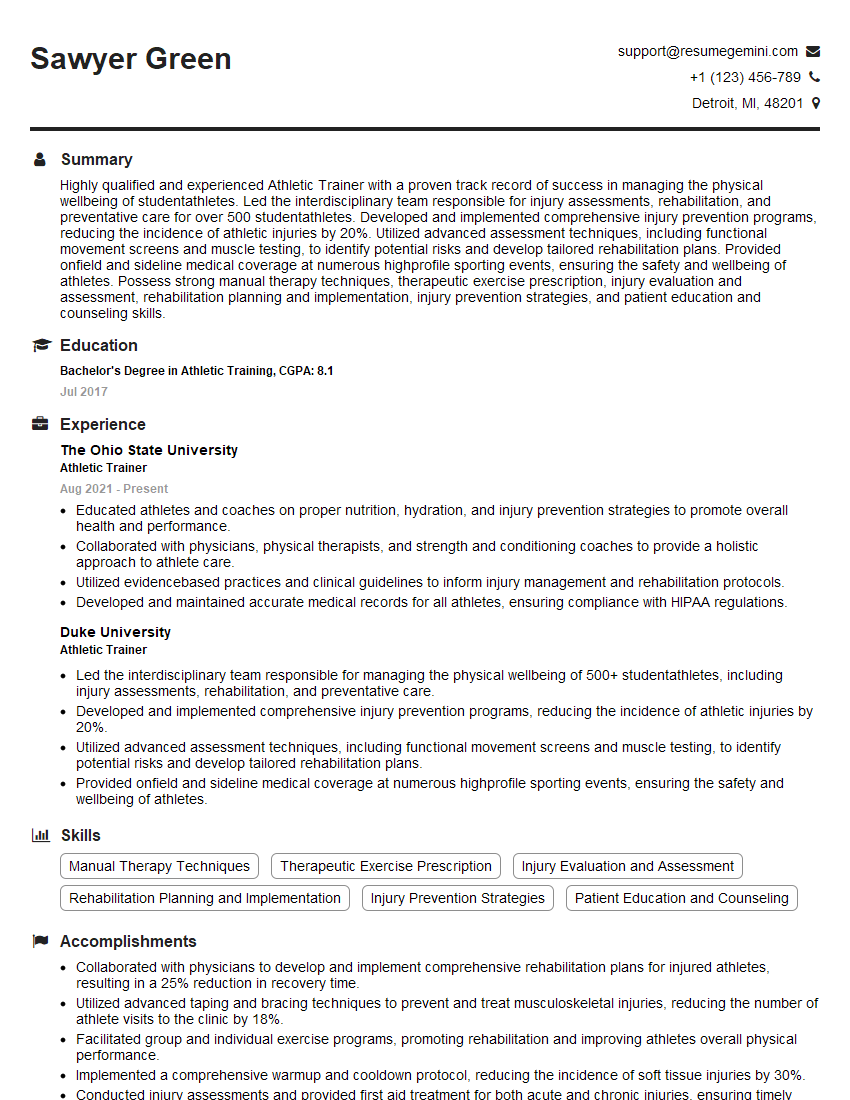
Athletic Trainer Resume Sample

Dance Instructor Resume Sample
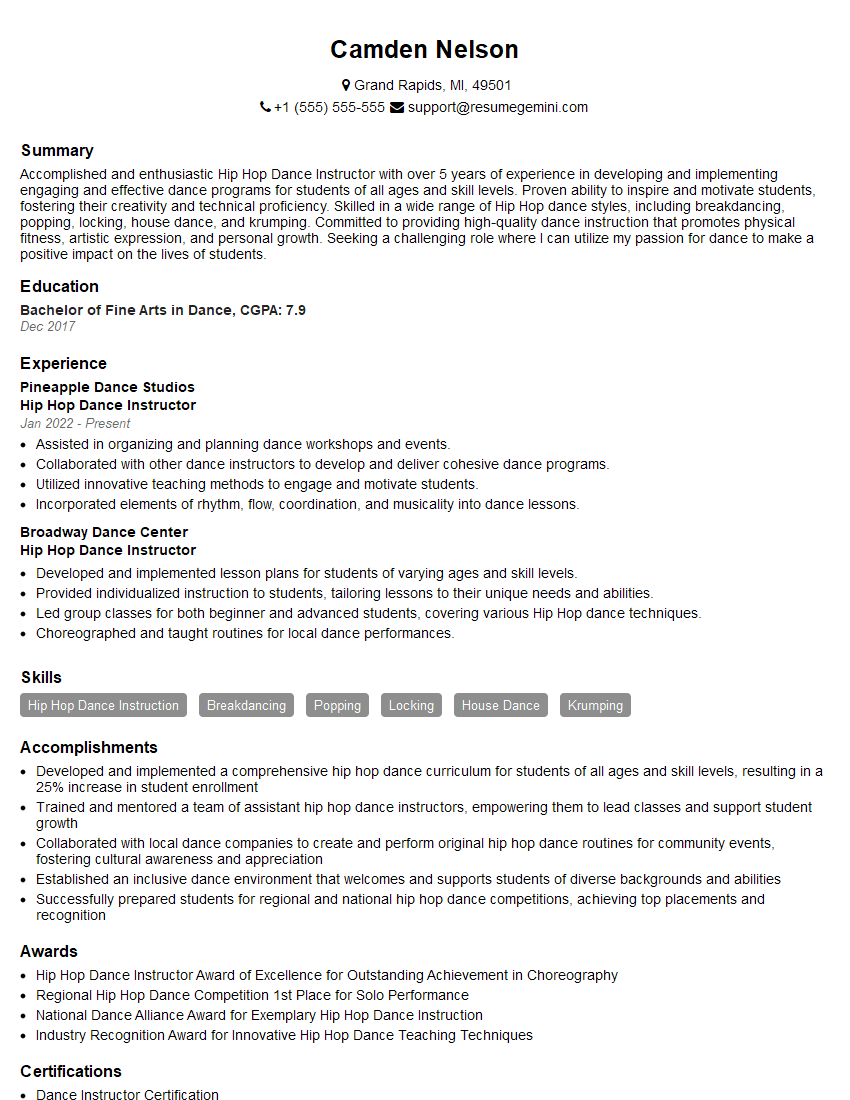
Hip Hop Dance Instructor Resume Sample

Judo Instructor Resume Sample

Karate Instructor Resume Sample
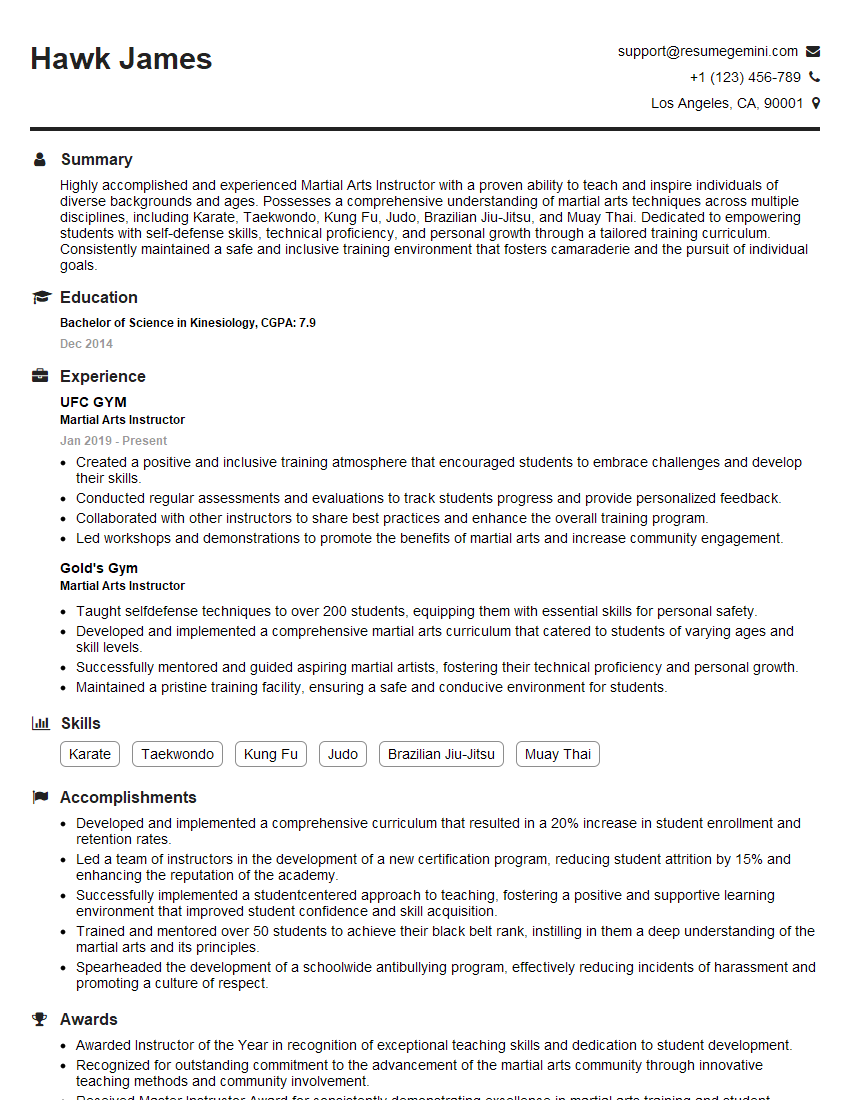
Martial Arts Instructor Resume Sample
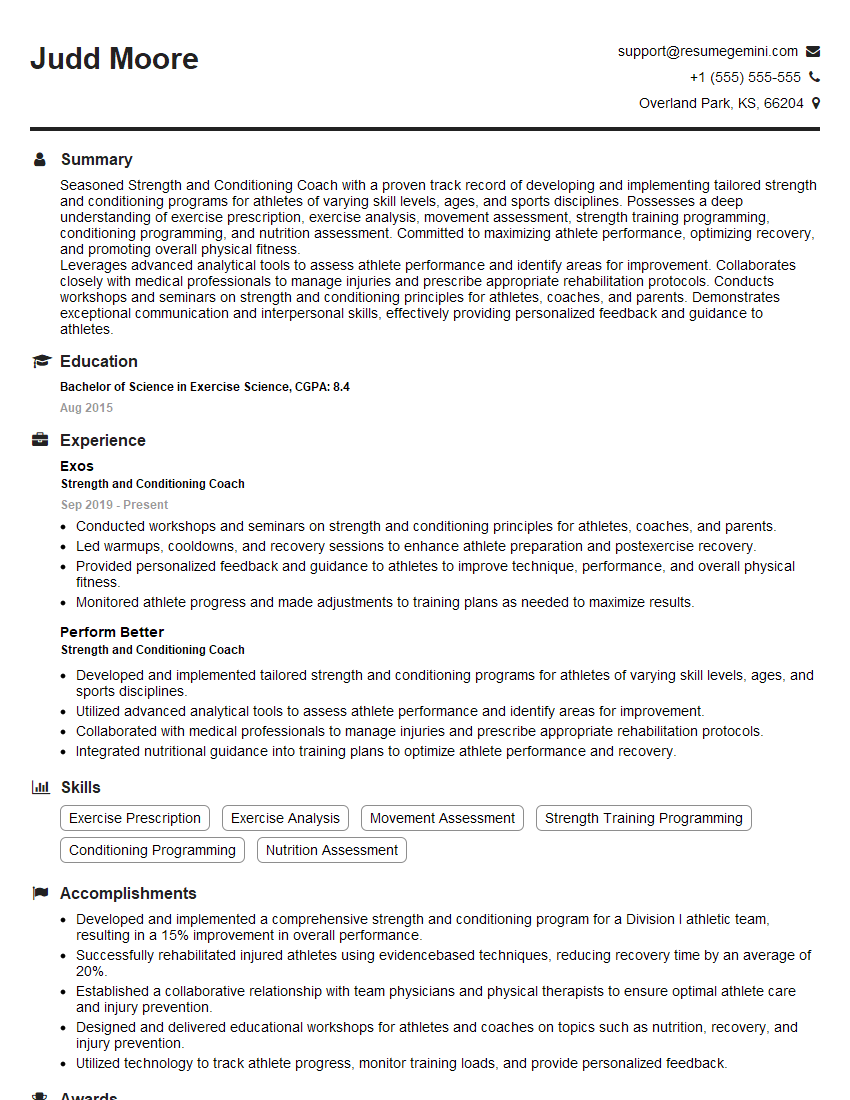
Strength and Conditioning Coach Resume Sample
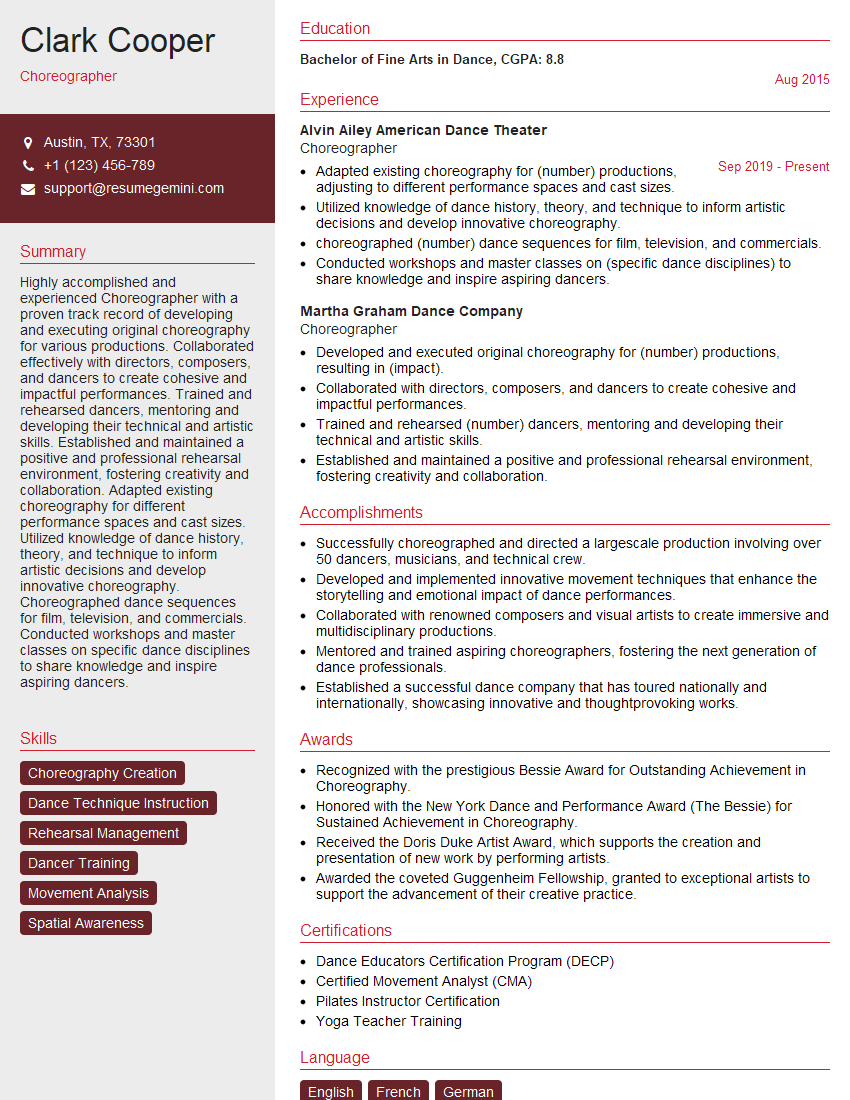
Choreographer Resume Sample

Occupational Therapist Resume Sample
Explore more articles
Users Rating of Our Blogs
Share Your Experience
We value your feedback! Please rate our content and share your thoughts (optional).
What Readers Say About Our Blog
Very informative content, great job.
good