Are you ready to stand out in your next interview? Understanding and preparing for Forest Fire Fighting Techniques interview questions is a game-changer. In this blog, we’ve compiled key questions and expert advice to help you showcase your skills with confidence and precision. Let’s get started on your journey to acing the interview.
Questions Asked in Forest Fire Fighting Techniques Interview
Q 1. Describe the different classes of wildland fires.
Wildland fires are classified based on the type of fuel they consume and their behavior. The most common classification system uses three classes:
- Class A: These fires involve ordinary combustible materials like wood, brush, and dry grass. They are characterized by glowing embers and are relatively easy to extinguish once the fuel is removed. Think of a typical forest fire fueled by leaves and underbrush.
- Class B: These fires involve flammable liquids or gases, such as gasoline or propane. They are characterized by rapidly spreading flames and require quick action to control. Imagine a fire spreading from a leaking fuel tank.
- Class C: These fires involve energized electrical equipment. They require special extinguishing agents and safety precautions due to the risk of electric shock. A fire in an electrical substation would be a Class C fire.
It’s important to note that wildland fires often exhibit characteristics of multiple classes simultaneously, particularly Class A fires, which might involve pockets of flammable liquids (Class B) from spilled fuel.
Q 2. Explain the fire triangle and how it relates to fire suppression.
The fire triangle illustrates the three elements necessary for a fire to exist: heat, fuel, and oxygen. Think of it as a triangle where each side represents one of these elements. Remove any one side, and the fire is extinguished.
This directly relates to fire suppression because all techniques aim to remove at least one element of the fire triangle. For example:
- Removing Heat: We use water to cool the burning material, reducing the temperature below the ignition point.
- Removing Fuel: We create firebreaks—removing all vegetation from a strip of land—to prevent the fire from spreading to untouched areas. We can also utilize controlled burns under precise conditions to remove excess fuel ahead of a wildfire.
- Removing Oxygen: While we don’t directly remove oxygen from the atmosphere, smothering techniques—such as using earth, sand, or specialized fire blankets—reduce the amount of oxygen reaching the fire.
Understanding the fire triangle is foundational in developing effective fire suppression strategies.
Q 3. What are the common methods used for initial attack on wildland fires?
Initial attack on wildland fires focuses on quick suppression before the fire grows significantly. Common methods include:
- Direct Attack: Firefighters engage the fire directly at its edge using hand tools like shovels, rakes, and pulaskis to clear vegetation and create firelines. Water is often used to extinguish flames and cool down the burning material.
- Indirect Attack: Firefighters concentrate on creating containment lines some distance ahead of the fire’s edge, using natural barriers like rivers or roads wherever possible, or creating firebreaks. This approach is particularly useful for large, rapidly spreading fires.
- Aerial Support: Aircraft like helicopters and air tankers provide vital support by dropping water or retardant, slowing the fire’s spread and allowing ground crews to establish containment lines. Air tankers drop large quantities of retardant, while helicopters can drop water more precisely on specific areas.
- Engine Crews: Fire engines equipped with water tanks and pumps play a crucial role in deploying water, providing a mobile and rapid response to suppress hotspots.
The choice of initial attack method depends on the fire’s size, intensity, fuel type, terrain, and available resources.
Q 4. Describe different fire suppression techniques (e.g., direct attack, indirect attack).
Fire suppression techniques generally fall under two main categories: direct and indirect attack.
- Direct Attack: This involves actively engaging the fire’s edge. Techniques include using hand tools to create firelines, directly applying water or other suppressants to the flames, and utilizing bulldozers to create barriers. This is effective for smaller fires in manageable terrain, but can be risky in extreme conditions. Imagine firefighters directly battling the flames with hoses, creating a fireline as they go.
- Indirect Attack: This focuses on controlling the fire’s spread by constructing containment lines a safe distance from the burning area. This might involve using natural barriers like rivers or roads, or creating firebreaks to interrupt the fire’s progression. This is safer and more efficient for larger or rapidly spreading fires where a direct attack would be too dangerous. Picture firefighters strategically creating a firebreak far ahead of the fire front to stop its advancement.
Other techniques, like burning out (setting controlled fires ahead of the main fire to remove fuel) and backfiring (lighting a fire against the wind to meet the advancing fire), are used strategically under specific conditions and require experienced personnel.
Q 5. What are the safety precautions when operating a fire engine?
Operating a fire engine in wildland firefighting presents significant safety challenges. Crucial precautions include:
- Situational Awareness: Always maintain a keen awareness of your surroundings, including the fire’s behavior, terrain, and the location of other personnel. Communication is key.
- Defensive Driving: Drive defensively, accounting for unpredictable road conditions, smoke, limited visibility, and potential hazards like falling trees or downed power lines.
- Personal Protective Equipment (PPE): Always wear appropriate PPE, including a fire-resistant uniform, helmet, gloves, and eye protection.
- Communication: Maintain constant communication with your crew and incident command using radios or other communication systems. This is vital for coordinating actions and receiving updates.
- Water Management: Monitor your water supply and avoid running out of water in dangerous situations. Be mindful of water tank capacity and pump limitations.
- Emergency Procedures: Be familiar with emergency procedures and escape routes. Know your location and how to request assistance if needed.
Regular training and adherence to safety protocols are paramount for operating a fire engine safely and effectively in the challenging conditions of wildland firefighting.
Q 6. Explain the importance of pre-suppression planning.
Pre-suppression planning is crucial for mitigating the impact of wildfires. It involves preparing in advance to reduce losses and enhance the effectiveness of firefighting efforts. This includes:
- Fuel Management: Implementing strategies to reduce the amount of flammable materials in high-risk areas. This could include prescribed burns under controlled conditions, mechanical thinning, or creating defensible space around structures.
- Hazard Assessments: Identifying areas prone to wildfires based on factors like vegetation type, topography, climate, and historical fire patterns. This helps prioritize resources and develop targeted prevention strategies.
- Resource Mobilization Plans: Defining how personnel, equipment, and supplies will be deployed in the event of a fire. This includes pre-positioning resources in strategic locations, establishing communication protocols, and coordinating with neighboring agencies.
- Public Education & Outreach: Educating the public on wildfire prevention and safety, including the importance of maintaining defensible space around homes and observing fire safety regulations. This reduces human-caused fires.
- Community Wildfire Protection Plans (CWPPs): These comprehensive plans combine many of these elements, creating a structured strategy for community-level wildfire mitigation.
Effective pre-suppression planning significantly improves the chances of successful wildfire containment and reduces the risk to life and property.
Q 7. What are the key components of a fireline?
A fireline is a cleared area around a fire that acts as a barrier to prevent the fire’s spread. Its key components are:
- The Line Itself: This is the cleared area, often a strip of land devoid of vegetation, that acts as the physical barrier. Its width depends on the intensity of the fire and the type of fuel.
- Mineral Soil: Ideally, the line is down to mineral soil, as this is non-combustible and provides a reliable barrier. This is checked for any embers that may still be smoldering.
- Black Line: Once the fireline is established and the fire is extinguished along its length, the area is checked again for any hot spots or embers and declared as a ‘black line’ indicating complete extinguishment.
- Control Lines: These are often broader lines encompassing the fireline, providing additional safety margins and allowing for increased containment.
- Anchor Points: These are stable, naturally defensible points from which firefighters can establish and maintain the fireline. These could be roads, rivers, or large cleared areas. They serve as a critical base of operations.
The effectiveness of a fireline hinges on its completeness, the removal of all combustible materials, and the stability of its anchoring points.
Q 8. How do you assess fire behavior and predict its spread?
Assessing fire behavior and predicting its spread is crucial for effective wildfire suppression. It involves understanding the interplay of three key factors: fuel, weather, and topography. We use various methods to achieve this.
Fuel Assessment: This involves identifying the type, amount, and arrangement of combustible materials (grass, shrubs, trees, etc.). The fuel’s moisture content is critical; drier fuel ignites and burns more readily. We use tools like fuel models (classifications based on fuel characteristics) and direct observation to determine fuel loading and flammability.
Weather Analysis: Wind speed and direction are paramount. Strong winds rapidly spread fires, while changes in wind direction can unexpectedly shift fire behavior. Temperature, humidity, and precipitation directly impact fuel moisture and the fire’s intensity. We rely heavily on weather forecasts specific to the fire area.
Topographic Considerations: Slope, aspect (direction a slope faces), and elevation influence fire spread. Fires burn faster uphill due to preheating of fuels by rising hot air. Canyons and valleys can act as natural wind tunnels, accelerating fire spread. We use topographic maps and even drone imagery to visualize these factors.
Fire Behavior Prediction Models: Sophisticated models, like the Canadian Forest Fire Behavior Prediction System (CFFBPS), integrate fuel, weather, and topographic data to predict fire spread rate, intensity, and behavior. These models assist in making critical decisions about suppression strategies.
For example, during a recent wildfire, we used a combination of satellite imagery to assess fuel types and a weather model to predict wind gusts, allowing us to anticipate the fire’s rapid spread towards a populated area and pre-position resources for effective defense.
Q 9. Describe the different types of fire weather forecasting.
Fire weather forecasting is specialized meteorology focused on the conditions that influence wildfire initiation and spread. It goes beyond standard weather forecasts, providing crucial information about factors directly impacting fire behavior.
Short-range forecasts (0-24 hours): These forecasts are critical for immediate suppression efforts. They provide detailed information on hourly changes in wind speed and direction, temperature, humidity, and precipitation. This data directly impacts tactical decisions on the fire line.
Medium-range forecasts (24-72 hours): These forecasts are vital for planning resource deployment and adjusting suppression strategies over the next few days. They help anticipate changes in fire behavior and allow for proactive adjustments.
Long-range forecasts (72+ hours): While less precise, long-range forecasts provide valuable information for the overall fire management strategy. They help anticipate the duration of the fire and identify potential long-term risks.
Special fire weather warnings: These are issued when conditions are expected to create a significant increase in fire danger. They provide crucial information to the public and fire agencies, prompting preventative measures and facilitating rapid response.
Think of it like this: a standard weather forecast tells you if it will rain, while a fire weather forecast tells you how that rain (or lack thereof) will impact a wildfire’s behavior. They are critically different but equally important.
Q 10. What are the signs of potential fire danger?
Recognizing potential fire danger requires awareness of several interconnected factors. These are crucial not only for firefighters but for the public as well, emphasizing preparedness and preventive measures.
Dry vegetation: The most obvious sign. Dry grass, shrubs, and trees are highly flammable. We often assess fuel moisture content using specialized tools.
High temperatures and low humidity: This combination creates exceptionally dry conditions that facilitate rapid fire spread. High temperatures bake the fuels, making them more readily combustible.
Strong winds: High wind speeds propel embers and rapidly spread flames. Changing wind directions can suddenly shift fire behavior, creating unpredictable situations.
Lightning strikes: A common ignition source, especially in remote areas. Dry thunderstorms, with lightning but little or no rain, pose a significant risk.
Human activities: Carelessly discarded cigarettes, campfires, equipment sparks, and power lines can all ignite wildfires. Human activity is a leading cause of wildfires in many regions.
For example, a combination of high temperatures, low humidity, strong winds, and dry vegetation creates an extreme fire danger situation, mandating immediate actions such as heightened vigilance, fire restrictions, and readiness for rapid deployment of resources.
Q 11. Explain the role of fuel management in fire prevention.
Fuel management plays a critical preventative role in wildfire suppression by reducing the amount and flammability of available fuels. It involves a range of strategies to create defensible spaces and minimize the intensity of wildfires.
Prescribed burns: Controlled burns conducted under specific weather conditions reduce the amount of fuel available for wildfires. This helps create firebreaks and reduces fuel continuity.
Mechanical thinning: Removing excess vegetation, like smaller trees and underbrush, reduces fuel density, preventing wildfires from rapidly spreading.
Fuel breaks: Creating wide strips of cleared land or areas with low-flammability vegetation acts as barriers to slow or stop wildfire progression.
Grazing management: Properly managed grazing can effectively reduce fuel loads in grasslands and prevent the buildup of flammable vegetation.
Imagine a forest floor covered with dry leaves and underbrush. A prescribed burn reduces this fuel, creating a less intense fire if one were to start. Mechanical thinning achieves a similar effect, making it harder for fires to spread.
Q 12. Describe your experience with using different fire suppression equipment.
My experience encompasses a wide range of fire suppression equipment, from basic hand tools to sophisticated aerial resources. Proficiency with all equipment is crucial for effective wildfire fighting.
Hand tools: Shovels, rakes, axes, and pulaskis are essential for creating fire lines, clearing fuels, and building firebreaks. Proficiency with these tools is fundamental for ground crews.
Water pumps and hoses: Used to suppress flames directly, often in conjunction with hand tools. Understanding pump operations and hose management is crucial for effective water application.
Engines and water tenders: Larger vehicles equipped with water tanks and pumps provide a significant water supply for fire suppression. Operating and maintaining these vehicles requires specialized training.
Aircraft: Air tankers, helicopters, and single-engine air tankers (SEATs) play a vital role in delivering water and retardant to large fires. Coordination with ground crews is essential.
I’ve personally used all of these tools, often working in coordinated efforts with teams to suppress wildfires of varying sizes and intensities. For example, I’ve used a pulaski to construct fire lines, worked with a hose crew to extinguish flames, and coordinated air support for water drops on particularly intense fire fronts.
Q 13. How do you identify and mitigate fire hazards on a fire scene?
Identifying and mitigating fire hazards on a fire scene is a critical aspect of wildfire suppression. It requires a systematic approach to ensure both firefighter safety and effective suppression.
Hazard identification: This involves systematically surveying the area for potential dangers like unstable trees, downed power lines, hazardous materials, and areas with high fire intensity. We often use thermal imaging cameras to identify hidden hotspots.
Hazard mitigation: This is a multi-step process involving strategies such as felling unstable trees, securing downed power lines (in collaboration with utility crews), establishing safety zones, and utilizing appropriate personal protective equipment (PPE).
Hotspot identification and suppression: Utilizing thermal imaging and careful observation to identify and extinguish areas of remaining heat that may reignite the fire. This is crucial to ensure complete extinguishment.
Safety briefings: Regular safety briefings are essential to communicate identified hazards and mitigation strategies to the team, ensuring everyone is aware of the risks and knows what to do.
For instance, during a recent wildfire, we identified a potential hazard of rolling debris from a steep slope. We established a safety zone below the slope and implemented measures to minimize the risk to firefighters. This proactive approach is paramount for both effective fire suppression and ensuring firefighter safety.
Q 14. What are the communication protocols during a wildfire incident?
Effective communication is paramount during a wildfire incident, ensuring coordinated efforts and efficient resource allocation. We utilize a multi-faceted approach.
Incident Command System (ICS): A standardized management system that establishes clear roles, responsibilities, and communication channels. It ensures that all personnel understand their tasks and can effectively coordinate their actions.
Radios: Handheld and vehicle-mounted radios provide immediate communication between firefighters, incident commanders, and support personnel. This enables real-time updates on fire behavior, resource needs, and safety concerns.
Satellite phones: Used for communication in areas with limited or no cellular service, providing a reliable backup for critical information exchange.
Mapping and Geographic Information Systems (GIS): Real-time mapping tools provide a common operating picture for everyone involved, showing the fire’s location, spread, and resources deployed.
Regular briefings: Regular briefings ensure everyone stays informed of the overall situation, updates on the fire’s behavior, and upcoming actions. This promotes coordination and proactive adjustments to strategies.
For example, during a large wildfire, I used radios to relay updates on fire behavior to the incident commander, coordinating air support and directing ground crews based on real-time changes in the fire’s spread. Efficient communication is paramount for a successful wildfire response.
Q 15. How do you handle stressful situations during a wildfire?
Wildfire fighting is inherently stressful. Handling these situations effectively relies on a combination of training, experience, and mental fortitude. My approach is multifaceted. First, I prioritize pre-incident preparation: ensuring I’m physically fit, well-rested, and have reviewed safety protocols and communication plans. During an incident, I focus on maintaining situational awareness – constantly assessing risks and adjusting tactics accordingly.
Secondly, I employ mindfulness techniques like deep breathing to manage my anxiety. Thirdly, I rely heavily on teamwork. Open communication with my crew is crucial; sharing concerns and acknowledging the pressure we’re under helps build resilience and shared responsibility. Finally, debriefing after an incident allows us to process the experience and learn from successes and challenges, reducing the long-term effects of stress.
For example, during the ‘Timberline Fire’ I was part of a team that had to quickly evacuate when a sudden shift in wind direction created extreme danger. Utilizing our established communication protocols, we calmly and efficiently withdrew to a safe zone, with each team member carrying out their pre-assigned roles. The debrief after revealed areas where communication could be further improved, leading to enhanced safety measures for future operations.
Career Expert Tips:
- Ace those interviews! Prepare effectively by reviewing the Top 50 Most Common Interview Questions on ResumeGemini.
- Navigate your job search with confidence! Explore a wide range of Career Tips on ResumeGemini. Learn about common challenges and recommendations to overcome them.
- Craft the perfect resume! Master the Art of Resume Writing with ResumeGemini’s guide. Showcase your unique qualifications and achievements effectively.
- Don’t miss out on holiday savings! Build your dream resume with ResumeGemini’s ATS optimized templates.
Q 16. Describe your experience with working as part of a wildfire crew.
My experience working on wildfire crews spans over a decade, encompassing various roles from initial attack firefighter to crew boss. I’ve worked on both small, localized fires and large, complex incidents requiring extensive coordination with other agencies. My time on these crews has fostered essential skills such as teamwork, quick decision-making under pressure, and adaptability to ever-changing situations.
As a member of a hand crew, we’re responsible for direct fireline construction, using tools like shovels, axes, and chainsaws to create firebreaks. I’ve also worked extensively with engine crews, providing support and contributing to tactical decisions. The emphasis is always on safety. We conduct regular safety briefings, practice emergency procedures, and maintain constant communication amongst team members. A successful crew is a cohesive unit, with each member understanding their role and trusting their teammates implicitly.
One memorable experience involved a wildfire that rapidly spread up a steep canyon. Through close coordination with air support and other ground crews, we successfully contained the fire before it could threaten populated areas. The collaborative effort and shared commitment highlight the effectiveness and strength found in a cohesive wildfire team.
Q 17. How do you use maps, GPS, and other navigational tools in firefighting?
Maps, GPS, and other navigational tools are indispensable for effective wildfire fighting. We use topographic maps to understand terrain, identify potential hazards like canyons or steep slopes, and plan effective fireline strategies. GPS devices provide precise location data, allowing us to track our progress, coordinate with other crews, and quickly respond to changing fire behavior.
We often employ GIS (Geographic Information Systems) software to overlay various data layers – fire perimeters, fuel types, and infrastructure – creating a comprehensive picture of the incident. This enables us to make informed decisions about resource allocation and tactical deployment. For instance, we can use GIS to identify the most effective location for establishing a fireline based on fuel load, topography, and proximity to structures. Additionally, we use compass and altimeter for backup navigation in areas with poor GPS reception.
Imagine a scenario where the fire is rapidly spreading through dense forest with limited visibility. Using a combination of GPS to pinpoint the fire’s edge and a topographic map to find the safest and most efficient route, a crew can create a strategically located firebreak preventing further spread.
Q 18. What are your knowledge of different types of fire shelters?
Fire shelters are crucial pieces of personal protective equipment (PPE) providing a last resort refuge from intense wildfire conditions. There are different types available, each with its own strengths and limitations. The most common type is the Nomex-based shelter, designed to provide thermal protection from radiant heat. These are individually deployed and are intended to provide temporary protection until conditions allow for safe evacuation.
Other types include shelters designed for specific situations. For example, some shelters offer slightly better protection against convective heat while others are designed to be deployed more easily. It’s vital to understand the limitations of any given shelter; they’re not designed to protect against all dangers, such as rolling debris or falling trees. Regular inspection and maintenance are crucial to ensure the shelters remain functional.
Understanding the construction materials (Nomex, for example), deployment procedures, limitations, and maintenance schedule is key for firefighter safety. Training on proper deployment is an absolute necessity before the shelter is ever needed.
Q 19. Describe your understanding of incident command systems (ICS).
Incident Command System (ICS) is a standardized, flexible, and adaptable management system used for managing emergencies and disasters, including wildfires. It’s built on a hierarchical structure with clearly defined roles and responsibilities. This system ensures effective communication and coordination among various agencies and personnel involved in a wildfire.
The core components of ICS include:
- Command: Overall responsibility for the incident.
- Operations: Manages all tactical operations on the ground.
- Planning: Collects and analyzes information, develops strategies.
- Logistics: Provides resources such as equipment and personnel.
- Finance/Administration: Manages the budget and administrative functions.
ICS ensures that everyone understands their role and how it fits into the overall strategy. It facilitates clear communication channels, preventing confusion and enabling efficient resource allocation, particularly important during large-scale, complex wildfire events.
For example, during a large fire, the Incident Commander may establish several subordinate units to manage different aspects of the operation, each using the ICS framework. This division of responsibility allows for focused effort and improved efficiency in managing a complex situation.
Q 20. Explain the use of fire retardants and their limitations.
Fire retardants are chemicals dropped from aircraft to slow or suppress the spread of wildfires. They work by either cooling the fuel or creating a barrier, making it harder for the fire to advance. Common retardants contain ammonium phosphate, which absorbs heat and reduces the flammability of the vegetation.
However, fire retardants have limitations. They are not a ‘cure-all’ solution and their effectiveness depends heavily on factors like weather conditions, fuel type, and the timing of the application. Their impact is often temporary, and additional suppression efforts may be needed. There are also environmental concerns associated with their use, including potential impacts on water quality and plant life. Therefore, their application is carefully planned and considered in conjunction with other fire suppression tactics.
For example, retardants are very useful in slowing down the spread of crown fires, giving ground crews more time to establish effective containment lines. However, in areas with very dry or highly flammable fuels, the effect may be short-lived.
Q 21. How do you manage a crew during dangerous and high-stress fire situations?
Managing a crew during dangerous situations requires strong leadership, clear communication, and unwavering focus on safety. I utilize a combination of strategies. Firstly, I establish clear roles and responsibilities for each crew member, ensuring everyone understands their tasks and expectations. Secondly, maintaining open and honest communication is vital, keeping the crew informed of the situation, potential risks, and planned actions.
Thirdly, I foster a culture of mutual respect and trust, encouraging crew members to voice their concerns without hesitation. I prioritize active listening and provide clear and concise instructions. Fourthly, I emphasize situational awareness, constantly scanning for potential hazards and adjusting our strategy accordingly. This includes pre-planning evacuation routes and establishing communication procedures for emergencies. Fifthly, I regularly assess the physical and mental well-being of my crew, providing support and adjusting tasks as needed to prevent burnout.
During a particularly intense fire, I once had to quickly relocate a crew after noticing a change in wind direction that posed significant danger. By calmly and clearly directing the crew to a predetermined safety zone, and consistently reassuring them throughout the quick maneuver, we were able to avoid any injuries.
Q 22. What is your understanding of back burns and controlled burns?
Back burning and controlled burns are crucial preventative and suppression techniques in wildland firefighting. They involve intentionally setting fire under controlled conditions to remove fuel and create firebreaks, thereby preventing or slowing the spread of a larger, more dangerous wildfire.
Back burning is used during active fire suppression. Firefighters ignite a fire on the downwind edge of a wildfire, creating a firebreak that consumes the fuel between the main fire and the controlled burn, thus halting the wildfire’s advance. Imagine it like creating a controlled ‘burn-out’ zone.
Controlled burns, or prescribed burns, are planned and executed under specific conditions to reduce fuel build-up in forests and grasslands. These are typically conducted during cooler, calmer weather, with carefully monitored conditions to prevent the fire from escaping its designated area. Think of it as proactive forest cleaning, much like a gardener pruning a bush.
Both techniques require meticulous planning, weather forecasting, and careful execution. Improperly executed back burns or controlled burns can quickly become uncontrollable wildfires, so expert knowledge and adherence to strict safety protocols are essential.
Q 23. Describe your experience with using chainsaws and other power tools during suppression.
My experience with chainsaws and other power tools in wildfire suppression is extensive. I’m proficient in using various models of chainsaws for creating firebreaks, felling trees to create defensible space, and clearing debris to improve access. Safety is paramount, so I always ensure the proper PPE is worn – that’s chain saw chaps, helmets with face shields, gloves, and hearing protection.
Beyond chainsaws, I’ve used brush cutters, power saws, and even excavators to remove fuels and create containment lines. One memorable instance involved using a brush cutter to clear dense undergrowth near a rapidly spreading wildfire, giving firefighters a crucial edge. The precision and speed were essential in that situation. Regular maintenance and safety checks for all equipment are non-negotiable. A malfunctioning tool in the field is a significant safety hazard.
Q 24. Explain your knowledge of different types of wildland fire engines and their capabilities.
Wildland fire engines are specialized vehicles adapted to off-road conditions and the demands of firefighting in rugged terrain. They vary widely in size and capabilities, ranging from smaller, more maneuverable engines suitable for initial attack to larger, heavier vehicles capable of carrying substantial amounts of water and other suppression agents.
- Type 1 Engines: These are large, heavy-duty engines often equipped with 1,000 to 1,500 gallons of water and high-capacity pumps. They are suited for extended operations and can provide significant water supply for longer durations.
- Type 2 Engines: Smaller and more agile than Type 1, they still carry significant amounts of water (500-1,000 gallons) and are better suited for reaching more remote locations.
- Type 3 and 4 Engines: These are smaller, often utilizing pickup trucks or SUVs as chassis. They’re designed for initial attack and rapid response to small fires, often acting as a quick-response team and can access difficult terrain.
All engines typically carry various equipment like hoses, pumps, hand tools, and communication devices. Their capabilities depend heavily on water capacity, pump pressure, and the terrain they operate in. Selecting the right engine for a particular fire is critical for effective suppression.
Q 25. How do you conduct a post-fire assessment?
A post-fire assessment is a critical process that goes beyond simply extinguishing the flames. It’s a comprehensive evaluation of the fire’s impact and a crucial step in the recovery and rehabilitation phase. It involves several key aspects:
- Damage Assessment: Evaluating the extent of property damage, infrastructure damage, and loss of life. This often involves collaboration with insurance agencies, local authorities, and potentially forensic investigators.
- Environmental Impact Assessment: Analyzing the effects on water quality, soil erosion, wildlife habitats, and air quality. This might require soil samples, water tests, and ecological surveys.
- Fire Behavior Analysis: Reviewing the fire’s spread, intensity, and factors that contributed to its behavior. This is vital for future fire prevention and management strategies.
- Effectiveness of Suppression Efforts: Analyzing the strategies employed and identifying areas for improvement. Were resources deployed efficiently? Could response times be improved?
- Reporting and Documentation: Compiling a detailed report including all the findings, recommendations, and any lessons learned to aid future fire management.
The data gathered during this assessment informs the subsequent recovery and rehabilitation efforts, ensuring that resources are deployed effectively and efficiently.
Q 26. What are the common types of personal protective equipment (PPE) used in wildland firefighting?
Personal Protective Equipment (PPE) is essential for wildland firefighters to minimize risks from burns, cuts, and other hazards. The specific PPE will vary based on the task and the conditions, but common items include:
- Wildland Fire Helmet: Offers head protection against falling debris and impacts.
- Nomex Clothing: Flame-resistant clothing that protects against burns, usually including pants, shirts, and gloves.
- Protective Boots: Sturdy, fire-resistant footwear to protect against heat and sharp objects.
- Eye Protection: Safety glasses or goggles to protect against smoke, debris, and heat.
- Gloves: Leather or fire-resistant gloves for handling tools and protecting hands.
- Chainsaw Chaps: Protective leg coverings essential when using chainsaws.
- Self-Contained Breathing Apparatus (SCBA): Used in situations with low visibility or high smoke concentrations.
All PPE must be regularly inspected and maintained to ensure its effectiveness. A breakdown in PPE can have life-threatening consequences.
Q 27. Explain the role of rehabilitation and recovery after a wildfire.
Rehabilitation and recovery after a wildfire is a complex, long-term process focusing on restoring the affected landscape and supporting the community’s recovery. The process includes:
- Erosion Control: Implementing measures to prevent soil erosion and stabilize slopes, often using techniques like seeding and mulching.
- Reforestation and Revegetation: Planting trees and other vegetation to restore the ecosystem, selecting species appropriate for the environment.
- Waterway Repair: Repairing damaged waterways and reducing sediment runoff to protect water quality.
- Habitat Restoration: Restoring habitats for wildlife, creating corridors for animal movement, and improving water sources.
- Community Support: Providing assistance to those affected by the fire, including housing, financial aid, and mental health services.
The recovery phase often requires significant resources and coordination between government agencies, non-profit organizations, and the community. The goal is to restore the ecosystem’s health, rebuild communities, and improve resilience to future wildfires.
Q 28. Describe your understanding of the ecological impacts of wildfires.
Wildfires have profound and multifaceted ecological impacts, both positive and negative. The immediate effects are often destructive, but long-term impacts are complex and may depend greatly on the intensity of the fire, the frequency of fires in the area, and the ecosystem’s resilience.
- Loss of Biodiversity: Intense fires can lead to significant habitat loss, resulting in population declines or even extinction of certain plant and animal species.
- Soil Degradation: Fires can alter soil properties, impacting nutrient cycling and increasing the risk of erosion.
- Water Quality Degradation: Ash and debris can contaminate water sources, affecting aquatic life and potentially human water supplies.
- Air Quality Impacts: Wildfires release large quantities of smoke and pollutants, impacting air quality over large areas and posing health risks.
- Positive Impacts: In many ecosystems, fires are a natural process that can be beneficial. Fires can clear out underbrush, reduce the risk of more intense fires later, and stimulate new plant growth.
Understanding the ecological impacts is vital for developing sustainable forest management strategies that incorporate prescribed burns and other techniques to balance ecological benefits with mitigating risks.
Key Topics to Learn for Forest Fire Fighting Techniques Interview
- Fire Behavior: Understanding fire triangles, fuel types, weather influences (wind, temperature, humidity), and fire spread prediction models. Practical application: interpreting weather reports to anticipate fire behavior changes and strategize suppression efforts.
- Suppression Techniques: Direct attack (e.g., hand tools, hose lines), indirect attack (e.g., firebreaks, backfires), and strategic considerations for different terrain and fire intensities. Practical application: describing appropriate techniques for various fire scenarios and explaining the decision-making process behind choosing a particular method.
- Safety Procedures: Personal protective equipment (PPE) use, communication protocols, emergency procedures, and crew safety management. Practical application: outlining safety protocols for different roles within a fire suppression team and explaining how to address safety concerns in a high-pressure environment.
- Fire Prevention and Mitigation: Understanding fuel management techniques (prescribed burns, forest thinning), public education and awareness, and the role of early detection systems. Practical application: explaining how proactive measures reduce the risk and impact of wildfires.
- Equipment and Technology: Familiarity with various tools and technologies used in fire suppression (e.g., pumps, hoselays, aerial firefighting, GPS mapping). Practical application: describing the operation and maintenance of specific equipment and explaining the role of technology in modern wildfire management.
- Incident Command System (ICS): Understanding the hierarchical structure and communication protocols of ICS for effective coordination during large-scale fire incidents. Practical application: explaining your role within an ICS structure and how you would contribute to efficient incident management.
Next Steps
Mastering Forest Fire Fighting Techniques is crucial for a successful and fulfilling career in this vital field. It demonstrates a deep understanding of the complexities involved and your commitment to protecting lives and property. To maximize your job prospects, focus on creating an ATS-friendly resume that highlights your skills and experience effectively. ResumeGemini is a trusted resource to help you build a professional and impactful resume. Examples of resumes tailored to Forest Fire Fighting Techniques are available to guide you. Let ResumeGemini help you showcase your qualifications and land your dream job.
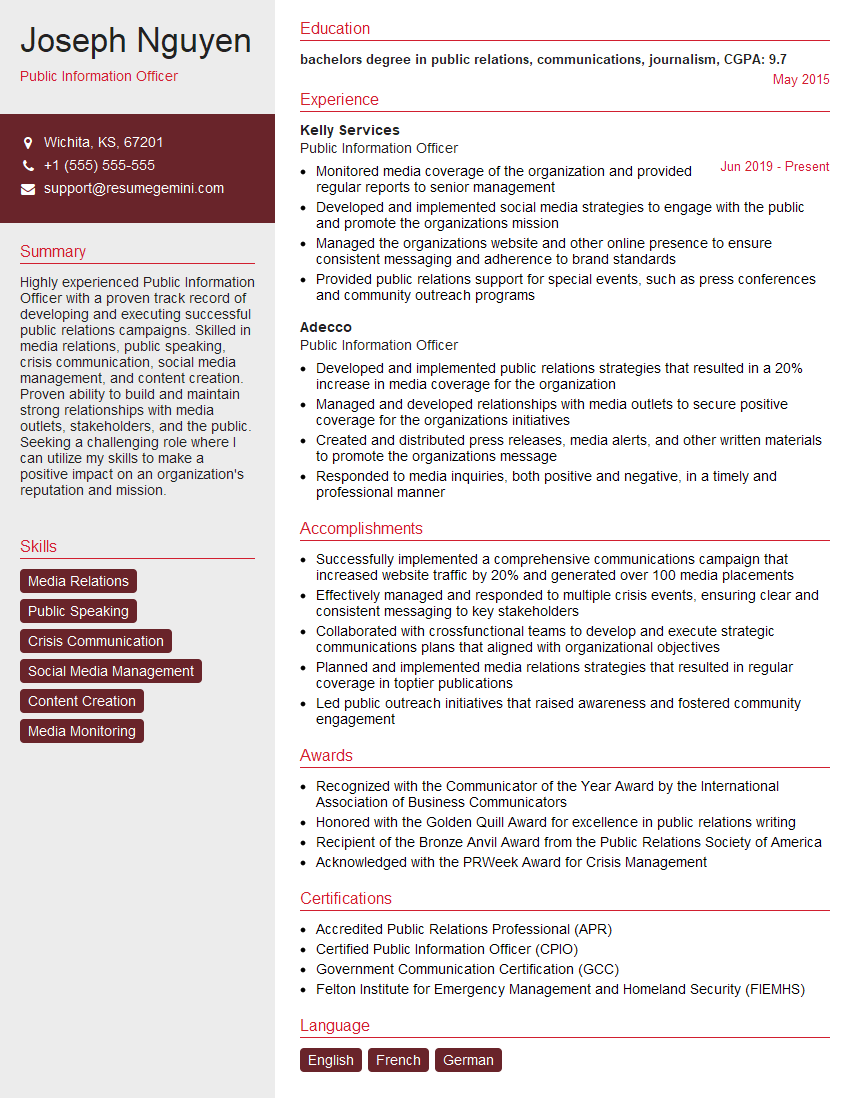
Public Information Officer Resume Sample
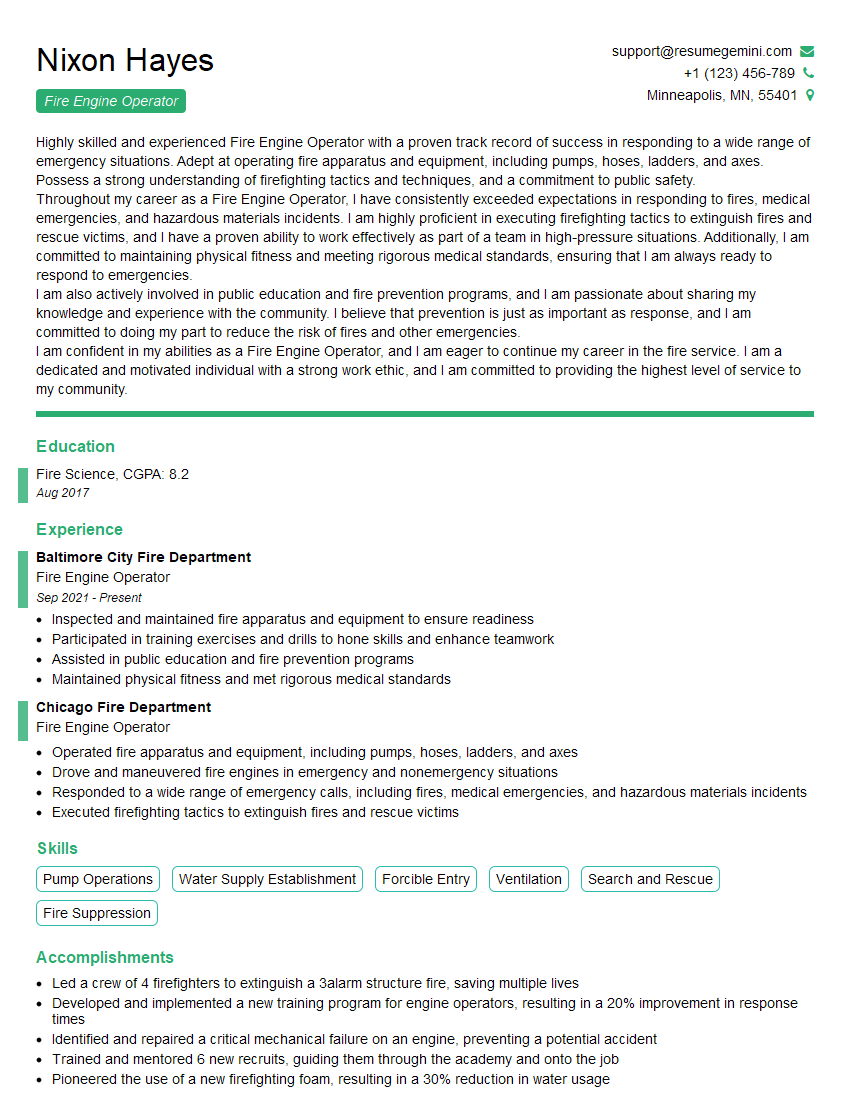
Fire Engine Operator Resume Sample
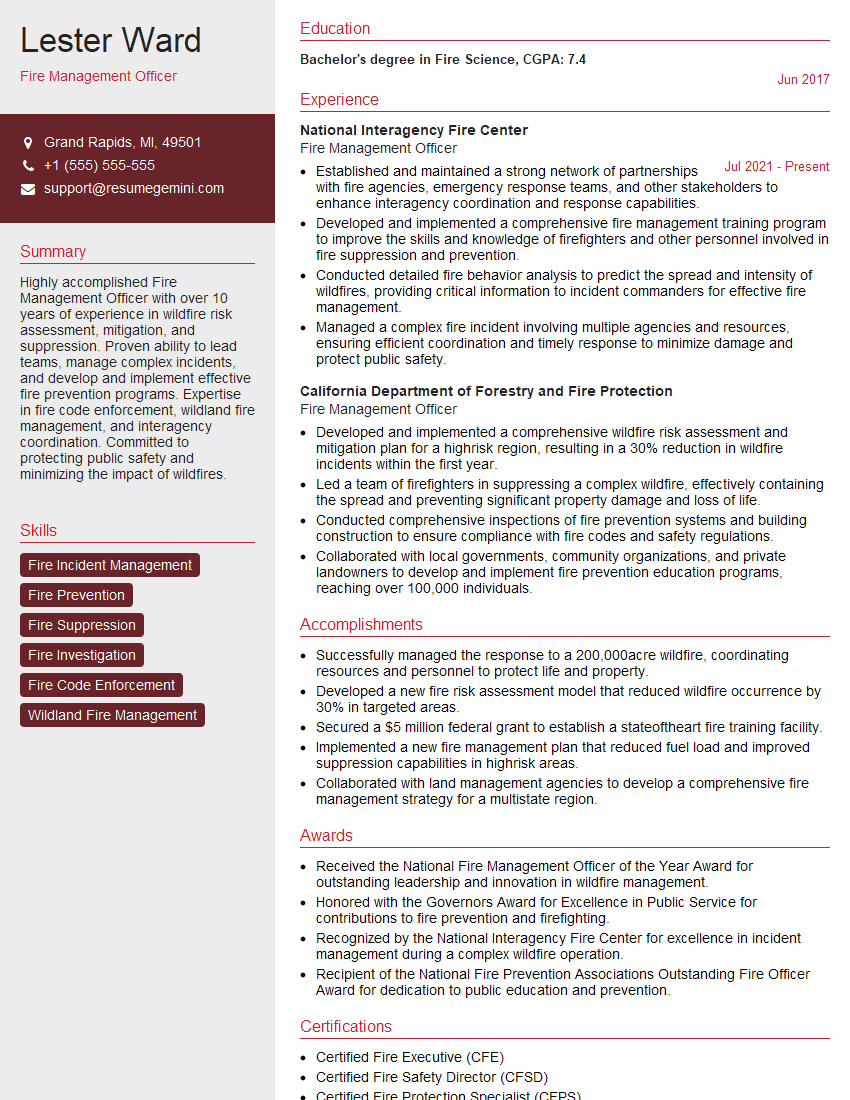
Fire Management Officer Resume Sample

Safety Officer Resume Sample
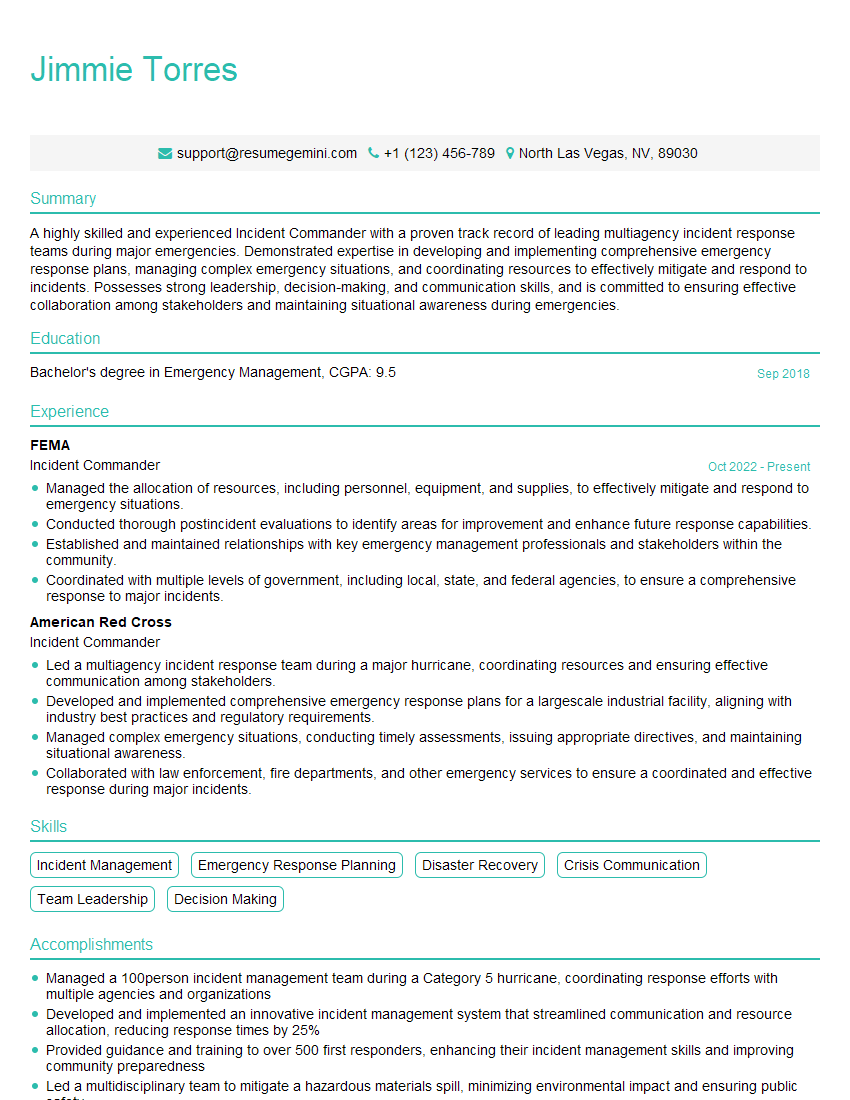
Incident Commander Resume Sample
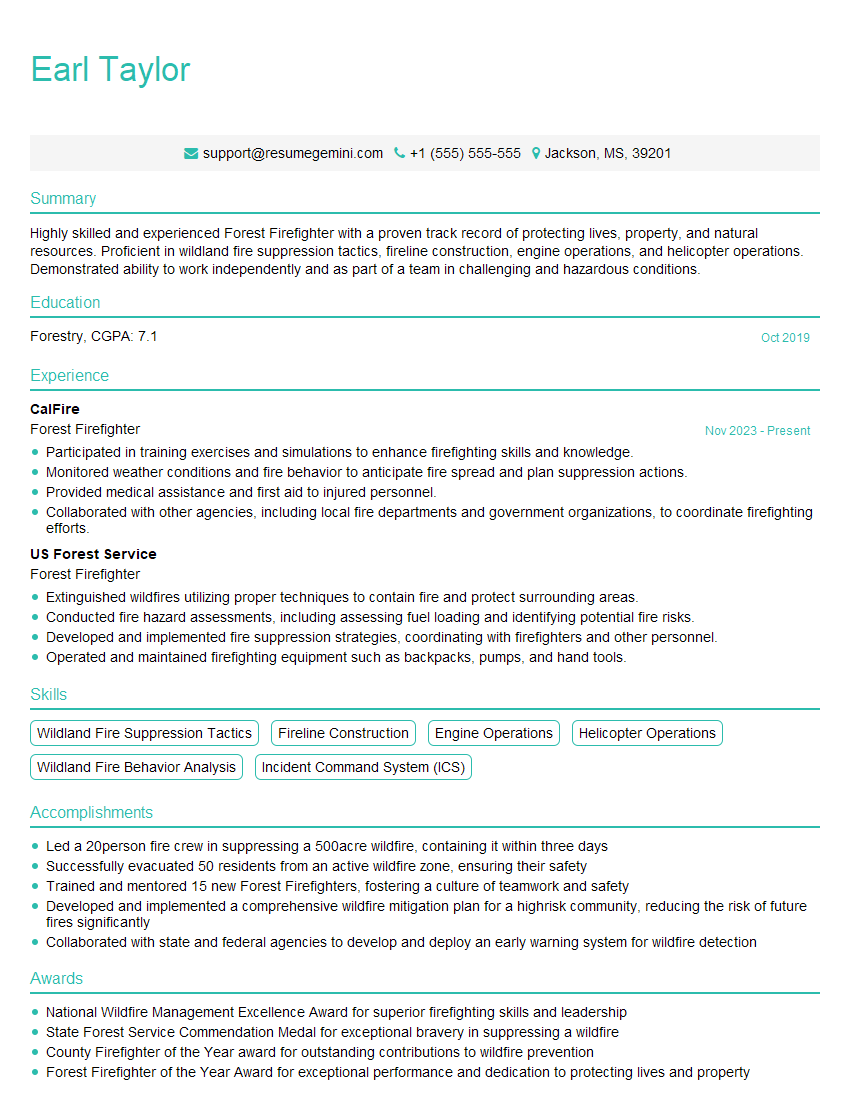
Forest Firefighter Resume Sample
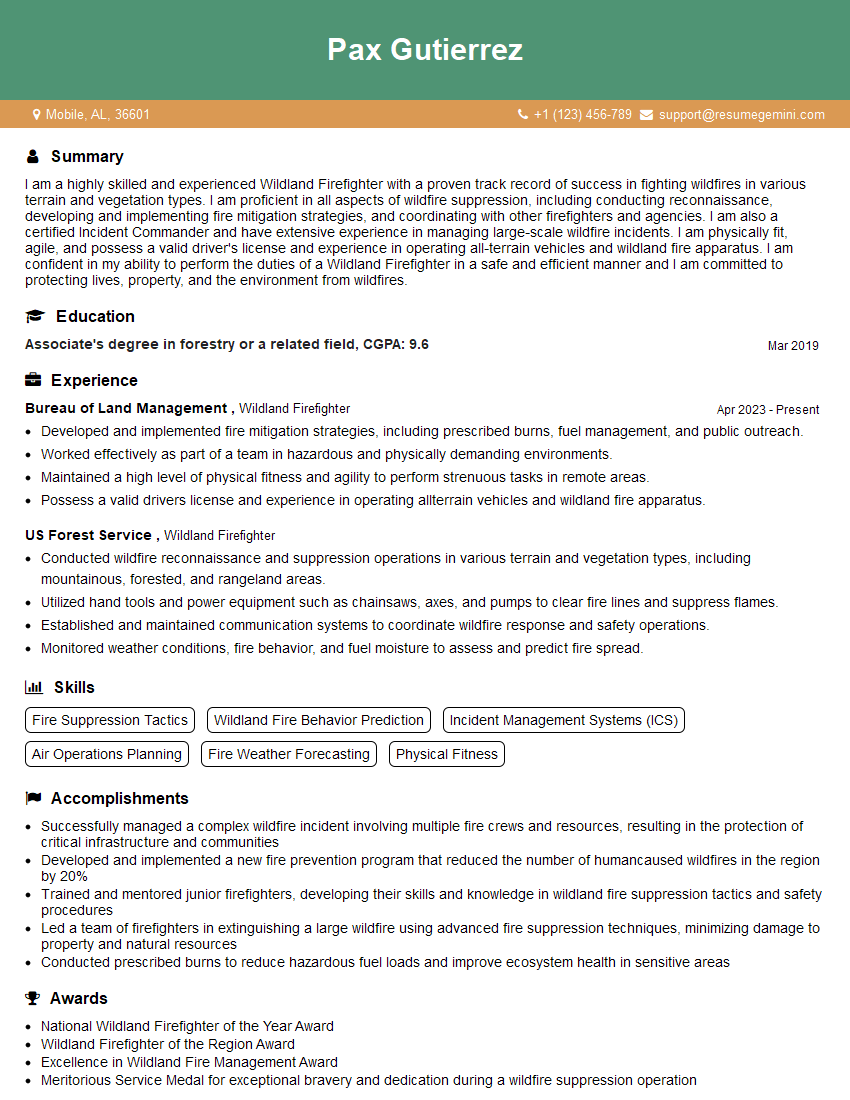
Wildland Firefighter Resume Sample
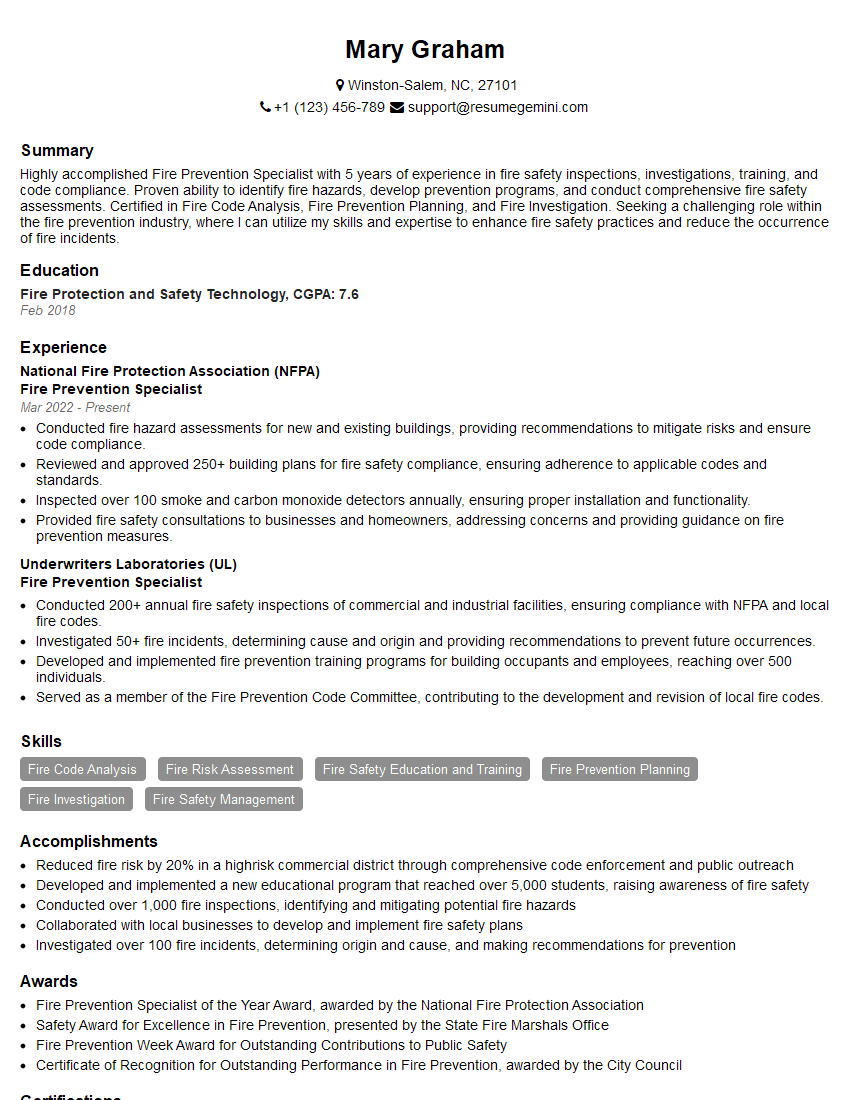
Fire Prevention Specialist Resume Sample
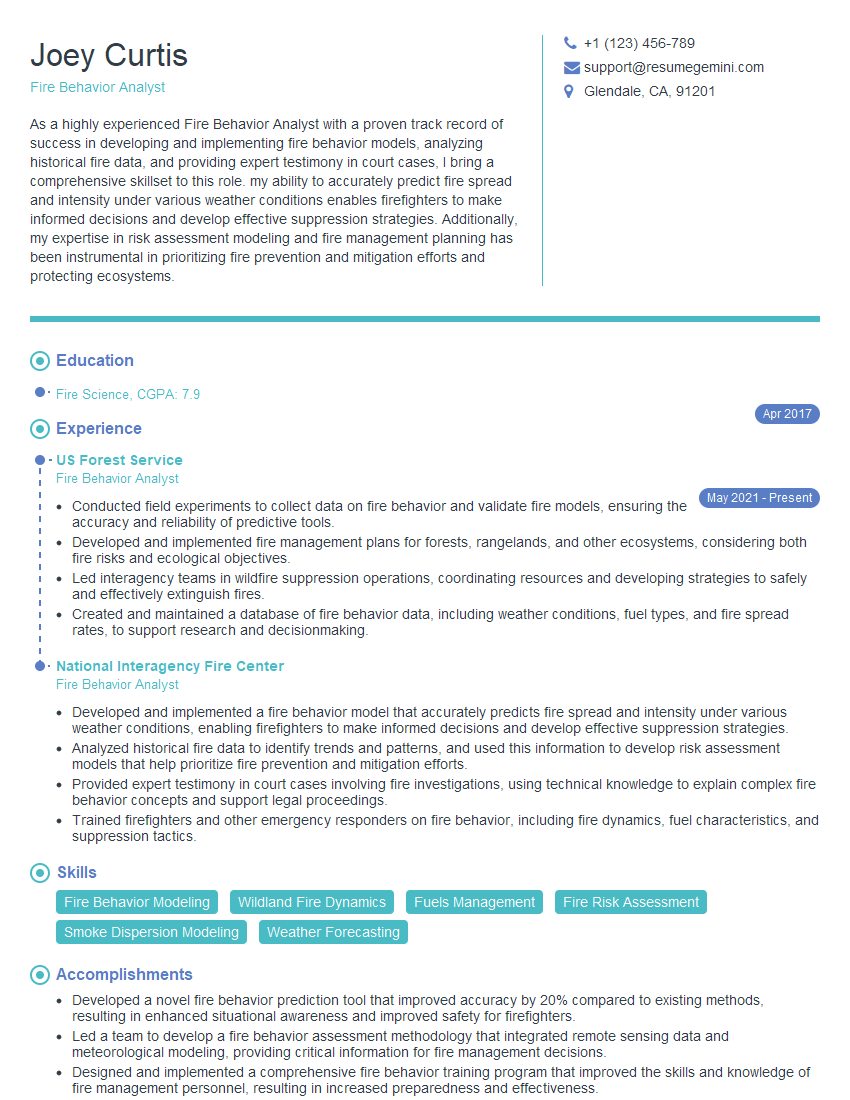
Fire Behavior Analyst Resume Sample
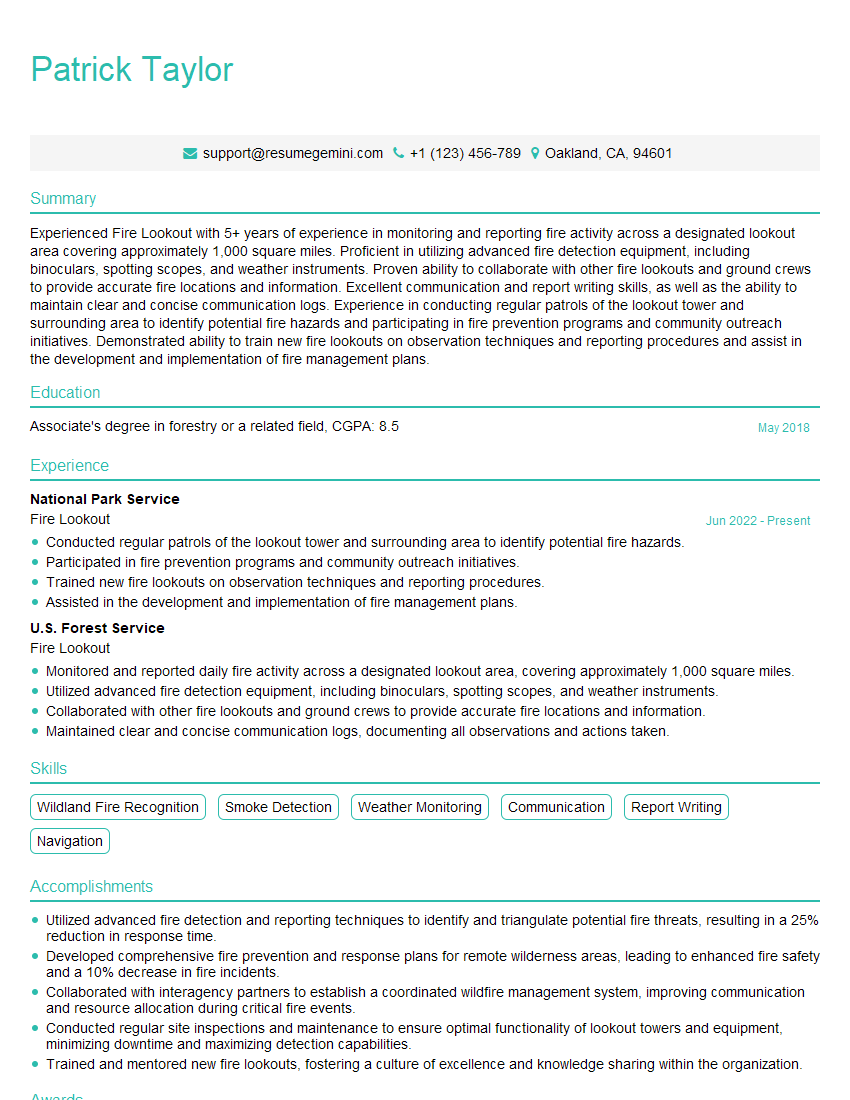
Fire Lookout Resume Sample
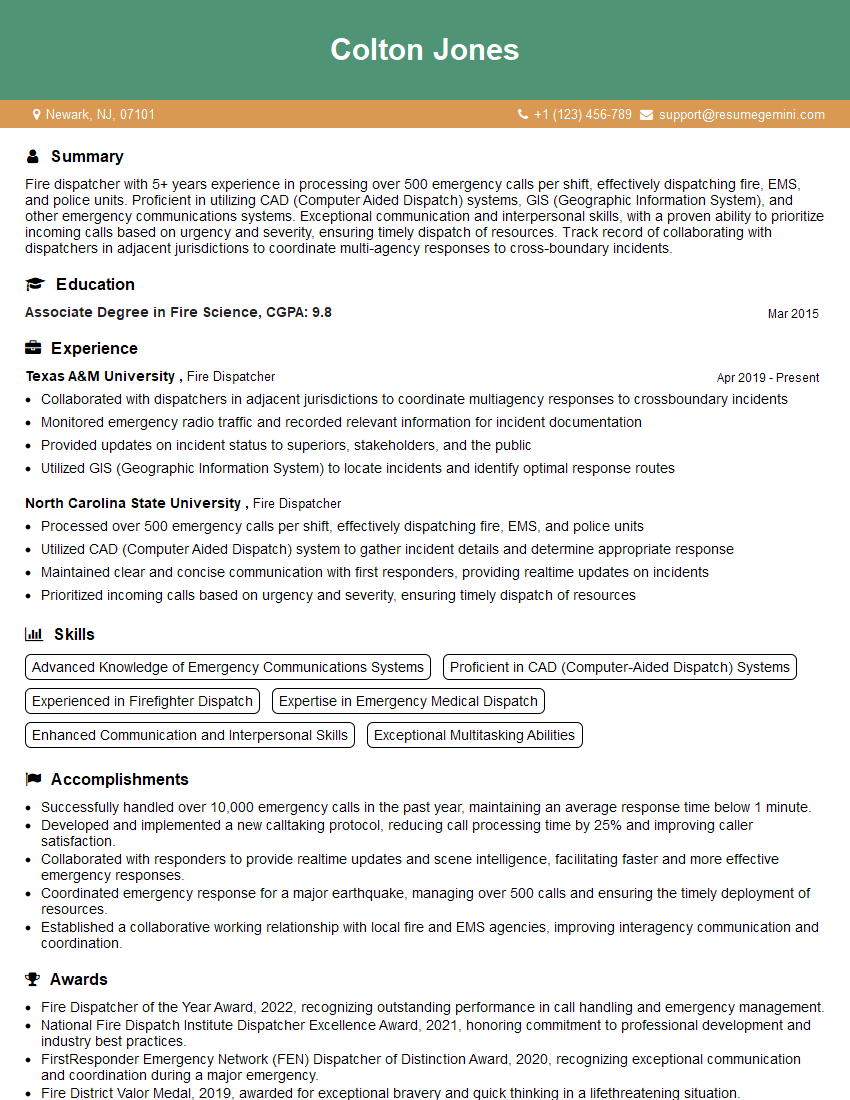
Fire Dispatcher Resume Sample
Explore more articles
Users Rating of Our Blogs
Share Your Experience
We value your feedback! Please rate our content and share your thoughts (optional).
What Readers Say About Our Blog
Very informative content, great job.
good