The thought of an interview can be nerve-wracking, but the right preparation can make all the difference. Explore this comprehensive guide to Forest Geography and Road Conditions interview questions and gain the confidence you need to showcase your abilities and secure the role.
Questions Asked in Forest Geography and Road Conditions Interview
Q 1. Explain the impact of forest roads on soil erosion and water quality.
Forest roads, while essential for accessing timber and other resources, significantly impact soil erosion and water quality. The primary mechanism is the disruption of the natural hydrological cycle. Road construction exposes bare soil, increasing its vulnerability to rainfall. This leads to increased surface runoff, carrying away topsoil and sediment.
This sediment then pollutes streams and rivers, degrading water quality and harming aquatic life. The increased runoff also reduces infiltration, lowering groundwater levels and potentially impacting vegetation health. Road surfaces themselves can act as impervious barriers, channeling water into concentrated flows that erode stream banks and damage riparian habitats. For example, a poorly constructed road in a steep, mountainous area might experience significant gully erosion, transporting tons of sediment into downstream waterways during heavy rainfall. This can negatively impact fisheries and drinking water supplies.
- Increased Sediment Load: Soil particles eroded from roads end up in rivers, increasing turbidity and harming aquatic ecosystems.
- Nutrient Pollution: Runoff from roads can carry fertilizers and other pollutants that increase nutrient levels in water bodies, leading to eutrophication and algal blooms.
- Chemical Contamination: Road construction and maintenance often involve the use of chemicals (e.g., herbicides, pesticides) that can contaminate soil and water.
Q 2. Describe different forest road construction techniques and their environmental impacts.
Forest road construction techniques vary depending on factors like terrain, soil type, and intended use. Common methods include:
- Unpaved Roads (Gravel or Soil): These are the simplest and least expensive, but they are more susceptible to erosion and rutting. They are best suited for low-traffic areas.
- Stabilized Roads (Gravel with Additives): Adding binding agents like lime or cement improves stability and durability, reducing erosion. This is a cost-effective compromise for moderate traffic.
- Paved Roads (Asphalt or Concrete): These offer the highest durability and require less maintenance but are much more expensive and can have more substantial environmental impacts during construction.
Environmental Impacts: Each technique has associated environmental consequences. Unpaved roads contribute significantly to erosion and sediment pollution. Stabilized roads reduce this impact but still require careful design and construction to minimize disturbance. Paved roads generate more construction waste and habitat fragmentation, but their lower maintenance needs can lead to long-term environmental benefits compared to frequently repaired unpaved roads. The choice of construction method should involve a careful cost-benefit analysis considering environmental protection alongside operational needs.
Q 3. How do you assess the suitability of a forest area for road construction?
Assessing the suitability of a forest area for road construction requires a multi-faceted approach. It involves a combination of field surveys, remote sensing data analysis, and careful consideration of environmental factors.
- Topographic Analysis: Identifying slopes, drainage patterns, and potential landslide areas. Steeper slopes require more extensive mitigation measures or might render road construction impractical.
- Soil Analysis: Determining soil type, bearing capacity, and erosion susceptibility. Poorly drained soils are more prone to erosion and can lead to road failure.
- Hydrological Assessment: Evaluating water flow patterns, stream crossings, and potential impacts on water quality. Properly designed culverts and bridges are crucial to minimize disruptions to the hydrological regime.
- Ecological Assessment: Identifying sensitive habitats, endangered species, and areas of high biodiversity. Careful planning is essential to minimize the impact on these areas through route selection and mitigation measures.
- Socioeconomic Assessment: Considering the needs of local communities, potential access to resources, and any possible negative impacts on land use.
This comprehensive assessment ensures that the road construction project aligns with both environmental sustainability and the broader goals of forest management.
Q 4. What are the key factors influencing forest road maintenance?
Forest road maintenance is crucial for ensuring their longevity and minimizing environmental damage. Key factors influencing maintenance needs include:
- Traffic Volume and Type: Heavier traffic requires more frequent maintenance. The type of vehicle also impacts road damage (e.g., heavy logging trucks cause more damage than passenger vehicles).
- Climate and Weather Conditions: Rainfall, freeze-thaw cycles, and extreme temperatures all contribute to road degradation.
- Road Design and Construction Quality: Poorly designed or constructed roads will require more frequent and extensive maintenance.
- Soil Conditions: Unstable soils require more attention to prevent erosion and rutting.
- Drainage System Effectiveness: A well-functioning drainage system minimizes water damage to the road surface.
Effective maintenance involves regular inspections, timely repairs (e.g., patching potholes, addressing erosion), and implementing preventative measures such as proper drainage and vegetation management.
Q 5. Discuss the role of GIS in forest road planning and management.
Geographic Information Systems (GIS) are indispensable tools in forest road planning and management. They provide a platform to integrate and analyze various spatial data layers, enabling informed decision-making.
- Route Planning: GIS allows for the visualization and analysis of terrain, vegetation, and other environmental factors to identify optimal road alignments that minimize environmental impact.
- Environmental Impact Assessment: GIS can be used to model potential impacts on hydrology, soil erosion, and wildlife habitats, aiding in mitigation planning.
- Road Network Management: GIS helps manage and track the condition of the road network, facilitating efficient maintenance scheduling and resource allocation.
- Accessibility Analysis: GIS tools can assess road accessibility for timber harvesting, firefighting, and other forest management activities.
- Data Visualization and Reporting: GIS produces maps and reports to effectively communicate project plans and results to stakeholders.
For example, using GIS, we can overlay topographic data with soil maps and ecological sensitivity maps to identify the least environmentally damaging route for a new forest road.
Q 6. How do you utilize remote sensing data for forest road monitoring?
Remote sensing data, acquired from satellites or aerial platforms, plays a significant role in forest road monitoring. Different types of data can be used for various aspects of monitoring:
- High-resolution imagery: Provides detailed views of road surfaces, allowing for the detection of damage, erosion, and vegetation encroachment.
- Multispectral imagery: Allows for the assessment of vegetation health and changes in land cover near roads, identifying areas affected by erosion or runoff.
- LiDAR (Light Detection and Ranging): Provides accurate 3D elevation models, useful for assessing road stability, identifying areas prone to landslides, and monitoring changes in terrain.
By analyzing changes in these data sets over time, we can track the condition of the road network, identify areas requiring maintenance, and evaluate the effectiveness of mitigation measures. For instance, changes in vegetation indices near a road can indicate areas of increased soil erosion and runoff. Similarly, LiDAR data can help identify changes in slope that might indicate road instability.
Q 7. Explain the concept of sustainable forestry road design.
Sustainable forestry road design aims to minimize the environmental impact of roads while ensuring their functionality. Key principles include:
- Minimizing road length and width: Reducing the overall area disturbed by the road.
- Optimizing road location: Selecting routes that avoid sensitive habitats and minimize disturbance to water resources.
- Proper drainage design: Implementing effective drainage systems to prevent erosion and water pollution.
- Using environmentally friendly construction materials: Employing materials with low environmental impact and promoting the use of recycled materials where possible.
- Implementing erosion and sediment control measures: Employing techniques such as vegetated buffers and check dams to prevent soil erosion and sediment transport.
- Rehabilitation and restoration: Restoring disturbed areas to their pre-construction condition to the extent possible.
Sustainable forestry road design is an iterative process involving careful planning, implementation, and monitoring to ensure that the road meets its intended purpose while having minimal negative consequences on the surrounding forest ecosystem.
Q 8. Describe common forest road drainage systems and their effectiveness.
Forest road drainage systems are crucial for preventing erosion, maintaining road stability, and protecting water quality. Effective drainage minimizes water accumulation on and around the road, preventing damage and ensuring safe passage. Common systems include:
- Ditches and Culverts: These are the most basic systems. Ditches guide water away from the road surface, while culverts channel water under the road. Proper sizing and placement are essential to handle varying water volumes. For example, a larger culvert is needed in an area prone to heavy rainfall.
- Cross-drains: These are small drainage structures installed perpendicular to the road to intercept water flowing downslope. They prevent water from accumulating and eroding the roadbed. Their spacing depends on the slope and soil type; steeper slopes require more frequent cross-drains.
- Waterbars: These are small, low earthworks built across a slope to intercept and divert water flow. They’re particularly useful on unpaved roads or in areas with high erosion risk. Their effectiveness hinges on proper design and maintenance to prevent clogging.
- French drains: These are subsurface drains that use perforated pipes embedded in gravel to collect and channel water away from the road. They’re effective in areas with high water tables or where surface drainage is insufficient. Proper pipe selection is important for long-term performance.
The effectiveness of these systems depends on factors like rainfall intensity, soil type, road grade, and the overall design and maintenance of the drainage network. A well-designed system anticipates peak water flows and minimizes erosion potential. Regular maintenance, including cleaning ditches and culverts, is vital for long-term effectiveness. Neglecting maintenance can lead to road damage, erosion, and water pollution.
Q 9. How do you assess the risk of landslides and other geohazards related to forest roads?
Assessing landslide and geohazard risk related to forest roads requires a multi-faceted approach. It starts with a thorough understanding of the terrain and its susceptibility to various hazards. This involves:
- Geological Mapping: Identifying soil types, rock formations, and the presence of unstable slopes. Areas with steep slopes, fractured bedrock, or unconsolidated soils are inherently riskier.
- Slope Stability Analysis: This can include calculations and modeling to determine the stability of slopes under different conditions. Factors like the angle of the slope, soil strength, and water saturation are crucial.
- Hydrological Assessment: Evaluating water flow patterns, drainage, and the potential for increased water saturation during heavy rainfall. Excessive water can significantly reduce slope stability.
- Historical Data Review: Reviewing past landslide events or geohazard occurrences in the area to identify patterns and potential trigger mechanisms.
- Remote Sensing and GIS: Utilizing satellite imagery, aerial photography, and Geographic Information Systems (GIS) to map potential hazard zones and identify areas of high risk.
Once the risk factors are identified, mitigation strategies can be developed. This might include avoiding high-risk areas altogether, implementing slope stabilization techniques (such as retaining walls or terracing), and installing appropriate drainage systems to manage water flow. The choice of mitigation strategies depends on the severity of the risk and the feasibility of different approaches. For example, in a particularly high-risk area, the road might need to be rerouted altogether.
Q 10. What are the legal and regulatory aspects of forest road construction and maintenance?
The legal and regulatory aspects of forest road construction and maintenance vary significantly depending on the jurisdiction. Generally, they involve:
- Environmental Impact Assessments (EIAs): Many jurisdictions require EIAs to assess the potential environmental impacts of forest road projects. These assessments must identify potential negative impacts (e.g., habitat fragmentation, water pollution) and propose mitigation measures.
- Permits and Approvals: Construction and maintenance often require permits from various agencies, including forestry departments, environmental protection agencies, and potentially, local municipalities. The permitting process ensures compliance with regulations.
- Right-of-Way Acquisition: The acquisition of land rights for road construction and maintenance must adhere to legal procedures, often involving negotiations with landowners or obtaining easements.
- Safety Regulations: Construction and maintenance must comply with occupational safety and health regulations to protect workers. This includes aspects like proper signage, equipment safety, and emergency procedures.
- Water Quality Standards: Regulations related to water quality must be adhered to, aiming to prevent sediment and pollutant runoff from entering water bodies.
Ignoring these legal and regulatory aspects can lead to significant delays, penalties, and even legal action. It’s crucial to engage legal and environmental professionals throughout the process to ensure full compliance.
Q 11. Describe different types of forest ecosystems and their influence on road design.
Forest ecosystems vary considerably, influencing road design profoundly. Key ecosystem types include:
- Boreal Forests: These northern coniferous forests often feature permafrost or poorly drained soils, requiring special consideration during road construction to prevent thawing and subsidence. Roads need to be designed to minimize disturbance to the delicate ecosystem.
- Temperate Forests: These forests are characterized by a wider variety of tree species and soil conditions. Road design should consider soil stability and drainage requirements, minimizing the risk of erosion and sedimentation.
- Tropical Rainforests: These diverse ecosystems are highly sensitive to disturbance. Road construction requires careful planning to minimize habitat fragmentation and soil erosion. The high rainfall necessitates robust drainage systems.
- Montane Forests: These high-elevation forests often feature steep slopes and unstable soils. Road design must incorporate safety measures to prevent landslides and erosion, possibly requiring substantial earthworks and retaining structures.
Understanding the specific ecosystem characteristics is critical. For example, a road built in a boreal forest would likely necessitate different design elements (e.g., elevated roadbeds) than one built in a temperate deciduous forest. Failure to account for the ecosystem’s unique features can lead to environmental degradation and road instability.
Q 12. How do you assess the impact of forest roads on wildlife habitat?
Assessing the impact of forest roads on wildlife habitat involves understanding how roads affect animal movement, habitat connectivity, and overall ecosystem integrity. Methods include:
- Habitat Fragmentation Analysis: Determining how roads divide and isolate wildlife habitats, impacting animal populations and gene flow. GIS mapping is crucial for this analysis.
- Wildlife Surveys and Monitoring: Tracking animal populations and movement patterns before, during, and after road construction to assess the impact of habitat fragmentation.
- Road Mortality Studies: Monitoring roadkill to assess the number of animals killed by vehicles. This helps identify high-risk areas and potential mitigation measures (e.g., wildlife crossings).
- Edge Effects Analysis: Evaluating the changes in vegetation and wildlife communities near roads due to increased light, noise, and human activity.
- Modeling: Using computer models to predict the potential impacts of different road designs and mitigation strategies on wildlife populations.
Mitigation strategies might include wildlife underpasses or overpasses, installing fences to guide animals away from roads, and employing speed limits or other traffic management measures to reduce roadkill. The ultimate goal is to minimize negative impacts and maintain the ecological integrity of the forest.
Q 13. What are the economic considerations in forest road planning?
Economic considerations in forest road planning are paramount. They involve:
- Construction Costs: Estimating the costs of materials, labor, and equipment for road construction. These costs vary greatly depending on location, terrain, and road design.
- Maintenance Costs: Forecasting the long-term costs of road maintenance, including repairs, drainage cleaning, and snow removal (in appropriate climates). Proper maintenance extends road lifespan and reduces future costs.
- Transportation Costs: Analyzing the impact of improved road access on the cost of transporting timber or other forest products. Reduced transportation costs can significantly boost profitability.
- Environmental Costs: Considering the costs associated with potential environmental damage and mitigation efforts, such as habitat restoration or water pollution remediation. This can include legal fines and remediation expenses.
- Benefit-Cost Analysis (BCA): Conducting a BCA to compare the economic benefits of a forest road project (e.g., increased timber production) with its costs. A positive BCA suggests that the project is economically viable.
Effective forest road planning necessitates a thorough economic analysis that balances the potential economic benefits with the associated costs. This process aims to maximize the return on investment while minimizing environmental and social impacts.
Q 14. Explain the principles of forest road design for minimizing environmental damage.
Minimizing environmental damage in forest road design hinges on careful planning and implementation. Key principles include:
- Route Selection: Choosing road alignments that minimize environmental impacts by avoiding sensitive habitats, steep slopes, and water bodies. Detailed mapping and site surveys are crucial for this step.
- Appropriate Drainage Systems: Implementing effective drainage systems to prevent erosion, sedimentation, and water pollution. This might involve the use of ditches, culverts, and waterbars, tailored to the specific terrain and soil conditions.
- Slope Stabilization: Employing techniques such as terracing, retaining walls, and bioengineering methods to stabilize slopes and reduce the risk of landslides. These measures are especially important in areas with unstable soils.
- Erosion and Sediment Control: Utilizing measures such as sediment basins, filter fences, and vegetated buffers to trap sediment and prevent it from entering streams or rivers. These measures protect water quality.
- Minimizing Disturbance to Vegetation: Restricting road width to the minimum necessary and employing techniques such as directional drilling to minimize the disturbance to tree roots and vegetation.
- Habitat Connectivity: Designing road crossings for wildlife to maintain habitat connectivity and minimize fragmentation effects. This can involve wildlife underpasses or overpasses.
Adhering to these principles can significantly lessen the environmental footprint of forest roads, maintaining ecological integrity and minimizing long-term environmental liabilities.
Q 15. How do you determine the appropriate road surface type for a given forest area?
Selecting the right road surface for a forest area is crucial for its longevity and effectiveness. It involves a multifaceted assessment considering several factors. Firstly, we analyze the traffic volume and type: A logging road carrying heavy trucks needs a far sturdier surface than a trail used by hikers. Secondly, soil conditions are paramount. Clay soils, for instance, require substantial drainage solutions, often necessitating gravel or crushed stone bases. Sandy soils might need stabilization techniques to prevent erosion and rutting. Thirdly, environmental considerations are key. We aim to minimize the impact on the surrounding ecosystem, selecting materials with low environmental footprint and designing roads to minimize habitat fragmentation. Finally, budget constraints are a reality, and the chosen surface must balance performance with cost-effectiveness. For instance, a low-traffic area might suffice with a well-graded compacted earth road, while a high-traffic area necessitates a more durable paved surface.
Example: In a boreal forest with high rainfall and heavy logging activity, a robust gravel road with proper drainage culverts would be more suitable than a simple dirt road, which would quickly become impassable. Conversely, in a dry, low-traffic area of a temperate forest, a well-maintained compacted earth road might be perfectly adequate.
Career Expert Tips:
- Ace those interviews! Prepare effectively by reviewing the Top 50 Most Common Interview Questions on ResumeGemini.
- Navigate your job search with confidence! Explore a wide range of Career Tips on ResumeGemini. Learn about common challenges and recommendations to overcome them.
- Craft the perfect resume! Master the Art of Resume Writing with ResumeGemini’s guide. Showcase your unique qualifications and achievements effectively.
- Don’t miss out on holiday savings! Build your dream resume with ResumeGemini’s ATS optimized templates.
Q 16. Discuss the use of different materials for forest road construction.
Forest road construction utilizes a variety of materials, each with its strengths and weaknesses. Compacted earth is the simplest and least expensive, suitable for low-traffic areas with stable soils. However, it’s prone to erosion and rutting. Gravel is more durable, offering better drainage and load-bearing capacity. Its use is widespread, though it can be prone to degradation if not properly maintained. Crushed stone provides even greater strength and stability, particularly useful for heavy traffic areas. Paved roads, using asphalt or concrete, are the most durable but also the most expensive. They are ideal for high-traffic areas where minimal maintenance and long lifespan are paramount. In certain situations, we might even employ geotextiles to enhance stability and drainage. The selection of material depends on a thorough assessment of the aforementioned factors—traffic load, soil conditions, environmental sensitivity, and budget.
Example: In areas prone to frost heave, using a thicker gravel base with proper drainage is vital to prevent road damage. In areas with sensitive wetland ecosystems, permeable pavements or stabilized gravel surfaces might be preferred to minimize environmental impact.
Q 17. How do you monitor and evaluate the performance of forest roads?
Monitoring and evaluating forest roads require a structured approach. We employ a combination of methods, starting with regular visual inspections which identify immediate issues like potholes, erosion, or washouts. These inspections are supplemented by routine measurements of road geometry (width, camber, etc.), and condition (rutting, cracking, etc.) using specialized equipment like road profilers. Traffic counts provide insight into usage patterns, helping us predict maintenance needs. More sophisticated techniques like ground-penetrating radar (GPR) are used to assess the condition of the underlying layers. We also integrate remote sensing data from aerial photography or satellite imagery to monitor larger-scale changes, like erosion patterns or deforestation along the road corridor. Finally, we compile this data into a comprehensive road management system (RMS) to track performance over time, predict maintenance needs, and optimize resource allocation.
Example: By tracking rut depth over several years, we can determine the rate of road degradation and adjust maintenance schedules accordingly. Similarly, remote sensing data can help us identify areas prone to landslides or erosion, enabling proactive mitigation measures.
Q 18. Explain the importance of forest road signage and safety measures.
Effective forest road signage and safety measures are critical for both user safety and environmental protection. Clear and consistent signage is crucial, indicating speed limits, hazards (e.g., sharp curves, steep grades, bridge crossings), and destinations. This includes using standardized symbols for international understanding. Safety measures may involve guardrails, warning signs for blind curves or steep drop-offs, and barriers to prevent erosion and vehicle runoffs. Regular maintenance of signage is vital, ensuring legibility and preventing damage. Emergency communication systems, like strategically located emergency call boxes or satellite phones, are essential, especially in remote areas. Promoting responsible driving habits among users through awareness campaigns is another crucial aspect. Moreover, the design of the roads themselves can enhance safety: appropriate gradients, widened curves, and sufficient sight distances significantly reduce accident risks.
Example: In areas with high wildlife activity, signs warning drivers of potential animal crossings are crucial for both animal and human safety. In areas susceptible to landslides, installing warning systems and implementing appropriate drainage solutions become critical safety measures.
Q 19. Describe common challenges faced in forest road maintenance in different climates.
Forest road maintenance presents unique challenges across diverse climates. In temperate climates, issues include frost heave (soil expansion due to freezing), resulting in road surface damage. Heavy rainfall can lead to erosion, washouts, and mudslides. In arid climates, drought conditions can cause dust, cracking, and poor soil stability. Extreme temperatures can damage asphalt surfaces. Tropical climates face challenges from heavy rainfall, rapid vegetation growth, and potential for flooding. High humidity can also accelerate deterioration of road surfaces and materials. Arctic and sub-arctic climates experience extreme temperature fluctuations and permafrost thaw, requiring specialized construction and maintenance techniques. These challenges often necessitate region-specific maintenance strategies and material choices.
Example: In areas with permafrost, roads may need to be built on elevated structures to minimize thawing and prevent instability. In regions with heavy monsoonal rainfall, incorporating robust drainage systems and using materials resistant to erosion is essential.
Q 20. How do you address conflicts between forest road development and conservation goals?
Balancing forest road development with conservation goals requires careful planning and a multidisciplinary approach. The process starts with a thorough environmental impact assessment identifying potential impacts on water quality, wildlife habitats, and biodiversity. This assessment informs the road design, selecting routes that minimize habitat fragmentation and ecological disruption. Mitigation measures might involve constructing wildlife crossings, implementing erosion control techniques, and employing environmentally friendly construction materials. Stakeholder engagement is crucial, involving local communities, environmental groups, and government agencies in the decision-making process. This ensures that the project aligns with broader conservation objectives and addresses any concerns. The implementation of adaptive management allows for adjustments to the road design or maintenance strategies based on monitoring of environmental impacts. Ultimately, the goal is to find a balance between access and conservation, minimizing the negative impacts of road development while achieving necessary economic or social benefits.
Example: A proposed logging road might be redesigned to avoid a critical wildlife corridor, incorporating a bridge or culvert to maintain connectivity. Collaboration with local communities might result in the inclusion of recreational trails alongside the logging road, maximizing the utility of the infrastructure while limiting its ecological impact.
Q 21. What are the principles of sustainable forest transportation?
Sustainable forest transportation prioritizes minimizing the environmental and social impacts of moving goods and people within forested areas. This involves several key principles: Efficient logistics, optimizing transportation routes, vehicle capacity utilization, and minimizing empty trips. Reduced emissions, through the use of fuel-efficient vehicles, alternative fuels (biofuels, electricity), and strategies to reduce traffic congestion. Minimizing habitat fragmentation, employing careful route planning and incorporating mitigation measures to protect wildlife corridors and sensitive ecosystems. Sustainable material selection, using locally sourced, recycled, or sustainably harvested materials for road construction and maintenance. Community engagement, fostering collaboration with local stakeholders to ensure equitable benefits and minimize negative impacts. Monitoring and evaluation, implementing robust systems to track environmental impacts and ensure the long-term sustainability of forest transportation practices.
Example: Implementing a system of centralized logging yards to reduce the number of truck trips needed to transport logs to processing facilities is an example of efficient logistics. Utilizing electric or hybrid vehicles for transporting personnel within the forest reduces emissions and promotes a greener approach.
Q 22. Discuss the role of technology in improving forest road management.
Technology has revolutionized forest road management, offering significant improvements in efficiency, sustainability, and cost-effectiveness. Previously reliant on manual surveys and estimations, we now leverage advanced tools for every stage, from planning to maintenance.
Geographic Information Systems (GIS): GIS allows for the integration of various spatial data layers (topography, hydrology, soil type, vegetation) to create comprehensive road network designs, minimizing environmental impact. For instance, GIS helps identify sensitive areas to avoid, optimizing route selection for minimal erosion.
Remote Sensing: Satellite imagery and aerial photography provide up-to-date information on forest conditions, enabling early detection of road damage, landslides, or deforestation. This allows for proactive maintenance, preventing larger, more costly repairs later.
Global Navigation Satellite Systems (GNSS): GNSS technology, like GPS, ensures precise positioning during road construction and surveying. This leads to accurate alignment, reducing construction errors and improving overall road quality.
Simulation Software: Advanced software simulates the hydrological impact of road construction, helping predict potential erosion and sedimentation. This allows for informed design choices, incorporating mitigation strategies from the outset.
In my experience, the integration of these technologies has resulted in significantly reduced road maintenance costs and improved environmental outcomes. For example, in a recent project, using GIS to identify stable ground reduced construction costs by 15% and minimized habitat disturbance.
Q 23. Explain the different types of forest maps and their applications in road planning.
Forest maps are crucial for road planning, providing essential spatial data. Different map types serve unique purposes:
Topographic Maps: These illustrate elevation, terrain features (slopes, valleys, ridges), and drainage patterns. They are fundamental in identifying suitable road alignments, avoiding steep slopes and unstable areas, and optimizing drainage design.
Soil Maps: These show soil types and their properties (drainage, stability, erosion susceptibility). Understanding soil characteristics helps determine road construction techniques and materials to minimize environmental damage.
Hydrological Maps: These maps depict water bodies, streams, and drainage systems. They are vital for planning road crossings and managing water flow to prevent erosion and flooding.
Vegetation Maps: These maps show the distribution of different vegetation types. They are important for minimizing habitat fragmentation and identifying sensitive areas that require special consideration during road design and construction.
Geological Maps: These show bedrock geology and potential geological hazards such as landslides and rockfalls. Integrating this information reduces risks and ensures road stability.
For instance, a topographic map might highlight a ridge providing a natural barrier against wind and erosion, while a soil map might indicate an area unsuitable for road construction due to high water saturation. Combining these maps provides a holistic understanding of the landscape, guiding informed road planning decisions.
Q 24. How do you analyze topographic data to plan forest road routes?
Analyzing topographic data is paramount for efficient and environmentally sound forest road routing. We utilize several techniques:
Digital Elevation Models (DEMs): DEMs provide a three-dimensional representation of the terrain. We use them to identify optimal road alignments with minimal slope gradients and avoid steep inclines or unstable areas prone to landslides.
Slope Analysis: We calculate slope angles and aspects from DEMs to identify areas with gentler slopes, which are easier and cheaper to construct and less prone to erosion. Steep slopes often require specialized engineering solutions and increased mitigation measures.
Watershed Delineation: We use DEMs to delineate watersheds, identifying sensitive areas near streams and wetlands. This helps minimize stream crossings and reduces the risk of water pollution and habitat disruption.
Cross-sections: We create cross-sections along potential road alignments to analyze the terrain profile in detail. This helps estimate earthworks volumes, identify potential cut and fill areas, and plan drainage structures.
For example, in a recent project, by analyzing DEMs and slope data, we were able to identify an alternative route that reduced the total road length by 10%, decreased earthworks by 15%, and avoided crossing a sensitive wetland area.
Q 25. Describe the use of hydrological models in forest road design.
Hydrological models are indispensable for predicting the impact of forest roads on water resources. These models simulate the movement of water through the landscape, considering factors such as rainfall, runoff, infiltration, and evapotranspiration.
Predicting Runoff: Models estimate surface runoff from roads, helping predict the potential for erosion and sedimentation in nearby streams.
Designing Drainage Structures: Models help design effective drainage systems, such as culverts and ditches, to manage runoff and prevent erosion. The model’s output guides the size and placement of these structures.
Assessing Water Quality: Models can predict the potential for pollutants (sediment, chemicals) to enter waterways due to road construction and use. This informs the selection of construction methods and erosion control measures.
Identifying Flood-prone Areas: Models identify areas vulnerable to flooding, helping to avoid road placement in high-risk zones.
Using hydrological models ensures that road design minimizes hydrological impacts, protecting water quality and reducing the risk of downstream flooding. In a past project, a hydrological model revealed a previously unforeseen risk of flooding downstream; this allowed us to modify the road design to mitigate this risk and avoid costly damage later.
Q 26. How do you manage erosion and sedimentation related to forest roads?
Erosion and sedimentation are significant challenges associated with forest roads. Management strategies focus on prevention and mitigation:
Proper Drainage Design: Effective drainage systems divert runoff away from the road surface, reducing erosion. This includes ditches, culverts, and water bars.
Erosion Control Measures: These include techniques such as seeding, mulching, and installing erosion control blankets to stabilize the soil and prevent erosion. We often use bioengineering techniques like live staking and brush layering to enhance natural stability.
Road Surface Stabilization: Proper road surfacing helps prevent erosion by reducing water infiltration and runoff. Choosing appropriate materials is key – some forest roads benefit from gravel, others from paved surfaces depending on traffic and environmental considerations.
Sediment Basins: These structures trap sediment before it enters waterways, reducing water pollution. They are commonly located at road crossings or in areas with high erosion potential.
Regular Maintenance: Regular inspection and maintenance of drainage structures and erosion control measures are crucial for long-term effectiveness. Prompt repair of damage is crucial to prevent larger problems.
For example, in a mountainous region, we implemented a combination of water bars, sediment basins, and bioengineering techniques to significantly reduce sediment yield, improving water quality in a nearby river. This involved careful site assessment, selecting appropriate techniques based on local conditions, and long-term monitoring.
Q 27. Explain the importance of public engagement in forest road planning and management.
Public engagement is crucial for successful forest road planning and management. It fosters transparency, builds trust, and ensures that projects align with community values and environmental considerations.
Stakeholder Identification: Identifying and engaging all stakeholders early in the process is crucial. This includes local communities, indigenous groups, environmental organizations, and government agencies.
Communication and Consultation: Clear and consistent communication throughout the planning process is essential. This involves public meetings, workshops, and online forums to gather input and address concerns.
Transparency and Accessibility: Making project information easily accessible to the public, including maps, reports, and environmental impact assessments, builds trust and encourages participation.
Incorporating Feedback: Seriously considering public feedback and incorporating it into project design and management is vital. This shows respect for community values and often leads to better outcomes.
In one project, we organized a series of community workshops to discuss a proposed forest road. Public feedback led us to modify the road alignment to avoid a culturally significant site and incorporate local ecological knowledge, improving both social and ecological outcomes.
Q 28. Describe your experience with forest road design software.
I have extensive experience with various forest road design software packages. My expertise includes:
AutoCAD Civil 3D: Proficient in using AutoCAD Civil 3D for detailed road design, including earthworks calculations, drainage design, and cross-section analysis. I’ve used it to create 3D models of road networks and analyze site suitability.
ArcGIS: Extensive experience using ArcGIS for spatial data management, analysis, and visualization. I utilize its capabilities to integrate various data layers (topography, hydrology, soils) to inform road design and assess environmental impacts. I’ve utilized this to create detailed maps illustrating potential erosion and sedimentation risks.
Specialized Road Design Software: I am familiar with other niche software specializing in hydrological modeling and erosion prediction. These tools are invaluable in simulating the effects of road construction on the surrounding environment and ensuring sustainable designs.
My proficiency in these software packages allows for efficient and accurate road design, minimizing environmental impact and optimizing resource allocation. The combination of GIS and CAD software allows for a seamless transition from initial planning to detailed construction drawings.
Key Topics to Learn for Forest Geography and Road Conditions Interview
- Forest Ecosystem Dynamics: Understanding forest structure, composition, and function; impact of geographical factors on forest health and growth.
- Geographic Information Systems (GIS) in Forestry: Applying GIS for spatial analysis of forest resources, road networks, and environmental impacts.
- Road Network Design and Planning in Forested Areas: Principles of sustainable road construction and maintenance in sensitive ecosystems; minimizing environmental disturbance.
- Impact of Roads on Forest Hydrology and Erosion: Analyzing the effects of road construction and traffic on water flow, soil stability, and sediment transport.
- Forest Management Practices and Road Infrastructure: Integrating road networks into sustainable forest management plans; optimizing access while minimizing ecological damage.
- Remote Sensing and its Application: Utilizing satellite imagery and aerial photography for forest monitoring, road condition assessment, and habitat mapping.
- Environmental Regulations and Permitting: Navigating environmental regulations related to road construction and forest management in your region.
- Risk Assessment and Mitigation: Identifying and mitigating risks associated with road use in forested areas, such as wildfire, landslides, and flooding.
- Data Analysis and Interpretation: Analyzing datasets related to forest health, road conditions, and environmental impact; drawing meaningful conclusions.
- Problem-Solving and Decision-Making: Applying your knowledge to solve real-world problems related to forest geography and road conditions; justifying your decisions.
Next Steps
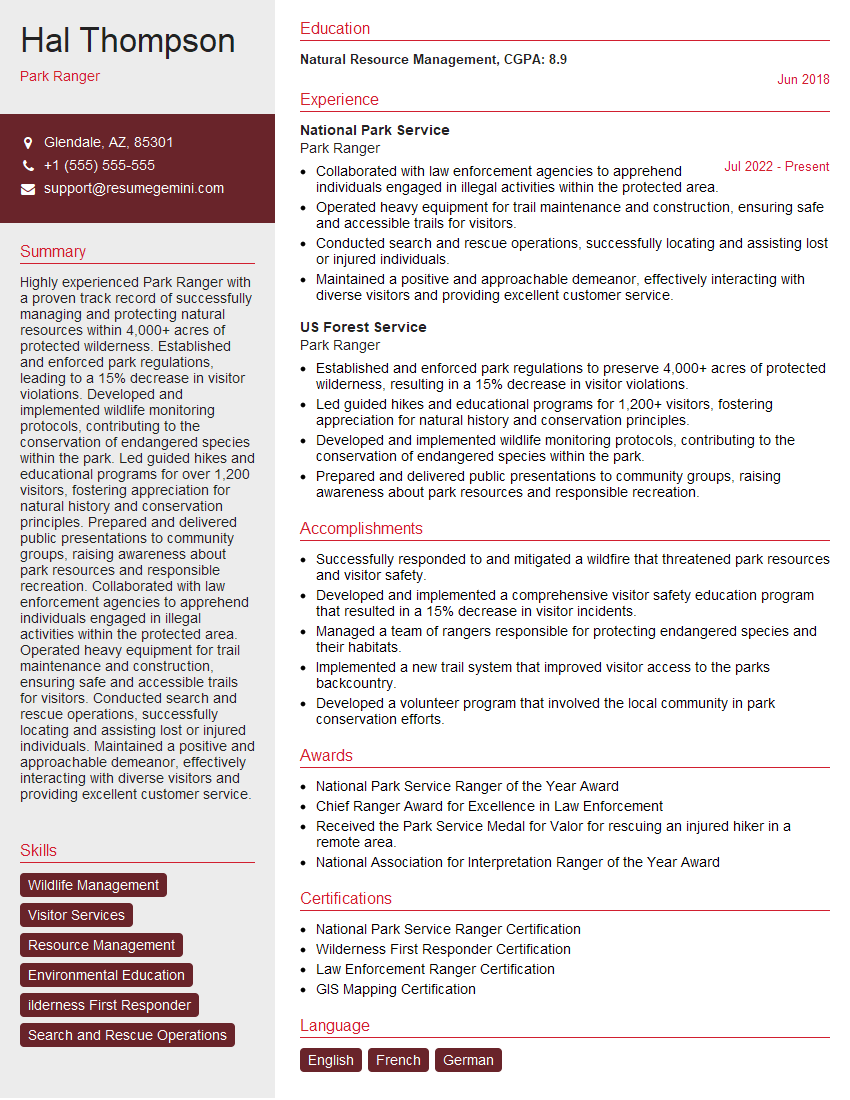
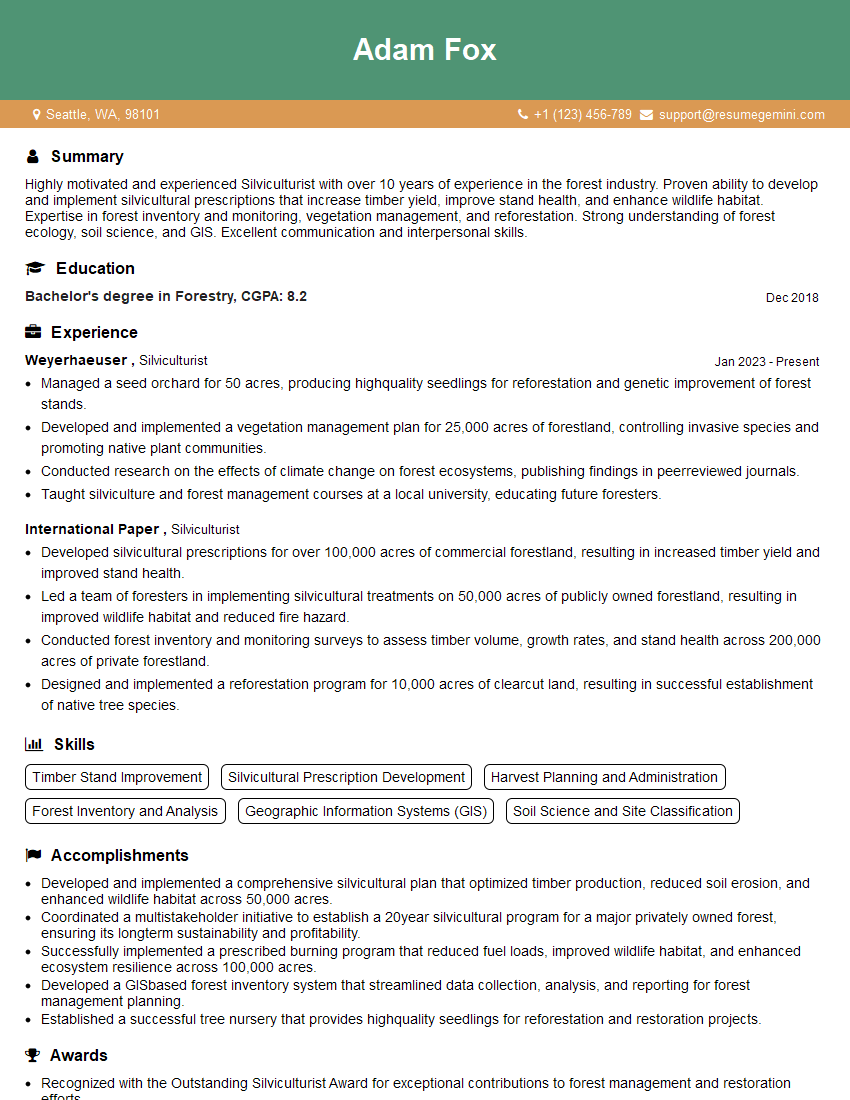
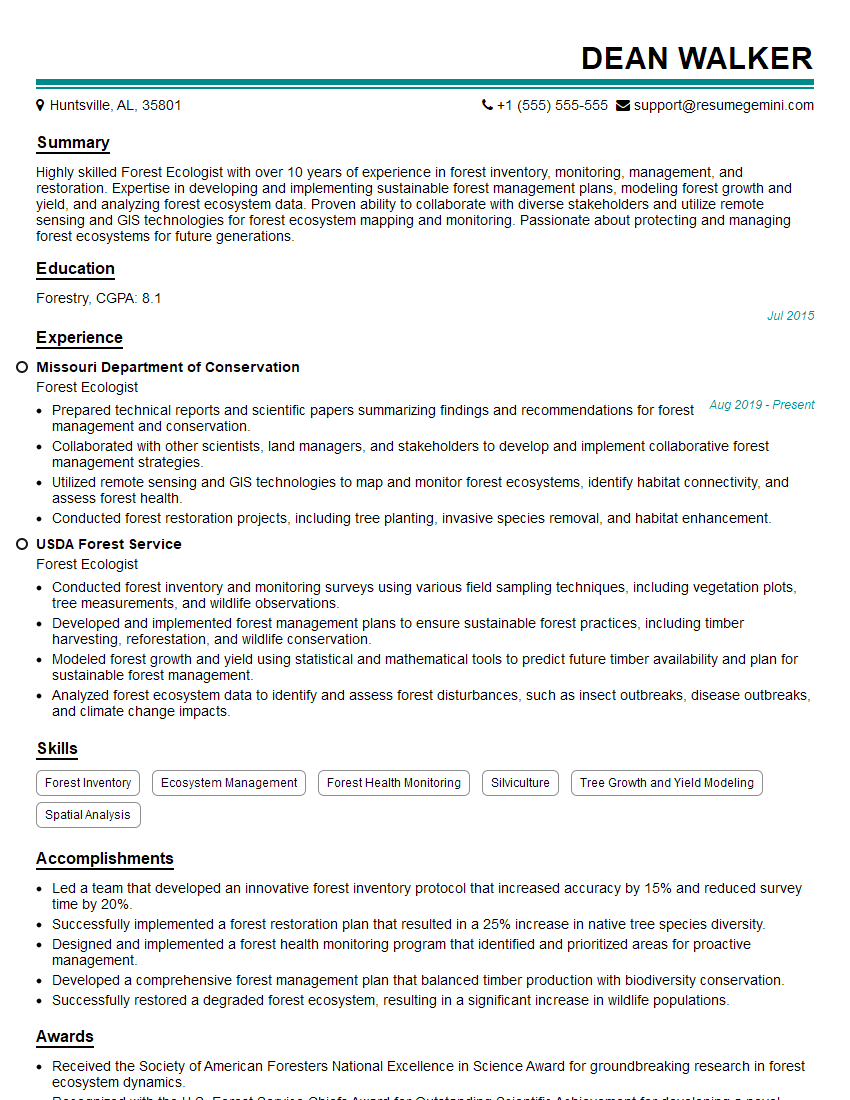
Mastering Forest Geography and Road Conditions is crucial for a successful career in forestry, environmental science, and related fields. A strong understanding of these areas demonstrates your ability to contribute to sustainable resource management and environmental protection. To maximize your job prospects, create an ATS-friendly resume that showcases your skills and experience effectively. ResumeGemini is a trusted resource to help you build a professional and impactful resume, ensuring your application stands out. Examples of resumes tailored to Forest Geography and Road Conditions are available to further guide your preparation. Take the next step and craft a resume that reflects your expertise and secures your desired position.




Explore more articles
Users Rating of Our Blogs
Share Your Experience
We value your feedback! Please rate our content and share your thoughts (optional).
What Readers Say About Our Blog
Very informative content, great job.
good