The right preparation can turn an interview into an opportunity to showcase your expertise. This guide to Record Label Operations interview questions is your ultimate resource, providing key insights and tips to help you ace your responses and stand out as a top candidate.
Questions Asked in Record Label Operations Interview
Q 1. Describe your experience with music distribution channels (digital and physical).
My experience encompasses the entire spectrum of music distribution, from traditional physical formats to the complexities of the digital landscape. With physical distribution, I’ve overseen manufacturing, warehousing, and logistics, ensuring timely delivery to retailers and distributors, both domestically and internationally. This involved negotiating favorable pricing with pressing plants, managing inventory levels to avoid stockouts or overstocking, and working with distribution networks to optimize reach and minimize costs. For instance, I successfully negotiated a deal with a major distributor to secure preferred pricing for vinyl production, resulting in a significant cost reduction for a recent album release. In the digital realm, I’m proficient in utilizing major platforms like Spotify, Apple Music, Amazon Music, and Bandcamp. This includes setting up and managing artist profiles, ensuring accurate metadata, and monitoring performance metrics such as streams, downloads, and sales. I have a deep understanding of digital distribution aggregators and their role in delivering music to these platforms efficiently and globally. I also have hands-on experience with DSP relationships and negotiations, which has been crucial for maximizing our reach and revenue share.
Q 2. Explain your understanding of music royalties and how they are calculated.
Music royalties are payments made to artists and copyright holders for the use of their music. The calculation is intricate and varies significantly depending on the type of usage. Mechanical royalties, for example, are paid for the reproduction and distribution of copyrighted musical works, such as CDs, downloads, or streams. The rate is typically determined by statutory rates set by performing rights organizations (PROs) or negotiated directly with publishers. Performance royalties are paid for public performances of music, such as on radio or in concerts. These are collected by PROs (like ASCAP, BMI, and SESAC) and distributed to copyright holders based on usage data. Digital royalties, paid for online streams and downloads, are usually calculated as a percentage of revenue generated from these activities, with the exact percentage depending on the platform and any negotiated deals. A complex system of splitting royalties exists based on the number of songwriters and publishers involved. For instance, if a song has two songwriters and two publishers, the royalties will be split four ways. In a nutshell, understanding royalty calculations requires analyzing the different types of usage, applicable statutory rates or negotiated agreements, and a thorough understanding of songwriter and publisher splits to ensure accurate and fair distribution.
Q 3. How would you manage a budget for a new artist’s album release?
Budgeting for a new artist’s album release requires a meticulous approach, dividing expenses into several key categories. Firstly, recording and production costs, including studio time, engineers, musicians, and mixing/mastering, would be a significant portion. Then, we have marketing and promotion, encompassing digital advertising (social media campaigns, streaming service promotions), physical marketing (radio promotions, print ads), and public relations. Distribution costs include manufacturing and pressing (for physical copies) and aggregator fees (for digital distribution). Finally, we factor in artistic fees, including potential advances to the artist, and administrative expenses, such as legal fees, accounting, and management costs. The budget would be developed through thorough market research, sales projections, and a realistic assessment of the artist’s potential. For example, a budget might allocate 40% for recording and production, 30% for marketing and promotion, 15% for distribution, and 15% for other expenses. Regular monitoring and adjustments are crucial to ensure the project remains on track and within the budget.
Q 4. What strategies would you employ to maximize streaming revenue for an artist?
Maximizing streaming revenue requires a multi-pronged strategy. First, high-quality music is paramount. We need music that’s appealing to the target audience and receives positive reviews. Next, effective playlist pitching is crucial. We’ll target relevant playlists on major streaming platforms based on genre, mood, and audience demographics. This requires close collaboration with playlist curators and understanding their selection criteria. Targeted advertising campaigns on social media and streaming services themselves can drive listener growth and increase streams. Engaging with fans through social media, email marketing, and live performances keeps them interested and encourages repeat listening and sharing. We will also track analytics closely to adjust our strategy and focus on the most effective channels. Finally, strategic use of pre-save campaigns and release day promotion helps boost the initial impact of the release, leading to greater visibility and listener accumulation.
Q 5. How familiar are you with different music licensing agreements (e.g., mechanical, synchronization)?
I possess a strong understanding of various music licensing agreements. Mechanical licenses grant the right to reproduce and distribute a musical work, for instance, including downloads and streams. Synchronization licenses allow the use of music in visual media, such as film, television, or advertising. The fees for these licenses vary greatly depending on factors like usage, length of use, territory, and the popularity of the song. I’m familiar with negotiating these licenses, understanding the terms, and ensuring the artist receives appropriate compensation. For instance, securing a synchronization license for a song in a major motion picture is a valuable undertaking, requiring detailed negotiation and careful contract review to protect the artist’s interests and ensure fair payment. Furthermore, I’m knowledgeable about performance licenses, granted through PROs for public performances, and understand the complexities of licensing for cover versions and derivative works.
Q 6. Explain your experience with artist management and contract negotiation.
My experience with artist management includes overseeing all aspects of an artist’s career, from creative development to business affairs. This involves developing marketing plans, managing tours, overseeing financial accounting, and coordinating with agents, lawyers, and other professionals. Contract negotiation is a critical aspect of this role. I’ve negotiated numerous artist agreements, ensuring that the terms are favorable to both the label and the artist, protecting the rights of each party while encouraging a collaborative and fruitful relationship. I understand the importance of balancing the artistic vision with the commercial realities of the music industry. For example, I successfully negotiated a recording contract for a promising artist that secured favorable royalty rates and creative control, while simultaneously providing the label with sufficient recoupment provisions. My approach prioritizes open communication, building trust, and finding mutually beneficial solutions.
Q 7. How would you handle a conflict between an artist and the label?
Handling conflicts between an artist and the label requires a diplomatic and proactive approach. The first step is to create a safe and open environment for dialogue. I would schedule a meeting with both parties to understand the perspectives and concerns of each. Active listening is key. Then, I would attempt to identify the root cause of the conflict, whether it’s creative differences, financial disagreements, or communication breakdowns. Once the issues are identified, I’d facilitate a collaborative discussion to find mutually acceptable solutions. This may involve mediation or arbitration if necessary, but the goal is to preserve the working relationship while addressing the concerns of both parties. Sometimes, compromise is key – a willingness to negotiate and understand different viewpoints is crucial for a successful outcome. For example, I once mediated a conflict regarding an album’s artwork, facilitating a compromise that satisfied both the artist’s vision and the label’s marketing goals.
Q 8. Describe your process for tracking and reporting on marketing campaign performance.
Tracking and reporting marketing campaign performance is crucial for optimizing ROI. My process involves a multi-stage approach, starting with clear, measurable objectives defined at the outset of each campaign. These objectives are translated into specific Key Performance Indicators (KPIs) which we track diligently.
- Data Collection: We leverage analytics platforms like Google Analytics, Spotify for Artists, and Apple Music for Artists to gather data on key metrics. This includes website traffic, social media engagement (likes, shares, comments, reach), streaming numbers, playlist additions, conversion rates (e.g., ticket sales from social media ads), and overall campaign reach.
- Real-time Monitoring: Dashboards are set up to provide real-time insights into campaign performance. This allows us to identify any underperforming elements early and make adjustments accordingly. For example, if click-through rates on a Facebook ad are low, we might A/B test different ad creatives or target a different audience segment.
- Regular Reporting: Weekly and monthly reports are generated, summarizing key performance indicators and highlighting areas of success and areas needing improvement. These reports include visualizations (charts and graphs) for easy understanding and interpretation. They also offer recommendations for future campaign optimization.
- Attribution Modeling: Understanding which marketing channels are most effective in driving conversions is essential. We employ attribution models to assess the contribution of various channels to overall campaign success. This helps us allocate marketing budget efficiently in the future.
For instance, a recent campaign for an artist’s new single saw exceptional success on TikTok, leading to a significant increase in streams and pre-saves. By analyzing the data, we were able to replicate this strategy for future releases.
Q 9. What metrics would you use to evaluate the success of a music release?
Evaluating the success of a music release is a multifaceted process that goes beyond just sales figures. We consider a range of metrics, both quantitative and qualitative, to gain a comprehensive understanding of the release’s performance and impact.
- Streaming Metrics: Total streams across all major platforms (Spotify, Apple Music, Amazon Music, etc.), average daily streams, listener growth, and playlist additions are vital indicators of audience engagement and reach.
- Sales Figures: Physical album sales, digital downloads, and merchandise sales provide insight into the commercial success of the release.
- Social Media Engagement: Tracking likes, shares, comments, mentions, and overall reach on platforms like Instagram, Twitter, Facebook, and TikTok reveals the level of fan engagement and brand awareness.
- Radio Play: Monitoring radio airplay (adds and spins) is important for artists targeting mainstream audiences.
- Critical Acclaim: Reviews from music publications and blogs can significantly impact an artist’s credibility and influence their fan base.
- Chart Performance: Reaching high positions on music charts (Billboard, etc.) indicates wider recognition and commercial success.
- Live Performance Attendance: Increased attendance at concerts and shows following a release reflects the success of connecting with fans on a personal level.
It’s important to note that the weighting of these metrics varies depending on the artist’s goals and the overall marketing strategy. For an independent artist focusing on building a loyal fanbase, social media engagement might hold more weight than Billboard chart positions, for example.
Q 10. How do you stay up-to-date on industry trends and best practices?
Staying updated in the dynamic music industry requires a proactive and multi-pronged approach.
- Industry Publications and Blogs: I regularly read publications like Billboard, Music Business Worldwide, and Hypebot to stay abreast of the latest news, trends, and best practices.
- Conferences and Workshops: Attending industry events like South by Southwest (SXSW) and conferences focused on digital music distribution and marketing provides invaluable networking opportunities and insights into emerging trends.
- Webinars and Online Courses: Many platforms offer webinars and online courses on various aspects of the music business, from digital marketing to music licensing. I actively participate in relevant courses to enhance my skills and knowledge.
- Networking: Building and maintaining relationships with other professionals in the music industry, including fellow label managers, digital marketers, and publicists, is crucial for staying informed and gaining valuable perspectives.
- Data Analysis: I track key industry data – such as streaming numbers, chart performance, and social media trends – to identify emerging patterns and inform our strategic decision-making.
For instance, I recently participated in a webinar on the evolving landscape of music NFTs, which provided valuable insights into potential new revenue streams for artists.
Q 11. What software or tools do you use to manage record label operations?
Managing record label operations efficiently requires the right tools. We utilize a combination of software and tools to streamline various aspects of our workflow.
- Customer Relationship Management (CRM): We use a CRM system (e.g., Salesforce, HubSpot) to manage artist relationships, track communication, and organize project details.
- Project Management Software: Tools like Asana or Trello help us manage tasks, deadlines, and collaborations across different teams (marketing, A&R, legal).
- Accounting Software: We use accounting software (e.g., Xero, QuickBooks) for accurate financial tracking, expense management, and royalty calculations.
- Digital Distribution Platforms: We use platforms like DistroKid, TuneCore, or CD Baby to distribute music to various digital streaming services and download stores.
- Marketing Automation Tools: Tools like Mailchimp or similar platforms allow for targeted email marketing campaigns and automated communication with fans.
- Analytics Platforms: As mentioned earlier, Google Analytics, Spotify for Artists, and Apple Music for Artists are essential for tracking marketing campaign performance and understanding audience behavior.
These tools work together to create a centralized system for managing all aspects of record label operations, from artist onboarding to royalty payments and marketing campaigns.
Q 12. How would you handle a crisis, such as a leaked track or negative press?
Handling crises, such as leaked tracks or negative press, requires a swift and strategic response. My approach focuses on damage control, transparency, and proactive communication.
- Assess the Situation: The first step is to understand the extent of the problem, identify the source (if possible), and assess potential damage to the artist’s reputation and brand image.
- Develop a Crisis Communication Plan: This involves crafting a clear and concise message to address the issue, acknowledging any wrongdoing or mistakes, and outlining steps being taken to rectify the situation.
- Control the Narrative: We aim to be proactive in shaping the narrative surrounding the crisis. This might involve issuing a press statement, engaging with fans and media outlets on social media, and addressing concerns transparently.
- Legal Counsel: Depending on the severity of the crisis, we consult with legal counsel to determine the best course of action and protect the artist’s legal rights.
- Monitor the Situation: We closely monitor the online conversation and media coverage to gauge public sentiment and adjust our response as needed.
In a scenario where a track leaked, we would focus on removing unauthorized versions from the internet while simultaneously accelerating the official release. If the leak generated negative press, we’d address any valid concerns and focus on highlighting the positive aspects of the artist’s work and career.
Q 13. Explain your understanding of digital rights management (DRM).
Digital Rights Management (DRM) is a technology used to control access to digital content, preventing unauthorized copying or distribution. In the music industry, DRM can be applied to digital audio files to protect copyright and enforce licensing agreements. However, its use is becoming less prevalent due to various factors.
Historically, DRM was heavily implemented, often involving restrictive software that limited users’ ability to play music on multiple devices or burn CDs. This often resulted in user frustration and decreased consumer satisfaction.
The rise of streaming services has led to a decrease in reliance on DRM. Streaming platforms utilize their own proprietary technologies to manage access to copyrighted music without directly using DRM on the files themselves. Focus is shifted to licensing agreements and platform-specific access controls.
While some niche applications of DRM may still exist, the industry trend leans towards managing rights through licensing agreements and secure streaming platforms rather than embedding restrictive DRM technologies directly into the audio files themselves.
Q 14. Describe your experience with data analysis in the music industry.
Data analysis is integral to modern music industry operations. My experience encompasses leveraging data to inform strategic decision-making across various aspects of the business.
- Marketing Campaign Optimization: As previously discussed, analyzing data from marketing campaigns helps to identify what works and what doesn’t, allowing for efficient budget allocation and refined targeting strategies.
- Audience Segmentation: Data analysis helps in segmenting audiences based on demographics, listening habits, and engagement patterns, enabling personalized marketing campaigns and more effective fan engagement.
- Artist Development: Analyzing streaming data, social media metrics, and concert attendance provides valuable insights into an artist’s strengths, weaknesses, and overall fanbase growth, helping to inform future creative and strategic decisions.
- Royalty Calculation and Distribution: Accurate data analysis is essential for calculating and distributing royalties fairly and efficiently to artists and rights holders.
- Predictive Modeling: Analyzing historical data on music release performance, audience behavior, and market trends can be used to build predictive models that help forecast the potential success of future releases.
For example, by analyzing streaming data, we identified a sub-segment of our artist’s fanbase that was particularly engaged with a specific genre of music. This led to targeted promotional efforts and increased engagement within that specific segment, boosting overall streaming numbers.
Q 15. How do you prioritize tasks and manage multiple projects simultaneously?
Prioritizing tasks and managing multiple projects in the fast-paced world of record label operations requires a structured approach. I rely heavily on project management tools and methodologies like Agile, breaking down large projects into smaller, manageable tasks. This allows for better tracking of progress and easier identification of potential bottlenecks.
For example, imagine launching an album for an artist. I’d break this down into phases: pre-release marketing (social media campaigns, radio promotion, playlist pitching), release day activities (streaming platform optimization, physical distribution), and post-release promotion (tour support, music video release). Each phase has sub-tasks assigned with deadlines and responsible parties. Tools like Asana or Trello are invaluable here, facilitating collaboration and transparency.
Furthermore, I prioritize tasks based on urgency and importance using methods like the Eisenhower Matrix (urgent/important). This ensures that crucial activities, like securing distribution deals or addressing immediate artist needs, get the attention they deserve. Regular review meetings help keep the entire team aligned and adapt to unexpected challenges.
Career Expert Tips:
- Ace those interviews! Prepare effectively by reviewing the Top 50 Most Common Interview Questions on ResumeGemini.
- Navigate your job search with confidence! Explore a wide range of Career Tips on ResumeGemini. Learn about common challenges and recommendations to overcome them.
- Craft the perfect resume! Master the Art of Resume Writing with ResumeGemini’s guide. Showcase your unique qualifications and achievements effectively.
- Don’t miss out on holiday savings! Build your dream resume with ResumeGemini’s ATS optimized templates.
Q 16. How would you develop a marketing strategy for an emerging artist?
Developing a marketing strategy for an emerging artist is crucial for establishing a strong foundation. It involves a multi-pronged approach, leveraging both traditional and digital channels. We start with a deep dive into the artist’s unique selling proposition (USP) – what sets them apart? What genre do they fit into? Who is their target audience?
Next, we build a targeted digital marketing campaign, focusing on social media engagement (Instagram, TikTok, etc.), targeted advertising on platforms like Spotify and YouTube, and influencer marketing to reach potential fans. This will also involve creating engaging content like music videos, behind-the-scenes footage and short-form content to drive organic growth.
Simultaneously, we explore opportunities for traditional media placements – pitching songs to radio stations, securing press coverage in relevant music publications, and identifying opportunities for live performances. We also analyze data regularly, adjusting our strategy based on performance metrics to ensure maximum impact and ROI.
For instance, if an artist’s music resonates particularly well with a younger demographic on TikTok, we’ll invest more heavily in TikTok marketing and leverage trending sounds and challenges to maximize reach.
Q 17. What experience do you have with international music distribution?
I have extensive experience with international music distribution, having worked with labels to release music in various territories globally. This includes navigating the complexities of different digital service providers (DSPs) in various regions and understanding local market nuances.
My experience encompasses managing the entire distribution workflow, from preparing and delivering master files and metadata according to each territory’s specifications to tracking sales data and royalty payments across multiple platforms. I have a strong understanding of international licensing agreements and the legal frameworks governing music distribution in diverse markets. I’ve personally handled distribution to various countries in Europe, Asia, and North America, adapting strategies based on local preferences and legal requirements.
For example, the approach to distribution in Japan differs significantly from that in the US. In Japan, physical sales still hold significant importance, requiring focused attention to CD manufacturing and distribution channels. Understanding these regional variations is essential for successful international releases.
Q 18. Explain your understanding of copyright law in the music industry.
Copyright law in the music industry is complex, but fundamentally it protects the intellectual property rights of songwriters and composers. This encompasses musical works (the melody, harmony, and rhythm) and lyrics. It grants exclusive rights to the copyright holder, including the right to reproduce, distribute, perform, and create derivative works.
Understanding copyright involves differentiating between musical works (composition) and sound recordings (master recordings). The songwriter owns the copyright to the composition, while the record label typically owns the copyright to the sound recording (unless otherwise agreed upon in contracts). There are different types of copyright licenses that can grant specific uses of a copyrighted work, such as mechanical licenses (for creating physical copies of a song) or synchronization licenses (for using music in film or video).
Infringement can have serious legal consequences, including hefty fines and lawsuits. I am familiar with the process of registering copyrights and enforcing rights, ensuring the label complies with all applicable legal regulations. For example, I always ensure that before releasing a song, we have secured all necessary mechanical and synchronization licenses, and that our artist contracts clearly delineate the ownership and exploitation rights of all parties involved.
Q 19. How would you build and maintain relationships with key stakeholders (e.g., distributors, radio stations)?
Building and maintaining strong relationships with key stakeholders is paramount in the music industry. This involves consistent communication, mutual respect, and a shared understanding of goals. With distributors, this means open dialogue about release strategies, sales targets, and resolving any logistical challenges efficiently.
Regular check-ins and transparent reporting build trust. For radio stations, building relationships often means providing promotional materials, personalized pitches, and nurturing ongoing communication with program directors. Attending industry events and conferences is crucial for networking and strengthening existing relationships.
I approach each relationship with a focus on win-win scenarios, recognizing the mutual benefit of a successful collaboration. For example, I always ensure that distributors have the materials they need well in advance, while also providing radio stations with exclusive content or opportunities to interview our artists. Active listening and addressing concerns promptly are essential components of maintaining these vital partnerships.
Q 20. Describe your experience with A&R (Artists and Repertoire) processes.
A&R (Artists and Repertoire) is the lifeblood of a record label, focusing on discovering and developing talent. My experience encompasses the entire A&R process, from identifying promising artists through scouting, attending live performances and reviewing online submissions to evaluating their musical abilities, market potential, and overall ‘star quality’.
I’ve been involved in artist development, providing guidance on songwriting, production, and overall artistic direction. This often includes connecting artists with producers, songwriters, and other industry professionals to enhance their creative potential. It also involves negotiating contracts, managing expectations, and providing ongoing support throughout the artist’s career.
For example, I was instrumental in discovering a singer-songwriter who was initially performing only in local open mics. Through consistent mentorship and strategic guidance, we developed their musical style, connected them with a talented producer, and guided them through recording and releasing their debut EP. Their successful trajectory highlights the importance of thoughtful and supportive A&R involvement.
Q 21. How familiar are you with different types of music publishing agreements?
I’m very familiar with different types of music publishing agreements, understanding the nuances of each and how they impact the rights and royalties of songwriters and composers. These agreements govern the administration and exploitation of a musical composition’s copyright, including the right to mechanical reproduction, performance, and synchronization.
Common agreement types include: Writer’s Share Agreements (allocating songwriting credits and royalties among multiple writers), Co-publishing Agreements (where the publishing rights are shared between the songwriter and a publisher), and Administering Agreements (where a publisher handles the administration of a song’s copyright, but the songwriter retains ownership). Each agreement has different implications for the control, financial returns, and duration of rights for the involved parties.
I ensure that we negotiate publishing agreements that are fair and protective of both the songwriter’s and label’s interests. Careful consideration is given to factors such as the royalty rate structure, term length, and territorial limitations. A deep understanding of these complexities ensures that all stakeholders are adequately compensated for their contributions and that rights are clearly defined and legally protected.
Q 22. What is your experience with music streaming platforms and their algorithms?
My experience with music streaming platforms is extensive, encompassing both strategic partnerships and a deep understanding of their algorithms. I’ve worked with Spotify, Apple Music, Amazon Music, and YouTube Music, negotiating distribution deals and analyzing platform-specific data to optimize artist performance. Understanding these algorithms is crucial for success. For instance, Spotify’s algorithm considers factors like user listening history, genre preferences, and overall popularity to suggest music. This means understanding how to leverage playlist placements (editorial and algorithmic) and utilizing data-driven approaches to improve an artist’s discoverability. Similarly, YouTube Music’s algorithm prioritizes videos with high engagement metrics. My work involves crafting strategies to maximize engagement on each platform, understanding that each has its unique nuances.
I’ve directly utilized this knowledge to improve artist chart positions and streaming numbers. For example, I identified a niche playlist on Spotify relevant to a particular artist’s sound and secured placement, resulting in a significant boost in streams within a month. This involved understanding not only the algorithm itself but also the editorial curation processes behind those playlists.
Q 23. How would you manage the finances of a record label, including budgeting and forecasting?
Managing a record label’s finances requires meticulous budgeting and forecasting. It’s a balancing act between investment and return. I use a multi-stage approach. First, I create detailed budgets for each artist, encompassing recording costs, marketing expenses (digital and physical), distribution fees, touring expenses (if applicable), and administrative overhead. This often involves utilizing project management software to track expenses in real time. Next, I develop comprehensive financial forecasts, projecting revenue streams from streaming royalties, physical sales, merchandise, and licensing deals. This predictive model is crucial for securing funding and making informed decisions. Finally, I implement robust accounting systems and regular financial reporting to monitor progress and identify areas for improvement. A key part of this is accurately forecasting royalty payments based on various streaming platform structures and agreements. I use financial modeling software to make informed decisions about resource allocation and identify potential risks or opportunities.
For example, when planning an album release, I would carefully assess the anticipated production costs, marketing budget (including social media campaigns and PR), distribution fees (digital and physical), and then project potential revenue based on realistic sales targets and streaming projections. This allows me to determine the overall profitability and manage the investment effectively.
Q 24. What are your strategies for identifying and developing new talent?
Identifying and developing new talent involves a multi-pronged approach. It begins with active scouting – attending live music events, collaborating with talent scouts, and monitoring online platforms like YouTube and SoundCloud for promising artists. This involves listening to a vast amount of music with a discerning ear, recognizing not only musical talent but also potential market appeal and marketability. I focus on artists with unique sounds, compelling stories, and a strong work ethic. Once I’ve identified potential candidates, I build relationships, mentoring them on their artistry and offering guidance on career development, including songwriting, performance, and branding. I emphasize authenticity and ensuring artists’ creative visions align with the label’s ethos.
Furthermore, I incorporate A&R (artists and repertoire) techniques, which involve evaluating artists’ potential, helping to shape their musical direction, and securing songwriting collaborations to maximize their potential. For example, I once discovered a talented singer-songwriter through a local open mic night. By providing them with studio time, connecting them with a producer, and creating a tailored marketing plan, we launched their debut EP, which saw significant success on streaming platforms and led to touring opportunities.
Q 25. How do you ensure compliance with all relevant industry regulations?
Compliance is paramount in the music industry. I ensure adherence to all relevant regulations by staying updated on copyright laws, mechanical licensing, performance rights organizations (PROs) like ASCAP, BMI, and SESAC, and data privacy regulations like GDPR. This involves establishing clear contracts with artists, ensuring proper royalty accounting, and adhering to best practices for data collection and use. I maintain meticulous records of all transactions and ensure transparency in all dealings. I also consult with legal counsel regularly to remain informed on legal updates and navigate complex contractual issues. Understanding and properly addressing these legal obligations protects both the label and the artists.
For example, before releasing any music, I ensure that all necessary mechanical licenses are secured, and that proper royalty splits are outlined in contracts with artists, composers, and publishers, to avoid legal disputes later on. This proactive approach is key to maintaining the label’s reputation and preventing financial losses.
Q 26. Describe your experience with social media marketing for music artists.
Social media marketing is integral to modern music promotion. My strategies involve creating engaging content tailored to each platform – using short-form video on TikTok, high-quality visuals on Instagram, and interactive content on Twitter and Facebook. I utilize targeted advertising campaigns to reach specific demographics interested in the artists’ genre. Data analytics play a crucial role in evaluating campaign effectiveness, identifying successful approaches, and adjusting strategies as needed. I believe in fostering a genuine connection with fans by encouraging direct interaction and responding to comments and messages. Building a strong online community is essential for sustained growth.
For example, I developed a TikTok campaign that focused on behind-the-scenes content for an upcoming artist. We created short, engaging videos showcasing the recording process, their personality, and a sneak peek of their upcoming music. The result was a significant increase in followers, engagement, and ultimately, a greater interest in their music when it was officially released.
Q 27. How do you use data analytics to inform decision-making in record label operations?
Data analytics is a cornerstone of my decision-making process. I utilize various tools and platforms to collect, analyze, and interpret data related to streaming performance, social media engagement, marketing campaign effectiveness, and financial performance. This data-driven approach allows for more informed resource allocation, optimized marketing strategies, and better forecasting. I focus on key metrics such as streaming numbers, playlist placements, social media growth, website traffic, and conversion rates. These insights help identify trends, understand audience behavior, and improve the overall impact of our efforts.
For instance, by tracking streaming data across different platforms, I can pinpoint specific songs or albums that are underperforming and investigate reasons for this, which might involve tailoring the marketing strategy to focus on specific demographics or platforms. This allows for more efficient budget allocation and a more focused approach to marketing.
Q 28. What are your strategies for building brand awareness for a record label?
Building brand awareness for a record label involves creating a distinct identity and communicating it consistently across all platforms. This includes defining the label’s aesthetic, values, and target audience. I achieve this through a multi-faceted approach including developing a strong visual identity (logo, branding), crafting a compelling narrative that resonates with the target audience, and ensuring consistent messaging across all channels. I leverage PR strategies to secure media coverage in relevant publications, create opportunities for artist interviews, and collaborate with influencers to extend reach and credibility. Furthermore, strategic partnerships with other brands and organizations can significantly increase visibility and establish connections within the wider industry.
For example, we developed a visually striking brand identity for a new label, including a distinctive logo and a consistent color palette used across all promotional materials. This consistent branding, along with targeted PR campaigns and strategic partnerships, established the label’s identity and credibility within the music industry, attracting both artists and a loyal audience.
Key Topics to Learn for Record Label Operations Interview
- Artist & Repertoire (A&R): Understanding the A&R process, from talent scouting and artist development to contract negotiation and creative direction. Practical application: Analyze a successful artist’s career trajectory and identify key A&R decisions that contributed to their success.
- Marketing & Promotion: Developing and executing marketing strategies across various platforms (digital, radio, print, etc.). Practical application: Create a hypothetical marketing plan for a new artist release, outlining budget allocation and key performance indicators (KPIs).
- Project Management: Managing the complexities of album releases, tours, and other projects within budget and timeline constraints. Practical application: Describe your experience in managing multiple projects simultaneously, highlighting your organizational and problem-solving skills.
- Finance & Budgeting: Understanding royalty calculations, budget management, and financial reporting within the music industry. Practical application: Explain how you would track expenses and revenue for a specific project to ensure profitability.
- Legal & Contracts: Familiarity with music industry contracts, intellectual property rights, and legal considerations. Practical application: Describe your understanding of key clauses in standard recording and publishing agreements.
- Digital Distribution & Streaming: Knowledge of digital music distribution platforms, streaming analytics, and strategies for maximizing online reach. Practical application: Compare and contrast different digital distribution services and their impact on artist revenue.
- Teamwork & Collaboration: Demonstrate your ability to effectively collaborate with artists, producers, managers, and other label personnel. Practical application: Describe a situation where you successfully collaborated with a team to overcome a challenge.
Next Steps
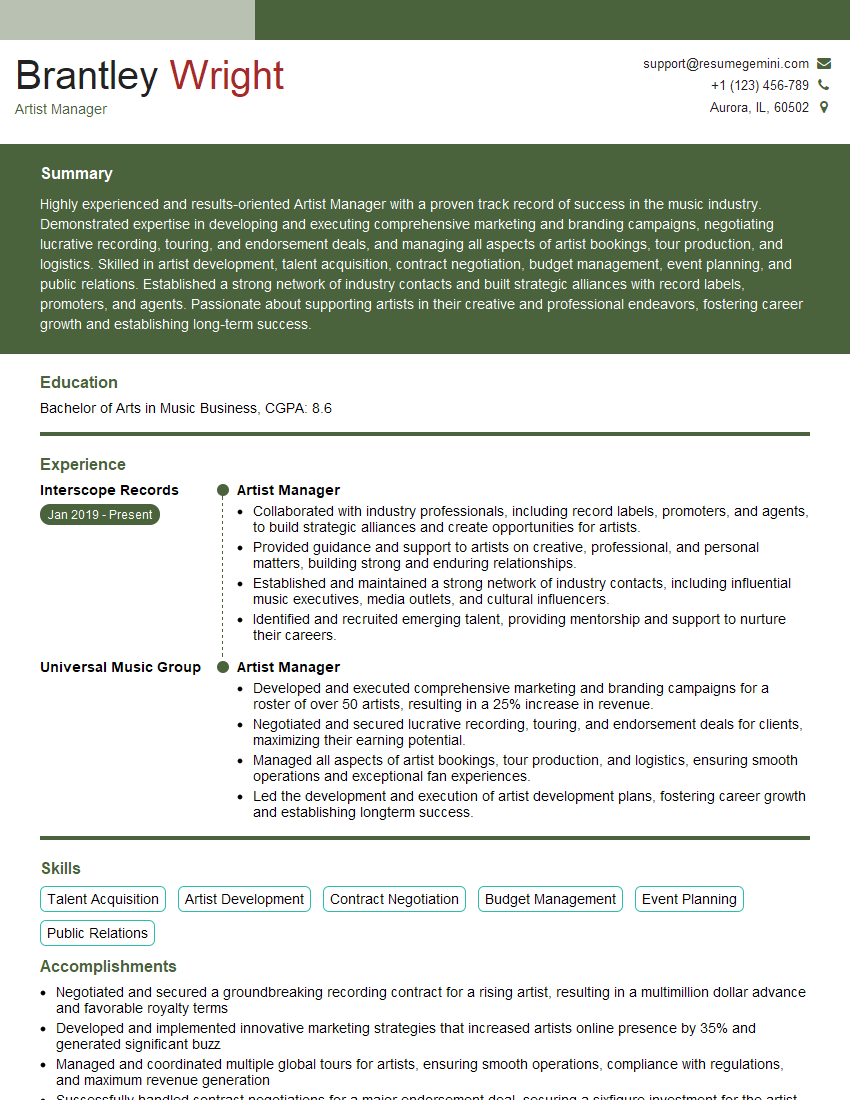
Mastering Record Label Operations opens doors to exciting and rewarding careers in the music industry. A strong understanding of these key areas significantly increases your chances of landing your dream job. To further boost your prospects, crafting an ATS-friendly resume is crucial. This ensures your qualifications are effectively highlighted to potential employers. We strongly recommend using ResumeGemini to build a professional and impactful resume. ResumeGemini offers a user-friendly platform and provides examples of resumes tailored to Record Label Operations, helping you showcase your skills and experience effectively.
Explore more articles
Users Rating of Our Blogs
Share Your Experience
We value your feedback! Please rate our content and share your thoughts (optional).
What Readers Say About Our Blog
Very informative content, great job.
good