Cracking a skill-specific interview, like one for Forklift Warehousing and Distribution, requires understanding the nuances of the role. In this blog, we present the questions you’re most likely to encounter, along with insights into how to answer them effectively. Let’s ensure you’re ready to make a strong impression.
Questions Asked in Forklift Warehousing and Distribution Interview
Q 1. Describe your experience operating different types of forklifts.
Throughout my career, I’ve operated a variety of forklift types, adapting my technique to each machine’s specific capabilities and limitations. This includes:
- Sit-down counterbalanced forklifts: These are the most common type, ideal for general warehouse operations and handling heavier loads. I’m proficient in navigating tight spaces and maneuvering pallets efficiently with these.
- Stand-up reach trucks: These are excellent for reaching high racking systems, maximizing vertical storage space. I have experience optimizing picking and stacking procedures with reach trucks, ensuring efficient high-bay operations.
- Order pickers: These are specifically designed for order fulfillment, enhancing speed and accuracy in picking individual items from various locations within a warehouse. My experience with order pickers prioritizes efficient picking paths and minimizes travel time.
- Walkie stackers: Suitable for smaller warehouses or tighter spaces where larger forklifts might be difficult to maneuver. I’ve utilized these for lighter loads and short-distance transport.
My experience extends beyond basic operation; I’m also familiar with the maintenance procedures required to keep these machines in optimal condition, understanding pre-shift checks and reporting any mechanical issues.
Q 2. What are the key safety procedures you follow while operating a forklift?
Safety is paramount in forklift operation. My routine always begins with a thorough pre-shift inspection, checking fluids, tires, lights, and controls. Key safety procedures I religiously follow include:
- Pre-operational checks: This includes verifying that all safety features are functioning correctly before even starting the engine.
- Seatbelt usage: Wearing a seatbelt at all times is non-negotiable. It’s the first line of defense in case of any sudden movements or accidents.
- Load capacity awareness: Never exceeding the forklift’s stated weight capacity. I always check the load weight and ensure the weight is evenly distributed on the forks.
- Safe speed limits: Adjusting speed according to the conditions. I drive slower in congested areas, around corners, and when carrying a load.
- Horn usage: Signaling my presence and intentions, especially in blind corners and busy areas.
- Proper lifting techniques: Ensuring the load is stable and secured before lifting, avoiding sudden movements that can cause the load to shift or topple.
- Refueling safety: Following proper procedures for refueling, ensuring no sparks or flames are near the fuel source.
I am also trained in emergency procedures, including how to safely shut down the machine in case of malfunctions and how to react to potential accidents.
Q 3. How do you ensure the safety of pedestrians in a warehouse environment?
Pedestrian safety is crucial. My approach focuses on proactive measures to prevent accidents:
- Designated walkways: I am aware of and strictly adhere to all designated pedestrian walkways, avoiding areas where pedestrians are likely to be present.
- Visual awareness: Constantly scanning my surroundings for pedestrians, and slowing down or stopping if necessary to ensure their safety.
- Horn and light signals: Utilizing the forklift’s horn and lights effectively to alert pedestrians of my presence and intended movements.
- Communication: Maintaining clear and open communication with other workers in the area, particularly when navigating confined spaces or high-traffic zones.
- Following warehouse protocols: Adhering to all company-mandated safety procedures and guidelines to ensure a safe working environment for everyone.
Treating the warehouse as a shared space, respecting the pedestrian right-of-way and proactively preventing any potential conflicts is key to a safe working environment. I actively participate in safety briefings and training to stay up-to-date on best practices.
Q 4. Explain your understanding of load capacity and weight distribution.
Understanding load capacity and weight distribution is fundamental to safe and efficient forklift operation. Every forklift has a maximum load capacity, clearly stated on its data plate. Exceeding this limit is extremely dangerous and can lead to accidents.
Weight distribution is equally critical. A load should be centered on the forks to maintain balance and prevent tipping. Uneven weight distribution increases the risk of the forklift tilting, especially when turning or navigating inclines.
For example, imagine loading a pallet of bricks: if all the bricks are piled on one side of the pallet, the center of gravity shifts, increasing the likelihood of an accident. Ensuring proper stacking and securing is crucial. I always visually inspect the load before lifting to ensure it’s evenly distributed and secure.
Q 5. How do you handle damaged or defective goods in the warehouse?
Handling damaged or defective goods requires careful attention to safety and procedure. My approach is as follows:
- Identification and segregation: I immediately identify and isolate damaged goods, clearly marking them to prevent accidental use or shipment.
- Reporting procedure: I report all damaged goods to the appropriate supervisor, documenting the damage and the circumstances under which it occurred.
- Safe disposal or storage: Damaged goods are then handled according to company policy, which might involve safe disposal, repair, or separate storage for later evaluation.
- Preventing further damage: I exercise caution to avoid further damage to other goods when handling damaged items. This includes using appropriate equipment and handling techniques.
Proper documentation is vital in this process, as it protects the company from potential liabilities and enables investigation of the cause of damage. This might include photographic evidence and a detailed incident report.
Q 6. Describe your experience with inventory management systems.
I have extensive experience with various inventory management systems, including both manual and automated systems. My proficiency includes:
- WMS (Warehouse Management System) interaction: I’m comfortable using WMS software to locate inventory, track movements, and update stock levels. This includes using handheld scanners and mobile devices to receive and manage picking orders.
- RF scanning: I am proficient in using RF scanners to verify inventory accuracy and update the WMS with real-time data.
- Cycle counting: I have experience performing cycle counts to ensure inventory accuracy and identify discrepancies between physical inventory and system records.
- Data entry and reporting: I can accurately record inventory data and generate reports related to inventory levels, movement, and location.
My experience spans various systems, so I am adaptable and can quickly learn new software. Accuracy and efficiency are my priorities when using inventory management systems, as this directly impacts warehouse efficiency and order fulfillment times. I understand the importance of data integrity and maintain high standards in my data entry practices.
Q 7. How do you prioritize tasks in a fast-paced warehouse environment?
Prioritizing tasks in a fast-paced warehouse environment requires a systematic approach. I typically use a combination of strategies:
- Understanding priorities: I first clearly identify the urgency and importance of each task. Urgent and important tasks always take precedence.
- Order fulfillment deadlines: Tasks related to urgent order fulfillment are usually top priority, ensuring timely shipments to customers.
- Inventory management: Maintaining inventory accuracy and addressing stock replenishment needs are also crucial.
- Communication: I regularly communicate with supervisors and team members to stay updated on shifting priorities and potential changes in workflow.
- Time management: Efficient time management is essential. I break down large tasks into smaller, more manageable steps, focusing on one task at a time.
By combining effective prioritization with efficient execution, I can maximize my productivity and contribute to smooth warehouse operations, even under pressure.
Q 8. What is your experience with warehouse management systems (WMS)?
My experience with Warehouse Management Systems (WMS) is extensive. I’ve worked with several leading WMS platforms, including Oracle WMS, SAP EWM, and Manhattan Associates. My expertise goes beyond simply using these systems; I understand their underlying logic and can effectively configure them to optimize warehouse operations. For example, in a previous role, we implemented a new WMS to streamline our picking process. This involved careful mapping of our existing warehouse layout within the system, configuring the optimal picking strategies (wave picking, batch picking, zone picking), and training our staff on the new system. The result was a 20% increase in picking efficiency and a significant reduction in order fulfillment errors. I’m also proficient in using WMS reporting features to analyze key performance indicators (KPIs) like order fulfillment rate, inventory accuracy, and labor productivity, which allows for continuous improvement initiatives.
Q 9. How do you maintain accurate inventory records?
Maintaining accurate inventory records is paramount in warehouse operations. It’s the cornerstone of efficient order fulfillment and accurate financial reporting. My approach involves a multi-pronged strategy: First, we implement rigorous cycle counting procedures, regularly auditing a subset of our inventory rather than attempting a full count, which is time-consuming and disruptive. This allows for early detection of discrepancies. Second, we utilize barcode scanning at every stage of the inventory process – receiving, put-away, picking, and shipping. This data feeds directly into our WMS, providing real-time visibility into inventory levels. Third, we conduct regular physical inventory counts, comparing them against the WMS data to identify and reconcile any variances. Finally, we use advanced inventory management techniques like FIFO (First-In, First-Out) and FEFO (First-Expired, First-Out) for perishable goods to ensure efficient stock rotation and minimal waste. For example, in one instance, we implemented a cycle counting system that reduced inventory discrepancies by 15% in the first quarter.
Q 10. Explain your experience with RF scanners and other warehouse technology.
I’m highly proficient in using RF scanners and other warehouse technologies. My experience includes working with various types of scanners, handheld terminals, and voice-directed picking systems. I understand the importance of integrating these technologies seamlessly with our WMS. RF scanners improve accuracy and speed in tasks like receiving, put-away, picking, and shipping. Voice-directed picking, for instance, enhances efficiency by allowing workers to keep their hands free while receiving instructions, significantly improving picking speed and accuracy. In a previous role, we successfully transitioned from paper-based picking to a voice-directed system, resulting in a 30% increase in picking productivity and a reduction in picking errors. Furthermore, I have experience with warehouse control systems (WCS) used to manage automated equipment like conveyors and automated storage and retrieval systems (AS/RS).
Q 11. Describe your experience with loading and unloading trucks.
My experience with loading and unloading trucks is extensive and encompasses various techniques and safety protocols. I’m adept at optimizing loading strategies to maximize truck space and minimize loading times. This involves considering factors like weight distribution, product fragility, and delivery routes. I’m familiar with different types of loading equipment, including forklifts, pallet jacks, and dock levellers. Safety is my top priority; I always ensure adherence to safety regulations, including proper use of equipment, securing loads, and following OSHA guidelines. For instance, I’ve implemented a training program that reduced loading and unloading accidents by 20% within six months. I also manage the process of verifying incoming and outgoing shipments against purchase orders and shipping documents, ensuring accuracy and resolving discrepancies promptly.
Q 12. How do you ensure the efficient flow of goods within the warehouse?
Ensuring efficient goods flow is crucial for warehouse productivity. My approach involves optimizing warehouse layout, implementing effective slotting strategies, and leveraging technology. A well-designed warehouse layout minimizes travel time for workers and equipment. Slotting strategies, which involve strategically placing fast-moving items in easily accessible locations, are key to efficient order picking. Technology plays a crucial role here too; WMS and RF scanners provide real-time visibility into inventory location and facilitate efficient picking and shipping. In a previous role, we redesigned the warehouse layout and implemented a new slotting strategy, resulting in a 15% reduction in picking time. Regularly reviewing and adjusting these processes based on data analysis is essential for continuous improvement. We also implemented ‘kaizen’ events – short bursts of focused improvement initiatives – to identify and eliminate bottlenecks in the workflow.
Q 13. What is your experience with different types of warehouse racking systems?
I’m familiar with a range of warehouse racking systems, including pallet racking, cantilever racking, drive-in racking, push-back racking, and flow racking. My experience includes selecting and implementing appropriate racking systems based on specific warehouse needs and product characteristics. For instance, pallet racking is suitable for storing a wide range of products, while cantilever racking is ideal for long or bulky items. Drive-in and push-back racking maximize storage density in high-volume environments. Flow racking uses gravity to move products, ideal for FIFO operations. The choice of racking system directly impacts storage capacity, accessibility, and overall efficiency. In choosing a system, factors like product dimensions, weight, turnover rate, and budget are all considered. Proper installation and maintenance of racking systems are also crucial for safety and longevity.
Q 14. How do you handle discrepancies in inventory counts?
Discrepancies in inventory counts are inevitable, but addressing them promptly is key. My approach involves a systematic investigation to pinpoint the root cause. This might involve reviewing picking lists, shipping documents, and RF scan data to identify any errors. We may need to conduct a more thorough physical inventory count of the affected area. The discrepancies might be due to data entry errors, picking errors, damaged goods, or theft. Once the cause is identified, corrective actions are implemented to prevent future occurrences. This could include retraining staff, improving data entry procedures, enhancing security measures, or adjusting inventory management practices. Thorough documentation of the discrepancy, investigation, and resolution is essential for accountability and continuous improvement. A well-documented process helps to minimize the impact of future discrepancies.
Q 15. Explain your experience with picking and packing orders.
Picking and packing is the core of order fulfillment in warehousing. It involves accurately selecting items from designated storage locations based on customer orders and preparing them for shipment. My experience encompasses a wide range of order types, from single-item orders to complex multi-item orders with varying quantities and specifications. I’m proficient in using both manual picking methods and utilizing Warehouse Management Systems (WMS) for guided picking, which significantly improves accuracy and efficiency.
For instance, in my previous role at Acme Distribution, we utilized a WMS that directed pickers via RF scanners to specific locations. This minimized travel time and errors. I consistently exceeded my daily picking targets while maintaining a near-zero error rate. After picking, the careful packaging of items is crucial to prevent damage during transit. This includes using appropriate packaging materials, ensuring proper labeling with clear shipping information, and securing fragile items to prevent breakage. I’ve experience with various packaging methods, from simple cardboard boxes to specialized containers for oversized or sensitive goods. I am adept at adapting my packing techniques to accommodate the specific needs of each order and to optimize for space efficiency during shipping.
Career Expert Tips:
- Ace those interviews! Prepare effectively by reviewing the Top 50 Most Common Interview Questions on ResumeGemini.
- Navigate your job search with confidence! Explore a wide range of Career Tips on ResumeGemini. Learn about common challenges and recommendations to overcome them.
- Craft the perfect resume! Master the Art of Resume Writing with ResumeGemini’s guide. Showcase your unique qualifications and achievements effectively.
- Don’t miss out on holiday savings! Build your dream resume with ResumeGemini’s ATS optimized templates.
Q 16. How do you adhere to company safety policies and procedures?
Safety is my top priority. I meticulously follow all company safety policies and procedures, starting with proper training on all equipment and procedures. This includes regular attendance at safety meetings and actively participating in safety discussions. I always wear the appropriate Personal Protective Equipment (PPE), such as safety glasses, gloves, and steel-toe boots, and I am always mindful of my surroundings to prevent accidents.
For example, when operating a forklift, I conduct pre-operational checks, ensuring all safety mechanisms are functioning correctly before starting. I maintain a safe operating speed, especially in areas with high pedestrian traffic, and always yield to pedestrians. I’m also trained in emergency procedures and know how to respond to various scenarios, such as forklift malfunctions or accidents. I proactively report any unsafe conditions or near-miss incidents to my supervisor. My commitment to safety is not just about following rules; it’s about developing a safety-first mindset, ensuring the well-being of myself and my colleagues.
Q 17. Describe your experience with cycle counting.
Cycle counting is a crucial inventory management technique that involves regularly counting a small subset of inventory rather than performing a complete inventory count. This helps identify discrepancies and ensures the accuracy of our inventory records. My experience includes participating in both scheduled and unscheduled cycle counts, using handheld scanners to record counts and compare them against the system’s records.
I understand the importance of accuracy and efficiency in cycle counting. I use established procedures to ensure that the counting is performed correctly and that any discrepancies are investigated and resolved promptly. In my previous role, we utilized a system that prioritized high-value or high-volume items for more frequent cycle counts. This allowed us to identify and correct inventory inaccuracies quickly, minimizing potential losses and improving overall inventory management. I am also proficient in investigating discrepancies, reconciling differences, and suggesting process improvements based on the cycle count data.
Q 18. How do you handle unexpected delays or disruptions in the warehouse workflow?
Unexpected delays and disruptions are inevitable in warehouse operations. My approach involves a combination of proactive planning and effective problem-solving. Firstly, I maintain open communication with my team and supervisor, immediately reporting any issues that might impact workflow.
For example, if a shipment is delayed, I would work with my team to re-prioritize orders and tasks to minimize disruptions. If equipment malfunctions, I would immediately report it and assist in finding a replacement or solution. I’m also adept at finding creative solutions to overcome challenges. For instance, during a recent power outage, I collaborated with colleagues to use manual processes to ensure that urgent orders were still fulfilled in a timely manner. My ability to remain calm and focused under pressure enables me to effectively manage unexpected situations and minimize their impact on overall efficiency.
Q 19. What is your understanding of warehouse layout and organization?
Warehouse layout and organization are critical for efficiency and safety. A well-designed layout optimizes workflow, minimizing travel time and improving access to inventory. My understanding encompasses different layout strategies, including U-shaped layouts, I-shaped layouts, and L-shaped layouts, each suited to different warehouse needs and product types.
I also understand the importance of proper storage techniques, including the use of racking systems, shelving, and designated areas for specific product types. Understanding these factors is crucial for maximizing space utilization and making it easier to locate items quickly. Proper zoning, clear labeling, and efficient aisle management are key to a smoothly operating warehouse. I’ve worked in warehouses with various layouts and organization systems and can readily adapt to new environments, contributing to the optimization of existing systems or proposing improvements where needed. I am familiar with common warehouse management systems and how they interact with the physical warehouse layout.
Q 20. How do you maintain a clean and organized work area?
Maintaining a clean and organized work area is crucial for safety and efficiency. A cluttered workspace increases the risk of accidents and slows down operations. My approach involves practicing 5S methodology (Sort, Set in Order, Shine, Standardize, Sustain) as a daily routine.
This means regularly sorting through materials, discarding unnecessary items, and organizing the remaining items in a logical and easily accessible manner. I also keep my immediate workspace clean, sweeping or mopping up spills, and promptly disposing of waste. This not only prevents accidents but also improves overall productivity by reducing the time spent searching for items. I believe a clean and organized work environment is essential for a safe and productive workflow, and it reflects a professional attitude towards work.
Q 21. Describe your experience working with a team in a warehouse setting.
I thrive in team environments. Effective teamwork is essential in a warehouse setting, where tasks often require collaboration and coordination. I’m a strong communicator, actively participating in team discussions and contributing ideas.
In my previous role, I worked as part of a team responsible for fulfilling high-volume online orders during peak seasons. We relied on clear communication and mutual support to meet tight deadlines and maintain accuracy. I readily assist my colleagues when needed, and I’m comfortable delegating tasks and sharing responsibilities when appropriate. I believe in fostering a positive and supportive team environment, encouraging collaboration and mutual respect among team members. I’m adaptable and can easily adjust my work style to match the dynamics of different teams and manage conflicts constructively.
Q 22. What is your experience with receiving and inspecting incoming shipments?
Receiving and inspecting incoming shipments is a critical first step in maintaining warehouse efficiency and product quality. It involves a systematic process to ensure accuracy and prevent issues down the line.
My process begins with verifying the shipment against the purchase order. I meticulously check the quantity of each item received, comparing it to the documentation provided. I then carefully inspect the condition of the goods, looking for any signs of damage, such as dents, scratches, or broken seals. Any discrepancies – missing items, damaged goods, or incorrect quantities – are immediately documented with photographs and detailed notes. This documentation is crucial for initiating returns, replacements, or damage claims with the supplier. For example, if a pallet of electronics arrives with a damaged corner, I’d photograph the damage, note the specific pallet number and item affected, and immediately notify both the supplier and my warehouse manager. This ensures prompt action to prevent further issues and potential losses.
Beyond the initial check, I also verify the product’s quality. This often involves checking for expiration dates on perishable goods or inspecting for manufacturing defects. For instance, when receiving a shipment of textiles, I would carefully inspect fabric rolls for inconsistencies in color, texture or any signs of flaws. This thorough inspection is vital in minimizing waste and ensuring customer satisfaction.
Q 23. How do you deal with stressful situations in a busy warehouse?
Stressful situations in a busy warehouse are inevitable. My approach focuses on maintaining composure, prioritizing tasks effectively, and utilizing teamwork. I use a prioritization matrix to identify urgent and important tasks. High-priority tasks – like addressing immediate order fulfillment needs – get immediate attention. Less urgent tasks are delegated or scheduled appropriately. For example, during peak shipping season, if we face a sudden backlog of orders, I’d immediately coordinate with my team to reassign tasks, potentially bringing in extra staff if needed, and utilize all available resources to efficiently handle the increase in demand.
Open communication is crucial. I proactively communicate with my team and supervisors about challenges, ensuring everyone is aware of the situation and working towards a common goal. Maintaining a positive attitude helps boost team morale and problem-solving efficiency. Taking short breaks to regroup and refocus is also essential to preventing burnout. Think of it like a marathon, not a sprint; pacing yourself ensures you perform your best over the long haul.
Q 24. What steps do you take to prevent forklift accidents?
Preventing forklift accidents requires a multifaceted approach encompassing training, maintenance, and safe operating procedures. Rigorous training programs for all operators are essential, covering safe operating procedures, pre-shift inspections, load stability, and hazard awareness. Operators must be fully certified and regularly undergo refresher courses. We employ regular forklift maintenance schedules, including inspections and repairs, to prevent mechanical failures. This includes checking tire pressure, hydraulic systems, brakes, and lights.
Clear warehouse layouts with well-marked pathways, designated pedestrian zones, and adequate lighting are crucial to minimizing collisions. Implementing a system of designated forklift traffic routes and speed limits enhances safety. Additionally, we utilize safety features on forklifts like backup alarms, load stabilizers, and seatbelts. Regular safety meetings with operators also reinforce good practices, discuss near misses, and address any concerns. For instance, we may conduct a mock emergency drill to test our protocols and improve response times. By proactively addressing safety, we foster a culture that prioritizes accident prevention.
Q 25. Explain your understanding of various warehouse storage methods.
Warehouse storage methods are crucial for efficiency and maximizing space utilization. Several methods exist, each suited to different product types and warehouse layouts.
- Racking Systems: These are common, offering various configurations such as selective pallet racking, drive-in racking, and cantilever racking. Selective pallet racking allows individual access to each pallet; drive-in racking maximizes density but limits access; cantilever racking is ideal for long or bulky items.
- Bulk Storage: This method is suited for large quantities of homogenous items and might involve stacking pallets directly on the floor or using simple shelving units. It’s less efficient in terms of space utilization compared to racking systems.
- High-Bay Warehousing: Utilizes vertical space with the aid of specialized equipment like reach trucks or very narrow aisle (VNA) forklifts. This is excellent for maximizing storage capacity in a limited footprint.
- Block Stacking: Simple method for stacking materials directly on the floor, best for less frequently accessed items.
Selecting the right storage method depends on factors like product characteristics (size, weight, fragility), turnover rate, warehouse layout, and budget. For example, a warehouse storing high-volume fast-moving consumer goods might opt for selective pallet racking for easy access, while a warehouse with limited space but storing large quantities of similar items might choose high-bay warehousing.
Q 26. Describe your experience with order fulfillment processes.
Order fulfillment is the core of warehouse operations. My experience encompasses all aspects, from receiving order information to delivery. This involves picking, packing, and shipping orders accurately and efficiently. I’m proficient in various order fulfillment methods, including:
- Batch Picking: Picking multiple orders simultaneously to optimize picking routes.
- Zone Picking: Dividing the warehouse into zones, assigning pickers to specific areas to reduce travel time.
- Wave Picking: Grouping similar orders together to streamline the picking process.
Accuracy is paramount. I meticulously follow order instructions, double-checking items and quantities before packing. Proper labeling and packaging are crucial to prevent damage during transit. I’m familiar with using Warehouse Management Systems (WMS) to track orders, manage inventory, and optimize fulfillment processes. For instance, I utilize a WMS to generate optimized picking lists, track the location of inventory in real-time and monitor key performance indicators like order accuracy and fulfillment times. This technology streamlines operations and ensures customer satisfaction by reducing errors and delays.
Q 27. How familiar are you with different types of warehouse equipment?
I’m familiar with a wide range of warehouse equipment. My experience includes operating and maintaining various types of forklifts (sit-down, stand-up, reach trucks), pallet jacks, order pickers, conveyors, and stacking equipment. I understand the safety protocols and operational procedures for each piece of equipment. I can also identify the appropriate equipment for various tasks. For example, I know that a reach truck is best suited for high-bay storage while a counterbalanced forklift is ideal for general material handling. Furthermore, I am familiar with the maintenance requirements of each type of equipment, allowing me to proactively identify potential issues and help prevent breakdowns, which can significantly impact warehouse operations.
Q 28. What are your salary expectations for this role?
My salary expectations for this role are in the range of [Insert Salary Range] annually. This is based on my experience, skills, and the responsibilities outlined in the job description. I am open to discussing this further and am confident that my contributions will provide significant value to your organization.
Key Topics to Learn for Forklift Warehousing and Distribution Interview
- Forklift Operation & Safety: Understanding different forklift types, safe operating procedures, pre-operation checks, and emergency protocols. Practical application: Describe your experience with various forklift models and your adherence to safety regulations.
- Warehouse Layout & Inventory Management: Knowledge of warehouse organization, inventory tracking systems (e.g., WMS), efficient storage strategies, and order fulfillment processes. Practical application: Explain how you would optimize picking routes or manage inventory discrepancies.
- Loading & Unloading Procedures: Understanding safe loading and unloading techniques, proper securing of goods, and adherence to weight limits and regulations. Practical application: Describe your experience with different loading dock procedures and how you ensure the safety of both goods and personnel.
- Logistics & Supply Chain Concepts: Basic understanding of supply chain principles, order processing, shipping and receiving procedures, and inventory control. Practical application: Explain how your understanding of these concepts impacts your daily work and efficiency.
- Problem-Solving & Troubleshooting: Ability to identify and resolve common forklift issues, navigate warehouse challenges, and adapt to changing priorities. Practical application: Describe a situation where you had to troubleshoot a problem related to forklift operation or warehouse workflow.
- Teamwork & Communication: Demonstrate your ability to work effectively as part of a team, communicate clearly with supervisors and colleagues, and follow instructions precisely. Practical application: Provide an example of how you successfully collaborated with your team to achieve a goal.
- Compliance & Regulations: Familiarity with relevant safety regulations, OSHA standards (or equivalent), and company-specific policies. Practical application: Explain how you ensure compliance with safety and operational guidelines.
Next Steps
Mastering Forklift Warehousing and Distribution skills opens doors to exciting career opportunities with significant growth potential. To stand out from the competition, creating an ATS-friendly resume is crucial. An effective resume highlights your skills and experience in a way that Applicant Tracking Systems can easily recognize, increasing your chances of landing an interview. We highly recommend using ResumeGemini to build a professional and impactful resume that showcases your qualifications. ResumeGemini provides examples of resumes tailored to Forklift Warehousing and Distribution to help guide you. Invest in your future; craft a resume that reflects your capabilities and ambitions.
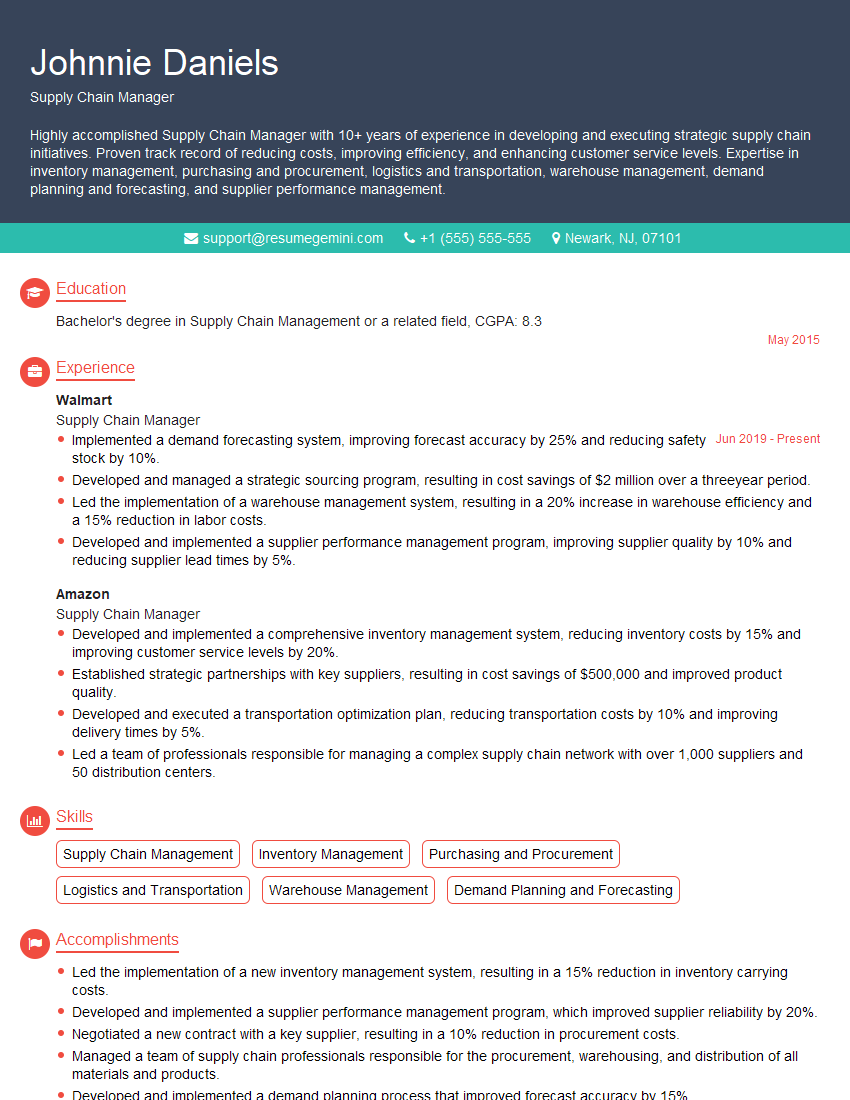
Supply Chain Manager Resume Sample
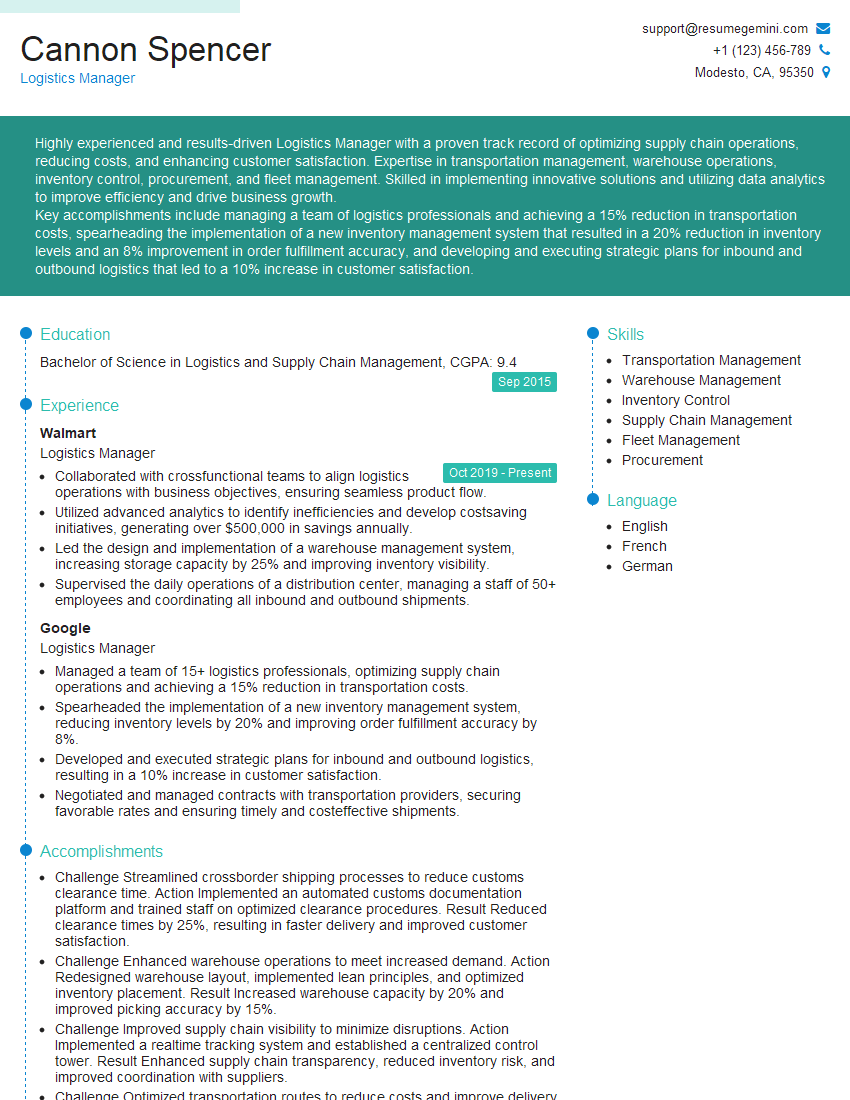
Logistics Manager Resume Sample
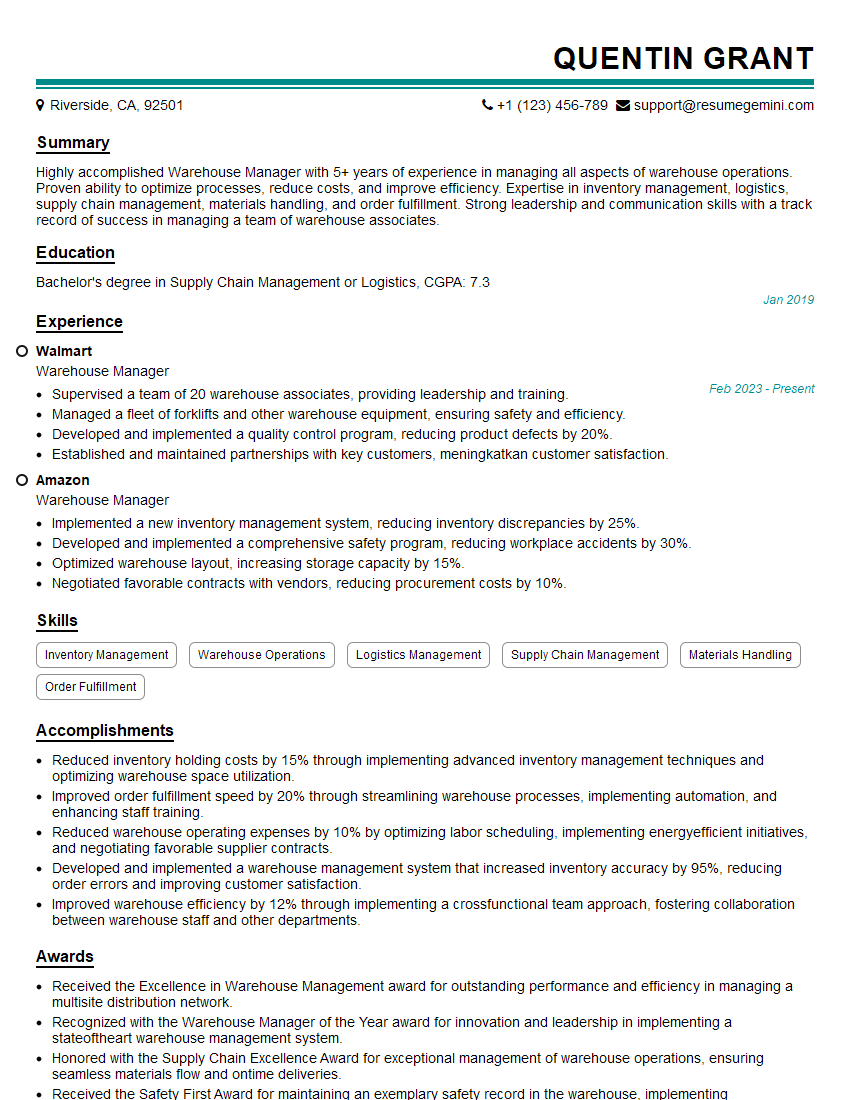
Warehouse Manager Resume Sample
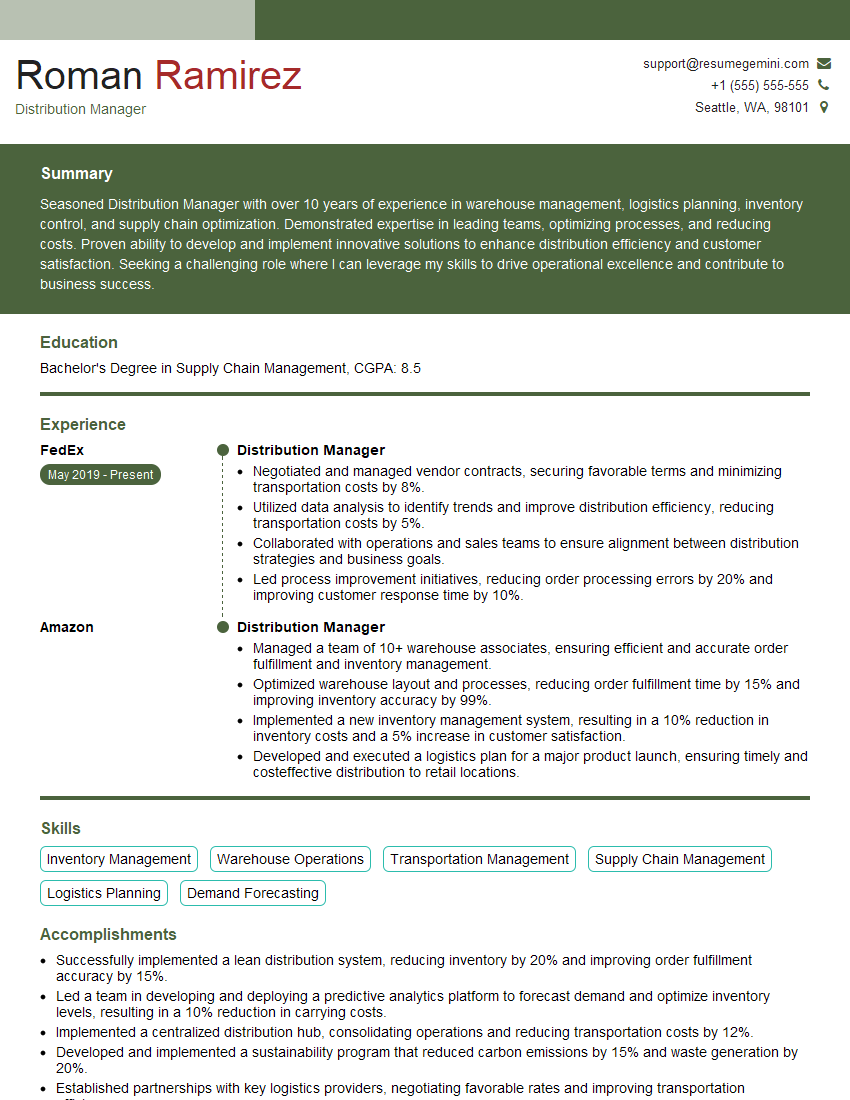
Distribution Manager Resume Sample
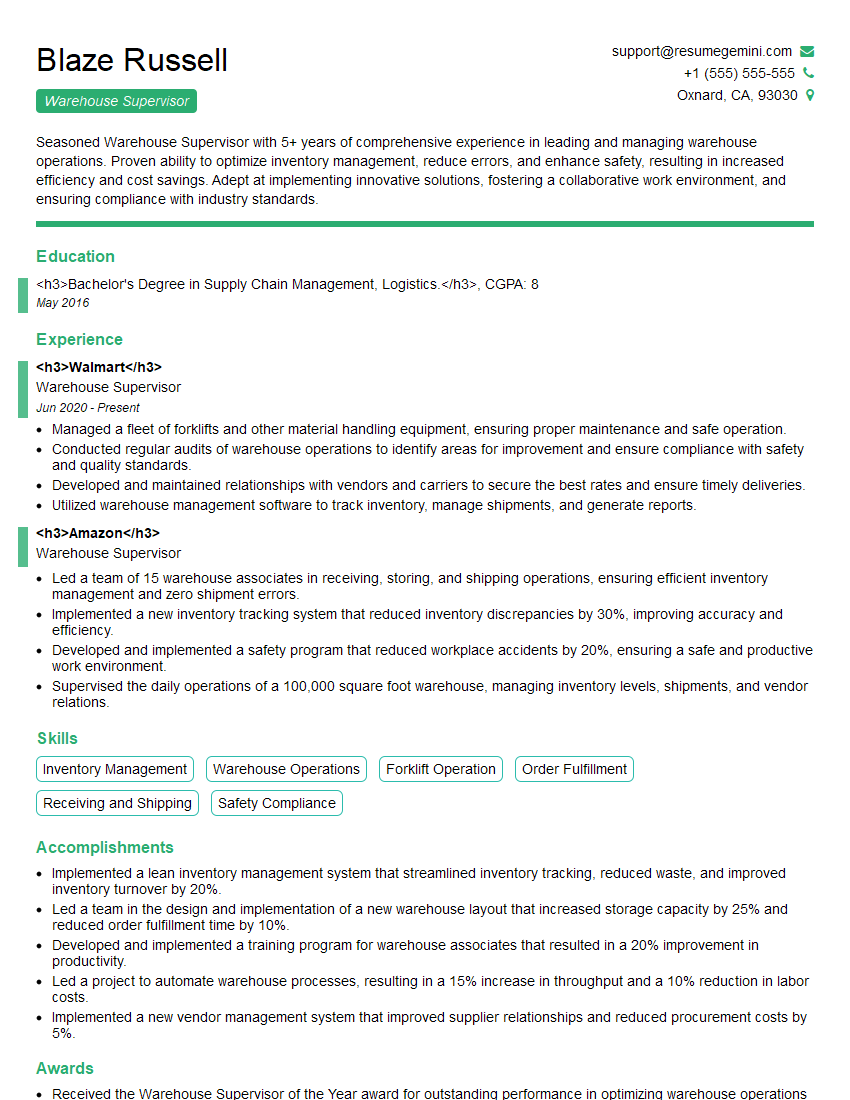
Warehouse Supervisor Resume Sample
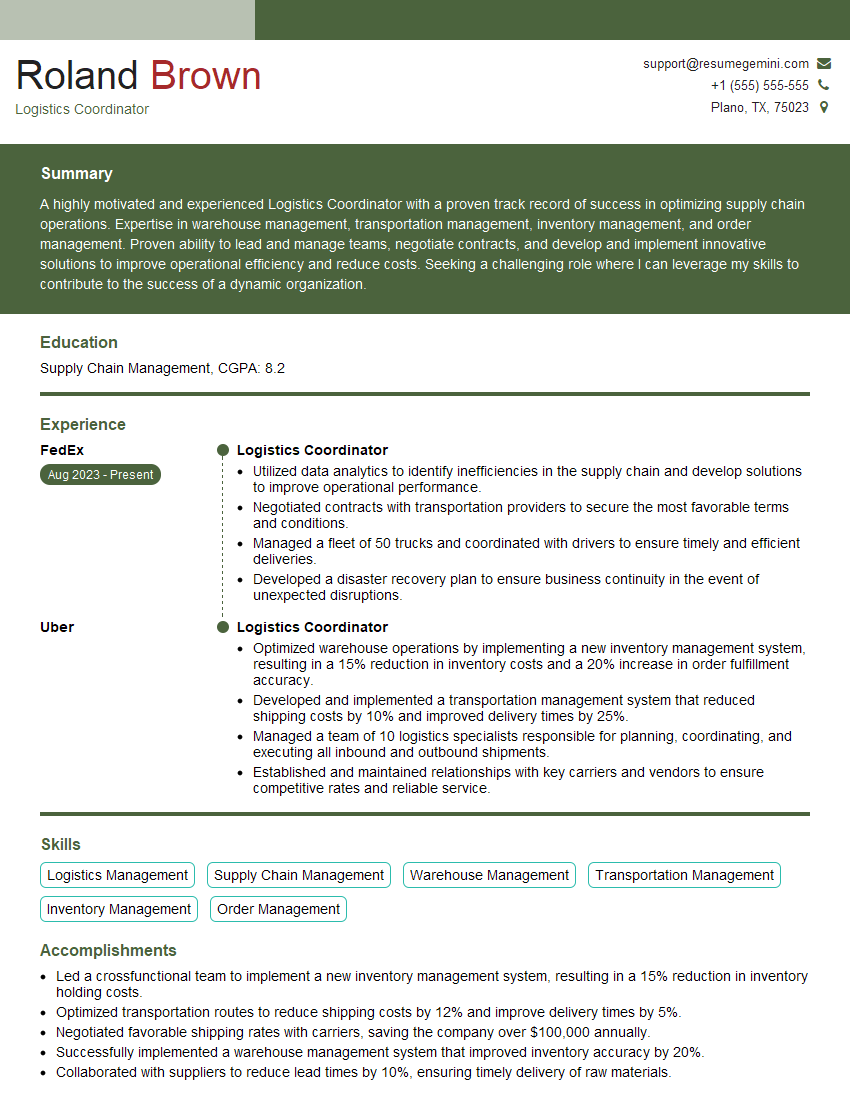
Logistics Coordinator Resume Sample
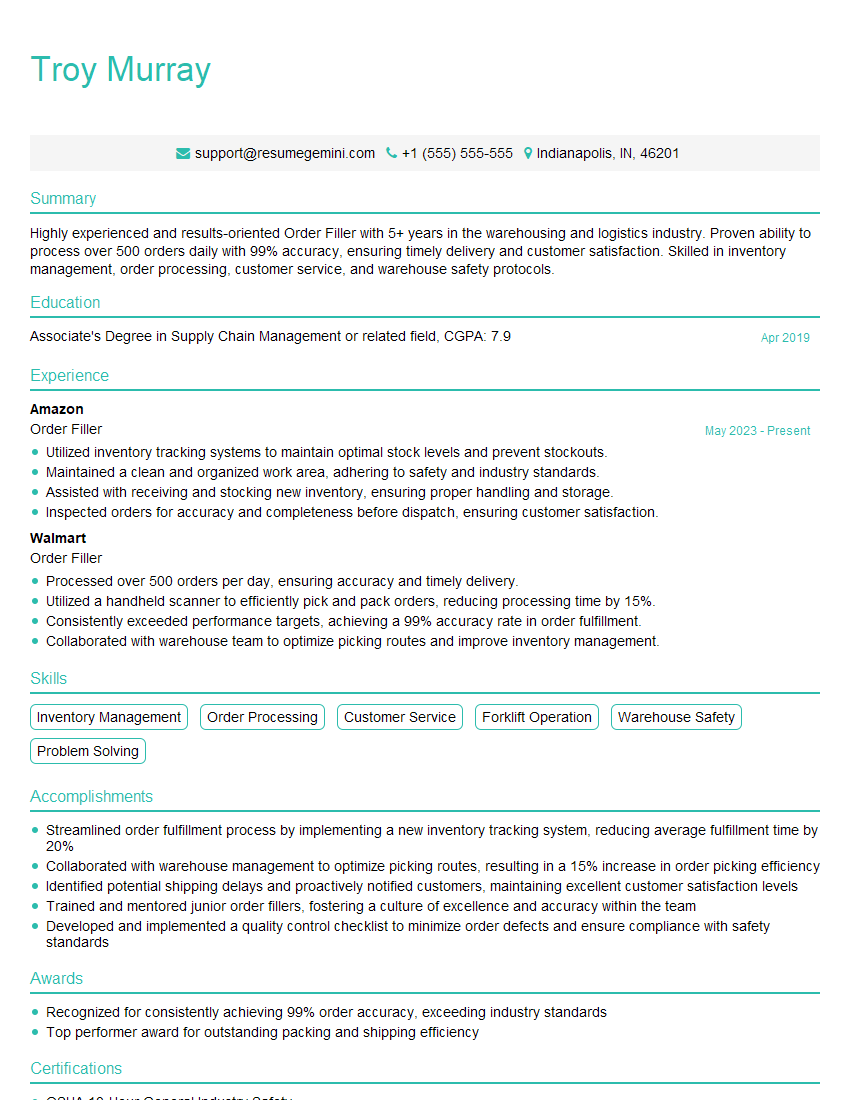
Order Filler Resume Sample
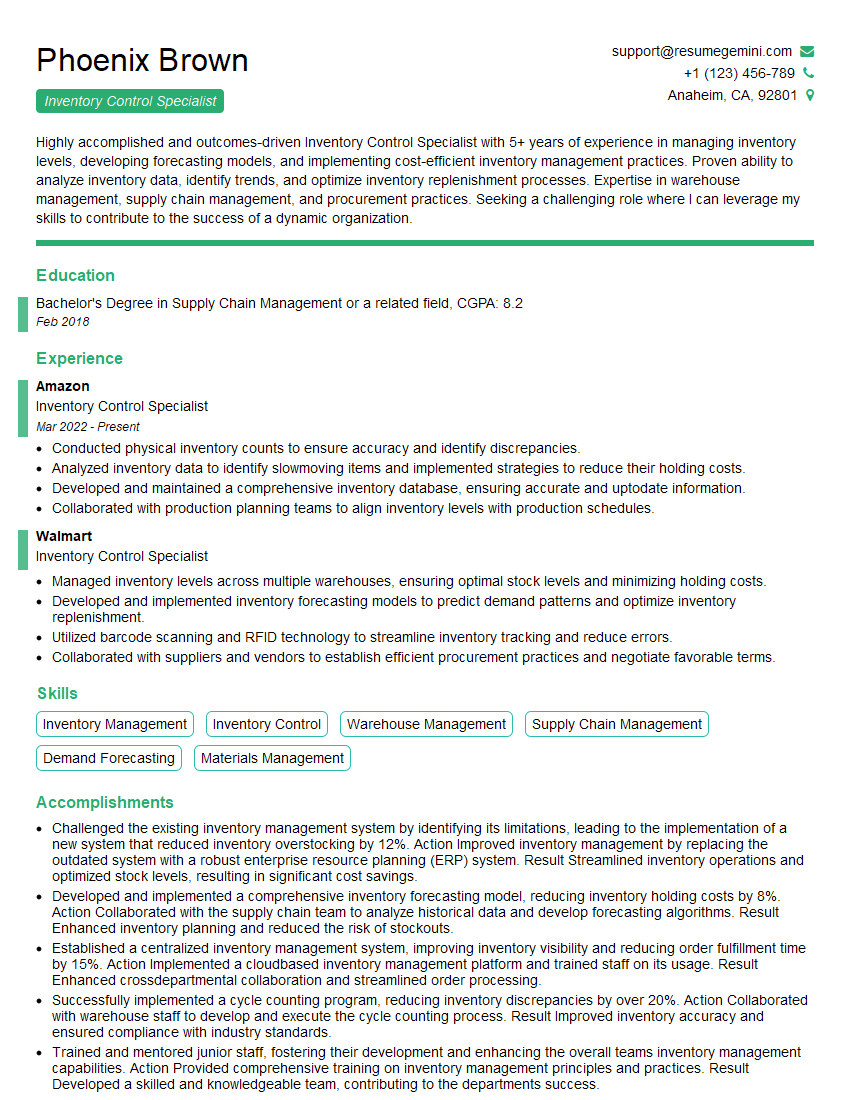
Inventory Control Specialist Resume Sample

Shipping and Receiving Clerk Resume Sample
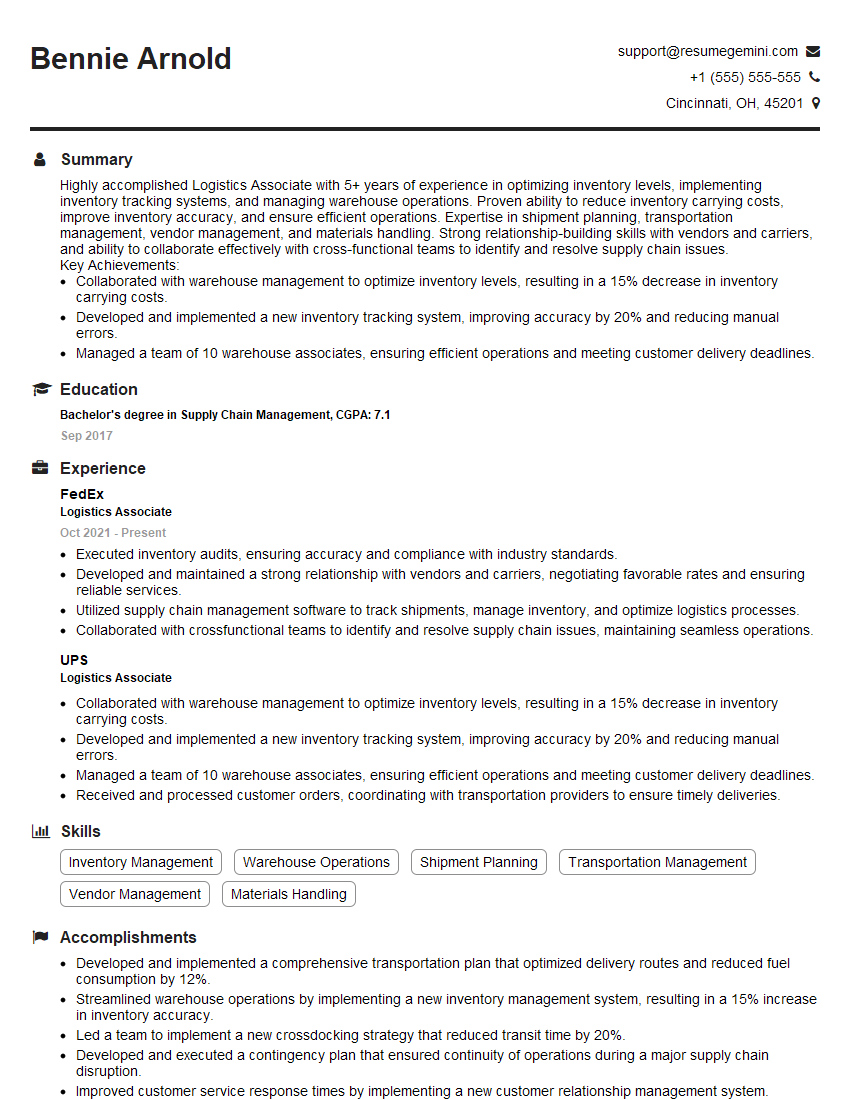
Logistics Associate Resume Sample
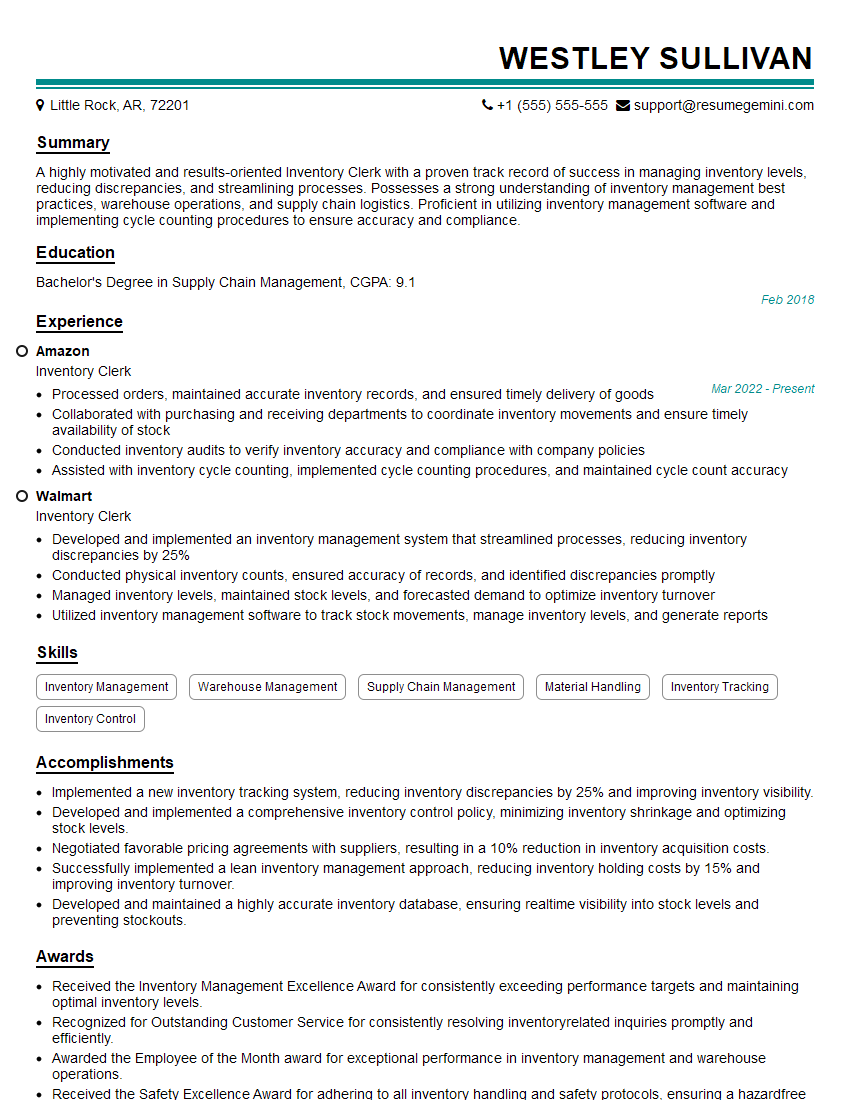
Inventory Clerk Resume Sample
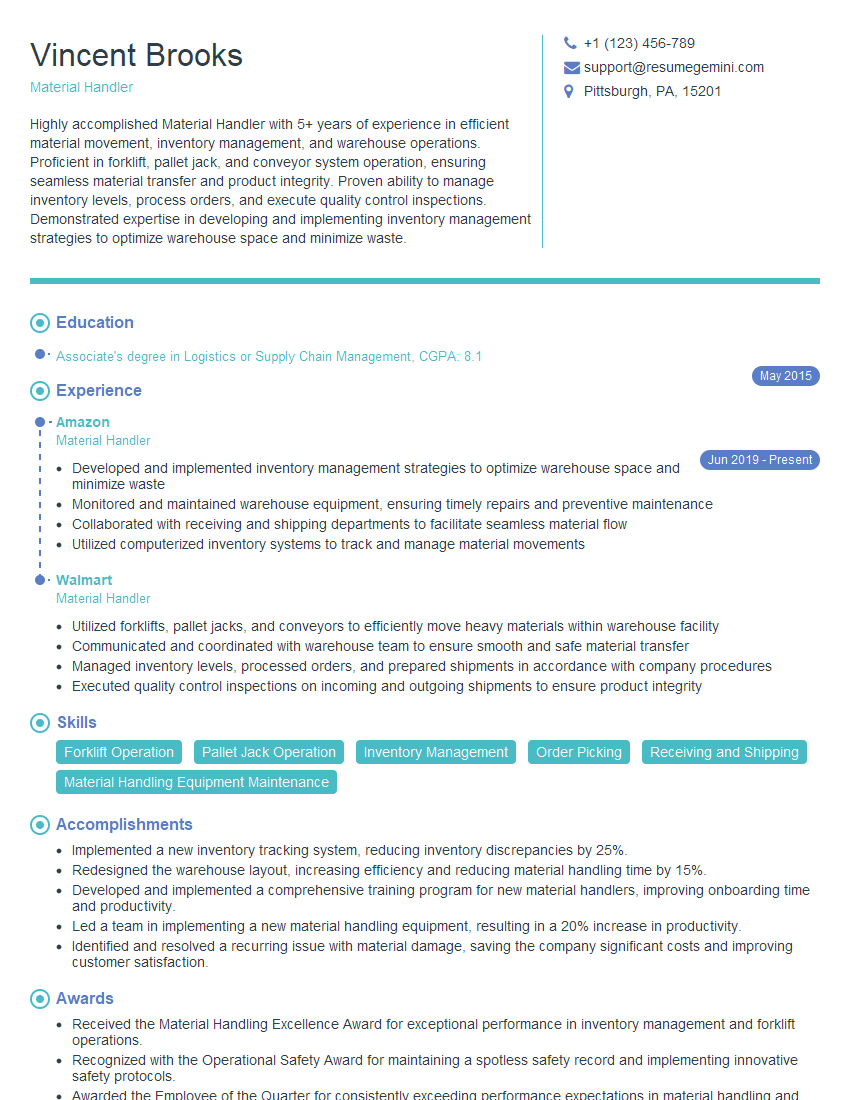
Material Handler Resume Sample
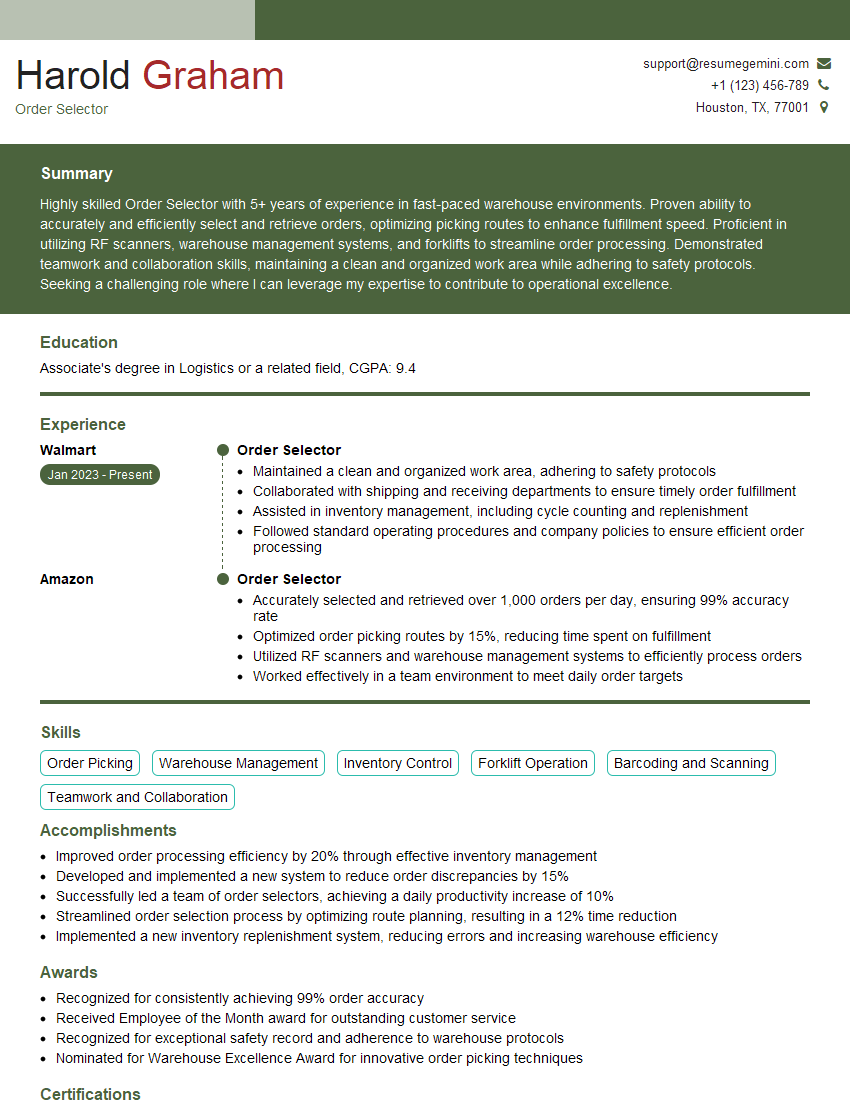
Order Selector Resume Sample
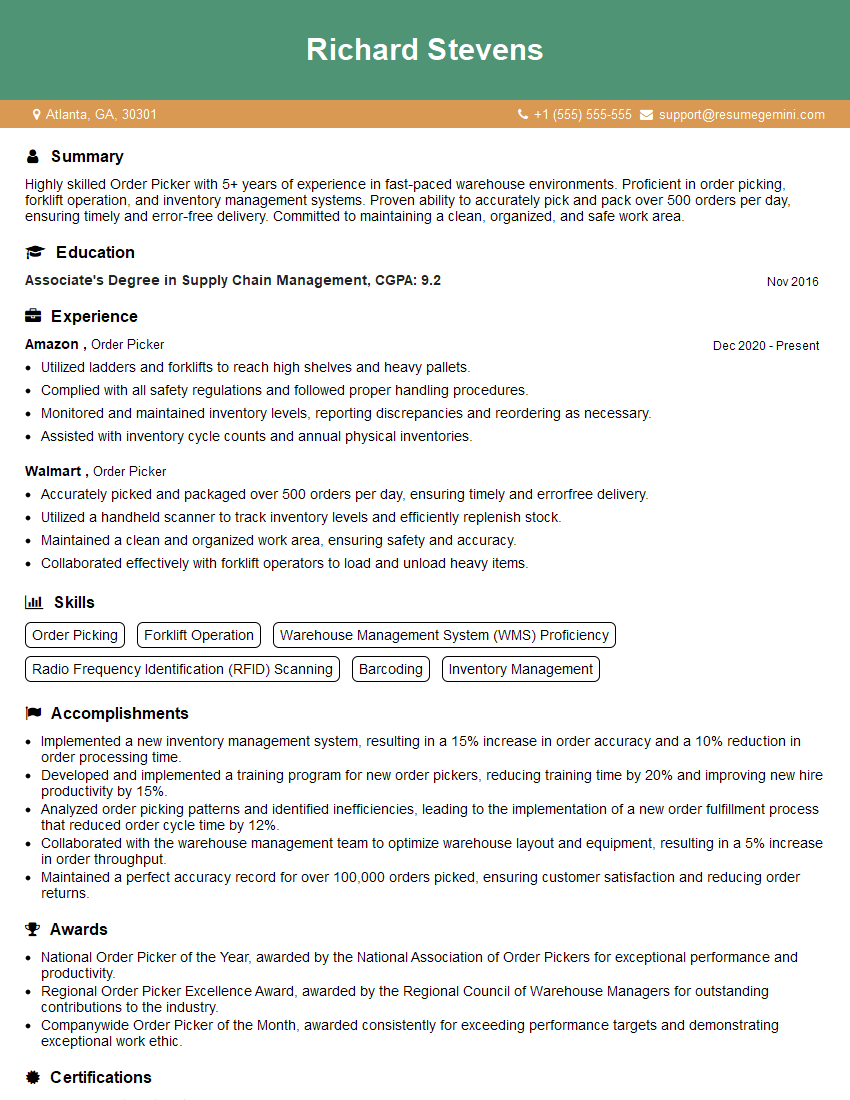
Order Picker Resume Sample
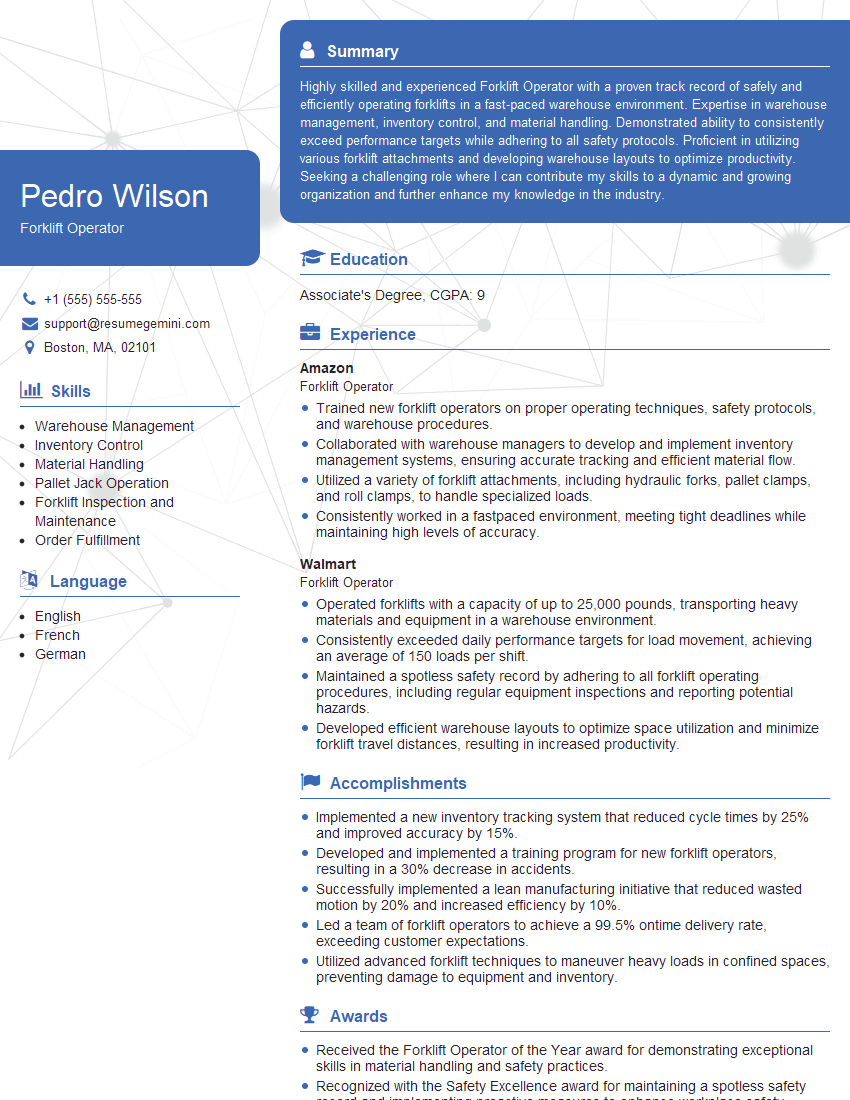
Forklift Operator Resume Sample
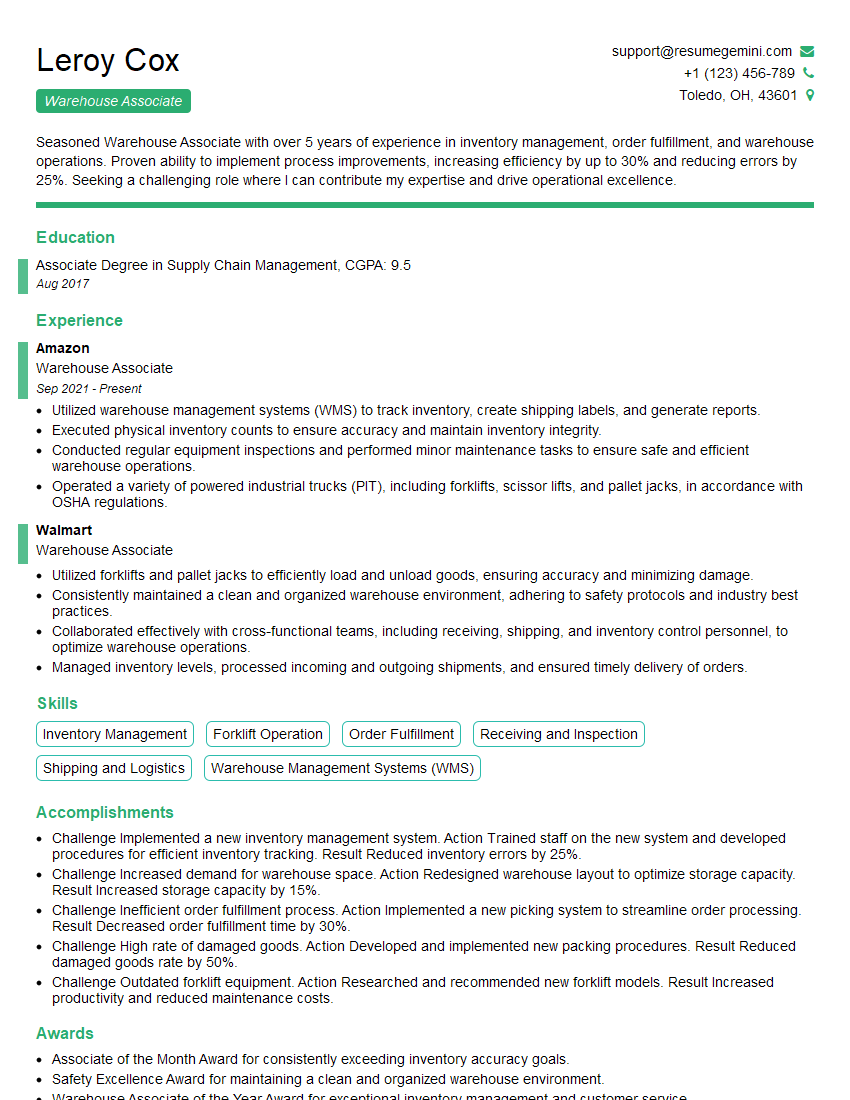
Warehouse Associate Resume Sample
- Supply Chain Manager
- Logistics Manager
- Warehouse Manager
- Distribution Manager
- Warehouse Supervisor
- Logistics Coordinator
- Order Filler
- Inventory Control Specialist
- Shipping and Receiving Clerk
- Logistics Associate
- Inventory Clerk
- Material Handler
- Order Selector
- Order Picker
- Forklift Operator
- Warehouse Associate
Explore more articles
Users Rating of Our Blogs
Share Your Experience
We value your feedback! Please rate our content and share your thoughts (optional).
What Readers Say About Our Blog
Very informative content, great job.
good