Every successful interview starts with knowing what to expect. In this blog, we’ll take you through the top Fostering a Positive Learning Environment interview questions, breaking them down with expert tips to help you deliver impactful answers. Step into your next interview fully prepared and ready to succeed.
Questions Asked in Fostering a Positive Learning Environment Interview
Q 1. Describe your approach to establishing a positive and inclusive learning environment.
Creating a positive and inclusive learning environment is foundational to effective teaching. My approach is multifaceted, focusing on building a strong sense of belonging, respect, and equitable opportunities for all learners. This involves:
- Establishing clear expectations and classroom rules collaboratively: I involve students in creating rules, fostering a sense of ownership and responsibility. This might involve brainstorming sessions and discussions about fairness and respect.
- Promoting a culture of respect and empathy: I explicitly teach social-emotional skills, focusing on active listening, perspective-taking, and conflict resolution. We regularly discuss scenarios and practice these skills in role-playing exercises.
- Creating a physically and emotionally safe space: The classroom should be organized to facilitate both individual and group work, with designated quiet areas for those needing a break. Open communication channels ensure students feel comfortable voicing concerns or needs.
- Celebrating diversity: I actively incorporate diverse perspectives and learning styles into the curriculum and classroom activities. This includes using diverse materials, inviting guest speakers from different backgrounds, and creating projects that encourage exploration of different cultures.
- Utilizing inclusive language and practices: I avoid gendered or biased language and ensure all activities are accessible to students with different abilities. This includes providing alternative assignments or using assistive technologies when necessary.
For example, in a history class, instead of focusing solely on Western perspectives, I incorporate narratives from various cultures, ensuring students understand the interconnectedness of global events and appreciate diverse viewpoints.
Q 2. How do you identify and address disruptive behaviors in a learning setting?
Addressing disruptive behaviors requires a proactive and multi-pronged approach. It’s crucial to understand the *root cause* of the behavior, not just the behavior itself. My strategy involves:
- Positive reinforcement and preventative measures: I focus on rewarding positive behaviors and proactively setting clear expectations. This might involve a classroom reward system, positive feedback, or creating routines that minimize potential disruptions.
- Non-verbal cues and redirection: Often, a simple gesture or quiet redirection can address minor disruptions without interrupting the flow of the lesson. This can include eye contact, proximity control, or a gentle reminder.
- Individualized interventions: If a behavior persists, I’ll meet with the student privately to discuss the issue. This involves active listening, understanding the underlying reasons, and collaboratively developing a plan to address the behavior. Sometimes involving parents or counselors is necessary.
- Consistent and fair consequences: When necessary, consistent and fair consequences are applied, following established classroom rules. These consequences should be restorative in nature, focusing on learning from the mistake, not solely on punishment.
- Collaboration with parents/guardians and support staff: Working with parents and school support staff (counselors, special education teachers) is essential for addressing persistent or serious behavioral issues. A multi-faceted approach provides a cohesive support system for the student.
For instance, if a student is constantly interrupting, I might first try nonverbal cues. If that’s ineffective, a private conversation might reveal they’re struggling with the material and need extra support. This allows me to adjust my teaching strategy to address their individual needs.
Q 3. Explain your strategies for differentiating instruction to meet diverse learning needs.
Differentiated instruction is crucial for meeting diverse learning needs. My strategies involve adapting content, process, product, and learning environment to cater to individual learners’ strengths and challenges:
- Assessing learners’ needs: I use various assessment methods (pre-tests, observations, informal conversations) to identify individual strengths and areas where students need support.
- Tiered assignments: I often create assignments with varying levels of complexity, allowing students to choose the level that best suits their abilities. This ensures all students are challenged appropriately.
- Flexible grouping: I use a variety of grouping strategies (individual, small group, whole class) to maximize learning opportunities for all students. This allows for peer teaching and support.
- Varied instructional methods: I incorporate diverse teaching methods like lectures, discussions, projects, games, and technology to cater to different learning styles.
- Providing choice and autonomy: Whenever possible, I offer students choices in their learning activities, allowing them to select projects or tasks that align with their interests and strengths. This promotes intrinsic motivation.
- Utilizing assistive technology: For students with disabilities, I utilize assistive technology and adapt learning materials as needed.
For example, during a writing assignment, I might offer three different levels of complexity, with varying length requirements and support structures.
Q 4. How do you foster collaboration and teamwork among learners?
Fostering collaboration and teamwork involves creating opportunities for students to work together effectively. My strategies include:
- Structured group activities: I use activities that require students to collaborate and share responsibilities, such as group projects, debates, or problem-solving tasks. Clear roles and expectations are crucial for success.
- Team-building exercises: At the beginning of a unit or course, I might use icebreaker activities or team-building exercises to help students get to know each other and build trust. This might include collaborative games or problem-solving activities.
- Peer assessment and feedback: I encourage students to provide feedback to each other on their work. This promotes a culture of constructive criticism and helps students learn from their peers.
- Modeling collaborative behaviors: I explicitly model collaborative behaviors in my own teaching practices, demonstrating how to work effectively in a team.
- Providing clear guidelines and rubrics: Clear guidelines and rubrics for group work ensure students understand expectations and criteria for success. This minimizes confusion and ensures accountability.
For instance, in a science class, students might collaborate on a lab experiment, with each member responsible for a specific aspect of the experiment. This allows them to develop teamwork skills while learning the scientific concepts.
Q 5. How do you create a classroom or learning environment that encourages risk-taking and creativity?
Encouraging risk-taking and creativity requires a supportive and stimulating learning environment. My approach involves:
- Creating a safe space for experimentation: I emphasize that mistakes are opportunities for learning and growth, fostering a culture where students feel comfortable taking risks without fear of judgment. I highlight the value of the process, not just the outcome.
- Open-ended tasks and projects: I incorporate open-ended projects and tasks that allow students to explore their ideas and express their creativity in unique ways. This allows for divergent thinking and personalized approaches to learning.
- Providing choices and autonomy: I provide students with choices in their learning activities, giving them control over their learning process and fostering a sense of ownership. This can be through project choices, presentation styles, etc.
- Incorporating creative problem-solving: I incorporate activities that require students to think creatively to solve problems. This might include design challenges, brainstorming sessions, or improvisational activities.
- Encouraging reflection and metacognition: I encourage students to reflect on their learning process, identify their strengths and weaknesses, and develop strategies for improvement. This helps them to learn from their experiences and become more self-directed learners.
For example, I might challenge students to design a solution to a local environmental problem, encouraging them to explore innovative ideas and approaches.
Q 6. What strategies do you use to build rapport and trust with learners?
Building rapport and trust with learners is essential for creating a positive learning environment. My strategies include:
- Getting to know students individually: I make an effort to learn about students’ interests, backgrounds, and learning styles. This might involve informal conversations, surveys, or learning about their hobbies.
- Active listening and empathy: I demonstrate active listening and empathy, showing students that I value their perspectives and concerns. This includes asking open-ended questions and responding with understanding.
- Fairness and consistency: I ensure that I treat all students fairly and consistently, applying classroom rules and expectations equitably. This builds trust and respect among students.
- Open communication: I maintain open communication channels, encouraging students to share their thoughts, feelings, and concerns without fear of judgment. This involves creating opportunities for both formal and informal conversations.
- Showing genuine interest in students’ well-being: I show a genuine interest in students’ well-being, both inside and outside of the classroom. This might involve checking in on students who are struggling or celebrating their successes.
For instance, I might take the time to have informal conversations with students before or after class, or I might attend school events or activities to show my support.
Q 7. Describe a time you had to manage conflict in a learning environment. What was your approach?
In a previous class, a conflict arose between two students during a group project. One student felt their contributions were not valued, leading to frustration and resentment. My approach involved:
- Creating a safe space for discussion: I met with both students individually and then together in a neutral setting, ensuring they felt comfortable expressing their perspectives.
- Active listening and empathy: I listened attentively to each student’s concerns, validating their feelings and demonstrating empathy. I focused on understanding the situation from their perspectives.
- Facilitating communication and finding common ground: I guided them toward open and respectful communication, encouraging them to express their perspectives without interrupting each other. I helped them identify the root of the conflict, which was miscommunication and unclear roles within the group.
- Collaboratively developing a solution: Together, we developed a plan to address the conflict. This involved clarifying roles and responsibilities, establishing clear communication protocols, and creating opportunities for them to collaborate more effectively.
- Monitoring and follow-up: I followed up with the students regularly to monitor the situation and provide additional support as needed. I checked in on their progress and encouraged them to communicate any ongoing challenges.
The key was to shift the focus from blame to problem-solving, enabling them to find a resolution that felt fair and equitable to both parties. The experience served as a valuable lesson for the entire class on effective conflict resolution.
Q 8. How do you assess the effectiveness of your strategies for fostering a positive learning environment?
Assessing the effectiveness of strategies for fostering a positive learning environment is crucial. It’s not just about feeling good; it’s about demonstrably improving learning outcomes and student well-being. My approach is multifaceted, relying on both quantitative and qualitative data.
Quantitative Data: I track metrics like student engagement (participation in class discussions, completion of assignments), academic performance (grades, test scores), and attendance. A significant improvement in these areas indicates a positive impact. For example, comparing pre- and post-intervention test scores on a specific topic after implementing a new collaborative learning strategy provides valuable quantitative data.
Qualitative Data: I utilize student feedback through surveys, focus groups, and individual conversations. These provide valuable insights into their perceptions of the classroom climate, their learning experiences, and areas for improvement. For instance, open-ended survey questions about their feelings of safety and support in the classroom provide rich qualitative data.
Observation: I regularly observe classroom dynamics, noting student interactions, levels of participation, and overall classroom atmosphere. This helps identify patterns and potential issues that need addressing. I might, for example, observe a decrease in disruptive behaviors after implementing a new classroom management technique.
Reflection: Regular self-reflection is key. I analyze my teaching practices, seeking areas for improvement and adapting my strategies based on the data collected. This involves journaling, reviewing lesson plans, and discussing teaching strategies with colleagues.
By combining these methods, I build a comprehensive understanding of the effectiveness of my strategies and continuously refine my approach to create an optimal learning environment.
Q 9. How do you incorporate technology to enhance a positive learning experience?
Technology can significantly enhance a positive learning experience when integrated thoughtfully. It’s not just about using technology for technology’s sake; it’s about leveraging its capabilities to support and personalize learning.
Collaboration Tools: Platforms like Google Classroom or Microsoft Teams facilitate collaborative projects, allowing students to share ideas, provide feedback, and learn from each other. This fosters a sense of community and shared responsibility.
Personalized Learning Platforms: Adaptive learning platforms cater to individual learning styles and paces, ensuring students receive targeted support and challenges. This prevents frustration and promotes a sense of accomplishment.
Interactive Simulations and Games: Engaging simulations and educational games make learning fun and memorable, increasing motivation and knowledge retention. These can effectively teach complex concepts in an interactive way.
Digital Resources and Multimedia: Access to a vast library of digital resources, videos, and interactive content caters to diverse learning preferences and makes learning more accessible. This provides diverse learning experiences to suit individual learning styles.
Communication Tools: Utilizing tools like email or online forums allows for efficient and timely communication between myself and students, promoting a sense of accessibility and support.
However, it is crucial to ensure equitable access to technology and provide adequate training to ensure all students can effectively utilize the tools. Over-reliance on technology can also be detrimental, so a balanced approach incorporating traditional methods is essential.
Q 10. Explain your methods for providing constructive feedback to learners.
Constructive feedback is about guiding learners towards improvement, not simply evaluating their performance. My approach focuses on being specific, timely, actionable, and encouraging.
Specificity: Instead of saying “Your work is good,” I’d say, “Your analysis of the data was insightful, particularly your interpretation of point X. However, consider expanding on point Y for a more comprehensive analysis.”
Timeliness: Feedback is most effective when provided promptly, while the learning experience is still fresh in the student’s mind. This allows for immediate improvement and prevents lingering misconceptions.
Actionability: Feedback should offer concrete suggestions for improvement. I focus on providing specific steps or strategies the learner can take to address the identified areas for growth.
Encouragement: Even when addressing weaknesses, I emphasize the student’s strengths and progress, fostering a growth mindset and building confidence. I highlight both strengths and areas for growth to maintain a positive and encouraging tone.
Student Involvement: I encourage students to participate actively in the feedback process, allowing them to reflect on their work and identify areas they’d like to improve.
I use a variety of methods, including written comments on assignments, individual conferences, and peer feedback sessions, to provide tailored and effective feedback.
Q 11. How do you promote learner autonomy and self-directed learning?
Promoting learner autonomy and self-directed learning is essential for developing independent and lifelong learners. My approach involves empowering students to take ownership of their learning journey.
Choice and Voice: I offer students choices in projects, assignments, and learning activities, allowing them to explore their interests and pursue their passions. This includes allowing students to choose topics for projects or select different assessment methods.
Goal Setting: I encourage students to set learning goals and track their progress. This fosters a sense of ownership and empowers them to monitor their own learning. Regular check-ins help to maintain momentum and address any challenges.
Self-Assessment: I incorporate self-assessment activities, such as reflective journals or peer assessments, to help students critically evaluate their own learning and identify areas for improvement. This allows students to reflect on their progress and learn from mistakes.
Metacognitive Strategies: I teach students metacognitive strategies, such as planning, monitoring, and evaluating their learning, helping them become more effective and independent learners. Activities like reflection logs or mind-mapping exercises help practice these techniques.
Providing Resources and Support: While promoting autonomy, I ensure I provide sufficient resources and support to guide students, answering questions and providing assistance when needed. This support is vital, ensuring students do not feel lost or overwhelmed.
By fostering a supportive and empowering learning environment, students develop the skills and confidence to become self-directed learners.
Q 12. How do you address learner anxiety or frustration in the learning process?
Addressing learner anxiety and frustration is crucial for creating a supportive learning environment. My approach involves creating a safe space, understanding individual needs, and employing effective strategies.
Creating a Safe Space: I foster a classroom culture of respect, empathy, and understanding where students feel comfortable asking questions, admitting mistakes, and seeking help without judgment. This includes clear rules of conduct and consistent enforcement.
Understanding Individual Needs: I actively listen to students and try to understand the root causes of their anxiety or frustration. This might involve individual conversations, informal check-ins, or observing student behavior.
Providing Support and Resources: I offer various support resources, such as tutoring, counseling services, and extension opportunities, to help students overcome challenges and build confidence. This ensures all students have access to support when needed.
Breaking Down Tasks: For overwhelming tasks, I help students break them down into smaller, more manageable steps. This prevents students from feeling overwhelmed and helps them build a sense of accomplishment.
Positive Reinforcement and Encouragement: I focus on celebrating small victories and recognizing effort, fostering a positive and encouraging classroom environment. Regular positive feedback and encouragement boost students’ morale and motivation.
Growth Mindset: I encourage a growth mindset, emphasizing that challenges are opportunities for learning and growth. This helps students view setbacks as learning experiences rather than failures.
By addressing anxiety and frustration proactively, I ensure all students have a positive and successful learning experience.
Q 13. How do you ensure all learners feel safe, respected, and valued in your classroom?
Ensuring all learners feel safe, respected, and valued is paramount. It’s the foundation upon which a positive learning environment is built. My approach involves building relationships, establishing clear expectations, and promoting inclusivity.
Building Relationships: I take the time to get to know my students individually, understanding their backgrounds, interests, and learning styles. This helps create a sense of connection and belonging.
Establishing Clear Expectations: I clearly communicate classroom rules and expectations, ensuring they are fair, consistent, and understood by all students. This creates a predictable and safe environment.
Promoting Inclusivity: I create a diverse and inclusive learning environment where all students feel respected and valued, regardless of their background, ability, or learning style. This involves using inclusive language, adapting materials for diverse needs, and celebrating differences.
Addressing Bullying and Harassment: I have zero tolerance for bullying and harassment. I proactively address any instances of such behavior, ensuring a safe and supportive learning environment for everyone. This might include direct intervention, classroom discussions, or collaborating with school administration.
Open Communication: I encourage open communication between myself and students, providing opportunities for them to express their concerns and share their perspectives. This involves creating a safe and trusting environment where students feel comfortable voicing concerns.
Creating a safe, respectful, and valued classroom environment is an ongoing process requiring consistent effort, reflection, and a genuine commitment to student well-being.
Q 14. Describe your experience with implementing positive behavior interventions and supports (PBIS).
Positive Behavior Interventions and Supports (PBIS) is a framework I’ve successfully implemented to create a positive and supportive school environment. It’s a data-driven approach that focuses on preventing problem behaviors and teaching positive social skills.
Teamwork: PBIS requires collaboration among teachers, administrators, support staff, and parents. We work together to identify, analyze, and address problem behaviors, and create a shared understanding of expectations.
Data Collection and Analysis: We meticulously collect data on student behavior, identifying patterns and trends. This data-driven approach helps us tailor interventions to specific needs and measure the effectiveness of our strategies.
Preventive Strategies: A core component of PBIS is implementing preventive strategies, such as teaching positive social skills, clearly defining expectations, and creating a positive school climate. This proactive approach aims to reduce problem behaviors before they occur.
Intervention Strategies: When problem behaviors occur, we implement tiered interventions, starting with simple strategies and escalating to more intensive support as needed. This ensures appropriate support for all students.
Monitoring and Evaluation: We regularly monitor the effectiveness of our interventions and adjust our strategies based on the data. This continuous improvement cycle is essential for the ongoing success of PBIS.
My experience with PBIS has demonstrated its effectiveness in reducing problem behaviors, improving school climate, and fostering a more positive and supportive learning environment for all students. It’s not just about discipline, but about proactive teaching of positive behaviours and building a sense of community.
Q 15. What strategies do you employ to manage classroom time effectively and maximize learning?
Effective classroom time management is crucial for maximizing learning. It’s not just about filling every minute, but strategically allocating time to different activities to ensure optimal engagement and knowledge retention. My approach involves a multi-pronged strategy:
Detailed Lesson Planning: I meticulously plan each lesson, outlining specific learning objectives, activities, and time allocations. This prevents wasted time and ensures a smooth flow throughout the class.
Engaging Activities: I incorporate a variety of activities – discussions, group work, hands-on projects, games – to cater to different learning styles and maintain student interest. For example, a 45-minute lesson might include 15 minutes of direct instruction, 15 minutes of group problem-solving, and 15 minutes of individual practice.
Clear Expectations and Transitions: Students understand the schedule and what’s expected of them at each stage. Smooth transitions between activities are essential to minimize disruptions and maximize learning time. I use clear verbal cues and visual timers to signal changes.
Time Audits and Adjustments: I regularly review how time is being used. If a certain activity consistently takes longer than planned, I adjust my approach or lesson plan for future classes. This iterative process allows for constant improvement.
Career Expert Tips:
- Ace those interviews! Prepare effectively by reviewing the Top 50 Most Common Interview Questions on ResumeGemini.
- Navigate your job search with confidence! Explore a wide range of Career Tips on ResumeGemini. Learn about common challenges and recommendations to overcome them.
- Craft the perfect resume! Master the Art of Resume Writing with ResumeGemini’s guide. Showcase your unique qualifications and achievements effectively.
- Don’t miss out on holiday savings! Build your dream resume with ResumeGemini’s ATS optimized templates.
Q 16. How do you create opportunities for learners to apply their knowledge and skills in real-world contexts?
Connecting classroom learning to real-world applications is key to making learning relevant and meaningful for students. I achieve this through several methods:
Real-World Case Studies: I use case studies from various fields to illustrate concepts and demonstrate how theoretical knowledge applies in practice. For instance, in a science class, we might analyze a real-world environmental issue.
Project-Based Learning: Students work on extended projects that require them to apply their skills to solve real-world problems. This could involve designing a solution to a community problem or creating a business plan.
Guest Speakers and Field Trips: Inviting professionals or organizing field trips exposes students to different career paths and allows them to see the practical application of their learning firsthand.
Simulations and Role-Playing: These techniques provide a safe and engaging way for students to experience real-world scenarios and practice applying their knowledge. For example, students might role-play a mock trial in a history class.
Q 17. Describe your experience with using formative and summative assessment to improve learning outcomes.
Formative and summative assessments are both essential for effective learning. Formative assessments are ongoing checks for understanding, while summative assessments provide a final evaluation of learning. My approach is to use both strategically:
Formative Assessment: I use various techniques, including exit tickets, quick quizzes, class discussions, and observations, to gauge student understanding throughout a unit. This helps me identify areas where students are struggling and adjust my instruction accordingly.
Summative Assessment: These assessments, like tests, projects, or presentations, provide a comprehensive evaluation of student learning at the end of a unit. The results inform my future teaching and help students understand their strengths and weaknesses.
Feedback: Regardless of the type of assessment, I provide timely and constructive feedback to students. This feedback is not just about grades; it’s about guiding students towards improvement.
For example, I might use a short quiz (formative) midway through a unit to assess comprehension before a larger exam (summative).
Q 18. How do you adapt your teaching methods to accommodate learners with different learning styles?
Recognizing that learners have diverse learning styles is critical for creating an inclusive classroom. My approach involves:
Differentiated Instruction: I offer various learning materials and activities catering to different learning preferences. Some students might learn best through visual aids, others through hands-on activities, while some excel through collaborative work.
Multiple Modalities: I use a combination of teaching methods – lectures, discussions, visual aids, interactive technology – to engage learners with different preferences. For instance, I might include videos and diagrams alongside textual explanations.
Flexible Grouping: Students are sometimes grouped according to their learning styles and needs. This allows for targeted support and collaborative learning opportunities.
Individualized Learning Plans (ILPs): For students with significant learning differences, I work with specialists to develop and implement ILPs to best support their needs.
Q 19. How do you encourage parental or guardian involvement in the learning process?
Parental or guardian involvement is crucial for student success. I foster this through:
Open Communication: Regular communication through newsletters, emails, and parent-teacher conferences keeps parents informed about their child’s progress and classroom activities.
Parent-Teacher Conferences: These meetings provide opportunities for in-depth discussions about individual student needs and goals.
Classroom Volunteers: Inviting parents to volunteer in the classroom creates a connection between home and school and allows them to actively participate in their child’s learning.
Online Platforms: Utilizing online platforms allows for easy sharing of information, assignments, and progress updates, fostering ongoing communication.
Workshops and Events: Organizing workshops or events that involve parents helps build a sense of community and provides opportunities for parents to learn strategies to support their children’s learning at home.
Q 20. Describe your approach to creating a physically and emotionally safe learning environment.
Creating a safe learning environment is paramount. This includes both physical and emotional safety. My strategies are:
Clear Rules and Expectations: Establishing clear classroom rules and expectations from the outset promotes respectful interactions and reduces disruptive behavior.
Positive Reinforcement: I focus on positive reinforcement and praise to encourage positive behaviors and build student confidence.
Conflict Resolution: I teach students effective conflict-resolution strategies and intervene appropriately when conflicts arise.
Empathy and Understanding: I create a classroom culture of empathy and understanding, where students feel comfortable expressing themselves and seeking help when needed.
Collaboration with Support Staff: I work closely with school counselors and other support staff to ensure that students who need additional support receive it in a timely manner.
Creating a physically safe space involves ensuring the classroom is well-maintained, free of hazards, and equipped with necessary safety equipment.
Q 21. What are your strategies for building a strong sense of community within your classroom?
Building a strong classroom community is essential for fostering a positive learning environment. My approach involves:
Icebreakers and Team-Building Activities: Engaging icebreakers and team-building activities at the beginning of the year help students get to know each other and build rapport.
Collaborative Projects: Collaborative projects promote teamwork and shared responsibility, encouraging students to support each other.
Classroom Discussions: Engaging students in respectful classroom discussions encourages active listening and empathy.
Celebrating Successes: Acknowledging and celebrating individual and group achievements builds a sense of pride and accomplishment.
Creating a sense of belonging: I ensure that every student feels valued, respected, and included in the classroom community. This involves actively creating opportunities for students to showcase their unique talents and contributions.
Q 22. How do you incorporate social-emotional learning into your teaching?
Social-emotional learning (SEL) is the process of developing the self-awareness, self-management, social awareness, relationship skills, and responsible decision-making abilities necessary for success in school and life. I integrate SEL into my teaching through various strategies. First, I create a classroom culture of respect and empathy. This starts with establishing clear expectations for behavior and classroom norms collaboratively with students. We discuss what it means to be respectful, how to handle conflicts peacefully, and the importance of supporting each other’s learning.
Secondly, I incorporate SEL activities directly into my lessons. For example, during a literature study, we might discuss the characters’ emotions and motivations, encouraging students to reflect on their own feelings and experiences. In math, cooperative learning activities build teamwork and communication skills. Thirdly, I use mindfulness techniques such as brief breathing exercises or guided imagery to help students manage stress and focus. Finally, I regularly check in with individual students, paying attention to their social and emotional well-being, offering support when needed. I find that when students feel safe, supported, and understood, they are more engaged in their learning.
Q 23. How do you handle situations where learners are struggling academically?
When students struggle academically, my approach is multifaceted. I begin by identifying the root cause of the difficulty. This involves careful observation of the student’s work, conversations with the student, and reviewing assessment data. Is it a lack of foundational knowledge, a misunderstanding of concepts, a learning disability, or something else entirely? Once identified, I implement targeted interventions. This could involve providing extra support during class, assigning differentiated tasks, offering one-on-one tutoring, or modifying assignments to match the student’s abilities.
I believe in fostering a growth mindset, emphasizing that challenges are opportunities for learning and that improvement takes time and effort. I provide positive feedback, focusing on effort and progress rather than just grades. I also collaborate closely with parents and other professionals, such as special education teachers or counselors, to ensure the student receives comprehensive support. For example, I recently worked with a student struggling with reading comprehension. After careful assessment, we discovered a need for phonics intervention. By working with the student individually and collaborating with the reading specialist, we made significant progress and saw a positive shift in the student’s confidence and performance.
Q 24. Describe your experience with working with diverse populations of learners.
I have extensive experience working with diverse populations of learners, including students from various socioeconomic backgrounds, cultural heritages, linguistic backgrounds, and abilities. I believe that recognizing and valuing these differences is essential for creating an inclusive and equitable learning environment. My approach involves understanding and addressing the unique needs of each student. This includes incorporating culturally relevant materials and teaching methods, providing support for students learning English as a second language, and making accommodations for students with disabilities.
I intentionally build relationships with students and their families, learning about their backgrounds and experiences. This helps me create a classroom where every student feels a sense of belonging and can thrive. For example, in one classroom, I had students from several countries. To celebrate this diversity, we held a multicultural event where students shared their cultures through food, music, and art. This provided a valuable learning experience for everyone, promoting understanding and respect for others. I also ensure that all learning materials are accessible and engaging to all students, using different modalities like visual aids, audio recordings, and hands-on activities.
Q 25. How do you use data to inform your instructional practices and improve student learning?
Data plays a crucial role in informing my instructional practices and improving student learning. I utilize various forms of data, including formative assessments (e.g., exit tickets, quick checks), summative assessments (e.g., tests, projects), and student work samples. I analyze this data to identify areas where students are excelling and areas where they are struggling. This helps me adjust my teaching strategies to better meet the needs of all learners.
For instance, if assessment data reveals that many students are struggling with a particular concept, I might revisit that concept using different teaching methods, provide additional practice opportunities, or differentiate instruction to better cater to various learning styles. I also use data to monitor individual student progress and to track the effectiveness of interventions. This allows for continuous adjustments and refinement of my teaching. I regularly communicate data insights with parents, keeping them informed about their child’s progress and collaborating on ways to support their learning at home. Data, therefore, is not just about grades but a powerful tool for understanding student needs and improving instruction.
Q 26. Explain your understanding of Universal Design for Learning (UDL).
Universal Design for Learning (UDL) is a framework that guides the creation of instructional materials and activities that are accessible and engaging to all learners, regardless of their learning styles, abilities, or disabilities. UDL recognizes that learners differ significantly in how they access, process, and demonstrate learning. Therefore, effective instruction should provide multiple means of representation, action and expression, and engagement.
Multiple means of representation provide information in diverse formats, such as visual, auditory, and kinesthetic. Multiple means of action and expression allow students to demonstrate their learning in various ways, such as writing, drawing, speaking, or acting. Multiple means of engagement provide choices that cater to individual motivations and interests, encouraging learner autonomy and ownership of learning. Applying UDL means offering options for how students learn, show what they know, and engage with the material. This creates a more inclusive and equitable learning experience, where all students have the opportunity to succeed.
Q 27. How do you promote ethical considerations within the learning environment?
Promoting ethical considerations within the learning environment is paramount. This involves fostering a culture of respect, responsibility, and integrity. I begin by explicitly teaching ethical concepts and values. We discuss topics such as honesty, fairness, empathy, and respect for others and their property. We explore real-world scenarios to illustrate the application of these values. For example, we might analyze news stories or case studies involving ethical dilemmas, prompting class discussions and debates.
I also model ethical behavior in my own actions and interactions with students. This includes being fair, consistent, and transparent in my teaching practices. I encourage open communication and create a safe space where students feel comfortable expressing their opinions and concerns without fear of judgment. Furthermore, I incorporate activities that promote critical thinking and responsible decision-making, such as collaborative projects that require negotiation and compromise. In essence, creating an ethical learning environment involves not just teaching concepts but also cultivating a sense of shared values and promoting responsible citizenship.
Key Topics to Learn for Fostering a Positive Learning Environment Interview
- Building Rapport and Trust: Understanding the importance of creating a safe and inclusive classroom environment where students feel comfortable taking risks and participating actively. Practical application: Developing strategies for effective communication and conflict resolution.
- Classroom Management Techniques: Exploring various approaches to managing student behavior proactively and effectively, minimizing disruptions and maximizing learning time. Practical application: Implementing positive reinforcement strategies and addressing challenging behaviors constructively.
- Differentiated Instruction: Recognizing and responding to the diverse learning needs of students through varied teaching methods and individualized support. Practical application: Designing lessons that cater to different learning styles and ability levels, using formative assessment to guide instruction.
- Creating a Collaborative Learning Environment: Fostering teamwork, peer interaction, and a sense of community within the classroom to enhance learning outcomes. Practical application: Implementing cooperative learning activities and group projects effectively.
- Promoting Student Motivation and Engagement: Utilizing techniques to spark student interest, encourage participation, and foster a love of learning. Practical application: Incorporating interactive activities, real-world applications, and student-centered learning approaches.
- Assessment and Feedback Strategies: Understanding how to effectively assess student learning and provide constructive feedback to promote growth and improvement. Practical application: Designing assessments that align with learning objectives and utilizing feedback to inform future instruction.
- Addressing Diversity and Inclusion: Creating a welcoming and equitable learning space that values and celebrates the diversity of students’ backgrounds and experiences. Practical application: Implementing culturally responsive teaching practices and fostering a sense of belonging for all students.
Next Steps
Mastering the art of fostering a positive learning environment is crucial for career advancement in education. It demonstrates your commitment to student success and your ability to create a thriving classroom community. To enhance your job prospects, crafting an ATS-friendly resume is essential. ResumeGemini is a trusted resource that can help you build a professional and impactful resume. We provide examples of resumes tailored to highlighting experience in Fostering a Positive Learning Environment to give you a head start. Take advantage of these resources to showcase your skills and land your dream job!
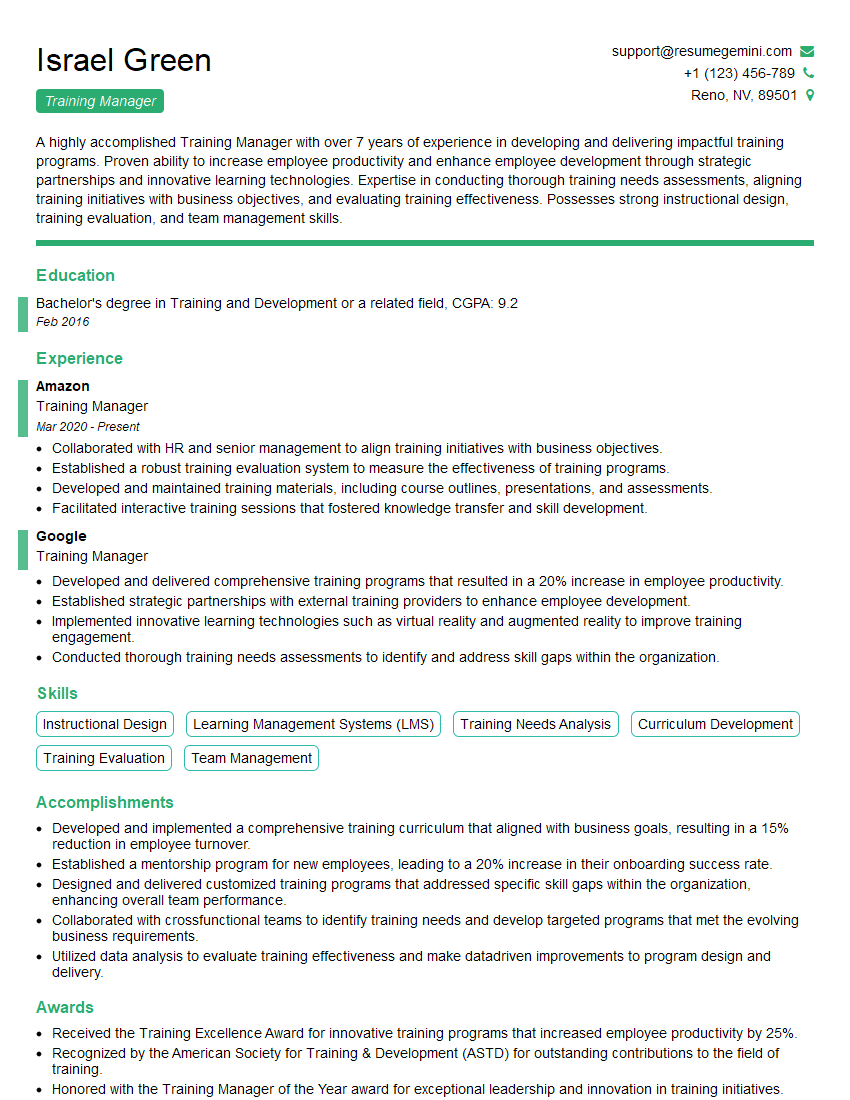
Training Manager Resume Sample
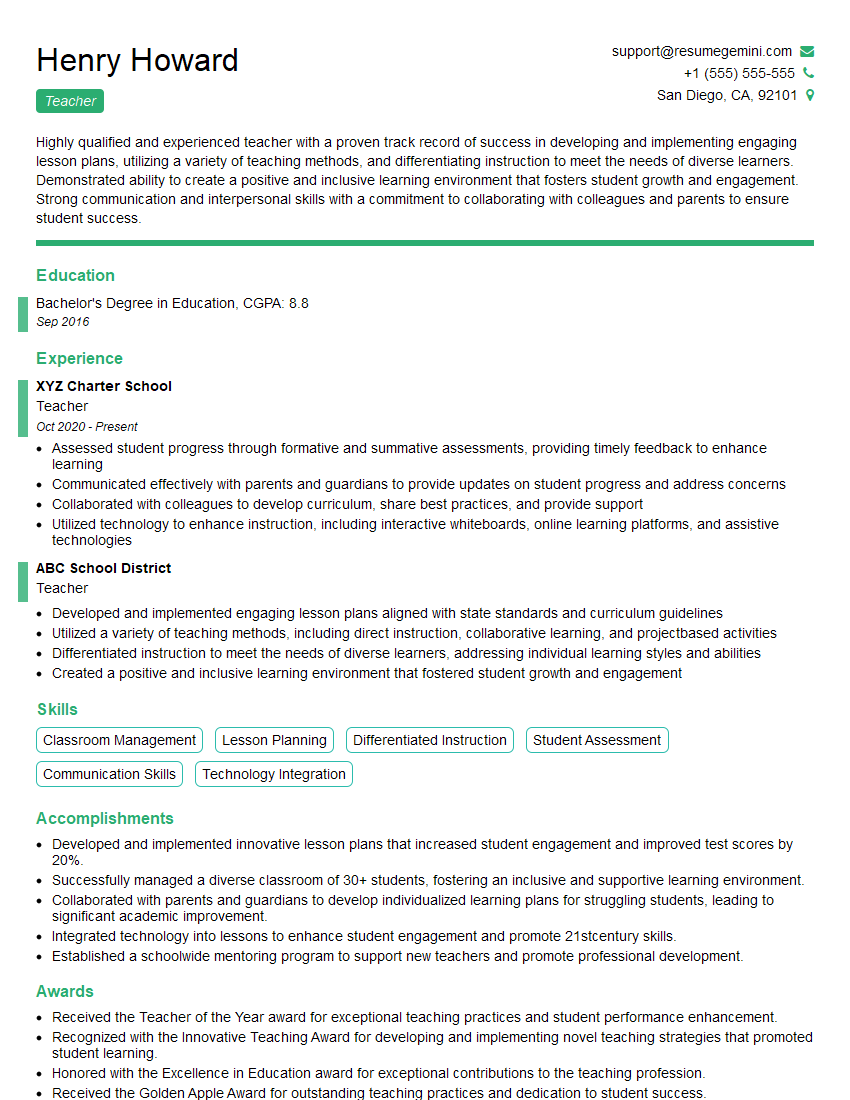
Teacher Resume Sample

Professor Resume Sample
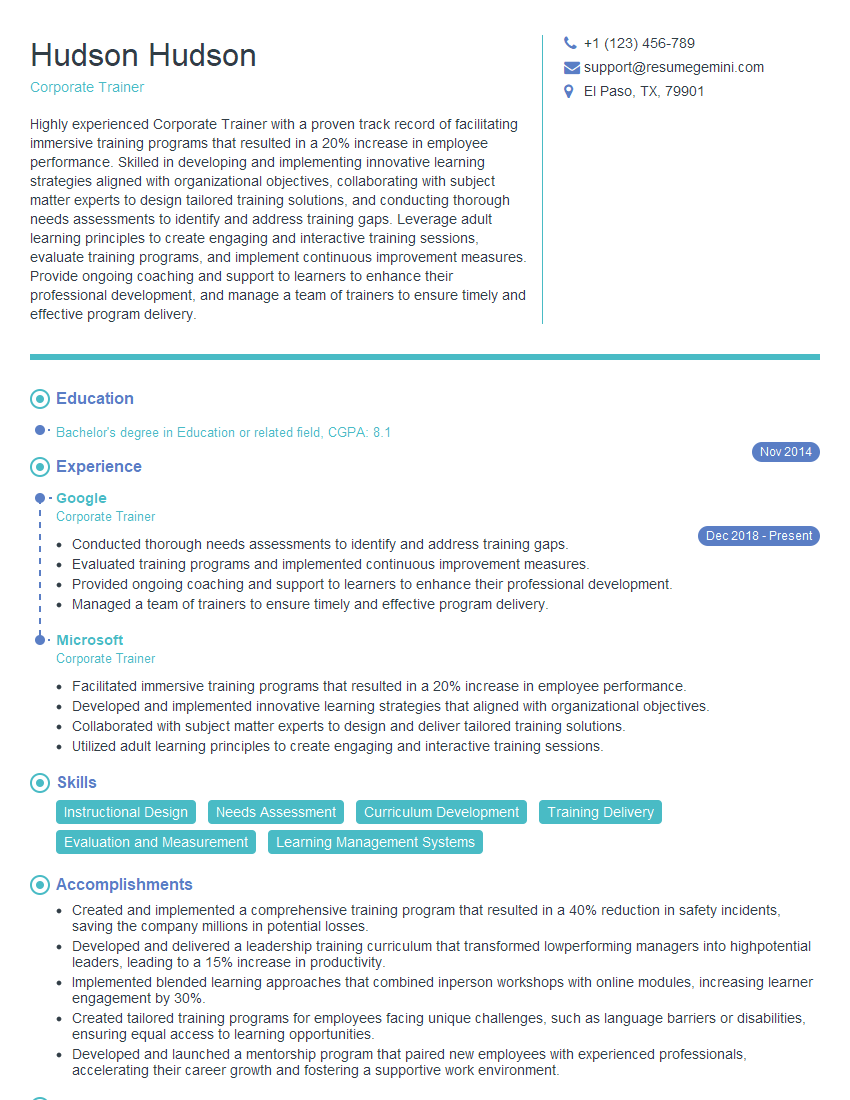
Corporate Trainer Resume Sample

Curriculum Developer Resume Sample
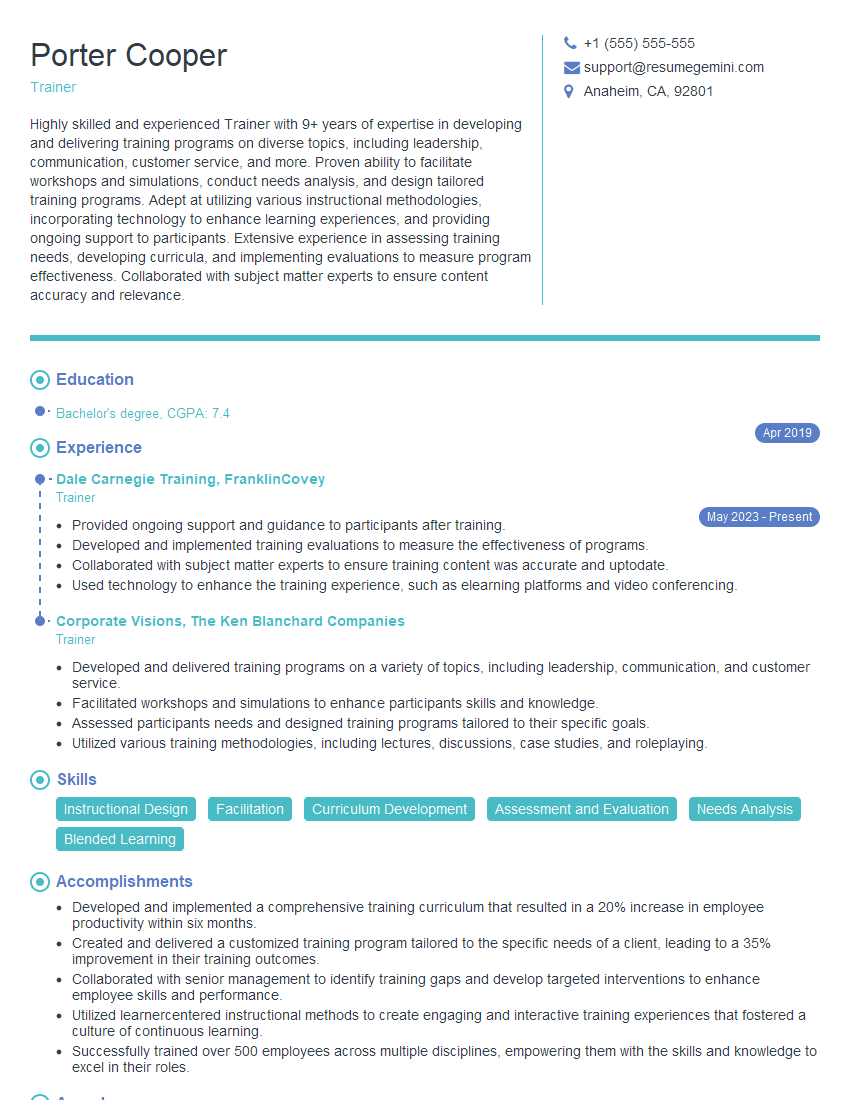
Trainer Resume Sample
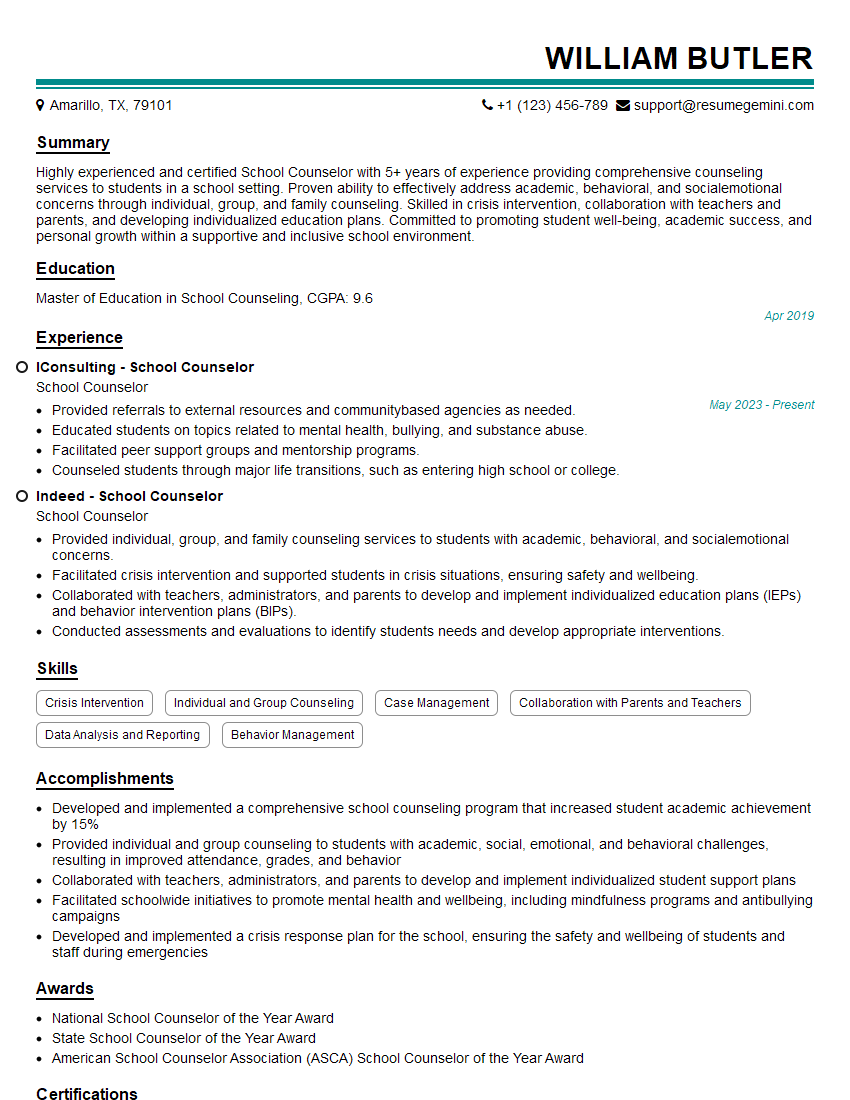
School Counselor Resume Sample
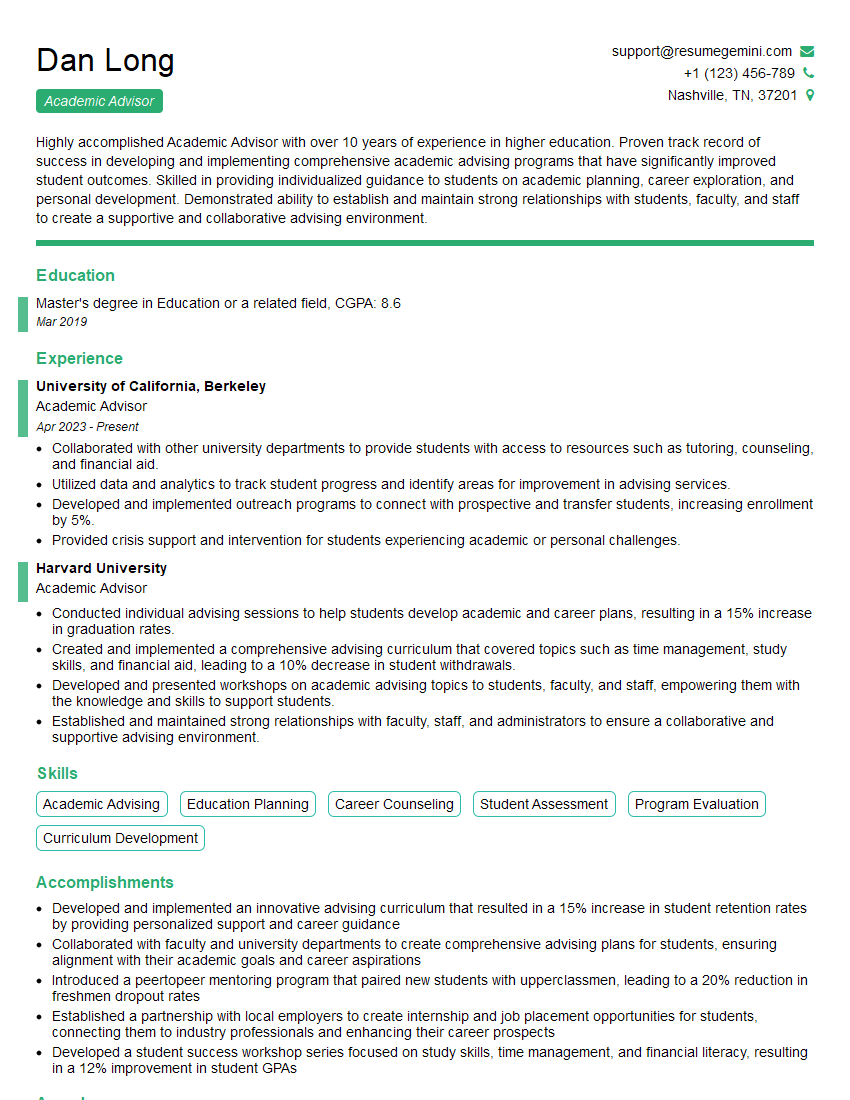
Academic Advisor Resume Sample
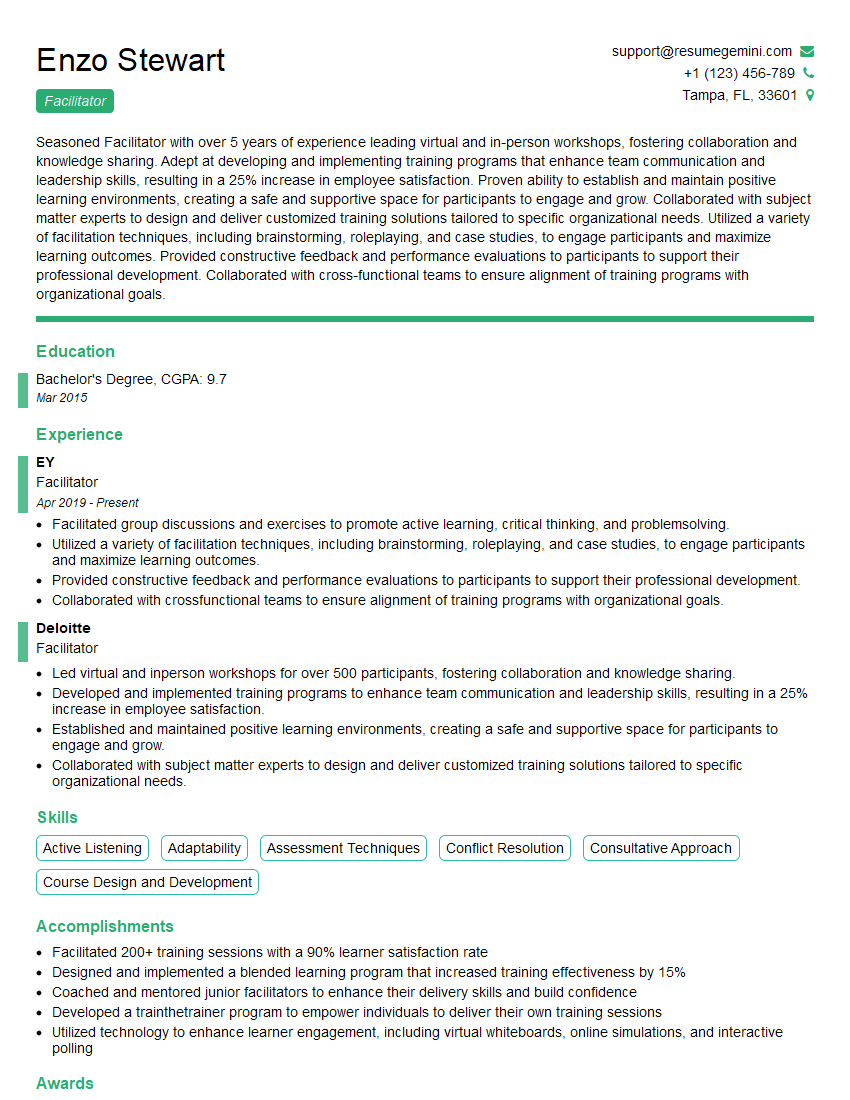
Facilitator Resume Sample
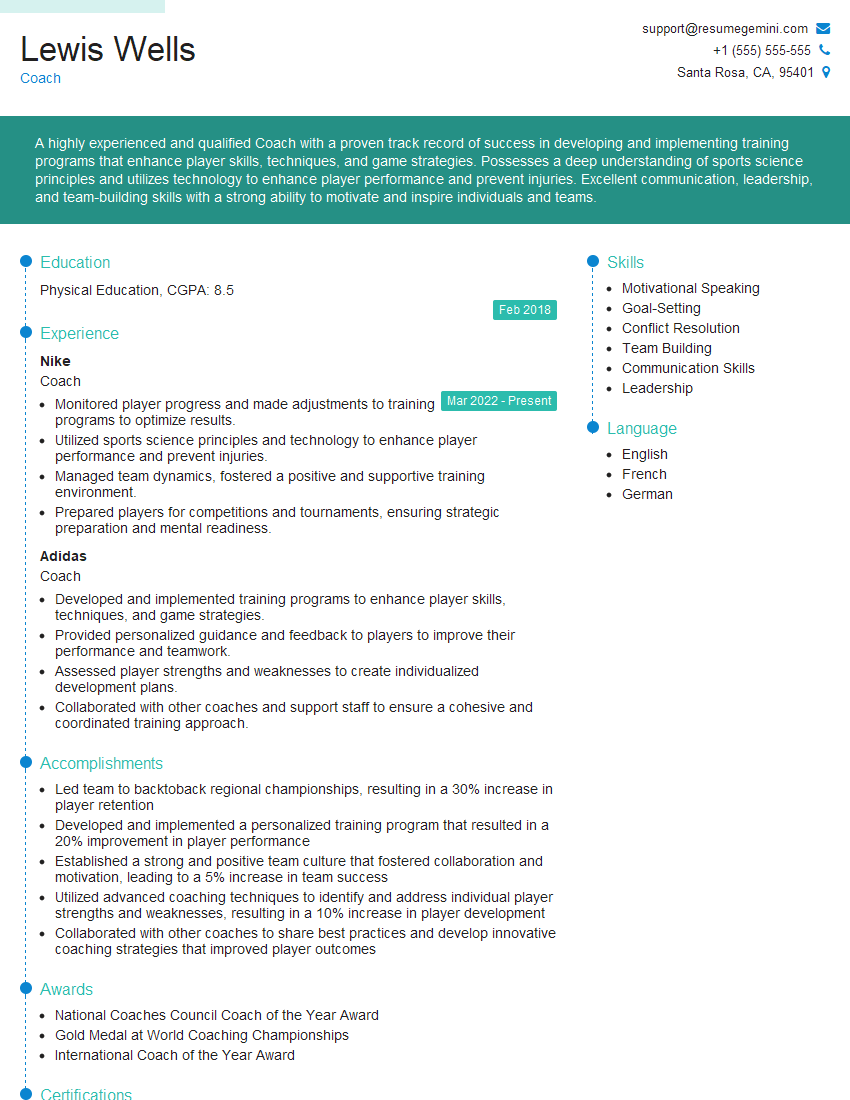
Coach Resume Sample

Adult Education Instructor Resume Sample
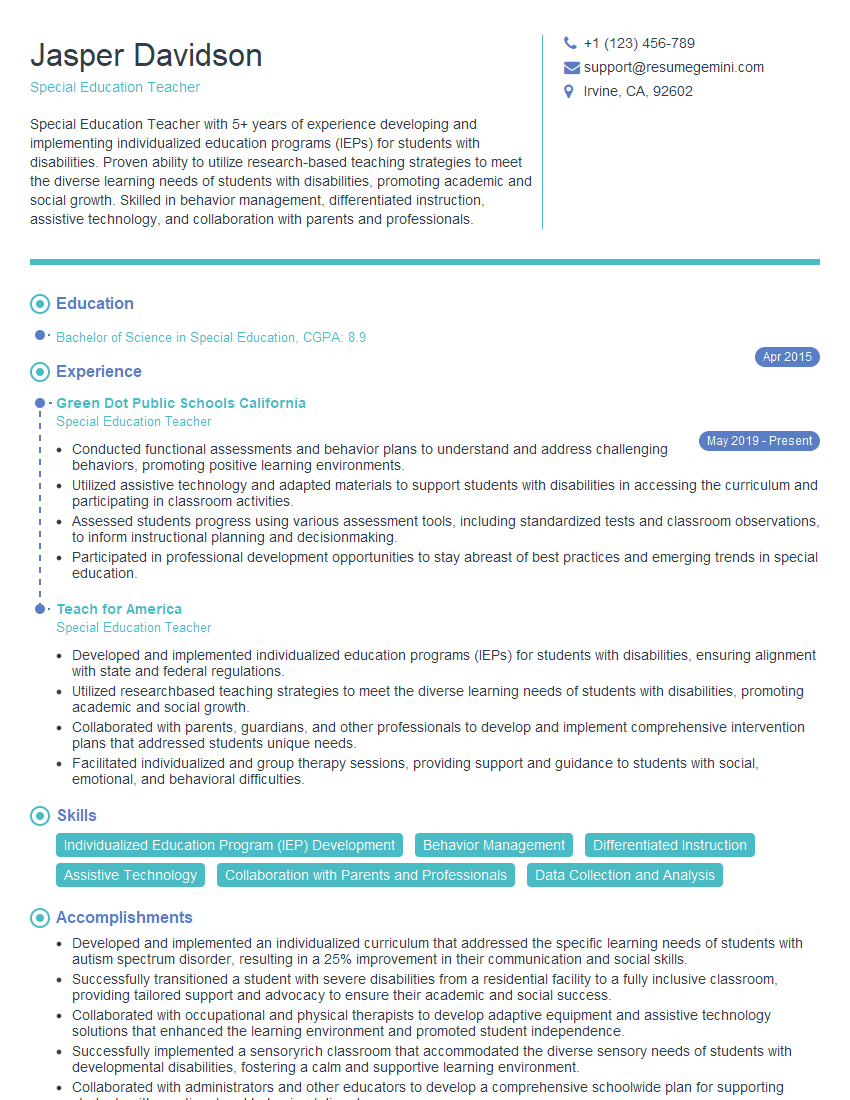
Special Education Teacher Resume Sample

Tutor Resume Sample
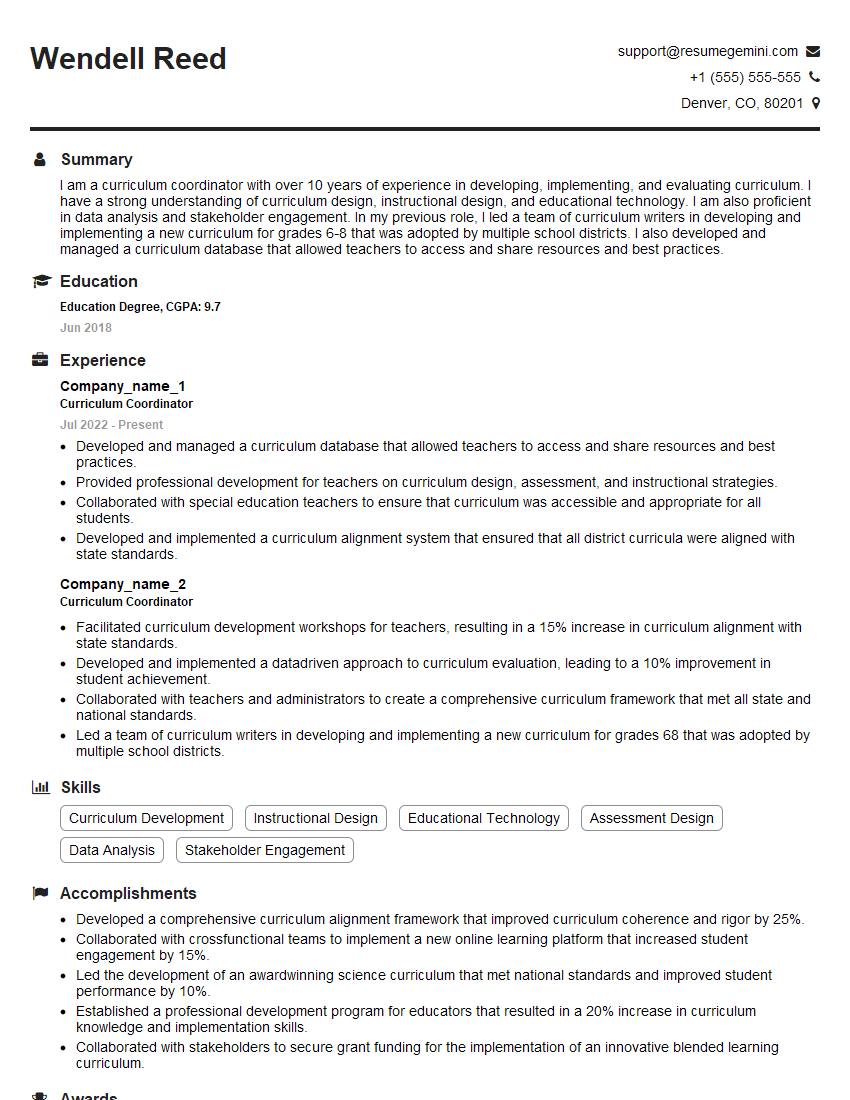
Curriculum Coordinator Resume Sample
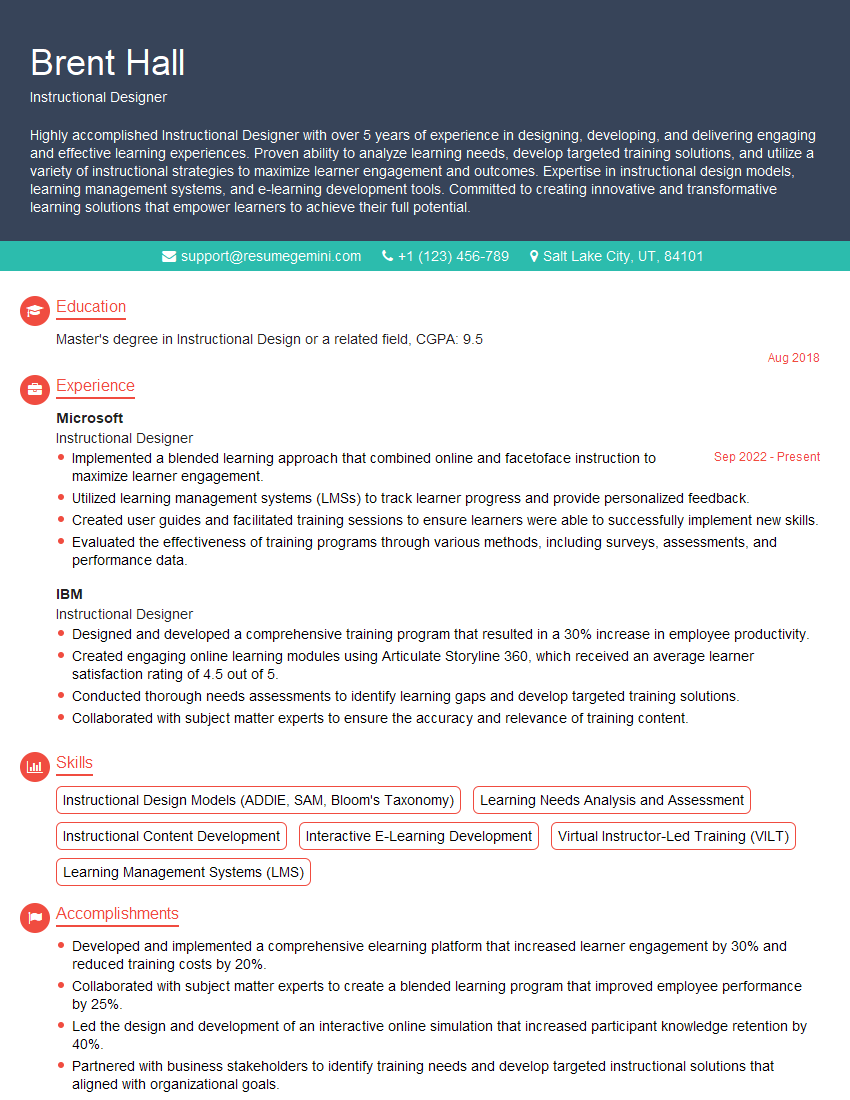
Instructional Designer Resume Sample

Educational Technologist Resume Sample
Explore more articles
Users Rating of Our Blogs
Share Your Experience
We value your feedback! Please rate our content and share your thoughts (optional).
What Readers Say About Our Blog
Very informative content, great job.
good