The right preparation can turn an interview into an opportunity to showcase your expertise. This guide to Cut Order Planning interview questions is your ultimate resource, providing key insights and tips to help you ace your responses and stand out as a top candidate.
Questions Asked in Cut Order Planning Interview
Q 1. Explain the process of creating a cut order plan.
Creating a cut order plan is like designing a complex jigsaw puzzle, where each piece represents a customer order and the board is your raw material. The goal is to fit all the pieces together with minimal waste. The process begins with gathering all incoming orders, noting the required dimensions and quantities of material for each. Then, we analyze the available stock, considering material width, length, and any defects. We then employ specialized software (which I’ll discuss later) or manual methods to generate different cutting patterns, evaluating each for material utilization and efficiency. This involves optimizing the arrangement of pieces to minimize leftover scraps. The chosen pattern is then translated into a detailed cut order, specifying which cuts to make, in what sequence, and the appropriate machine settings.
For example, imagine we have orders for 10 pieces of 2ft x 1ft fabric and 5 pieces of 1ft x 1ft fabric, and a roll of fabric measuring 10ft x 4ft. A good cut order plan would aim to utilize as much of the 10ft x 4ft roll as possible, minimizing the leftover scraps. This may involve nesting the larger pieces efficiently alongside the smaller ones. The final step involves reviewing the plan for accuracy and feasibility before sending it to the cutting floor.
Q 2. How do you determine the optimal cut order sequence to minimize waste?
Determining the optimal cut order sequence to minimize waste is a crucial aspect of cut order planning. We use a combination of techniques, including nesting algorithms, linear programming, and heuristic approaches. Nesting algorithms aim to arrange pieces in a way that minimizes the empty space. Linear programming techniques provide mathematically optimal solutions, but they can be computationally intensive for large-scale problems. Heuristic approaches, such as first-fit decreasing or best-fit decreasing, offer quicker approximations, balancing speed and optimality. The choice of method depends on the complexity of the orders, the available computational resources, and the desired level of waste reduction. The software we use often incorporates these methods, allowing for simulations and comparisons of different approaches.
For instance, in a scenario with multiple orders of varying sizes, a first-fit decreasing algorithm might order the pieces from largest to smallest, trying to fit each piece into the remaining space on the material. Best-fit decreasing would try to fit each piece into the ‘best’ or ‘most suitable’ available space. The software allows visualizing these different approaches and their effects on waste. Regular review of cutting patterns and utilization rates allows continuous improvement of the process and selection of the most effective method for a given set of circumstances.
Q 3. Describe your experience with different cutting methods (e.g., automated, manual).
My experience encompasses both automated and manual cutting methods. In manual cutting, precision and skill are paramount, relying on templates and sharp tools. This approach is better suited for smaller-scale operations or situations requiring intricate cuts. It’s important to have well-trained personnel, robust quality checks, and a structured workflow to maintain accuracy and avoid errors. Automated cutting, conversely, offers high speed, precision, and repeatability, making it ideal for high-volume production. I’ve worked with CNC cutting machines for various materials, from fabrics to sheet metal. These machines require sophisticated programming and maintenance, which includes setting up the cutting parameters (speed, pressure, tool selection) based on material properties and order specifications.
For example, in a previous role, we transitioned from manual fabric cutting to an automated system. This significantly boosted production output and reduced waste, especially for large, repetitive orders. However, this also required intensive training for staff to operate and maintain the new machinery, and adjustments were made to accommodate the limitations of the automated system.
Q 4. How do you handle unexpected changes or disruptions in the cut order plan?
Handling unexpected changes or disruptions in a cut order plan requires flexibility and quick thinking. This can involve anything from material shortages to urgent order requests. Our approach includes maintaining a buffer stock of commonly used materials to mitigate the impact of supply chain delays. We also prioritize orders based on urgency and deadlines, which I’ll detail in a subsequent answer. The software we use enables us to quickly update the cut order plan, simulating the impact of changes before implementing them. This might involve re-optimizing the cutting patterns, adjusting the cutting sequence, or temporarily prioritizing certain orders. We also employ robust communication to keep all stakeholders informed of any changes and their potential impact on delivery times.
For example, if a critical material is delayed, we might prioritize orders that don’t require that material or find a suitable substitute. We then would communicate the expected delay to the affected customers, transparently explaining the situation and offering alternative solutions, if possible. Proactive monitoring of potential supply chain issues, coupled with a well-defined contingency plan, ensures a smooth operation even in the face of unexpected events.
Q 5. What software or systems are you proficient in for cut order planning?
I am proficient in several software packages for cut order planning. These include OptiCut, Lectra Modaris, and Gerber AccuMark. These systems offer advanced nesting algorithms, material management tools, and reporting features. They allow for simulating different cutting patterns, analyzing waste, and optimizing the cutting sequence to minimize production time and material usage. I’m also familiar with ERP (Enterprise Resource Planning) systems which integrate cut order planning with other aspects of production, such as inventory management and order tracking. My experience with these systems allows me to effectively leverage their capabilities for efficient and accurate cut order planning. Proficiency in these systems involves not only understanding their functionalities but also configuring them to meet the specific needs of different projects and materials.
For instance, OptiCut’s advanced nesting algorithms allow for significantly reduced waste compared to manual methods, especially for complex shapes. Gerber AccuMark’s integration with other Gerber software streamlines the entire process from design to production, minimizing errors and maximizing efficiency. Understanding the strengths of each software allows choosing the appropriate tool for the task at hand.
Q 6. How do you prioritize different orders based on urgency and deadlines?
Prioritizing orders based on urgency and deadlines involves a combination of factors. We use a system that considers due dates, order size, customer importance, and material availability. Orders with imminent deadlines are naturally prioritized, even if they are smaller in size. Critical customers, those with long-standing relationships or significant business value, may also receive priority. Material availability plays a role, ensuring we don’t prioritize orders that require materials currently in short supply. We use a combination of scheduling software and a visual Kanban-style board to manage the flow of orders, enabling real-time tracking and adjustments.
For example, an urgent, high-value order from a key client will always take precedence over a large order with a more distant deadline, even if the latter requires less material. This requires careful consideration of resource allocation and transparency with customers about potential delivery delays resulting from prioritization.
Q 7. Explain your approach to managing inventory levels for cut materials.
Managing inventory levels for cut materials requires a delicate balance between avoiding shortages and minimizing excess stock. We employ a combination of techniques, including Just-in-Time (JIT) inventory management, forecasting, and safety stock levels. JIT aims to minimize inventory by procuring materials only when needed, reducing storage costs and waste. However, this approach requires accurate demand forecasting and a reliable supply chain. We use historical data, market trends, and sales projections to forecast demand. Safety stock levels are maintained for critical materials to account for unexpected disruptions in the supply chain. Regular inventory audits and stock rotation ensure efficient use of materials and minimize spoilage. Software systems help track inventory levels, monitor stock movements, and generate alerts for low stock items.
For instance, if historical data shows a consistent demand for a particular fabric, we might use a JIT approach, ordering it only when needed. However, for a more volatile material with potential supply chain risks, a larger safety stock would be maintained to avoid production delays. Regular reconciliation between physical stock and software records ensures inventory accuracy and supports informed decision-making regarding procurement and production scheduling.
Q 8. How do you ensure the accuracy of cut orders and minimize errors?
Accuracy in cut order planning is paramount to efficient production and minimizing waste. We achieve this through a multi-layered approach, starting with meticulous data entry and verification. Every order is double-checked against the design specifications, ensuring that the number of pieces, fabric type, and size are all correctly entered into the cutting software.
We also utilize advanced cutting room software that employs nesting algorithms to optimize fabric layout and minimize waste. These algorithms consider fabric properties like grain direction and print placement, further reducing errors. Regular calibration of the cutting machines and quality control checks at various stages of the process (pre-cutting, during cutting, post-cutting) ensure that the cut pieces match the planned quantities and specifications. Finally, we maintain a detailed audit trail of all cut orders for traceability and error detection.
For instance, in one project involving a complex patterned fabric, a simple oversight in the initial data entry could have led to a significant number of miscut pieces. Our robust verification process caught the discrepancy before any fabric was wasted, saving both time and resources.
Q 9. How do you collaborate with other departments (e.g., design, production) in the cut order planning process?
Collaboration is fundamental to effective cut order planning. I work closely with the design team from the initial stages of a project to understand the fabric requirements, design specifications, and any constraints. This allows us to incorporate these factors into the cut order plan from the start. Open communication channels prevent misunderstandings and ensure that the plan reflects the designers’ vision accurately.
With the production team, we collaborate to determine realistic cutting room capacity, ensuring that planned cut orders align with the available resources and production schedule. This includes discussions about machine availability, skilled labor, and potential bottlenecks. Regular meetings and status updates keep everyone informed and facilitate prompt problem-solving. A shared online platform (like a project management software) helps in coordinating efforts and tracking progress.
For example, during a recent project with a tight deadline, early collaboration with production highlighted a potential shortage of skilled operators. We proactively adjusted the cut order schedule, prioritizing urgent orders and redistributing workload to prevent delays.
Q 10. Describe your experience with different types of fabrics and their impact on cut order planning.
Experience with diverse fabrics is crucial for efficient cut order planning. Different fabrics have unique properties impacting how they are cut and handled. For instance, delicate fabrics like silk require specialized cutting techniques and sharper blades to prevent damage, while heavier fabrics like denim demand more powerful machines and adjustments in cutting parameters. Stretch fabrics present additional challenges, requiring careful consideration of fabric grain and stretch direction to ensure consistent garment fit.
The impact on cut order planning is significant. We adjust our nesting algorithms and cutting parameters based on fabric type. We also account for potential fabric shrinkage during pre-processing, ensuring that the final cut pieces meet the design specifications after washing or finishing. Fabric cost also plays a crucial role; higher-cost fabrics require even more precise planning to minimize waste.
For instance, a project involving a highly textured wool demanded a different cutting strategy than a project using plain cotton. Understanding the fabric’s drape, elasticity, and propensity for fraying informed the choice of cutting methods and the required safety margins in the cutting patterns.
Q 11. How do you track and analyze key performance indicators (KPIs) related to cut order planning?
Tracking and analyzing KPIs is essential for continuous improvement in cut order planning. Key metrics we monitor include:
- Cut order accuracy: Percentage of cut orders completed without errors.
- Material utilization rate: Percentage of fabric used versus fabric wasted.
- Cutting room efficiency: Number of garments cut per hour or per machine.
- On-time delivery rate: Percentage of cut orders delivered on schedule.
- Waste cost: Total cost of wasted fabric.
We use data analytics tools to visualize these KPIs, identify trends, and pinpoint areas needing improvement. Regular reports highlight performance against targets, allowing for timely intervention and adjustments to our strategies. This data-driven approach enables us to identify inefficiencies and implement solutions proactively.
For example, a sudden drop in material utilization rate alerted us to a potential issue with the nesting algorithm. By analyzing the data, we identified and rectified a software bug, resulting in improved efficiency and reduced waste.
Q 12. How do you handle discrepancies between planned and actual cut order quantities?
Discrepancies between planned and actual cut order quantities are addressed through a thorough investigation process. We first verify the accuracy of the initial cut order plan against design specifications and ensure that all parameters were correctly entered into the cutting system. Then, we cross-check the actual cut quantities against the production records and the inventory of cut pieces.
If discrepancies are found, a root cause analysis is performed. This could involve inspecting cutting machine performance, checking for errors in the fabric handling process, or reviewing operator training. Depending on the nature of the discrepancy, corrective actions range from simple adjustments to the cutting parameters to more substantial measures like retraining personnel or updating cutting software. Detailed documentation of the discrepancy, investigation, and corrective actions is maintained to prevent similar issues from recurring.
For example, a significant shortage in cut pieces pointed to a malfunctioning cutting machine. After repair and recalibration, we resolved the issue and implemented a preventative maintenance schedule to avoid future disruptions.
Q 13. What strategies do you use to optimize material utilization and reduce waste?
Optimizing material utilization and reducing waste is a continuous focus in cut order planning. We employ several strategies:
- Advanced nesting software: Utilizing sophisticated algorithms to minimize fabric waste by optimizing the placement of patterns on the fabric.
- Fabric selection: Choosing fabric widths and lengths that minimize waste based on the design’s requirements.
- Marker making optimization: Regularly reviewing and refining cutting patterns to enhance material utilization.
- Waste tracking and analysis: Monitoring waste quantities to identify patterns and areas for improvement.
- Cross-cutting and remnant utilization: Strategically using fabric remnants to cut smaller parts or produce secondary products.
Regular training sessions for our cutting room operators reinforce the importance of waste reduction and best practices. We also celebrate success stories and share best practices to foster a culture of continuous improvement.
For instance, by implementing a new nesting algorithm, we were able to reduce fabric waste by 5%, leading to significant cost savings and a positive environmental impact.
Q 14. Describe your experience with capacity planning for the cutting room.
Capacity planning for the cutting room is crucial for efficient operations and meeting production deadlines. It involves forecasting the workload, assessing available resources, and optimizing resource allocation. This process starts with demand forecasting, using historical data, sales projections, and upcoming orders to predict the cutting room’s workload in the near future.
Next, we evaluate the available resources, including the number of cutting machines, their capacity, the number of skilled operators, and the availability of support staff. We identify potential bottlenecks in the process, like machine downtime or skill shortages. We then develop a capacity plan, which could involve adjusting the production schedule, scheduling overtime, or investing in additional resources to meet the demand. This plan includes allocation of tasks and operators to machines, considering their skills and the complexity of the cutting tasks.
For example, anticipating a surge in orders for a new product line, we proactively invested in an additional cutting machine and conducted training for additional operators to avoid any potential bottlenecks and ensure timely production.
Q 15. How do you incorporate lead times and delivery dates into your cut order planning?
Incorporating lead times and delivery dates into cut order planning is crucial for on-time delivery. It’s like baking a cake – you need to know how long each step takes (lead times for cutting, sewing, etc.) to determine when the cake (finished product) will be ready (delivery date).
We use a scheduling system that takes into account:
- Material procurement lead time: The time it takes to receive materials from suppliers.
- Cutting lead time: The time needed for cutting operations, considering machine capacity and setup times.
- Downstream processing lead times: Time required for subsequent processes like sewing, finishing, and packaging.
- Delivery date commitments to clients: These are the non-negotiable deadlines we must meet.
We then work backward from the delivery date, scheduling each step to ensure everything aligns perfectly. For instance, if a client needs the product by October 27th and the sewing lead time is 3 days and the finishing lead time is 2 days, we need the cut orders completed by October 22nd. Software helps us visualize this schedule, alerting us to potential conflicts or delays.
Career Expert Tips:
- Ace those interviews! Prepare effectively by reviewing the Top 50 Most Common Interview Questions on ResumeGemini.
- Navigate your job search with confidence! Explore a wide range of Career Tips on ResumeGemini. Learn about common challenges and recommendations to overcome them.
- Craft the perfect resume! Master the Art of Resume Writing with ResumeGemini’s guide. Showcase your unique qualifications and achievements effectively.
- Don’t miss out on holiday savings! Build your dream resume with ResumeGemini’s ATS optimized templates.
Q 16. How do you manage multiple concurrent cut orders with varying priorities?
Managing multiple concurrent cut orders with varying priorities requires a robust prioritization system and efficient resource allocation. Think of it as an orchestra conductor – each instrument (cut order) needs to be played at the right time and with the right intensity (priority) to create beautiful music (efficient production).
We use a combination of techniques:
- Priority Ranking: Orders are assigned priorities based on factors like due date, client importance, and order value. Urgent orders get top priority.
- Capacity Planning: We carefully assess the capacity of our cutting machines and allocate time slots based on priority and lead times. This prevents bottlenecks.
- Material Optimization: We prioritize orders that can utilize similar materials and patterns together, minimizing setup time and waste.
- Real-time Monitoring: We monitor progress closely and make adjustments as needed, addressing unforeseen issues quickly to prevent delays.
For example, if an order with a tight deadline comes in, we might temporarily reschedule lower-priority orders to accommodate it, ensuring timely delivery for the high-priority client.
Q 17. What is your experience with different types of cutting patterns?
My experience encompasses a broad range of cutting patterns, from simple rectangular cuts to complex, nested patterns optimized for minimal material waste. Understanding different patterns is key to efficient cutting, much like a tailor understanding different fabric types and cuts for different garments.
I’m proficient with:
- Marker Making Software: I’m experienced in using software to create efficient cutting layouts, minimizing material waste and maximizing yield.
- Nested Patterns: This technique involves arranging multiple pieces of different shapes to fit together optimally within the fabric, minimizing waste. It requires advanced software and a keen eye for detail.
- Spread Patterns: Simpler patterns suitable for straight cuts, efficient for high-volume production of standard items.
The choice of pattern depends on the order specifications, material properties, and production volume. Complex patterns are more efficient for smaller orders or intricate designs, while simpler patterns are suited for high-volume production.
Q 18. How do you address issues with material quality that impact cut order planning?
Material quality issues can significantly impact cut order planning. Finding flaws after the cutting process is like discovering a rotten apple in the middle of a pie – it spoils the whole batch.
Our strategy involves:
- Rigorous Incoming Inspection: We thoroughly inspect all incoming materials for defects like discoloration, damage, or inconsistencies in thickness or width.
- Material Mapping: We carefully map out areas of the material that have defects so they can be avoided during the cutting process. Good quality materials are used for critical areas of the final products.
- Contingency Planning: We always maintain a buffer of materials to account for potential defects or unexpected delays caused by poor material quality.
- Supplier Collaboration: We work closely with our suppliers to establish strict quality control measures and address any recurring issues proactively.
We document all material quality issues and track trends to help us make informed decisions about supplier selection and material purchasing.
Q 19. How do you use data analysis to improve cut order planning efficiency?
Data analysis is the backbone of efficient cut order planning. It allows us to identify trends, optimize processes, and predict potential issues, much like a doctor uses diagnostic tests to understand a patient’s condition and recommend treatment.
We use data analysis for:
- Waste Reduction Analysis: We track material waste to identify areas for improvement in pattern design and cutting techniques.
- Lead Time Optimization: We analyze historical data to predict lead times more accurately and improve scheduling.
- Capacity Planning: We analyze machine utilization data to optimize resource allocation and prevent bottlenecks.
- Demand Forecasting: Analyzing sales data allows us to predict future demand, enabling better inventory management and production planning.
For instance, by analyzing waste data, we identified that a certain pattern was consistently producing excessive waste. We then redesigned the pattern using the marker-making software, resulting in a significant reduction in material waste and cost savings.
Q 20. Explain your experience with implementing new technologies or processes in cut order planning.
I have extensive experience implementing new technologies and processes in cut order planning. Adopting new tools is like upgrading your kitchen appliances – it makes cooking (production) faster, easier, and more efficient.
I have been involved in:
- Implementing advanced marker-making software: This dramatically improved our pattern nesting efficiency and reduced material waste. The software’s algorithms optimize pattern placement, resulting in significant cost savings.
- Automating cutting machine controls: Automating the cutting process increased speed and reduced human error, leading to more consistent and higher-quality cuts.
- Integrating ERP and production management systems: This enhanced communication and collaboration between different departments and provided better visibility into the entire production process.
For example, the implementation of the new marker-making software resulted in a 15% reduction in material waste within the first six months.
Q 21. Describe a time you had to resolve a significant challenge in cut order planning.
One significant challenge I faced involved a major order with an extremely tight deadline. A critical machine malfunctioned just as we were beginning the cutting process, creating a potential crisis. It was like facing a flat tire on the way to an important meeting.
My solution involved a multi-pronged approach:
- Immediate assessment: I quickly assessed the extent of the damage and the time it would take to repair the machine.
- Alternative solution: I explored alternative cutting solutions, including outsourcing some of the cutting work to a trusted partner with excess capacity.
- Prioritization: I replanned the cutting schedule to prioritize the most time-sensitive parts of the order.
- Communication: I kept the client informed about the situation and offered a revised delivery timeline.
Thanks to quick thinking and collaboration, we managed to deliver the order with only a minor delay, preserving our client relationship and avoiding costly penalties. This highlighted the importance of contingency planning and proactive problem-solving in cut order planning.
Q 22. How do you ensure that the cut orders align with the overall production schedule?
Aligning cut orders with the overall production schedule is crucial for efficient manufacturing. It’s like orchestrating a symphony – every instrument (cut order) needs to play its part at the right time to create a harmonious whole (finished product). I achieve this through meticulous planning and leveraging Production Planning Software (PPS). First, I thoroughly analyze the master production schedule (MPS), identifying the quantity and timing of each finished product required. Then, I break down the bill of materials (BOM) for each product, determining the specific fabric cuts needed and their quantities. I then input this data into the PPS, which factors in machine capacity, material availability, and lead times to create an optimized cut order schedule. This ensures that the right materials are cut at the right time, preventing bottlenecks and delays.
For instance, if the MPS shows a surge in demand for a particular product next week, I’ll prioritize cut orders for the corresponding fabric components, even if it means temporarily adjusting the schedule for other products with less urgent deadlines. Regular monitoring and adjustments are key – it’s an iterative process, not a static plan.
Q 23. What is your understanding of different costing methods related to cut order planning?
Several costing methods are applicable to cut order planning, each with its own strengths and weaknesses. The most common are:
- Material Costing: This is the most straightforward, focusing solely on the raw material cost per cut order. It’s easy to calculate but doesn’t account for other crucial factors like labor or machine usage.
- Process Costing: This method allocates costs based on the production process. For cut order planning, it would involve assigning costs based on cutting machine time, labor hours, and associated overhead. It’s more comprehensive than material costing but requires accurate data on resource consumption.
- Activity-Based Costing (ABC): This advanced approach assigns costs based on specific activities involved in the cutting process, such as material handling, machine setup, and quality control. It offers the most accurate cost picture but is more complex to implement and requires detailed activity tracking.
The choice of costing method depends on the complexity of the operation and the level of cost detail required. In many cases, a hybrid approach incorporating elements of several methods provides the most balanced and insightful view of cut order costs.
Q 24. How do you communicate cut order plans to relevant stakeholders?
Effective communication is vital in cut order planning. I use a multi-pronged approach.
- Cut Order Schedules: I generate detailed, easily understandable cut order schedules using our PPS, distributing them digitally to the cutting room supervisors and production managers. These schedules clearly outline the required fabrics, quantities, due dates, and any special instructions.
- Regular Meetings: I hold regular meetings with these stakeholders to discuss the schedule, address concerns, and proactively solve potential problems. These meetings allow for two-way communication, ensuring everyone is on the same page.
- Visual Management Tools: I utilize Kanban boards or similar visual tools to provide a real-time overview of the cut order progress, making it clear to everyone involved which orders are complete, in progress, or delayed.
- Reporting: I regularly generate reports on cut order performance – including efficiency rates, material usage, and any deviations from the schedule – to identify areas for improvement and inform strategic decision-making.
This multifaceted approach ensures clear, timely, and consistent communication, fostering collaboration and reducing miscommunications.
Q 25. How do you balance the need for efficiency with the need for quality in cut order planning?
Balancing efficiency and quality in cut order planning is a delicate act – think of it like walking a tightrope. You need both to succeed. My approach centers around optimization techniques and rigorous quality control measures.
- Optimized Cutting Layouts: I use specialized software to create optimized cutting layouts, minimizing fabric waste and maximizing yield. This directly improves efficiency without compromising the quality of the cut pieces.
- Regular Machine Maintenance: Ensuring the cutting machines are properly maintained and calibrated is crucial for maintaining consistent cut quality and preventing costly downtime. This increases both quality and efficiency.
- Quality Checks at Each Stage: Implementing quality checks at each stage of the cutting process – from material inspection to the final cut – helps identify and rectify defects early, preventing further issues and improving the final product’s quality.
- Employee Training: Investing in training for cutting room personnel ensures they are skilled and competent in using the machinery and following quality control procedures.
By focusing on these aspects, I create a system where efficiency is not achieved at the expense of quality, and vice-versa. It’s about synergistic improvement – improving one aspect positively impacts the other.
Q 26. How do you handle order cancellations or changes?
Order cancellations or changes are inevitable, so I have a process in place to handle them effectively and minimize disruption.
- Immediate Notification: Upon receiving a cancellation or change request, I immediately acknowledge it and determine the impact on the existing schedule.
- Schedule Adjustment: Using the PPS, I assess the feasibility of adjusting the schedule to accommodate the change. This may involve re-prioritizing other cut orders or adjusting production timelines.
- Communication: I communicate the updated schedule to all relevant stakeholders, ensuring everyone is informed of the changes and their implications.
- Inventory Management: For cancellations, I update the inventory accordingly, potentially freeing up resources for other orders.
- Documentation: I meticulously document all changes, including the reasons for the changes and the impact on production.
My goal is to ensure transparency, minimize wasted resources, and mitigate any potential negative effects on the overall production plan. It’s about adapting to change while maintaining as much control as possible.
Q 27. What are your strengths and weaknesses as a Cut Order Planner?
My strengths as a Cut Order Planner lie in my analytical skills, my proficiency in production planning software, and my ability to effectively communicate with various stakeholders. I’m adept at optimizing cutting layouts to minimize waste and maximize efficiency. I also pride myself on my problem-solving abilities – I can quickly assess and resolve unexpected issues that arise during the production process.
One area for improvement is my delegation skills. While I’m comfortable handling the details of cut order planning myself, I’m working on empowering my team to take on more responsibility. This will allow me to focus on higher-level strategic planning and improvement initiatives.
Q 28. Where do you see yourself in five years in the field of Cut Order Planning?
In five years, I envision myself as a seasoned Cut Order Planner, potentially in a leadership role. I see myself leading a team, mentoring junior planners, and driving improvements in our cutting processes. I’d like to contribute to the implementation of advanced technologies like AI-powered optimization tools, improving efficiency and reducing costs even further. I’m keen to expand my knowledge in areas like sustainable manufacturing practices and lean principles to contribute to a more environmentally friendly and efficient production environment.
Key Topics to Learn for Cut Order Planning Interview
- Demand Forecasting & Sales Planning: Understanding how sales forecasts drive cut order requirements and the impact of forecasting accuracy on efficiency.
- Material Requirements Planning (MRP): Applying MRP principles to optimize material usage and minimize waste in cut order planning. This includes understanding bill of materials and lead times.
- Cutting Optimization Techniques: Familiarity with different cutting algorithms (e.g., nesting algorithms) and their application in minimizing material waste and maximizing yield.
- Production Scheduling & Sequencing: Understanding how cut orders integrate with overall production scheduling to ensure timely completion and efficient resource allocation.
- Inventory Management: The role of cut order planning in maintaining optimal inventory levels of raw materials and finished goods, balancing supply and demand.
- Waste Reduction Strategies: Exploring various methods to minimize material waste, including process improvement techniques and innovative cutting patterns.
- Software & Technology: Experience with relevant software and technologies used in cut order planning (mention general categories, not specific software names).
- Quality Control & Assurance: Understanding the importance of quality checks throughout the cut order process to ensure adherence to specifications and standards.
- Problem-Solving & Decision-Making: Demonstrating the ability to analyze complex situations, identify bottlenecks, and develop effective solutions within the context of cut order planning.
- Communication & Collaboration: Highlighting the importance of effective communication with various stakeholders (e.g., production, sales, purchasing) to ensure efficient cut order planning.
Next Steps
Mastering Cut Order Planning opens doors to rewarding careers in manufacturing, logistics, and supply chain management, offering opportunities for growth and specialization. To maximize your job prospects, creating a strong, ATS-friendly resume is crucial. ResumeGemini is a trusted resource that can help you craft a professional and impactful resume tailored to highlight your skills and experience in Cut Order Planning. Examples of resumes tailored to this field are provided to help guide you.
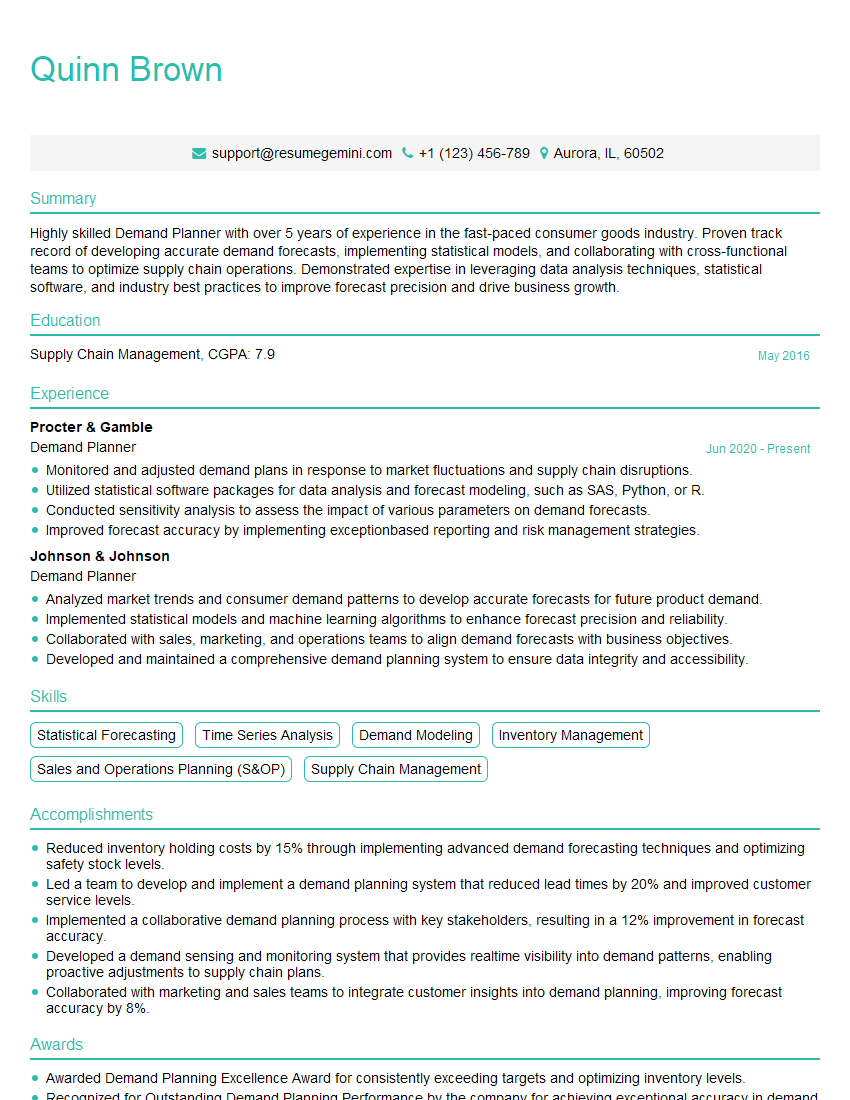
Demand Planner Resume Sample

Manufacturing Planner Resume Sample
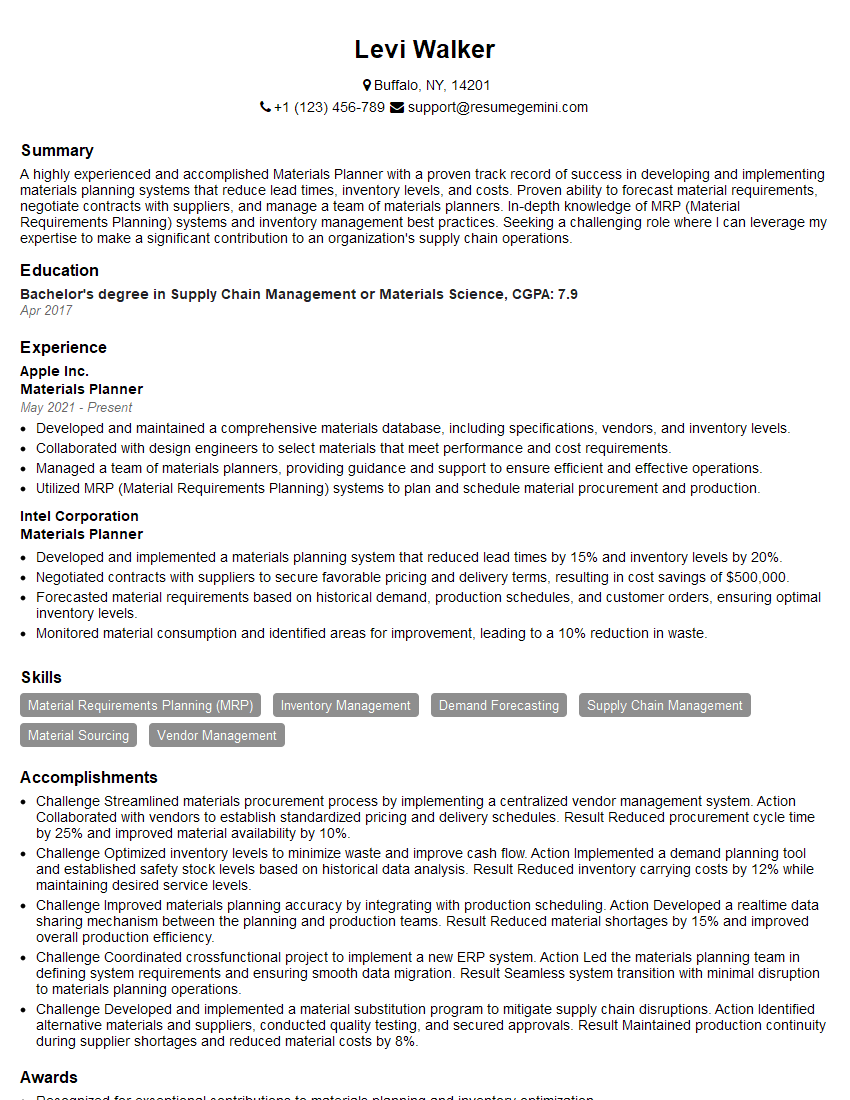
Materials Planner Resume Sample
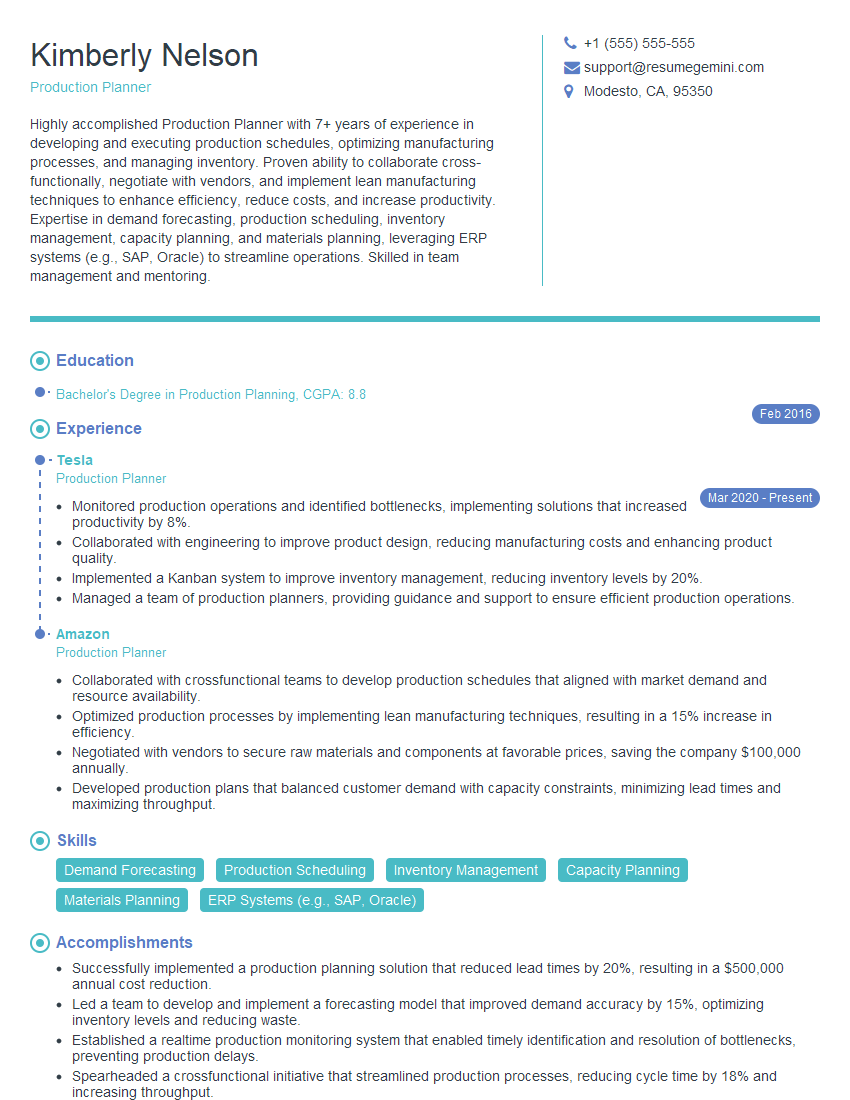
Production Planner Resume Sample
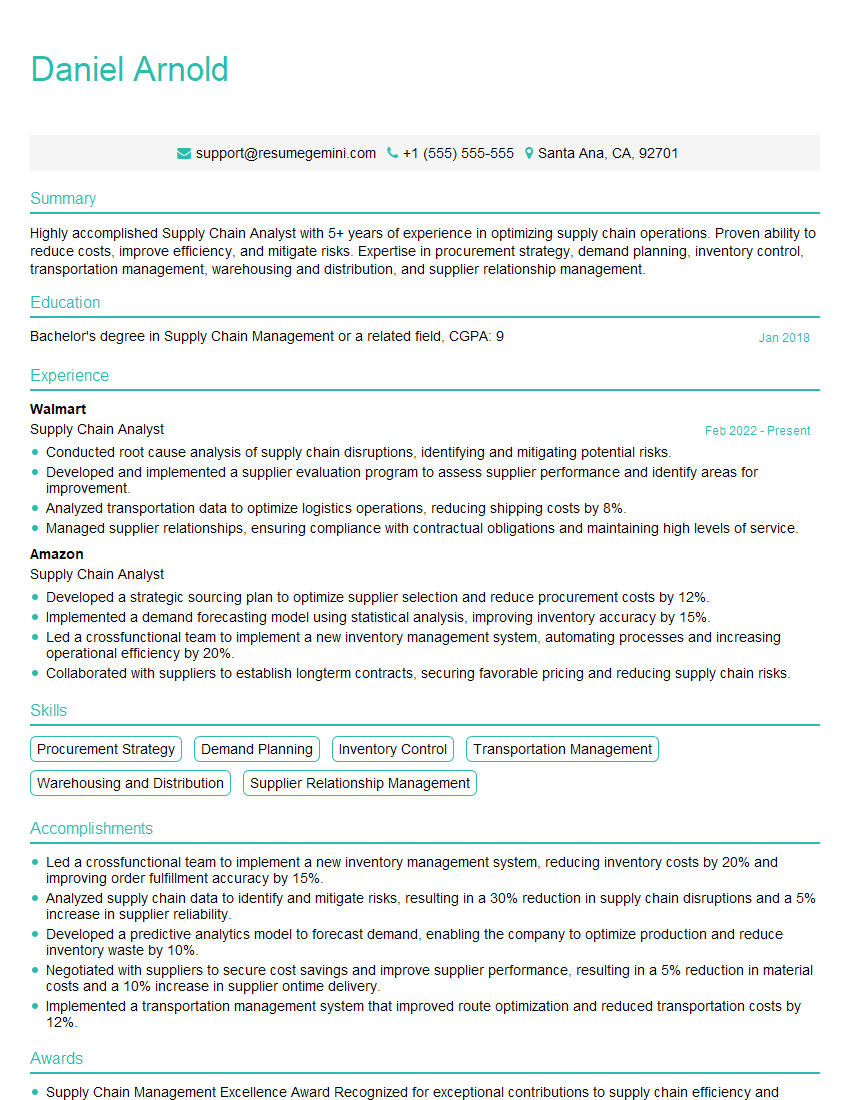
Supply Chain Analyst Resume Sample
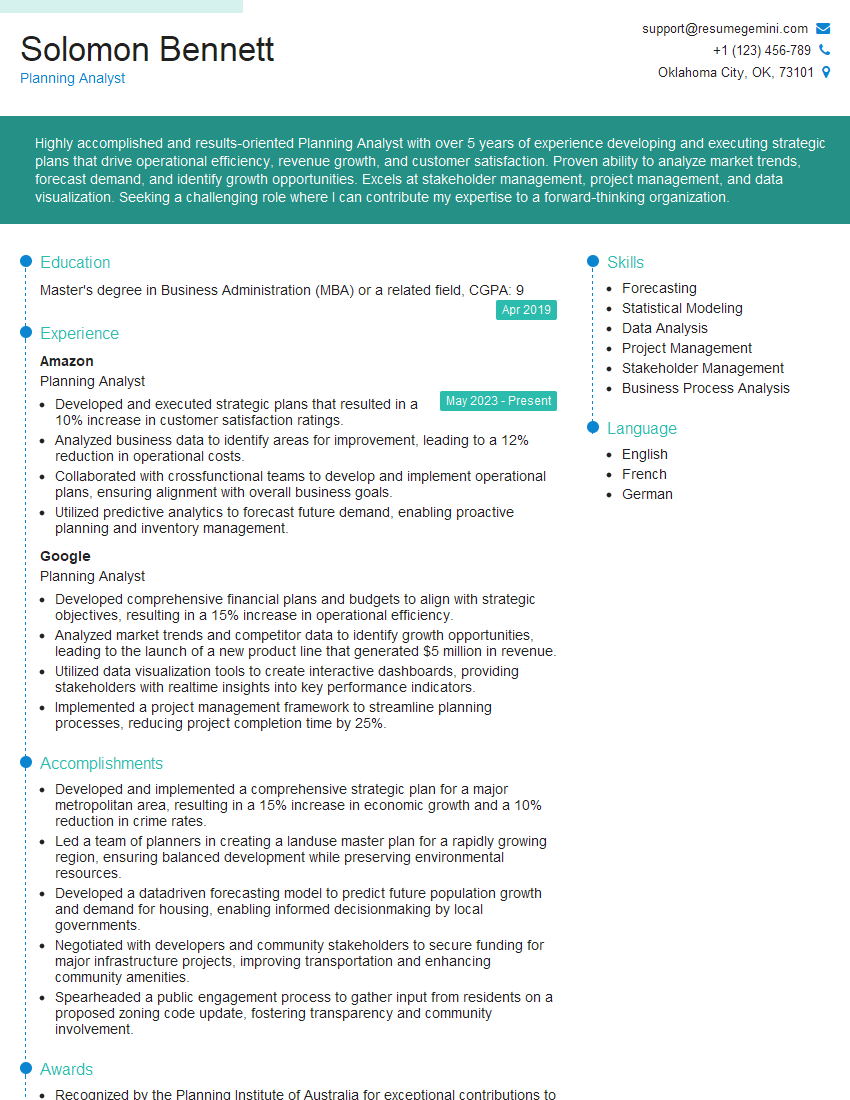
Planning Analyst Resume Sample
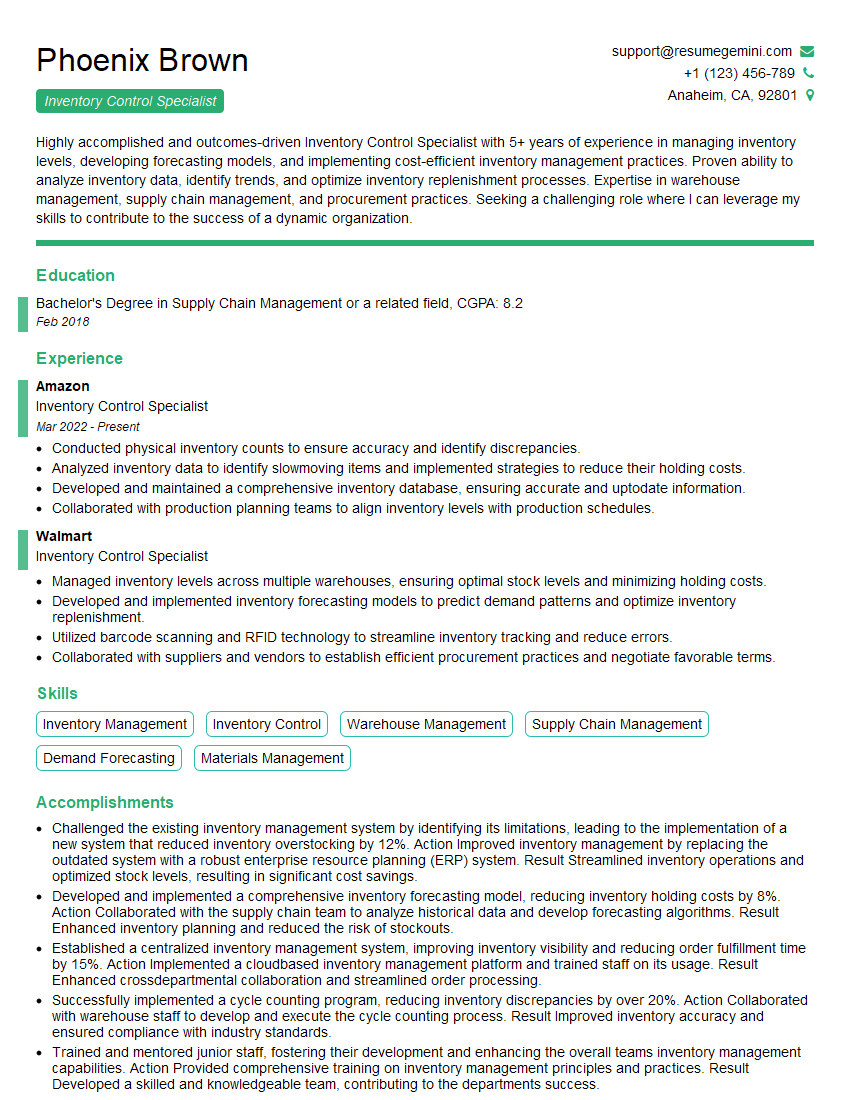
Inventory Control Specialist Resume Sample
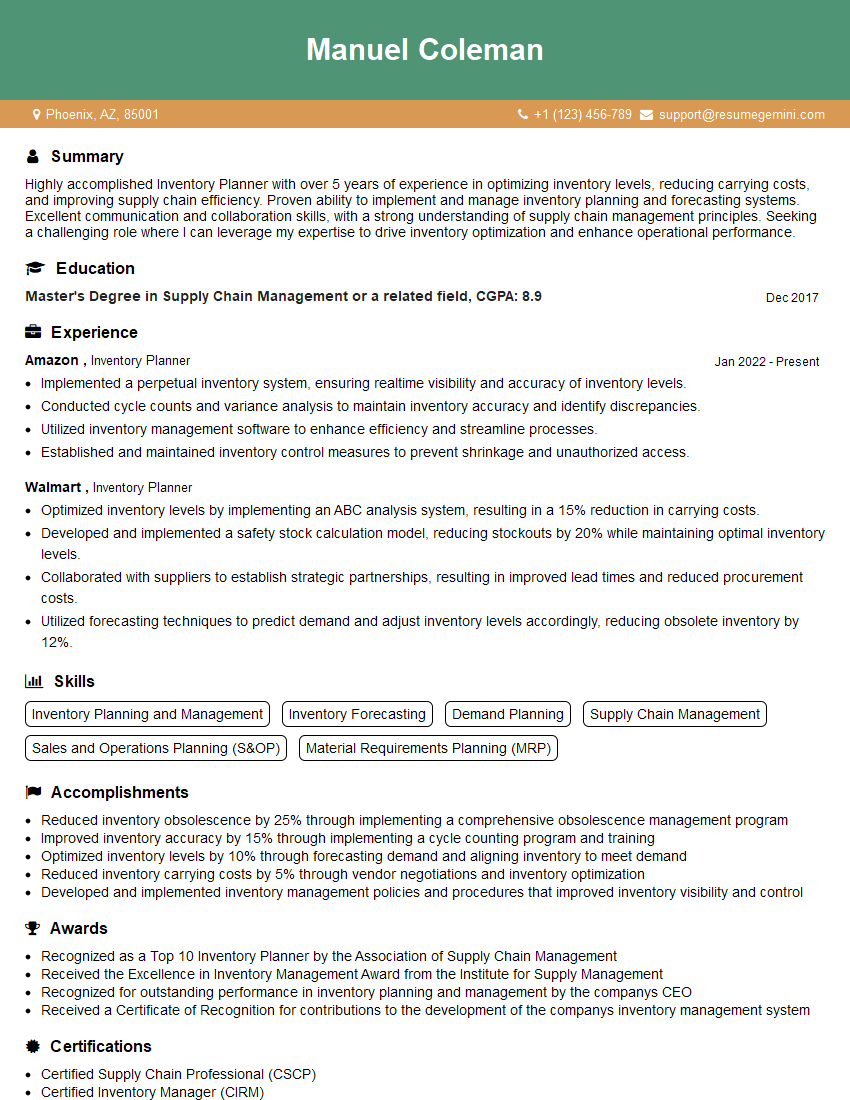
Inventory Planner Resume Sample
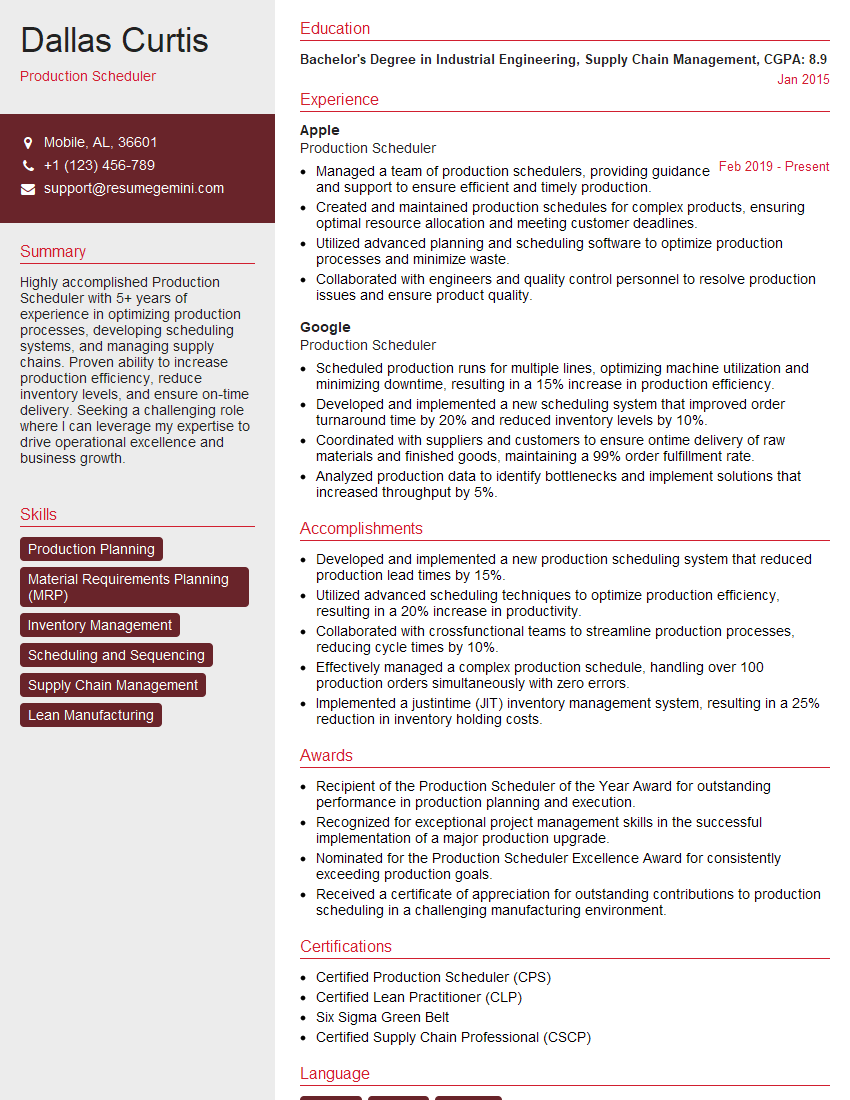
Production Scheduler Resume Sample
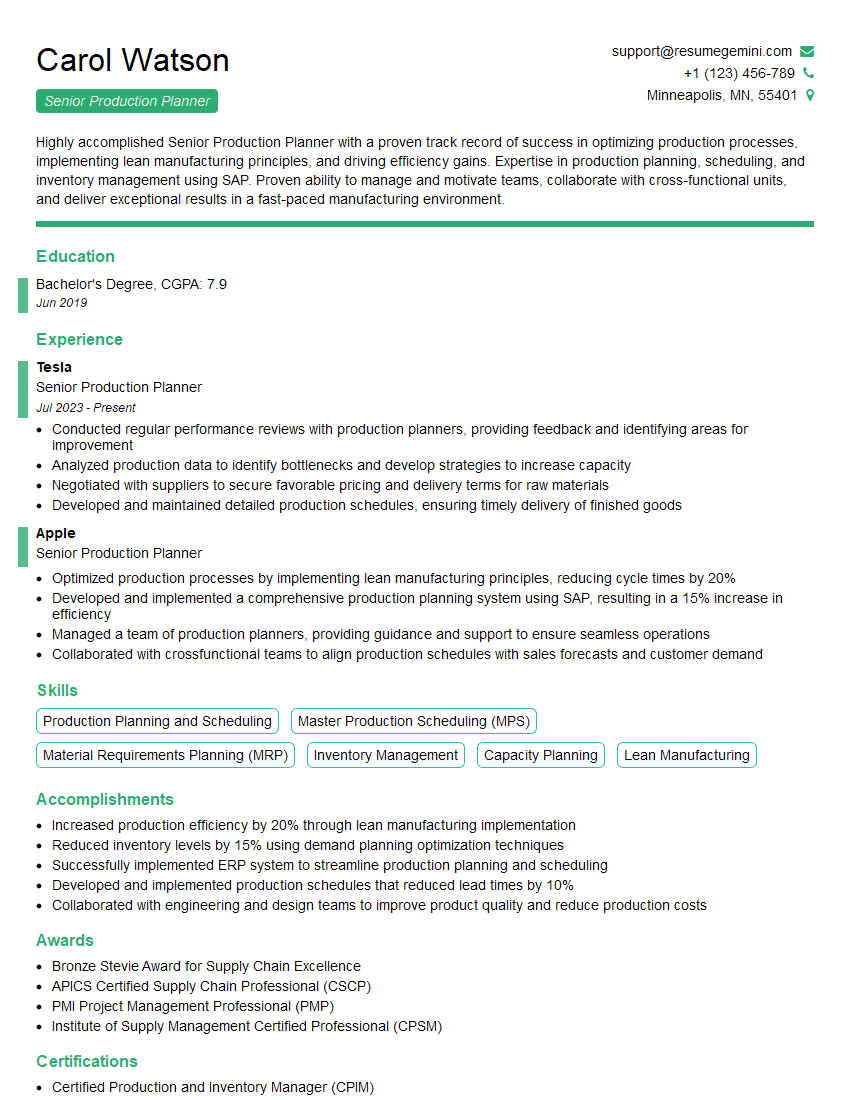
Senior Production Planner Resume Sample
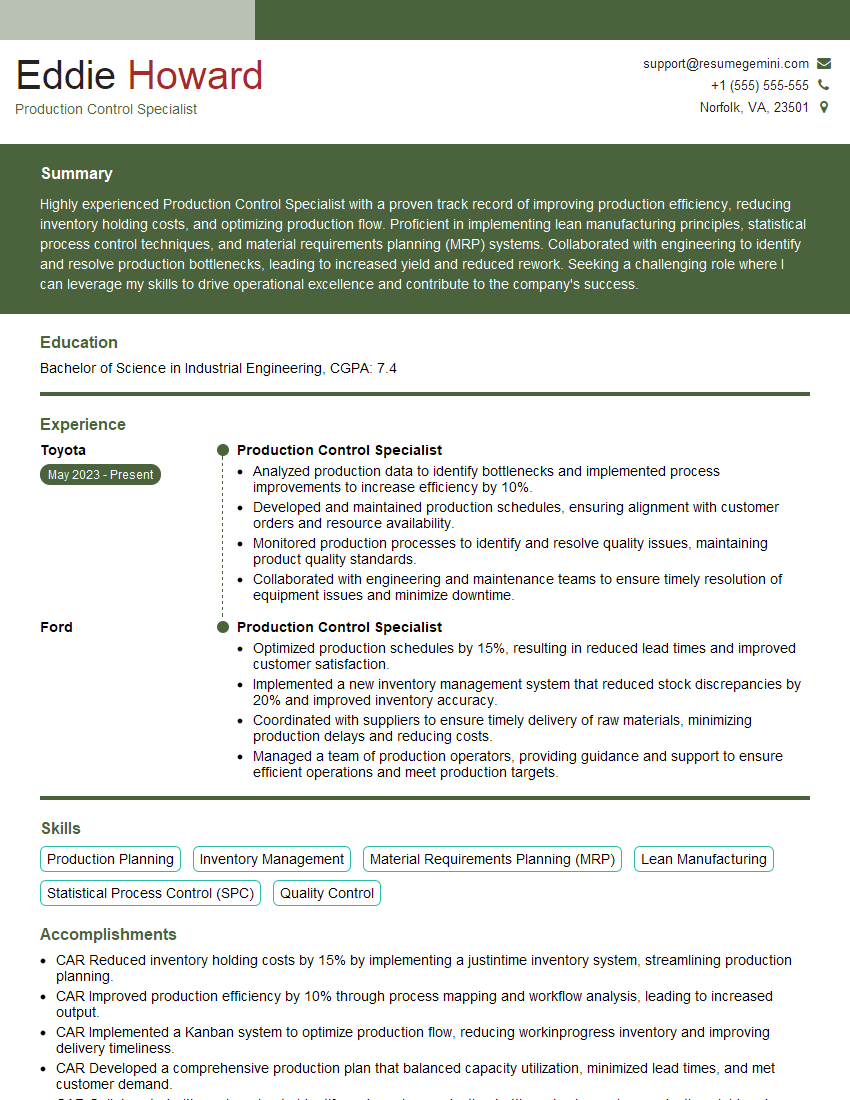
Production Control Specialist Resume Sample
Explore more articles
Users Rating of Our Blogs
Share Your Experience
We value your feedback! Please rate our content and share your thoughts (optional).
What Readers Say About Our Blog
Very informative content, great job.
good