Are you ready to stand out in your next interview? Understanding and preparing for Freight Loading interview questions is a game-changer. In this blog, we’ve compiled key questions and expert advice to help you showcase your skills with confidence and precision. Let’s get started on your journey to acing the interview.
Questions Asked in Freight Loading Interview
Q 1. Describe your experience with different types of freight.
My experience encompasses a wide range of freight types, from delicate electronics and perishable goods requiring temperature control to heavy machinery and bulky construction materials. I’ve handled Less-Than-Truckload (LTL) shipments, where multiple smaller consignments share a truck, and Full-Truckload (FTL) shipments dedicated to a single customer. Experience also includes handling hazardous materials, demanding specialized handling and documentation, and palletized goods, which streamline loading and unloading. Each type presents unique challenges in terms of securing, stacking, and optimizing space within the vehicle.
- Electronics: Requires careful handling to prevent damage during transit. Special padding and bracing are crucial.
- Perishable Goods: Demands precise temperature control and rapid transit to maintain quality. Refrigerated trucks are a necessity.
- Heavy Machinery: Needs specialized equipment like forklifts and cranes for loading and securement using chains and straps.
Q 2. Explain the process of securing freight for transport.
Securing freight is paramount to prevent damage and ensure safety during transport. The process begins with assessing the freight’s characteristics – weight, dimensions, fragility, and any hazardous properties. Then, appropriate securing methods are selected. This often involves:
- Proper Palletization: Using pallets to consolidate smaller items, ensuring stability and ease of handling.
- Blocking and Bracing: Using dunnage (protective material like wood or foam) to prevent shifting during transit. This is especially critical for irregularly shaped items.
- Strapping and Chains: Employing tensioning straps or chains to secure heavier items directly to the vehicle’s floor or walls.
- Load Binders: Using ratchets and winches for tightening straps and chains, ensuring securement.
- Weight Distribution: Distributing weight evenly across the trailer to maintain stability and prevent overloading on one side.
For instance, imagine securing a heavy generator: I would start by placing it on a pallet and then secure it to the pallet using straps, further securing the pallet to the truck floor using chains and ensuring appropriate weight distribution within the trailer.
Q 3. How do you ensure the safe and efficient loading of a truck?
Safe and efficient truck loading involves a systematic approach. It starts with a pre-load inspection of the truck, ensuring it’s in good condition and has no pre-existing damage. The next step is optimizing the load plan—considering the weight, dimensions, and fragility of each item to maximize space and stability. I use a combination of techniques including:
- Load Planning Software: Utilizing software to simulate the load plan and ensure optimal weight distribution and structural integrity.
- First-In, First-Out (FIFO): Arranging items in order of delivery to streamline unloading and reduce warehouse congestion. This is critical for perishable goods.
- Center of Gravity: Ensuring the center of gravity of the load is low and centered to prevent rollovers or tipping.
- Proper Documentation: Thoroughly documenting the load plan, including weights, dimensions, and securing methods. This is crucial for accountability and tracing in case of issues.
Imagine loading a truck with furniture: I would start with the heaviest and most stable items at the bottom, placing smaller and more fragile items on top. Each piece would be properly secured to prevent movement.
Q 4. What safety precautions do you take when loading freight?
Safety is my utmost priority. I adhere to strict safety protocols, including:
- Personal Protective Equipment (PPE): Always using appropriate PPE like safety shoes, gloves, and high-visibility vests.
- Forklift Safety: Ensuring proper forklift operation, including pre-shift inspections, and following all safety procedures.
- Load Securement Checks: Thoroughly inspecting load securement methods after loading, ensuring everything is properly fastened and stable.
- Communication: Maintaining clear communication with the loading team and driver to coordinate efforts and avoid accidents.
- Regular Breaks: Taking regular breaks to avoid fatigue and maintain focus. Fatigue can significantly increase the risk of accidents.
For example, before operating a forklift, I always conduct a pre-operational check, inspecting the tires, lights, and hydraulics. I always communicate with my team to ensure everybody is aware of my actions.
Q 5. How do you handle overweight or oversized freight?
Overweight or oversized freight demands specialized handling and permits. First, I verify the weight and dimensions against legal limits. I then coordinate with the transportation company to ensure they have the necessary permits and equipment for handling such cargo. This often includes utilizing specialized trailers, escort vehicles, and potentially route planning to accommodate the oversize load. Proper securing is critical, often requiring more robust methods than standard freight. Documentation is crucial, carefully recording all details of the shipment for compliance purposes.
For example, handling an oversized wind turbine blade would require obtaining permits, using a low-boy trailer designed for such cargo, and potentially an escort vehicle to navigate roads. Securement would involve specialized straps and chains.
Q 6. What are the common challenges you face during freight loading?
Common challenges include:
- Inaccurate Load Information: Incorrect or missing information about freight dimensions and weight leading to inefficient loading and potential safety hazards.
- Time Constraints: Meeting tight deadlines while maintaining safety standards can be stressful and demanding.
- Equipment Malfunctions: Forklifts or other equipment breaking down causing delays and potentially impacting the loading schedule.
- Weather Conditions: Inclement weather affecting loading operations, necessitating adjustments in procedures and possibly delays.
- Space Optimization: Maximizing the use of space within the truck to reduce the number of trips and optimize costs.
For instance, a sudden rainstorm might necessitate the use of tarpaulins to protect the freight and may also create slippery conditions on the loading dock, necessitating extra caution.
Q 7. How do you prioritize loading tasks to meet deadlines?
Prioritizing loading tasks involves a combination of techniques. I use a combination of factors to prioritize including:
- Delivery Deadlines: Prioritizing freight with the earliest delivery deadlines to meet customer expectations.
- Freight Urgency: Giving precedence to time-sensitive shipments, such as perishable goods or emergency supplies.
- Freight Type: Handling fragile or hazardous materials with care and potentially prioritizing their loading to minimize risk.
- Load Planning Software: Using software to optimize load sequence based on weight distribution and space utilization.
- Communication: Collaborating with the transportation team and warehouse staff to ensure everyone understands the priorities and works together efficiently.
For example, If I have both perishable goods and non-perishable goods, I would prioritize the perishable goods to ensure they reach their destination before spoilage.
Q 8. What is your experience with using loading equipment (e.g., forklifts, pallet jacks)?
My experience with loading equipment is extensive, encompassing over eight years of hands-on operation and supervision. I’m proficient with forklifts (both sit-down and stand-up models), pallet jacks (manual and electric), and various other material handling equipment like reach trucks and order pickers. I’m certified in safe operation for all equipment I utilize, and regularly undergo refresher training to maintain my skills and awareness of best practices. For example, I’ve overseen the efficient loading of a container using a forklift, strategically placing heavier items at the bottom and lighter items on top to maintain stability and prevent shifting during transit. I also have experience troubleshooting minor mechanical issues with these machines to minimize downtime.
Beyond operating the equipment, I’m skilled in pre-shift inspections, ensuring the machines are in safe working order. This includes checking hydraulic fluid levels, tire pressure, and operational functions. I am also experienced in using load stabilizers and securing freight to prevent accidents.
Q 9. How do you maintain accurate records of loaded freight?
Maintaining accurate records is crucial for efficient freight loading and traceability. We use a combination of digital and physical methods. Each load is documented with a bill of lading, which includes a detailed description of the goods, their quantity, weight, and destination. This bill of lading is scanned into our digital inventory management system (IMS), creating an electronic record. We also use handheld scanners to record the specifics of each pallet, ensuring we track the shipment accurately from loading to delivery. Additionally, we use photographs to document the loading process, especially for fragile or high-value goods. This provides visual confirmation of the freight’s condition before departure. In case of discrepancies or damage claims, these records are essential for accurate reconciliation.
Q 10. Describe your experience with different types of packaging materials.
My experience encompasses a wide range of packaging materials, each chosen based on the fragility and nature of the goods being shipped. I’m familiar with various types of pallets (wood, plastic, and metal), different types of corrugated cardboard boxes, bubble wrap, air pillows, foam inserts, stretch film, and strapping. I understand the importance of selecting the appropriate packaging to protect against damage during transit. For instance, when shipping delicate electronics, we utilize custom-fit foam inserts and heavy-duty cartons to ensure they are secure and protected. For heavier goods, we might reinforce pallets with additional strapping to increase stability and prevent shifting. My selection process considers factors like weight, dimensions, fragility, and environmental conditions to ensure the package protects the content throughout the journey.
Q 11. How do you identify and handle damaged freight?
Identifying and handling damaged freight requires a systematic approach. Upon arrival of goods, I conduct a thorough inspection, comparing the condition against the shipping documentation. If damage is observed, I document it meticulously, including photographic evidence. This documentation includes the type and extent of the damage, noting the specific location of damage on the product and pallet. This documentation is crucial for filing claims with the carrier or supplier. Then, I segregate damaged goods from undamaged items to prevent further damage and ensure smooth handling of unaffected freight. Damaged goods are typically set aside for return, repair, or disposal, according to company protocol. Damaged goods are labelled clearly to prevent accidental shipment.
Q 12. How do you ensure compliance with all relevant safety regulations?
Safety is paramount. We adhere strictly to all relevant OSHA (Occupational Safety and Health Administration) regulations for material handling, including the proper use of personal protective equipment (PPE) like safety glasses, gloves, and steel-toe boots. We undergo regular safety training and maintain a clean and organized work environment to prevent accidents. All loading equipment undergoes regular maintenance and inspections. We implement procedures to prevent overloading and follow weight limits for equipment and vehicles. We also have clear procedures in place for reporting any accidents or near misses. For example, we conduct regular toolbox talks and safety training to refresh our employees’ knowledge on safe loading practices.
Q 13. Explain your experience with inventory management in relation to freight loading.
Inventory management is integral to efficient freight loading. We utilize a real-time inventory management system that tracks stock levels, product location, and order status. This system integrates with our loading schedule, enabling us to optimize the loading sequence to minimize wasted time and resources. We use a first-in, first-out (FIFO) inventory system for perishable goods. The system allows us to efficiently locate and retrieve items for shipment and provide accurate information on available stock. This integration ensures that we are loading the correct items and quantities for each order, improving accuracy and reducing errors.
Q 14. How do you manage time constraints during peak loading periods?
During peak loading periods, effective time management is crucial. We prioritize shipments based on deadlines and urgency, using a clear and efficient loading plan. The team is carefully briefed on the schedule, assigning specific tasks and responsibilities to each individual to avoid duplication and confusion. We utilize tools like load optimization software to maximize space utilization in trailers. We may also implement additional shifts or utilize temporary staff to meet the increased demand. Clear communication among team members is crucial during peak periods to keep the process running smoothly and efficiently. We also constantly monitor the loading progress and make adjustments as needed to stay on schedule.
Q 15. What is your experience with different types of transportation modes?
My experience spans various transportation modes, including trucking (both LTL and FTL), rail, and ocean freight. I’ve worked with different types of trucking operations, from regional distribution to long-haul transportation, requiring expertise in load securing techniques specific to each. For example, securing palletized goods on a flatbed truck requires different techniques than securing loose cargo in a dry van. Similarly, rail transport demands understanding of weight distribution and the unique handling requirements for intermodal containers. My experience with ocean freight encompasses the intricacies of container loading, including proper stacking and securing based on cargo type and destination, and awareness of customs regulations for international shipments. I’m familiar with the documentation and procedures required for each mode, ensuring compliance and efficient transit.
Career Expert Tips:
- Ace those interviews! Prepare effectively by reviewing the Top 50 Most Common Interview Questions on ResumeGemini.
- Navigate your job search with confidence! Explore a wide range of Career Tips on ResumeGemini. Learn about common challenges and recommendations to overcome them.
- Craft the perfect resume! Master the Art of Resume Writing with ResumeGemini’s guide. Showcase your unique qualifications and achievements effectively.
- Don’t miss out on holiday savings! Build your dream resume with ResumeGemini’s ATS optimized templates.
Q 16. How do you ensure the proper placement of freight to optimize space?
Optimizing space is crucial for efficiency and cost-effectiveness. My approach involves a combination of strategies. First, I carefully analyze the loading manifest and dimensions of each item to determine the best stacking sequence. This often involves using software that visualizes the loading process, allowing for real-time adjustments. For example, heavier items are generally placed lower to improve stability. Second, I prioritize utilizing the maximum available cube within the vehicle while ensuring weight distribution is balanced, preventing overloading any one area. Third, I’m adept at nesting or interleaving smaller items within larger spaces to fill voids and maximize space utilization. Think of it like a complex three-dimensional puzzle! Finally, I always ensure proper load securing to prevent shifting during transit, which may involve the use of straps, dunnage, and other load securing equipment.
Q 17. How do you communicate effectively with drivers and warehouse staff?
Clear and concise communication is essential. With drivers, I confirm delivery details, including the route, any special handling requirements (like fragile goods), and the designated unloading location. I provide them with clear, easily understandable instructions regarding any specific load configurations and weight limits. With warehouse staff, I ensure that the required goods are readily accessible and properly staged for loading. I maintain open communication channels and encourage questions to avoid misunderstandings. I use a combination of verbal instructions, digital communication tools like mobile apps (for example, tracking shipment status), and written documentation such as load manifests and delivery receipts. A successful freight loading operation relies on a collaborative effort, and effective communication is the cornerstone of that success.
Q 18. Describe your problem-solving skills in relation to freight loading challenges.
Problem-solving is integral to this role. For instance, I’ve encountered situations where a shipment’s dimensions exceeded initial estimates, requiring immediate adjustments to the loading plan. My approach is systematic. First, I re-evaluate the cargo manifest, identifying items that can be re-arranged or possibly shipped separately. Next, I explore alternative loading techniques and explore using different vehicles if absolutely necessary. For example, a slightly larger truck might be required or a split delivery might be the most efficient solution. Finally, I always communicate any changes promptly to all stakeholders to manage expectations. I view challenges not as obstacles but as opportunities to enhance efficiency and resource management. My goal is always to find the most effective and safest solution to any problem that arises during the loading process.
Q 19. How do you adapt to changing work demands and priorities?
Adaptability is paramount in this fast-paced environment. Changing demands are common, like last-minute additions to shipments or unexpected delays. My approach involves prioritizing tasks based on urgency and impact. I use technology effectively – for example, utilizing loading management software that allows dynamic updates to loading plans, which helps to cope with changing priorities. I’m also proficient in managing multiple shipments simultaneously, switching seamlessly between different tasks as needed. Effective time management, prioritizing tasks, and communication are crucial skills that enable me to successfully adapt to unpredictable situations. I always maintain a flexible mindset, ready to shift gears as required, without compromising safety or efficiency.
Q 20. What is your experience with using loading manifests or shipping documents?
I have extensive experience using loading manifests and shipping documents. These documents are crucial for accurate and efficient loading. I utilize these to verify the type, quantity, and dimensions of goods before loading begins. They serve as a checklist, ensuring everything scheduled is loaded, and nothing is left behind. I’m proficient in reading and interpreting various types of shipping documents, such as bills of lading, packing lists, and commercial invoices. I know how to identify any discrepancies or inconsistencies and address them promptly to prevent delays. Moreover, I use the information from these documents to prepare the load plan, ensuring that the goods are placed according to weight and size restrictions, and in compliance with all relevant regulations.
Q 21. How do you maintain a clean and organized loading area?
Maintaining a clean and organized loading area is vital for safety and efficiency. My approach is proactive. Before loading begins, I clear the area of any debris or obstacles. I ensure that all materials are properly stored and out of the way. During the loading process, I promptly dispose of any waste and keep the area organized to prevent accidents. After loading is completed, I conduct a thorough sweep of the area, removing any strapping or dunnage. This is not just about cleanliness, but also about safety. A well-organized space reduces the risk of accidents and allows for faster, more efficient loading and unloading operations in the future. It’s a matter of professionalism and minimizing potential hazards.
Q 22. Describe your experience with loading hazardous materials.
Handling hazardous materials requires meticulous attention to detail and strict adherence to regulations. My experience encompasses working with various classes of hazardous goods, from flammable liquids and corrosive chemicals to explosive materials. This involved understanding and implementing the proper safety protocols dictated by the Globally Harmonized System of Classification and Labelling of Chemicals (GHS) and adhering to the Department of Transportation (DOT) regulations.
Before loading, I always verify the proper classification and packaging of the hazardous materials, ensuring they meet the specified standards. This includes checking for any damage to containers and ensuring that all required labels and placards are clearly visible and accurate. I’m proficient in using specialized equipment such as spill containment pallets and absorbent materials. During the loading process, segregation of incompatible materials is paramount; for example, I would never place oxidizers near flammable materials. Post-loading, I meticulously document everything, including the type and quantity of hazardous materials, their location on the vehicle, and any potential hazards encountered.
For instance, in one instance, we were loading a shipment of Class 3 flammable liquids. I noticed a minor leak on one of the drums. Following protocol, I immediately stopped the loading process, reported the issue to my supervisor, and implemented the appropriate emergency response procedure which involved containing the spill and replacing the damaged drum. This prevented a potentially serious incident.
Q 23. How familiar are you with weight distribution and balance in freight loading?
Weight distribution and balance are critical for safe and efficient freight transport. Improperly balanced loads can lead to accidents, vehicle damage, and increased fuel consumption. My experience includes using various methods to optimize load distribution, including load planning software and physical weight checks. I understand the importance of distributing weight evenly across the vehicle’s axles and ensuring the center of gravity remains within the safe operational limits.
I routinely use load bars and straps to secure the freight and prevent shifting during transit. Think of it like building a Jenga tower – you need to carefully place each block (package) to maintain balance and prevent collapse. Similarly, I meticulously plan the placement of heavier items lower and towards the center of the vehicle, while lighter items are strategically placed to counteract any imbalance. Before every load, I visually inspect the distribution and sometimes use a scale to verify weights.
In one project involving the transportation of heavy machinery, I used a specialized software to model the weight distribution before the actual loading. This pre-emptive planning ensured optimal weight balance, reducing stress on the vehicle and increasing the safety margin considerably. The software allowed me to simulate different loading patterns and select the most stable configuration, resulting in a smoother and safer journey.
Q 24. How do you handle discrepancies between inventory and loaded freight?
Discrepancies between inventory and loaded freight require a systematic approach to ensure accuracy and accountability. My procedure begins with a thorough reconciliation of the shipping documents with the physical items. I use handheld scanners to verify the quantity and type of each item, cross-referencing this information with the packing list and the customer’s order. Any discrepancies are meticulously documented.
The first step involves identifying the source of the discrepancy. Was there a counting error during inventory management? Was there damage during transit? Was there a mistake in the order fulfillment process? Depending on the cause, different actions are taken. For example, if a minor discrepancy is found, I might investigate whether it is due to packaging differences or slight variations in product dimensions. Significant discrepancies usually require a more thorough investigation, which can involve reviewing warehouse footage or involving colleagues from the inventory team.
If the discrepancy is due to damaged goods, a detailed report is generated outlining the extent of the damage and its probable cause. This information is crucial for filing insurance claims if necessary. The goal is to resolve discrepancies quickly and efficiently, ensuring that the customer receives the correct order while maintaining inventory accuracy.
Q 25. What is your experience with different types of loading docks?
My experience includes working with various types of loading docks, each presenting unique challenges and requiring specific handling procedures. These include:
- Level docks: These are the most common, offering easy access for loading and unloading.
- Ramp docks: These require careful maneuvering of equipment to avoid accidents and potential damage to the vehicle or goods.
- Pit docks: These docks are recessed into the ground, requiring specialized equipment and safety precautions.
- Edge-of-dock levelers: These mechanical devices bridge the gap between the truck bed and the dock, and their operation needs to be understood well.
Regardless of the dock type, safety is paramount. I always ensure that the dock is properly secured and that appropriate safety measures, such as using dock plates and chocks, are in place. I’m also familiar with different safety procedures for each type of dock, to minimize the risk of falls or accidents. For example, when working with pit docks, I always use appropriate safety harnesses and other fall protection devices.
Q 26. Describe your knowledge of different types of pallets and their uses.
Different types of pallets are selected based on the weight, size, and type of goods being transported, as well as handling equipment. My experience includes working with several pallet types, including:
- Wooden pallets: These are the most common and offer a good balance of strength and cost-effectiveness. However, they can be susceptible to pests and require proper treatment.
- Plastic pallets: These are durable, reusable, and hygienic, making them suitable for food and pharmaceutical products. They are also generally lighter than wooden pallets.
- Metal pallets: These offer superior strength and are suitable for very heavy loads, but they can be more expensive and heavier.
The choice of pallet greatly impacts efficiency and cost. For example, using plastic pallets in a food processing facility can minimize the risk of contamination and reduce cleaning costs compared to wooden pallets. Selecting the right pallet type for specific goods minimizes the risk of damage during transit and storage.
Proper pallet selection also considers the compatibility with forklifts and other handling equipment. A pallet’s dimensions need to be correct for easy handling, storage, and fitting in the truck.
Q 27. How do you use technology (e.g., scanners, WMS) to improve efficiency?
Technology plays a crucial role in improving efficiency and accuracy in freight loading. I’m proficient in using warehouse management systems (WMS), barcode scanners, and radio-frequency identification (RFID) systems. WMS helps in optimizing the loading sequence, reducing the distance traveled in the warehouse and improving loading times. Barcode scanners allow for accurate inventory tracking and confirmation of loaded goods, reducing errors.
For instance, WMS integrates with the transportation management system (TMS) to track shipments from order placement to delivery. This seamless integration ensures that the correct goods are loaded onto the correct truck and minimizes delays. Barcode scanners provide real-time verification of the quantity and type of goods being loaded, eliminating discrepancies. RFID tags add an extra layer of security by automatically tracking goods throughout the warehouse and loading process. These systems work together to reduce human error, optimizing the workflow and leading to faster loading times and higher accuracy.
In a recent project, we implemented an RFID system that significantly reduced our loading time by 20%. The automated tracking allowed us to quickly locate items in the warehouse, reduce searching, and improve the overall efficiency of the loading process.
Q 28. How do you stay updated on industry best practices and safety regulations?
Staying updated on industry best practices and safety regulations is crucial for maintaining a safe and efficient operation. I achieve this through several avenues:
- Professional organizations: I’m a member of relevant professional organizations, receiving regular updates on industry standards and best practices through newsletters, conferences, and online resources.
- Regulatory bodies: I regularly review updates from regulatory bodies such as the Department of Transportation (DOT) and OSHA to ensure compliance with all safety regulations. This is done through their websites and published materials.
- Industry publications and journals: I subscribe to several industry publications and journals that provide insights into the latest innovations and trends in freight loading and transportation.
- Training courses and workshops: I participate in ongoing training courses and workshops to enhance my knowledge of safety procedures and new technologies.
Continuous learning is vital in this dynamic field. Keeping abreast of changes in regulations, technology, and best practices allows me to adapt my procedures to maintain efficiency and safety standards, ultimately contributing to a safer and more productive work environment.
Key Topics to Learn for Your Freight Loading Interview
- Safety Regulations and Procedures: Understanding and adhering to all relevant safety regulations, including those related to load securing, weight distribution, and hazard communication. Practical application: Describe your experience implementing safety protocols in previous roles, highlighting specific examples.
- Load Planning and Optimization: Efficiently planning load placement to maximize space utilization and minimize risk of damage or shifting during transit. Practical application: Explain how you would plan a load for different types of cargo (e.g., palletized goods, loose cargo, oversized items) considering weight, dimensions, and fragility.
- Freight Handling Equipment: Demonstrating familiarity with various equipment used in freight loading, such as forklifts, pallet jacks, conveyors, and cranes. Practical application: Discuss your experience operating specific types of equipment, emphasizing safe operating procedures and maintenance awareness.
- Documentation and Tracking: Accurately documenting load details, including weight, dimensions, and contents, and utilizing tracking systems to monitor shipment progress. Practical application: Describe your experience with different types of shipping documentation and tracking software.
- Problem-Solving and Adaptability: Effectively handling unexpected challenges during the loading process, such as damaged goods, incorrect documentation, or equipment malfunctions. Practical application: Describe a situation where you had to problem-solve in a fast-paced loading environment and how you successfully resolved it.
- Warehouse Management Systems (WMS): Understanding how WMS software is used in efficient warehouse operations and tracking of goods. Practical application: Discuss any experience working with WMS systems, focusing on data entry accuracy and efficiency.
Next Steps
Mastering freight loading techniques opens doors to exciting career advancements and higher earning potential within the logistics industry. To maximize your job prospects, crafting an ATS-friendly resume is crucial. ResumeGemini is a trusted resource to help you build a professional and impactful resume that gets noticed by recruiters. Examples of resumes tailored specifically to the freight loading industry are available to guide you, showcasing the best way to present your skills and experience. Take the next step towards your dream job – build a compelling resume with ResumeGemini today!
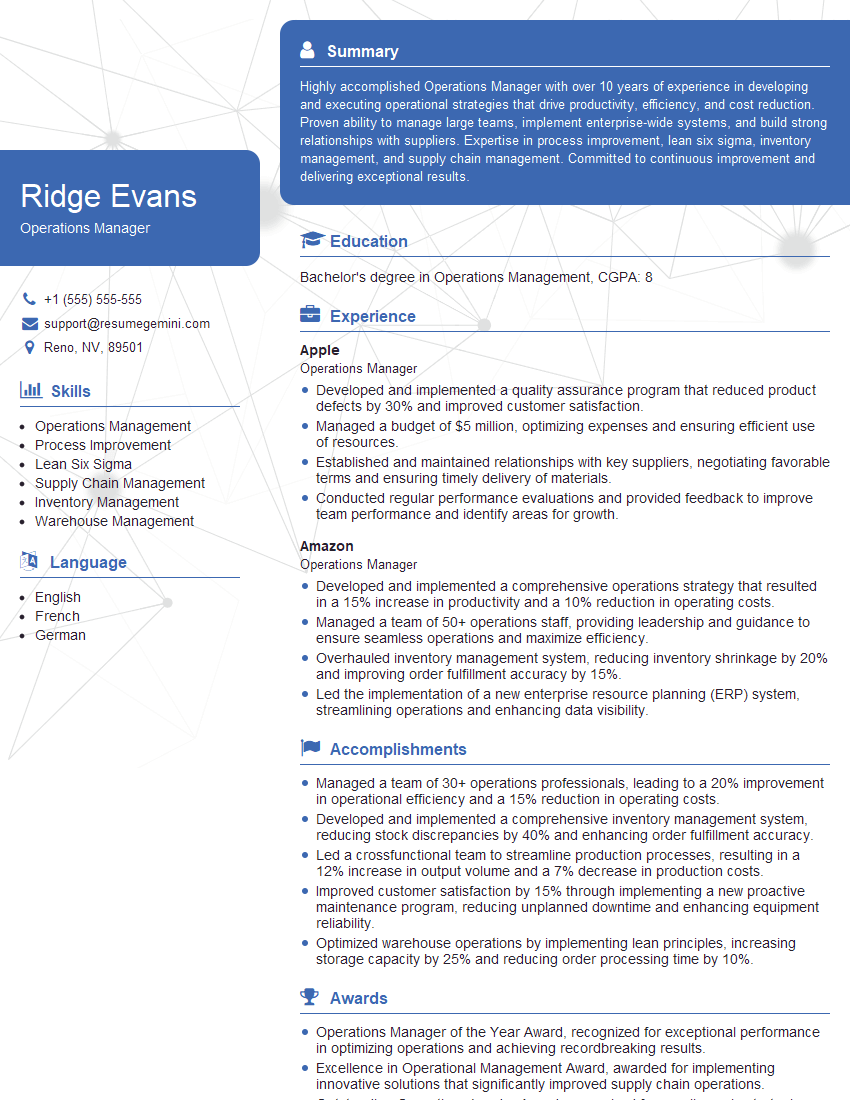
Operations Manager Resume Sample
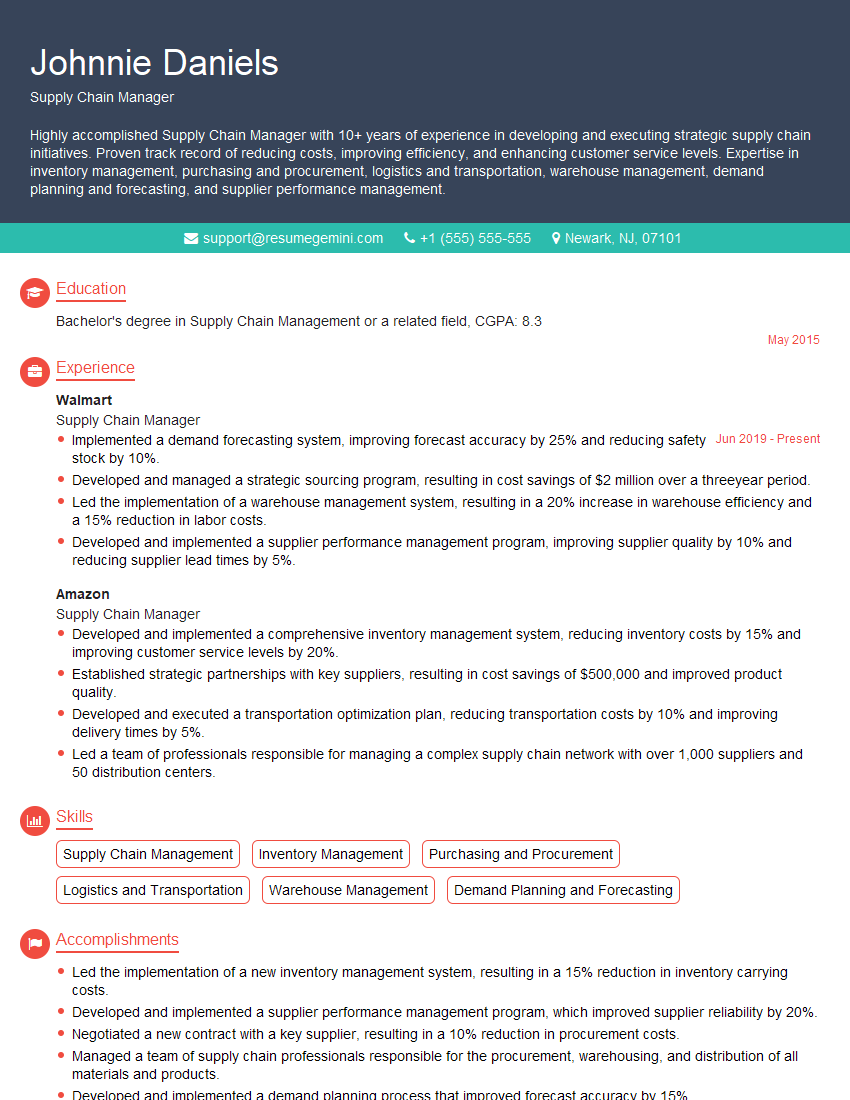
Supply Chain Manager Resume Sample
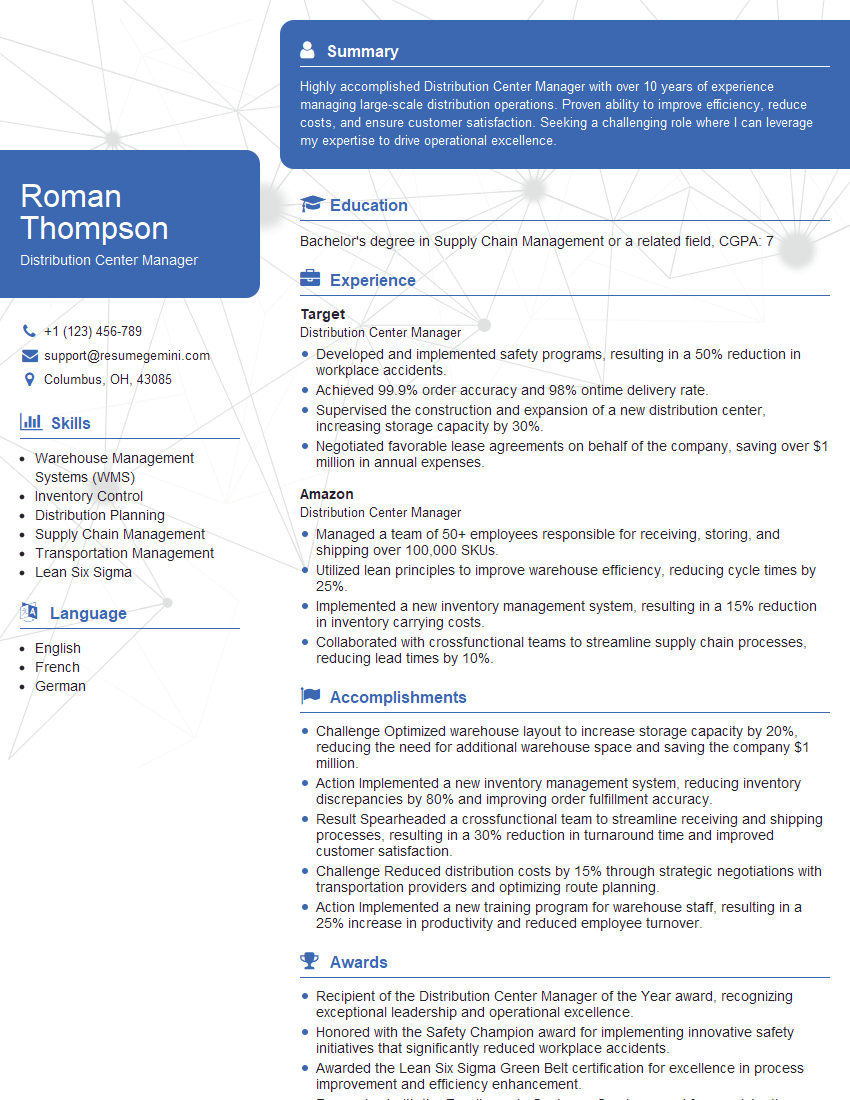
Distribution Center Manager Resume Sample

Logistics Manager Resume Sample
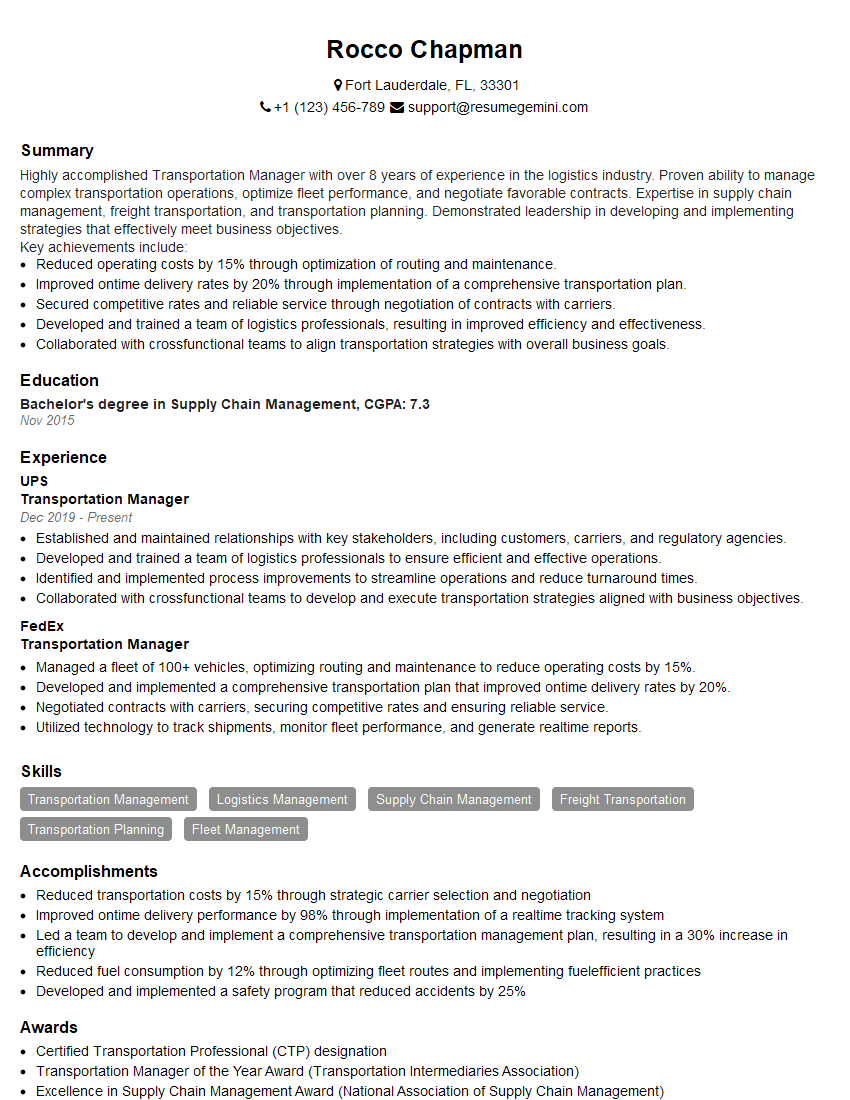
Transportation Manager Resume Sample
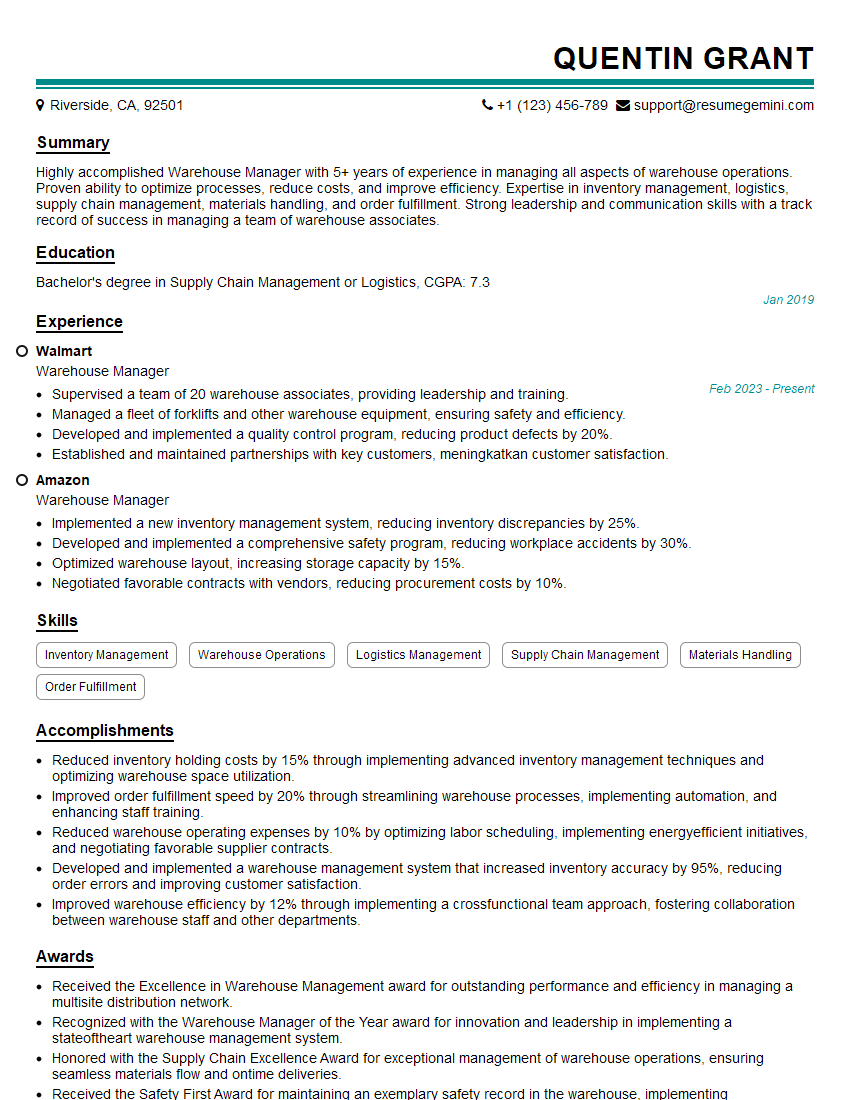
Warehouse Manager Resume Sample
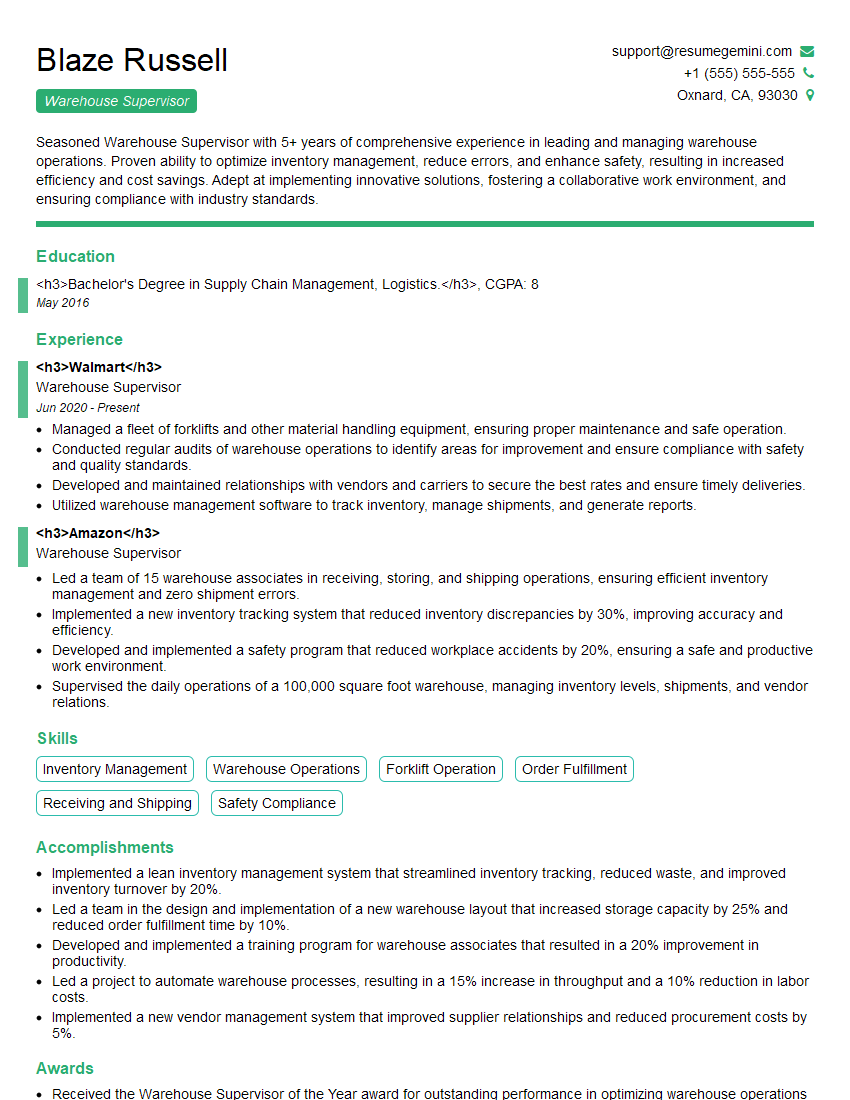
Warehouse Supervisor Resume Sample
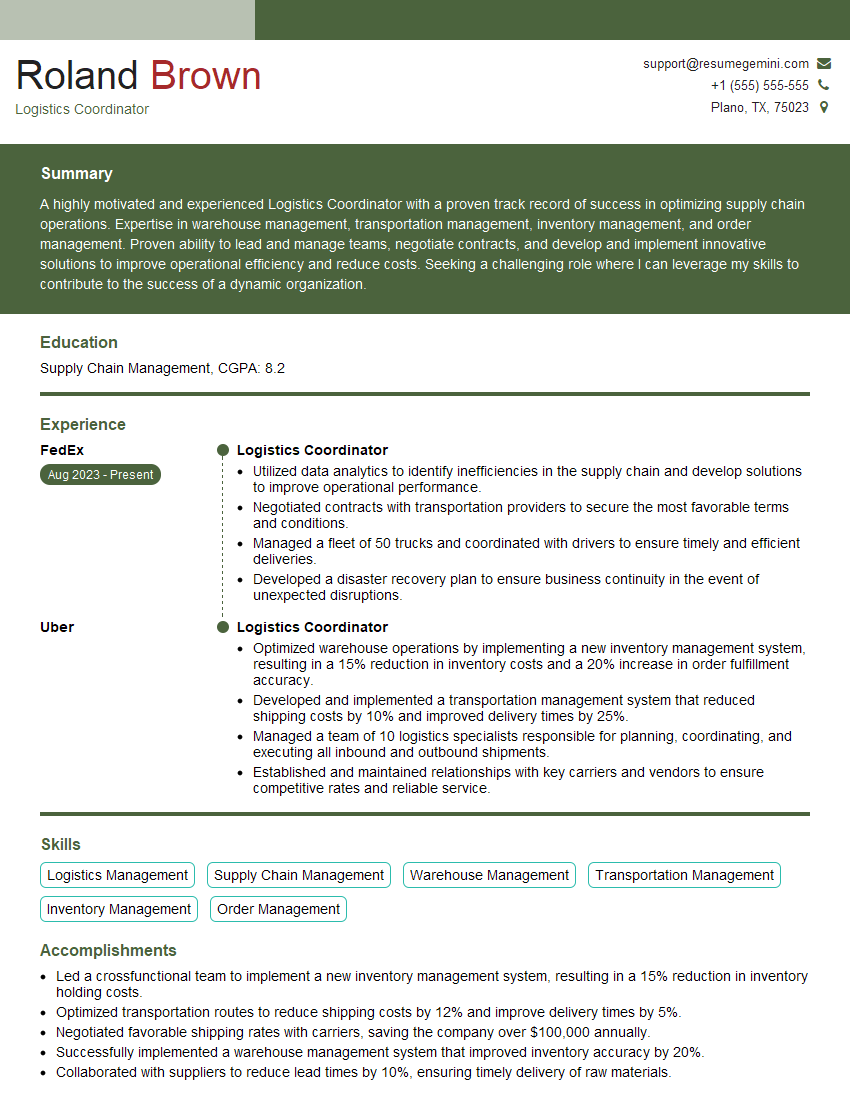
Logistics Coordinator Resume Sample
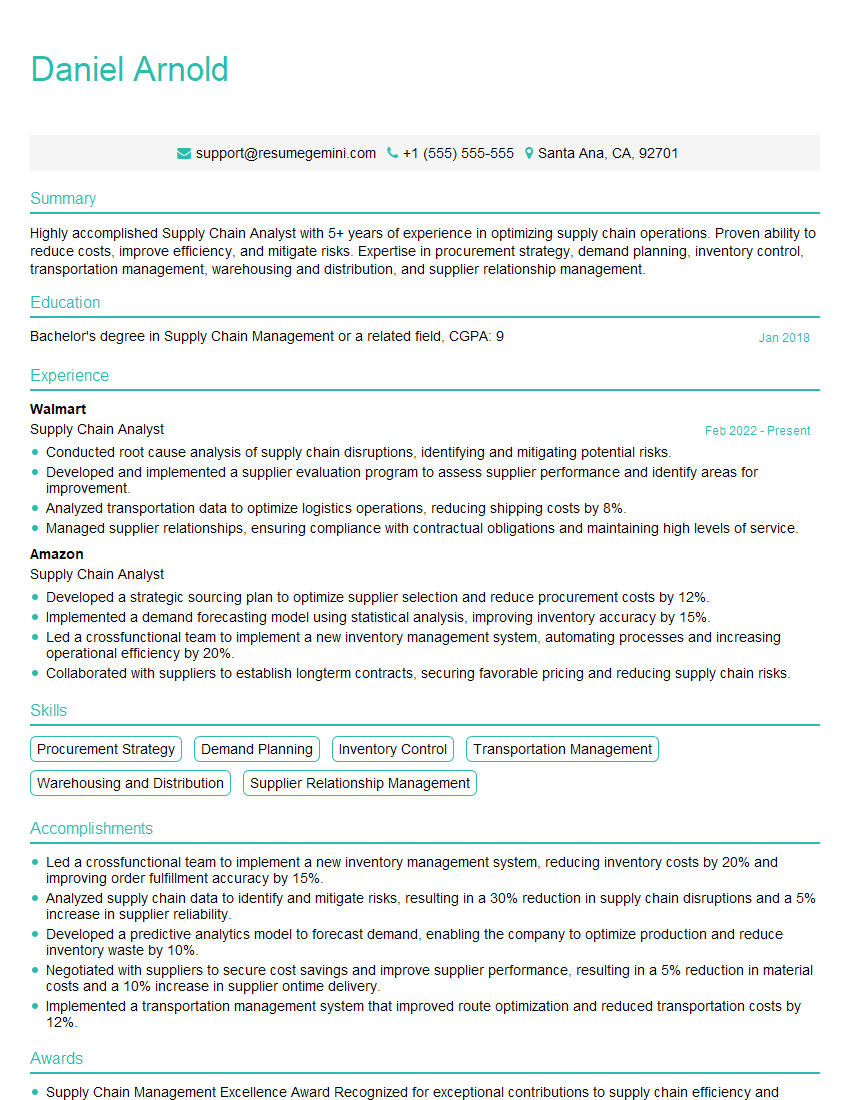
Supply Chain Analyst Resume Sample
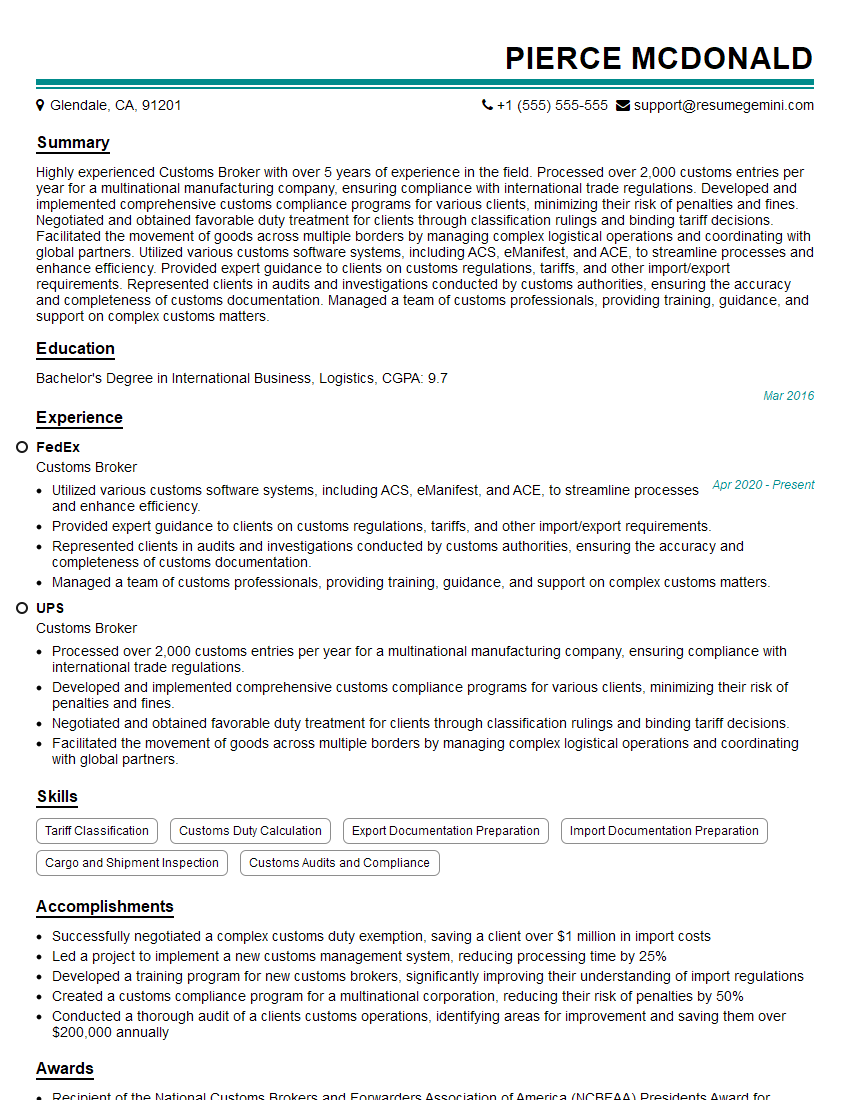
Customs Broker Resume Sample

Freight Forwarder Resume Sample
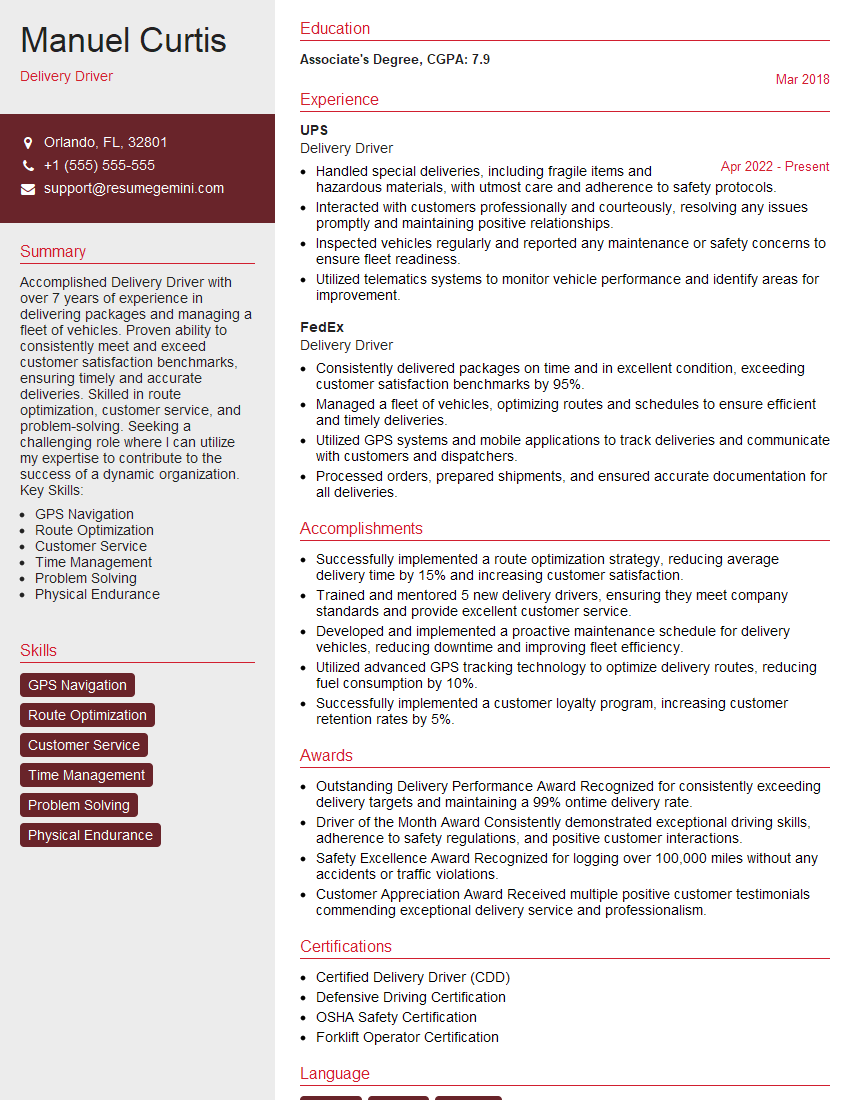
Delivery Driver Resume Sample

Inventory Control Specialist Resume Sample

Shipping and Receiving Clerk Resume Sample
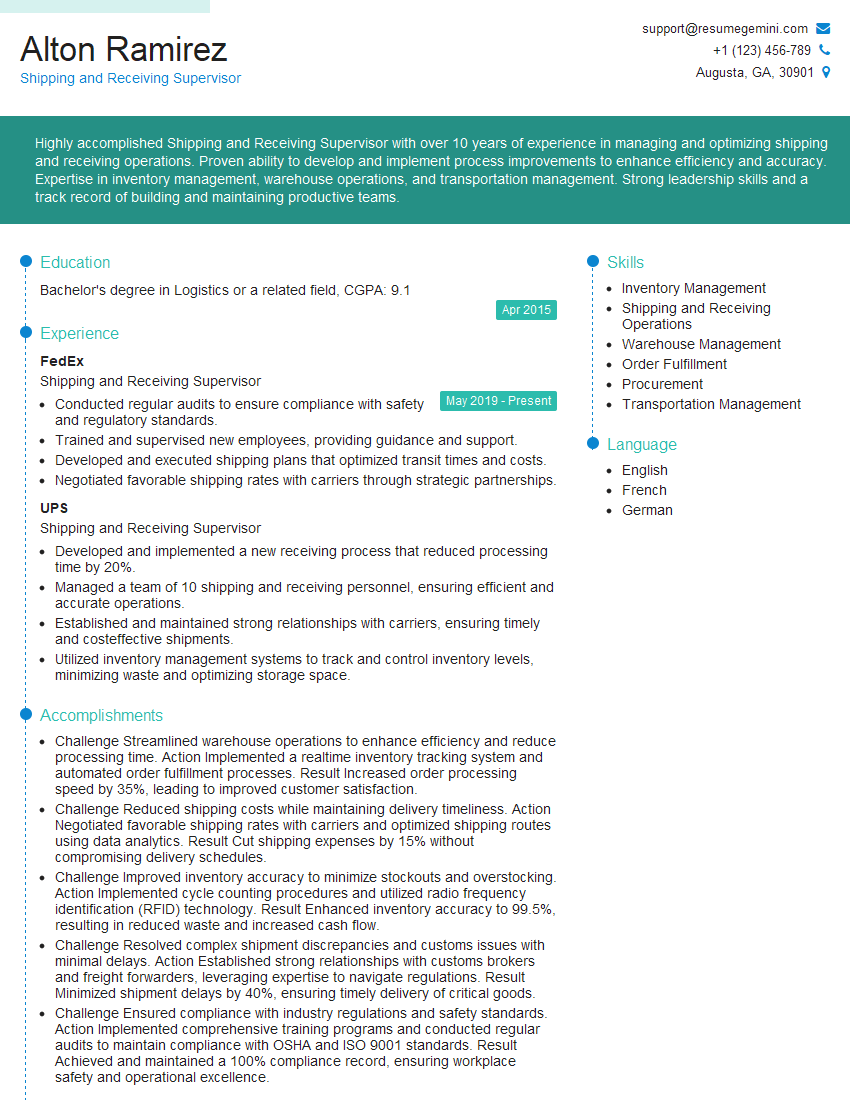
Shipping and Receiving Supervisor Resume Sample
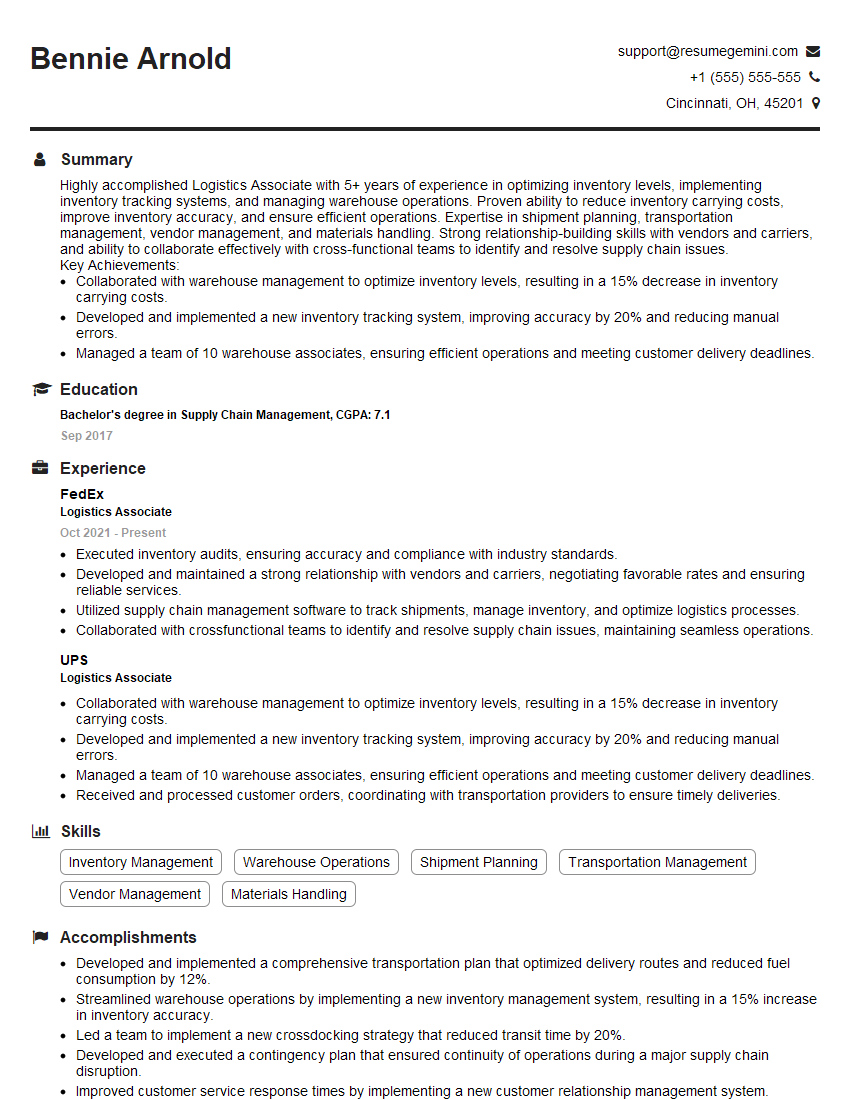
Logistics Associate Resume Sample
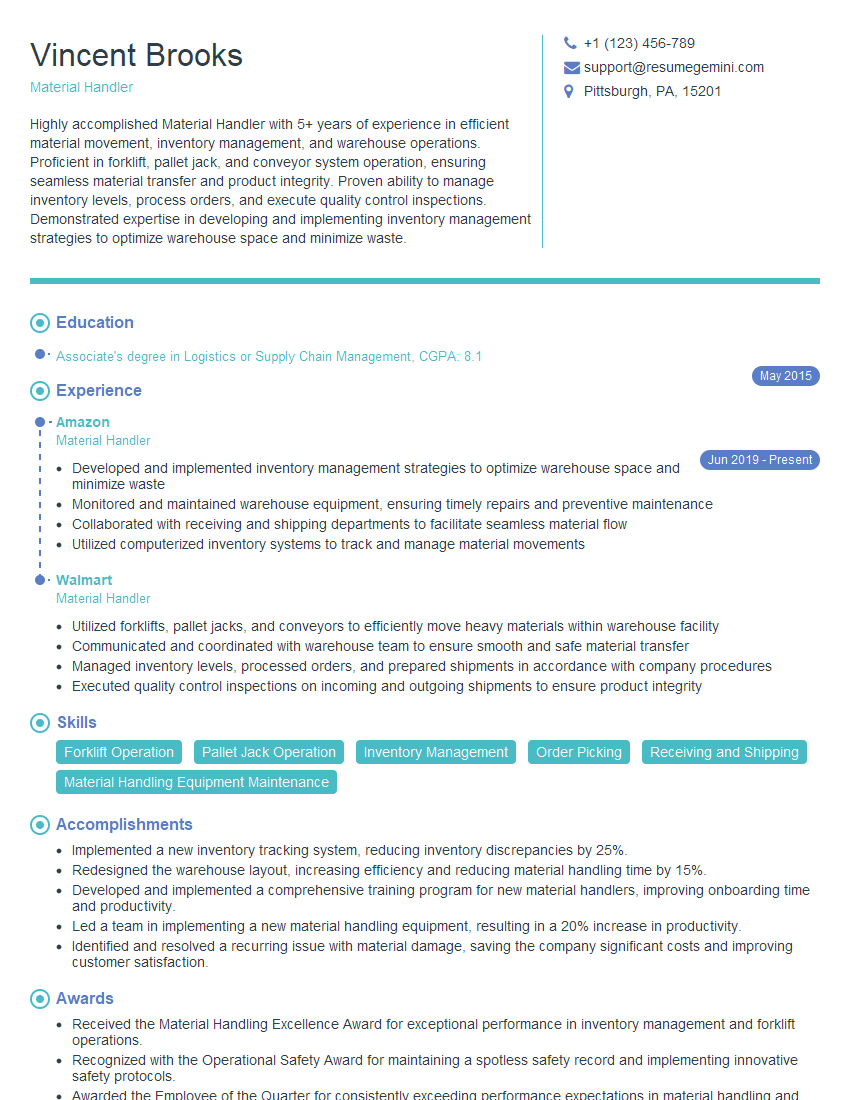
Material Handler Resume Sample
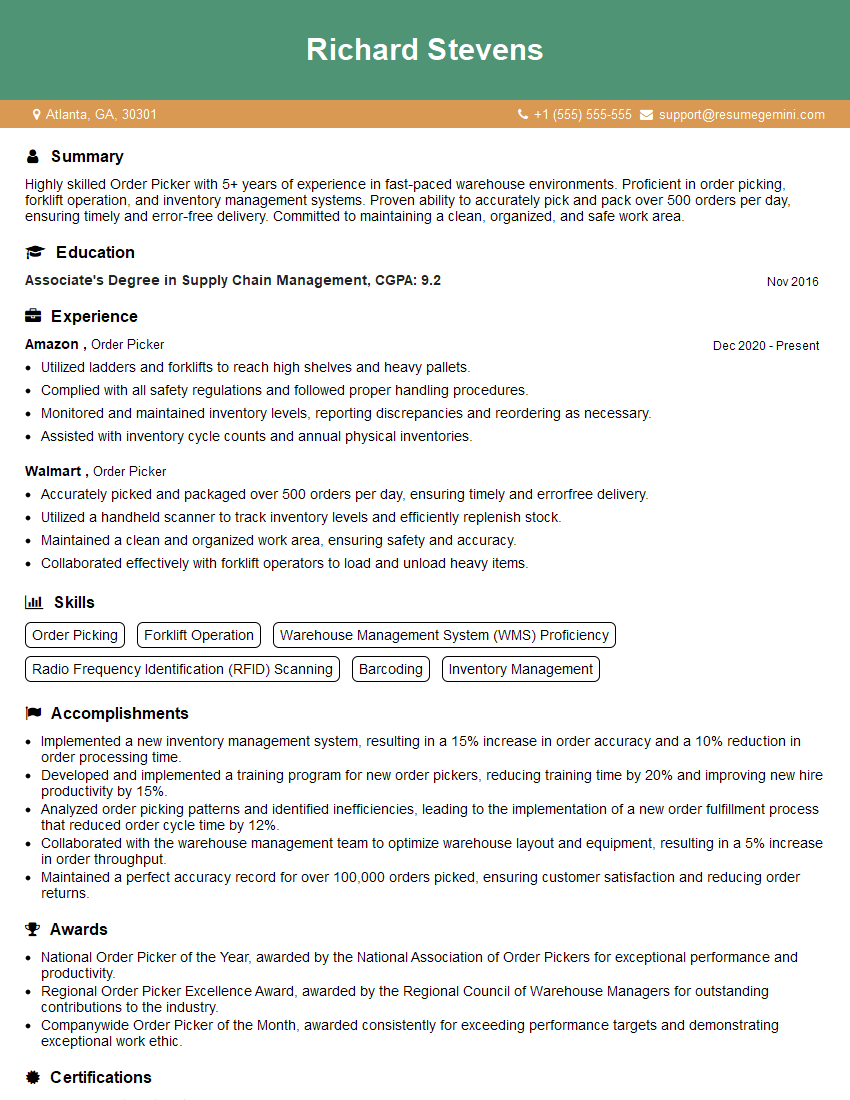
Order Picker Resume Sample
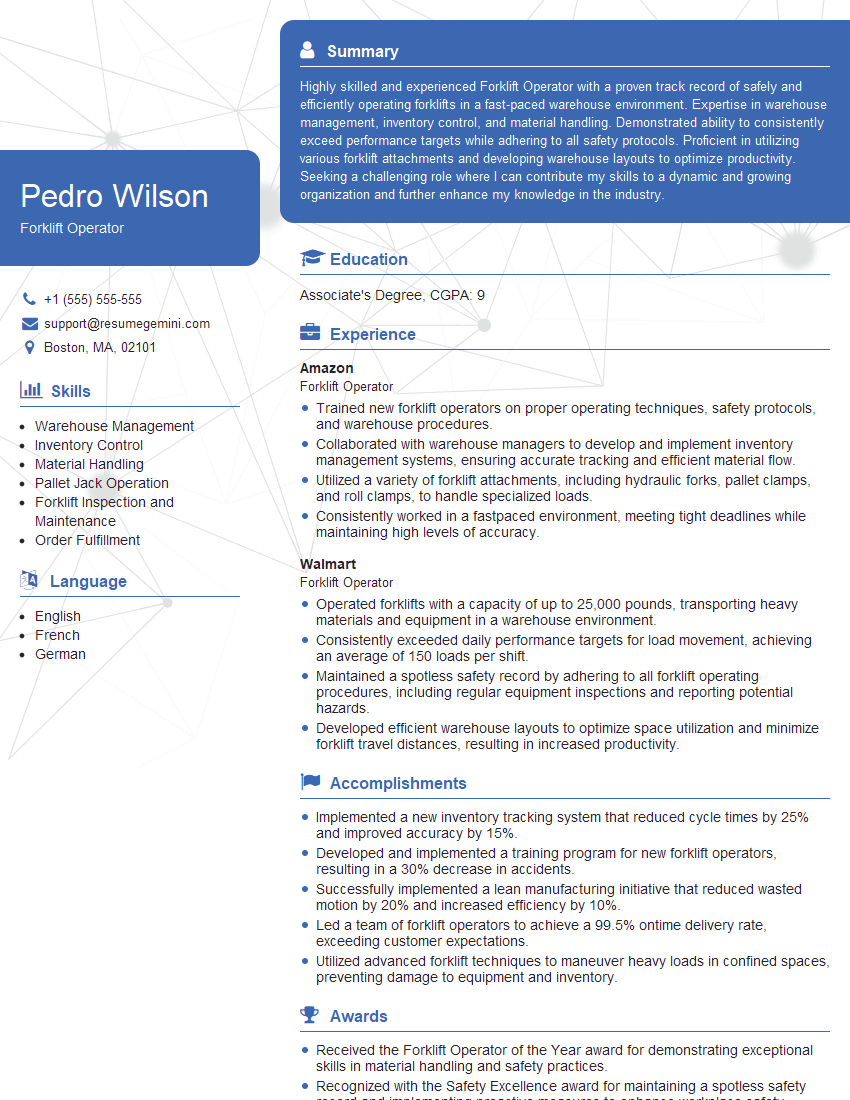
Forklift Operator Resume Sample
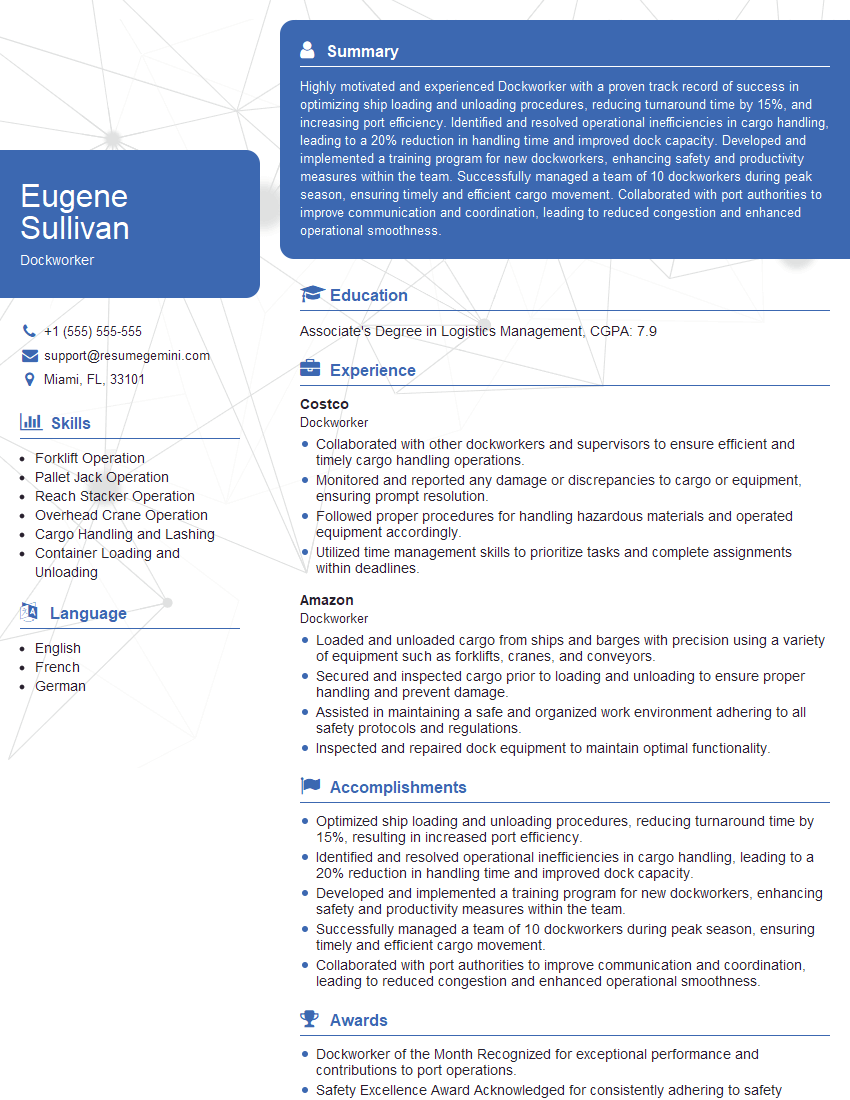
Dockworker Resume Sample
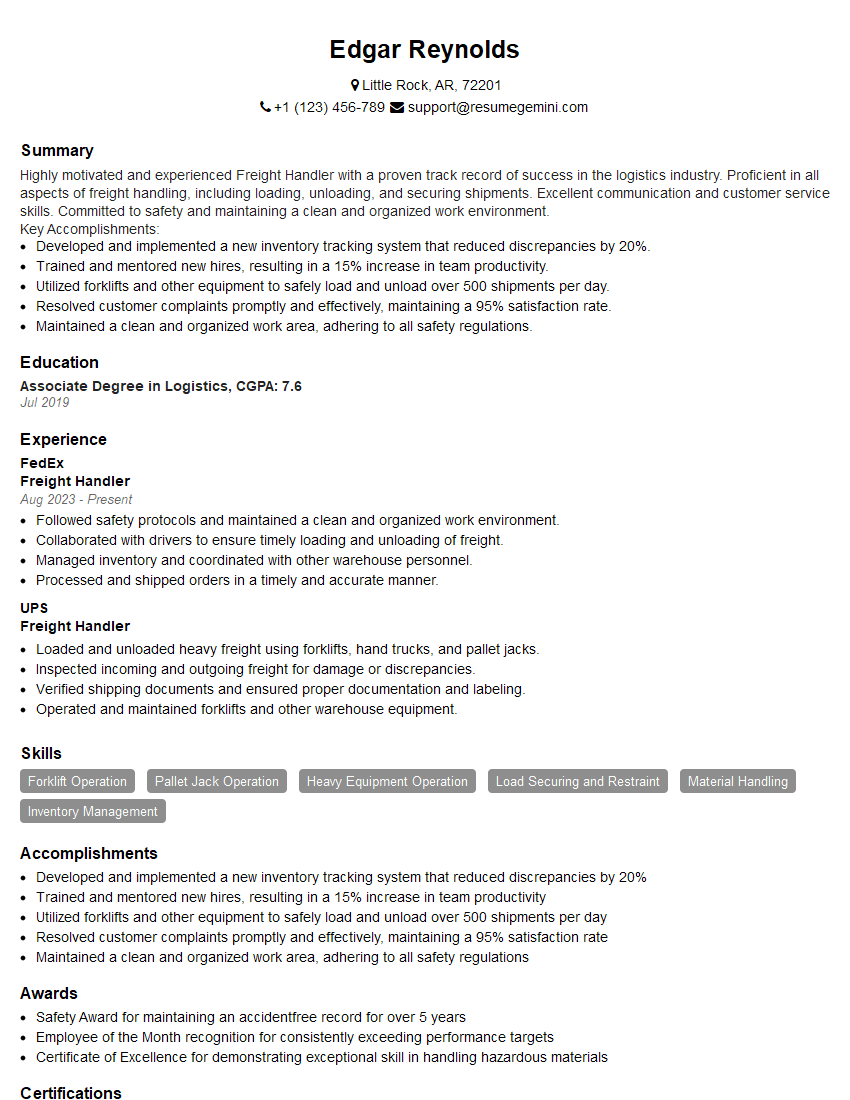
Freight Handler Resume Sample
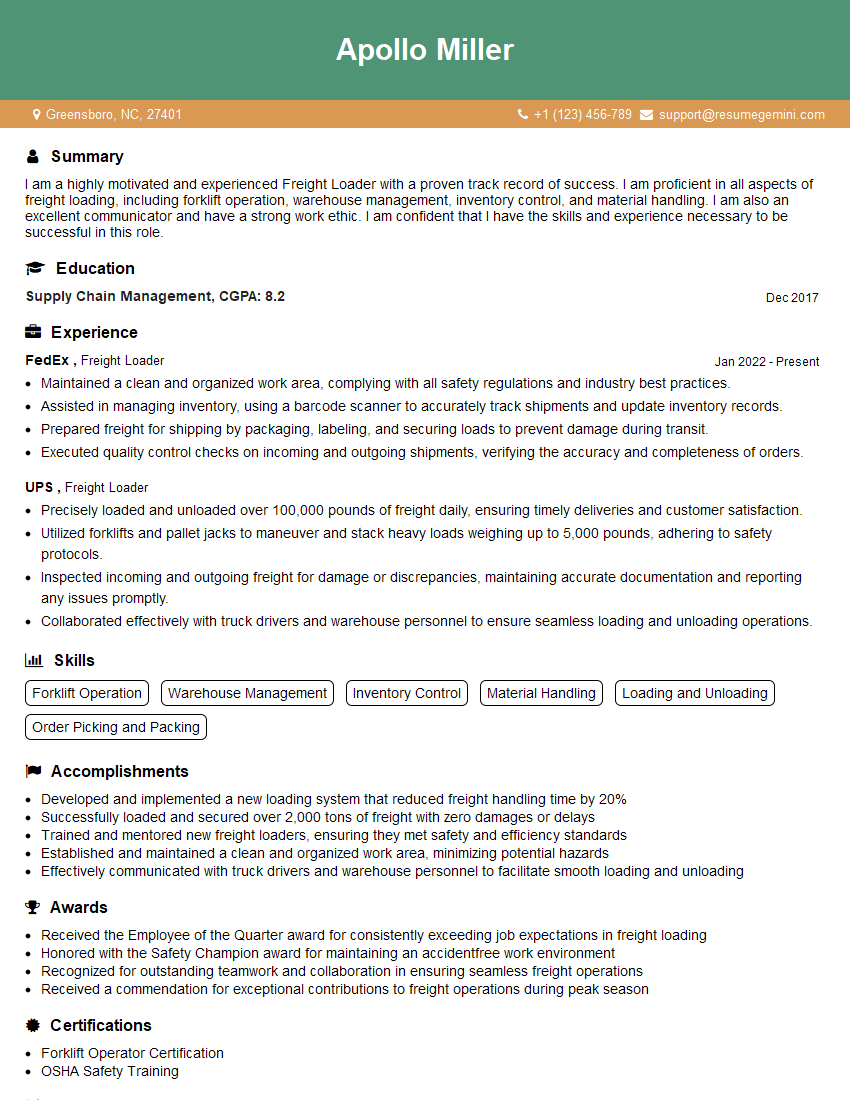
Freight Loader Resume Sample
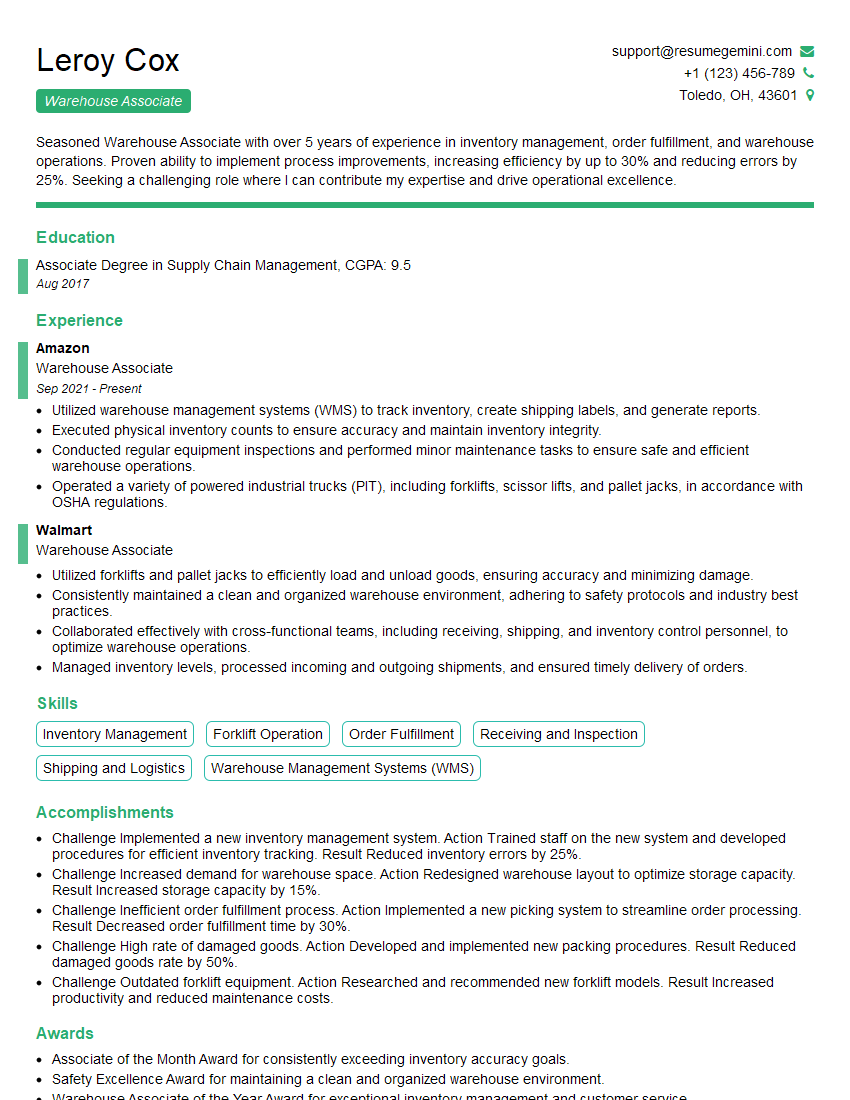
Warehouse Associate Resume Sample
- Operations Manager
- Supply Chain Manager
- Distribution Center Manager
- Logistics Manager
- Transportation Manager
- Warehouse Manager
- Warehouse Supervisor
- Logistics Coordinator
- Supply Chain Analyst
- Customs Broker
- Freight Forwarder
- Delivery Driver
- Inventory Control Specialist
- Shipping and Receiving Clerk
- Shipping and Receiving Supervisor
- Logistics Associate
- Material Handler
- Order Picker
- Forklift Operator
- Dockworker
- Freight Handler
- Freight Loader
- Warehouse Associate
Explore more articles
Users Rating of Our Blogs
Share Your Experience
We value your feedback! Please rate our content and share your thoughts (optional).
What Readers Say About Our Blog
Very informative content, great job.
good