Feeling uncertain about what to expect in your upcoming interview? We’ve got you covered! This blog highlights the most important Fruit Picking interview questions and provides actionable advice to help you stand out as the ideal candidate. Let’s pave the way for your success.
Questions Asked in Fruit Picking Interview
Q 1. What types of fruit have you harvested?
Over my 15 years in fruit harvesting, I’ve worked with a wide variety of fruits. This includes stone fruits like peaches, plums, and nectarines; pome fruits such as apples and pears; berries including strawberries, raspberries, and blueberries; and citrus fruits like oranges and lemons. I’ve also had experience with more specialized crops such as kiwi fruit and avocados. Each fruit presents unique challenges and requires a tailored approach to harvesting.
- Stone Fruits: These require careful handling due to their delicate skin.
- Berries: These are highly perishable and need to be picked at peak ripeness and handled gently.
- Citrus Fruits: Harvesting often involves using specialized tools to minimize damage to the fruit and tree.
Q 2. Describe your experience with different harvesting techniques.
My experience encompasses a range of harvesting techniques, adapting to the specific needs of each fruit type and growing conditions. These techniques range from simple hand-picking to more sophisticated methods.
- Hand-Picking: This is the most common method, particularly for delicate fruits like berries and some stone fruits. It ensures quality control and minimizes damage. We use various tools, from small clippers for branches to small containers to hold the picked fruit.
- Shake-and-Catch: Used for certain fruits like olives and cherries where the fruit can be gently shaken from the tree and collected in nets or bins beneath. Requires careful timing to avoid bruising.
- Mechanical Harvesting: This involves the use of specialized machinery for high-volume crops like apples and some citrus. This can significantly increase efficiency but might increase the risk of damage if not carefully managed.
- Selective Harvesting: Often done in multiple passes to ensure only ripe fruit is harvested, maximizing quality and shelf life.
Q 3. What is your experience with hand-picking versus machine harvesting?
Hand-picking offers superior quality control and minimizes damage, resulting in a higher percentage of premium-grade fruit. However, it’s significantly more labor-intensive and expensive. Machine harvesting is much faster and more efficient for large-scale operations, but it can lead to higher rates of bruising and less selective harvesting, affecting the overall quality. I’ve found that a combination of both methods can be ideal: machine harvesting for bulk and hand-picking for high-value or delicate fruit.
For example, in a large apple orchard, we might use a machine harvester for the majority of the crop, then follow up with hand-picking to collect any remaining apples that were missed or were too delicate for the machine.
Q 4. How do you identify ripe and ready-to-harvest fruit?
Identifying ripe fruit is crucial for optimal quality and shelf life. There are several indicators I look for, depending on the type of fruit:
- Color: A key indicator. For example, ripe strawberries will be a deep red, while ripe peaches will have characteristic blush coloring.
- Size and Shape: Ripe fruit often reaches its full size and exhibits a typical shape for the variety.
- Texture: Gently squeezing the fruit can reveal its ripeness. Ripe fruit will have a slight give but not be mushy.
- Aroma: Ripe fruit will often have a characteristic fragrance.
- Taste (sampling): Sometimes, a small sample is taken to confirm ripeness. This is especially common for berries.
The specific indicators vary greatly across different fruit types, and experience plays a crucial role in accurate assessment.
Q 5. What are the common quality standards for harvested fruit?
Quality standards for harvested fruit vary depending on the intended market (e.g., fresh market, processing), but some common factors include:
- Size and Uniformity: Fruits of similar size and shape are preferred, particularly for fresh market sales.
- Color and Appearance: Attractive color and absence of blemishes are highly valued.
- Firmness and Texture: Fruit should be firm and free from bruising or damage.
- Absence of Defects: No signs of disease, insect damage, or other imperfections.
- Maturity: Fruit should be fully ripe but not overripe.
Meeting these standards involves careful harvesting techniques, proper handling, and prompt cooling or processing after harvest.
Q 6. How do you handle damaged or bruised fruit during harvesting?
Damaged or bruised fruit is separated immediately from the good fruit to prevent contamination and spoilage. This is typically done in the field. These damaged fruits are usually sent to a separate bin or container designated for processing (e.g., juicing, canning) or disposal, depending on the extent of the damage and the farm’s policies. This careful sorting helps maintain the overall quality of the harvested crop.
Q 7. What safety measures do you follow while harvesting?
Safety is paramount during harvesting. We always adhere to the following:
- Personal Protective Equipment (PPE): This includes gloves to protect hands, sturdy footwear to prevent slips and falls, and sometimes eye protection from pesticide residue or flying debris.
- Awareness of Hazards: We are cautious of potential dangers such as sharp branches, uneven terrain, and exposure to the elements (sun, heat, rain).
- Proper Lifting Techniques: To avoid back injuries, we utilize proper lifting techniques to prevent strain.
- Hydration and Breaks: Regular breaks and staying hydrated are crucial, especially during hot weather.
- Communication: Maintaining clear communication with team members and supervisors to avoid accidents.
- First Aid Awareness: Basic first aid knowledge and access to a first-aid kit are always on hand.
Q 8. How do you maintain productivity throughout the workday?
Maintaining productivity throughout a long workday in fruit picking requires a strategic approach combining physical stamina, smart work techniques, and mental resilience. It’s not just about picking fast; it’s about picking efficiently and consistently.
- Physical Preparation: I start each day with a proper warm-up to prevent injuries. This includes stretching and light exercises to get my muscles ready for the repetitive motions involved in picking. Staying hydrated throughout the day is crucial, as dehydration can lead to fatigue.
- Strategic Picking: I focus on optimizing my picking route, moving systematically through the rows to avoid backtracking. I prioritize the ripest and easiest-to-reach fruit first to maximize my output early in the day. Taking short, planned breaks helps me maintain my energy levels.
- Mental Fortitude: Fruit picking can be monotonous, so I actively try to stay engaged and focused. I listen to podcasts or audiobooks to keep my mind stimulated. Celebrating small milestones – like filling a certain number of containers – helps me stay motivated.
- Proper Tools: Using ergonomic tools, such as lightweight picking baskets and sharp shears, significantly reduces strain and improves efficiency. Regularly checking the condition of my tools and reporting any issues promptly is essential.
For example, during strawberry picking, I might prioritize picking the larger berries first, saving smaller ones for later in the day, when energy levels might dip.
Q 9. Describe your experience working in various weather conditions.
My experience spans a wide range of weather conditions, each presenting unique challenges. Adaptability and preparedness are key.
- Heat: Picking in extreme heat requires extra caution. This involves taking frequent water breaks, wearing lightweight, breathable clothing, and using sunscreen to prevent sunburn and heatstroke. I also try to work during the cooler parts of the day.
- Cold: Cold weather can make hands numb and slow down picking speed. Wearing appropriate layers, including gloves and warm headgear, helps maintain dexterity and warmth. Taking frequent short breaks in warmer areas, if available, is helpful.
- Rain: Rain makes the ground muddy and slippery, increasing the risk of falls. Wearing waterproof clothing and sturdy footwear is essential. Working carefully and slowly, focusing on safety, is paramount. Some fruits may become bruised or damaged during rain, necessitating quicker picking.
- Wind: Strong winds can blow branches, making picking difficult and potentially dangerous. I always pay attention to the weather forecast and avoid working in extremely windy conditions if possible. Securing loose branches or using windbreaks are important safety measures.
I’ve learned to anticipate weather changes and adjust my work accordingly. For instance, I might prioritize certain sections of the orchard during a predicted rain shower to minimize fruit damage.
Q 10. How do you manage your time effectively during harvesting?
Effective time management during harvesting is crucial for maximizing productivity. It involves planning, prioritization, and efficient execution.
- Pre-Harvest Planning: Before starting, I assess the orchard or field, identifying areas with the ripest and most accessible fruit. This helps me plan my route and prioritize my picking efforts.
- Consistent Pace: Maintaining a steady pace throughout the day helps ensure consistent output. Avoid rushing, as this increases the risk of errors and injuries. Short, regular breaks help maintain stamina and prevent burnout.
- Prioritization: I focus on the most critical tasks first. This often involves picking the ripest fruit to prevent spoilage and maximize quality. Less ripe fruit can be collected later.
- Communication: Regular communication with my team and supervisors helps in coordinating efforts and addressing potential bottlenecks. Knowing where others are working helps avoid duplication of effort.
For example, during apple picking, I might prioritize the lower branches first, working my way up to the higher branches later. This prevents unnecessary reaching and stretching.
Q 11. How do you work as part of a team during harvesting?
Teamwork is vital in fruit harvesting. Efficient collaboration ensures higher productivity and a safer working environment.
- Clear Communication: Open and clear communication among team members is essential. We coordinate our efforts to avoid overlapping work areas and ensure efficient harvesting across the entire field or orchard.
- Mutual Support: Team members assist each other when needed, whether it’s helping lift heavy containers or sharing tools. This fosters a positive and collaborative work environment.
- Coordination of Tasks: Tasks are often divided amongst team members based on individual strengths and abilities. This ensures everyone’s skills are effectively utilized.
- Respect for Roles: Each team member respects the role of others, and we work together to achieve the common goal of harvesting the fruit efficiently and effectively.
For example, during a particularly busy harvest, one team member might focus on picking while another handles packing the fruit, creating a smooth workflow.
Q 12. What is your experience with using harvesting tools and equipment?
My experience encompasses a wide range of harvesting tools and equipment, from basic hand tools to more sophisticated machinery.
- Hand Tools: I am proficient in using various hand tools, including shears, picking bags, ladders, and harvesting knives, adapted to different types of fruit.
- Mechanical Equipment: I have experience operating some mechanical harvesting equipment, such as automated picking machines, although proficiency varies depending on the specific type of machine.
- Tool Maintenance: I understand the importance of maintaining tools in optimal working condition. Regular cleaning and sharpening of hand tools, as well as reporting any mechanical issues promptly, are crucial for efficiency and safety.
- Safety Procedures: I am well-versed in the safe operation and handling of all harvesting tools and equipment. I strictly adhere to all safety guidelines and regulations to minimize risks of injuries.
For example, I know how to correctly use a ladder to reach higher branches, ensuring stability and safety. I also understand how to adjust the settings on mechanical pickers to suit the specific fruit variety.
Q 13. How do you handle unexpected challenges during harvesting?
Unexpected challenges are common in fruit harvesting. Successful handling requires problem-solving skills, adaptability, and effective communication.
- Equipment Malfunctions: If equipment malfunctions, I follow established procedures for reporting the issue and arranging for repairs. In the meantime, I find alternative ways to continue the harvesting process to minimize downtime.
- Weather Changes: Sudden changes in weather, such as unexpected rain or strong winds, require immediate adjustments to harvesting plans to minimize damage and ensure safety. This might involve seeking shelter or adjusting the picking strategy.
- Pest or Disease Outbreaks: If I notice signs of pest or disease outbreaks, I report it immediately to supervisors so appropriate measures can be taken to prevent further damage.
- Quality Issues: If I find fruit that doesn’t meet quality standards, I follow established procedures for sorting and handling the affected produce.
For instance, if a ladder breaks, I’d report it immediately, find a replacement, and potentially re-allocate tasks among team members while waiting.
Q 14. What is your knowledge of different fruit varieties and their harvesting requirements?
My knowledge encompasses a range of fruit varieties and their specific harvesting requirements. This includes understanding the optimal ripeness, picking methods, and post-harvest handling for different fruits.
- Berries (Strawberries, Raspberries, Blueberries): These require gentle handling to avoid bruising. Picking is usually done by hand, and the ripeness is determined by color and firmness.
- Stone Fruit (Peaches, Nectarines, Plums): These should be picked when fully ripe, determined by color, firmness, and aroma. They require careful handling to prevent bruising.
- Pome Fruit (Apples, Pears): These are harvested using various techniques, depending on the variety and size. Ripeness is determined by color, firmness, and sugar content.
- Citrus Fruit (Oranges, Lemons, Grapefruit): These are usually harvested when mature, using specialized tools or by hand, depending on the tree size and accessibility.
Understanding these nuances ensures that the fruit is picked at its peak quality, maximizing its value and shelf life. For example, I know that overripe strawberries are more susceptible to damage during transport, so I prioritize picking only the ripe but firm ones.
Q 15. How do you prevent fruit damage during transportation?
Preventing fruit damage during transportation is crucial for maintaining quality and minimizing losses. It involves a multi-step approach focusing on careful handling, proper packaging, and suitable transportation methods.
Careful Harvesting: Fruits should be handled gently to avoid bruising. Using appropriate harvesting tools and techniques, like padded containers, is essential. For example, delicate berries require gentler handling than robust apples.
Protective Packaging: Choosing the right packaging material is critical. This might involve using cushioning materials like foam or shredded paper to absorb shocks and vibrations during transit. Different fruits have different packaging needs; for instance, avocados are often packaged individually to prevent damage.
Temperature Control: Maintaining the correct temperature is vital, particularly for perishable fruits. Refrigerated trucks or containers are often necessary to slow down ripening and prevent spoilage. For example, bananas are highly susceptible to chilling injury at low temperatures, requiring careful temperature management.
Transportation Method: The choice of transport affects fruit quality. Smooth, reliable transportation is preferred to reduce jolts and vibrations. Avoiding prolonged transit times is also important. For instance, air freight is sometimes used for long-distance transport of highly perishable fruits to ensure timely delivery and quality preservation.
Career Expert Tips:
- Ace those interviews! Prepare effectively by reviewing the Top 50 Most Common Interview Questions on ResumeGemini.
- Navigate your job search with confidence! Explore a wide range of Career Tips on ResumeGemini. Learn about common challenges and recommendations to overcome them.
- Craft the perfect resume! Master the Art of Resume Writing with ResumeGemini’s guide. Showcase your unique qualifications and achievements effectively.
- Don’t miss out on holiday savings! Build your dream resume with ResumeGemini’s ATS optimized templates.
Q 16. What are your physical stamina and endurance levels?
My physical stamina and endurance are excellent. Years of experience in fruit picking have built up my capacity to work long hours in demanding conditions. I’m accustomed to repetitive movements, prolonged standing, and working under varying weather conditions. I regularly engage in physical activities outside of work to maintain my fitness levels, ensuring I can consistently meet the physical demands of the job.
Q 17. Are you comfortable working outdoors for extended periods?
Yes, absolutely. I’m completely comfortable working outdoors for extended periods. I understand that fruit picking is an outdoor occupation and I’ve adapted well to working under various weather conditions – from intense heat to occasional rain. I take necessary precautions like using sunscreen, appropriate clothing, and staying hydrated to mitigate potential risks associated with outdoor work.
Q 18. Describe your experience with post-harvest handling of fruit.
My experience with post-harvest handling of fruit encompasses a range of activities, from sorting and grading to cleaning and pre-cooling. I understand the importance of efficient and careful post-harvest handling to maintain the quality and extend the shelf life of fruits.
Sorting and Grading: Identifying fruits based on size, color, ripeness, and quality is vital. This ensures uniform product quality and facilitates efficient packing and marketing. I’ve worked with various grading systems based on established industry standards.
Cleaning: Removing dirt, debris, and other contaminants is a crucial step in maintaining hygiene and safety standards. Different cleaning methods are used based on the fruit type and its sensitivity to water pressure.
Pre-cooling: Rapidly cooling fruits after harvest helps slow down respiration and enzymatic activity, prolonging shelf life and reducing spoilage. I’m familiar with various pre-cooling techniques, including hydrocooling and forced-air cooling.
Packaging: Proper packaging protects fruits from damage during transportation and storage. I’m experienced in using various packaging materials and methods suitable for different fruit types.
Q 19. How do you ensure the hygiene and cleanliness standards during harvesting?
Maintaining hygiene and cleanliness standards during harvesting is paramount to ensure food safety and prevent contamination. This involves following a strict set of protocols.
Handwashing: Frequent handwashing with soap and water is mandatory, particularly before and after handling fruits. I ensure readily available handwashing facilities are used.
Protective Clothing: Wearing clean clothing and gloves prevents contamination from sweat, dirt, or other sources. Gloves are particularly important when handling delicate fruits.
Equipment Cleaning: Harvesting tools and containers should be cleaned and sanitized regularly to prevent cross-contamination. I ensure regular cleaning and disinfection of equipment using appropriate solutions.
Waste Management: Proper disposal of waste materials is essential. This prevents attracting pests and minimizes environmental impact.
Q 20. Explain your understanding of crop rotation and its impact on harvesting.
Crop rotation is a vital agricultural practice that involves planting different crops in a planned sequence on the same piece of land. It significantly impacts harvesting by improving soil health, reducing pest and disease pressure, and ultimately increasing yields.
Improved Soil Health: Different crops have different nutrient requirements. Rotating crops helps replenish soil nutrients and prevent depletion, which directly improves fruit growth and quality.
Pest and Disease Management: Rotating crops disrupts the life cycles of many pests and diseases, reducing their incidence and the need for pesticides. This leads to healthier crops and more efficient harvesting.
Increased Yields: By improving soil health and reducing pest and disease pressure, crop rotation leads to increased yields over time. This translates to more efficient harvesting operations and higher profits.
For example, rotating a heavy-feeding crop like corn with a legume like beans can improve soil nitrogen levels, benefiting subsequent fruit crops. Careful planning based on local conditions and specific crop needs is crucial for maximizing the benefits of crop rotation.
Q 21. What is your experience with using GPS or other technology in the field?
I have experience using GPS technology in the field, primarily for navigation and mapping. This technology has proven beneficial in various ways.
Precise Navigation: GPS aids in efficient navigation through orchards, especially in large or complex terrains. It ensures we reach the designated picking areas quickly and effectively.
Yield Mapping: GPS-enabled devices can record the location and quantity of harvested fruits. This data can be used for yield analysis and to optimize future harvesting strategies. For instance, we can identify areas with higher yields and adjust picking schedules accordingly.
Data Collection: Integration with other technology like data loggers allows for real-time monitoring of various parameters, like temperature and humidity, leading to better decision-making during harvesting.
While I haven’t used extremely sophisticated systems, I’m comfortable learning and adapting to new technologies as needed. I understand the importance of leveraging technology for increased efficiency and productivity in fruit picking.
Q 22. How familiar are you with relevant agricultural regulations and safety standards?
My familiarity with agricultural regulations and safety standards is extensive. I’ve worked across various farms adhering to both state and federal guidelines, including those related to pesticide application, worker safety (like proper PPE usage and emergency procedures), and food safety (such as HACCP principles). For example, I’m proficient in understanding and complying with regulations concerning organic farming practices and the proper handling and disposal of agricultural waste. I’m also very familiar with worker’s compensation procedures and reporting requirements for injuries sustained on the job. Staying updated on these regulations is crucial for me; I regularly review relevant publications and attend workshops to ensure compliance and maintain a safe working environment.
Q 23. Have you worked with any pest control methods in the field?
Yes, I have significant experience with various pest control methods, always prioritizing Integrated Pest Management (IPM) strategies. IPM focuses on minimizing pesticide use through preventative measures and employing less toxic methods first. This involves techniques like crop rotation, biological pest control (introducing natural predators), and using pheromone traps to monitor pest populations. Only when necessary, and after carefully assessing the risk and using the least-toxic option, do we resort to chemical pesticides. I’m trained in the safe handling, application, and disposal of these chemicals, following all label instructions precisely and wearing appropriate Personal Protective Equipment (PPE). One specific example involved using beneficial nematodes to control root-knot nematodes in a strawberry field, resulting in a significant reduction in pest damage without relying on harmful chemicals.
Q 24. How do you adapt to changing weather conditions and harvest timelines?
Adaptability is key in fruit picking. Weather conditions can change rapidly, affecting both the fruit’s ripeness and the ability to harvest. For example, a sudden downpour might necessitate a temporary halt in picking to prevent damage or spoilage. To manage this, we use weather forecasts to plan our daily schedules, prioritizing areas most vulnerable to bad weather. If an unexpected heatwave hits, we adjust picking schedules to work during cooler hours, implementing additional hydration and rest breaks for the crew. Similarly, variations in harvest timelines often mean adjusting our team sizes and work assignments as needed. We always aim to be efficient but prioritize the quality of the fruit above all else, making adjustments as necessary to keep our work on track.
Q 25. What is your experience with using different types of harvesting containers?
I’m experienced in using various harvesting containers, ranging from standard buckets and lug boxes to specialized bins designed for specific fruit types. The choice of container depends on several factors, including the type of fruit, its fragility, the terrain, and the distance to the packing area. For example, delicate berries might require smaller, shallow containers to prevent bruising, while hardier fruits like apples can be placed in larger bins. I’m also familiar with using ergonomic carrying devices and transport systems to minimize worker strain and improve efficiency. My experience includes using both hand-carried containers and larger, wheeled containers for transport during picking operations. Careful selection and use of these containers are critical in maintaining fruit quality and worker safety.
Q 26. Describe your experience with maintaining harvest records and data.
Maintaining accurate harvest records is essential. Typically, we record the date, location of picking, quantity harvested (often in pounds or kilos), variety of fruit, and any quality notes (e.g., percentage of bruised fruit, size grading). This data is usually entered into a spreadsheet or a farm management software. We maintain a strict process of daily entries, often double-checking the numbers before submission to ensure accuracy. This detailed record-keeping is crucial for inventory management, calculating yield, and tracking productivity. This data allows for better planning in future seasons, enabling adjustments in planting densities, irrigation, and fertilizer based on past performance.
Q 27. How do you identify and report any issues with the quality or quantity of the harvest?
Identifying and reporting quality or quantity issues is a critical part of the process. I’ve developed a keen eye for spotting irregularities. For example, if I notice a significant increase in insect damage, disease symptoms, or a drop in fruit size, I immediately report it to the supervisor. Quantity issues might involve a lower-than-expected yield in a particular area, which could indicate underlying problems like water stress or nutrient deficiencies. My reporting is always timely and thorough, providing specific details about the location, extent, and potential causes of the problem. Good communication and accurate reporting allow for prompt interventions to mitigate potential losses and improve the overall harvest outcome.
Q 28. What are your salary expectations for this role?
My salary expectations for this role are commensurate with my experience and skills, and aligned with the industry standards for someone with my level of expertise in fruit picking. I am open to discussing a competitive compensation package that reflects my value to the company.
Key Topics to Learn for Fruit Picking Interview
- Understanding Fruit Varieties: Learn to identify different fruits, their ripeness stages, and optimal harvesting techniques. This includes knowledge of common varieties grown in your region.
- Harvesting Techniques: Master safe and efficient picking methods for various fruits. This involves understanding the proper use of tools (e.g., ladders, clippers) and minimizing damage to the fruit and plants.
- Quality Control: Learn to assess fruit quality – identifying blemishes, assessing size and weight, and understanding grading standards. Practical application involves quickly and accurately sorting fruit based on these criteria.
- Productivity and Efficiency: Explore strategies for maximizing your picking output while maintaining quality. This includes understanding pacing, optimizing your workflow, and working effectively as part of a team.
- Health and Safety: Familiarize yourself with workplace safety regulations and practices related to fruit picking, including proper lifting techniques, sun protection, and awareness of potential hazards (e.g., insects, sharp tools).
- Teamwork and Communication: Discuss your ability to collaborate effectively with fellow pickers and supervisors. This includes demonstrating good communication skills and a willingness to contribute to a positive team environment.
- Problem-Solving: Prepare to discuss how you would handle challenges such as inclement weather, equipment malfunctions, or unexpected changes in work assignments. Show your ability to adapt and find solutions.
Next Steps
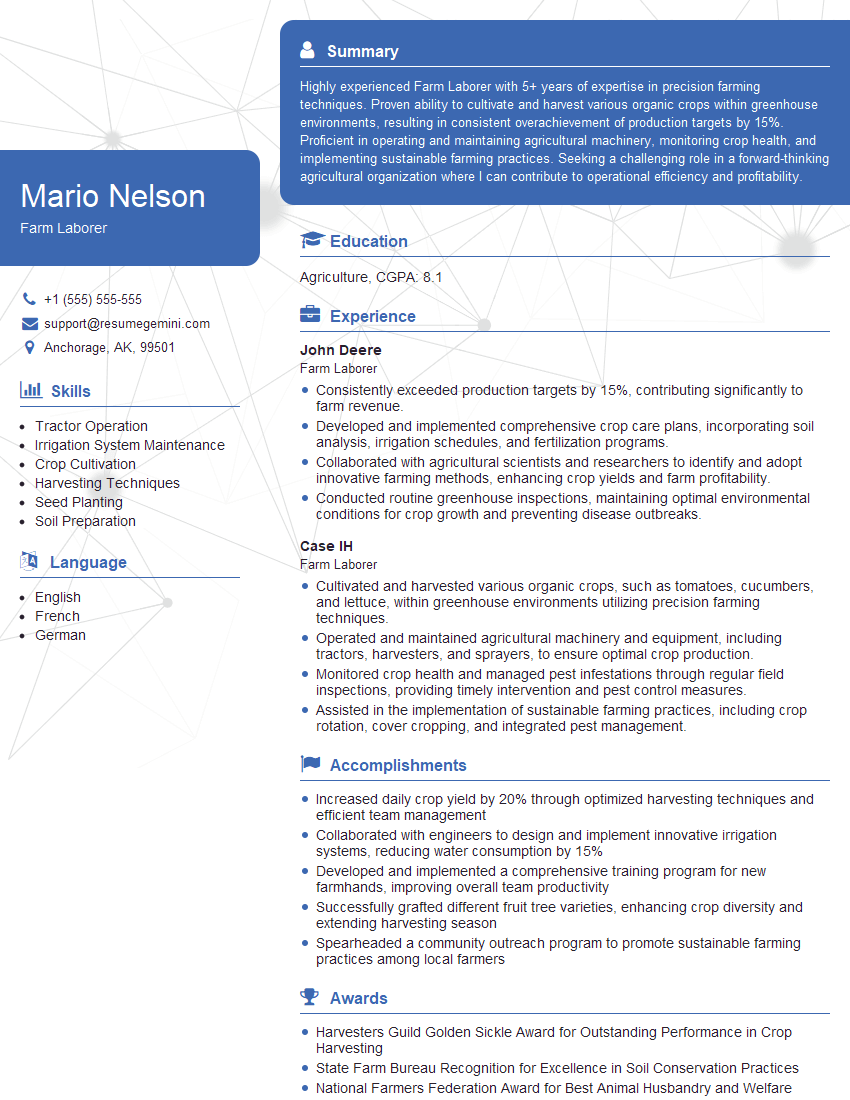
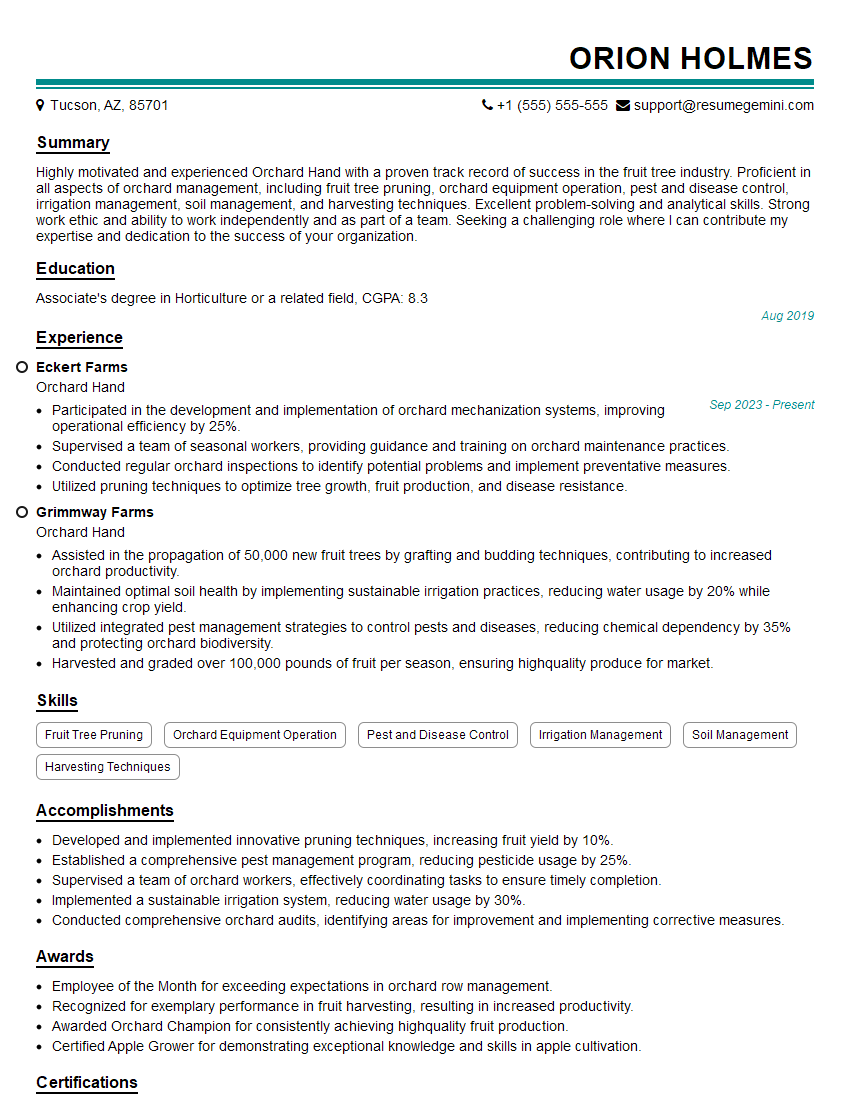
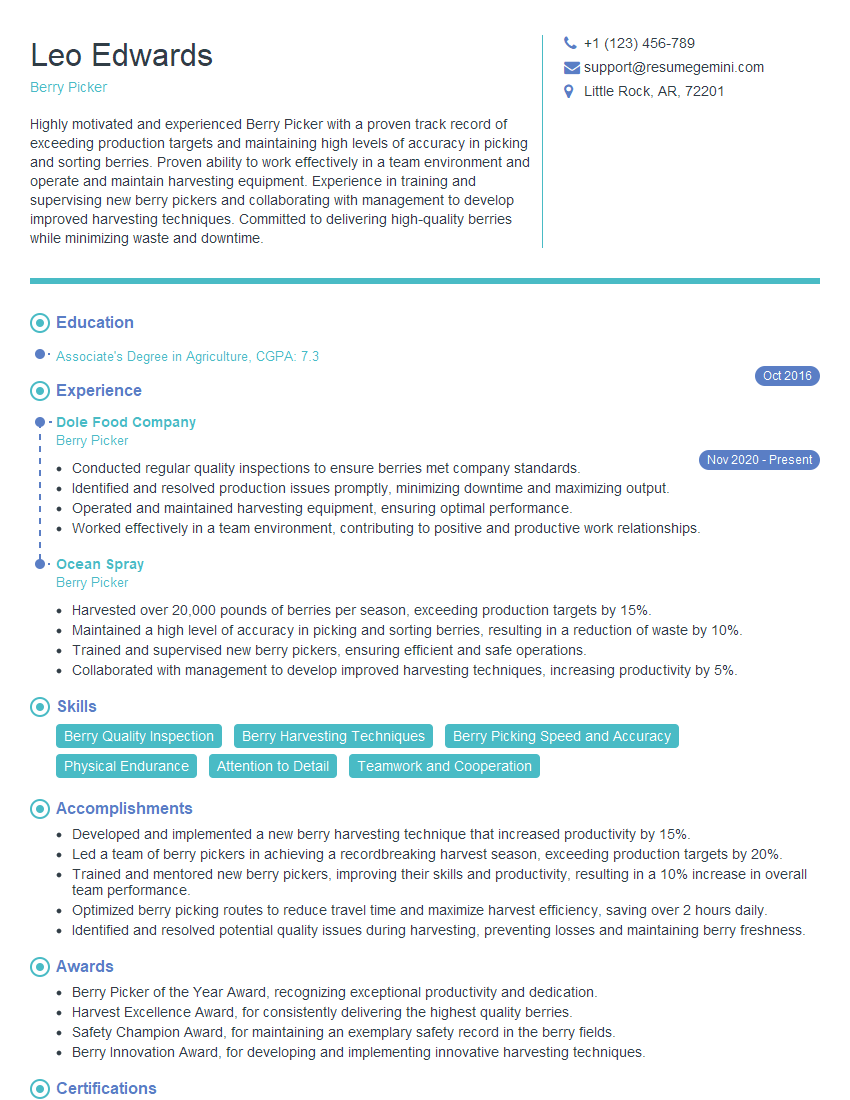
Mastering fruit picking skills opens doors to various roles within the agriculture sector, potentially leading to supervisory positions or specialized roles in quality control and post-harvest handling. A strong resume is crucial for showcasing your abilities to potential employers. Creating an ATS-friendly resume significantly improves your chances of getting your application noticed. Use ResumeGemini to build a professional, impactful resume tailored to highlight your fruit-picking experience and skills. Examples of resumes specifically designed for fruit picking roles are available for your reference.





Explore more articles
Users Rating of Our Blogs
Share Your Experience
We value your feedback! Please rate our content and share your thoughts (optional).
What Readers Say About Our Blog
Very informative content, great job.
good