Cracking a skill-specific interview, like one for Functional Safety Analysis and Assessment, requires understanding the nuances of the role. In this blog, we present the questions you’re most likely to encounter, along with insights into how to answer them effectively. Let’s ensure you’re ready to make a strong impression.
Questions Asked in Functional Safety Analysis and Assessment Interview
Q 1. Explain the difference between hazard and risk.
A hazard is a potential source of harm, a condition or situation that has the potential to cause injury or damage. Think of it as the ‘what’ – the dangerous thing itself. A risk, on the other hand, is the likelihood of that hazard causing harm, combined with the severity of the potential harm. It’s the ‘how likely and how bad’ aspect. For example, a sharp knife (hazard) poses a risk of cutting someone (harm), but the risk is much higher if the knife is left unattended in a kitchen where children play (increased likelihood) compared to being securely stored in a drawer (decreased likelihood).
In short: Hazard = Potential harm; Risk = Likelihood & Severity of harm.
Q 2. Describe the Safety Lifecycle.
The Safety Lifecycle is a structured process used throughout a system’s lifecycle to manage functional safety. It’s not a rigid, linear process but rather an iterative cycle with feedback loops. It typically includes these key phases:
- Concept & Feasibility: Initial hazard identification and high-level safety requirements are established.
- System Design: Detailed hazard analysis and safety requirements specification, selection of safety mechanisms.
- Implementation: Design and development of the system, including safety-related components.
- Verification & Validation: Testing and analysis to ensure the system meets safety requirements.
- Operation & Maintenance: Monitoring the system’s performance and maintaining safety integrity throughout its operational life.
- Decommissioning: Safe removal of the system from operation.
Each phase involves specific activities and deliverables, and iterations within and between phases are common to address newly identified hazards or unmet safety goals. Think of it like building a house – you wouldn’t just start laying bricks without plans (design) or inspections (verification).
Q 3. What are the different Safety Integrity Levels (SILs) and how are they determined?
Safety Integrity Levels (SILs) are a qualitative measure of the risk reduction provided by a safety function. They’re defined in IEC 61508 and range from SIL 1 (lowest) to SIL 4 (highest). The higher the SIL, the greater the risk reduction required. The SIL is determined through a risk assessment process, considering:
- Severity: How serious are the potential consequences of failure?
- Probability of Failure on Demand (PFD): How likely is the safety function to fail when needed?
- Frequency of Exposure: How often are the system and its safety function exposed to hazardous situations?
A risk graph or similar methodology is used to map these factors and determine the required SIL. For example, a system with high severity and high PFD would require a higher SIL (e.g., SIL 3 or SIL 4), whereas a system with low severity and low PFD might only need SIL 1. The SIL then informs the choice of safety components and architectures to meet the required safety level.
Q 4. Explain the role of a Safety Requirements Specification (SRS).
The Safety Requirements Specification (SRS) is a critical document that details all safety requirements for a system. It’s essentially the contract between the safety engineer and the system developers. It clearly defines what the system must do to meet the defined safety goals. It encompasses:
- Hazard Analysis Results: The identified hazards and associated risks.
- Safety Requirements: Specific requirements to mitigate identified hazards, including performance requirements (e.g., response time), reliability requirements (e.g., Mean Time Between Failures – MTBF), and architectural requirements.
- Safety Functions: A detailed description of the safety mechanisms and their intended behavior.
- Safety Integrity Levels (SILs): Assignment of SILs to each safety function.
A well-written SRS is crucial because it serves as the basis for design, implementation, testing, and verification. Without a clear SRS, the system might not meet its safety goals, potentially leading to accidents.
Q 5. What are the key differences between IEC 61508 and ISO 26262?
IEC 61508 and ISO 26262 are both functional safety standards, but they apply to different industries. IEC 61508 is a general standard for electrical/electronic/programmable electronic safety-related systems, covering a wide range of applications. ISO 26262 is specifically tailored to the automotive industry. Key differences include:
- Scope: IEC 61508 has a broader scope, while ISO 26262 is automotive-specific.
- Automotive-Specific Aspects: ISO 26262 includes considerations specific to automotive systems, such as driving scenarios, fault tolerance, and the impact of environmental factors.
- Automotive Safety Integrity Levels (ASILs): ISO 26262 uses ASILs (A, B, C, D), analogous to SILs in IEC 61508, but with specific automotive considerations.
- Methods and Techniques: Both standards prescribe similar methods (like FTA and HAZOP), but ISO 26262 provides more automotive-specific guidance.
While different, they share a common foundation in risk assessment and safety lifecycle management. ISO 26262 is often considered a domain-specific adaptation of IEC 61508.
Q 6. Describe your experience with Hazard and Operability Studies (HAZOP).
I have extensive experience conducting Hazard and Operability Studies (HAZOPs). In my previous role, I led HAZOP workshops for several critical systems, including a process control system in a chemical plant and a robotic system in a manufacturing facility. A HAZOP involves systematically reviewing a system’s design and operation to identify potential hazards. We use guide words (e.g., ‘no,’ ‘more,’ ‘less,’ ‘part of’) to explore deviations from the intended operation. This process helps unearth potential hazards that might otherwise be missed. For example, in the chemical plant HAZOP, using the guide word ‘more’ with a ‘flow rate’ parameter helped uncover the risk of exceeding the vessel’s pressure limit. This led to the implementation of an additional pressure relief valve, significantly reducing the risk of a catastrophic failure.
I’m proficient in facilitating HAZOP workshops, documenting findings, and recommending mitigations. I ensure the workshops are collaborative and involve cross-functional teams to ensure a comprehensive assessment of potential hazards.
Q 7. Explain the Fault Tree Analysis (FTA) method.
Fault Tree Analysis (FTA) is a top-down, deductive technique used to analyze the causes of a specific undesired event (top event). It visually represents the various combinations of component failures or other events that can lead to the top event. The analysis starts with the top event and works backward to identify the contributing factors. These factors are represented as ‘gates’ (AND, OR) indicating the logical relationships between events. Each branch represents a potential failure path.
For example, consider a top event of ‘System Shutdown’. An AND gate might connect ‘Loss of Power’ and ‘Sensor Failure’ as necessary conditions for the shutdown. Each of these could then be further decomposed. ‘Loss of Power’ might have branches for ‘Power Supply Failure’ and ‘Circuit Breaker Trip’. This hierarchical structure provides a clear picture of potential failure scenarios and allows for the quantification of probabilities associated with each event. The probabilities of the contributing events are combined (using Boolean logic) to calculate the probability of the top event. This quantitative analysis helps in identifying critical components and prioritizing risk mitigation strategies.
Q 8. Explain the Failure Modes and Effects Analysis (FMEA) method.
Failure Modes and Effects Analysis (FMEA) is a systematic method used to identify potential failures in a system and assess their impact. It’s a proactive approach to risk management, aiming to prevent failures before they occur. Think of it like a pre-flight checklist for a complex system – meticulously examining every component to anticipate and mitigate potential problems.
The process typically involves a team reviewing each component or function of a system, identifying potential failure modes (what could go wrong), their effects (consequences of the failure), and the severity of those effects. Then, we analyze the likelihood of each failure mode occurring (probability) and assess how effectively current controls are preventing or mitigating the failure (detection and controls). A risk priority number (RPN) is often calculated by multiplying these three factors, helping prioritize corrective actions. A higher RPN signifies a higher risk needing immediate attention.
- Failure Mode: What could go wrong? (e.g., pump failure, sensor malfunction)
- Effects: What are the consequences? (e.g., system shutdown, inaccurate measurement)
- Severity: How serious is the effect? (rated on a scale, e.g., 1-10)
- Probability: How likely is the failure mode to occur? (rated on a scale, e.g., 1-10)
- Detection: How likely is the failure to be detected before it causes harm? (rated on a scale, e.g., 1-10)
- RPN: Severity x Probability x Detection
For example, in a chemical processing plant, an FMEA might identify a potential failure mode of a pressure sensor failing to detect high pressure. The effect could be a catastrophic explosion. By assigning severity, probability, and detection ratings, the team can prioritize implementing a redundant sensor system to improve detection and reduce the RPN.
Q 9. How do you determine the Probability of Failure on Demand (PFD)?
Probability of Failure on Demand (PFD) is a key metric in functional safety, representing the probability that a safety function will fail to operate when demanded. It’s crucial for assessing the reliability of safety-related systems, particularly in safety instrumented systems (SIS). Think of it like this: If a fire alarm is demanded (a fire starts), what is the probability it won’t sound?
Determining PFD involves a combination of methods, depending on the complexity of the system and available data. For simple systems, historical failure data or component failure rates might be sufficient. For complex systems, fault tree analysis (FTA) or Markov modeling are often employed to estimate the overall system PFD. These techniques consider various failure scenarios and their probabilities to calculate the overall probability of failure on demand. Industry standards like IEC 61508 provide guidance on selecting appropriate methods and data sources.
For instance, if an analysis using FTA reveals a PFD of 10-3, this means there’s a 0.1% chance the safety function will fail when needed. This PFD value is then used to determine the required Safety Integrity Level (SIL) of the system.
Q 10. What are the different techniques for safety verification and validation?
Safety verification and validation are crucial steps in ensuring that a safety-related system meets its intended safety requirements. Verification focuses on ensuring the system is built correctly (does it meet the specification?), while validation focuses on ensuring the right system is built (does it meet the needs?).
- Techniques for Verification:
- Code Reviews: Examining the source code to identify potential errors.
- Static Analysis: Automated tool-based analysis of code without execution.
- Dynamic Analysis: Testing the code by executing it with various inputs.
- Simulation: Simulating the system behavior under various conditions.
- Formal Methods: Using mathematical techniques to verify system properties.
- Techniques for Validation:
- Testing: Conducting various tests, including unit, integration, and system tests.
- Inspection: Examining system documentation and design to identify potential hazards.
- Fault Injection Testing: Deliberately introducing faults to observe system behavior.
- HAZOP (Hazard and Operability Study): Systematic hazard identification technique.
- SIL Verification: Demonstrating that the system meets the required SIL.
For example, in the development of an autonomous vehicle, simulation testing would be critical for validation, simulating various driving scenarios and verifying the safety response algorithms. Code reviews and static analysis would form part of the verification process, ensuring the code is properly written and free from critical defects.
Q 11. Explain the concept of a Safety Instrumented System (SIS).
A Safety Instrumented System (SIS) is an independent, engineered system designed to protect against major hazards. Imagine it as a backup system – it’s only activated when the primary system fails and poses a danger. Its primary goal is to mitigate or prevent dangerous situations resulting from process equipment or system failures. It’s not designed to improve efficiency or performance but rather to provide safety.
An SIS typically consists of sensors that monitor critical process parameters, logic solvers that process sensor inputs, and actuators that take corrective actions. For example, a high-pressure sensor in a chemical reactor might trigger an emergency shutdown valve via an SIS if the pressure exceeds a safety limit. The key is its independence from the main process control system. This independence ensures that failures in the primary control system don’t compromise safety.
The design of an SIS is governed by strict standards, typically IEC 61508 or its industry-specific derivatives. These standards define the requirements for hardware and software reliability, ensuring a sufficiently low probability of failure on demand (PFD).
Q 12. Describe your experience with Safety Integrity Level (SIL) verification.
My experience with Safety Integrity Level (SIL) verification involves extensive use of safety lifecycle standards like IEC 61508. I’ve been involved in various projects, ranging from simple to complex systems, where we meticulously assessed the required SIL based on risk analysis. This included identifying hazards, conducting risk assessment (using techniques like HAZOP and FMEA), and determining the necessary SIL level based on risk severity and probability.
The SIL verification process always follows a systematic approach: We started with a detailed hazard analysis to identify potential hazards and their consequences. Next, we developed safety requirements and a suitable SIS architecture. We proceeded with the design, implementation, and testing, ensuring the system complies with the chosen SIL. Each stage involved rigorous documentation and verification, including safety requirements specifications, design reviews, and extensive testing including fault injection testing.
A crucial aspect of my work involved using safety-related metrics. We tracked and analyzed PFD values for each component and the system as a whole, employing various techniques such as fault tree analysis and Markov models. Finally, we created a comprehensive safety case, demonstrating that the system meets the required SIL level. This case includes all the evidence accumulated throughout the development lifecycle to support the claim of functional safety.
Q 13. How do you handle conflicting safety requirements?
Conflicting safety requirements are a common challenge in complex systems. They often arise from different stakeholders having different priorities or interpretations of safety. For example, one requirement might prioritize system availability, while another emphasizes immediate shutdown in hazardous situations. These competing goals need careful consideration and prioritization.
Handling these conflicts requires a systematic approach involving:
- Clearly defining safety goals: Ensuring all stakeholders understand the overall safety objectives.
- Prioritization: Using a risk-based approach to determine which requirement has higher priority. This might involve a quantitative assessment or a structured decision-making process.
- Compromise: Finding a solution that balances both requirements to the extent possible, potentially involving trade-offs between safety and other system attributes. This may require a redesign of the system or the implementation of additional safety measures.
- Documentation: Thoroughly documenting the decision-making process, including justification for the chosen solution. This ensures traceability and transparency.
A practical example might involve a system with conflicting requirements for rapid shutdown and preventing unnecessary shutdowns. A solution might involve a tiered system with different thresholds for triggering actions, with lower thresholds causing warnings and higher thresholds leading to a shutdown. This addresses both requirements through a well-defined, risk-informed approach.
Q 14. What are the key challenges in Functional Safety implementation?
Implementing functional safety presents several key challenges. These challenges often intertwine, making it crucial to address them holistically.
- Cost and Time Constraints: Implementing functional safety adds significant cost and time to the development lifecycle, often requiring specialized expertise and rigorous testing.
- Complexity of Systems: Modern systems are increasingly complex, making hazard analysis and risk assessment challenging. The sheer number of interactions and potential failure modes requires sophisticated analytical tools and techniques.
- Integration Challenges: Integrating safety-related systems with existing systems can be difficult, requiring careful coordination and consideration of potential interferences.
- Maintaining Safety Throughout Lifecycle: Ensuring safety is not a one-time event; continuous monitoring, maintenance, and upgrades are necessary to maintain the integrity of the system over its entire operational lifetime.
To mitigate these challenges, organizations need to invest in training, employ robust development processes, and utilize appropriate tools and technologies. Adopting a proactive approach, beginning safety considerations early in the design phase and continuing throughout the system’s lifecycle, is crucial for successfully implementing functional safety.
Q 15. Explain your understanding of safety metrics and KPIs.
Safety metrics and KPIs (Key Performance Indicators) are crucial for monitoring and improving the safety performance of a system or process. They provide quantifiable measures of safety-related events and activities. Think of them as your safety dashboard, giving you a clear picture of your system’s health.
- Examples of Safety Metrics: Number of safety-related incidents, mean time between failures (MTBF), safety integrity level (SIL) achievement rate, percentage of safety requirements met, and the number of safety-related design changes.
- Examples of Safety KPIs: Reduction in safety-related incidents year-over-year, improvement in MTBF, on-time completion of safety assessments, and the successful implementation of safety recommendations.
A good safety metric should be measurable, specific, achievable, relevant, and time-bound (SMART). For instance, instead of saying ‘improve safety’, a KPI might be ‘reduce the number of near-miss incidents by 20% within the next quarter’. By tracking these metrics and KPIs, we can identify trends, pinpoint areas needing improvement, and demonstrate the effectiveness of our safety management system.
Career Expert Tips:
- Ace those interviews! Prepare effectively by reviewing the Top 50 Most Common Interview Questions on ResumeGemini.
- Navigate your job search with confidence! Explore a wide range of Career Tips on ResumeGemini. Learn about common challenges and recommendations to overcome them.
- Craft the perfect resume! Master the Art of Resume Writing with ResumeGemini’s guide. Showcase your unique qualifications and achievements effectively.
- Don’t miss out on holiday savings! Build your dream resume with ResumeGemini’s ATS optimized templates.
Q 16. Describe your experience with safety reporting and documentation.
Effective safety reporting and documentation is paramount for maintaining a high level of safety. It’s not just about recording incidents; it’s about creating a traceable, auditable record of safety-related activities throughout the system lifecycle. This helps in identifying patterns, preventing recurrence, and fulfilling regulatory compliance.
My experience encompasses various documentation types:
- Safety Requirements Specification: Clearly outlining all safety requirements and their rationale.
- Hazard Analysis Reports (e.g., HAZOP, FMEA): Documenting potential hazards, risks, and mitigation strategies.
- Safety Case: A comprehensive justification demonstrating that the system meets its required safety level.
- Incident Reports: Detailed records of safety-related events, including root cause analysis and corrective actions.
- Verification & Validation reports: Demonstrating that the safety requirements have been met and the safety mechanisms are effective.
I utilize structured templates and tools to ensure consistency and completeness in documentation. The documentation process isn’t just about checking boxes; it’s about fostering a safety culture where issues are reported, investigated, and addressed promptly.
Q 17. What is the importance of independent safety assessment?
Independent safety assessment is crucial because it provides an unbiased evaluation of the system’s safety performance. Imagine building a house; you’d want a separate inspector to ensure it meets building codes. Similarly, independent assessment reduces the risk of bias and oversight that can occur when the same team develops and assesses the system.
The benefits include:
- Unbiased perspective: Identifies potential safety issues that might be overlooked by the development team.
- Enhanced credibility: Provides assurance to stakeholders (regulators, clients) that the system is sufficiently safe.
- Improved safety: Leads to better design and implementation of safety mechanisms.
- Reduced risk: Minimizes the likelihood of safety-related incidents and associated consequences.
Independent assessment can be done by a third-party organization specializing in functional safety or by internal experts who are independent from the development team. The level of independence required depends on the safety criticality of the system.
Q 18. How do you ensure the traceability of safety requirements throughout the development lifecycle?
Traceability of safety requirements is essential for demonstrating that all safety aspects have been considered and addressed throughout the system’s lifecycle. It’s like having a clear thread linking each safety requirement to its implementation, verification, and validation. Loss of traceability can lead to significant safety issues and regulatory non-compliance.
I employ several techniques to ensure traceability:
- Requirements Management Tools: Using tools like DOORS or Jama to manage, link, and trace requirements across different stages of the development lifecycle.
- Unique Identifiers: Assigning unique IDs to each requirement, allowing them to be tracked consistently.
- Cross-referencing: Linking requirements to design documents, test cases, and verification results.
- Version Control: Maintaining a history of changes to requirements and their associated documentation.
- Traceability Matrix: Creating a matrix that visually represents the relationships between requirements and other development artifacts.
For example, a requirement stating ‘The system shall shut down within 100ms of detecting an over-temperature condition’ would be linked to the design documents outlining the shutdown mechanism, the test cases verifying the 100ms response time, and the results demonstrating that the requirement was met.
Q 19. What are your experiences with different safety standards (e.g., IEC 61511, ISO 13849)?
I have extensive experience working with various safety standards, including IEC 61511 (Functional safety of safety-related systems for the process industry) and ISO 13849 (Safety of machinery – Safety-related parts of control systems).
IEC 61511 focuses on safety instrumented systems (SIS) commonly used in process industries like oil & gas, chemical, and power generation. It dictates the methods for determining the required Safety Integrity Level (SIL) and verifying that the system meets that level. It often involves hazardous events analysis and Safety Requirement Specification development
ISO 13849 addresses safety-related control systems in machinery. It defines performance levels (PL) and provides methods for determining and achieving the required PL for machinery control systems. It often involves risk assessment, selection of safety components, and verification of safety functions.
My experience includes applying these standards to various projects, including designing and validating safety systems, performing risk assessments, and conducting SIL/PL assessments. I also understand the differences in the approaches, particularly in the risk assessment methods and how the requirements are verified and validated.
Q 20. Describe a situation where you had to troubleshoot a safety-related issue.
In a previous project involving an automated guided vehicle (AGV) system in a warehouse, we encountered a safety issue where the emergency stop function was intermittently failing. The AGV would sometimes not stop when the emergency stop button was pressed. This posed a significant safety hazard to personnel in the warehouse.
My troubleshooting process involved:
- Systematic Investigation: We started by collecting data from the AGV’s logs and sensors. This revealed that the failure occurred only when the AGV was operating at high speeds and turning.
- Root Cause Analysis: We analyzed the electrical wiring, software code, and emergency stop circuit. The root cause was identified as a combination of software and hardware issues. A software bug was causing a delay in processing the emergency stop signal, and high vibrations during turns were disrupting the electrical connection in the emergency stop circuit.
- Corrective Actions: We fixed the software bug by implementing a more robust signal processing algorithm. We also reinforced the electrical connections to the emergency stop circuit and added vibration dampeners to reduce vibrations.
- Verification and Validation: We conducted extensive testing to ensure the emergency stop function was reliably working. The success criteria were defined in the safety requirements specification.
This incident highlighted the importance of thorough testing, robust design, and a proactive approach to safety throughout the system’s lifecycle. The incident report, including the root cause analysis and corrective actions, was thoroughly documented for future reference and to prevent similar incidents.
Q 21. How do you manage safety risks during system integration?
Managing safety risks during system integration is crucial as it’s a stage where unexpected interactions between different components can arise. Think of it like assembling a complex puzzle – individual pieces might seem fine, but putting them together can reveal unexpected problems.
My approach to managing these risks includes:
- Interface Risk Analysis: We identify potential hazards and risks associated with the interactions between different systems and components. This typically involves analyzing the interfaces between subsystems, paying close attention to data exchange, signal timing, and power requirements.
- Safety Requirements Verification during Integration: We verify that the safety requirements are met during the integration testing phase, ensuring that safety functions operate correctly across interfaces.
- Phased Integration Testing: We integrate components incrementally, validating each step before proceeding to the next, reducing the complexity of identifying the source of problems.
- Independent Integration Testing: Ideally, an independent team performs integration testing to avoid potential biases and blind spots.
- Simulation and Modelling: Simulations can be used to test system behavior under various conditions, including fault scenarios, before physically integrating the components.
By taking a systematic and iterative approach to integration testing and proactively identifying and mitigating potential hazards, we minimize the risks associated with system integration and ensure the overall safety of the final system.
Q 22. Explain your understanding of the different types of safety architectures.
Safety architectures define how safety functions are implemented within a system to mitigate hazards. They range from simple to highly complex, depending on the system’s criticality and the level of risk involved. Key types include:
- Single-Channel Architecture: The simplest form, relying on a single component or pathway for safety functions. While easy to implement, it offers limited redundancy and fault tolerance. Think of a single pressure sensor controlling a safety shutdown in a simple machine. If the sensor fails, the safety function fails.
- Dual-Channel Architecture: Uses two independent channels, each capable of performing the safety function. If one channel fails, the other takes over, providing a higher level of safety. A classic example is a dual-channel braking system in a vehicle.
- Triple Modular Redundancy (TMR): Employs three independent channels, requiring at least two to agree before any action is taken. This offers even greater fault tolerance compared to dual-channel systems. Used in critical aerospace and industrial applications.
- 1-out-of-2 Architecture: Requires at least one out of two independent channels to function correctly for the safety function to operate. It’s a common and practical implementation for many safety-related systems.
- N-Version Programming: Multiple independent software versions perform the same safety function. The outputs are compared, and a decision is made based on a majority vote. This architecture mitigates software vulnerabilities that could compromise safety.
The choice of architecture depends on the Safety Integrity Level (SIL) required for the application, as defined by standards like IEC 61508 or ISO 26262. Higher SIL requirements necessitate more complex and redundant architectures.
Q 23. How do you ensure that safety is considered throughout the entire product lifecycle?
Ensuring safety throughout a product’s lifecycle requires a proactive, systematic approach. It’s not something you tack on at the end; it’s woven into every stage. This is often accomplished through a structured process such as the V-model. My approach encompasses:
- Concept & Design Phase: Hazard identification and risk assessment are critical here. We use techniques like Failure Modes and Effects Analysis (FMEA), Hazard and Operability studies (HAZOP), and Fault Tree Analysis (FTA) to uncover potential hazards and estimate their risks. We select appropriate safety requirements and define safety architectures.
- Development & Implementation Phase: Safety requirements are translated into design specifications, and safety-related components are chosen accordingly. Verification and validation activities, such as code reviews, testing, and simulation, are executed to ensure that safety requirements are met.
- Verification & Validation Phase: Rigorous testing, including unit, integration, and system tests, is conducted to verify that the implemented safety mechanisms function as designed. This frequently includes both functional and safety testing.
- Production & Operation Phase: Monitoring system performance, addressing potential issues identified during operation, and ensuring maintenance procedures are followed to sustain safety levels. Ongoing safety assessments may be necessary.
- Decommissioning Phase: Safe and controlled removal of the system from service. This phase also includes consideration of the potential hazards associated with decommissioning.
A critical aspect is maintaining thorough documentation throughout the entire lifecycle. This ensures traceability between requirements, design, implementation, and testing activities, allowing for easy auditing and problem identification.
Q 24. Describe your experience with using safety analysis tools.
I have extensive experience with various safety analysis tools, including both commercial and open-source options. These tools significantly improve efficiency and accuracy in safety analysis. Some examples include:
- FTA software: Tools like Isograph Reliability, and FaultTree+ allow for the creation, analysis, and visualization of fault trees, enabling quantitative risk assessment. This helps identify critical failure paths and prioritize mitigation efforts.
- FMEA software: Software packages like ReliaSoft Weibull++ and others help to structure and manage the FMEA process, ensuring comprehensive hazard identification and risk assessment across multiple domains.
- Simulation software: MATLAB/Simulink with its safety toolboxes (e.g., Polyspace Bug Finder) allows for the simulation of system behavior and analysis of the effectiveness of safety functions under various fault conditions.
- Requirements management tools: Tools like DOORS or Jama Software are used to manage and track safety requirements throughout the entire development lifecycle, ensuring traceability.
My proficiency extends to effectively utilizing these tools to perform both qualitative and quantitative analysis, resulting in well-documented and robust safety cases.
Q 25. What are your experiences with different safety certification processes?
My experience encompasses various safety certification processes, primarily focusing on those relevant to the industries I’ve worked in (mention specific industries here, e.g., automotive, medical devices, industrial automation). These processes typically involve:
- IEC 61508: This is the fundamental standard for functional safety in electrical/electronic/programmable electronic safety-related systems. It provides a framework for defining safety requirements, conducting safety analysis, and verifying and validating safety functions.
- ISO 26262: This standard specifies the functional safety requirements for passenger vehicles’ electrical and electronic systems.
- IEC 62304: This standard addresses software lifecycle processes for medical devices.
Each certification process has specific requirements and procedures. My experience includes preparing safety cases, conducting audits, and addressing certification body queries. I am familiar with the documentation required, such as hazard analysis reports, safety requirements specifications, safety plans, and verification and validation reports. Success in these processes hinges on rigorous compliance with the standards and maintaining detailed documentation. The specifics of the certification process always depend on the application and the chosen standard.
Q 26. How do you stay updated on the latest developments in Functional Safety?
Staying abreast of the latest developments in functional safety requires a multifaceted approach:
- Participating in industry conferences and workshops: These events offer valuable insights into new techniques, tools, and standards. Networking with other professionals is equally important.
- Reading technical publications and journals: Staying current with research papers and industry articles is essential for understanding the latest advancements and best practices.
- Following industry standard updates: Staying informed about revisions to standards like IEC 61508, ISO 26262, and other relevant standards is critical for ensuring compliance.
- Engaging with online communities and forums: Online platforms offer opportunities to engage with other functional safety professionals, share experiences, and learn from each other’s expertise.
- Attending training courses and workshops: Formal training helps to deepen my understanding and expertise in specific areas of functional safety.
Continuous learning is key in this rapidly evolving field. By actively participating in these activities, I ensure that my knowledge and skills remain relevant and up-to-date.
Q 27. Explain your experience with conducting safety audits.
My experience in conducting safety audits involves a systematic and objective evaluation of safety-related processes and systems. This typically includes:
- Review of safety documentation: This includes safety plans, hazard analysis reports, safety requirements specifications, verification and validation plans and reports.
- Inspection of safety-related systems: This involves a physical examination of the systems to ensure that they are implemented according to the safety requirements.
- Interviews with personnel: Discussions with engineers, operators, and maintenance personnel help in understanding the actual practices and identifying any potential safety gaps.
- Assessment of compliance with relevant standards: Audits evaluate compliance with standards like IEC 61508, ISO 26262, or other applicable standards.
- Identification of non-conformances and recommendations for corrective actions: Audits result in reports detailing any areas of non-compliance and providing recommendations to address these issues.
I follow a structured approach, utilizing checklists and templates to ensure comprehensive coverage. My goal is not only to identify shortcomings but also to help organizations improve their safety management systems and enhance the safety of their products and processes. A key aspect is providing constructive feedback to improve safety culture within the organization.
Q 28. Describe your experience with working in a regulated industry
My experience in regulated industries (mention specific industries again, e.g., medical devices, automotive, aerospace) has instilled a deep understanding of the importance of stringent safety and compliance requirements. Working in these environments has honed my ability to:
- Navigate complex regulatory frameworks: I am adept at interpreting and complying with various safety standards and regulations.
- Manage safety-related documentation: I have extensive experience in creating, maintaining, and auditing safety-related documents.
- Collaborate effectively with regulatory bodies: I am skilled in communicating technical information clearly and effectively to regulatory bodies and auditors.
- Implement robust safety management systems: My experience includes the implementation and maintenance of robust safety management systems that meet regulatory requirements and ensure the safety of products and processes.
- Understand the impact of regulatory changes: I am able to quickly assess and adapt to changes in regulations and standards, ensuring ongoing compliance.
Working in a regulated environment emphasizes the importance of rigorous processes, meticulous documentation, and a proactive approach to safety. This has shaped my professional practices and strengthened my commitment to achieving the highest levels of safety.
Key Topics to Learn for Functional Safety Analysis and Assessment Interview
- Hazard Analysis and Risk Assessment (HARA): Understand different HARA methods (e.g., HAZOP, FMEA, FTA) and their applications in identifying potential hazards and assessing their risks within a system.
- Safety Integrity Levels (SIL): Learn how to determine appropriate SIL targets based on risk assessment results and understand the relationship between SIL and safety requirements.
- Safety Requirements Specification: Master the process of translating risk assessments into clear, concise, and verifiable safety requirements for system design and implementation.
- Safety Case Development: Familiarize yourself with the structure and content of a safety case, demonstrating your ability to justify the safety of a system.
- Functional Safety Standards (e.g., IEC 61508, ISO 26262): Gain a thorough understanding of relevant standards and their implications for different industries and applications.
- Fault Tree Analysis (FTA) and Event Tree Analysis (ETA): Develop proficiency in using these techniques to model system failures and analyze their probabilities and consequences.
- Software Safety: Understand the unique challenges of ensuring software safety and the methods used to achieve it (e.g., coding standards, verification and validation).
- Practical Application: Be prepared to discuss real-world examples where you’ve applied Functional Safety principles, highlighting your problem-solving skills and ability to apply theoretical knowledge to practical scenarios.
- Problem-Solving: Practice tackling hypothetical safety-related problems, demonstrating your analytical and critical thinking abilities. Consider working through case studies to strengthen this skill.
Next Steps
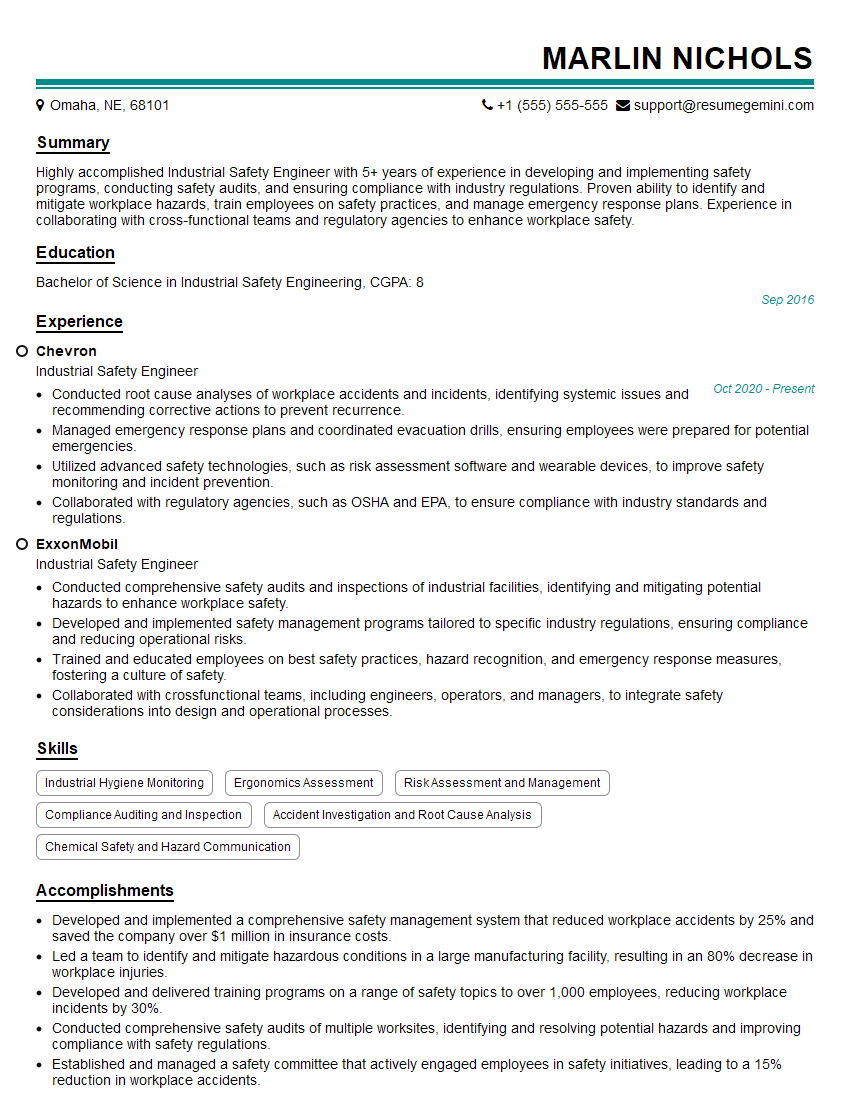
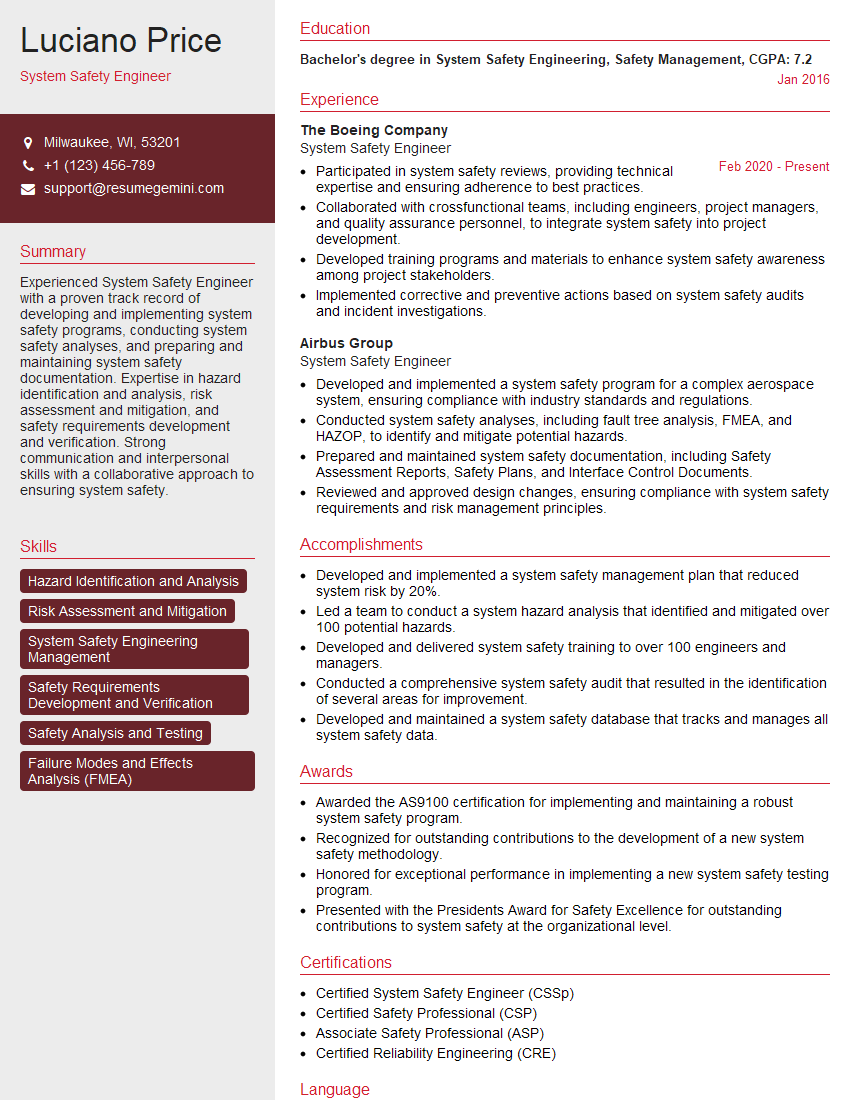
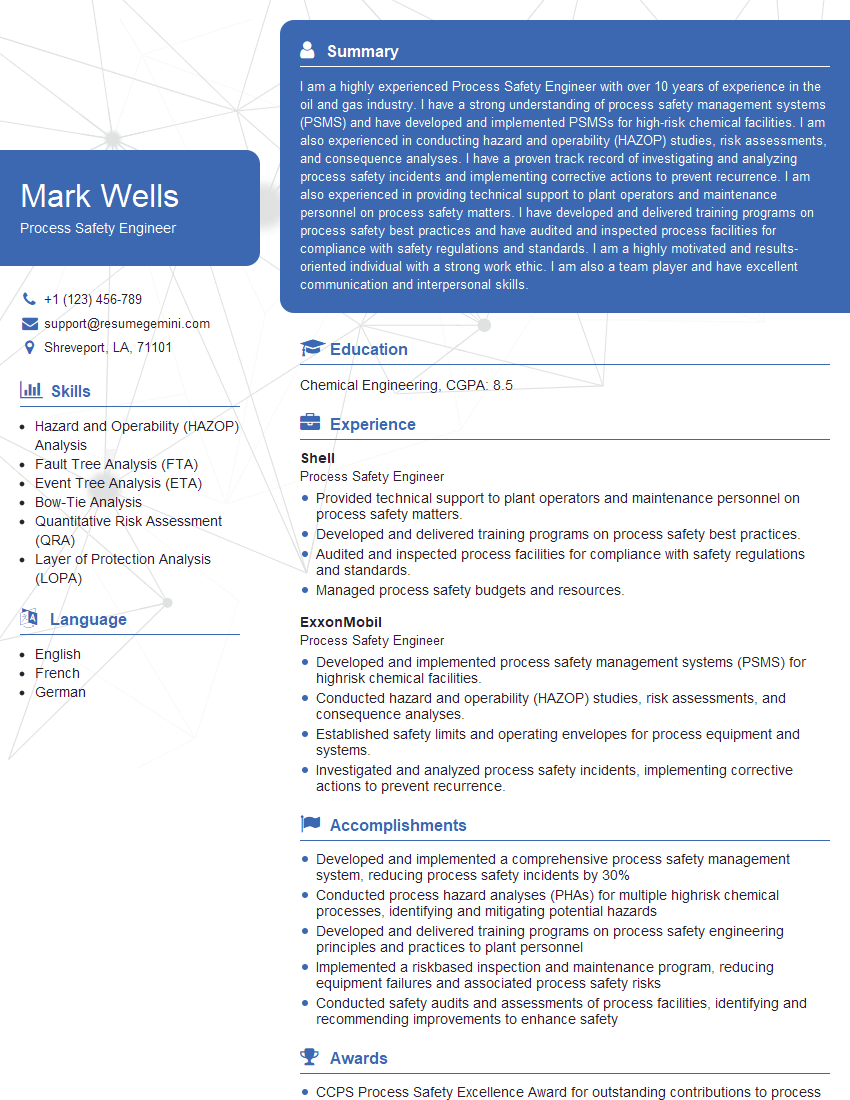
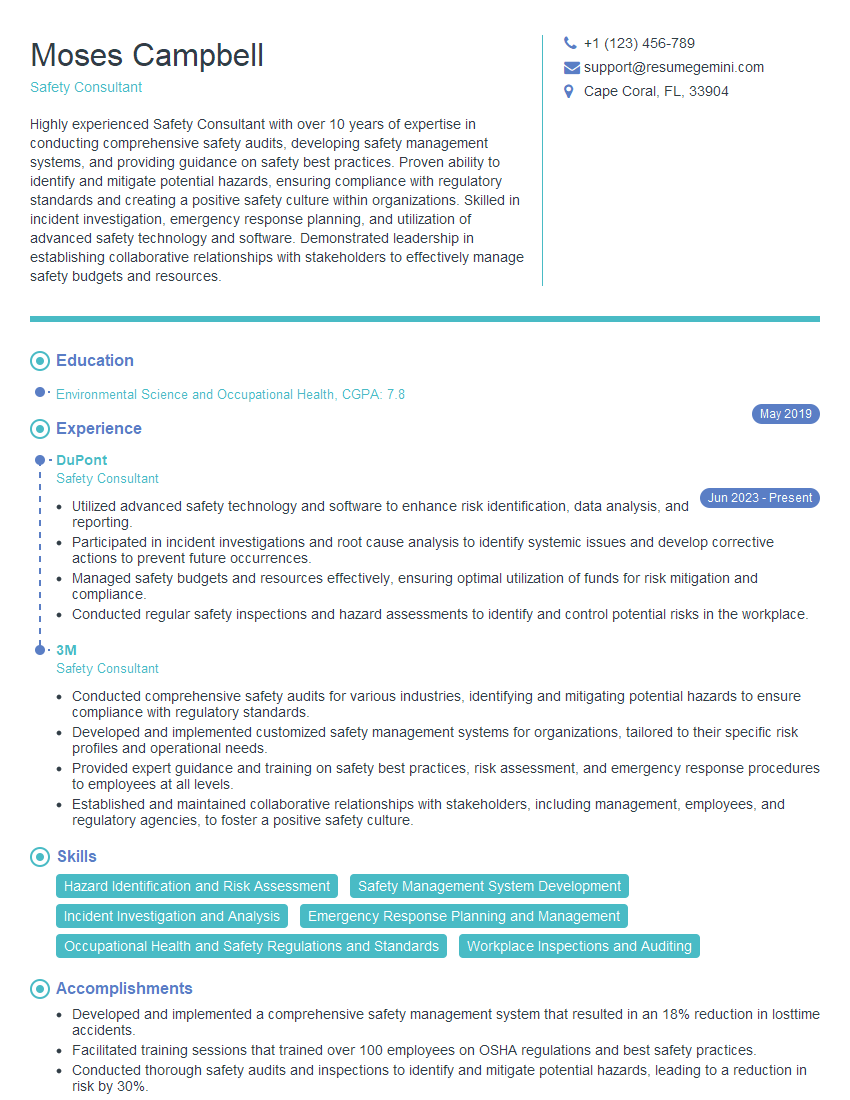
Mastering Functional Safety Analysis and Assessment opens doors to exciting and rewarding career opportunities in various high-integrity industries. Demonstrating your expertise effectively is crucial, and a well-crafted resume is your first step. An ATS-friendly resume increases your chances of getting your application noticed. To help you build a strong and impactful resume, we encourage you to explore ResumeGemini. ResumeGemini provides a user-friendly platform and offers examples of resumes tailored to Functional Safety Analysis and Assessment roles, helping you present your skills and experience in the best possible light. Take control of your career journey – build a compelling resume that showcases your expertise in Functional Safety.
Explore more articles
Users Rating of Our Blogs
Share Your Experience
We value your feedback! Please rate our content and share your thoughts (optional).
What Readers Say About Our Blog
Very informative content, great job.
good