Interviews are more than just a Q&A session—they’re a chance to prove your worth. This blog dives into essential Fundraising and Sponsorship Coordination interview questions and expert tips to help you align your answers with what hiring managers are looking for. Start preparing to shine!
Questions Asked in Fundraising and Sponsorship Coordination Interview
Q 1. Describe your experience in developing and implementing fundraising strategies.
Developing and implementing successful fundraising strategies requires a multifaceted approach. It begins with a thorough understanding of the organization’s mission, goals, and target audience. I start by conducting a needs assessment, analyzing existing resources, and identifying potential funding gaps. This informs the creation of a comprehensive fundraising plan, outlining specific strategies, timelines, and measurable objectives.
For instance, in my previous role at a non-profit focused on environmental conservation, we identified a need for increased funding for habitat restoration projects. Our strategy incorporated a diverse mix of approaches, including major gifts cultivation, corporate sponsorships, grant writing, and crowdfunding campaigns. Each approach was carefully tailored to its target audience, with personalized communication and compelling narratives highlighting the impact of donations. We utilized a CRM (Customer Relationship Management) system to track progress and manage donor interactions. The result was a significant increase in funding for our conservation projects.
A crucial element is the continuous evaluation and adaptation of the strategy. Regular monitoring of key performance indicators (KPIs) allows for timely adjustments, ensuring the strategy remains effective and aligned with the organization’s evolving needs. This iterative process is essential to maximize fundraising success.
Q 2. How do you identify and cultivate potential sponsors?
Identifying and cultivating potential sponsors involves a proactive and strategic approach. It starts with researching companies whose values align with the organization’s mission. I look for organizations that might benefit from associating their brand with a cause, such as through increased brand awareness and enhanced corporate social responsibility (CSR) initiatives.
My approach includes building a database of potential sponsors, categorized by industry, size, and philanthropic interests. This allows for targeted outreach, ensuring that proposals are relevant and engaging. I utilize online research tools, attend industry events, and leverage personal networks to identify potential sponsors. Cultivating these relationships is vital; it involves regular communication, building trust, and providing ongoing updates on the organization’s progress and impact. For example, I once secured a major sponsorship from a tech company by demonstrating how our organization’s work in STEM education directly benefited their talent pipeline. This resulted in a multi-year partnership that provided both financial support and valuable in-kind contributions.
Q 3. What methods do you employ to track and manage fundraising progress?
Tracking and managing fundraising progress requires a robust system for data collection and analysis. I rely heavily on CRM software, which allows for detailed tracking of donor information, donations, pledges, and communication history. This facilitates efficient reporting and informed decision-making. Key metrics I track include:
- Total funds raised: Overall amount of money raised against the target.
- Donor acquisition cost: Cost of acquiring a new donor.
- Donor retention rate: Percentage of donors who make repeat donations.
- Average gift size: Average donation amount.
- Campaign performance: Success rate of individual fundraising campaigns.
Regular progress reports, using both quantitative and qualitative data, are essential for keeping stakeholders informed and identifying areas for improvement. For example, if a specific campaign is underperforming, I analyze the data to pinpoint the cause, whether it be ineffective messaging, poor targeting, or logistical issues, and make necessary adjustments. This data-driven approach enables continuous optimization of the fundraising process.
Q 4. Explain your approach to building and maintaining relationships with donors.
Building and maintaining strong donor relationships is paramount to long-term fundraising success. It’s about cultivating genuine connections based on mutual respect and shared values. I approach this through personalized communication, showing sincere appreciation for their contributions, and providing regular updates on how their donations are making a difference. This includes:
- Personalized thank-you notes: Expressing gratitude promptly and sincerely.
- Regular newsletters and updates: Keeping donors informed about the organization’s work and impact.
- Donor recognition events: Celebrating donors and highlighting their contributions.
- One-on-one meetings: Building deeper relationships with major donors.
Think of it like nurturing a garden – you need to consistently tend to your relationships, providing the right amount of attention and care to ensure they flourish. For example, I once hosted a small dinner for our top donors, where they could interact directly with the beneficiaries of their giving, creating a powerful and lasting impact on their engagement.
Q 5. How do you measure the success of your fundraising campaigns?
Measuring the success of fundraising campaigns requires a clear definition of success metrics upfront. While the total funds raised is a key indicator, it’s crucial to consider other factors, including:
- Donor acquisition cost: A lower cost per new donor indicates efficiency.
- Donor retention rate: Higher retention rates indicate strong donor relationships.
- Average gift size: Increased average gift size reflects successful cultivation strategies.
- Campaign reach and engagement: Measuring the number of people reached and their level of engagement.
- Alignment with organizational goals: Did the campaign achieve its strategic objectives?
A comprehensive evaluation involves comparing the actual results against the predefined goals, analyzing the data to identify areas of strength and weakness, and using this information to refine future campaigns. For example, a campaign might have exceeded its fundraising target, but if the donor acquisition cost was excessively high, it would suggest areas for improvement in outreach and messaging.
Q 6. What experience do you have with grant writing and proposal development?
I possess significant experience in grant writing and proposal development. The process begins with identifying suitable funding opportunities, carefully reviewing the funder’s guidelines, and tailoring the proposal to precisely address their priorities. A successful grant proposal requires a compelling narrative, articulating the problem being addressed, the proposed solution, the organization’s capacity to implement the solution, and the anticipated impact.
I use a structured approach, starting with a thorough needs assessment and developing a strong logic model that clearly links activities to outcomes. I meticulously research the funder, understanding their past grants and areas of interest to create a highly targeted proposal. I always ensure the proposal is well-written, clear, concise, and free of grammatical errors. I also incorporate strong evidence and data to support the proposal’s claims. My experience includes securing grants from various foundations, government agencies, and corporate sponsors, resulting in significant funding for numerous projects.
Q 7. How do you manage a fundraising budget effectively?
Effective fundraising budget management requires meticulous planning, tracking, and reporting. I start by developing a detailed budget that allocates resources to different fundraising activities, including staff salaries, marketing and communication materials, event expenses, and technology costs. This budget needs to be realistic and align with the overall fundraising goals.
Throughout the fundraising process, I diligently track expenses against the budget, ensuring that funds are used efficiently and effectively. Regular monitoring and reporting to stakeholders are crucial, allowing for timely adjustments and preventing budget overruns. I also regularly review and refine the budget based on actual performance and changing priorities. Transparency and accountability are critical in managing a fundraising budget; clear records and regular audits ensure responsible stewardship of funds.
Q 8. Describe your experience with CRM systems in fundraising.
CRM systems are the backbone of efficient fundraising. I’ve extensively used platforms like Salesforce, Raiser’s Edge, and DonorPerfect to manage donor information, track interactions, and streamline communication. My experience goes beyond simply inputting data; I leverage these systems to segment donors based on giving history, engagement levels, and interests. This allows for personalized outreach and targeted fundraising campaigns. For instance, in a previous role, I used Salesforce to identify major gift prospects by analyzing their past donations, event attendance, and volunteer activity. This segmentation enabled us to craft tailored proposals that resonated with each individual, resulting in a significant increase in major gift contributions.
Furthermore, I’m proficient in using CRM reporting features to monitor campaign performance and identify areas for improvement. For example, I might analyze open rates and click-through rates on email campaigns to optimize messaging and engagement. This data-driven approach is crucial for maximizing fundraising ROI.
Q 9. How familiar are you with different fundraising models (e.g., major gifts, annual giving)?
I’m deeply familiar with a variety of fundraising models, each with its own strengths and target audience. Major gifts involve cultivating relationships with high-net-worth individuals capable of making significant donations, often through personalized proposals and cultivation events. Annual giving focuses on building a broad base of recurring support through direct mail, email, and online platforms. I’ve also worked with planned giving, which involves securing future donations through bequests or trusts, ensuring long-term financial sustainability. My experience also includes corporate sponsorships, grants, and crowdfunding, enabling me to develop a comprehensive fundraising strategy that leverages a diverse range of approaches.
For example, in one organization, I successfully implemented a comprehensive annual giving program that increased recurring donations by 25% within a year by segmenting donors and implementing personalized email campaigns. In another, I secured a major gift of $1 million through a carefully cultivated relationship with a high-net-worth individual whose values aligned with the organization’s mission.
Q 10. How do you handle objections or challenges from potential sponsors?
Handling objections from potential sponsors requires a proactive, solutions-oriented approach. I begin by actively listening to their concerns and acknowledging their perspective. This builds trust and demonstrates respect. I then address their objections directly, providing clear and concise answers based on facts and data. Sometimes, objections stem from budget constraints; in these cases, I might propose alternative sponsorship levels or offer tailored benefits to better align with their budget. Other times, the objection might be about a lack of perceived value; here, I showcase the impact of their sponsorship, highlighting the reach and visibility it will provide.
For example, if a potential sponsor expresses concern about the reach of an event, I might present data on past attendance, media coverage, and social media engagement. If they are hesitant due to a lack of alignment with their brand values, I would clearly articulate how our mission aligns with their corporate social responsibility initiatives.
Q 11. What is your experience with event planning and fundraising?
Event planning and fundraising are intrinsically linked. I possess extensive experience in planning and executing fundraising events, from small-scale galas to large-scale conferences. My responsibilities encompass all aspects of event management, including budget development, venue selection, vendor negotiation, marketing and promotion, volunteer recruitment, and on-site management. I also develop compelling event proposals that highlight the value proposition for attendees and sponsors.
In a previous role, I organized a fundraising gala that exceeded its fundraising goal by 30%. This success was due to meticulous planning, effective marketing, and strong relationships with sponsors. I meticulously track all expenses and revenue to ensure budget compliance and maximum fundraising ROI.
Q 12. How do you prioritize different fundraising initiatives?
Prioritizing fundraising initiatives requires a strategic approach that considers various factors. I typically use a framework that balances urgency, potential impact, and resource allocation. High-impact initiatives with a shorter timeframe (like a grant application deadline) are prioritized over initiatives with longer timelines but potentially lower returns. I also consider resource constraints, aligning the chosen initiatives with available staff capacity, expertise, and budget. A SWOT analysis helps identify strengths, weaknesses, opportunities, and threats for each initiative, ensuring a well-informed prioritization process.
This involves creating a prioritized project list using a matrix, weighing criteria like fundraising potential, alignment with organizational goals, and resource requirements. This methodical approach ensures that limited resources are focused on initiatives with the greatest impact.
Q 13. Describe your experience in cultivating relationships with corporate sponsors.
Cultivating strong relationships with corporate sponsors is crucial for sustainable fundraising. I approach this with a long-term perspective, building rapport and understanding their business goals and CSR initiatives. I tailor sponsorship proposals to highlight how the partnership can benefit both parties, showcasing the value proposition for the sponsor, such as increased brand visibility, employee engagement opportunities, and positive media coverage. Regular communication, personalized updates, and post-event reports build trust and demonstrate transparency.
For instance, I once secured a multi-year sponsorship with a major corporation by demonstrating how our programs would directly support their commitment to sustainable development goals, attracting positive publicity and enhancing their brand reputation.
Q 14. What is your understanding of donor stewardship?
Donor stewardship is the art of nurturing and appreciating donors, extending beyond the transactional aspect of receiving a donation. It involves building a long-term relationship through personalized communication, acknowledging their contributions, and demonstrating the impact of their generosity. This might include thank-you notes, regular updates on program progress, invitations to exclusive events, or reports detailing how their donations made a difference. Effective donor stewardship increases donor loyalty, encourages repeat donations, and fosters a sense of community among supporters.
A key element is providing transparent reporting to donors, showing them exactly how their contribution has been used and the positive outcomes it has achieved. This builds trust and strengthens the relationship, making them more likely to continue supporting the organization.
Q 15. How do you analyze fundraising data to inform future strategies?
Analyzing fundraising data is crucial for optimizing future strategies. It’s not just about looking at the total dollars raised; it’s about understanding why those dollars were raised and identifying areas for improvement. I use a multi-faceted approach.
- Quantitative Analysis: I start by examining key metrics like total donations, average gift size, donor acquisition cost, and retention rates. This often involves using spreadsheets and data visualization tools to identify trends and patterns. For instance, I might create a chart showing donation amounts over time to pinpoint seasonal fluctuations or the impact of specific campaigns.
- Qualitative Analysis: Equally important is understanding the ‘why’ behind the numbers. This involves analyzing donor feedback surveys, reviewing campaign reports, and conducting interviews with key stakeholders. This helps uncover insights about donor motivations, satisfaction levels, and areas where the organization fell short.
- Segmentation Analysis: I segment donors based on demographics, giving history, and engagement levels to tailor future strategies. For instance, major donors might require a more personalized approach than first-time givers. This allows me to develop targeted communication plans and fundraising appeals.
- Attribution Modeling: Understanding which channels (e.g., email, social media, events) are most effective in driving donations is vital. This requires analyzing the data to determine the return on investment (ROI) of different fundraising activities.
By combining quantitative and qualitative data, I build a comprehensive picture of what works and what doesn’t, allowing me to refine our approach and maximize fundraising success.
Career Expert Tips:
- Ace those interviews! Prepare effectively by reviewing the Top 50 Most Common Interview Questions on ResumeGemini.
- Navigate your job search with confidence! Explore a wide range of Career Tips on ResumeGemini. Learn about common challenges and recommendations to overcome them.
- Craft the perfect resume! Master the Art of Resume Writing with ResumeGemini’s guide. Showcase your unique qualifications and achievements effectively.
- Don’t miss out on holiday savings! Build your dream resume with ResumeGemini’s ATS optimized templates.
Q 16. Describe a successful fundraising campaign you’ve managed.
One successful campaign I managed was a crowdfunding initiative for a local animal shelter. The shelter needed renovations to improve the animals’ living conditions. We set a fundraising goal of $50,000.
- Strategic Planning: We developed a compelling narrative highlighting the impact of the renovations on the animals’ well-being and the shelter’s capacity to help more animals in need. We also created high-quality visuals (photos and videos) showcasing the animals and the current state of the facility.
- Multi-Channel Approach: We employed a multi-channel strategy, utilizing social media, email marketing, and a dedicated crowdfunding platform. Each channel had its own unique content tailored to the platform’s audience. For example, social media posts were shorter and visually engaging, while emails provided more detailed information.
- Donor Engagement: We regularly updated donors on progress and shared stories of impact, keeping them engaged and motivated to contribute. We also offered various reward tiers, such as event invitations and personalized thank-you notes, to incentivize higher donations.
- Partnerships: We collaborated with local businesses and influencers to expand our reach and build awareness for the campaign. This included cross-promotional activities and joint social media campaigns.
The campaign exceeded its goal, raising over $65,000. This success was a result of a meticulously planned strategy, consistent communication, and strong community engagement.
Q 17. How do you adapt your fundraising approach to different donor segments?
Adapting the fundraising approach to different donor segments is critical for maximizing results. A ‘one-size-fits-all’ approach rarely works. I personalize my strategies based on a donor’s giving history, interests, and capacity.
- Major Donors: These donors typically require a more personal and tailored approach. This might involve building a relationship through one-on-one meetings, personalized communications, and invitations to exclusive events. I might also discuss specific project proposals tailored to their philanthropic interests.
- Recurring Donors: These donors appreciate consistent updates and recognition of their ongoing support. I focus on demonstrating the impact of their contributions and offering various ways to deepen their engagement.
- First-Time Donors: The focus here is on building trust and demonstrating the organization’s impact. I use compelling storytelling, clear communication, and easy-to-use donation mechanisms to encourage repeat giving.
- Corporate Sponsors: My approach with corporate sponsors involves identifying shared values and mutually beneficial partnerships. This might involve sponsorship packages that align with their brand image and provide various marketing opportunities.
By carefully segmenting donors and tailoring our communications and appeals, we can significantly improve our fundraising effectiveness and build stronger relationships with our supporters.
Q 18. What is your experience with prospect research?
Prospect research is a cornerstone of successful fundraising. It involves identifying and evaluating potential donors who align with the organization’s mission and have the capacity to make significant contributions. My experience includes:
- Utilizing Online Resources: I leverage online databases like GuideStar, Foundation Center, and LinkedIn to gather information about potential donors’ wealth, philanthropic interests, and past giving history.
- Analyzing Public Records: I review public records, including news articles, social media profiles, and company websites, to gain a deeper understanding of prospective donors’ values and priorities.
- Developing Donor Profiles: I create comprehensive profiles for each prospect, summarizing their giving patterns, philanthropic interests, and potential areas of alignment with our organization’s mission.
- Cultivating Relationships: Once promising prospects are identified, I work to cultivate relationships through personalized communications and strategic interactions to build trust and nurture their interest in supporting our cause.
Effective prospect research significantly increases the likelihood of securing major gifts and securing lasting relationships with donors. It moves beyond simply identifying individuals with wealth; it involves a deep understanding of their motivations and aligning those motivations with the organization’s mission.
Q 19. How familiar are you with relevant legal and ethical guidelines in fundraising?
I am very familiar with relevant legal and ethical guidelines in fundraising. Compliance is paramount. My knowledge encompasses:
- Donor Privacy: I meticulously adhere to all regulations concerning the protection of donor information, including GDPR, CCPA, and other relevant privacy laws. This includes securing donor data, obtaining consent for communication, and only using data for the intended purposes.
- Transparency and Disclosure: I ensure complete transparency in all fundraising communications, clearly outlining how donations will be used and providing regular updates on progress. I avoid misleading or deceptive practices.
- Solicitation Regulations: I understand and comply with all relevant regulations governing the solicitation of donations, including rules regarding charitable registration and reporting requirements.
- Conflict of Interest: I am acutely aware of potential conflicts of interest and maintain strict ethical standards to prevent any misuse of funds or influence peddling.
Maintaining ethical and legal compliance builds trust with donors, strengthens the organization’s reputation, and protects its legal standing.
Q 20. How do you handle sensitive information related to donors?
Handling sensitive donor information requires stringent protocols to ensure confidentiality and security. My approach includes:
- Data Encryption: All donor data is encrypted both in transit and at rest using industry-standard security measures.
- Access Control: Access to donor information is strictly controlled and limited to authorized personnel on a need-to-know basis. We utilize role-based access control to manage permissions.
- Data Security Policies: We have comprehensive data security policies and procedures in place, including regular security audits and employee training on data protection best practices.
- Data Breach Response Plan: We have a detailed plan in place to handle any potential data breaches, including procedures for notification and remediation.
Protecting donor privacy is not just an ethical imperative; it’s a legal requirement. A breach of trust can severely damage an organization’s reputation and lead to significant legal consequences.
Q 21. Describe your experience with online fundraising platforms.
I have extensive experience with various online fundraising platforms, including:
- Crowdfunding Platforms (e.g., GoFundMe, Kickstarter): I’ve used these platforms to launch successful campaigns, leveraging their built-in marketing tools and social sharing capabilities.
- Donation Processing Platforms (e.g., DonorBox, PayPal Giving Fund): I’m proficient in setting up and managing online donation forms, integrating them with CRM systems, and tracking donation data.
- Peer-to-Peer Fundraising Platforms (e.g., Classy, Razoo): I’ve utilized these platforms to empower individuals to raise funds on behalf of the organization, expanding our reach and engagement.
My expertise extends beyond simply using the platforms; I understand how to optimize them for maximum impact, utilizing features like email integration, social media sharing, and reporting dashboards to track progress and analyze results. I also understand the importance of user-friendly design and a seamless donation process to encourage giving.
Q 22. How do you develop compelling fundraising proposals?
Developing a compelling fundraising proposal is like crafting a persuasive story that resonates with potential donors. It needs to clearly articulate the need, showcase the impact of your organization’s work, and demonstrate how their contribution will make a difference.
- Clearly define the problem: Start by painting a vivid picture of the issue you’re addressing. Use statistics, anecdotes, and compelling visuals to highlight the urgency and scale of the problem.
- Showcase your solution: Explain how your organization is tackling the problem and the positive impact you’re creating. Use data to demonstrate your effectiveness and highlight past successes.
- Articulate the ask: Specify the amount of funding you need, and explain how it will be used. Be transparent about your budget and how the funds will directly contribute to achieving your goals.
- Highlight the impact: Emphasize the transformative effect of the donation, demonstrating the ripple effect of their contribution. For example, show how a specific donation will support a particular project or help a specific number of individuals.
- Build a strong call to action: Make it easy for potential donors to contribute. Include clear instructions on how to donate, whether online, by mail, or through other channels.
For example, instead of simply stating ‘We need $10,000 for our program’, you could say ‘With your $10,000 donation, we can provide clean water to 500 families in need, improving their health and quality of life.’ This makes the donation more tangible and impactful.
Q 23. What are your strategies for securing long-term funding?
Securing long-term funding requires building strong, trusting relationships with donors and developing diverse funding streams. It’s about moving beyond a transactional approach to fostering genuine partnerships.
- Cultivate relationships with major donors: Invest time in identifying and nurturing relationships with individuals and foundations who align with your mission. Regular communication, personalized updates, and opportunities for engagement are key.
- Diversify funding sources: Don’t rely solely on individual donations. Explore grants, corporate sponsorships, government funding, and crowdfunding platforms to create a more resilient funding model.
- Develop a robust endowment: An endowment provides a sustainable source of funding for future projects. This requires a long-term strategy focused on building a substantial corpus of invested funds.
- Demonstrate impact and transparency: Regular reporting on progress and impact is crucial to maintaining donor trust. Show how their contributions are making a difference, and be transparent about your financial management.
- Create a compelling narrative: Develop a clear and consistent message that resonates with potential funders, highlighting your organization’s vision, mission, and long-term goals.
For instance, a successful long-term funding strategy might involve securing a major grant from a foundation, cultivating several high-value individual donors, and establishing a small endowment to support operational costs.
Q 24. How do you build a strong case for support?
Building a strong case for support involves clearly communicating the ‘why’ behind your fundraising efforts. It’s about connecting emotionally with potential donors and demonstrating the real-world impact of their contribution.
- Tell a compelling story: Use narratives to connect with potential donors on an emotional level. Share stories of individuals whose lives have been positively impacted by your work.
- Use data to support your claims: Provide evidence to demonstrate the effectiveness of your programs. Statistics, testimonials, and case studies can strengthen your case significantly.
- Highlight the need: Clearly articulate the problem you’re addressing and the urgency of the situation. Explain why your organization is uniquely positioned to address it.
- Demonstrate impact: Quantify the results of your efforts whenever possible. Show how donations have led to tangible improvements in the lives of the people you serve.
- Show transparency and accountability: Be upfront about how donations will be used and how you will measure success. Provide regular updates and reports to keep donors informed.
For example, instead of saying ‘We help people,’ you might say ‘We’ve helped 1000 families find stable housing in the past year, reducing homelessness by 15% in our community.’ This adds quantifiable results to a compelling narrative.
Q 25. Describe your understanding of different types of sponsorship packages.
Sponsorship packages offer different levels of engagement and benefits for sponsors, aligning with their marketing objectives and budgets. They are tailored to attract various levels of investment.
- Title Sponsorship: This is the highest level, offering exclusive branding rights and significant visibility.
- Presenting Sponsorship: A prominent role, but often shared with other sponsors.
- Category Sponsorship: Sponsors a specific aspect of an event, like refreshments or entertainment.
- In-Kind Sponsorship: Sponsors provide goods or services instead of cash, like venue space or printing.
- Tiered Packages: Offer a range of options at different price points, each with increasing benefits and visibility.
A well-structured sponsorship package will clearly outline the benefits of each level (e.g., logo placement, advertising opportunities, event tickets, mentions on social media) and what the sponsor receives in return for their investment.
Q 26. How do you negotiate sponsorship agreements?
Negotiating sponsorship agreements requires a delicate balance of understanding the sponsor’s needs and protecting your organization’s interests. It’s crucial to be well-prepared and have a clear understanding of your organization’s value proposition.
- Research potential sponsors: Understand their business, marketing goals, and target audience.
- Develop a compelling sponsorship proposal: Clearly outline the benefits for the sponsor and what you are offering in return for their investment.
- Be flexible and creative: Consider offering a range of sponsorship packages and be open to negotiating different elements of the agreement.
- Clearly define deliverables: Spell out exactly what the sponsor will receive in exchange for their contribution (e.g., logo placement, media mentions, event tickets). Avoid ambiguity.
- Use a formal agreement: Put everything in writing to avoid misunderstandings. The agreement should include details about payment schedules, deliverables, and termination clauses.
Successful negotiation often involves finding mutually beneficial outcomes, addressing sponsor concerns, and building a strong relationship.
Q 27. How do you ensure transparency and accountability in fundraising?
Transparency and accountability are critical for building trust with donors. They need to know their donations are being used responsibly and effectively.
- Provide regular updates: Keep donors informed about your progress and how their contributions are being used. This could include newsletters, impact reports, and social media updates.
- Publish financial statements: Make your financial information readily available. Demonstrate responsible financial management and compliance with relevant regulations.
- Conduct regular audits: Independent audits can provide an objective assessment of your financial practices and build confidence with donors.
- Establish clear governance structures: Have a well-defined board of directors and clear processes for financial management to ensure accountability.
- Seek feedback and be responsive: Encourage donors to provide feedback and respond promptly to their inquiries or concerns.
Transparency fosters trust and builds long-term relationships with donors. It’s an investment in the sustainability of your fundraising efforts.
Q 28. How do you manage and motivate a fundraising team?
Managing and motivating a fundraising team requires strong leadership, clear communication, and a supportive team environment. It’s about empowering your team to achieve their fundraising goals.
- Set clear goals and expectations: Define specific, measurable, achievable, relevant, and time-bound (SMART) goals for the team.
- Provide training and support: Equip your team with the necessary skills and resources to succeed. Offer ongoing professional development opportunities.
- Foster collaboration and communication: Create a team environment where members feel comfortable sharing ideas and supporting each other.
- Recognize and reward achievements: Acknowledge individual and team successes. Celebrate milestones and acknowledge hard work.
- Promote work-life balance: Fundraising can be demanding. Encourage team members to prioritize their well-being and avoid burnout.
A motivated and well-supported fundraising team will be more effective and achieve better results. Regular team meetings, clear communication channels, and a culture of appreciation are essential for building a strong and productive fundraising team.
Key Topics to Learn for Fundraising and Sponsorship Coordination Interview
- Developing a Fundraising Strategy: Understanding the organization’s mission and needs, identifying target audiences, and crafting a compelling fundraising plan.
- Prospect Research & Identification: Utilizing databases and online resources to identify potential donors and sponsors, assessing their giving capacity and philanthropic interests.
- Cultivating Donor Relationships: Building and maintaining strong relationships with donors and sponsors through effective communication, personalized outreach, and acknowledgment of their contributions.
- Grant Writing & Proposal Development: Crafting compelling grant proposals that clearly articulate the organization’s needs, impact, and budget. Understanding different grant types and funding cycles.
- Sponsorship Acquisition & Management: Identifying potential sponsors, negotiating sponsorship packages, managing sponsor relationships, and delivering on sponsorship deliverables.
- Budget Management & Reporting: Tracking fundraising income and expenses, preparing financial reports, and demonstrating accountability to stakeholders.
- Event Planning & Execution: Organizing and managing fundraising events, from conceptualization to execution, including logistics, marketing, and volunteer management.
- Data Analysis & Reporting: Analyzing fundraising data to identify trends, measure impact, and inform future strategies. Presenting findings effectively to key stakeholders.
- Compliance & Legal Considerations: Understanding relevant regulations and best practices related to fundraising and donor privacy.
- Digital Fundraising & Social Media Strategies: Leveraging online platforms to expand reach, engage donors, and solicit donations.
Next Steps
Mastering Fundraising and Sponsorship Coordination opens doors to rewarding careers with significant impact. Your skills in relationship building, strategic planning, and financial management are highly valued across diverse sectors. To significantly increase your chances of landing your dream role, create an ATS-friendly resume that showcases your achievements and experience effectively. ResumeGemini is a trusted resource that can help you build a professional and impactful resume tailored to your specific career goals. Examples of resumes tailored to Fundraising and Sponsorship Coordination are available to guide you. Invest time in crafting a strong resume – it’s your first impression and a crucial step towards securing your next opportunity.
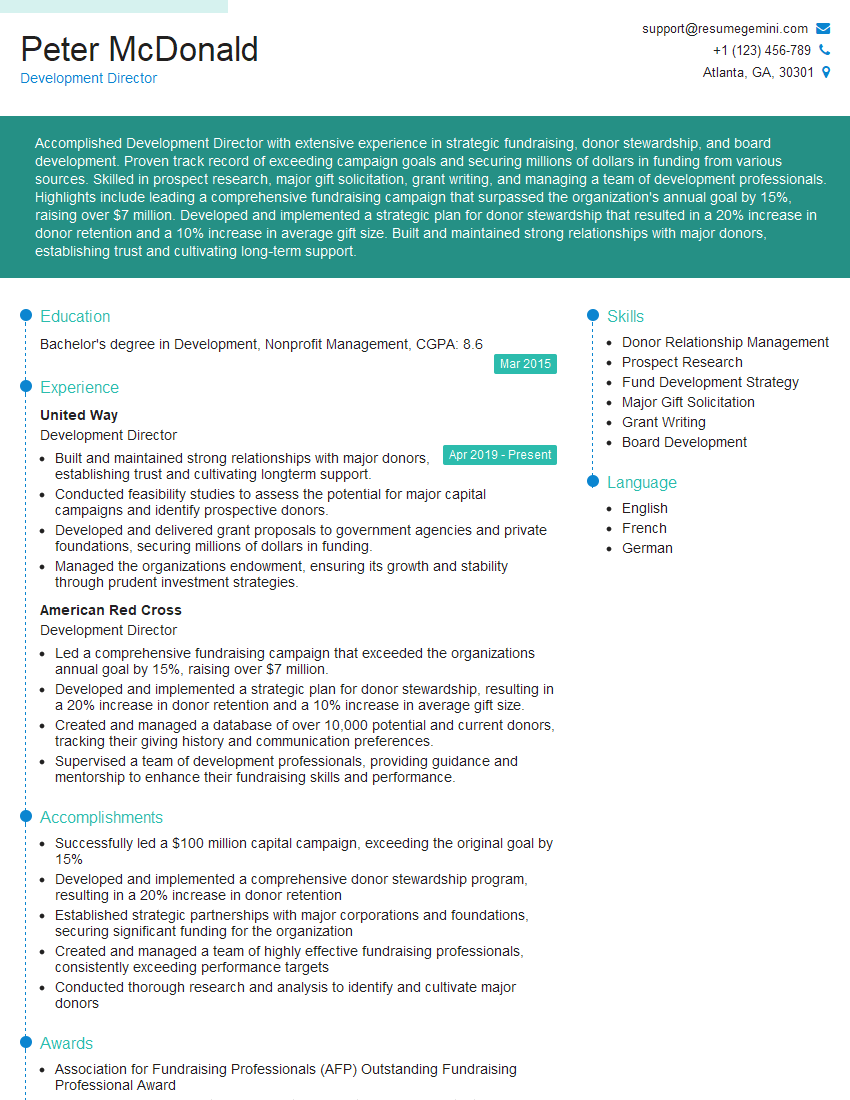
Development Director Resume Sample
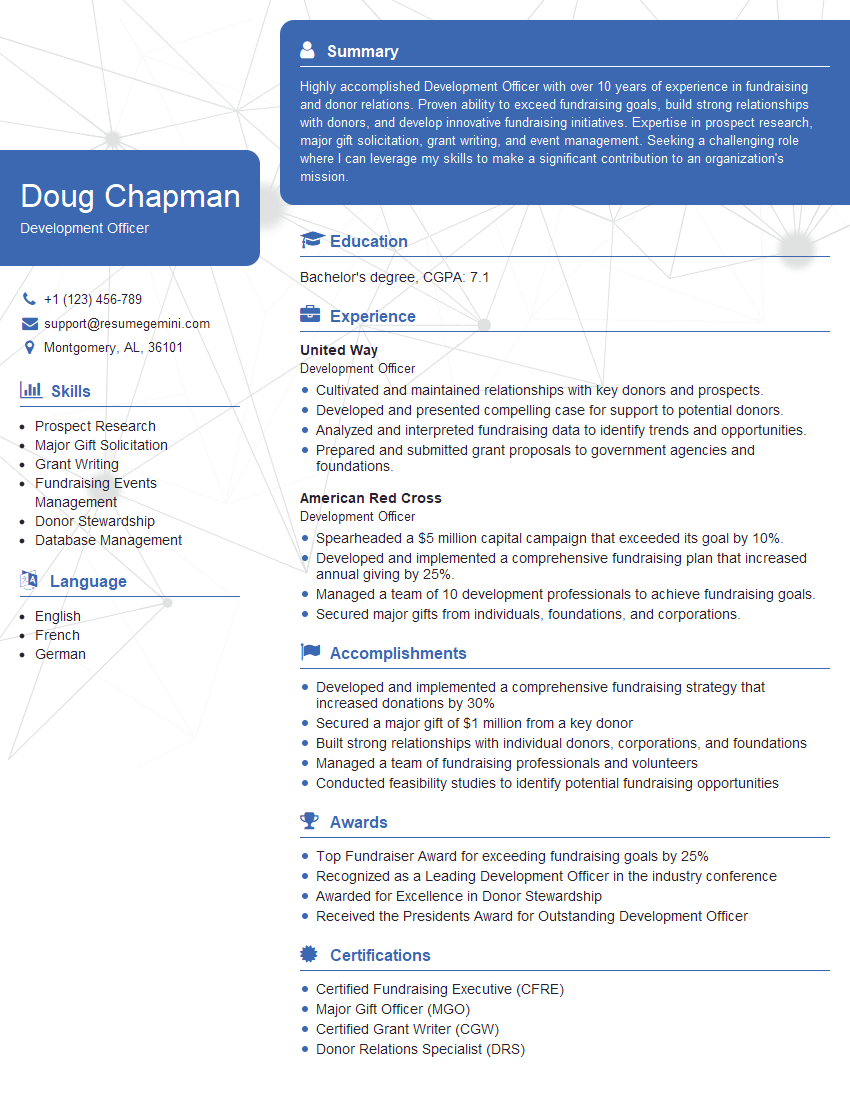
Development Officer Resume Sample
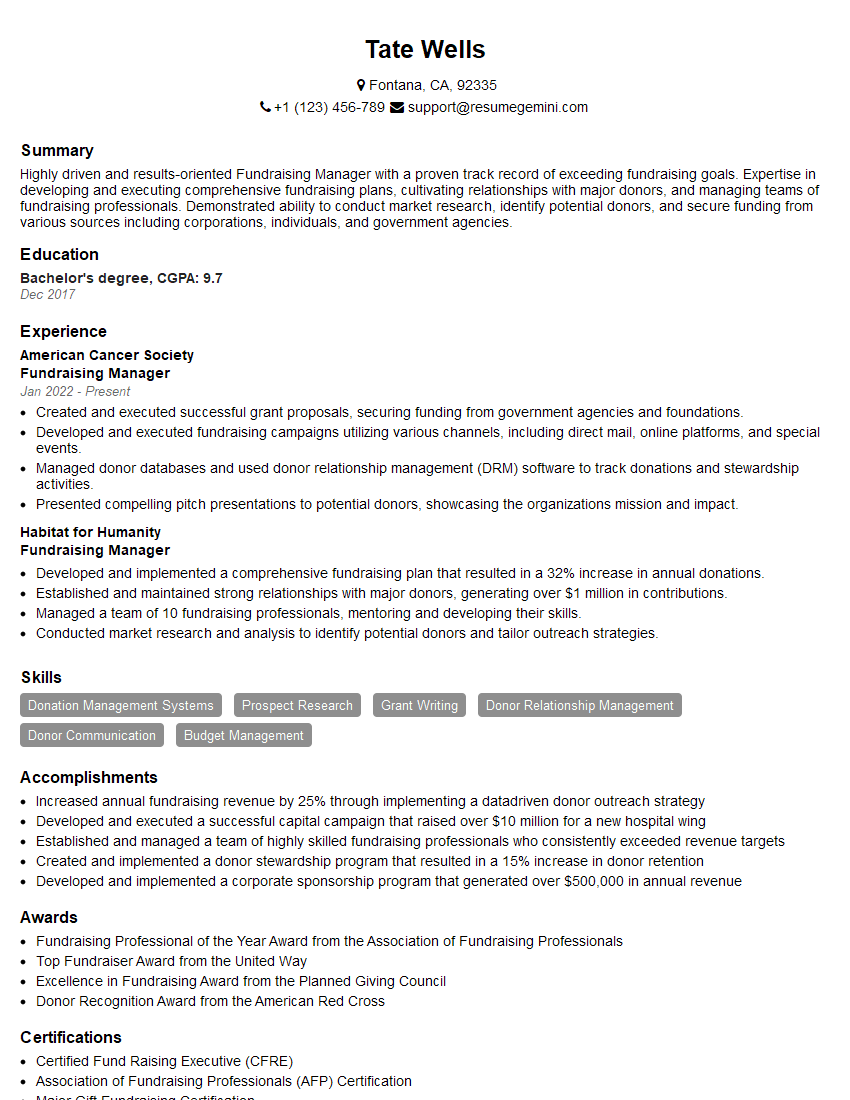
Fundraising Manager Resume Sample
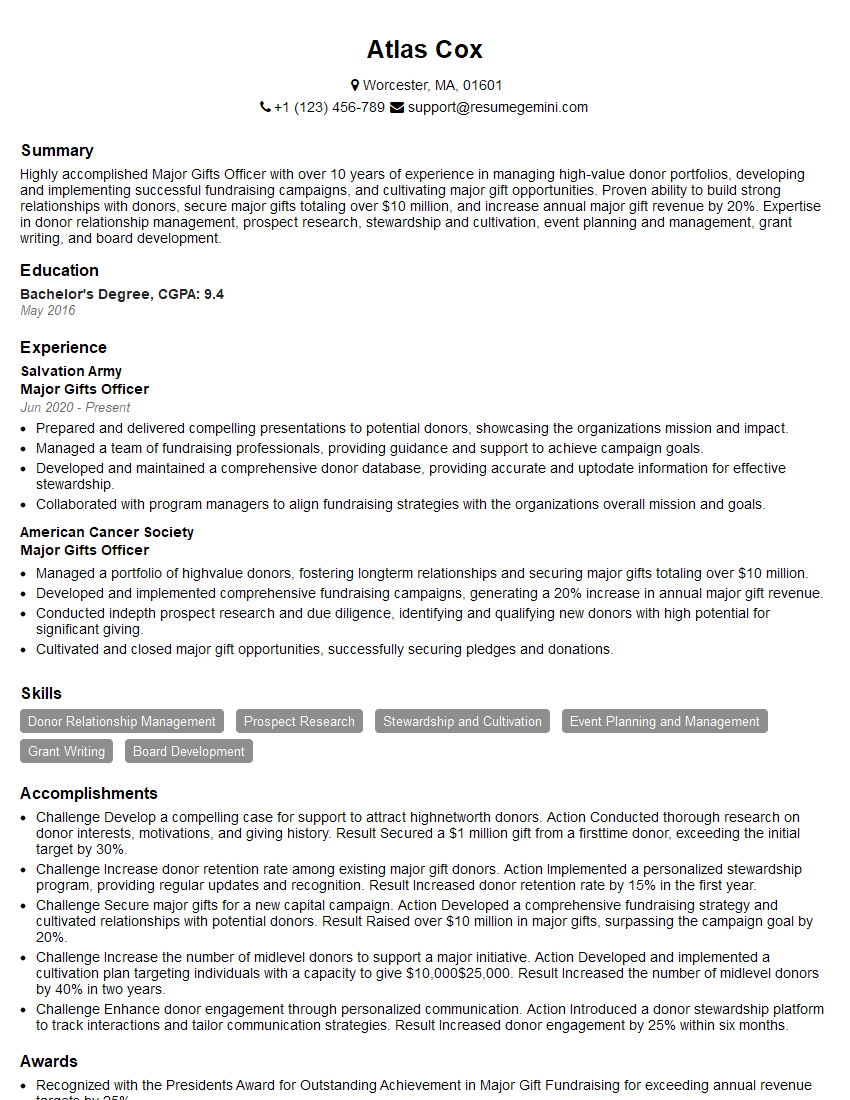
Major Gifts Officer Resume Sample
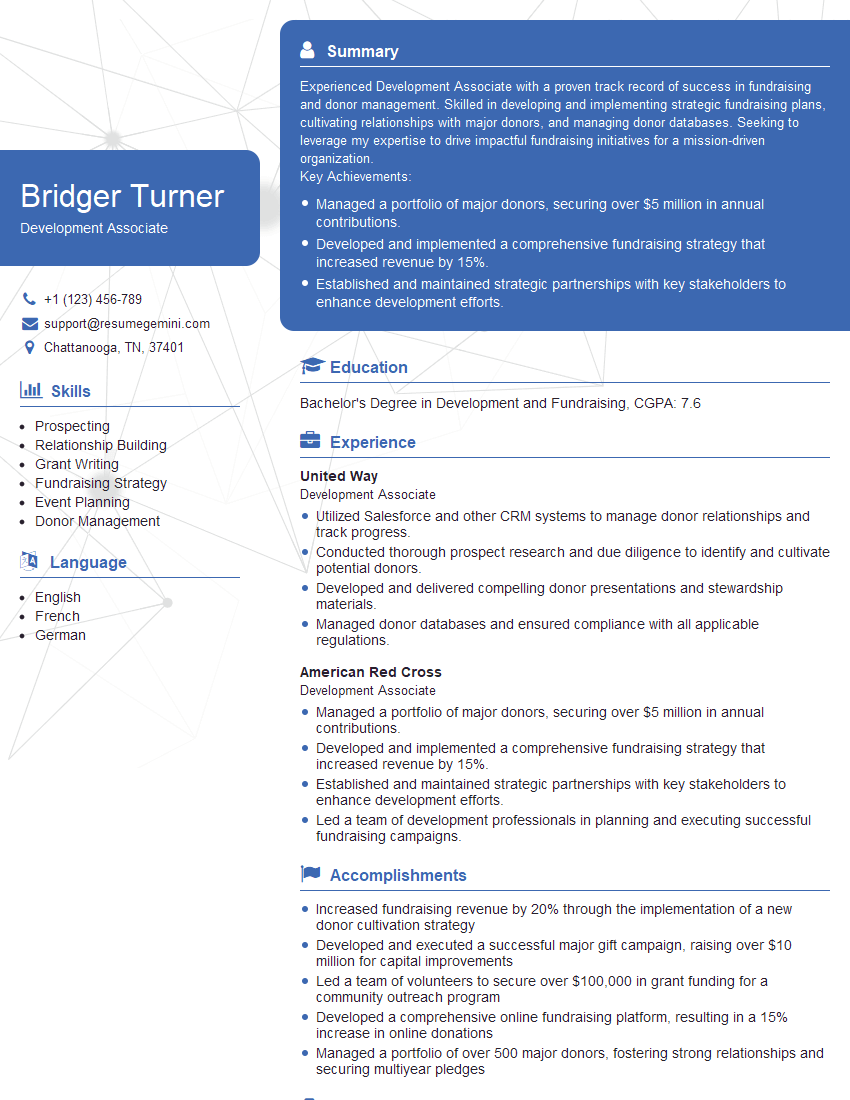
Development Associate Resume Sample
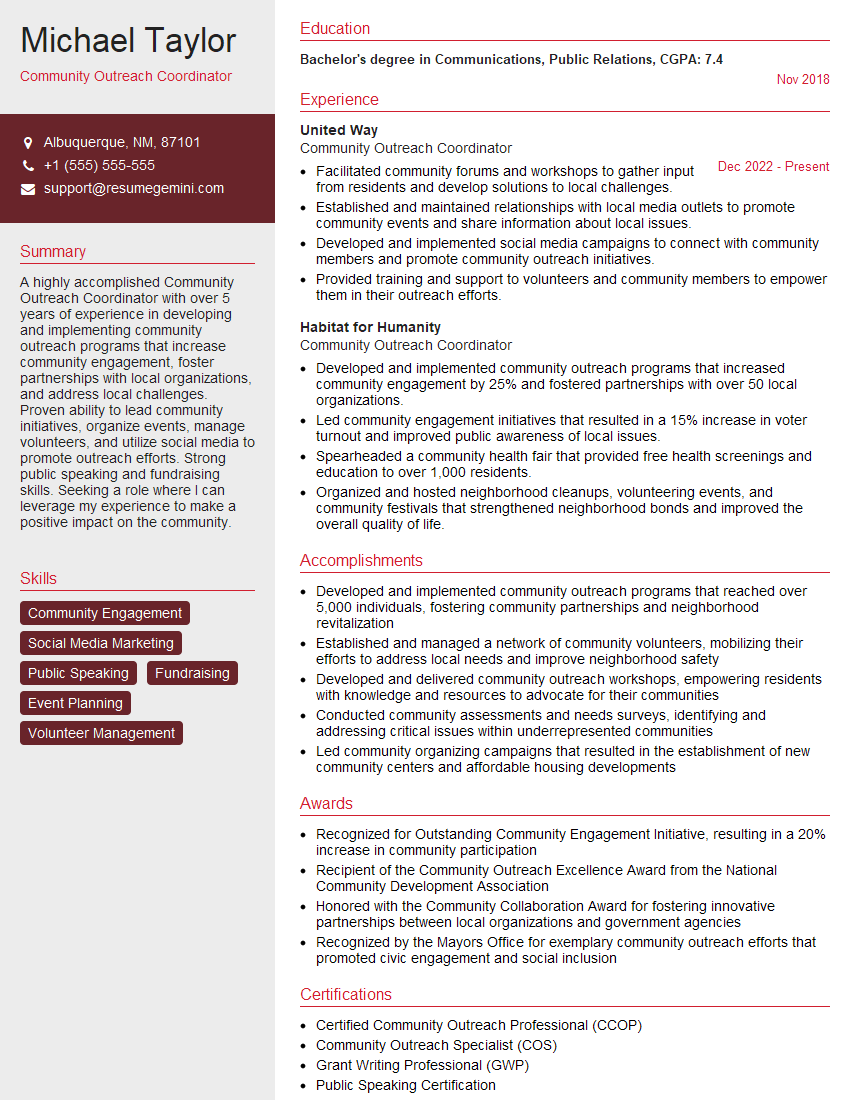
Community Outreach Coordinator Resume Sample
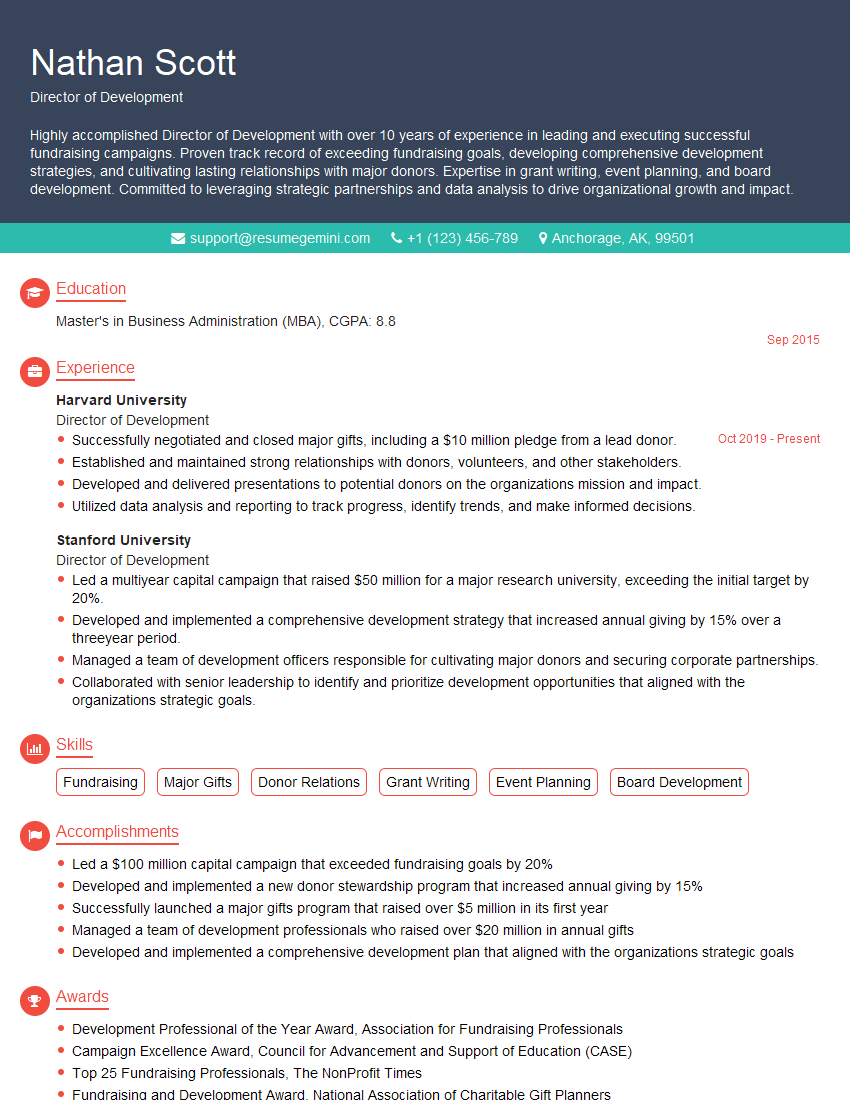
Director of Development Resume Sample
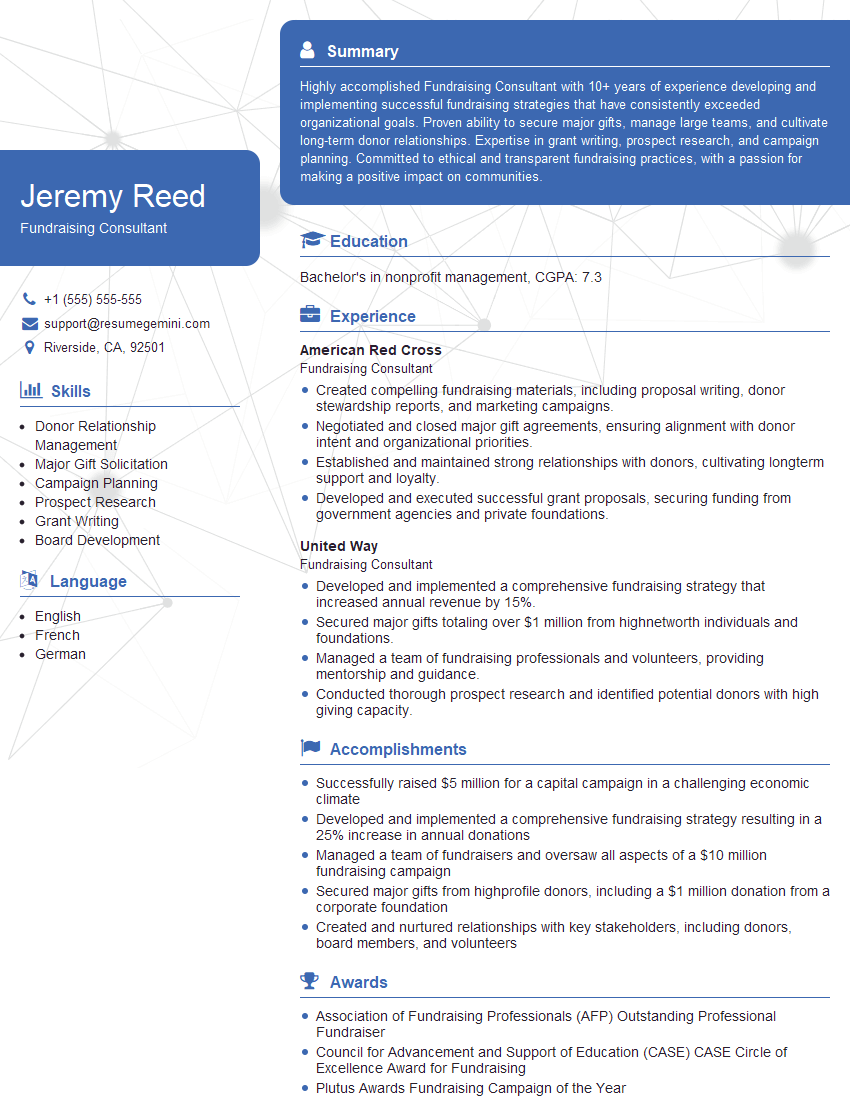
Fundraising Consultant Resume Sample
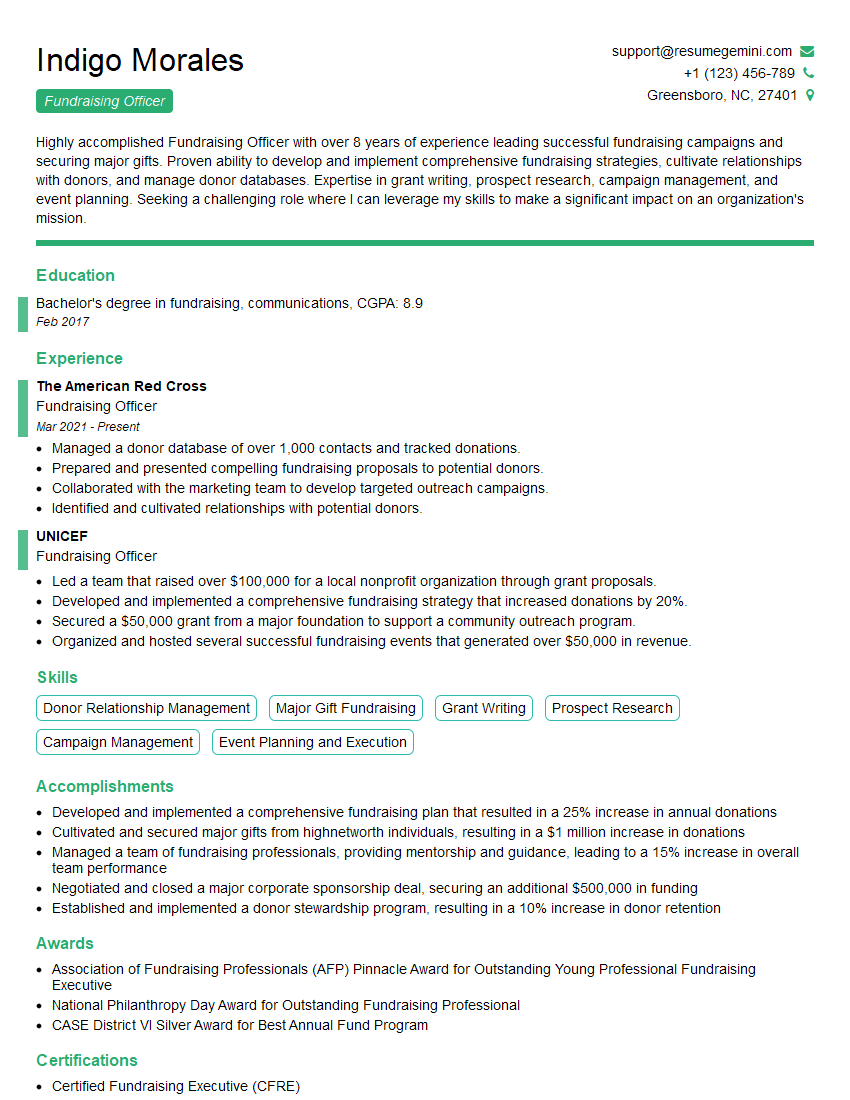
Fundraising Officer Resume Sample
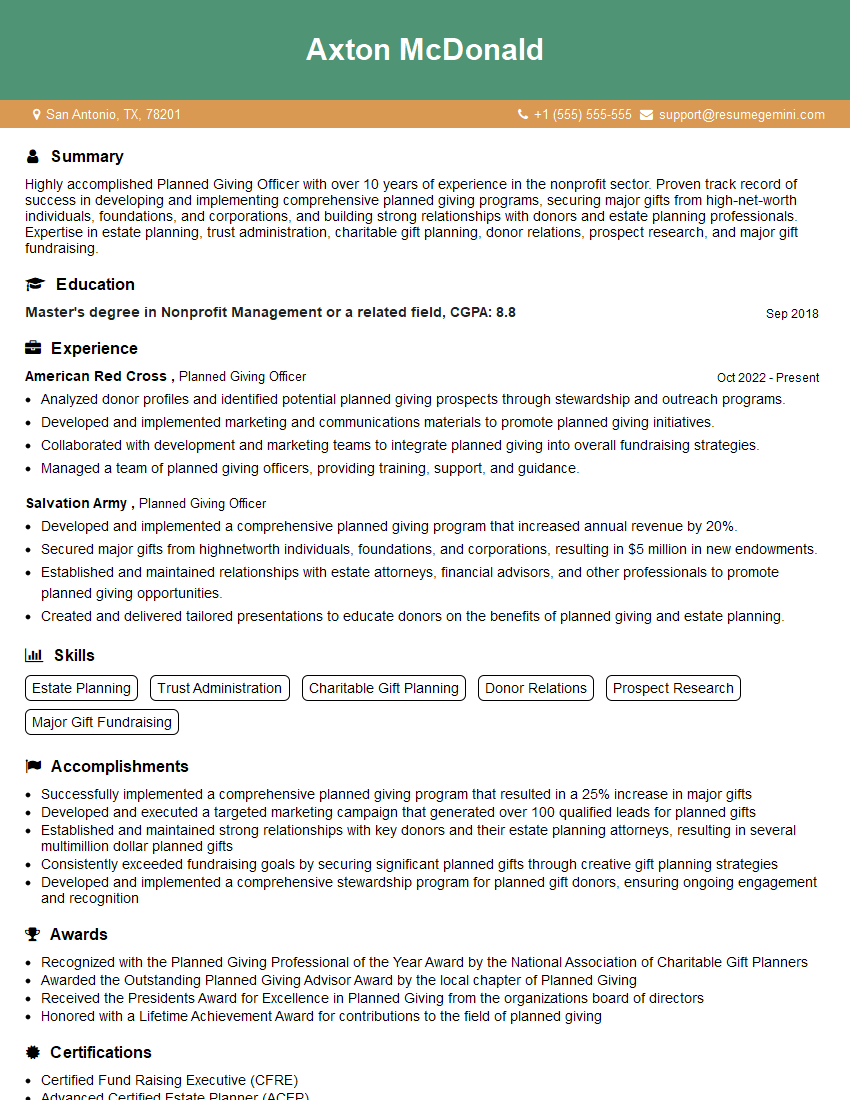
Planned Giving Officer Resume Sample
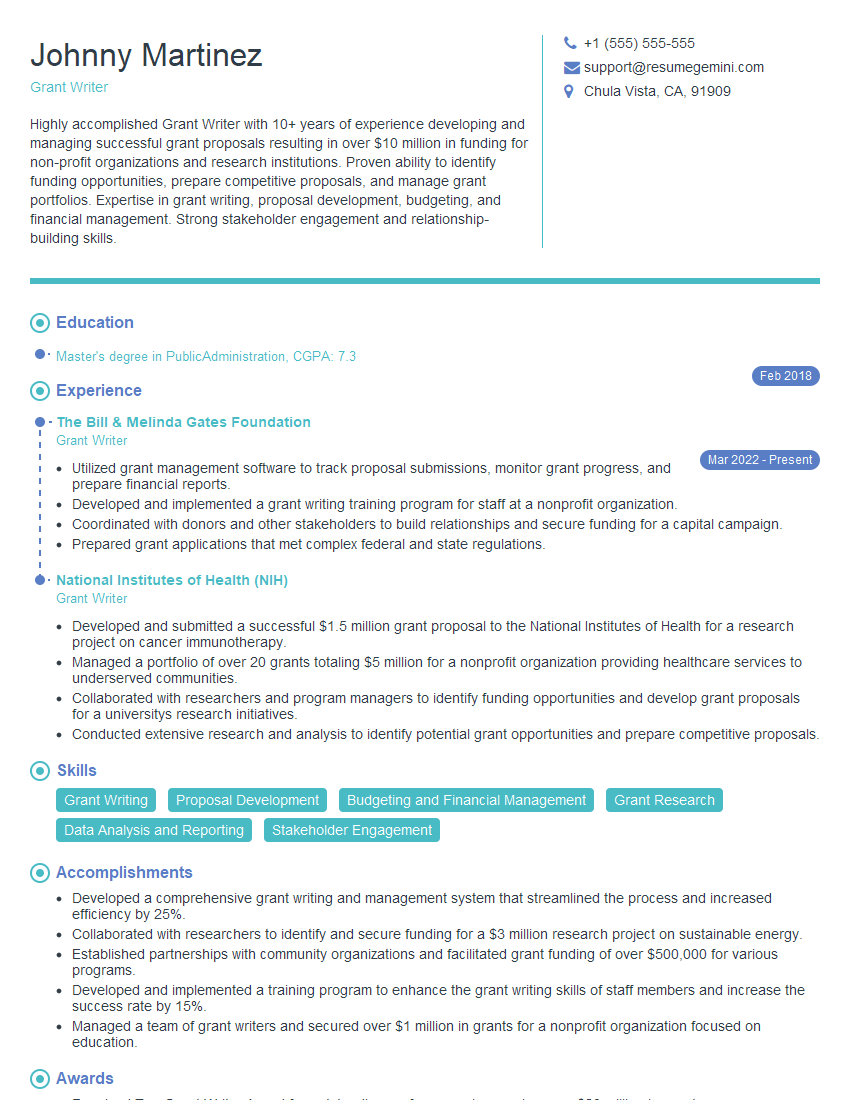
Grant Writer Resume Sample
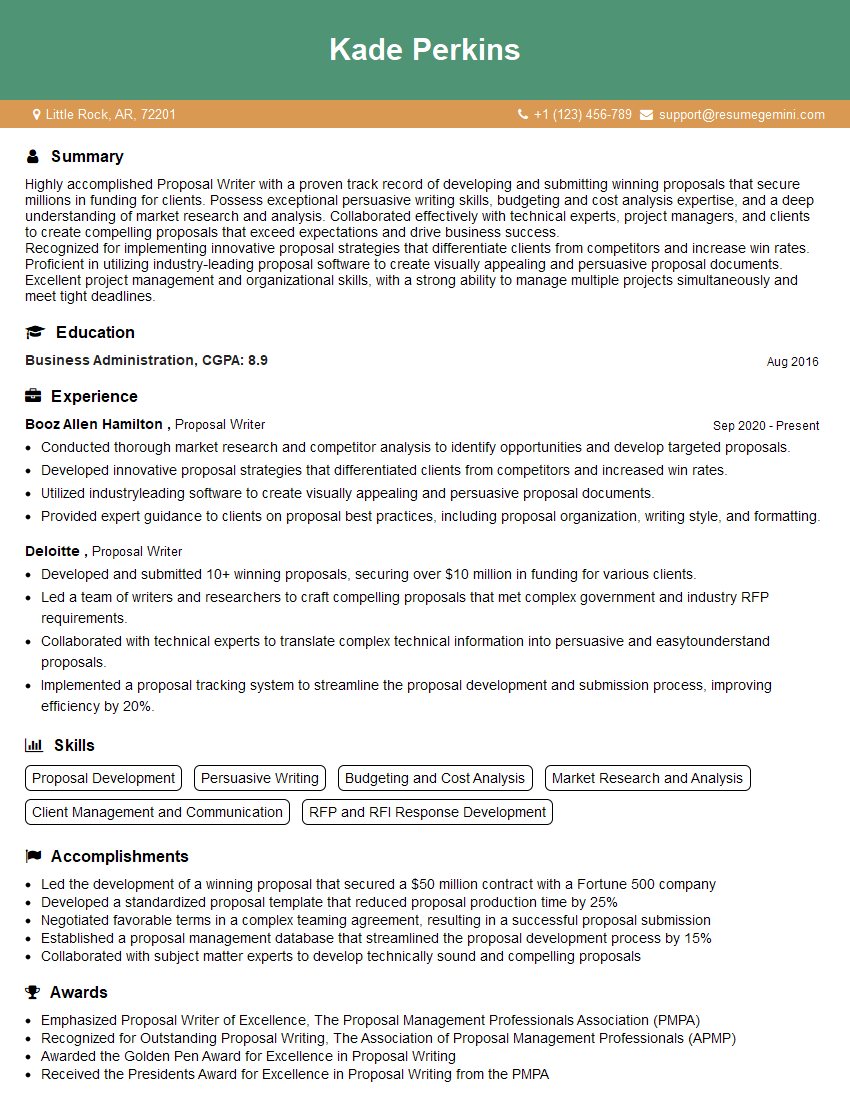
Proposal Writer Resume Sample
Explore more articles
Users Rating of Our Blogs
Share Your Experience
We value your feedback! Please rate our content and share your thoughts (optional).
What Readers Say About Our Blog
Very informative content, great job.
good