Every successful interview starts with knowing what to expect. In this blog, we’ll take you through the top Aircrew Training and Supervision interview questions, breaking them down with expert tips to help you deliver impactful answers. Step into your next interview fully prepared and ready to succeed.
Questions Asked in Aircrew Training and Supervision Interview
Q 1. Describe your experience developing and implementing aircrew training programs.
Developing and implementing effective aircrew training programs requires a systematic approach, blending theoretical knowledge with practical application. My experience spans various phases, from needs analysis and curriculum design to instructor training and program evaluation. I begin by conducting a thorough needs analysis, identifying skill gaps and performance deficiencies through reviewing accident reports, operational data, and conducting interviews with pilots and instructors. This analysis informs the development of a competency-based curriculum that outlines learning objectives, training methods, and assessment strategies.
For example, when developing a program for transitioning pilots to a new aircraft type, the curriculum would include ground school covering systems knowledge, flight simulator training focusing on emergency procedures and normal operations, and finally, flight training in the actual aircraft. This phased approach ensures a smooth transition and builds upon existing skills. Post-implementation, I regularly monitor the program’s effectiveness and make necessary adjustments based on performance data and feedback from instructors and trainees.
Q 2. How do you assess the effectiveness of an aircrew training program?
Assessing the effectiveness of an aircrew training program requires a multi-faceted approach encompassing both formative and summative evaluations. Formative evaluation occurs throughout the training process, using methods like observation of training sessions, quizzes, and simulator exercises to identify areas needing improvement. This allows for timely adjustments and ensures trainees stay on track. Summative evaluation takes place at the end of the training program to measure overall effectiveness.
Key metrics include proficiency checks, written examinations, and operational performance following training. We utilize statistical analysis to track completion rates, success rates on assessments, and post-training performance data in real-world flight operations. A decrease in incidents or accidents following training is a strong indicator of success. For instance, analyzing simulator data can reveal patterns in pilot performance, highlighting specific areas for additional training or procedural improvements.
Q 3. Explain your process for identifying and addressing training deficiencies.
Identifying and addressing training deficiencies is an iterative process that requires continuous monitoring and improvement. We use a combination of methods to pinpoint weaknesses. This includes analyzing performance data from flight simulator sessions, operational reports, and feedback from instructors and aircrew. Accident investigations provide invaluable insight into potential training gaps.
Once a deficiency is identified, we analyze its root cause using techniques such as fault tree analysis. This helps determine whether the deficiency stems from inadequate training content, ineffective instruction, or other factors. Addressing the deficiency may involve revising training materials, modifying training methodologies, or implementing additional training sessions focused on the specific area of weakness. For instance, if a recurring error in emergency procedures is identified, additional simulator training with scenario-based exercises would be implemented to address the gap. Regular review and revision of training programs are vital for ensuring they remain relevant and effective.
Q 4. What methods do you employ to ensure consistent and high-quality instruction across the training team?
Ensuring consistent and high-quality instruction across a training team requires a robust instructor training and standardization program. This involves initial and recurrent training for all instructors, focusing on instructional techniques, curriculum delivery, and assessment methodologies. We utilize standardized lesson plans, training aids, and checklists to promote uniformity in instruction. Regular observation of instructors by senior personnel helps to identify and correct any inconsistencies in teaching methods or assessment practices.
Furthermore, we emphasize the importance of continuous professional development for our instructors, encouraging participation in workshops, conferences, and further education programs. Regular instructor meetings allow for knowledge sharing and collaborative problem-solving. This ensures a cohesive and high-quality training experience for all trainees, regardless of the instructor.
Q 5. How do you manage and mitigate risks associated with aircrew training?
Managing and mitigating risks associated with aircrew training is paramount. We employ a comprehensive risk management system that identifies potential hazards, assesses their likelihood and severity, and implements control measures to reduce or eliminate them. This involves risk assessments for all training activities, from ground school to flight training.
Examples of risk mitigation strategies include implementing comprehensive emergency procedures, using appropriately rated flight simulators, maintaining meticulous maintenance records for training aircraft, and conducting thorough pre-flight briefings. We continuously monitor training activities for potential hazards and implement corrective actions promptly. Regular safety audits and reviews of training programs help to identify areas for improvement and maintain a safe training environment.
Q 6. Describe your experience in using flight simulators for training purposes.
Flight simulators are indispensable tools in modern aircrew training, providing a safe and cost-effective environment to practice various maneuvers, procedures, and emergency responses. My experience encompasses the use of various simulator types, from basic flight training devices to highly sophisticated full-flight simulators. We leverage simulators to deliver a significant portion of initial and recurrent training, focusing on high-risk scenarios that might be impractical or unsafe to perform in actual aircraft.
For example, simulators allow for the realistic simulation of engine failures, instrument malfunctions, and unusual weather conditions, providing valuable experience for pilots to develop their decision-making skills and proficiency in emergency procedures. The simulator data collected during training provides valuable feedback on pilot performance, aiding in the identification of training needs and performance gaps.
Q 7. How do you adapt training methods to accommodate different learning styles?
Accommodating different learning styles is crucial for effective aircrew training. We recognize that individuals learn in various ways – visually, auditorily, kinesthetically, and through a combination of these styles. Therefore, our training programs utilize a variety of teaching methods to cater to diverse learning preferences.
For visual learners, we incorporate numerous diagrams, charts, and videos. Auditory learners benefit from lectures, discussions, and audio-based learning materials. Kinesthetic learners engage actively through hands-on activities, simulator exercises, and flight training. Furthermore, we incorporate interactive elements such as simulations, group exercises, and case studies to enhance engagement and cater to a wide range of learning styles. This multifaceted approach ensures that trainees, regardless of their preferred learning method, receive a comprehensive and effective training experience.
Q 8. How do you maintain currency and competency in your own flight skills while supervising others?
Maintaining currency and competency as a flight supervisor is paramount. It’s not just about adhering to regulations; it’s about leading by example and ensuring credibility with the trainees. My approach is multifaceted:
- Regular Proficiency Checks: I undergo regular, rigorous proficiency checks in my aircraft type, adhering to the strictest company and regulatory standards. This isn’t just a box-ticking exercise; it’s an opportunity for self-assessment and continuous improvement.
- Simulator Training: I actively participate in simulator sessions, tackling challenging scenarios and emergency procedures. This allows me to refresh my skills in a safe environment and assess my reaction time under pressure.
- Line Oriented Flight Training (LOFT): Whenever possible, I participate in LOFT exercises, which simulate real-world flight operations, including crew resource management and unexpected events. This keeps my decision-making sharp and allows for practical application of training principles.
- Mentorship and Peer Review: I actively seek feedback from experienced colleagues and engage in peer review sessions, allowing for honest critique and shared best practices. This ensures continuous learning and skill enhancement.
- Stay Current with Regulations and Technology: Staying updated on changes to regulations, safety procedures, and new technologies is essential. This ensures I remain a knowledgeable and effective supervisor.
For example, during a recent LOFT session, a simulated engine failure required quick and decisive action. My prior simulator training and recent proficiency check ensured my response was efficient and in line with best practices, demonstrating the importance of consistent training to all involved.
Q 9. Explain your experience in conducting performance reviews for aircrew members.
Performance reviews for aircrew are crucial for both individual development and overall flight safety. My approach is a balanced blend of objective assessment and constructive feedback:
- Data-Driven Assessment: I leverage flight data recorders, simulator performance data, and pilot reports to objectively assess performance. This avoids bias and provides concrete examples to discuss.
- Observation and Feedback: Direct observation during training flights and line checks is critical. I provide regular, timely feedback throughout the training process, not just during formal reviews. This helps identify areas for improvement early on.
- Structured Review Process: I follow a structured review process that includes clearly defined criteria based on company standards and regulatory requirements. The aircrew member is given the opportunity to self-evaluate prior to the formal review.
- Focus on Strengths and Areas for Improvement: The review highlights not only areas that need improvement but also the individual’s strengths, fostering a positive and constructive atmosphere. Specific examples of both are always included.
- Goal Setting: The review concludes with collaborative goal setting, outlining specific, measurable, achievable, relevant, and time-bound (SMART) goals for improvement.
For instance, during a recent review, I identified a pilot’s exceptional handling of a complex emergency procedure during a simulator exercise. However, I also noted a slight inconsistency in their communication style during crew coordination. We collaboratively developed a plan to address this, incorporating specific communication exercises and flight scenario practice.
Q 10. How do you handle conflict or disagreement within the training team?
Conflict within a training team can be detrimental to morale and efficiency. My approach emphasizes open communication, collaborative problem-solving, and respectful disagreement:
- Open Dialogue: I encourage open and honest communication between team members, creating a safe space where concerns can be raised without fear of reprisal.
- Active Listening: I actively listen to all perspectives, ensuring that every voice is heard and understood before attempting to mediate.
- Focus on Shared Goals: I remind the team of our shared goals – safe and effective training – to refocus everyone’s efforts on the common objective.
- Mediation and Facilitation: When conflict arises, I act as a mediator, facilitating a constructive discussion that focuses on finding solutions rather than assigning blame. If needed, I seek senior management support.
- Documentation: In cases of serious or persistent conflict, I maintain thorough documentation of events and resolutions to protect the team and ensure accountability.
One instance involved a disagreement between two instructors over training methodologies. By facilitating a discussion that focused on the effectiveness of each approach, we were able to identify strengths and weaknesses, eventually developing a more comprehensive training program that incorporated the best aspects of both.
Q 11. Describe your experience in creating and updating aircrew training manuals and materials.
Creating and updating aircrew training manuals and materials is a crucial part of my role. My approach is systematic and ensures clarity, accuracy, and compliance:
- Needs Assessment: Before any revisions, a thorough needs assessment is conducted to identify gaps in current materials or changes in regulations and technology. This ensures the training remains current and relevant.
- Collaboration and Subject Matter Expertise: The development process involves collaboration with other instructors, subject matter experts (SMEs), and regulatory bodies to ensure accuracy and comprehensiveness.
- Clear and Concise Language: The manuals and materials are written using clear, concise language that is easily understood by trainees of diverse backgrounds and experience levels. Jargon is minimized, and complex concepts are explained using analogies and practical examples.
- Modular Design: The training materials are designed in a modular format allowing for easy updating and adaptation to changing requirements.
- Regular Review and Updates: A rigorous review process ensures that the materials are updated regularly to reflect changes in regulations, technology, and best practices. Feedback from trainees is actively sought and incorporated.
For example, when new cockpit technology was introduced, I led the effort to create new training modules and update the existing manuals, ensuring that all trainees were fully proficient in operating the new equipment before it was implemented in operational aircraft. This involved collaborating with engineers, pilots, and regulatory bodies to incorporate both theoretical and practical knowledge.
Q 12. How do you ensure compliance with all relevant regulations and standards during training?
Compliance with regulations and standards is non-negotiable. My approach to ensure compliance is proactive and comprehensive:
- Thorough Knowledge of Regulations: I maintain a thorough and up-to-date understanding of all relevant regulations, including those issued by the relevant aviation authorities.
- Regular Audits and Inspections: I participate in and oversee regular internal audits and inspections to ensure that all training activities are in compliance with the established standards.
- Documentation and Record Keeping: Meticulous record-keeping is essential. All training activities, including student performance, are carefully documented and archived to satisfy audit requirements.
- Training Records Management: I ensure the proper maintenance of trainee records, including training completion certificates, proficiency ratings, and any remedial training undertaken.
- Continuous Monitoring and Improvement: I continuously monitor the training program for compliance and identify areas for improvement. This includes feedback from trainees, instructors, and regulatory inspections.
For example, during a recent internal audit, a minor discrepancy was identified in a training record. Immediate action was taken to correct the error, and measures were put in place to prevent similar errors from occurring in the future. This demonstrates our commitment to meticulous compliance.
Q 13. How do you utilize technology and simulation in the training program?
Technology and simulation are integral to modern aircrew training. I leverage these tools to enhance the effectiveness and safety of the training program:
- Flight Simulators: High-fidelity flight simulators provide a safe and cost-effective environment for practicing various flight maneuvers, emergency procedures, and abnormal situations. This reduces the risk associated with real-world training.
- Virtual Reality (VR) and Augmented Reality (AR): VR and AR technologies are increasingly utilized to supplement traditional training methods, offering immersive experiences and enhanced engagement.
- E-Learning Platforms: E-learning platforms provide a flexible and accessible method for delivering theoretical training, allowing trainees to learn at their own pace.
- Data Analytics: Flight simulator data, along with performance metrics from other training modules, are analyzed to identify areas for improvement in the training program itself.
- Interactive Training Aids: Various interactive training aids, such as interactive electronic flight bags, provide a flexible and engaging learning experience.
For example, we recently implemented a VR-based training module for emergency procedures. Trainees found the immersive experience significantly more engaging and effective than traditional methods, resulting in improved knowledge retention and faster proficiency.
Q 14. What strategies do you use for effective communication with trainees and senior management?
Effective communication is crucial for successful aircrew training. My strategies for communicating with trainees and senior management are tailored to the audience:
- Clear and Concise Communication: I prioritize clear and concise communication, avoiding jargon and tailoring my language to the audience’s level of understanding.
- Active Listening: Active listening is key to ensuring that I understand the trainees’ needs and concerns, while also understanding management’s expectations.
- Regular Feedback: I provide regular feedback to both trainees and senior management, keeping them informed of progress and any challenges faced.
- Multiple Communication Channels: I use a variety of communication channels, including face-to-face meetings, email, and reports, to ensure effective information dissemination.
- Transparency and Honesty: I maintain transparency and honesty in my communication, building trust and confidence with both trainees and senior management.
For instance, when a trainee struggled with a particular procedure, I used a combination of one-on-one coaching, visual aids, and practical exercises to address the issue. Simultaneously, I provided transparent updates to management, detailing the challenge, the corrective actions taken, and the expected outcome. This approach ensured both the trainee’s success and management’s confidence in the training process.
Q 15. How would you address a trainee who consistently underperforms?
Addressing consistent underperformance in a trainee requires a multi-faceted approach that focuses on identifying the root cause, providing tailored support, and fostering a growth mindset. It’s crucial to avoid simply labeling the trainee as ‘underperforming’ but instead investigate the underlying reasons.
- Initial Assessment: I’d start with a thorough review of the trainee’s performance data, including flight records, simulator sessions, and written tests. This helps pinpoint specific areas of weakness.
- One-on-One Feedback: I’d schedule a private meeting with the trainee to discuss their performance in a supportive and non-judgmental manner. The goal is to understand any challenges they are facing – whether it’s a lack of understanding of a particular concept, difficulty with a specific skill, or even personal issues impacting their focus. Open communication is vital.
- Targeted Training: Based on the assessment, I’d develop a personalized training plan addressing the specific areas needing improvement. This might involve additional instruction, focused practice sessions, or mentoring from a more experienced pilot. For example, if the issue is spatial awareness, we would incorporate more flight exercises focusing on that specific skill.
- Regular Check-ins: Consistent monitoring of progress and regular check-ins are essential. This allows for adjustments to the training plan as needed and provides opportunities for continued feedback and encouragement.
- Documentation: All interactions and progress are meticulously documented to provide a clear record of the support provided and the trainee’s response to the interventions. This is critical for both the trainee’s development and for any future performance reviews.
Ultimately, the goal is to help the trainee succeed, not to identify failure. By fostering a supportive learning environment and addressing the root causes of underperformance, we improve both individual performance and the overall safety of the flight operations.
Career Expert Tips:
- Ace those interviews! Prepare effectively by reviewing the Top 50 Most Common Interview Questions on ResumeGemini.
- Navigate your job search with confidence! Explore a wide range of Career Tips on ResumeGemini. Learn about common challenges and recommendations to overcome them.
- Craft the perfect resume! Master the Art of Resume Writing with ResumeGemini’s guide. Showcase your unique qualifications and achievements effectively.
- Don’t miss out on holiday savings! Build your dream resume with ResumeGemini’s ATS optimized templates.
Q 16. Explain your experience in evaluating training outcomes and making data-driven improvements.
Evaluating training outcomes and using data to improve programs is central to my work. I regularly employ several methods to achieve this.
- Data Collection: We collect comprehensive data throughout the training process. This includes simulator performance metrics, flight check scores, written exam results, and feedback from instructors and trainees. The data is carefully tracked and analyzed using statistical methods.
- Performance Metrics: Key performance indicators (KPIs) are established at the outset of each training program. These KPIs directly reflect the objectives of the program and allow us to quantitatively assess its effectiveness. Examples include average flight check scores, pass rates on written exams, and time to proficiency.
- Gap Analysis: Following data analysis, a thorough gap analysis is conducted to identify discrepancies between expected and actual outcomes. This might highlight areas where the training curriculum is insufficient or where specific training methods could be improved.
- Data-Driven Improvements: Based on the gap analysis, specific changes to the training program are implemented. This could involve adjusting the curriculum, introducing new training aids, modifying instructional techniques, or updating assessment methods. For instance, if data reveals that trainees struggle with a particular emergency procedure, we would revise the training materials and dedicate more time to practicing that procedure.
- Continuous Improvement Cycle: This entire process is cyclical, with continuous monitoring, evaluation, and refinement of the training program to ensure its ongoing effectiveness and alignment with evolving operational needs.
My experience shows that using data to make informed decisions ensures that training is both efficient and effective, producing highly competent and confident aircrew members.
Q 17. How do you prioritize training objectives and allocate resources effectively?
Prioritizing training objectives and allocating resources effectively requires a strategic approach balancing operational needs, regulatory requirements, and available resources.
- Needs Assessment: I begin by conducting a comprehensive needs assessment to identify the critical skills and knowledge gaps within the aircrew. This assessment considers factors like aircraft type, operational environment, and emerging technologies.
- Prioritization Matrix: I then use a prioritization matrix to rank training objectives based on their importance and urgency. This matrix typically considers factors such as risk level, operational impact, and regulatory compliance.
- Resource Allocation: Based on the prioritized objectives, I allocate resources, including personnel, time, equipment, and funds. This requires careful budgeting and resource management to ensure efficient and effective use of resources.
- Training Delivery Optimization: I explore different training delivery methods to optimize resource allocation. For example, Computer-Based Training (CBT) can be more cost-effective for certain topics than traditional classroom instruction.
- Performance Monitoring: Regular monitoring of training progress allows for timely adjustments in resource allocation to address unforeseen challenges or changing priorities. For example, if a particular training module proves to be more time-consuming than anticipated, resources may need to be reallocated to ensure timely completion.
This systematic approach ensures that resources are focused on the most critical training objectives, maximizing the effectiveness of the training program and contributing to overall operational efficiency.
Q 18. How do you foster a positive and supportive learning environment for aircrew members?
Creating a positive and supportive learning environment is essential for effective aircrew training. It fosters trust, encourages open communication, and promotes a culture of learning and safety.
- Respectful Communication: I maintain a respectful and professional demeanor at all times, ensuring that all trainees feel valued and respected. Constructive feedback is delivered in a supportive and encouraging way.
- Open Communication: Creating a culture of open communication where trainees feel comfortable expressing concerns or seeking clarification is crucial. This might involve regular informal discussions, feedback sessions, or anonymous surveys.
- Teamwork and Collaboration: Team-based exercises and simulations are used to promote teamwork and collaboration. These activities help trainees learn to work effectively as a crew and to rely on each other in challenging situations.
- Positive Reinforcement: Recognizing and rewarding achievements, both large and small, helps boost morale and confidence. Positive reinforcement fosters a growth mindset and encourages continued effort.
- Safety Culture: A strong emphasis on safety and error management creates a culture where errors are seen as learning opportunities rather than sources of blame. This approach encourages trainees to report errors without fear of reprisal, facilitating continuous improvement in safety practices.
A positive and supportive learning environment is not just about creating a pleasant atmosphere; it’s about building a culture of safety, collaboration and continuous learning that leads to the development of highly competent and safe aircrew members.
Q 19. What is your experience with different training delivery methods (e.g., CBT, classroom, OJT)?
My experience encompasses a wide range of training delivery methods, each with its own strengths and limitations.
- Classroom Instruction: This traditional method is effective for conveying theoretical knowledge and complex concepts. It allows for direct interaction with instructors and peer learning through discussions and group exercises.
- Computer-Based Training (CBT): CBT offers a flexible and cost-effective way to deliver training, particularly for repetitive tasks and procedural learning. It allows trainees to learn at their own pace and repeat modules as needed. However, it lacks the personal interaction of classroom instruction.
- On-the-Job Training (OJT): OJT provides valuable practical experience under the supervision of experienced instructors. It is particularly crucial for developing skills that require hands-on practice, such as flight operations and emergency procedures. However, OJT requires careful supervision to ensure safety and consistent training standards.
- Simulations: High-fidelity simulators provide realistic training environments for practicing emergency procedures and complex maneuvers. This minimizes risks associated with real-world practice. They are vital for building proficiency and confidence.
- Blended Learning: I frequently utilize a blended learning approach, combining various methods to cater to different learning styles and optimize training effectiveness. For example, a blended approach might combine CBT for theoretical knowledge, simulator sessions for practical application, and OJT for real-world experience.
The optimal choice of training delivery method depends on the specific training objectives, the learners’ needs, and the available resources. A well-designed training program often uses a combination of these methods to achieve maximum impact.
Q 20. Describe a time you had to deal with a safety incident during aircrew training.
During a simulator session, a trainee experienced a spatial disorientation event during a low-visibility approach. The trainee, despite proper training, became disoriented and made incorrect control inputs. While the simulator prevented any physical harm, it highlighted a critical safety concern.
- Immediate Actions: The session was immediately halted, and the trainee was debriefed to understand the sequence of events leading to the disorientation. I focused on understanding the mental processes the trainee was experiencing, not just the technical errors made.
- Root Cause Analysis: We reviewed the simulator recordings meticulously. This revealed that the trainee’s decision-making under pressure was compromised, leading to reliance on inadequate visual cues.
- Corrective Actions: Based on the root cause analysis, the training plan was revised to include additional training on spatial disorientation, enhanced decision-making in low-visibility conditions, and more emphasis on instrument flying techniques.
- Refresher Training: The trainee underwent additional refresher training, focusing specifically on spatial disorientation and emergency procedures. This included one-on-one sessions and more practice in the simulator.
- Follow-up: The trainee’s subsequent performance was closely monitored to ensure the corrective actions were effective. We used this event as a case study for the entire training cohort to emphasize the importance of situational awareness and the proper response to spatial disorientation.
This incident underscored the importance of rigorous training and robust safety protocols in aircrew training. It also highlighted the need to tailor training to address individual needs and vulnerabilities.
Q 21. How do you incorporate human factors principles into your aircrew training programs?
Human factors principles are integral to my aircrew training programs. These principles recognize that human limitations and cognitive biases can significantly affect performance and safety in the aviation environment.
- Crew Resource Management (CRM): CRM training is a cornerstone of our programs. It emphasizes effective communication, teamwork, leadership, and decision-making skills within the cockpit. Simulations are used extensively to practice crew coordination and error management.
- Situational Awareness: Training emphasizes the importance of maintaining high situational awareness – understanding the surrounding environment, the aircraft’s status, and the overall operational context. This involves developing skills in effective scanning techniques and interpreting various data sources.
- Workload Management: Training addresses the challenges of managing workload effectively, ensuring that the crew can handle demands without becoming overloaded. This involves efficient task prioritization, delegation, and automation.
- Error Management: We teach aircrew members to recognize and respond to errors effectively, promoting a just culture where errors are viewed as opportunities for learning rather than sources of blame. Emphasis is placed on developing skills for error detection, recovery, and prevention.
- Fatigue Management: Training programs incorporate strategies for managing fatigue, recognizing that fatigue significantly impacts performance and safety. This includes education about fatigue risks, sleep hygiene, and strategies for mitigating fatigue during operations.
By incorporating human factors principles, our aircrew training programs aim to equip pilots with the knowledge, skills, and attitudes necessary to perform their duties safely and effectively, considering the limitations and capabilities of human beings in the complex aviation environment.
Q 22. How do you ensure the cultural sensitivity of your training programs?
Ensuring cultural sensitivity in aircrew training is paramount for effective learning and a cohesive team environment. It’s not just about avoiding offense; it’s about creating a learning environment where every individual feels respected, understood, and valued. This involves a multi-pronged approach.
- Curriculum Review: We meticulously review all training materials – manuals, presentations, videos – to ensure they are free from bias and represent a diverse range of perspectives. We actively seek input from instructors and trainees from diverse backgrounds to identify and address any potential issues.
- Instructor Training: Our instructors undergo specialized training on cultural sensitivity and inclusive teaching practices. This includes modules on unconscious bias, communication styles across cultures, and conflict resolution strategies. We encourage active listening and adapting teaching methods to individual learning preferences.
- Scenario Development: During scenario-based training, we include diverse characters and situations that reflect the reality of a global aviation industry. This helps trainees develop intercultural competence and improve their ability to work effectively with people from different backgrounds. For example, a scenario might involve handling a difficult passenger who has different cultural norms regarding communication or personal space.
- Feedback Mechanisms: We establish anonymous feedback channels where trainees can voice their concerns or suggestions regarding cultural sensitivity. This continuous feedback loop is crucial for making improvements and maintaining a supportive learning environment.
For instance, in a recent training session, we discovered a potentially insensitive phrase in our emergency procedures manual. By revising the phrase and incorporating feedback from our trainees, we were able to create a more inclusive and effective learning experience for everyone.
Q 23. How do you measure the return on investment (ROI) of your aircrew training programs?
Measuring the ROI of aircrew training programs requires a holistic approach, going beyond simply looking at the direct costs. We employ several key metrics:
- Accident/Incident Reduction: A decrease in the number of accidents and incidents directly attributable to improved training is a crucial indicator of ROI. We track this data meticulously, analyzing root causes and correlating them with training outcomes.
- Improved Operational Efficiency: More efficient flight operations, such as reduced fuel consumption or improved on-time performance, translate into direct cost savings. We measure these improvements through data analysis and operational reports.
- Enhanced Crew Resource Management (CRM): CRM skills, developed through effective training, lead to better teamwork, communication, and decision-making in the cockpit. We assess CRM proficiency through observation, simulations, and post-training evaluations.
- Increased Employee Retention: Investing in high-quality training fosters a sense of professional development and job satisfaction, leading to improved retention rates. This reduces recruitment and training costs in the long run.
- Return to Service Rate after an Incident: The speed and efficiency of crew returning to operational status after an incident or accident indicates the effectiveness of the training and support structures in place.
We use a combination of quantitative data (e.g., accident rates, fuel consumption) and qualitative data (e.g., crew performance feedback, surveys) to paint a complete picture of the program’s effectiveness and its financial return. A cost-benefit analysis is performed annually to determine the overall ROI and justify further investment in the training programs.
Q 24. Describe your experience with emergency procedures training for aircrew.
Emergency procedures training is a critical component of aircrew training, emphasizing rapid, effective response under pressure. My experience encompasses a wide range of methods, from classroom lectures and practical exercises to advanced simulator sessions.
- Classroom Instruction: This covers theoretical aspects of emergency procedures, including checklists, communication protocols, and regulatory requirements. We emphasize the ‘why’ behind each procedure to enhance understanding and retention.
- Practical Exercises: Hands-on training using aircraft components or mock-ups allows trainees to practice vital skills in a safe environment. For example, practicing emergency exits and deploying life rafts builds confidence and familiarity with the equipment.
- Flight Simulator Training: This is arguably the most crucial part. Simulators offer a realistic environment to rehearse emergency procedures in various scenarios, including engine failure, decompression, and various types of malfunctions. The simulator allows us to introduce unexpected events and evaluate the crew’s response under stress.
- Scenario-Based Training: We utilize complex scenarios that challenge crews to apply their knowledge and teamwork skills simultaneously. These scenarios are carefully designed to replicate real-world emergencies, fostering critical thinking and problem-solving abilities. Debriefing sessions after each scenario are crucial to identify areas for improvement.
For example, I recently oversaw a training exercise simulating an engine failure during takeoff. The crew successfully executed the emergency checklist, but debriefing revealed a minor communication breakdown. This allowed us to refine their teamwork strategies for future emergencies.
Q 25. How do you stay updated on the latest aviation regulations and best practices?
Staying current on aviation regulations and best practices is an ongoing process, requiring dedication and a multi-faceted approach.
- Regulatory Updates: I actively monitor publications from relevant aviation authorities (e.g., FAA, EASA) to stay informed about changes in regulations. I subscribe to official newsletters and attend industry conferences and seminars.
- Industry Publications: I regularly read trade journals and professional publications to stay abreast of industry trends and best practices. This provides insights into emerging technologies and innovative training methodologies.
- Professional Networks: I actively participate in professional organizations and attend workshops to exchange knowledge and best practices with other experts in the field. This allows for valuable peer-to-peer learning and collaborative problem-solving.
- Continuing Education: I regularly participate in continuing education courses to maintain my expertise and knowledge. This often includes advanced training in areas such as human factors, risk management, and new technologies.
For instance, the recent advancements in flight data monitoring and analysis are directly shaping our training programs. By integrating these data-driven insights, we can improve the effectiveness of our training and better identify areas needing attention.
Q 26. Explain your experience in mentoring and developing junior instructors.
Mentoring and developing junior instructors is a crucial aspect of my role. It’s about fostering a culture of continuous improvement and ensuring the highest standards of training are maintained.
- Structured Mentoring Program: We have a formal mentoring program that pairs experienced instructors with newer ones. This provides guidance on instructional techniques, curriculum development, and effective communication strategies.
- Observation and Feedback: I regularly observe junior instructors during their training sessions, providing constructive feedback and guidance. This allows for immediate improvements and helps to identify areas for growth.
- Professional Development Opportunities: I encourage junior instructors to participate in professional development workshops, conferences, and advanced training courses to enhance their expertise and skillset.
- Peer Review: We establish a culture of peer review, where instructors can learn from each other’s experiences and provide mutual support and feedback. This fosters collaborative learning and professional growth within the training team.
One junior instructor I mentored initially struggled with classroom management. Through observation and tailored feedback, we implemented strategies to improve their classroom control and engagement, ultimately resulting in improved trainee satisfaction and learning outcomes.
Q 27. How would you integrate new technologies into existing training programs?
Integrating new technologies into existing training programs requires a strategic approach that balances innovation with practicality and cost-effectiveness.
- Needs Assessment: Before introducing new technologies, a thorough needs assessment is crucial to identify specific training gaps and determine how technology can best address them. This prevents unnecessary investments in technology that doesn’t align with training objectives.
- Pilot Projects: We often begin with pilot projects to test new technologies on a small scale before widespread implementation. This allows for evaluation of effectiveness, identification of potential challenges, and refinement before large-scale deployment.
- Phased Rollout: A phased rollout minimizes disruption and allows for incremental improvements based on feedback from users. This ensures a smooth transition and maximizes the adoption of new technologies.
- Training and Support: Adequate training and technical support are essential for successful technology adoption. Instructors and trainees need sufficient training to effectively use the new technologies and overcome any challenges.
For example, we recently integrated virtual reality (VR) technology into our emergency procedures training. The pilot project showed significant improvement in trainee engagement and knowledge retention compared to traditional methods. This has led to a phased rollout of VR training across our various aircrew programs.
Key Topics to Learn for Aircrew Training and Supervision Interview
Preparing for an Aircrew Training and Supervision interview requires a comprehensive understanding of both theoretical frameworks and practical applications. Success hinges on demonstrating your ability to not only understand the concepts but also apply them effectively in real-world scenarios. Here’s a breakdown of key areas:
- Instructional Design and Delivery: Explore different teaching methodologies, learning styles, and how to adapt training to diverse learning needs. Consider practical application: Designing a training module for a specific aircrew skill, outlining assessment methods, and incorporating feedback mechanisms.
- Curriculum Development and Management: Understand the principles of curriculum design, including needs analysis, competency-based training, and the development of learning objectives. Think practically: How would you update a curriculum to reflect new technologies or safety regulations?
- Safety Management Systems (SMS) and Risk Management: Grasp the core principles of SMS and how it applies to aircrew training. Practice applying risk assessment techniques to identify and mitigate potential hazards during training exercises.
- Performance Monitoring and Evaluation: Familiarize yourself with different performance measurement tools and techniques for assessing aircrew proficiency. Consider case studies of how to provide constructive feedback and address performance deficiencies.
- Human Factors in Aviation: Understand the role of human factors in contributing to errors and how to incorporate this knowledge into training to enhance safety and efficiency. Explore how to mitigate the impact of fatigue, stress, and workload on aircrew performance.
- Regulatory Compliance and Standards: Demonstrate knowledge of relevant aviation regulations and standards pertaining to aircrew training and supervision. Be prepared to discuss how you ensure compliance within a training program.
- Leadership and Communication Skills: Excellent communication and leadership are crucial. Consider how you would effectively lead a team of instructors, mentor trainees, and manage conflict within a training environment.
Next Steps
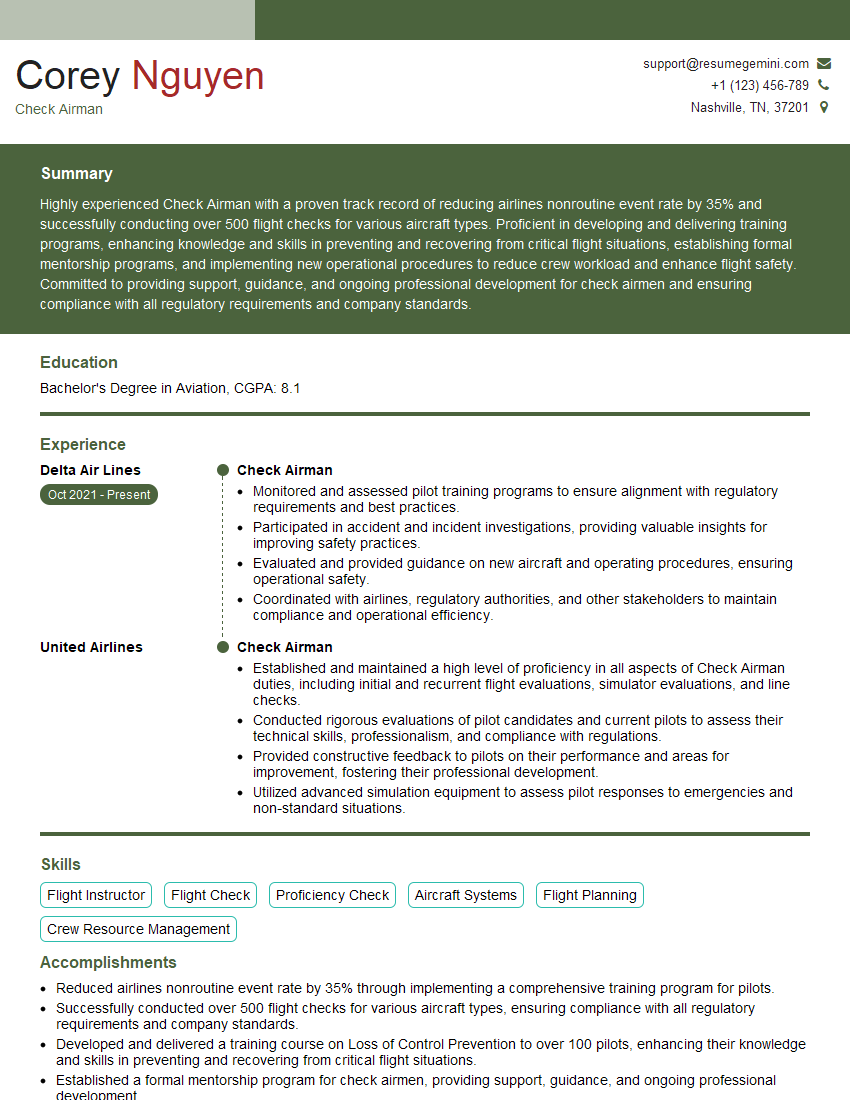
Mastering Aircrew Training and Supervision is key to advancing your career in aviation. A strong understanding of these principles will open doors to leadership roles and greater responsibility. To significantly increase your chances of securing your desired position, it’s vital to create a resume that showcases your skills and experience effectively. An ATS-friendly resume, optimized for Applicant Tracking Systems, is crucial in getting your application noticed. ResumeGemini is a trusted resource to help you build a professional and impactful resume. We provide examples of resumes tailored specifically to Aircrew Training and Supervision roles to help you get started.
Explore more articles
Users Rating of Our Blogs
Share Your Experience
We value your feedback! Please rate our content and share your thoughts (optional).
What Readers Say About Our Blog
Very informative content, great job.
good