Preparation is the key to success in any interview. In this post, we’ll explore crucial Furniture Logistics interview questions and equip you with strategies to craft impactful answers. Whether you’re a beginner or a pro, these tips will elevate your preparation.
Questions Asked in Furniture Logistics Interview
Q 1. Explain your experience with different modes of furniture transportation (truck, rail, sea).
My experience spans all major modes of furniture transportation. Truck transport is the most common for shorter distances, offering flexibility and relatively quick delivery times. I’ve extensively managed both Less-than-Truckload (LTL) shipments, ideal for smaller orders or when consolidating shipments, and Full-Truckload (FTL) for larger orders requiring dedicated space. Rail transport is cost-effective for long distances and high volumes, especially when dealing with bulky items like sofas or large bedroom sets. Here, efficient loading and unloading procedures are critical. I’ve overseen rail shipments, ensuring proper bracing and securement to prevent damage during transit. Finally, sea freight is essential for international furniture logistics, offering the most economical solution for large, overseas shipments. However, it involves longer transit times and requires meticulous planning, including careful container loading to minimize damage and ensure smooth customs clearance. For example, I once optimized a shipment of antique furniture to Japan, using a combination of rail and sea freight, significantly reducing the overall cost while maintaining the integrity of the delicate items.
Q 2. Describe your experience managing inventory in a furniture warehouse.
Effective warehouse inventory management is crucial in furniture logistics. My experience includes implementing and managing inventory control systems using both manual and automated methods. This involves accurate tracking of furniture items through their lifecycle – from receiving to storage, order fulfillment, and finally, shipment. I’ve utilized FIFO (First-In, First-Out) and FEFO (First-Expired, First-Out) methods for inventory management, particularly crucial for items with expiration dates or those prone to damage over time. Implementing barcoding and RFID tracking allows real-time inventory visibility and minimizes errors in stock counts. Regular cycle counting and inventory audits are essential to maintain accuracy. Furthermore, I’ve experience optimizing warehouse space layout to maximize storage capacity and minimize picking times, using strategies like slotting optimization based on product popularity and demand forecasting.
Q 3. How do you optimize routes for furniture delivery to minimize costs and transit time?
Route optimization is key to minimizing delivery costs and transit time. I employ advanced route planning software, incorporating factors like traffic patterns, delivery windows, and geographical constraints. For instance, I might use algorithms that consider distances, fuel costs, and driver availability to create the most efficient route. Furthermore, I leverage real-time tracking and data analysis to identify potential delays or issues and make necessary adjustments. Load consolidation, whereby multiple deliveries are combined into a single route, can significantly improve efficiency. For example, I once streamlined deliveries to a group of customers in a specific geographical area by optimizing routes and consolidating loads, resulting in a 15% reduction in fuel consumption and delivery time.
Q 4. What are your strategies for handling damaged or lost furniture during transit?
Handling damaged or lost furniture requires a proactive approach. This starts with rigorous quality checks at the point of origin and careful packaging and securing of goods. Detailed documentation – including photographs and inspection reports – is vital for claims processing with carriers. We utilize clear and consistent labeling procedures to minimize mishaps. In case of damage or loss, I have experience filing claims with carriers, negotiating settlements, and working with customers to resolve issues fairly and efficiently. Clear communication is crucial throughout this process, keeping both the customer and the carrier informed every step of the way. We often implement preventative measures, like using specialized handling equipment, to mitigate damage risks.
Q 5. Explain your experience with different types of packaging for furniture.
My experience includes working with various packaging materials tailored to different furniture types. This ranges from simple cardboard boxes for smaller items to custom-made crates and wooden pallets for larger, more delicate pieces. For instance, specialized corner protectors, foam padding, and stretch film are used to prevent scratches and breakage during transport. I prioritize sustainable packaging options where possible, reducing environmental impact without compromising protection. The choice of packaging depends heavily on the furniture’s fragility, size, and destination. For example, international shipments may require more robust packaging to withstand the rigors of long-distance transport and potential harsh weather conditions.
Q 6. How do you ensure on-time delivery of furniture orders?
On-time delivery relies on precise planning and execution at every stage. This involves accurate order processing, real-time tracking, proactive communication, and efficient warehouse operations. Using robust scheduling software and integrating data from different systems allows for precise forecasting and proactive adjustments. For example, I’ve implemented systems that monitor delivery progress, sending notifications to customers and coordinating with drivers to address any potential delays. Close collaboration with carriers and meticulous planning, such as creating realistic delivery schedules that account for unforeseen issues, are also crucial. Regular performance reviews and continuous improvement strategies help maintain consistently high on-time delivery rates.
Q 7. What is your experience with warehouse management systems (WMS)?
I have extensive experience with Warehouse Management Systems (WMS). I’ve implemented and managed WMS software from various vendors, customizing them to meet specific business needs. This includes configuring inventory tracking, order management, and warehouse automation features. These systems provide real-time visibility into inventory levels, location, and movement. Data analytics from the WMS help in optimizing warehouse layouts, improving efficiency, and reducing operational costs. For instance, I’ve utilized WMS reporting to identify areas for process improvement, such as optimizing picking routes or improving the accuracy of inventory counts. My experience also includes integration of WMS with Transportation Management Systems (TMS) for seamless order fulfillment and delivery tracking.
Q 8. How do you handle returns and reverse logistics for furniture?
Handling furniture returns and reverse logistics requires a robust system that efficiently manages the process from pickup to restocking. Unlike smaller items, furniture returns often involve larger, bulkier products with potential damage concerns. We begin with clear return policies communicated upfront, emphasizing conditions for acceptance (e.g., original packaging, undamaged condition).
Our process includes:
- Pickup Scheduling: We coordinate with the customer to schedule a convenient pickup time, often using specialized carriers equipped to handle large and delicate items.
- Inspection Upon Return: A thorough inspection is carried out to assess the condition of the furniture. Documentation, including photos and a detailed condition report, is crucial to determining the appropriate refund or replacement.
- Refurbishment or Disposal: Depending on the condition, returned furniture might be refurbished and re-listed, or responsibly disposed of if it’s beyond repair, following all environmental regulations.
- Reverse Logistics Tracking: We utilize the same tracking systems as forward logistics to monitor the return journey, ensuring timely and safe transportation. This data helps us refine our reverse logistics process and identify areas for improvement.
For example, we recently had a customer return a slightly damaged sofa. Our team scheduled a pickup, inspected the damage, and determined it was minor enough to be repaired in-house. The sofa was then refurbished, listed again, and sold without issue.
Q 9. Describe your process for tracking furniture shipments.
Tracking furniture shipments is paramount to ensure timely delivery and customer satisfaction. We leverage a multi-faceted tracking system that combines technology and manual oversight.
Our process starts with assigning a unique tracking number to each shipment as it leaves our warehouse. This number is linked to our system, which updates automatically as the shipment progresses through its journey. We use a combination of:
- GPS Tracking: Real-time GPS tracking on delivery vehicles provides location data and estimated arrival times.
- Barcode Scanning: Barcodes on packages are scanned at each stage of the journey, providing a detailed audit trail.
- Integrated Shipping Carrier Platforms: We use APIs to integrate with the tracking systems of our chosen shipping partners, providing a single source of truth for shipment status.
- Proactive Notifications: Automated notifications are sent to customers at key stages of the delivery process (e.g., shipment picked up, in transit, out for delivery).
This system allows us to quickly address any delays or unexpected issues and proactively communicate with customers. Imagine a situation where a storm causes a delay – our tracking system alerts us, allowing us to contact the customer and provide an accurate update, preventing unnecessary anxiety.
Q 10. How do you manage customer communication regarding furniture deliveries?
Managing customer communication effectively is crucial in furniture logistics, considering the high value and personal nature of the purchases. We use a multi-channel approach, ensuring prompt and consistent updates.
Our communication strategy includes:
- Order Confirmation Emails: Automated emails confirming order details and estimated delivery window.
- Automated Tracking Updates: Regular email and/or SMS updates on shipment status.
- Dedicated Customer Service Line: A phone number for customers to reach our dedicated support team with any questions or concerns.
- Live Chat Support: An option for instant communication via the company website or app.
- Proactive Communication for Delays: Immediate communication to customers if any unforeseen delays arise.
For instance, if a delivery is delayed due to an unforeseen circumstance, we proactively reach out to customers, explaining the situation and offering a revised delivery estimate. This transparent and timely communication avoids customer frustration and builds trust.
Q 11. What are your strategies for preventing furniture damage during handling and storage?
Preventing furniture damage during handling and storage is paramount for maintaining product quality and customer satisfaction. We employ a layered approach that prioritizes careful handling, protective packaging, and appropriate storage conditions.
Our strategies include:
- Proper Packaging: Using high-quality packaging materials like cardboard, bubble wrap, foam padding, and corner protectors to cushion the furniture during transit.
- Careful Handling Procedures: Training our warehouse and delivery staff in proper lifting techniques and handling procedures to minimize the risk of damage. This includes using appropriate equipment like dollies and hand trucks.
- Climate-Controlled Storage: Storing furniture in a climate-controlled warehouse to prevent warping, cracking, or other damage caused by extreme temperatures and humidity.
- Regular Inventory Checks: Regular inspections of stored furniture to identify and address any potential damage issues promptly.
- Secure Storage: Utilizing secure facilities with surveillance systems to prevent theft or vandalism.
We also use specialized tools, such as corner protectors and furniture pads, to minimize the chance of scratching or denting during transportation. This meticulous approach results in minimizing damage claims and building customer loyalty.
Q 12. How do you manage peak seasons and increased order volume in furniture logistics?
Managing peak seasons and increased order volume requires proactive planning and strategic resource allocation. Furniture logistics, like many industries, experiences significant seasonal fluctuations (e.g., higher demand around holidays and new home buying seasons).
Our strategies include:
- Forecasting and Demand Planning: Analyzing historical data to anticipate peak demand and adjust staffing levels, warehouse capacity, and transportation resources accordingly.
- Increased Warehouse Capacity: Securing additional warehouse space or optimizing existing space to accommodate increased inventory during peak seasons.
- Flexible Staffing: Hiring temporary staff or utilizing flexible staffing models to ensure sufficient workforce during peak periods.
- Strategic Transportation Partnerships: Collaborating with multiple transportation providers to ensure capacity and avoid delays.
- Optimized Routing and Scheduling: Implementing route optimization software to improve delivery efficiency and reduce transportation costs during peak times.
For example, we may lease additional warehouse space several months before the holiday season to accommodate increased inventory and ensure timely order fulfillment. We’ve also invested in route optimization software that dynamically adjusts delivery routes based on real-time traffic and weather conditions, reducing delays and improving on-time delivery rates even during peak periods.
Q 13. What is your experience with international furniture shipping regulations and customs procedures?
International furniture shipping involves navigating a complex web of regulations and customs procedures. Experience in this area requires a deep understanding of import/export laws, documentation requirements, and international trade practices.
My experience encompasses:
- Understanding Export and Import Regulations: Knowledge of HS codes, tariffs, quotas, and other trade regulations specific to different countries.
- Documentation Management: Expertise in preparing and submitting all necessary documentation, including commercial invoices, packing lists, certificates of origin, and other required customs forms.
- Navigating Customs Procedures: Experience in interacting with customs brokers and authorities in various countries to ensure smooth and compliant customs clearance.
- International Shipping Carrier Relationships: Established relationships with international shipping carriers specializing in oversized and fragile cargo.
- Insurance and Risk Management: Understanding international insurance requirements to protect against loss or damage during transit.
One example involves shipping a collection of antique furniture to a client in Japan. This required careful coordination with customs brokers to ensure compliance with Japanese import regulations, including fumigation requirements and documentation specifics for cultural artifacts. Success in this area requires attention to detail and meticulous planning.
Q 14. How do you ensure the safety and security of furniture during transportation?
Ensuring the safety and security of furniture during transportation involves a multi-pronged approach that combines proper packaging, secure transportation methods, and robust tracking systems.
Our strategies include:
- Secure Transportation: Utilizing reputable transportation providers with a proven track record of handling high-value goods safely and securely. This often includes carriers specialized in oversized or fragile freight.
- Cargo Insurance: Obtaining adequate cargo insurance to cover potential losses or damages during transit.
- Real-time Tracking: Utilizing GPS tracking and other technological solutions to monitor shipments in real-time and address any potential security threats immediately.
- Sealed Containers: Using sealed containers or other tamper-evident packaging to deter theft or unauthorized access to the goods.
- Driver Vetting and Background Checks: For direct deliveries, we conduct background checks on drivers to ensure their trustworthiness and reliability.
For high-value items, we often use specialized secure transportation services that include security escorts to deter theft. Our comprehensive approach combines technological solutions and human oversight to protect our clients’ investments.
Q 15. How do you prioritize shipments based on urgency and customer requirements?
Prioritizing shipments in furniture logistics hinges on a well-defined system that considers both urgency and customer needs. We utilize a combination of factors to create a ranked order. This isn’t simply a ‘first-come, first-served’ approach.
- Urgency Level: This is often categorized as ‘rush,’ ‘priority,’ ‘standard,’ etc., usually assigned based on delivery deadlines and potential penalties for late delivery. For example, a rush order for a hotel refurbishment will take precedence over a standard residential delivery.
- Customer Value: High-value clients or large-scale projects often receive priority, ensuring customer satisfaction and retention. Think of a contract with a major furniture retailer versus a single smaller order.
- Delivery Location: Accessibility and transportation challenges can influence prioritization. A remote location might require earlier planning and thus higher priority compared to urban deliveries.
- Product Sensitivity: Certain furniture, such as delicate antiques or custom-made pieces, might need special handling and therefore prioritized for smoother transit.
We often use a weighted scoring system where each factor is assigned a numerical value. The shipment with the highest overall score gets priority. This allows for a transparent and objective approach, minimizing disputes and ensuring efficient resource allocation.
Career Expert Tips:
- Ace those interviews! Prepare effectively by reviewing the Top 50 Most Common Interview Questions on ResumeGemini.
- Navigate your job search with confidence! Explore a wide range of Career Tips on ResumeGemini. Learn about common challenges and recommendations to overcome them.
- Craft the perfect resume! Master the Art of Resume Writing with ResumeGemini’s guide. Showcase your unique qualifications and achievements effectively.
- Don’t miss out on holiday savings! Build your dream resume with ResumeGemini’s ATS optimized templates.
Q 16. Explain your experience with different types of furniture (e.g., upholstered, wood, metal).
My experience encompasses a wide range of furniture types, each requiring specialized handling and transportation considerations.
- Upholstered Furniture: This category demands careful handling to avoid damage to fabric or stuffing. We use protective covers and ensure gentle loading and unloading to prevent tears or crushing. Proper climate control during transport is crucial to avoid moisture damage.
- Wood Furniture: Wood is susceptible to scratching, chipping, and warping. We use appropriate padding and bracing during transport, often employing custom crates for delicate or antique pieces. Moisture control is equally vital.
- Metal Furniture: While generally more robust, metal furniture can be prone to scratching and denting. Proper stacking and bracing are essential, preventing damage during transit. We avoid stacking heavier pieces on top of more fragile ones.
Understanding the unique characteristics of each material allows us to tailor our handling procedures, ensuring the furniture arrives at its destination in perfect condition. For instance, I’ve personally overseen the shipment of a large collection of antique wooden chairs, requiring custom-built crates and white-glove service for delivery and setup.
Q 17. What is your experience with load planning and optimization for furniture transport?
Load planning and optimization are critical to cost-effectiveness and efficient use of transportation resources. My experience involves leveraging specialized software and utilizing established best practices.
- Software Utilization: We use route optimization software that considers factors such as distance, traffic patterns, delivery windows, and vehicle capacity. This ensures the most efficient routes are selected, minimizing fuel consumption and travel time.
- 3D Modeling: For complex shipments, we might create 3D models of the truck’s interior to simulate load configurations and identify optimal arrangements to maximize space utilization and minimize risk of damage.
- Weight Distribution: Proper weight distribution within a vehicle is crucial to prevent instability and ensure safe handling. Heavy items are strategically placed to maintain balance and prevent shifting during transit.
- Fragile Item Placement: Fragile items are carefully positioned and protected using suitable cushioning materials and bracing. They are placed strategically to avoid being crushed or damaged by other items.
For example, in one project involving the transport of a large number of dining sets, using 3D modeling software allowed us to reduce the number of trucks needed by 15%, resulting in significant cost savings.
Q 18. How do you assess and manage the risks associated with furniture logistics?
Risk assessment in furniture logistics is a proactive process aimed at identifying and mitigating potential issues before they arise. We use a multi-faceted approach:
- Damage Risk: This includes physical damage during handling, transit, or storage. Mitigation involves using appropriate packaging, handling techniques, and securing items during transport. Regular equipment maintenance and driver training are crucial.
- Theft Risk: High-value items are particularly vulnerable. We address this through secure storage facilities, GPS tracking, and insurance coverage. Employing reputable carriers and establishing clear chain-of-custody protocols is also vital.
- Weather-Related Risks: Exposure to extreme temperatures or humidity can damage furniture. We implement climate-controlled transportation and storage solutions where necessary. Contingency plans for inclement weather are also in place.
- Delivery Delays: Traffic, accidents, or unforeseen circumstances can lead to delays. We build buffer time into delivery schedules and maintain open communication with customers to manage expectations. Real-time tracking systems help to monitor progress and promptly address any deviations.
Regular risk assessments and audits ensure we are continuously adapting our strategies to mitigate emerging threats.
Q 19. Explain your experience with vendor management in the context of furniture logistics.
Effective vendor management is crucial for success in furniture logistics. This involves building strong relationships with reliable suppliers and service providers.
- Carrier Selection: We carefully vet potential carriers based on their reputation, insurance coverage, safety records, and capacity to meet our requirements. Regular performance reviews are conducted to ensure continued high standards.
- Packaging Supplier Management: We work with packaging suppliers to ensure the availability of high-quality and cost-effective materials tailored to the specific needs of different furniture types. This includes negotiating favorable pricing and terms.
- Warehouse Management: If we utilize external warehousing, we select facilities with proper climate control, security, and efficient inventory management systems. Regular inspections and performance evaluations are critical.
- Communication and Collaboration: Clear and consistent communication is key to effective vendor management. This involves regular meetings, performance reviews, and prompt resolution of any issues that arise.
For example, establishing a strong relationship with a preferred carrier allowed us to negotiate a volume discount which translated to significant cost savings over the long term.
Q 20. How do you ensure compliance with relevant safety regulations in furniture handling and storage?
Compliance with safety regulations is paramount in furniture logistics. This involves adhering to industry standards and governmental regulations at every stage of the process.
- OSHA Compliance: We ensure all handling equipment and processes comply with Occupational Safety and Health Administration (OSHA) standards to protect our workforce. This includes regular safety training and equipment inspections.
- Transportation Regulations: We adhere to Department of Transportation (DOT) regulations for vehicle maintenance, driver qualifications, and hazardous materials handling. This includes regular vehicle inspections and driver training on safe loading and driving practices.
- Storage Regulations: We maintain our warehouses and storage facilities in accordance with local fire codes and building regulations. This includes regular inspections and maintenance of fire safety equipment.
- Material Safety Data Sheets (MSDS): We maintain and utilize up-to-date MSDS for all materials handled to inform our employees of potential hazards and appropriate safety precautions.
Regular safety audits and training sessions are critical to maintaining compliance and creating a safe work environment. We also have a robust incident reporting system to identify and address potential hazards promptly.
Q 21. How do you measure the key performance indicators (KPIs) in furniture logistics?
Key Performance Indicators (KPIs) provide crucial insights into the efficiency and effectiveness of our furniture logistics operations. We track a range of metrics:
- On-Time Delivery Rate: This measures the percentage of shipments delivered on or before the scheduled date, reflecting the reliability of our operations.
- Damage Rate: This tracks the percentage of shipments that arrive damaged, indicating the effectiveness of our handling and packaging procedures.
- Inventory Turnover Rate: This measures how quickly we move inventory, affecting storage costs and overall efficiency.
- Transportation Costs per Unit: This shows the cost-effectiveness of our transportation strategies, identifying areas for potential optimization.
- Customer Satisfaction Rate: This reflects the overall satisfaction of our customers with our service, providing valuable feedback for improvement.
Regular monitoring and analysis of these KPIs allow us to identify areas for improvement and make data-driven decisions to optimize our operations and enhance customer satisfaction.
Q 22. Describe your experience with implementing and improving logistics processes.
Improving logistics processes is a continuous cycle of analysis, implementation, and refinement. In my previous role, we significantly reduced delivery times by implementing a new route optimization software. This involved first analyzing historical delivery data to identify bottlenecks and inefficient routes. Then, we selected and implemented a Transportation Management System (TMS) that used advanced algorithms to optimize routes based on factors like traffic, delivery windows, and driver availability. Finally, we monitored the system’s performance closely, making adjustments as needed, ultimately achieving a 15% reduction in delivery times and a 10% decrease in fuel costs. Another key improvement involved streamlining our warehouse operations using lean principles, eliminating unnecessary steps in the picking and packing process, and implementing a robust inventory management system, reducing order fulfillment time by 20%.
Q 23. How familiar are you with different types of warehouse layouts and their suitability for furniture?
Warehouse layout is crucial for furniture logistics due to the size and fragility of the products. I’m familiar with several layouts, each with specific advantages and disadvantages for furniture. For example, a U-shaped layout is efficient for high-volume operations, minimizing travel distances for pickers. However, it requires significant space. A narrow-aisle layout maximizes storage density using very narrow aisles and specialized equipment like reach trucks, ideal for high-density storage of smaller furniture items. Block stacking is effective for large, bulky items, but requires careful planning to prevent damage. The best layout depends on factors like the volume and types of furniture, order fulfillment methods, and available space. In choosing a layout, it’s also important to consider factors like ease of access for loading and unloading, safety for workers, and the ability to accommodate future growth.
Q 24. How do you use technology to improve efficiency and accuracy in furniture logistics?
Technology is transformative in furniture logistics. We use Warehouse Management Systems (WMS) to track inventory in real-time, optimizing stock placement and reducing search times. This minimizes picking errors and speeds up order fulfillment. Radio Frequency Identification (RFID) tags on pallets allow for automated tracking from the warehouse to the delivery truck, providing visibility throughout the entire supply chain. GPS tracking on delivery vehicles provides real-time location updates and ensures timely deliveries, allowing for proactive communication with customers in case of delays. Furthermore, using a Transportation Management System (TMS) for route optimization and carrier management greatly enhances efficiency and reduces costs. Data analytics tools help to identify trends, predict demand, and optimize inventory levels, preventing stockouts and overstocking.
Q 25. How do you address unexpected delays or disruptions in furniture shipments?
Unexpected delays are inevitable, but mitigating their impact is key. Our approach involves a multi-pronged strategy. First, we have contingency plans in place – alternative carriers or transportation modes are identified beforehand. Second, proactive communication is critical. We immediately inform customers of the delay and provide realistic revised delivery estimates. Third, we investigate the cause of the delay and take corrective measures to prevent similar issues in the future. This could involve renegotiating contracts with carriers who consistently underperform or adjusting our transportation planning to account for potential risks. Fourth, we leverage our technology – real-time tracking allows us to identify alternative routes or solutions quickly. Finally, we maintain transparent and open communication with all stakeholders involved to maintain trust and manage expectations effectively.
Q 26. Describe your problem-solving skills in a challenging furniture logistics scenario.
In one instance, a major storm caused widespread transportation disruptions, delaying the delivery of a large order of sofas just days before a crucial retail launch. My team and I immediately convened an emergency meeting. We leveraged our TMS to identify alternative routes and trucking companies with available capacity. We renegotiated delivery schedules with the client, offering partial shipments where possible to minimize the impact on the launch. Simultaneously, we coordinated closely with our warehouse team to ensure the sofas were properly prepared and protected for transport, mitigating the risk of damage during the extended transit. By communicating clearly and actively seeking solutions, we managed to deliver the majority of the order within a week, minimizing the negative impact on the client and our reputation.
Q 27. What is your experience with negotiating rates with carriers for furniture transport?
Negotiating carrier rates requires a thorough understanding of the market, your freight needs, and the carriers’ capabilities. I start by analyzing historical shipping data to identify cost-effective routes and carriers. I then gather detailed information on the dimensions, weight, and fragility of the furniture items to accurately estimate transportation costs. During negotiations, I leverage my knowledge of market rates and industry benchmarks to negotiate favorable terms, considering factors like fuel surcharges, insurance costs, and potential delays. Building strong relationships with carriers is also crucial; fostering long-term partnerships often leads to more competitive rates and reliable service. I always prioritize transparency and fair practices, ensuring a mutually beneficial agreement for both parties.
Q 28. How do you ensure accurate inventory counts and reporting in a furniture warehouse?
Accurate inventory is vital for efficient operations. We use a combination of methods to ensure accuracy. Our WMS provides real-time tracking of inventory levels, updating counts as items are received, stored, and shipped. Regular cycle counting – a process of verifying the physical count against the system record – is performed to identify and correct discrepancies. This is often targeted at high-value or high-volume items. We also use barcode scanners and RFID technology for efficient and accurate tracking of individual items and pallets. Finally, we conduct a full physical inventory count periodically to verify the overall accuracy of our inventory records. By implementing these procedures and meticulously tracking inventory movements, we minimize errors and ensure timely and accurate reporting to support inventory planning and decision-making.
Key Topics to Learn for Furniture Logistics Interview
- Supply Chain Management in Furniture Logistics: Understanding the flow of materials, from raw materials sourcing to final delivery to the customer, including warehousing, transportation, and inventory management.
- Warehouse Operations: Practical experience with receiving, storing, picking, packing, and shipping furniture. This includes knowledge of warehouse layout, inventory control systems (WMS), and order fulfillment processes.
- Transportation and Delivery: Familiarity with different modes of transportation (trucking, rail, sea freight) and their suitability for furniture. Understanding delivery scheduling, route optimization, and handling potential delivery challenges (e.g., large or fragile items).
- Freight Handling and Damage Prevention: Knowledge of proper techniques for loading, securing, and unloading furniture to minimize damage during transit. Understanding insurance and claims processes related to damaged goods.
- Inventory Management and Control: Experience with inventory tracking systems, forecasting demand, and managing stock levels to optimize warehouse space and minimize storage costs. Understanding cycle counting and inventory audits.
- Logistics Software and Technology: Familiarity with Transportation Management Systems (TMS), Warehouse Management Systems (WMS), and other relevant software used in furniture logistics. Understanding data analysis and reporting within these systems.
- Customer Service and Communication: Effective communication skills are crucial for addressing customer inquiries, managing delivery expectations, and resolving issues related to damaged goods or late deliveries.
- Problem-Solving and Decision-Making: Ability to identify and resolve logistical challenges efficiently, such as delays, damaged goods, or unexpected changes in demand. Demonstrating experience in adapting to dynamic situations is vital.
- Regulatory Compliance: Understanding and adhering to relevant transportation regulations, safety standards, and environmental guidelines related to furniture logistics.
Next Steps
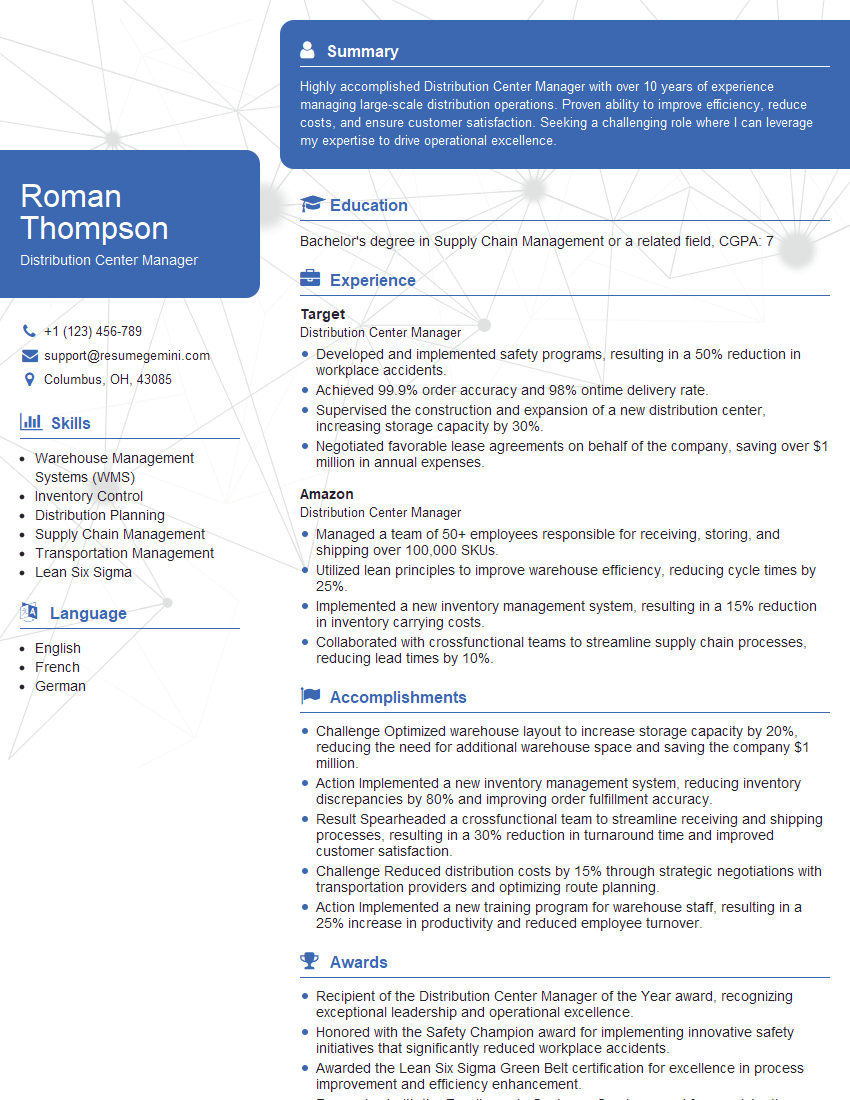
Mastering Furniture Logistics opens doors to exciting career opportunities with significant growth potential. A strong understanding of these concepts demonstrates valuable skills to employers, making you a highly competitive candidate. To maximize your job prospects, focus on creating an ATS-friendly resume that highlights your relevant skills and experience. ResumeGemini is a trusted resource to help you build a professional and impactful resume that catches the eye of recruiters. Examples of resumes tailored to Furniture Logistics are available to help guide you.
Explore more articles
Users Rating of Our Blogs
Share Your Experience
We value your feedback! Please rate our content and share your thoughts (optional).
What Readers Say About Our Blog
Very informative content, great job.
good