The thought of an interview can be nerve-wracking, but the right preparation can make all the difference. Explore this comprehensive guide to Furniture Warehousing interview questions and gain the confidence you need to showcase your abilities and secure the role.
Questions Asked in Furniture Warehousing Interview
Q 1. Describe your experience with warehouse management systems (WMS).
Warehouse Management Systems (WMS) are the backbone of efficient warehouse operations. They’re software applications that manage and optimize all aspects of warehouse processes, from receiving and putaway to order picking, packing, and shipping. My experience spans over ten years, working with various WMS platforms, including NetSuite WMS, Fishbowl Inventory, and SAP EWM. I’ve been involved in the implementation, configuration, and day-to-day management of these systems in furniture warehousing environments. For example, at my previous role, we implemented NetSuite WMS to streamline our order fulfillment process. This resulted in a 20% reduction in order processing time and a 15% decrease in picking errors. I understand the importance of choosing the right WMS based on the specific needs of the business and integrating it with other enterprise systems like ERP for seamless data flow. I’m also adept at customizing WMS configurations to handle the unique challenges of storing and handling bulky furniture items, such as creating custom item classifications and optimizing slotting algorithms to account for size and weight.
Q 2. Explain your experience with inventory control procedures.
Inventory control in furniture warehousing requires meticulous attention to detail, given the size and fragility of the items. My experience involves implementing and managing cycle counting procedures, performing regular inventory audits, and utilizing barcode scanning technology to ensure accuracy. I’m proficient in using various inventory management techniques, including FIFO (First-In, First-Out) and LIFO (Last-In, First-Out), to manage stock rotation effectively, especially with items that have expiration dates (like certain finishes or fabrics). I’ve also developed and implemented systems for tracking damaged or defective furniture throughout the warehouse lifecycle, from receiving to disposal. In one instance, I developed a custom spreadsheet-based tracking system that helped us pinpoint the root cause of unusually high damage rates during shipping, leading to improved packaging procedures and a 30% reduction in damage claims.
Q 3. How do you manage high-volume order fulfillment?
High-volume order fulfillment in a furniture warehouse necessitates a well-orchestrated system. My approach involves optimizing warehouse layout for efficient order picking, leveraging technology like pick-to-light systems or voice-directed picking to improve accuracy and speed. Efficient slotting strategies are critical, ensuring frequently ordered items are easily accessible. I also focus on optimizing the packing process to minimize waste and shipping costs. Batch picking, wave picking, and zone picking are techniques I’ve successfully implemented to handle peak order volumes. For example, during a major promotional period, we implemented wave picking, dividing orders into manageable batches to ensure timely fulfillment. This significantly reduced order fulfillment time without compromising accuracy. Real-time tracking and monitoring of order progress through the WMS is also crucial for effective management of high volumes.
Q 4. What is your experience with different types of warehouse layouts?
I’ve worked with various warehouse layouts, including block stacking, dedicated storage, and very narrow aisle (VNA) systems. Each layout has its advantages and disadvantages depending on the type of furniture, volume, and budget. Block stacking, suitable for large, homogenous items, maximizes space utilization but may require more manual handling. Dedicated storage, allocating specific areas for different product categories, improves order picking efficiency but might lead to wasted space. VNA systems, with very narrow aisles and specialized equipment, maximize space but require significant investment in specialized equipment and training. I have experience selecting and implementing the optimal layout, considering factors such as product dimensions, order frequency, available space, and budget constraints. In one project, we transitioned from a traditional block stacking system to a VNA system, increasing storage capacity by 40% while improving picking efficiency by 25%.
Q 5. How do you ensure efficient space utilization in a furniture warehouse?
Efficient space utilization in a furniture warehouse is paramount. It involves optimizing storage methods, maximizing vertical space using racking systems, and carefully planning aisle widths to minimize wasted space. Proper slotting, placing frequently accessed items in convenient locations, is crucial. Using vertical space efficiently with high-bay racking, implementing dynamic slotting (re-assigning locations based on demand), and employing space optimization software are some effective strategies. I’ve successfully implemented these strategies to improve space utilization in several furniture warehouses. For instance, by implementing a combination of high-bay racking and dynamic slotting, we were able to increase storage capacity by 20% without expanding the warehouse footprint.
Q 6. What safety procedures do you implement in a furniture warehouse?
Safety is a top priority in a furniture warehouse. We implement a comprehensive safety program including regular safety training for all employees, clearly marked walkways and designated forklift zones, proper handling procedures for heavy furniture, and the use of appropriate safety equipment like gloves, safety shoes, and lifting aids. We also conduct regular safety audits, address potential hazards proactively, and maintain detailed safety records. We adhere to all relevant OSHA guidelines and regulations. Regular inspections of racking systems, forklift maintenance, and emergency exit drills are part of our standard operating procedures. Moreover, we encourage a safety-first culture through open communication and employee empowerment to report potential hazards.
Q 7. How do you handle damaged or defective furniture?
Handling damaged or defective furniture involves a multi-step process. First, we identify and document the damage, noting its cause (if possible) and severity. Then, we segregate the damaged items from the inventory to prevent accidental shipment. Depending on the severity of the damage and the cost of repair, we determine whether to repair, return to the supplier, or dispose of the furniture responsibly. Detailed records of damaged goods are maintained for quality control purposes and to facilitate claims with suppliers or insurers. We use a designated area for damaged furniture, clearly marked to avoid confusion. Regular disposal of un-repairable items through appropriate channels ensures adherence to environmental regulations. For repairable items, we maintain a log tracking repair costs and the time taken to repair, enabling efficient analysis of the repair process.
Q 8. Describe your experience with forklift operation and safety.
Forklift operation is a critical aspect of warehouse efficiency and safety, demanding both skill and adherence to strict protocols. My experience encompasses over seven years of operating various forklift models, including sit-down counterbalance, reach trucks, and order pickers. I’m certified in forklift operation and safety, and I’ve consistently maintained a perfect safety record. This includes regular pre-operational checks (checking fluids, tires, lights, etc.), adhering to speed limits, and always prioritizing pedestrian safety. I understand and follow all relevant OSHA regulations and company safety procedures. For example, I’ve actively participated in near-miss reporting, helping to identify and correct potential hazards before they cause accidents. I’m comfortable operating forklifts in confined spaces and around other equipment, always maintaining awareness of my surroundings. My proficiency extends to load securing techniques, ensuring that goods are properly stacked and secured to prevent damage or accidents during transit.
Q 9. Explain your experience with order picking and packing procedures.
Order picking and packing are fundamental to timely and accurate order fulfillment. My experience involves utilizing various order picking methods, including zone picking, batch picking, and wave picking, depending on the order volume and warehouse layout. I am proficient in using both paper-based and RF (radio frequency) scanning systems for accurate order selection. My packing process emphasizes efficient space utilization and damage prevention. This includes selecting appropriate sized packaging, using adequate cushioning materials, and securely sealing the packages. I understand the importance of accurate labeling and documentation, ensuring that all necessary information (order number, customer address, etc.) is clearly visible and correct. For example, in my previous role, I consistently maintained a 99.9% accuracy rate in order picking and packing, exceeding company targets. I also have experience with pick-to-light systems, which significantly improved our picking efficiency.
Q 10. How do you manage receiving and shipping processes?
Managing receiving and shipping processes requires meticulous organization and attention to detail. Upon receiving shipments, I verify the quantity and condition of goods against the purchase order and bill of lading, noting any discrepancies. I use a warehouse management system (WMS) to record inbound shipments, updating inventory levels in real-time. I’m skilled in using different scanning technologies to expedite the receiving process, reducing delays and improving accuracy. For shipping, I ensure that orders are accurately picked, packed, and labeled before scheduling them for dispatch. I coordinate with carriers, generating shipping labels and tracking numbers. I also manage returns and address any shipping-related issues efficiently. My experience includes working with various carriers and understanding different shipping methods, optimizing cost and delivery times. I actively work to minimize shipping errors and improve the overall shipping efficiency of the warehouse.
Q 11. How do you track inventory accuracy in a fast-paced environment?
Maintaining inventory accuracy in a fast-paced environment relies heavily on robust systems and processes. I use a combination of cycle counting and regular physical inventory checks, supplemented by a WMS, to track inventory levels. Cycle counting involves regularly counting a subset of inventory items, rather than a full inventory count, which helps to identify discrepancies early on. The WMS provides real-time visibility of stock levels and allows for efficient tracking of movements. I’m experienced in identifying root causes of inventory discrepancies and implementing corrective actions. For instance, I’ve used data analysis to identify patterns in discrepancies, leading to improvements in picking accuracy and stock management procedures. This might involve reviewing picking lists, optimizing warehouse layout, or providing training to warehouse staff. Regular reconciliation of the WMS data with physical inventory counts is key.
Q 12. What are your strategies for preventing warehouse theft?
Preventing warehouse theft requires a multi-layered approach that combines security measures with employee awareness. This includes implementing robust security systems, such as CCTV cameras covering all access points and storage areas. Access control systems, limiting access to authorized personnel only, is another essential element. Regular security audits and random inventory checks are crucial for deterring theft. In addition to these physical security measures, strong internal controls are critical. These include processes for receiving, storing, and shipping goods, involving multiple people in key stages to reduce the risk of theft. Finally, regular training of staff on security protocols and emphasizing the importance of ethical conduct is key. I’ve been involved in developing and implementing such security protocols in previous roles and consistently promote a culture of vigilance.
Q 13. How do you handle discrepancies in inventory counts?
Discrepancies in inventory counts require a systematic investigation to identify the root cause. I’d begin by reviewing the WMS data to pinpoint the specific items and quantities affected. Then, I’d conduct a thorough physical recount of the affected items, verifying the physical location and condition. I might also investigate potential causes like picking errors, receiving errors, damage during handling, or potential theft. Depending on the scale of the discrepancy, I might involve other team members to assist in the investigation. Once the root cause is identified, I’d implement corrective actions, such as retraining staff, improving procedures, or adjusting the WMS parameters. Accurate documentation of the entire process is crucial, serving as evidence for future reference and preventing similar discrepancies. The goal is not just to correct the immediate discrepancy but to prevent its recurrence.
Q 14. What metrics do you use to assess warehouse performance?
Several key metrics are used to assess warehouse performance. Order accuracy measures the percentage of orders shipped correctly; order fulfillment time tracks the speed of order processing; inventory turnover rate indicates how efficiently inventory is managed; storage utilization measures the efficiency of space usage; and damage rate tracks the percentage of damaged goods. Receiving efficiency (time taken to process shipments) and shipping efficiency (time taken to prepare and ship orders) are also crucial. Labor productivity (units handled per labor hour) measures workforce efficiency. Analyzing these metrics provides insights into areas for improvement. For example, a low inventory turnover rate might indicate overstocking, while a high damage rate could suggest issues with handling procedures. Regularly monitoring and analyzing these metrics allows for continuous improvement of warehouse operations.
Q 15. How do you manage warehouse staff and ensure productivity?
Managing warehouse staff effectively requires a blend of leadership, training, and motivation. I focus on creating a positive and productive work environment. This starts with clear communication of expectations, roles, and responsibilities. I utilize regular team meetings to address concerns, celebrate successes, and brainstorm improvements. To boost productivity, I implement a system of performance tracking – using Key Performance Indicators (KPIs) like units picked per hour, order accuracy, and damage rates. These KPIs provide measurable data, allowing me to identify areas for improvement and provide targeted training. For instance, if we see a consistently high damage rate for a particular furniture type, we can implement new packing procedures or provide additional training on proper handling techniques.
Furthermore, I believe in empowering my team. This involves delegating tasks appropriately based on individual strengths, providing opportunities for professional growth through mentorship or cross-training programs, and fostering a culture of teamwork and mutual support. I have successfully utilized incentive programs, such as team-based bonuses tied to meeting or exceeding KPIs, to further enhance productivity and team cohesion. Ultimately, my goal is to build a highly skilled, motivated, and collaborative team that takes pride in its work and delivers exceptional results.
Career Expert Tips:
- Ace those interviews! Prepare effectively by reviewing the Top 50 Most Common Interview Questions on ResumeGemini.
- Navigate your job search with confidence! Explore a wide range of Career Tips on ResumeGemini. Learn about common challenges and recommendations to overcome them.
- Craft the perfect resume! Master the Art of Resume Writing with ResumeGemini’s guide. Showcase your unique qualifications and achievements effectively.
- Don’t miss out on holiday savings! Build your dream resume with ResumeGemini’s ATS optimized templates.
Q 16. Explain your experience with cycle counting.
Cycle counting is a crucial inventory management technique that involves regularly counting a small portion of your inventory rather than a full, annual count. This method, unlike a full inventory count, minimizes disruption to warehouse operations. My experience with cycle counting includes developing and implementing a robust schedule. This schedule targets high-value or fast-moving items more frequently. For example, popular sofas or chairs might be counted weekly, while less popular items might be counted monthly. I utilize barcode scanners and dedicated inventory management software to ensure accuracy and efficiency. Data collected from cycle counts is used to identify discrepancies and to adjust inventory records accordingly. This helps to prevent stockouts, minimize overstocking, and maintain accurate inventory data for better forecasting and financial reporting. Any discrepancies discovered are immediately investigated to identify root causes—whether it’s a data entry error, theft, or damage—and corrective actions are implemented to prevent recurrence. Through consistent cycle counting, we’ve significantly improved our inventory accuracy, reduced losses, and streamlined our fulfillment processes.
Q 17. How do you address warehouse space constraints?
Addressing warehouse space constraints requires a multi-pronged approach focused on optimization and efficiency. My strategy begins with a thorough assessment of current space utilization. This involves analyzing storage methods, identifying dead zones, and evaluating the flow of goods within the warehouse. Often, significant improvements can be achieved through simple changes like optimizing shelving arrangements, implementing better slotting strategies based on item popularity, or removing unnecessary clutter. If further space is needed, I would explore several options: Negotiating for additional space within the existing facility, if possible; looking for offsite storage solutions for less frequently accessed items; vertical expansion by implementing taller shelving or mezzanine floors; or investing in more efficient storage systems such as high-density racking or automated storage and retrieval systems (AS/RS).
Another key strategy is to minimize unnecessary inventory. This involves carefully analyzing sales data to predict demand accurately and optimize ordering quantities to avoid overstocking. Implementing a robust inventory management system, such as an Enterprise Resource Planning (ERP) system, further assists in streamlining inventory control and minimizing excess stock.
Q 18. What is your experience with different types of storage systems?
My experience encompasses a variety of storage systems, each with its own strengths and weaknesses. I’ve worked with conventional racking systems—both selective and pallet racking—ideal for storing a wide range of furniture items with easy accessibility. I’ve also implemented cantilever racking for storing long, bulky items like dining tables. Drive-in/drive-through racking systems have been particularly useful for storing large quantities of similar items, maximizing space utilization. For smaller, more frequently accessed items like accessories or smaller furniture pieces, I’ve implemented flow rack systems to optimize order picking efficiency. Finally, I’ve explored the use of high-density storage systems, including mobile shelving and push-back racking, in situations requiring maximal space savings.
The choice of storage system always depends on the specific needs of the warehouse, taking into account factors like item size, weight, frequency of access, and available space. Understanding these factors allows me to recommend and implement the most cost-effective and efficient solution.
Q 19. Describe your experience with implementing process improvements in a warehouse.
Implementing process improvements in a warehouse requires a systematic approach. I typically start by identifying areas where inefficiencies exist. This involves observing warehouse operations, analyzing data from KPIs, and gathering feedback from staff. Common areas for improvement include order picking processes, receiving and put-away procedures, and inventory management. Once problem areas are identified, I develop and implement solutions. This could involve implementing new technologies, such as Warehouse Management Systems (WMS) software, barcoding, or RFID tracking; streamlining workflows; redesigning the warehouse layout; or implementing Lean Manufacturing principles to eliminate waste and improve efficiency. For instance, in a previous role, we reduced order picking time by 20% by implementing a ‘pick-to-light’ system, guiding workers to the correct items using LED lights.
Continuous improvement is key, so I regularly monitor the effectiveness of implemented changes and make adjustments as necessary. This iterative process ensures that the warehouse continually operates at peak efficiency.
Q 20. How do you handle returns and exchanges of furniture?
Handling furniture returns and exchanges requires a meticulous process to ensure accurate tracking, efficient processing, and customer satisfaction. The process begins with clearly defined return procedures, communicated to customers upfront. Returns are inspected upon arrival for damage or defects. Documentation is crucial, including photos and detailed descriptions of any damage. A designated area is set aside for processing returns, separate from incoming goods. This helps prevent mix-ups and ensures efficient tracking. We utilize our WMS to update inventory records accurately, reflecting the return. The returned items are then inspected to determine if they can be resold or require repair. If resold, they are carefully repacked and returned to inventory. If damaged beyond repair, a proper disposal plan is followed, adhering to environmental regulations. For exchanges, the process mirrors returns but involves fulfilling the customer’s new order concurrently. Throughout the process, clear communication with the customer is vital, keeping them informed of the status of their return or exchange. This meticulous approach ensures efficient management of returns while maintaining high customer satisfaction.
Q 21. What is your experience with warehouse automation technologies?
My experience with warehouse automation technologies includes implementing and managing various systems to enhance efficiency and accuracy. This includes Warehouse Management Systems (WMS) to manage inventory, track orders, and optimize warehouse operations. I’ve also worked with barcode scanners and RFID technology for real-time inventory tracking and faster order picking. Automated guided vehicles (AGVs) have been utilized in some projects to transport goods within the warehouse, reducing manual labor and improving efficiency. In a previous role, we implemented a conveyor system to streamline the order fulfillment process, significantly reducing processing time. The selection and implementation of automation technologies depend on many factors, including budget, warehouse size, and the nature of the products handled. A thorough cost-benefit analysis is crucial before investing in automation solutions to ensure a return on investment.
A key aspect of implementing automation is ensuring seamless integration with existing systems. Proper training of staff is also vital to ensure the successful adoption and utilization of new technologies. It’s important to note that automation doesn’t always replace human workers; often, it enhances their capabilities and reduces repetitive tasks, allowing them to focus on more complex and value-added activities.
Q 22. How do you maintain cleanliness and organization in a furniture warehouse?
Maintaining cleanliness and organization in a furniture warehouse is paramount for efficiency, safety, and inventory control. It’s not just about tidiness; it’s a structured system.
- Designated Areas: We implement a zone-based system, allocating specific areas for incoming goods, storage (categorized by furniture type, size, and material), staging for outgoing shipments, and quality control. Clear signage is crucial.
- Regular Cleaning Schedules: A daily cleaning schedule is essential, including sweeping, mopping, and dust removal. This prevents dust accumulation which can damage delicate finishes. Weekly deeper cleans target harder-to-reach areas.
- Inventory Management System: An accurate inventory system is key. We use barcodes or RFID tags for each item to track its location. This prevents misplaced items and streamlines order fulfillment. Regular stock checks ensure accuracy.
- Designated Waste Disposal: Clear labeling of different waste streams (cardboard, plastic, wood) aids in efficient recycling and waste management. This also prevents clutter and potential hazards.
- Employee Training: Regular training sessions ensure that all staff understand the importance of cleanliness and adhere to the designated procedures. This includes proper cleaning techniques and safe handling of materials.
For example, in my previous role, implementing a 5S methodology (Sort, Set in Order, Shine, Standardize, Sustain) significantly improved warehouse organization and reduced search times by 30%.
Q 23. How do you manage the movement of large and bulky furniture items?
Moving large and bulky furniture requires specialized equipment and careful planning to prevent damage and ensure safety. Think of it like a complex choreography.
- Material Handling Equipment: We use forklifts, pallet jacks, and potentially specialized furniture lifts depending on the size and weight of the pieces. All equipment is regularly maintained and operators are properly trained and certified.
- Protective Packaging: Proper wrapping and padding are crucial to prevent scratches, dents, and other damage during transportation within the warehouse. This might include corner protectors, blankets, and shrink wrap.
- Floor Protection: Designated pathways and floor protection (e.g., mats or protective coverings) prevent damage to the warehouse floor and potential hazards caused by spills.
- Route Optimization: Planning efficient routes using warehouse management software minimizes travel time and reduces the risk of collisions. This often involves considering the weight, size and fragility of each item.
- Teamwork and Communication: Moving large furniture pieces often requires teamwork. Clear communication between team members ensures safe and efficient movement. Hand signals and verbal cues are crucial in busy environments.
For instance, I once implemented a new routing system that reduced the average furniture movement time by 15%, lowering labor costs and improving delivery schedules.
Q 24. What is your experience with warehouse layout optimization?
Warehouse layout optimization is crucial for maximizing space utilization and efficiency. It’s all about strategic planning to create a smooth workflow.
- Demand Forecasting: Analyzing historical data and sales trends helps anticipate future storage needs and adjust the layout accordingly. This includes forecasting peak seasons and adjusting storage allocation accordingly.
- Slotting Optimization: Strategically positioning frequently accessed items closer to shipping docks improves order fulfillment times. This often involves analyzing sales data to determine the best location for frequently moved items.
- Cross-Docking Strategies: Implementing cross-docking (direct transfer of goods from receiving to shipping) can significantly reduce storage times and costs. This is suitable for high-volume, fast-moving items.
- Aisles and Pathways: Wide enough aisles and clear pathways are essential for safe and efficient movement of equipment and personnel. This often requires balancing space optimization with the need for adequate access.
- Vertical Space Utilization: Using high-bay racking systems and mezzanines maximizes vertical space and increases storage capacity. This is especially beneficial for warehouses with limited floor space.
In a past project, I redesigned a warehouse layout, increasing storage capacity by 20% and reducing order fulfillment times by 10% through optimized slotting and aisle planning.
Q 25. How do you use technology to improve warehouse efficiency?
Technology plays a vital role in enhancing warehouse efficiency. It’s about leveraging data and automation to streamline operations.
- Warehouse Management Systems (WMS): WMS software integrates inventory management, order processing, and tracking, providing real-time visibility into warehouse operations. This allows for better tracking of inventory and efficient order fulfillment.
- Radio Frequency Identification (RFID): RFID tagging enables automatic tracking of inventory, improving accuracy and reducing manual counting errors. Real-time tracking prevents loss and misplacement of inventory.
- Automated Guided Vehicles (AGVs): AGVs automate the transportation of goods within the warehouse, reducing labor costs and improving efficiency. This is especially useful for transporting heavy or bulky items.
- Barcode Scanners: Barcode scanners streamline inventory management and order picking, minimizing human error and improving accuracy. This aids in faster and more accurate stock counting.
- Data Analytics Dashboards: Real-time data analytics dashboards provide key performance indicators (KPIs) such as order fulfillment rates, inventory turnover, and storage utilization, enabling data-driven decision-making.
For example, implementing a WMS in a previous role increased order accuracy by 15% and reduced order fulfillment time by 20%.
Q 26. What is your experience with managing warehouse budgets?
Managing warehouse budgets requires careful planning and control to ensure efficient resource allocation. It’s all about cost-effectiveness and value.
- Budget Planning: Develop a detailed budget that includes anticipated expenses such as labor, utilities, equipment maintenance, and supplies. This also includes allocating funds for necessary upgrades and technology.
- Cost Tracking: Regularly track expenses against the budget to identify areas for potential cost savings. This includes analyzing labor costs, material handling costs, and storage costs.
- Negotiation with Suppliers: Negotiate favorable terms with suppliers to reduce the cost of goods and services. This includes negotiating volume discounts and favorable payment terms.
- Inventory Control: Efficient inventory management minimizes storage costs and reduces waste due to spoilage or obsolescence. Accurate inventory control prevents overstocking and minimizes waste.
- Energy Efficiency: Implement energy-saving measures such as LED lighting and efficient HVAC systems to reduce utility costs. This helps reduce the overall operating expenses of the warehouse.
In my experience, implementing a cost-saving strategy resulted in a 10% reduction in operational costs within six months.
Q 27. How do you ensure compliance with safety regulations?
Ensuring compliance with safety regulations is paramount to protect workers and maintain a safe working environment. This is a non-negotiable priority.
- Regular Safety Inspections: Conduct regular safety inspections to identify and address potential hazards. This includes checking for fire hazards, electrical hazards, and structural issues.
- Employee Training: Provide comprehensive safety training to all employees, covering topics such as material handling, emergency procedures, and hazard recognition. Regular refresher courses reinforce safety protocols.
- Emergency Preparedness: Develop and implement emergency plans covering fire safety, evacuation procedures, and first aid response. Regular drills keep employees prepared for potential emergencies.
- Personal Protective Equipment (PPE): Ensure that employees have access to and use appropriate PPE, such as safety glasses, gloves, and steel-toed boots, depending on their tasks. Proper usage of PPE is crucial.
- Compliance with Regulations: Stay up-to-date with all relevant safety regulations and ensure the warehouse complies with these regulations. This requires consistent monitoring and regular updates to safety procedures.
For example, after implementing a new safety program, we saw a 25% reduction in workplace accidents in the following year.
Q 28. Describe a time you solved a significant problem in a warehouse setting.
In a previous role, we faced a significant challenge during a peak season. A sudden surge in orders overwhelmed our existing picking and packing processes, leading to delays and customer dissatisfaction.
To address this, I employed a multi-pronged approach:
- Data Analysis: First, I analyzed the order data to identify bottlenecks in the process. We found that the picking process was the major constraint.
- Process Optimization: We then implemented a wave picking strategy, grouping orders based on their destination and picking them in batches. This streamlined the picking process significantly.
- Staffing Adjustments: We temporarily increased our staffing levels by hiring part-time workers to handle the increased order volume. This ensured that the increased workload could be managed effectively.
- Technology Implementation: To further optimize the process, we upgraded our warehouse management system with a more efficient order management module. This provided real-time updates and minimized errors.
This combined approach resolved the bottleneck and allowed us to fulfill all orders on time, despite the unexpected surge in demand. Customer satisfaction improved, and we avoided significant financial penalties for late deliveries. This experience taught me the importance of data-driven decision-making, adaptability, and the power of a collaborative team effort in solving complex warehouse challenges.
Key Topics to Learn for Furniture Warehousing Interview
- Inventory Management: Understanding FIFO/LIFO methods, cycle counting, and inventory software (e.g., warehouse management systems). Practical application: Explain how efficient inventory management minimizes losses and optimizes space utilization.
- Warehouse Layout and Organization: Knowledge of different warehouse layouts (e.g., block stacking, narrow aisle), and the importance of efficient space planning. Practical application: Describe how you would optimize a warehouse layout to improve order fulfillment speed and safety.
- Material Handling Equipment (MHE): Familiarity with forklifts, pallet jacks, conveyors, and other equipment. Practical application: Explain safety procedures and maintenance best practices for MHE operation.
- Order Fulfillment and Shipping: Understanding the order picking process, packaging, and shipping procedures. Practical application: Describe your experience with different order fulfillment methods and how to handle potential issues like damaged goods or incorrect orders.
- Safety and Compliance: Knowledge of OSHA regulations and warehouse safety procedures. Practical application: Explain how to create a safe work environment and identify potential hazards.
- Logistics and Supply Chain: Basic understanding of the broader supply chain and how warehousing fits into the overall process. Practical application: Describe how efficient warehousing contributes to on-time delivery and customer satisfaction.
- Technology in Warehousing: Familiarity with warehouse management systems (WMS), barcode scanning, and other technologies used in modern warehousing. Practical application: Describe how you would utilize technology to improve efficiency and accuracy in a warehouse environment.
Next Steps
Mastering furniture warehousing principles opens doors to rewarding careers with excellent growth potential. Proficiency in these areas demonstrates valuable skills to employers, setting you apart from the competition. To maximize your job prospects, create an ATS-friendly resume that showcases your expertise effectively. We highly recommend using ResumeGemini to build a professional and impactful resume that highlights your qualifications. ResumeGemini provides helpful tools and resources, including examples of resumes tailored to Furniture Warehousing, to help you present yourself in the best possible light. Invest time in crafting a strong resume—it’s your first impression and crucial for securing your dream job.
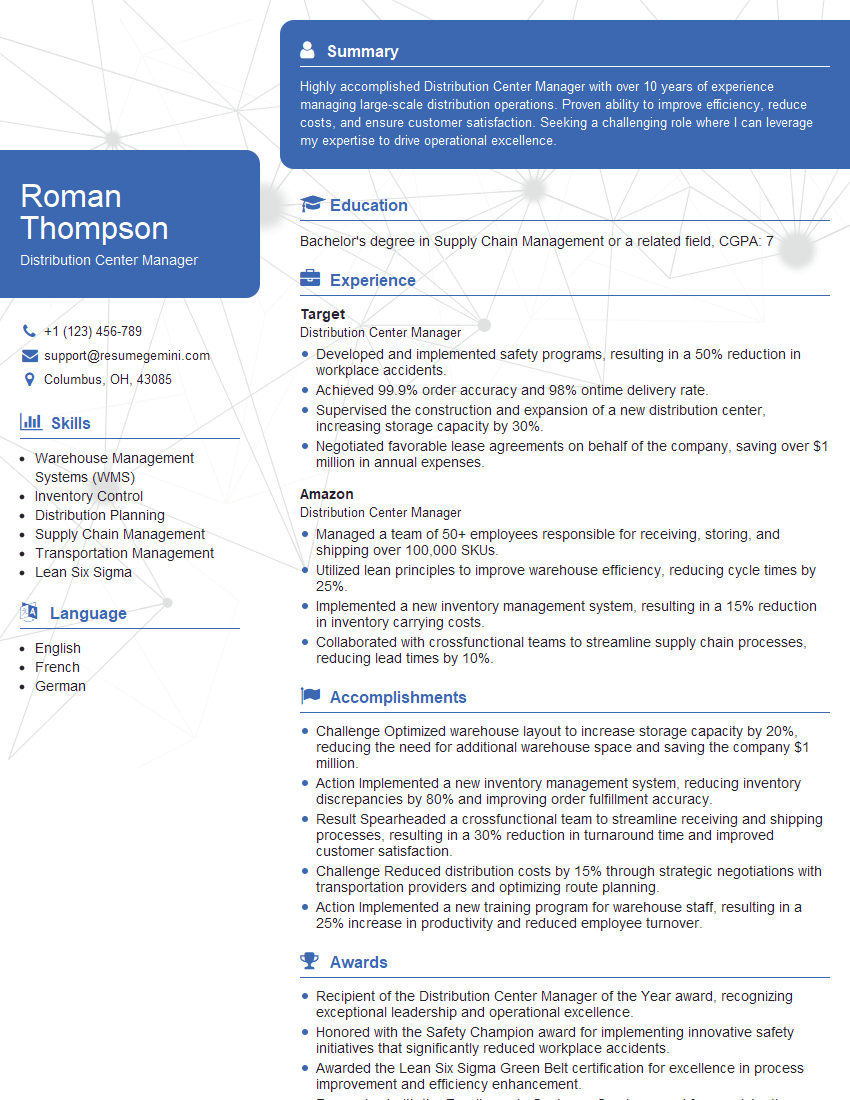
Distribution Center Manager Resume Sample
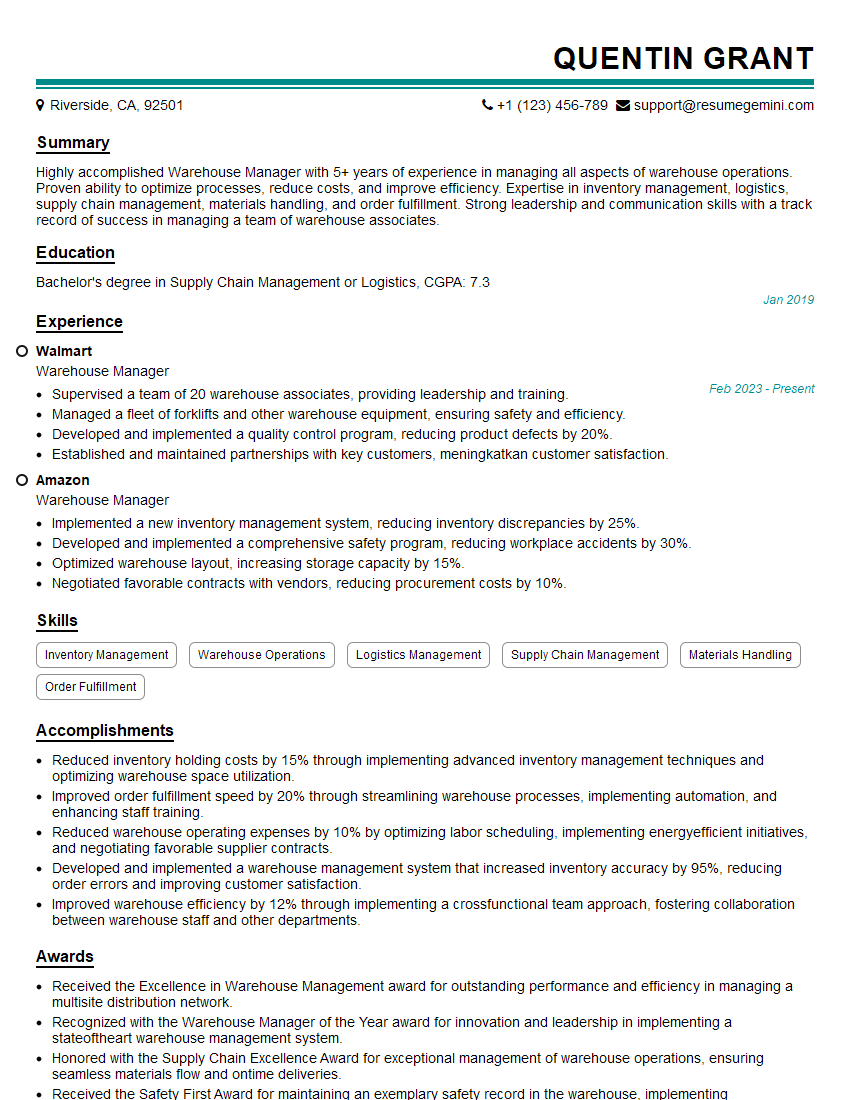
Warehouse Manager Resume Sample
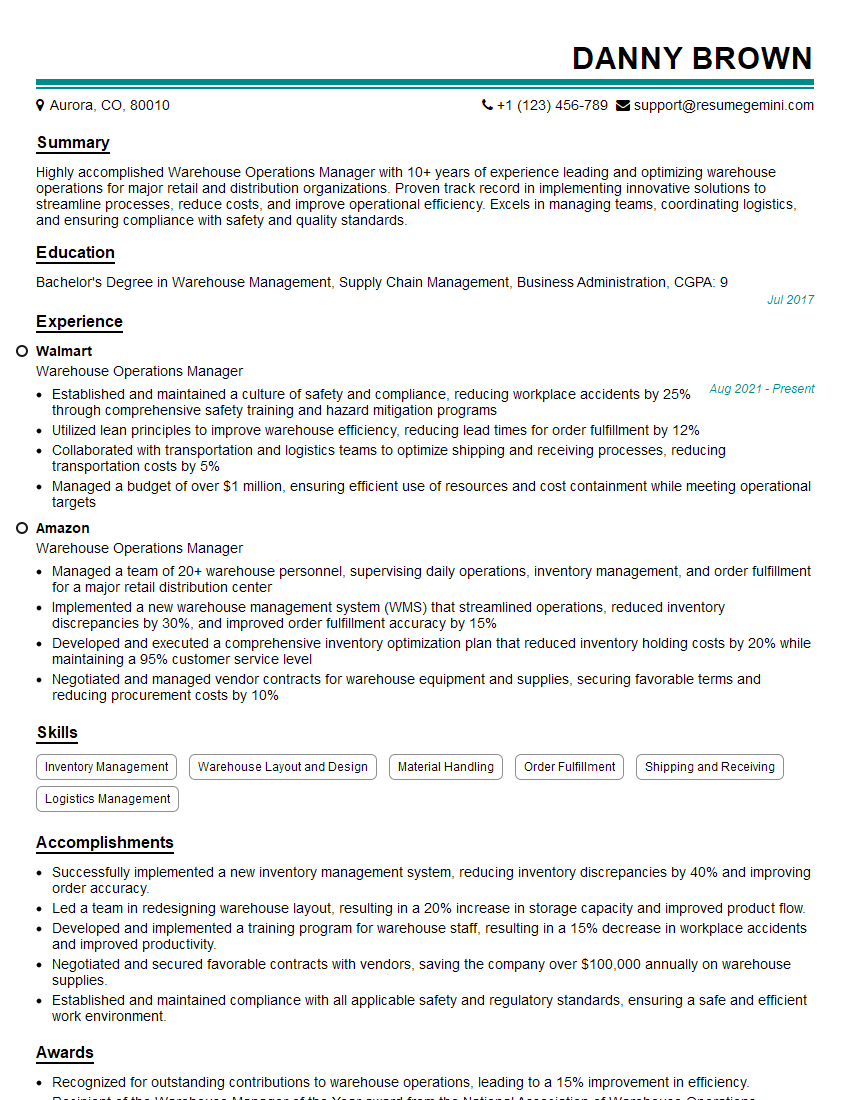
Warehouse Operations Manager Resume Sample
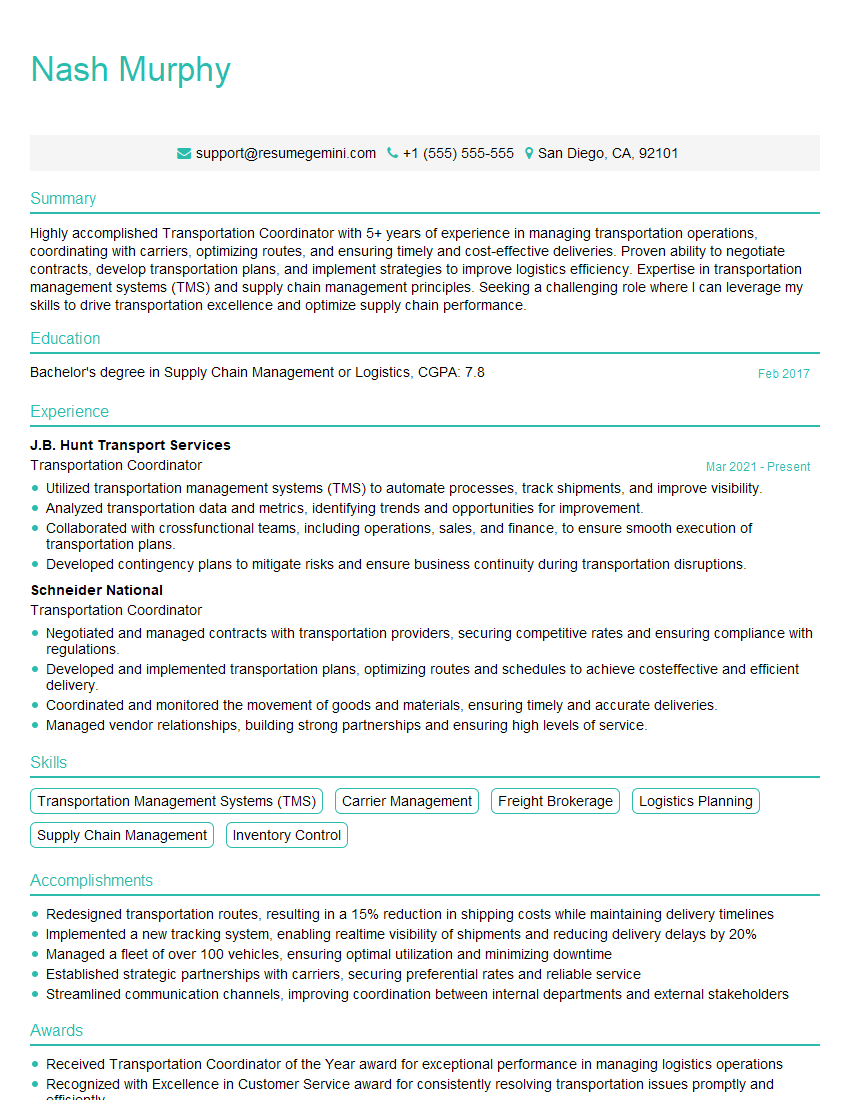
Transportation Coordinator Resume Sample
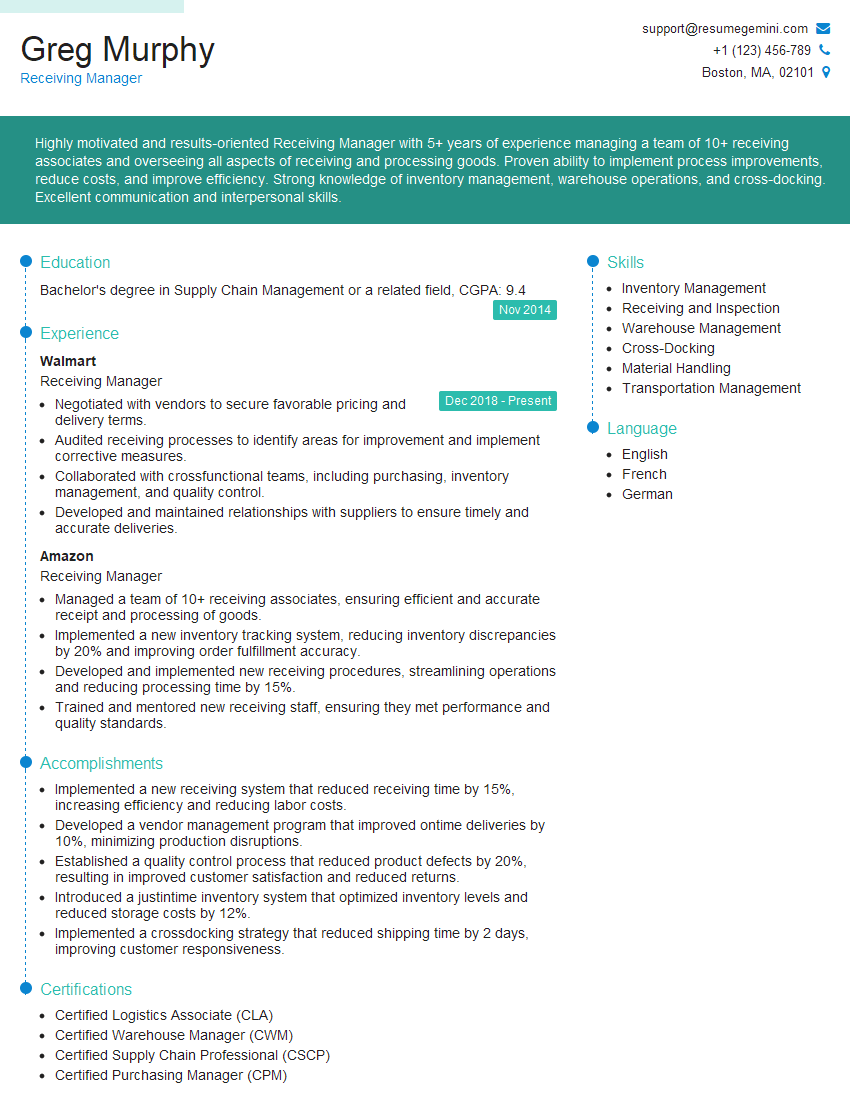
Receiving Manager Resume Sample
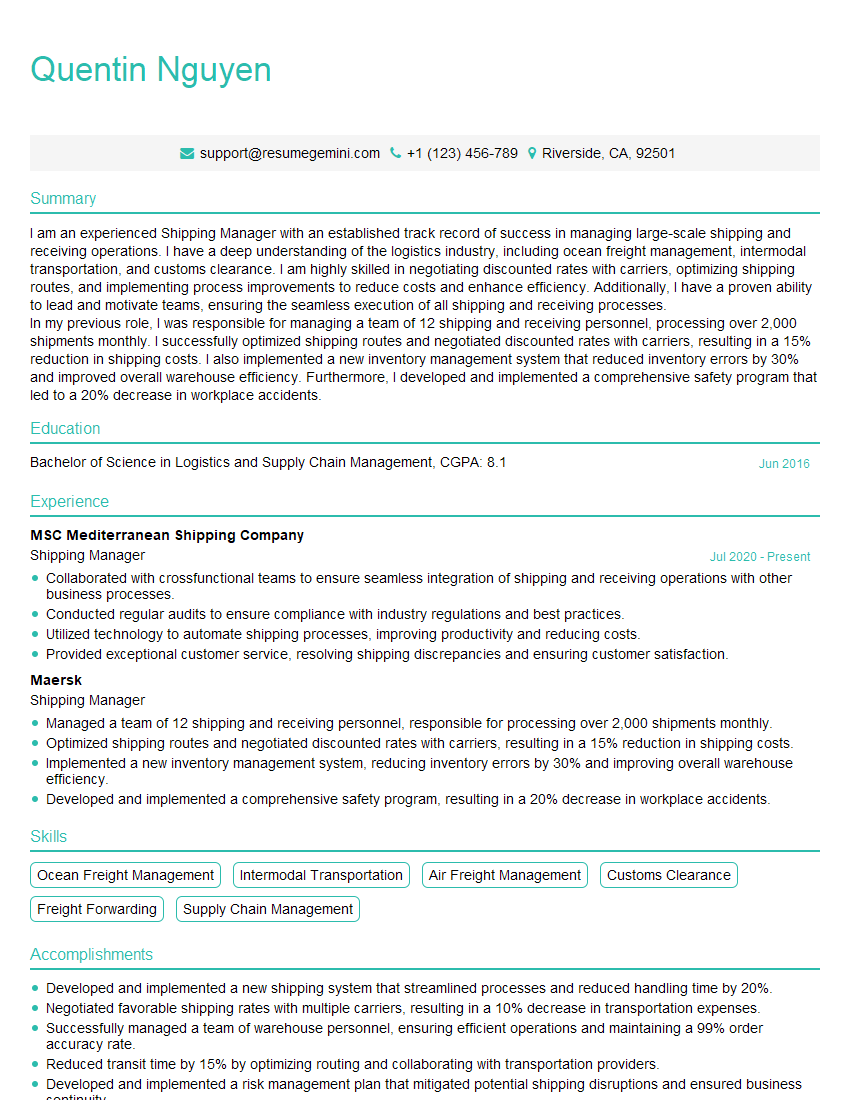
Shipping Manager Resume Sample
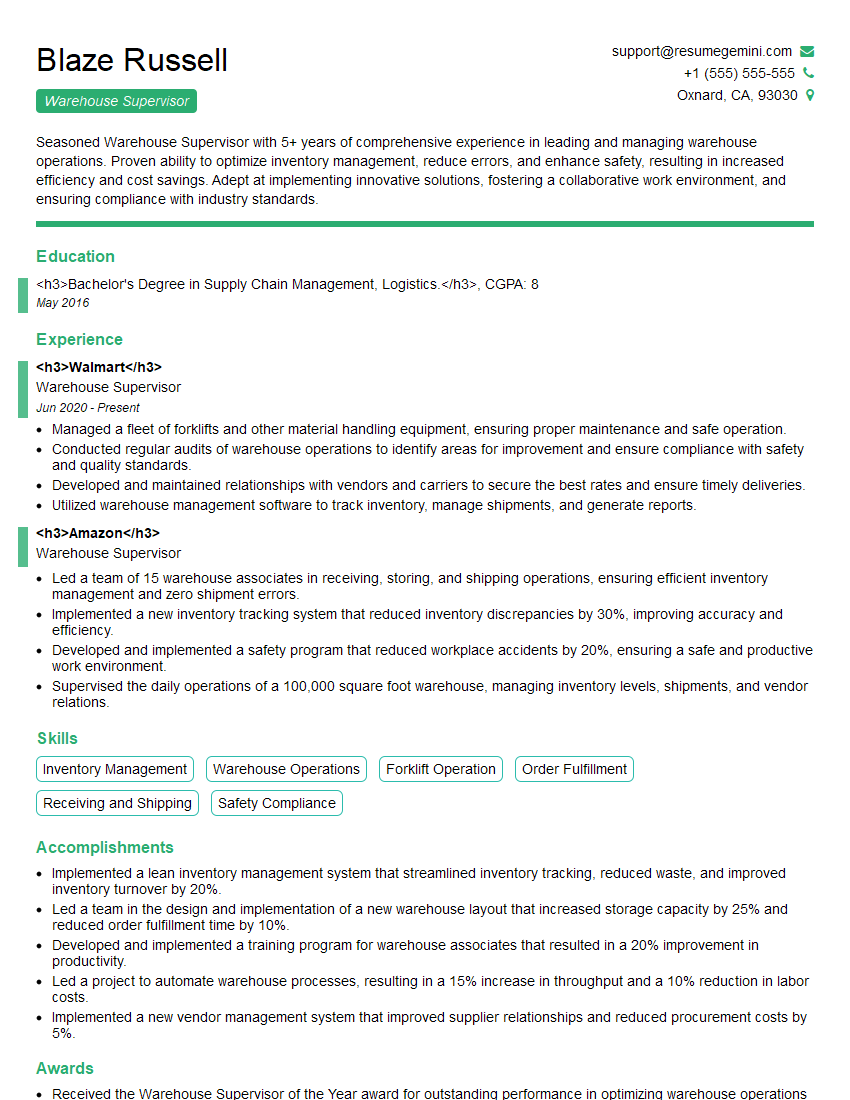
Warehouse Supervisor Resume Sample
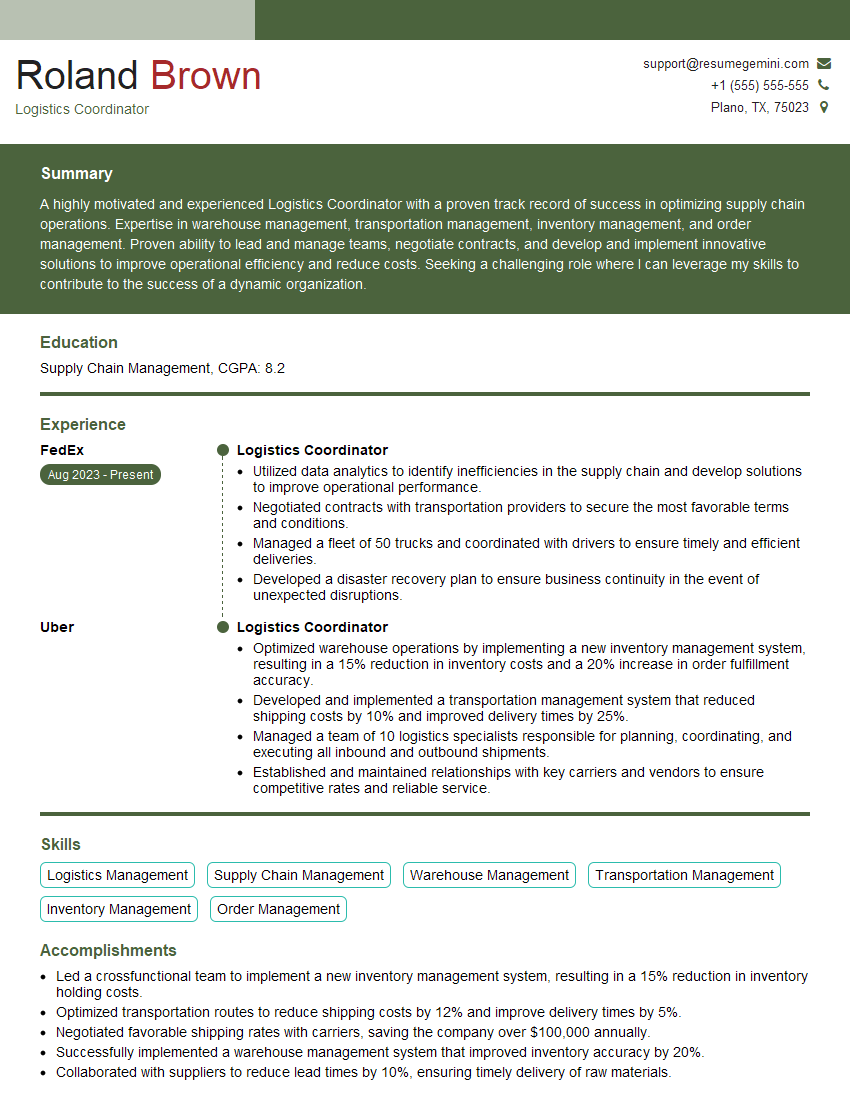
Logistics Coordinator Resume Sample
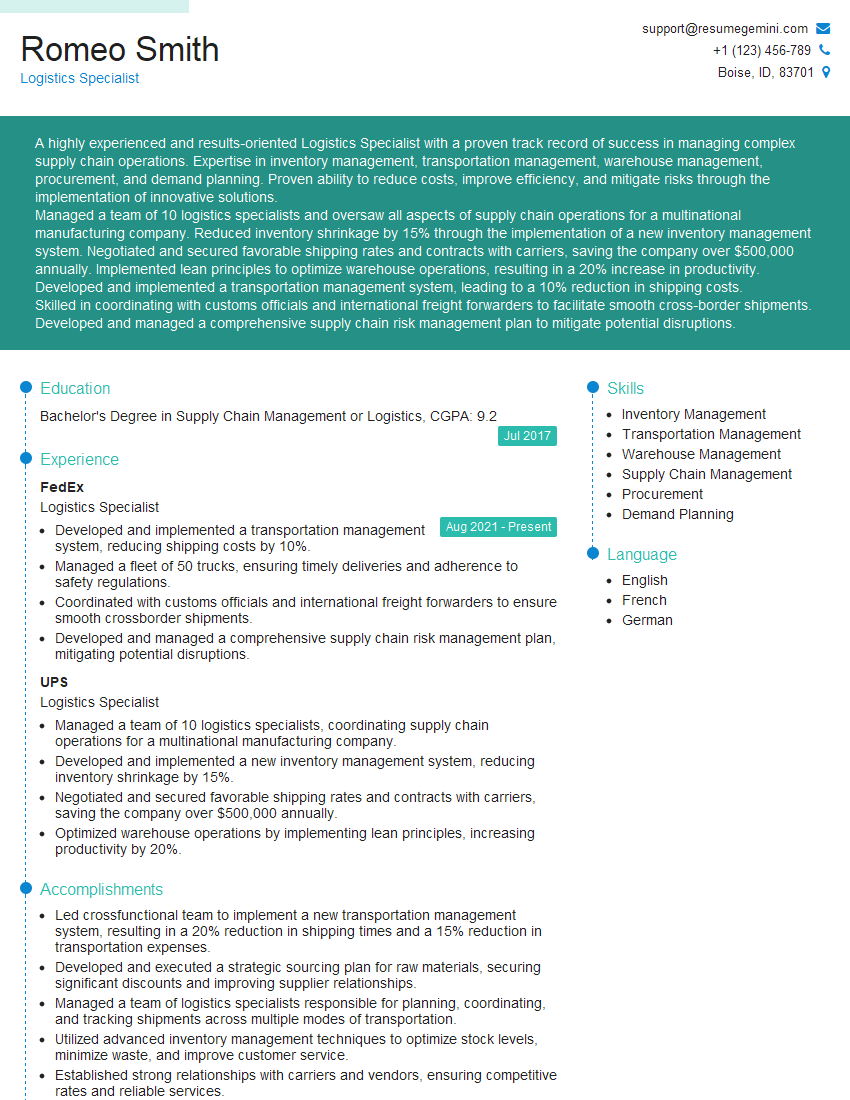
Logistics Specialist Resume Sample
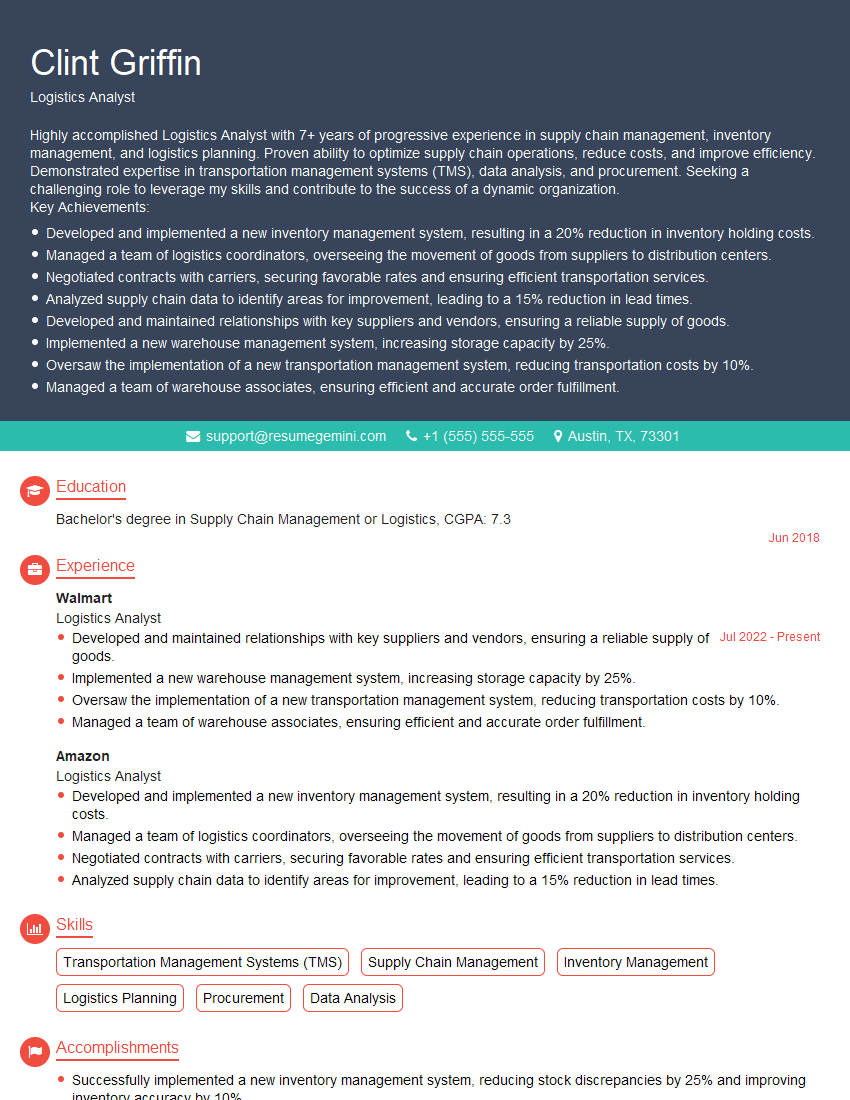
Logistics Analyst Resume Sample
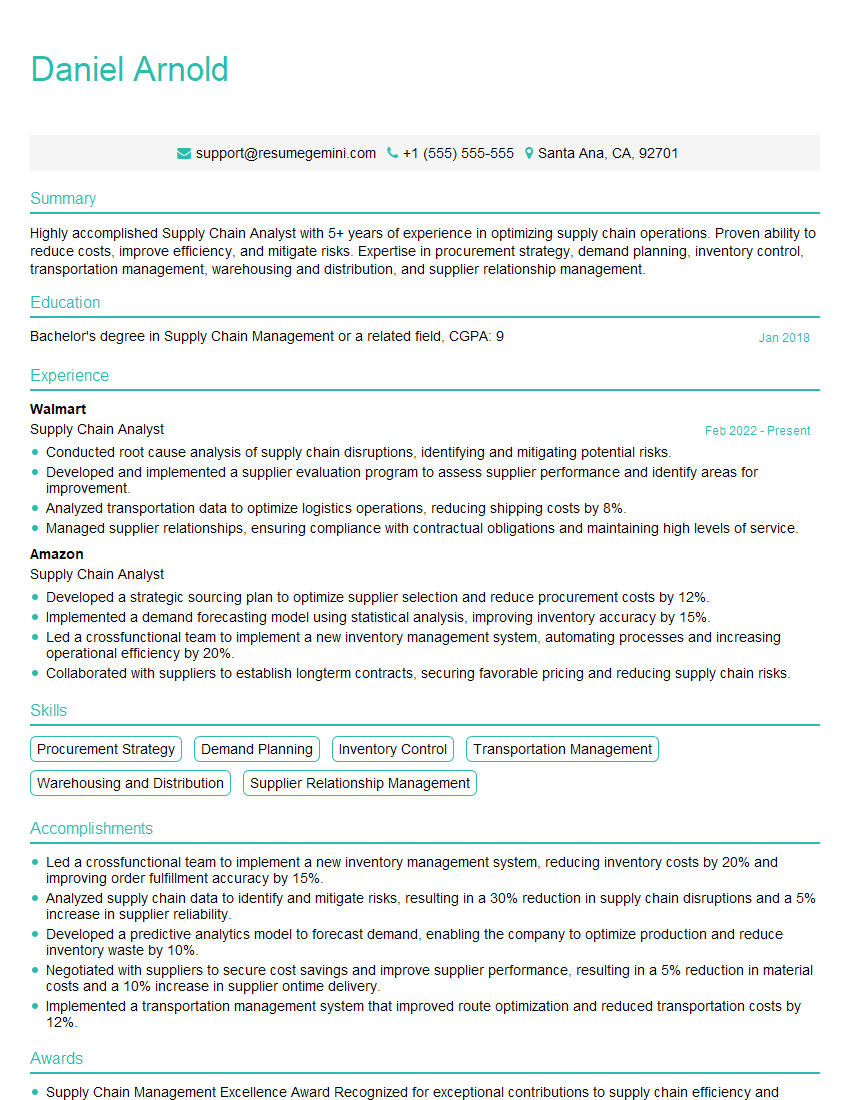
Supply Chain Analyst Resume Sample
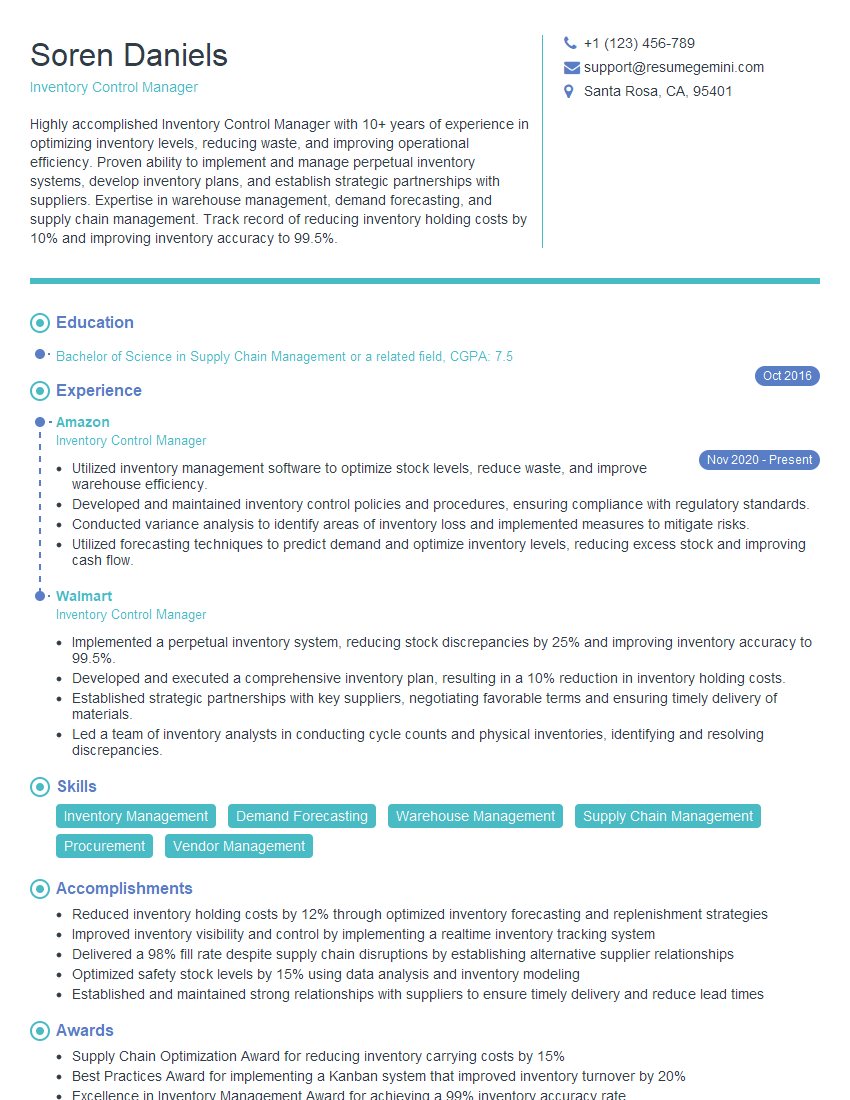
Inventory Control Manager Resume Sample

Shipping and Receiving Clerk Resume Sample
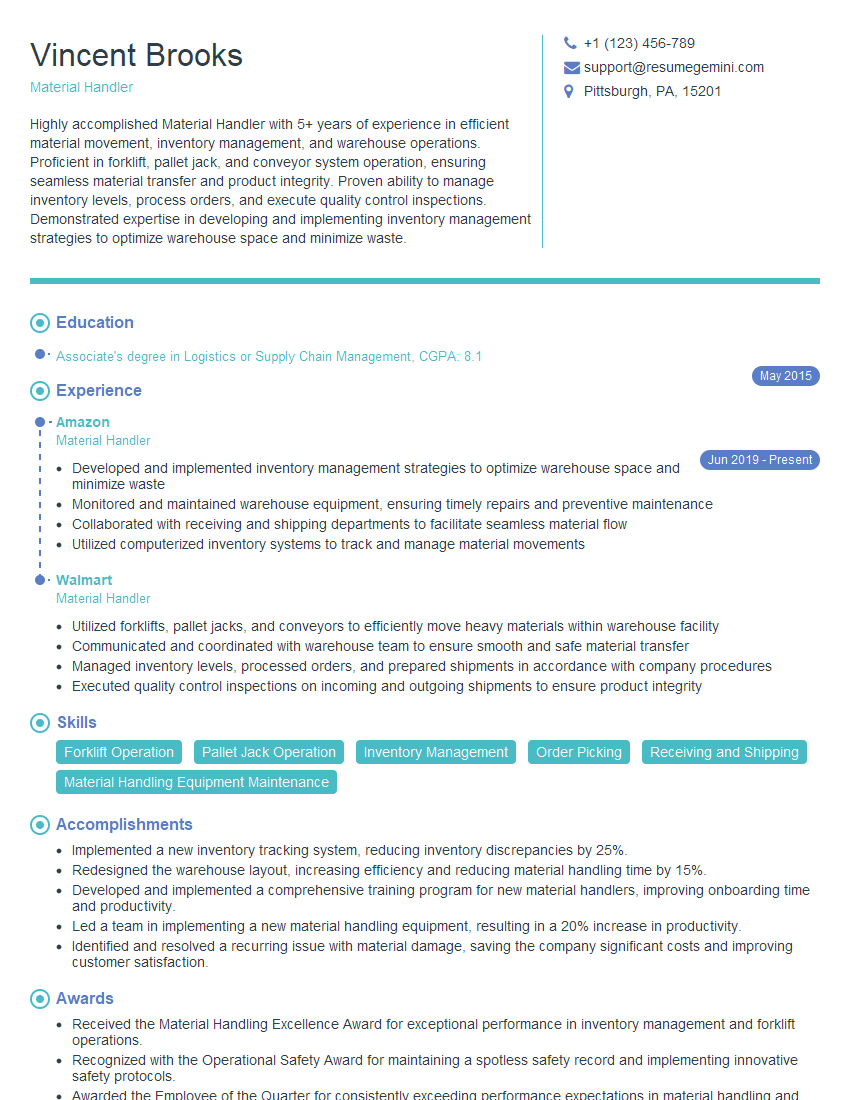
Material Handler Resume Sample
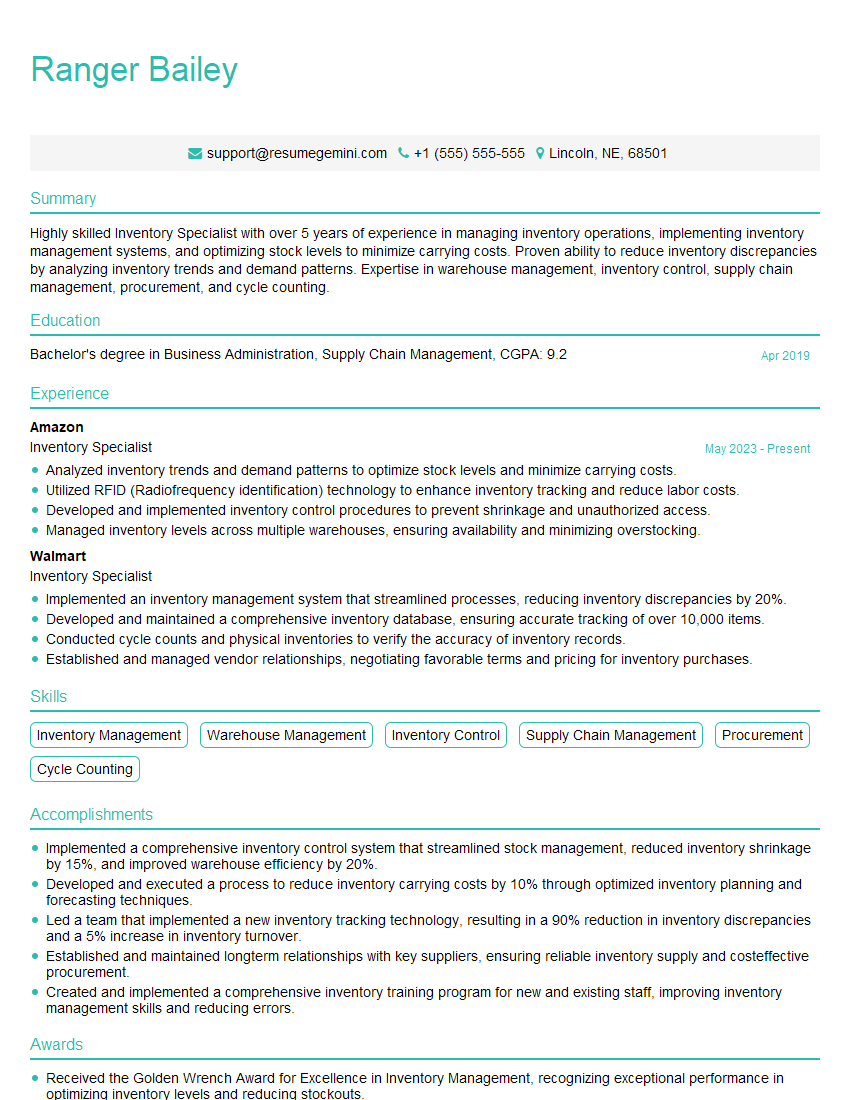
Inventory Specialist Resume Sample
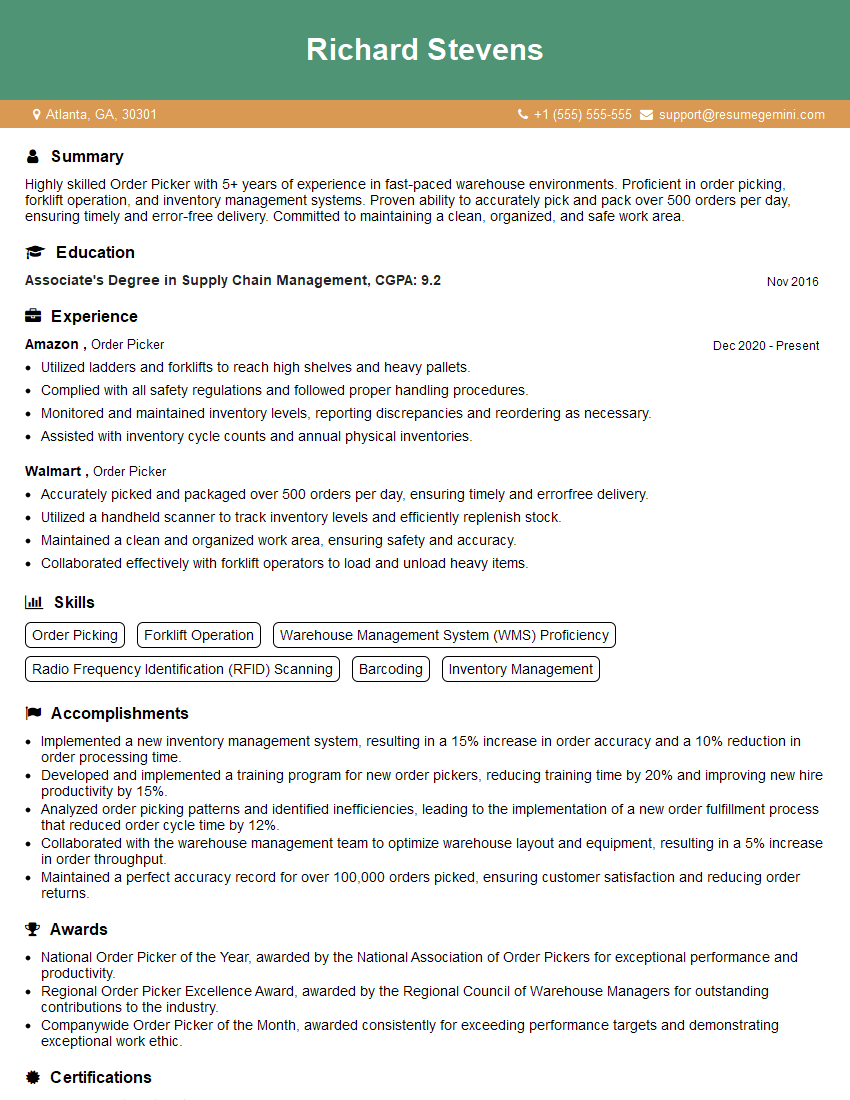
Order Picker Resume Sample
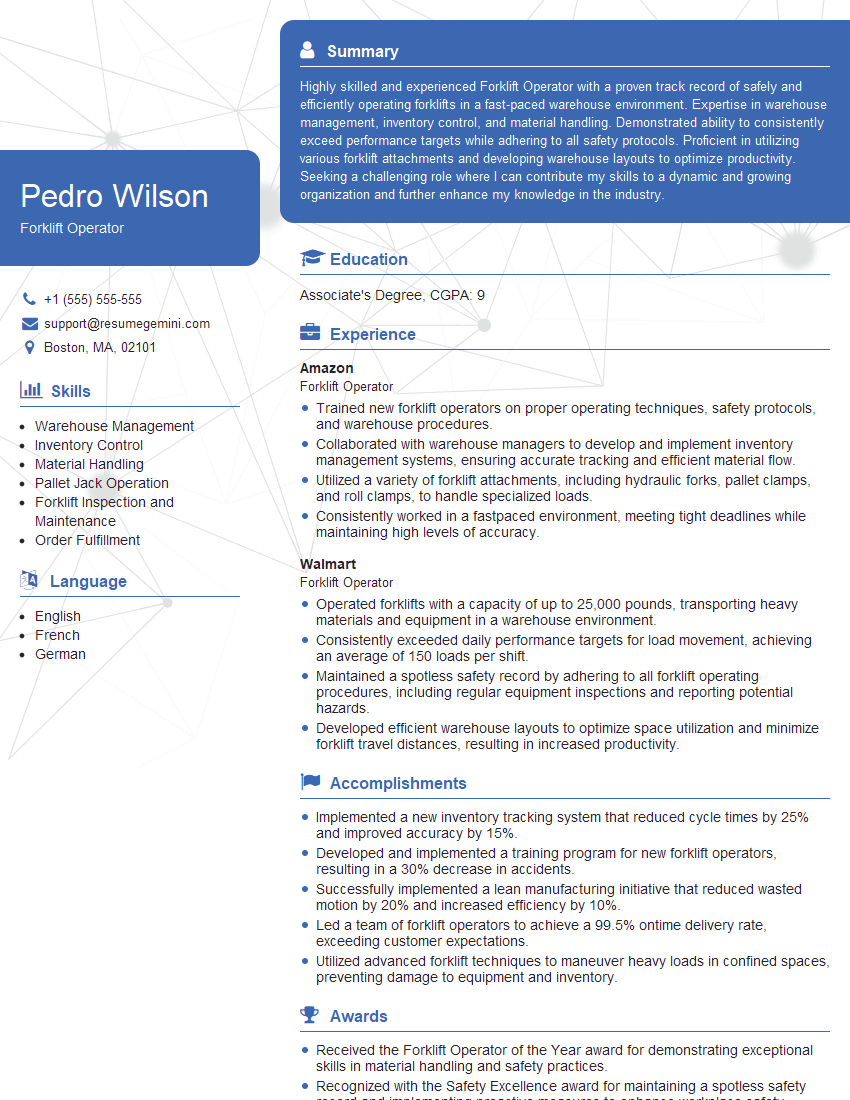
Forklift Operator Resume Sample
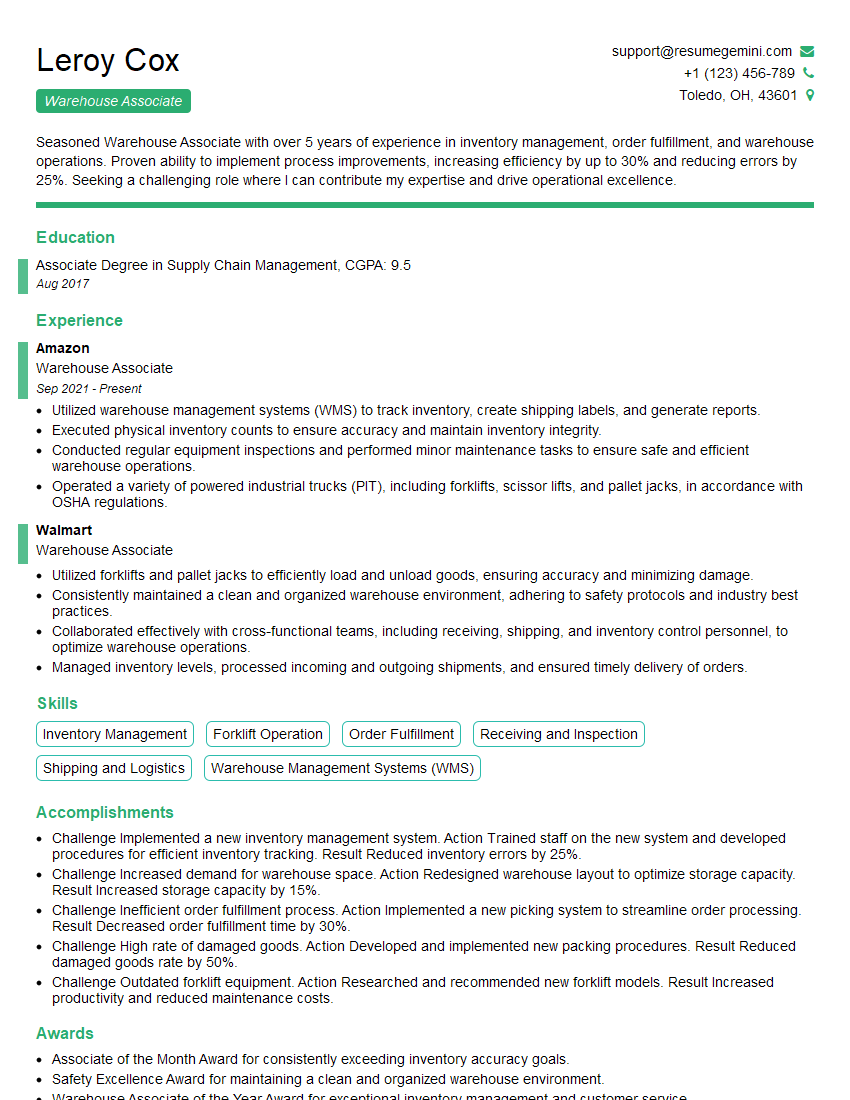
Warehouse Associate Resume Sample
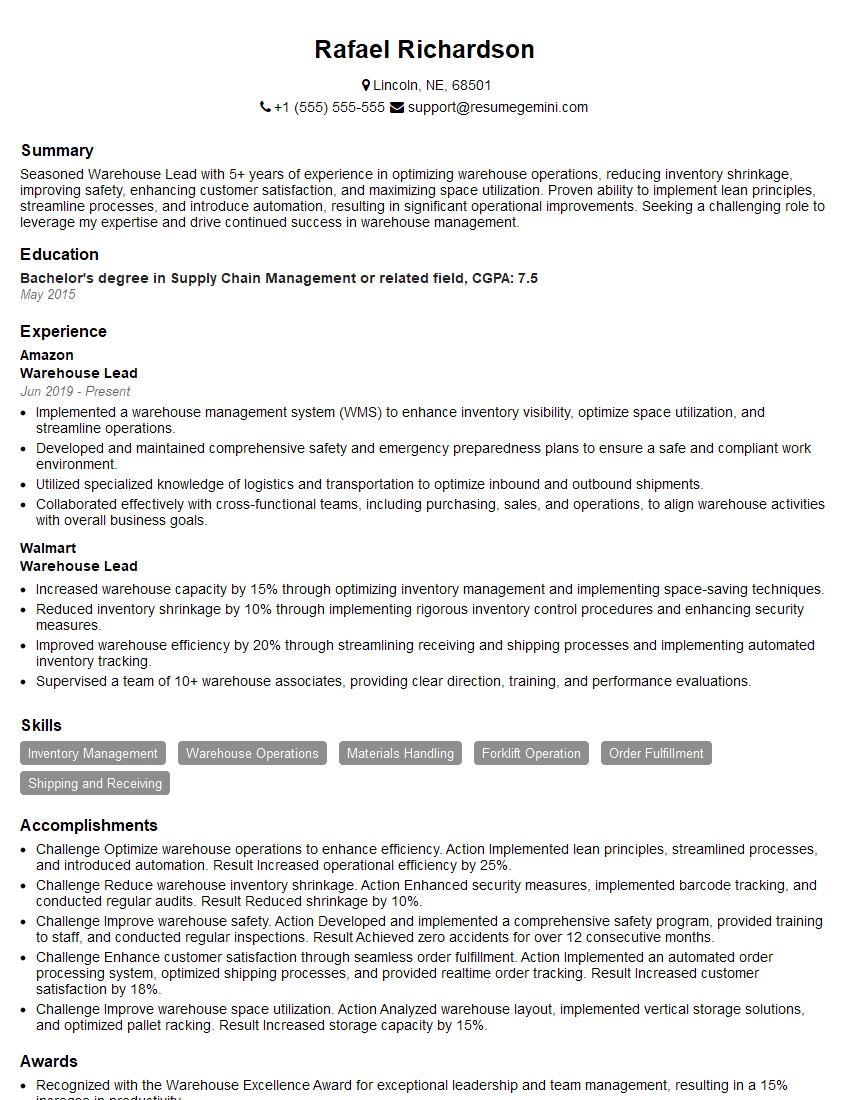
Warehouse Lead Resume Sample
- Distribution Center Manager
- Warehouse Manager
- Warehouse Operations Manager
- Transportation Coordinator
- Receiving Manager
- Shipping Manager
- Warehouse Supervisor
- Logistics Coordinator
- Logistics Specialist
- Logistics Analyst
- Supply Chain Analyst
- Inventory Control Manager
- Shipping and Receiving Clerk
- Material Handler
- Inventory Specialist
- Order Picker
- Forklift Operator
- Warehouse Associate
- Warehouse Lead
Explore more articles
Users Rating of Our Blogs
Share Your Experience
We value your feedback! Please rate our content and share your thoughts (optional).
What Readers Say About Our Blog
Very informative content, great job.
good