Preparation is the key to success in any interview. In this post, we’ll explore crucial Game Rules and Regulations interview questions and equip you with strategies to craft impactful answers. Whether you’re a beginner or a pro, these tips will elevate your preparation.
Questions Asked in Game Rules and Regulations Interview
Q 1. Explain the importance of clear and concise game rules.
Clear and concise game rules are the foundation of a positive player experience. Ambiguity leads to frustration, arguments, and ultimately, a ruined game. Think of it like a well-written recipe – if the instructions are unclear, the final product will likely be a disaster. Clear rules ensure everyone understands the game’s objectives, mechanics, and limitations, fostering fairness and enjoyment.
- Clarity: Rules should use precise language, avoiding jargon or ambiguous terms. Each rule should have one clear meaning.
- Conciseness: Rules should be as short and to the point as possible while maintaining clarity. Avoid unnecessary wordiness.
- Structure: Organize rules logically, using headings, subheadings, and bullet points to improve readability. A well-structured rulebook is easier to navigate and understand.
For example, instead of writing ‘A player can move their piece to any adjacent space,’ a clearer rule might be ‘Players may move their piece one space horizontally or vertically to an unoccupied space.’ The latter is less open to interpretation.
Q 2. How do you balance player agency with pre-defined game rules?
Balancing player agency with pre-defined rules is a crucial aspect of game design. The goal is to create a framework that offers players meaningful choices while ensuring the game remains structured and fair. Too much freedom can lead to chaos; too little, to boredom.
This balance is achieved through a combination of strategies:
- Defined Constraints: Rules set clear boundaries, preventing players from doing anything they want. These constraints are the framework within which agency operates. For example, a turn-based system limits actions to a player’s turn.
- Meaningful Choices: Within those constraints, players should have significant choices that impact the game’s outcome. Consider different strategic options and branching paths. In a card game, the choice of which card to play is a key element of player agency.
- Emergent Gameplay: Good rules foster emergent gameplay – situations and interactions that aren’t explicitly defined in the rules, but arise naturally from the player’s choices and interactions. This keeps the game engaging and unpredictable.
Think of it like a sandbox: The rules define the boundaries of the sandbox (constraints), but within those boundaries, players have immense freedom to build and create (agency).
Q 3. Describe a time you had to revise game rules due to playtesting feedback.
During playtesting a collectible card game I was developing, we discovered a powerful card combination that consistently led to early game victories, making the game feel unbalanced and predictable. Players were exploiting a loophole where two specific cards, when played in sequence, created an unbeatable strategy.
Our solution involved revising the rules for one of the cards, slightly limiting its ability to interact with other cards in the game. We added a clause that prevented the problematic combination while still maintaining the card’s intended functionality in other scenarios. This required careful testing to ensure the change didn’t negatively impact other aspects of the gameplay. The revision significantly improved game balance and made for a more engaging and competitive experience.
Q 4. How do you ensure game rules are accessible to players of varying skill levels?
Making game rules accessible to players of varying skill levels involves a multi-pronged approach:
- Layered Rulebooks: Offer a ‘quick start’ guide for beginners, a detailed rulebook for advanced players, and potentially tutorial videos or interactive guides.
- Clear Terminology: Avoid jargon and technical terms whenever possible. If technical terms are necessary, clearly define them within the rulebook or use an easily accessible glossary.
- Progressive Complexity: Introduce game mechanics gradually, starting with the core rules and progressively introducing more advanced concepts as players gain experience.
- Visual Aids: Use diagrams, flowcharts, and illustrations to help players visualize complex rules or game mechanics. A picture is often worth a thousand words.
Think of it like learning to ride a bike – you start with the basics (balance, pedaling) before learning more advanced techniques (turns, hills). Similarly, game rules should be introduced in a manner that’s appropriate to the player’s experience level.
Q 5. What strategies do you use to prevent rule exploits or loopholes?
Preventing rule exploits and loopholes requires careful design and rigorous playtesting. Here are some key strategies:
- Comprehensive Rule Set: Ensure the rules cover all possible scenarios and potential interactions. Leave no room for ambiguity or interpretation.
- Iterative Playtesting: Conduct extensive playtesting with diverse groups of players to identify potential loopholes and exploits that might be missed during initial design.
- Formal Logic Analysis: In some cases, more complex game systems might benefit from formal logic analysis to rigorously check for inconsistencies and potential loopholes.
- Community Feedback: Engage the player community in identifying and reporting potential exploits. This can be a valuable source of information that might otherwise be missed.
- Regular Updates: Be prepared to issue rule updates or errata to address any identified exploits or ambiguities.
Prevention is better than cure. By proactively addressing potential problems through careful design and rigorous testing, you can minimize the likelihood of exploits and ensure a fairer gaming experience for all.
Q 6. Explain the process of designing a fair and balanced game system.
Designing a fair and balanced game system is an iterative process requiring careful consideration of several factors:
- Defined Objectives: Clearly define the win conditions for each player. This ensures everyone understands how to win and what they need to do to achieve victory.
- Balanced Mechanics: Each game mechanic should have a cost and a benefit. No single mechanic should be overwhelmingly powerful compared to others. Consider the relative strengths and weaknesses of different game elements.
- Resource Management: Implement a system where resources are scarce and competition for those resources creates strategic decision-making. This ensures players need to make difficult choices to progress.
- Counterplay: Design game elements that allow players to counter or mitigate the strategies of their opponents. No single strategy should be unbeatable.
- Playtesting: Rigorous playtesting is crucial for identifying imbalances and ensuring the game is fun and engaging.
Balance is not about making everything equal; it’s about creating a system where players have meaningful choices and the outcome depends on skill and strategy, not just luck or an overpowered element.
Q 7. How do you incorporate player feedback into the iterative design of game rules?
Incorporating player feedback is essential for iterative game rule design. This feedback provides invaluable insights into the game’s strengths and weaknesses, allowing for targeted improvements and refinements.
Here’s a process I typically follow:
- Collect Feedback: Gather feedback through various channels such as surveys, forums, playtesting sessions, and social media. Consider both quantitative (e.g., win rates) and qualitative (e.g., player comments) data.
- Analyze Feedback: Identify common themes and patterns in the feedback. Focus on recurring issues or areas of concern reported by multiple players.
- Prioritize Issues: Based on the analysis, prioritize the issues to address. Focus on significant problems that negatively impact gameplay or fairness.
- Design Changes: Develop potential solutions to address the prioritized issues. Consider different approaches and their potential consequences.
- Implement and Retest: Implement the changes and rigorously retest the game to evaluate their effectiveness. This may involve additional playtesting sessions.
- Iterate: The process of collecting, analyzing, and implementing changes is iterative. Continue refining the game rules based on further feedback and playtesting results.
Remember, player feedback is not always right, but it’s an essential source of information to guide the iterative improvement of the game.
Q 8. Describe your experience with different rule systems (e.g., turn-based, real-time).
My experience spans a wide range of rule systems, from the deliberate turns of strategy games like Civilization to the frantic real-time action of MOBAs like League of Legends. I’ve worked with turn-based systems employing both simultaneous and sequential actions, where players take turns performing actions one after the other, and asynchronous systems, allowing players to act at their own pace. Real-time systems, on the other hand, require instantaneous decision-making and often involve complex timing mechanics and simultaneous actions from multiple players. I’ve also designed systems that blend these approaches, creating hybrid models where turn-based strategy underlies real-time combat, for example.
Understanding the nuances of each system is crucial. Turn-based systems allow for more thoughtful strategic planning, while real-time systems demand quick reflexes and adaptability. The choice of system significantly impacts game design, player experience, and the overall feel of the game.
For instance, in a turn-based card game I designed, we used a simultaneous action selection system where players chose their actions secretly, then revealed them at the same time, introducing an element of surprise and bluffing into the gameplay. In contrast, a real-time strategy game I worked on demanded a sophisticated UI to manage resources and units efficiently during rapid-paced engagements.
Q 9. How do you ensure that game rules are consistent with the overall game design?
Ensuring rule consistency with game design is paramount. The rules should organically support and enhance the core game loop and intended player experience, rather than hinder or contradict it. This requires a close collaboration between designers and rule writers from the outset.
For example, if the game design emphasizes strategic resource management, the rules should reflect this by clearly defining how resources are acquired, used, and potentially lost. Similarly, if the game’s theme centers around exploration, the rules should guide how players traverse the game world, encounter challenges, and reap rewards.
I often use a framework where we create a ‘game design document’ that lays out the intended player experience, core mechanics, and overall feel of the game. The rules are then meticulously crafted to ensure they directly support these key elements. Regular reviews and playtesting sessions throughout development further refine the alignment between the rules and the design goals.
Q 10. How do you design rules to support emergent gameplay?
Designing rules to support emergent gameplay is about creating a system where simple rules can lead to complex and unpredictable outcomes. This is achieved by focusing on interaction, player agency, and open-ended systems.
Consider the game of Minecraft. Its rules are relatively simple – gather resources, craft items, build structures – yet the gameplay is extraordinarily varied. Players can build incredible structures, create complex contraptions, engage in large-scale collaborative projects, or even wage war. This emerges from the interaction of the simple rules and player creativity.
To achieve emergent gameplay, we need to avoid overly prescriptive rules. Instead, we focus on establishing core principles and allowing player actions to interact in unexpected ways. This might involve incorporating randomness, allowing for multiple paths to victory, or designing systems where player actions have unintended consequences.
In a project I worked on, we used a simple system of unit attributes (strength, speed, defense) interacting with environmental effects and terrain to create unique strategic possibilities. The resulting unpredictable battles were far more engaging than a rigidly scripted combat system.
Q 11. How do you handle conflicting game rules or ambiguous situations?
Conflicting or ambiguous rules are a major source of frustration for players. To handle them effectively, a clear and well-defined process is essential. This involves meticulously reviewing all rules for internal consistency and potential ambiguities.
A good strategy includes:
- Prioritization: Establish a hierarchy of rules. In the case of conflict, the higher-priority rule prevails.
- Specificity: Write rules to be as precise as possible. Ambiguity often arises from vague language.
- Example Scenarios: Illustrate rules with clear examples to avoid misinterpretation.
- Formal Ruling Process: Develop a clear process for resolving disputes during gameplay, including escalating to a game master or rules arbiter if necessary.
- Documentation Updates: Regularly update the rulebook to reflect any changes or clarifications made during development or playtesting.
A specific example: if a rule regarding movement allows a unit to move ‘up to’ a certain distance and another rule states a specific distance, the ‘up to’ rule takes precedence since it offers more flexible movement while staying within the game’s limitations.
Q 12. What are some common pitfalls to avoid when designing game rules?
Several common pitfalls plague game rule design. Avoiding these ensures a smooth and enjoyable player experience.
- Overly Complex Rules: Rules should be simple and intuitive. Avoid overly technical jargon or convoluted phrasing. If rules are too complex, they will hinder rather than enhance the game.
- Inconsistent Terminology: Maintain consistency in terminology throughout the rulebook. Using multiple terms for the same concept creates confusion.
- Unbalanced Gameplay: Rules should create a balanced playing field. If one strategy or element is overwhelmingly powerful, it ruins the experience for everyone.
- Lack of Clarity: Vague or ambiguous wording will lead to disputes and frustration. Each rule needs to be precisely written and easy to understand.
- Ignoring Player Feedback: Playtesting is essential. Collect feedback from players and make iterative improvements to the rules based on their input.
For instance, a common mistake is creating rules that are too powerful or have unintended cascading consequences. Thorough playtesting helps identify and resolve such issues.
Q 13. How do you test the clarity and effectiveness of game rules?
Testing rule clarity and effectiveness is an iterative process involving various methods.
- Playtesting: This is crucial. Observe how players interpret and apply the rules in practice. Note any areas of confusion or frustration.
- Rule Reviews: Have multiple individuals review the rules for clarity, consistency, and potential ambiguities.
- Usability Testing: Ask players to complete specific tasks within the game and observe whether they can easily follow the rules to achieve the tasks.
- Surveys and Feedback Forms: Gather player feedback on rule clarity and ease of understanding after play sessions.
- A/B Testing: Test different wordings or rule structures to determine which is more effective and less likely to lead to misinterpretations.
For example, I’ve used A/B testing to compare two versions of a rule concerning resource acquisition. One version used complex terminology, while the other used simpler phrasing. The playtesting data showed significantly fewer errors and misunderstandings with the simpler version, leading to its adoption.
Q 14. Describe your experience working with game rule documentation.
My experience with game rule documentation is extensive. I understand that well-written documentation is crucial for a positive player experience. It’s more than just a list of rules; it’s a guide that empowers players to understand and enjoy the game.
I’ve worked with various documentation formats, from simple rulebooks to interactive digital manuals, including wikis, in-game help systems and FAQs. I’ve structured documentation using different approaches depending on the game’s complexity and target audience:
- Clear and Concise Language: Avoiding jargon and using plain language is key for broad accessibility.
- Logical Structure: Organizing rules into logical sections (e.g., gameplay, movement, combat) makes information easier to find.
- Visual Aids: Diagrams, flowcharts, and examples greatly enhance understanding.
- Index and Search Functionality: For longer documents, an index and searchable content are essential for quick lookups.
- Version Control: Tracking changes and revisions is crucial for managing updates and addressing player feedback effectively.
In one project, we developed an interactive in-game tutorial that gently introduced players to the rules while they were playing, avoiding the need for a separate, lengthy rulebook. This proved to be a very effective and engaging approach.
Q 15. How do you measure the success of your game’s rule set?
Measuring the success of a game’s rule set is a multifaceted process that goes beyond simple player enjoyment. It requires a holistic approach, considering several key metrics.
- Player Engagement: Do players find the rules intuitive and engaging, leading to sustained playtime and repeated sessions? This can be tracked through playtime data, player retention rates, and community feedback.
- Balance and Fairness: Are the rules balanced, preventing any single strategy or player from dominating? Analysis of win rates, character or strategy usage, and player complaints are crucial here. Significant imbalances often require rule adjustments.
- Clarity and Understandability: Are the rules easily understood and accessible to the target audience? This can be assessed through player surveys, tutorial completion rates, and the frequency of rule-related questions.
- Emergent Gameplay: Do the rules foster interesting and unpredictable gameplay? Observing actual gameplay sessions and analyzing player strategies helps to identify whether rules create dynamic and engaging scenarios or lead to monotonous routines.
- Community Feedback: Constant monitoring of player forums, social media, and direct feedback mechanisms is essential. This helps to identify issues with rules that might not be apparent through quantitative data alone.
Ultimately, a successful rule set creates a fun, fair, and engaging experience that encourages players to return for more.
Career Expert Tips:
- Ace those interviews! Prepare effectively by reviewing the Top 50 Most Common Interview Questions on ResumeGemini.
- Navigate your job search with confidence! Explore a wide range of Career Tips on ResumeGemini. Learn about common challenges and recommendations to overcome them.
- Craft the perfect resume! Master the Art of Resume Writing with ResumeGemini’s guide. Showcase your unique qualifications and achievements effectively.
- Don’t miss out on holiday savings! Build your dream resume with ResumeGemini’s ATS optimized templates.
Q 16. How do you ensure game rules are easy to understand and follow?
Creating easy-to-understand game rules is paramount. It involves a combination of clear writing, accessible formatting, and iterative testing.
- Simple Language: Avoid jargon and technical terms unless absolutely necessary, and if used, provide clear definitions. Write in a concise and straightforward manner, using active voice whenever possible.
- Visual Aids: Diagrams, flowcharts, and illustrative examples can greatly improve comprehension. A picture truly is worth a thousand words, especially when explaining complex game mechanics.
- Layered Explanation: Provide a quick overview of the basic rules first, then delve into more complex details. This allows players to start playing quickly while progressively learning more advanced aspects of the game.
- In-Game Tutorials: Integrated tutorials within the game itself provide hands-on learning. These interactive tutorials can guide players through crucial game mechanics and rule explanations.
- Iterative Playtesting: Testing the rules with diverse groups of players and gathering feedback is crucial. This iterative process allows for identification and correction of confusing or ambiguous elements before release.
Think of it like teaching someone a new recipe – you start with the basic steps and gradually introduce more complex techniques. The same principle applies to rule design.
Q 17. What techniques do you use to create engaging and challenging gameplay while maintaining fair rules?
Balancing engaging gameplay with fair rules requires careful consideration of several factors.
- Strategic Depth: Implement mechanics that allow for multiple viable strategies, preventing a single dominant approach. This encourages diverse gameplay styles and keeps the game fresh and unpredictable.
- Resource Management: Introduce resource scarcity to create meaningful choices and strategic considerations. This adds layers of depth to gameplay without making the game overly complicated or unfair.
- Risk and Reward: Design mechanics with varying levels of risk and reward. This encourages players to make tactical decisions and accept calculated risks, adding excitement and tension to the game.
- Randomness (with Control): Incorporate elements of randomness, but ensure players have agency to influence outcomes. This can prevent stagnation while maintaining a sense of fairness and player control.
- Regular Balancing: After the game’s release, monitor player feedback and game data to identify and address any imbalances. Regular updates and patches are crucial for maintaining fair and engaging gameplay over time.
For example, in a card game, the introduction of special cards with powerful effects, but limited availability, creates both risk and reward, making the game more exciting and strategically complex.
Q 18. How do you manage the complexity of game rules in a large and complex game?
Managing rule complexity in large games often involves modular design and layered rule systems.
- Modular Design: Break down the rules into smaller, self-contained modules that govern different aspects of the game. This makes it easier to understand, maintain, and update individual components.
- Layered Rule System: Introduce rules gradually, starting with core mechanics and progressively revealing more complex systems as players progress. This prevents players from being overwhelmed with information upfront.
- Rulebook Organization: Structure the rulebook logically, using clear headings, subheadings, and visual aids to guide players through the information. Consider an index and a glossary for easy reference.
- In-Game Rule Reference: Provide easily accessible in-game rule summaries or help sections. This allows players to quickly access information without having to consult the rulebook every time.
- Community-Driven Rule Clarification: Encourage player interaction and feedback to identify and clarify any ambiguous or confusing parts of the rule set. This fosters a collaborative effort in refining and improving the rules.
Think of it like assembling a complex machine – breaking it into smaller parts simplifies the process, and you can even replace or upgrade parts independently. The same applies to a game’s rule set.
Q 19. How do you balance player freedom with the need for structured gameplay?
Balancing player freedom and structured gameplay is a delicate act of design. It requires careful consideration of the game’s core mechanics and player agency.
- Defined Goals: Establish clear objectives and goals for players to strive towards, providing a framework within which they can exercise their freedom. This structure prevents complete randomness while still allowing players to pursue different paths to victory.
- Emergent Gameplay: Design the rules to encourage emergent gameplay, where player interactions and choices lead to unpredictable and interesting scenarios. This sense of discovery and creative problem-solving provides players with freedom while still adhering to the underlying structure.
- Constraint-Based Design: Instead of dictating every action, use constraints to channel player freedom into meaningful choices. For instance, limiting resources or establishing specific challenges can direct player actions without stifling their creativity.
- Choice and Consequence: Ensure that player choices have significant and noticeable consequences. This emphasizes the importance of their actions within the structured system, increasing engagement without feeling restrictive.
- Iterative Feedback: Observe player behavior during playtesting to assess the balance between freedom and structure. Adjust rules based on feedback, ensuring that players feel challenged but not constrained excessively.
For instance, in a sandbox game, while players have immense freedom in exploring and building, there are still limitations on resources or environmental factors that provide structure and challenges.
Q 20. Describe a time you had to make a difficult decision regarding game rules.
In developing a real-time strategy game, we faced a significant challenge regarding unit balancing. One unit, the ‘Siegebreaker,’ was overwhelmingly powerful in the late game, overshadowing other units and leading to predictable strategies.
The initial solution was to simply nerf (reduce the effectiveness of) the Siegebreaker. However, this led to player complaints of the unit becoming useless, effectively removing a unique strategic option. We had to consider the psychology of players who invested heavily in this unit and their sense of frustration with a simple reduction in power.
The solution we eventually implemented was a two-pronged approach. Firstly, we slightly reduced the Siegebreaker’s damage output. More importantly, we introduced a new counter-unit, the ‘Interceptor,’ specifically designed to effectively neutralize the Siegebreaker’s power in strategic engagements. This added a new layer to the game’s strategy, requiring players to adapt to a new dynamic rather than simply experiencing a power reduction. The feedback was significantly better, acknowledging the fair counter-play rather than the frustration of an arbitrary power reduction.
Q 21. How do you incorporate player psychology into your game rule design?
Incorporating player psychology into game rule design is essential for creating a compelling and enjoyable experience. This requires understanding key psychological principles such as motivation, reward systems, and cognitive biases.
- Motivation and Reward: Design a clear reward system that aligns with players’ motivations. This might involve points, achievements, leaderboards, or narrative progress. The rewards should feel attainable yet challenging, satisfying players’ needs for accomplishment and recognition.
- Loss Aversion: Players are often more sensitive to losses than gains. Design mechanics that make losses meaningful but not overly punishing. This can be achieved through thoughtful use of resources, risk-reward systems, and the design of penalties.
- Cognitive Biases: Be mindful of common cognitive biases like confirmation bias (tendency to favor information confirming existing beliefs) and availability heuristic (overestimating the likelihood of readily available information). Design rules that mitigate these biases and encourage critical thinking.
For example, a well-designed progression system provides players with a sense of accomplishment, addressing their need for progress and achievement, while smartly implemented penalties prevent frustration by maintaining a sense of fairness.
Q 22. What tools or technologies do you use to manage and document game rules?
Managing and documenting game rules effectively requires a multi-faceted approach. I leverage a combination of tools and technologies tailored to the complexity of the game. For simpler games, a well-structured document using a word processor like Google Docs or Microsoft Word, coupled with a version control system like Git, is sufficient. This allows for collaborative editing and tracking of changes. For more complex games, especially those with intricate mechanics or large rule sets, I employ dedicated game design software like Twine for narrative-driven games or specialized rule-writing tools that support branching logic and conditional rules. These tools often offer features for exporting the rules in various formats, such as PDFs or even in-game rulebooks. Finally, a wiki or dedicated online platform can be invaluable for storing and updating the rules, enabling easy access for players and developers alike. This approach ensures clarity, consistency, and easy maintenance throughout the game’s lifecycle.
Q 23. How do you ensure that game rules are scalable and adaptable to future updates?
Scalability and adaptability are crucial for long-term game success. I achieve this by designing rules with modularity in mind. Instead of monolithic rule sets, I break down the rules into smaller, independent components or modules. This makes it easier to add, modify, or remove specific rules without affecting the entire system. For example, consider a trading system in an MMORPG. The core trading mechanics (e.g., listing items, accepting offers) can be a module. New features, like auction houses or player-to-player trades with built-in escrow, can be added as separate modules. This also allows for A/B testing of different rule variations. Furthermore, I utilize data-driven design, where rules are defined through parameters and configurations stored in external data files (like JSON or XML). This approach allows for changes to game mechanics without requiring code recompilation, making updates much faster and easier to implement. The use of version control also allows for easy rollback if an update is problematic.
Q 24. How do you design game rules that cater to different player preferences?
Catering to different player preferences requires a nuanced approach to rule design. One technique is to offer multiple game modes or difficulty levels, each with its own set of rules tailored to a specific player experience. For instance, a strategy game might have a ‘casual’ mode with simplified rules and a ‘competitive’ mode with more complex mechanics and strategic depth. Another approach is to incorporate player choice within the rules themselves. A game might allow players to select different character classes, each with unique abilities and gameplay styles governed by specific rules. This allows players to customize their experience and play according to their preferences. The key is to offer a diverse range of options that appeal to different playstyles without compromising the overall game balance.
Q 25. Explain your understanding of game balance and its relationship to rules.
Game balance is the state where all elements of the game, including characters, items, and mechanics, interact fairly and provide players with a satisfying and challenging experience. The rules are the backbone of game balance; they define how elements interact and influence the overall gameplay loop. An unbalanced game might favor certain strategies or characters, leading to a monotonous or frustrating experience. For example, if a particular character in a fighting game is significantly more powerful than others due to a poorly balanced set of abilities, it will disrupt the balance, leading players to always choose the overpowered character. Achieving balance is an iterative process, requiring extensive playtesting and data analysis. I use feedback loops to continually monitor game balance and make necessary adjustments to the rules throughout development and post-launch.
Q 26. How do you prevent exploits or loopholes from emerging in the game?
Preventing exploits and loopholes requires a proactive and multi-layered approach. First, rigorous testing is vital. This includes internal playtesting by the development team, but more importantly, external testing with a diverse group of players to expose unforeseen vulnerabilities. Second, clear and unambiguous rules are fundamental. Vague or poorly worded rules create opportunities for exploits. I use precise language and avoid ambiguity wherever possible. Third, I design the game systems with inherent checks and balances. This may involve introducing constraints or limiting factors to prevent players from abusing certain mechanics. For example, in a resource-gathering game, limiting the rate at which players can gather resources prevents resource hoarding and ensures fairer competition. Finally, continuous monitoring of player behavior and feedback is essential for identifying and addressing potential exploits as they arise.
Q 27. How would you design a rule system that encourages player interaction and collaboration?
Encouraging player interaction and collaboration involves designing rules that reward teamwork and cooperative play. This can be achieved through shared objectives, collaborative mechanics, and incentives for working together. For example, a game might incorporate quests or challenges that require multiple players to coordinate and work together to succeed. The rules could reward players with bonuses for successful teamwork or penalize them for acting against the interests of the group. Another strategy is to create systems where players can trade, share resources, or assist each other, fostering a sense of community and mutual dependence. The rules should create scenarios where cooperation is mutually beneficial, making it a natural and rewarding choice for players.
Q 28. How do you communicate complex game rules effectively to players?
Communicating complex game rules effectively requires a layered approach. The most important aspect is clarity and conciseness. Avoid jargon and technical terms; instead, use plain language that is easily understood by the target audience. A well-structured rulebook with clear headings, subheadings, and visual aids, like diagrams and illustrations, can greatly enhance understanding. Organizing rules logically, grouping related rules together, makes navigation easier. Additionally, in-game tutorials and tooltips can provide immediate and context-specific help to players as they navigate the gameplay. Finally, providing multiple channels of communication, such as FAQs, videos, and a community forum, allows players to seek clarification and engage with fellow players and developers, fostering a supportive learning environment. Regularly updating and refining these materials based on player feedback ensures that the rules remain accessible and comprehensible over time.
Key Topics to Learn for Game Rules and Regulations Interview
- Rule Design and Implementation: Understanding the principles of good game design, including balance, fairness, and player experience, and how these principles translate into effective rule sets. Consider the impact of different rule structures on gameplay.
- Rule Interpretation and Application: Developing skills in analyzing ambiguous situations and applying rules consistently and fairly. Practice resolving conflicts and edge cases that might arise during gameplay.
- Game Mechanics and Rule Interaction: Analyzing how individual game mechanics interact with the overall rule set. Understanding how changes to one rule can impact other aspects of the game.
- Rule Clarity and Communication: Mastering the art of clearly and concisely communicating complex rules to diverse audiences, whether verbally or in writing. Consider the need for different levels of detail for different player types.
- Testing and Iteration: Understanding the importance of playtesting and iterative refinement of rules based on player feedback and observed gameplay. Discuss methods for collecting and analyzing this feedback effectively.
- Legal and Ethical Considerations: Exploring the legal and ethical implications of game rules and regulations, particularly in relation to intellectual property, player safety, and fair play.
- Balancing Gameplay and Player Experience: Understanding the delicate balance between creating engaging gameplay and maintaining a fair and enjoyable experience for all players. Explore different techniques for achieving this balance.
Next Steps
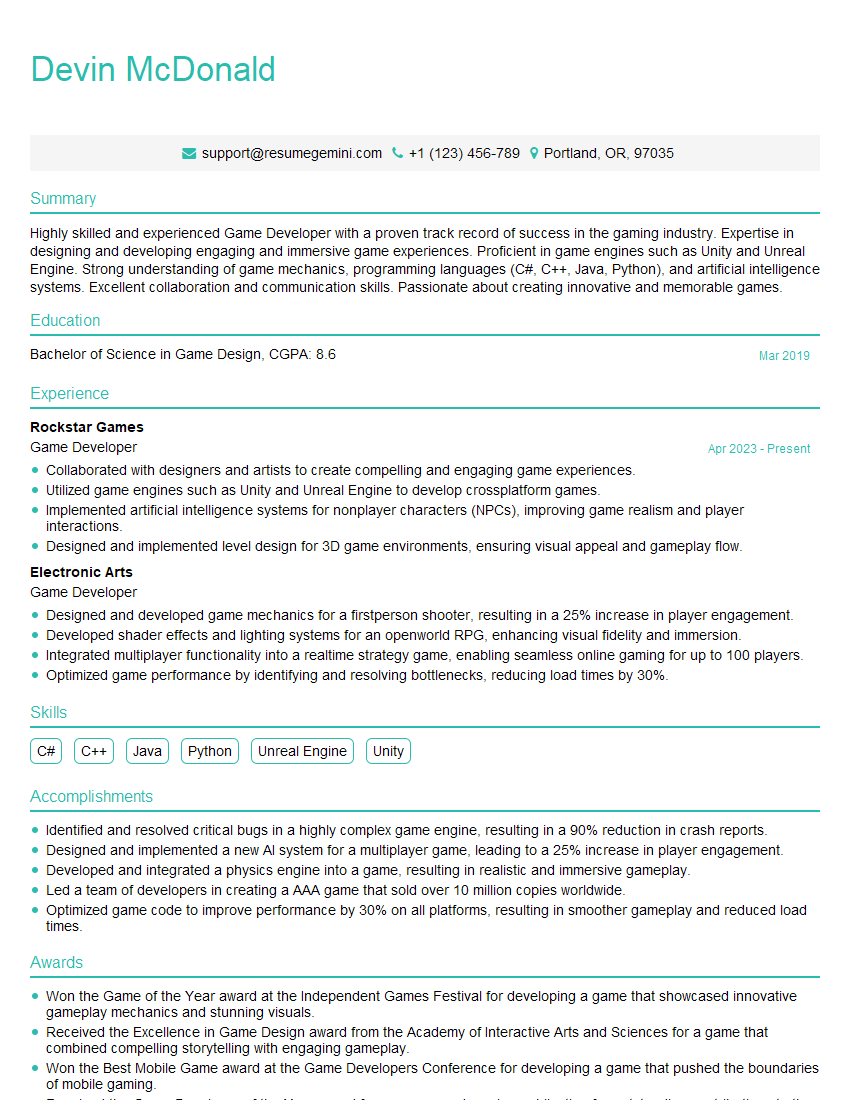
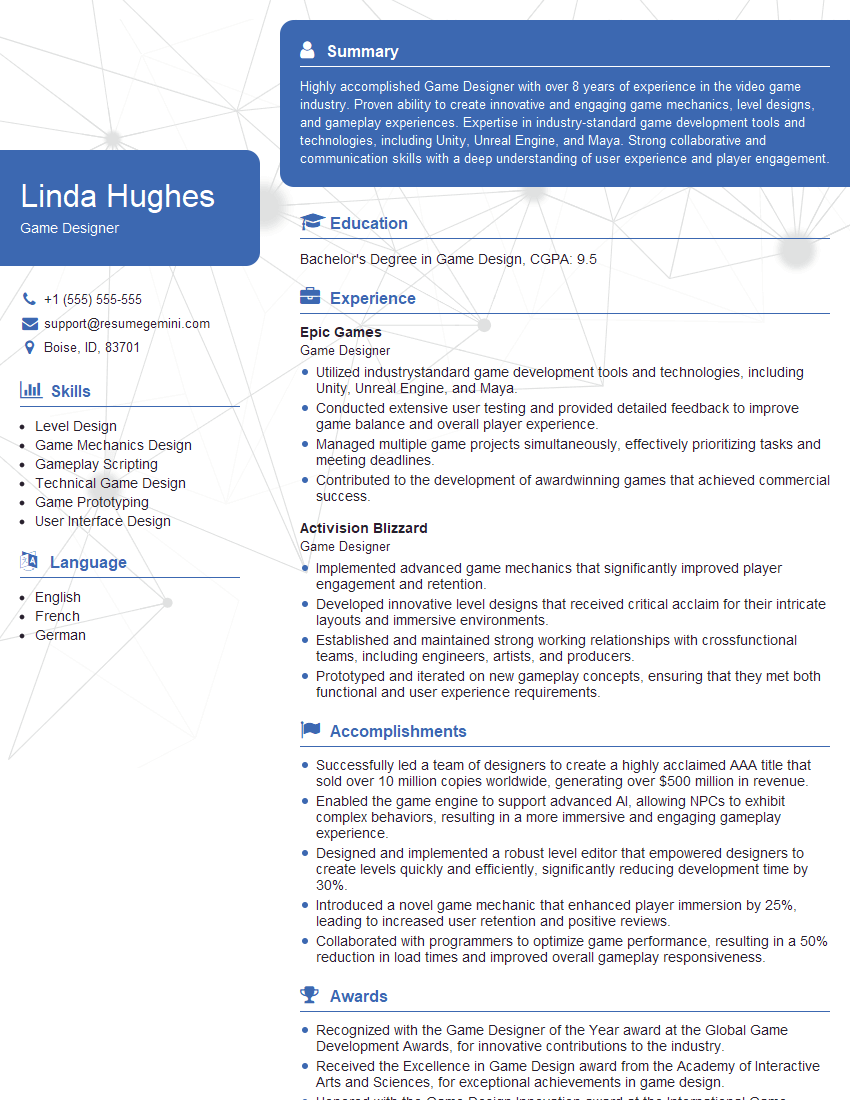
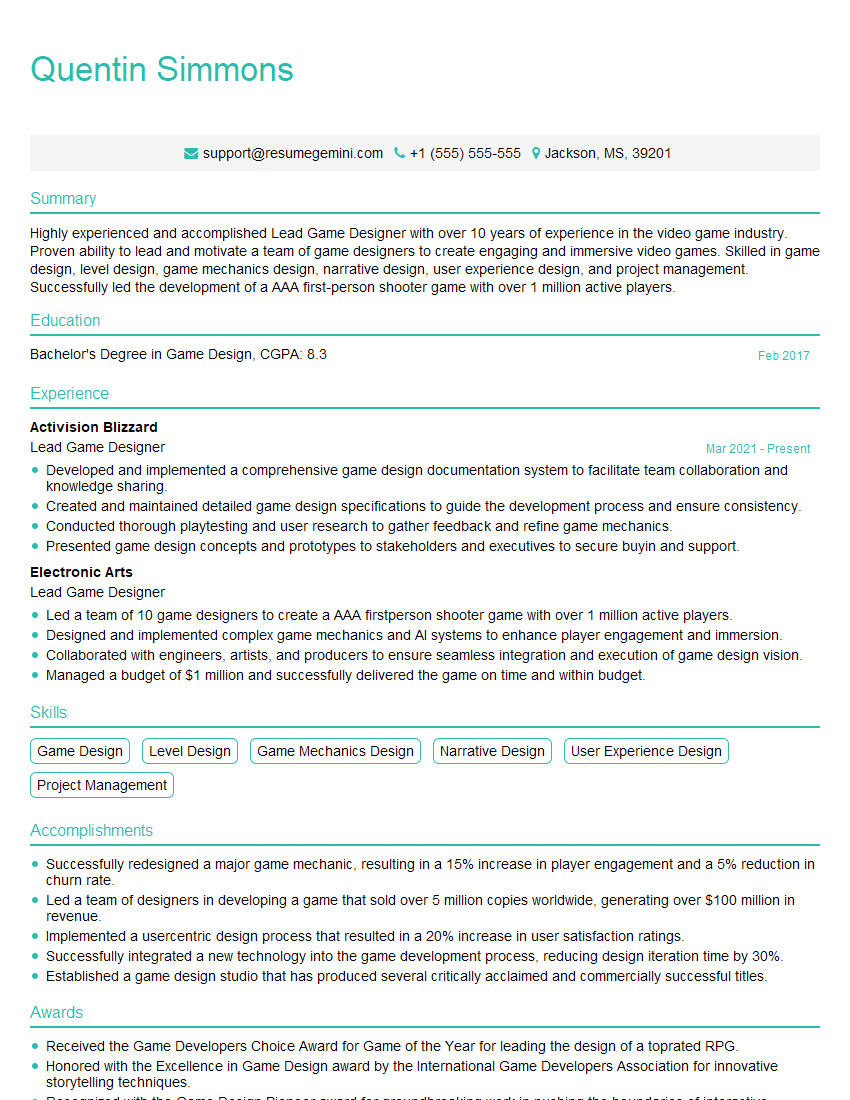
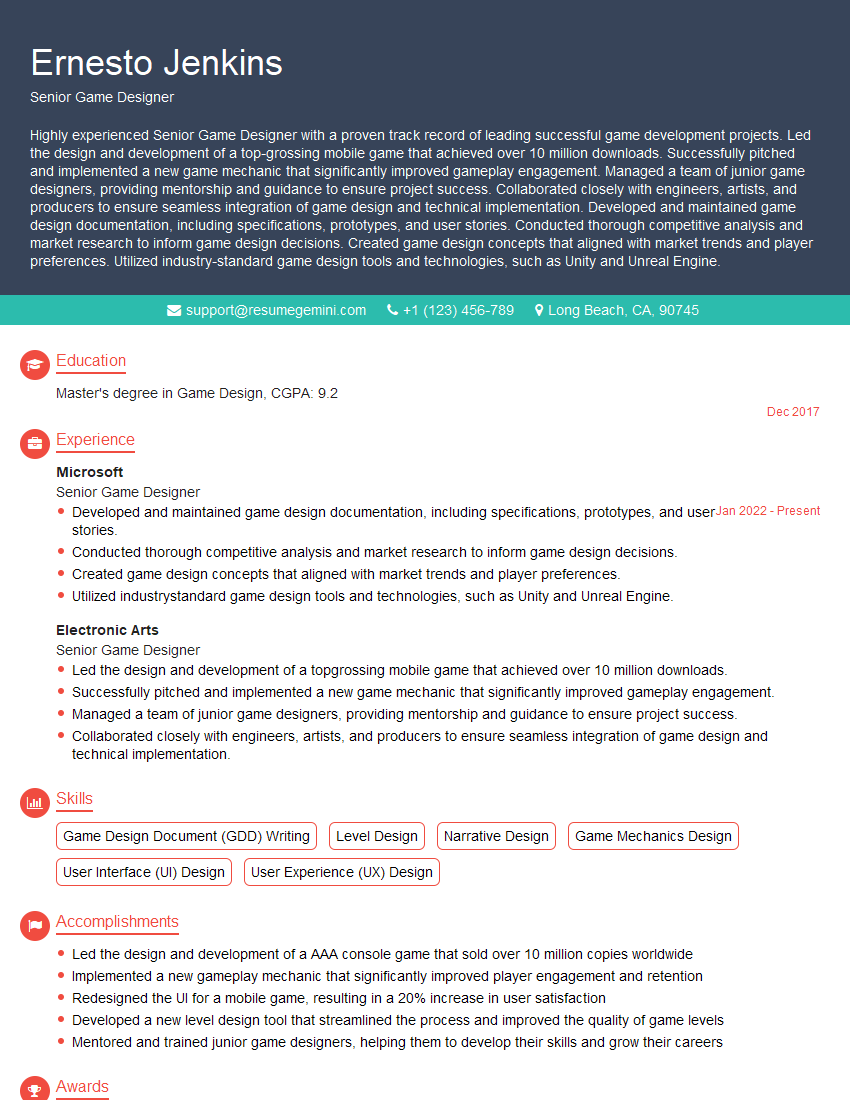
Mastering Game Rules and Regulations is crucial for career advancement in the gaming industry. A strong understanding of these principles demonstrates your ability to contribute meaningfully to game development, operation, or oversight. To maximize your job prospects, it’s essential to create an ATS-friendly resume that highlights your relevant skills and experience. We highly recommend using ResumeGemini to build a professional and impactful resume that showcases your expertise in this area. ResumeGemini provides examples of resumes tailored to Game Rules and Regulations roles, offering valuable templates and guidance to help you present your qualifications effectively.
Explore more articles
Users Rating of Our Blogs
Share Your Experience
We value your feedback! Please rate our content and share your thoughts (optional).
What Readers Say About Our Blog
Very informative content, great job.
good