Every successful interview starts with knowing what to expect. In this blog, we’ll take you through the top Ganoksin Studio interview questions, breaking them down with expert tips to help you deliver impactful answers. Step into your next interview fully prepared and ready to succeed.
Questions Asked in Ganoksin Studio Interview
Q 1. Explain your experience with Ganoksin Studio’s modeling tools.
My experience with Ganoksin Studio’s modeling tools spans several years, encompassing a wide range of projects from simple pendants to complex, multi-component rings. I’m proficient in using its core tools like the extrusion, revolve, and Boolean operations. I find its intuitive interface particularly helpful for quickly prototyping designs. I’ve also explored advanced features such as the various surface manipulation tools for creating organic shapes and detailed textures. The learning curve was relatively smooth, especially coming from a background in traditional jewelry design, as the software’s workflow mirrors many of the hands-on techniques I already knew. I’ve successfully utilized its tools to model intricate settings, incorporating textures and details that accurately reflect the look and feel of the finished piece.
For example, I recently used the ‘Revolve’ tool to create a beautifully symmetrical ring from a 2D profile, and subsequently applied the ‘Boolean’ operation to precisely cut out a detailed stone setting.
Q 2. Describe your process for creating a 3D model of a ring in Ganoksin Studio.
My process for creating a 3D ring model in Ganoksin Studio typically starts with sketching a 2D profile. This provides a clear visual representation of the ring’s shape and proportions. Then, I’ll utilize the ‘Revolve’ tool to create a 3D model from this 2D profile. Next, I’ll refine the design by adding details such as textures, decorative elements, and the stone setting. This might involve using extrusion tools to build up the ring’s shank or employing Boolean operations to subtract or add elements. I constantly zoom in and out during this process to assess the model’s overall proportions and ensure that the details are both aesthetically pleasing and structurally sound. I often iterate on the design, making minor adjustments as needed before moving on to rendering and export. Finally, I perform a thorough quality check, examining the model for any imperfections or areas that need refinement. It’s a meticulous process, but ensures a high-quality, accurate, and aesthetically pleasing final product.
Q 3. How would you troubleshoot a rendering issue in Ganoksin Studio?
Troubleshooting rendering issues in Ganoksin Studio often involves systematically checking several aspects. Firstly, I’d review the model for any potential problems. Are there any overlapping surfaces, or unclosed surfaces? These often cause rendering errors. Secondly, I’d examine the rendering settings themselves. Have I selected the correct renderer? Are the resolution and anti-aliasing settings appropriate? A too-high resolution can lead to slow rendering times or even crashes. Thirdly, I’d check my system resources. Sufficient RAM and a powerful graphics card are crucial for smooth rendering. A low memory condition will severely impact performance or prevent rendering completely. If the problem persists, I might try restarting the software or even my computer. As a final resort, I might consult the Ganoksin Studio online forums or support documentation for similar issues and solutions.
For example, I once encountered a rendering error that was traced to a very small, nearly invisible gap in a surface. Closing this gap solved the problem immediately.
Q 4. What are the limitations of Ganoksin Studio compared to other CAD software?
Compared to professional-grade CAD software like Rhino or SolidWorks, Ganoksin Studio has certain limitations. It lacks the advanced functionalities found in these programs, such as complex surface modeling tools, advanced animation capabilities, and robust finite element analysis (FEA). Ganoksin Studio’s primary focus is on jewelry design, and its feature set reflects this. While it excels at creating organic shapes and adding detail, its capabilities for highly technical or intricate designs might be somewhat restricted. The file size management could also be more sophisticated in professional software. However, for the average jeweler or jewelry designer, Ganoksin Studio offers a great balance of functionality and ease of use, making it a valuable tool.
Q 5. How do you manage file sizes and optimize models for Ganoksin Studio?
Managing file sizes and optimizing models in Ganoksin Studio involves several strategies. Firstly, I avoid overly high-resolution models unless absolutely necessary for rendering details. High-resolution models dramatically increase file size. Secondly, I use the ‘Simplify’ or ‘Decimate’ tools (if available) to reduce the polygon count without significantly compromising the visual quality. This can significantly reduce file size without noticeable loss of detail in many situations. Thirdly, I regularly save my work to ensure I don’t lose progress, and I delete unnecessary files. This prevents the accumulation of large files, keeping my project folders manageable. Finally, I regularly back up my projects to an external hard drive to safeguard my work.
Q 6. Describe your workflow for importing and exporting files in Ganoksin Studio.
My workflow for importing and exporting files in Ganoksin Studio usually involves standard file formats like STL (Stereolithography) for 3D printing and OBJ (Wavefront OBJ) for general 3D model exchange. Ganoksin Studio supports these common formats, which allows seamless integration with other CAD software or 3D printing services. When importing, I make sure the imported model is scaled correctly and oriented properly within the Ganoksin Studio workspace. Upon exporting, I always double-check the file type and settings to ensure compatibility with the intended use. For instance, if I’m sending the model to a 3D printing service, I would export it as an STL file and pay close attention to the units of measurement. A careful review of the exported file prevents downstream issues.
Q 7. How do you utilize Ganoksin Studio’s rendering features to create realistic visuals?
Ganoksin Studio’s rendering features, although not as advanced as dedicated rendering software, are sufficient for creating realistic visuals of jewelry designs. I typically adjust the lighting settings to simulate realistic studio lighting or natural light, experimenting with different light sources and angles. The material properties can be customized to reflect the chosen metals, stones, and finishes, enabling accurate representation of textures and reflective qualities. I often add ambient occlusion to enhance the realism by creating subtle shadows and depth. Experimenting with different render settings and views is key to generating captivating images that highlight the design. The final render is often post-processed using external image editing software for final adjustments to color, contrast, and sharpness, achieving a polished, professional look.
Q 8. How familiar are you with Ganoksin Studio’s different material libraries?
Ganoksin Studio offers a robust library of materials, crucial for realistic rendering and accurate simulations. My familiarity extends to its core materials like gold, silver, platinum, various alloys (e.g., sterling silver, 14k gold), and a range of gemstones. Beyond the pre-sets, I’m comfortable creating custom materials by adjusting properties like reflectivity, roughness, and transparency. This allows for precise control over the final appearance of the design, matching real-world materials very closely. For example, I can adjust the parameters to accurately represent the subtle variations in color and luster between different types of gold, such as the difference between a highly polished yellow gold and a matte rose gold.
Understanding the properties of different materials is critical for producing accurate designs. For instance, using the correct material properties ensures that the simulated weight is accurate, aiding in manufacturing planning. I frequently rely on the material libraries to efficiently develop and refine my models and avoid the need to create materials from scratch when pre-sets sufficiently match my needs.
Q 9. Explain your approach to creating intricate details in a Ganoksin Studio model.
Creating intricate details in Ganoksin Studio requires a multi-pronged approach. It’s not just about the visual representation, but also about the feasibility for manufacturing. My process begins with careful planning in 2D sketches, defining the overall design and major details. I then translate these sketches into 3D models within Ganoksin Studio, using a combination of techniques:
- Boolean operations: Subtracting, intersecting, and uniting shapes to create complex forms from simpler primitives.
- Extrude/Revolve tools: Transforming 2D profiles into 3D shapes with precision. This is essential for creating detailed filigree or textured surfaces.
- Sculpting tools: For organic and freeform details, I use sculpting tools, carefully refining the model to achieve the desired level of detail. Think of it like sculpting clay digitally.
- High-resolution modeling: I ensure that the mesh resolution is sufficient to capture even the finest details without compromising performance. Overly dense models can be slow to render, while overly sparse ones may lack essential detail.
I often iterate on the design, refining the details until they meet my standards and consider the limitations of the manufacturing process, ensuring the intricacies are both beautiful and manufacturable.
Q 10. How do you ensure the accuracy of your models in Ganoksin Studio?
Accuracy in Ganoksin Studio relies on meticulous attention to detail and a robust workflow. I consistently utilize several methods to ensure accuracy:
- Precise measurements and scaling: I start with accurate measurements from sketches or CAD drawings and maintain consistency throughout the modeling process.
- Reference images: I use high-quality reference images for gemstones and other components to achieve realistic proportions and textures.
- Regular checks and revisions: Throughout the modeling process, I constantly review the model from various angles to detect discrepancies in size, proportions, or symmetry. Detailed zoom-ins are crucial.
- Virtual prototyping: Once the model is complete, I utilize virtual prototyping capabilities to simulate the weight, balance, and structural integrity of the piece, preventing manufacturing issues.
For example, when creating a setting for a gemstone, I meticulously measure the dimensions of the stone to create an accurate fit, using precise scaling and measurement features. Any inconsistencies detected during revisions are addressed immediately to maintain the model’s integrity.
Q 11. How would you use Ganoksin Studio to create a mold for casting?
Creating a mold for casting in Ganoksin Studio involves designing the jewelry piece itself and then generating a negative space representation. There are two approaches:
- Direct mold creation: Model the piece as usual and then create a cavity around it, representing the mold’s negative space. This approach works well for simpler designs.
- Separate mold components: For complex designs, particularly those with intricate undercuts, I create the mold as separate components, such as a sprue, runners, and individual mold halves. This ensures that the design can be easily removed from the mold once cast.
Once the mold is designed, I export the model in a suitable format (e.g., STL) for 3D printing or CNC machining. It is important to consider factors like draft angles (the slight taper on the mold walls), parting lines (where the mold halves separate), and sprue/runner design for efficient casting.
Q 12. Describe your experience with Ganoksin Studio’s animation features (if any).
While Ganoksin Studio’s primary focus is on static 3D modeling, I haven’t extensively used its animation features. However, I’m aware of its basic animation capabilities, primarily revolving around rotating or panning the 3D model for presentation purposes. For sophisticated animations, like showcasing the process of assembly or movement of components, I’d typically use external animation software, then render the final product back into Ganoksin Studio for final evaluation.
Q 13. How do you handle modifications to an existing Ganoksin Studio model?
Modifying an existing Ganoksin Studio model requires careful consideration of the model’s initial construction. I approach this with a structured approach:
- Non-destructive editing: Whenever possible, I use non-destructive editing techniques, avoiding permanent alterations to the original model. This allows for easy reverts or modifications later. This often involves creating copies of components, and making edits on the copies.
- Version control: I maintain different versions of the model throughout the modification process, using version control features, if available, or by saving multiple copies with clear naming conventions.
- Incremental changes: I make incremental changes, saving the model frequently to prevent accidental data loss or irreversible errors.
For example, if I need to adjust the size of a gemstone setting, I would create a copy of the existing setting, modify the copy, and then compare the modified version to the original to ensure that the changes are accurate and maintain the integrity of the overall design.
Q 14. What are some best practices for using Ganoksin Studio efficiently?
Efficient use of Ganoksin Studio involves a combination of strategic planning and efficient workflow techniques:
- Organize your project: Maintain a well-organized project folder structure, separating models, textures, and other assets. This avoids confusion and makes it easier to locate files.
- Leverage the tools: Familiarize yourself with all the tools and shortcuts available to streamline the modeling process. This includes mastering the use of Boolean operations, modifiers, and other features to simplify complex modeling tasks.
- Optimize mesh density: Balance detail with performance. Use appropriate mesh resolutions to optimize rendering speeds without sacrificing visual quality. High polygon counts significantly increase processing time.
- Regular saves and backups: Avoid data loss by frequently saving and creating backups of your models. This is crucial to safeguard your work from accidental damage or computer crashes.
- Use layers and groups: Utilize layers and groups to organize the elements of your design, simplifying selection and modification.
By adopting these practices, I ensure that my workflow is optimized for speed, accuracy, and efficiency, allowing me to deliver high-quality models with minimal effort and frustration.
Q 15. How do you maintain file organization within Ganoksin Studio projects?
Maintaining a well-organized file structure in Ganoksin Studio is crucial for efficient workflow and project management. Think of it like organizing a jewelry workshop – you wouldn’t want to search through a chaotic pile of tools to find the right one! I typically use a folder structure based on the project’s client, date, and design type. For example, a project for a client named ‘Smith’ on March 15th, designing a ring might have a folder path like: /Clients/Smith/2024-03-15_Smith_Ring_Design. Inside this folder, I create subfolders for different design iterations, CAD files, renderings, and any supporting documentation. This system allows me to easily locate specific files and manage revisions efficiently. I also make heavy use of descriptive file names that include the project name, date, and a brief description (e.g., Smith_Ring_Final_Render.jpg). This ensures clear identification and reduces any confusion later.
Career Expert Tips:
- Ace those interviews! Prepare effectively by reviewing the Top 50 Most Common Interview Questions on ResumeGemini.
- Navigate your job search with confidence! Explore a wide range of Career Tips on ResumeGemini. Learn about common challenges and recommendations to overcome them.
- Craft the perfect resume! Master the Art of Resume Writing with ResumeGemini’s guide. Showcase your unique qualifications and achievements effectively.
- Don’t miss out on holiday savings! Build your dream resume with ResumeGemini’s ATS optimized templates.
Q 16. What are your preferred settings for rendering in Ganoksin Studio?
My preferred rendering settings in Ganoksin Studio depend largely on the intended use of the rendering. For client presentations, I prioritize high-quality visuals with realistic material properties. This usually involves selecting a high resolution (at least 3000 x 3000 pixels), enabling ray tracing for accurate light reflections and shadows, and meticulously adjusting material properties like reflectivity, roughness, and transparency to mirror the actual gemstones and metals. For quick design reviews, I’ll opt for faster, lower-resolution renders to expedite the feedback process. I often experiment with different lighting setups to highlight the design’s key features. A well-lit rendering can make a huge difference in showcasing intricate details and the overall aesthetic appeal.
I always render with anti-aliasing turned on to smooth out jagged edges. The specific anti-aliasing method I choose depends on the available time; sometimes a faster method is sufficient while other times, I’ll opt for a higher quality, slower rendering for a polished final product. For example, if I’m showcasing a piece with fine filigree work, the higher-quality anti-aliasing becomes essential for clarity.
Q 17. Compare and contrast Ganoksin Studio’s capabilities with other CAD software.
Ganoksin Studio excels in its user-friendliness and focus on jewelry design. It offers a streamlined workflow specifically tailored to the needs of jewelers, with intuitive tools for creating complex organic shapes and accurately modeling gemstones. Compared to more general-purpose CAD software like SolidWorks or AutoCAD, Ganoksin Studio is easier to learn and lacks some of the advanced features for mechanical engineering or architecture. It prioritizes organic modeling and rendering tools, making it the better choice for jewelry-focused tasks. However, for projects involving complex mechanisms or large-scale industrial designs, the more versatile options like SolidWorks or Fusion 360 might be more suitable. I’ve used both types of software and find Ganoksin Studio to be indispensable for the intricate detail work required in my own designs, but I may switch to a more general CAD package for other tasks outside of jewelry.
Q 18. Explain your experience with troubleshooting common errors in Ganoksin Studio.
Troubleshooting in Ganoksin Studio is often about understanding the limitations of the software and adapting accordingly. For example, complex designs sometimes lead to slow rendering times or even crashes. In these cases, simplifying the model by breaking it down into smaller, more manageable components can significantly improve performance. I often encounter issues related to file compatibility, especially when importing or exporting files from other programs. In such cases, carefully reviewing the file formats and adjusting import/export settings can usually resolve the problem. Another common problem is mesh-related errors, sometimes caused by overly complex geometries. I’ve had success by using Ganoksin Studio’s built-in repair tools, or by manually fixing the mesh in a third-party mesh editing software, then reimporting it. One strategy I utilize is to systematically save my work frequently to avoid losing progress. This is helpful, since even minor file corruption can prevent the software from opening a file altogether.
Q 19. How would you use Ganoksin Studio to design a custom setting for a gemstone?
Designing a custom setting for a gemstone in Ganoksin Studio involves a multi-step process. First, I import a high-resolution scan or image of the gemstone to accurately represent its shape and proportions. This serves as a reference for creating a three-dimensional model. Next, I design the metal framework around the stone, paying close attention to the stone’s facets and overall design. I utilize Ganoksin Studio’s sculpting tools to create organic and flowing forms, or its precise modeling tools for more geometric designs. The interplay between the gemstone and the metal setting is crucial; I always strive to create a visually harmonious balance. Throughout the design process, I frequently use the rendering feature to visualize the interplay of light and shadow, allowing me to make iterative adjustments to achieve the desired aesthetic. Once I’m satisfied with the design, I create detailed renderings suitable for presentation to the client or for 3D printing.
Q 20. How familiar are you with the various output options available in Ganoksin Studio?
Ganoksin Studio provides a range of output options, catering to various needs. The most common are image exports (JPG, PNG, TIFF) suitable for client presentations or online portfolios. These options allow for different levels of resolution, crucial for printed materials versus web display. I frequently utilize STL export for 3D printing, enabling the creation of physical prototypes or directly manufacturing the finished piece using additive manufacturing technologies. The accuracy of the STL is critical, requiring careful attention to mesh quality. The software also supports DXF export, facilitating collaboration with other CAD software or CNC machining processes. Understanding these export options is essential for efficient workflow and seamless transition to the manufacturing stage.
Q 21. Explain how you use Ganoksin Studio’s simulation tools (if any).
While Ganoksin Studio doesn’t offer extensive simulation tools like finite element analysis (FEA) found in dedicated engineering software, it provides some basic visualization tools that aid the design process. Primarily, its rendering capabilities allow me to simulate how light interacts with the jewelry piece, helping me assess the visual impact of different designs. For example, I can use various lighting setups and material properties to see how a gemstone’s brilliance will be enhanced or diminished by different metal settings. This isn’t a full physical simulation, but it provides valuable visual feedback during the design stage to make informed decisions about the design’s aesthetics and structural integrity. For more comprehensive simulations, I’d integrate Ganoksin Studio’s output with other specialized engineering software.
Q 22. Describe your process for creating a technical drawing from a Ganoksin Studio model.
Generating technical drawings from a Ganoksin Studio model is a crucial step in jewelry design and manufacturing. My process involves several key stages. First, I ensure the 3D model in Ganoksin Studio is complete and accurate, paying close attention to detail such as dimensions, textures, and gem settings. Then, I utilize Ganoksin Studio’s built-in rendering capabilities to create high-quality images from various angles. These images, along with the model’s data, inform the creation of the technical drawings. I typically use a CAD program alongside Ganoksin Studio, exporting data in a suitable format (like STL or OBJ) to create precise 2D blueprints. These drawings clearly illustrate all dimensions, material specifications, and manufacturing details necessary for the jeweler or manufacturer. For complex pieces, I might create multiple drawings – one for overall design, another detailing specific components, and possibly exploded views for assembly instructions. This ensures clarity and avoids misunderstandings during the production process.
For example, when designing a ring with intricate milgrain, I’d create a close-up rendering in Ganoksin Studio to accurately depict the detail in my technical drawing. This detail is crucial for the manufacturer to understand the required level of craftsmanship.
Q 23. How do you incorporate client feedback into your Ganoksin Studio designs?
Client feedback is paramount. I actively encourage clients to provide input at each stage of the design process. I usually start with a detailed discussion to understand their preferences, budget, and vision. Once a preliminary model is created in Ganoksin Studio, I share it with the client using screen captures, animations or even virtual reality tools (if applicable) to facilitate a clear visualization. I then incorporate their feedback iteratively, making adjustments to the 3D model and regularly checking in for approval. For example, if a client wants a slightly larger gemstone, I simply adjust the dimensions in Ganoksin Studio and re-render the model to show the change. This allows for a dynamic and collaborative design process ensuring the final product perfectly reflects their desires.
Q 24. What are some of the challenges you’ve encountered while using Ganoksin Studio?
While Ganoksin Studio is a powerful tool, I’ve encountered some challenges. One common issue is managing file size for complex designs. Very detailed models can become unwieldy, impacting rendering speed and potentially causing software instability. I address this by optimizing the model’s geometry, simplifying less visible details, and using efficient rendering settings. Another challenge involves the translation of intricate designs into manufacturable forms. Sometimes, designs aesthetically pleasing in Ganoksin Studio prove difficult or expensive to produce using traditional techniques. To overcome this, I collaborate closely with manufacturers, using my knowledge of their capabilities to refine the design while maintaining its visual appeal.
Q 25. How do you stay updated on the latest features and improvements in Ganoksin Studio?
Staying up-to-date with Ganoksin Studio is crucial. I regularly visit the Ganoksin Project website for news, tutorials, and announcements of new features. I also participate in online forums and communities dedicated to Ganoksin Studio, engaging in discussions with other users and experts. Additionally, I subscribe to relevant newsletters and follow industry blogs that cover CAD software updates. This multi-faceted approach ensures I’m aware of any improvements, bug fixes, and new functionalities as they become available, allowing me to utilize the software to its full potential.
Q 26. What is your understanding of the manufacturing process related to Ganoksin Studio outputs?
My understanding of the manufacturing process is deeply intertwined with my use of Ganoksin Studio. The 3D models I create serve as the foundation for the production process. The level of detail and accuracy in my Ganoksin Studio models directly impacts the quality and feasibility of the final product. I consider various manufacturing methods like casting (lost-wax casting is common), 3D printing, and fabrication when designing in Ganoksin Studio. For example, for lost-wax casting, I need to ensure sufficient wall thickness and avoid undercuts which can hinder the mold-making process. Understanding these limitations allows me to create designs that are both aesthetically pleasing and readily manufacturable. I frequently collaborate with manufacturers to ensure the smooth transition from digital design to physical creation.
Q 27. How would you collaborate on a Ganoksin Studio project with other team members?
Collaboration on Ganoksin Studio projects is facilitated through several methods. We often use cloud-based file sharing services to ensure everyone has access to the latest version of the model. Version control is crucial to track changes and resolve potential conflicts. Regular team meetings, where we review the progress using screen sharing and discuss design decisions, are also vital. Communication is key; we use project management software or dedicated chat channels to maintain transparent and efficient collaboration. Clear roles and responsibilities are defined from the start, and each team member contributes their specific expertise. For instance, one team member might focus on the initial design in Ganoksin Studio while another specializes in rendering and creating technical drawings.
Q 28. Describe a time you had to overcome a technical challenge using Ganoksin Studio.
I once faced a significant challenge when designing a complex pendant with interwoven chains. The initial model in Ganoksin Studio, though aesthetically appealing, proved extremely difficult to manufacture due to the intricate interlocking elements. The problem was that the fine details were too intricate for traditional casting. The solution involved a multifaceted approach. First, I simplified the chain design in Ganoksin Studio, reducing unnecessary complexity while retaining the overall visual impact. Next, I explored alternative manufacturing techniques, ultimately opting for a combination of 3D printing for the base structure and hand-finishing to create the final intricate details. This required careful planning and communication with the manufacturer to ensure a successful outcome. The final product demonstrated the effectiveness of creative problem-solving, bridging the gap between ambitious design and practical manufacturing.
Key Topics to Learn for Ganoksin Studio Interview
- Jewelry Design Principles: Understand fundamental design elements like proportion, balance, and rhythm as applied to jewelry creation. Explore different design styles and their historical context.
- Metalsmithing Techniques: Familiarize yourself with various metalworking processes such as soldering, forging, casting, and finishing. Be prepared to discuss your experience and proficiency with these techniques.
- Gemmology and Materials: Demonstrate knowledge of different gemstones, their properties, and ethical sourcing. Understand the characteristics of various metals used in jewelry making.
- CAD/CAM Software (if applicable): If the role involves CAD/CAM, showcase your skills in relevant software. Practice creating and rendering 3D models of jewelry designs.
- Jewelry Manufacturing Processes: Understand the different stages involved in jewelry production, from design to finished product. This includes understanding production timelines and costs.
- Problem-solving and Troubleshooting: Be ready to discuss how you approach challenges in the design and creation process. Highlight your ability to adapt and find creative solutions.
- Industry Standards and Best Practices: Demonstrate awareness of safety regulations, ethical considerations, and industry trends in jewelry design and manufacturing.
Next Steps
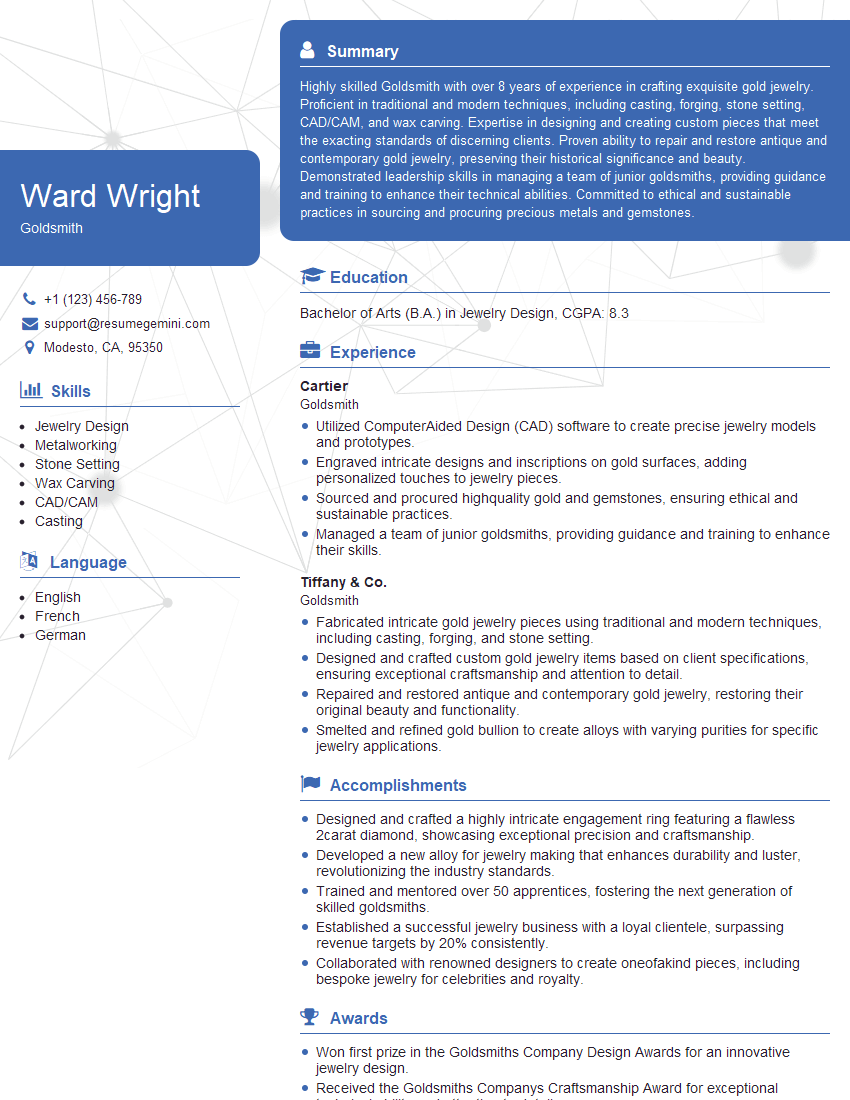
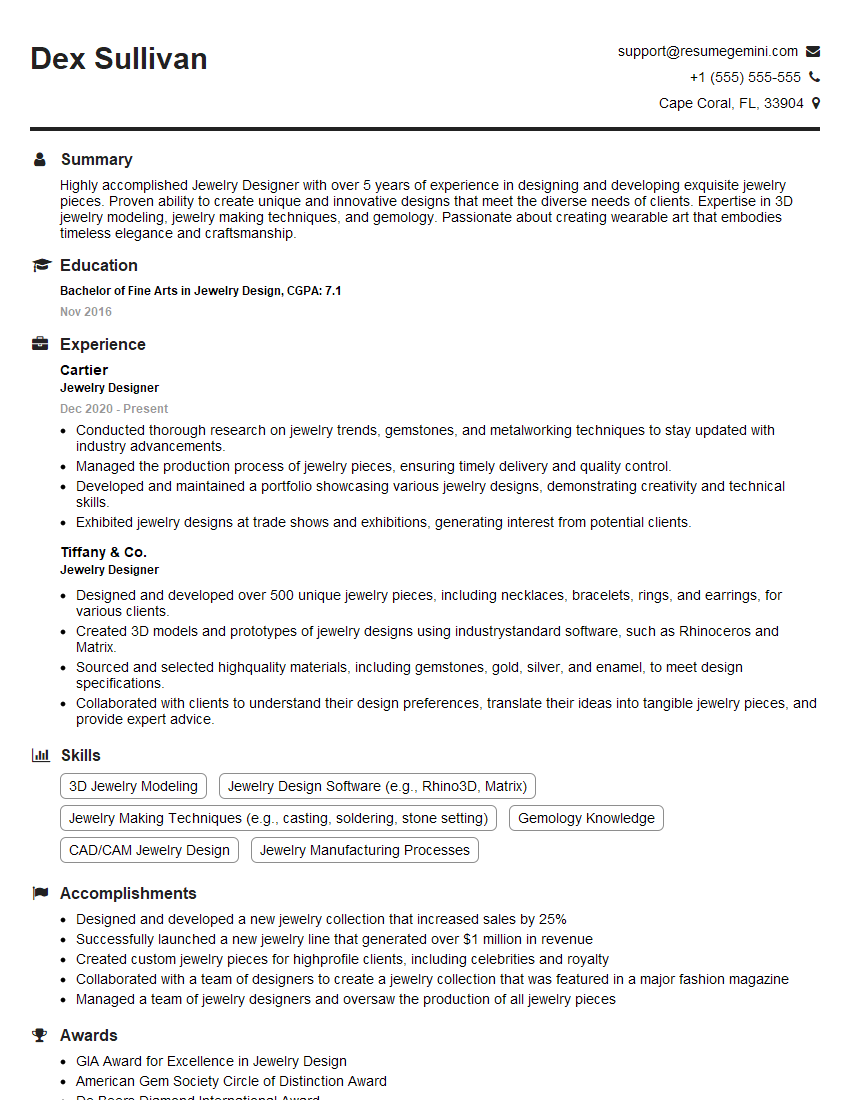
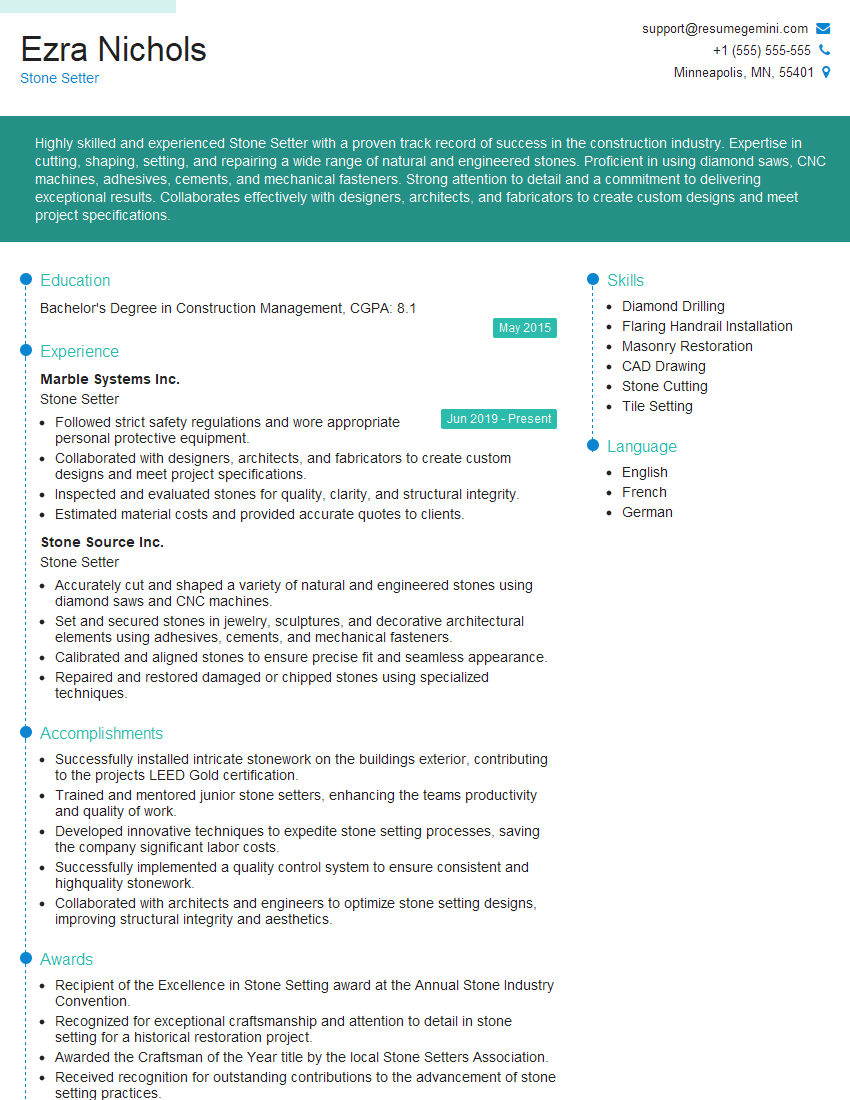
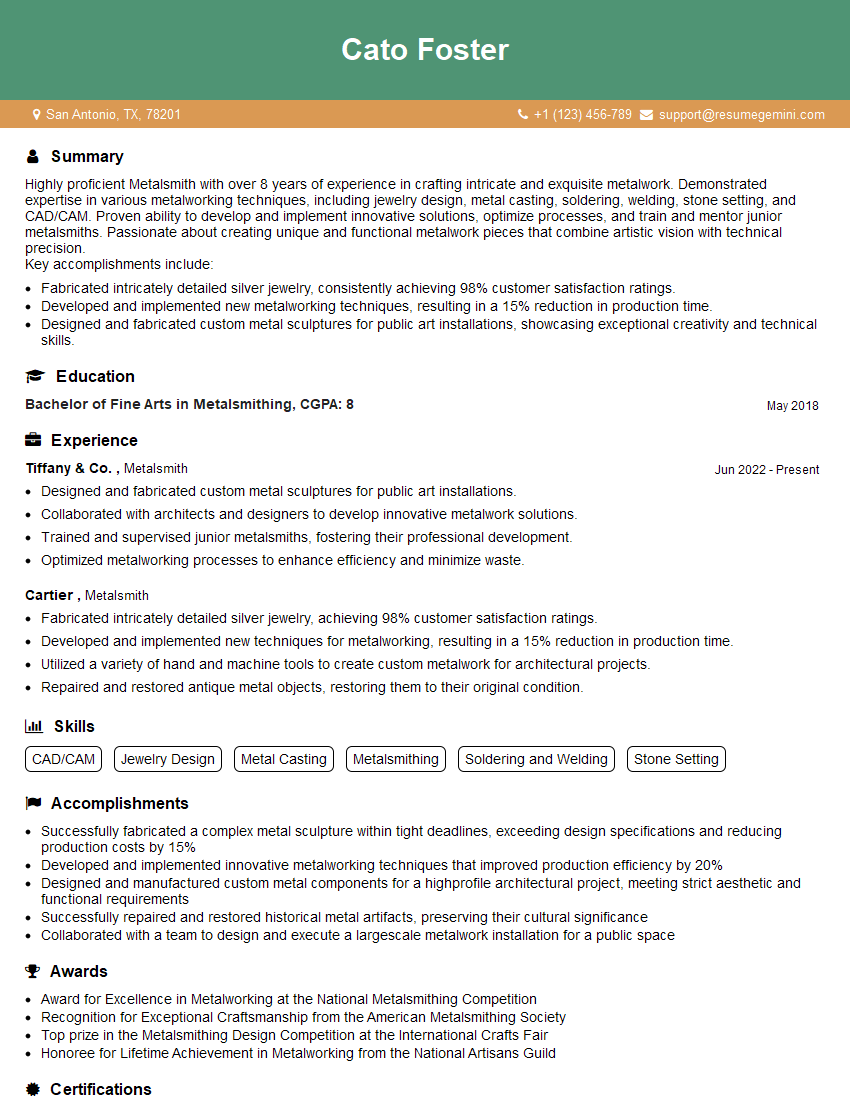
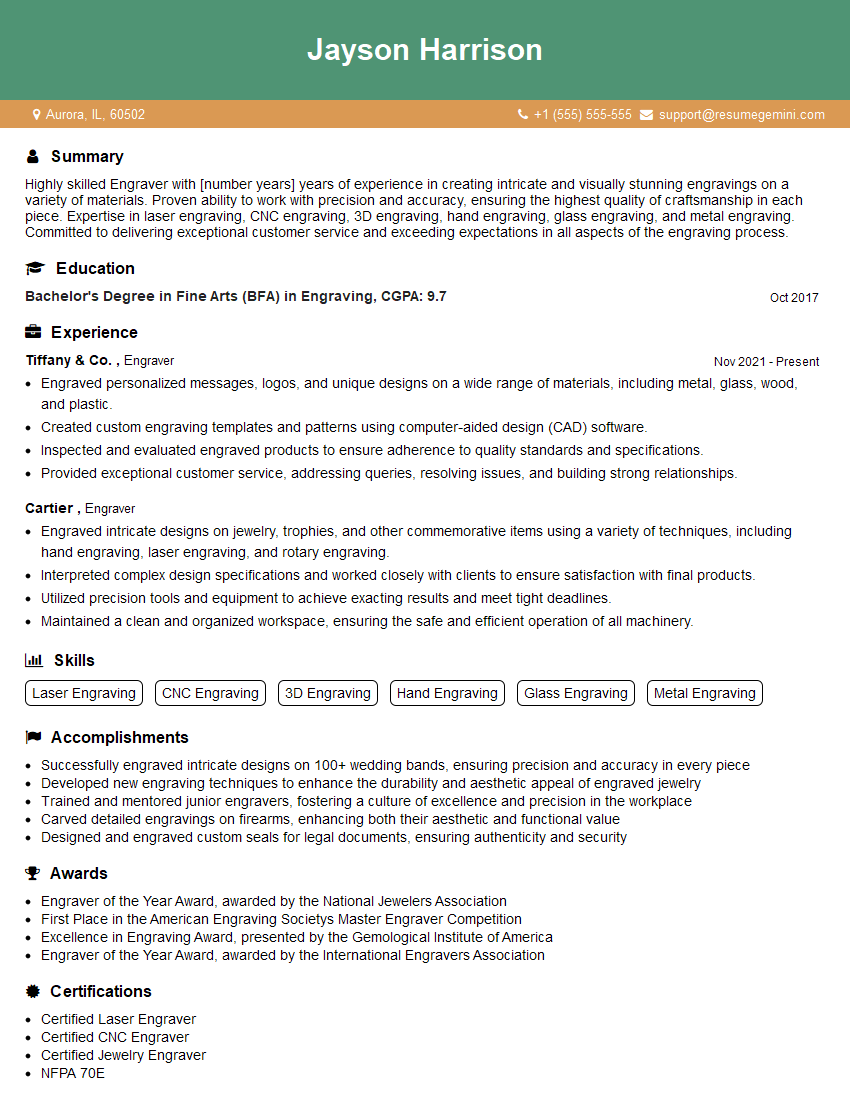
Mastering the concepts related to Ganoksin Studio significantly enhances your prospects in the competitive jewelry design and manufacturing industry. A strong understanding of these topics demonstrates your commitment to excellence and preparedness for a successful career. To maximize your chances, creating an ATS-friendly resume is crucial. We strongly recommend leveraging ResumeGemini, a trusted resource for building professional resumes that highlight your skills effectively. Examples of resumes tailored to Ganoksin Studio are available to guide you in crafting a compelling application.
Explore more articles
Users Rating of Our Blogs
Share Your Experience
We value your feedback! Please rate our content and share your thoughts (optional).
What Readers Say About Our Blog
Very informative content, great job.
good