Interviews are more than just a Q&A session—they’re a chance to prove your worth. This blog dives into essential Gauge Calibration and Verification interview questions and expert tips to help you align your answers with what hiring managers are looking for. Start preparing to shine!
Questions Asked in Gauge Calibration and Verification Interview
Q 1. Explain the difference between calibration and verification.
Calibration and verification are closely related but distinct processes used to ensure the accuracy of measuring instruments. Think of it like this: calibration is like taking your watch to a jeweler to be precisely adjusted to the correct time, while verification is like checking your watch against a reliable clock to see if it’s still keeping accurate time.
Calibration involves adjusting a measuring instrument to meet a known standard. This typically involves comparing the instrument’s readings to a traceable standard and then making any necessary adjustments to minimize the difference (error) between the two. A calibration certificate is issued, documenting the adjustments and the instrument’s accuracy.
Verification, on the other hand, is a check to confirm that the instrument is still performing within its specified tolerances. It doesn’t involve adjustments; it simply determines if the instrument is still accurate enough for its intended use. A verification report confirms whether or not the instrument passed or failed the verification check.
In short: Calibration corrects inaccuracies; verification confirms accuracy.
Q 2. Describe the process of calibrating a pressure gauge.
Calibrating a pressure gauge involves comparing its readings to a known accurate pressure source, usually a calibrated pressure standard. The process typically follows these steps:
- Preparation: Ensure the gauge is clean and free of any obstructions. Check the manufacturer’s instructions for any specific preparation requirements.
- Setup: Connect the pressure gauge to the pressure standard using appropriate fittings and tubing. Make sure all connections are leak-free.
- Zeroing: Apply zero pressure to both the gauge and the standard, ensuring both instruments read zero.
- Calibration Points: Apply known pressure levels from the standard (e.g., 10%, 50%, 90%, 100% of full-scale). Record the readings from both the gauge and the standard for each point.
- Data Analysis: Compare the gauge readings to the standard’s readings at each calibration point. Calculate the deviation (error) between the two. This usually involves a statistical analysis to account for measurement uncertainty.
- Adjustment (If Necessary): If the deviations exceed the acceptable tolerance (specified in the calibration procedure), the gauge might need adjustment, depending on its design. Some gauges are easily adjustable, while others might require specialized tools or professional service.
- Documentation: Record all readings, deviations, adjustments (if any), and the date and time of the calibration. Generate a calibration certificate that includes all relevant information, including the calibration standards used, the uncertainty of measurement, and the calibration interval.
For example, if a 100 psi gauge shows 98 psi when the standard shows 100 psi, it indicates a -2 psi error at that point.
Q 3. What are the different types of calibration standards used?
Calibration standards are devices or systems with known and documented accuracy, used to compare against the instrument being calibrated. Different types exist depending on the quantity being measured:
- Deadweight Testers: Used for pressure calibration, these devices use precisely known weights to generate a known pressure.
- Thermometers (e.g., Platinum Resistance Thermometers (PRTs)): Used for temperature calibration, providing highly accurate temperature readings.
- Voltage Standards: Used for electrical calibration, providing precise voltage references.
- Mass Standards (e.g., Weights): Used for weight or mass calibration, usually traceable to national or international standards.
- Length Standards: Used for dimensional calibration, ranging from small gauge blocks to longer lengths measured with laser interferometry.
The choice of standard depends on the instrument being calibrated and the required accuracy level. Higher accuracy requires higher-quality and more traceable standards.
Q 4. How do you determine the traceability of a calibration?
Traceability ensures the accuracy of a calibration by linking it back to a known and accepted standard. It’s like a chain of custody for accuracy. It means that every standard used in the calibration process can be traced back to a national or international standard, usually maintained by a national metrology institute (NMI).
This traceability is established through a documented chain of calibrations. For example, your pressure gauge is calibrated against a pressure calibrator, which is calibrated against a deadweight tester, which is itself calibrated against a national standard at a metrology lab. All these calibrations are documented, providing a complete traceability chain.
Calibration certificates should clearly state the traceability of the standards used, usually by referencing the calibration laboratory’s accreditation and the relevant national standards.
Q 5. What is the meaning of uncertainty in measurement?
Uncertainty in measurement represents the doubt associated with a measurement result. It’s not an error, but rather a quantification of the possible range of values within which the true value likely lies. Think of it as the margin of error inherent in any measurement.
For example, if you measure the length of a table as 1.5 meters with an uncertainty of ±0.01 meters, it means the true length is likely between 1.49 meters and 1.51 meters. This uncertainty accounts for various factors such as the limitations of the measuring instrument, the environmental conditions, and the operator’s skill.
Uncertainty is expressed quantitatively and is crucial for understanding the reliability and quality of measurement data.
Q 6. Explain the concept of measurement error and its sources.
Measurement error is the difference between the measured value and the true value of a quantity. Several sources contribute to measurement error:
- Systematic Errors: These errors are consistent and repeatable. They are often caused by flaws in the measuring instrument (e.g., an improperly calibrated scale), environmental factors (e.g., temperature drift), or the measuring technique (e.g., parallax error).
- Random Errors: These errors are unpredictable and vary randomly. They are often due to factors such as vibrations, slight variations in the measurement process, or random fluctuations in the quantity being measured.
- Human Errors: These errors are caused by the operator’s mistakes, such as misreading a scale or incorrectly using the instrument.
Understanding the sources of error is critical for minimizing their impact and improving the accuracy of measurements. Proper calibration, careful measurement techniques, and appropriate environmental controls are all essential for reducing measurement errors.
Q 7. How do you handle out-of-tolerance measurements?
Handling out-of-tolerance measurements requires a systematic approach:
- Verify the Measurement: Repeat the measurement several times to ensure the initial reading wasn’t a fluke. Check for any obvious errors in the measurement procedure or environmental factors.
- Investigate the Cause: Determine the source of the out-of-tolerance measurement. Is the instrument malfunctioning? Are there systematic errors present? Are there environmental factors affecting the reading?
- Recalibrate or Repair: If the problem lies with the instrument, it needs to be recalibrated or repaired by a qualified technician. If the issue is systematic error, adjust the procedure or control the environment to minimize its impact.
- Document Findings: Record all findings, including the out-of-tolerance readings, the investigation process, corrective actions taken, and the results of any recalibration or repair.
- Take Corrective Action: If the problem stems from a systematic error, implement procedures to prevent it from recurring in future measurements.
Ignoring out-of-tolerance measurements can lead to inaccurate results and potentially dangerous consequences in many applications.
Q 8. What are the common methods for calibrating dimensional gauges?
Calibrating dimensional gauges involves verifying their accuracy against traceable standards. Common methods include:
- Comparison Calibration: This involves comparing the gauge’s readings to those of a known standard (a master gauge or calibrated measuring instrument). For example, comparing a micrometer’s readings against a calibrated gauge block set. Differences are noted, and adjustments are made (if possible) or a correction factor applied.
- Substitution Calibration: This involves substituting the gauge being calibrated with a known standard in a measurement setup. The standard’s reading is compared to the gauge’s previous reading to determine the accuracy. This method is particularly useful for gauges that cannot be directly adjusted.
- Master Gauge Calibration: For certain types of gauges, like snap gauges, the calibration involves comparing them to a master gauge that represents the upper and lower limits of the acceptable tolerance range.
- Coordinate Measuring Machine (CMM) Calibration: For complex shapes or intricate geometries, a CMM provides highly accurate measurements for gauge calibration. This allows for precise assessment of irregularities in the gauge’s measurements across multiple points.
The choice of method depends on the type of gauge, its accuracy requirements, and available equipment.
Q 9. Describe your experience with different calibration techniques (e.g., comparison, substitution).
Throughout my career, I’ve extensively used both comparison and substitution techniques. For example, when calibrating dial indicators, I frequently employ the comparison method, using a calibrated gauge block and a precision level surface. I carefully compare the indicator’s readings to the known value from the gauge block to determine any offset or error. For calibrating ring gauges or plug gauges, the substitution method proves more suitable. I’d replace the gauge with a calibrated master ring or plug to compare the results, thereby identifying any deviation.
I’ve also had experience with more advanced techniques such as using a CMM for calibrating complex gauges with intricate geometries. The CMM offers high precision and automates data acquisition, improving efficiency and accuracy. My experience extends to various gauge types, and I can adapt my calibration methodology to each one’s unique characteristics.
Q 10. How do you maintain calibration records and documentation?
Maintaining accurate calibration records is crucial. My process involves using a dedicated calibration management software that enables efficient tracking of all calibration activities. This software logs each calibration event, including the date, equipment details, calibration results, and any necessary corrective actions. All certificates are scanned and stored electronically in a secure, accessible database.
Additionally, I maintain a physical filing system with hard copies of certificates. This provides redundancy in case of software or hardware failure. I follow a strict naming convention and organizational structure for both electronic and physical records. This system ensures clear traceability and ease of retrieval of calibration data when necessary, often for audits.
Q 11. What are the key elements of a calibration certificate?
A comprehensive calibration certificate should include the following key elements:
- Unique Identification Number: For easy traceability.
- Gauge Description and Identification: Including manufacturer, model number, and serial number.
- Calibration Date and Due Date: Specifying the validity period.
- Calibration Method and Standards Used: Describing the procedures and traceable standards employed.
- Calibration Results: Precise measurements, indicating deviations from the standard (if any), and associated uncertainties.
- Calibration Status: Pass/Fail designation based on specified tolerances.
- Corrective Actions (if any): Any adjustments made or recommendations for repair.
- Technician Signature and Accreditation: Verifying the calibration personnel’s qualifications.
- Accreditation Information: Reference to the relevant accreditation body or standards followed (e.g., ISO 17025).
A well-documented certificate ensures transparency and accountability in the calibration process.
Q 12. Explain the importance of using proper calibration equipment.
Using proper calibration equipment is paramount for accurate measurements and reliable results. Improper or outdated equipment can introduce significant errors, leading to faulty products, costly rework, or even safety hazards. Imagine using a worn-out micrometer to calibrate a precision part – the resulting inaccuracy could cascade through the entire manufacturing process.
Proper calibration equipment, regularly calibrated itself, ensures that the measurements are traceable to national or international standards, guaranteeing reliability and minimizing uncertainty. It significantly reduces the risk of measurement errors, improves the overall quality of production, and strengthens customer confidence in the product’s integrity.
Q 13. How do you identify and mitigate risks associated with calibration?
Identifying and mitigating calibration risks requires a proactive approach. This involves:
- Regular Calibration Schedule: Implementing a well-defined schedule to prevent equipment drift and ensure continuous accuracy. Critical gauges might need more frequent calibration than others.
- Proper Equipment Handling and Storage: Protecting equipment from damage, environmental factors, and misuse. This includes proper cleaning, storage in controlled environments, and training personnel on safe handling.
- Environmental Control: Ensuring that calibration environments maintain stable temperature and humidity, as these factors can significantly impact measurement accuracy.
- Calibration Personnel Training: Well-trained personnel are essential to avoid errors during the calibration process. Training should cover calibration procedures, equipment usage, data recording, and risk management.
- Regular Audits: Audits ensure compliance with established procedures and identify potential weaknesses in the calibration system.
By implementing a robust risk management plan and adhering to best practices, the risks associated with gauge calibration can be effectively mitigated.
Q 14. What are the different types of gauges you have experience calibrating?
My experience encompasses a wide range of dimensional gauges, including:
- Micrometers: Both outside and inside micrometers, for precise linear measurements.
- Dial Indicators: For measuring displacement, runout, and other deviations.
- Calipers: Vernier calipers and digital calipers, used for various linear measurements.
- Height Gauges: For precise height measurements, especially in quality control.
- Snap Gauges and Plug Gauges: For go/no-go inspection, ensuring parts meet specific tolerance limits.
- Surface Plates and Straight Edges: Used as reference surfaces for accurate measurements.
- Angle Gauges: For measuring angles and bevels.
I am adept at calibrating these gauges using various methods, always ensuring the calibration process is conducted efficiently and adheres to the highest standards of accuracy.
Q 15. Describe your experience with different calibration software and systems.
My experience with calibration software and systems spans several platforms. I’m proficient in using both dedicated calibration management software (like Fluke Calibration’s Met/CAL or similar systems) and more general-purpose LIMS (Laboratory Information Management Systems) which often incorporate calibration modules. These systems are crucial for managing calibration schedules, tracking results, generating certificates, and ensuring compliance. For example, in a previous role, we used Fluke’s Met/CAL to manage the calibration of over 500 instruments across multiple sites. This system automated the scheduling, provided alerts for upcoming calibrations, and generated comprehensive reports for audits. I’ve also worked with custom-built systems tailored to specific industry needs, integrating with our existing manufacturing execution system (MES) to streamline processes. Understanding the nuances of different systems allows me to quickly adapt to new environments and leverage the best features for efficient calibration management.
Beyond the software itself, I’m familiar with various hardware interfaces – from automated systems that control the calibration process remotely, to manual interfaces requiring data entry. This practical experience helps me assess the most efficient and accurate methods for each calibration task.
Career Expert Tips:
- Ace those interviews! Prepare effectively by reviewing the Top 50 Most Common Interview Questions on ResumeGemini.
- Navigate your job search with confidence! Explore a wide range of Career Tips on ResumeGemini. Learn about common challenges and recommendations to overcome them.
- Craft the perfect resume! Master the Art of Resume Writing with ResumeGemini’s guide. Showcase your unique qualifications and achievements effectively.
- Don’t miss out on holiday savings! Build your dream resume with ResumeGemini’s ATS optimized templates.
Q 16. How do you ensure the accuracy and reliability of your calibration procedures?
Accuracy and reliability in calibration hinge on a multi-faceted approach. Firstly, we meticulously select and validate our calibration standards, ensuring they’re traceable to national or international standards (like NIST in the US or similar organizations). This traceability forms the backbone of our accuracy chain. Secondly, our procedures are meticulously documented, following established methods and best practices, often referencing industry-specific standards like ISO 17025. Every step, from instrument preparation to data analysis, is carefully documented to maintain a complete audit trail. Thirdly, regular checks on our calibration equipment are performed to verify their performance and stability, ensuring that the instruments used for calibration are themselves accurately calibrated. Think of it like a chain – each link (standard, equipment, procedure) must be strong to ensure overall reliability.
Regular training for calibration technicians is also crucial. This ensures consistent application of procedures and minimizes human error, a significant source of inaccuracy. Finally, we implement statistical process control (SPC) to monitor the overall calibration process, identifying and addressing trends or anomalies that could impact accuracy. Essentially, it’s a constant cycle of verification, validation, and refinement to guarantee reliable results.
Q 17. Explain the concept of a calibration interval.
The calibration interval is the time period between successive calibrations of a gauge or instrument. It dictates how often a gauge needs to be checked and recalibrated to maintain its accuracy within acceptable limits. The interval isn’t arbitrary; it’s determined by several factors. These factors include the gauge’s criticality (how vital its accuracy is to the overall process), its expected usage, its stability (how much its accuracy drifts over time), and environmental factors that might affect it (temperature, humidity, etc.).
For instance, a critical gauge used in a high-precision manufacturing process might have a short calibration interval (e.g., monthly), while a less critical gauge might have a longer interval (e.g., annually). Determining the appropriate interval is a critical task that involves risk assessment and a thorough understanding of the gauge’s function and limitations. It’s often defined in a calibration plan based on manufacturers’ recommendations, regulatory requirements, and internal quality standards. Using a calibration software helps to automatically generate reminders for scheduled calibrations.
Q 18. How do you handle discrepancies between different calibration methods?
Discrepancies between different calibration methods for the same gauge can arise from various sources, including differences in standards, calibration equipment, environmental conditions, or even operator technique. Handling these discrepancies requires a systematic investigation to determine the root cause. First, we review all procedures to ensure they were followed correctly and meticulously document all the parameters used in each method. Then, we compare the results against the accepted tolerances. If the discrepancies fall within the acceptable limits, it may simply be due to normal variation between methods. However, if the discrepancies exceed tolerances, a deeper analysis is necessary.
This might involve checking the calibration of the equipment used, verifying the traceability of the standards, or even investigating potential environmental influences. Sometimes, we might conduct a third-party calibration to resolve uncertainties. The goal is to identify the most reliable method and document the findings. Depending on the findings, it may lead to improvements in procedures, equipment upgrades, or operator retraining.
Q 19. What are the regulatory requirements for calibration in your industry?
Regulatory requirements for calibration vary greatly depending on the industry and the type of measurement being performed. In many regulated industries (e.g., pharmaceuticals, aerospace, medical devices), adherence to standards like ISO 9001 and ISO 17025 is mandatory. These standards mandate the establishment of a quality management system, including a well-defined calibration process. They stipulate requirements for traceability, documentation, record-keeping, and competency of calibration personnel. Additionally, specific industry regulations might impose additional requirements. For example, the FDA (Food and Drug Administration) has specific guidelines for calibration in the pharmaceutical industry, emphasizing the importance of accurate measurements in ensuring product quality and safety.
Compliance is critical not only for avoiding penalties but also for maintaining credibility and ensuring the accuracy and reliability of our measurements. We maintain a detailed record of calibrations to demonstrate our compliance during audits or inspections.
Q 20. How do you select the appropriate calibration method for a specific gauge?
Selecting the appropriate calibration method depends heavily on the gauge’s type, its accuracy requirements, and the available resources. It is vital to consult the manufacturer’s instructions and specifications. For example, a simple pressure gauge might require a direct comparison against a traceable pressure standard, while a more complex instrument may require a more elaborate calibration procedure involving specialized equipment and software. Factors to consider include the gauge’s measurement range, resolution, and the desired accuracy level.
We often use a combination of methods—for instance, a combination of manual comparison and automated testing using a calibration system. The selection process is documented and reviewed regularly to ensure its suitability and efficiency. Improper selection of calibration methods can lead to inaccurate results and compromise the quality of our work.
Q 21. Describe a time you had to troubleshoot a calibration problem.
In a previous role, we encountered a recurring problem with a specific type of digital caliper. During calibration, we noticed that the readings consistently drifted after a few measurements, especially at the lower end of the measurement range. Initial troubleshooting focused on verifying the calibration standards, checking the environment, and ensuring the proper calibration procedure was followed. However, the problem persisted. After a thorough investigation, we realized the issue wasn’t with the calibration process itself but with the calipers themselves. Further investigation revealed that a specific batch of calipers had a manufacturing defect that caused the internal mechanism to become less precise over time when under repeated use.
The solution involved identifying the affected batch, contacting the manufacturer, and initiating a recall process. This incident underscored the importance of continuous monitoring, diligent record-keeping, and proactive communication with manufacturers to address potential systemic issues impacting calibration accuracy. It also highlighted the importance of root cause analysis in troubleshooting calibration problems.
Q 22. What are the common causes of gauge drift?
Gauge drift, the gradual change in a measuring instrument’s readings over time, can stem from several factors. Think of it like a clock slowly getting faster or slower – its accuracy drifts from the true time. Common causes include:
- Mechanical Wear and Tear: Friction in moving parts, like gears or pivots, can cause gradual shifts in measurements. Imagine a rusty hinge on a door – it doesn’t open or close as smoothly as a well-lubricated one.
- Temperature Fluctuations: Changes in ambient temperature can affect the physical properties of the gauge material, leading to expansion or contraction and inaccurate readings. This is especially true for instruments relying on delicate components like bimetallic strips.
- Environmental Factors: Exposure to humidity, corrosive substances, or vibrations can damage the gauge’s components, altering its readings over time. Think of leaving a delicate instrument in a dusty or damp environment – it won’t function optimally.
- Shock or Impact: A sudden jolt or impact to the gauge can misalign internal components or damage sensitive parts, resulting in inaccurate measurements. Dropping your instrument, for instance, is a common cause of this.
- Aging Components: Like any physical instrument, the components of a gauge will age and degrade over time. This can lead to a gradual loss of precision, similar to how a car’s engine wears down with use.
Identifying the root cause of drift is crucial for effective corrective actions, ranging from simple recalibration and cleaning to component replacement.
Q 23. How do you ensure the environmental conditions are suitable for calibration?
Maintaining stable environmental conditions during calibration is paramount for ensuring accurate results. Imagine trying to measure something precisely while standing in a hurricane – the results would be unreliable. We need to control factors like:
- Temperature: Calibration should be performed within a controlled temperature range specified by the instrument’s manufacturer or relevant standards. This is usually achieved with temperature-controlled rooms or chambers.
- Humidity: High humidity can affect the gauge’s performance and even lead to corrosion. Maintaining appropriate humidity levels is essential, often through dehumidifiers or humidity-controlled environments.
- Vibration: Vibrations can introduce errors into measurements, particularly in sensitive instruments. Calibration should be performed in a stable, vibration-free area, possibly employing vibration isolation tables for sensitive equipment.
- Cleanliness: Dust and debris can interfere with the gauge’s operation. A clean environment is essential to prevent contamination and ensure accuracy. This often involves using cleanroom techniques and tools.
Detailed environmental monitoring during the calibration process is vital, using calibrated thermometers, hygrometers, and vibration sensors to verify compliance with the defined parameters. Documentation of these conditions is essential for traceability and compliance with standards like ISO 17025.
Q 24. What safety precautions do you take while performing calibration tasks?
Safety is paramount in calibration. We’re often dealing with delicate instruments and sometimes hazardous materials. My safety precautions include:
- Personal Protective Equipment (PPE): Using appropriate PPE such as safety glasses, gloves, and lab coats depending on the gauge and calibration procedure. This protects me from potential hazards like chemical splashes or sharp objects.
- Safe Handling Procedures: Following the manufacturer’s instructions for handling the gauge and calibration equipment to prevent damage or injury. This might involve specific lifting techniques or handling precautions.
- Electrical Safety: If the gauge is electrically powered, using appropriate safety measures such as ground fault circuit interrupters (GFCIs) and ensuring all electrical connections are secure. This minimizes the risk of electric shock.
- Hazardous Material Handling: If handling hazardous materials, adhering to all relevant safety data sheets (SDS) and using appropriate safety measures for handling, storage, and disposal. This ensures that I handle the materials properly and prevent any potential exposure.
- Ergonomic Practices: Maintaining proper posture and using appropriate tools and equipment to avoid strain or injury. This prevents repetitive strain injuries or other work-related musculoskeletal disorders.
Regular safety training is vital to refresh my knowledge of potential hazards and best practices. A risk assessment should be conducted before any calibration activity to identify potential hazards and establish the appropriate control measures.
Q 25. How do you stay updated on the latest calibration standards and best practices?
Staying current with calibration standards and best practices is an ongoing process. I employ several strategies:
- Professional Organizations: Active membership in professional organizations such as the American Society of Mechanical Engineers (ASME) or the National Institute of Standards and Technology (NIST) provides access to the latest publications, conferences, and networking opportunities with leading experts.
- Industry Publications and Journals: Regularly reading industry journals and publications helps me stay informed on emerging technologies and best practices. This is like reading the latest news in my field.
- Manufacturer’s Documentation: Consulting the manufacturer’s documentation for calibration procedures, recommendations, and updates is essential for accurate and reliable results. The manufacturer’s instructions are the bible in calibration.
- Training Courses and Workshops: Attending specialized training courses and workshops helps me keep my skills sharp and gain in-depth knowledge on new techniques and regulations. This is similar to attending a refresher course for a license.
- Online Resources and Databases: Using online resources and databases such as NIST or other national metrology institutes’ websites provides access to standards, guidelines, and technical information. These are great sources of information and guidelines.
Continuous learning is integral to maintaining competence in this field. I also participate in proficiency testing programs to ensure my skills are up to par and that my lab is consistent with international standards.
Q 26. Describe your experience with statistical process control (SPC) in calibration.
Statistical Process Control (SPC) is fundamental to maintaining consistent and accurate calibration processes. Think of SPC as a system for monitoring and controlling the variation in a process. In calibration, this means tracking the performance of gauges over time to detect any trends or shifts that might indicate a problem.
My experience with SPC involves using control charts, such as X-bar and R charts, to monitor the calibration data. This allows me to identify patterns of variation, detect outliers, and promptly address issues before they impact measurement accuracy. For example, if we notice that the readings from a particular gauge are consistently drifting upward, we can investigate the cause (temperature fluctuations, wear and tear, etc.) and take corrective action. We might use Shewhart control charts to monitor the gauge’s performance against predetermined control limits. If the readings fall outside these limits, it signals a potential problem requiring investigation and recalibration.
By implementing SPC, we can ensure the long-term accuracy and reliability of our measurement processes, reducing the risk of producing erroneous results and improving overall process efficiency.
Q 27. How do you manage a large volume of calibration tasks effectively?
Managing a high volume of calibration tasks effectively requires a systematic and organized approach. My strategy involves:
- Calibration Management System (CMS): Using a dedicated CMS software to schedule, track, and manage calibration tasks. This provides a centralized database for all calibration activities, simplifying tracking and reporting.
- Prioritization and Scheduling: Prioritizing calibration tasks based on criticality and frequency, utilizing a workflow management system for efficient scheduling and resource allocation. This involves creating a schedule that minimizes downtime and ensures timely calibration of critical instruments.
- Workforce Optimization: Efficiently assigning tasks to technicians based on their skills and availability, optimizing workflow and minimizing turnaround times. This maximizes efficiency by utilizing the strengths of each team member.
- Automation: Automating repetitive tasks through the use of automated calibration systems or software where feasible to reduce human error and increase efficiency. This is where things like automated data logging and analysis can significantly aid.
- Regular Reporting and Analysis: Generating regular reports on calibration status, identifying bottlenecks, and analyzing performance trends to improve efficiency and identify areas for improvement. Regular analysis allows us to adapt and optimize our procedures.
A well-defined workflow and the use of a robust CMS are key to streamlining operations and handling a high volume of calibration tasks effectively while maintaining data integrity and traceability.
Q 28. Explain your understanding of ISO 17025.
ISO 17025, General requirements for the competence of testing and calibration laboratories, is an internationally recognized standard that specifies the general requirements for the operation of competent testing and calibration laboratories. It’s essentially the gold standard for quality in these fields.
My understanding encompasses its key elements, including:
- Management System: ISO 17025 requires a robust management system to ensure the quality of all calibration activities, including a documented quality policy, clear responsibilities, and procedures for various aspects of lab operation.
- Technical Competence: The standard mandates that the laboratory demonstrates its technical competence through documented procedures, qualified personnel, traceable measurements, and regular calibration of its own equipment. It’s all about proving your laboratory is capable of consistent accuracy.
- Traceability: All calibration results must be traceable to national or international standards through an unbroken chain of calibrations. This ensures the reliability and comparability of the results.
- Equipment Maintenance and Calibration: The laboratory must maintain and regularly calibrate its equipment to ensure the accuracy and reliability of measurements. This ensures the instruments used for calibrations are themselves accurately calibrated.
- Personnel Competence: Personnel performing calibrations must be qualified and competent to do so, through training, experience, and demonstrated proficiency. Competent people using competent equipment ensures reliable results.
- Quality Control: The standard includes aspects of quality control such as internal audits and proficiency testing to ensure consistent accuracy and reliability. This ensures continuous improvement and adherence to standards.
Compliance with ISO 17025 signifies a laboratory’s commitment to providing reliable and internationally recognized calibration services. Accreditation to ISO 17025 demonstrates a high level of competence and reliability, building trust with clients and stakeholders.
Key Topics to Learn for Gauge Calibration and Verification Interview
- Measurement Uncertainty: Understanding and calculating uncertainty in measurement results, including sources of error and their propagation.
- Calibration Standards and Traceability: Knowledge of national and international standards, and how to ensure traceability of calibration results to national standards.
- Calibration Methods and Techniques: Familiarity with various calibration techniques for different types of gauges (e.g., pressure, temperature, force), including manual and automated methods.
- Calibration Equipment and Instrumentation: Understanding the principles of operation and limitations of various calibration instruments and equipment.
- Data Analysis and Reporting: Proficiency in analyzing calibration data, identifying trends and outliers, and preparing clear and concise calibration reports.
- Calibration Intervals and Schedules: Determining appropriate calibration intervals based on gauge usage, accuracy requirements, and industry standards.
- Statistical Process Control (SPC): Applying SPC techniques to monitor gauge performance and identify potential problems.
- Good Calibration Practices (GCP): Adherence to GCP guidelines to ensure the accuracy and reliability of calibration results.
- Troubleshooting and Problem-Solving: Diagnosing and resolving issues related to gauge calibration and verification.
- Regulatory Compliance: Understanding relevant regulations and standards related to gauge calibration and verification in your industry.
Next Steps
Mastering Gauge Calibration and Verification opens doors to exciting career opportunities in quality control, manufacturing, and metrology, offering excellent prospects for growth and advancement. A well-crafted resume is crucial for showcasing your skills and experience to potential employers. To significantly increase your chances of landing your dream job, focus on building an ATS-friendly resume. ResumeGemini is a trusted resource that can help you create a professional and impactful resume. ResumeGemini provides examples of resumes tailored to Gauge Calibration and Verification to help you get started. Take the next step in your career journey – build your best resume yet!
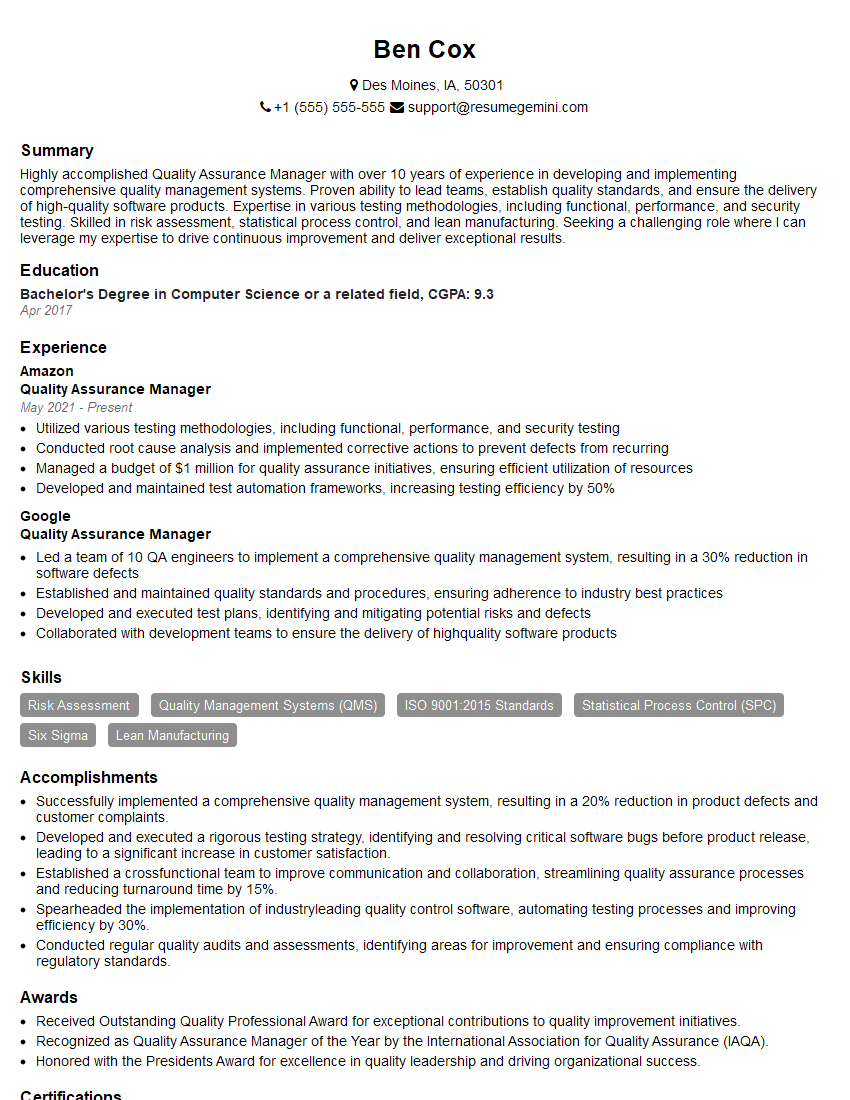
Quality Assurance Manager Resume Sample
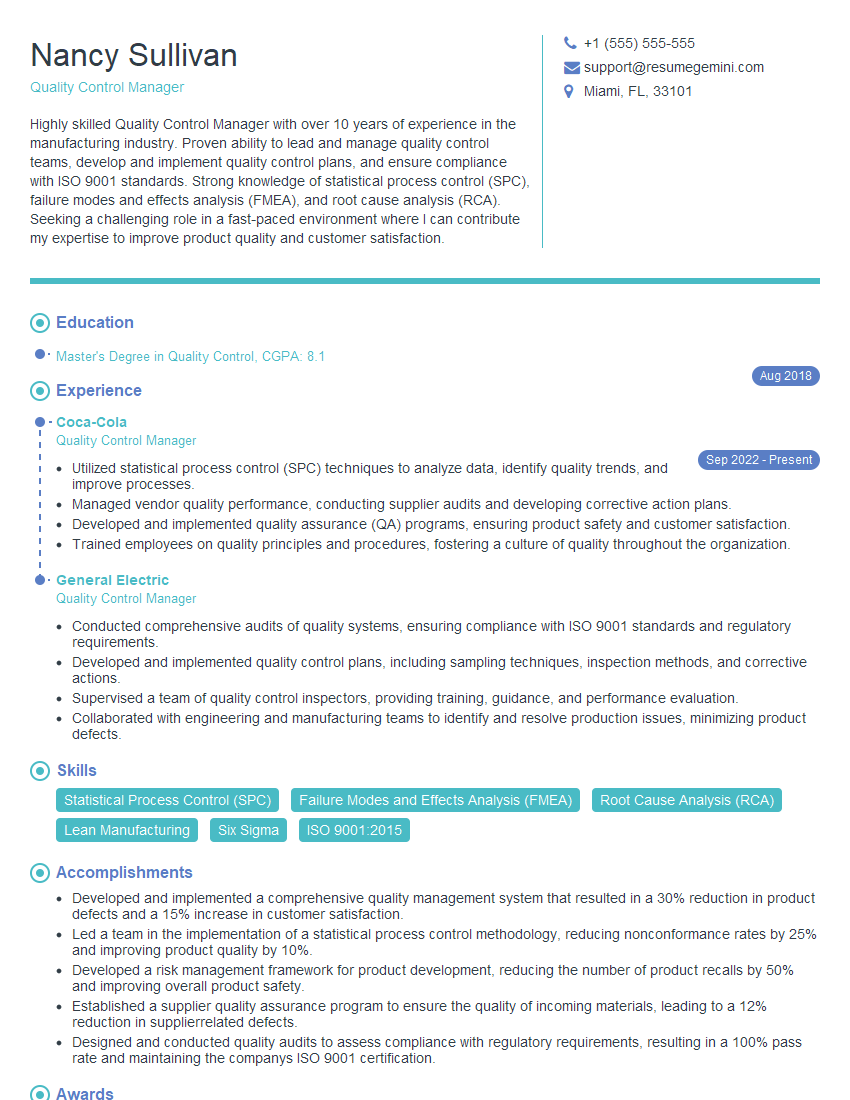
Quality Control Manager Resume Sample
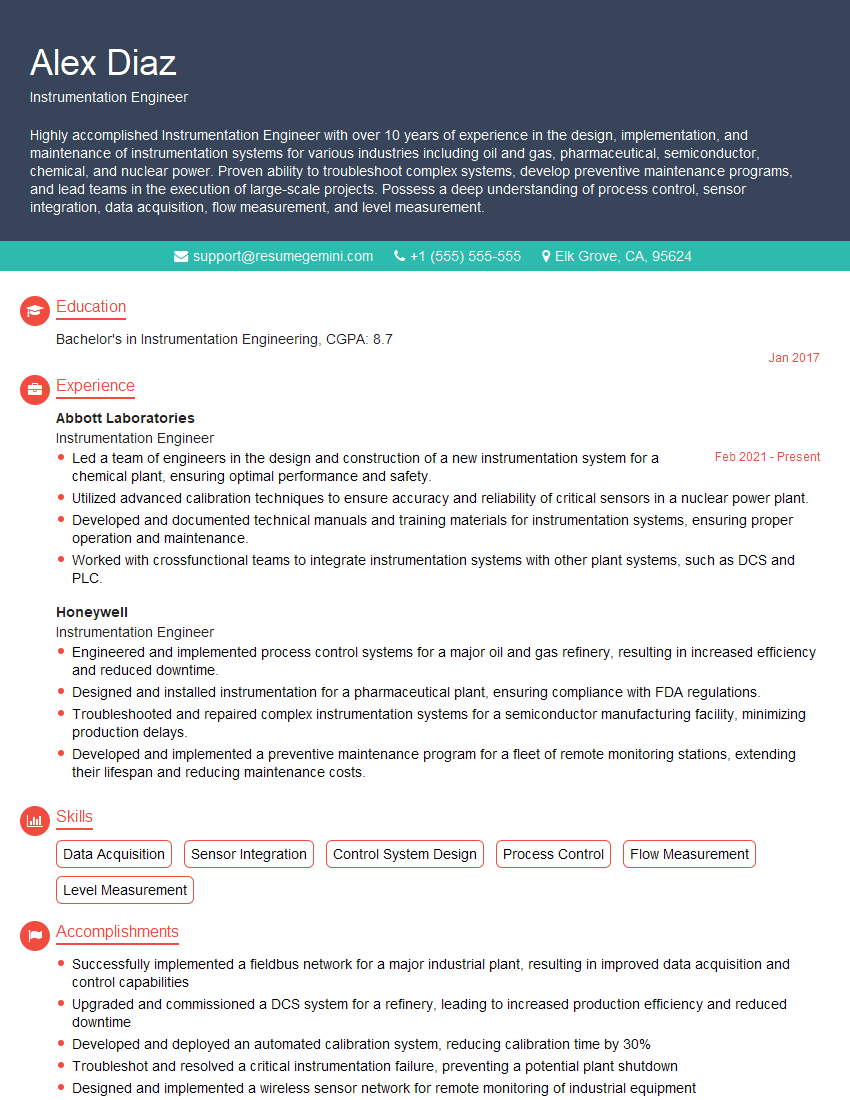
Instrumentation Engineer Resume Sample

Quality Assurance Technician Resume Sample
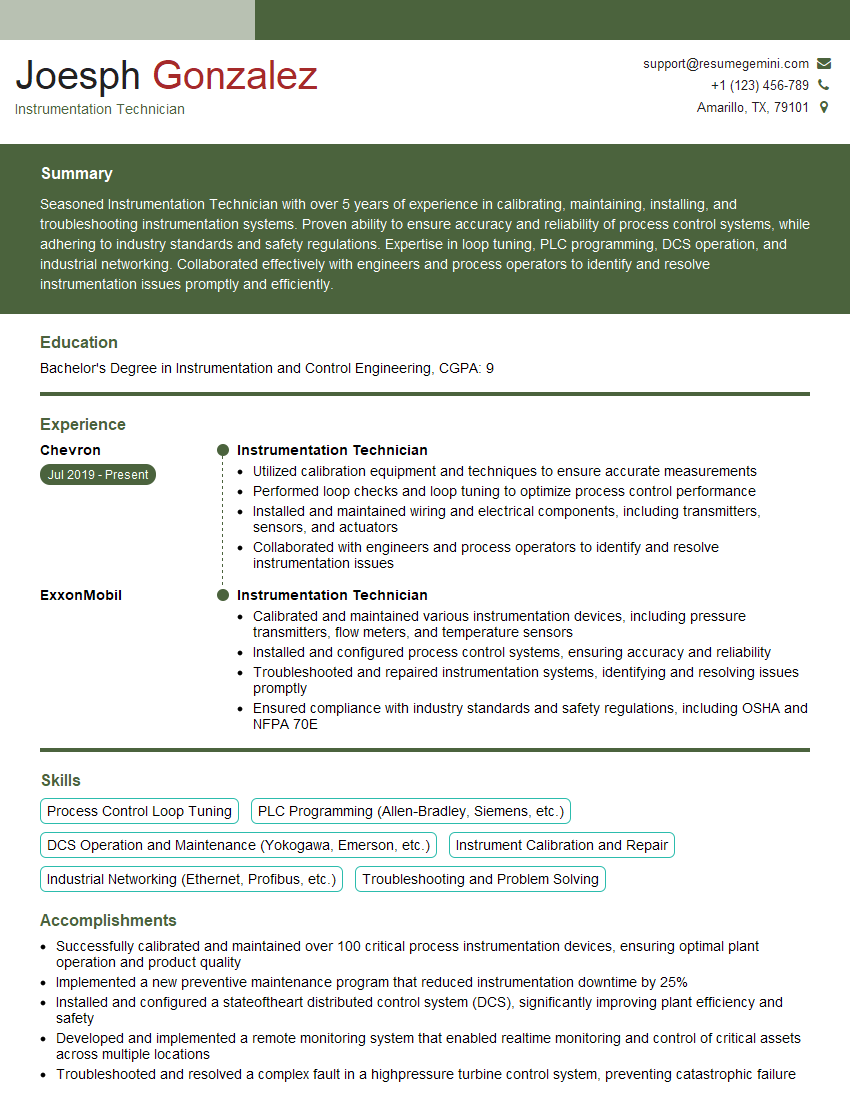
Instrumentation Technician Resume Sample
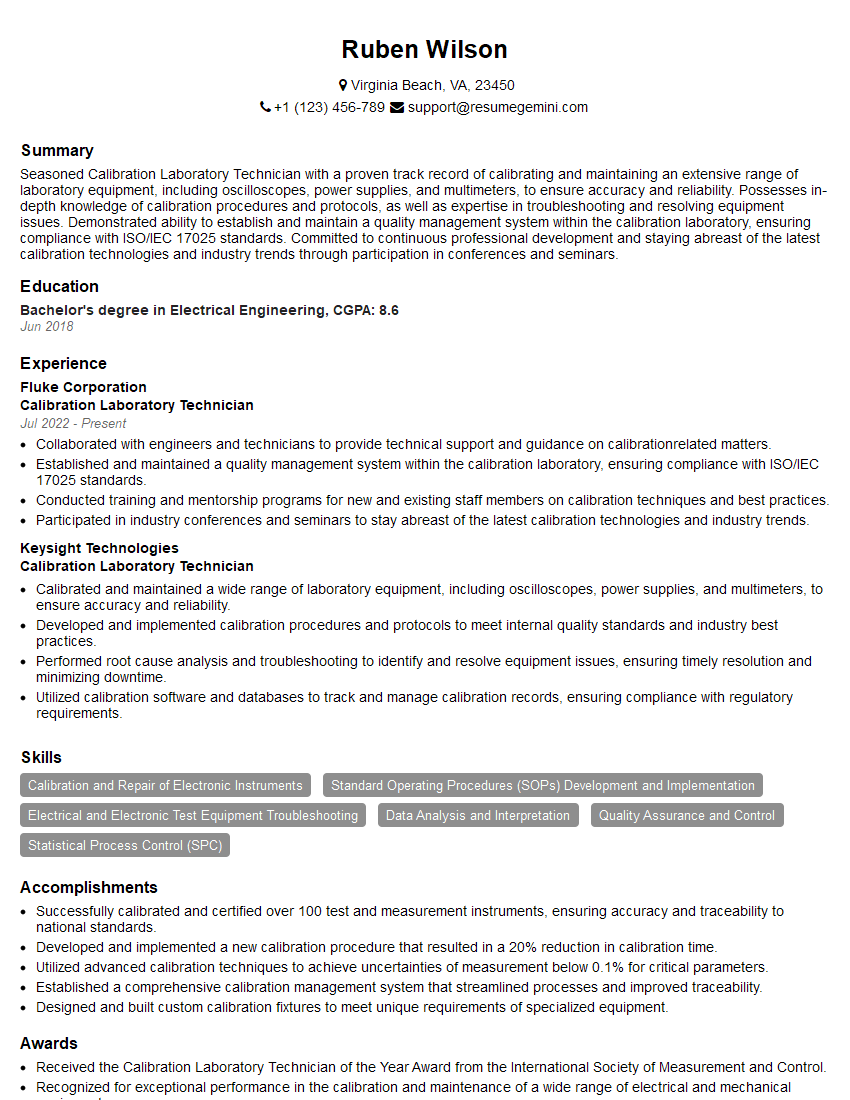
Calibration Laboratory Technician Resume Sample
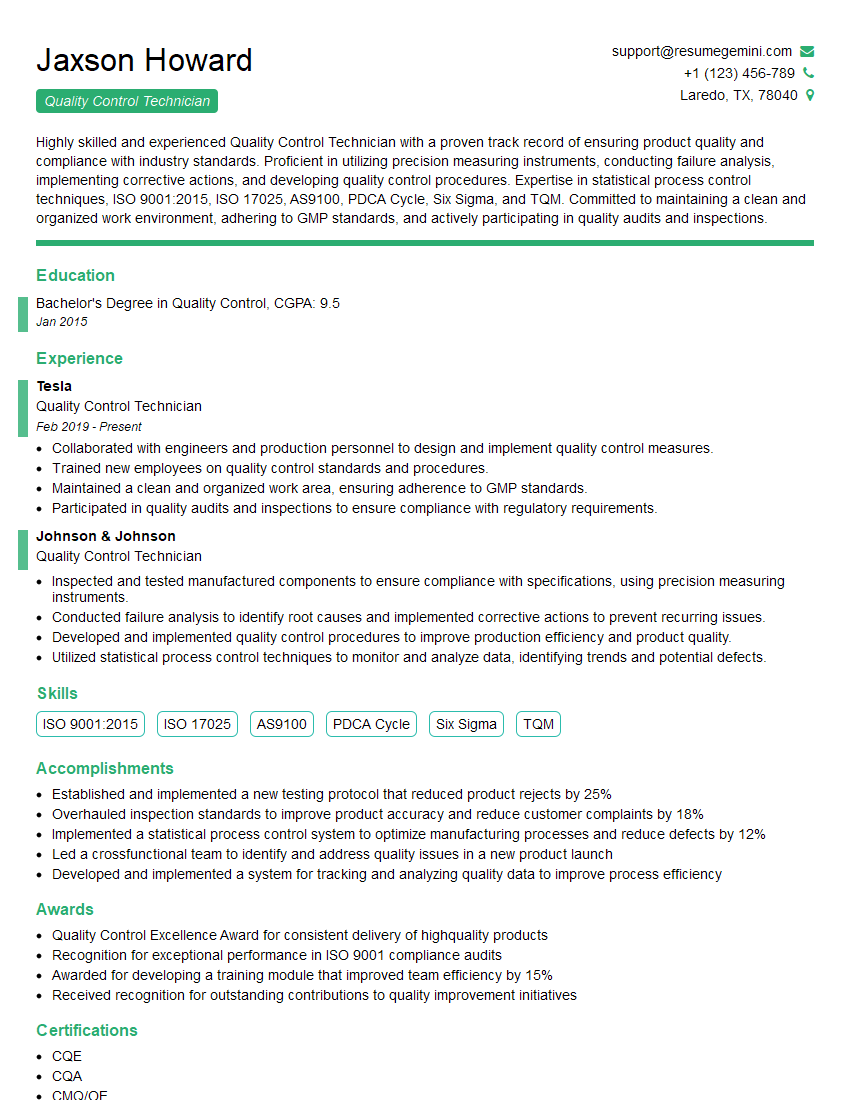
Quality Control Technician Resume Sample
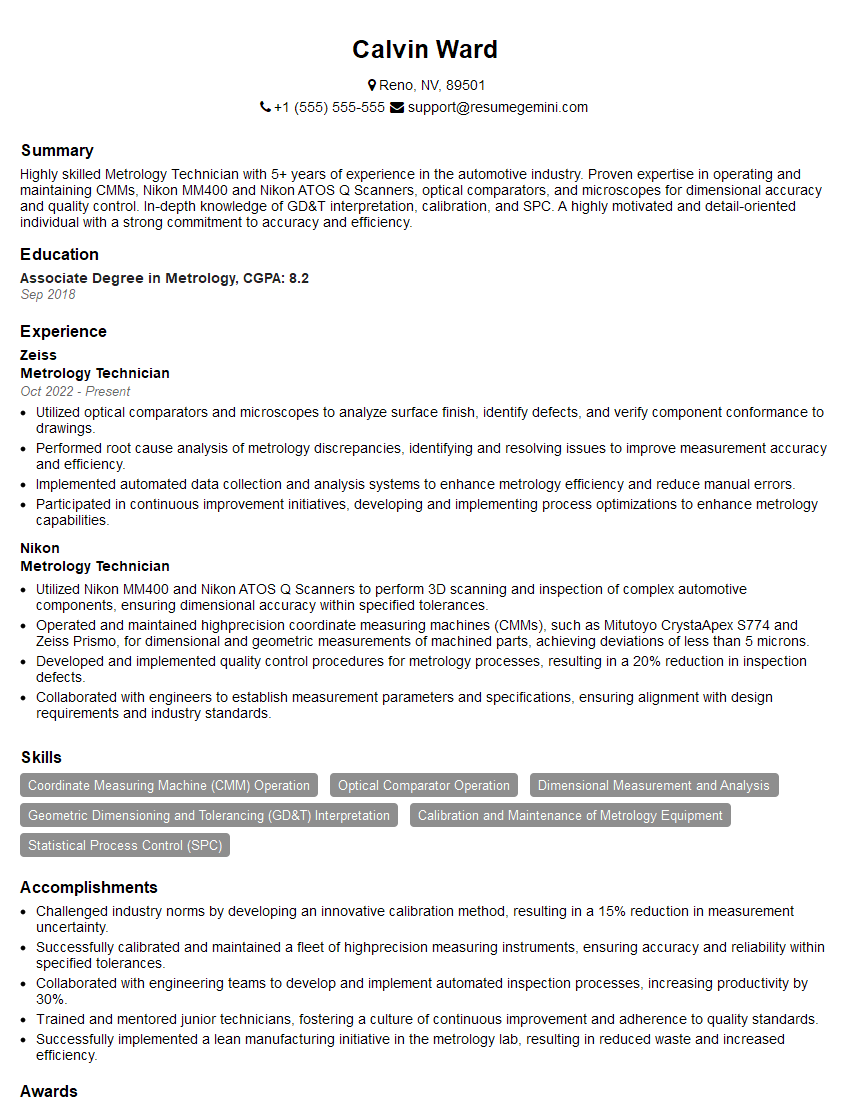
Metrology Technician Resume Sample
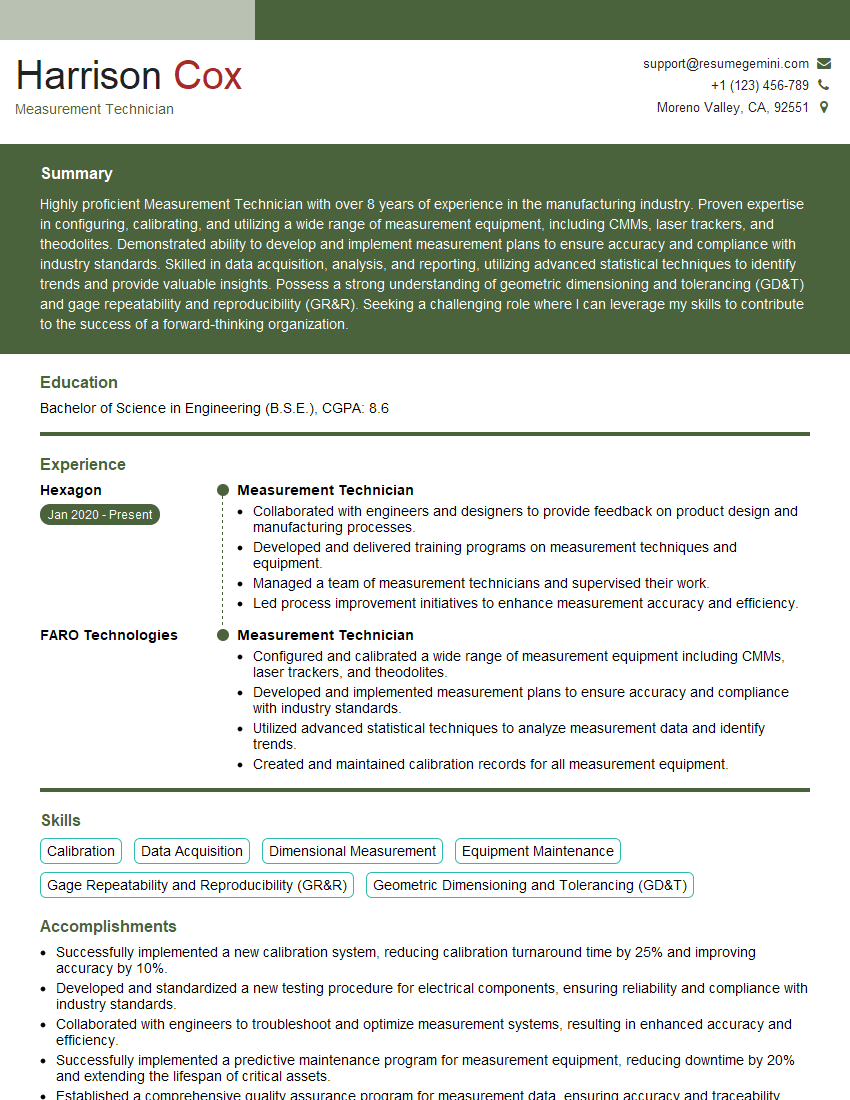
Measurement Technician Resume Sample
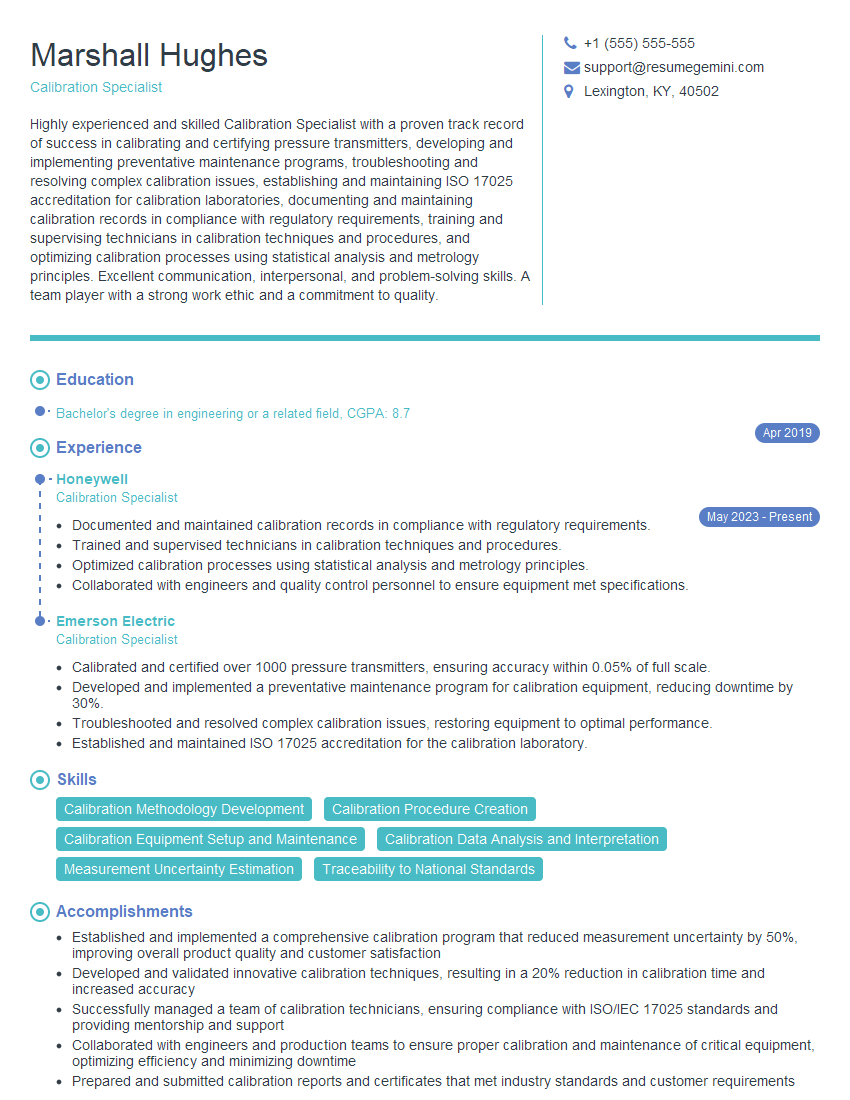
Calibration Specialist Resume Sample
Explore more articles
Users Rating of Our Blogs
Share Your Experience
We value your feedback! Please rate our content and share your thoughts (optional).
What Readers Say About Our Blog
Very informative content, great job.
good