Preparation is the key to success in any interview. In this post, we’ll explore crucial Gemba Kaizen interview questions and equip you with strategies to craft impactful answers. Whether you’re a beginner or a pro, these tips will elevate your preparation.
Questions Asked in Gemba Kaizen Interview
Q 1. Describe your experience with Gemba walks.
Gemba walks are a fundamental practice in Gemba Kaizen, meaning ‘the real place’ in Japanese. It’s about going to where the actual work happens – the shop floor, the call center, the customer service desk – to observe processes firsthand. My experience involves leading and participating in numerous Gemba walks across various industries, from manufacturing to healthcare. I’ve found that the most effective walks involve a structured approach. This starts with clearly defining the purpose – are we looking for bottlenecks, safety hazards, or process inefficiencies? Then, we systematically observe the work flow, document the process, and engage in direct conversations with the people performing the work. I always use a checklist to ensure consistency and to capture critical data. For example, in a recent Gemba walk at a food processing plant, we identified a bottleneck in the packaging line due to a poorly designed workstation layout. This resulted in a significant reduction in throughput, which we documented visually using photos and flow charts.
Another key aspect of my Gemba walks is active listening. I aim not to interrupt or offer solutions prematurely, but instead to understand the perspectives of the workers. They often offer incredibly valuable insights which are easily missed through simply reviewing data.
Q 2. Explain the 5S methodology and how you’ve implemented it.
5S is a methodology for workplace organization that’s crucial for Gemba Kaizen. It stands for Seiri (Sort), Seiton (Set in Order), Seiso (Shine), Seiketsu (Standardize), and Shitsuke (Sustain). In my experience implementing 5S, I’ve found a phased approach works best. We start by sorting through unnecessary items (Seiri), discarding what’s not needed and clearly labeling what remains. This often involves engaging the team in a decision-making process, ensuring buy-in from the workers on the ground. Then, we set everything in order (Seiton), ensuring easy access to frequently used items and a logical flow of work. This often involves visual management techniques like color-coding or shadow boards. Next, we clean the workspace thoroughly (Seiso). This is not just about cleanliness, it’s about identifying potential problems early on, like leaks or damaged equipment. Standardizing (Seiketsu) involves documenting these procedures for consistent application, creating visual aids, and implementing standardized work instructions. Finally, sustaining (Shitsuke) is the most critical, requiring consistent review, team engagement, and regular audits to maintain the improvements.
For example, in a previous role, we implemented 5S in a warehouse. After the initial 5S implementation, we saw a 20% reduction in material handling time and a significant decrease in workplace accidents. It’s important to remember that 5S is not a one-time project; it requires ongoing effort and commitment to ensure long-term benefits.
Q 3. How do you identify and prioritize Kaizen opportunities?
Identifying and prioritizing Kaizen opportunities requires a systematic approach. I typically begin with data collection, using methods such as Gemba walks, process mapping, and analyzing metrics like cycle time, defect rates, and customer complaints. This helps identify areas for improvement. However, data is only part of the equation; the team’s input is essential. I often use brainstorming sessions and A3 problem-solving reports to elicit ideas for improvements, often prioritizing those with the highest potential impact and lowest implementation cost. We use a prioritization matrix – a simple 2×2 matrix with ‘impact’ on one axis and ‘effort’ on the other – to visually represent the trade-offs between different improvement opportunities.
For example, if our data shows a high defect rate in a specific process, and a team brainstorming session identifies a simple solution that can be implemented quickly, this would be a high-priority Kaizen opportunity. Conversely, an area with moderate impact requiring significant resources might be prioritized lower.
Q 4. What are the key principles of Gemba Kaizen?
Gemba Kaizen rests on several key principles. Respect for people is paramount. It recognizes the value of the front-line workers’ knowledge and experience. Continuous improvement is a core philosophy – small incremental changes can lead to significant overall improvements. Data-driven decision-making is essential for objective assessment and tracking progress. Visual management helps make problems visible and facilitates communication. And lastly, standardization ensures consistency and prevents backsliding after improvements have been made. These principles work together to create a culture of continuous improvement and efficiency.
Q 5. Describe a time you used data analysis to drive Kaizen improvements.
In a previous project at a call center, we were experiencing long customer wait times. Initial observations suggested staffing levels were the issue. However, through data analysis of call duration, call type, and agent productivity, we discovered a significant disparity in call handling times among agents. We used call recording data and process mapping to identify root causes, revealing inconsistencies in agent training and a lack of standardized scripts. By addressing the training gaps and implementing standardized call handling procedures, we drastically reduced average call handling times. This resulted in reduced wait times for customers and a significant increase in customer satisfaction – we tracked this via post-call surveys – without needing to increase staffing levels. This demonstrated that data-driven analysis can often reveal solutions that are more effective and cost-efficient than intuitive assumptions.
Q 6. How do you ensure Kaizen initiatives are sustainable?
Sustainability of Kaizen initiatives is critical. It requires more than just implementing a change; it demands embedding it into the organization’s culture. Key steps include: Standardizing the improvements to ensure consistency. Developing visual management systems to track performance and highlight deviations. Training and empowering employees to maintain and even improve the implemented changes. Regular audits and reviews to monitor progress and identify new opportunities. Including Kaizen in performance reviews to demonstrate its importance within the organization. And finally, celebrating successes to reinforce the positive impact of continuous improvement.
Without a strong focus on standardization and employee buy-in, there’s a high risk of any improvements being undone over time.
Q 7. What are some common obstacles to implementing Gemba Kaizen, and how do you overcome them?
Implementing Gemba Kaizen can face several challenges. Resistance to change is common; employees may be hesitant to adopt new methods. Lack of management support can hinder resource allocation and create an environment where initiatives struggle to succeed. Insufficient data collection or inaccurate data can lead to ineffective solutions. Lack of standardized procedures can cause inconsistency and hinder efforts to build upon past successes. Inadequate training can prevent employees from effectively adopting new methods.
To overcome these, I emphasize open communication and engagement with employees throughout the process. This includes actively listening to concerns and addressing them. Strong management support is crucial, necessitating clear communication about the benefits of Gemba Kaizen. Robust data collection methods and visual management tools mitigate the risks of poor data. Standardization is key to preventing backsliding and fostering consistency. Comprehensive training programs ensure that employees have the skills to succeed in this new environment.
Q 8. Explain your understanding of Value Stream Mapping.
Value Stream Mapping (VSM) is a lean manufacturing technique used to visualize and analyze the flow of materials and information required to bring a product or service to the customer. It helps identify waste (Muda) in the process and pinpoint areas for improvement. Think of it like drawing a map of your entire process, highlighting all the steps, delays, and inefficiencies.
A typical VSM includes:
- Process Steps: Each step involved in the process, from order placement to delivery.
- Data: Metrics such as lead time, cycle time, inventory levels, and defect rates for each step.
- Information Flow: How information moves between steps, highlighting delays or bottlenecks.
- Material Flow: How materials move through the process, showing inventory build-up and transportation times.
Example: Imagine mapping the process of ordering a pizza. The VSM would show steps like taking the order, preparing the ingredients, baking the pizza, delivery, and payment. Analyzing the map might reveal that the longest wait time is in the preparation phase, due to lack of organized ingredient storage. The VSM clearly shows this bottleneck allowing for targeted improvement.
Q 9. How do you measure the success of a Kaizen project?
Measuring the success of a Kaizen project goes beyond just observing improvements. We need quantifiable results. Key metrics include:
- Cycle Time Reduction: How much faster the process is after the Kaizen event?
- Lead Time Reduction: How much faster is the overall process from start to finish?
- Defect Rate Reduction: How many fewer defects are there after implementing the changes?
- Inventory Reduction: How much less inventory is needed to support the process?
- Cost Reduction: What are the direct cost savings, for example, in materials, labor, or rework?
- Employee Engagement and Morale: Were team members more engaged and satisfied with the improvement process?
We also track sustainability; did the improvements stick after the initial project ended? Regular monitoring and follow-up are crucial to ensure long-term success.
Example: A Kaizen project aimed at reducing wait times in a hospital’s emergency room might measure success by tracking the average wait time before and after implementation. A reduction of 30 minutes would be a significant positive result.
Q 10. Describe your experience with A3 problem-solving.
A3 problem-solving is a structured approach to tackling complex issues using a single sheet of paper (A3 size). It’s a visual tool that forces concise communication and organized thinking. The A3 format guides you to break down a problem into its root cause and outline potential solutions.
My experience with A3 involves guiding teams through the following steps:
- Define the Problem: Clearly articulate the problem statement, quantifying its impact.
- Current Situation Analysis: Present data and facts to illustrate the scope of the issue.
- Root Cause Analysis: Use tools like the 5 Whys or Fishbone diagram to identify the underlying cause.
- Proposed Solution: Outline the proposed solution and its expected impact.
- Action Plan: Detail the steps required to implement the solution, including responsibilities and timelines.
- Follow-up and Monitoring: Outline the mechanisms for tracking the results and making necessary adjustments.
The A3 forces a team to stay focused on solving the problem thoroughly and documenting all steps. It facilitates clear communication with stakeholders at every stage.
Q 11. How do you facilitate Kaizen events?
Facilitating Kaizen events requires careful planning and execution. My approach involves:
- Team Selection: Assembling a cross-functional team with members who have direct knowledge and experience related to the target process.
- Goal Setting: Defining clear, measurable, achievable, relevant, and time-bound (SMART) goals for the event.
- Data Collection: Gathering necessary data prior to the event to understand the current state of the process.
- Value Stream Mapping: Creating a VSM to visualize the current state and identify areas for improvement.
- Brainstorming and Idea Generation: Encouraging open discussion and idea generation among team members.
- Solution Selection and Implementation: Evaluating proposed solutions based on their feasibility and impact. Establishing roles, responsibilities, and timeframes for implementing the chosen solutions.
- Results Measurement and Follow-up: Tracking progress and measuring the effectiveness of the implemented solutions.
Maintaining a positive and collaborative environment is paramount to the success of any Kaizen event.
Q 12. What is your experience with Poka-Yoke (Mistake-Proofing)?
Poka-Yoke, or mistake-proofing, is a method for designing processes to prevent errors from occurring. This is crucial for maintaining quality and reducing waste. It involves implementing simple, low-cost solutions to eliminate the possibility of human error.
My experience includes implementing Poka-Yoke in various settings. For example, I’ve helped implement color-coded parts in a manufacturing assembly line to prevent incorrect part selection. In a software environment, I’ve used input validation to prevent users from entering incorrect data.
Poka-Yoke techniques can be broadly categorized as:
- Contact Methods: These methods rely on physical constraints to prevent errors. For instance, ensuring that a part only fits one way.
- Fixed-Value Methods: These methods ensure that a process only proceeds if certain conditions are met. For example, a computer system prompting for confirmation before deleting data.
- Self-Checking Methods: These methods allow the operator to verify their work during the process. For example, a checklist to ensure all steps have been completed.
The key is to make the correct action easy and the incorrect action impossible, or at least very difficult.
Q 13. Explain your understanding of Kanban and its application in Kaizen.
Kanban is a visual system for managing workflow. It’s often used to control the flow of work items through a process. In Kaizen, Kanban helps visualize the process, limits work in progress (WIP), and improves process flow.
Kanban’s application in Kaizen focuses on making processes more efficient and predictable. By limiting WIP, Kanban helps reduce bottlenecks and improve cycle time. The visual nature of Kanban makes it easy to identify problems and track progress.
Example: A software development team might use a Kanban board to track tasks, with columns representing different stages of development (e.g., To Do, In Progress, Testing, Done). Limiting the number of tasks in each column ensures that the team focuses on completing existing work before starting new tasks. This is highly effective in reducing context switching and speeding up delivery.
Q 14. How do you engage and motivate team members during Kaizen activities?
Engaging and motivating team members during Kaizen activities is critical for success. My approach focuses on:
- Empowerment: Giving team members ownership of the process and the improvement initiatives. This fosters a sense of responsibility and pride.
- Recognition and Appreciation: Acknowledging and appreciating the contributions of each team member. Small gestures of appreciation go a long way.
- Collaboration: Creating a collaborative environment where everyone feels comfortable sharing ideas and contributing to the solution.
- Open Communication: Ensuring that there’s open and transparent communication throughout the process. Keeping the team informed about progress and challenges helps build trust.
- Celebration of Success: Recognizing and celebrating the team’s achievements to build morale and reinforce positive behavior.
By treating every team member as a valuable asset, their sense of ownership and involvement dramatically improves the success rate of the Kaizen initiative.
Q 15. How do you handle resistance to change during Kaizen implementation?
Resistance to change is a common hurdle in Kaizen implementation. It stems from fear of the unknown, disruption of established routines, or perceived threats to job security. Addressing this requires a multi-pronged approach focused on communication, participation, and demonstrating value.
- Open Communication: Transparency is key. Clearly articulate the reasons for the changes, the expected benefits, and the process involved. Address concerns directly and honestly.
- Employee Involvement: Involve employees at every stage, from identifying problems to implementing solutions. This fosters a sense of ownership and reduces resistance. Use brainstorming sessions and Kaizen events to encourage participation.
- Demonstrating Value: Show tangible results early on. Even small wins can build momentum and demonstrate the value of Kaizen. Celebrate successes and publicly acknowledge contributions.
- Addressing Fears: Directly address concerns about job security or workload increases. Reassure employees that the goal is improvement, not elimination of jobs. Provide training and support as needed.
- Leadership Buy-in: Leaders must actively champion the Kaizen initiative and visibly support the changes. Their commitment sets the tone for the entire organization.
For example, in a previous role, we faced resistance to a new inventory management system. By involving warehouse staff in the design and testing phases, and highlighting early efficiency gains, we successfully overcame initial resistance and achieved a 15% reduction in inventory holding costs.
Career Expert Tips:
- Ace those interviews! Prepare effectively by reviewing the Top 50 Most Common Interview Questions on ResumeGemini.
- Navigate your job search with confidence! Explore a wide range of Career Tips on ResumeGemini. Learn about common challenges and recommendations to overcome them.
- Craft the perfect resume! Master the Art of Resume Writing with ResumeGemini’s guide. Showcase your unique qualifications and achievements effectively.
- Don’t miss out on holiday savings! Build your dream resume with ResumeGemini’s ATS optimized templates.
Q 16. Describe your experience with root cause analysis techniques.
Root cause analysis (RCA) is crucial for sustainable Kaizen. It’s about identifying the underlying problem, not just the symptoms. I’m proficient in several techniques, including the 5 Whys, Fishbone diagrams (Ishikawa diagrams), and Fault Tree Analysis.
- 5 Whys: This simple yet powerful technique involves repeatedly asking “Why?” to drill down to the root cause. It’s effective for simpler problems.
- Fishbone Diagram: This visual tool helps brainstorm potential causes categorized by different factors (e.g., people, methods, machines, materials, environment). It’s great for complex problems where multiple factors might contribute.
- Fault Tree Analysis: This more advanced technique uses a top-down approach, starting with the undesired event and working backward to identify contributing factors. It’s often used for safety-critical situations.
For instance, when investigating high defect rates in a manufacturing process, we used a Fishbone diagram to identify several potential root causes, including machine malfunction, inconsistent raw materials, and inadequate operator training. Through further investigation, we pinpointed the root cause as a faulty machine part, leading to a significant reduction in defects after replacement.
Q 17. What is your experience with visual management tools?
Visual management is fundamental to Gemba Kaizen. It makes problems and progress visible, promoting immediate action and continuous improvement. My experience includes using various tools such as Andon boards, Kanban boards, 5S implementation, and visual performance indicators.
- Andon Boards: These real-time visual indicators display the status of production lines, highlighting any issues or delays. They encourage immediate problem-solving.
- Kanban Boards: These boards visually manage workflow, improving efficiency and reducing bottlenecks. They are particularly useful for visualizing tasks and progress within a team.
- 5S (Sort, Set in Order, Shine, Standardize, Sustain): This methodology creates a clean, organized, and efficient workplace. It enhances safety, productivity, and problem identification.
- Visual Performance Indicators (VPIs): These provide a clear and concise view of key performance metrics, facilitating quick identification of areas needing improvement.
In one project, we implemented a visual Kanban system in a software development team, which dramatically improved task visibility and reduced lead times by 20%. We also used 5S to declutter the workspace, resulting in a safer and more efficient work environment.
Q 18. How do you ensure Gemba Kaizen initiatives align with overall business strategy?
Aligning Gemba Kaizen initiatives with overall business strategy is crucial for long-term success. This alignment ensures that improvements directly contribute to the organization’s strategic goals. I achieve this through:
- Strategic Alignment: Identifying Kaizen projects that directly address strategic objectives, such as increasing efficiency, reducing costs, or improving quality.
- Key Performance Indicators (KPIs): Selecting KPIs that are directly linked to strategic goals. This allows for measuring the impact of Kaizen initiatives on overall business performance.
- Cross-functional Collaboration: Involving representatives from different departments to ensure that projects consider the broader organizational context.
- Regular Reporting and Communication: Communicating the results of Kaizen initiatives to senior management, demonstrating progress toward strategic goals.
For instance, in a previous engagement, we focused Kaizen projects on reducing production cycle times, a key strategic goal for increased market competitiveness. This resulted in a 10% reduction in cycle time, directly impacting the company’s market share.
Q 19. Describe a Kaizen project you led, including challenges and successes.
I led a Kaizen project at a food processing plant to reduce waste in the packaging line. The initial challenge was identifying the source of excessive material waste. We used a combination of 5 Whys and a Fishbone diagram to pinpoint the root cause: inconsistent sealing of packaging due to a faulty machine component. The initial solution involved replacing the faulty component.
Challenges: The replacement required significant downtime and initial cost. Additionally, we encountered resistance from some operators concerned about the new process.
Successes: We implemented a robust preventative maintenance plan to reduce future machine failures. By involving operators in developing the new operating procedures and highlighting the reduction in waste, we overcame initial resistance. The project reduced waste by 18% and improved overall operational efficiency, leading to substantial cost savings.
Q 20. How do you balance short-term gains with long-term sustainability in Kaizen projects?
Balancing short-term gains with long-term sustainability is a key aspect of effective Kaizen. Short-term wins are important for building momentum and demonstrating value, but focusing solely on them risks neglecting long-term sustainability. The solution lies in:
- Prioritizing Sustainable Solutions: Selecting solutions that address root causes, not just symptoms. This ensures lasting improvement.
- Standard Operating Procedures (SOPs): Documenting new processes and standards to ensure consistency and prevent backsliding.
- Training and Development: Providing employees with the necessary training and support to maintain improvements.
- Continuous Monitoring: Regularly monitoring key metrics to identify any emerging issues and address them promptly.
- Embedding Kaizen in the Culture: Creating a culture of continuous improvement, where Kaizen is not a one-off project but an ongoing process.
For example, in a previous project, we implemented a quick-win solution that reduced lead times, but we also invested in training employees on the new process and developed standardized procedures to ensure long-term adherence. This ensured that the improvements were sustainable beyond the initial project.
Q 21. Explain your understanding of the PDCA cycle (Plan-Do-Check-Act).
The PDCA cycle (Plan-Do-Check-Act) is a cornerstone of Kaizen. It’s an iterative, four-step process for continuous improvement.
- Plan: Define the problem, set goals, and develop a plan for improvement. This includes identifying potential risks and developing contingency plans.
- Do: Implement the plan on a small scale (pilot project) to test its effectiveness.
- Check: Monitor the results, analyze the data, and evaluate the effectiveness of the plan. This involves collecting data and comparing results against the goals.
- Act: Based on the evaluation, take action to either standardize the improvement, modify the plan, or abandon it if necessary. This step is crucial for learning and continuous improvement.
This cyclical approach allows for continuous learning and refinement. Imagine baking a cake; you plan the ingredients and method (Plan), bake a small test cake (Do), taste and assess (Check), then adjust the recipe for the final cake (Act). The PDCA cycle is similarly iterative, ensuring continuous improvement.
Q 22. What metrics do you use to track Kaizen project progress?
Tracking Kaizen project progress requires a multifaceted approach, focusing on both qualitative and quantitative metrics. We shouldn’t just measure output; we need to understand the why behind the changes.
- Cycle Time Reduction: This measures the time taken to complete a process. For instance, if a Kaizen project focuses on improving assembly line efficiency, we’d track the time it takes to assemble a product before and after implementation.
- Defect Rate Reduction: This is crucial for quality improvement. Tracking the number of defects before and after a Kaizen event highlights its impact. Example: reducing the number of faulty components in a manufacturing process.
- Cost Savings: Monetary benefits are key. We meticulously track material waste reduction, labor cost savings, and other cost-related improvements. For example, a Kaizen project focused on streamlining inventory management may reduce storage costs.
- Employee Engagement: While seemingly soft, employee engagement is paramount. We use surveys and feedback sessions to assess if team members feel valued and empowered by the Kaizen process. A high engagement score usually correlates with improved project outcomes.
- Process Efficiency Improvement: We use metrics like Overall Equipment Effectiveness (OEE) or First Pass Yield to gauge process efficiency. For instance, an increase in OEE directly demonstrates improved machinery utilization and reduced downtime.
By tracking these metrics, we can build a clear picture of the project’s impact and identify areas for further improvement. Regular monitoring and reporting are crucial for effective project management.
Q 23. How do you ensure data accuracy and integrity in Kaizen projects?
Data accuracy and integrity are paramount in Kaizen. Garbage in, garbage out, as they say. We employ several strategies to ensure reliability:
- Standardized Data Collection Methods: We use pre-defined forms and checklists to collect data consistently. This minimizes variations and ensures everyone collects the same information in the same way.
- Data Validation and Verification: Collected data is cross-checked and verified by multiple team members. This helps catch errors and outliers early on.
- Digital Data Capture: Whenever possible, we utilize digital tools like spreadsheets or dedicated software to minimize manual data entry errors and improve traceability.
- Regular Audits: Periodic audits ensure the accuracy of collected data and compliance with established procedures. This involves checking data sources, reviewing calculations, and validating the integrity of the data storage system.
- Root Cause Analysis for Discrepancies: Any discrepancies in the data are investigated thoroughly to identify the root cause. This might involve reviewing the process, training personnel, or refining data collection methods.
Think of it like building a house; you wouldn’t use faulty bricks. Similarly, reliable data is fundamental for constructing a successful and impactful Kaizen project.
Q 24. What is your experience with different Kaizen tools and techniques?
My experience encompasses a wide range of Kaizen tools and techniques. I’ve successfully implemented several, adapting them to suit specific project needs.
- 5S Methodology: I’ve used 5S (Sort, Set in Order, Shine, Standardize, Sustain) in multiple workplace environments to improve organization and efficiency, significantly reducing wasted time and resources.
- Value Stream Mapping (VSM): VSM is a crucial tool for visualizing the flow of materials and information, helping identify bottlenecks and areas for improvement. I’ve used VSM to optimize production lines and streamline administrative processes.
- Kanban Systems: Implementing Kanban boards helps visualize workflow, limit work in progress (WIP), and improve process flow. This has been very effective in managing projects and reducing lead times.
- Poka-Yoke (Error-Proofing): This technique focuses on designing processes to prevent errors from occurring in the first place. Examples include using jigs and fixtures to ensure correct assembly or implementing visual controls to prevent mistakes.
- Andon System: Utilizing an Andon system helps detect and address problems in real-time, minimizing production disruptions and improving overall efficiency.
The choice of tool depends on the specific challenge. I’m adept at choosing the most effective combination for each project.
Q 25. Describe your understanding of the relationship between Gemba Kaizen and Six Sigma.
Gemba Kaizen and Six Sigma are complementary methodologies focused on continuous improvement. Gemba Kaizen emphasizes going to the ‘Gemba’ (the actual workplace) to observe and understand processes firsthand, fostering immediate improvements through team involvement. Six Sigma, on the other hand, uses statistical methods to systematically reduce variation and defects, achieving process control and enhanced quality.
The synergy lies in their combined approach. Gemba Kaizen provides the practical, on-the-ground perspective, identifying areas needing improvement. Six Sigma then provides the structured framework and statistical tools to rigorously analyze the problems and measure the impact of the implemented solutions.
For example, a Gemba Kaizen walk might reveal a bottleneck in a manufacturing process. Six Sigma tools like DMAIC (Define, Measure, Analyze, Improve, Control) would then be used to analyze the bottleneck’s root cause, implement solutions, and statistically verify the improvement achieved. They’re not mutually exclusive; they work best together.
Q 26. How do you communicate Kaizen project results to stakeholders?
Effective communication of Kaizen project results is vital to securing buy-in and fostering a culture of continuous improvement. My approach is multi-pronged:
- Visual Reports: Using charts, graphs, and visuals to present data makes complex information easily digestible for stakeholders. A picture is worth a thousand words.
- Executive Summaries: Concise summaries highlighting key achievements, cost savings, and improvements are essential for busy executives.
- Presentations: Engaging presentations, potentially including short videos demonstrating before-and-after scenarios, add impact and help build excitement for future projects.
- Team Presentations: Having team members present their work fosters ownership and provides a chance to answer stakeholder questions directly.
- Regular Progress Updates: Providing timely updates during the project lifecycle keeps stakeholders informed and engaged.
The communication method is tailored to the audience. For example, a highly technical report might be shared with engineers, while an executive summary would suffice for senior leadership.
Q 27. How do you ensure continuous improvement beyond individual Kaizen projects?
Sustaining continuous improvement beyond individual Kaizen projects requires a holistic approach. It’s not enough to simply complete a project; we must integrate Kaizen into the company culture.
- Standardization of Improved Processes: Documenting and standardizing successful Kaizen solutions prevents reverting to old ways of working. This ensures the benefits are sustained long-term.
- Regular Kaizen Events: Scheduling regular Kaizen events creates a continuous improvement rhythm. This keeps the momentum going and ensures the process becomes ingrained in the company’s operations.
- Training and Development: Equipping employees with the necessary Kaizen tools and knowledge empowers them to identify and address problems proactively.
- Feedback Mechanisms: Establishing feedback loops allows for continuous monitoring and improvement of the Kaizen process itself.
- Leadership Support: Active leadership support is crucial. Leaders need to visibly champion Kaizen and ensure it’s a priority across the organization.
Think of it like gardening; you don’t plant seeds and then forget about them. Continuous nurturing is essential for long-term growth, and the same principle applies to Kaizen.
Q 28. What are your salary expectations for this role?
My salary expectations are commensurate with my experience and the requirements of this role. After reviewing the job description and considering the responsibilities involved, I am targeting a salary range of [Insert Salary Range Here]. However, I am open to discussing this further based on the specifics of the compensation and benefits package.
Key Topics to Learn for Your Gemba Kaizen Interview
Preparing for a Gemba Kaizen interview requires a deep understanding of its core principles and practical applications. This section outlines key areas to focus your studies.
- Understanding Gemba: Go beyond the definition. Explore the philosophy behind going to the “real place” to observe and understand processes firsthand. Consider the importance of direct observation and data collection at the source.
- Kaizen Principles: Master the core concepts of continuous improvement. Study different Kaizen tools and methodologies (e.g., 5S, Kanban, Value Stream Mapping) and their practical applications in various settings.
- Problem-Solving Methodologies: Familiarize yourself with structured problem-solving approaches such as PDCA (Plan-Do-Check-Act) and A3 problem-solving reports. Practice applying these methods to hypothetical scenarios.
- Data Analysis and Interpretation: Demonstrate your ability to collect, analyze, and interpret data from Gemba observations to identify areas for improvement. Practice visualizing data effectively to support your recommendations.
- Teamwork and Communication: Gemba Kaizen is a collaborative process. Prepare to discuss your experience working in teams, leading improvement initiatives, and communicating effectively with diverse stakeholders.
- Waste Elimination (Muda): Understand the seven types of waste (muda) and how to identify and eliminate them in different contexts. Be ready to discuss examples from your own experience, if possible.
- Implementation and Sustainability: Discuss strategies for implementing Kaizen improvements and ensuring their long-term sustainability. This includes considerations for training, standardization, and ongoing monitoring.
Next Steps: Unlock Your Career Potential
Mastering Gemba Kaizen principles significantly enhances your value in today’s competitive job market. It showcases your practical problem-solving skills, commitment to continuous improvement, and ability to drive impactful change within organizations. To maximize your job prospects, focus on building a strong, ATS-friendly resume that highlights your relevant skills and experience.
We strongly recommend using ResumeGemini to craft a compelling resume tailored to Gemba Kaizen roles. ResumeGemini provides the tools and resources you need to create a professional and impactful document that stands out from the competition. Examples of resumes tailored to Gemba Kaizen positions are available to guide you.

Operations Manager Resume Sample
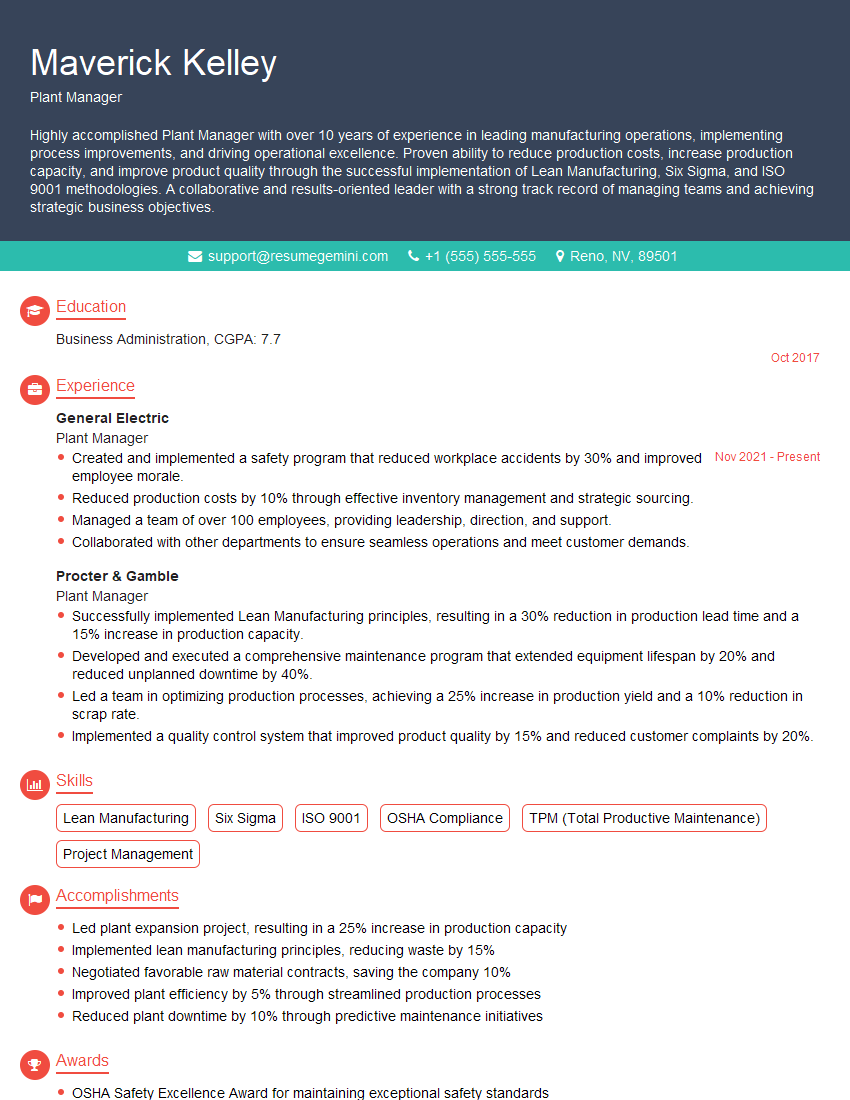
Plant Manager Resume Sample
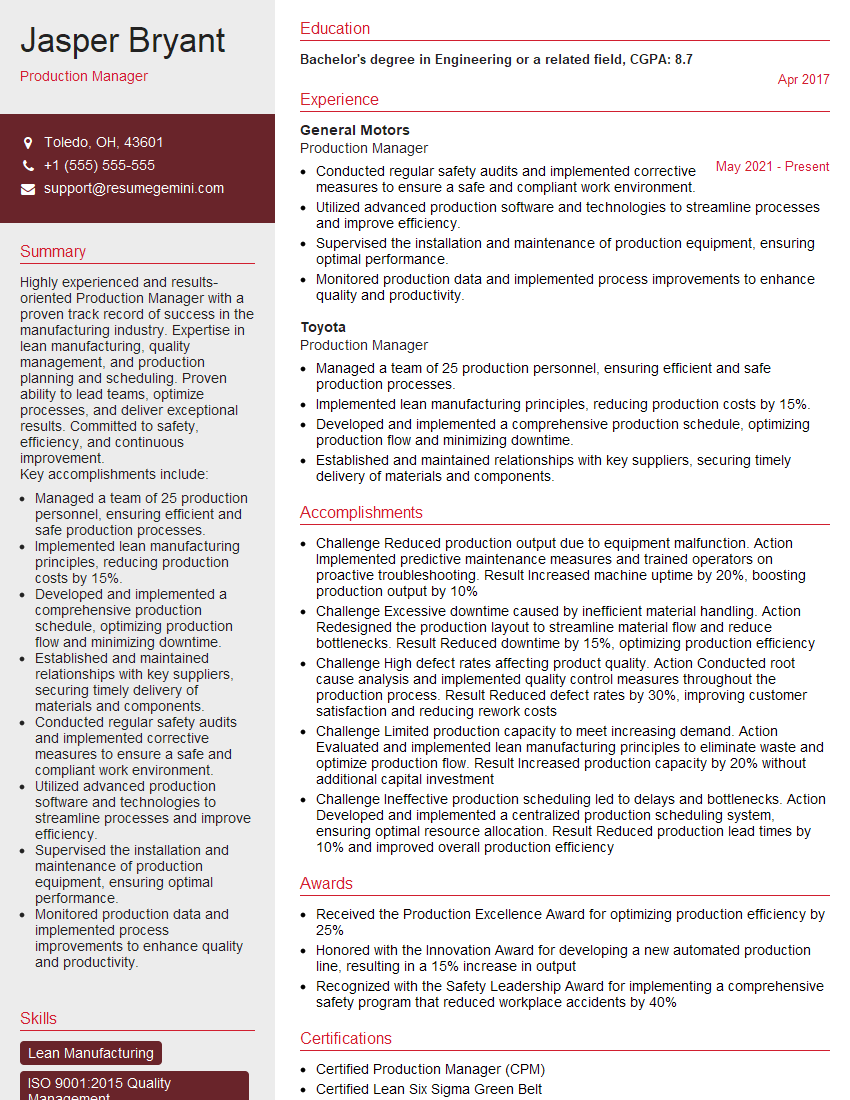
Production Manager Resume Sample
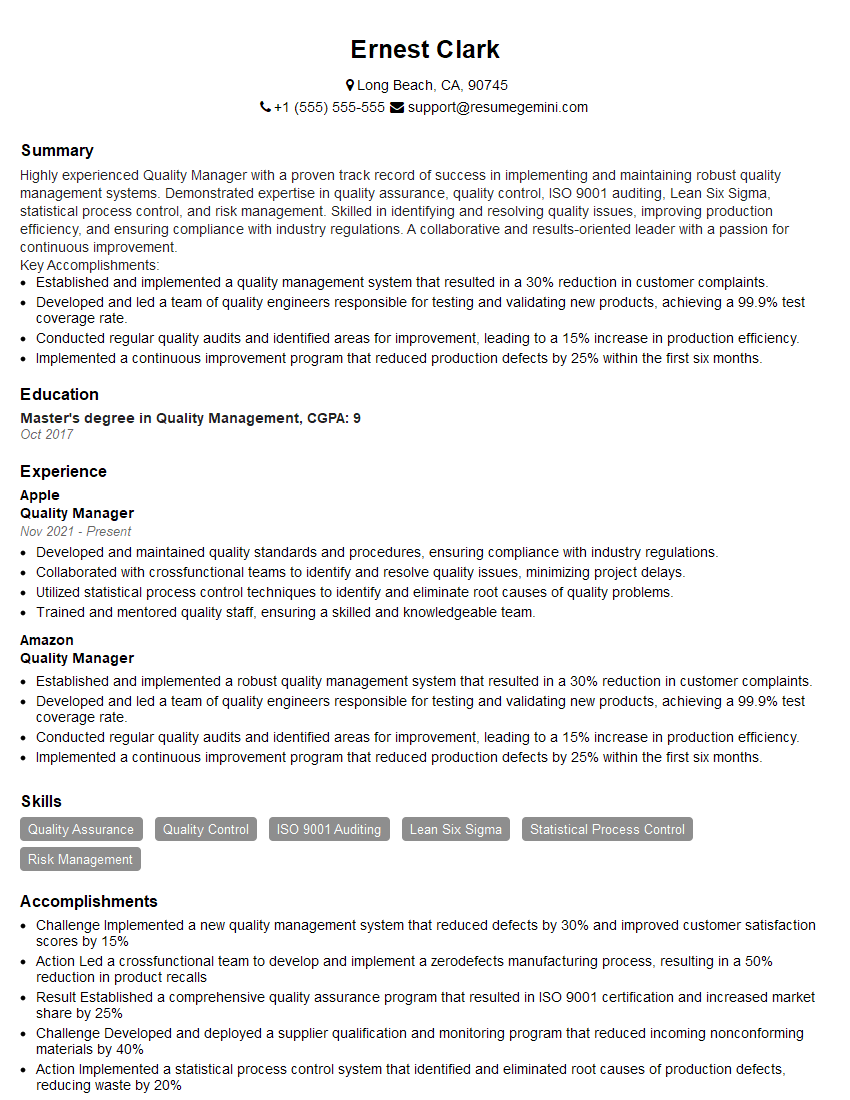
Quality Manager Resume Sample
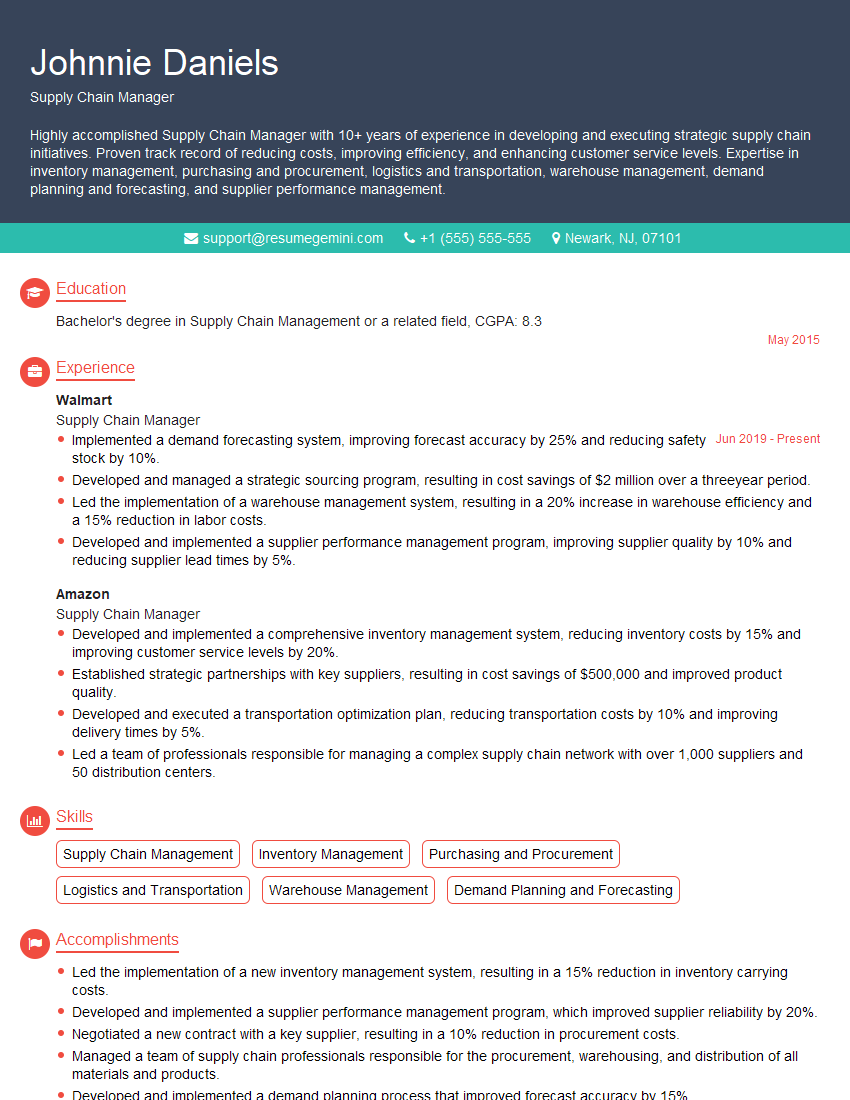
Supply Chain Manager Resume Sample
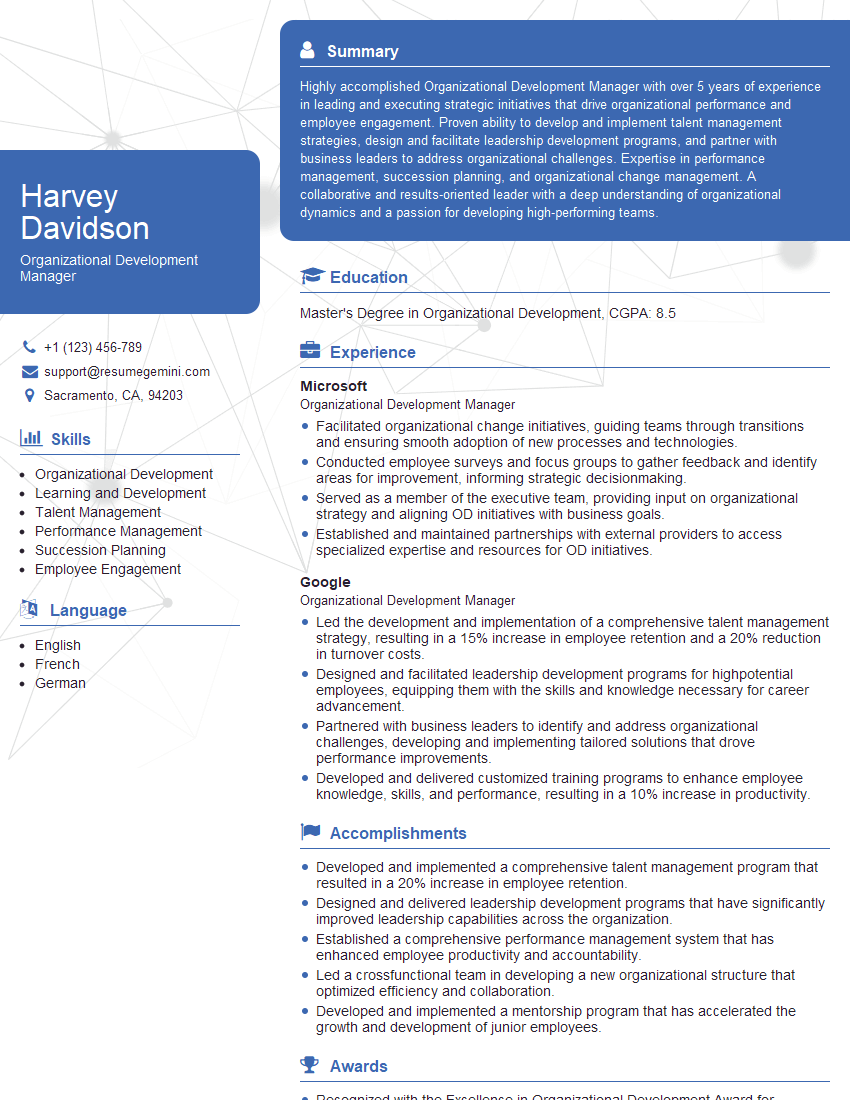
Organizational Development Manager Resume Sample
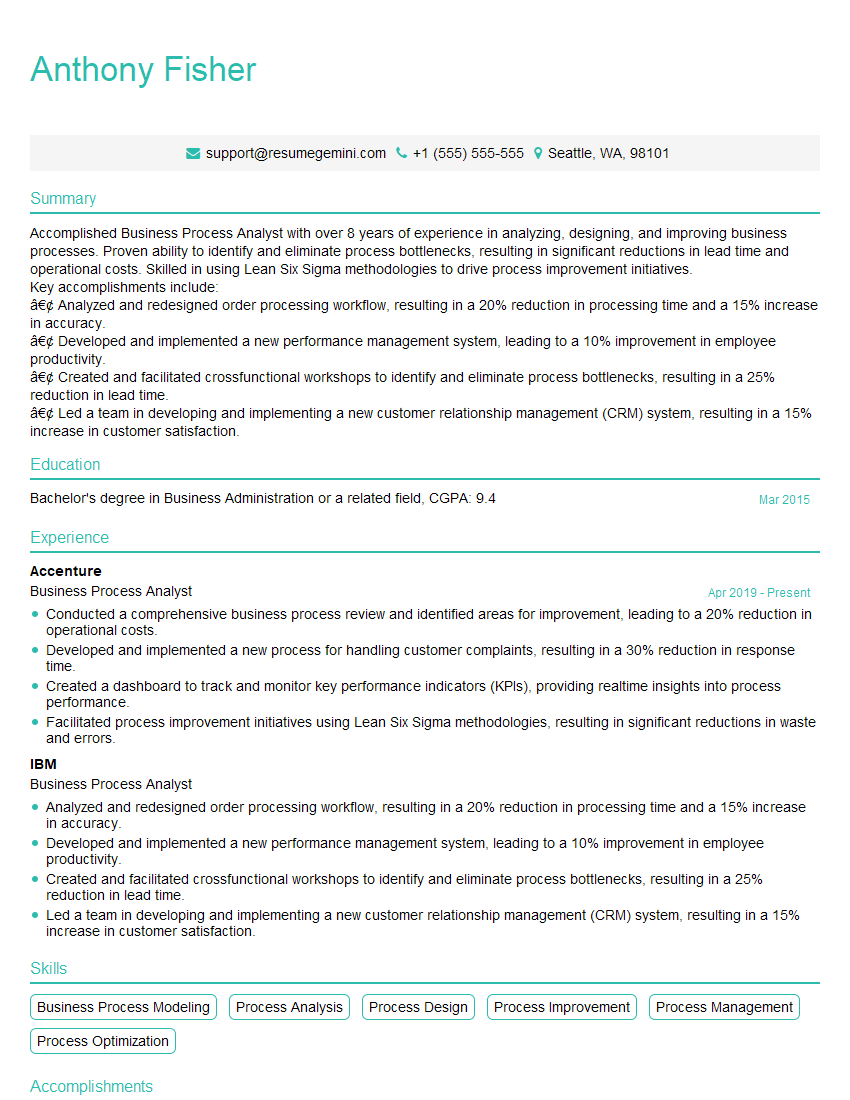
Business Process Analyst Resume Sample
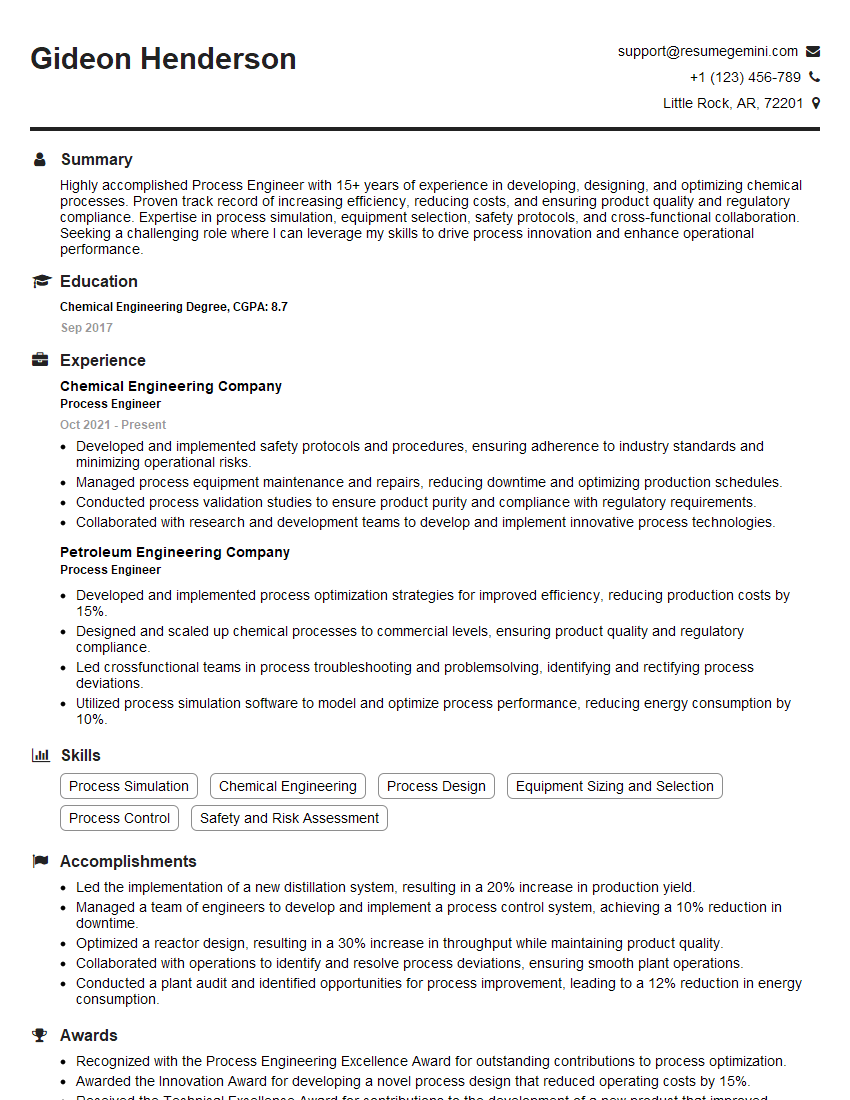
Process Engineer Resume Sample
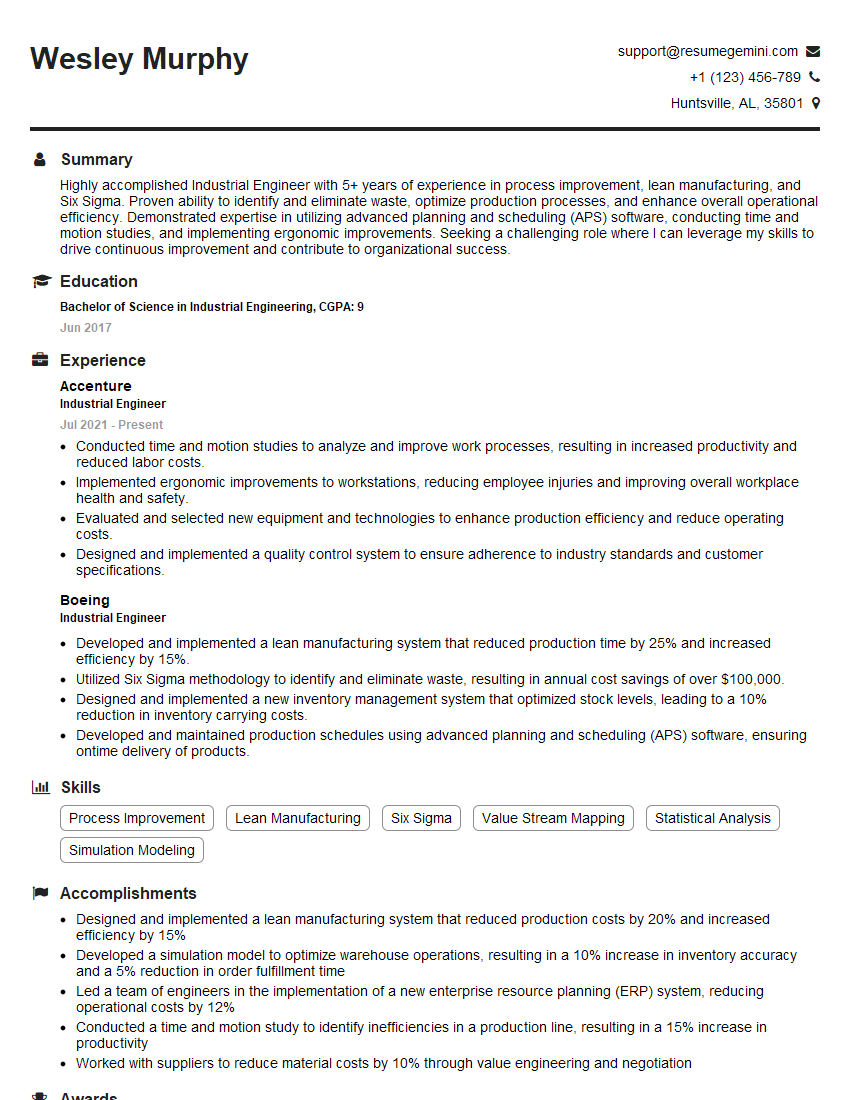
Industrial Engineer Resume Sample
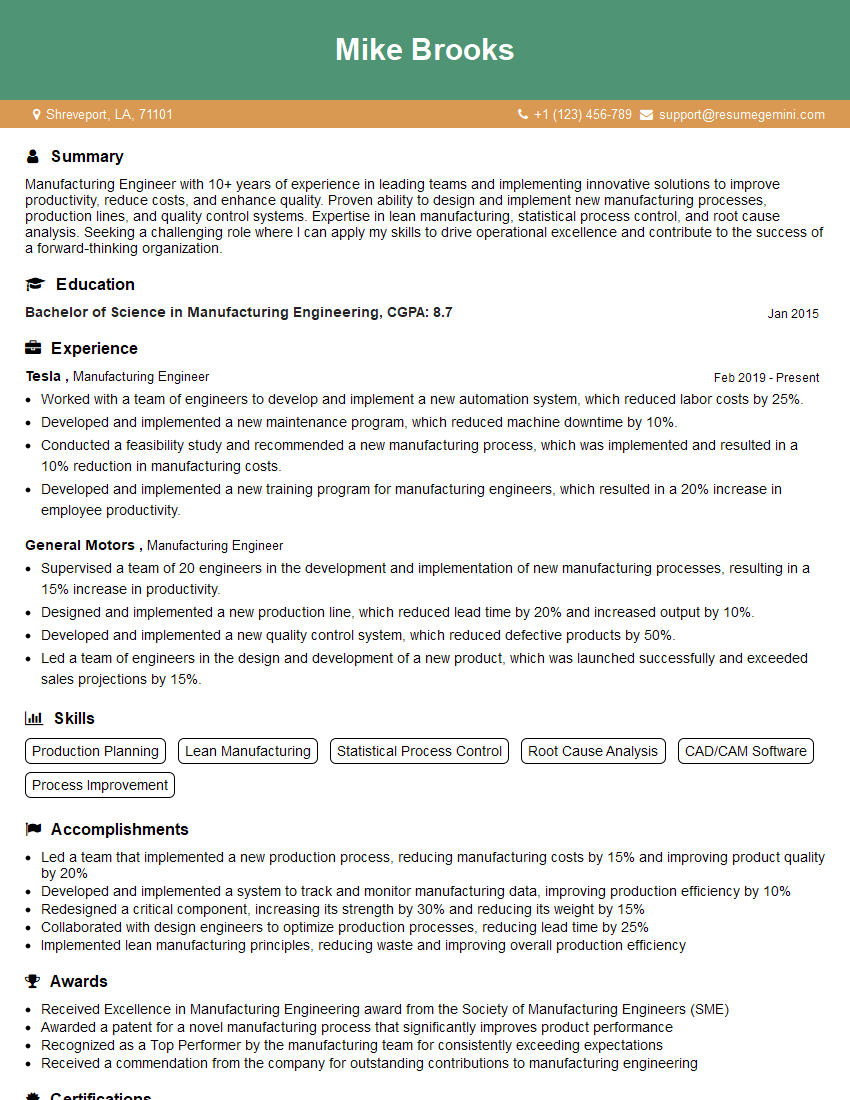
Manufacturing Engineer Resume Sample
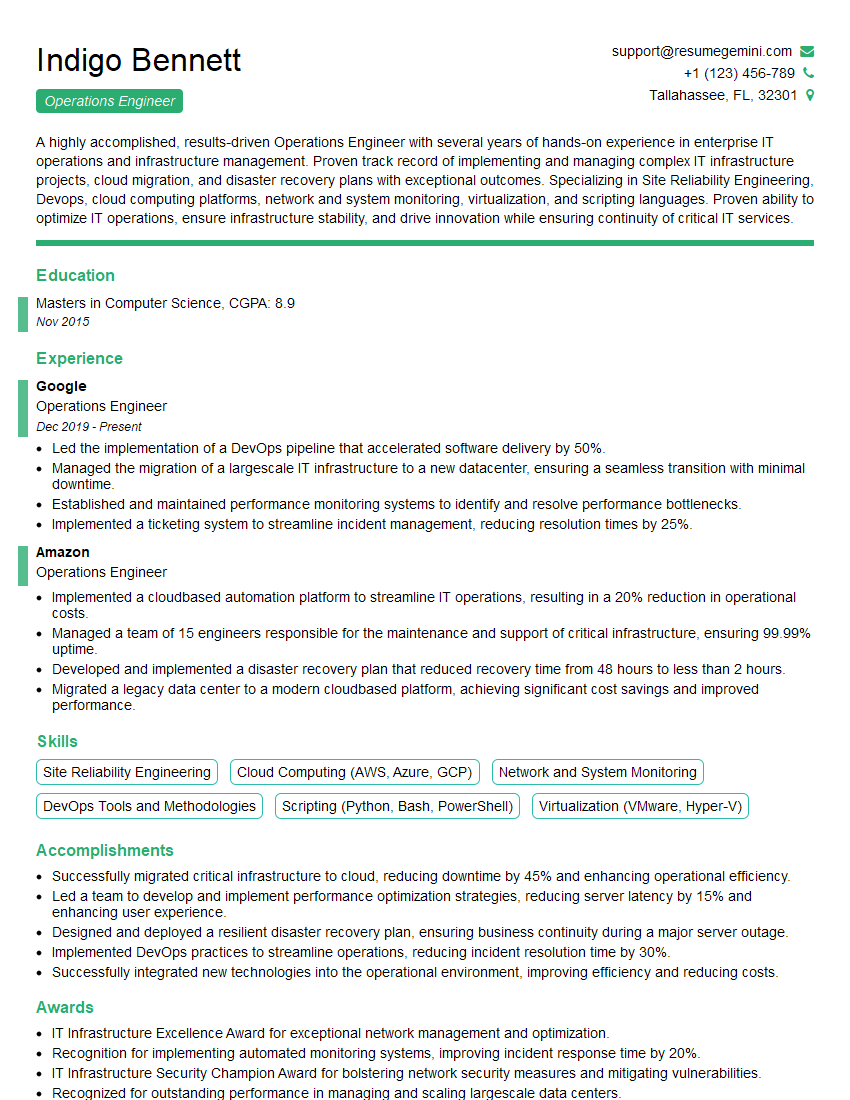
Operations Engineer Resume Sample
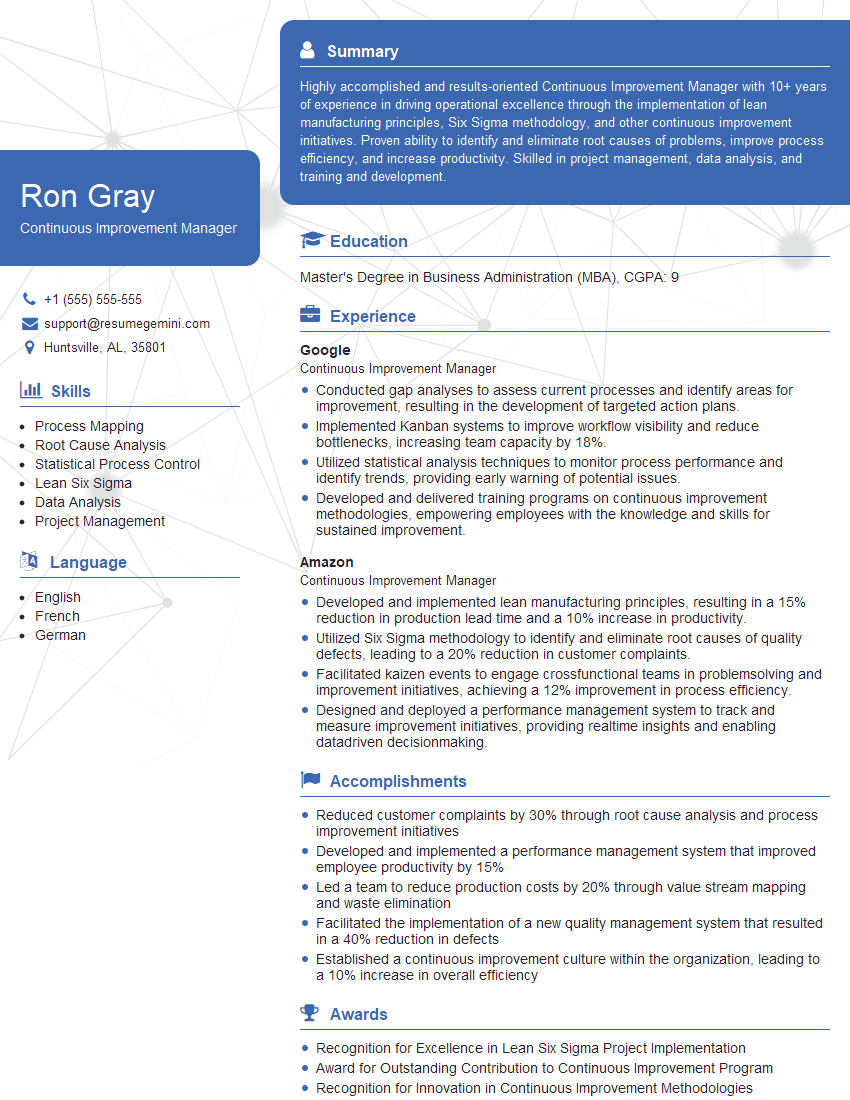
Continuous Improvement Manager Resume Sample
Explore more articles
Users Rating of Our Blogs
Share Your Experience
We value your feedback! Please rate our content and share your thoughts (optional).
What Readers Say About Our Blog
Very informative content, great job.
good