Are you ready to stand out in your next interview? Understanding and preparing for Genetic Selection interview questions is a game-changer. In this blog, we’ve compiled key questions and expert advice to help you showcase your skills with confidence and precision. Let’s get started on your journey to acing the interview.
Questions Asked in Genetic Selection Interview
Q 1. Explain the difference between phenotypic and genotypic selection.
Phenotypic selection and genotypic selection are two approaches to selecting superior individuals for breeding. Phenotypic selection bases the selection solely on an individual’s observable characteristics (phenotype). Think of it like judging a horse race based solely on how fast each horse ran in a single race – you’re seeing the outcome, not necessarily the underlying genetic potential. Genotypic selection, on the other hand, selects individuals based on their genetic makeup (genotype), which predicts their performance and the performance of their offspring. This is like analyzing the horse’s pedigree and genetic markers to predict its racing potential before the race even begins. It’s often more accurate in the long run, but requires more advanced techniques and information.
For example, imagine selecting for disease resistance in a crop. Phenotypic selection would involve choosing plants that didn’t show signs of disease. Genotypic selection would involve using DNA markers linked to disease resistance genes to identify and select resistant plants even before disease exposure.
Q 2. Describe the principles of marker-assisted selection (MAS).
Marker-assisted selection (MAS) leverages DNA markers – specific DNA sequences that are closely linked to genes of interest – to indirectly select individuals with desirable traits. These markers act as signposts for the genes controlling traits, allowing breeders to select individuals with favorable alleles (versions of a gene) even if the trait itself is difficult or expensive to measure directly. The principles involve identifying DNA markers linked to target genes, genotyping individuals using these markers, and finally selecting individuals carrying desirable marker alleles.
Imagine a marker closely linked to a gene for drought tolerance in wheat. Using MAS, breeders can analyze thousands of wheat plants’ DNA for the presence of this marker. Plants with the marker are more likely to be drought-tolerant, and these plants can then be selected for breeding, saving time and resources compared to traditional field testing under drought conditions for all the plants.
Q 3. What are the advantages and disadvantages of genomic selection compared to traditional selection methods?
Genomic selection (GS) offers significant advantages over traditional selection methods. Unlike MAS, which focuses on individual genes, GS uses thousands or millions of markers across the entire genome to predict the breeding value of an individual. This provides a much more comprehensive picture of an animal’s or plant’s genetic merit.
- Advantages of GS: Increased selection accuracy, especially for complex traits, ability to select individuals without phenotypic data (e.g., early selection in trees), increased genetic gain per unit of time, reduced costs in some applications.
- Disadvantages of GS: Requires significant upfront investment in genotyping, sophisticated statistical models and computational power, potential for bias if the training population isn’t representative, the accuracy is dependent on the density and distribution of markers across the genome.
Traditional selection methods like phenotypic selection rely heavily on directly observing the trait and are often slow and less accurate, particularly for traits that are difficult or expensive to measure. In contrast, GS accelerates the breeding process and enhances precision.
Q 4. How does quantitative genetics inform genetic selection strategies?
Quantitative genetics provides the theoretical framework for understanding the genetic basis of complex traits and guides genetic selection strategies. It deals with the inheritance of traits controlled by many genes (polygenic traits) and the influence of the environment. Key concepts from quantitative genetics such as heritability, genetic correlations, and breeding value are crucial in designing effective breeding programs.
For instance, quantitative genetics helps breeders estimate the heritability of a trait – the proportion of variation in a trait due to genetic factors. A high heritability indicates that selection will be more effective, while a low heritability suggests that environmental factors play a greater role. Understanding genetic correlations between traits allows breeders to predict the indirect effects of selection on one trait on another. For example, selecting for increased milk production in dairy cattle might have an indirect effect on the animal’s fertility.
Q 5. Explain heritability and its importance in genetic selection.
Heritability is a crucial concept in quantitative genetics, representing the proportion of phenotypic variation in a population attributable to genetic differences. It indicates how well a trait is passed down from parents to offspring. Heritability ranges from 0 to 1 (or 0% to 100%). A heritability of 0.8 indicates that 80% of the observed variation in a trait is due to genetic differences, while a heritability of 0.2 implies only 20% of the variation is genetically determined.
In genetic selection, heritability is paramount. High heritability suggests that selecting individuals with desirable phenotypes will lead to significant genetic improvement in the next generation. Conversely, a low heritability indicates that environmental factors have a significant impact, making selection based on phenotype less effective.
For example, egg production in chickens shows relatively high heritability, meaning selecting hens that lay many eggs will lead to greater egg production in their offspring. In contrast, the heritability of animal temperament may be lower, indicating environmental influences are strong.
Q 6. Discuss the concept of breeding value and its estimation.
Breeding value is the genetic merit of an individual for a specific trait, representing the expected difference in the performance of its offspring compared to the average of the population. It predicts the genetic contribution an individual will make to future generations. Unlike phenotype which includes both genetic and environmental effects, the breeding value is purely a measure of genetic merit.
Estimating breeding values involves using statistical models that take into account the individual’s phenotype, the phenotypes of its relatives (e.g., parents, siblings, offspring), and the pedigree information. These models partition the observed phenotypic variation into genetic and environmental components. The more information available (e.g., larger family sizes, more accurate phenotypic records) the more precise the breeding value estimation.
Q 7. Describe different methods for estimating breeding values.
Several methods exist for estimating breeding values, each with its strengths and weaknesses. Common methods include:
- Best Linear Unbiased Prediction (BLUP): A widely used statistical method that accounts for genetic relationships among individuals and environmental effects. BLUP provides accurate estimates even when data are incomplete or unbalanced.
- Restricted Maximum Likelihood (REML): An advanced statistical technique used to estimate variance components (e.g., genetic variance, environmental variance) necessary for accurate breeding value estimation. REML is more computationally demanding than simpler methods.
- Genomic BLUP (GBLUP): Extends BLUP by incorporating genomic information (marker data) to improve prediction accuracy, particularly for traits with low heritability or many genes involved. GBLUP is a cornerstone of genomic selection.
The choice of method depends on factors like the availability of data (phenotype, pedigree, genomic data), the complexity of the trait, and the computational resources available. For example, GBLUP is preferred in genomic selection programs where marker data is abundant.
Q 8. What are the challenges in applying genomic selection in complex traits?
Applying genomic selection to complex traits presents several significant challenges. Complex traits, unlike simple traits controlled by a single gene, are influenced by numerous genes, each with small effects, and often interact with each other in intricate ways (epistasis). Furthermore, these genetic effects are heavily intertwined with environmental factors.
- Polygenic Nature: Identifying and accurately quantifying the contribution of many genes with minor effects is computationally intensive and requires massive datasets. Standard statistical models can struggle with this high dimensionality.
- Gene-Environment Interactions (GxE): The impact of a specific genotype can vary considerably depending on the environment. Accurately predicting performance across diverse environments requires sophisticated models that account for these interactions, which is often challenging with limited data.
- Epistasis: The interaction between different genes further complicates prediction. Models need to capture these complex interactions, which adds significant complexity.
- Incomplete Linkage Disequilibrium: The extent of linkage disequilibrium (LD) – the non-random association of alleles at different loci – influences the accuracy of genomic prediction. Low LD requires denser marker maps, increasing costs and computational demands.
- Data limitations: Accurate genomic prediction relies on large, high-quality datasets containing both genomic and phenotypic information. Collecting sufficient data, especially for expensive traits, can be a major hurdle.
For example, imagine predicting milk yield in dairy cattle. This trait is highly polygenic, influenced by numerous genes, and affected by factors like nutrition, climate, and management practices. Accurately predicting milk yield requires capturing all these complexities, which presents a significant analytical challenge.
Q 9. How do you account for environmental effects in genetic selection?
Accounting for environmental effects is crucial in genetic selection to avoid biased estimates of genetic merit. If environmental effects are not adequately addressed, we risk selecting individuals that perform well in specific environments due to favorable environmental conditions rather than superior genetics. Several strategies are used:
- Well-designed experiments: Employing experimental designs that minimize environmental variation, such as randomized complete block designs, ensures that environmental effects are evenly distributed across genotypes.
- Statistical modeling: Incorporating environmental covariates (e.g., temperature, rainfall, soil type) into statistical models helps to partition phenotypic variation into genetic and environmental components. Mixed models are commonly used for this purpose, accounting for both fixed (e.g., treatment) and random (e.g., individual) effects.
- Genotype x Environment interaction (GxE) analysis: Analyzing data from multiple environments allows for assessing how genotypes respond differently to specific environmental conditions. This helps identify genotypes that are consistently superior across diverse environments, and genotypes with superior performance in specific conditions.
- Environmental indices: Developing environmental indices that capture the overall environmental stress experienced by individuals allows for standardization of phenotypic data to minimize environmental effects.
For instance, in plant breeding, using multi-environment trials across different locations and years allows for evaluating the stability and adaptability of genotypes to various environmental conditions. This ensures selecting superior genotypes for diverse farming regions.
Q 10. Explain the concept of linkage disequilibrium and its role in genomic selection.
Linkage disequilibrium (LD) refers to the non-random association of alleles at different loci on a chromosome. In simpler terms, it’s the tendency for certain alleles to be inherited together more frequently than expected by chance. This is largely due to the physical proximity of genes on a chromosome; genes closer together tend to be inherited together more often.
LD plays a critical role in genomic selection because it allows us to predict the genotype at a quantitative trait locus (QTL) – a gene affecting a quantitative trait – based on the genotype at nearby markers, even if we haven’t directly genotyped the QTL itself. The stronger the LD between a marker and a QTL, the more accurate the prediction. Genomic prediction models use LD information to estimate the effects of markers, which are then used to predict the genetic merit of individuals.
Imagine a chromosome with a QTL for yield (Y) and a nearby marker (M). If alleles of M and Y are frequently inherited together (high LD), observing allele M1 suggests a higher probability of also having allele Y1, thus enabling prediction of yield even without direct genotyping at the QTL.
However, the extent of LD varies across the genome and between populations. Low LD demands denser marker maps to capture sufficient information for accurate prediction, which increases the cost and complexity of genomic selection.
Q 11. Discuss the importance of genetic diversity in breeding programs.
Genetic diversity is the cornerstone of successful breeding programs. It represents the variation in genes within a population. Maintaining sufficient genetic diversity is vital for:
- Adaptability: Diverse populations are more likely to possess genes conferring resistance to diseases, pests, and changing environmental conditions. Without diversity, a population may be vulnerable to a single disease outbreak or climate change.
- Long-term breeding progress: Genetic gain slows down significantly as diversity decreases. A narrow genetic base limits the range of allele combinations available for selection, hindering future improvements.
- Resilience: Genetic diversity buffers against unexpected challenges. A diverse population is more likely to recover from unforeseen events that affect specific genotypes.
- Breed improvement: Diversity provides the raw material for selection. Without it, breeders lack the genetic variation needed to improve key traits.
Imagine a wheat breeding program focused solely on high-yielding varieties with similar genetic backgrounds. If a new disease emerges, the entire population might be highly susceptible. In contrast, a diverse population would likely have some individuals with natural resistance, ensuring the program’s survival and future improvement.
Q 12. Describe different strategies for managing genetic diversity.
Several strategies are employed to manage genetic diversity in breeding programs:
- Core collections: Creating a representative subset of the entire population that captures most of the genetic diversity. This smaller, manageable collection is used for evaluation and selection.
- Wide crosses: Introducing genes from related but distinct populations or even different species to broaden the genetic base. This approach can significantly enhance diversity but requires careful evaluation of hybrid performance.
- Population structure analysis: Analyzing population structure to identify genetically distinct sub-populations within a larger population helps to maintain balanced representation of each sub-population in the breeding program.
- Genetic distance calculation: Using molecular markers to estimate genetic distances between individuals and selecting parents that are genetically distant helps to maximize the diversity of offspring.
- Cryopreservation: Storing germplasm (seeds, pollen, tissues) of diverse genotypes in cryobanks to maintain diversity for future use. This is particularly useful for preserving endangered or rare varieties.
- Seed banks: Maintaining collections of diverse seeds to ensure genetic variation persists even over long periods.
For instance, in maize breeding, wide crosses with wild relatives have been successfully utilized to introduce new disease resistance genes and improve stress tolerance.
Q 13. How do you select appropriate markers for MAS?
Selecting appropriate markers for marker-assisted selection (MAS) is crucial for its effectiveness. The ideal marker should be:
- Closely linked to the target QTL: Markers tightly linked to the QTL provide the most accurate prediction of the QTL genotype. This reduces the likelihood of selecting individuals with undesirable alleles at the QTL.
- Highly polymorphic: Polymorphic markers display sufficient variation within the population to allow for clear differentiation of genotypes. This enhances the power of selection.
- Easy and cost-effective to assay: The marker should be readily and inexpensively genotyped using available technologies, such as PCR-based assays or high-throughput SNP genotyping platforms.
- Co-dominant: Co-dominant markers reveal both homozygous and heterozygous genotypes. This provides more precise information for selection than dominant markers, which only show the presence or absence of an allele.
- Robust across different environments: The marker’s association with the target trait should be consistent across various environments to avoid inaccurate selection decisions due to GxE interactions.
The selection process often involves using linkage maps to identify markers linked to QTLs detected through quantitative trait locus mapping (QTL mapping) studies. Advanced statistical methods such as genome-wide association studies (GWAS) are also utilized to identify markers associated with traits of interest. The choice of markers often depends on the availability of resources, the level of genetic diversity in the population, and the complexity of the trait being selected.
Q 14. What are the ethical considerations in genetic selection?
Genetic selection, while offering significant benefits for crop improvement and animal breeding, raises several ethical considerations:
- Animal welfare: Selection for specific traits, such as increased meat production or milk yield, can sometimes compromise animal welfare. For example, selecting for extreme milk production may lead to health problems in dairy cows. Careful consideration of animal welfare must be integrated into selection programs.
- Genetic diversity erosion: Intensive selection based on a limited number of superior genotypes can lead to a reduction in genetic diversity. This can make populations more susceptible to diseases, environmental changes, and loss of desirable traits.
- Unintended consequences: Selection for one trait might inadvertently have negative effects on other traits. For instance, selecting for increased yield might reduce disease resistance or nutritional quality.
- Accessibility and equity: The benefits of genetic selection might not be equally accessible to all farmers and breeders. This could exacerbate inequalities in agricultural production.
- Gene flow and environmental impacts: The release of genetically modified organisms (GMOs) into the environment raises concerns about their potential impact on biodiversity and ecosystems. Careful risk assessment and regulatory frameworks are needed.
Addressing these ethical considerations requires a multi-faceted approach that involves collaboration between scientists, breeders, policymakers, and the public. Open discussions, transparent decision-making processes, and rigorous risk assessments are essential for ensuring the responsible and sustainable use of genetic selection technologies.
Q 15. Explain the role of bioinformatics in genetic selection.
Bioinformatics plays a crucial role in genetic selection by providing the computational tools and analytical frameworks necessary to handle the massive datasets generated by high-throughput genotyping technologies. Essentially, it bridges the gap between raw genomic data and actionable insights for breeders.
Think of it like this: Imagine you have a massive library filled with books (genomic data). Bioinformatics provides the tools – the cataloging system, search engines, and analysis software – to efficiently find the relevant information (genes associated with desirable traits) within this library. It allows us to identify specific DNA markers associated with traits of economic importance, like milk yield in dairy cattle or disease resistance in crops, facilitating more efficient and precise selection.
Specifically, bioinformatics is involved in:
- Genome assembly and annotation: Organizing and interpreting the vast sequence data from an organism’s genome.
- Genotype calling and imputation: Determining the genetic makeup of individuals and filling in missing data.
- Genome-wide association studies (GWAS): Identifying specific genes associated with particular traits.
- Genomic prediction and selection: Developing models to estimate breeding values based on genomic information.
Career Expert Tips:
- Ace those interviews! Prepare effectively by reviewing the Top 50 Most Common Interview Questions on ResumeGemini.
- Navigate your job search with confidence! Explore a wide range of Career Tips on ResumeGemini. Learn about common challenges and recommendations to overcome them.
- Craft the perfect resume! Master the Art of Resume Writing with ResumeGemini’s guide. Showcase your unique qualifications and achievements effectively.
- Don’t miss out on holiday savings! Build your dream resume with ResumeGemini’s ATS optimized templates.
Q 16. Describe different software or tools used in genomic selection analysis.
Numerous software packages and tools are used for genomic selection analysis. The choice often depends on the specific needs of the project, the size of the dataset, and the type of model being employed. Here are a few examples:
- BLUPF90 family of programs: This suite of programs is widely used for various animal breeding applications, including genomic selection. It’s known for its efficiency in handling large datasets and its ability to fit various mixed models.
- rrBLUP (ridge regression BLUP): A popular R package offering a computationally efficient implementation of genomic BLUP. It’s particularly useful for analyzing large datasets with many markers.
- BGLR (Bayesian Generalized Linear Regression): An R package offering a flexible framework for fitting various Bayesian genomic selection models, including BayesA, BayesB, and BayesCπ.
- GCTA (Genome-wide Complex Trait Analysis): This software is primarily used for GWAS but can also be utilized for genomic prediction.
These tools often require proficiency in programming languages like R or Python for data manipulation, model fitting, and result interpretation. For example, using rrBLUP in R might involve loading a genomic relationship matrix (GRM) and phenotypic data and then using a simple function like mixed.solve() to obtain genomic estimated breeding values (GEBVs).
Q 17. How do you interpret genomic estimated breeding values (GEBVs)?
Genomic Estimated Breeding Values (GEBVs) represent a prediction of an individual’s breeding value based on its genomic information. Unlike traditional breeding values based solely on pedigree information, GEBVs leverage the vast amount of genetic markers across the entire genome to predict an individual’s genetic merit for a specific trait.
Interpreting GEBVs involves understanding that higher values indicate superior genetic merit for the trait in question. For example, a higher GEBV for milk yield in a dairy cow means that cow is predicted to produce more milk than a cow with a lower GEBV. The scale of GEBVs is typically relative to the population used to build the prediction model; a GEBV of 0 usually indicates the average genetic merit of that population. The accuracy of the GEBV is crucial – a highly accurate GEBV provides a reliable prediction of an animal’s true genetic merit, leading to better selection decisions.
It’s essential to consider the accuracy of GEBV predictions alongside their values. A high GEBV with low accuracy is less reliable than a lower GEBV with high accuracy. Accuracy is often represented as a correlation between the predicted GEBVs and the true breeding values, and it’s typically reported alongside the GEBVs themselves.
Q 18. What are the limitations of using genomic selection?
While genomic selection offers significant advantages, it also presents several limitations:
- High initial costs: Genotyping large populations can be expensive, especially for species with large genomes.
- Computational demands: Analyzing large genomic datasets requires significant computing power and expertise.
- Model dependence: The accuracy of genomic predictions is heavily dependent on the chosen model and the quality of the training data.
- Accuracy limitations: GEBVs are predictions, not true breeding values; their accuracy can vary across traits and populations.
- Population structure: The accuracy of predictions can be affected by population structure and linkage disequilibrium.
- Epigenetic effects and environmental influences: Genomic selection primarily focuses on genetic effects and may not fully account for non-genetic influences on traits.
Overcoming these limitations requires careful experimental design, rigorous model selection, and the use of advanced computational methods. For example, strategies like imputation can reduce the cost of genotyping, while the development of more sophisticated models can improve the accuracy of predictions.
Q 19. How can you validate the accuracy of genomic predictions?
Validating the accuracy of genomic predictions is critical for ensuring the reliability of genomic selection programs. Several approaches can be employed:
- Cross-validation: Splitting the reference population into training and validation sets. The model is built using the training set and then used to predict GEBVs for the validation set. The accuracy is assessed by comparing the predicted GEBVs to the observed phenotypes in the validation set. This can be done using different techniques like k-fold cross-validation.
- Independent validation datasets: Using a completely independent dataset (i.e., a population not used in model training) to evaluate the predictive ability of the model. This provides a more robust assessment of accuracy.
- Prediction accuracy metrics: Assessing the accuracy using various metrics, such as correlation between predicted and true breeding values, mean squared error (MSE), and root mean squared error (RMSE).
- Comparison with traditional methods: Comparing the accuracy of genomic predictions with the accuracy of predictions based on traditional pedigree-based methods. This helps evaluate the added value of genomic selection.
A strong validation strategy involves combining several of these approaches to provide a comprehensive assessment of the accuracy and robustness of the genomic prediction model. For instance, we might employ k-fold cross-validation followed by independent validation using a separate population to confirm the results.
Q 20. Describe the process of developing a genomic selection model.
Developing a genomic selection model involves a multi-step process:
- Data collection: Gathering phenotypic data (measurements of the trait of interest) and genotypic data (DNA marker information) from a reference population.
- Data cleaning and preprocessing: Cleaning the data to remove errors and outliers and performing quality control checks on both phenotypic and genotypic data. This step may involve imputation of missing genotypes.
- Genomic relationship matrix (GRM) construction: Calculating a GRM that quantifies the genetic relatedness between individuals based on their marker genotypes. This matrix is a cornerstone of many genomic selection models.
- Model selection: Choosing an appropriate genomic selection model. This decision depends on factors such as the size of the dataset, the complexity of the trait, and computational resources.
- Model training: Fitting the chosen model to the phenotypic and genotypic data from the reference population. This involves estimating the model parameters using statistical methods.
- Model evaluation: Assessing the predictive ability of the model using cross-validation or independent validation datasets.
- Genomic prediction: Using the trained model to predict GEBVs for individuals in a target population.
Throughout this process, careful consideration of factors such as population structure and linkage disequilibrium is crucial to ensure the accuracy and reliability of the genomic predictions.
Q 21. Explain different types of genomic selection models (e.g., GBLUP, BayesB).
Several genomic selection models exist, each with its own strengths and weaknesses. Here are two commonly used examples:
- GBLUP (Genomic Best Linear Unbiased Prediction): A frequentist approach that uses a mixed linear model to predict GEBVs. It’s relatively simple to implement and computationally efficient, making it suitable for large datasets. GBLUP assumes that the effects of all markers are normally distributed, with a common variance.
- BayesB: A Bayesian approach that assumes that most markers have no effect on the trait, while a small subset of markers have substantial effects. It allows for variable marker effects and provides posterior distributions for marker effects, allowing for uncertainty quantification. This flexibility can lead to increased accuracy compared to GBLUP, particularly when a small number of genes have large effects.
Other models include BayesA, BayesC, and various extensions and modifications of these basic models. The choice of the appropriate model often depends on the specific characteristics of the data and the traits under consideration. For instance, BayesB might be preferred when the trait is influenced by a few major genes, while GBLUP might be more suitable for traits with many genes of small effect.
Q 22. How do you handle missing data in genomic selection analysis?
Missing data is a common challenge in genomic selection. Ignoring it leads to biased results, so careful handling is crucial. Several strategies exist, depending on the nature and extent of the missingness. For small amounts of missing data, simple imputation methods like mean imputation (replacing missing values with the average) or imputation based on known pedigree information can be sufficient. However, these methods can be inaccurate if the missingness is not random. More sophisticated methods include:
- k-Nearest Neighbors (k-NN) imputation: This imputes missing values based on the average values of the k nearest individuals in the genomic data based on genetic similarity. This accounts for the correlation structure within the data.
- Expectation-Maximization (EM) algorithm: This iterative approach estimates both the missing values and the model parameters simultaneously, providing a more statistically sound imputation. It’s particularly useful for handling missing data in complex models.
- Multiple imputation: Instead of imputing missing values once, this method generates multiple plausible imputations, accounting for uncertainty in the imputation process. The results from each imputation are then combined to provide a more robust analysis.
The choice of method depends on the percentage of missing data, the pattern of missingness, and the complexity of the genomic data. For instance, in a large dataset with a complex genetic architecture, multiple imputation might be the preferred approach, while for smaller datasets with random missingness, k-NN imputation might suffice.
Q 23. Describe different methods for evaluating the effectiveness of a breeding program.
Evaluating breeding program effectiveness requires a multifaceted approach, focusing on both genetic gain and economic efficiency. We can assess this through several key metrics:
- Genetic Gain: This measures the improvement in the desired trait(s) over generations. Methods include calculating the selection response (the change in the population mean), analyzing the breeding value estimations, and evaluating the accuracy of genomic predictions. For example, we might compare the average yield of a new variety to its parent lines.
- Heritability: This indicates the proportion of phenotypic variation attributable to genetic factors. A higher heritability suggests a greater potential for genetic improvement.
- Accuracy of Selection: This represents how well we are able to predict true breeding values. Genomic selection enhances the accuracy of selection, leading to greater gains compared to traditional phenotypic selection.
- Economic Efficiency: We should consider the cost-effectiveness of the breeding program, accounting for expenses related to genotyping, phenotyping, breeding, and the market value of the improved traits. This includes assessing return on investment (ROI) and comparing different breeding strategies.
- Genetic Diversity: Maintaining sufficient genetic diversity is crucial to avoid inbreeding depression and to adapt to future environmental changes. Monitoring genetic diversity indices, such as effective population size, is essential.
By integrating these metrics, we gain a holistic understanding of the breeding program’s performance, enabling adjustments and improvements to maximize its efficiency and impact.
Q 24. How do you incorporate genomic information into breeding decisions?
Genomic information revolutionizes breeding decisions by providing a much more precise and efficient selection process. Instead of relying solely on phenotypic observations (which can be influenced by environmental factors), we utilize genomic predictions of breeding values. This involves creating a genomic prediction model using a training population with both genomic and phenotypic data. This model then predicts the breeding values of selection candidates based on their genomic profiles.
Incorporating genomic information is a multi-step process:
- Genotyping: Collect DNA samples from the breeding population and genotype them using high-throughput technologies (SNP arrays or whole-genome sequencing).
- Phenotyping: Accurately measure the traits of interest in the training population.
- Model Building: Develop a genomic prediction model (e.g., GBLUP, Bayesian methods) using the genotypic and phenotypic data from the training population. This model quantifies the association between genomic markers and phenotypic traits.
- Genomic Selection: Use the trained model to predict the breeding values of selection candidates based on their genotypes alone, even before phenotypic data are available. This speeds up the breeding cycle significantly.
- Selection Decisions: Select candidates with superior predicted breeding values to form the next generation of the breeding population.
An example would be selecting elite maize lines for yield. Instead of waiting for multiple years to observe actual yields, we can predict yield potential from their genotypes early in their development and focus breeding resources on high-potential individuals.
Q 25. Discuss the future trends in genetic selection technologies.
Genetic selection is rapidly evolving, driven by advancements in genomic technologies and computational power. Future trends include:
- Increased use of whole-genome sequencing: This provides a much more comprehensive understanding of the genome, leading to more accurate prediction models.
- Integration of multi-omics data: Combining genomic data with transcriptomic, proteomic, and metabolomic data will provide a more holistic view of gene function and its relationship to phenotypic traits.
- Development of more robust and efficient prediction models: Machine learning algorithms and deep learning approaches will enhance the accuracy and predictive power of genomic selection models, adapting to complex genetic architectures.
- Improved understanding of gene-environment interactions: This is crucial to enhance the adaptability of varieties to diverse environmental conditions.
- Advances in gene editing technologies: CRISPR-Cas9 and other gene editing tools will enable precise modification of genes to enhance desired traits and eliminate unwanted ones, accelerating the breeding process.
- Development of genomic-assisted breeding strategies for complex traits: Addressing the challenges of polygenic traits and traits with low heritability will be central to enhancing the effectiveness of breeding programs.
These advances will lead to faster genetic gains and more resilient and sustainable crops and livestock, addressing the growing challenges of food security and climate change.
Q 26. What are the potential applications of CRISPR-Cas9 technology in genetic selection?
CRISPR-Cas9 technology offers revolutionary possibilities for genetic selection. This gene-editing tool allows for precise modifications to the DNA sequence, enabling:
- Targeted gene editing: Introducing desirable alleles or modifying existing ones to improve specific traits, bypassing the limitations of natural variation.
- Gene knockout: Eliminating genes associated with undesirable traits such as disease susceptibility or low yield.
- Gene stacking: Combining multiple beneficial traits within a single variety by introducing multiple gene edits.
- Accelerated breeding: CRISPR-Cas9 can directly introduce desirable mutations, making the breeding process significantly faster than traditional methods.
For instance, CRISPR can be used to enhance drought tolerance in crops by editing genes involved in water stress response. In livestock, it can be used to improve disease resistance by disabling susceptibility genes. However, ethical considerations and regulatory frameworks must carefully guide the applications of this powerful technology.
Q 27. How do you ensure the accuracy and reliability of genomic data?
Ensuring the accuracy and reliability of genomic data is paramount for successful genomic selection. This involves:
- High-quality DNA extraction and genotyping: Using standardized protocols and proper quality control measures during DNA extraction and genotyping to minimize errors and biases.
- Appropriate genotype calling and filtering: Rigorous quality control processes to filter out low-quality genotypes and markers to reduce noise in the data.
- Data validation and error correction: Implementing procedures to identify and correct errors in the genomic data, such as using Mendelian inheritance rules for pedigree consistency checks.
- Accurate phenotyping: Precise and consistent measurements of phenotypic traits to minimize environmental effects and measurement errors. This often involves multiple measurements and replicates.
- Appropriate statistical analysis: Applying appropriate statistical methods to handle missing data, population structure, and linkage disequilibrium (the non-random association of alleles at different loci).
- Regular data auditing and quality control: Ongoing monitoring of data quality and implementing quality control checks at various stages of the process.
For example, verifying the accuracy of genotype calls through independent validation assays or by comparing genotypes with established pedigree information is crucial.
Q 28. Explain the impact of population structure on genomic selection.
Population structure refers to the presence of subgroups within a population, characterized by distinct genetic backgrounds. This can significantly impact genomic selection because it introduces spurious correlations between genotypes and phenotypes. This is because individuals within the same subpopulation tend to share more alleles, even if those alleles are not causally linked to the trait of interest. This can lead to inflated estimates of marker effects and reduced accuracy of genomic predictions.
To address this, various strategies can be employed:
- Accounting for population structure in the genomic prediction model: This can be done through statistical methods such as mixed models that include kinship matrices or principal component analysis (PCA) to account for the genetic relatedness among individuals.
- Stratifying the population: Dividing the population into homogeneous subgroups based on their genetic similarity, and performing genomic selection separately within each subgroup. This reduces the confounding effects of population structure.
- Using appropriate reference populations: Selecting a reference population that is representative of the diversity within the target population can improve the accuracy of genomic predictions.
Ignoring population structure can lead to biased estimates of breeding values and lower accuracy of genomic selection. Therefore, carefully considering and accounting for population structure is crucial for obtaining reliable and accurate results.
Key Topics to Learn for Genetic Selection Interview
- Quantitative Genetics: Understanding heritability, selection intensity, and response to selection. Practical application: Analyzing breeding programs and predicting genetic gain.
- Molecular Markers and QTL Mapping: Identifying genes associated with desirable traits. Practical application: Designing marker-assisted selection strategies.
- Genome-Wide Association Studies (GWAS): Identifying genetic variants associated with complex traits. Practical application: Improving accuracy of genomic prediction.
- Genomic Selection: Understanding the principles and methods behind genomic selection, including prediction models and accuracy assessment. Practical application: Evaluating the effectiveness of different genomic prediction models in a specific breeding program.
- Breeding Strategies and Programs: Developing and implementing effective breeding programs incorporating genetic selection techniques. Practical application: Designing a breeding program for increased yield in a specific crop.
- Bioinformatics and Data Analysis: Handling and analyzing large genomic datasets. Practical application: Interpreting results from GWAS or genomic prediction analyses.
- Ethical Considerations in Genetic Selection: Understanding the ethical implications of genetic modification and selection. Practical application: Evaluating the potential risks and benefits of a specific genetic modification.
Next Steps
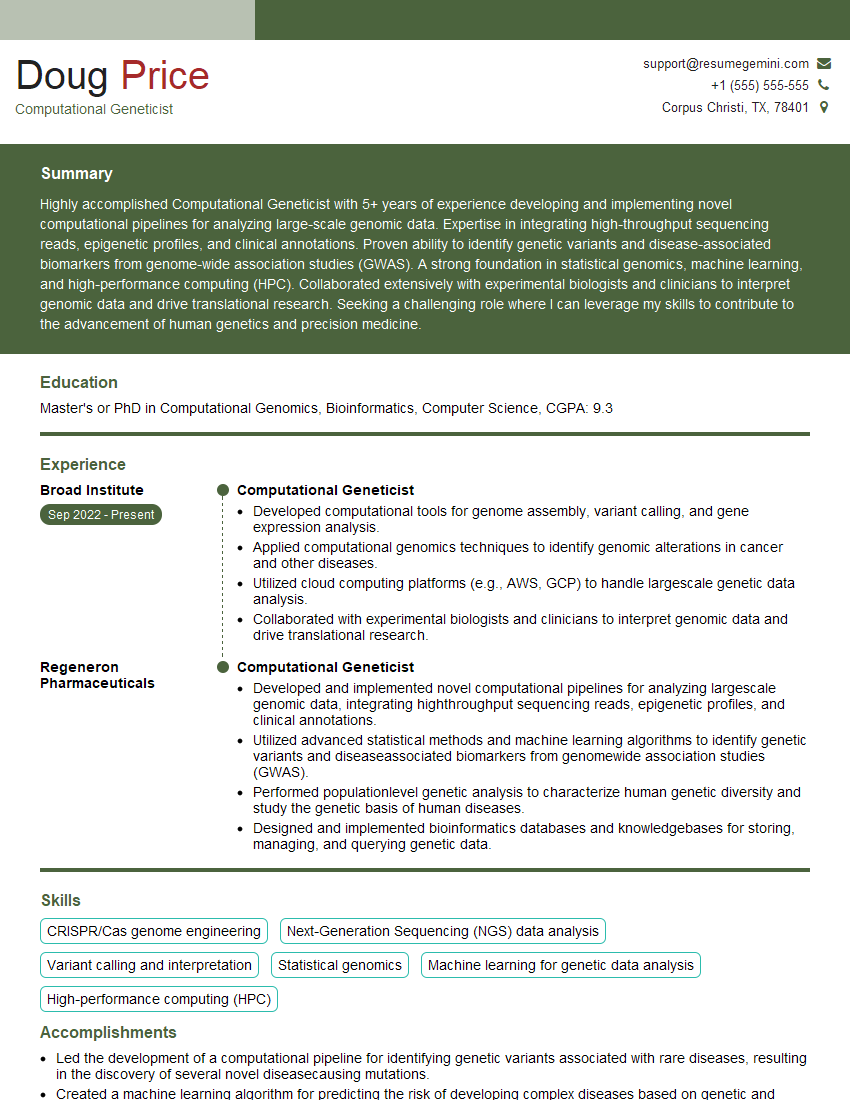
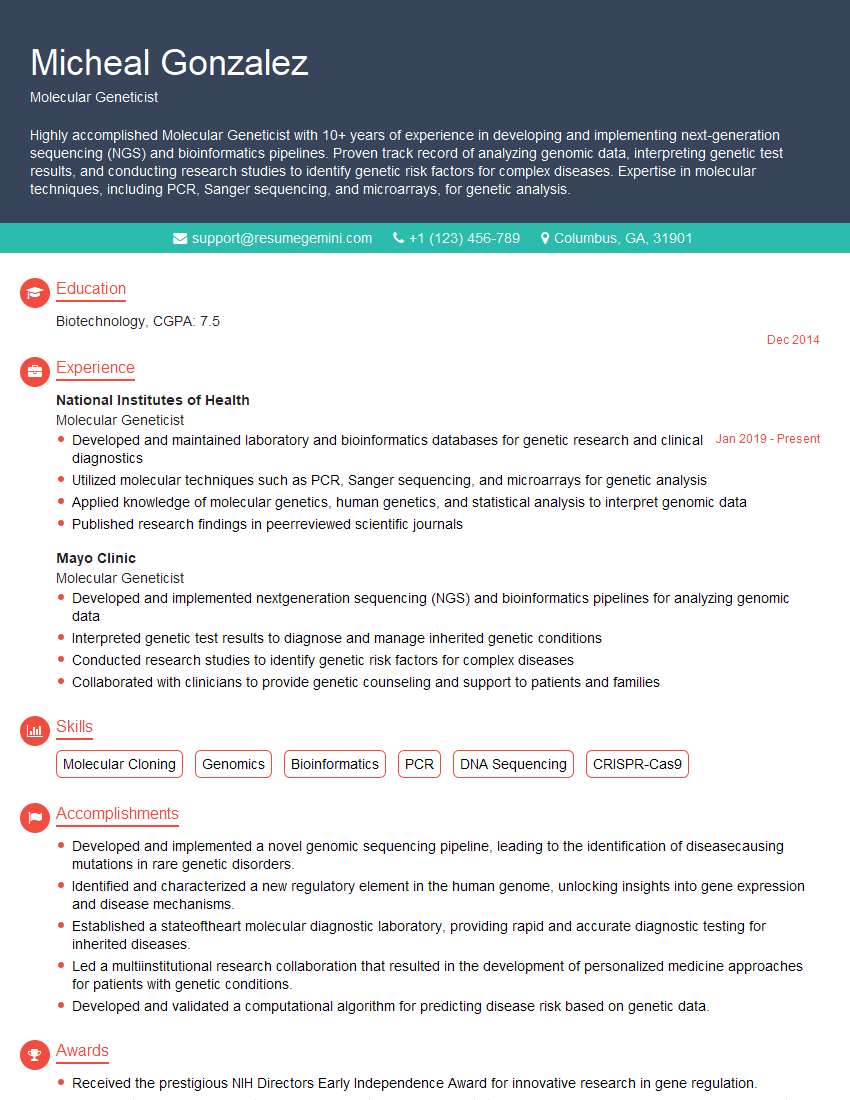
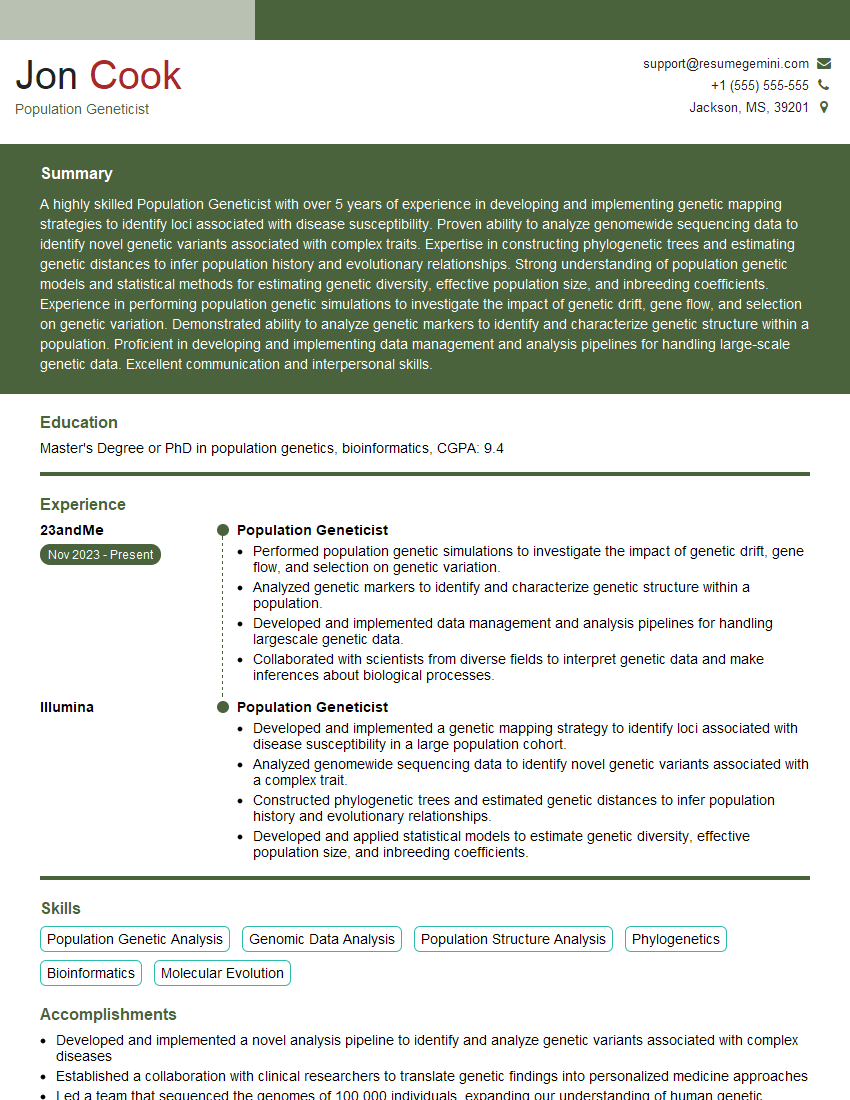
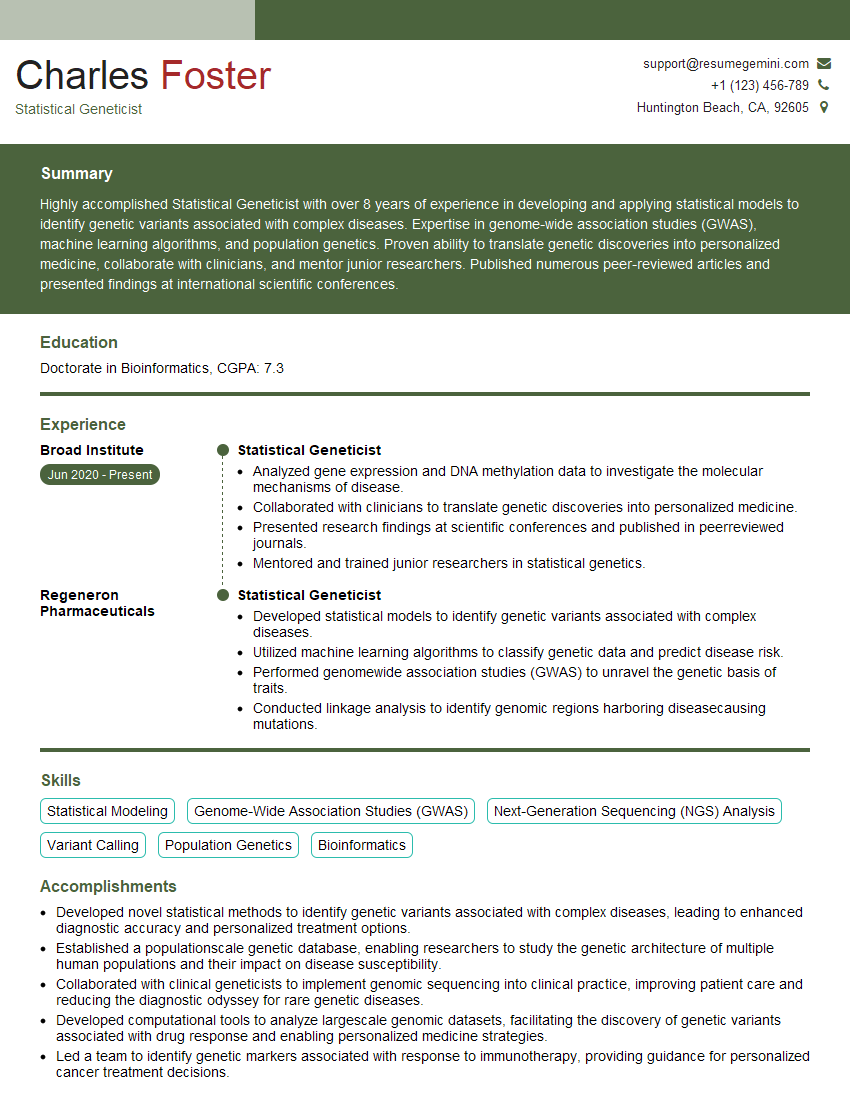
Mastering genetic selection principles and techniques is crucial for career advancement in agriculture, animal breeding, and biotechnology. A strong understanding of these concepts will significantly enhance your job prospects and open doors to exciting opportunities. To increase your chances of landing your dream role, it’s vital to create a resume that effectively communicates your skills and experience to Applicant Tracking Systems (ATS). ResumeGemini is a trusted resource that can help you build a professional, ATS-friendly resume tailored to highlight your expertise in genetic selection. Examples of resumes specifically crafted for Genetic Selection roles are available to help you create a compelling application.


Explore more articles
Users Rating of Our Blogs
Share Your Experience
We value your feedback! Please rate our content and share your thoughts (optional).
What Readers Say About Our Blog
Very informative content, great job.
good