Every successful interview starts with knowing what to expect. In this blog, we’ll take you through the top GHG Emissions Accounting and Reporting interview questions, breaking them down with expert tips to help you deliver impactful answers. Step into your next interview fully prepared and ready to succeed.
Questions Asked in GHG Emissions Accounting and Reporting Interview
Q 1. Explain the difference between Scope 1, Scope 2, and Scope 3 GHG emissions.
Scope 1, 2, and 3 emissions categorize greenhouse gas (GHG) emissions based on their source and the organization’s control. Think of it like concentric circles around a company.
- Scope 1: Direct Emissions These are emissions from sources that are owned or controlled by the company. This includes things like emissions from company vehicles, on-site combustion (e.g., boilers), and fugitive emissions from refrigerants. It’s the easiest to measure because you’re directly in charge of the source.
- Scope 2: Indirect Emissions from Energy Consumption These emissions come from the generation of purchased electricity, heat, or steam consumed by the company. For example, the coal-fired power plant generating the electricity used in your office is responsible for Scope 2 emissions, not your office directly. You’re not directly controlling the emission source, but you’re directly responsible for the energy consumption.
- Scope 3: Other Indirect Emissions This is the broadest category and encompasses all other indirect emissions not included in Scope 1 or 2. It’s a vast category including emissions from upstream activities (like the manufacturing of purchased goods) and downstream activities (like the transportation of sold goods). Consider the emissions from raw material extraction, transportation, use of your products by customers, and end-of-life disposal.
For example, a clothing manufacturer would have Scope 1 emissions from their factory’s boilers, Scope 2 emissions from the electricity powering their machinery, and Scope 3 emissions from the transport of raw materials, the manufacturing of fabrics by suppliers, the transportation of finished clothes, and even the disposal of the clothes after their use by consumers.
Q 2. Describe the process of conducting a GHG emissions inventory.
Conducting a GHG emissions inventory involves a systematic process to quantify an organization’s GHG emissions. It’s like taking a detailed inventory of everything that contributes to your carbon footprint.
- Define Boundaries: Clearly define the organizational boundary and reporting period (e.g., calendar year). What facilities, operations, and activities are included?
- Data Collection: Gather data from various sources, including utility bills, fuel consumption records, manufacturing data, waste data, and transportation records. Use different methodologies depending on the data availability; some estimations might be necessary.
- Activity Data: Determine the quantities of activities that lead to emissions. For example, the amount of electricity consumed, the volume of fuel burned, miles driven, etc.
- Emission Factors: Identify and apply appropriate emission factors to convert activity data into emissions. Emission factors are typically provided by government agencies or organizations like the EPA. These factors represent the amount of GHG emitted per unit of activity.
- Calculations: Calculate total GHG emissions for each scope (1, 2, and 3). This often involves using specific equations or software tools.
- Quality Assurance/Quality Control: Review calculations, data sources, and methodologies to ensure accuracy and consistency.
- Reporting: Prepare a comprehensive GHG emissions inventory report documenting the methodology, data sources, results, and any uncertainties.
Software tools can automate much of this process, improving accuracy and efficiency.
Q 3. What are the key international standards and frameworks for GHG accounting and reporting (e.g., GHG Protocol, ISO 14064)?
Several key international standards and frameworks guide GHG accounting and reporting, promoting consistency and comparability across organizations. Think of them as universally accepted guidelines for accurate bookkeeping of GHG emissions.
- The GHG Protocol: This is the most widely used corporate accounting and reporting standard. It provides comprehensive guidance on quantifying and reporting emissions across all three scopes.
- ISO 14064: This international standard provides a framework for quantifying, monitoring, and verifying GHG emissions at the organizational, project, and product levels. It’s especially useful for verification and validation of data. It’s like a detailed instruction manual for precise GHG reporting.
- Carbon Disclosure Project (CDP): While not strictly a standard, CDP is a global environmental disclosure platform that encourages companies to report their environmental performance, including GHG emissions, to investors and other stakeholders. It provides a benchmark for companies’ actions.
Adherence to these frameworks enhances transparency and accountability in GHG reporting, enabling meaningful comparisons and informed decision-making.
Q 4. How do you ensure the accuracy and completeness of GHG emission data?
Ensuring accuracy and completeness of GHG emission data requires a multi-faceted approach, focusing on data quality from the start. It’s like building a solid foundation for a skyscraper—any weakness in the base will compromise the whole structure.
- Data Quality Checks: Implement robust data quality checks at each stage of the process. This includes verifying data sources, identifying outliers, and reconciling data discrepancies.
- Use of Reliable Emission Factors: Use emission factors from reputable sources and ensure they are appropriate for the specific activities and technologies involved. Outdated emission factors can drastically affect accuracy.
- Appropriate Methodologies: Select and apply appropriate methodologies based on the nature of the emissions and data availability. Using inappropriate methodologies introduces errors.
- Documentation: Maintain thorough documentation of data sources, methodologies, assumptions, and uncertainties. Good record-keeping allows traceability and verification.
- Regular Audits: Conduct periodic audits of the GHG emissions inventory process to identify and correct any errors or inconsistencies. This confirms the integrity of the data over time.
By consistently applying these checks and balances, organizations can build confidence in the accuracy and reliability of their GHG emission data.
Q 5. What are some common challenges in GHG emissions accounting and how do you overcome them?
Common challenges in GHG emissions accounting often stem from data limitations, complexity, and evolving regulations. Addressing these challenges demands a proactive and flexible approach.
- Data Availability and Quality: Inconsistent or incomplete data from various sources can be a significant hurdle. Solutions include improving data management systems, using estimation techniques when necessary, and collaborating with suppliers for upstream data.
- Scope 3 Emissions: Quantifying Scope 3 emissions is often the most challenging due to the complexity and lack of control. Strategies involve collaborating with value chain partners, using tiered approaches (prioritizing material emissions), and employing industry average emission factors where primary data is unavailable.
- Evolving Standards and Methodologies: Keeping up with changes in standards and methodologies requires continuous learning and adaptation. Organizations should actively monitor developments in the field and update their methodologies accordingly. Professional development courses help in this regard.
- Allocation of Emissions: For shared resources or joint ventures, allocating emissions fairly and accurately can be difficult. Clear agreements and methodologies must be established upfront to prevent disputes.
Addressing these challenges requires a commitment to continuous improvement, technological advancements, and collaboration across the value chain.
Q 6. Explain the concept of carbon footprint and its relevance to businesses.
A carbon footprint represents the total amount of greenhouse gases generated by our actions. It’s like a snapshot of your environmental impact. For businesses, it’s particularly relevant because it reveals the environmental cost of their operations and products.
Understanding their carbon footprint helps businesses:
- Identify emission hotspots: pinpoint the most significant sources of GHG emissions within their operations.
- Set reduction targets: establish ambitious goals for reducing emissions across their value chain.
- Enhance sustainability initiatives: design and implement effective strategies to minimize their environmental impact.
- Improve resource efficiency: optimize processes to minimize waste and improve energy efficiency.
- Enhance brand reputation: demonstrate environmental responsibility and attract environmentally conscious customers and investors.
- Meet regulatory compliance: comply with increasingly stringent environmental regulations.
A smaller carbon footprint often translates to cost savings, improved operational efficiency, and enhanced brand reputation.
Q 7. How do you validate and verify GHG emission data?
Validation and verification are crucial steps in ensuring the credibility and reliability of GHG emission data. Think of it as a quality control process, ensuring your data is accurate and trustworthy.
Validation is a process where the organization itself assesses the completeness, accuracy, and consistency of its GHG emissions inventory. It’s an internal review of the data to confirm accuracy before it’s shared with any third parties.
Verification is an independent assessment of the GHG emissions inventory by a third-party expert. This independent review enhances the credibility and reliability of the reported data. It’s like getting a second opinion from a trusted professional.
Verification often involves:
- Document review: Examining the methodology, data sources, and calculations used in the inventory.
- Site visits: Inspecting facilities and operations to verify data accuracy.
- Data analysis: Assessing the quality and consistency of the data.
- Interviewing personnel: Obtaining additional information and clarification.
Both validation and verification are essential for building trust and ensuring that GHG emission reports are credible and reliable.
Q 8. What are some common methodologies used for estimating GHG emissions from different sources?
Estimating GHG emissions requires various methodologies depending on the source. We use a tiered approach, starting with readily available data and progressing to more complex calculations if needed. Common methods include:
Tier 1: Emission Factors: This uses default emission factors from established databases like IPCC guidelines or national inventories. For example, to estimate CO2 from burning natural gas, we’d use a factor representing CO2 emitted per unit of energy consumed. This is simple but less precise.
Tier 2: Activity Data & Emission Factors: This refines Tier 1 by using company-specific activity data (e.g., the actual amount of natural gas burned) combined with emission factors. It provides a more accurate estimate than Tier 1.
Tier 3: Direct Measurement & Process-Based Calculations: For very precise emission estimation, this involves direct measurement of emissions using specialized equipment (e.g., for fugitive emissions from a refinery) or using detailed process-based models that account for every step involved in producing a product or providing a service. This is the most accurate but also the most resource-intensive.
Other Methodologies: Depending on the source, other specific methodologies might be necessary, like mass balance accounting for specific industrial processes or life cycle assessment (LCA) for the complete environmental impact of a product throughout its entire life cycle, from resource extraction to disposal.
Choosing the right methodology depends on factors like data availability, required accuracy, resource constraints, and the specific emission source. Imagine trying to estimate emissions from a large manufacturing plant versus emissions from a small office; the complexity and required methodology will significantly differ.
Q 9. How do you calculate the carbon intensity of a product or service?
Carbon intensity represents the amount of greenhouse gas emissions per unit of output. It’s a crucial metric for understanding the environmental footprint of products or services. The calculation is straightforward:
Carbon Intensity = Total GHG Emissions (in tonnes of CO2e) / Output (e.g., tonnes of product, kilowatt-hours of energy, kilometers traveled)
For example, a company producing 10,000 tonnes of steel with total GHG emissions of 5000 tonnes of CO2e would have a carbon intensity of 0.5 tonnes of CO2e per tonne of steel. The key is to ensure consistency in units and to account for all relevant scopes of emissions (Scope 1, 2, and 3).
Understanding carbon intensity allows businesses to compare products, identify emission hotspots, and set reduction targets. A lower carbon intensity signifies a more environmentally friendly product or service. For example, a company might explore using more efficient production processes or switching to low-carbon energy sources to decrease its carbon intensity.
Q 10. Describe different emission reduction strategies.
Emission reduction strategies are diverse and depend on the specific source and context. They broadly fall into these categories:
Energy Efficiency Improvements: Optimizing energy consumption through better equipment, process improvements, and operational changes. Think of replacing inefficient lighting with LEDs or optimizing heating and cooling systems.
Renewable Energy Transition: Shifting from fossil fuels to renewable sources like solar, wind, hydro, and geothermal power. This is often a significant reduction strategy.
Carbon Capture, Utilization, and Storage (CCUS): Capturing CO2 emissions from industrial processes and either storing them underground or utilizing them in other products. This is a promising technology but still in its early stages of large-scale deployment.
Sustainable Material Sourcing: Using recycled materials or sourcing materials with lower embedded emissions. For example, using recycled aluminum instead of primary aluminum significantly reduces emissions.
Process Optimization: Improving operational efficiencies to reduce energy consumption and waste generation. Examples include adopting lean manufacturing principles or improving waste management systems.
Waste Management: Reducing waste through recycling, composting, and other waste reduction strategies. Landfilling organic waste produces significant methane emissions.
Technological Innovation: Investing in research and development of new technologies that minimize GHG emissions. Examples include innovations in electric vehicles, battery storage, and carbon-negative materials.
Carbon Offsetting: Investing in projects that remove or avoid GHG emissions elsewhere to compensate for unavoidable emissions. (Note: This should be considered a last resort, and high-quality offsetting projects are critical).
The most effective strategy often involves a combination of these approaches, tailored to a company’s specific circumstances and industry.
Q 11. What are the key elements of a robust sustainability report?
A robust sustainability report needs several key elements to be credible and useful. These include:
Materiality Assessment: Identifying the most significant environmental and social issues relevant to the organization’s business.
GHG Emissions Inventory: A detailed accounting of direct (Scope 1), indirect (Scope 2), and value chain (Scope 3) emissions.
Data Quality and Assurance: Demonstrating the accuracy and reliability of the data using appropriate methodologies and verification procedures.
Targets and Goals: Setting science-based targets for emission reductions and other sustainability goals, with clear timelines.
Progress Reporting: Tracking progress against targets and reporting transparently on achievements and challenges.
Governance and Management: Describing the organization’s approach to sustainability governance, including responsibilities and accountability.
Stakeholder Engagement: Outlining how the organization engages with stakeholders on sustainability issues.
Assurance: Third-party verification of the reported data and claims is increasingly common, adding credibility.
The report should be clear, concise, and easily understandable, allowing stakeholders to readily assess the organization’s sustainability performance. Using standardized frameworks like the GRI Standards can enhance comparability and reporting quality.
Q 12. Explain the role of carbon offsets in achieving emission reduction targets.
Carbon offsets represent projects that reduce or remove greenhouse gas emissions elsewhere to compensate for emissions that are difficult or impossible to eliminate entirely. Think of it as buying credits for emissions avoided or removed. They are used to achieve net-zero or other emission reduction targets.
For example, a company unable to immediately eliminate emissions from its operations might invest in reforestation projects that absorb CO2 from the atmosphere. Each tonne of CO2 absorbed can be counted as an offset against the company’s emissions. However, high-quality offsets are crucial.
Important Considerations:
- Additionality: The offset project must demonstrate that the emission reductions would not have occurred without the investment.
- Permanence: The emission reductions must be long-lasting. Reforestation, for instance, is only permanent if the trees are protected from deforestation.
- Measurability: The emission reductions must be accurately measured and verified.
- Transparency: The project should be transparent and traceable, allowing for verification of its impacts.
Carbon offsets are a tool, but they shouldn’t replace the priority of reducing emissions directly. They are more effectively used to address emissions that are extremely difficult to avoid, supporting the wider goal of an absolute reduction in overall global emissions.
Q 13. How do you ensure data quality and integrity in GHG emissions reporting?
Data quality and integrity are paramount in GHG emissions reporting. A robust approach involves:
Data Collection Protocols: Establishing clear and consistent procedures for collecting and recording emission data, specifying required precision and accuracy.
Data Validation and Verification: Implementing checks and balances to ensure data accuracy and consistency, potentially including internal audits.
Data Management Systems: Using secure and reliable systems to manage and store emission data. Proper data management is essential for traceability and accuracy.
Appropriate Methodologies: Using validated emission factors and methodologies to ensure consistency and accuracy of calculations.
Documentation and Traceability: Maintaining thorough records of data sources, calculation methodologies, and any adjustments or corrections made. Clear documentation is essential for audits and verification.
Third-Party Assurance: Seeking independent verification of the reported data from a reputable organization can significantly enhance credibility and trust.
By establishing rigorous data quality control procedures, organizations can ensure the reliability and credibility of their GHG emissions reporting, which is vital for building stakeholder trust and making informed sustainability decisions.
Q 14. What are the reporting requirements for GHG emissions under various regulations (e.g., SEC, EU Taxonomy)?
GHG emissions reporting requirements vary significantly depending on the jurisdiction and specific regulations. Some key examples include:
SEC (U.S. Securities and Exchange Commission): The SEC’s proposed climate-related disclosure rules require companies to report Scope 1, 2, and certain Scope 3 emissions, as well as climate-related risks and opportunities. These are substantial and detailed reporting requirements.
EU Taxonomy: The EU Taxonomy aims to create a classification system for environmentally sustainable economic activities. Companies will need to disclose the alignment of their activities with the Taxonomy’s criteria, which has implications for their GHG emissions reporting.
Carbon Disclosure Project (CDP): While not a regulation, CDP is a highly influential global environmental disclosure platform where many companies voluntarily report their GHG emissions and sustainability performance. Many investors and stakeholders use CDP data.
National Regulations: Many countries have specific regulations regarding GHG emissions reporting, often tailored to specific industries or sectors (like the UK’s Streamlined Energy and Carbon Reporting – SECR).
Staying updated on evolving regulatory landscapes is crucial. Non-compliance can lead to significant penalties and reputational damage. It’s advisable to consult legal and sustainability experts to ensure full compliance with all applicable regulations.
Q 15. Explain the concept of materiality in GHG reporting.
Materiality in GHG reporting refers to the significance of a company’s greenhouse gas emissions in relation to its overall environmental impact and its stakeholders’ concerns. Essentially, it’s about focusing on the emissions that truly matter. A material emission is one that could reasonably be expected to influence the decisions of investors, customers, regulators, or other stakeholders.
Assessing materiality involves a two-pronged approach: identifying emissions sources and assessing their importance. We identify emission sources by conducting a thorough inventory, considering scopes 1, 2, and 3 emissions. Then, we use various methods, including quantitative thresholds (e.g., exceeding a certain percentage of total emissions) and qualitative assessments (e.g., considering the regulatory landscape, public perception, and company strategy) to determine which emissions are material. For example, a large manufacturing company might find that its Scope 1 (direct) emissions from its production facilities are material, but also its Scope 3 (indirect) emissions from purchased goods and services, which might exceed even its Scope 1 impact.
For example, if a company’s Scope 3 emissions from transportation account for 80% of its total footprint, it’s clearly material and will need targeted mitigation strategies. If another company’s Scope 3 emissions are 5% and consist primarily of insignificant energy usage in remote office locations, then it would be considered immaterial for reporting purposes.
Career Expert Tips:
- Ace those interviews! Prepare effectively by reviewing the Top 50 Most Common Interview Questions on ResumeGemini.
- Navigate your job search with confidence! Explore a wide range of Career Tips on ResumeGemini. Learn about common challenges and recommendations to overcome them.
- Craft the perfect resume! Master the Art of Resume Writing with ResumeGemini’s guide. Showcase your unique qualifications and achievements effectively.
- Don’t miss out on holiday savings! Build your dream resume with ResumeGemini’s ATS optimized templates.
Q 16. How do you assess the uncertainty associated with GHG emission estimates?
Uncertainty in GHG emission estimates is inevitable due to data limitations, estimation methodologies, and the inherent variability of emission factors. We use a structured approach to manage and report this uncertainty. This involves:
- Data Quality Assessment: We critically assess the reliability and completeness of our emission data, identifying areas of potential inaccuracy. This might involve reviewing data accuracy, completeness and consistency across various sources and systems.
- Uncertainty Quantification: We quantify uncertainty using appropriate methods, such as sensitivity analysis and Monte Carlo simulations. Sensitivity analysis helps determine which data inputs have the largest impact on overall emission estimates. Monte Carlo simulations use random sampling to account for uncertainty in multiple input parameters and generate a probability distribution of potential outcomes.
- Transparency and Reporting: We clearly communicate our methods for assessing and quantifying uncertainty in our GHG reports. This includes disclosing data sources, methodologies, and assumptions made, allowing readers to understand the limitations of our estimates. We usually express uncertainty as ranges or confidence intervals to express the level of uncertainty surrounding a given emission value. For instance we might say ’emissions are estimated to be between 100,000 and 120,000 tonnes of CO2e with 95% confidence’ .
Imagine trying to measure the water flowing out of a tap. There’s some inherent variability – maybe some splashes, some dripping – leading to measurement uncertainty. We try to minimize that by using better tools and techniques, but some degree of uncertainty will always remain. The same is true with GHG accounting.
Q 17. Describe your experience with GHG emissions data management and analysis tools.
I have extensive experience with various GHG emissions data management and analysis tools, including both commercially available software and open-source platforms. I am proficient in using software like Sphera, Envizi, and Carbon Footprint Ltd’s software and I am familiar with data management platforms such as databases (SQL, etc.) for storing and managing large datasets of operational data required for GHG accounting. I have experience with using spreadsheets like excel and working with data from other sources like energy management systems, ERP systems and asset registers.
My experience goes beyond just using these tools. I’m adept at developing customized data collection procedures to ensure accurate data acquisition. I’ve also built and refined analytical models in tools like R and Python to process raw data, perform calculations, and visualize results effectively.
For example, in a previous role, I developed a custom script in Python to automate data extraction from various internal systems, standardize the data format, and then upload it to our preferred GHG reporting platform. This significantly reduced the manual workload and improved data accuracy.
Q 18. How do you communicate complex GHG accounting and reporting information to stakeholders?
Communicating complex GHG accounting information requires tailoring the message to the audience and using clear, concise language. For executive stakeholders, I focus on high-level summaries, key performance indicators (KPIs), and strategic implications. For technical audiences, I provide more detailed information on methodologies, data sources, and uncertainties. For broader audiences like employees and the public, I leverage visuals like charts, infographics, and simple explanations to enhance understanding.
I always aim to translate technical jargon into plain language. For example, instead of saying “Scope 3 emissions from value chain activities,” I might say “emissions from the things we buy and sell.” I regularly utilize storytelling techniques, highlighting success stories, challenges overcome, and future plans. Engaging with stakeholders through workshops, Q&A sessions, and interactive presentations ensures effective communication.
Q 19. What are your experiences with different GHG accounting software packages?
My experience spans several GHG accounting software packages. I’ve worked with both enterprise-level solutions and smaller, more specialized tools. I’m familiar with the strengths and limitations of each. For instance, while enterprise platforms like Sphera offer robust data management and reporting capabilities, they can be expensive and require significant training. Smaller tools, although often less comprehensive, can be more affordable and easier to learn.
The choice of software depends on the organization’s size, needs, and budget. A small company might find a spreadsheet solution coupled with a smaller software is sufficient, while a large multinational corporation will likely require a powerful, integrated system. My expertise lies not only in utilizing these tools but in selecting the optimal solution for specific organizational contexts.
Q 20. Explain the process of developing a GHG emissions reduction plan.
Developing a GHG emissions reduction plan is an iterative process that involves setting targets, identifying reduction opportunities, implementing actions, and monitoring progress. It begins with a comprehensive GHG emissions inventory to establish a baseline and understand the organization’s current footprint. This data informs the target setting phase, where ambitious but achievable emission reduction goals are defined, often aligned with science-based targets or national commitments. These targets should cover all relevant scopes (1,2 and 3).
Next, we identify reduction opportunities through a variety of methods, such as energy audits, process efficiency assessments, and materiality analysis. The results then inform the development of a comprehensive action plan including both short-term (low hanging fruit) and long term strategies and projects. This plan outlines specific actions, responsibilities, timelines, and associated costs. Finally, we implement the plan, monitor its progress, and regularly report on achievements against the established targets. We will use ongoing data collection and analysis to refine strategies and ensure the plan remains effective over time. Regular review cycles and stakeholder engagement are crucial for success.
Q 21. How do you identify and quantify emission hotspots within an organization?
Identifying and quantifying emission hotspots involves a systematic approach that combines data analysis and process understanding. We begin by analyzing the GHG emissions inventory data to identify the sources contributing the largest amounts of emissions. This often highlights the ‘low hanging fruit’ or areas where quick wins can be made. Then, we delve deeper into these high-emission sources using various analytical tools and techniques. This might include examining energy consumption data for buildings and equipment, evaluating material inputs and waste streams, and assessing the transportation modes of goods and people.
For instance, if our analysis reveals that a specific manufacturing process is responsible for a significant portion of Scope 1 emissions, we’d conduct a thorough review of that process to understand its energy efficiency and identify potential areas for improvement. We might use process simulations, material flow analysis or other relevant techniques to help quantify the impact of different improvement strategies and determine which offers the greatest potential for reduction. Ultimately, the aim is to identify areas where cost-effective and impactful emission reductions are possible, and then prioritise these for action.
Q 22. Describe your experience with life cycle assessment (LCA) methodologies.
Life Cycle Assessment (LCA) is a comprehensive methodology used to evaluate the environmental impacts of a product, process, or service throughout its entire life cycle – from raw material extraction to disposal. It’s like creating a detailed environmental ‘report card’ for something. My experience involves conducting LCAs using various software tools and following established standards like ISO 14040/44. This includes defining the system boundaries (what’s included and excluded in the assessment), collecting data on energy consumption, material use, emissions (like greenhouse gases), and waste generation, and finally interpreting the results to identify ‘hotspots’ – stages of the life cycle where environmental impact is greatest. For instance, I recently conducted an LCA for a new type of sustainable packaging, comparing its environmental footprint to conventional plastic packaging. The LCA revealed that while the sustainable packaging had higher upfront energy consumption in manufacturing, it significantly reduced waste and emissions over its entire lifecycle, leading to a more environmentally friendly overall result.
I’m proficient in various LCA stages, including goal and scope definition, inventory analysis, impact assessment (using various impact assessment methods like ReCiPe and IMPACT 2002+), and interpretation. I can handle complex LCAs incorporating various environmental impacts beyond just GHGs, such as water use, land use, and biodiversity loss. This holistic approach allows for more informed decision-making.
Q 23. How do you handle discrepancies or inconsistencies in GHG emission data?
Inconsistencies in GHG emission data are a common challenge. My approach involves a systematic investigation using a multi-step process. Firstly, I verify data sources, checking for data quality, completeness, and reliability. This often involves cross-referencing data from multiple sources and comparing them against industry benchmarks or averages. Secondly, I analyze the discrepancies to pinpoint their root cause. Are the discrepancies due to different methodologies used, measurement errors, data entry mistakes, or a change in operational processes? For example, a discrepancy might arise from a change in the calculation of emissions factors. Thirdly, I implement corrective actions, which could involve data correction, recalculation using updated methodologies, or improvement of data collection practices. Documentation of all these steps is crucial for transparency and traceability. Finally, sensitivity analysis is performed to assess how sensitive the overall results are to the remaining uncertainties in the data.
To illustrate, in a past project involving a manufacturing facility, we discovered discrepancies in energy consumption data reported by different departments. By carefully investigating data logging processes and conducting site visits, we identified a malfunctioning sensor as the source of the error. Correcting this data significantly impacted the overall GHG emissions calculation. Proper data quality control and thorough investigation are essential to ensure accuracy in reporting.
Q 24. What are some emerging trends in GHG accounting and reporting?
The field of GHG accounting and reporting is constantly evolving. Some key emerging trends include:
- Increased focus on Scope 3 emissions: Companies are increasingly recognizing the importance of accounting for their indirect emissions (Scope 3), which often constitute the largest portion of their total emissions footprint. This requires more sophisticated data collection and engagement with their supply chains.
- Adoption of science-based targets (SBTs): More companies are setting ambitious emissions reduction targets aligned with the Paris Agreement goals. This requires robust GHG accounting to track progress and demonstrate accountability.
- Growing use of technology and data analytics: Software and platforms are becoming more sophisticated, enabling automation of data collection, calculation, and reporting. This improves efficiency and accuracy.
- Enhanced transparency and assurance: There’s a growing demand for greater transparency and third-party assurance of GHG data to build stakeholder trust.
- Integration with broader ESG (Environmental, Social, and Governance) frameworks: GHG reporting is becoming increasingly integrated with other ESG reporting frameworks, providing a more holistic view of corporate sustainability performance.
- Emphasis on value chain emissions: Moving beyond simple Scope 1 and 2 accounting and understanding the emissions embedded within the supply chain, focusing on decarbonizing the whole value chain.
These trends reflect a shift towards more comprehensive, transparent, and impactful GHG accounting and reporting practices.
Q 25. Explain your understanding of carbon pricing mechanisms.
Carbon pricing mechanisms are government policies designed to incentivize emissions reductions by putting a price on carbon. The idea is simple: make it more expensive to pollute, encouraging businesses and individuals to switch to cleaner alternatives. There are two main types:
- Carbon tax: A direct tax levied on the carbon content of fossil fuels or emissions. This provides a clear price signal, but the revenue generated can be used for various purposes.
- Emissions trading schemes (ETS): A market-based approach where companies receive or purchase emission allowances. Companies that reduce emissions below their allowance can sell their surplus allowances to those exceeding their limit. This creates a market for carbon credits and allows for flexibility in emissions reduction strategies.
Carbon pricing mechanisms play a crucial role in driving decarbonization efforts. They create economic incentives for innovation, investment in clean technologies, and behavior change. The effectiveness of carbon pricing schemes can vary depending on factors such as the price level, coverage, and the design of the scheme. Well-designed carbon pricing mechanisms can effectively drive down emissions while generating revenue that can be used to fund climate mitigation and adaptation efforts.
Q 26. How do you integrate GHG accounting into broader corporate sustainability strategies?
Integrating GHG accounting into broader corporate sustainability strategies is critical for achieving holistic environmental performance. It shouldn’t be a standalone exercise. It starts with aligning GHG reduction targets with overall sustainability goals. This involves identifying key emission sources, setting ambitious yet achievable reduction targets, developing an action plan with clear responsibilities and timelines, and integrating this plan into the company’s overall business strategy. The data generated through GHG accounting informs decision-making across various departments, influencing procurement policies, investment decisions, and operational improvements. For example, understanding emissions from transportation can lead to optimizing logistics and switching to electric vehicles. Similarly, analyzing energy consumption allows for energy efficiency upgrades and renewable energy adoption. Regular reporting on GHG performance and aligning these reports with other sustainability goals demonstrates progress to stakeholders, enhancing corporate reputation and attracting investors.
It’s important to communicate the financial implications of carbon emissions and their mitigation, demonstrating how GHG reduction initiatives contribute to long-term cost savings and enhanced profitability. This is essential in gaining buy-in from management and securing necessary resources.
Q 27. Describe your experience with stakeholder engagement related to GHG reporting.
Stakeholder engagement is vital for effective GHG reporting. It ensures transparency and accountability and fosters trust. My experience encompasses diverse engagement strategies, including:
- Direct communication: Regular reports and presentations to investors, customers, employees, and local communities. These reports provide clear information about emissions performance and progress towards targets.
- Workshops and training: Educating stakeholders on the importance of GHG accounting and reporting, empowering them to contribute to the process.
- Online platforms: Utilizing websites and online portals to provide accessible and readily available information.
- Third-party assurance: Engaging external auditors to validate GHG data and enhance credibility.
- Materiality assessments: Identifying the GHG-related issues that are most important to stakeholders and focusing communication efforts on those aspects.
A recent example involved engaging with a local community concerned about emissions from a manufacturing facility. By conducting open forums and transparently communicating our GHG reduction plan, we successfully addressed their concerns and built trust. Effective stakeholder engagement increases the impact and effectiveness of GHG reporting efforts.
Q 28. How do you stay updated on the latest developments in GHG accounting and reporting standards?
Staying abreast of the latest developments in GHG accounting and reporting standards requires a multi-pronged approach. I regularly review publications from organizations like the Greenhouse Gas Protocol, CDP (formerly Carbon Disclosure Project), and the International Sustainability Standards Board (ISSB). I also actively participate in industry conferences and workshops, attend webinars, and engage in professional networking. This allows for continuous learning and access to the most up-to-date methodologies, best practices, and regulatory changes. Subscription to relevant journals and newsletters ensures I receive timely updates on new standards, guidance, and research findings. Continuous professional development is key to maintaining expertise in this dynamic field.
Key Topics to Learn for GHG Emissions Accounting and Reporting Interview
- Greenhouse Gas Inventories: Understanding the principles behind compiling comprehensive GHG inventories, including data collection, calculation methodologies (e.g., Tier 1, 2, and 3), and quality assurance procedures.
- Scope 1, 2, and 3 Emissions: Differentiating between direct (Scope 1), indirect (Scope 2), and value chain (Scope 3) emissions and mastering the practical application of calculating each. This includes understanding emission factors and activity data.
- Carbon Accounting Standards and Frameworks: Familiarity with international standards like the GHG Protocol and other relevant frameworks used for consistent and reliable reporting. This includes understanding the nuances of different standards and their applications.
- Data Management and Analysis: Proficiency in using data management tools and techniques to analyze emission data, identify trends, and support informed decision-making. This includes experience with relevant software and data visualization.
- Reporting and Verification: Understanding the process of preparing GHG reports, complying with regulatory requirements, and undergoing verification processes to ensure accuracy and transparency. This includes familiarity with assurance standards.
- Climate Change Mitigation Strategies: Demonstrating knowledge of various strategies and technologies for reducing GHG emissions, including renewable energy, energy efficiency, and carbon capture and storage.
- Offsetting and Carbon Credits: Understanding the mechanisms and principles behind carbon offsetting, carbon credits, and their role in climate change mitigation strategies.
- Life Cycle Assessment (LCA): Knowledge of LCA methodologies and their application in assessing the environmental impact of products and services throughout their entire life cycle.
Next Steps
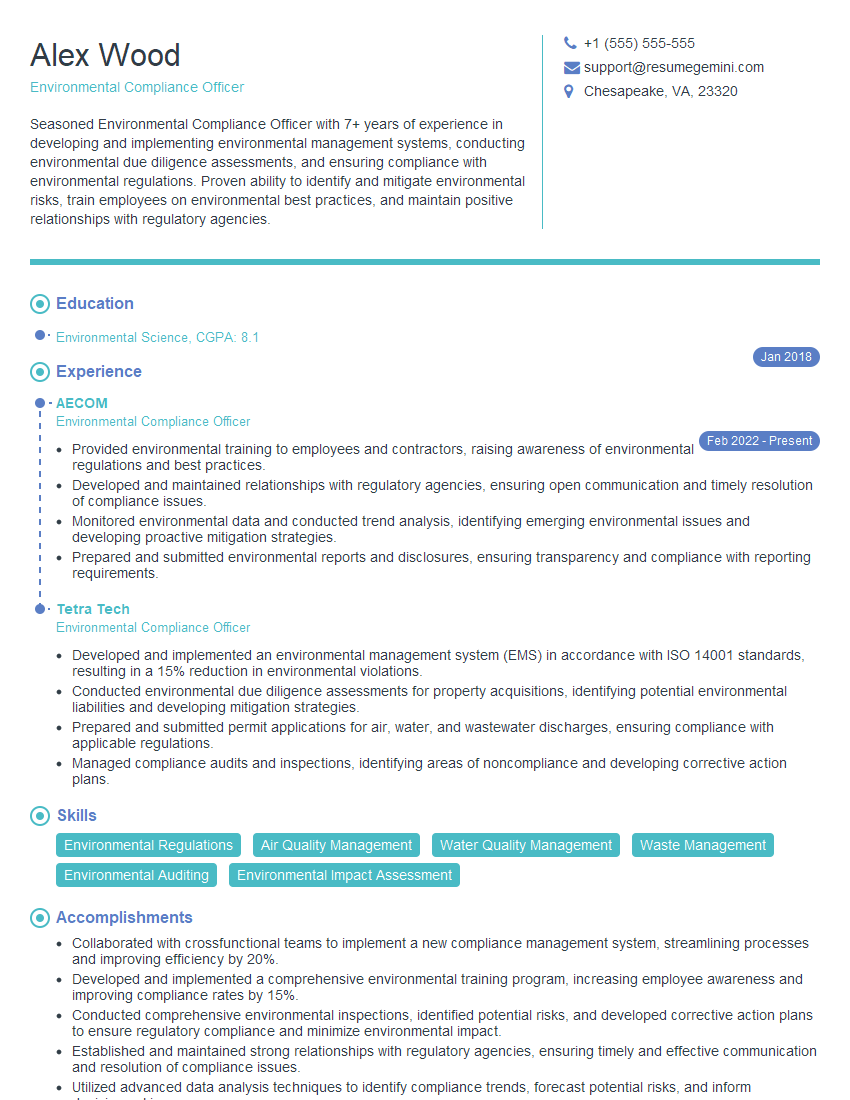
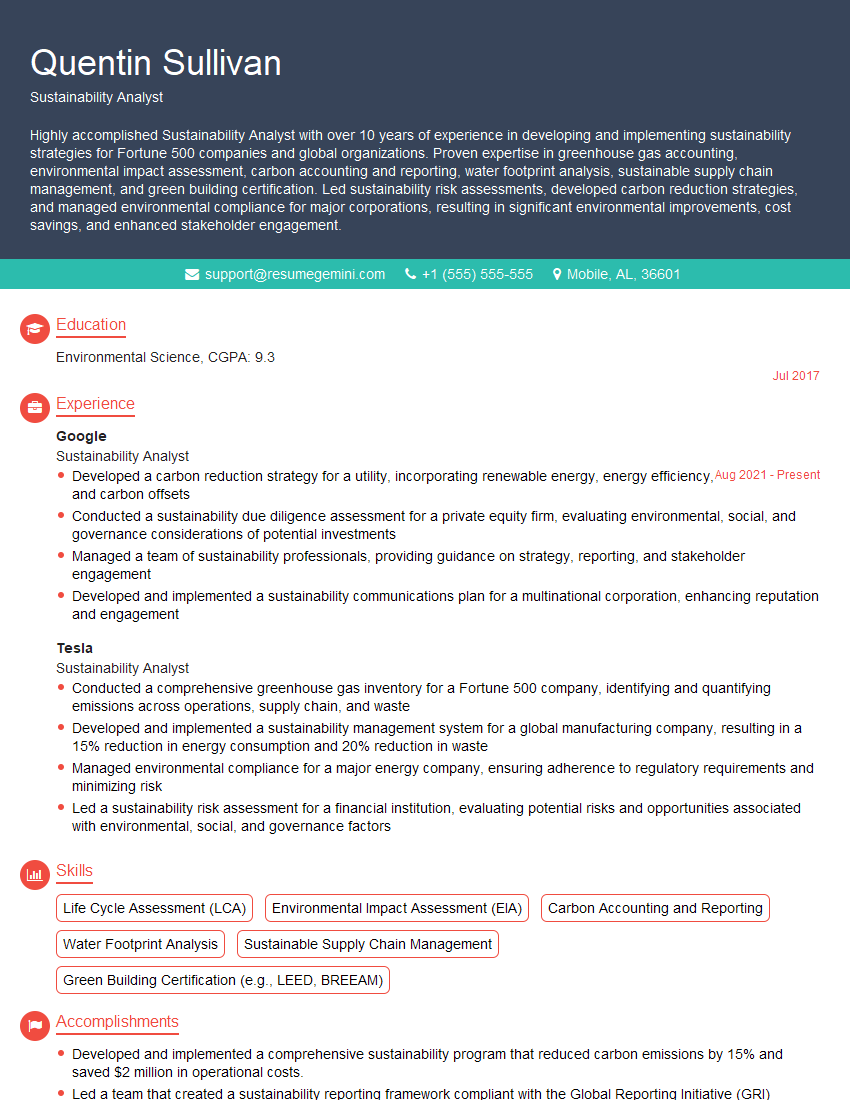
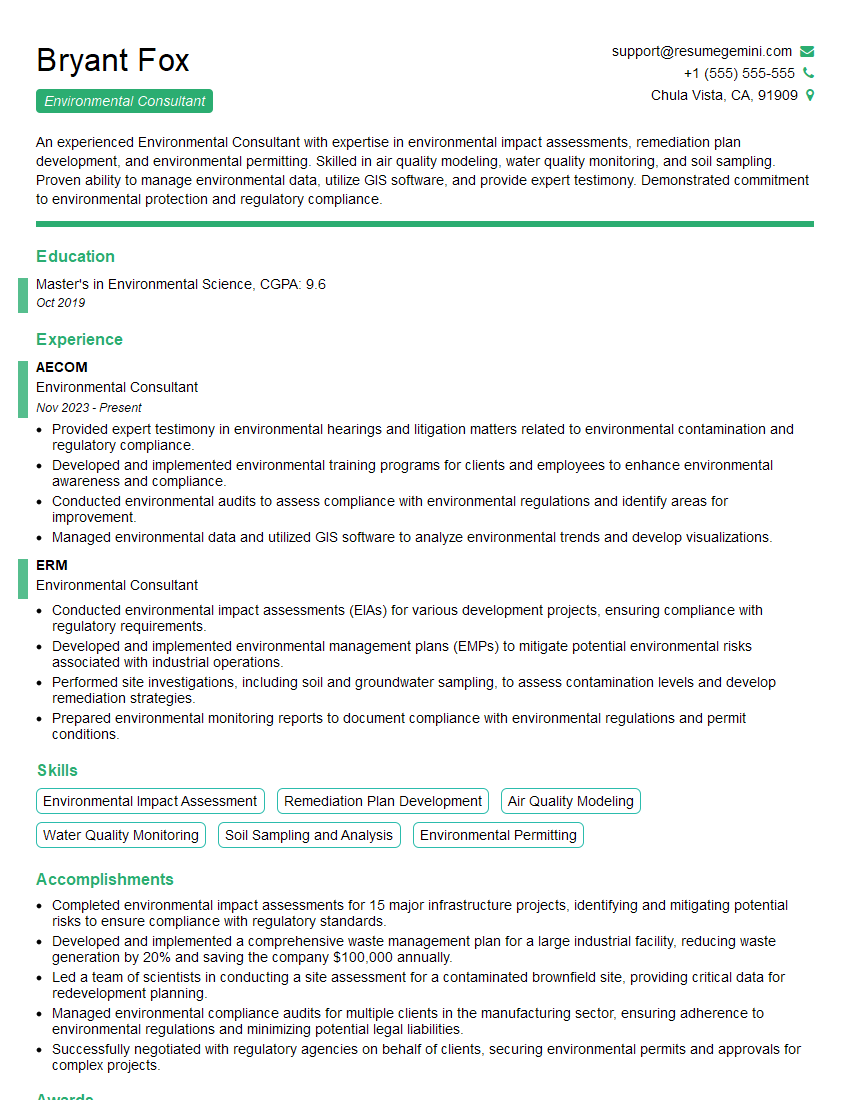
Mastering GHG Emissions Accounting and Reporting is crucial for a successful career in sustainability, environmental consulting, and corporate responsibility. It opens doors to impactful roles where you can contribute directly to climate action. To maximize your job prospects, create a compelling, ATS-friendly resume that highlights your skills and experience. We highly recommend using ResumeGemini, a trusted resource, to build a professional and effective resume. ResumeGemini provides examples of resumes tailored to the GHG Emissions Accounting and Reporting field, ensuring your application stands out.

Explore more articles
Users Rating of Our Blogs
Share Your Experience
We value your feedback! Please rate our content and share your thoughts (optional).
What Readers Say About Our Blog
Very informative content, great job.
good