Are you ready to stand out in your next interview? Understanding and preparing for Glass Automotive Glazing interview questions is a game-changer. In this blog, we’ve compiled key questions and expert advice to help you showcase your skills with confidence and precision. Let’s get started on your journey to acing the interview.
Questions Asked in Glass Automotive Glazing Interview
Q 1. Explain the process of windshield replacement.
Windshield replacement is a precise process requiring specialized tools and expertise. It begins with safely removing the old windshield. This involves carefully cutting the urethane bond holding the glass in place using a specialized wire. Then, the old windshield is removed, and the area is thoroughly cleaned. Any remaining old adhesive must be removed to ensure a proper bond for the new glass. The new windshield is then carefully positioned and secured using fresh urethane, applied in a precise bead around the perimeter of the glass. The glass is then firmly held in place while the urethane cures. Finally, the process involves inspecting for proper adhesion and sealing.
Think of it like building with LEGOs: you need to carefully take apart the old structure before putting the new one together, ensuring a perfect fit and strong bond. Each step is crucial for a safe and leak-free result.
Q 2. Describe different types of automotive glass.
Automotive glass comes in various types, each with specific properties. Laminated glass is the most common type used for windshields. It consists of two layers of glass bonded together with a layer of polyvinyl butyral (PVB) interlayer. This interlayer adds significant strength and safety, holding the glass together even if it shatters. Tempered glass, also called toughened glass, is typically used for side and rear windows. It’s heat-treated to increase its strength. When it breaks, it shatters into small, relatively harmless pieces, unlike laminated glass which tends to stay together. There are also specialized glasses, such as acoustic glass, designed to reduce noise, and heated glass for defrosting.
- Laminated Glass: Windshields; Strong, shatter-resistant.
- Tempered Glass: Side and rear windows; Breaks into small, blunt pieces.
- Acoustic Glass: Reduces road noise.
- Heated Glass: Defogging and defrosting.
Q 3. How do you handle a chipped windshield repair?
A chipped windshield can be repaired if the damage is relatively small and doesn’t affect the driver’s line of sight. The repair involves injecting a resin into the chip to fill the void and restore the structural integrity of the glass. This process involves cleaning the chip, injecting the resin, and then curing it using ultraviolet (UV) light. The resin matches the refractive index of the glass, making the repair almost invisible. However, larger cracks or chips that spiderweb or affect the structural integrity of the glass usually require a full windshield replacement for safety reasons.
Think of it like filling a small hole in a wall with putty – it repairs the damage, but a large crack would require more substantial repair or replacement.
Q 4. What safety precautions are crucial during glass installation?
Safety is paramount during glass installation. This includes using appropriate personal protective equipment (PPE), such as safety glasses, gloves, and possibly a respirator, depending on the materials used. The workspace should be clean and free of obstructions to prevent accidents. Proper handling of sharp glass fragments is essential; always use caution and proper tools to avoid cuts. Following the manufacturer’s instructions for the adhesive and glass is crucial to ensure a proper and safe installation. Finally, making sure the vehicle is properly stabilized and supported prevents damage or injury during the procedure.
Imagine working with a fragile and potentially sharp object, the safety measures are not just a precaution; they are necessary to prevent injury.
Q 5. Explain the use of urethane in windshield installation.
Urethane is a crucial component in windshield installation. It acts as a structural adhesive, bonding the windshield to the vehicle’s frame. It creates a strong, durable, and weather-resistant seal. The proper application of urethane is critical to ensure a long-lasting, leak-free installation. The type and quantity of urethane used vary depending on the vehicle and the windshield. Applying the right amount and ensuring a consistent bead is vital for proper adhesion. The urethane also provides a cushioning effect, helping to absorb vibrations and impacts.
Think of urethane as the glue that keeps everything together; its proper use is critical for the overall safety and integrity of the windshield.
Q 6. How do you diagnose the cause of a cracked windshield?
Diagnosing the cause of a cracked windshield involves careful observation and investigation. Common causes include impact damage from road debris, extreme temperature changes, and manufacturing defects. Inspecting the crack itself can provide clues. A single, small crack may indicate a small impact, while a large, complex crack might point to a larger impact or stress. Understanding the vehicle’s history, such as previous accidents or exposure to harsh weather conditions, can also help pinpoint the cause. In some cases, a detailed inspection may be necessary to rule out manufacturing issues.
It’s like detective work; careful observation and understanding of the circumstances surrounding the damage help determine the root cause.
Q 7. Describe your experience with different glass sealant types.
My experience encompasses various glass sealant types, including urethanes, butyl rubbers, and polysulfide sealants. Each sealant has its own strengths and weaknesses regarding adhesion, flexibility, and curing time. Urethanes are commonly used for their excellent adhesion, strength, and relatively quick curing time. Butyl rubbers offer excellent flexibility and weather resistance but have a slower cure time. Polysulfide sealants are durable and resistant to chemicals but can be more difficult to work with. The choice of sealant depends on factors such as the type of glass, the vehicle’s application, and the environmental conditions. Understanding the properties of each sealant is crucial for selecting the most suitable option for a given job.
Selecting the right sealant is like choosing the right tool for a job; each has its strengths and weaknesses, and understanding these differences is crucial for a successful outcome.
Q 8. What are the common causes of glass delamination?
Glass delamination, also known as interlayer separation, is a common issue in laminated automotive glass where the layers separate. Think of it like a sandwich – the layers of glass and PVB (polyvinyl butyral) film are coming apart. This significantly weakens the glass and compromises its safety and structural integrity.
- Manufacturing Defects: Improper adhesion during the lamination process is a leading cause. Insufficient pressure or heat during manufacturing can create weak points.
- UV Degradation: Prolonged exposure to ultraviolet (UV) radiation from sunlight can break down the PVB interlayer, making it brittle and prone to separation.
- Heat Stress: Extreme temperature fluctuations, such as rapid heating and cooling, can put stress on the glass and interlayer, leading to delamination. This is particularly common in regions with drastic seasonal changes.
- Impact Damage: Even a small impact that doesn’t visually damage the glass can cause microscopic cracks that eventually propagate, leading to delamination over time. This is often seen as a slow, spreading bubble.
- Chemical Exposure: Contact with certain chemicals can weaken the PVB interlayer and contribute to delamination.
Identifying the root cause is crucial for preventative measures. For instance, using high-quality glass from reputable manufacturers and ensuring proper storage to minimize UV exposure are key steps.
Q 9. How do you determine the correct glass for a specific vehicle?
Determining the correct glass for a specific vehicle requires meticulous attention to detail. It’s not just about the size and shape; several critical factors need to be considered.
- Vehicle Identification Number (VIN): The VIN is the primary identifier and provides crucial information about the vehicle’s specifications, including the type of glass installed initially.
- Year, Make, and Model: These factors determine the appropriate glass size, shape, and curvature. Even within the same model year, there can be variations.
- Options and Features: Some vehicles have integrated features like rain sensors, heating elements, or cameras within the windshield. The replacement glass must be compatible with these features. A simple example is the sun sensor used in ADAS systems, it must be correctly integrated to maintain safety features.
- Glass Type: Different glass types exist – laminated (windshields), tempered (side and rear), and others. The correct type is vital for safety and regulatory compliance.
- Manufacturer Specifications: Consult the vehicle manufacturer’s specifications to verify the exact glass type and specifications for the correct fit. Incorrectly fitting glass can lead to safety issues and compromise the overall performance of your vehicle’s design features.
Using a reliable glass database and cross-referencing with the vehicle’s documentation is crucial to ensure a precise match. Mistakes can lead to improper fitment, potential safety hazards, and customer dissatisfaction.
Q 10. Explain the importance of proper glass calibration.
Proper glass calibration is essential, particularly for vehicles equipped with Advanced Driver-Assistance Systems (ADAS). ADAS relies on precise sensor locations to function correctly. Windshield replacement disrupts this calibration.
Think of it like aiming a rifle: If the scope (ADAS sensors) is slightly off, the shot (vehicle action) will miss the target (intended result). Incorrect calibration could mean that your lane departure warning might not activate, or your automatic emergency braking system may not function as designed, creating potential safety risks.
Calibration ensures the sensors are properly aligned with the vehicle’s operating parameters. It involves using specialized equipment to accurately position the sensors, ensuring that ADAS features function correctly after the windshield replacement. Failure to calibrate accurately can lead to malfunctioning safety features, potentially causing accidents. A properly calibrated system is critical to enhancing driver safety.
Q 11. Describe your experience with mobile glass repair units.
My experience with mobile glass repair units has been extensive. I’ve overseen the implementation and maintenance of several mobile units, focusing on efficiency and high-quality repairs. The benefits of mobile repair units are numerous, primarily the convenience they offer customers. We can often complete repairs on-site, saving clients significant time and inconvenience.
However, mobile units pose unique challenges. We need to adapt to variable on-site conditions, ensuring the work environment is safe and controlled. The equipment needs to be portable yet robust. Efficient inventory management of replacement parts is crucial to ensure quick turnaround times. We have to always make sure to meet OEM specifications, and keep records of each job meticulously. Proper training for technicians is also critical to ensure quality and consistency, regardless of location.
I’ve implemented quality control procedures, including regular equipment checks, technician training, and customer feedback surveys, which have significantly improved customer satisfaction and operational efficiency.
Q 12. What tools and equipment are essential for auto glass repair?
Essential tools and equipment for auto glass repair vary depending on the type of repair (replacement or repair), but some core items are always necessary:
- Safety Gear: Safety glasses, gloves, and respirators are paramount for protecting the technician.
- Glass Cutting Tools: Specialized glass cutters, scoring tools, and pliers are used for precise cutting during replacement.
- Preparation Tools: Cleaning agents, razor blades, and brushes are used to prepare the glass and surrounding area.
- Installation Tools: Suction cups, rollers, and sealant applicators are crucial for secure installation.
- Calibration Equipment: For ADAS calibration, specialized equipment such as cameras and target boards is necessary.
- Sealants and Adhesives: High-quality urethane adhesive is essential for bonding the new glass securely.
- Primer: Specific primers are used to improve the adhesion of the urethane.
Beyond these, specialized tools might be needed for certain types of repairs, repairs to specific vehicle models and specialized ADAS systems. Regular maintenance and calibration of these tools are essential to ensure accuracy and safety.
Q 13. How do you handle customer complaints regarding glass installation?
Handling customer complaints effectively is crucial for maintaining a positive reputation. My approach involves a multi-step process:
- Active Listening: I start by carefully listening to the customer’s concerns without interruption, demonstrating empathy and understanding.
- Thorough Investigation: I investigate the complaint thoroughly, reviewing the job details, photos, and any relevant documentation. This ensures I understand the root cause.
- Transparent Communication: I communicate my findings clearly and honestly to the customer, explaining the situation and offering possible solutions. Even if it’s not our fault, we still focus on creating a reasonable resolution.
- Problem Resolution: Depending on the nature of the complaint, solutions might involve repairs, replacements, partial refunds, or other compensations. The goal is always customer satisfaction.
- Follow-up: After resolving the issue, I always follow up with the customer to ensure they are satisfied with the outcome. Positive feedback is key to ongoing improvement.
A positive and proactive approach to complaints not only resolves issues but also builds trust and loyalty with customers. Treating every customer as an individual and focusing on fair resolution is paramount.
Q 14. Explain the process of calibrating an ADAS system after windshield replacement.
Calibrating an ADAS system after windshield replacement is a critical step to ensure the safety and proper functioning of advanced driver-assistance features. The process is not standardized across all vehicle makes and models, so the specifics will always need to be checked against the OEM instructions.
Generally, this involves using specialized equipment, often provided by the vehicle manufacturer, to re-align the camera and sensor systems. This equipment typically includes a calibration target (a precisely designed pattern) and a software interface that guides the technician through the calibration steps. This software will often incorporate a series of steps including verifying the installation of the windshield, then scanning the vehicle to ensure proper connections, and finally performing a calibration procedure to align the sensors.
The specific steps can vary. Some systems require static calibration (positioning the vehicle on a level surface and using the target), while others might need dynamic calibration (driving the vehicle under specific conditions).
It’s crucial to follow the manufacturer’s instructions precisely. Incorrect calibration can lead to malfunctioning safety features such as lane departure warnings or automatic emergency braking, potentially causing accidents. Documentation of each step taken, and a final verification test are absolutely critical.
Q 15. What are your strategies for efficient time management in a fast-paced environment?
In the fast-paced world of auto glass, efficient time management is crucial. My strategy relies on a combination of proactive planning and flexible execution. I start each day by prioritizing tasks based on urgency and importance, using a system that combines a digital task manager with a physical whiteboard for visual tracking. This allows me to easily adjust my schedule as unexpected issues arise – a common occurrence in this field. For example, if a rush order comes in, I can quickly reorganize my day to accommodate it without disrupting other scheduled appointments. I also leverage technology to streamline communication, using dedicated messaging apps to quickly address client inquiries and coordinate with colleagues. Finally, I regularly review my schedule and processes, identifying areas where I can improve efficiency and reduce wasted time. This continuous improvement approach is essential for maintaining a high level of productivity in a demanding environment.
Career Expert Tips:
- Ace those interviews! Prepare effectively by reviewing the Top 50 Most Common Interview Questions on ResumeGemini.
- Navigate your job search with confidence! Explore a wide range of Career Tips on ResumeGemini. Learn about common challenges and recommendations to overcome them.
- Craft the perfect resume! Master the Art of Resume Writing with ResumeGemini’s guide. Showcase your unique qualifications and achievements effectively.
- Don’t miss out on holiday savings! Build your dream resume with ResumeGemini’s ATS optimized templates.
Q 16. Describe your experience with different glass cutting techniques.
My experience encompasses a variety of glass cutting techniques, each suited to different applications and glass types. For precise cuts on laminated and tempered automotive glass, I primarily utilize specialized glass cutting tools like a glass scoring wheel followed by a snap-off tool or glass breaker. This ensures a clean, controlled break without damaging the surrounding glass. For more intricate cuts or shaping, I employ a wet saw with diamond blades, ensuring a slow, steady cutting action that minimizes chipping and fracturing. Finally, for specialized automotive glass applications, such as creating custom cut-outs or modifying existing components, I use a CNC glass cutting machine. This machine is ideal for achieving high precision and intricate designs for unique glass applications. The choice of technique is always dictated by the specific job requirements and the type of glass involved, prioritizing safety and precision throughout the process.
Q 17. How do you ensure the quality of your work meets industry standards?
Maintaining the highest quality of work is paramount. My approach is multifaceted and starts with meticulous attention to detail during every stage of the process, from initial assessment to final installation. I strictly adhere to manufacturer specifications and industry best practices. This includes using high-quality materials and ensuring that the correct installation procedures are followed. Regular calibration and maintenance of tools and equipment are also essential to prevent errors and ensure consistent results. Furthermore, I regularly inspect my work for any imperfections, using specialized tools and techniques to detect even minor flaws. If any issues are identified, immediate corrective action is taken to ensure the final product meets or exceeds industry standards. I also participate in continuous professional development to stay updated on new techniques, materials, and safety protocols. This commitment to quality translates to client satisfaction and a reputation for excellence.
Q 18. What are the limitations of windshield chip repair?
While windshield chip repair is a cost-effective solution for minor damage, it has limitations. Firstly, it’s only suitable for small chips and cracks that haven’t compromised the structural integrity of the windshield. Larger cracks, starbursts, or damage that extends to the edges of the windshield are generally not repairable. Secondly, the repair might not be perfectly invisible, especially if the chip is old or deeply embedded. The repair will fill the damage but may leave a noticeable imperfection, altering light refraction. Thirdly, the success of the repair is dependent on the type and location of the damage, with some chips being more difficult to fix than others. Finally, factors such as the age and type of the windshield can influence the longevity and effectiveness of the repair. Proper assessment of the damage is crucial to determine if repair is a viable option or if windshield replacement is necessary.
Q 19. How do you manage inventory of auto glass parts?
Effective inventory management is vital for smooth operation. We use a computerized inventory system that tracks all auto glass parts, from windshields and side glass to backlights and other components. This system allows us to monitor stock levels in real-time, predict demand, and minimize waste. We categorize parts based on vehicle make, model, and year, ensuring efficient retrieval and order fulfillment. Regular audits are conducted to reconcile physical inventory with the system, identifying any discrepancies promptly. The system also integrates with our ordering process, automatically generating purchase orders when stock levels fall below predetermined thresholds. This proactive approach helps us avoid stockouts while minimizing the risk of overstocking obsolete parts. We also prioritize efficient storage strategies to maximize space and ensure easy access to frequently used items.
Q 20. Describe your experience working with insurance claims for glass repair.
My experience with insurance claims for glass repair involves a thorough understanding of various insurance policies and procedures. I’m proficient in preparing detailed estimates that accurately reflect the extent of damage and the necessary repairs. This includes providing clear documentation with photographs and descriptions of the damage, adhering to insurance company guidelines for proper reporting. I’m familiar with the claims processing procedures of multiple insurance providers and communicate directly with adjusters to ensure timely approvals. In some cases, I’ve had to negotiate with insurance companies to advocate for fair compensation for the repairs, sometimes requiring a thorough explanation of the repair process and cost justification. Maintaining clear and accurate records throughout the claims process is crucial to ensure smooth and efficient reimbursement, and I’m meticulous in this aspect of my work. I often act as a liaison between the customer and the insurance company, providing updates and guidance throughout the process.
Q 21. Explain the difference between laminated and tempered glass.
Laminated and tempered glass are both safety glasses used in automotive applications, but they differ significantly in their construction and properties. Laminated glass consists of two layers of glass bonded together with a layer of polyvinyl butyral (PVB) interlayer. This interlayer holds the glass fragments together upon impact, preventing shattering and providing enhanced safety. It also helps block UV light and reduce noise. Tempered glass, on the other hand, is heat-treated to increase its strength. When it breaks, it shatters into small, relatively harmless, granular pieces, minimizing the risk of sharp fragments. While both are strong, tempered glass is stronger in compression but more susceptible to scratching and breakage under impact at its edges compared to laminated glass. Laminated glass is primarily used in windshields, offering impact protection and safety, while tempered glass is typically used in side and rear windows, as its shatter-resistance is sufficient for those applications.
Q 22. What is your experience with different types of adhesives used in automotive glass installation?
My experience encompasses a wide range of adhesives used in automotive glass installation, each with its specific properties and applications. The most common are urethane-based adhesives, which are categorized into several types:
- One-component urethanes: These are easy to use, requiring no mixing, and cure through exposure to moisture in the air. They’re ideal for simpler installations and offer good adhesion. However, their cure time might be longer.
- Two-component urethanes: These offer superior strength and faster cure times, typically used for larger windshields or in high-stress areas of the vehicle. They require precise mixing ratios for optimal performance. Failure to do so can negatively affect bond strength and curing.
- Hybrid adhesives: Combining the best aspects of both one and two-component systems, these often demonstrate improved adhesion, speed, and strength. They offer the best overall performance and are becoming increasingly popular.
Choosing the right adhesive depends on several factors such as the vehicle make and model, the type of glass, ambient temperature, and the desired cure time. I’ve worked extensively with all three types, adapting my choice to the specifics of each project to ensure a durable and safe installation.
Q 23. How do you handle challenging installations, such as curved or complex glass shapes?
Challenging installations, like those involving curved or complex glass shapes, require precision and expertise. I approach these by first carefully assessing the glass and the vehicle’s frame. Preparation is key. This includes thoroughly cleaning the surfaces to ensure proper adhesion, utilizing specialized tools such as precision applicators for the adhesive, and in some cases, employing additional support structures during the curing process to maintain the correct shape and prevent warping.
For instance, working on a classic car’s curved rear window necessitates extra care in positioning and clamping to ensure even pressure distribution while the adhesive cures. I often use strategically placed clamps and weights to avoid stress points and prevent damage to the glass or the vehicle frame. Moreover, understanding the specific properties of the adhesive, such as its viscosity and cure time, is critical to success in these situations. Experience allows me to anticipate potential issues and implement appropriate preventative measures.
Q 24. What are the common safety hazards associated with auto glass work?
Auto glass work presents several safety hazards that must be meticulously managed. These include:
- Sharp glass fragments: Proper handling and disposal of broken glass are paramount to avoid cuts and lacerations. I always wear appropriate safety glasses and gloves.
- Exposure to chemicals: Adhesives, cleaning solutions, and primers can be irritating or harmful to skin and eyes. Using proper personal protective equipment (PPE), including gloves, eye protection, and respirators when necessary, is non-negotiable.
- Lifting injuries: Auto glass can be heavy; using proper lifting techniques and possibly seeking assistance for heavier pieces prevents muscle strains and back injuries.
- Falling objects: Ensuring a secure work area, free from obstructions, is essential. Dropping tools or glass can lead to serious accidents.
- Exposure to UV light: Extended exposure to UV light during tint film installation can be harmful. I always use appropriate UV protection.
Safety is my top priority. I adhere strictly to all safety protocols and consistently emphasize safe work practices.
Q 25. How do you ensure the structural integrity of the vehicle after a glass replacement?
Maintaining the vehicle’s structural integrity after a glass replacement is critical. This is achieved through meticulous installation, ensuring the adhesive bond is complete and properly cured. The most important aspect is adhering to manufacturer specifications for adhesive type, application method, and cure times. This ensures optimal strength and prevents leaks.
I visually inspect the frame for any damage before installation and meticulously clean the surface to promote proper adhesion. Improper installation could weaken the vehicle’s structure and compromise safety during an accident. In some instances, additional reinforcement might be needed, depending on the extent of damage to the surrounding structure.
Q 26. Describe your experience with different types of glass tint films.
My experience with various tint films includes working with:
- Dyed films: These offer basic UV protection and light reduction but tend to fade over time and have less heat rejection capabilities.
- Metalized films: These reflect heat and UV rays more effectively, reducing fading and offering superior heat protection. However, they can interfere with some electronic signals like GPS and radio.
- Hybrid films: Combining the benefits of dyed and metalized films, these provide a good balance of aesthetic appeal, heat rejection, and signal clarity. They are generally my go-to choice unless client has specific needs.
- Ceramic films: The latest generation, ceramic films provide excellent heat rejection without the signal interference of metalized films.
The choice of film depends on the customer’s preferences regarding heat rejection, aesthetic appeal, and budget. I always guide my customers through the advantages and disadvantages of each type to help them make the informed decision that best suits their needs.
Q 27. How do you maintain and clean your tools and equipment?
Maintaining clean and well-maintained tools and equipment is paramount for both safety and the quality of work. After each job, I thoroughly clean all tools using appropriate solvents and degreasers, removing any adhesive residue or glass fragments.
Sharp tools, like razor blades, are carefully stored to prevent accidents. I regularly inspect my equipment for wear and tear, replacing or repairing any damaged parts to maintain their functionality and efficiency. This preventative maintenance ensures the longevity of my tools and minimizes the risk of accidents during use. A clean and organized workspace also contributes to efficiency and safety.
Q 28. Explain your understanding of relevant health and safety regulations related to auto glass installation.
My understanding of health and safety regulations related to auto glass installation is comprehensive and I strictly adhere to all relevant local, state, and federal guidelines. This includes compliance with OSHA regulations regarding personal protective equipment (PPE), hazardous material handling, and safe work practices.
I am familiar with regulations concerning the proper disposal of hazardous waste, including used adhesives and solvents. I also stay updated on any changes or new regulations to ensure my practices remain compliant and safe. Continuous professional development keeps me informed about best practices and helps me maintain a safe and efficient work environment.
Key Topics to Learn for Glass Automotive Glazing Interview
- Glass Types and Properties: Understanding different types of automotive glass (laminated, tempered, etc.), their properties (strength, clarity, UV protection), and manufacturing processes.
- Installation Techniques: Familiarize yourself with safe and efficient installation procedures, including sealant application, proper fitting, and quality checks. Consider different vehicle types and their unique glass requirements.
- Repair and Replacement Methods: Learn about common damage types (chips, cracks, shattering) and appropriate repair or replacement techniques. Understand the difference between repairs and full replacements.
- Safety Regulations and Standards: Be aware of relevant safety regulations and industry standards pertaining to automotive glass installation and repair. This demonstrates a commitment to safe practices.
- Tools and Equipment: Familiarize yourself with the tools and equipment commonly used in automotive glazing, demonstrating practical understanding and problem-solving abilities.
- Customer Service and Communication: Automotive glazing often involves direct customer interaction. Practice clear, concise, and professional communication skills, focusing on addressing customer concerns and providing excellent service.
- Troubleshooting and Problem-Solving: Prepare examples of how you’ve tackled challenging situations, demonstrating your analytical and problem-solving abilities within the context of automotive glass work. Think about scenarios involving unusual damage or installation complexities.
Next Steps
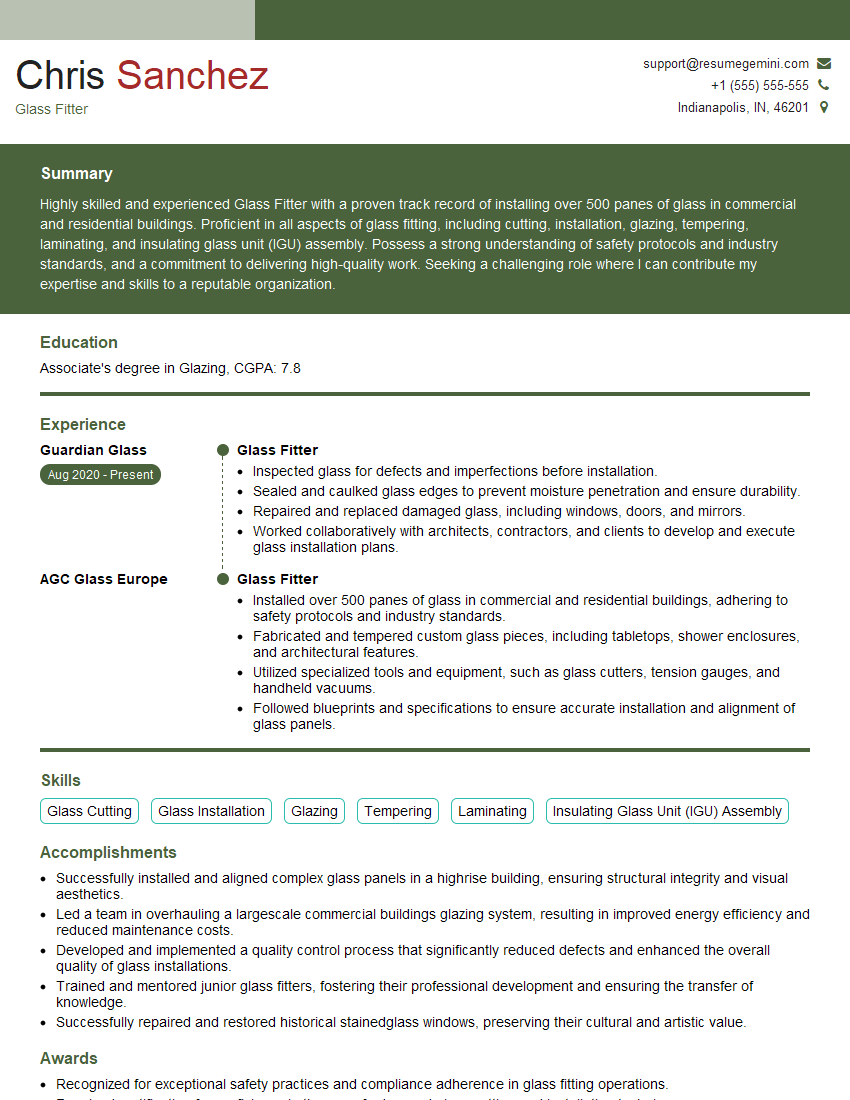
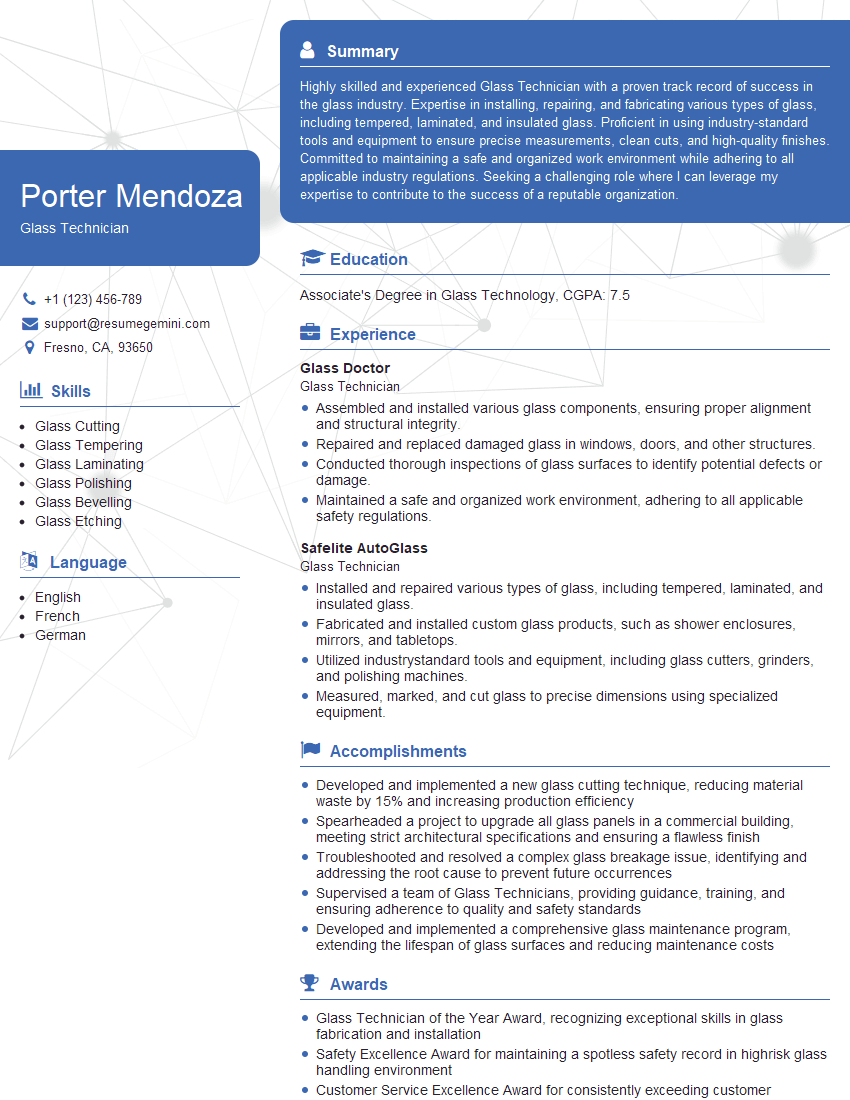
Mastering the intricacies of Glass Automotive Glazing opens doors to exciting career opportunities in a growing industry. A strong understanding of the technical aspects, combined with excellent customer service skills, significantly enhances your job prospects. To maximize your chances, creating a professional and ATS-friendly resume is crucial. We strongly encourage you to leverage ResumeGemini, a trusted resource, to build a compelling resume that highlights your skills and experience. ResumeGemini provides examples of resumes tailored to Glass Automotive Glazing to help you create a truly effective application.
Explore more articles
Users Rating of Our Blogs
Share Your Experience
We value your feedback! Please rate our content and share your thoughts (optional).
What Readers Say About Our Blog
Very informative content, great job.
good